

Genetic studies of accelerometer-based sleep measures yield new insights into human sleep behaviour
Open accessThe DOI matches its Crossref record; 81 of the 83 references it cites were found in a registry or an index.
Abstract
Sleep is an essential human function but its regulation is poorly understood. Using accelerometer data from 85,670 UK Biobank participants, we perform a genome-wide association study of 8 derived sleep traits representing sleep quality, quantity and timing, and validate our findings in 5,819 individuals. We identify 47 genetic associations at P < 5 × 10 −8 , of which 20 reach a stricter threshold of P < 8 × 10 −10 . These include 26 novel associations with measures of sleep quality and 10 with nocturnal sleep duration. The majority of identified variants associate with a single sleep trait, except for variants previously associated with restless legs syndrome. For sleep duration we identify a missense variant (p.Tyr727Cys) in PDE11A as the likely causal variant. As a group, sleep quality loci are enriched for serotonin processing genes. Although accelerometer-derived measures of sleep are imperfect and may be affected by restless legs syndrome, these findings provide new biological insights into sleep compared to previous efforts based on self-report sleep measures.
Overview
The claims and statistics of this paper haven’t been checked yet.
Free: it reads the open-access text and checks the first 5 claims that cite a source we can check. Create a free account to check every claim.
Integrity signals
Registry
Cites
Statistics
Figures
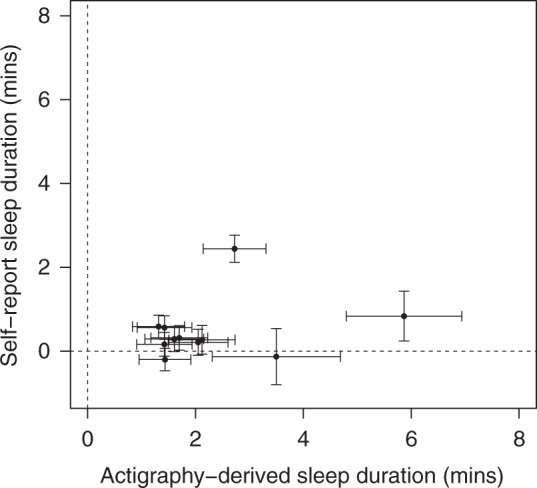
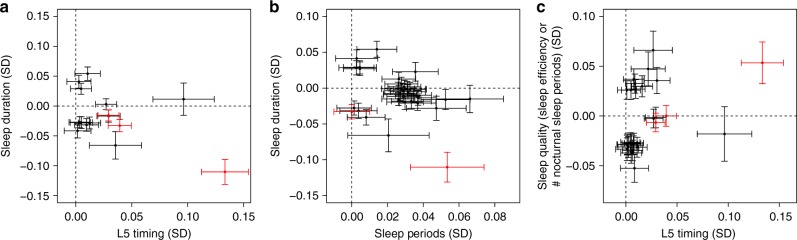
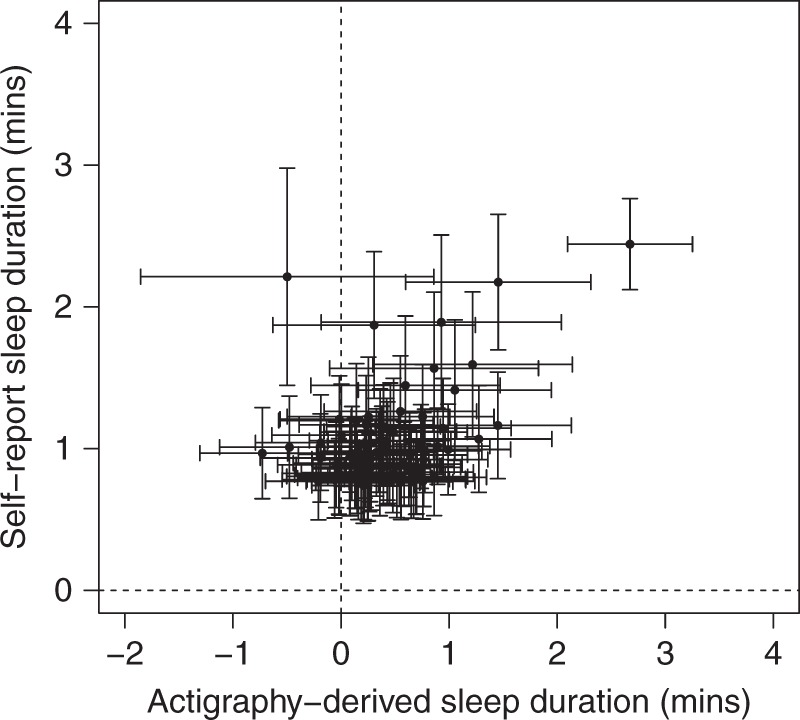
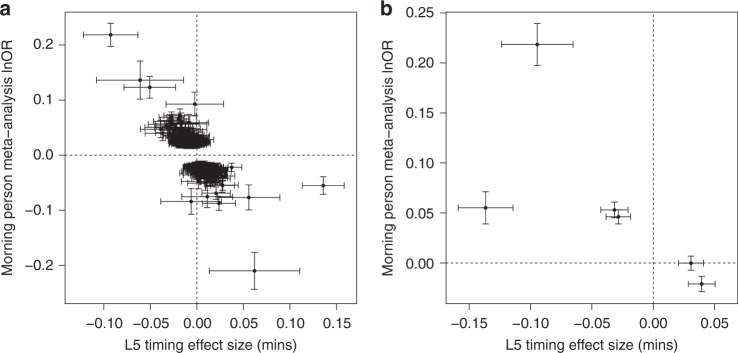
Verification
Claims the paper makes
The claims and statistics of this paper haven’t been checked yet.
Free: it reads the open-access text and checks the first 5 claims that cite a source we can check. Create a free account to check every claim.
Claims other papers make about this one
Each is checked against this paper’s own text: does it say what the citing paper says it does?
In the citing paper
“existing actigraphy-based sleep studies on large health datasets have only focused on the differentiation between sleep and wakefulness4,9–11 without evaluating variations in the stages of sleep.”
From Self-supervised learning of accelerometer data provides new insights for sleep and its association with mortality (2024) · cites this paper as [10]
Self-check
Percentages, sums and reported differences re-computed from the paper’s own numbers.
The self-check needs the paper’s full text.
Citations
Cites
A global reference for human genetic variation
The 1000 Genomes Project Consortium, authors, C., Auton, A., Abecasis, G. R., Steering committee, Altshuler, D. M., Durbin, R. M., Abecasis, G. R., Bentley, D. R., Chakravarti, A., et al. (2015) · Nature · doi:10.1038/nature15393 · Cited by 18,247
Sudlow, C., Gallacher, J., Allen, N., Beral, V., Burton, P., Danesh, J., Downey, P., Elliott, P., Green, J., Landray, M., et al. (2015) · PLOS Medicine · doi:10.1371/journal.pmed.1001779 · Cited by 12,728
Corder, E. H., Saunders, A. M., Strittmatter, W. J., Schmechel, D. E., Gaskell, P. C., Small, G. W., Roses, A. D., Haines, J. L., & Pericak-Vance, M. A. (1993) · Science · doi:10.1126/science.8346443 · Cited by 9,429
Bowden, J., Davey Smith, G., Haycock, P. C., & Burgess, S. (2016) · Genetic Epidemiology · doi:10.1002/gepi.21965 · Cited by 8,922
The UK Biobank resource with deep phenotyping and genomic data
Bycroft, C., Freeman, C., Petkova, D., Band, G., Elliott, L. T., Sharp, K., Motyer, A., Vukcevic, D., Delaneau, O., O’Connell, J., et al. (2018) · Nature · doi:10.1038/s41586-018-0579-z · Cited by 8,876
Molecular signatures database (MSigDB) 3.0
Liberzon, A., Subramanian, A., Pinchback, R., Thorvaldsdóttir, H., Tamayo, P., & Mesirov, J. P. (2011) · Bioinformatics · doi:10.1093/bioinformatics/btr260 · Cited by 7,111
LD Score regression distinguishes confounding from polygenicity in genome-wide association studies
Schizophrenia Working Group of the Psychiatric Genomics Consortium, Bulik-Sullivan, B. K., Loh, P.-R., Finucane, H. K., Ripke, S., Yang, J., Patterson, N., Daly, M. J., Price, A. L., & Neale, B. M. (2015) · Nature Genetics · doi:10.1038/ng.3211 · Cited by 5,559
METAL: fast and efficient meta-analysis of genomewide association scans
Willer, C. J., Li, Y., & Abecasis, G. R. (2010) · Bioinformatics · doi:10.1093/bioinformatics/btq340 · Cited by 5,205
The Genotype-Tissue Expression (GTEx) pilot analysis: Multitissue gene regulation in humans
The GTEx Consortium, Ardlie, K. G., Deluca, D. S., Segrè, A. V., Sullivan, T. J., Young, T. R., Gelfand, E. T., Trowbridge, C. A., Maller, J. B., Tukiainen, T., et al. (2015) · Science · doi:10.1126/science.1262110 · Cited by 5,062
Functional mapping and annotation of genetic associations with FUMA
Watanabe, K., Taskesen, E., van Bochoven, A., & Posthuma, D. (2017) · Nature Communications · doi:10.1038/s41467-017-01261-5 · Cited by 4,083
Cited by
Items 201–300 of 300
Sleep duration and brain structure – phenotypic associations and genotypic covariancePreprint
Fjell, A. M., Sørensen, Ø., Wang, Y., Amlien, I. K., Baaré, W. F. C., David Bartrés-faz, A., Bertram, L., Boraxbekk, C., Brandmaier, A. M., Demuth, I., et al. (2022) · bioRxiv (Cold Spring Harbor Laboratory) · doi:10.1101/2022.02.15.480501 · Cited by 3
Yuan, H., Plekhanova, T., Walmsley, R., Reynolds, A. C., Maddison, K. J., Bucan, M., Gehrman, P., Rowlands, A., Ray, D. W., Bennett, D., et al. (2023) · doi:10.1101/2023.07.07.23292251 · Cited by 3
Self-citationHuang, Y., Xu, X., Zhang, X., Zhu, X., Li, B., Ma, M., Zhou, C., Gu, C., Jiang, Y., Wu, L., et al. (2025) · Diabetes and Vascular Disease Research · doi:10.1177/14791641251318319 · Cited by 2
“30,46 Thus, these accelerometer-derived objective sleep data largely avoided the bias caused by subjective recall and re fl ected true sleep conditions.”
GPR139, an Ancient Receptor and an Emerging Target for Neuropsychiatric and Behavioral Disorders
Chan, M., & Ogawa, S. (2025) · Molecular Neurobiology · doi:10.1007/s12035-025-04828-2 · Cited by 5
“GPR139 has been significantly associated with the number of nocturnal sleep episodes across two independent studies [12, 14].”
Human sleep motion recognition based on multi-sensor measurement data fusion
Wu, L., Guo, S., Han, L., & Jia, J. (2025) · Measurement · doi:10.1016/j.measurement.2025.117746 · Cited by 2
Xin, X., Li, J., Zhang, J., & Wu, H. (2025) · Brain and Behavior · doi:10.1002/brb3.70627 · Cited by 2
Genome-wide gene-sleep interaction study identifies novel lipid loci in 732,564 participants
Noordam, R., Wang, W., Nagarajan, P., Wang, H., Brown, M. R., Bentley, A. R., Hui, Q., Kraja, A. T., Morrison, J. L., O’Connel, J. R., et al. (2025) · Atherosclerosis · doi:10.1016/j.atherosclerosis.2025.120603 · Cited by 3
“Although DLEU1 has not been identified with the habitual sleep variables [57 – 59, 69 ], DLEU1 has been related to sleep apnea, which is Our druggability analysis results suggest there are potential drug repurposing opportunities to intervene in common signaling and metabolic pathways implicated in…”
Self-citationGenetic risk scores, perceived neighborhood disorder, and sleep duration
He, Q., Zhang, J., Parkinson, E., & Hill, T. D. (2026) · SLEEP · doi:10.1093/sleep/zsag004 · Cited by 2
Acute sleep rebound following sleep restriction is associated with reduced mortality risk
Li, X., Zhang, M., Li, Z., Zhang, S., Bertisch, S. M., Huang, T., Rutter, M. K., & Redline, S. S. (2026) · Nature Communications · doi:10.1038/s41467-026-72461-1 · Cited by 4
Self-citationTonini, E., Crouse, J. J., Shin, M., Carpenter, J. S., Mitchell, B. L., Byrne, E. M., Lind, P. A., Gordon, S. D., Parker, R., Hockey, S. J., et al. (2026) · The British Journal of Psychiatry · doi:10.1192/bjp.2026.10798 · Cited by 6
Beaupre, L. M., Wainberg, M., Zai, C. C. H., Milic, M. S., Felsky, D., Brown, G. M., Goldstein, B. I., Tripathy, S. J., Kennedy, J. L., & Gonçalves, V. F. (2022) · Journal of Psychiatric Research · doi:10.1016/j.jpsychires.2022.11.010 · Cited by 2
Noordam, R., Ao, L., Stroo, J. F., van Dijk, K. W., & van Heemst, D. (2024) · European Journal of Clinical Investigation · doi:10.1111/eci.14189 · Cited by 3
“Since the data on accelerometer-derived sleep data in UK Biobank were collected some years later, 53 we were not able to link these to the white blood cell count data used in the present study.”
BackgroundMethodOliveira, C. D. S., Andrechuk, C. R. S., Lima, M. G., Barros, M. B. D. A., Zancanella, E., Cardoso, T. A. M. D. O., & Ceolim, M. F. (2024) · Chronobiology International · doi:10.1080/07420528.2024.2346521 · Cited by 3
“These individuals seem to have a tendency toward morningness, resulting in an increased ability to initiate sleep earlier and awaken earlier, consequently facilitating increased adherence to work schedules, for example, without being subject to sleep deprivation (Carciofo 2020; Jones et al. 2019).”
BackgroundChen, H., Lin, C., Chang, H., Chang, J., Chuang, H., & Lin, Y. (2024) · Journal of Medical Internet Research · doi:10.2196/56144 · Cited by 2
“This metric, widely acknowledged as an informative indicator of an individual’s PA level in previous studies [19,20], was successfully used in both the assessment of GMA and WMA within this study.”
MethodSun, Y., Du, D., Zhang, J., Zhao, L., Zhang, B., Zhang, Y., Song, T., & Wu, N. (2024) · Frontiers in Cardiovascular Medicine · doi:10.3389/fcvm.2024.1382702 · Cited by 3
Carpena, M. X., Sánchez, K., Xavier, M. O., Santos, I. S., Matijasevich, A., Wendt, A. T., Crochemore‐Silva, I., & Tovo‐Rodrigues, L. (2024) · SLEEP · doi:10.1093/sleep/zsae256 · Cited by 4
Lin, C., Yang, C., Li, C., Liu, C.-S., Lin, C., Yang, S.-Y., & Lin, C. (2025) · Diabetology & Metabolic Syndrome · doi:10.1186/s13098-025-01643-6 · Cited by 4
“1 The study flowchart for study subject and SNP selection Genetic variants were selected by using candidate gene [33] and GWAS approaches [34–41] found in the literature.”
Li, C., Zeng, K., Mo, D., Yu, X., Peng, J., & Zhao, Z. (2025) · HORMONES · doi:10.1007/s42000-025-00711-w · Cited by 3
“Sleep awakenings data were drawn from GWAS by Samuel E. Jones et al., involving 84,810 indi - viduals of European descent [18 ].”
Performance Evaluation of Motion Tracking Methods: Magnetic Induction and HF RFID
Golestani, N., & Moghaddam, M. (2022) · Digest - IEEE Antennas and Propagation Society. International Symposium · doi:10.1109/ap-s/usnc-ursi47032.2022.9886097 · Cited by 2
Sarnowski, C., Ma, J., Nguyen, N. Q., Hoogeveen, R. C., Ballantyne, C. M., Coresh, J., Morrison, A. C., Chatterjee, N., Boerwinkle, E., & Yu, B. (2024) · medRxiv · doi:10.1101/2024.09.27.24314500 · Cited by 2
Song, F., Hung, A., Moore, M. L., Mutalik, V. K., & Arkin, A. P. (2025) · bioRxiv (Cold Spring Harbor Laboratory) · doi:10.1101/2025.09.29.679331 · Cited by 4
Mazidi, M., Katsiki, N., Webb, R. J., Lip, G. Y. H., Sattar, N. A., & Banach, M. (2021) · Archives of Medical Science · doi:10.5114/aoms/144295 · Cited by 3
The zebrafish mutant dreammist implicates sodium homeostasis in sleep regulation
Barlow, I. L., Mackay, E., Wheater, E., Goel, A., Lim, S., Zimmerman, S., Woods, I., Prober, D. A., & Rihel, J. (2023) · eLife · doi:10.7554/elife.87521.3 · Cited by 1
Shim, J., Fleisch, E., & Barata, F. (2024) · Annual International Conference of the IEEE Engineering in Medicine and Biology Society (EMBC) · doi:10.1109/embc53108.2024.10781878 · Cited by 2
“We started with an initial list of 140 candidate features based on previous research [3], [9], [10], [11].”
Das, N. R., Woolf, B. A. R., Page, S., Richmond, R. C., & Khouja, J. N. (2025) · Journal of Sleep Research · doi:10.1111/jsr.70147 · Cited by 4
Zebrafish neurofibromatosis type 1 mutants show disruption of sleep but not of circadian rhythms
Lee, D. A., Oikonomou, G., Chiu, Y., Cho, A. D., Xu, J., Cammidge, T., Singh, C., & Prober, D. A. (2025) · SLEEP · doi:10.1093/sleep/zsaf236 · Cited by 1
Jiang, Y., Su, Z., Liu, S., Di, H., Wu, Q., Hu, W., Qin, T., Zhou, S., Yin, J., Chen, Y., et al. (2025) · Diabetes Research and Clinical Practice · doi:10.1016/j.diabres.2025.112420 · Cited by 1
Garst, S. J. F., Kuiper, L. M., van den Akker, E. B., van den Berg, N., Ghanbari, M., Mooijaart, S. P., Beekman, M., Reinders, M. J. T., Slagboom, P. E., & van Meurs, J. B. J. (2026) · Cell Reports Methods · doi:10.1016/j.crmeth.2026.101405 · Cited by 1
Li, Y., Wang, Y., Zhang, Y., Wang, W., & Hong-mei, A. (2025) · Clinical Cosmetic and Investigational Dermatology · doi:10.2147/ccid.s546362 · Cited by 1
Stroo, J. F., de Bresser, J., Redline, S. S., van Heemst, D., & Noordam, R. (2025) · GeroScience · doi:10.1007/s11357-025-01989-9 · Cited by 3
“Note that phenotypic and genetic correlations between sleep duration assessed through questionnaire and accelerometry are low to modest at most [34, 60, 61], which suggests phenotypes derived by these methodologies reflect different sleep aspects.”
Zhou, J., & Mao, L. (2026) · Lifestyle Genomics · doi:10.1159/000550315 · Cited by 1
Unravelling the cerebellum's role in sleep regulation: Prospects for precision sleep medicine
Rodríguez‐Labrada, R., & Velázquez‐Pérez, L. (2026) · Sleep Medicine · doi:10.1016/j.sleep.2026.108797 · Cited by 2
Sleep and activity patterns in autism
Weissenkampen, J. D., Ghorai, A., Carneiro, T. N. R., Fasolino, M., Gehringer, B. N., Rajan, M., Dow, H. C., Kunatharaju, S., Roenneberg, T., Sebro, R., et al. (2026) · Autism · doi:10.1177/13623613251413538 · Cited by 1
“Namely, a refined analysis of active and inactive periods can generate indicators of sleep behavior, including, but not limited to sleep duration, daytime inactivity, sleep efficiency, and circadian rhythm patterns (Jones et al., 2019; Roenneberg et al., 2015, 2022).”
Abdalla, O. H. M. H., Dunlop, E., Wilson, T. S., Reardon, P. K., Iqbal, M., Tam, S. K. E., Vyazovskiy, V. V., Ray, D. W., Brown, L. A., Cheng, H. M., et al. (2026) · Neurobiology of Sleep and Circadian Rhythms · doi:10.1016/j.nbscr.2026.100149 · Cited by 1
Karmakar, J., Misra, A. K., Das, P., Mukherjee, J., Chaudhuri, J., Yadav, P. K., Chakraborty, M., Haldar, D., & Mandal, M. (2023) · Asian Journal of Medical Sciences · doi:10.3126/ajms.v14i11.56464 · Cited by 1
“26 24 Chhajer and Shukla found association between poor sleep quality with female gender, lower annual income, and unmarried state.”
BackgroundKuroda, H., Yeung, S. L. A., Fujii, R., Iwagami, M., & Goto, A. (2025) · Journal of Diabetes Investigation · doi:10.1111/jdi.70039 · Cited by 4
“…or accelerometer-derived sleep duration in European individuals and the subsequent selection criteria, we used 85 single nucleotide polymorphisms (SNPs) associated with questionnaire-based sleep duration 31 – 36 and 20 SNPs associated with accelerometer-derived sleep duration 34, 35, 37, 38 .”
Strausz, S. J., Broberg, M. E., Jones, S. E., Koskela, J. T., Kiiskinen, T., FinnGen, Palotie, A. V., Palotie, T., Bachour, A., Saxena, R., et al. (2025) · European Respiratory Journal · doi:10.1183/13993003.01778-2024 · Cited by 2
“Sleep fragmentation data were obtained from the UK Biobank cohort, in which participants wore triaxial wrist-worn accelerometers (Axivity AX3) continuously for a period of up to 7 days [17].”
Self-citationThe interplay between genomic copy number variants, sleep, and cognition in the general population
Poulain, C., Tesfaye, R., Douard, E. A., Jean‐Louis, M., Saci, Z., Labbe, A., Glahn, D. C., Almasy, L. A., Elsabbagh, M., Huguet, G., et al. (2025) · Translational Psychiatry · doi:10.1038/s41398-025-03579-x · Cited by 1
“Extreme responses of less than 3 h and more than 12 h were excluded as recommended by previous studies [30, 31] (b) Probable insomnia (1200); participants responding “ sometimes ” or “ usually ” to “ Do you have trouble falling asleep at night, or do you wake up in the middle of the night?”
Fifel, K., & Deboer, T. (2021) · SLEEP · doi:10.1093/sleep/zsab230 · Cited by 1
Daytime sleepiness, night sleep changes and ALS: a Mendelian randomization studyPreprint
Zhang, G., Zhang, L., Huang, T., & Fan, D. (2020) · Research Square · doi:10.21203/rs.3.rs-34260/v1 · Cited by 1
“IVs for sleep e ciency and number of sleep episodes were extracted from one GWAS that included accelerometer recordings from 85,670 participants for up to 7 days [18].”
MethodBMAL1 loss in oligodendroglial lineage cells dysregulates myelination and sleepPreprint
Rojo, D., Badner, A., Cengio, L. D., Kim, S., Sakai, N., Greene, J. J., Eisinger, E. C., Arellano-Garcia, C., Mehl, L. C., Gumma, M. E. F., et al. (2022) · bioRxiv (Cold Spring Harbor Laboratory) · doi:10.1101/2022.04.28.489946 · Cited by 1
“10 fragmentation (defined as number of sleep episodes) in 85,723 UK Biobank individuals (29).”
BackgroundSelf-citationThe zebrafish mutant dreammist implicates sodium homeostasis in sleep regulationPreprint
Barlow, I. L., Mackay, E., Wheater, E., Goel, A., Lim, S., Zimmerman, S., Woods, I. G., Prober, D. A., & Rihel, J. (2023) · eLife · doi:10.7554/elife.87521.1 · Cited by 1
Another benefit of regular sleep
Huang, T. (2023) · eLife · doi:10.7554/elife.94131 · Cited by 1
Noordam, R., Wang, W., Nagarajan, P., Wang, H., Brown, M. R., Bentley, A. R., Hui, Q., Kraja, A. T., Morrison, J. L., O’Connel, J. R., et al. (2024) · medRxiv · doi:10.1101/2024.09.02.24312466 · Cited by 1
Self-citationGenome size variation is attributed to adaptive purging of transposable elementsPreprint
Potapenko, E. V., Shermeister, B., Mandel, T., & Hübner, S. (2025) · bioRxiv (Cold Spring Harbor Laboratory) · doi:10.1101/2025.09.26.678839 · Cited by 1
Kunorozva, L., Valliere, J., Chen, C., Maher, M., Tchio, C. I. M., Burns, A. C., Zhang, Y., Strausz, S. J., FinnGen, Winkelman, J. W., et al. (2025) · medRxiv · doi:10.1101/2025.11.21.25340447 · Cited by 2
Self-citationDim light sensitivity and delayed sleep timing in young people with emerging mental disordersPreprint
Tonini, E., Hickie, I. B., Shin, M., Carpenter, J. S., Nichles, A., Zmicerevska, N., Jeon, E., Hindmarsh, G., Phung, E., Janiszewski, C., et al. (2026) · medRxiv · doi:10.64898/2026.03.02.26347467 · Cited by 1
Polygenic scores in sleep research
Madrid‐Valero, J. J., Verhulst, B., & Ordoñana, J. R. (2026) · SLEEP · doi:10.1093/sleep/zsag086 · Cited by 1
In response to: ‘Information bias in measures of self-reported physical activity’
Klimentidis, Y. C., Raichlen, D. A., Bea, J. W., Garcia, D. O., Wineinger, N. E., Mandarino, L. J., Alexander, G. E., Chen, Z., & Going, S. B. (2018) · International Journal of Obesity · doi:10.1038/s41366-018-0251-6
Evolving Approaches to Identifying Genetic Risk Variants for Sleep Disorders
Pack, A. I. (2022) · Translational medicine research · doi:10.1007/978-94-024-2168-2_1
Association between circadian physical activity patterns and mortality in the UK BiobankPreprint
Stein, M. J., Baurecht, H., Sedlmeier, A. M., Konzok, J., Bohmann, P., Fontvieille, E., Peruchet‐Noray, L., Bowden, J., Friedenreich, C. M., Fervers, B., et al. (2022) · medRxiv · doi:10.1101/2022.12.05.22283101
Wong, A. T., Floud, S., REEVES, G. K., Holmes, M. V., Travis, R. C., van Duijn, C. M., Doherty, A., & Smith‐Byrne, K. (2026) · Frontiers in Dementia · doi:10.3389/frdem.2026.1843867
Autistic people at increased genetic risk of sleep problems
Barker, H. (2022) · The Transmitter · doi:10.53053/ncav8080
Lung cancer prediction and analysis by regression models
Yu, X. (2023) · International Conference on Mechatronic Engineering and Artificial Intelligence (MEAI) · doi:10.1117/12.2672648
Barlow Ida, L., Eirinn, M., Emily, W., et al. (2023) · eLife · doi:10.7554/elife.87521.1.sa0
The zebrafish mutant dreammist implicates sodium homeostasis in sleep regulation
Barlow, I. L., Mackay, E., Wheater, E., Goel, A., Lim, S., Zimmerman, S., Woods, I., Prober, D. A., & Rihel, J. (2023) · doi:10.7554/elife.87521.2
Doherty, A., Yuan, H., Plekhanova, T., Walmsley, R., Reynolds, A., Maddison, K., Bucan, M., Gehrman, P., Rowlands, A., Ray, D., et al. (2023) · doi:10.21203/rs.3.rs-3275989/v1
Self-citationDo not take their word for it—moving towards objective measures in sleep epidemiology
von Schantz, M., & Knutson, K. L. (2024) · SLEEP · doi:10.1093/sleep/zsae009 · Cited by 1
“This subsample has previously provided crucial confirmation for GWAS of sleep duration [5, 6].”
BackgroundSleep regulation and host genetics
Odriozola, A., González, A., Álvarez‐Herms, J., & Corbi, F. (2024) · Advances in genetics · doi:10.1016/bs.adgen.2024.02.002
Sleep and Activity Patterns in Autism Spectrum DisorderPreprint
Weissenkampen, J. D., Ghorai, A., Fasolino, M., Gehringer, B. N., Rajan, M., Dow, H. C., Sebro, R., Rader, D. J., Keenan, B. T., Almasy, L. A., et al. (2024) · bioRxiv (Cold Spring Harbor Laboratory) · doi:10.1101/2024.05.02.592263 · Cited by 1
“Wrist-worn accelerometers are increasingly being used for the assessment of physical activity and to derive indicators of sleep behavior, including, but not limited to, sleep duration, daytime inactivity, sleep efficiency, and number of sleep bouts 19 .”
BackgroundBedeutung des circadianen Rhythmus bei psychischen Störungen
Cajochen, C., & Garbazza, C. (2024) · Elsevier eBooks · doi:10.1016/b978-3-437-21054-9.00007-0
Genetic Studies of Sleep in Children
Mitchell, J. A., & Cielo︎, C. M. (2024) · Springer eBooks · doi:10.1007/978-3-031-62723-1_17
Mendelian Randomization of Sleep and Circadian Traits
Sonti, S., & Grant, S. F. A. (2024) · Springer eBooks · doi:10.1007/978-3-031-62723-1_9
Nisamudheen, N. A., Velayutham, D., & Jithesh, P. V. (2024) · medRxiv · doi:10.1101/2024.09.09.24313314
Zheng, J., Li, Y., Wu, C., Wang, H., Jiang, F., & Tang, X. (2024) · Psychiatry Investigation · doi:10.30773/pi.2024.0192
Li, W., Wen, Q., & Wang, S. (2025) · SSRN Electronic Journal · doi:10.2139/ssrn.5122478
Drosophila Modeling of Insomnia-Associated Genes Reveals Diverse Underlying Sleep PhenotypesPreprint
Mandigo, T. R., Daya, F. A., Math, S., Ye, A., Maher, M., Saxena, R., & Walker, J. A. (2025) · bioRxiv (Cold Spring Harbor Laboratory) · doi:10.1101/2025.06.12.659376
Self-citationZheng, Y., Bao, J., Hu, T., Wang, J., Liu, J., Chang, H., He, Y., Huang, S., Zhu, Z., & Wu, J. (2025) · Journal of Affective Disorders · doi:10.1016/j.jad.2025.119779 · Cited by 1
Sleep and circadian health in the UK Biobank: Report on the 2023 sleep questionnaire enhancementPreprint
Tse, K. Y. K., Yuan, H., Zisou, C., Holliday, J., Espie, C. A., Dijk, D., Burns, A. C., Doherty, A., Lane, J. M., Ollila, H. M., et al. (2025) · medRxiv · doi:10.1101/2025.09.24.25336551
Self-citationDigital Innovation in Mental Health
Gillett, G., Rigby, D., & Gadelrab, R. (2025) · Cambridge University Press eBooks · doi:10.1017/9781009028967.011
Ao, L., Noordam, R., Aziz, N. A., Milaneschi, Y., van Heemst, D., Rosendaal, F. R., Penninx, B. W. J. H., van Dijk, K. W., Sofer, T., Wang, H., et al. (2025) · medRxiv · doi:10.1101/2025.11.26.25341069
Weston, G., Zilanawala, A., Webb, E. A., Carvalho, L. A., & McMunn, A. (2024) · Figshare · doi:10.6084/m9.figshare.25097360
Larsen, M., He, F., Kawasawa, Y. I., Berg, A., Vgontzas, A. N., Liao, D., Bixler, E. O., & Fernández‐Mendoza, J. (2024) · Figshare · doi:10.6084/m9.figshare.26613146
Weston, G., Zilanawala, A., Webb, E. A., Carvalho, L. A., & McMunn, A. (2024) · Figshare · doi:10.6084/m9.figshare.25097330
Stein, M. J., Baurecht, H., Sedlmeier, A. M., Konzok, J., Bohmann, P., Fontvieille, E., Peruchet‐Noray, L., Bowden, J., Friedenreich, C. M., Fervers, B., et al. (2024) · Figshare · doi:10.6084/m9.figshare.26614261
Weston, G., Zilanawala, A., Webb, E. A., Carvalho, L. A., & McMunn, A. (2024) · Figshare · doi:10.6084/m9.figshare.26673537
Larsen, M., He, F., Kawasawa, Y. I., Berg, A., Vgontzas, A. N., Liao, D., Bixler, E. O., & Fernández‐Mendoza, J. (2024) · Figshare · doi:10.6084/m9.figshare.26613143
An Intelligent Fabric-Based Sensing Platform for Real-Time Gait and Posture Monitoring
He, T., & Jiang, Y. (2025) · IEEE International Conference on Cloud Computing Technology and Science · doi:10.1109/cloudcom67567.2025.11331321
Sleep quality and depressive symptoms: insights from a genetically informative designPreprint
Ordoñana, J. R., Madrid‐Valero, J. J., Pol-Fuster, J., Colodro‐Conde, L., Sánchez-Romera, J. F., & Morosoli, J. J. (2026) · Research Square · doi:10.21203/rs.3.rs-8480411/v1
Cruz, M. C., Ruhal, R., Lavin, J., Bridwell, S., Balasjin, N. M., Raasch, B., Melton, R., Mayer, B. K., Marshall, C. W., & Hristova, K. R. (2026) · Applied and Environmental Microbiology · doi:10.1128/aem.01968-25 · Cited by 1
PTGS2 as a potential target for apigenin to promote spinal cord injury repair
Zhang, J., & Zhao, M. (2026) · Journal of Bioenergetics and Biomembranes · doi:10.1007/s10863-026-10094-1
“To assess whether the association between SNPs and SCI is mediated by gene expression, as inferred from the relationship between SNPs and eQTLs (Jones et al. 2019), we conducted a SMR analysis.”
Xie, Q., Liu, G., & Liu, X. (2026) · International Journal of Tryptophan Research · doi:10.1177/11786469261441903 · Cited by 1
Zhang, Y., Li, G., Wang, J., & Liu, G. (2026) · Research Quarterly for Exercise and Sport · doi:10.1080/02701367.2026.2663969
Pejovic, S., Shang, Y., Kong, L., He, F., Fernández‐Mendoza, J., Lenker, K. P., Athanasiou, N., Li, Y. K., & Vgontzas, A. N. (2026) · Journal of the American Heart Association · doi:10.1161/jaha.125.045898
“17,18 The aim of this study is to assess the association of ISSD and incident CVD and CBVD including stroke in the large UK Biobank cohort based on self-reported insomnia symptoms and objectively measured habitual sleep duration by accelerometer.”
Chen, S., Southam, L., Arruda, A. L., & Zeggini, E. (2026) · Human Molecular Genetics · doi:10.1093/hmg/ddag043
“Details of definition of accelerometer-derived sleep phenotypes can be found in a GWAS publication [ 50].”
Multi-Omics Dissection of the Shared Genetic Architecture Between Sleep Traits and Epilepsy
Wang, T., Li, J., Chen, D., Liu, Y., Fang, C., Wang, X., Song, Z., Guo, M., Wang, Y., Naumovski, N., et al. (2026) · Biology · doi:10.3390/biology15110892 · Cited by 1
Chen, H., Wang, X., Chen, W., Xu, C., Tan, X. W., & Cao, Z. (2026) · Molecular Psychiatry · doi:10.1038/s41380-026-03678-1 · Cited by 1
“For chronotype, “ Do not know ” was coded as an intermediate category following prior work [31], and a sensitivity analysis excluding these participants was also performed.”
Gluck, S., Lillis, T. A., Aroor, K., Laine, C. M., & Karp, H. (2026) · Sensors · doi:10.3390/s26133990 · Cited by 1
“There are few large-scale studies, even for adults [31].”
Polygenic risk scores in neurological disorders: restless legs syndrome as a translational model
Winkelmann, J., & Schormair, B. (2026) · Medizinische Genetik · doi:10.1515/medgen-2026-3015 · Cited by 1
“This concept is indirectly supported by prior UK Biobank work showing that accelerometer-de-rived sleep traits capture signals at known RLS loci, including MEIS1 and BTBD9 [29].”
Sleep disorders and cardiovascular diseases
Pan, X., Hussain, Y., & Dar, M. I. (2026) · Trends Open · doi:10.1016/j.treopn.2026.05.013
Autonomous Sleep Motion Recognition
Guo, S., Wu, L., & Han, L. (2026) · Springer eBooks · doi:10.1007/978-981-95-7214-4_5
Lin, Y.-H., Lin, C., Wu, C., Chang, H., Liang, H., Chen, S.-Y., Sung, K., & Hsu, W.-C. (2026) · Annals of Rehabilitation Medicine · doi:10.5535/arm.250170
“M10: The 10 consecutive hours of the day with the highest sustained activity, serving as an indicator of total physical activity [28,29].”
Gebretsadik, E. T., Aman, A., Lyall, D. M., Tyrrell, J., Hayman, M. M. E., Fajs, N., Lyall, L. M., & Strawbridge, R. J. (2026) · Biological Psychiatry Global Open Science · doi:10.1016/j.bpsgos.2026.100817
“Sleep phenotypes provide complementary information because insomnia, sleep duration, and chronotype capture distinct aspects of sleep and circadian preference (34,35), which are also highly prevalent in psychiatric conditions.”
Self-citationLu, Y., Xu, Y., Sun, Y., Li, Y., Chang, S., Que, J., Han, X., Wei, Y. B., Lavebratt, C., & Liu, J. (2026) · Molecular Psychiatry · doi:10.1038/s41380-026-03858-z · Cited by 1
Korkutata, M., & Dilsiz, N. (2026) · Molecular Neurobiology · doi:10.1007/s12035-026-06175-2
“Human genetic studies have also shown that variations in the miR-137 gene are associated with differences in habitual sleep duration [86, 87].”
Big Data and Artificial Intelligence in Sleep Medicine
Maghsoudi, A., Lynn, O. J., Razjouyan, J., & Sharafkhaneh, A. (2026) · Sleep Medicine Clinics · doi:10.1016/j.jsmc.2026.08.017
Guo, J., Zheng, Y., Si, F., Koutrakis, P., Vieira, C. L. Z., Fan, Y., Wang, Y., 练新尧, Shaodan, H., & Li, J. (2026) · Psychiatry Research · doi:10.1016/j.psychres.2026.117480
Clinical Walking Speed, Free-Living Walking Cadence, and All-Cause Mortality
Haddadj, R., Danilevicz, I. M., Rowlands, A. V., van Hees, V. T., Landré, B., Faucheur, A. L., Singh‐Manoux, A., Mork, P. J., & Sabia, S. (2026) · JAMA Network Open · doi:10.1001/jamanetworkopen.2026.40122 · Cited by 1
Self-citation
Metadata
- Authors
- Jones, S. E., van Hees, V. T., Mazzotti, D. R., Marques-Vidal, P., Sabia, S., van der Spek, A., Dashti, H. S., Engmann, J., Kocevska, D., Tyrrell, J., Beaumont, R. N., Hillsdon, M., Ruth, K. S., Tuke, M. A., Yaghootkar, H., Sharp, S. A., Ji, Y., Harrison, J. W., Freathy, R. M., Murray, A., Luik, A. I., Amin, N., Lane, J. M., Saxena, R., Rutter, M. K., Tiemeier, H., Kutalik, Z., Kumari, M., Frayling, T. M., Weedon, M. N., Gehrman, P. R., & Wood, A. R.
- Affiliations
- University of Exeter (GB)
- University of Pennsylvania (US)
- Centre Hospitalier Universitaire Vaudois (CH)
- Broad Institute (US)
- University College London (GB)
- Erasmus MC (NL)
- Brigham and Women's Hospital (US)
- Manchester Academic Health Science Centre (GB)
- Harvard University (US)
- SIB Swiss Institute of Bioinformatics (CH)
- Corresponding author
- Weedon, Michael N.
- Wood, Andrew R.
- ORCID
- Jones, Samuel E.
- van Hees, Vincent T.
- Mazzotti, Diego R.
- Marques-Vidal, Pedro
- Dashti, Hassan S.
- Engmann, Jorgen
- Kocevska, Desana
- Tyrrell, Jessica
- Beaumont, Robin N.
- Hillsdon, Melvyn
- Ruth, Katherine S.
- Tuke, Marcus A.
- Yaghootkar, Hanieh
- Sharp, Seth A.
- Ji, Yingjie
- Harrison, Jamie W.
- Freathy, Rachel M.
- Murray, Anna
- Luik, Annemarie I.
- Amin, Najaf
- Lane, Jacqueline M.
- Saxena, Richa
- Rutter, Martin K.
- Tiemeier, Henning
- Kutalik, Zoltán
- Frayling, Timothy M.
- Weedon, Michael N.
- Gehrman, Philip R.
- Wood, Andrew R.
- Venue
- Nature Communications
- Published
- 2019-04-05
- Volume
- 10
- Issue
- 1
- Pages
- 1585-1585
- ISSN
- 2041-1723 (ISSN-L)
- PMC
- PMC6451011
- OpenAlex
- W2921442124
- Semantic Scholar
- 9f94cf5238a4d197e09ff0484e18fc92d9a63320
- Cited by
- 300
- References
- 78
- Citations by year
- 2026: 32 · 2025: 43 · 2024: 54 · 2023: 43 · 2022: 37 · 2021: 41 · 2020: 34 · 2019: 11
- FWCI
- 36.11
- Type
- journal article
- Language
- en
- Open access
- gold
- doi.org
- Licence
- cc-by
- creativecommons.org/licenses/by/4.0 (tdm)
- creativecommons.org/licenses/by/4.0 (vor)
- Locations
- Nature Communications (publishedVersion, cc-by)
- Europe PMC (PubMed Central) (publishedVersion, cc-by)
- PubMed Central (publishedVersion, cc-by)
- PubMed (publishedVersion)
- Pure Amsterdam UMC (publishedVersion, cc-by)
- Research Explorer (The University of Manchester) (publishedVersion, cc-by)
- EUR Research Repository (Erasmus University Rotterdam) (publishedVersion, other-oa)
- SERVAL (Université de Lausanne) (publishedVersion, cc-by)
- IRIS (submittedVersion, cc-by)
- EUR Research Repository (Erasmus University Rotterdam) (submittedVersion, other-oa)
- RePub (Erasmus University Rotterdam) (submittedVersion, other-oa)
- DOAJ (DOAJ: Directory of Open Access Journals) (submittedVersion, cc-by-sa)
- DOAJ (DOAJ: Directory of Open Access Journals) (submittedVersion)
- UCL Discovery (University College London) (submittedVersion)
- Open Research Exeter (University of Exeter) (submittedVersion, cc-by)
- Amsterdam UMC (VU Amsterdam) - Institutional Repository (submittedVersion, other-oa)
- Data Archiving and Networked Services (DANS) (submittedVersion, other-oa)
- Funders
- National Science Foundation (33CS30-139468, 33CS30-148401, 33CSCO-122661)
- GlaxoSmithKline (33CSCO-122661, 33CS30-139468 and 33CS30-148401, 33CSCO-122661, grants 33CSCO-122661, 33CS30-139468 and 33CS30-148401, 33CS30-148401, 33CS30-139468)
- Wellcome Trust (104150/Z/14/Z, 104150, WT097835MF)
- Diabetes Research and Wellness Foundation
- British Heart Foundation (R01 AG013196, R01AG034454, RG/16/11/32334, K013351, R024227, RG/13/2/30098)
- Diabetes UK (K013351, WT097835MF, 17/0005594)
- University College London
- European Commission (R024227, R01AG034454, 633666)
- Schweizerischer Nationalfonds zur Förderung der Wissenschaftlichen Forschung (148401, 30098, 122661, 33CSCO, 33CS30, 139468)
- ZonMw (050-060-810)
- Ministerie van Volksgezondheid, Welzijn en Sport
- Nederlandse Organisatie voor Wetenschappelijk Onderzoek (050.060.810, 16434, 911-03-012, 175.010.2005.011)
- Ministerio de Economía y Competitividad
- Université de Lausanne
- Chinese Society of Clinical Oncology
- National Institutes of Health (R024227)
- Medical Research Council (MR/M005070/1, MR/R024227, MR/P012167/1, K013351, MR/S011676/1, R024227, MR/R024227/1, R024227/1, R01AG034454, MRC K013351, WT097835MF)
- National Institute on Aging (R01AG034454, R01AG013196)
- National Heart, Lung, and Blood Institute (R01HL143790, K01HL136884)
- National Institute of Diabetes and Digestive and Kidney Diseases (R01DK105072, R01DK107859)
- FP7 Ideas: European Research Council (323195)
- Topics
- Social Sciences › Psychology › Experimental and Cognitive Psychology › Sleep and related disorders
- Life Sciences › Biochemistry, Genetics and Molecular Biology › Genetics › Genetic Associations and Epidemiology
- Life Sciences › Neuroscience › Endocrine and Autonomic Systems › Circadian rhythm and melatonin
- Keywords
- sleep, sleep quality, sleep duration, sleep timing, accelerometer-measured sleep, genome-wide association study, restless legs syndrome, PDE11A, genetic loci, UK Biobank
- MeSH terms
- Circadian Rhythm, Humans, Serotonin, Sleep, Sleep Wake Disorders, Polysomnography, Polymorphism, Single Nucleotide, Waist-Hip Ratio, Accelerometry
About these checks
Registry, retraction, Cites and statistics results are computed, not judged, with one exception: a printed reference that no index lists is read once by a model before it counts as a citation error. Claims are extracted by a model and kept only when their quote appears verbatim in the text; each cited source is then checked, with a model’s help, for whether it says what the claim relies on. Those verdicts can be wrong — read the claim’s quote and the cited source before relying on one.
Statistics and arithmetic are recomputed, not judged.
Confidence bands are shown only for fields calibrated on our annotated test set. None is calibrated yet, so no band is shown.
What counts as a claim ›How we measure confidence ›How we check this ›
Are you an author, or do you see a problem with this page? Request a review
Data sources
Bibliographic data: Semantic Scholar, OpenAlex, Crossref.
Contains information from the Semantic Scholar Academic Graph Datasets, made available under the ODC Attribution License (ODC-BY 1.0).
Semantic Scholar’s data is described in: Kinney, R., et al. (2023). The Semantic Scholar Open Data Platform. arXiv:2301.10140.
