

KRAS-specific inhibition using a DARPin binding to a site in the allosteric lobe
Open accessThe DOI matches its Crossref record; 38 of the 38 references it cites were found in a registry or an index.
Abstract
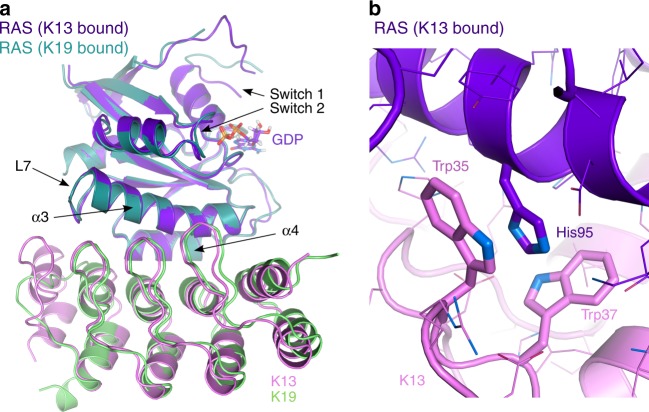
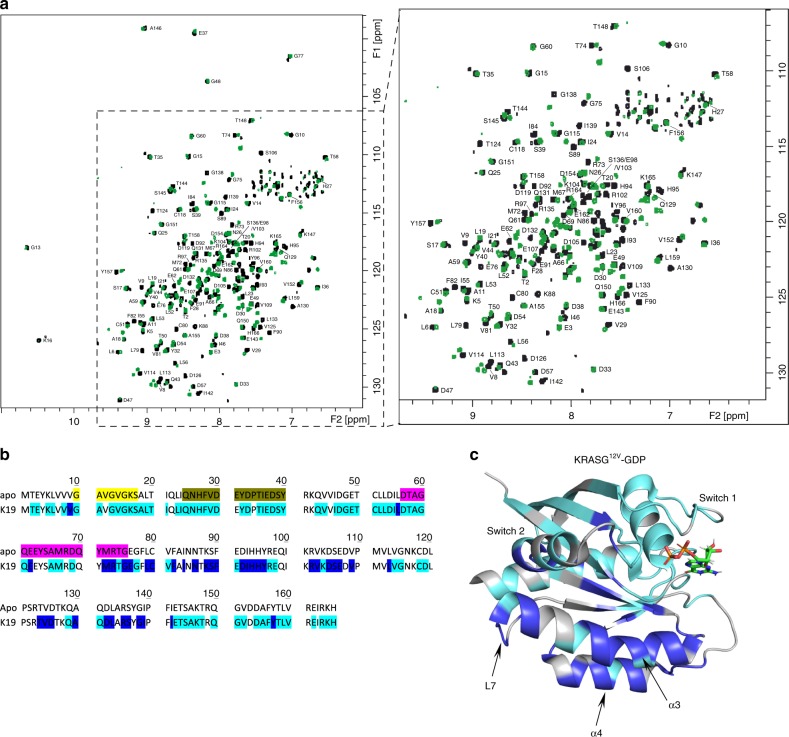
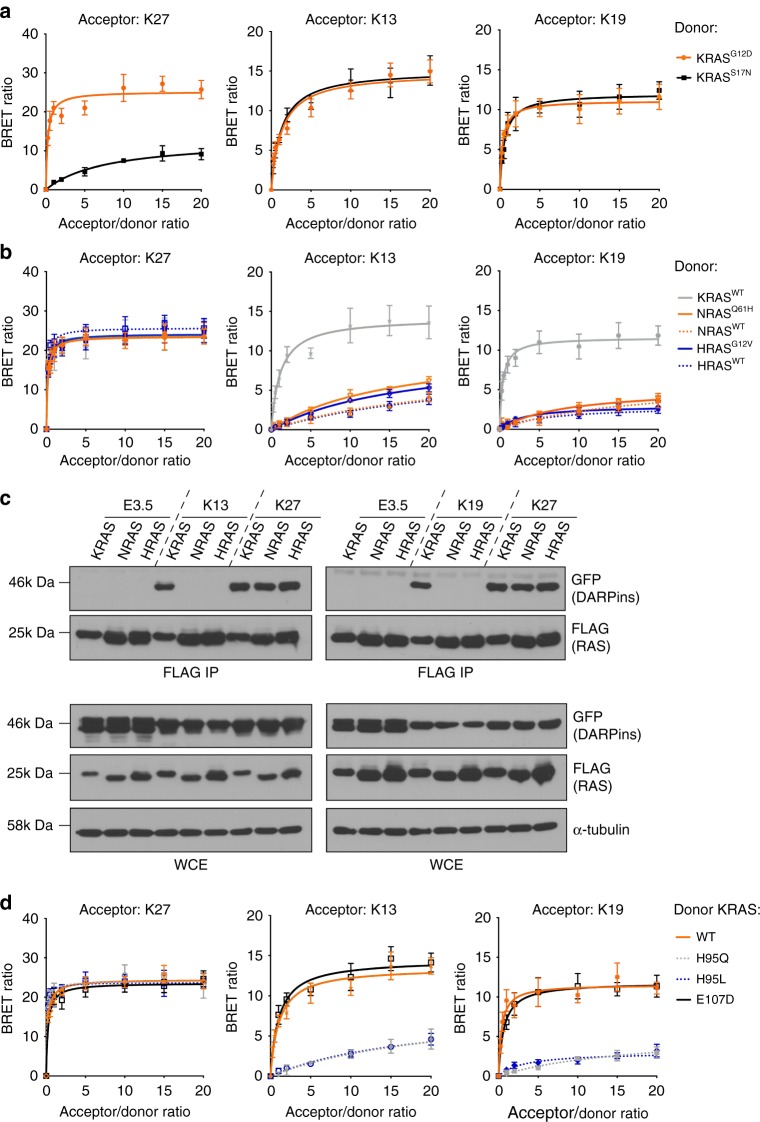
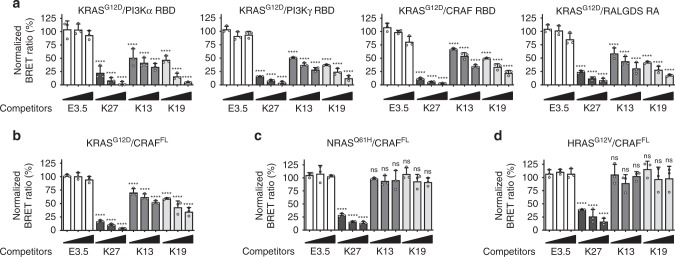
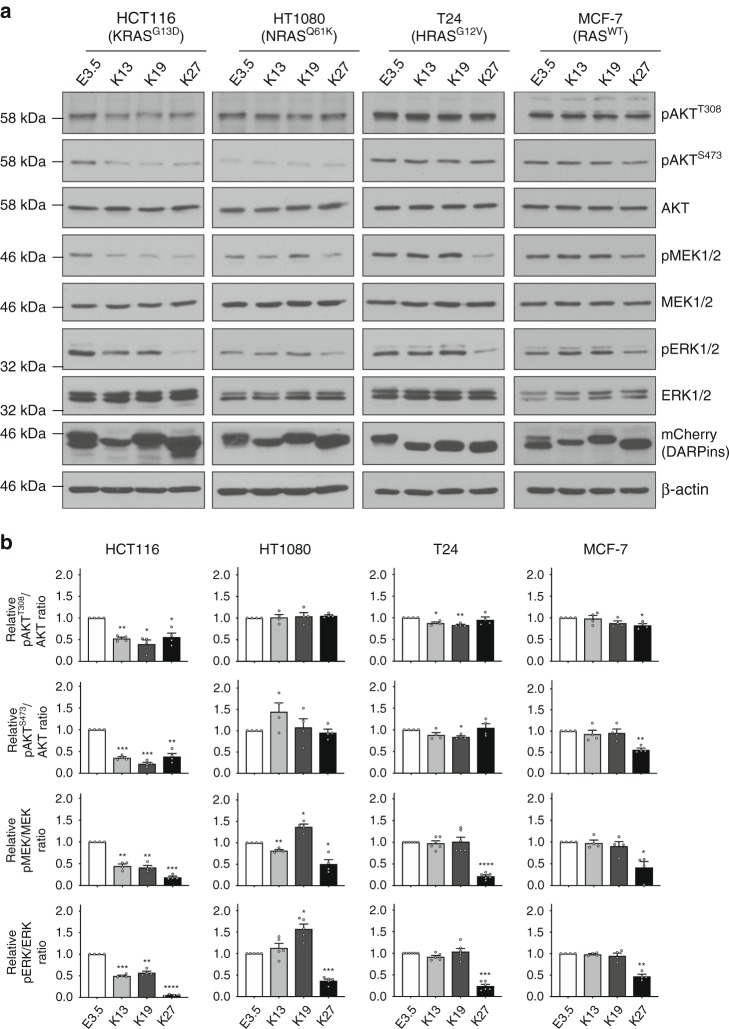
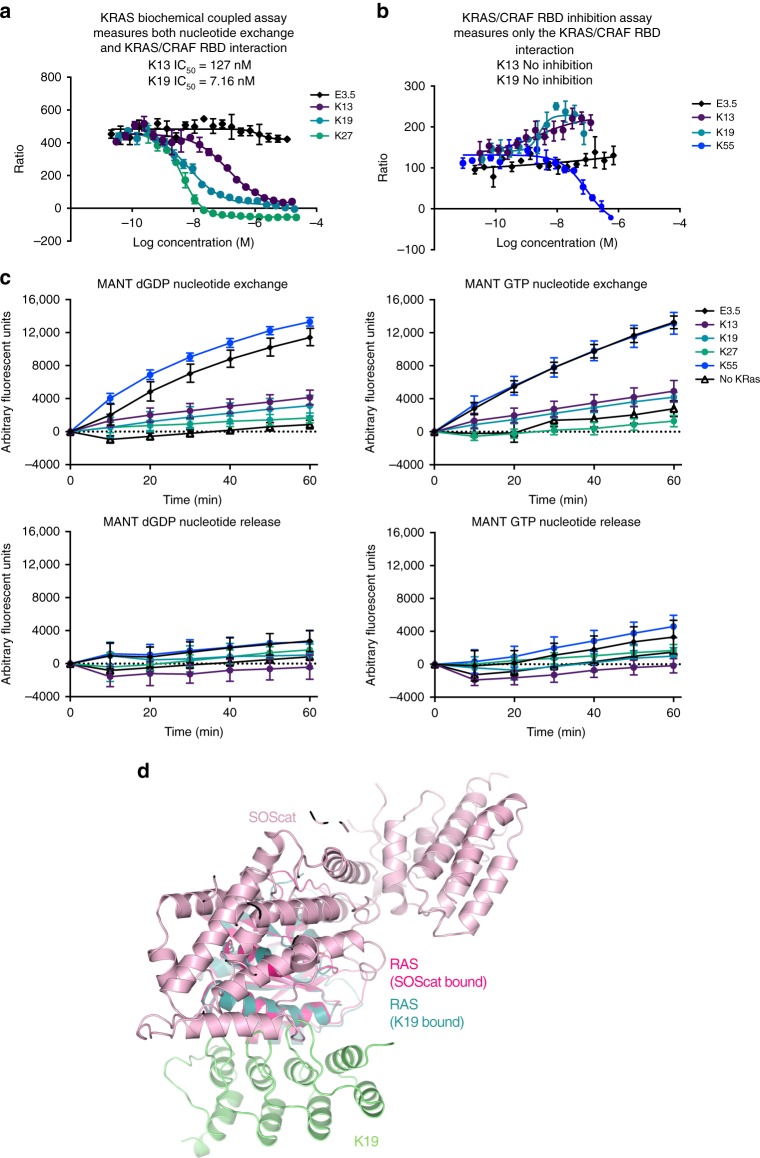
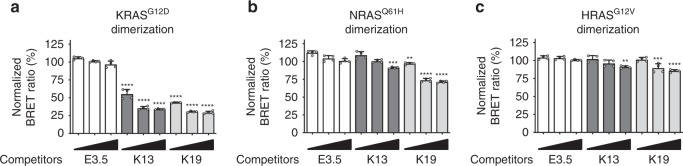
Inhibiting the RAS oncogenic protein has largely been through targeting the switch regions that interact with signalling effector proteins. Here, we report designed ankyrin repeat proteins (DARPins) macromolecules that specifically inhibit the KRAS isoform by binding to an allosteric site encompassing the region around KRAS-specific residue histidine 95 at the helix α3/loop 7/helix α4 interface. We show that these DARPins specifically inhibit KRAS/effector interactions and the dependent downstream signalling pathways in cancer cells. Binding by the DARPins at that region influences KRAS/effector interactions in different ways, including KRAS nucleotide exchange and inhibiting KRAS dimerization at the plasma membrane. These results highlight the importance of targeting the α3/loop 7/α4 interface, a previously untargeted site in RAS, for specifically inhibiting KRAS function.
Overview
The claims and statistics of this paper haven’t been checked yet.
Free: it reads the open-access text and checks the first 5 claims that cite a source we can check. Create a free account to check every claim.
Integrity signals
Registry
Cites
Statistics
Figures
Verification
Claims the paper makes
The claims and statistics of this paper haven’t been checked yet.
Free: it reads the open-access text and checks the first 5 claims that cite a source we can check. Create a free account to check every claim.
Claims other papers make about this one
Each is checked against this paper’s own text: does it say what the citing paper says it does?
The cited source says what the claim attributes to it.
In the citing paper
“These include DARPins [71], cyclic peptides [72], KRAS–RAF protein–protein interaction inhibitors [73], and KRAS–GAP molecular glue-based approaches [74].”
From Precision Targeting of KRAS-Mutant Cancers: Beyond G12C Toward G12D and Pan-RAS Therapeutic Strategies (2026) · cites this paper as [71]
Self-check
Percentages, sums and reported differences re-computed from the paper’s own numbers.
The self-check needs the paper’s full text.
Citations
Cites
Drugging the undruggable RAS: Mission Possible?
Cox, A. D., Fesik, S. W., Kimmelman, A. C., Luo, J., & Der, C. J. (2014) · Nature Reviews Drug Discovery · doi:10.1038/nrd4389 · Cited by 1,997
The emerging mechanisms of isoform-specific PI3K signalling
Vanhaesebroeck, B., Guillermet-Guibert, J., Graupera, M., & Bilanges, B. (2010) · Nature Reviews Molecular Cell Biology · doi:10.1038/nrm2882 · Cited by 1,767
Targeting KRAS mutant cancers with a covalent G12C-specific inhibitor
Janes, M. R., Zhang, J., Li, L.-S., Hansen, R., Peters, U., Guo, X., Chen, Y., Babbar, A., Firdaus, S. J., Darjania, L., et al. (2018) · Cell · doi:10.1016/j.cell.2018.01.006 · Cited by 1,172
RAS isoforms and mutations in cancer at a glance
Hobbs, G. A., Der, C. J., & Rossman, K. L. (2016) · Journal of Cell Science · doi:10.1242/jcs.182873 · Cited by 973
The structural basis of the activation of Ras by Sos
Boriack-Sjodin, P. A., Margarit, S. M., Bar-Sagi, D., & Kuriyan, J. (1998) · Nature · doi:10.1038/28548 · Cited by 799
Stephen, A. G., Esposito, D., Bagni, R. K., & McCormick, F. (2014) · Cancer Cell · doi:10.1016/j.ccr.2014.02.017 · Cited by 795
RAS Interaction with PI3K: More Than Just Another Effector Pathway
Castellano, E., & Downward, J. (2011) · Genes & Cancer · doi:10.1177/1947601911408079 · Cited by 762
Selective inhibition of oncogenic KRAS output with small molecules targeting the inactive state
Patricelli, M. P., Janes, M. R., Li, L.-S., Hansen, R., Peters, U., Kessler, L. V., Chen, Y., Kucharski, J. M., Feng, J., Ely, T., et al. (2016) · Cancer Discovery · doi:10.1158/2159-8290.cd-15-1105 · Cited by 759
Allele-specific inhibitors inactivate mutant KRAS G12C by a trapping mechanism
Lito, P., Solomon, M., Li, L.-S., Hansen, R., & Rosen, N. (2016) · Science · doi:10.1126/science.aad6204 · Cited by 691
Maurer, T., Garrenton, L. S., Oh, A., Pitts, K., Anderson, D. J., Skelton, N. J., Fauber, B. P., Pan, B., Malek, S., Stokoe, D., et al. (2012) · Proceedings of the National Academy of Sciences · doi:10.1073/pnas.1116510109 · Cited by 618
Inhibition of RAS function through targeting an allosteric regulatory site
Spencer-Smith, R., Koide, A., Zhou, Y., Eguchi, R. R., Sha, F., Gajwani, P., Santana, D., Gupta, A., Jacobs, M., Herrero-Garcia, E., et al. (2017) · Nature Chemical Biology · doi:10.1038/nchembio.2231 · Cited by 283
Multivalent Small-Molecule Pan-RAS Inhibitors
Welsch, M. E., Kaplan, A., Chambers, J. M., Stokes, M. E., Bos, P. H., Zask, A., Zhang, Y., Sanchez-Martin, M., Badgley, M. A., Huang, C. S., et al. (2017) · Cell · doi:10.1016/j.cell.2017.02.006 · Cited by 274
Ras-GTP dimers activate the Mitogen-Activated Protein Kinase (MAPK) pathway
Nan, X., Tamgüney, T. M., Collisson, E. A., Lin, L.-J., Pitt, C., Galeas, J., Lewis, S., Gray, J. W., McCormick, F., & Chu, S. (2015) · Proceedings of the National Academy of Sciences · doi:10.1073/pnas.1509123112 · Cited by 273
KRAS Dimerization Impacts MEK Inhibitor Sensitivity and Oncogenic Activity of Mutant KRAS
Ambrogio, C., Köhler, J., Zhou, Z.-W., Wang, H., Paranal, R., Li, J., Capelletti, M., Caffarra, C., Li, S., Lv, Q., et al. (2018) · Cell · doi:10.1016/j.cell.2017.12.020 · Cited by 270
Mazhab-Jafari, M. T., Marshall, C. B., Smith, M. J., Gasmi-Seabrook, G. M. C., Stathopulos, P. B., Inagaki, F., Kay, L. E., Neel, B. G., & Ikura, M. (2015) · Proceedings of the National Academy of Sciences · doi:10.1073/pnas.1419895112 · Cited by 220
Steiner, D., Forrer, P., Stumpp, M. T., & Plückthun, A. (2006) · Nature Biotechnology · doi:10.1038/nbt1218 · Cited by 213
GTP-Dependent K-Ras Dimerization
Muratcioglu, S., Chavan, T. S., Freed, B. C., Jang, H., Khavrutskii, L., Freed, R. N., Dyba, M. A., Stefanisko, K., Tarasov, S. G., Gursoy, A., et al. (2015) · Structure · doi:10.1016/j.str.2015.04.019 · Cited by 202
Ross, S. J., Revenko, A. S., Hanson, L. L., Ellston, R., Staniszewska, A., Whalley, N., Pandey, S. K., Revill, M., Rooney, C., Buckett, L. K., et al. (2017) · Science Translational Medicine · doi:10.1126/scitranslmed.aal5253 · Cited by 177
Novel Allosteric Sites on Ras for Lead Generation
Grant, B. J., Lukman, S., Hocker, H. J., Sayyah, J., Brown, J. H., McCammon, J. A., & Gorfe, A. A. (2011) · PLoS ONE · doi:10.1371/journal.pone.0025711 · Cited by 177
Inhibitors that stabilize a closed RAF kinase domain conformation induce dimerization
Lavoie, H., Thevakumaran, N., Gavory, G., Li, J. J., Padeganeh, A., Guiral, S., Duchaine, J., Mao, D. Y. L., Bouvier, M., Sicheri, F., et al. (2013) · Nature Chemical Biology · doi:10.1038/nchembio.1257 · Cited by 174
Tanaka, T. U., Williams, R. L., & Rabbitts, T. H. (2007) · The EMBO Journal · doi:10.1038/sj.emboj.7601744 · Cited by 170
Self-citationAnalysis of Binding Site Hot Spots on the Surface of Ras GTPase
Buhrman, G., O′Connor, C., Zerbe, B., Kearney, B. M., Napoleon, R., Kovrigina, E. A., Vajda, S., Kozakov, D., Kovrigin, E. L., & Mattos, C. (2011) · Journal of Molecular Biology · doi:10.1016/j.jmb.2011.09.011 · Cited by 159
Cruz-Migoni, A., Canning, P., Quevedo, C. E., Bataille, C. J. R., Bery, N., Miller, A., Russell, A. J., Phillips, S. E. V., Carr, S. B., & Rabbitts, T. H. (2019) · Proceedings of the National Academy of Sciences · doi:10.1073/pnas.1811360116 · Cited by 135
Self-citationQuevedo, C. E., Cruz-Migoni, A., Bery, N., Miller, A., Tanaka, T., Petch, D., Bataille, C. J. R., Lee, L. Y. W., Fallon, P. S., Tulmin, H., et al. (2018) · Nature Communications · doi:10.1038/s41467-018-05707-2 · Cited by 130
Self-citationK-Ras protein as a drug target
McCormick, F. (2016) · Journal of Molecular Medicine · doi:10.1007/s00109-016-1382-7 · Cited by 105
Ras isoform abundance and signalling in human cancer cell lines
Omerovic, J., Hammond, D. E., Clague, M. J., & Prior, I. A. (2008) · Oncogene · doi:10.1038/sj.onc.1210925 · Cited by 103
Structural and functional characterization of a DARPin which inhibits Ras nucleotide exchange
Guillard, S., Kolasinska-Zwierz, P., Debreczeni, J., Breed, J., Zhang, J., Bery, N., Marwood, R., Tart, J., Overman, R., Stocki, P., et al. (2017) · Nature Communications · doi:10.1038/ncomms16111 · Cited by 102
Self-citationMultiplexing of Multicolor Bioluminescence Resonance Energy Transfer
Breton, B., Sauvageau, É., Zhou, J., Bonin, H., Gouill, C. L., & Bouvier, M. (2010) · Biophysical Journal · doi:10.1016/j.bpj.2010.10.025 · Cited by 95
Prakash, P., Sayyed-Ahmad, A., Cho, K.-J., Dolino, D. M., Chen, W., Li, H., Grant, B. J., Hancock, J. F., & Gorfe, A. A. (2017) · Scientific Reports · doi:10.1038/srep40109 · Cited by 93
Membrane-associated Ras dimers are isoform-specific: K-Ras dimers differ from H-Ras dimers
Jang, H., Muratcioglu, S., Gursoy, A., Keskin, O., & Nussinov, R. (2016) · Biochemical Journal · doi:10.1042/bcj20160031 · Cited by 92
Sarkar-Banerjee, S., Sayyed-Ahmad, A., Prakash, P., Cho, K.-J., Waxham, M. N., Hancock, J. F., & Gorfe, A. A. (2017) · Journal of the American Chemical Society · doi:10.1021/jacs.7b06292 · Cited by 81
Structure of the Dominant Negative S17N Mutant of Ras,
Nassar, N. N., Singh, K., & García–Díaz, M. (2010) · Biochemistry · doi:10.1021/bi9020742 · Cited by 58
Bery, N., Cruz-Migoni, A., Bataille, C. J., Quevedo, C. E., Tulmin, H., Miller, A., Russell, A., Phillips, S. E., Carr, S. B., & Rabbitts, T. H. (2018) · eLife · doi:10.7554/elife.37122 · Cited by 55
Self-citationTargeting the α4–α5 dimerization interface of K-RAS inhibits tumor formation in vivo
Khan, I., Spencer-Smith, R., & O’Bryan, J. P. (2019) · Oncogene · doi:10.1038/s41388-018-0636-y · Cited by 54
1H, 13C and 15N resonance assignment for the human K-Ras at physiological pH
Vo, U., Embrey, K. J., Breeze, A. L., & Golovanov, A. P. (2012) · Biomolecular NMR Assignments · doi:10.1007/s12104-012-9413-y · Cited by 25
Self-citationBéry, N., & Rabbitts, T. H. (2019) · Current Protocols in Cell Biology · doi:10.1002/cpcb.83 · Cited by 14
Self-citationAffinity Maturation of Phage Display Antibody Populations Using Ribosome Display
Groves, M. A. T., & Nickson, A. A. (2011) · Methods in molecular biology · doi:10.1007/978-1-61779-379-0_10 · Cited by 11
Béry, N., Cruz-Migoni, A., Bataille, C. J. R., Quevedo, C. E., Tulmin, H., Miller, A., Russell, A. J., Phillips, S. E. V., Carr, S. B., & Rabbitts, T. H. (2018) · eLife · doi:10.7554/elife.40515 · Cited by 10
Self-citation
Cited by
The current understanding of KRAS protein structure and dynamics
Pantsar, T. (2020) · Computational and Structural Biotechnology Journal · doi:10.1016/j.csbj.2019.12.004 · Cited by 282
A potent KRAS macromolecule degrader specifically targeting tumours with mutant KRAS
Bery, N., Miller, A., & Rabbitts, T. (2020) · Nature Communications · doi:10.1038/s41467-020-17022-w · Cited by 132
Self-citationTherapeutic targeting of RAS: New hope for drugging the “undruggable”
Khan, I., Rhett, J. M., & O'Bryan, J. P. (2020) · Biochimica et Biophysica Acta (BBA) - Molecular Cell Research · doi:10.1016/j.bbamcr.2019.118570 · Cited by 110
Intracellular Protein Delivery: Approaches, Challenges, and Clinical Applications
Chan, A., & Tsourkas, A. (2024) · BME Frontiers · doi:10.34133/bmef.0035 · Cited by 99
“Notably, DARPinK27 [54] and DARPinK19 [55] are potent pan-RAS and pan-KRAS inhibitors, respectively.”
Targeting small GTPases: emerging grasps on previously untamable targets, pioneered by KRAS
Yin, G., Huang, J., Petela, J., Jiang, H., Zhang, Y., Gong, S., Wu, J., Liu, B., Shi, J., & Gao, Y. (2023) · Signal Transduction and Targeted Therapy · doi:10.1038/s41392-023-01441-4 · Cited by 82
“Other DARPins, K13 and K19, bind to helix α3-loop 7-α4 in the allosteric lobe of KRAS and inhibit downstream signaling through interruption of GEF-mediated activation, dimerization, and possible allosteric perturbations on conformation of switch regions.(308) NS1 monobody, a synthetic binding protein, binds to α4-β6-α…”
Background
Metadata
- Authors
- Bery, N., Legg, S., Debreczeni, J., Breed, J., Embrey, K., Stubbs, C., Kolasinska-Zwierz, P., Barrett, N., Marwood, R., Watson, J., Tart, J., Overman, R., Miller, A., Phillips, C., Minter, R., & Rabbitts, T. H.
- Affiliations
- AstraZeneca (United Kingdom) (GB)
- John Radcliffe Hospital (GB)
- Corresponding author
- Rabbitts, Terence H.
- ORCID
- Venue
- Nature Communications
- Published
- 2019-06-13
- Volume
- 10
- Issue
- 1
- Pages
- 2607-2607
- ISSN
- 2041-1723 (ISSN-L)
- PMC
- PMC6565726
- OpenAlex
- W2950908936
- Cited by
- 97
- References
- 38
- Citations by year
- 2026: 9 · 2025: 11 · 2024: 8 · 2023: 20 · 2022: 12 · 2021: 13 · 2020: 17 · 2019: 6
- FWCI
- 3.97
- Type
- journal article
- Language
- en
- Open access
- gold
- doi.org
- Licence
- cc-by
- creativecommons.org/licenses/by/4.0 (tdm)
- creativecommons.org/licenses/by/4.0 (vor)
- Locations
- Nature Communications (publishedVersion, cc-by)
- Europe PMC (PubMed Central) (publishedVersion, cc-by)
- PubMed Central (publishedVersion, cc-by)
- PubMed (publishedVersion)
- HAL (submittedVersion, cc-by)
- HAL (submittedVersion)
- RePEc: Research Papers in Economics (submittedVersion)
- DOAJ (DOAJ: Directory of Open Access Journals) (submittedVersion)
- DOAJ (DOAJ: Directory of Open Access Journals) (submittedVersion, cc-by-sa)
- Funders
- Wellcome Trust (099246/Z/12/Z)
- RCUK | Medical Research Council (MR/J000612/1)
- Topics
- Life Sciences › Biochemistry, Genetics and Molecular Biology › Molecular Biology › Protein Kinase Regulation and GTPase Signaling
- Life Sciences › Biochemistry, Genetics and Molecular Biology › Molecular Biology › Protein Tyrosine Phosphatases
- Life Sciences › Biochemistry, Genetics and Molecular Biology › Molecular Biology › Melanoma and MAPK Pathways
- Keywords
- KRAS inhibition, DARPin, allosteric site, oncogenic Ras
- MeSH terms
- Allosteric Site, Antineoplastic Agents, Cell Membrane, Drug Screening Assays, Antitumor, Histidine, Humans, Isoenzymes, Neoplasms, Protein Binding, Drug Design, Signal Transduction, Proto-Oncogene Proteins p21(ras), Ankyrin Repeat, Peptide Library, Cell Line, Tumor, Protein Multimerization, HEK293 Cells
About these checks
Registry, retraction, Cites and statistics results are computed, not judged, with one exception: a printed reference that no index lists is read once by a model before it counts as a citation error. Claims are extracted by a model and kept only when their quote appears verbatim in the text; each cited source is then checked, with a model’s help, for whether it says what the claim relies on. Those verdicts can be wrong — read the claim’s quote and the cited source before relying on one.
Statistics and arithmetic are recomputed, not judged.
Confidence bands are shown only for fields calibrated on our annotated test set. None is calibrated yet, so no band is shown.
What counts as a claim ›How we measure confidence ›How we check this ›
Are you an author, or do you see a problem with this page? Request a review
Data sources
Bibliographic data: Semantic Scholar, OpenAlex, Crossref.
Contains information from the Semantic Scholar Academic Graph Datasets, made available under the ODC Attribution License (ODC-BY 1.0).
Semantic Scholar’s data is described in: Kinney, R., et al. (2023). The Semantic Scholar Open Data Platform. arXiv:2301.10140.
