

Metabolic landscape of the tumor microenvironment at single cell resolution
Open accessThe DOI matches its Crossref record; 67 of the 67 references it cites were found in a registry or an index.
Abstract
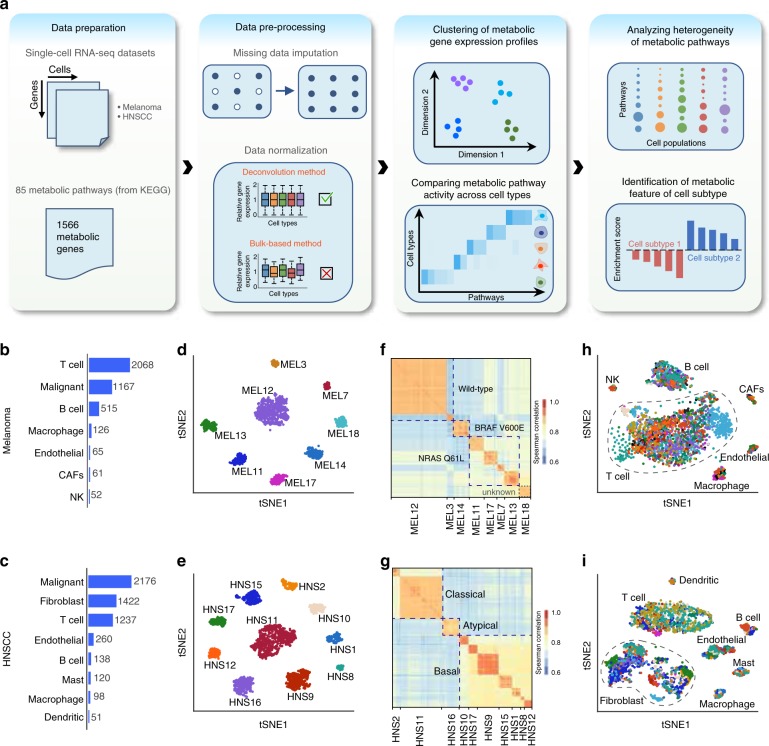
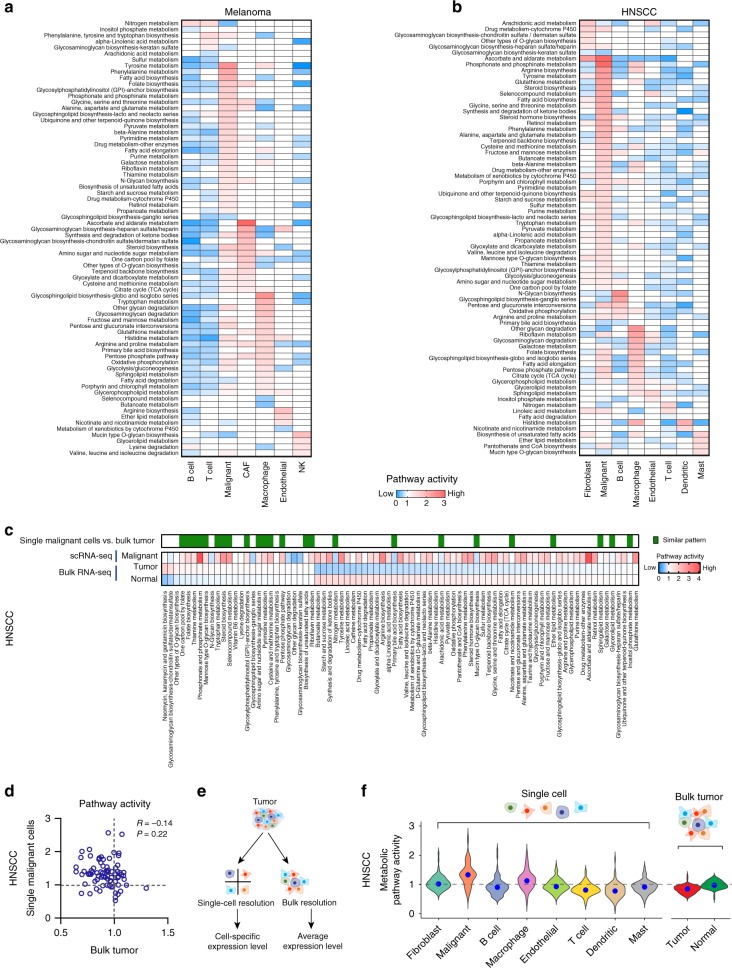
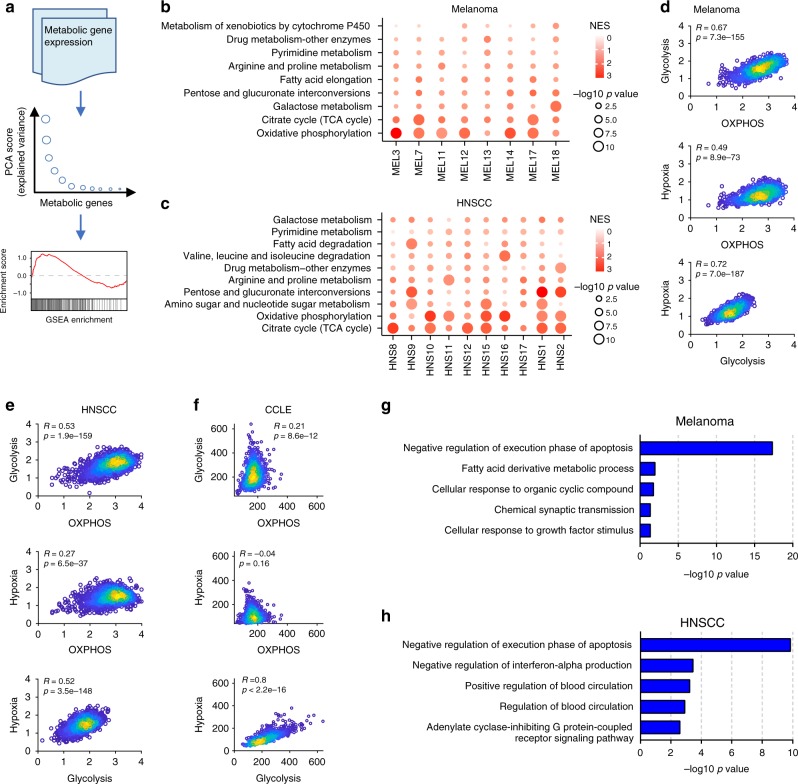
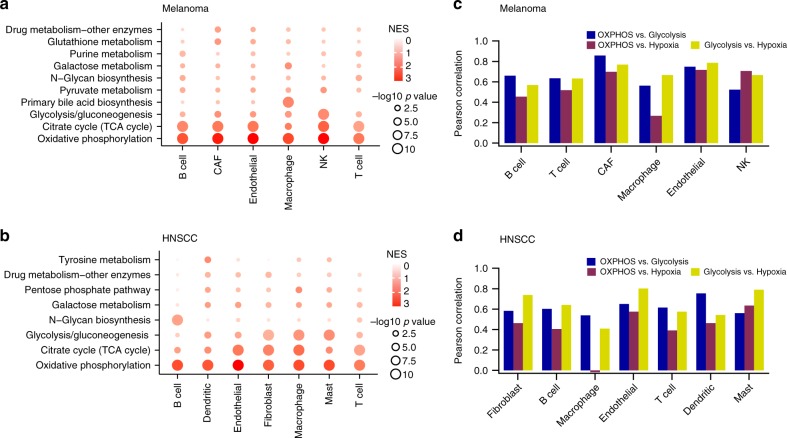
The tumor milieu consists of numerous cell types each existing in a different environment. However, a characterization of metabolic heterogeneity at single-cell resolution is not established. Here, we develop a computational pipeline to study metabolic programs in single cells. In two representative human cancers, melanoma and head and neck, we apply this algorithm to define the intratumor metabolic landscape. We report an overall discordance between analyses of single cells and those of bulk tumors with higher metabolic activity in malignant cells than previously appreciated. Variation in mitochondrial programs is found to be the major contributor to metabolic heterogeneity. Surprisingly, the expression of both glycolytic and mitochondrial programs strongly correlates with hypoxia in all cell types. Immune and stromal cells could also be distinguished by their metabolic features. Taken together this analysis establishes a computational framework for characterizing metabolism using single cell expression data and defines principles of the tumor microenvironment.
Overview
The claims and statistics of this paper haven’t been checked yet.
Free: it reads the open-access text and checks the first 5 claims that cite a source we can check. Create a free account to check every claim.
Integrity signals
Registry
Cites
Statistics
Figures
Verification
Claims the paper makes
The claims and statistics of this paper haven’t been checked yet.
Free: it reads the open-access text and checks the first 5 claims that cite a source we can check. Create a free account to check every claim.
Claims other papers make about this one
Each is checked against this paper’s own text: does it say what the citing paper says it does?
The cited source says what the claim attributes to it.
In the citing paper
“Additionally, a significant correlation has been found between glycolysis, mitochondrial metabolism and local oxygen concentrations in a study conducted on human melanoma and head and neck cancers [236].”
From Tumor microenvironment signaling and therapeutics in cancer progression (2023) · cites this paper as [236]
Self-check
Percentages, sums and reported differences re-computed from the paper’s own numbers.
The self-check needs the paper’s full text.
Citations
Cites
Moderated estimation of fold change and dispersion for RNA-seq data with DESeq2
Love, M. I., Huber, W., & Anders, S. (2014) · Genome Biology · doi:10.1186/s13059-014-0550-8 · Cited by 95,106
Hallmarks of Cancer: The Next Generation
Hanahan, D., & Weinberg, R. A. (2011) · Cell · doi:10.1016/j.cell.2011.02.013 · Cited by 66,590
Subramanian, A., Tamayo, P., Mootha, V. K., Mukherjee, S., Ebert, B. L., Gillette, M. A., Paulovich, A., Pomeroy, S. L., Golub, T. R., Lander, E. S., et al. (2005) · Proceedings of the National Academy of Sciences · doi:10.1073/pnas.0506580102 · Cited by 53,625
Robinson, M. D., McCarthy, D. J., & Smyth, G. K. (2010) · Bioinformatics · doi:10.1093/bioinformatics/btp616 · Cited by 41,364
(2008) · Journal of Machine Learning Research · Cited by 33,051
Differential expression analysis for sequence count data
Anders, S., & Huber, W. (2010) · Genome Biology · doi:10.1186/gb-2010-11-10-r106 · Cited by 15,581
The cancer genome atlas pan-cancer analysis project
The Cancer Genome Atlas Research Network, Weinstein, J. N., Collisson, E. A., Mills, G. B., Shaw, K. R. M., Ozenberger, B. A., Ellrott, K., Shmulevich, I., Sander, C., & Stuart, J. M. (2013) · Nature Genetics · doi:10.1038/ng.2764 · Cited by 9,092
The Cancer Cell Line Encyclopedia enables predictive modelling of anticancer drug sensitivity
Barretina, J., Caponigro, G., Stransky, N., Venkatesan, K., Margolin, A. A., Kim, S., Wilson, C. J., Lehár, J., Kryukov, G. V., Sonkin, D., et al. (2012) · Nature · doi:10.1038/nature11003 · Cited by 7,950
The emerging hallmarks of cancer metabolism
Pavlova, N. N., & Thompson, C. B. (2016) · Cell Metabolism · doi:10.1016/j.cmet.2015.12.006 · Cited by 5,926
Regulatory T Cells and Immune Tolerance
Sakaguchi, S., Yamaguchi, T., Nomura, T., & Ono, M. (2008) · Cell · doi:10.1016/j.cell.2008.05.009 · Cited by 5,325
Cited by
Items 101–200 of 533
Emerging metabolomic tools to study cancer metastasis
Melo, L. M. N., Lesner, N. P., Sabatier, M., Ubellacker, J. M., & Tasdogan, A. (2022) · Trends in cancer · doi:10.1016/j.trecan.2022.07.003 · Cited by 54
Lv, J., Gao, H., Ma, J., Liu, J., Tian, Y., Yang, C., Li, M., Zhao, Y., Li, Z., Zhang, X., et al. (2023) · Frontiers in Immunology · doi:10.3389/fimmu.2023.1230266 · Cited by 48
“Metabolic pathways analysis was established following previously reported methodologies (18).”
MethodTargeting metabolic dysfunction of CD8 T cells and natural killer cells in cancer
Viel, S., Vivier, É., Walzer, T., & Marçais, A. (2024) · Nature Reviews Drug Discovery · doi:10.1038/s41573-024-01098-w · Cited by 66
“This is particularly the case for amino acids and many of them are depleted in the milieu, for example, glutamine 120,125,126 .”
Deng, W., Ma, Y., Su, Z., Liu, Y., Liang, P., Huang, C., Liu, X., Shao, J., Zhang, Y., Zhang, K., et al. (2020) · Molecular Therapy — Oncolytics · doi:10.1016/j.omto.2020.12.003 · Cited by 53
“We also scored pathway activities of subpopulations using a recent algorithm.(48) For the analyses of GSEA and pathway activities, metabolic and hallmark gene sets were downloaded from the GSEA database.”
MethodFotsitzoudis, C., Koulouridi, A., Messaritakis, I., Konstantinidis, T., Gouvas, N., Tsiaoussis, J., & Souglakos, J. (2022) · Cancers · doi:10.3390/cancers14184394 · Cited by 46
Kosaisawe, N., Sparta, B., Pargett, M., Teragawa, C., & Albeck, J. G. (2021) · Cell Metabolism · doi:10.1016/j.cmet.2021.01.014 · Cited by 54
“Current approaches measure the expression profiles of metabolic enzymes (Hartmann et al., 2020; Xiao et al., 2019), rather than directly assessing metabolites or their flux.”
BackgroundHuang, M., Xiong, D., Pan, J., Zhang, Q., Wang, Y., Myers, C. R., Johnson, B. D., Hardy, M., Kalyanaraman, B., & You, M. (2022) · Advanced Science · doi:10.1002/advs.202101267 · Cited by 51
Sarsenova, M., Lawarde, A., Pathare, A. D. S., Saare, M., Modhukur, V., Soplepmann, P., Terasmaa, A., Käämbre, T., Gemzell‐Danielsson, K., Lalitkumar, P. G., et al. (2024) · Communications Biology · doi:10.1038/s42003-024-06713-5 · Cited by 52
“These fi ndings may facilitate further development of alternative strategies of non-hormonal treatment targeting metabolic pathways in endometriosis.”
Hernández-Romero, I. A., Guerra-Calderas, L., Salgado-Albarrán, M., Maldonado-Huerta, T., & Soto‐Reyes, E. (2019) · Frontiers in Oncology · doi:10.3389/fonc.2019.01091 · Cited by 51
Bacigalupa, Z. A., & Rathmell, W. K. (2020) · Cancer Letters · doi:10.1016/j.canlet.2020.05.034 · Cited by 52
Zhang, Y., Zhang, B., Lv, C., Zhang, N., Xing, K., Wang, Z., Lv, R., Yu, M., Xu, C., & Wang, Y. (2023) · Theranostics · doi:10.7150/thno.81407 · Cited by 51
“Through metabolic pathway activity analysis [31], we also found that H1 had a high metabolic activity score in Glycolysis/ Gluconeogenesis pathway and H2 enriched in Steroid hormone biosynthesis (Figure S6).”
BackgroundA pan-cancer metabolic atlas of the tumor microenvironment
Rohatgi, N., Ghoshdastider, U., Baruah, P., Kulshrestha, T., & Skanderup, A. J. (2022) · Cell Reports · doi:10.1016/j.celrep.2022.110800 · Cited by 46
Kumar, P. R., Saad, M., Hellmich, C., Mistry, J. J., Moore, J. A., Conway, S., Morris, C. J., Bowles, K. M., Moncrieff, M. D., & Rushworth, S. A. (2022) · British Journal of Cancer · doi:10.1038/s41416-022-01783-w · Cited by 44
“However, recent research has recently highlighted the importance of oxidative phosphorylation (OXPHOS) in melanoma as well [17, 18], where both OXPHOS and glycolysis both play a significant role in melanoma metabolism [19, 20].”
BackgroundMetabolic rewiring and communication in cancer immunity
Chapman, N. M., & Chi, H. (2024) · Cell chemical biology · doi:10.1016/j.chembiol.2024.02.001 · Cited by 49
“56,241,242 These methods also reveal unique metabolic states among antigen-specific CD8 + T cells during infection and complex metabolic profiles of cells from discrete inflammatory environments, 73,136,243,244 suggesting their further applicability to the tumor context.”
BackgroundE-Cadherin Induces Serine Synthesis to Support Progression and Metastasis of Breast Cancer
Lee, G., Wong, C., Cho, A., West, J. J., Crawford, A. J., Russo, G. C., Si, B. R., Kim, J.-W., Hoffner, L. A., Jang, C., et al. (2024) · Cancer Research · doi:10.1158/0008-5472.can-23-3082 · Cited by 54
Tolerant/Persister Cancer Cells and the Path to Resistance to Targeted Therapy
Swayden, M., Chhouri, H., Anouar, Y., & Grumolato, L. (2020) · Cells · doi:10.3390/cells9122601 · Cited by 52
“Novel strategies to investigate cancer metabolism at a regional [74] and single cell [75] resolution suggest that the TME can also play another, more indirect role in promoting drug resistance, by generating an intratumor metabolic heterogeneity [76] that can favor the emergence of tolerant/persister cells during trea…”
BackgroundZhang, T., Zhuang, L., Muaibati, M., Wang, D., Abasi, A., Tong, Q., Ma, D., Jin, L., & Huang, X. (2023) · EBioMedicine · doi:10.1016/j.ebiom.2023.104612 · Cited by 49
Qin, S., Xie, B., Wang, Q., Yang, R., Sun, J., Hu, C., Liu, S., Tao, Y., & Xiao, D. (2024) · MedComm · doi:10.1002/mco2.551 · Cited by 43
“104,105 And the variation of mitochondrial activity is the leading cause of metabolic heterogeneity between tumor cells and nontumor cells.”
BackgroundscTPA: a web tool for single-cell transcriptome analysis of pathway activation signatures
Zhang, Y., Zhang, Y., Hu, J. S., Zhang, J., Guo, F., Zhou, M., Zhang, G., Yu, F., & Su, J. (2020) · Bioinformatics · doi:10.1093/bioinformatics/btaa532 · Cited by 39
Spatial biology using single-cell mass spectrometry imaging and integrated microscopy
Potthoff, A., Schwenzfeier, J., Niehaus, M., Bessler, S., Hoffmann, E., Soehnlein, O., Höhndorf, J., Dreisewerd, K., & Soltwisch, J. (2025) · Nature Communications · doi:10.1038/s41467-025-64603-8 · Cited by 61
“This tissue type typically contains a large number of different cell types in a wide range of states, translating to a wide variety of metabolic microenvironments (tumor microenvironment (TME)) of different size and shape and a highly heterogeneous lipid pro fi le across the tissue 41 .”
Sung, J., & Cheong, J. (2022) · Cells · doi:10.3390/cells11050768 · Cited by 51
“Although several studies have reported the influence of metabolic reprogramming [6] on immunotherapeutic responses, a more thorough understanding of the mechanistical implication of cell type-specific metabolic reprogramming in therapeutic responses is necessary to improve immune-directed cancer therapy.”
BackgroundZhao, W., Wang, Y., Liu, J., Yang, Q., Zhang, S., Hu, X., Shi, Z., Zhang, Z., Tian, J., Chu, D., et al. (2023) · Endocrinology · doi:10.1210/endocr/bqad169 · Cited by 44
Wang, D., Zhang, X., Liu, H., Qiu, B., Liu, S., Zheng, C., Fu, J., Mo, Y., Chen, N., Zhou, R., et al. (2022) · European Journal of Nuclear Medicine and Molecular Imaging · doi:10.1007/s00259-022-05904-8 · Cited by 44
“Hence, the higher values of SUVmean and Patlak-Ki in the F-DFM group might result from the higher infiltrations of T cells (CD3+/CD8+) and macrophages (CD68+/CD163+) in the TME.”
BackgroundInfluentialA Single‐Cell Metabolic Profiling Characterizes Human Aging via SlipChip‐SERS
Liu, F., Liu, J., Luo, Y., Wu, S., Liu, X., Chen, H., Luo, Z., Yuan, H., Shen, F., Zhu, F., et al. (2024) · Advanced Science · doi:10.1002/advs.202406668 · Cited by 48
Campioni, G., Pasquale, V., Busti, S., Ducci, G., Sacco, E., & Vanoni, M. (2022) · Cells · doi:10.3390/cells11050866 · Cited by 39
Daverio, Z., Balcerczyk, A., Rautureau, G. J. P., & Panthu, B. (2023) · Cancers · doi:10.3390/cancers15051417 · Cited by 43
“The main metabolic heterogeneity in tumours is now suggested to be mitochondrial activity [93,94], that is promoted and sustained by lactic acidosis.”
BackgroundRajan, S., Ringwalt, E. M., McAloney, C. A., Vetter, T. A., Cam, M., Gross, A. C., Taslim, C., Wang, M., Cannon, M. V., Oles, A. R., et al. (2023) · BMC Biology · doi:10.1186/s12915-023-01593-3 · Cited by 45
“Our findings align with those reported in recent single-cell sequencing studies in other cancers, which also showed heterogeneous activation of glycolytic pathways [31].”
Zhang, Q., Pan, J., Xiong, D., Wang, Y., Miller, M. S., Sei, S., Shoemaker, R. H., Izzotti, A., & You, M. (2021) · Advanced Science · doi:10.1002/advs.202100629 · Cited by 39
Huang, Q., Chen, H., Yin, D., Wang, J., Wang, S., Feng, Y., Li, J., Mu, T., Li, J., Zhao, J., et al. (2024) · npj Precision Oncology · doi:10.1038/s41698-024-00509-w · Cited by 37
Bevilacqua, A., Franco, F., Lu, Y.-T., Rahiman, N., Kao, K., Chuang, Y., Zhu, Y., Held, W., Xie, X., Gunsalus, K. C., et al. (2024) · Science Immunology · doi:10.1126/sciimmunol.adn2717 · Cited by 35
Fu, Y., Guo, X., Sun, L., Cui, T., Wu, C., Wang, J., Liu, Y., & Liu, L. (2024) · eLife · doi:10.7554/elife.95009 · Cited by 39
“The ECM serves as a critical medium through receptors such as integrins and CD44 for intercellular communication, providing a surface for cell adhesion and migration and sequestering secreted molecules ( Dey et al., 2021 ; Xiao et al., 2019 ).”
BackgroundJawa, Y., Yadav, P., Gupta, S., Mathan, S. V., Pandey, J., Saxena, A. K., Kateriya, S., Tiku, A. B., Mondal, N., Bhattacharya, J., et al. (2021) · Frontiers in Oncology · doi:10.3389/fonc.2021.676948 · Cited by 39
Meng, X., Zheng, Y., Zhang, L., Liu, P., Liu, Z., & He, Y. (2024) · Cancer Research · doi:10.1158/0008-5472.can-23-1344 · Cited by 40
Barbosa, B. A., van Asten, S. D., Oh, J. W., Sarasqueta, A. F., Verheij, J., Dijk, F., van Laarhoven, H. W. M., Ylstra, B., García-Vallejo, J. J., van de Wiel, M. A., et al. (2021) · Nature Communications · doi:10.1038/s41467-021-26328-2 · Cited by 42
Duan, N., Hua, Y., Yan, X., He, Y., Zeng, T., Gong, J., Fu, Z., Li, W., & Yin, Y. (2024) · Advanced Science · doi:10.1002/advs.202309424 · Cited by 38
Total Cellular ATP Production Changes With Primary Substrate in MCF7 Breast Cancer Cells
Louie, M. C., Ton, J., Brady, M. L., Le, D. T., Mar, J. N., Lerner, C. A., Gerencser, A. A., & Mookerjee, S. A. (2020) · Frontiers in Oncology · doi:10.3389/fonc.2020.01703 · Cited by 32
Challenges in Studying Stem Cell Metabolism
Perez-Ramirez, C. A., & Christofk, H. R. (2021) · Cell stem cell · doi:10.1016/j.stem.2021.02.016 · Cited by 33
Li, Y., Wu, Y., & Hu, Y. (2021) · Frontiers in Immunology · doi:10.3389/fimmu.2021.641883 · Cited by 34
“For instance, a previous single-cell study revealed a metabolic heterogeneity among cells in TME, with mitochondrial programs being the most distinguishing factor in shaping this heterogeneity in malignant cells and immune cells (72).”
BackgroundTargeting metabolic pathways to counter cancer immunotherapy resistance
Agarwala, Y., Brauns, T. A., Sluder, A. E., Poznansky, M. C., & Gemechu, Y. (2024) · Trends in Immunology · doi:10.1016/j.it.2024.05.006 · Cited by 34
Current methods in translational cancer research
Lee, M. W., Miljanic, M., Triplett, T., Ramírez, C., Aung, K. L., Eckhardt, S., & Capasso, A. (2020) · Cancer and Metastasis Reviews · doi:10.1007/s10555-020-09931-5 · Cited by 33
Nanomedicines Targeting Metabolism in the Tumor Microenvironment
Ren, M., Zheng, X., Gao, H., Jiang, A., Yao, Y., & He, W. (2022) · Frontiers in Bioengineering and Biotechnology · doi:10.3389/fbioe.2022.943906 · Cited by 35
Microglial immunometabolism endophenotypes contribute to sex difference in Alzheimer's disease
Hou, Y., Caldwell, J., Lathia, J. D., Leverenz, J. B., Pieper, A. A., Cummings, J. L., & Cheng, F. (2023) · Alzheimer s & Dementia · doi:10.1002/alz.13546 · Cited by 31
Kalla, J., Pfneissl, J., Mair, T., Tran, L., & Egger, G. (2024) · Cellular Oncology · doi:10.1007/s13402-024-00960-8 · Cited by 34
MMP9 and IGFBP1 Regulate Tumor Immune and Drive Tumor Progression in Clear Cell Renal Cell Carcinoma
Xu, T., Gao, S., Liu, J., Huang, Y., Chen, K., & Zhang, X. (2021) · Journal of Cancer · doi:10.7150/jca.48664 · Cited by 32
“At present, we recognize that tumor is not simply a cell mass composed of malignant cells but is actually composed of many non-malignant cells [43,44].”
BackgroundZhang, X., Chen, D.-G., Li, S. C., Zhu, B., & Li, Z. (2021) · Cells · doi:10.3390/cells10040903 · Cited by 32
Recent advances of microcalorimetry for studying cellular metabolic heat
Wang, Y., Zhu, H., Feng, J., & Neužil, P. (2021) · TrAC Trends in Analytical Chemistry · doi:10.1016/j.trac.2021.116353 · Cited by 32
Metabolic regulation of immune cells in proinflammatory microenvironments and diseases during ageing
Li, P., Zhang, R., Cheng, L., Liu, J., & Chen, H. (2020) · Ageing Research Reviews · doi:10.1016/j.arr.2020.101165 · Cited by 33
Bi, G., Bian, Y., Liang, J., Yin, J., Li, R., Zhao, M., Huang, Y., Lu, T., Zhan, C., Fan, H. X., et al. (2021) · Journal of Translational Medicine · doi:10.1186/s12967-021-02889-0 · Cited by 31
“’s study on tumor metabolic microenvironment at single-cell resolution noted the significant positive correlation between OXPHOS and glycolysis in melanoma and HNSC [7].”
BackgroundInfluentialSingle-cell immune checkpoint landscape of PBMCs stimulated with Candida albicans
Deng, W., Su, Z., Liang, P., Ma, Y., Liu, Y., Zhang, K., Zhang, Y., Liang, T., Shao, J., Liu, X., et al. (2021) · Emerging Microbes & Infections · doi:10.1080/22221751.2021.1942228 · Cited by 29
Aria, H., Rezaei, M., Nazem, S., Daraei, A., Nikfar, G., Mansoori, B., Bahmanyar, M., Tavassoli, A., Vakil, M. K., & Mansoori, Y. (2022) · Frontiers in Immunology · doi:10.3389/fimmu.2022.947885 · Cited by 28
Song, H., Tang, X., Liu, M., Wang, G., Yuan, Y., Pang, R., Wang, C., Zhou, J., Yang, Y., Zhang, M., et al. (2024) · iScience · doi:10.1016/j.isci.2024.110682 · Cited by 28
Single cell atlas reveals multilayered metabolic heterogeneity across tumour types
Zhou, Z. C., Dong, D., Yuan, Y., Luo, J., Liu, X., Chen, L.-Y., Wang, G., & Yin, Y. (2024) · EBioMedicine · doi:10.1016/j.ebiom.2024.105389 · Cited by 32
“12,13 Computational methods for inferring metabolic fl ow from bulk and scRNA-seq data have been developed, providing valuable insights into the tumour metabolic microenvironment.”
Li, Q., Dang, M., He, A., Li, X., Ding, M., Dai, Z., Zhang, Y., Xiu, W., Wang, S., Huang, Z., et al. (2025) · ACS Nano · doi:10.1021/acsnano.5c10671 · Cited by 28
Arlt, B., Zasada, C., Baum, K., Wünschel, J., Mastrobuoni, G., Lodrini, M., Astrahantseff, K., Winkler, A., Schulte, J. H., Finkler, S., et al. (2020) · International Journal of Cancer · doi:10.1002/ijc.33423 · Cited by 25
“pathway activity in tumor cells appeared to be more plastic than that of normal cells in the tumor microenvironment, which have distinct metabolic features differing from tumor cells.(50) At this stage, one can only speculate that metabolic flux and absolute metabolite quantities”
BackgroundSingle-Cell Transcriptome Comparison of Bladder Cancer Reveals Its Ecosystem
Luo, Y., Tao, T., Tao, R., Huang, G., & Wu, S. (2022) · Frontiers in Oncology · doi:10.3389/fonc.2022.818147 · Cited by 32
“The Kyoto Encyclopedia of Genes and Genomes (KEGG) annotations were collected from previous work (12), and GO annotations were downloaded from NCBI (ftp://ftp.”
MethodAerosolized miR-138-5p and miR-200c targets PD-L1 for lung cancer prevention
Zhang, Q., Pan, J., Xiong, D., Zheng, J., McPherson, K. N., Lee, S., Huang, M., Xu, Y., Chen, S., Wang, Y., et al. (2023) · Frontiers in Immunology · doi:10.3389/fimmu.2023.1166951 · Cited by 37
“We utilized computational methods described previously (31) to perform imputation and other data processing procedures.”
Hindes, M. T., McElligott, A. M., Best, G., Ward, M. P., Selemidis, S., Miles, M. A., Nturubika, B. D., Gregory, P. A., Anderson, P., Logan, J. M., et al. (2025) · Cancer Letters · doi:10.1016/j.canlet.2025.217441 · Cited by 29
Tumor-instructed glutamine synthesis in cancer-associated fibroblasts promotes pro-tumor macrophages
Li, X., Møller, S. H., Park, J., Chuang, Y., Hsueh, P., Chang, T.-H., Kao, K., Gallart‐Ayala, H., Wang, Y., Peng, J.-J., et al. (2025) · The Journal of Experimental Medicine · doi:10.1084/jem.20241426 · Cited by 34
Wang, F., Zhang, Y., Hao, Y., Li, X., Qi, Y., Xin, M., Xiao, Q., & Wang, P. (2021) · Frontiers in Cell and Developmental Biology · doi:10.3389/fcell.2021.702112 · Cited by 27
Improving Cancer Immunotherapy: Exploring and Targeting Metabolism in Hypoxia Microenvironment
Wei, J., Hu, M., & Du, H. (2022) · Frontiers in Immunology · doi:10.3389/fimmu.2022.845923 · Cited by 34
“Third, previous conclusions are too simplistic for cancer to analyze the complex TME, as there is a high correlation between hypoxia and glycolysis as well asOXPHOS in tumors (114).”
BackgroundMethodKanwore, K., Kanwore, K., Adzika, G. K., Abiola, A. A., Guo, X., Kambey, P. A., Xia, Y., & Gao, D. (2022) · Frontiers in Immunology · doi:10.3389/fimmu.2022.831636 · Cited by 26
Yan, Z., Li, L., Fu, D., Wu, W., Qiao, N., Huang, Y., Jiang, L., Wu, D., Hu, Y., Zhang, H., et al. (2023) · Frontiers of Medicine · doi:10.1007/s11684-022-0972-8 · Cited by 28
Horny, K., Sproll, C. K., Peiffer, L., Furtmann, F., Gerhardt, P., Gravemeyer, J., Stoecklein, N. H., Spassova, I., & Becker, J. C. (2023) · Journal of Translational Medicine · doi:10.1186/s12967-023-04102-w · Cited by 31
“While previous studies suggested that the activity of specific metabolic pathways in OSCC varies widely among patients [60], we observed that hypoxia- and stress-related gene expression patterns are similar between patients, supporting the notion of a reactive response rather than an aspect of individual tumor evoluti…”
ResultTranscriptional Heterogeneity of Cellular Senescence in Cancer
Junaid, M., Lee, A., Kim, J., Park, T. J., & Lim, S. B. (2022) · Molecules and Cells · doi:10.14348/molcells.2022.0036 · Cited by 28
“tivity specifically higher in malignant cells, which can only be detected with gene expression profiling at the single-cell level (Xiao et al., 2019).”
BackgroundWang, D., Qiu, B., Liu, Q., Xia, L., Liu, S., Zheng, C., Liu, H., Mo, Y., Zhang, X., Hu, Y., et al. (2023) · European Journal of Nuclear Medicine and Molecular Imaging · doi:10.1007/s00259-023-06298-x · Cited by 26
Qin, S., Zhang, Y., Shi, M., Miao, D., Lu, J., Wen, L., & Bai, Y. (2024) · Nature Communications · doi:10.1038/s41467-024-48865-2 · Cited by 32
“14 and 15).”
Longitudinal molecular profiling elucidates immunometabolism dynamics in breast cancer
Wang, K., Zerdes, I., Johansson, H. J., Sarhan, D., Sun, Y., Kanellis, D. C., Sifakis, E. G., Mezheyeuski, A., Liu, X., Loman, N., et al. (2024) · Nature Communications · doi:10.1038/s41467-024-47932-y · Cited by 26
“21, 22).”
Insights into Metabolic Reprogramming in Tumor Evolution and Therapy
Chiu, C., Guerrero, J. J. G., Regalado, R. R. H., Zhou, J., Notarte, K. I., Lu, Y., Encarnacion, P. C., Carles, C., Octavo, E. M., Limbaroc, D. C. I., et al. (2024) · Cancers · doi:10.3390/cancers16203513 · Cited by 27
“It is now evident that cancer’s metabolic network is not reliant on a singular pathway but involves complex interactions among multiple inter-related pathways [149,150].”
Zhu, M., Li, N., Fan, L., Wu, R., Cao, L., Ren, Y., Lu, C., Zhang, L., Cai, Y., Shi, Y., et al. (2024) · Blood Cancer Journal · doi:10.1038/s41408-024-01199-0 · Cited by 27
“The genes within module two, three, and four that were recognized from pseudotime analysis were considered as potential therapeutic targets.”
Metformin: Targeting the Metabolo-Epigenetic Link in Cancer Biology
Cuyàs, E., Verdura, S., Martín-Castillo, B., & Menéndez, J. A. (2021) · Frontiers in Oncology · doi:10.3389/fonc.2020.620641 · Cited by 28
“org 5 consumption on and release from chromatin (88)? Can metformin reconduct the same core metabolic pathways or metabolites to establish distinct epigenetic signatures of the heterogenous tumor microenvironment at the single cell level (89)? Can metabolic regulation of higher-order genomic organizers elicit a metfor…”
BackgroundGao, J., Zhang, Z., Liu, Y., Zhang, Z., Wang, M., Gong, A., Xia, L., Liao, X., Wang, D., & Zhu, H. (2021) · Oxidative Medicine and Cellular Longevity · doi:10.1155/2021/6629804 · Cited by 23
“Cells adapt to the H/NS microenvironment depending on metabolism reprogramming [17].”
BackgroundRetractedTissue Nutrient Environments and Their Effect on Regulatory T Cell Biology
Blagih, J., Hennequart, M., & Zani, F. (2021) · Frontiers in Immunology · doi:10.3389/fimmu.2021.637960 · Cited by 28
Metabolic and Immunological Subtypes of Esophageal Cancer Reveal Potential Therapeutic Opportunities
King, R. J., Qiu, F., Yu, F., & Singh, P. K. (2021) · Frontiers in Cell and Developmental Biology · doi:10.3389/fcell.2021.667852 · Cited by 25
“It has been observed that expression of enzyme-coding messenger RNAs (mRNAs) can be utilized to estimate metabolic flux (Lee et al., 2012; Mehrmohamadi et al., 2014; Xiao et al., 2019).”
BackgroundPharmacologic approaches to amino acid depletion for cancer therapy
Wilder, C. S., Chen, Z., & DiGiovanni, J. (2021) · Molecular Carcinogenesis · doi:10.1002/mc.23349 · Cited by 25
“bolism of individual cell types in a heterogeneous tumor and the TME.(293) Better understanding of how tumor metabolism is regulated in vivo will allow for more accurate targeting of cancer metabolism and will provide additional insights for combinatorial approaches to”
BackgroundInfluentialTumor metabolism rewiring in epithelial ovarian cancer
Wang, M., Zhang, J., & Wu, Y. (2023) · Journal of Ovarian Research · doi:10.1186/s13048-023-01196-0 · Cited by 33
Ouyang, Y., Gu, Y., Zhang, X., Huang, Y., Wei, X., Tang, F., & Zhang, S. (2024) · BMC Cancer · doi:10.1186/s12885-024-12025-y · Cited by 27
“Oxidative phosphorylation was remarkably upregulated in malignant cells, which is consistent with previous single-cell studies [38].”
ResultQin, Y., Liu, T., Guo, M., Liu, Y., Liu, C., Chen, Y., & Qu, D. (2020) · Biomaterials Science · doi:10.1039/d0bm00498g · Cited by 24
Sun, X., Nong, M.-Y., Meng, F., Xiaojuan, S., Jiang, L., Li, Z., & Zhang, P. (2024) · Journal of Translational Medicine · doi:10.1186/s12967-024-05138-2 · Cited by 24
“Following the protocol outlined in the study by Xiao et al. [45], we defined the pathway activity score as the average of the relative gene expression values of all genes within a single metabolic pathway and across all cells of a specific type.”
MethodThe landscape of metabolic pathway dependencies in cancer cell lines
Joly, J. H., Chew, B. T. L., & Graham, N. A. (2021) · PLoS Computational Biology · doi:10.1371/journal.pcbi.1008942 · Cited by 31
“Normalized Weighted Average Expression (NWAS) was calculated 590 as in [37].”
MethodSearching for the Metabolic Signature of Cancer: A Review from Warburg’s Time to Now
Jacquet, P., & Stéphanou, A. (2022) · Biomolecules · doi:10.3390/biom12101412 · Cited by 31
“(2019) [40], who clearly established that cancer cells use both modes of energy production simultaneously, but in different proportions.”
BackgroundResultInfluentialMetabolism heterogeneity in melanoma fuels deactivation of immunotherapy: Predict before protect
Zhang, X., Tai, Z., Miao, F., Huang, H., Zhu, Q., Bao, L., & Chen, Z. (2022) · Frontiers in Oncology · doi:10.3389/fonc.2022.1046102 · Cited by 25
“Direct blockade of glycolysis allows T cells to preferentially migrate to lymphoid tissues and infiltrate tumors (119, 154, 157, 206).”
BackgroundInfluentialShang, X., Zhang, C., Kong, R., Zhao, C., & Wang, H. (2023) · The Oncologist · doi:10.1093/oncolo/oyad261 · Cited by 26
Metabolic Constrains Rule Metastasis Progression
Roda, N., Gambino, V., & Giorgio, M. (2020) · Cells · doi:10.3390/cells9092081 · Cited by 23
“Single-cell gene expression profiling of head and neck squamous cell carcinoma (HNSCC) and melanoma revealed that cells from the same tumor may significantly differ in the expression of genes involved both in oxidative phosphorylation (OXPHOS) and glycolysis [105].”
BackgroundRecent advances in understanding the role of metabolic heterogeneities in cell migration
Mosier, J. A., Wu, Y., & Reinhart‐King, C. A. (2021) · Faculty Reviews · doi:10.12703/r/10-8 · Cited by 23
Guan, J., Xu, X., Qiu, G., He, C., Lu, X., Wang, K., Liu, X., Li, Y., Ling, Z., Tang, X., et al. (2023) · Journal of Experimental & Clinical Cancer Research · doi:10.1186/s13046-023-02734-w · Cited by 25
“Single-cell RNA sequencing (scRNA-seq) has emerged as a powerful tool for dissecting cellular hierarchies [22], and there has been a study utilizing this technique on metabolic characteristics in cellular hierarchies of tumor cells [23].”
Sharma, A., Nair, R., Achreja, A., Mittal, A., Gupta, P., Balakrishnan, K., Edgar, C. L., Animasahun, O. H., Dwivedi, B., Barwick, B. G., et al. (2022) · Science Advances · doi:10.1126/sciadv.abq5575 · Cited by 25
“In addition, intratumoral metabolic heterogeneity consequent to location, proximity to nutrients, and hypoxia is increasingly recognized (74).”
BackgroundZhang, X., Zhao, Z., Wu, Q., Wang, L., Li, L., Wang, M., Ren, Y., Pan, L., Tang, H., & Li, F. (2023) · Cell Reports · doi:10.1016/j.celrep.2023.112177 · Cited by 20
Metabolic Reprogramming, Questioning, and Implications for Cancer
Jacquet, P., & Stéphanou, A. (2021) · Biology · doi:10.3390/biology10020129 · Cited by 25
“Indeed, it is now established that cancer cells use both modes of energy production (fermentation and respiration) simultaneously, but in different proportions [13].”
BackgroundInfluentialIdentification of Pan-Cancer Biomarkers Based on the Gene Expression Profiles of Cancer Cell Lines
Ding, S., Li, H., Zhang, Y., Zhou, X., Feng, K., Li, Z., Chen, L., Huang, T., & Cai, Y. (2021) · Frontiers in Cell and Developmental Biology · doi:10.3389/fcell.2021.781285 · Cited by 25
“(Xiao et al., 2019) downloaded the raw RNA-Seq data from Cancer Cell Line Encyclopedia (CCLE) (Ghandi et al.”
MethodBabaei‐Jadidi, R., Kashfi, H., Alelwani, W., Bakhtiari, A. K., Kattan, S. W., Mansouri, O. A., Mukherjee, A., Lobo, D. N., & Nateri, A. S. (2022) · Oncogenesis · doi:10.1038/s41389-021-00376-1 · Cited by 21
“Interestingly, a recent effort through differential expression analyses across tissue types, clearly observed that several metabolic genes and pathways define the mechanism of divergence between healthy tissue adjacent to tumour [10, 78].”
BackgroundZhang, P., Wang, L., Liu, H., Lin, S., & Guo, D. (2025) · BMC Cancer · doi:10.1186/s12885-025-13650-x · Cited by 22
“To differentiate metabolic pathway activities among distinct subpopulations of malignant cells, we adopted analytical techniques referenced in literature [36], which allowed for the detailed quantification of metabolic activity variations.”
Schmidt, C. A., McLaughlin, K., Boykov, I. N., Mojalagbe, R., Ranganathan, A., Buddo, K. A., Lin, C., Fisher‐Wellman, K. H., & Neufer, P. D. (2021) · Cancer & Metabolism · doi:10.1186/s40170-021-00241-0 · Cited by 17
Xu, C., Zhong, W., & Xing, P. (2022) · Lipids in Health and Disease · doi:10.1186/s12944-022-01651-9 · Cited by 21
Liu, C., Liu, D., Wang, F., Xie, J., Liu, Y., Wang, H., Rong, J., Xie, J., Wang, J., Zeng, R., et al. (2022) · Frontiers in Cell and Developmental Biology · doi:10.3389/fcell.2022.971992 · Cited by 18
“To adapt to a complex immune microenvironment, tumor cells develop dynamic metabolic heterogeneity, which has been identified as a critical feature of cancer (Xiao et al., 2019).”
BackgroundZhao, Q., Yu, Z., Zhang, S., Shen, X.-R., Yang, H., Xu, Y., Liu, Y., Yang, L., Zhang, Q., Chen, J., et al. (2022) · iScience · doi:10.1016/j.isci.2022.105319 · Cited by 20
Wen, M., Liu, X., Li, N., Bian, X., Zhao, Y., He, J., Zhou, T., & Wu, J. (2022) · Food Chemistry · doi:10.1016/j.foodchem.2022.134988 · Cited by 20
Heller, G., Fuereder, T., Grandits, A. M., & Wieser, R. (2024) · Oncology Research Featuring Preclinical and Clinical Cancer Therapeutics · doi:10.32604/or.2023.044774 · Cited by 22
Tang, J., Liu, Y., Wang, Y., Zhang, Z., Nie, J., Wang, X., Ai, S., Li, J., Gao, Y., Li, C., et al. (2024) · Biomarker Research · doi:10.1186/s40364-024-00596-8 · Cited by 18
“Next, a computational pipeline was employed to examine metabolic signature at a single-cell level, following established protocols [25].”
MethodNext Generation Imaging Techniques to Define Immune Topographies in Solid Tumors
Pietrobon, V., Cesano, A., Marincola, F., & Kather, J. N. (2021) · Frontiers in Immunology · doi:10.3389/fimmu.2020.604967 · Cited by 14
Wang, H., Fu, Y., Da, B.-B., & Xiong, G. (2022) · Journal of Healthcare Engineering · doi:10.1155/2022/8256314 · Cited by 22
Metadata
- Authors
- Xiao, Z., Dai, Z., & Locasale, J. W.
- Affiliations
- Duke University (US)
- Corresponding author
- Dai, Ziwei
- Locasale, Jason W.
- Venue
- Nature Communications
- Published
- 2019-08-21
- Volume
- 10
- Issue
- 1
- Pages
- 3763-3763
- ISSN
- 2041-1723 (ISSN-L)
- PMC
- PMC6704063
- OpenAlex
- W2969593942
- Semantic Scholar
- d37d83c927b533b71fc17df740fcbb870c05e968
- Cited by
- 524
- References
- 67
- Citations by year
- 2026: 47 · 2025: 78 · 2024: 107 · 2023: 73 · 2022: 80 · 2021: 91 · 2020: 43 · 2019: 5
- FWCI
- 17.80
- Type
- journal article
- Language
- en
- Open access
- gold
- doi.org
- Licence
- cc-by
- creativecommons.org/licenses/by/4.0 (tdm)
- creativecommons.org/licenses/by/4.0 (vor)
- Locations
- Nature Communications (publishedVersion, cc-by)
- Europe PMC (PubMed Central) (publishedVersion, cc-by)
- PubMed Central (publishedVersion, cc-by)
- PubMed (publishedVersion)
- RePEc: Research Papers in Economics (submittedVersion)
- DOAJ (DOAJ: Directory of Open Access Journals) (submittedVersion)
- DOAJ (DOAJ: Directory of Open Access Journals) (submittedVersion, cc-by-sa)
- Funders
- U.S. Department of Health & Human Services | National Institutes of Health (R01CA193256, R00CA168997)
- American Cancer Society (RSG-16-214-01-TBE)
- Topics
- Life Sciences › Biochemistry, Genetics and Molecular Biology › Cancer Research › Cancer, Hypoxia, and Metabolism
- Life Sciences › Biochemistry, Genetics and Molecular Biology › Molecular Biology › Single-cell and spatial transcriptomics
- Life Sciences › Biochemistry, Genetics and Molecular Biology › Molecular Biology › Gene expression and cancer classification
- Keywords
- tumor microenvironment, melanoma, head and neck cancer, mitochondrial metabolism, glycolysis, tumor hypoxia, tumor immune cells, tumor stromal cells
- MeSH terms
- Algorithms, Glycolysis, Humans, Melanoma, Mitochondria, Neoplasms, Gene Expression Regulation, Neoplastic, Stromal Cells, Cell Line, Tumor, Genes, Neoplasm, Tumor Microenvironment, Transcriptome, Cellular Reprogramming
About these checks
Registry, retraction, Cites and statistics results are computed, not judged, with one exception: a printed reference that no index lists is read once by a model before it counts as a citation error. Claims are extracted by a model and kept only when their quote appears verbatim in the text; each cited source is then checked, with a model’s help, for whether it says what the claim relies on. Those verdicts can be wrong — read the claim’s quote and the cited source before relying on one.
Statistics and arithmetic are recomputed, not judged.
Confidence bands are shown only for fields calibrated on our annotated test set. None is calibrated yet, so no band is shown.
What counts as a claim ›How we measure confidence ›How we check this ›
Are you an author, or do you see a problem with this page? Request a review
Data sources
Bibliographic data: Semantic Scholar, OpenAlex, Crossref.
Contains information from the Semantic Scholar Academic Graph Datasets, made available under the ODC Attribution License (ODC-BY 1.0).
Semantic Scholar’s data is described in: Kinney, R., et al. (2023). The Semantic Scholar Open Data Platform. arXiv:2301.10140.
