

Metabolic landscape of the tumor microenvironment at single cell resolution
Open accessThe DOI matches its Crossref record; 67 of the 67 references it cites were found in a registry or an index.
Abstract
The tumor milieu consists of numerous cell types each existing in a different environment. However, a characterization of metabolic heterogeneity at single-cell resolution is not established. Here, we develop a computational pipeline to study metabolic programs in single cells. In two representative human cancers, melanoma and head and neck, we apply this algorithm to define the intratumor metabolic landscape. We report an overall discordance between analyses of single cells and those of bulk tumors with higher metabolic activity in malignant cells than previously appreciated. Variation in mitochondrial programs is found to be the major contributor to metabolic heterogeneity. Surprisingly, the expression of both glycolytic and mitochondrial programs strongly correlates with hypoxia in all cell types. Immune and stromal cells could also be distinguished by their metabolic features. Taken together this analysis establishes a computational framework for characterizing metabolism using single cell expression data and defines principles of the tumor microenvironment.
Overview
The claims and statistics of this paper haven’t been checked yet.
Free: it reads the open-access text and checks the first 5 claims that cite a source we can check. Create a free account to check every claim.
Integrity signals
Registry
Cites
Statistics
Figures
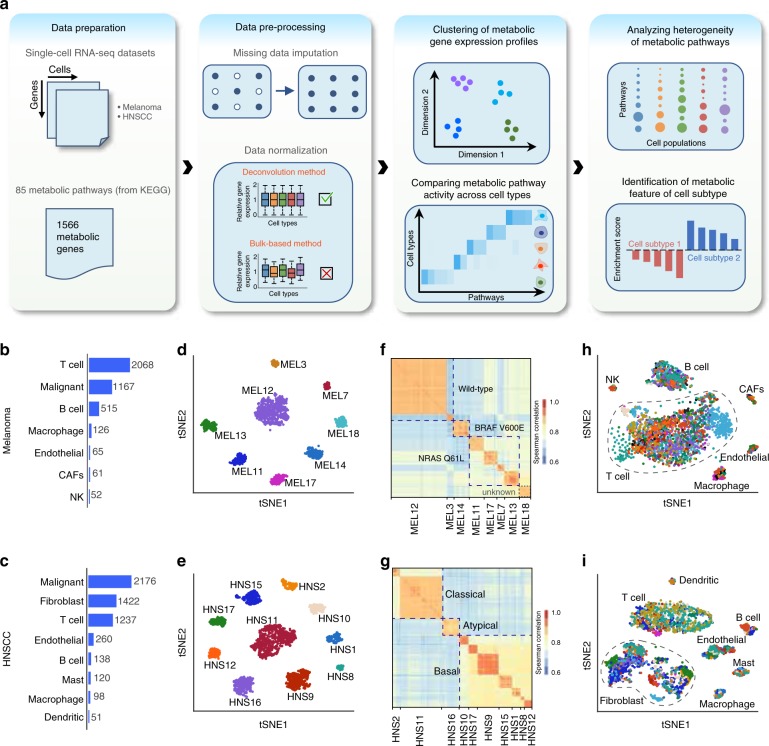
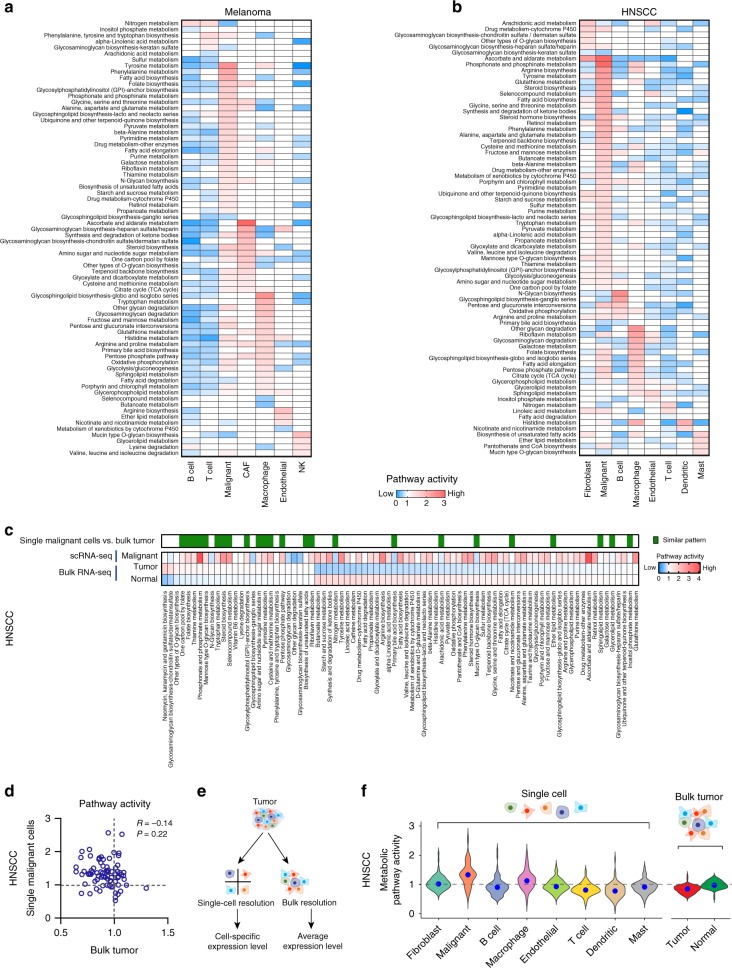
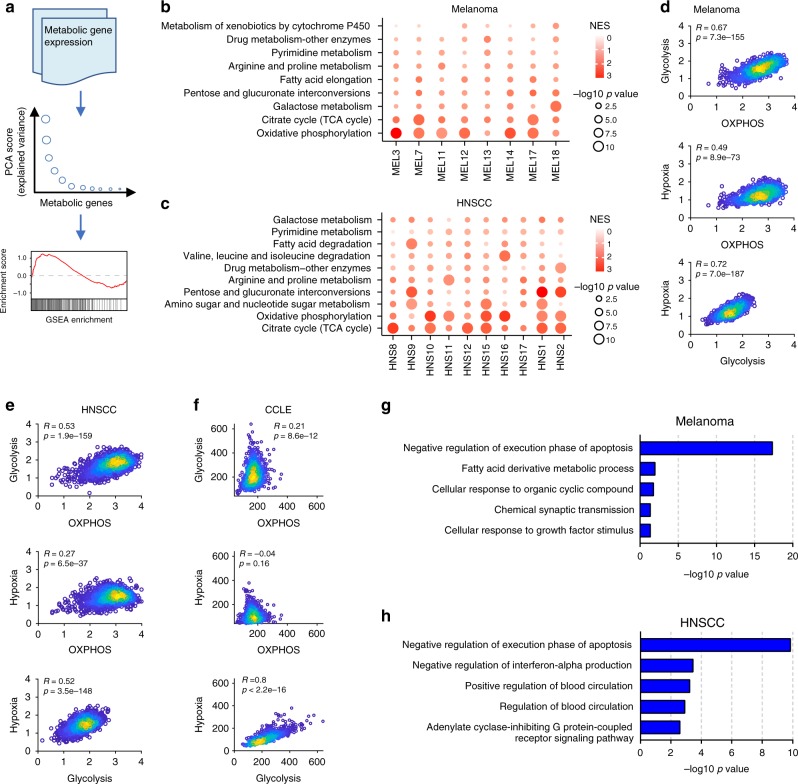
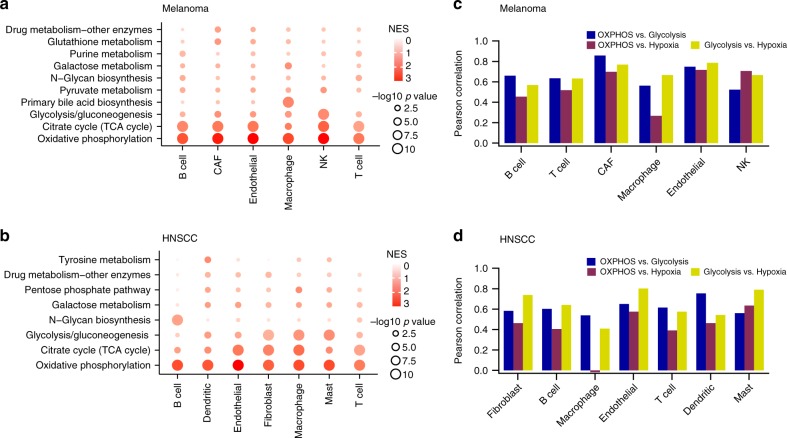
Verification
Claims the paper makes
The claims and statistics of this paper haven’t been checked yet.
Free: it reads the open-access text and checks the first 5 claims that cite a source we can check. Create a free account to check every claim.
Claims other papers make about this one
Each is checked against this paper’s own text: does it say what the citing paper says it does?
The cited source says what the claim attributes to it.
In the citing paper
“Additionally, a significant correlation has been found between glycolysis, mitochondrial metabolism and local oxygen concentrations in a study conducted on human melanoma and head and neck cancers [236].”
From Tumor microenvironment signaling and therapeutics in cancer progression (2023) · cites this paper as [236]
Self-check
Percentages, sums and reported differences re-computed from the paper’s own numbers.
The self-check needs the paper’s full text.
Citations
Cites
Moderated estimation of fold change and dispersion for RNA-seq data with DESeq2
Love, M. I., Huber, W., & Anders, S. (2014) · Genome Biology · doi:10.1186/s13059-014-0550-8 · Cited by 95,106
Hallmarks of Cancer: The Next Generation
Hanahan, D., & Weinberg, R. A. (2011) · Cell · doi:10.1016/j.cell.2011.02.013 · Cited by 66,590
Subramanian, A., Tamayo, P., Mootha, V. K., Mukherjee, S., Ebert, B. L., Gillette, M. A., Paulovich, A., Pomeroy, S. L., Golub, T. R., Lander, E. S., et al. (2005) · Proceedings of the National Academy of Sciences · doi:10.1073/pnas.0506580102 · Cited by 53,625
Robinson, M. D., McCarthy, D. J., & Smyth, G. K. (2010) · Bioinformatics · doi:10.1093/bioinformatics/btp616 · Cited by 41,364
(2008) · Journal of Machine Learning Research · Cited by 33,051
Differential expression analysis for sequence count data
Anders, S., & Huber, W. (2010) · Genome Biology · doi:10.1186/gb-2010-11-10-r106 · Cited by 15,581
The cancer genome atlas pan-cancer analysis project
The Cancer Genome Atlas Research Network, Weinstein, J. N., Collisson, E. A., Mills, G. B., Shaw, K. R. M., Ozenberger, B. A., Ellrott, K., Shmulevich, I., Sander, C., & Stuart, J. M. (2013) · Nature Genetics · doi:10.1038/ng.2764 · Cited by 9,092
The Cancer Cell Line Encyclopedia enables predictive modelling of anticancer drug sensitivity
Barretina, J., Caponigro, G., Stransky, N., Venkatesan, K., Margolin, A. A., Kim, S., Wilson, C. J., Lehár, J., Kryukov, G. V., Sonkin, D., et al. (2012) · Nature · doi:10.1038/nature11003 · Cited by 7,950
The emerging hallmarks of cancer metabolism
Pavlova, N. N., & Thompson, C. B. (2016) · Cell Metabolism · doi:10.1016/j.cmet.2015.12.006 · Cited by 5,926
Regulatory T Cells and Immune Tolerance
Sakaguchi, S., Yamaguchi, T., Nomura, T., & Ono, M. (2008) · Cell · doi:10.1016/j.cell.2008.05.009 · Cited by 5,325
Cited by
The evolving tumor microenvironment: From cancer initiation to metastatic outgrowth
de Visser, K. E., & Joyce, J. A. (2023) · Cancer Cell · doi:10.1016/j.ccell.2023.02.016 · Cited by 4,059
Spatiotemporal Immune Landscape of Colorectal Cancer Liver Metastasis at Single-Cell Level
Wu, Y., Yang, S., Ma, J., Chen, Z., Song, G., Rao, D., Cheng, Y., Huang, S., Liu, Y., Jiang, S., et al. (2022) · Cancer Discovery · doi:10.1158/2159-8290.cd-21-0316 · Cited by 1,139
Intratumoral heterogeneity in cancer progression and response to immunotherapy
Vitale, I., Shema, E., Loi, S., & Galluzzi, L. (2021) · Nature Medicine · doi:10.1038/s41591-021-01233-9 · Cited by 826
LncRNA‐mediated posttranslational modifications and reprogramming of energy metabolism in cancer
Tan, Y., Lin, J., Li, T., Li, J., Xu, R., & Ju, H. (2021) · Cancer Communications · doi:10.1002/cac2.12108 · Cited by 700
“Malignant tumor cells exhibit a highly regulated programme of metabolic plasticity [7].”
BackgroundMetabolites and the Tumour Microenvironment: From Cellular Mechanisms to Systemic Metabolism
Elia, I., & Haigis, M. C. (2021) · Nature Metabolism · doi:10.1038/s42255-020-00317-z · Cited by 651
Disturbed mitochondrial dynamics in CD8+ TILs reinforce T cell exhaustion
Yu, Y.-R., Imrichova, H., Wang, H., Chao, T., Xiao, Z., Gao, M., Rincon-Restrepo, M., Franco, F., Genolet, R., Cheng, W.-C., et al. (2020) · Nature Immunology · doi:10.1038/s41590-020-0793-3 · Cited by 593
Self-citationLactate and lactylation in cancer
Chen, J., Huang, Z., Chen, Y., Tian, H., Chai, P., Shen, Y., Yao, Y., Xu, S., Ge, S., & Jia, R. (2025) · Signal Transduction and Targeted Therapy · doi:10.1038/s41392-024-02082-x · Cited by 477
“57,58 Furthermore, OXPHOS showed a signi fi cant correlation with glycolysis in melanoma and head and neck squamous cell carcinoma (HNSCC) as well as with the response to hypoxia.”
The evolving metabolic landscape of chromatin biology and epigenetics
Dai, Z., Ramesh, V., & Locasale, J. W. (2020) · Nature Reviews Genetics · doi:10.1038/s41576-020-0270-8 · Cited by 494
Resistance Mechanisms to Anti-PD Cancer Immunotherapy
Vesely, M. D., Zhang, T., & Chen, L. (2022) · Annual Review of Immunology · doi:10.1146/annurev-immunol-070621-030155 · Cited by 468
Lipid metabolism in cancer progression and therapeutic strategies
Fu, Y., Zou, T., Shen, X., Nelson, P. J., Li, J., Wu, C., Yang, J., Zheng, Y., Bruns, C., Zhao, Y., et al. (2021) · MedComm · doi:10.1002/mco2.27 · Cited by 393
Distinct identities of leaf phloem cells revealed by single cell transcriptomics
Kim, J.-Y., Symeonidi, E., Pang, T. Y., Denyer, T., Weidauer, D., Bezrutczyk, M., Miras, M., Zöllner, N., Hartwig, T., Wudick, M. M., et al. (2021) · The Plant Cell · doi:10.1093/plcell/koaa060 · Cited by 347
“We therefore carried out a pathway activity analysis to define a pathway activity score (PAS) that quantifies the average expression of the pathway’s genes in one cell type relative to the other cell types (Xiao et al., 2019).”
Immunometabolic Interplay in the Tumor Microenvironment
Kaymak, I., Williams, K. S., Cantor, J. R., & Jones, R. G. (2021) · Cancer Cell · doi:10.1016/j.ccell.2020.09.004 · Cited by 328
“mass cytometry and single-cell genomics, have revealed considerable complexity among stromal and immune cell subtypes in the TME, as well as heterogeneity in the metabolic profiles of these cells (Hartmann and Bendall, 2020; Li et al., 2017; Xiao et al., 2019).”
BackgroundTumor microenvironment signaling and therapeutics in cancer progression
Goenka, A., Khan, F., Verma, B., Sinha, P., Dmello, C. C., Jogalekar, M. P., Gangadaran, P., & Ahn, B. (2023) · Cancer Communications · doi:10.1002/cac2.12416 · Cited by 323
Programmed Cell Death Tunes Tumor Immunity
Liu, J., Hong, M., Li, Y., Chen, D., Wu, Y., & Hu, Y. (2022) · Frontiers in Immunology · doi:10.3389/fimmu.2022.847345 · Cited by 316
Targeting Metabolic Plasticity and Flexibility Dynamics for Cancer Therapy
Fendt, S.-M., Frezza, C., & Erez, A. (2020) · Cancer Discovery · doi:10.1158/2159-8290.cd-20-0844 · Cited by 313
Single-cell metabolic profiling of human cytotoxic T cells
Hartmann, F. J., Mrdjen, D., McCaffrey, E., Glass, D. R., Greenwald, N. F., Bharadwaj, A., Khair, Z., Verberk, S. G. S., Baranski, A., Baskar, R., et al. (2021) · Nature Biotechnology · doi:10.1038/s41587-020-0651-8 · Cited by 308
“Analysis of metabolic aspects by single-cell RNA sequencing using with novel analytical approaches could offer additional insights 52 .”
Mechanisms driving the immunoregulatory function of cancer cells
van Weverwijk, A., & de Visser, K. E. (2023) · Nature Reviews Cancer · doi:10.1038/s41568-022-00544-4 · Cited by 272
TGF-β signaling in the tumor metabolic microenvironment and targeted therapies
Shi, X., Yang, J., Deng, S., Xu, H., Wu, D., Zeng, Q., Wang, S., Hu, T., Wu, F., & Zhou, H. (2022) · Journal of Hematology & Oncology · doi:10.1186/s13045-022-01349-6 · Cited by 262
A graph neural network model to estimate cell-wise metabolic flux using single-cell RNA-seq data
Alghamdi, N., Chang, W., Dang, P., Lu, X., Wan, C., Gampala, S., Huang, Z., Wang, J., Ma, Q., Zang, Y., et al. (2021) · Genome Research · doi:10.1101/gr.271205.120 · Cited by 244
“…transcriptional states and its underlying phenotypic switches in a complex tissue (Vasdekis and Stephanopoulos 2015; Damiani et al. 2019; Evers et al. 2019; Honkoop et al. 2019; Saurty-Seerunghen et al. 2019; Xiao et al. 2019, 2020; Rohlenova et al. 2020; Zhang et al. 2020; Levine et al. 2021).”
BackgroundTo metabolomics and beyond: a technological portfolio to investigate cancer metabolism
Danzi, F., Pacchiana, R., Mafficini, A., Scupoli, M. T., Scarpa, A., Donadelli, M., & Fiore, A. (2023) · Signal Transduction and Targeted Therapy · doi:10.1038/s41392-023-01380-0 · Cited by 242
“This global transcription rewiring of metabolic genes suggests that cancer cells reserve more transcriptional resources for the expression of such those genes with consequently increased fluxes for most metabolic reactions.(225) Single-cell, high-dimensional profiling allowed the identification of most effective immun…”
BackgroundThe Role of Cancer-Associated Fibroblasts in Tumor Progression
Joshi, R. S., Kanugula, S. S., Sudhir, S., Pereira, M. P., Jain, S., & Aghi, M. K. (2021) · Cancers · doi:10.3390/cancers13061399 · Cited by 243
“This finding of heterogeneous metabolic programming was similarly found in head and neck cancer by RNA sequencing on isolated fibroblast cells [127].”
BackgroundATP and cancer immunosurveillance
Kepp, O., Bezu, L., Yamazaki, T., Di Virgilio, F., Smyth, M. J., Kroemer, G., & Galluzzi, L. (2021) · The EMBO Journal · doi:10.15252/embj.2021108130 · Cited by 229
“…as Darwinian pressures, fostering the selection of cells with an accrued capacity to harness alternative carbon sources ( e.g ., lactate, extra-cellular amino acids) for catabolic and anabolic reactions in support of proliferation and tolerance to hypoxia (Chang et al , 2015; Xiao et al , 2019).”
Lung cancer scRNA-seq and lipidomics reveal aberrant lipid metabolism for early-stage diagnosis
Wang, G., Qiu, M., Xing, X., Zhou, J., Yao, H., Li, M., Yin, R., Hou, Y., Li, Y., Pan, S., et al. (2022) · Science Translational Medicine · doi:10.1126/scitranslmed.abk2756 · Cited by 218
“A previous study investigated scRNA-seq datasets of human melanoma and head and neck squamous cell carcinoma and provided metabolic gene expression at a single-cell level (21).”
BackgroundXing, X., Yang, F., Huang, Q., Guo, H., Li, J., Qiu, M., Bai, F., & Wang, J. (2021) · Science Advances · doi:10.1126/sciadv.abd9738 · Cited by 205
“We also assessed metabolic pathway activities using a previously described curated dataset with 85 metabolic pathways (23).”
BackgroundMethodMetabolic reprogramming in renal cancer: Events of a metabolic disease
Chakraborty, S., Balan, M., Sabarwal, A., Choueiri, T. K., & Pal, S. (2021) · Biochimica et Biophysica Acta (BBA) - Reviews on Cancer · doi:10.1016/j.bbcan.2021.188559 · Cited by 204
Metabolic Control of Treg Cell Stability, Plasticity, and Tissue-Specific Heterogeneity
Shi, H., & Chi, H. (2019) · Frontiers in Immunology · doi:10.3389/fimmu.2019.02716 · Cited by 202
“These observations all underscore the importance of metabolic adaption of Treg cells in tumor microenvironment for their suppressive activity, although the precise metabolic status of tumor Treg cells needs to be determined, such as by single cell metabolomics (151) or computational-based inference of metabolic gene e…”
BackgroundLee, S., Devanney, N. A., Golden, L. R., Smith, C. T., Schwartz, J. L., Walsh, A. E., Clarke, H. A., Goulding, D. S., Allenger, E. J., Morillo-Segovia, G., et al. (2023) · Cell Reports · doi:10.1016/j.celrep.2023.112196 · Cited by 203
“This curation, based off of previous publications and designed to infer maximal biological relevance, 119 resulted in a total of 79 metabolic pathways.”
Immunometabolism in the Single-Cell Era
Artyomov, M. N., & Van den Bossche, J. (2020) · Cell Metabolism · doi:10.1016/j.cmet.2020.09.013 · Cited by 200
“In this Perspective, we explore how current and emerging state-of-the-art technologies contribute to our understanding of metabolic regulation of immunity and discuss the transition from bulk to single-cell immunometabolic profiling (Ahl et al., 2020; Hartmann et al., 2020; Levine et al., 2020; Miller et al., 2017; Xi…”
BackgroundFrom OCR and ECAR to energy: Perspectives on the design and interpretation of bioenergetics studies
Schmidt, C. A., Fisher-Wellman, K. H., & Neufer, P. D. (2021) · Journal of Biological Chemistry · doi:10.1016/j.jbc.2021.101140 · Cited by 198
Metabolic heterogeneity in cancer
Demicco, M., Liu, X.-Z., Leithner, K., & Fendt, S.-M. (2024) · Nature Metabolism · doi:10.1038/s42255-023-00963-z · Cited by 173
“In the context of prostate cancers, it has been shown that the exosomes secreted by patient-derived CAFs inhibit mitochondrial OXPHOS and induce a compensatory increment of glycolytic flux and glutamine-dependent reductive carboxylation in vitro 86 .”
InfluentialIs Mitochondrial Dysfunction a Common Root of Noncommunicable Chronic Diseases?
Diaz-Vegas, A., Sanchez-Aguilera, P., Krycer, J. R., Morales, P. E., Monsalves-Alvarez, M., Cifuentes, M., Rothermel, B. A., & Lavandero, S. (2020) · Endocrine Reviews · doi:10.1210/endrev/bnaa005 · Cited by 175
Metabolic analysis as a driver for discovery, diagnosis, and therapy
DeBerardinis, R. J., & Keshari, K. R. (2022) · Cell · doi:10.1016/j.cell.2022.06.029 · Cited by 172
“However, it is clear from single-cell RNA studies that an appreciation for the metabolism of individual cells within a complex microenvironment is critical to understanding pathogenesis (Xiao et al., 2019).”
Raman-guided subcellular pharmaco-metabolomics for metastatic melanoma cells
Du, J., Su, Y., Qian, C., Yuan, D., Miao, K., Lee, D., Ng, A. H. C., Wijker, R. S., Ribas, A., Levine, R. D., et al. (2020) · Nature Communications · doi:10.1038/s41467-020-18376-x · Cited by 171
Ahl, P. J., Hopkins, R. A., Xiang, W. W., Au, B., Kaliaperumal, N., Fairhurst, A.-M., & Connolly, J. E. (2020) · Communications Biology · doi:10.1038/s42003-020-1027-9 · Cited by 170
Liu, W.-W., Zheng, S.-Q., Li, T., Fei, Y.-F., Wang, C., Zhang, S., Wang, F., Jiang, G.-M., & Wang, H. (2024) · Signal Transduction and Targeted Therapy · doi:10.1038/s41392-024-01777-5 · Cited by 166
The Evolution of Single-Cell RNA Sequencing Technology and Application: Progress and Perspectives
Wang, S., Sun, S.-T., Zhang, X.-Y., Ding, H.-R., Yuan, Y., He, J.-J., Wang, M.-S., Yang, B., & Li, Y.-B. (2023) · International Journal of Molecular Sciences · doi:10.3390/ijms24032943 · Cited by 168
A guide to interrogating immunometabolism
Voss, K., Hong, H. S., Bader, J. E., Sugiura, A., Lyssiotis, C. A., & Rathmell, J. C. (2021) · Nature reviews. Immunology · doi:10.1038/s41577-021-00529-8 · Cited by 193
Single-cell lipidomics with high structural specificity by mass spectrometry
Li, Z., Cheng, S., Lin, Q., Cao, W., Yang, J., Zhang, M., Shen, A., Zhang, W., Xia, Y., Ma, X., et al. (2021) · Nature Communications · doi:10.1038/s41467-021-23161-5 · Cited by 160
Zhang, X., Ong’achwa Machuki, J., Pan, W., Cai, W., Xi, Z., Shen, F., Zhang, L., Yang, Y., Gao, F., & Guan, M. (2020) · ACS Nano · doi:10.1021/acsnano.9b08737 · Cited by 158
Current Achievements and Applications of Transcriptomics in Personalized Cancer Medicine
Supplitt, S., Karpiński, P., Sasiadek, M. M., & Łaczmańska, I. (2021) · International Journal of Molecular Sciences · doi:10.3390/ijms22031422 · Cited by 181
Glaviano, A., Lau, H., Carter, L. M., Lee, E. H. C., Lam, H. Y., Okina, E., Tan, D. J. J., Tan, W., Ang, H. L., Carbone, D., et al. (2025) · Journal of Hematology & Oncology · doi:10.1186/s13045-024-01634-6 · Cited by 184
Song, G., Shi, Y., Meng, L., Ma, J., Huang, S., Zhang, J., Wu, Y., Li, J., Lin, Y., Yang, S., et al. (2022) · Nature Communications · doi:10.1038/s41467-022-29164-0 · Cited by 154
Mitochondrial long non-coding RNA GAS5 tunes TCA metabolism in response to nutrient stress
Sang, L., Ju, H., Yang, Z., Ge, Q., Zhang, Z., Liu, F., Yang, L.-J., Gong, H., Shi, C., Qu, L., et al. (2021) · Nature Metabolism · doi:10.1038/s42255-020-00325-z · Cited by 168
Interfacing Seurat with the R tidy universe
Mangiola, S., Doyle, M., & Papenfuss, A. T. (2021) · Bioinformatics · doi:10.1093/bioinformatics/btab404 · Cited by 177
Metabolic Fitness and Plasticity in Cancer Progression
McGuirk, S., Audet-Delage, Y., & St‐Pierre, J. (2020) · Trends in cancer · doi:10.1016/j.trecan.2019.11.009 · Cited by 143
Wei, F., Wang, D., Wei, J., Tang, N., Tang, L. M., Xiong, F., Guo, C. J., Zhou, M., Li, X., Li, G., et al. (2020) · Cellular and Molecular Life Sciences · doi:10.1007/s00018-020-03581-0 · Cited by 148
Deciphering Metabolic Heterogeneity by Single-Cell Analysis
Evers, T. M. J., Hochane, M., Tans, S. J., Heeren, R. M. A., Semrau, S., Nemes, P., & Mashaghi, A. (2019) · Analytical Chemistry · doi:10.1021/acs.analchem.9b02410 · Cited by 136
Epigenetic crosstalk between hypoxia and tumor driven by HIF regulation
Li, T., Mao, C., Wang, X., Shi, Y., & Tao, Y. (2020) · Journal of Experimental & Clinical Cancer Research · doi:10.1186/s13046-020-01733-5 · Cited by 120
“form metabolic reprogramming through the fatty acid (FA) synthase system [165, 206, 207].”
BackgroundNutrient metabolism and cancer in the in vivo context: a metabolic game of give and take
Altea‐Manzano, P., Cuadros, A. M., Broadfield, L. A., & Fendt, S. (2020) · EMBO Reports · doi:10.15252/embr.202050635 · Cited by 130
“…oxidative phosphorylation (OXPHOS) has been observed at the single-cell level in human melanomas and head and neck squamous cell carcinoma, suggesting that variation in mitochondrial activity may be the major contributor to intratumoral metabolic heterogeneity in these tumors (Xiao et al , 2019).”
Metabolic Reprogramming in Anticancer Drug Resistance: A Focus on Amino Acids
Pranzini, E., Pardella, E., Paoli, P., Fendt, S., & Taddei, M. L. (2021) · Trends in cancer · doi:10.1016/j.trecan.2021.02.004 · Cited by 120
“cancer-associated fibroblast (CAF) subpopulations harbor distinct metabolic profiles [126].”
BackgroundCharacterizing cancer metabolism from bulk and single-cell RNA-seq data using METAFlux
Huang, Y., Mohanty, V., Dede, M., Tsai, K., Daher, M., Li, L., Rezvani, K., & Chen, K. (2023) · Nature Communications · doi:10.1038/s41467-023-40457-w · Cited by 141
Chen, Z., Zhao, M., Liang, J., Hu, Z., Huang, Y., Li, M., Pang, Y., Lu, T., Sui, Q., Zhan, C., et al. (2021) · EBioMedicine · doi:10.1016/j.ebiom.2021.103459 · Cited by 127
The Warburg effect: a score for many instruments in the concert of cancer and cancer niche cells
Jaworska, M., Szczudło, J., Pietrzyk, A., Shah, J., Trojan, S., Ostrowska, B., & Kocemba‐Pilarczyk, K. A. (2023) · Pharmacological Reports · doi:10.1007/s43440-023-00504-1 · Cited by 141
“1 3 and indicating the reverse Warburg effect between different cancer cell subpopulations [101].”
BackgroundImmune Regulatory Processes of the Tumor Microenvironment under Malignant Conditions
Pansy, K., Uhl, B., Krstić, J., Szmyra, M., Fechter, K., Santiso, A., Thüminger, L., Greinix, H., Kargl, J., Prochazka, K. T., et al. (2021) · International Journal of Molecular Sciences · doi:10.3390/ijms222413311 · Cited by 124
Qian, Y., Yin, Y., Zheng, X., Liu, Z., & Wang, X. (2024) · Biomarker Research · doi:10.1186/s40364-023-00549-7 · Cited by 132
“As human cell-based datasets, such as the human cell atlas, continue to develop, scRNA-seq’s potential for aiding our understanding of the heterogeneity and metabolic diversity of TAMs is becoming increasingly significant [211, 212].”
BackgroundMethodYu, T., Ma, D., Liu, Y., Xiao, Y., Gong, Y., Jiang, Y., Shao, Z.-M., Hu, X., & Di, G. (2021) · Molecular Therapy · doi:10.1016/j.ymthe.2021.03.003 · Cited by 127
Lee, J. W., Su, Y., Baloni, P., Chen, D., Pavlovitch-Bedzyk, A. J., Yuan, D., Duvvuri, V. R. S. K., Ng, R. H., Choi, J., Xie, J., et al. (2021) · Nature Biotechnology · doi:10.1038/s41587-021-01020-4 · Cited by 120
Targeting the tumor microenvironment: Potential strategy for cancer therapeutics
Babar, Q., Saeed, A., Tabish, T. A., Sarwar, M., & Thorat, N. D. (2023) · Biochimica et Biophysica Acta (BBA) - Molecular Basis of Disease · doi:10.1016/j.bbadis.2023.166746 · Cited by 125
Li, K., Du, Y., Cai, Y., Liu, W., Lv, Y., Huang, B., Zhang, L., Wang, Z., Liu, P., Sun, Q., et al. (2022) · Leukemia · doi:10.1038/s41375-022-01789-6 · Cited by 116
ATF4 in cellular stress, ferroptosis, and cancer
Tang, H., Kang, R., Liu, J., & Tang, D. (2024) · Archives of Toxicology · doi:10.1007/s00204-024-03681-x · Cited by 129
“4) (He et al. 2023; Horiguchi et al. 2012; Xiao et al. 2019).”
Regulatory mechanisms of one-carbon metabolism enzymes
Petrova, B., Maynard, A. G., Wang, P., & Kanarek, N. (2023) · Journal of Biological Chemistry · doi:10.1016/j.jbc.2023.105457 · Cited by 103
Wei, J., Chen, Z., Hu, M., He, Z., Jiang, D., Long, J., & Du, H. (2021) · Frontiers in Cell and Developmental Biology · doi:10.3389/fcell.2021.749210 · Cited by 119
den Bossche, V. V., Zaryouh, H., Vara-Messler, M., Vignau, J., Machiels, J., Wouters, A., Schmitz, S., & Corbet, C. (2022) · Drug Resistance Updates · doi:10.1016/j.drup.2022.100806 · Cited by 119
Rewiring mitochondrial metabolism to counteract exhaustion of CAR-T cells
Huang, Y., Si, X., Shao, M., Teng, X., Xiao, G., & Huang, H. (2022) · Journal of Hematology & Oncology · doi:10.1186/s13045-022-01255-x · Cited by 118
“Single-cell metabolic profiling based on scRNA-seq datasets can be analyzed to demonstrate the behavior of metabolic genes, such as the glycolytic activity gene Glut1, FAO components CPT1 and CPT2, and oxidative stress response factor NRF2 [143, 144].”
Hypoxia-driven intratumor heterogeneity and immune evasion
Terry, S., Engelsen, A. S. T., Buart, S., El‐Sayed, W., Venkatesh, G. H., & Chouaïb, S. (2020) · Cancer Letters · doi:10.1016/j.canlet.2020.07.004 · Cited by 107
Fitzgerald, K. C., Smith, M. D., Kim, S., Sotirchos, E. S., Kornberg, M. D., Douglas, M., Nourbakhsh, B., Graves, J., Rattan, R., Poisson, L., et al. (2021) · Cell Reports Medicine · doi:10.1016/j.xcrm.2021.100424 · Cited by 112
Yang, Y., Liu, Q., Wang, M., Li, L., Yu, Y. M., Pan, M., Hu, D., Chu, B., Qu, Y., & Qian, Z. (2024) · Signal Transduction and Targeted Therapy · doi:10.1038/s41392-024-01859-4 · Cited by 110
“50 Therefore, the therapeutic potential of glycolysis inhibitors is limited, and thus the combination of glycolytic inhibitors with other anticancer therapies may provide a more effective and comprehensive approach to tumor treatment.”
BackgroundMetabolism in the Tumor Microenvironment
Lau, A. N., & Heiden, M. G. V. (2019) · Annual Review of Cancer Biology · doi:10.1146/annurev-cancerbio-030419-033333 · Cited by 96
Wang, G., Yao, H., Gong, Y., Lu, Z., Pang, R., Li, Y., Yuan, Y., Song, H., Liu, J., Jin, Y., et al. (2021) · Science Advances · doi:10.1126/sciadv.abh2724 · Cited by 95
“Concurrently, we compared the classification accuracy of traditional ML-based feature selection (see Materials and Methods) with the greedy-based feature selection of this ML-aided metabolic PDAC detection approach.”
MethodInfluentialThe limitless applications of single-cell metabolomics
Guo, S., Zhang, C., & Le, A. (2021) · Current Opinion in Biotechnology · doi:10.1016/j.copbio.2021.07.015 · Cited by 84
Dissecting cell-type-specific metabolism in pancreatic ductal adenocarcinoma
Lau, A. N., Li, Z., Danai, L. V., Westermark, A. M., Darnell, A. M., Ferreira, R., Gocheva, V., Sivanand, S., Lien, E. C., Sapp, K. M., et al. (2020) · eLife · doi:10.7554/elife.56782 · Cited by 81
Virtuoso, A., Giovannoni, R., Luca, C. D., Gargano, F., Cerasuolo, M., Maggio, N., Lavitrano, M., & Papa, M. (2021) · International Journal of Molecular Sciences · doi:10.3390/ijms22073301 · Cited by 85
Song, K., Yang, X., An, G., Xia, X., Zhao, J., Xu, X., Wan, C., Liu, T., Zheng, Y., Ren, S., et al. (2022) · Nature Communications · doi:10.1038/s41467-022-34990-3 · Cited by 90
Decoding the transcriptome of denervated muscle at single‐nucleus resolution
Lin, H., Ma, X., Sun, Y., Peng, H., Wang, Y., Thomas, S. S., & Hu, Z. (2022) · Journal of Cachexia Sarcopenia and Muscle · doi:10.1002/jcsm.13023 · Cited by 73
Loo, E. P. I., Durán, P., Pang, T. Y., Westhoff, P., Chen, D., Durán, C., Lercher, M. J., Garrido‐Oter, R., & Frommer, W. B. (2024) · Cell Host & Microbe · doi:10.1016/j.chom.2024.02.014 · Cited by 80
Dong, X., Zhang, Q., Yu, X., Wang, D., Ma, J., Ma, J., & Shi, S. (2022) · Nature Neuroscience · doi:10.1038/s41593-022-01093-7 · Cited by 78
Xia, J., Kang, Z., Xue, Y., Ding, Y., Gao, S., Zhang, Y., Lv, P., Wang, X., Ma, D., Wang, L., et al. (2021) · Proceedings of the National Academy of Sciences · doi:10.1073/pnas.2015748118 · Cited by 74
“To study the metabolic states of the four heterogeneous HSPCs, we used the single-cell computational pipeline (32).”
Gu, F., Zhu, S., Tang, Y., Liu, X., Jia, M., Malmuthuge, N., Valencak, T. G., McFadden, J. W., Liu, J., & Sun, H. (2023) · Microbiome · doi:10.1186/s40168-023-01492-3 · Cited by 76
Toward modeling metabolic state from single-cell transcriptomics
Hrovatin, K., Fischer, D. S., & Theis, F. J. (2021) · Molecular Metabolism · doi:10.1016/j.molmet.2021.101396 · Cited by 74
“Alternatively, pathway activity can be inferred from gene expression of pathway-associated genes [14,59,60].”
BackgroundSingle-cell analysis of diverse immune phenotypes in malignant pleural effusion
Huang, Z., Shao, M., Zhang, J., Yi, F., Du, J., Zhou, Q., Wu, F., Li, S., Li, W., Huang, X.-Z., et al. (2021) · Nature Communications · doi:10.1038/s41467-021-27026-9 · Cited by 87
Sun, H., Zhang, L., Wang, Z., Gu, D., Zhu, M., Cai, Y., Li, L., Tang, J., Huang, B., Bosco, B., et al. (2023) · Nature Communications · doi:10.1038/s41467-023-41318-2 · Cited by 82
“The analysis of the metabolic pathways was performed using the method from Xiao et al. 66 .”
It’s Getting Complicated—A Fresh Look at p53-MDM2-ARF Triangle in Tumorigenesis and Cancer Therapy
Kung, C.-P., & Weber, J. D. (2022) · Frontiers in Cell and Developmental Biology · doi:10.3389/fcell.2022.818744 · Cited by 78
“Since the metabolic state of mitochondria is important in regulating both cancer cell-intrinsic and -extrinsic mechanisms, ARF’s influence on tumor metabolism independent of p53 warrants further investigation (Xiao et al., 2019; Yao et al., 2019).”
BackgroundWu, J., Zhu, S., Gu, F., Valencak, T. G., Liu, J., & Sun, H. (2021) · Journal of Advanced Research · doi:10.1016/j.jare.2021.11.009 · Cited by 68
“To further characterize metabolic heterogeneity at the singlecell level, we investigated metabolic fingerprints of epithelial cell subtypes across multiple tissues using a computational pipeline [15] based on scRNA-seq data.”
BackgroundMethodInfluentialSystems-based approaches to study immunometabolism
Purohit, V., Wagner, A., Yosef, N., & Kuchroo, V. K. (2022) · Cellular and Molecular Immunology · doi:10.1038/s41423-021-00783-9 · Cited by 68
“Single-cell analysis of human melanoma, and head and neck cancers, revealed the metabolic programs governing the tumors and non-tumor populations [37].”
BackgroundRole of the tumor microenvironment in cancer hallmarks and targeted therapy (Review)
Naser, R., Fakhoury, I., El‑Fouani, A., Abi‑Habib, R., & El‑Sibai, M. (2022) · International Journal of Oncology · doi:10.3892/ijo.2022.5471 · Cited by 61
Ishida, T., Nakao, S., Ueyama, T., Harada, Y., & Kawamura, T. (2020) · Inflammation and Regeneration · doi:10.1186/s41232-020-00117-8 · Cited by 60
Metabolism Characteristics of Th17 and Regulatory T Cells in Autoimmune Diseases
Qin, Y., Gao, C., & Luo, J. (2022) · Frontiers in Immunology · doi:10.3389/fimmu.2022.828191 · Cited by 77
Recent Developments in Single-Cell Metabolomics by Mass Spectrometry─A Perspective
Petrova, B., & Güler, A. T. (2024) · Journal of Proteome Research · doi:10.1021/acs.jproteome.4c00646 · Cited by 77
“High-throughput sc resolution analyses like sc transcriptomics 6,7 or sc proteomics 8 − 10, 113 have Multiomics integrative analyses can provide a more powerful and comprehensive profile of a cell’s state 28 − 33 and enhance our understanding of underlying cellular dynamics.”
Zhang, Y., Zhao, Z., Huang, W., Kim, B. S., Li, L., Li, X., Hou, M., Li, L., Zhang, Y., Xi, W., et al. (2024) · Current Gene Therapy · doi:10.2174/0115665232331353240911080642 · Cited by 67
Cellular export of sugars and amino acids: role in feeding other cells and organisms
Kim, J.-Y., Loo, E. P. I., Pang, T. Y., Lercher, M. J., Frommer, W. B., & Wudick, M. M. (2021) · PLANT PHYSIOLOGY · doi:10.1093/plphys/kiab228 · Cited by 56
“…candidates for a wide range of metabolites, hormones, and even ions (Box 1; e.g. Denyer et al., 2019; Jean-Baptiste et al., 2019; Ryu et al., 2019; Shulse et al., 2019; Xiao et al., 2019; Zhang et al., 2019; Liu et al., 2020; Wendrich et al., 2020; Bezrutczyk et al., 2021; Kim et al., 2021).”
Sabit, H., Arneth, B. M., Pawlik, T. M., Abdel-Ghany, S. E., Ghazy, A., Abdelazeem, R. M., Alqosaibi, A. I., Al-Dhuayan, I. S., Almulhim, J., Alrabiah, N. A., et al. (2025) · Pharmaceuticals · doi:10.3390/ph18010075 · Cited by 70
“Additionally, single-cell analyses have pinpointed distinct metabolic profiles in both cancer and stromal cells, illuminating how altered metabolism fuels tumor growth in low-oxygen conditions [9].”
Single-cell manifold-preserving feature selection for detecting rare cell populations
Liang, S., Mohanty, V., Dou, J., Miao, Q., Huang, Y., Müftüoğlu, M., Ding, L., Peng, W., & Chen, K. (2021) · Nature Computational Science · doi:10.1038/s43588-021-00070-7 · Cited by 57
Single-cell sequencing reveals the evolution of immune molecules across multiple vertebrate species
Jiao, A., Zhang, C., Wang, X., Sun, L., Liu, H., Su, Y., Lei, L., Li, W., Ding, R., Ding, C., et al. (2023) · Journal of Advanced Research · doi:10.1016/j.jare.2023.02.017 · Cited by 54
“The metabolic pathway activity score is obtained by using the pathway activity calculation method in the previous studies [27] and defines the pathway activity by using the overall expression level of the gene set in each cluster.”
MethodTargeting the metabolism of tumor-infiltrating regulatory T cells
Wang, Y., Huang, T., Gu, J., & Lu, L. (2023) · Trends in Immunology · doi:10.1016/j.it.2023.06.001 · Cited by 62
Mitochondrial Heteroplasmy Shifting as a Potential Biomarker of Cancer Progression
Pérez-Amado, C. J., Bazan-Cordoba, A., Hidalgo‐Miranda, A., & Jiménez‐Morales, S. (2021) · International Journal of Molecular Sciences · doi:10.3390/ijms22147369 · Cited by 58
“Even though evidence suggests that mitochondrial function is the center of metabolic plasticity of both tumor cells and cells in the environment, allowing their metabolism to be modulated under hypoxic conditions [117], the role of the microenvironment as a modifier of heteroplasmy in cancer has scarcely been explored.”
BackgroundSenjo, H., Hirata, K., Izumiyama, K., Minauchi, K., Tsukamoto, E., Itoh, K., Kanaya, M., Mori, A., Ota, S., Hashimoto, D., et al. (2020) · Blood Advances · doi:10.1182/bloodadvances.2020001816 · Cited by 56
Tumor Cells and Cancer-Associated Fibroblasts: An Updated Metabolic Perspective
Gentric, G., & Mechta‐Grigoriou, F. (2021) · Cancers · doi:10.3390/cancers13030399 · Cited by 60
“They reported that FAPHigh CAF exhibit enhanced glycolysis, as well as enriched arachidonic and linoleic acid metabolism, while MCAMHigh rely on OXPHOS and TCA cycle [163].”
BackgroundImmunometabolism in the Tumor Microenvironment
Roy, D. G., Kaymak, I., Williams, K. S., Ma, E. H., & Jones, R. G. (2020) · Annual Review of Cancer Biology · doi:10.1146/annurev-cancerbio-030518-055817 · Cited by 51
Shi, L., Liu, X., Li, Y., Li, S., Wu, W., Gao, X., & Liu, B. (2022) · Advanced Science · doi:10.1002/advs.202105807 · Cited by 48
hECA: The cell-centric assembly of a cell atlas
Chen, S., Luo, Y., Gao, H., Li, F., Chen, Y., Li, J., You, R., Hao, M., Bian, H., Xi, X., et al. (2022) · iScience · doi:10.1016/j.isci.2022.104318 · Cited by 48
Metadata
- Authors
- Xiao, Z., Dai, Z., & Locasale, J. W.
- Affiliations
- Duke University (US)
- Corresponding author
- Dai, Ziwei
- Locasale, Jason W.
- Venue
- Nature Communications
- Published
- 2019-08-21
- Volume
- 10
- Issue
- 1
- Pages
- 3763-3763
- ISSN
- 2041-1723 (ISSN-L)
- PMC
- PMC6704063
- OpenAlex
- W2969593942
- Semantic Scholar
- d37d83c927b533b71fc17df740fcbb870c05e968
- Cited by
- 524
- References
- 67
- Citations by year
- 2026: 47 · 2025: 78 · 2024: 107 · 2023: 73 · 2022: 80 · 2021: 91 · 2020: 43 · 2019: 5
- FWCI
- 17.80
- Type
- journal article
- Language
- en
- Open access
- gold
- doi.org
- Licence
- cc-by
- creativecommons.org/licenses/by/4.0 (tdm)
- creativecommons.org/licenses/by/4.0 (vor)
- Locations
- Nature Communications (publishedVersion, cc-by)
- Europe PMC (PubMed Central) (publishedVersion, cc-by)
- PubMed Central (publishedVersion, cc-by)
- PubMed (publishedVersion)
- RePEc: Research Papers in Economics (submittedVersion)
- DOAJ (DOAJ: Directory of Open Access Journals) (submittedVersion)
- DOAJ (DOAJ: Directory of Open Access Journals) (submittedVersion, cc-by-sa)
- Funders
- U.S. Department of Health & Human Services | National Institutes of Health (R01CA193256, R00CA168997)
- American Cancer Society (RSG-16-214-01-TBE)
- Topics
- Life Sciences › Biochemistry, Genetics and Molecular Biology › Cancer Research › Cancer, Hypoxia, and Metabolism
- Life Sciences › Biochemistry, Genetics and Molecular Biology › Molecular Biology › Single-cell and spatial transcriptomics
- Life Sciences › Biochemistry, Genetics and Molecular Biology › Molecular Biology › Gene expression and cancer classification
- Keywords
- tumor microenvironment, melanoma, head and neck cancer, mitochondrial metabolism, glycolysis, tumor hypoxia, tumor immune cells, tumor stromal cells
- MeSH terms
- Algorithms, Glycolysis, Humans, Melanoma, Mitochondria, Neoplasms, Gene Expression Regulation, Neoplastic, Stromal Cells, Cell Line, Tumor, Genes, Neoplasm, Tumor Microenvironment, Transcriptome, Cellular Reprogramming
About these checks
Registry, retraction, Cites and statistics results are computed, not judged, with one exception: a printed reference that no index lists is read once by a model before it counts as a citation error. Claims are extracted by a model and kept only when their quote appears verbatim in the text; each cited source is then checked, with a model’s help, for whether it says what the claim relies on. Those verdicts can be wrong — read the claim’s quote and the cited source before relying on one.
Statistics and arithmetic are recomputed, not judged.
Confidence bands are shown only for fields calibrated on our annotated test set. None is calibrated yet, so no band is shown.
What counts as a claim ›How we measure confidence ›How we check this ›
Are you an author, or do you see a problem with this page? Request a review
Data sources
Bibliographic data: Semantic Scholar, OpenAlex, Crossref.
Contains information from the Semantic Scholar Academic Graph Datasets, made available under the ODC Attribution License (ODC-BY 1.0).
Semantic Scholar’s data is described in: Kinney, R., et al. (2023). The Semantic Scholar Open Data Platform. arXiv:2301.10140.
