

Anti-relapse neurons in the infralimbic cortex of rats drive relapse-suppression by drug omission cues
Open accessThe DOI matches its Crossref record; 80 of the 80 references it cites were found in a registry or an index.
Abstract
Drug addiction is a chronic relapsing disorder of compulsive drug use. Studies of the neurobehavioral factors that promote drug relapse have yet to produce an effective treatment. Here we take a different approach and examine the factors that suppress—rather than promote—relapse. Adapting Pavlovian procedures to suppress operant drug response, we determined the anti-relapse action of environmental cues that signal drug omission (unavailability) in rats. Under laboratory conditions linked to compulsive drug use and heightened relapse risk, drug omission cues suppressed three major modes of relapse-promotion (drug-predictive cues, stress, and drug exposure) for cocaine and alcohol. This relapse-suppression is, in part, driven by omission cue-reactive neurons, which constitute small subsets of glutamatergic and GABAergic cells, in the infralimbic cortex. Future studies of such neural activity-based cellular units (neuronal ensembles/memory engram cells) for relapse-suppression can be used to identify alternate targets for addiction medicine through functional characterization of anti-relapse mechanisms.
Overview
The claims and statistics of this paper haven’t been checked yet.
Free: it reads the open-access text and checks the first 5 claims that cite a source we can check. Create a free account to check every claim.
Integrity signals
Registry
Cites
Statistics
Figures
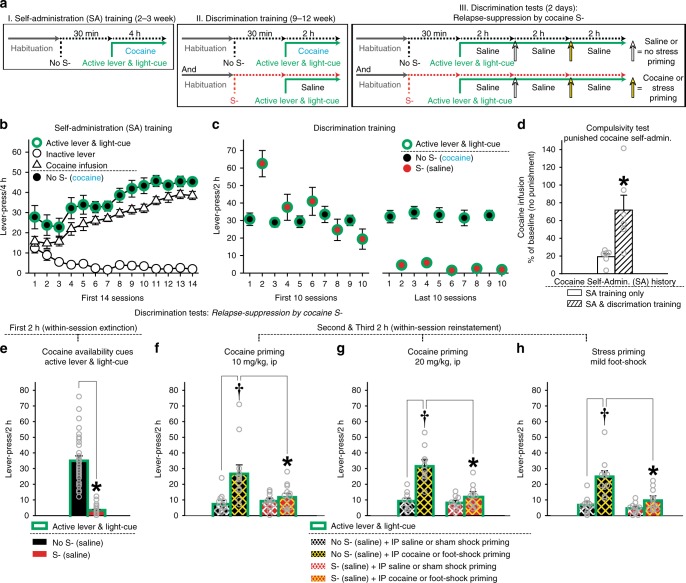
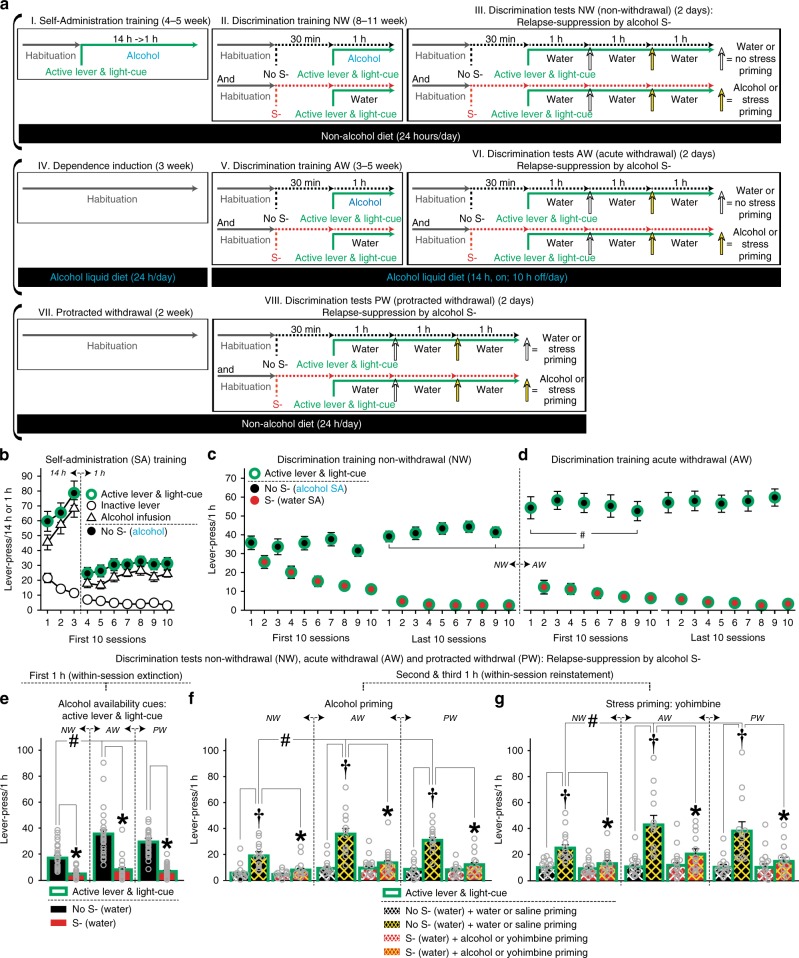
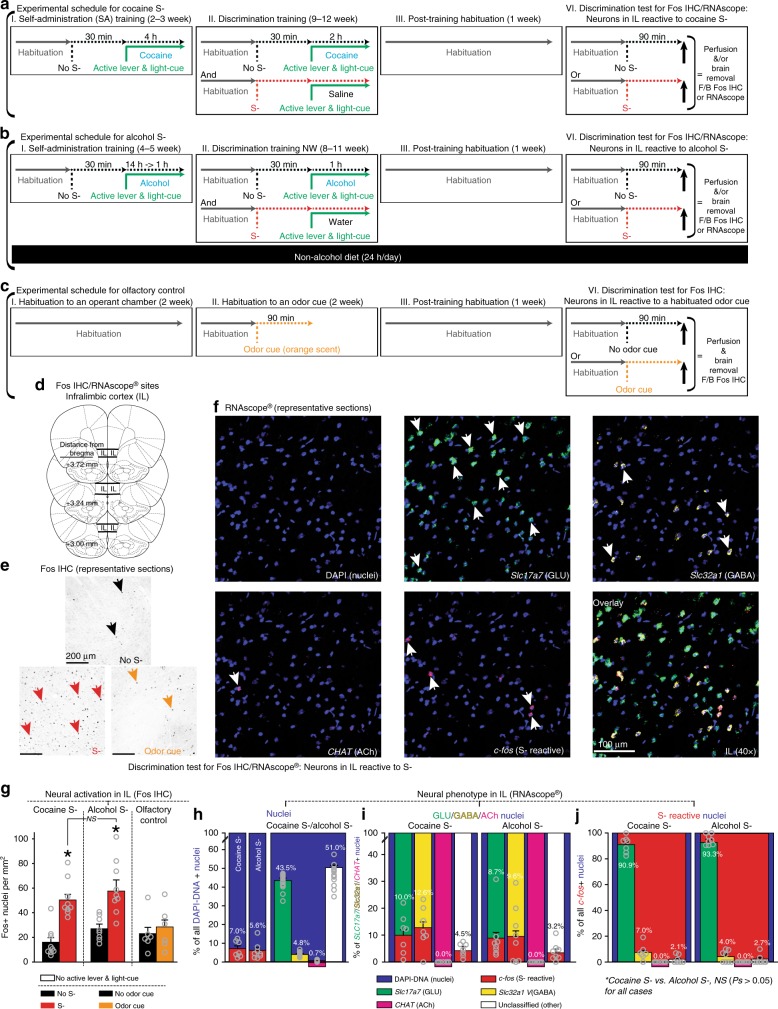
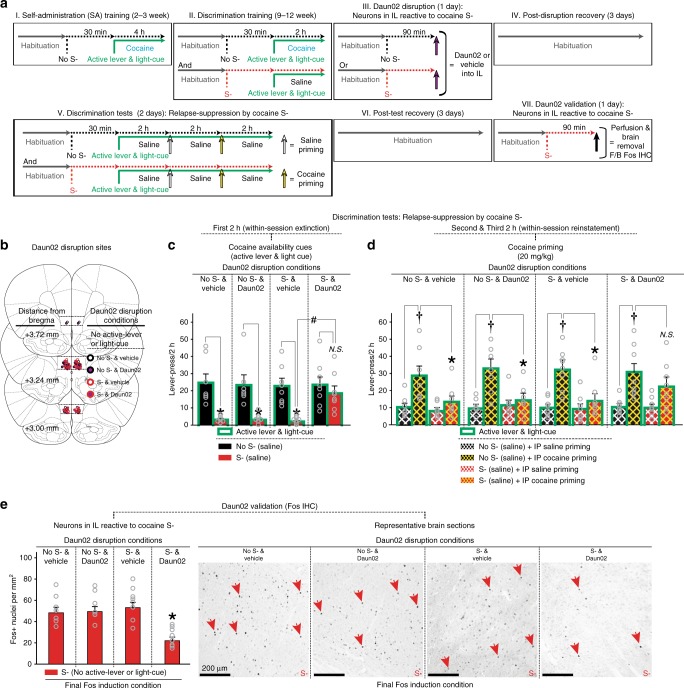
Verification
Claims the paper makes
The claims and statistics of this paper haven’t been checked yet.
Free: it reads the open-access text and checks the first 5 claims that cite a source we can check. Create a free account to check every claim.
Claims other papers make about this one
Each is checked against this paper’s own text: does it say what the citing paper says it does?
The source backs part of the claim, not all of it — or backs it for a different population, condition or comparison.
In the citing paper
“Additionally, glutamatergic and GABAergic signaling in the ILC contributes to inhibitory control over alcohol seeking and relapse (29, 34–37).”
From The glucagon-like peptide-1 (GLP-1) analogue semaglutide reduces alcohol drinking and modulates central GABA neurotransmission (2023) · cites this paper as [34]
Experimental — accuracy not yet measured
Self-check
Percentages, sums and reported differences re-computed from the paper’s own numbers.
The self-check needs the paper’s full text.
Citations
Cites
Diagnostic and Statistical Manual of Mental Disorders
American Psychiatric Association (2013) · doi:10.1176/appi.books.9780890425596 · Cited by 116,369
The Rat Brain in Stereotaxic Coordinates
(1982) · Elsevier eBooks · doi:10.1016/c2009-0-63235-9 · Cited by 51,963
Neurobiology of addiction: a neurocircuitry analysis
Koob, G. F., & Volkow, N. D. (2016) · The Lancet Psychiatry · doi:10.1016/s2215-0366(16)00104-8 · Cited by 3,698
GABAergic Interneurons in the Neocortex: From Cellular Properties to Circuits
Tremblay, R., Lee, S., & Rudy, B. (2016) · Neuron · doi:10.1016/j.neuron.2016.06.033 · Cited by 2,033
Differential projections of the infralimbic and prelimbic cortex in the rat
Vertes, R. P. (2004) · Synapse · doi:10.1002/syn.10279 · Cited by 1,550
The contextual brain: implications for fear conditioning, extinction and psychopathology
Maren, S., Phan, K. L., & Liberzon, I. (2013) · Nature Reviews Neuroscience · doi:10.1038/nrn3492 · Cited by 1,547
The role of medial prefrontal cortex in memory and decision making
Euston, D. R., Gruber, A. J., & McNaughton, B. L. (2012) · Neuron · doi:10.1016/j.neuron.2012.12.002 · Cited by 1,541
Anatomical analysis of afferent projections to the medial prefrontal cortex in the rat
Hoover, W. B., & Vertes, R. P. (2007) · Brain Structure and Function · doi:10.1007/s00429-007-0150-4 · Cited by 1,365
Prefrontal executive and cognitive functions in rodents: neural and neurochemical substrates
Dalley, J. W., Cardinal, R. N., & Robbins, T. W. (2004) · Neuroscience & Biobehavioral Reviews · doi:10.1016/j.neubiorev.2004.09.006 · Cited by 1,329
Evidence for Addiction-like Behavior in the Rat
Deroche-Gamonet, V., Belin, D., & Piazza, P. V. (2004) · Science · doi:10.1126/science.1099020 · Cited by 1,135
Research works printed but not linked: 1
- Substance Abuse and Mental Health Services Administration (US) & Office of the Surgeon General (US). Facing Addiction in America: The Surgeon General’s Report on Alcohol, Drugs, and Health (US Department of Health and Human Services, Washington, DC, 2016). 28252892
Cited by
Chuong, V., Farokhnia, M., Khom, S., Pince, C. L., Elvig, S. K., Vlkolinsky, R., Marchette, R. C. N., Koob, G. F., Roberto, M., Vendruscolo, L. F., et al. (2023) · JCI Insight · doi:10.1172/jci.insight.170671 · Cited by 214
Alcohol and the brain: from genes to circuits
Egervári, G., Siciliano, C. A., Whiteley, E. L., & Ron, D. (2021) · Trends in Neurosciences · doi:10.1016/j.tins.2021.09.006 · Cited by 151
Developing neuroscience-based treatments for alcohol addiction: A matter of choice?
Heilig, M. A., Augier, E., Pfarr, S., & Sommer, W. H. (2019) · Translational Psychiatry · doi:10.1038/s41398-019-0591-6 · Cited by 107
Howland, J. G., Ito, R., Lapish, C. C., & Villaruel, F. R. (2022) · Neuroscience & Biobehavioral Reviews · doi:10.1016/j.neubiorev.2022.104569 · Cited by 91
Cocaine and sucrose rewards recruit different seeking ensembles in the nucleus accumbens core
Bobadilla, A., Dereschewitz, E., Vaccaro, L., Heinsbroek, J. A., Scofield, M. D., & Kalivas, P. W. (2020) · Molecular Psychiatry · doi:10.1038/s41380-020-00888-z · Cited by 83
Infralimbic cortex functioning across motivated behaviors: Can the differences be reconciled?
Nett, K. E., & LaLumiere, R. T. (2021) · Neuroscience & Biobehavioral Reviews · doi:10.1016/j.neubiorev.2021.10.002 · Cited by 67
Differential processing of decision information in subregions of rodent medial prefrontal cortex
Diehl, G. W., & Redish, A. D. (2023) · eLife · doi:10.7554/elife.82833 · Cited by 51
“…IL has been linked to extinction of both appetitive and aversive associations ( Bravo-Rivera et al., 2014 ; Capuzzo and Floresco, 2020 ; Laque et al., 2019 ; Milad and Quirk, 2002 ; Peters et al., 2008 ; Rhodes and Killcross, 2004 ; Riaz et al., 2019 ; Sierra-Mercado et al., 2011 ),…”
Kane, L. F., Vènniro, M., Quintana‐Feliciano, R., Madangopal, R., Rubio, F. J., Bossert, J. M., Caprioli, D., Shaham, Y., Hope, B. T., & Warren, B. L. (2020) · Addiction Biology · doi:10.1111/adb.12943 · Cited by 47
“We and others found that different neuronal ensembles in the vmPFC mediate selfadministration versus extinction of food and cocaine seeking.(23,26,27)”
BackgroundSelf-citationMadangopal, R., Ramsey, L. A., Weber, S. J., Brenner, M. B., Lennon, V. A., Drake, O. R., Komer, L. E., Tunstall, B. J., Bossert, J. M., Shaham, Y., et al. (2021) · Neuropsychopharmacology · doi:10.1038/s41386-021-01067-6 · Cited by 36
“It is possible that previous studies detected mPFC contributions to inhibitory effects of DS− because training and testing were conducted under conditions where baseline responding (in the absence of DS−) was higher than in our task, likely due to the continued presence of excitatory stimuli such as cocaine availabili…”
BackgroundMethodResultInfluentialSelf-citationA common limiter circuit for opioid choice and relapse identified in a rodent addiction model
Heinsbroek, J. A., Giannotti, G., Mandel, M. R., Josey, M., Aston‐Jones, G., James, M. H., & Peters, J. (2021) · Nature Communications · doi:10.1038/s41467-021-25080-x · Cited by 34
Fredriksson, I., Tsai, P.-J., Shekara, A., Duan, Y., Applebey, S. V., Minier-Toribio, A. M., Batista, A., Chow, J. J., Altidor, L., Barbier, E., et al. (2023) · Science Advances · doi:10.1126/sciadv.add8687 · Cited by 32
Self-citationNedelescu, H., Wagner, G. E., Ness, G. L. D., Carroll, A. M., Kerr, T. M., Wang, J., Zhang, S., Chang, S. E., Than, A., Emerson, N. E., et al. (2021) · Biological Psychiatry Global Open Science · doi:10.1016/j.bpsgos.2021.06.014 · Cited by 23
“NAc core (NAcc), and NAc shell (NAcs) (13,15).”
Self-citationBad habits–good goals? Meta-analysis and translation of the habit construct to alcoholism
Giannone, F., Ebrahimi, C., Endraß, T., Hansson, A. C., Schlagenhauf, F., & Sommer, W. H. (2024) · Translational Psychiatry · doi:10.1038/s41398-024-02965-1 · Cited by 26
“Intriguingly, the activity of a speci fi c ensemble in the infralimbic cortex linked to cues signaling drug non-availability could suppress habitual responding for both alcohol and cocaine [95].”
BackgroundAlcohol and sweet reward are encoded by distinct meta-ensembles
Wandres, M., Pfarr, S., Molnár, B., Schöllkopf, U., Ercsey-Ravasz, M., Sommer, W. H., & Körber, C. (2021) · Neuropharmacology · doi:10.1016/j.neuropharm.2021.108496 · Cited by 23
From ensembles to meta-ensembles: Specific reward encoding by correlated network activity
Körber, C., & Sommer, W. H. (2022) · Frontiers in Behavioral Neuroscience · doi:10.3389/fnbeh.2022.977474 · Cited by 19
“…rewards, but have been found in various regions of the brain and for most known rewards (e.g., Bossert et al., 2011; Cruz et al., 2014; Leão et al., 2015; Rubio et al., 2015; de Guglielmo et al., 2016; Warren et al., 2016, 2019; Laque et al., 2019; Sieburg et al., 2019; Kimbrough et al., 2021).”
BackgroundInfluentialLay, B. P. P., Koya, E., Hope, B. T., Esber, G. R., & Iordanova, M. D. (2022) · Biological Psychiatry · doi:10.1016/j.biopsych.2022.07.021 · Cited by 16
Self-citationDrug‐Related Engrams and Their Role in the Persistence and Recurrence of Drug‐Related Behaviors
Cutler, M., Thati, A., & Grella, S. L. (2025) · Hippocampus · doi:10.1002/hipo.70040 · Cited by 10
“The pharmacological or optogenetic activation of the IL cortex has been reported to attenuate drug-seeking behavior, indicating that this region could be a promising target for therapeutic interventions against addiction (Laque et al. 2019, 2022).”
InfluentialLinking drug and food addiction via compulsive appetite
Laque, A., Wagner, G. E., Matzeu, A., Ness, G. L. D., Kerr, T. M., Carroll, A. M., de Guglielmo, G., Nedelescu, H., Buczynski, M. W., Gregus, A. M., et al. (2022) · British Journal of Pharmacology · doi:10.1111/bph.15797 · Cited by 11
“Rats assigned to ‘cocaine histories via operant self-administration’ (see below) were implanted with intravenous catheters made of Micro-Renathane (Braintree Science, Braintree, MA, USA) under anaesthesia, as described previously (Laque et al., 2019).”
BackgroundMethodInfluentialSelf-citationHauser, S. R., Deehan, G. A., Knight, C. P., Waeiss, R. A., Engleman, E. A., Ding, Z., Johnson, P. L., McBride, W. J., Truitt, W. A., & Rodd, Z. A. (2023) · Drug and Alcohol Dependence · doi:10.1016/j.drugalcdep.2023.109858 · Cited by 10
D’Ottavio, G., Pezza, S., Modoni, J., Reverte, I., Marchetti, C., Zenoni, S. F., Termine, A., Fabrizio, C., Maftei, D., Lattanzi, R., et al. (2025) · British Journal of Pharmacology · doi:10.1111/bph.70023 · Cited by 11
“Previous studies showed that drug omission cues can suppress major relapse-promoting factors like drug-predictive cues, stress and drug exposure (Kearns et al., 2005; Laque et al., 2019).”
The role of the infralimbic cortex in decision making processes
Roughley, S., & Killcross, S. (2021) · Current Opinion in Behavioral Sciences · doi:10.1016/j.cobeha.2021.06.003 · Cited by 10
Margetts‐Smith, G., Macnaghten, A. I., Brebner, L. S., Ziminski, J. J., Sieburg, M. C., Grimm, J. W., Crombag, H. S., & Koya, E. (2021) · European Journal of Neuroscience · doi:10.1111/ejn.15146 · Cited by 8
“…evidence from our group and others demonstrate that distinct, sparse sets of activated neurons or “neuronal ensembles” in the prefrontal cortex mediate cue-evoked reward seeking for food and drug rewards (Laque et al., 2019; Suto et al., 2016; Warren et al., 2016, 2019; Whitaker et al., 2017).”
BackgroundSelf-citationNeural circuits controlling choice behavior in opioid addiction
Chang, V. N., & Peters, J. (2022) · Neuropharmacology · doi:10.1016/j.neuropharm.2022.109407 · Cited by 7
Matchynski, J. I., Cilley, T., Sadik, N., Makki, K., Wu, M., Manwar, R., Woznicki, A. R., Kallakuri, S., Arfken, C. L., Hope, B. T., et al. (2023) · Photoacoustics · doi:10.1016/j.pacs.2023.100551 · Cited by 6
Self-citationFredriksson, I., Shekara, A., Applebey, S. V., Minier-Toribio, A. M., Cifani, C., Hope, B. T., Bossert, J. M., & Shaham, Y. (2020) · Unicam Scientific Publications (University of Camerino) · Cited by 6
Self-citationSeddighfar, M., Bahmani, Z., & Haghparast, A. (2025) · Progress in Neuro-Psychopharmacology and Biological Psychiatry · doi:10.1016/j.pnpbp.2025.111383 · Cited by 6
Algallal, H., Laplante, I., Casale, D., Najafipashaki, S., Pomerleau, A., Paquette, T., & Samaha, A. (2025) · Psychopharmacology · doi:10.1007/s00213-025-06985-7 · Cited by 5
LeCocq, M. R., Najafipashaki, S., Casale, D., Laplante, I., & Samaha, A. (2025) · Psychopharmacology · doi:10.1007/s00213-025-06764-4 · Cited by 4
“…presenting the DSs signaling reward availability (DS+) and unavailability (DS-) in separate training sessions and/or over prolonged periods of exposure (Ciccocioppo et al. 2001; Colwill and Rescorla 1990; Hauser et al. 2023; Laque et al. 2019; Suto et al. 2016; Weiss et al. 2001; Zhao et al. 2006).”
LeCocq, M. R., Mainville-Berthiaume, A., Laplante, I., & Samaha, A. (2025) · The International Journal of Neuropsychopharmacology · doi:10.1093/ijnp/pyaf030 · Cited by 4
Fredriksson, I., Shekara, A., Applebey, S. V., Minier-Toribio, A., Altidor, L., Cifani, C., Hope, B. T., Bossert, J. M., & Shaham, Y. (2021) · bioRxiv (Cold Spring Harbor Laboratory) · doi:10.1101/2021.03.24.436801 · Cited by 4
Self-citationWu, X., Kobeissi, A. M., You, W.-Y., Phillips, H. L., Dai, H., Gao, Y., & Yao, W. (2026) · Molecular Psychiatry · doi:10.1038/s41380-026-03583-7 · Cited by 3
“IL neurons, along with their NAc projections, encode drug-associated cues and motivation for drug seeking [9, 15, 17, 18] and are hypothesized to mediate the extinction of drug memories that perpetuate relapse [5].”
Nedelescu, H., Meamari, E., Rajaei, N., Grey, A., Bullard, R., O’Connor, N., Suto, N., & Weiss, F. (2025) · Biological Psychiatry Global Open Science · doi:10.1016/j.bpsgos.2025.100578 · Cited by 3
Self-citationPersistent vulnerability to heroin relapse after more than one year of abstinence in rats
Madangopal, R., Drake, O. R., Pham, D. Q., Lennon, V. A., Weber, S. J., Lee, J., Sobukunola, A., Holmes, A. R., Nurudeen, O., Shaham, Y., et al. (2026) · Neuropsychopharmacology · doi:10.1038/s41386-026-02447-6 · Cited by 2
Self-citationLi, L., Cao, H. R., & Yang, L. (2024) · Current Psychology · doi:10.1007/s12144-024-05706-1 · Cited by 2
Peters, K. Z., Pedan, Z., Agbude, R., Woods, E. C., Steele, O. G., Suto, N., Kinghorn, S. B., Tsaponina, O., & Koya, E. (2025) · Neuropsychopharmacology · doi:10.1038/s41386-025-02142-y · Cited by 2
“This demonstrates that EE modi fi ed the of pyramidal cells that established a learned food cue memory, as prefrontal ensembles are primarily composed of pyramidal cells [4, 17, 35].”
Self-citationPrefrontal Cortical (PFC) circuits
Hearing, M. C., & Mantsch, J. R. (2023) · Elsevier eBooks · doi:10.1016/b978-0-12-823453-2.00001-1 · Cited by 1
Xie, X., Wang, X., & Wang, J. (2026) · Addiction Biology · doi:10.1111/adb.70191 · Cited by 1
“This model is consistent with studies showing that reward-omission and extinction-responsive ensembles can oppose reward-or drug-seeking populations and suppress subsequent responding [15, 16, 39, 40].”
InfluentialPsychobiological Mechanisms of Maladaptive Cocaine Seeking
Conlisk, D. (2022) · theses.fr (ABES) · doi:10.70675/2fe709b5z077dz4f90z9e6fze71757d1de7f
Motivating Effects of Negative-hedonic Valence Encoded in EngramsPreprint
Nedelescu, H., Meamari, E., Rajaei, N., Grey, A., Bullard, R., O’Connor, N., Suto, N., & Weiss, F. (2025) · Research Square · doi:10.1101/2025.02.21.639600
“…motivated behavior including drug-seeking responses are thought to be the basic unit of acquired learning and memory (Alvarez and Eichenbaum 2002; Cruz et al. 2015; Cruz et al. 2013; Pettit et al. 2022; Laque et al. 2019; Nedelescu et al. 2022; Josselyn and Tonegawa 2020; Suto et al. 2016).”
Self-citationNedelescu, H., Miliano, C., Wagner, G. E., Carroll, A. M., Ness, G. L. D., Kerr, T. M., Mensah, R. N. A. O., Koya, E., Gregus, A. M., Weiss, F., et al. (2025) · Addiction Neuroscience · doi:10.1016/j.addicn.2025.100248
“Since S+ and S− exert their opposing actions on relapse similarly across rats trained with cocaine or alcohol [2,3,7,11], cue-specific – but not drug-specific – prefrontal neurotransmissions likely regulate cocaine and alcohol seeking.”
InfluentialSelf-citationMapping Ventral Striatopallidal Circuitry and Synaptic Plasticity in Appetitive Behaviour
Lui, S. Y. (2025) · UNSWorks (University of New South Wales, Sydney, Australia) · doi:10.26190/unsworks/31925
Colón, L. M., Famuyide, O. A., & Eisch, A. J. (2026) · Journal of Neurochemistry · doi:10.1111/jnc.70413
Dunning, J. L., Kreifeldt, M., Okhuarobo, A., Lopez, C., Varodayan, F. P., Bajo, M., SMITH, R. M., Moreau, C., Krull, C., Shu, L., et al. (2026) · bioRxiv (Cold Spring Harbor Laboratory) · doi:10.64898/2026.04.30.722112 · Cited by 1
Catarina, B. (2026) · Spectrum Research Repository (Concordia University)
The Concept of Inhibition in Cognitive Neuroscience: General Principles
Masharipov, R. S., Kokhova, M. V., Didur, М. D., Cherednichenko, D. V., & Kireev, M. V. (2026) · Neuroscience and Behavioral Physiology · doi:10.1007/s11055-026-02086-w
Metadata
- Authors
- Laque, A., L. De Ness, G., Wagner, G. E., Nedelescu, H., Carroll, A., Watry, D., M. Kerr, T., Koya, E., Hope, B. T., Weiss, F., Elmer, G. I., & Suto, N.
- Affiliations
- Scripps Research Institute (US)
- University of Sussex (GB)
- National Institutes of Health (US)
- ORCID
- Venue
- Nature Communications
- Published
- 2019-09-02
- Volume
- 10
- Issue
- 1
- Pages
- 3934-3934
- ISSN
- 2041-1723 (ISSN-L)
- PMC
- PMC6718661
- OpenAlex
- W2969551941
- Semantic Scholar
- ee6c5ecc65b6f942e146d30950aa4de50e0f58c7
- Cited by
- 43
- References
- 80
- Citations by year
- 2026: 6 · 2025: 10 · 2024: 3 · 2023: 6 · 2022: 5 · 2021: 9 · 2020: 3 · 2019: 1
- FWCI
- 2.15
- Type
- journal article
- Language
- en
- Open access
- gold
- doi.org
- Licence
- cc-by
- creativecommons.org/licenses/by/4.0 (tdm)
- creativecommons.org/licenses/by/4.0 (vor)
- Locations
- Nature Communications (publishedVersion, cc-by)
- Europe PMC (PubMed Central) (publishedVersion, cc-by)
- PubMed Central (publishedVersion, cc-by)
- PubMed (publishedVersion)
- RePEc: Research Papers in Economics (submittedVersion)
- DOAJ (DOAJ: Directory of Open Access Journals) (submittedVersion)
- DOAJ (DOAJ: Directory of Open Access Journals) (submittedVersion, cc-by-sa)
- Figshare (submittedVersion, cc-by)
- Sussex Research Online (University of Sussex) (submittedVersion, cc-by)
- Funders
- U.S. Department of Health & Human Services | NIH | National Institute on Alcohol Abuse and Alcoholism (T32AA007456, R01AA021549, R01AA023183)
- U.S. Department of Health & Human Services | NIH | National Institute on Drug Abuse (ZIADA000467, N01DA59909, R21DA033533, R01DA037294)
- Topics
- Life Sciences › Neuroscience › Cellular and Molecular Neuroscience › Neurotransmitter Receptor Influence on Behavior
- Life Sciences › Neuroscience › Cognitive Neuroscience › Memory and Neural Mechanisms
- Life Sciences › Neuroscience › Cellular and Molecular Neuroscience › Neuroscience and Neuropharmacology Research
- Keywords
- drug relapse, infralimbic cortex, cocaine, alcohol, classical conditioning, stress, glutamatergic neurons, GABAergic neurons, neuronal ensembles, addiction treatment
- MeSH terms
- Alcoholism, Animals, Cocaine, Compulsive Behavior, Conditioning, Operant, Cues, Male, Neurons, Recurrence, Rats, Sprague-Dawley, Prefrontal Cortex, Dopamine Uptake Inhibitors, Substance-Related Disorders, Rats, Long-Evans, Rats, Transgenic
About these checks
Registry, retraction, Cites and statistics results are computed, not judged, with one exception: a printed reference that no index lists is read once by a model before it counts as a citation error. Claims are extracted by a model and kept only when their quote appears verbatim in the text; each cited source is then checked, with a model’s help, for whether it says what the claim relies on. Those verdicts can be wrong — read the claim’s quote and the cited source before relying on one.
Statistics and arithmetic are recomputed, not judged.
Confidence bands are shown only for fields calibrated on our annotated test set. None is calibrated yet, so no band is shown.
What counts as a claim ›How we measure confidence ›How we check this ›
Are you an author, or do you see a problem with this page? Request a review
Data sources
Bibliographic data: Semantic Scholar, OpenAlex, Crossref.
Contains information from the Semantic Scholar Academic Graph Datasets, made available under the ODC Attribution License (ODC-BY 1.0).
Semantic Scholar’s data is described in: Kinney, R., et al. (2023). The Semantic Scholar Open Data Platform. arXiv:2301.10140.
