

Anti-relapse neurons in the infralimbic cortex of rats drive relapse-suppression by drug omission cues
Open accessThe DOI matches its Crossref record; 80 of the 80 references it cites were found in a registry or an index.
Abstract
Drug addiction is a chronic relapsing disorder of compulsive drug use. Studies of the neurobehavioral factors that promote drug relapse have yet to produce an effective treatment. Here we take a different approach and examine the factors that suppress—rather than promote—relapse. Adapting Pavlovian procedures to suppress operant drug response, we determined the anti-relapse action of environmental cues that signal drug omission (unavailability) in rats. Under laboratory conditions linked to compulsive drug use and heightened relapse risk, drug omission cues suppressed three major modes of relapse-promotion (drug-predictive cues, stress, and drug exposure) for cocaine and alcohol. This relapse-suppression is, in part, driven by omission cue-reactive neurons, which constitute small subsets of glutamatergic and GABAergic cells, in the infralimbic cortex. Future studies of such neural activity-based cellular units (neuronal ensembles/memory engram cells) for relapse-suppression can be used to identify alternate targets for addiction medicine through functional characterization of anti-relapse mechanisms.
Overview
The claims and statistics of this paper haven’t been checked yet.
Free: it reads the open-access text and checks the first 5 claims that cite a source we can check. Create a free account to check every claim.
Integrity signals
Registry
Cites
Statistics
Figures
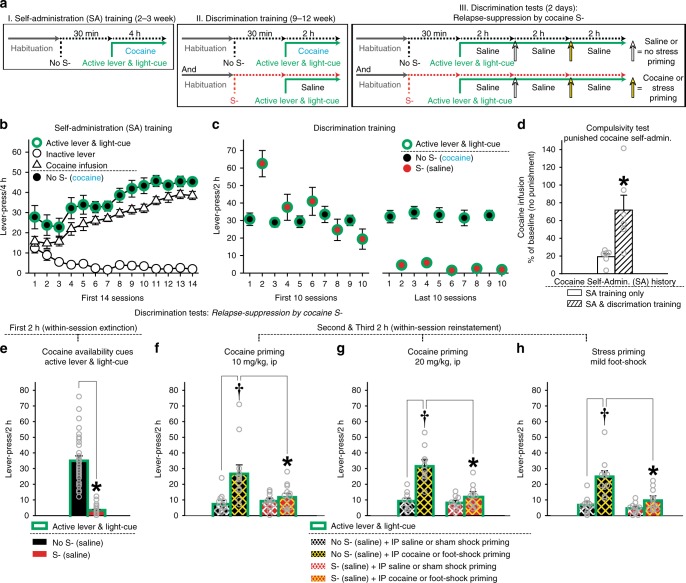
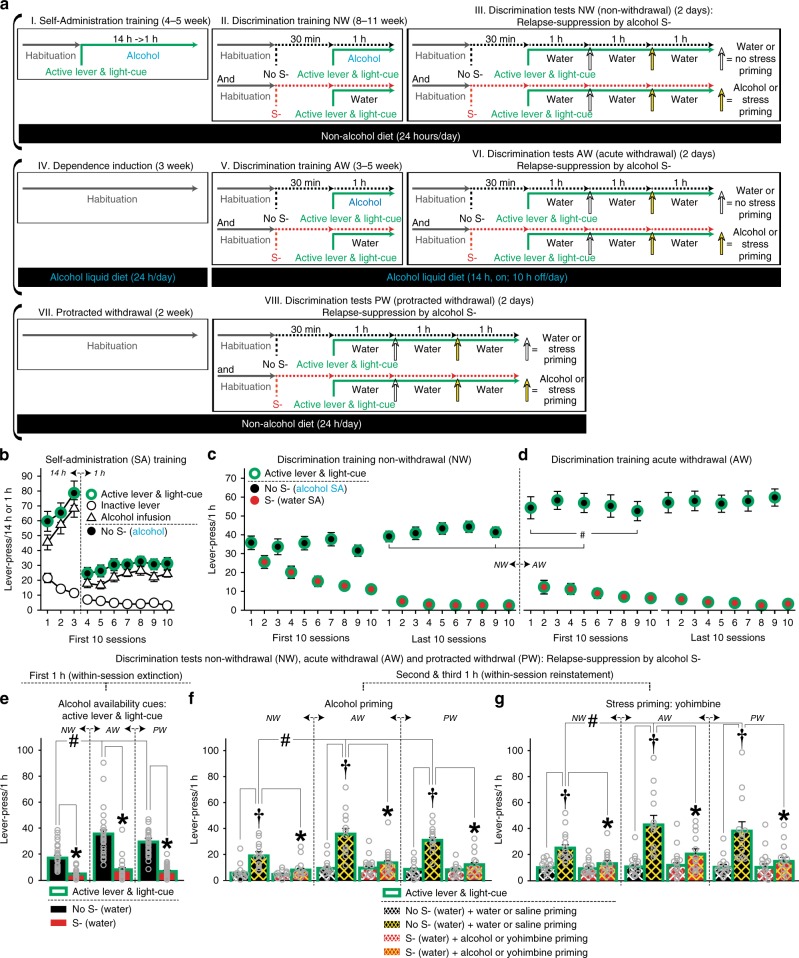
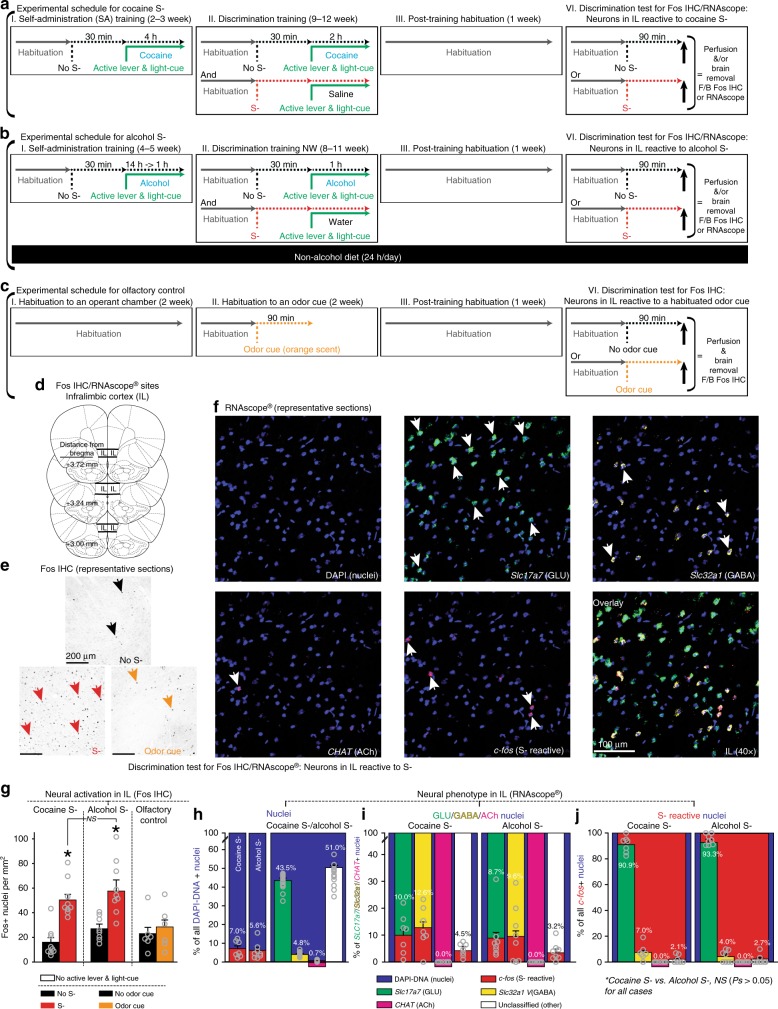
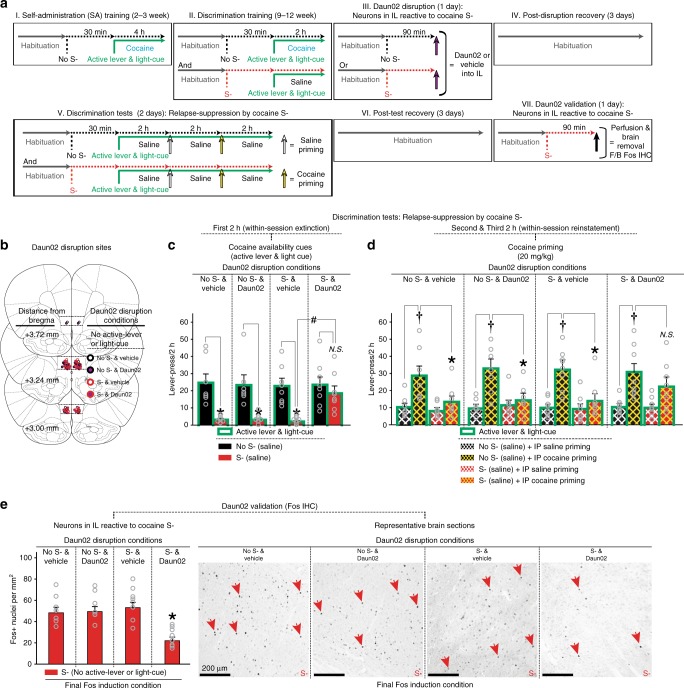
Verification
Claims the paper makes
The claims and statistics of this paper haven’t been checked yet.
Free: it reads the open-access text and checks the first 5 claims that cite a source we can check. Create a free account to check every claim.
Claims other papers make about this one
Each is checked against this paper’s own text: does it say what the citing paper says it does?
The source backs part of the claim, not all of it — or backs it for a different population, condition or comparison.
In the citing paper
“Additionally, glutamatergic and GABAergic signaling in the ILC contributes to inhibitory control over alcohol seeking and relapse (29, 34–37).”
From The glucagon-like peptide-1 (GLP-1) analogue semaglutide reduces alcohol drinking and modulates central GABA neurotransmission (2023) · cites this paper as [34]
Experimental — accuracy not yet measured
Self-check
Percentages, sums and reported differences re-computed from the paper’s own numbers.
The self-check needs the paper’s full text.
Citations
Cites
Diagnostic and Statistical Manual of Mental Disorders
American Psychiatric Association (2013) · doi:10.1176/appi.books.9780890425596 · Cited by 116,369
The Rat Brain in Stereotaxic Coordinates
(1982) · Elsevier eBooks · doi:10.1016/c2009-0-63235-9 · Cited by 51,963
Neurobiology of addiction: a neurocircuitry analysis
Koob, G. F., & Volkow, N. D. (2016) · The Lancet Psychiatry · doi:10.1016/s2215-0366(16)00104-8 · Cited by 3,698
GABAergic Interneurons in the Neocortex: From Cellular Properties to Circuits
Tremblay, R., Lee, S., & Rudy, B. (2016) · Neuron · doi:10.1016/j.neuron.2016.06.033 · Cited by 2,033
Differential projections of the infralimbic and prelimbic cortex in the rat
Vertes, R. P. (2004) · Synapse · doi:10.1002/syn.10279 · Cited by 1,550
The contextual brain: implications for fear conditioning, extinction and psychopathology
Maren, S., Phan, K. L., & Liberzon, I. (2013) · Nature Reviews Neuroscience · doi:10.1038/nrn3492 · Cited by 1,547
The role of medial prefrontal cortex in memory and decision making
Euston, D. R., Gruber, A. J., & McNaughton, B. L. (2012) · Neuron · doi:10.1016/j.neuron.2012.12.002 · Cited by 1,541
Anatomical analysis of afferent projections to the medial prefrontal cortex in the rat
Hoover, W. B., & Vertes, R. P. (2007) · Brain Structure and Function · doi:10.1007/s00429-007-0150-4 · Cited by 1,365
Prefrontal executive and cognitive functions in rodents: neural and neurochemical substrates
Dalley, J. W., Cardinal, R. N., & Robbins, T. W. (2004) · Neuroscience & Biobehavioral Reviews · doi:10.1016/j.neubiorev.2004.09.006 · Cited by 1,329
Evidence for Addiction-like Behavior in the Rat
Deroche-Gamonet, V., Belin, D., & Piazza, P. V. (2004) · Science · doi:10.1126/science.1099020 · Cited by 1,135
Engrams and circuits crucial for systems consolidation of a memory
Kitamura, T., Ogawa, S. K., Roy, D. S., Okuyama, T., Morrissey, M. D., Smith, L. M., Redondo, R. L., & Tonegawa, S. (2017) · Science · doi:10.1126/science.aam6808 · Cited by 1,104
Pavlovian conditioned inhibition.
Rescorla, R. A. (1969) · Psychological Bulletin · doi:10.1037/h0027760 · Cited by 851
Extinction circuits for fear and addiction overlap in prefrontal cortex
Peters, J., Kalivas, P. W., & Quirk, G. J. (2009) · Learning & Memory · doi:10.1101/lm.1041309 · Cited by 736
Drug Seeking Becomes Compulsive After Prolonged Cocaine Self-Administration
Vanderschuren, L. J. M. J., & Everitt, B. J. (2004) · Science · doi:10.1126/science.1098975 · Cited by 733
Microstructure of the neocortex: comparative aspects
DeFelipe, J., Alonso-Nanclares, L., & Arellano, J. I. (2002) · Journal of Neurocytology · doi:10.1023/a:1024130211265 · Cited by 686
Memory Engram Cells Have Come of Age
Tonegawa, S., Liu, X., Ramirez, S., & Redondo, R. (2015) · Neuron · doi:10.1016/j.neuron.2015.08.002 · Cited by 604
Infralimbic Prefrontal Cortex Is Responsible for Inhibiting Cocaine Seeking in Extinguished Rats
Peters, J., LaLumiere, R. T., & Kalivas, P. W. (2008) · Journal of Neuroscience · doi:10.1523/jneurosci.1045-08.2008 · Cited by 537
Context-induced relapse to drug seeking: a review
Crombag, H. S., Bossert, J. M., Koya, E., & Shaham, Y. (2008) · Philosophical Transactions of the Royal Society B: Biological Sciences · doi:10.1098/rstb.2008.0090 · Cited by 495
Self-citationNeurobiological substrates for the dark side of compulsivity in addiction
Koob, G. F. (2009) · Neuropharmacology · doi:10.1016/j.neuropharm.2008.07.043 · Cited by 458
Bossert, J. M., Marchant, N. J., Calu, D. J., & Shaham, Y. (2013) · Psychopharmacology · doi:10.1007/s00213-013-3120-y · Cited by 453
REVIEW: Acute withdrawal, protracted abstinence and negative affect in alcoholism: are they linked?
Heilig, M., Egli, M., Crabbe, J. C., & Becker, H. C. (2010) · Addiction Biology · doi:10.1111/j.1369-1600.2009.00194.x · Cited by 435
LIQUID DIET TECHNIQUE OF ETHANOL ADMINISTRATION: 1989 UPDATE
(1989) · Alcohol and Alcoholism · doi:10.1093/oxfordjournals.alcalc.a044896 · Cited by 422
Tseng, K. Y., & O'Donnell, P. (2004) · The Journal of Neuroscience · doi:10.1523/jneurosci.1021-04.2004 · Cited by 402
Houser, C. R., Crawford, G. D., Salvaterra, P. M., & Vaughn, J. E. (1985) · Journal of Comparative Neurology · doi:10.1002/cne.902340103 · Cited by 395
Different Neuronal Activity Patterns Induce Different Gene Expression Programs
Tyssowski, K. M., DeStefino, N. R., Cho, J.-H., Dunn, C. J., Poston, R. G., Carty, C. E., Jones, R. D., Chang, S. M., Romeo, P., Wurzelmann, M. K., et al. (2018) · Neuron · doi:10.1016/j.neuron.2018.04.001 · Cited by 390
Liu, X., & Weiss, F. (2002) · The Journal of Neuroscience · doi:10.1523/jneurosci.22-18-07856.2002 · Cited by 359
Self-citationExcessive Ethanol Drinking Following a History of Dependence Animal Model of Allostasis
Roberts, A. (2000) · Neuropsychopharmacology · doi:10.1016/s0893-133x(99)00167-0 · Cited by 349
Enhanced Alcohol Self‐Administration after Intermittent Versus Continuous Alcohol Vapor Exposure
O'Dell, L. E., Roberts, A. J., Smith, R. T., & Koob, G. F. (2004) · Alcoholism: Clinical and Experimental Research · doi:10.1097/01.alc.0000145781.11923.4e · Cited by 342 · cited 2×
“001) main effects, Withdrawal x Cue-Test interaction (F(2,48)= 11.”
BackgroundIntra-amygdala muscimol decreases operant ethanol self-administration in dependent rats
Roberts, A. J., Cole, M., & Koob, G. F. (1996) · Alcoholism: Clinical and Experimental Research · doi:10.1111/j.1530-0277.1996.tb01125.x · Cited by 340
Wiring and Molecular Features of Prefrontal Ensembles Representing Distinct Experiences
Ye, L., Allen, W. E., Thompson, K. R., Tian, Q., Hsueh, B., Ramakrishnan, C., Wang, A.-C., Jennings, J. H., Adhikari, A., Halpern, C. H., et al. (2016) · Cell · doi:10.1016/j.cell.2016.05.010 · Cited by 328
Ventral medial prefrontal cortex neuronal ensembles mediate context-induced relapse to heroin
Bossert, J. M., Stern, A. L., Theberge, F. R. M., Cifani, C., Koya, E., Hope, B. T., & Shaham, Y. (2011) · Nature Neuroscience · doi:10.1038/nn.2758 · Cited by 306
Self-citationSteketee, J. (2003) · Brain Research Reviews · doi:10.1016/s0165-0173(02)00233-3 · Cited by 293
Koya, E., Golden, S. A., Harvey, B. K., Guez-Barber, D. H., Berkow, A., Simmons, D. E., Bossert, J. M., Nair, S. G., Uejima, J. L., Marin, M. T., et al. (2009) · Nature Neuroscience · doi:10.1038/nn.2364 · Cited by 264
Self-citationAmygdala Inhibitory Circuits Regulate Associative Fear Conditioning
Krabbe, S., Gründemann, J., & Lüthi, A. (2018) · Biological Psychiatry · doi:10.1016/j.biopsych.2017.10.006 · Cited by 262
L�, A. D., Harding, S., Juzytsch, W., Funk, D., & Shaham, Y. (2005) · Psychopharmacology · doi:10.1007/s00213-004-2036-y · Cited by 255
George, O., Sanders, C., Freiling, J., Grigoryan, E., Vu, S., Allen, C. D., Crawford, E., Mandyam, C. D., & Koob, G. F. (2012) · Proceedings of the National Academy of Sciences · doi:10.1073/pnas.1116523109 · Cited by 238
Role of ventral medial prefrontal cortex in incubation of cocaine craving
Koya, E., Uejima, J. L., Wihbey, K. A., Bossert, J. M., Hope, B. T., & Shaham, Y. (2009) · Neuropharmacology · doi:10.1016/j.neuropharm.2008.04.022 · Cited by 229
Self-citationDifferential roles of medial prefrontal subregions in the regulation of drug seeking
Moorman, D. E., James, M. H., McGlinchey, E. M., & Aston-Jones, G. (2015) · Brain Research · doi:10.1016/j.brainres.2014.12.024 · Cited by 224
Going and stopping: dichotomies in behavioral control by the prefrontal cortex
Gourley, S. L., & Taylor, J. R. (2016) · Nature Neuroscience · doi:10.1038/nn.4275 · Cited by 195
Walker, B. M., & Koob, G. F. (2007) · Alcoholism: Clinical and Experimental Research · doi:10.1111/j.1530-0277.2006.00259.x · Cited by 194
Wang, J., Lanfranco, M. F., Gibb, S. L., Yowell, Q. V., Carnicella, S., & Ron, D. (2010) · The Journal of Neuroscience · doi:10.1523/jneurosci.2268-10.2010 · Cited by 184
Rational Development of Addiction Pharmacotherapies: Successes, Failures, and Prospects
Christopher Pierce, R., O'Brien, C. P., Kenny, P. J., & Vanderschuren, L. J. M. J. (2012) · Cold Spring Harbor Perspectives in Medicine · doi:10.1101/cshperspect.a012880 · Cited by 178 · cited 4×
“01) main effects, and CueTest x Priming interaction (F(1,6)= 11.”
BackgroundInfluentialDistinct Patterns of Neural Activation Associated with Ethanol Seeking: Effects of Naltrexone
Dayas, C. V., Liu, X., Simms, J. A., & Weiss, F. (2006) · Biological Psychiatry · doi:10.1016/j.biopsych.2006.07.034 · Cited by 166
Self-citationKasof, G., Mandelzys, A., Maika, S., Hammer, R., Curran, T., & Morgan, J. (1995) · The Journal of Neuroscience · doi:10.1523/jneurosci.15-06-04238.1995 · Cited by 160
Moorman, D. E., & Aston-Jones, G. (2015) · Proceedings of the National Academy of Sciences · doi:10.1073/pnas.1507611112 · Cited by 159
A fundamental role for context in instrumental learning and extinction
Bouton, M. E., & Todd, T. P. (2014) · Behavioural Processes · doi:10.1016/j.beproc.2014.02.012 · Cited by 152
LaLumiere, R. T., Smith, K. C., & Kalivas, P. W. (2012) · European Journal of Neuroscience · doi:10.1111/j.1460-9568.2012.07991.x · Cited by 151
Fear potentiation and fear inhibition in a human fear-potentiated startle paradigm
Jovanovic, T., Keyes, M., Fiallos, A., Myers, K. M., Davis, M., & Duncan, E. J. (2005) · Biological Psychiatry · doi:10.1016/j.biopsych.2005.02.025 · Cited by 150
Pfarr, S., Meinhardt, M. W., Klee, M. L., Hansson, A. C., Vengeliene, V., Schonig, K., Bartsch, D., Hope, B. T., Spanagel, R., & Sommer, W. H. (2015) · Journal of Neuroscience · doi:10.1523/jneurosci.0684-15.2015 · Cited by 143
Self-citationSelf‐administration of cocaine, cannabis and heroin in the human laboratory: benefits and pitfalls
Haney, M. (2009) · Addiction Biology · doi:10.1111/j.1369-1600.2008.00121.x · Cited by 134
The role of medial prefrontal cortex in extinction and reinstatement of alcohol‐seeking in rats
Willcocks, A. L., & McNally, G. P. (2013) · European Journal of Neuroscience · doi:10.1111/ejn.12031 · Cited by 131
Occasion setting: A neural network approach.
Schmajuk, N. A., Lamoureux, J. A., & Holland, P. C. (1998) · Psychological Review · doi:10.1037//0033-295x.105.1.3 · Cited by 125
Expectancy bias in trait anxiety.
Chan, C. K. Y., & Lovibond, P. F. (1996) · Journal of Abnormal Psychology · doi:10.1037/0021-843x.105.4.637 · Cited by 124
Operant Behavior and Alcohol Levels in Blood and Brain of Alcohol‐Dependent Rats
Gilpin, N. W., Smith, A. D., Cole, M., Weiss, F., Koob, G. F., & Richardson, H. N. (2009) · Alcoholism: Clinical and Experimental Research · doi:10.1111/j.1530-0277.2009.01051.x · Cited by 122
Self-citationWarren, B. L., Mendoza, M. P., Cruz, F. C., Leao, R. M., Caprioli, D., Rubio, F. J., Whitaker, L. R., McPherson, K. B., Bossert, J. M., Shaham, Y., et al. (2016) · The Journal of Neuroscience · doi:10.1523/jneurosci.0140-16.2016 · Cited by 121
Self-citationThinking About Brain Cell Assemblies
Eichenbaum, H. (1993) · Science · doi:10.1126/science.8351525 · Cited by 111
Psychological and neural mechanisms of relapse
Stewart, J. (2008) · Philosophical Transactions of the Royal Society B: Biological Sciences · doi:10.1098/rstb.2008.0084 · Cited by 105
Conditioned inhibition of fear-potentiated startle and skin conductance in humans
GRILLON, C., & AMELI, R. (2001) · Psychophysiology · doi:10.1017/s0048577201000294 · Cited by 102
Long-Evans Rats Acquire Operant Self-Administration of 20% Ethanol Without Sucrose Fading
Simms, J. A., Bito-Onon, J. J., Chatterjee, S., & Bartlett, S. E. (2010) · Neuropsychopharmacology · doi:10.1038/npp.2010.15 · Cited by 100
Chaudhri, N., Sahuque, L. L., Cone, J. J., & Janak, P. H. (2008) · European Journal of Neuroscience · doi:10.1111/j.1460-9568.2008.06517.x · Cited by 98
Gilpin, N. W., Misra, K., & Koob, G. F. (2008) · Pharmacology Biochemistry and Behavior · doi:10.1016/j.pbb.2008.04.006 · Cited by 97
Perez-Cruz, C., Müller-Keuker, J. I. H., Heilbronner, U., Fuchs, E., & Flügge, G. (2007) · Neural Plasticity · doi:10.1155/2007/46276 · Cited by 90
Zhao, Y., Weiss, F., & Zorrilla, E. P. (2007) · Alcoholism: Clinical and Experimental Research · doi:10.1111/j.1530-0277.2007.00456.x · Cited by 84
Self-citationDiscriminative Inhibitory Control of Cocaine Seeking Involves the Prelimbic Prefrontal Cortex
Mihindou, C., Guillem, K., Navailles, S., Vouillac‐Mendoza, C., & Ahmed, S. H. (2012) · Biological Psychiatry · doi:10.1016/j.biopsych.2012.08.011 · Cited by 82
Suto, N., Laque, A., Ness, G. L. D., Wagner, G. E., Watry, D. D., Kerr, T. M., Koya, E., Mayford, M. R., Hope, B. T., & Weiss, F. (2016) · eLife · doi:10.7554/elife.21920 · Cited by 68 · cited 2×
“001) main effects, and Withdrawal x Priming (F(2,22)= 16.”
BackgroundSelf-citationGutman, A. L., Nett, K. E., Cosme, C. V., Worth, W. R., Gupta, S. C., Wemmie, J. A., & LaLumiere, R. T. (2017) · Journal of Neuroscience · doi:10.1523/jneurosci.3821-16.2017 · Cited by 56
Pfarr, S., Schaaf, L., Reinert, J. K., Paul, E., Herrmannsdörfer, F., Roßmanith, M., Kuner, T., Hansson, A. C., Spanagel, R., Körber, C., et al. (2018) · The Journal of Neuroscience · doi:10.1523/jneurosci.0026-18.2018 · Cited by 54
Similar anxiety-like responses in male and female rats exposed to repeated withdrawals from ethanol
Overstreet, D. H., Knapp, D. J., & Breese, G. R. (2004) · Pharmacology Biochemistry and Behavior · doi:10.1016/j.pbb.2004.04.018 · Cited by 50
Cue‐Exposure Treatment: Time for Change
Conklin, C. A., & Tiffany, S. T. (2002) · Addiction · doi:10.1046/j.1360-0443.2002.00205.x · Cited by 49
The Effects of a Context Switch following Serial and Simultaneous Feature-Negative Discriminations
Nelson, J. B., & Bouton, M. E. (1997) · Learning and Motivation · doi:10.1006/lmot.1997.0946 · Cited by 48
Wagner, A. R., Thomas, E., & Norton, T. T. (1967) · Journal of Comparative and Physiological Psychology · doi:10.1037/h0088014 · Cited by 47
Augier, E., Flanigan, M., Dulman, R. S., Pincus, A., Schank, J. R., Rice, K. C., Kejun, C., Heilig, M., & Tapocik, J. D. (2014) · Psychopharmacology · doi:10.1007/s00213-014-3605-3 · Cited by 44
Discriminative stimuli are sufficient for incubation of cocaine craving
Madangopal, R., Tunstall, B. J., Komer, L. E., Weber, S. J., Hoots, J. K., Lennon, V. A., Bossert, J. M., Epstein, D. H., Shaham, Y., & Hope, B. T. (2019) · eLife · doi:10.7554/elife.44427 · Cited by 43
Self-citationGutman, A. L., Ewald, V. A. M., Cosme, C. V., Worth, W. R., & LaLumiere, R. T. (2016) · Addiction Biology · doi:10.1111/adb.12434 · Cited by 41
Conditioned Inhibition of Cocaine Seeking in Rats.
Kearns, D. N., Weiss, S. J., Schindler, C. W., & Panlilio, L. V. (2005) · Journal of Experimental Psychology Animal Behavior Processes · doi:10.1037/0097-7403.31.2.247 · Cited by 35
Navailles, S., Guillem, K., Vouillac‐Mendoza, C., & Ahmed, S. H. (2014) · Cerebral Cortex · doi:10.1093/cercor/bhu112 · Cited by 27
Knight, C. P., Hauser, S. R., Deehan, G. A., Toalston, J. E., McBride, W. J., & Rodd, Z. A. (2016) · Alcoholism Clinical and Experimental Research · doi:10.1111/acer.13027 · Cited by 17
A Procedure for Studying the Footshock-Induced Reinstatement of Cocaine Seeking in Laboratory Rats
Kupferschmidt, D. A., Brown, Z. J., & Erb, S. M. (2011) · Journal of Visualized Experiments · doi:10.3791/2265 · Cited by 15 · cited 2×
“001) main effects, and Training x Cue-Test interaction (F(2,42)= 3.”
BackgroundThomas, E., & Basbaum, C. B. (1972) · Journal of Comparative and Physiological Psychology · doi:10.1037/h0032822 · Cited by 9
Reduction of cocaine seeking by a food-based inhibitor in rats.
Weiss, S. J., Kearns, D. N., Christensen, C. J., Huntsberry, M. E., Schindler, C. W., & Panlilio, L. V. (2007) · Experimental and Clinical Psychopharmacology · doi:10.1037/1064-1297.15.4.359 · Cited by 8
Research works printed but not linked: 1
- Substance Abuse and Mental Health Services Administration (US) & Office of the Surgeon General (US). Facing Addiction in America: The Surgeon General’s Report on Alcohol, Drugs, and Health (US Department of Health and Human Services, Washington, DC, 2016). 28252892
Cited by
Chuong, V., Farokhnia, M., Khom, S., Pince, C. L., Elvig, S. K., Vlkolinsky, R., Marchette, R. C. N., Koob, G. F., Roberto, M., Vendruscolo, L. F., et al. (2023) · JCI Insight · doi:10.1172/jci.insight.170671 · Cited by 214
Alcohol and the brain: from genes to circuits
Egervári, G., Siciliano, C. A., Whiteley, E. L., & Ron, D. (2021) · Trends in Neurosciences · doi:10.1016/j.tins.2021.09.006 · Cited by 151
Developing neuroscience-based treatments for alcohol addiction: A matter of choice?
Heilig, M. A., Augier, E., Pfarr, S., & Sommer, W. H. (2019) · Translational Psychiatry · doi:10.1038/s41398-019-0591-6 · Cited by 107
Howland, J. G., Ito, R., Lapish, C. C., & Villaruel, F. R. (2022) · Neuroscience & Biobehavioral Reviews · doi:10.1016/j.neubiorev.2022.104569 · Cited by 91
Cocaine and sucrose rewards recruit different seeking ensembles in the nucleus accumbens core
Bobadilla, A., Dereschewitz, E., Vaccaro, L., Heinsbroek, J. A., Scofield, M. D., & Kalivas, P. W. (2020) · Molecular Psychiatry · doi:10.1038/s41380-020-00888-z · Cited by 83
Metadata
- Authors
- Laque, A., L. De Ness, G., Wagner, G. E., Nedelescu, H., Carroll, A., Watry, D., M. Kerr, T., Koya, E., Hope, B. T., Weiss, F., Elmer, G. I., & Suto, N.
- Affiliations
- Scripps Research Institute (US)
- University of Sussex (GB)
- National Institutes of Health (US)
- ORCID
- Venue
- Nature Communications
- Published
- 2019-09-02
- Volume
- 10
- Issue
- 1
- Pages
- 3934-3934
- ISSN
- 2041-1723 (ISSN-L)
- PMC
- PMC6718661
- OpenAlex
- W2969551941
- Cited by
- 43
- References
- 80
- Citations by year
- 2026: 6 · 2025: 10 · 2024: 3 · 2023: 6 · 2022: 5 · 2021: 9 · 2020: 3 · 2019: 1
- FWCI
- 2.15
- Type
- journal article
- Language
- en
- Open access
- gold
- doi.org
- Licence
- cc-by
- creativecommons.org/licenses/by/4.0 (tdm)
- creativecommons.org/licenses/by/4.0 (vor)
- Locations
- Nature Communications (publishedVersion, cc-by)
- Europe PMC (PubMed Central) (publishedVersion, cc-by)
- PubMed Central (publishedVersion, cc-by)
- PubMed (publishedVersion)
- RePEc: Research Papers in Economics (submittedVersion)
- DOAJ (DOAJ: Directory of Open Access Journals) (submittedVersion)
- DOAJ (DOAJ: Directory of Open Access Journals) (submittedVersion, cc-by-sa)
- Figshare (submittedVersion, cc-by)
- Sussex Research Online (University of Sussex) (submittedVersion, cc-by)
- Funders
- U.S. Department of Health & Human Services | NIH | National Institute on Alcohol Abuse and Alcoholism (T32AA007456, R01AA021549, R01AA023183)
- U.S. Department of Health & Human Services | NIH | National Institute on Drug Abuse (ZIADA000467, N01DA59909, R21DA033533, R01DA037294)
- Topics
- Life Sciences › Neuroscience › Cellular and Molecular Neuroscience › Neurotransmitter Receptor Influence on Behavior
- Life Sciences › Neuroscience › Cognitive Neuroscience › Memory and Neural Mechanisms
- Life Sciences › Neuroscience › Cellular and Molecular Neuroscience › Neuroscience and Neuropharmacology Research
- Keywords
- drug relapse, infralimbic cortex, cocaine, alcohol, classical conditioning, stress, glutamatergic neurons, GABAergic neurons, neuronal ensembles, addiction treatment
- MeSH terms
- Alcoholism, Animals, Cocaine, Compulsive Behavior, Conditioning, Operant, Cues, Male, Neurons, Recurrence, Rats, Sprague-Dawley, Prefrontal Cortex, Dopamine Uptake Inhibitors, Substance-Related Disorders, Rats, Long-Evans, Rats, Transgenic
About these checks
Registry, retraction, Cites and statistics results are computed, not judged, with one exception: a printed reference that no index lists is read once by a model before it counts as a citation error. Claims are extracted by a model and kept only when their quote appears verbatim in the text; each cited source is then checked, with a model’s help, for whether it says what the claim relies on. Those verdicts can be wrong — read the claim’s quote and the cited source before relying on one.
Statistics and arithmetic are recomputed, not judged.
Confidence bands are shown only for fields calibrated on our annotated test set. None is calibrated yet, so no band is shown.
What counts as a claim ›How we measure confidence ›How we check this ›
Are you an author, or do you see a problem with this page? Request a review
Data sources
Bibliographic data: Semantic Scholar, OpenAlex, Crossref.
Contains information from the Semantic Scholar Academic Graph Datasets, made available under the ODC Attribution License (ODC-BY 1.0).
Semantic Scholar’s data is described in: Kinney, R., et al. (2023). The Semantic Scholar Open Data Platform. arXiv:2301.10140.
