

CRISPR-Cas9-based mutagenesis frequently provokes on-target mRNA misregulation
Open accessPublished version of a preprint
The DOI matches its Crossref record; 44 of the 44 references it cites were found in a registry or an index.
Abstract
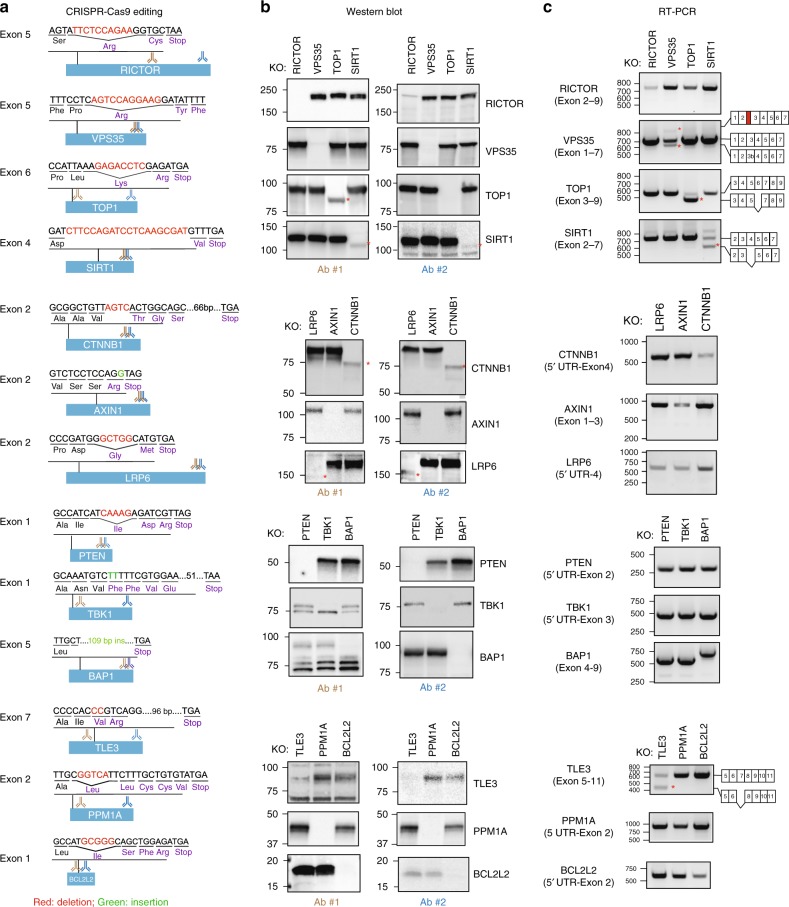
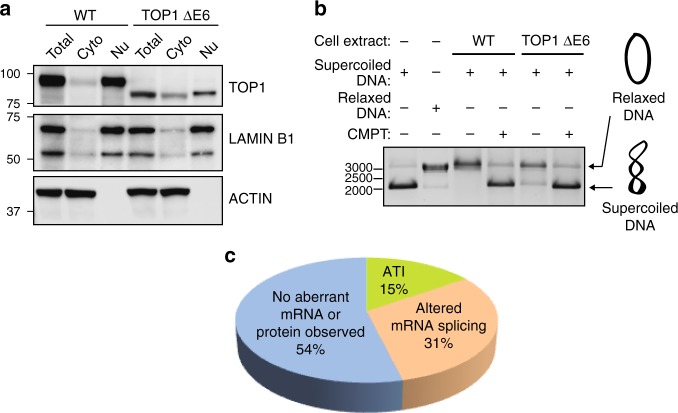
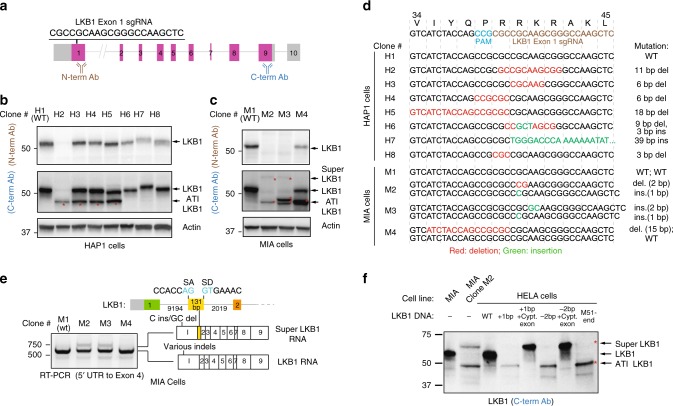
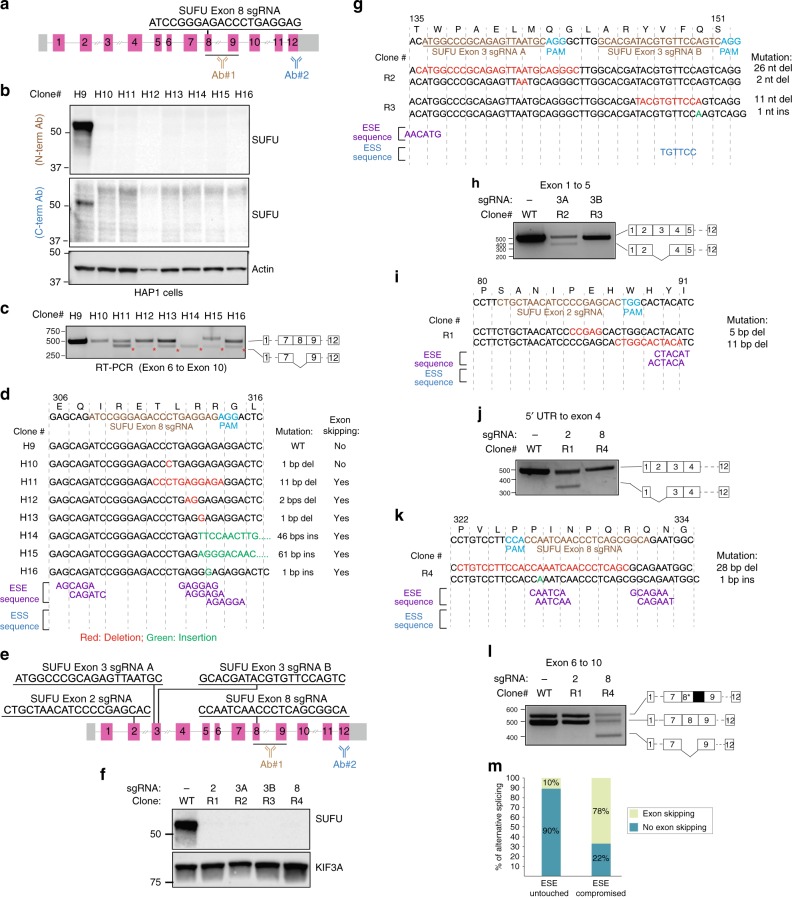
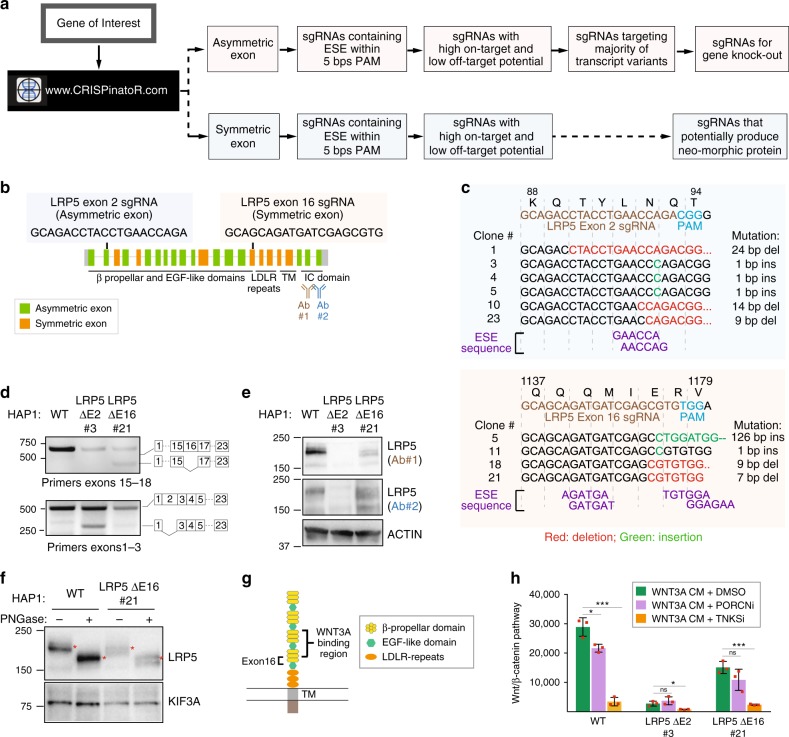
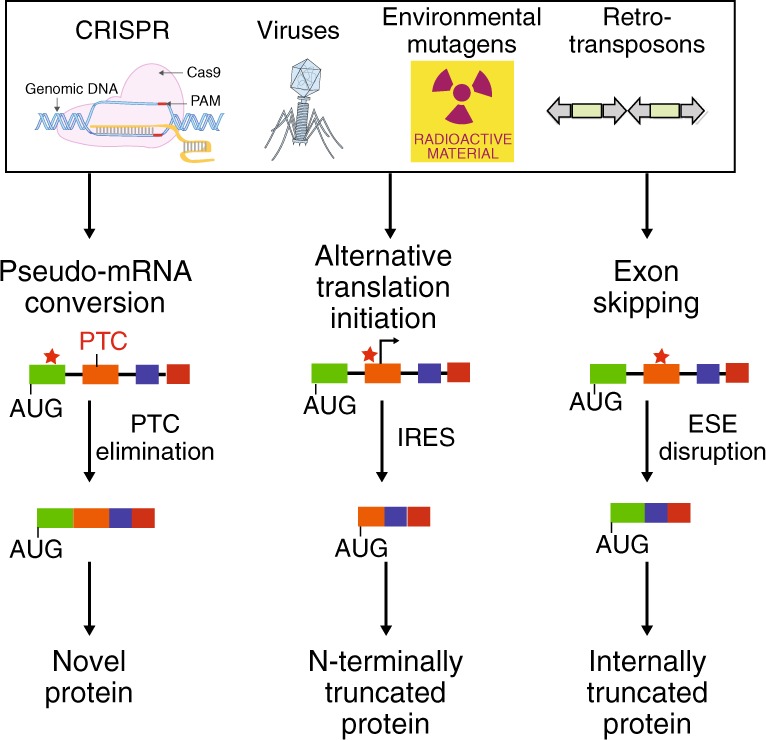
The introduction of insertion-deletions (INDELs) by non-homologous end-joining (NHEJ) pathway underlies the mechanistic basis of CRISPR-Cas9-directed genome editing. Selective gene ablation using CRISPR-Cas9 is achieved by installation of a premature termination codon (PTC) from a frameshift-inducing INDEL that elicits nonsense-mediated decay (NMD) of the mutant mRNA. Here, by examining the mRNA and protein products of CRISPR targeted genes in a cell line panel with presumed gene knockouts, we detect the production of foreign mRNAs or proteins in ~50% of the cell lines. We demonstrate that these aberrant protein products stem from the introduction of INDELs that promote internal ribosomal entry, convert pseudo-mRNAs (alternatively spliced mRNAs with a PTC) into protein encoding molecules, or induce exon skipping by disruption of exon splicing enhancers (ESEs). Our results reveal challenges to manipulating gene expression outcomes using INDEL-based mutagenesis and strategies useful in mitigating their impact on intended genome-editing outcomes.
Overview
The claims and statistics of this paper haven’t been checked yet.
Free: it reads the open-access text and checks the first 5 claims that cite a source we can check. Create a free account to check every claim.
Integrity signals
Registry
Cites
Statistics
Figures
Verification
Claims the paper makes
The claims and statistics of this paper haven’t been checked yet.
Free: it reads the open-access text and checks the first 5 claims that cite a source we can check. Create a free account to check every claim.
Claims other papers make about this one
Each is checked against this paper’s own text: does it say what the citing paper says it does?
The source backs part of the claim, not all of it — or backs it for a different population, condition or comparison.
In the citing paper
“It should be added that low levels of peptides from the C-terminal DENND10 sequence were detected in sgDennd10_No2 by mass spectrometry (see below, Table S1), likely due to truncated protein expression from cryptic alternative splicing events, a phenomenon observed in approximately 50% of CRISPR-edited cells.50”
From Endosomal protein DENND10 promotes developmental competence of neurite extension (2025) · cites this paper as [50]
Experimental — accuracy not yet measuredIn the citing paper
“Further, analogous to how Cas9-nuclease targeting often produces RNAs degraded by nonsense mediated decay13, it is possible that Cas13 cleavage produces RNA molecules that can be detected by scRNA-seq but cannot be translated into functional protein14, suggesting that the level of measured RNA knockdown underestimates the phenotypic effect of Cas13 perturbation.”
From Efficient combinatorial targeting of RNA transcripts in single cells with Cas13 RNA Perturb-seq (2023) · cites this paper as [13]
Self-check
Percentages, sums and reported differences re-computed from the paper’s own numbers.
The self-check needs the paper’s full text.
Citations
Cites
Fast and accurate short read alignment with Burrows-Wheeler transform
Li, H., & Durbin, R. (2009) · Bioinformatics · doi:10.1093/bioinformatics/btp324 · Cited by 58,607
Fast and accurate long-read alignment with Burrows-Wheeler transform.
Li, H., & Durbin, R. (2010) · Bioinformatics · doi:10.1093/bioinformatics/btp698 · Cited by 12,063
The new frontier of genome engineering with CRISPR-Cas9
Doudna, J. A., & Charpentier, E. (2014) · Science · doi:10.1126/science.1258096 · Cited by 7,062
Development and Applications of CRISPR-Cas9 for Genome Engineering
Hsu, P. D., Lander, E. S., & Zhang, F. (2014) · Cell · doi:10.1016/j.cell.2014.05.010 · Cited by 5,762 · cited 1×
“A conserved stem loop motif in the 5'untranslated region regulates transforming growth factor-beta(1) translation.”
Cpf1 Is a Single RNA-Guided Endonuclease of a Class 2 CRISPR-Cas System
Zetsche, B., Gootenberg, J. S., Abudayyeh, O. O., Slaymaker, I. M., Makarova, K. S., Essletzbichler, P., Volz, S. E., Joung, J., van der Oost, J., Regev, A., et al. (2015) · Cell · doi:10.1016/j.cell.2015.09.038 · Cited by 4,761
DNA targeting specificity of RNA-guided Cas9 nucleases
Hsu, P. D., Scott, D. A., Weinstein, J. A., Ran, F. A., Konermann, S., Agarwala, V., Li, Y., Fine, E. J., Wu, X., Shalem, O., et al. (2013) · Nature Biotechnology · doi:10.1038/nbt.2647 · Cited by 4,741
Self-citationOptimized sgRNA design to maximize activity and minimize off-target effects of CRISPR-Cas9
Doench, J. G., Fusi, N., Sullender, M., Hegde, M., Vaimberg, E. W., Donovan, K. F., Smith, I., Tothova, Z., Wilen, C., Orchard, R., et al. (2016) · Nature Biotechnology · doi:10.1038/nbt.3437 · Cited by 4,637
Zerbino, D. R., Achuthan, P., Akanni, W., Amode, M. R., Barrell, D., Bhai, J., Billis, K., Cummins, C., Gall, A., Girón, C. G., et al. (2018) · Nucleic Acids Research · doi:10.1093/nar/gkx1098 · Cited by 2,605
Listening to silence and understanding nonsense: exonic mutations that affect splicing
Cartegni, L., Chew, S. L., & Krainer, A. R. (2002) · Nature Reviews Genetics · doi:10.1038/nrg775 · Cited by 2,209
Wang, J. C. (1996) · Annual Review of Biochemistry · doi:10.1146/annurev.bi.65.070196.003223 · Cited by 1,832
Cited by
Items 201–219 of 219
Hosur, V., Low, B. E., Li, D., Stafford, G. A., Kohar, V., Shultz, L. D., & Wiles, M. V. (2020) · Figshare · doi:10.6084/m9.figshare.12637771
Senevirathne, A., Hewawaduge, C., & Lee, J. H. (2021) · Figshare · doi:10.6084/m9.figshare.16713947
Tasaki, K., Yoshida, M., Nakajima, M., Higuchi, A., Watanabe, A., & Nishihara, M. (2020) · Figshare · doi:10.6084/m9.figshare.12775089
Hosur, V., Low, B. E., Li, D., Stafford, G. A., Kohar, V., Shultz, L. D., & Wiles, M. V. (2020) · Figshare · doi:10.6084/m9.figshare.12637780
Escalona, R. M., Chu, S., Kadife, E., Kelly, J., Kannourakis, G., Findlay, J. K., & Ahmed, N. (2023) · Figshare · doi:10.6084/m9.figshare.22606204
Matsushita, S., Nakano, M., Chokyuu, S., Kurao, M., Fujita, A., Kimura, J., Nagata, C., Ishikawa, T., Tamura, K., & Bono, H. U. (2025) · bioRxiv (Cold Spring Harbor Laboratory) · doi:10.64898/2025.12.28.695628
“RNA-seq analysis revealed strong downregulation of F3H transcripts, likely resulting from nonsense-mediated mRNA decay triggered by frameshift mutations in exon 1 (Drechsel et al., 2013; Tuladhar et al., 2019; Luha et al., 2024).”
Kim, T. K., & Hinson, J. T. (2026) · Current Opinion in Cardiology · doi:10.1097/hco.0000000000001278 · Cited by 1
Schneller und zuverlässiger zu Loss-of-Function-Effekten
Stadager, J., & Rathert, P. (2026) · BIOspektrum · doi:10.1007/s12268-026-2661-7
Rojas-Vásquez, R., Hernández-Soto, A., Arrieta-Espinoza, G., & Gatica-Arias, A. (2026) · Plant Cell Tissue and Organ Culture (PCTOC) · doi:10.1007/s11240-026-03414-1
The Role of α-Tubulin Acetyltransferase (αTAT1) in Glioblastoma Cellular Responses to Radiotherapy
Khalilian, S. (2024) · theses.fr (ABES) · doi:10.70675/c231f089z5eaaz4a1azbaa6z5efcb63c119d
Rajan, A., Raveendran, M., Shanmugam, V., Arul, L., Kumar, K. A., Subramanian, A., Mannu, J., & Eswaran, K. (2026) · Molecular Biology Reports · doi:10.1007/s11033-026-11940-6
Matsushita, S., Nakano, M., Chokyuu, S., Kurao, M., Fujita, A., Kimura, J., Nagata, C., Ishikawa, T., Tamura, K., & Bono, H. U. (2026) · Frontiers in Plant Science · doi:10.3389/fpls.2026.1877946
“RNA-seq analysis showed reduced F3H transcript levels in the edited lines, which may be associated with nonsense-mediated mRNA decay triggered by frameshift mutations (Drechsel et al., 2013; Tuladhar et al., 2019; Luha et al., 2024).”
Effah, S. N., Barrera, S. C., Ortiz, N. U., Dampier, W., Nonnemacher, M. R., & Wigdahl, B. L. (2026) · International Journal of Molecular Sciences · doi:10.3390/ijms27135905 · Cited by 1
“…and out-of-frame mutations, resulting in either the maintenance of the coding region of genes, albeit shorter or less functional pro-https teins, or a complete disruption of the reading frame with the introduction of a premature stop or termination codon, respectively (Figure 2) [29,30,39,40,107].”
Liu, M., Wu, X., Yang, Y., Zhu, Z., Sun, M., Yang, Y., Liu, B., Li, R., Zhao, Q., & Yang, T. (2026) · Annals of Botany · doi:10.1093/aob/mcag202 · Cited by 1
Self-citationFrameshift Mutations in Exon 1 of Fgf10 Frequently Yield Morphologically Normal Embryos
Lkhagvadorj, K., Okamura, E., Morimura, T., Mizuno, S., & Ema, M. (2026) · Journal of Developmental Biology · doi:10.3390/jdb14030033
“Consequently, even complete frameshift mutations do not necessarily guarantee complete loss of gene function [7–10].”
Figueroa‐Varela, P. A., Góngora, C. E., Martínez, C. P., Ortíz, A., Navarro-Escalante, L., Acuña, R., & Villanueva-Mejía, D. F. (2026) · Horticulturae · doi:10.3390/horticulturae12091150
“Tuladhar et al., (2019) [71] demonstrated that CRISPR/Cas9 editing can induce substantial transcriptional perturbations at edited loci, including reduced transcript abundance, aberrant splicing, and decreased mRNA stability through mechanisms independent of frameshift mutations or premature…”
Zu, Y., Wang, H., Han, X., Wu, X., & Chen, L. (2026) · Genetics · doi:10.1093/genetics/iyag245
Self-citationNFYA regulates the expression of CD44 via binding to upstream cis-element in breast cancer cells
Salem, S. M., & Yahya, S. M. M. (2026) · Biochimie · doi:10.1016/j.biochi.2026.09.010
Glia-enriched human brain organoids for studying developmental alterations in leukodystrophiesPreprint
Mangiameli, E., Kok, L. M. L., Rosato, C., Cenini, G., Cupaioli, F. A., Alfieri, R. R., Shreenidhi, V. P., Oberst, P., Peitz, M., Dooves, S., et al. (2026) · bioRxiv (Cold Spring Harbor Laboratory) · doi:10.64898/2026.10.01.755898 · Cited by 1
“…knockout line carrying a frameshift mutation (GLD 3i) showed reduced GALC transcript at all time points, likely due to nonsense-mediated RNA decay (Tuladhar et al., 2019), whereas lines carrying the G553R missense mutation showed near-control-level expression. scRNA-seq revealed broad GALC and…”
Metadata
- Authors
- Tuladhar, R., Yeu, Y., Tyler Piazza, J., Tan, Z., Rene Clemenceau, J., Wu, X., Barrett, Q., Herbert, J., Mathews, D. H., Kim, J., Hyun Hwang, T., & Lum, L.
- Affiliations
- The University of Texas Southwestern Medical Center (US)
- Cleveland Clinic (US)
- University of Rochester Medicine (US)
- Corresponding author
- Lum, Lawrence
- ORCID
- Venue
- Nature Communications
- Published
- 2019-09-06
- Volume
- 10
- Issue
- 1
- Pages
- 4056-4056
- ISSN
- 2041-1723 (ISSN-L)
- PMC
- PMC6731291
- OpenAlex
- W2972019268
- Semantic Scholar
- dbf0afc42fa9eebf6b76de442c873bc00db2223f
- Cited by
- 219
- References
- 44
- Citations by year
- 2026: 18 · 2025: 22 · 2024: 30 · 2023: 23 · 2022: 29 · 2021: 36 · 2020: 46 · 2019: 12
- FWCI
- 10.18
- Type
- journal article
- Language
- en
- Open access
- gold
- doi.org
- Licence
- cc-by
- creativecommons.org/licenses/by/4.0 (tdm)
- creativecommons.org/licenses/by/4.0 (vor)
- Locations
- Nature Communications (publishedVersion, cc-by)
- bioRxiv (Cold Spring Harbor Laboratory) (acceptedVersion)
- Europe PMC (PubMed Central) (publishedVersion, cc-by)
- PubMed Central (publishedVersion, cc-by)
- PubMed (publishedVersion)
- RePEc: Research Papers in Economics (submittedVersion)
- DOAJ (DOAJ: Directory of Open Access Journals) (submittedVersion, cc-by-sa)
- DOAJ (DOAJ: Directory of Open Access Journals) (submittedVersion)
- Funders
- Welch Foundation (I-1665)
- U.S. Department of Health & Human Services | NIH | National Cancer Institute (1R01 CA168761)
- American Cancer Society (RSG-16-090-01-TBG)
- Cancer Prevention and Research Institute of Texas (RP130212)
- U.S. Department of Health & Human Services | NIH | Center for Information Technology (R01GM076485)
- Topics
- Life Sciences › Biochemistry, Genetics and Molecular Biology › Molecular Biology › CRISPR and Genetic Engineering
- Life Sciences › Biochemistry, Genetics and Molecular Biology › Molecular Biology › RNA regulation and disease
- Life Sciences › Biochemistry, Genetics and Molecular Biology › Molecular Biology › RNA Research and Splicing
- Keywords
- CRISPR/Cas9 mutagenesis, nonsense-mediated mRNA decay, premature stop codon, insertion-deletion mutations, non-homologous end joining, exon skipping, alternative splicing
- MeSH terms
- Gene Editing, Amino Acid Sequence, Base Sequence, Cell Line, HeLa Cells, Humans, RNA, Messenger, Gene Expression Regulation, Neoplastic, Mutagenesis, Frameshift Mutation, Codon, Nonsense, RNA Stability, Cell Line, Tumor, INDEL Mutation, Gene Knockout Techniques, CRISPR-Cas Systems
About these checks
Registry, retraction, Cites and statistics results are computed, not judged, with one exception: a printed reference that no index lists is read once by a model before it counts as a citation error. Claims are extracted by a model and kept only when their quote appears verbatim in the text; each cited source is then checked, with a model’s help, for whether it says what the claim relies on. Those verdicts can be wrong — read the claim’s quote and the cited source before relying on one.
Statistics and arithmetic are recomputed, not judged.
Confidence bands are shown only for fields calibrated on our annotated test set. None is calibrated yet, so no band is shown.
What counts as a claim ›How we measure confidence ›How we check this ›
Are you an author, or do you see a problem with this page? Request a review
Data sources
Bibliographic data: Semantic Scholar, OpenAlex, Crossref.
Contains information from the Semantic Scholar Academic Graph Datasets, made available under the ODC Attribution License (ODC-BY 1.0).
Semantic Scholar’s data is described in: Kinney, R., et al. (2023). The Semantic Scholar Open Data Platform. arXiv:2301.10140.
