

CRISPR-Cas9-based mutagenesis frequently provokes on-target mRNA misregulation
Open accessPublished version of a preprint
The DOI matches its Crossref record; 44 of the 44 references it cites were found in a registry or an index.
Abstract
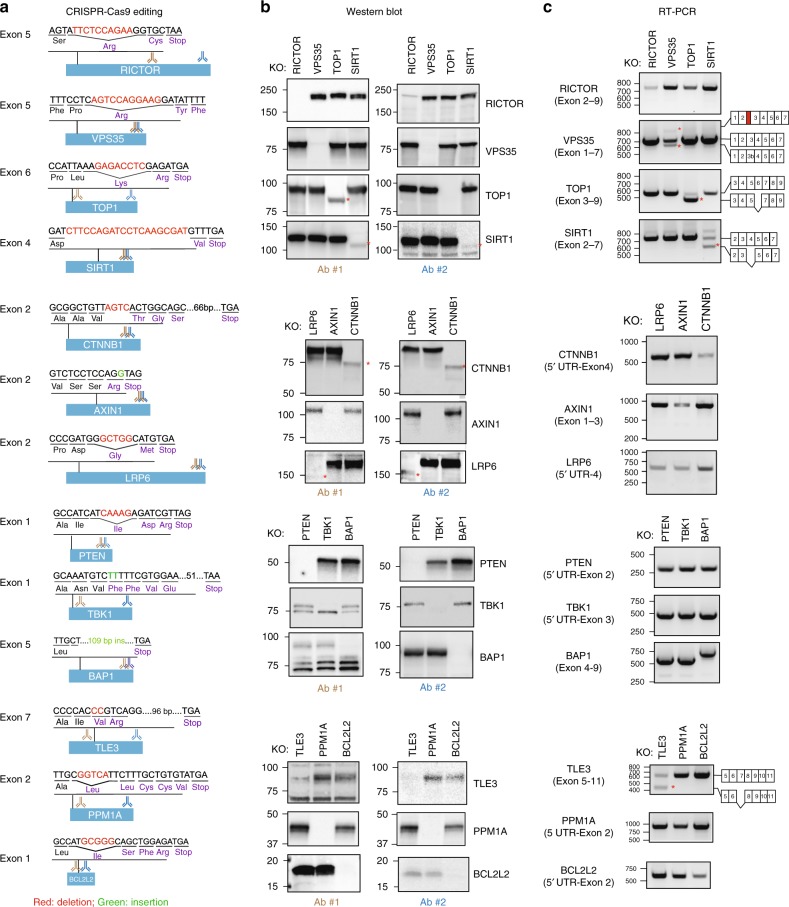
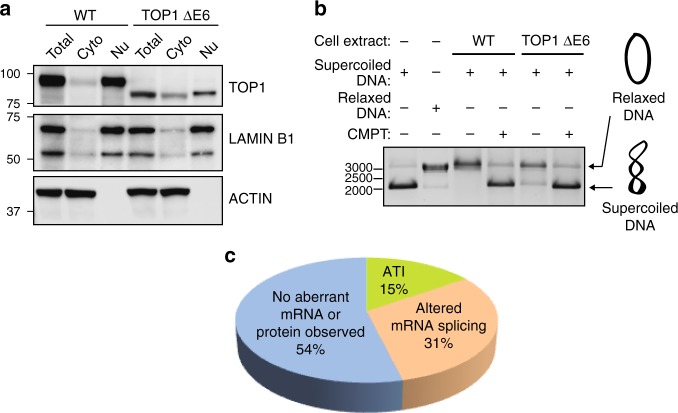
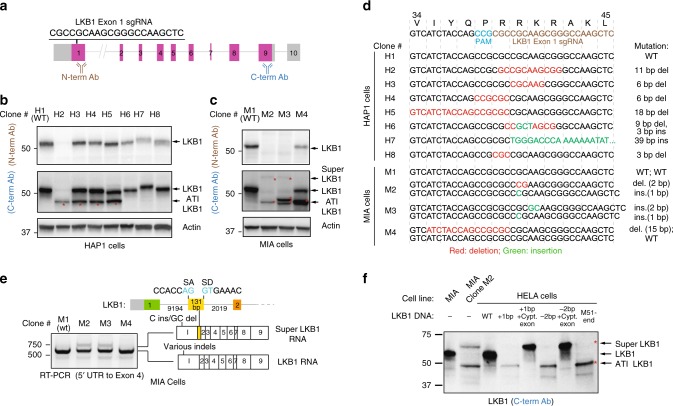
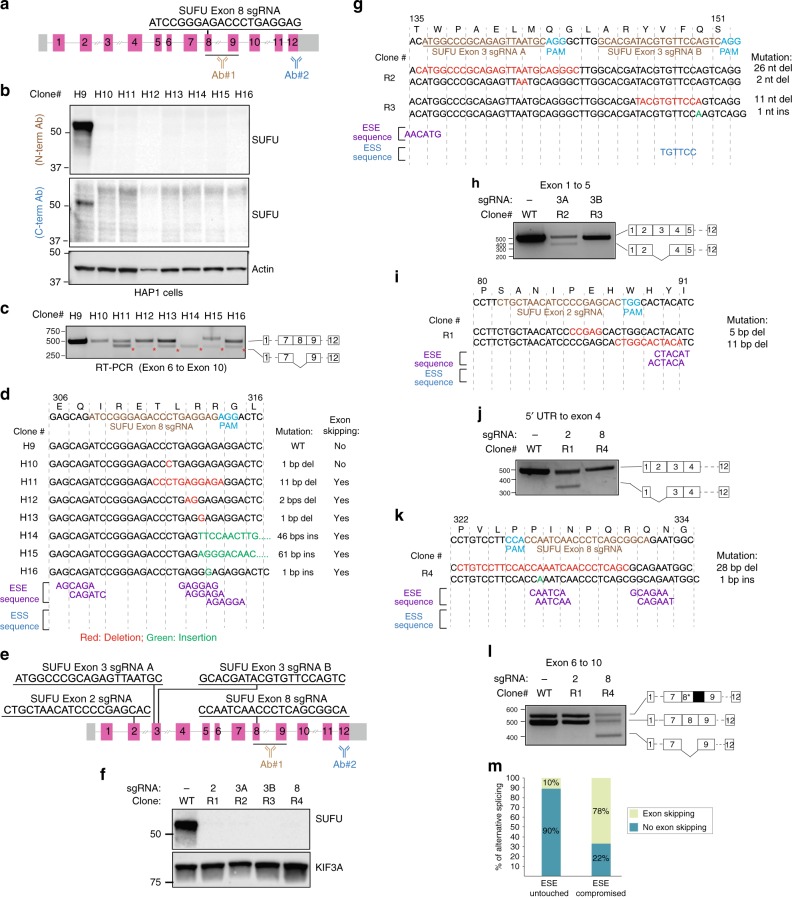
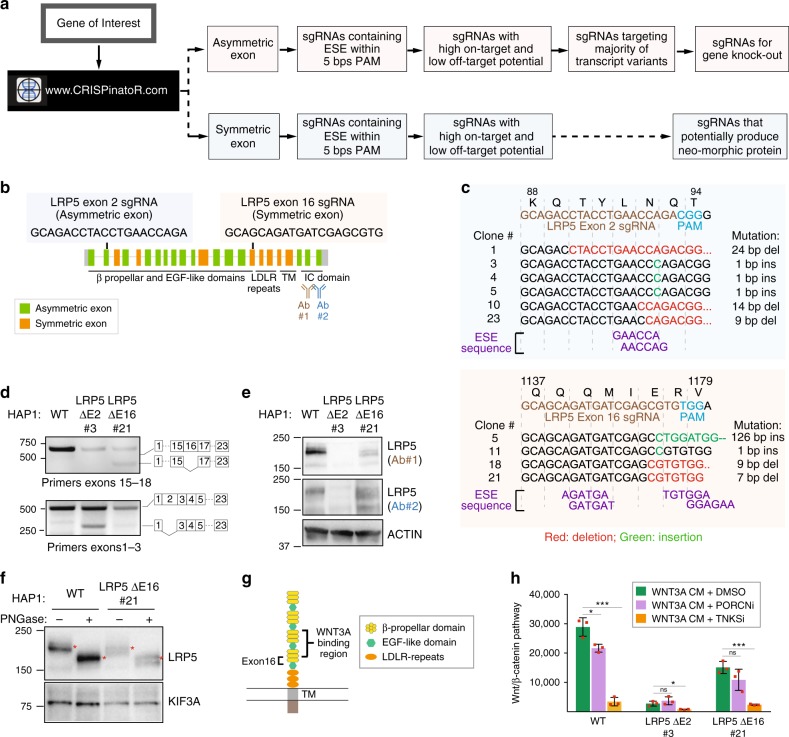
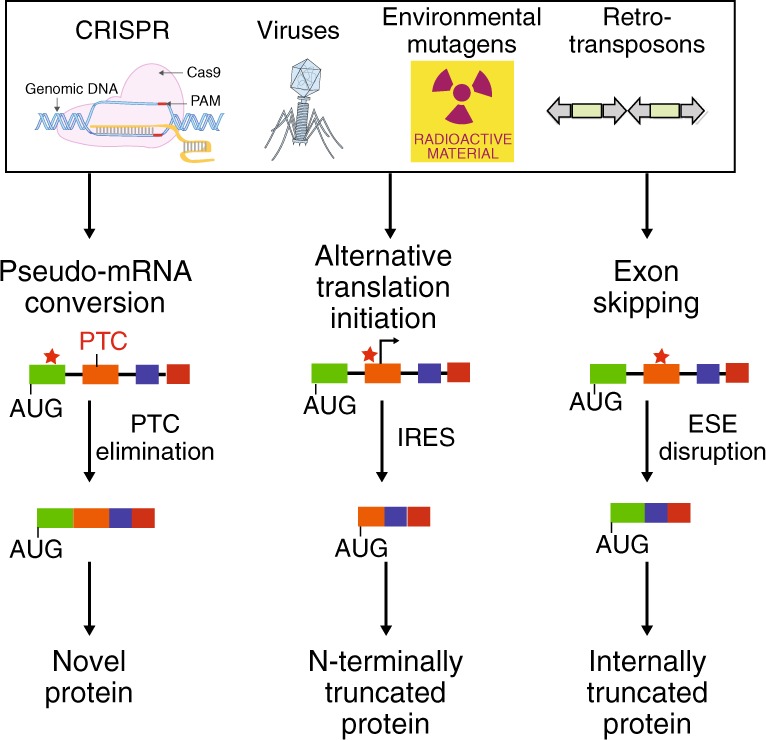
The introduction of insertion-deletions (INDELs) by non-homologous end-joining (NHEJ) pathway underlies the mechanistic basis of CRISPR-Cas9-directed genome editing. Selective gene ablation using CRISPR-Cas9 is achieved by installation of a premature termination codon (PTC) from a frameshift-inducing INDEL that elicits nonsense-mediated decay (NMD) of the mutant mRNA. Here, by examining the mRNA and protein products of CRISPR targeted genes in a cell line panel with presumed gene knockouts, we detect the production of foreign mRNAs or proteins in ~50% of the cell lines. We demonstrate that these aberrant protein products stem from the introduction of INDELs that promote internal ribosomal entry, convert pseudo-mRNAs (alternatively spliced mRNAs with a PTC) into protein encoding molecules, or induce exon skipping by disruption of exon splicing enhancers (ESEs). Our results reveal challenges to manipulating gene expression outcomes using INDEL-based mutagenesis and strategies useful in mitigating their impact on intended genome-editing outcomes.
Overview
The claims and statistics of this paper haven’t been checked yet.
Free: it reads the open-access text and checks the first 5 claims that cite a source we can check. Create a free account to check every claim.
Integrity signals
Registry
Cites
Statistics
Figures
Verification
Claims the paper makes
The claims and statistics of this paper haven’t been checked yet.
Free: it reads the open-access text and checks the first 5 claims that cite a source we can check. Create a free account to check every claim.
Claims other papers make about this one
Each is checked against this paper’s own text: does it say what the citing paper says it does?
The source backs part of the claim, not all of it — or backs it for a different population, condition or comparison.
In the citing paper
“It should be added that low levels of peptides from the C-terminal DENND10 sequence were detected in sgDennd10_No2 by mass spectrometry (see below, Table S1), likely due to truncated protein expression from cryptic alternative splicing events, a phenomenon observed in approximately 50% of CRISPR-edited cells.50”
From Endosomal protein DENND10 promotes developmental competence of neurite extension (2025) · cites this paper as [50]
Experimental — accuracy not yet measuredIn the citing paper
“Further, analogous to how Cas9-nuclease targeting often produces RNAs degraded by nonsense mediated decay13, it is possible that Cas13 cleavage produces RNA molecules that can be detected by scRNA-seq but cannot be translated into functional protein14, suggesting that the level of measured RNA knockdown underestimates the phenotypic effect of Cas13 perturbation.”
From Efficient combinatorial targeting of RNA transcripts in single cells with Cas13 RNA Perturb-seq (2023) · cites this paper as [13]
Self-check
Percentages, sums and reported differences re-computed from the paper’s own numbers.
The self-check needs the paper’s full text.
Citations
Cites
Fast and accurate short read alignment with Burrows-Wheeler transform
Li, H., & Durbin, R. (2009) · Bioinformatics · doi:10.1093/bioinformatics/btp324 · Cited by 58,607
Fast and accurate long-read alignment with Burrows-Wheeler transform.
Li, H., & Durbin, R. (2010) · Bioinformatics · doi:10.1093/bioinformatics/btp698 · Cited by 12,063
The new frontier of genome engineering with CRISPR-Cas9
Doudna, J. A., & Charpentier, E. (2014) · Science · doi:10.1126/science.1258096 · Cited by 7,062
Development and Applications of CRISPR-Cas9 for Genome Engineering
Hsu, P. D., Lander, E. S., & Zhang, F. (2014) · Cell · doi:10.1016/j.cell.2014.05.010 · Cited by 5,762 · cited 1×
“A conserved stem loop motif in the 5'untranslated region regulates transforming growth factor-beta(1) translation.”
Cpf1 Is a Single RNA-Guided Endonuclease of a Class 2 CRISPR-Cas System
Zetsche, B., Gootenberg, J. S., Abudayyeh, O. O., Slaymaker, I. M., Makarova, K. S., Essletzbichler, P., Volz, S. E., Joung, J., van der Oost, J., Regev, A., et al. (2015) · Cell · doi:10.1016/j.cell.2015.09.038 · Cited by 4,761
DNA targeting specificity of RNA-guided Cas9 nucleases
Hsu, P. D., Scott, D. A., Weinstein, J. A., Ran, F. A., Konermann, S., Agarwala, V., Li, Y., Fine, E. J., Wu, X., Shalem, O., et al. (2013) · Nature Biotechnology · doi:10.1038/nbt.2647 · Cited by 4,741
Self-citationOptimized sgRNA design to maximize activity and minimize off-target effects of CRISPR-Cas9
Doench, J. G., Fusi, N., Sullender, M., Hegde, M., Vaimberg, E. W., Donovan, K. F., Smith, I., Tothova, Z., Wilen, C., Orchard, R., et al. (2016) · Nature Biotechnology · doi:10.1038/nbt.3437 · Cited by 4,637
Zerbino, D. R., Achuthan, P., Akanni, W., Amode, M. R., Barrell, D., Bhai, J., Billis, K., Cummins, C., Gall, A., Girón, C. G., et al. (2018) · Nucleic Acids Research · doi:10.1093/nar/gkx1098 · Cited by 2,605
Listening to silence and understanding nonsense: exonic mutations that affect splicing
Cartegni, L., Chew, S. L., & Krainer, A. R. (2002) · Nature Reviews Genetics · doi:10.1038/nrg775 · Cited by 2,209
Wang, J. C. (1996) · Annual Review of Biochemistry · doi:10.1146/annurev.bi.65.070196.003223 · Cited by 1,832
Identification and characterization of essential genes in the human genome
Wang, T., Birsoy, K., Hughes, N. W., Krupczak, K. M., Post, Y., Wei, J. J., Lander, E. S., & Sabatini, D. M. (2015) · Science · doi:10.1126/science.aac7041 · Cited by 1,617
A compendium of RNA-binding motifs for decoding gene regulation
Ray, D., Kazan, H., Cook, K. B., Weirauch, M. T., Najafabadi, H. S., Li, X., Gueroussov, S., Albu, M., Zheng, H., Yang, A., et al. (2013) · Nature · doi:10.1038/nature12311 · Cited by 1,480
The highways and byways of mRNA decay
Garneau, N. L., Wilusz, J., & Wilusz, C. J. (2007) · Nature Reviews Molecular Cell Biology · doi:10.1038/nrm2104 · Cited by 1,294
In vivo genome editing improves muscle function in a mouse model of Duchenne muscular dystrophy
Nelson, C. E., Hakim, C. H., Ousterout, D. G., Thakore, P. I., Moreb, E. A., Rivera, R. M. C., Madhavan, S., Pan, X., Ran, F. A., Yan, W. X., et al. (2016) · Science · doi:10.1126/science.aad5143 · Cited by 1,144
In vivo gene editing in dystrophic mouse muscle and muscle stem cells
Tabebordbar, M., Zhu, K., Cheng, J. K. W., Chew, W. L., Widrick, J. J., Yan, W. X., Maesner, C., Wu, E. Y., Xiao, R., Ran, F. A., et al. (2016) · Science · doi:10.1126/science.aad5177 · Cited by 1,046
Long, C., Amoasii, L., Mireault, A. A., McAnally, J. R., Li, H., Sanchez-Ortiz, E., Bhattacharyya, S., Shelton, J. M., Bassel-Duby, R., & Olson, E. N. (2016) · Science · doi:10.1126/science.aad5725 · Cited by 937
Gene essentiality and synthetic lethality in haploid human cells
Blomen, V. A., Májek, P., Jae, L. T., Bigenzahn, J. W., Nieuwenhuis, J., Staring, J., Sacco, R., van Diemen, F. R., Olk, N., Stukalov, A., et al. (2015) · Science · doi:10.1126/science.aac7557 · Cited by 857
Nonsense-mediated mRNA decay: an intricate machinery that shapes transcriptomes
Lykke-Andersen, S., & Jensen, T. H. (2015) · Nature Reviews Molecular Cell Biology · doi:10.1038/nrm4063 · Cited by 855
Kozak, M. (1989) · Molecular and Cellular Biology · doi:10.1128/mcb.9.11.5134 · Cited by 630
Sequence, Structure, and Context Preferences of Human RNA Binding Proteins
Dominguez, D., Freese, P., Alexis, M. S., Su, A., Hochman, M., Palden, T., Bazile, C., Lambert, N. J., Van Nostrand, E. L., Pratt, G. A., et al. (2018) · Molecular Cell · doi:10.1016/j.molcel.2018.05.001 · Cited by 562
Downstream secondary structure facilitates recognition of initiator codons by eukaryotic ribosomes
Kozak, M. (1990) · Proceedings of the National Academy of Sciences · doi:10.1073/pnas.87.21.8301 · Cited by 553
The rules and impact of nonsense-mediated mRNA decay in human cancers
Lindeboom, R. G. H., Supek, F., & Lehner, B. (2016) · Nature Genetics · doi:10.1038/ng.3664 · Cited by 545
SVITKIN, Y. V., PAUSE, A., HAGHIGHAT, A., PYRONNET, S., WITHERELL, G., BELSHAM, G. J., & SONENBERG, N. (2001) · RNA · doi:10.1017/s135583820100108x · Cited by 477
Ousterout, D. G., Kabadi, A. M., Thakore, P. I., Majoros, W. H., Reddy, T. E., & Gersbach, C. A. (2015) · Nature Communications · doi:10.1038/ncomms7244 · Cited by 470
Minimizing the risk of reporting false positives in large-scale RNAi screens
Echeverri, C. J., Beachy, P. A., Baum, B., Boutros, M., Buchholz, F., Chanda, S. K., Downward, J., Ellenberg, J., Fraser, A. G., Hacohen, N., et al. (2006) · Nature Methods · doi:10.1038/nmeth1006-777 · Cited by 421
Self-citationPrevalence of off-target effects in Drosophila RNA interference screens
Ma, Y., Creanga, A., Lum, L., & Beachy, P. A. (2006) · Nature · doi:10.1038/nature05179 · Cited by 293
Self-citationRESCUE-ESE identifies candidate exonic splicing enhancers in vertebrate exons
Fairbrother, W. G., Yeo, G. W., Yeh, R., Goldstein, P., Mawson, M., Sharp, P. A., & Burge, C. B. (2004) · Nucleic Acids Research · doi:10.1093/nar/gkh393 · Cited by 289
Long, C., Li, H., Tiburcy, M., Rodriguez-Caycedo, C., Kyrychenko, V., Zhou, H., Zhang, Y., Min, Y.-L., Shelton, J. M., Mammen, P. P. A., et al. (2018) · Science Advances · doi:10.1126/sciadv.aap9004 · Cited by 258
Quantitative evaluation of all hexamers as exonic splicing elements
Ke, S., Shang, S., Kalachikov, S. M., Morozova, I., Yu, L., Russo, J. J., Ju, J., & Chasin, L. A. (2011) · Genome Research · doi:10.1101/gr.119628.110 · Cited by 211
CRISPR/Cas9-mediated genome editing induces exon skipping by alternative splicing or exon deletion
Mou, H., Smith, J. L., Peng, L., Yin, H., Moore, J., Zhang, X.-O., Song, C.-Q., Sheel, A., Wu, Q., Ozata, D. M., et al. (2017) · Genome Biology · doi:10.1186/s13059-017-1237-8 · Cited by 177
Tan, Z., Fu, Y., Sharma, G., & Mathews, D. H. (2017) · Nucleic Acids Research · doi:10.1093/nar/gkx815 · Cited by 159
Self-citationExon identity crisis: disease-causing mutations that disrupt the splicing code
Sterne-Weiler, T., & Sanford, J. R. (2014) · Genome Biology · doi:10.1186/gb4150 · Cited by 118
Zaťková, A., Messiaen, L. M., Vandenbroucke, I., Wieser, R., Fonatsch, C., Krainer, A. R., & Wimmer, K. (2004) · Human Mutation · doi:10.1002/humu.20103 · Cited by 112
Translation acrobatics: how cancer cells exploit alternate modes of translational initiation
Sriram, A., Bohlen, J., & Teleman, A. A. (2018) · EMBO reports · doi:10.15252/embr.201845947 · Cited by 110
The complete local genotype–phenotype landscape for the alternative splicing of a human exon
Julien, P., Miñana, B., Baeza-Centurion, P., Valcárcel, J., & Lehner, B. (2016) · Nature Communications · doi:10.1038/ncomms11558 · Cited by 109
Yamauchi, F. (2004) · Nucleic Acids Research · doi:10.1093/nar/gnh176 · Cited by 100
Jagodnik, J., Chiaruttini, C., & Guillier, M. (2017) · Molecular Cell · doi:10.1016/j.molcel.2017.08.015 · Cited by 77
NF1 mRNA biogenesis: Effect of the genomic milieu in splicing regulation of the NF1 exon 37 region
Baralle, M., Skoko, N., Knezevich, A., Conti, L. D., Motti, D., Bhuvanagiri, M., Baralle, D., Buratti, E., & Baralle, F. E. (2006) · FEBS Letters · doi:10.1016/j.febslet.2006.07.018 · Cited by 74
Pseudo–Messenger RNA: Phantoms of the Transcriptome
Frith, M. C., Wilming, L. G., Forrest, A. R. R., Kawaji, H., Tan, S. L., Wahlestedt, C., Bajić, V. B., Kai, C., Kawai, J., Carninci, P., et al. (2006) · PLoS Genetics · doi:10.1371/journal.pgen.0020023 · Cited by 72
Wu, X., Zhang, L.-S., Toombs, J., Kuo, Y.-C., Piazza, J. T., Tuladhar, R., Barrett, Q., Fan, C.-W., Zhang, X., Walensky, L. D., et al. (2017) · Nature Cell Biology · doi:10.1038/ncb3616 · Cited by 47
Self-citationRNA stem-loop enhanced expression of previously non-expressible genes
Paulus, M. (2004) · Nucleic Acids Research · doi:10.1093/nar/gnh076 · Cited by 43
Jenkins, R. H., Bennagi, R., Martin, J., Phillips, A. O., Redman, J. E., & Fraser, D. J. (2010) · PLoS ONE · doi:10.1371/journal.pone.0012283 · Cited by 40
Ke, S., & Chasin, L. A. (2011) · RNA Biology · doi:10.4161/rna.8.3.14458 · Cited by 30
Maier, K., He, Y., Esser, P. R., Thriene, K., Sarca, A. D., Kohlhase, J., Dengjel, J., Martin, L., & Has, C. (2016) · Journal of Investigative Dermatology · doi:10.1016/j.jid.2015.12.039 · Cited by 18
Cited by
The mutational constraint spectrum quantified from variation in 141,456 humans
Karczewski, K. J., Francioli, L. C., Tiao, G., Cummings, B. B., Alföldi, J., Wang, Q., Collins, R. L., Laricchia, K. M., Ganna, A., Birnbaum, D. P., et al. (2020) · Nature · doi:10.1038/s41586-020-2308-7 · Cited by 9,434
The mutational constraint spectrum quantified from variation in 141,456 humans
Karczewski, K. J., Francioli, L. C., Tiao, G., Cummings, B. B., Alföldi, J., Wang, Q., Collins, R. L., Laricchia, K. M., Ganna, A., Birnbaum, D. P., et al. (2019) · doi:10.1101/531210 · Cited by 1,662
Kroll, F., Powell, G. T., Ghosh, M., Gestri, G., Antinucci, P., Hearn, T. J., Tunbak, H., Lim, S., Dennis, H. W., Fernandez, J. M., et al. (2021) · eLife · doi:10.7554/elife.59683 · Cited by 347
To NMD or Not To NMD: Nonsense-Mediated mRNA Decay in Cancer and Other Genetic Diseases
Supek, F., Lehner, B., & Lindeboom, R. G. H. (2021) · Trends in Genetics · doi:10.1016/j.tig.2020.11.002 · Cited by 244
CRISPR-Cas Tools and Their Application in Genetic Engineering of Human Stem Cells and Organoids
Hendriks, D., Clevers, H., & Artegiani, B. (2020) · Cell Stem Cell · doi:10.1016/j.stem.2020.10.014 · Cited by 192
Metadata
- Authors
- Tuladhar, R., Yeu, Y., Tyler Piazza, J., Tan, Z., Rene Clemenceau, J., Wu, X., Barrett, Q., Herbert, J., Mathews, D. H., Kim, J., Hyun Hwang, T., & Lum, L.
- Affiliations
- The University of Texas Southwestern Medical Center (US)
- Cleveland Clinic (US)
- University of Rochester Medicine (US)
- Corresponding author
- Lum, Lawrence
- ORCID
- Venue
- Nature Communications
- Published
- 2019-09-06
- Volume
- 10
- Issue
- 1
- Pages
- 4056-4056
- ISSN
- 2041-1723 (ISSN-L)
- PMC
- PMC6731291
- OpenAlex
- W2972019268
- Semantic Scholar
- dbf0afc42fa9eebf6b76de442c873bc00db2223f
- Cited by
- 219
- References
- 44
- Citations by year
- 2026: 18 · 2025: 22 · 2024: 30 · 2023: 23 · 2022: 29 · 2021: 36 · 2020: 46 · 2019: 12
- FWCI
- 10.18
- Type
- journal article
- Language
- en
- Open access
- gold
- doi.org
- Licence
- cc-by
- creativecommons.org/licenses/by/4.0 (tdm)
- creativecommons.org/licenses/by/4.0 (vor)
- Locations
- Nature Communications (publishedVersion, cc-by)
- bioRxiv (Cold Spring Harbor Laboratory) (acceptedVersion)
- Europe PMC (PubMed Central) (publishedVersion, cc-by)
- PubMed Central (publishedVersion, cc-by)
- PubMed (publishedVersion)
- RePEc: Research Papers in Economics (submittedVersion)
- DOAJ (DOAJ: Directory of Open Access Journals) (submittedVersion, cc-by-sa)
- DOAJ (DOAJ: Directory of Open Access Journals) (submittedVersion)
- Funders
- Welch Foundation (I-1665)
- U.S. Department of Health & Human Services | NIH | National Cancer Institute (1R01 CA168761)
- American Cancer Society (RSG-16-090-01-TBG)
- Cancer Prevention and Research Institute of Texas (RP130212)
- U.S. Department of Health & Human Services | NIH | Center for Information Technology (R01GM076485)
- Topics
- Life Sciences › Biochemistry, Genetics and Molecular Biology › Molecular Biology › CRISPR and Genetic Engineering
- Life Sciences › Biochemistry, Genetics and Molecular Biology › Molecular Biology › RNA regulation and disease
- Life Sciences › Biochemistry, Genetics and Molecular Biology › Molecular Biology › RNA Research and Splicing
- Keywords
- CRISPR/Cas9 mutagenesis, nonsense-mediated mRNA decay, premature stop codon, insertion-deletion mutations, non-homologous end joining, exon skipping, alternative splicing
- MeSH terms
- Gene Editing, Amino Acid Sequence, Base Sequence, Cell Line, HeLa Cells, Humans, RNA, Messenger, Gene Expression Regulation, Neoplastic, Mutagenesis, Frameshift Mutation, Codon, Nonsense, RNA Stability, Cell Line, Tumor, INDEL Mutation, Gene Knockout Techniques, CRISPR-Cas Systems
About these checks
Registry, retraction, Cites and statistics results are computed, not judged, with one exception: a printed reference that no index lists is read once by a model before it counts as a citation error. Claims are extracted by a model and kept only when their quote appears verbatim in the text; each cited source is then checked, with a model’s help, for whether it says what the claim relies on. Those verdicts can be wrong — read the claim’s quote and the cited source before relying on one.
Statistics and arithmetic are recomputed, not judged.
Confidence bands are shown only for fields calibrated on our annotated test set. None is calibrated yet, so no band is shown.
What counts as a claim ›How we measure confidence ›How we check this ›
Are you an author, or do you see a problem with this page? Request a review
Data sources
Bibliographic data: Semantic Scholar, OpenAlex, Crossref.
Contains information from the Semantic Scholar Academic Graph Datasets, made available under the ODC Attribution License (ODC-BY 1.0).
Semantic Scholar’s data is described in: Kinney, R., et al. (2023). The Semantic Scholar Open Data Platform. arXiv:2301.10140.
