

CRISPR-Cas9-based mutagenesis frequently provokes on-target mRNA misregulation
Open accessPublished version of a preprint
The DOI matches its Crossref record; 44 of the 44 references it cites were found in a registry or an index.
Abstract
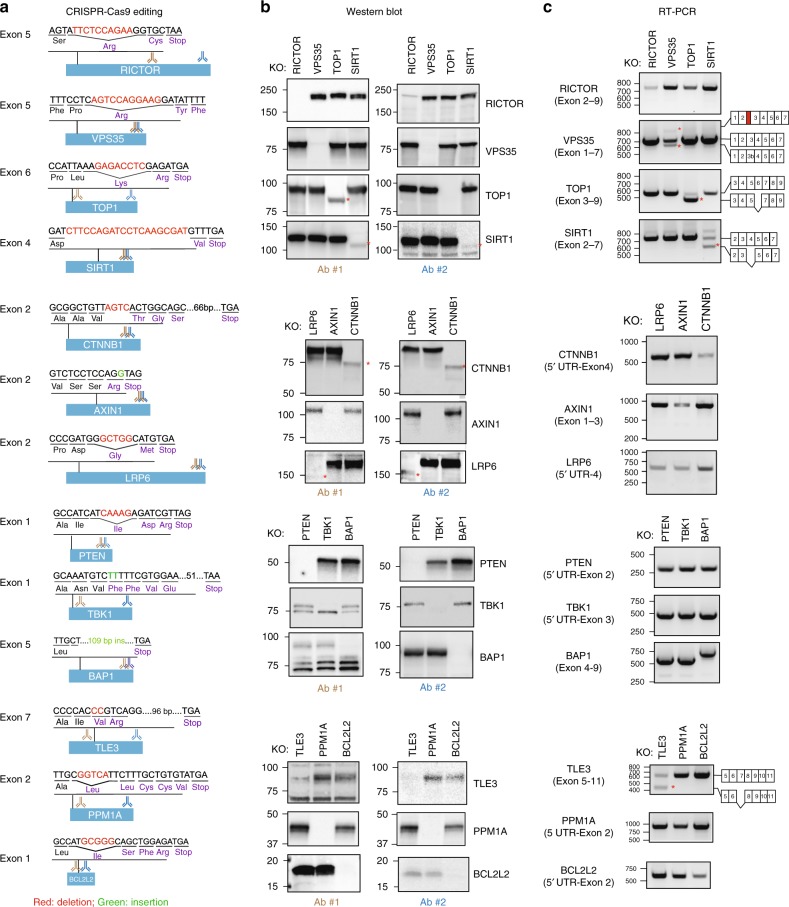
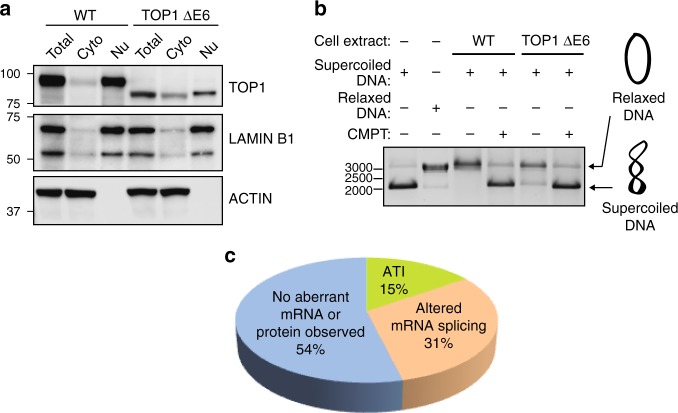
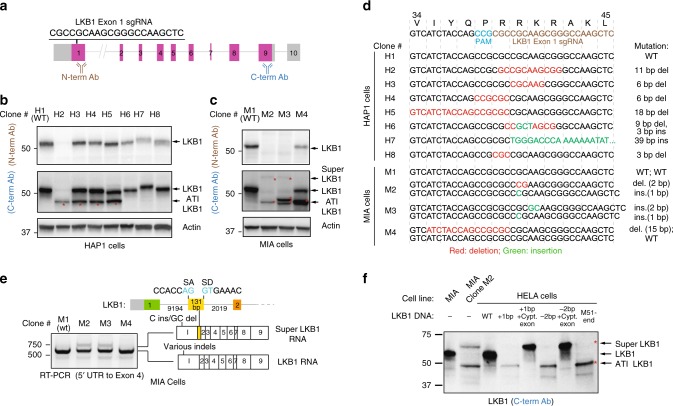
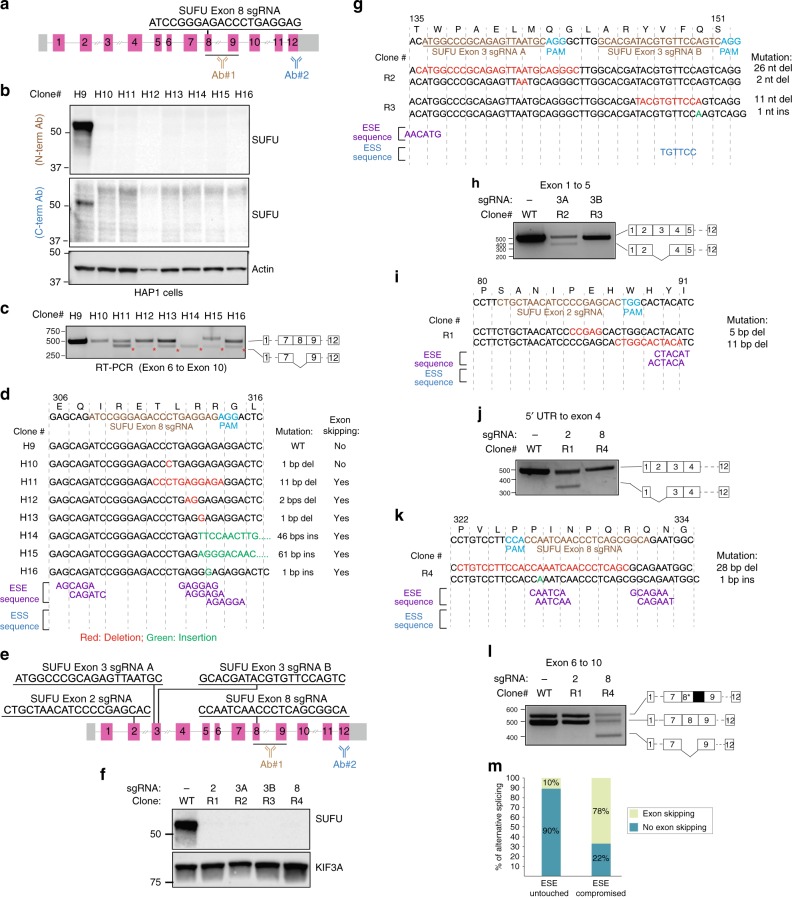
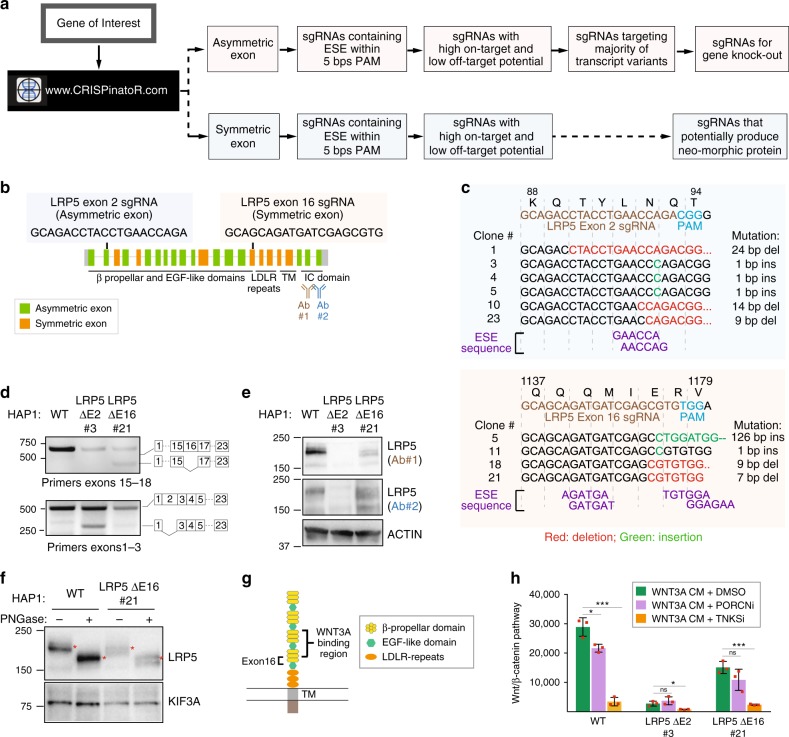
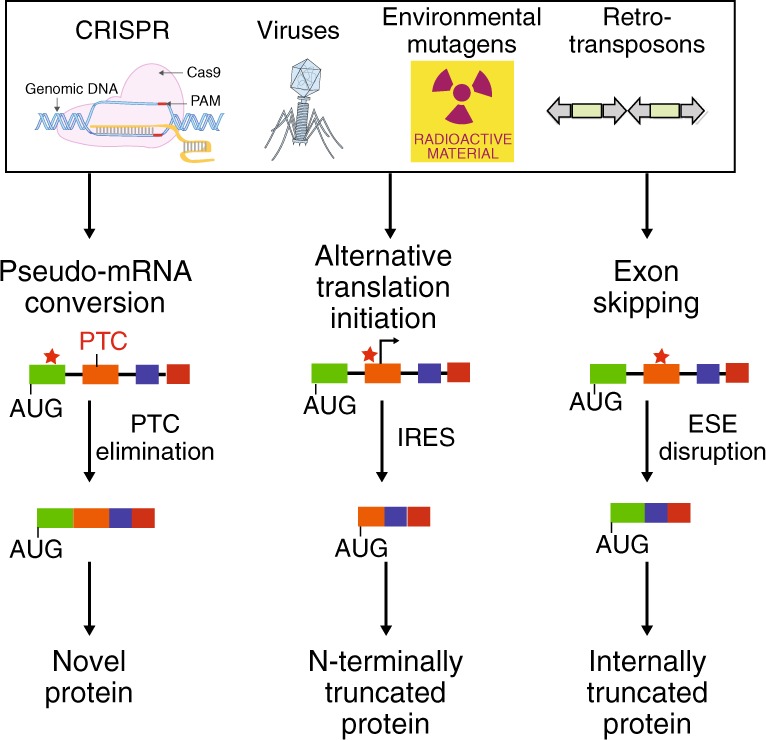
The introduction of insertion-deletions (INDELs) by non-homologous end-joining (NHEJ) pathway underlies the mechanistic basis of CRISPR-Cas9-directed genome editing. Selective gene ablation using CRISPR-Cas9 is achieved by installation of a premature termination codon (PTC) from a frameshift-inducing INDEL that elicits nonsense-mediated decay (NMD) of the mutant mRNA. Here, by examining the mRNA and protein products of CRISPR targeted genes in a cell line panel with presumed gene knockouts, we detect the production of foreign mRNAs or proteins in ~50% of the cell lines. We demonstrate that these aberrant protein products stem from the introduction of INDELs that promote internal ribosomal entry, convert pseudo-mRNAs (alternatively spliced mRNAs with a PTC) into protein encoding molecules, or induce exon skipping by disruption of exon splicing enhancers (ESEs). Our results reveal challenges to manipulating gene expression outcomes using INDEL-based mutagenesis and strategies useful in mitigating their impact on intended genome-editing outcomes.
Overview
The claims and statistics of this paper haven’t been checked yet.
Free: it reads the open-access text and checks the first 5 claims that cite a source we can check. Create a free account to check every claim.
Integrity signals
Registry
Cites
Statistics
Figures
Verification
Claims the paper makes
The claims and statistics of this paper haven’t been checked yet.
Free: it reads the open-access text and checks the first 5 claims that cite a source we can check. Create a free account to check every claim.
Claims other papers make about this one
Each is checked against this paper’s own text: does it say what the citing paper says it does?
The source backs part of the claim, not all of it — or backs it for a different population, condition or comparison.
In the citing paper
“It should be added that low levels of peptides from the C-terminal DENND10 sequence were detected in sgDennd10_No2 by mass spectrometry (see below, Table S1), likely due to truncated protein expression from cryptic alternative splicing events, a phenomenon observed in approximately 50% of CRISPR-edited cells.50”
From Endosomal protein DENND10 promotes developmental competence of neurite extension (2025) · cites this paper as [50]
Experimental — accuracy not yet measuredIn the citing paper
“Further, analogous to how Cas9-nuclease targeting often produces RNAs degraded by nonsense mediated decay13, it is possible that Cas13 cleavage produces RNA molecules that can be detected by scRNA-seq but cannot be translated into functional protein14, suggesting that the level of measured RNA knockdown underestimates the phenotypic effect of Cas13 perturbation.”
From Efficient combinatorial targeting of RNA transcripts in single cells with Cas13 RNA Perturb-seq (2023) · cites this paper as [13]
Self-check
Percentages, sums and reported differences re-computed from the paper’s own numbers.
The self-check needs the paper’s full text.
Citations
Cites
Fast and accurate short read alignment with Burrows-Wheeler transform
Li, H., & Durbin, R. (2009) · Bioinformatics · doi:10.1093/bioinformatics/btp324 · Cited by 58,607
Fast and accurate long-read alignment with Burrows-Wheeler transform.
Li, H., & Durbin, R. (2010) · Bioinformatics · doi:10.1093/bioinformatics/btp698 · Cited by 12,063
The new frontier of genome engineering with CRISPR-Cas9
Doudna, J. A., & Charpentier, E. (2014) · Science · doi:10.1126/science.1258096 · Cited by 7,062
Development and Applications of CRISPR-Cas9 for Genome Engineering
Hsu, P. D., Lander, E. S., & Zhang, F. (2014) · Cell · doi:10.1016/j.cell.2014.05.010 · Cited by 5,762 · cited 1×
“A conserved stem loop motif in the 5'untranslated region regulates transforming growth factor-beta(1) translation.”
Cpf1 Is a Single RNA-Guided Endonuclease of a Class 2 CRISPR-Cas System
Zetsche, B., Gootenberg, J. S., Abudayyeh, O. O., Slaymaker, I. M., Makarova, K. S., Essletzbichler, P., Volz, S. E., Joung, J., van der Oost, J., Regev, A., et al. (2015) · Cell · doi:10.1016/j.cell.2015.09.038 · Cited by 4,761
DNA targeting specificity of RNA-guided Cas9 nucleases
Hsu, P. D., Scott, D. A., Weinstein, J. A., Ran, F. A., Konermann, S., Agarwala, V., Li, Y., Fine, E. J., Wu, X., Shalem, O., et al. (2013) · Nature Biotechnology · doi:10.1038/nbt.2647 · Cited by 4,741
Self-citationOptimized sgRNA design to maximize activity and minimize off-target effects of CRISPR-Cas9
Doench, J. G., Fusi, N., Sullender, M., Hegde, M., Vaimberg, E. W., Donovan, K. F., Smith, I., Tothova, Z., Wilen, C., Orchard, R., et al. (2016) · Nature Biotechnology · doi:10.1038/nbt.3437 · Cited by 4,637
Zerbino, D. R., Achuthan, P., Akanni, W., Amode, M. R., Barrell, D., Bhai, J., Billis, K., Cummins, C., Gall, A., Girón, C. G., et al. (2018) · Nucleic Acids Research · doi:10.1093/nar/gkx1098 · Cited by 2,605
Listening to silence and understanding nonsense: exonic mutations that affect splicing
Cartegni, L., Chew, S. L., & Krainer, A. R. (2002) · Nature Reviews Genetics · doi:10.1038/nrg775 · Cited by 2,209
Wang, J. C. (1996) · Annual Review of Biochemistry · doi:10.1146/annurev.bi.65.070196.003223 · Cited by 1,832
Cited by
The mutational constraint spectrum quantified from variation in 141,456 humans
Karczewski, K. J., Francioli, L. C., Tiao, G., Cummings, B. B., Alföldi, J., Wang, Q., Collins, R. L., Laricchia, K. M., Ganna, A., Birnbaum, D. P., et al. (2020) · Nature · doi:10.1038/s41586-020-2308-7 · Cited by 9,434
The mutational constraint spectrum quantified from variation in 141,456 humans
Karczewski, K. J., Francioli, L. C., Tiao, G., Cummings, B. B., Alföldi, J., Wang, Q., Collins, R. L., Laricchia, K. M., Ganna, A., Birnbaum, D. P., et al. (2019) · doi:10.1101/531210 · Cited by 1,662
Kroll, F., Powell, G. T., Ghosh, M., Gestri, G., Antinucci, P., Hearn, T. J., Tunbak, H., Lim, S., Dennis, H. W., Fernandez, J. M., et al. (2021) · eLife · doi:10.7554/elife.59683 · Cited by 347
To NMD or Not To NMD: Nonsense-Mediated mRNA Decay in Cancer and Other Genetic Diseases
Supek, F., Lehner, B., & Lindeboom, R. G. H. (2021) · Trends in Genetics · doi:10.1016/j.tig.2020.11.002 · Cited by 244
CRISPR-Cas Tools and Their Application in Genetic Engineering of Human Stem Cells and Organoids
Hendriks, D., Clevers, H., & Artegiani, B. (2020) · Cell Stem Cell · doi:10.1016/j.stem.2020.10.014 · Cited by 192
A compact Cascade–Cas3 system for targeted genome engineering
Csörgő, B., León, L. M., Chau-Ly, I. J., Vasquez-Rifo, A., Berry, J. D., Mahendra, C., Crawford, E. D., Lewis, J. D., & Bondy-Denomy, J. (2020) · Nature Methods · doi:10.1038/s41592-020-00980-w · Cited by 189
Multilayered VBC score predicts sgRNAs that efficiently generate loss-of-function alleles
Michlits, G., Jude, J., Hinterndorfer, M., de Almeida, M., Vainorius, G., Hubmann, M., Neumann, T., Schleiffer, A., Burkard, T. R., Fellner, M., et al. (2020) · Nature Methods · doi:10.1038/s41592-020-0850-8 · Cited by 154
Sharpening the Molecular Scissors: Advances in Gene-Editing Technology
Broeders, M., Herrero-Hernandez, P., Ernst, M. P. T., van der Ploeg, A. T., & Pijnappel, W. W. M. P. (2019) · iScience · doi:10.1016/j.isci.2019.100789 · Cited by 130
“This includes promotion of internal ribosomal entry and alternative spliced mRNAs that lead to alternative products with a gain-of-function or a partially functional protein (Thomas et al., 2019; Mou et al., 2017; Tuladhar et al., 2019). mRNA decay can also trigger transcriptional adaptation.”
BackgroundNext-Generation CRISPR Technologies and Their Applications in Gene and Cell Therapy
Zeballos C., M. A., & Gaj, T. (2021) · Trends in Biotechnology · doi:10.1016/j.tibtech.2020.10.010 · Cited by 94
KLF2 maintains lineage fidelity and suppresses CD8 T cell exhaustion during acute LCMV infection
Fagerberg, E., Attanasio, J., Dien, C., Singh, J., Kessler, E., Abdullah, L., Shen, J., Hunt, B. G., Connolly, K. A., Brouwer, E. D., et al. (2025) · Science · doi:10.1126/science.adn2337 · Cited by 98
Sport and exercise genomics: the FIMS 2019 consensus statement update
Tanisawa, K., Wang, G., Seto, J. T., Verdouka, I., Twycross-Lewis, R., Karanikolou, A., Tanaka, M., Börjesson, M., Luigi, L. D., Dohi, M., et al. (2020) · British Journal of Sports Medicine · doi:10.1136/bjsports-2019-101532 · Cited by 97
“25 While gene-editing tools in human germline have been restricted to research and prohibited in human reproduction by all countries that have established gene editing regulations, CRISPR/Cas9 gene-editing was recently used for reproductive purposes with claims of generating the first gene-edited…”
MethodEfficient combinatorial targeting of RNA transcripts in single cells with Cas13 RNA Perturb-seq
Wessels, H.-H., Méndez-Mancilla, A., Hao, Y., Papalexi, E., Mauck, W. M., Lu, L., Morris, J. A., Mimitou, E. P., Smibert, P., Sanjana, N. E., et al. (2023) · Nature Methods · doi:10.1038/s41592-022-01705-x · Cited by 79
“Further, analogous to how Cas9-nuclease targeting often produces RNAs degraded by nonsense mediated decay 13 , it is possible that Cas13 cleavage produces RNA molecules that can be detected by scRNA-seq but cannot be translated into functional protein 14 , suggesting that the level of measured RNA…”
BackgroundBroadening the GMO risk assessment in the EU for genome editing technologies in agriculture
Kawall, K., Cotter-Howells, J. D., & Then, C. (2020) · Environmental Sciences Europe · doi:10.1186/s12302-020-00361-2 · Cited by 96
Chamberlain, C. A., Bennett, E., Kverneland, A. H., Svane, I. M., Donia, M., & Met, Ö. (2022) · Molecular Therapy — Oncolytics · doi:10.1016/j.omto.2022.01.004 · Cited by 86
Kitano, Y., Nishimura, S., Kato, T., Ueda, A., Takigawa, K., Umekage, M., Nomura, M., Kawakami, A., Ogawa, H., Xu, H., et al. (2022) · Molecular Therapy — Methods & Clinical Development · doi:10.1016/j.omtm.2022.05.010 · Cited by 93
A functional genetic toolbox for human tissue-derived organoids
Sun, D., Evans, L., Perrone, F., Sokleva, V., Lim, K., Rezakhani, S., Lutolf, M., Zilbauer, M., & Rawlins, E. L. (2021) · eLife · doi:10.7554/elife.67886 · Cited by 71
CRISPR nuclease off-target activity and mitigation strategies
Wienert, B., & Cromer, M. K. (2022) · Frontiers in Genome Editing · doi:10.3389/fgeed.2022.1050507 · Cited by 78
“The same study also provided a bioinformatic tool to help design gRNAs to avoid such events (Tuladhar et al., 2019).”
BackgroundInfluentialCASC3 promotes transcriptome-wide activation of nonsense-mediated decay by the exon junction complex
Gerbracht, J. V., Boehm, V., Britto‐Borges, T., Kallabis, S., Wiederstein, J. L., Ciriello, S., Aschemeier, D., Krüger, M., Frese, C. K., Altmüller, J., et al. (2020) · Nucleic Acids Research · doi:10.1093/nar/gkaa564 · Cited by 59
“The production of 325 aberrant protein forms by alternative translation initiation has been recently described in a 326 systematic analysis to commonly occur in KO cell generated by CRISPR-Cas9 genome editing 327 (75,76).”
BackgroundMethodDiscovering and validating cancer genetic dependencies: approaches and pitfalls
Lin, A., & Sheltzer, J. M. (2020) · Nature Reviews Genetics · doi:10.1038/s41576-020-0247-7 · Cited by 64
Improvement of base editors and prime editors advances precision genome engineering in plants
Hua, K., Han, P., & Zhu, J. (2021) · PLANT PHYSIOLOGY · doi:10.1093/plphys/kiab591 · Cited by 66
Efficient CRISPR/Cas9‐based plant genomic fragment deletions by microhomology‐mediated end joining
Tan, J., Zhao, Y., Wang, B., Yu, H., Wang, Y., Li, Y., Luo, W., Zong, W., Li, G., Chen, S., et al. (2020) · Plant Biotechnology Journal · doi:10.1111/pbi.13390 · Cited by 56
“However, many edited cell lines with small insertions/deletions produce abnormal transcripts or proteins causing unexpected effects that complicate functional analysis (Tuladhar et al., 2019).”
BackgroundOptimized CRISPR-mediated gene knockin reveals FOXP3-independent maintenance of human Treg identity
Lam, A. J., Lin, D. T. S., Gillies, J. K., Uday, P., Pesenacker, A. M., Kobor, M. S., & Levings, M. K. (2021) · Cell Reports · doi:10.1016/j.celrep.2021.109494 · Cited by 52
“Recent studies have uncovered compensatory pathways that can circumvent the intended CRISPR-mediated gene KO (El-Brolosy et al., 2019; Ma et al., 2019; Smits et al., 2019; Tuladhar et al., 2019).”
Konstantinidis, E., Molisak, A., Perrin, F., Streubel-Gallasch, L., Fayad, S., Kim, D. Y., Petri, K., Aryee, M. J., Aguilar, X., György, B., et al. (2022) · Molecular Therapy — Nucleic Acids · doi:10.1016/j.omtn.2022.03.022 · Cited by 66
“In NHEJ, DNA insertions or deletions (indels) at the targeted locus can affect gene expression either by changing the coding frame of the protein via nonsense-mediated decay (NMD) through premature stop codons or by disrupting the effective binding of transcription factors.(23,24)”
Tasaki, K., Yoshida, M., Nakajima, M., Higuchi, A., Watanabe, A., & Nishihara, M. (2020) · BMC Plant Biology · doi:10.1186/s12870-020-02565-3 · Cited by 53
Tran, N. T., Danner, E., Li, X., Graf, R., Lebedin, M., de la Rosa, K., Kühn, R., Rajewsky, K., & Chu, V. T. (2022) · Science Advances · doi:10.1126/sciadv.abm9106 · Cited by 49
“The limitation of this strategy is that DSBs are still induced at the target locus, leading to frequent indels and nonsense mutations in the target gene (25).”
Natural variation in the OsbZIP18 promoter contributes to branched‐chain amino acid levels in rice
Sun, Y., Shi, Y., Liu, G., Yao, F., Zhang, Y., Yang, C., Guo, H., Liu, X., Jin, C., & Luo, J. (2020) · New Phytologist · doi:10.1111/nph.16800 · Cited by 54
Genome editing in mammalian cells using the CRISPR type I-D nuclease
Osakabe, K., Wada, N., Murakami, E., Miyashita, N., & Osakabe, Y. (2021) · Nucleic Acids Research · doi:10.1093/nar/gkab348 · Cited by 48
“Some studies have reported that out-of-frame mutations induced by CRISPR–Cas9 result in the production of aberrant mRNA or protein (64,65).”
BackgroundGene Knock-Ins in Drosophila Using Homology-Independent Insertion of Universal Donor Plasmids
Bosch, J. A., Colbeth, R., Zirin, J. D., & Perrimon, N. (2020) · Genetics · doi:10.1534/genetics.119.302819 · Cited by 48
Removing the major allergen Bra j I from brown mustard (Brassica juncea) by CRISPR/Cas9
Assou, J., Zhang, D., Roth, K. D. R., Steinke, S., Hust, M., Reinard, T., Winkelmann, T., & Boch, J. (2021) · The Plant Journal · doi:10.1111/tpj.15584 · Cited by 51
Wildtype heterogeneity contributes to clonal variability in genome edited cells
Westermann, L., Li, Y., Göçmen, B., Niedermoser, M., Rhein, K., Jahn, J., Cascante, I., Schöler, F., Moser, N., Neubauer, B., et al. (2022) · Scientific Reports · doi:10.1038/s41598-022-22885-8 · Cited by 63
A line attractor encoding a persistent internal state requires neuropeptide signaling
Mountoufaris, G., Nair, A., Yang, B., Kim, D.-W., Vinograd, A., Kim, S., Linderman, S. W., & Anderson, D. J. (2024) · Cell · doi:10.1016/j.cell.2024.08.015 · Cited by 60
Shen, J.-Y., Zhao, Q., & He, Q. (2023) · ACS Synthetic Biology · doi:10.1021/acssynbio.3c00099 · Cited by 40
Diakatou, M., Dubois, G., Erkilic, N., Sanjurjo-Soriano, C., Meunier, I., & Kalatzis, V. (2021) · International Journal of Molecular Sciences · doi:10.3390/ijms22052607 · Cited by 42
“This can happen through different mechanisms, such as exon skipping, the use of alternative initiation codons, or conversion of mRNAs with a PTC into protein-coding molecules [40].”
BackgroundChen, X., Tasca, F., Wang, Q., Liu, J., Janssen, J. M., Brescia, M., Bellin, M., Szuhai, K., Kenrick, J., Frock, R. L., et al. (2019) · Nucleic Acids Research · doi:10.1093/nar/gkz1121 · Cited by 40
Hosur, V., Low, B. E., Li, D., Stafford, G. A., Kohar, V., Shultz, L. D., & Wiles, M. V. (2020) · Genome biology · doi:10.1186/s13059-020-02086-0 · Cited by 42
“performed systematic analysis of CRISPR/Cas9-induced frameshift mutations in HAP1 cells and revealed that one third of the genes could generate truncated proteins either by reinitiating translation or skipping the edited exon [15, 16].”
BackgroundTasca, F., Wang, Q., & Gonçalves, M. A. F. V. (2020) · Cells · doi:10.3390/cells9040953 · Cited by 37
“Another cautionary note concerns other recent findings in which DSB-derived indels in coding sequences can generate transcripts yielding various types of aberrant gene products [14].”
BackgroundCRISPR applications in cancer diagnosis and treatment
Wang, M., Chen, M., Wu, X., Huang, X., & Yu, B. (2023) · Cellular & Molecular Biology Letters · doi:10.1186/s11658-023-00483-4 · Cited by 40
“Five out of the sixteen participants demonstrated stable disease, while the others experienced disease [66].”
BackgroundSelf-citationA simple method using CRISPR-Cas9 to knock-out genes in murine cancerous cell lines
Ishibashi, A., Saga, K., Hisatomi, Y., Li, Y., Kaneda, Y., & Nimura, K. (2020) · Scientific Reports · doi:10.1038/s41598-020-79303-0 · Cited by 48
Shedding Light on the Ghost Proteome
Cardon, T., Fournier, I., & Salzet, M. (2020) · Trends in Biochemical Sciences · doi:10.1016/j.tibs.2020.10.003 · Cited by 41
“[65,66] which is a major concern to therapeutic and clinical applications [67].”
On genome editing in embryos and cells of the freshwater prawn Macrobrachium rosenbergii
Molcho, J., Manor, R., Shamsian, M., Sudarshan, G., Ofir, R., Parker, D., Weil, S., Wattad, H., Hayun, E., Levy, T., et al. (2022) · Aquaculture · doi:10.1016/j.aquaculture.2022.738391 · Cited by 34
Jedličková, V., Mácová, K., Štefková, M., Butula, J., Staveníková, J., Sedláček, M., & Robert, H. S. (2022) · Frontiers in Plant Science · doi:10.3389/fpls.2022.919290 · Cited by 34
“Alternative mRNA splicing was associated with targeted exons, as the indelcontaining exon was excluded from mRNA in ∼30% of the studied clones (Tuladhar et al., 2019).”
BackgroundIdentification of secretory autophagy as a mechanism modulating activity-induced synaptic remodeling
Chang, Y.-C., Gao, Y., Lee, J. Y., Peng, Y.-J., Langen, J., & Chang, K. T. (2024) · Proceedings of the National Academy of Sciences · doi:10.1073/pnas.2315958121 · Cited by 37
“Given that CRISPR - Cas9 - based mutagenesis often causes non - sense - mediated decay of the mutant mRNA (41), we utilized quantitative RT - PCR as a way to confirm the efficacy of the CRISPR approach.”
MethodRodent models for psychiatric disorders: problems and promises
Baker, M. R., Hong, S., Kang, S., & Choi, D. (2020) · Laboratory Animal Research · doi:10.1186/s42826-020-00039-z · Cited by 37
The heat is on: a simple method to increase genome editing efficiency in plants
Blomme, J., Develtere, W., Köse, A., Ribera, J. A., Brugmans, C., Jaraba-Wallace, J., Decaestecker, W., Rombaut, D., Baekelandt, A., Fernández-Fernández, Á. D., et al. (2022) · BMC Plant Biology · doi:10.1186/s12870-022-03519-7 · Cited by 32
Ellis, M. J., Lekka, C., Holden, K. L., Tulmin, H., Seedat, F., O'Brien, D. P., Dhayal, S., Zeissler, M., Knudsen, J. G., Kessler, B. M., et al. (2024) · Acta Neuropathologica · doi:10.1007/s00401-024-02729-7 · Cited by 34
“…it is worth noting that two independent previous studies utilising different panels of presumed “knockout” CRISPR-Cas9-edited HAP1 cell lines found that ~ 30% of these continued to express the target protein, often in the form of novel variants induced by skipping of the targeted exon [136, 148].”
ResultKim, B. H., & Zhang, G. (2020) · G3 Genes Genomes Genetics · doi:10.1534/g3.119.401035 · Cited by 30
Establishment of CRISPR/Cas9 mediated targeted mutagenesis in hop (Humulus lupulus)
Awasthi, P., Kocábek, T., Mishra, A. K., Nath, V. S., Shrestha, A., & Matoušek, J. (2021) · Plant Physiology and Biochemistry · doi:10.1016/j.plaphy.2021.01.006 · Cited by 24
The Generic Risks and the Potential of SDN-1 Applications in Crop Plants
Kawall, K. (2021) · Plants · doi:10.3390/plants10112259 · Cited by 38
Chen, S., Xie, W., Liu, Z., Shan, H., Chen, M., Song, Y., Yu, H., Lai, L., & Li, Z. (2020) · Molecular Therapy — Nucleic Acids · doi:10.1016/j.omtn.2020.07.037 · Cited by 29
Production of knockout mouse lines with Cas9
Gertsenstein, M., & Nutter, L. M. J. (2021) · Methods · doi:10.1016/j.ymeth.2021.01.005 · Cited by 29
CRISPRroots: on- and off-target assessment of RNA-seq data in CRISPR–Cas9 edited cells
Corsi, G. I., Gadekar, V. P., Gorodkin, J., & Seemann, S. E. (2021) · Nucleic Acids Research · doi:10.1093/nar/gkab1131 · Cited by 28
“Although we agree that upregulation is a less likely off-target outcome, other types of mRNA misregulation rather than knockdown cannot be excluded (50).”
Escaping from CRISPR–Cas-mediated knockout: the facts, mechanisms, and applications
Wang, Y., Zhai, Y., Zhang, M., Song, C., Zhang, Y., & Zhang, G. (2024) · Cellular & Molecular Biology Letters · doi:10.1186/s11658-024-00565-x · Cited by 34
“In addition, indels may also affect RNA secondary structure, which could induce alternative splicing [10, 23, 55].”
BackgroundInfluentialSpecificity, redundancy and dosage thresholds among gata4/5/6 genes during zebrafish cardiogenesis
Sam, J., Mercer, E. J., Torregroza, I., Banks, K. M., & Evans, T. (2020) · Biology Open · doi:10.1242/bio.053611 · Cited by 23
“However, recent studies have shown that degradation of mutant mRNA can trigger the upregulation of related genes, which does not occur for deletion alleles that do not produce any RNA (Tuladhar et al., 2019).”
BackgroundStealth transgenes enable CAR-T cells to evade host immune responses
Grauwet, K., Berger, T. R., Kann, M. C., Silva, H., Larson, R. C., Leick, M. B., Bailey, S. R., Bouffard, A. A., Millar, D. G., Gallagher, K., et al. (2024) · Journal for ImmunoTherapy of Cancer · doi:10.1136/jitc-2023-008417 · Cited by 27
“19 43 Since CRISPR/Cas9 is also being investigated for a variety of other targets in CAR-T cells, such as targets to increase CAR-T cell fitness and persistence, 21 42 alternate solutions to reduce HLA from the CAR-T cell surface would enable CRISPR/Cas9 to still be used for these purposes.”
BackgroundA frameshift mutation in JAZ10 resolves the growth versus defense dilemma in rice
Li, L., Xiao, Y., Wang, B., Zhuang, Y., Chen, Y., Lu, J., Lou, Y., & Li, R. (2024) · Proceedings of the National Academy of Sciences · doi:10.1073/pnas.2413564121 · Cited by 28
“However, it can also introduce mutations that can lead to the formation of new or truncated proteins retaining some conserved domains ( 35 ).”
Suzuki, T., Katada, E., Mizuoka, Y., Takagi, S., Kazuki, Y., Oshimura, M., Shindo, M., & Hara, T. (2021) · Nucleic Acids Research · doi:10.1093/nar/gkaa1296 · Cited by 24
Rostoks, N. (2021) · Agronomy · doi:10.3390/agronomy11030572 · Cited by 25
CRISPR/Cas systems: The link between functional genes and genetic improvement
Huang, Y., Dong, H., Shang, M., & Wang, K. (2021) · The Crop Journal · doi:10.1016/j.cj.2021.03.004 · Cited by 25
LPA2 protein is involved in photosystem II assembly in Chlamydomonas reinhardtii
Cecchin, M., Jeong, J., Son, W., Kim, M., Park, S., Zuliani, L., Cazzaniga, S., Pompa, A., Kang, C. Y., Bae, S., et al. (2021) · The Plant Journal · doi:10.1111/tpj.15405 · Cited by 25
CRISPR-Cas9n-mediated ELANE promoter editing for gene therapy of severe congenital neutropenia
Nasri, M., Ritter, M. U., Mir, P., Dannenmann, B., Kaufmann, M. M., Arreba-Tutusaus, P., Xu, Y., Borbaran-Bravo, N., Klimiankou, M., Lengerke, C., et al. (2024) · Molecular Therapy · doi:10.1016/j.ymthe.2024.03.037 · Cited by 26
Systematic optimization and prediction of cre recombinase for precise genome editing in mice
Erhardt, V., Hartig, E. I., Lorenzo, K., Megathlin, H. R., Tarchini, B., & Hosur, V. (2025) · Genome biology · doi:10.1186/s13059-025-03560-3 · Cited by 28
Crop Quality Improvement Through Genome Editing Strategy
Yang, Y., Xu, C., Shen, Z., & Yan, C. (2022) · Frontiers in Genome Editing · doi:10.3389/fgeed.2021.819687 · Cited by 32
“It is worth noting that small insertions or deletions in edited cell lines may produce abnormal transcripts or proteins, causing unexpected effects that complicate functional analysis (Tuladhar et al., 2019).”
BackgroundBennett, H. J., Aguilar-Martínez, E., & Adamson, A. D. (2020) · Methods · doi:10.1016/j.ymeth.2020.10.012 · Cited by 24
Liu, Y., Zhu, J., Yang, Y., Chen, Z., Zhou, Y. F., Fei, W., Zhang, X., & Zheng, Y. (2025) · Journal of Biological Engineering · doi:10.1186/s13036-025-00533-9 · Cited by 29
“CRISPR-Cas9 enables exact modification of DNA within living organisms by cutting and editing specific genes [84], which can result in either a complete “knockout” or “knockdown” of gene expression.”
A CRISPR Competition Assay to Identify Cancer Genetic Dependencies
Girish, V., & Sheltzer, J. M. (2020) · BIO-PROTOCOL · doi:10.21769/bioprotoc.3682 · Cited by 22
Colijn, S., Yin, Y., & Stratman, A. N. (2022) · Developmental Biology · doi:10.1016/j.ydbio.2022.02.003 · Cited by 20
“end-joining, resulting in an insertion-deletion mutation (indel) and thereby disrupting normal gene transcription through frameshift, missense, or nonsense mutations (Ran et al., 2013; Tuladhar et al., 2019).”
BackgroundEscalona, R. M., Chu, S., Kadife, E., Kelly, J., Kannourakis, G., Findlay, J. K., & Ahmed, N. (2022) · Cancer Cell International · doi:10.1186/s12935-022-02838-x · Cited by 19
“Even though the technique was initially designed for total knock out of genes, recent literature suggest that may not be the case in many instances and off target side effects resulting from insertion–deletion (INDEL) of genome editing during the DNA repair process following Cas9 cleavage is common [20, 21, 36].”
BackgroundMethodFunctional Screening Techniques to Identify Long Non-Coding RNAs as Therapeutic Targets in Cancer
Lucere, K. M., O’Malley, M. M. R., & Diermeier, S. D. (2020) · Cancers · doi:10.3390/cancers12123695 · Cited by 20
“In most cases, disruption of the ORF results in either degradation of the mutated transcript through nonsense-mediated mRNA decay, or translation of non-functional truncated proteins [19,26].”
BackgroundDecoding alternative splicing: A key player in plant biotic stress resistance
Zhu, J., Guo, W., Chen, J., & Sun, Z. (2025) · Journal of Integrative Plant Biology · doi:10.1111/jipb.13951 · Cited by 21
Banas, K. H., Modarai, S., Rivera-Torres, N., Yoo, B.-C., Bialk, P. A., Barrett, C., Batish, M., & Kmiec, E. B. (2022) · Gene Therapy · doi:10.1038/s41434-022-00324-7 · Cited by 23
“In fact, one could argue that disruption of ESEs is more detrimental than the more publicized possibility of off-site mutagenesis.”
BackgroundInfluentialPark, S. Y., Muschalik, N., Chadwick, J., & Munro, S. (2022) · Current Biology · doi:10.1016/j.cub.2022.08.054 · Cited by 20
Watson, C. J., Tang, W., Rojas, M. F., Fiedler, I. A. K., de Oca, E. M. M., Cronrath, A. R., Callies, K., Swearer, A. A., Ahmed, A. R., Sethuraman, V., et al. (2022) · PLoS Genetics · doi:10.1371/journal.pgen.1010496 · Cited by 22
Pieplow, A., Dastaw, M., Sakuma, T., Sakamoto, N., Yamamoto, T., Yajima, M., Oulhen, N., & Wessel, G. M. (2021) · Developmental Biology · doi:10.1016/j.ydbio.2021.01.003 · Cited by 16
“However, it was recently demonstrated that nonsense mediated decay of a mutant transcript can affect gene expression and cell cycle progression secondarily and yield partial protein derivatives of unknown impact (Anderson et al., 2017; Tuladhar et al., 2019).”
BackgroundSH3BP4 promotes neuropilin-1 and α5-integrin endocytosis and is inhibited by Akt
Burckhardt, C. J., Minna, J. D., & Danuser, G. M. (2021) · Developmental Cell · doi:10.1016/j.devcel.2021.03.009 · Cited by 25
Pinto, L., Pailas, A., Bondarchenko, M., Sharma, A. B., Neumann, K., Rizzo, A. J., Jeanty, C., Nicot, N., Racca, C., Graham, M. K., et al. (2023) · Nucleic Acids Research · doi:10.1093/nar/gkad1141 · Cited by 21
“This protein could result from mechanisms such as alternative splicing or internal ribosomal entry site-mediated expression ( 47 ) and would therefore also carry small truncations.”
BackgroundCRISPR, animals, and FDA oversight: Building a path to success
Epstein, L. R., Lee, S. S., Miller, M. F., & Lombardi, H. A. (2021) · Proceedings of the National Academy of Sciences · doi:10.1073/pnas.2004831117 · Cited by 18
Splice-switching as cancer therapy
Jbara, A., Siegfried, Z., & Karni, R. (2021) · Current Opinion in Pharmacology · doi:10.1016/j.coph.2021.05.008 · Cited by 17
Tek (Tie2) is not required for cardiovascular development in zebrafish
Jiang, Z., Carlantoni, C., Allanki, S., Ebersberger, I., & Stainier, D. Y. R. (2020) · Development · doi:10.1242/dev.193029 · Cited by 24
Aedes aegypti D7 long salivary proteins modulate blood feeding and parasite infection
Martín-Martín, I., Kojin, B. B., Aryan, A., Williams, A. E., Molina-Cruz, A., Leon, P. C. V., Shrivastava, G., Botello, K., Minai, M., Adelman, Z. N., et al. (2023) · mBio · doi:10.1128/mbio.02289-23 · Cited by 16
“It degrades mRNAs containing premature termination codons because of nonsense or frameshift mutations (29).”
BackgroundCarrillo-Gálvez, A. B., Zurita, F., Guerra-Valverde, J. A., Aguilar-González, A., Abril‐García, D., Padial‐Molina, M., Olaechea, A., Martín‐Morales, N., Martín, F., O’Valle, F., et al. (2024) · Stem Cells Translational Medicine · doi:10.1093/stcltm/szae042 · Cited by 17
“However, it is known that small mutations produced by Cas9 can generate the appearance of a premature stop codon or pronounc-edly affect the stability of the synthesized mRNA 43,44 which in turn could explain this decrease in AIM2 mRNA levels.”
BackgroundResearch Progress on the Mechanism and Application of the Type I CRISPR-Cas System
Yang, P., Zhang, S., Hu, D., Li, X., Guo, Y., Guo, H., Zhang, L., & Ding, X. (2024) · International Journal of Molecular Sciences · doi:10.3390/ijms252312544 · Cited by 22
Exploring the therapeutic potential of modulating nonsense-mediated mRNA decay
McMahon, M., & Maquat, L. E. (2024) · RNA · doi:10.1261/rna.080334.124 · Cited by 17
“Studies in several species highlight the presence of unintended mutations caused by CRISPR – Cas9 at locations in the genome other than in the targeted site (Tuladhar et al. 2019; Höijer et al. 2022).”
Manipulating and studying gene function in human pluripotent stem cell models
Balmas, E., Sozza, F., Bottini, S., Ratto, M. L., Savoré, G., Becca, S., Snijders, K. E., & Bertero, A. (2023) · FEBS Letters · doi:10.1002/1873-3468.14709 · Cited by 18
“Finally, inactivating mutations can lead to genetic compensation [132,133] and mRNA misregulation [134] that can mask LoF phenotypes.”
BackgroundSeed longevity is controlled by metacaspases
Liu, C., Hatzianestis, I. H., Pfirrmann, T., Reza, S. H., Minina, E. A., Moazzami, A. A., Stael, S., Gutiérrez-Beltrán, E., Pitsili, E., Dörmann, P., et al. (2024) · Nature Communications · doi:10.1038/s41467-024-50848-2 · Cited by 15
“…by lower transcript levels of MCA – II genes,suggestingthatthemutationsintroducedbygeneeditingledto nonsense – mediated decay, a process known to affect transcripts with premature stop codons 12 ; (2) diminished cleavage of the MCA – II-a substrate Tudor Staphylococcal Nuclease (TSN; ref.”
InfluentialMitochondrial TSPO Deficiency Triggers Retrograde Signaling in MA-10 Mouse Tumor Leydig Cells
Fan, J., & Papadopoulos, V. (2020) · International Journal of Molecular Sciences · doi:10.3390/ijms22010252 · Cited by 16
“Indeed, the CRISPR-Cas9-based mutagenesis of a target gene could result in exon skipping, even with the presence of aberrant protein, and therefore, in addition to the target gene’s role, the impact on genome-editing outcomes also needs to be considered [36,37].”
BackgroundKilobase-scale genomic deletion of DOTFL1 in Dendrobium orchids
Li, Y., Zhang, B., & Yu, H. Q. (2021) · Journal of genetics and genomics/Journal of Genetics and Genomics · doi:10.1016/j.jgg.2021.07.008 · Cited by 14
Carlisle, S. M., Trainor, P. J., Doll, M. A., & Hein, D. W. (2022) · Frontiers in Pharmacology · doi:10.3389/fphar.2021.803254 · Cited by 16
“Additionally, it has been noted by others that CRISPR/Cas9 genetic editing frequently leads to on-target mRNA misregulation which leads to degradation of the mutant mRNAs produced (Tuladhar et al., 2019).”
BackgroundA CRISPR-del-based pipeline for complete gene knockout in human diploid cells
Komori, T., Hata, S., Mabuchi, A., Genova, M., Harada, T., Fukuyama, M., Chinen, T., & Kitagawa, D. (2023) · Journal of Cell Science · doi:10.1242/jcs.260000 · Cited by 18
Xie, X., Liu, W., Dong, G., Zhu, Q., & Liu, Y. (2020) · Science China Life Sciences · doi:10.1007/s11427-020-1797-3 · Cited by 14
A memory of eS25 loss drives resistance phenotypes
Johnson, A. G., Flynn, R. A., Lapointe, C. P., Ooi, Y. S., Zhao, M. L., Richards, C. M., Qiao, W., Yamada, S. B., Couthouis, J., Gitler, A. D., et al. (2020) · Nucleic Acids Research · doi:10.1093/nar/gkaa444 · Cited by 16
McLean, Z. L., Appleby, S. J., Wei, J., Snell, R. G., & Oback, B. J. (2020) · Molecular Reproduction and Development · doi:10.1002/mrd.23443 · Cited by 16
Experimental Approaches to Identify Host Factors Important for Influenza Virus
Schaack, G. A., & Mehle, A. (2019) · Cold Spring Harbor Perspectives in Medicine · doi:10.1101/cshperspect.a038521 · Cited by 13
“Despite best efforts to design efficient sgRNAs, even on-target CRISPR editing frequently suffers from unintended consequences including mRNA misregulation and aberrant protein expression (Tuladhar et al. 2019).”
BackgroundAdvancements of CRISPR-Mediated Base Editing in Crops and Potential Applications in Populus
Yang, X., Zhu, P., & Gui, J. (2024) · International Journal of Molecular Sciences · doi:10.3390/ijms25158314 · Cited by 14
“In 2019, Wang et al. used an optimized CBE base editing system to mutate cytosine at position 1882 of the OsALS gene to thymine, obtaining the S627N allele, which confers enhanced herbicide tolerance in rice [10].”
BackgroundMethodWill gene-edited and other GM crops fail sustainable food systems?
Wilson, A. K. (2020) · Elsevier eBooks · doi:10.1016/b978-0-12-816410-5.00013-x · Cited by 18
Augustine, S. M., Cherian, A. V., Seiling, K., Fiore, S. D., Raven, N. P. G., Commandeur, U., & Schillberg, S. (2021) · Physiologia Plantarum · doi:10.1111/ppl.13499 · Cited by 13
“According to the authors, mRNA splicing is a complex phenomenon and more research is needed to evaluate the potential effects of indels on mRNA regulation (Tuladhar et al., 2019).”
BackgroundResultKishimoto, Y., Nishiura, I., Hirata, W., Yuri, S., Yamamoto, N., Ikawa, M., & Isotani, A. (2021) · Scientific Reports · doi:10.1038/s41598-021-87751-5 · Cited by 11
Koller, F., & Cieslak, M. (2023) · Frontiers in Bioengineering and Biotechnology · doi:10.3389/fbioe.2023.1276226 · Cited by 12
Functional analysis of Cdc20 reveals a critical role of CRY box in mitotic checkpoint signaling
Zhang, Y., Young, R. P., Garvanska, D. H., Song, C., Zhai, Y., Wang, Y., Jiang, H., Fang, J., Nilsson, J., Alfieri, C., et al. (2024) · Communications Biology · doi:10.1038/s42003-024-05859-6 · Cited by 11
“Translation reinitiation and alternative splicing have been proposed as possible mechanisms for the continued expression of the targeted gene in knockout cells 33 – 36 .”
BackgroundDang, L., Li, G., Wang, X., Huang, S., Zhang, Y., Miao, Y., Zeng, L., Cui, S., & Huang, X. (2020) · Cell Proliferation · doi:10.1111/cpr.12820 · Cited by 10
Validation of Tau Antibodies for Use in Western Blotting and ImmunohistochemistryPreprint
Ellis, M. J., Lekka, C., Tulmin, H., O'Brien, D. P., Dhayal, S., Zeissler, M., Knudsen, J. G., Kessler, B. M., Morgan, N. G., Todd, J. A., et al. (2023) · bioRxiv (Cold Spring Harbor Laboratory) · doi:10.1101/2023.04.13.536711 · Cited by 14
Metadata
- Authors
- Tuladhar, R., Yeu, Y., Tyler Piazza, J., Tan, Z., Rene Clemenceau, J., Wu, X., Barrett, Q., Herbert, J., Mathews, D. H., Kim, J., Hyun Hwang, T., & Lum, L.
- Affiliations
- The University of Texas Southwestern Medical Center (US)
- Cleveland Clinic (US)
- University of Rochester Medicine (US)
- Corresponding author
- Lum, Lawrence
- ORCID
- Venue
- Nature Communications
- Published
- 2019-09-06
- Volume
- 10
- Issue
- 1
- Pages
- 4056-4056
- ISSN
- 2041-1723 (ISSN-L)
- PMC
- PMC6731291
- OpenAlex
- W2972019268
- Semantic Scholar
- dbf0afc42fa9eebf6b76de442c873bc00db2223f
- Cited by
- 219
- References
- 44
- Citations by year
- 2026: 18 · 2025: 22 · 2024: 30 · 2023: 23 · 2022: 29 · 2021: 36 · 2020: 46 · 2019: 12
- FWCI
- 10.18
- Type
- journal article
- Language
- en
- Open access
- gold
- doi.org
- Licence
- cc-by
- creativecommons.org/licenses/by/4.0 (tdm)
- creativecommons.org/licenses/by/4.0 (vor)
- Locations
- Nature Communications (publishedVersion, cc-by)
- bioRxiv (Cold Spring Harbor Laboratory) (acceptedVersion)
- Europe PMC (PubMed Central) (publishedVersion, cc-by)
- PubMed Central (publishedVersion, cc-by)
- PubMed (publishedVersion)
- RePEc: Research Papers in Economics (submittedVersion)
- DOAJ (DOAJ: Directory of Open Access Journals) (submittedVersion, cc-by-sa)
- DOAJ (DOAJ: Directory of Open Access Journals) (submittedVersion)
- Funders
- Welch Foundation (I-1665)
- U.S. Department of Health & Human Services | NIH | National Cancer Institute (1R01 CA168761)
- American Cancer Society (RSG-16-090-01-TBG)
- Cancer Prevention and Research Institute of Texas (RP130212)
- U.S. Department of Health & Human Services | NIH | Center for Information Technology (R01GM076485)
- Topics
- Life Sciences › Biochemistry, Genetics and Molecular Biology › Molecular Biology › CRISPR and Genetic Engineering
- Life Sciences › Biochemistry, Genetics and Molecular Biology › Molecular Biology › RNA regulation and disease
- Life Sciences › Biochemistry, Genetics and Molecular Biology › Molecular Biology › RNA Research and Splicing
- Keywords
- CRISPR/Cas9 mutagenesis, nonsense-mediated mRNA decay, premature stop codon, insertion-deletion mutations, non-homologous end joining, exon skipping, alternative splicing
- MeSH terms
- Gene Editing, Amino Acid Sequence, Base Sequence, Cell Line, HeLa Cells, Humans, RNA, Messenger, Gene Expression Regulation, Neoplastic, Mutagenesis, Frameshift Mutation, Codon, Nonsense, RNA Stability, Cell Line, Tumor, INDEL Mutation, Gene Knockout Techniques, CRISPR-Cas Systems
About these checks
Registry, retraction, Cites and statistics results are computed, not judged, with one exception: a printed reference that no index lists is read once by a model before it counts as a citation error. Claims are extracted by a model and kept only when their quote appears verbatim in the text; each cited source is then checked, with a model’s help, for whether it says what the claim relies on. Those verdicts can be wrong — read the claim’s quote and the cited source before relying on one.
Statistics and arithmetic are recomputed, not judged.
Confidence bands are shown only for fields calibrated on our annotated test set. None is calibrated yet, so no band is shown.
What counts as a claim ›How we measure confidence ›How we check this ›
Are you an author, or do you see a problem with this page? Request a review
Data sources
Bibliographic data: Semantic Scholar, OpenAlex, Crossref.
Contains information from the Semantic Scholar Academic Graph Datasets, made available under the ODC Attribution License (ODC-BY 1.0).
Semantic Scholar’s data is described in: Kinney, R., et al. (2023). The Semantic Scholar Open Data Platform. arXiv:2301.10140.
