

Targeting melanoma’s MCL1 bias unleashes the apoptotic potential of BRAF and ERK1/2 pathway inhibitors
Open accessThe DOI matches its Crossref record; 60 of the 60 references it cites were found in a registry or an index; 1 of the 85 sources its claims cite were checked for support.
Abstract
BRAF and MEK1/2 inhibitors are effective in melanoma but resistance inevitably develops. Despite increasing the abundance of pro-apoptotic BIM and BMF, ERK1/2 pathway inhibition is predominantly cytostatic, reflecting residual pro-survival BCL2 family activity. Here, we show that uniquely low BCL-X L expression in melanoma biases the pro-survival pool towards MCL1. Consequently, BRAF or MEK1/2 inhibitors are synthetic lethal with the MCL1 inhibitor AZD5991, driving profound tumour cell death that requires BAK/BAX, BIM and BMF, and inhibiting tumour growth in vivo. Combination of ERK1/2 pathway inhibitors with BCL2/BCL-w/BCL-X L inhibitors is stronger in CRC, correlating with a low MCL1:BCL-X L ratio; indeed the MCL1:BCL-X L ratio is predictive of ERK1/2 pathway inhibitor synergy with MCL1 or BCL2/BCL-w/BCL-X L inhibitors. Finally, AZD5991 delays acquired BRAFi/MEKi resistance and enhances the efficacy of an ERK1/2 inhibitor in a model of acquired BRAFi + MEKi resistance. Thus combining ERK1/2 pathway inhibitors with MCL1 antagonists in melanoma could improve therapeutic index and patient outcomes.
Overview
CoChat Summary
TL;DR
Melanoma has a pro-survival BCL2-family pool biased toward MCL1 because BCL-XL is low, so ERK1/2 pathway inhibitors are mainly cytostatic unless MCL1 is also inhibited. Combining BRAF/MEK/ERK inhibitors with the MCL1 inhibitor AZD5991 drives BAK/BAX-, BIM- and BMF-dependent apoptosis, tumour regression, and can delay or overcome acquired BRAFi/MEKi resistance.
Key findings
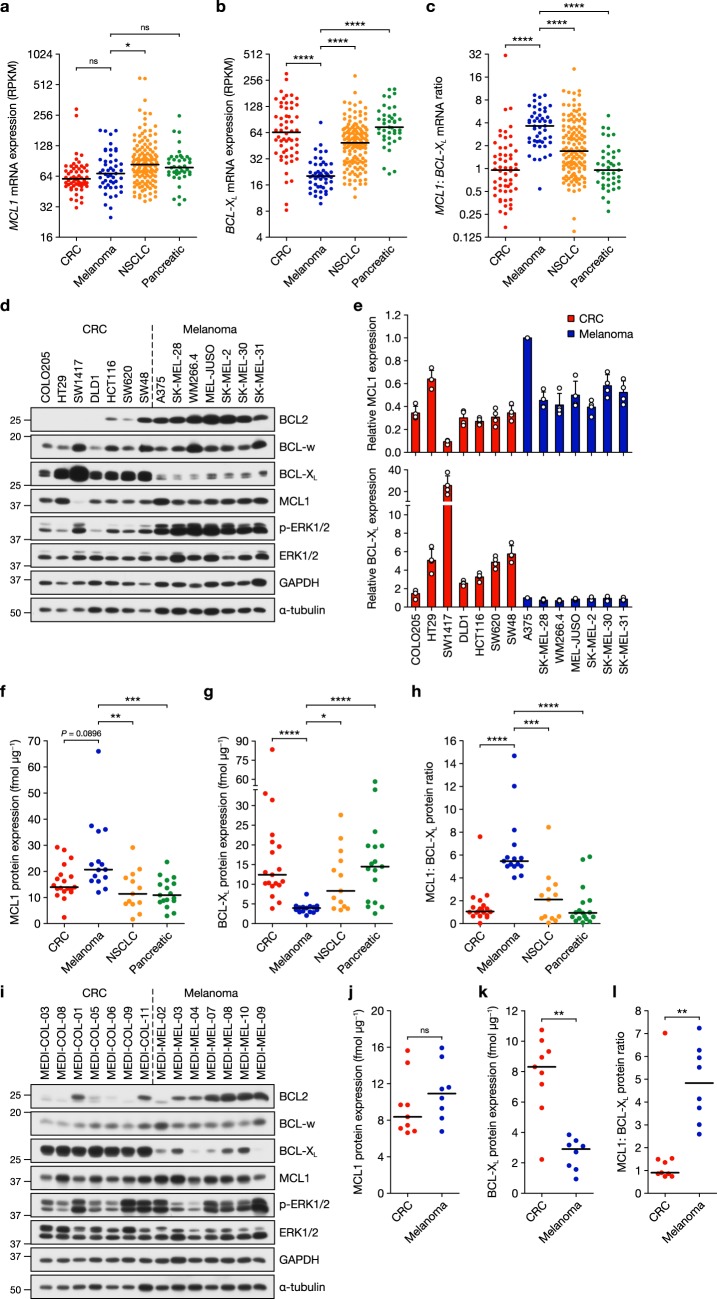
- Melanoma cells and patient-derived xenografts show a high MCL1:BCL-XL ratio: the MCL1:BCL-XL mRNA ratio was two- to four-fold higher in melanoma than CRC, NSCLC and pancreatic lineages; absolute protein quantification gave median MCL1:BCL-XL ratios of 5–6 in melanoma vs ~1 in CRC and pancreatic tumour cells and ~2 in NSCLC, and melanoma PDX ratio was ~5 times higher than CRC.
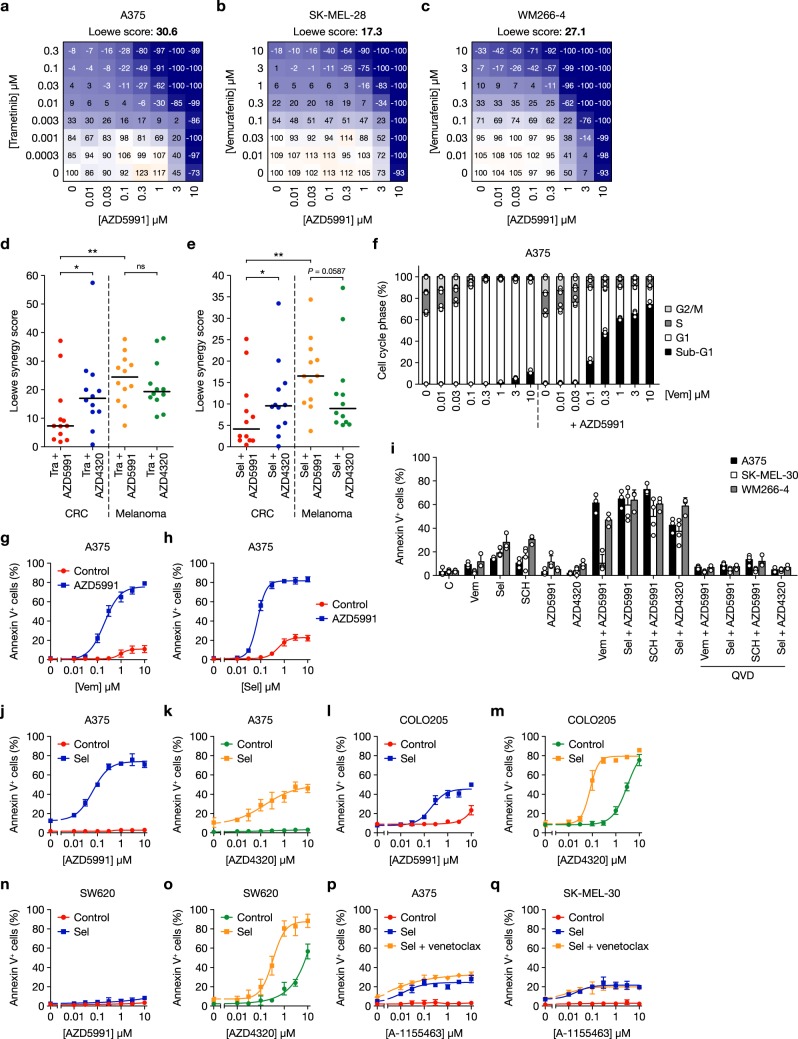
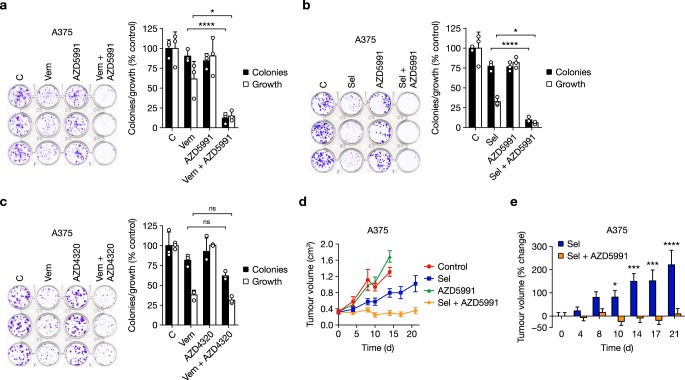
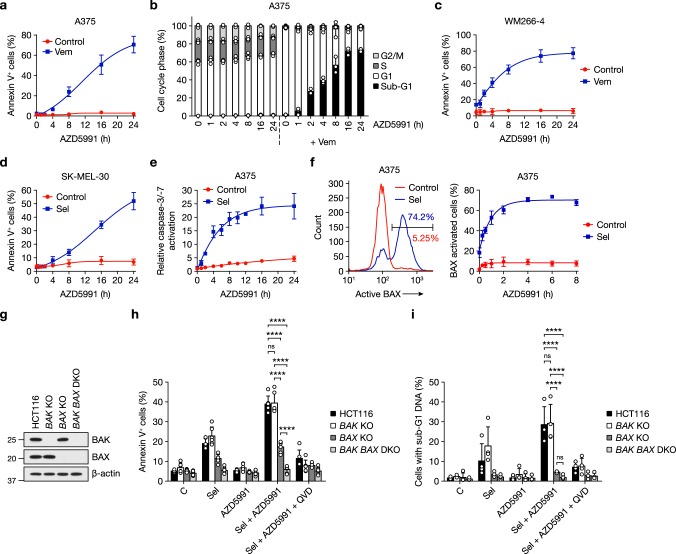
- BRAFi or MEKi combined with AZD5991 caused strong synergistic killing in melanoma: Loewe synergy scores for trametinib or selumetinib with AZD5991 were >3 times higher in melanoma than CRC, whereas AZD4320 combined better in CRC (>2-fold higher median synergy score); in A375 cells, vemurafenib or selumetinib plus AZD5991 drove ~80% apoptosis.
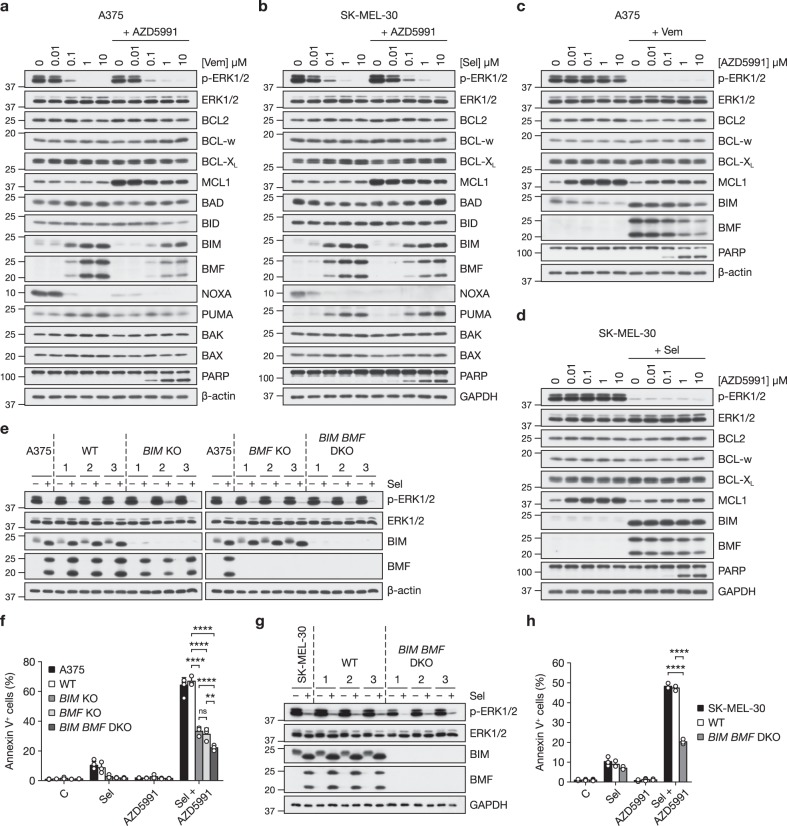
- Apoptosis required BAK/BAX and BIM/BMF: BIM or BMF knockout inhibited selumetinib + AZD5991-induced death by ~50% in A375 cells, BIM BMF double knockout reduced it by 65%, and SK-MEL-30 BIM BMF double knockout reduced apoptosis by 60–70%.
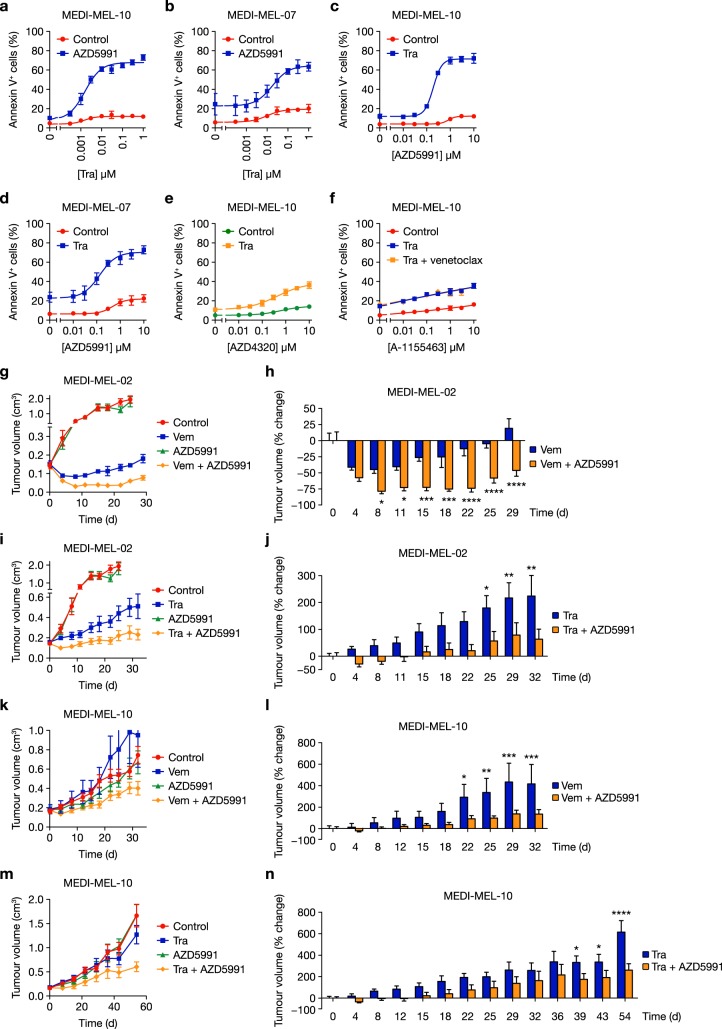
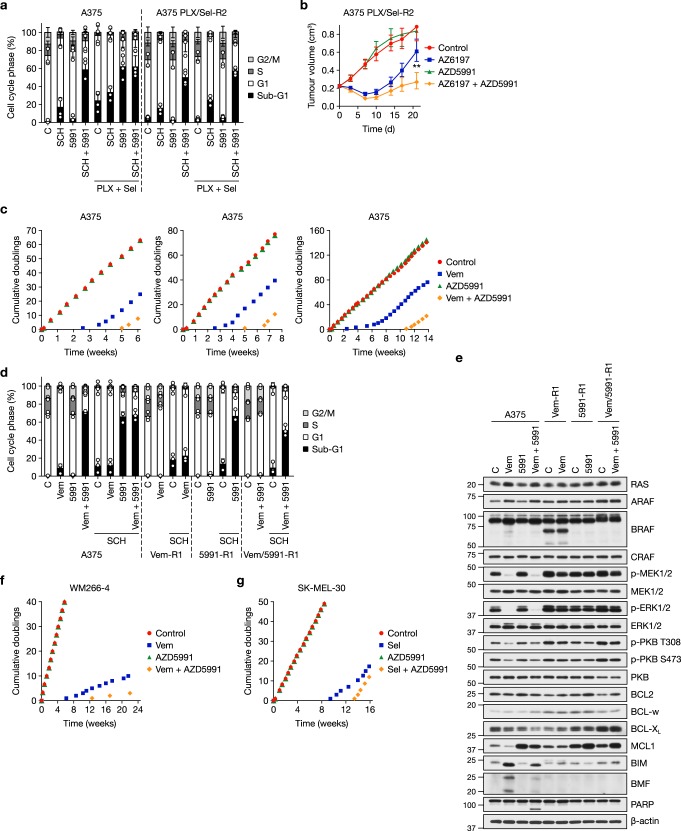
- In vivo, selumetinib + AZD5991 caused regression of established A375 xenografts; AZD5991 delayed acquired resistance, doubling the time to vemurafenib resistance in A375 and WM266-4 cells and increasing time to selumetinib resistance in SK-MEL-30 cells by ~50%, and ERKi + AZD5991 inhibited growth of BRAFi/MEKi-resistant A375 xenografts.
Methods
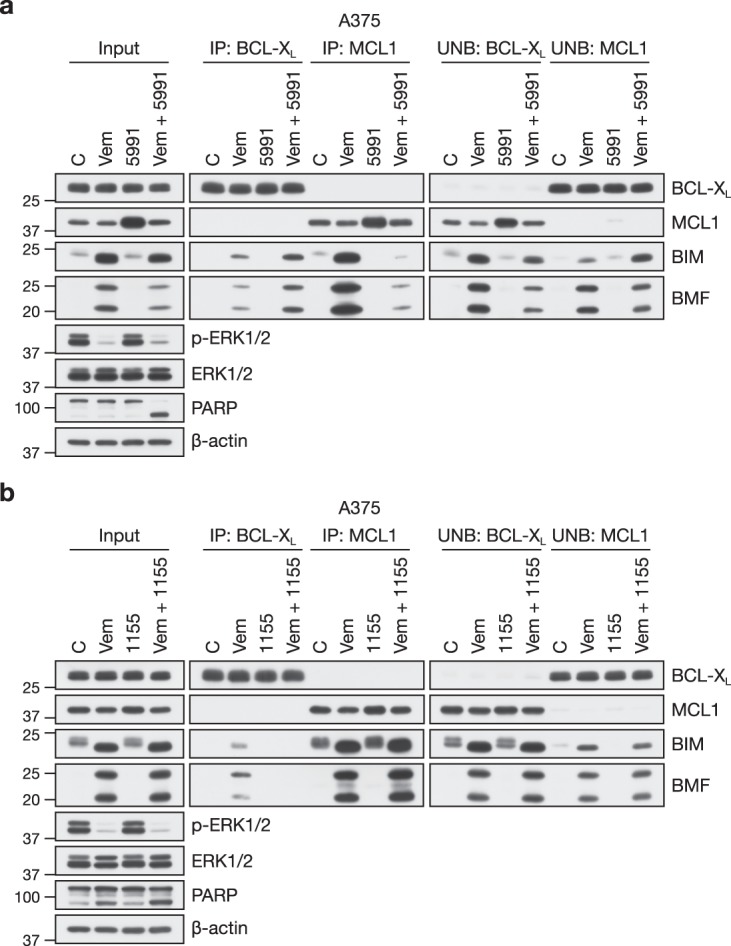
- The study used CCLE RNA-seq and TCGA data, western blotting with recombinant protein standards to absolutely quantify MCL1 and BCL-XL in 64 cell lines and in CRC/melanoma PDX tumours, plus immunoprecipitation to assess BIM/BMF binding to MCL1 and BCL-XL.
- Drug combinations were tested by high-throughput 8 × 8 concentration-matrix assays in 12 melanoma and 12 CRC cell lines, with Loewe synergy scores; mechanistic work used flow cytometry for annexin V, cell cycle, caspase-3/-7 and active BAX, CRISPR/Cas9 BIM/BMF knockout, and isogenic HCT116 BAK/BAX knockout lines.
- In vivo studies used A375 xenografts in female nude athymic mice and melanoma PDX models in NOD SCID mice, with tumour volume measured by calipers; resistance models were generated by chronic inhibitor exposure and analysed by next-generation sequencing.
Limitations
- The paper does not include a dedicated limitations section.
- Evident from the text: much of the mechanistic apoptosis work focuses on A375 and SK-MEL-30 melanoma cells, with HCT116 used for BAK/BAX dependency, so the generality across diverse melanoma genotypes and other lineages is not fully established.
- Evident from the text: in vivo efficacy is shown in immunodeficient xenograft and PDX models, and AZD5991 is cleared quickly from plasma (2–6 h) with once-weekly dosing, so the clinical durability, optimal schedule and immune contribution remain untested.
Model-written summary. Check it against the paper before relying on it.
Integrity signals
Registry
Cites
Statistics
Figures
Verification
Claims the paper makes
1 Valid · 1 Not valid · 42 Not checked · 148 Own results and interpretations
The cited sources support only part of this claim — read each source’s verdict below.
In the paper
“While MCL1 expression in the CCLE data set was broadly similar in CRC and melanoma cells, and slightly higher in NSCLC and pancreatic, levels of BCL2L1 (encoding BCL-XL) were strikingly lower in melanoma relative to the other lineages (Fig. 1a, b).”
§ Targeting melanoma’s MCL1 bias unleashes the apoptotic potential of BRAF and ERK1/2 pathway inhibitors > Results > The melanoma pro-survival BCL2 family pool is MCL1 biased
What the sources say
- Partly supportedcites [34] Ghandi M Next-generation characterization of the Cancer Cell Line Encyclopedia Nature 2019 569 503 508 10.1038/s41586-019-1186-3 31068700 PMC6697103 sourceExperimental — accuracy not yet measured
Our copy establishes the resource the sentence invokes — the Abstract ('RNA sequencing (RNA-seq; 1,019 cell lines)') and Extended Data Fig. 1 ('Distribution of cell lines by lineage and ancestry across CCLE') confirm pan-lineage mRNA expression data, so the 'CCLE data set' identification holds. However, no passage in our copy reports BCL2L1/BCL-XL or MCL1 expression at all, let alone a melanoma-versus-CRC/NSCLC/pancreatic comparison (searched: 'BCL2L1 BCL-XL MCL1 mRNA expression across lineages melanoma', 'MCL1 BCL2 apoptosis BCL-XL dependence', 'melanoma colorectal lung pancreatic lineage comparison gene expression levels venetoclax ABT-737'); the tissue-level discussion in 'Genome-wide DNA promoter methylation' and 'Alternative splicing characterization' concerns SOX10/PAX8, MDM4/RPL22L1 and LDHA/LDHB, not the BCL-2 family. The specific comparative finding is therefore the citing authors' own re-analysis of CCLE data, not a result stated by Ghandi et al. (LLM, conf=0.68)
boostedstates an association- Asserted: passes — The authors put it forward as true.
- Checkable: passes — It can be checked against evidence.
- Load-bearing: passes — The paper’s conclusions depend on it.
- Based: passes — The paper gives a reason why it holds.
- Rests on an assumption not shown here.
- Partly supported
A result the paper reports from its own data — it cites no other source for it, so there is none to check. The quote shows it is in the paper.
In the paper
“In A375 cells both vemurafenib and selumetinib combined synergistically with AZD5991 to drive ~80% apoptosis following 48 h treatment (Fig. 2g, h);”
§ Targeting melanoma’s MCL1 bias unleashes the apoptotic potential of BRAF and ERK1/2 pathway inhibitors > Results > BRAFi or MEKi combine with MCL1i to selectively kill melanoma cells
plainstates a cause- Asserted: passes — The authors put it forward as true.
- Checkable: passes — It can be checked against evidence.
- Load-bearing: passes — The paper’s conclusions depend on it.
- Based: passes — The paper gives a reason why it holds.
A result the paper reports from its own data — it cites no other source for it, so there is none to check. The quote shows it is in the paper.
In the paper
“While BCL2 expression was higher in melanoma, BCL2 mRNA levels (RNA-seq read number) were very low in each lineage relative to MCL1 and BCL-XL (Supplementary Fig. 1b).”
§ Targeting melanoma’s MCL1 bias unleashes the apoptotic potential of BRAF and ERK1/2 pathway inhibitors > Results > The melanoma pro-survival BCL2 family pool is MCL1 biased
plain- Asserted: passes — The authors put it forward as true.
- Checkable: passes — It can be checked against evidence.
- Load-bearing: unclear — It is unclear whether the paper’s conclusions depend on it.
- Based: passes — The paper gives a reason why it holds.
- Rests on an assumption not shown here.
A result the paper reports from its own data — it cites no other source for it, so there is none to check. The quote shows it is in the paper.
In the paper
“In these melanoma cells, ERK1/2 pathway inhibitors typically combined less well with AZD4320 than AZD5991, whereas trametinib or selumetinib combined better with AZD4320 than AZD5991 in HCT116 and HT29 CRC cells (Supplementary Fig. 5).”
§ Targeting melanoma’s MCL1 bias unleashes the apoptotic potential of BRAF and ERK1/2 pathway inhibitors > Results > BRAFi or MEKi combine with MCL1i to selectively kill melanoma cells
plainstates an association- Asserted: passes — The authors put it forward as true.
- Checkable: passes — It can be checked against evidence.
- Load-bearing: unclear — It is unclear whether the paper’s conclusions depend on it.
- Based: passes — The paper gives a reason why it holds.
108 more claims
Create a free account to see all 192 claims and to verify the 78 references still open.
- It may state two separate claims as one. 69
- Probably not a substantial claim. 16
Citations
Cites
Aligning sequence reads, clone sequences and assembly contigs with BWA-MEM
Li, H. (2013) · DROPS (Schloss Dagstuhl – Leibniz Center for Informatics) · doi:10.48550/arxiv.1303.3997 · Cited by 5,159
Aligning sequence reads, clone sequences and assembly con*gs with BWA-MEM
Li, H. (2014) · arXiv (Cornell University) · doi:10.6084/m9.figshare.963153.v1 · Cited by 4,932
Next-generation characterization of the Cancer Cell Line Encyclopedia
Ghandi, M., Huang, F. W., Jané-Valbuena, J., Kryukov, G. V., Lo, C. C., McDonald, E. R., Barretina, J., Gelfand, E. T., Bielski, C. M., Li, H., et al. (2019) · Nature · doi:10.1038/s41586-019-1186-3 · Cited by 3,394
ABT-199, a potent and selective BCL-2 inhibitor, achieves antitumor activity while sparing platelets
Souers, A. J., Leverson, J. D., Boghaert, E. R., Ackler, S. L., Catron, N. D., Chen, J., Dayton, B. D., Ding, H., Enschede, S. H., Fairbrother, W. J., et al. (2013) · Nature Medicine · doi:10.1038/nm.3048 · Cited by 3,058
Improved Survival with MEK Inhibition in BRAF-Mutated Melanoma
Flaherty, K. T., Robert, C., Hersey, P., Nathan, P., Garbe, C., Milhem, M., Demidov, L. V., Hassel, J. C., Rutkowski, P., Mohr, P., et al. (2012) · New England Journal of Medicine · doi:10.1056/nejmoa1203421 · Cited by 2,160
ABT-263: A Potent and Orally Bioavailable Bcl-2 Family Inhibitor
Tse, C., Shoemaker, A. R., Adickes, J., Anderson, M. G., Chen, J., Jin, S., Johnson, E. F., Marsh, K. C., Mitten, M. J., Nimmer, P., et al. (2008) · Cancer Research · doi:10.1158/0008-5472.can-07-5836 · Cited by 1,992
Chen, L., Willis, S. N., Wei, A., Smith, B. J., Fletcher, J. I., Hinds, M. G., Colman, P. M., Day, C. L., Adams, J. M., & Huang, D. C. S. (2005) · Molecular Cell · doi:10.1016/j.molcel.2004.12.030 · Cited by 1,816
RAF inhibitor resistance is mediated by dimerization of aberrantly spliced BRAF(V600E)
Poulikakos, P. I., Persaud, Y., Janakiraman, M., Kong, X., Ng, C., Moriceau, G., Shi, H., Atefi, M., Titz, B., Gabay, M. T., et al. (2011) · Nature · doi:10.1038/nature10662 · Cited by 1,454
Long, G. V., Stroyakovskiy, D., Gogas, H., Levchenko, E., de Braud, F., Larkin, J., Garbe, C., Jouary, T., Hauschild, A., Grob, J.-J., et al. (2015) · The Lancet · doi:10.1016/s0140-6736(15)60898-4 · Cited by 1,399
Kuwana, T., Bouchier-Hayes, L., Chipuk, J. E., Bonzon, C., Sullivan, B. A., Green, D. R., & Newmeyer, D. D. (2005) · Molecular Cell · doi:10.1016/j.molcel.2005.02.003 · Cited by 1,185
Cited by
The manipulation of apoptosis for cancer therapy using BH3-mimetic drugs
Diepstraten, S. T., Anderson, M. A., Czabotar, P. E., Lessene, G., Strasser, A., & Kelly, G. L. (2022) · Nature Reviews Cancer · doi:10.1038/s41568-021-00407-4 · Cited by 346
Lucas, R. M., Luo, L., & Stow, J. L. (2022) · Biochemical Society Transactions · doi:10.1042/bst20220271 · Cited by 175
MCL-1 inhibitors, fast-lane development of a new class of anti-cancer agents
Bolomsky, A., Vogler, M., Köse, M. C., Heckman, C. A., Ehx, G., Ludwig, H., & Caers, J. (2020) · Journal of Hematology & Oncology · doi:10.1186/s13045-020-01007-9 · Cited by 168
Mechanisms of Acquired BRAF Inhibitor Resistance in Melanoma: A Systematic Review
Proietti, I., Skroza, N., Bernardini, N., Tolino, E., Balduzzi, V., Marchesiello, A., Michelini, S., Volpe, S., Mambrin, A., Mangino, G., et al. (2020) · Cancers · doi:10.3390/cancers12102801 · Cited by 145
BRAF — a tumour-agnostic drug target with lineage-specific dependencies
Hanrahan, A. J., Chen, Z., Rosen, N., & Solit, D. B. (2024) · Nature Reviews Clinical Oncology · doi:10.1038/s41571-023-00852-0 · Cited by 136
Understanding MCL1: from cellular function and regulation to pharmacological inhibition
Sancho, M., Leiva, D., Lucendo, E., & Orzáez, M. (2021) · FEBS Journal · doi:10.1111/febs.16136 · Cited by 118
Resistance to Molecularly Targeted Therapies in Melanoma
Patel, M., Eckburg, A., Gantiwala, S., Hart, Z., Dein, J., Lam, K., & Puri, N. (2021) · Cancers · doi:10.3390/cancers13051115 · Cited by 113
An In Vivo CRISPR Screening Platform for Prioritizing Therapeutic Targets in AML
Lin, S., Larrue, C., Scheidegger, N. K., Seong, B. K. A., Dharia, N. V., Kuljanin, M., Wechsler, C. S., Kugener, G., Robichaud, A. L., Conway, A. S., et al. (2021) · Cancer Discovery · doi:10.1158/2159-8290.cd-20-1851 · Cited by 94
Targeting MCL-1 protein to treat cancer: opportunities and challenges
Tantawy, S. I., Timofeeva, N., Sarkar, A., & Gandhi, V. (2023) · Frontiers in Oncology · doi:10.3389/fonc.2023.1226289 · Cited by 90
MCL1 inhibitors S63845/MIK665 plus Navitoclax synergistically kill difficult-to-treat melanoma cells
Mukherjee, N., Skees, J., Todd, K. J., West, D. A., Lambert, K. A., Robinson, W. A., Amato, C. M., Couts, K. L., Gulick, R. J. V., MacBeth, M. L., et al. (2020) · Cell Death and Disease · doi:10.1038/s41419-020-2646-2 · Cited by 81
Targeting Mitochondrial Apoptosis to Overcome Treatment Resistance in Cancer
Ngoi, N. Y. L., Choong, C. S. H., Lee, J., Bellot, G. L., Wong, A. L. A., Goh, B. C., & Pervaiz, S. (2020) · Cancers · doi:10.3390/cancers12030574 · Cited by 80
Understanding Drug Sensitivity and Tackling Resistance in Cancer
Tyner, J. W., Haderk, F., Kumaraswamy, A., Baughn, L. B., Van Ness, B., Liu, S., Marathe, H., Alumkal, J. J., Bivona, T. G., Chan, K. S., et al. (2022) · Cancer Research · doi:10.1158/0008-5472.can-21-3695 · Cited by 78
Targeting the Intrinsic Apoptosis Pathway: A Window of Opportunity for Prostate Cancer
Westaby, D., Jiménez‐Vacas, J. M., Padilha, A., Varkaris, A. S., Balk, S. P., Bono, J. S. D., & Sharp, A. (2021) · Cancers · doi:10.3390/cancers14010051 · Cited by 67
Dong, C., Yang, C., Younis, M. R., Zhang, J., He, G., Qiu, X., Fu, L., Zhang, D., Wang, H., Hong, W., et al. (2022) · Advanced Science · doi:10.1002/advs.202102220 · Cited by 52
Killarney, S. T., Washart, R., Soderquist, R. S., Hoj, J. P., Lebhar, J., Lin, K., & Wood, K. C. (2023) · Nature Communications · doi:10.1038/s41467-023-37146-z · Cited by 48
Non-canonical phosphorylation of Bmf by p38 MAPK promotes its apoptotic activity in anoikis
Zhi, Z., Ouyang, Z., Ren, Y., Cheng, Y., Liu, P., Wen, Y., & Shao, Y. (2021) · Cell Death and Differentiation · doi:10.1038/s41418-021-00855-3 · Cited by 45
Tumor Suppressor Role of hsa-miR-193a-3p and -5p in Cutaneous Melanoma
Polini, B., Carpi, S., Doccini, S., Citi, V., Martelli, A., Feola, S., Santorelli, F. M., Cerullo, V., Romanini, A., & Nieri, P. (2020) · International Journal of Molecular Sciences · doi:10.3390/ijms21176183 · Cited by 44
Ferraz, L. S., da Costa, R. T., Costa, C. A., Ribeiro, C. A. J., Arruda, D. C., Maria–Engler, S. S., & Rodrigues, T. (2020) · Biochemical Pharmacology · doi:10.1016/j.bcp.2020.114104 · Cited by 43
Mitochondrial Metabolism in Melanoma
Huang, C. Y., Radi, R., & Arbiser, J. L. (2021) · Cells · doi:10.3390/cells10113197 · Cited by 42
Kinetic Heterogeneity of Cancer Cell Fractional Killing
Inde, Z., Forcina, G. C., Denton, K., & Dixon, S. J. (2020) · Cell Reports · doi:10.1016/j.celrep.2020.107845 · Cited by 39
Arulananda, S., O’Brien, M., Evangelista, M., Jenkins, L. J., Poh, A. R., Walkiewicz, M., Leong, T. Y.-M., Mariadason, J. M., Cebon, J. S., Balachander, S. B., et al. (2021) · Cell Death Discovery · doi:10.1038/s41420-021-00505-0 · Cited by 38
Liu, Z., Wu, C., Zou, X., Shen, W., Yang, J., Zhang, X., Hu, X., Wang, H., Liao, Y., & Jing, T. (2020) · Stem Cell Research & Therapy · doi:10.1186/s13287-020-01676-w · Cited by 36
Trisciuoglio, D., & Bufalo, D. D. (2021) · Drug Discovery Today · doi:10.1016/j.drudis.2021.01.027 · Cited by 35
ERK5 Signalling and Resistance to ERK1/2 Pathway Therapeutics: The Path Less Travelled?
Cook, S. J., & Lochhead, P. A. (2022) · Frontiers in Cell and Developmental Biology · doi:10.3389/fcell.2022.839997 · Cited by 34
Self-citationMolecular Basis of BRAF Inhibitor Resistance in Melanoma: A Systematic Review
Cosci, I., Salizzato, V., Fiore, P. D., Pigozzo, J., Guarneri, V., Mocellin, S., Ferlin, A., Mathlouthi, S., Piccin, L., & Garofalo, M. (2025) · Pharmaceuticals · doi:10.3390/ph18081235 · Cited by 32
Leto, S. M., Ferri, M., Sassi, F., Zanella, E. R., Cottino, F., Vurchio, V., Catalano, I., Ferrero, A., Zingaretti, C. C., Marchiò, C., et al. (2023) · Clinical Cancer Research · doi:10.1158/1078-0432.ccr-22-2550 · Cited by 30
Targeting the BCL2 Family: Advances and Challenges in BH3 Mimetic-Based Therapies
Mukherjee, N., Sheetz, J., & Shellman, Y. G. (2025) · International Journal of Molecular Sciences · doi:10.3390/ijms26209859 · Cited by 29
Zhu, P., Yu, Z.-Z., Lv, Y.-F., Zhao, J., Tong, Y.-Y., You, Q., & Jiang, Z. (2021) · Journal of Medicinal Chemistry · doi:10.1021/acs.jmedchem.1c00682 · Cited by 29
Overcoming MCL-1-driven adaptive resistance to targeted therapies
Wood, K. C. (2020) · Nature Communications · doi:10.1038/s41467-020-14392-z · Cited by 29
Functionalized graphene oxide against U251 glioma cells and its molecular mechanism
Wang, P., Wang, X., Tang, Q., Chen, H., Zhang, Q., Jiang, H., & Wang, Z. (2020) · Materials Science and Engineering C · doi:10.1016/j.msec.2020.111187 · Cited by 27
Weidenauer, K., Schmidt, C., Rohde, C., Pauli, C., Blank, M. F., Heid, D., Waclawiczek, A., Corbacioglu, A., Göllner, S., Lotze, M., et al. (2023) · Leukemia · doi:10.1038/s41375-023-01951-8 · Cited by 26
Abd-Rouf, M. S. K., Adigun, P. O., Faniyi, A. J., Oladapo, B. G., Abd-Rouf, A. B., Alalade, E. O., Awopejo, T. E., Adegoke, O. S., Oyekanmi, T. T., Jamiu, A. B., et al. (2024) · International Journal of Science Research and Technology · doi:10.15662/ijsrat.2024.0703003 · Cited by 31
Jenkins, L. J., Luk, I. Y., Fairlie, W. D., Lee, E. F., Palmieri, M., Schoffer, K. L., Tan, T., Ng, I., Vukelic, N., Tran, S. H., et al. (2022) · Molecular Cancer Therapeutics · doi:10.1158/1535-7163.mct-22-0101 · Cited by 25
Tarr, J. C., Salovich, J. M., Aichinger, M., Jeon, K., Veerasamy, N., Sensintaffar, J., Arnhof, H., Samwer, M., Christov, P. P., Kim, K., et al. (2024) · Journal of Medicinal Chemistry · doi:10.1021/acs.jmedchem.4c01188 · Cited by 25
Flemington, V., Davies, E. J., Robinson, D. M., Sandin, L. C., Delpuech, O., Zhang, P., Hanson, L. L., Farrington, P. M., Bell, S., Falenta, K., et al. (2021) · Molecular Cancer Therapeutics · doi:10.1158/1535-7163.mct-20-0002 · Cited by 24
Self-citationBH3 mimetics potentiate pro-apoptotic activity of encorafenib in BRAFV600E melanoma cells
Hartman, M. L., Gajos-Michniewicz, A., Talaj, J. A., Mielczarek-Lewandowska, A., & Czyż, M. (2020) · Cancer Letters · doi:10.1016/j.canlet.2020.11.036 · Cited by 22
Physiological Functions of Mcl-1: Insights From Genetic Mouse Models
Chin, H. S., & Fu, N. Y. (2021) · Frontiers in Cell and Developmental Biology · doi:10.3389/fcell.2021.704547 · Cited by 22
Sulkshane, P., & Teni, T. R. (2022) · Exploration of Targeted Anti-tumor Therapy · doi:10.37349/etat.2022.00083 · Cited by 22
Mukherjee, N., Katsnelson, E. N., Brunetti, T. M., Michel, K., Couts, K. L., Lambert, K. A., Robinson, W. A., McCarter, M. D., Norris, D. A., Tobin, R. P., et al. (2024) · Cell Death and Disease · doi:10.1038/s41419-024-06524-w · Cited by 20
Arulananda, S., Lee, E. F., Fairlie, W. D., & John, T. (2020) · Expert Review of Anticancer Therapy · doi:10.1080/14737140.2021.1856660 · Cited by 21
Mitochondrial bioenergetics and networks in melanoma: an update
Giannitti, G., Paganoni, A. J. J., Marchesi, S., Garavaglia, R., & Fontana, F. (2025) · APOPTOSIS · doi:10.1007/s10495-025-02155-4 · Cited by 19
BCL2L11 Induction Mediates Sensitivity to Src and MEK1/2 Inhibition in Thyroid Cancer
Rose, M. M., Espinoza, V. L., Hoff, K. J., Pike, L. A., Sharma, V., Hofmann, M.-C. C., Tan, A. C., Pozdeyev, N. V., & Schweppe, R. E. (2023) · Cancers · doi:10.3390/cancers15020378 · Cited by 16
McAloney, C. A., Makkawi, R., Budhathoki, Y., Cannon, M. V., Franz, E. M., Gross, A. C., Cam, M., Vetter, T., Duhen, R., Davies, A. E., et al. (2023) · Cellular Oncology · doi:10.1007/s13402-023-00867-w · Cited by 10
Chen, W., Geng, D., Chen, J., Han, X., Xie, Q., Guo, G., Chen, X., Zhang, W., Tang, S., & Zhong, X. (2024) · Cancer Cell International · doi:10.1186/s12935-024-03280-x · Cited by 14
Hiraide, S., Takahashi, M., Yoshida, Y., Yamada, H., Komine, K., & Ishioka, C. (2021) · Cancer Science · doi:10.1111/cas.15075 · Cited by 13
Pairawan, S. S., Akçakanat, A., Kopetz, S., Tapia, C., Zheng, X., Chen, H., Ha, M. J., Rizvi, Y. Q., Holla, V. R., Wang, J., et al. (2022) · Scientific Reports · doi:10.1038/s41598-022-05193-z · Cited by 13
Target Genetic Abnormalities for the Treatment of Colon Cancer and Its Progression to Metastasis
Baviskar, T., Momin, M. M., Liu, J., Guo, B., & Bhatt, L. K. (2020) · Current Drug Targets · doi:10.2174/1389450121666201119141015 · Cited by 13
Targeting MCL‐1 to Overcome Therapeutic Resistance and Improve Cancer Mortality
Mohiuddin, M. (2025) · Health Science Reports · doi:10.1002/hsr2.71390 · Cited by 11
BCL-XL inhibitors enhance the apoptotic efficacy of BRAF inhibitors in BRAFV600E colorectal cancer
Jenkins, L. J., Luk, I. Y., Chionh, F. J. M., Tan, T., Needham, K. A., Ayton, J., Reehorst, C. M., Vukelic, N., Sieber, O. M., Mouradov, D., et al. (2024) · Cell Death and Disease · doi:10.1038/s41419-024-06478-z · Cited by 11
Mukherjee, N., Dart, C. R., Amato, C. M., Honig-Frand, A., Lambert, J. R., Lambert, K. A., Robinson, W. A., Tobin, R. P., McCarter, M. D., Couts, K. L., et al. (2021) · Journal of Investigative Dermatology · doi:10.1016/j.jid.2021.11.035 · Cited by 10
Shi, K., Lu, H., Zhang, Z., Fu, Y., Wu, J., Zhou, S., Ma, P., Ye, K., Zhang, S., Shi, H., et al. (2022) · Cell Death and Differentiation · doi:10.1038/s41418-022-01064-2 · Cited by 10
MCL1 modulates mTORC1 signaling to promote bioenergetics and tumorigenesis
Gui, W., Páral, P., Dhamija, B., Hagag, E., Dusa, M., Humajová, J., Francová, P., Kučka, J., Pankrác, J., Schütz, C., et al. (2025) · Nature Communications · doi:10.1038/s41467-025-66831-4 · Cited by 9
Yang, L., Lu, Y., Zhang, Z., Chen, Y., Chen, N., Chen, F., Qi, Y., Han, C., Xu, Y., Chen, M., et al. (2023) · Experimental Cell Research · doi:10.1016/j.yexcr.2023.113603 · Cited by 10
Hunter, J. E., Campbell, A. E., Kerridge, S. T., Fraser, C. J., Hannaway, N. L., Luli, S., Ivanova, I. G., Brownridge, P., Coxhead, J., Taylor, L., et al. (2022) · Biochemical Journal · doi:10.1042/bcj20220103 · Cited by 9
Regulation of CHK1 inhibitor resistance by a c-Rel and USP1 dependent pathway
Hunter, J. E., Campbell, A. E., Hannaway, N. L., Kerridge, S. T., Luli, S., Butterworth, J. A., Sellier, H., Mukherjee, R., Dhillon, N., Sudhindar, P. D., et al. (2022) · Biochemical Journal · doi:10.1042/bcj20220102 · Cited by 8
Insights into RAS-driven melanoma and its therapeutic implications
Chatziioannou, E., Lallas, K., Sinnberg, T. W., Niessner, H., Stratigos, A., Flatz, L., & Amaral, T. (2026) · Cancer Treatment Reviews · doi:10.1016/j.ctrv.2026.103090 · Cited by 7
Hartman, M. L., Koziej, P., Kluszczyńska, K., & Czyż, M. (2023) · Cancers · doi:10.3390/cancers15194799 · Cited by 6
Loss of miR-1469 expression mediates melanoma cell migration and invasion
DiVincenzo, M. J., Barricklow, Z., Schwarz, E. J., Moufawad, M., Howard, J. H., Yu, L., Chung, C. G., Gru, A. A., & Carson, W. E. (2021) · PLoS ONE · doi:10.1371/journal.pone.0256629 · Cited by 6
Soudah, N., Baskin, A., Darash‐Yahana, M., Darlyuk‐Saadon, I., Smorodinsky-Atias, K., Shalit, T., Yu, W., Savidor, A., Pikarsky, E., & Engelberg, D. (2025) · Oncogene · doi:10.1038/s41388-025-03437-6 · Cited by 5
Chen, H., Yan, Z., Xiao, C., Tang, Z., & Wan, Y. (2025) · European Journal of Medicinal Chemistry · doi:10.1016/j.ejmech.2025.118079 · Cited by 5
IFN-γ Signaling Sensitizes Melanoma Cells to BH3 Mimetics
Ming, Z., Lim, S. Y., Stewart, A., Pedersen, B., Shklovskaya, E., Menzies, A. M., Carlino, M. S., Kefford, R. F., Lee, J., Scolyer, R. A., et al. (2023) · Journal of Investigative Dermatology · doi:10.1016/j.jid.2023.01.017 · Cited by 5
Small molecule Mcl-1 inhibitor for triple negative breast cancer therapy
Dong, S., & Alahari, S. K. (2024) · Frontiers in Cell and Developmental Biology · doi:10.3389/fcell.2024.1408107 · Cited by 5
Weiss, L., Zhang, D., Kunz, W. G., Boeck, S. H., Curigliano, G., Subbiah, V., Lordick, F., Brummer, T., Westphalen, C. B., & Bielo, L. B. (2025) · ESMO Gastrointestinal Oncology · doi:10.1016/j.esmogo.2024.100129 · Cited by 5
Mughees, M., Tacam, M. J., Tan, A. W., Pitner, M. K., Iles, L. R., Hu, X., Villodre, E. S., Debeb, B. G., Kogawa, T., Lim, B., et al. (2025) · Molecular Cancer Therapeutics · doi:10.1158/1535-7163.mct-24-0593 · Cited by 3
Gopal, Y. N. V., de Groot, E., Loftin, K., Knighton, B. G., Ledesma, D. A., Hudgens, C. W., Shamsutdinova, D., Ali, M., Ju, Z., Xiao, M., et al. (2026) · Nature Communications · doi:10.1038/s41467-026-74691-9 · Cited by 2
Kump, K. J., & Nikolovska‐Coleska, Z. (2020) · Royal Society of Chemistry eBooks · doi:10.1039/9781788016544-00171
van der Zwet, J. C. G. (2022) · Utrecht University Repository (Utrecht University) · doi:10.33540/1098
Santos, N. L. (2021) · Digital Library of Theses and Dissertations (Universidade de São Paulo) · doi:10.11606/d.5.2021.tde-31032022-162921
Functional Elucidation and Targeting of the Bcl-2 Pro-Survival Proteins in Various Cancers
Kump, K. J. (2020) · Deep Blue (University of Michigan)
de Pontes, C. A. (2021) · Digital Library of Theses and Dissertations (Universidade de São Paulo) · doi:10.11606/d.42.2021.tde-16022022-121208
Leto, S. M., Ferri, M., Sassi, F. P., Zanella, E. R., Cottino, F., Vurchio, V., Catalano, I., Ferrero, A., Zingaretti, C. C., Marchiò, C., et al. (2023) · doi:10.1158/1078-0432.c.6533128.v1
Potential biomarkers for MCL1 inhibitor sensitivity
Duan, L., & Maki, C. G. (2024) · Cell Signaling · doi:10.46439/signaling.2.046
The dual role of cellular senescence in tumor occurrence and development
Huang, X., Wang, Z.-R., Wu, B., & Song, W.-W. (2025) · Discover Medicine · doi:10.1007/s44337-025-00502-7
Exploiting tumour cell dependency on pro-survival BCL2 proteins with BH3 mimetics
Minihane, E.-J. (2020) · Apollo (University of Cambridge) · doi:10.17863/cam.54882
Self-citationDart, C. R. (2020) · CU Scholar (University of Colorado Boulder)
Ohanna, M., Biber, P., Kahil, M., Diazzi, S., Lefevre, L., Larbret, F., Didier, R., Audebert, S., Delmas, V., Larue, L., et al. (2026) · bioRxiv (Cold Spring Harbor Laboratory) · doi:10.64898/2026.02.27.708453
Inhibition of V-ATPase function drives apoptosis via GCN1/GCN2 kinase signalingPreprint
Gallob, F., Lechner, S., Tučková, D., Divoká, P., Tyshchenko, Y., Drpic, D., Hájek, J., Englmaier, L., Delawská, K., Unterlass, M. M., et al. (2026) · bioRxiv (Cold Spring Harbor Laboratory) · doi:10.64898/2026.03.27.714872
Jin, T., Lv, Y., Yang, Q., Zhang, R., & Jin, H. (2026) · Frontiers in Neurology · doi:10.3389/fneur.2026.1921351
BindingDB Entry 50014471: Discovery of 3,5-Dimethyl-4-Sulfonyl-1
BindingDB (2022) · UC San Diego · doi:10.7270/q2mc93vv
princekobby5, Adigun, P. O., Alalade, E. O., Oyekanmi, T. T., Faniyi, A. J., Oladapo, B. G., Awopejo, T. E., Adegoke, O. S., Jamiu, A. B., Michael, O. B., et al. (2024) · International Journal of Research and Applied Innovations · doi:10.15662/ijrai.2024.0703019
Metadata
- Authors
- Sale, M. J., Minihane, E., Monks, N. R., Gilley, R., Richards, F. M., Schifferli, K. P., Andersen, C. L., Davies, E. J., Vicente, M. A., Ozono, E., Markovets, A., Dry, J. R., Drew, L., Flemington, V., Proia, T., Jodrell, D. I., Smith, P. D., & Cook, S. J.
- Affiliations
- Babraham Institute (GB)
- AstraZeneca (United States) (US)
- University of Cambridge (GB)
- AstraZeneca (United Kingdom) (GB)
- Cancer Research UK (GB)
- Corresponding author
- Sale, Matthew J.
- Cook, Simon J.
- ORCID
- Venue
- Nature Communications
- Published
- 2019-11-14
- Volume
- 10
- Issue
- 1
- Pages
- 5167-5167
- ISSN
- 2041-1723 (ISSN-L)
- PMC
- PMC6856071
- OpenAlex
- W2953122837
- Semantic Scholar
- 400b192a5e4ee389f22237d093703601d15dd000
- Cited by
- 80
- References
- 60
- Citations by year
- 2026: 5 · 2025: 11 · 2024: 9 · 2023: 10 · 2022: 11 · 2021: 16 · 2020: 18
- FWCI
- 3.13
- Type
- journal article
- Language
- en
- Open access
- gold
- doi.org
- Licence
- cc-by
- creativecommons.org/licenses/by/4.0 (tdm)
- creativecommons.org/licenses/by/4.0 (vor)
- Locations
- Nature Communications (publishedVersion, cc-by)
- Europe PMC (PubMed Central) (publishedVersion, cc-by)
- PubMed (publishedVersion)
- PubMed Central (publishedVersion, cc-by)
- Apollo (University of Cambridge) (submittedVersion)
- RePEc: Research Papers in Economics (submittedVersion)
- DOAJ (DOAJ: Directory of Open Access Journals) (submittedVersion, cc-by-sa)
- DOAJ (DOAJ: Directory of Open Access Journals) (submittedVersion)
- Apollo (University of Cambridge) (submittedVersion, cc-by)
- Apollo
- Apollo (cc-by)
- Funders
- Cancer Research UK (A14867)
- RCUK | Biotechnology and Biological Sciences Research Council (BB/J004456/1, BB/P013384/1, BBS/E/B000C0433, BBS/E/B/000C0434)
- AstraZeneca
- Topics
- Life Sciences › Biochemistry, Genetics and Molecular Biology › Molecular Biology › Melanoma and MAPK Pathways
- Life Sciences › Biochemistry, Genetics and Molecular Biology › Molecular Biology › Cell death mechanisms and regulation
- Life Sciences › Biochemistry, Genetics and Molecular Biology › Molecular Biology › Protein Degradation and Inhibitors
- Keywords
- melanoma, Mcl-1, Bcl-xL, BRAF inhibitors, MEK inhibitors, AZD5991, synthetic lethality, apoptosis, building information modeling, BMF, acquired drug resistance, colorectal cancer, Bcl-2 family proteins, combination therapy, predictive biomarkers
- MeSH terms
- Animals, Cell Survival, Humans, Melanoma, Apoptosis, Drug Resistance, Neoplasm, MAP Kinase Signaling System, Cell Line, Tumor, Macrocyclic Compounds, Protein Kinase Inhibitors, Proto-Oncogene Proteins B-raf, bcl-X Protein, Mice, Molecular Targeted Therapy, Myeloid Cell Leukemia Sequence 1 Protein
About these checks
Registry, retraction, Cites and statistics results are computed, not judged, with one exception: a printed reference that no index lists is read once by a model before it counts as a citation error. Claims are extracted by a model and kept only when their quote appears verbatim in the text; each cited source is then checked, with a model’s help, for whether it says what the claim relies on. Those verdicts can be wrong — read the claim’s quote and the cited source before relying on one.
The claim verdicts this report counts are experimental: their accuracy is not yet measured.
A language model drew the claims from the paper on 2026-11-20, under version 3 of the claim definition (model deepseek-v4.1-flash, prompt extract-v3).
A second model labelled each claim on 2026-11-20 (model jev-1.13-20260917, definition revision gold-guideline-v0.2).
Cited sources are checked with a language model’s help (qwen3.8-omni-flash).
Statistics and arithmetic are recomputed, not judged.
Confidence bands are shown only for fields calibrated on our annotated test set. None is calibrated yet, so no band is shown.
What counts as a claim ›How we measure confidence ›How we check this ›
Are you an author, or do you see a problem with this page? Request a review
Data sources
Bibliographic data: Semantic Scholar, OpenAlex, Crossref.
Contains information from the Semantic Scholar Academic Graph Datasets, made available under the ODC Attribution License (ODC-BY 1.0).
Semantic Scholar’s data is described in: Kinney, R., et al. (2023). The Semantic Scholar Open Data Platform. arXiv:2301.10140.
