

Targeting melanoma’s MCL1 bias unleashes the apoptotic potential of BRAF and ERK1/2 pathway inhibitors
Open accessThe DOI matches its Crossref record; 60 of the 60 references it cites were found in a registry or an index; 1 of the 85 sources its claims cite were checked for support.
Abstract
BRAF and MEK1/2 inhibitors are effective in melanoma but resistance inevitably develops. Despite increasing the abundance of pro-apoptotic BIM and BMF, ERK1/2 pathway inhibition is predominantly cytostatic, reflecting residual pro-survival BCL2 family activity. Here, we show that uniquely low BCL-X L expression in melanoma biases the pro-survival pool towards MCL1. Consequently, BRAF or MEK1/2 inhibitors are synthetic lethal with the MCL1 inhibitor AZD5991, driving profound tumour cell death that requires BAK/BAX, BIM and BMF, and inhibiting tumour growth in vivo. Combination of ERK1/2 pathway inhibitors with BCL2/BCL-w/BCL-X L inhibitors is stronger in CRC, correlating with a low MCL1:BCL-X L ratio; indeed the MCL1:BCL-X L ratio is predictive of ERK1/2 pathway inhibitor synergy with MCL1 or BCL2/BCL-w/BCL-X L inhibitors. Finally, AZD5991 delays acquired BRAFi/MEKi resistance and enhances the efficacy of an ERK1/2 inhibitor in a model of acquired BRAFi + MEKi resistance. Thus combining ERK1/2 pathway inhibitors with MCL1 antagonists in melanoma could improve therapeutic index and patient outcomes.
Overview
CoChat Summary
TL;DR
Melanoma has a pro-survival BCL2-family pool biased toward MCL1 because BCL-XL is low, so ERK1/2 pathway inhibitors are mainly cytostatic unless MCL1 is also inhibited. Combining BRAF/MEK/ERK inhibitors with the MCL1 inhibitor AZD5991 drives BAK/BAX-, BIM- and BMF-dependent apoptosis, tumour regression, and can delay or overcome acquired BRAFi/MEKi resistance.
Key findings
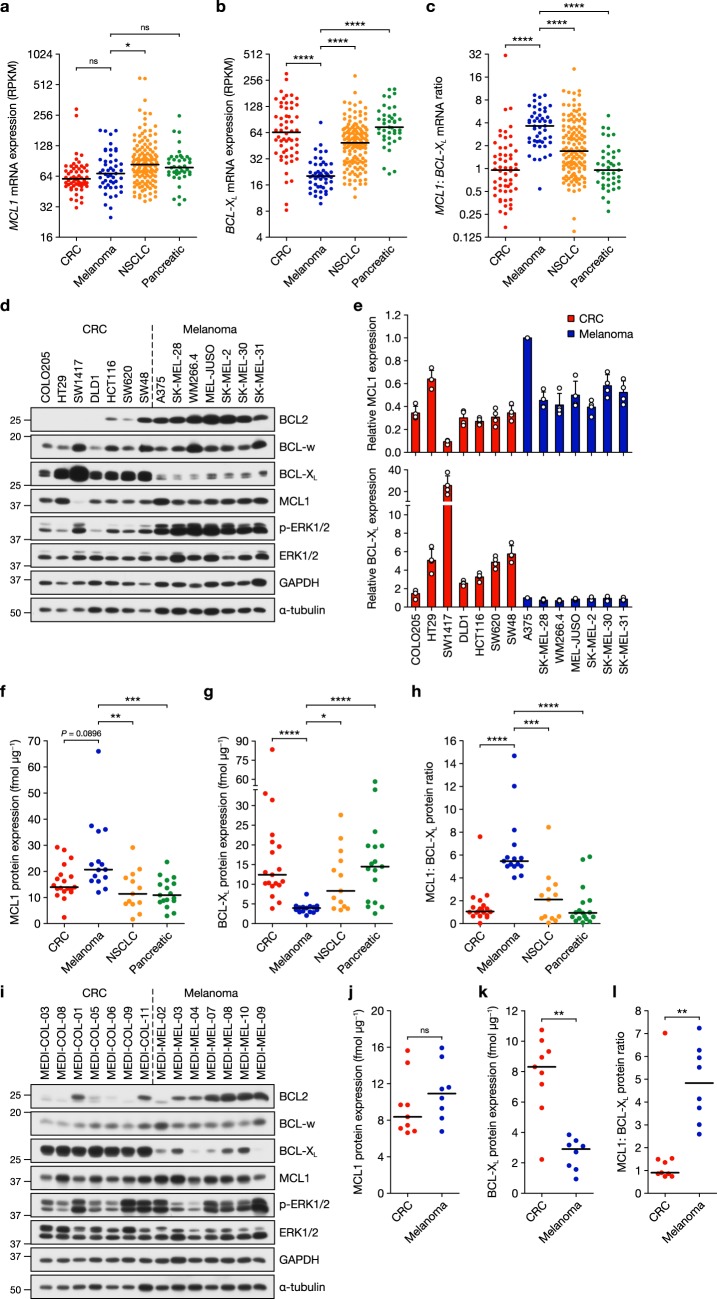
- Melanoma cells and patient-derived xenografts show a high MCL1:BCL-XL ratio: the MCL1:BCL-XL mRNA ratio was two- to four-fold higher in melanoma than CRC, NSCLC and pancreatic lineages; absolute protein quantification gave median MCL1:BCL-XL ratios of 5–6 in melanoma vs ~1 in CRC and pancreatic tumour cells and ~2 in NSCLC, and melanoma PDX ratio was ~5 times higher than CRC.
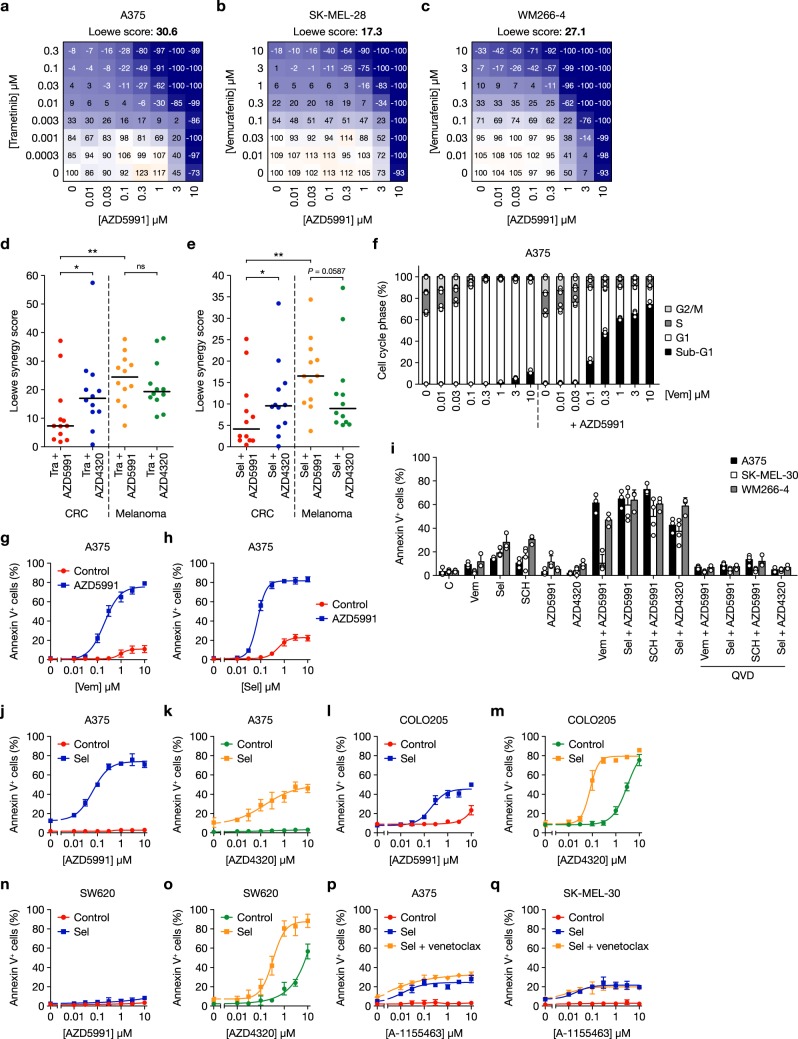
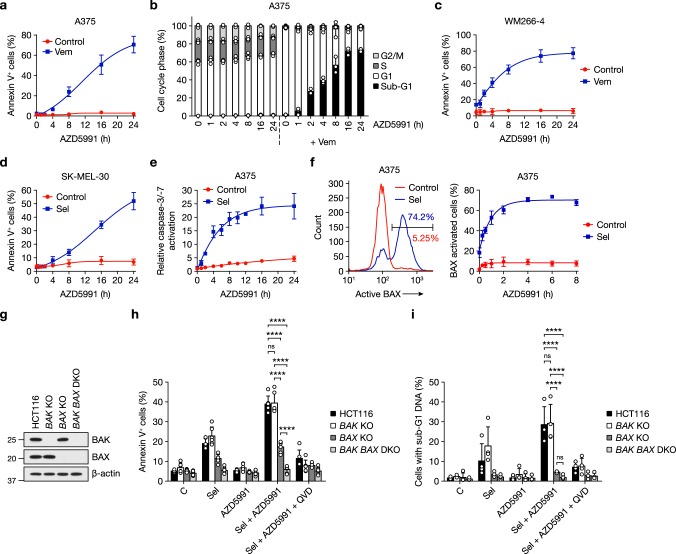
- BRAFi or MEKi combined with AZD5991 caused strong synergistic killing in melanoma: Loewe synergy scores for trametinib or selumetinib with AZD5991 were >3 times higher in melanoma than CRC, whereas AZD4320 combined better in CRC (>2-fold higher median synergy score); in A375 cells, vemurafenib or selumetinib plus AZD5991 drove ~80% apoptosis.
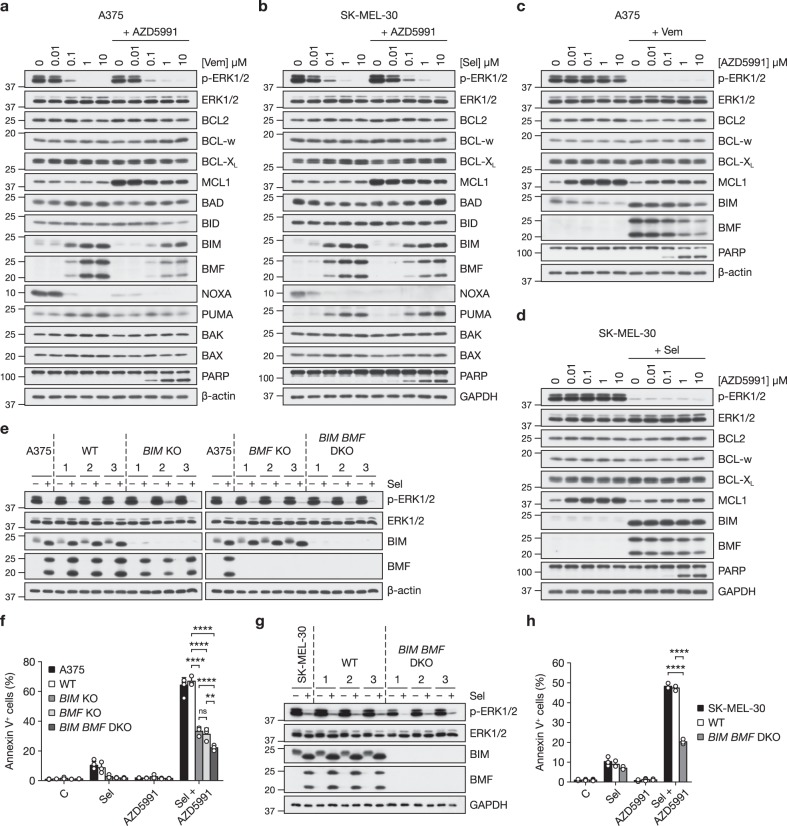
- Apoptosis required BAK/BAX and BIM/BMF: BIM or BMF knockout inhibited selumetinib + AZD5991-induced death by ~50% in A375 cells, BIM BMF double knockout reduced it by 65%, and SK-MEL-30 BIM BMF double knockout reduced apoptosis by 60–70%.
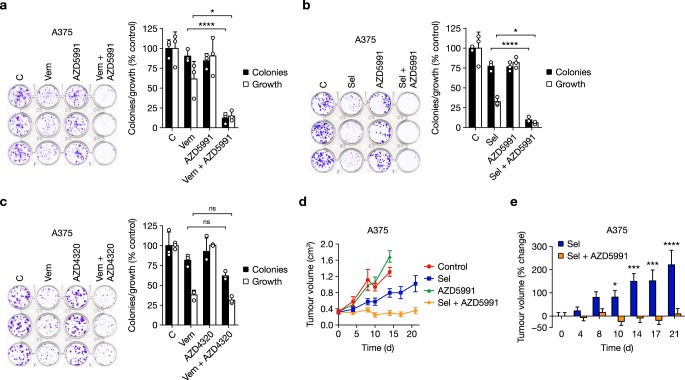
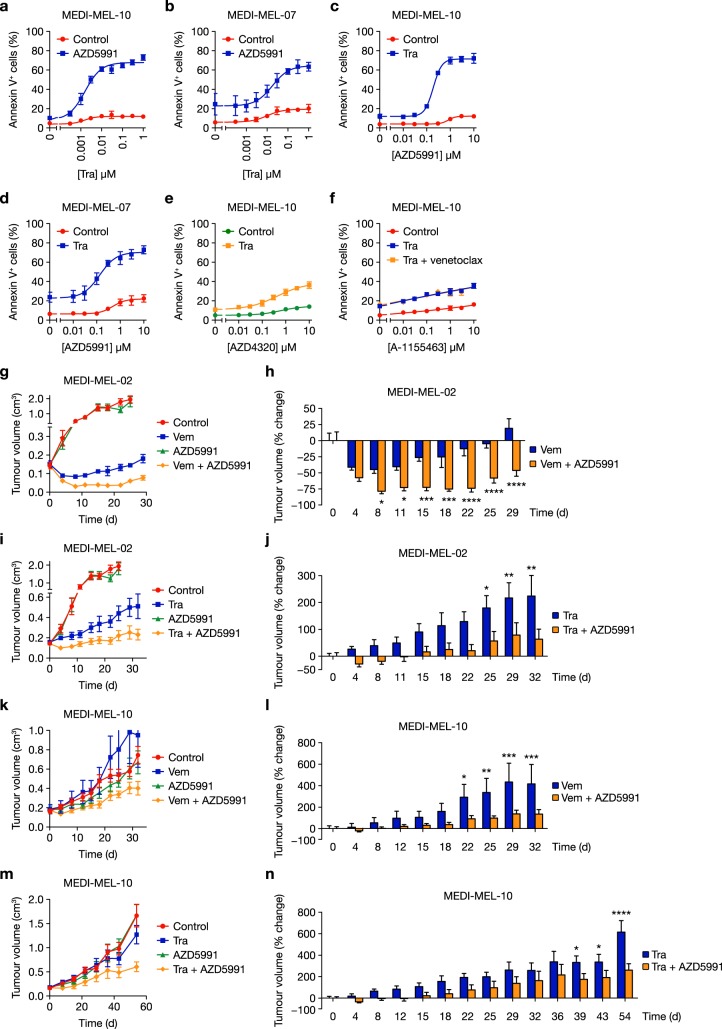
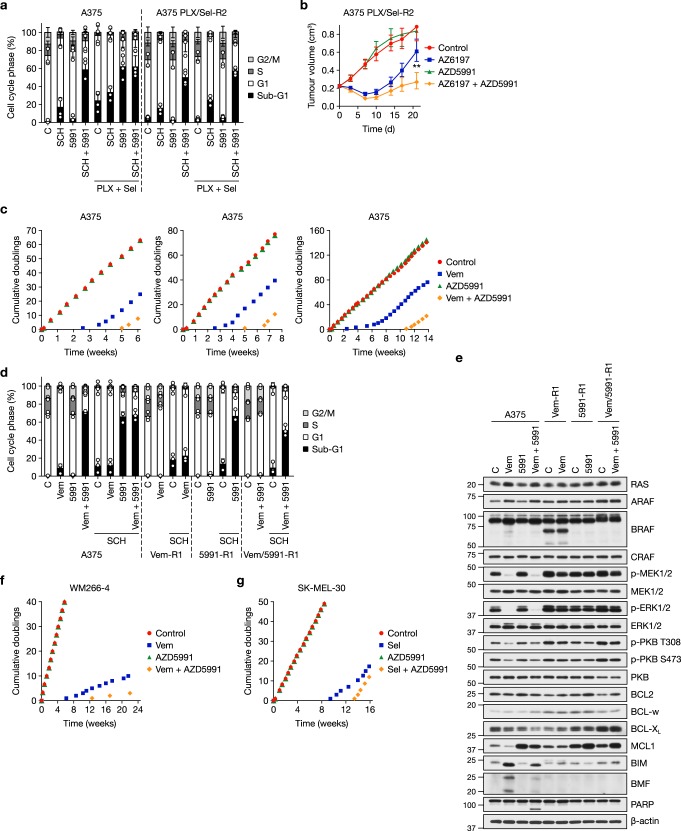
- In vivo, selumetinib + AZD5991 caused regression of established A375 xenografts; AZD5991 delayed acquired resistance, doubling the time to vemurafenib resistance in A375 and WM266-4 cells and increasing time to selumetinib resistance in SK-MEL-30 cells by ~50%, and ERKi + AZD5991 inhibited growth of BRAFi/MEKi-resistant A375 xenografts.
Methods
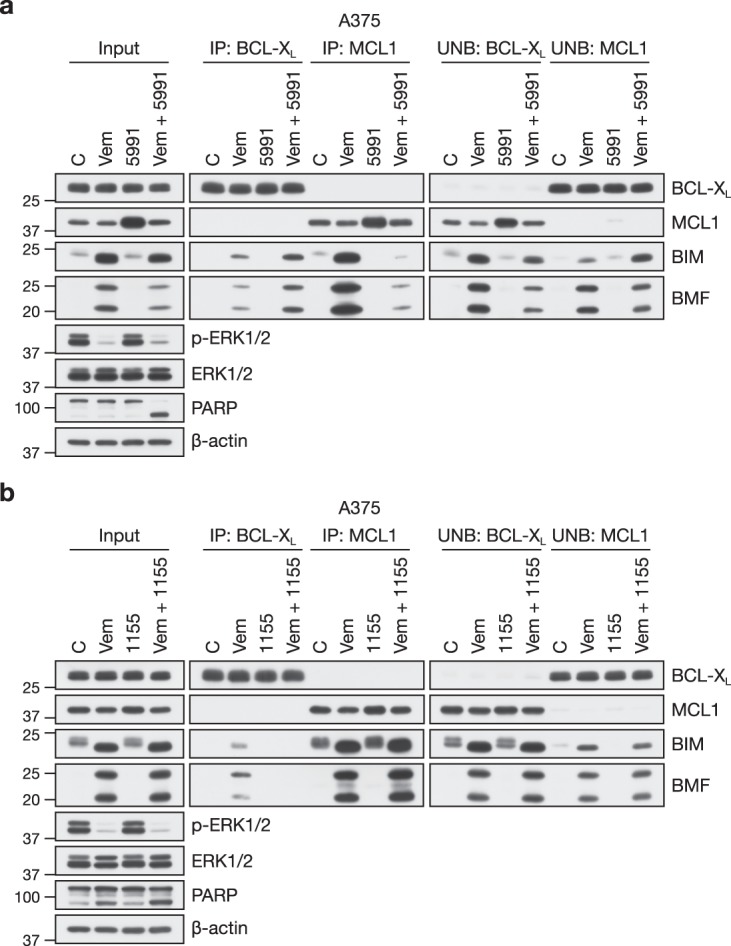
- The study used CCLE RNA-seq and TCGA data, western blotting with recombinant protein standards to absolutely quantify MCL1 and BCL-XL in 64 cell lines and in CRC/melanoma PDX tumours, plus immunoprecipitation to assess BIM/BMF binding to MCL1 and BCL-XL.
- Drug combinations were tested by high-throughput 8 × 8 concentration-matrix assays in 12 melanoma and 12 CRC cell lines, with Loewe synergy scores; mechanistic work used flow cytometry for annexin V, cell cycle, caspase-3/-7 and active BAX, CRISPR/Cas9 BIM/BMF knockout, and isogenic HCT116 BAK/BAX knockout lines.
- In vivo studies used A375 xenografts in female nude athymic mice and melanoma PDX models in NOD SCID mice, with tumour volume measured by calipers; resistance models were generated by chronic inhibitor exposure and analysed by next-generation sequencing.
Limitations
- The paper does not include a dedicated limitations section.
- Evident from the text: much of the mechanistic apoptosis work focuses on A375 and SK-MEL-30 melanoma cells, with HCT116 used for BAK/BAX dependency, so the generality across diverse melanoma genotypes and other lineages is not fully established.
- Evident from the text: in vivo efficacy is shown in immunodeficient xenograft and PDX models, and AZD5991 is cleared quickly from plasma (2–6 h) with once-weekly dosing, so the clinical durability, optimal schedule and immune contribution remain untested.
Model-written summary. Check it against the paper before relying on it.
Integrity signals
Registry
Cites
Statistics
Figures
Verification
Claims the paper makes
1 Valid · 1 Not valid · 42 Not checked · 148 Own results and interpretations
The cited sources support only part of this claim — read each source’s verdict below.
In the paper
“While MCL1 expression in the CCLE data set was broadly similar in CRC and melanoma cells, and slightly higher in NSCLC and pancreatic, levels of BCL2L1 (encoding BCL-XL) were strikingly lower in melanoma relative to the other lineages (Fig. 1a, b).”
§ Targeting melanoma’s MCL1 bias unleashes the apoptotic potential of BRAF and ERK1/2 pathway inhibitors > Results > The melanoma pro-survival BCL2 family pool is MCL1 biased
What the sources say
- Partly supportedcites [34] Ghandi M Next-generation characterization of the Cancer Cell Line Encyclopedia Nature 2019 569 503 508 10.1038/s41586-019-1186-3 31068700 PMC6697103 sourceExperimental — accuracy not yet measured
Our copy establishes the resource the sentence invokes — the Abstract ('RNA sequencing (RNA-seq; 1,019 cell lines)') and Extended Data Fig. 1 ('Distribution of cell lines by lineage and ancestry across CCLE') confirm pan-lineage mRNA expression data, so the 'CCLE data set' identification holds. However, no passage in our copy reports BCL2L1/BCL-XL or MCL1 expression at all, let alone a melanoma-versus-CRC/NSCLC/pancreatic comparison (searched: 'BCL2L1 BCL-XL MCL1 mRNA expression across lineages melanoma', 'MCL1 BCL2 apoptosis BCL-XL dependence', 'melanoma colorectal lung pancreatic lineage comparison gene expression levels venetoclax ABT-737'); the tissue-level discussion in 'Genome-wide DNA promoter methylation' and 'Alternative splicing characterization' concerns SOX10/PAX8, MDM4/RPL22L1 and LDHA/LDHB, not the BCL-2 family. The specific comparative finding is therefore the citing authors' own re-analysis of CCLE data, not a result stated by Ghandi et al. (LLM, conf=0.68)
boostedstates an association- Asserted: passes — The authors put it forward as true.
- Checkable: passes — It can be checked against evidence.
- Load-bearing: passes — The paper’s conclusions depend on it.
- Based: passes — The paper gives a reason why it holds.
- Rests on an assumption not shown here.
- Partly supported
A result the paper reports from its own data — it cites no other source for it, so there is none to check. The quote shows it is in the paper.
In the paper
“In A375 cells both vemurafenib and selumetinib combined synergistically with AZD5991 to drive ~80% apoptosis following 48 h treatment (Fig. 2g, h);”
§ Targeting melanoma’s MCL1 bias unleashes the apoptotic potential of BRAF and ERK1/2 pathway inhibitors > Results > BRAFi or MEKi combine with MCL1i to selectively kill melanoma cells
plainstates a cause- Asserted: passes — The authors put it forward as true.
- Checkable: passes — It can be checked against evidence.
- Load-bearing: passes — The paper’s conclusions depend on it.
- Based: passes — The paper gives a reason why it holds.
A result the paper reports from its own data — it cites no other source for it, so there is none to check. The quote shows it is in the paper.
In the paper
“While BCL2 expression was higher in melanoma, BCL2 mRNA levels (RNA-seq read number) were very low in each lineage relative to MCL1 and BCL-XL (Supplementary Fig. 1b).”
§ Targeting melanoma’s MCL1 bias unleashes the apoptotic potential of BRAF and ERK1/2 pathway inhibitors > Results > The melanoma pro-survival BCL2 family pool is MCL1 biased
plain- Asserted: passes — The authors put it forward as true.
- Checkable: passes — It can be checked against evidence.
- Load-bearing: unclear — It is unclear whether the paper’s conclusions depend on it.
- Based: passes — The paper gives a reason why it holds.
- Rests on an assumption not shown here.
A result the paper reports from its own data — it cites no other source for it, so there is none to check. The quote shows it is in the paper.
In the paper
“In these melanoma cells, ERK1/2 pathway inhibitors typically combined less well with AZD4320 than AZD5991, whereas trametinib or selumetinib combined better with AZD4320 than AZD5991 in HCT116 and HT29 CRC cells (Supplementary Fig. 5).”
§ Targeting melanoma’s MCL1 bias unleashes the apoptotic potential of BRAF and ERK1/2 pathway inhibitors > Results > BRAFi or MEKi combine with MCL1i to selectively kill melanoma cells
plainstates an association- Asserted: passes — The authors put it forward as true.
- Checkable: passes — It can be checked against evidence.
- Load-bearing: unclear — It is unclear whether the paper’s conclusions depend on it.
- Based: passes — The paper gives a reason why it holds.
108 more claims
Create a free account to see all 192 claims and to verify the 78 references still open.
- It may state two separate claims as one. 69
- Probably not a substantial claim. 16
Citations
Cites
Aligning sequence reads, clone sequences and assembly contigs with BWA-MEM
Li, H. (2013) · DROPS (Schloss Dagstuhl – Leibniz Center for Informatics) · doi:10.48550/arxiv.1303.3997 · Cited by 5,159
Aligning sequence reads, clone sequences and assembly con*gs with BWA-MEM
Li, H. (2014) · arXiv (Cornell University) · doi:10.6084/m9.figshare.963153.v1 · Cited by 4,932
Next-generation characterization of the Cancer Cell Line Encyclopedia
Ghandi, M., Huang, F. W., Jané-Valbuena, J., Kryukov, G. V., Lo, C. C., McDonald, E. R., Barretina, J., Gelfand, E. T., Bielski, C. M., Li, H., et al. (2019) · Nature · doi:10.1038/s41586-019-1186-3 · Cited by 3,394
ABT-199, a potent and selective BCL-2 inhibitor, achieves antitumor activity while sparing platelets
Souers, A. J., Leverson, J. D., Boghaert, E. R., Ackler, S. L., Catron, N. D., Chen, J., Dayton, B. D., Ding, H., Enschede, S. H., Fairbrother, W. J., et al. (2013) · Nature Medicine · doi:10.1038/nm.3048 · Cited by 3,058
Improved Survival with MEK Inhibition in BRAF-Mutated Melanoma
Flaherty, K. T., Robert, C., Hersey, P., Nathan, P., Garbe, C., Milhem, M., Demidov, L. V., Hassel, J. C., Rutkowski, P., Mohr, P., et al. (2012) · New England Journal of Medicine · doi:10.1056/nejmoa1203421 · Cited by 2,160
ABT-263: A Potent and Orally Bioavailable Bcl-2 Family Inhibitor
Tse, C., Shoemaker, A. R., Adickes, J., Anderson, M. G., Chen, J., Jin, S., Johnson, E. F., Marsh, K. C., Mitten, M. J., Nimmer, P., et al. (2008) · Cancer Research · doi:10.1158/0008-5472.can-07-5836 · Cited by 1,992
Chen, L., Willis, S. N., Wei, A., Smith, B. J., Fletcher, J. I., Hinds, M. G., Colman, P. M., Day, C. L., Adams, J. M., & Huang, D. C. S. (2005) · Molecular Cell · doi:10.1016/j.molcel.2004.12.030 · Cited by 1,816
RAF inhibitor resistance is mediated by dimerization of aberrantly spliced BRAF(V600E)
Poulikakos, P. I., Persaud, Y., Janakiraman, M., Kong, X., Ng, C., Moriceau, G., Shi, H., Atefi, M., Titz, B., Gabay, M. T., et al. (2011) · Nature · doi:10.1038/nature10662 · Cited by 1,454
Long, G. V., Stroyakovskiy, D., Gogas, H., Levchenko, E., de Braud, F., Larkin, J., Garbe, C., Jouary, T., Hauschild, A., Grob, J.-J., et al. (2015) · The Lancet · doi:10.1016/s0140-6736(15)60898-4 · Cited by 1,399
Kuwana, T., Bouchier-Hayes, L., Chipuk, J. E., Bonzon, C., Sullivan, B. A., Green, D. R., & Newmeyer, D. D. (2005) · Molecular Cell · doi:10.1016/j.molcel.2005.02.003 · Cited by 1,185
The MCL1 inhibitor S63845 is tolerable and effective in diverse cancer models
Kotschy, A., Szlavik, Z., Murray, J., Davidson, J., Maragno, A. L., Le Toumelin-Braizat, G., Chanrion, M., Kelly, G. L., Gong, J.-N., Moujalled, D. M., et al. (2016) · Nature · doi:10.1038/nature19830 · Cited by 1,047
Ascierto, P. A., McArthur, G. A., Dréno, B., Atkinson, V., Liszkay, G., Di Giacomo, A. M., Mandalà, M., Demidov, L., Stroyakovskiy, D., Thomas, L., et al. (2016) · The Lancet Oncology · doi:10.1016/s1470-2045(16)30122-x · Cited by 1,022
McArthur, G. A., Chapman, P. B., Robert, C., Larkin, J., Haanen, J. B., Dummer, R., Ribas, A., Hogg, D., Hamid, O., Ascierto, P. A., et al. (2014) · The Lancet Oncology · doi:10.1016/s1470-2045(14)70012-9 · Cited by 977
Dijkers, P. F., Medema†, R. H., Lammers, J.-W. J., Koenderman, L., & Coffer, P. J. (2000) · Current Biology · doi:10.1016/s0960-9822(00)00728-4 · Cited by 976
VarDict: a novel and versatile variant caller for next-generation sequencing in cancer research
Lai, Z., Markovets, A., Ahdesmaki, M., Chapman, B., Hofmann, O., McEwen, R., Johnson, J., Dougherty, B., Barrett, J. C., & Dry, J. R. (2016) · Nucleic Acids Research · doi:10.1093/nar/gkw227 · Cited by 970
Self-citationFrom basic apoptosis discoveries to advanced selective BCL-2 family inhibitors
Ashkenazi, A., Fairbrother, W. J., Leverson, J. D., & Souers, A. J. (2017) · Nature Reviews Drug Discovery · doi:10.1038/nrd.2016.253 · Cited by 903
Zhong, Q., Gao, W., Du, F., & Wang, X. (2005) · Cell · doi:10.1016/j.cell.2005.06.009 · Cited by 842
Targeting RAF kinases for cancer therapy: BRAF-mutated melanoma and beyond
Holderfield, M., Deuker, M. M., McCormick, F., & McMahon, M. (2014) · Nature Reviews Cancer · doi:10.1038/nrc3760 · Cited by 833
McGill, G. G., Horstmann, M., Widlund, H. R., Du, J., Motyckova, G., Nishimura, E. K., Lin, Y.-L., Ramaswamy, S., Avery, W., Ding, H.-F., et al. (2002) · Cell · doi:10.1016/s0092-8674(02)00762-6 · Cited by 760
Ley, R., Balmanno, K., Hadfield, K., Weston, C., & Cook, S. J. (2003) · Journal of Biological Chemistry · doi:10.1074/jbc.m301010200 · Cited by 608
Self-citationMEK1 and MEK2 inhibitors and cancer therapy: the long and winding road
Caunt, C. J., Sale, M. J., Smith, P. D., & Cook, S. J. (2015) · Nature Reviews Cancer · doi:10.1038/nrc4000 · Cited by 606
Self-citationStepwise Activation of BAX and BAK by tBID, BIM, and PUMA Initiates Mitochondrial Apoptosis
Kim, H., Tu, H.-C., Ren, D., Takeuchi, O., Jeffers, J. R., Zambetti, G. P., Hsieh, J. J.-D., & Cheng, E. H.-Y. (2009) · Molecular Cell · doi:10.1016/j.molcel.2009.09.030 · Cited by 600
Combined BRAF, EGFR, and MEK Inhibition in Patients with BRAF V600E-Mutant Colorectal Cancer
Corcoran, R. B., André, T., Atreya, C. E., Schellens, J. H. M., Yoshino, T., Bendell, J. C., Hollebecque, A., McRee, A. J., Siena, S., Middleton, G., et al. (2018) · Cancer Discovery · doi:10.1158/2159-8290.cd-17-1226 · Cited by 592
Tron, A. E., Belmonte, M. A., Adam, A., Aquila, B. M., Boise, L. H., Chiarparin, E., Cidado, J., Embrey, K. J., Gangl, E., Gibbons, F. D., et al. (2018) · Nature Communications · doi:10.1038/s41467-018-07551-w · Cited by 490
Structural insights into the degradation of Mcl-1 induced by BH3 domains
Czabotar, P. E., Lee, E. F., van Delft, M. F., Day, C. L., Smith, B. J., Huang, D. C. S., Fairlie, W. D., Hinds, M. G., & Colman, P. M. (2007) · Proceedings of the National Academy of Sciences · doi:10.1073/pnas.0701297104 · Cited by 446
Caenepeel, S., Brown, S. P., Belmontes, B., Moody, G., Keegan, K. S., Chui, D., Whittington, D. A., Huang, X., Poppe, L., Cheng, A. C., et al. (2018) · Cancer Discovery · doi:10.1158/2159-8290.cd-18-0387 · Cited by 432
FOXO3a-dependent regulation of Puma in response to cytokine/growth factor withdrawal
You, H., Pellegrini, M., Tsuchihara, K., Yamamoto, K., Hacker, G., Erlacher, M., Villunger, A., & Mak, T. W. (2006) · The Journal of Experimental Medicine · doi:10.1084/jem.20060353 · Cited by 412
Kopetz, S., Guthrie, K. A., Morris, V. K., Lenz, H.-J., Magliocco, A. M., Maru, D., Yan, Y., Lanman, R., Manyam, G., Hong, D. S., et al. (2021) · Journal of Clinical Oncology · doi:10.1200/jco.20.01994 · Cited by 389
Corcoran, R. B., Cheng, K. A., Hata, A. N., Faber, A. C., Ebi, H., Coffee, E. M., Greninger, P., Brown, R. D., Godfrey, J. T., Cohoon, T. J., et al. (2013) · Cancer Cell · doi:10.1016/j.ccr.2012.11.007 · Cited by 377
Domina, A. M., Vrana, J. A., Gregory, M. A., Hann, S. R., & Craig, R. W. (2004) · Oncogene · doi:10.1038/sj.onc.1207692 · Cited by 327
Discovery of a Potent and Selective BCL-X L Inhibitor with in Vivo Activity
Tao, Z.-F., Hasvold, L., Wang, L., Wang, X., Petros, A. M., Park, C. H., Boghaert, E. R., Catron, N. D., Chen, J., Colman, P. M., et al. (2014) · ACS Medicinal Chemistry Letters · doi:10.1021/ml5001867 · Cited by 309
Mimicking the BH3 domain to kill cancer cells
Chonghaile, T. N., & Letai, A. (2008) · Oncogene · doi:10.1038/onc.2009.52 · Cited by 268
Haq, R., Yokoyama, S., Hawryluk, E. B., Jönsson, G. B., Frederick, D. T., McHenry, K., Porter, D., Tran, T.-N., Love, K. T., Langer, R., et al. (2013) · Proceedings of the National Academy of Sciences · doi:10.1073/pnas.1205575110 · Cited by 222
Hinds, M. G., Smits, C., Fredericks-Short, R., Risk, J. M., Bailey, M., Huang, D. C. S., & Day, C. L. (2007) · Cell Death & Differentiation · doi:10.1038/sj.cdd.4401934 · Cited by 219
Little, A. S., Balmanno, K., Sale, M. J., Newman, S., Dry, J. R., Hampson, M., Edwards, P. A. W., Smith, P. D., & Cook, S. J. (2011) · Science Signaling · doi:10.1126/scisignal.2001752 · Cited by 210
Self-citationCragg, M. S., Jansen, E. S., Cook, M., Harris, C., Strasser, A., & Scott, C. L. (2008) · Journal of Clinical Investigation · doi:10.1172/jci35437 · Cited by 207
Wang, Y. F., Jiang, C. C., Kiejda, K. A., Gillespie, S., Zhang, X. D., & Hersey, P. (2007) · Clinical Cancer Research · doi:10.1158/1078-0432.ccr-07-0665 · Cited by 194
Control of cell death and mitochondrial fission by ERK 1/2 MAP kinase signalling
Cook, S. J., Stuart, K., Gilley, R., & Sale, M. J. (2017) · The FEBS Journal · doi:10.1111/febs.14122 · Cited by 170
Self-citationERK1/2 inhibitors: New weapons to inhibit the RAS-regulated RAF-MEK1/2-ERK1/2 pathway
Kidger, A. M., Sipthorp, J., & Cook, S. J. (2018) · Pharmacology & Therapeutics · doi:10.1016/j.pharmthera.2018.02.007 · Cited by 160
Self-citationWang, C., & Youle, R. J. (2012) · Oncogene · doi:10.1038/onc.2011.497 · Cited by 113
Kopetz, S., McDonough, S. L., Morris, V. K., Lenz, H.-J., Magliocco, A. M., Atreya, C. E., Diaz, L. A., Allegra, C. J., Wang, S. E., Lieu, C. H., et al. (2017) · Journal of Clinical Oncology · doi:10.1200/jco.2017.35.4_suppl.520 · Cited by 102
Nangia, V., Siddiqui, F. M., Caenepeel, S., Timonina, D., Bilton, S. J., Phan, N., Gomez-Caraballo, M., Archibald, H. L., Li, C., Fraser, C., et al. (2018) · Cancer Discovery · doi:10.1158/2159-8290.cd-18-0277 · Cited by 94
Noxa/Bcl-2 Protein Interactions Contribute to Bortezomib Resistance in Human Lymphoid Cells
Smith, A. J., Dai, H., Correia, C., Takahashi, R., Lee, S.-H., Schmitz, I., & Kaufmann, S. H. (2011) · Journal of Biological Chemistry · doi:10.1074/jbc.m110.189092 · Cited by 94
Conformational Changes in Bcl-2 Pro-survival Proteins Determine Their Capacity to Bind Ligands
Lee, E. F., Czabotar, P. E., Yang, H., Sleebs, B. E., Lessene, G., Colman, P. M., Smith, B. J., & Fairlie, W. D. (2009) · Journal of Biological Chemistry · doi:10.1074/jbc.m109.040725 · Cited by 87
Geyer, C. E., O'Shaughnessy, J., Untch, M., Sikov, W., Rugo, H. S., McKee, M. D., Huober, J. B., Golshan, M., Giranda, V. L., Von Minckwitz, G., et al. (2017) · Journal of Clinical Oncology · doi:10.1200/jco.2017.35.15_suppl.520 · Cited by 75
Hauschild, A., Grob, J. J., Demidov, L. V., Jouary, T., Gutzmer, R., Millward, M., Rutkowski, P., Blank, C. U., Miller, W. H., Kaempgen, E., et al. (2013) · Journal of Clinical Oncology · doi:10.1200/jco.2013.31.15_suppl.9013 · Cited by 72
Sheridan, C., Brumatti, G., Elgendy, M., Brunet, M., & Martin, S. J. (2010) · Oncogene · doi:10.1038/onc.2010.380 · Cited by 71
Wiggins, C. M., Tsvetkov, P., Johnson, M., Joyce, C. L., Lamb, C. A., Bryant, N. J., Komander, D., Shaul, Y., & Cook, S. J. (2011) · Journal of Cell Science · doi:10.1242/jcs.058438 · Cited by 69
Self-citationLopez, J., Hesling, C., Prudent, J., Popgeorgiev, N., Gadet, R., Mikaélian, I., Rimokh, R., Gillet, G., & Gonzalo, P. (2012) · Cell Death and Differentiation · doi:10.1038/cdd.2012.21 · Cited by 65
Sale, M. J., & Cook, S. J. (2013) · Biochemical Journal · doi:10.1042/bj20121212 · Cited by 58
Self-citationSerasinghe, M. N., Missert, D. J., Asciolla, J. J., Podgrabinska, S., Wieder, S. Y., Izadmehr, S., Belbin, G., Skobe, M., & Chipuk, J. E. (2015) · Oncogene · doi:10.1038/onc.2014.21 · Cited by 56
Ward, R. A., Bethel, P. A., Cook, C., Davies, E. J., Debreczeni, J. E., Fairley, G., Feron, L. J. L., Flemington, V., Graham, M. A., Greenwood, R. D. R., et al. (2017) · Journal of Medicinal Chemistry · doi:10.1021/acs.jmedchem.7b00267 · Cited by 55
Self-citationSale, M. J., Balmanno, K., Saxena, J., Ozono, E., Wojdyla, K., McIntyre, R. E., Gilley, R., Woroniuk, A., Howarth, K. D., Hughes, G., et al. (2019) · Nature Communications · doi:10.1038/s41467-019-09438-w · Cited by 52
Self-citationFrederick, D. T., Salas Fragomeni, R. A., Schalck, A., Ferreiro-Neira, I., Hoff, T., Cooper, Z. A., Haq, R., Panka, D. J., Kwong, L. N., Davies, M. A., et al. (2014) · PLoS ONE · doi:10.1371/journal.pone.0101286 · Cited by 49
Kawakami, H., Huang, S., Pal, K., Dutta, S. K., Mukhopadhyay, D., & Sinicrope, F. A. (2016) · Molecular Cancer Therapeutics · doi:10.1158/1535-7163.mct-16-0017 · Cited by 41
Takimoto-Shimomura, T., Tsukamoto, T., Maegawa, S., Fujibayashi, Y., Matsumura-Kimoto, Y., Mizuno, Y., Chinen, Y., Shimura, Y., Mizutani, S., Horiike, S., et al. (2019) · Investigational New Drugs · doi:10.1007/s10637-018-0623-8 · Cited by 27
Sale, M. J., & Cook, S. J. (2013) · British Journal of Pharmacology · doi:10.1111/bph.12220 · Cited by 20
Self-citationSale, M. J., & Cook, S. J. (2014) · Biochemical Journal · doi:10.1042/bj20131346 · Cited by 6
Self-citationCidado, J., Secrist, J. P., Gibbons, F. D., Hennessy, E. J., Ioannidis, S., & Clark, E. A. (2018) · Cancer Research · doi:10.1158/1538-7445.am2018-311 · Cited by 3
(2012) · PubMed
Cited by
The manipulation of apoptosis for cancer therapy using BH3-mimetic drugs
Diepstraten, S. T., Anderson, M. A., Czabotar, P. E., Lessene, G., Strasser, A., & Kelly, G. L. (2022) · Nature Reviews Cancer · doi:10.1038/s41568-021-00407-4 · Cited by 346
Lucas, R. M., Luo, L., & Stow, J. L. (2022) · Biochemical Society Transactions · doi:10.1042/bst20220271 · Cited by 175
MCL-1 inhibitors, fast-lane development of a new class of anti-cancer agents
Bolomsky, A., Vogler, M., Köse, M. C., Heckman, C. A., Ehx, G., Ludwig, H., & Caers, J. (2020) · Journal of Hematology & Oncology · doi:10.1186/s13045-020-01007-9 · Cited by 168
Mechanisms of Acquired BRAF Inhibitor Resistance in Melanoma: A Systematic Review
Proietti, I., Skroza, N., Bernardini, N., Tolino, E., Balduzzi, V., Marchesiello, A., Michelini, S., Volpe, S., Mambrin, A., Mangino, G., et al. (2020) · Cancers · doi:10.3390/cancers12102801 · Cited by 145
BRAF — a tumour-agnostic drug target with lineage-specific dependencies
Hanrahan, A. J., Chen, Z., Rosen, N., & Solit, D. B. (2024) · Nature Reviews Clinical Oncology · doi:10.1038/s41571-023-00852-0 · Cited by 136
Metadata
- Authors
- Sale, M. J., Minihane, E., Monks, N. R., Gilley, R., Richards, F. M., Schifferli, K. P., Andersen, C. L., Davies, E. J., Vicente, M. A., Ozono, E., Markovets, A., Dry, J. R., Drew, L., Flemington, V., Proia, T., Jodrell, D. I., Smith, P. D., & Cook, S. J.
- Affiliations
- Babraham Institute (GB)
- AstraZeneca (United States) (US)
- University of Cambridge (GB)
- AstraZeneca (United Kingdom) (GB)
- Cancer Research UK (GB)
- Corresponding author
- Sale, Matthew J.
- Cook, Simon J.
- ORCID
- Venue
- Nature Communications
- Published
- 2019-11-14
- Volume
- 10
- Issue
- 1
- Pages
- 5167-5167
- ISSN
- 2041-1723 (ISSN-L)
- PMC
- PMC6856071
- OpenAlex
- W2953122837
- Cited by
- 80
- References
- 60
- Citations by year
- 2026: 5 · 2025: 11 · 2024: 9 · 2023: 10 · 2022: 11 · 2021: 16 · 2020: 18
- FWCI
- 3.13
- Type
- journal article
- Language
- en
- Open access
- gold
- doi.org
- Licence
- cc-by
- creativecommons.org/licenses/by/4.0 (tdm)
- creativecommons.org/licenses/by/4.0 (vor)
- Locations
- Nature Communications (publishedVersion, cc-by)
- Europe PMC (PubMed Central) (publishedVersion, cc-by)
- PubMed (publishedVersion)
- PubMed Central (publishedVersion, cc-by)
- Apollo (University of Cambridge) (submittedVersion)
- RePEc: Research Papers in Economics (submittedVersion)
- DOAJ (DOAJ: Directory of Open Access Journals) (submittedVersion, cc-by-sa)
- DOAJ (DOAJ: Directory of Open Access Journals) (submittedVersion)
- Apollo (University of Cambridge) (submittedVersion, cc-by)
- Apollo
- Apollo (cc-by)
- Funders
- Cancer Research UK (A14867)
- RCUK | Biotechnology and Biological Sciences Research Council (BB/J004456/1, BB/P013384/1, BBS/E/B000C0433, BBS/E/B/000C0434)
- AstraZeneca
- Topics
- Life Sciences › Biochemistry, Genetics and Molecular Biology › Molecular Biology › Melanoma and MAPK Pathways
- Life Sciences › Biochemistry, Genetics and Molecular Biology › Molecular Biology › Cell death mechanisms and regulation
- Life Sciences › Biochemistry, Genetics and Molecular Biology › Molecular Biology › Protein Degradation and Inhibitors
- Keywords
- melanoma, Mcl-1, Bcl-xL, BRAF inhibitors, MEK inhibitors, AZD5991, synthetic lethality, apoptosis, building information modeling, BMF, acquired drug resistance, colorectal cancer, Bcl-2 family proteins, combination therapy, predictive biomarkers
- MeSH terms
- Animals, Cell Survival, Humans, Melanoma, Apoptosis, Drug Resistance, Neoplasm, MAP Kinase Signaling System, Cell Line, Tumor, Macrocyclic Compounds, Protein Kinase Inhibitors, Proto-Oncogene Proteins B-raf, bcl-X Protein, Mice, Molecular Targeted Therapy, Myeloid Cell Leukemia Sequence 1 Protein
About these checks
Registry, retraction, Cites and statistics results are computed, not judged, with one exception: a printed reference that no index lists is read once by a model before it counts as a citation error. Claims are extracted by a model and kept only when their quote appears verbatim in the text; each cited source is then checked, with a model’s help, for whether it says what the claim relies on. Those verdicts can be wrong — read the claim’s quote and the cited source before relying on one.
The claim verdicts this report counts are experimental: their accuracy is not yet measured.
A language model drew the claims from the paper on 2026-11-20, under version 3 of the claim definition (model deepseek-v4.1-flash, prompt extract-v3).
A second model labelled each claim on 2026-11-20 (model jev-1.13-20260917, definition revision gold-guideline-v0.2).
Cited sources are checked with a language model’s help (qwen3.8-omni-flash).
Statistics and arithmetic are recomputed, not judged.
Confidence bands are shown only for fields calibrated on our annotated test set. None is calibrated yet, so no band is shown.
What counts as a claim ›How we measure confidence ›How we check this ›
Are you an author, or do you see a problem with this page? Request a review
Data sources
Bibliographic data: Semantic Scholar, OpenAlex, Crossref.
Contains information from the Semantic Scholar Academic Graph Datasets, made available under the ODC Attribution License (ODC-BY 1.0).
Semantic Scholar’s data is described in: Kinney, R., et al. (2023). The Semantic Scholar Open Data Platform. arXiv:2301.10140.
