

De novo identification of essential protein domains from CRISPR-Cas9 tiling-sgRNA knockout screens
Open accessPublished version of a preprint
The DOI matches its Crossref record; 49 of the 49 references it cites were found in a registry or an index.
Abstract
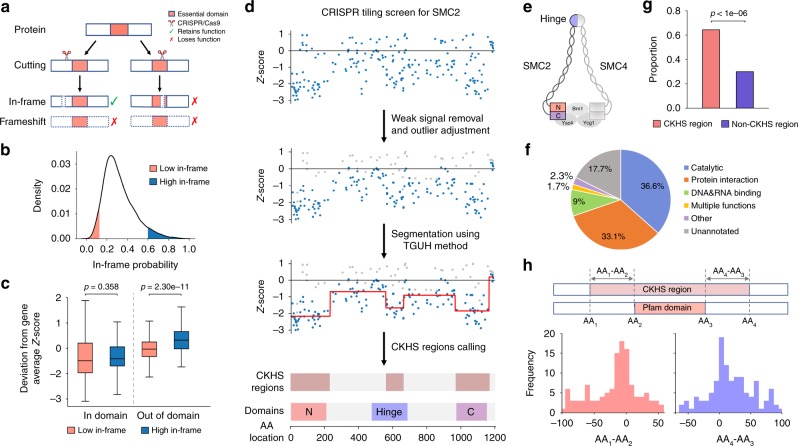
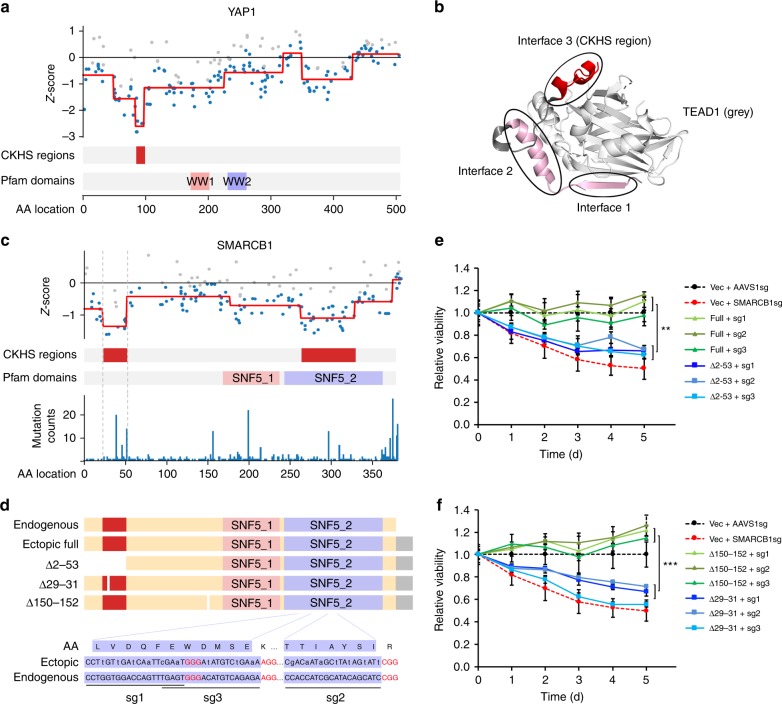
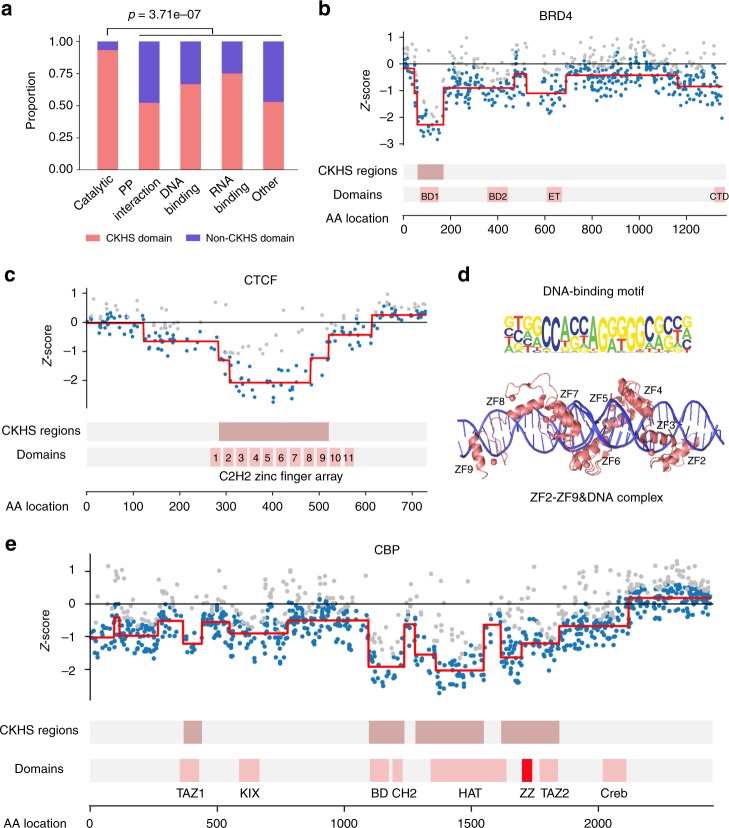
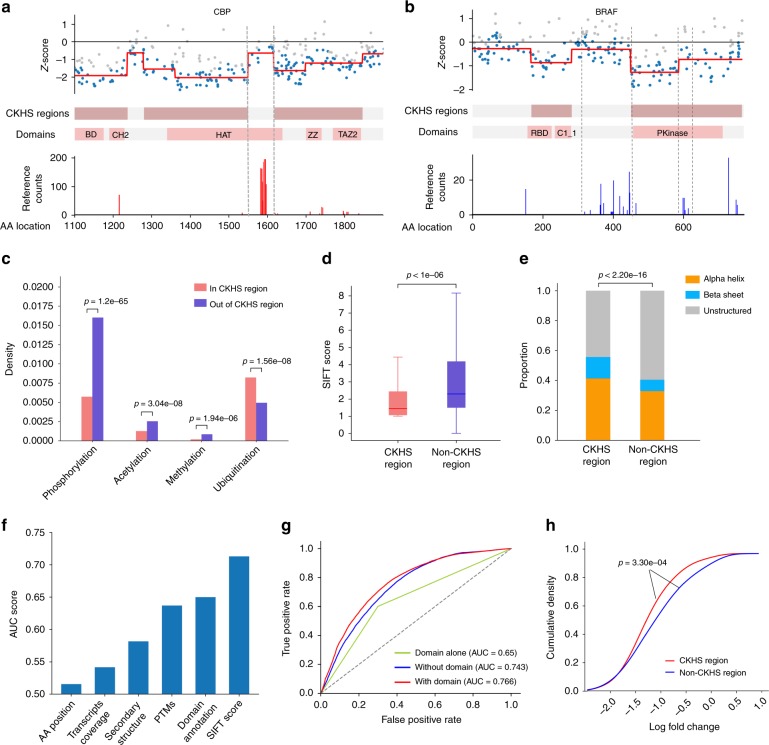
High-throughput CRISPR-Cas9 knockout screens using a tiling-sgRNA design permit in situ evaluation of protein domain function. Here, to facilitate de novo identification of essential protein domains from such screens, we propose ProTiler, a computational method for the robust mapping of CRISPR knockout hyper-sensitive (CKHS) regions, which refer to the protein regions associated with a strong sgRNA dropout effect in the screens. Applied to a published CRISPR tiling screen dataset, ProTiler identifies 175 CKHS regions in 83 proteins. Of these CKHS regions, more than 80% overlap with annotated Pfam domains, including all of the 15 known drug targets in the dataset. ProTiler also reveals unannotated essential domains, including the N-terminus of the SWI/SNF subunit SMARCB1, which is validated experimentally. Surprisingly, the CKHS regions are negatively correlated with phosphorylation and acetylation sites, suggesting that protein domains and post-translational modification sites have distinct sensitivities to CRISPR-Cas9 mediated amino acids loss.
Overview
The claims and statistics of this paper haven’t been checked yet.
Free: it reads the open-access text and checks the first 5 claims that cite a source we can check. Create a free account to check every claim.
Integrity signals
Registry
Cites
Statistics
Figures
Verification
Claims the paper makes
The claims and statistics of this paper haven’t been checked yet.
Free: it reads the open-access text and checks the first 5 claims that cite a source we can check. Create a free account to check every claim.
Self-check
Percentages, sums and reported differences re-computed from the paper’s own numbers.
The self-check needs the paper’s full text.
Citations
Cites
The new frontier of genome engineering with CRISPR-Cas9
Doudna, J. A., & Charpentier, E. (2014) · Science · doi:10.1126/science.1258096 · Cited by 7,062 · cited 1×
“Functional screens using CRISPR/Cas9 techniques facilitates the identification of essential genes on a genome-wide scale 1-4 .”
MethodKumar, P., Henikoff, S., & Ng, P. C. (2009) · Nature Protocols · doi:10.1038/nprot.2009.86 · Cited by 6,521 · cited 5×
“Consistently, we found that CKHS regions are associated with highly conserved regions (SIFT score) and molecular secondary structures (Fig.”
MethodInfluentialPfam: the protein families database
Finn, R. D., Bateman, A., Clements, J., Coggill, P., Eberhardt, R. Y., Eddy, S. R., Heger, A., Hetherington, K., Holm, L., Mistry, J., et al. (2014) · Nucleic Acids Research · doi:10.1093/nar/gkt1223 · Cited by 6,148 · cited 1×
“The Pfam domain annotation was downloaded from Pfam database 39 (version 31.0).”
MethodInfluentialDevelopment and Applications of CRISPR-Cas9 for Genome Engineering
Hsu, P. D., Lander, E. S., & Zhang, F. (2014) · Cell · doi:10.1016/j.cell.2014.05.010 · Cited by 5,762 · cited 1×
“We assigned a code of [1,0] for alpha helix, [0,1] for beta sheet, and [0,0] for unstructured.”
MethodCpf1 Is a Single RNA-Guided Endonuclease of a Class 2 CRISPR-Cas System
Zetsche, B., Gootenberg, J. S., Abudayyeh, O. O., Slaymaker, I. M., Makarova, K. S., Essletzbichler, P., Volz, S. E., Joung, J., van der Oost, J., Regev, A., et al. (2015) · Cell · doi:10.1016/j.cell.2015.09.038 · Cited by 4,761 · cited 1×
“Recently, several variants of the CRISPR system have been developed for genome editing 30-32 , each associated with a unique sequence preference for sgRNA activity.”
BackgroundOptimized sgRNA design to maximize activity and minimize off-target effects of CRISPR-Cas9
Doench, J. G., Fusi, N., Sullender, M., Hegde, M., Vaimberg, E. W., Donovan, K. F., Smith, I., Tothova, Z., Wilen, C., Orchard, R., et al. (2016) · Nature Biotechnology · doi:10.1038/nbt.3437 · Cited by 4,637
Programmable base editing of A•T to G•C in genomic DNA without DNA cleavage
Gaudelli, N. M., Komor, A. C., Rees, H. A., Packer, M. S., Badran, A. H., Bryson, D. I., & Liu, D. R. (2017) · Nature · doi:10.1038/nature24644 · Cited by 4,184
Genetic screens in human cells using the CRISPR-Cas9 system
Wang, T., Wei, J. J., Sabatini, D. M., & Lander, E. S. (2014) · Science · doi:10.1126/science.1246981 · Cited by 2,856 · cited 1×
“ProTiler takes three steps to identify CKHS regions: (1) weak signal removal and outlier adjustment; (2) segmentation using TGUH method; (3) CKHS region calling from segments.”
MethodMeyers, R. M., Bryan, J. G., McFarland, J. M., Weir, B. A., Sizemore, A. E., Xu, H., Dharia, N. V., Montgomery, P. G., Cowley, G. S., Pantel, S., et al. (2017) · Nature Genetics · doi:10.1038/ng.3984 · Cited by 1,952
Self-citationCOSMIC: somatic cancer genetics at high-resolution
Forbes, S. A., Beare, D., Boutselakis, H., Bamford, S., Bindal, N., Tate, J., Cole, C. G., Ward, S., Dawson, E., Ponting, L., et al. (2017) · Nucleic Acids Research · doi:10.1093/nar/gkw1121 · Cited by 1,922
Cited by
CRISPR in cancer biology and therapy
Katti, A., Diaz, B. J., Caragine, C. M., Sanjana, N. E., & Dow, L. E. (2022) · Nature Reviews Cancer · doi:10.1038/s41568-022-00441-w · Cited by 424
Induced pluripotent stem cells (iPSCs): molecular mechanisms of induction and applications
Cerneckis, J., Cai, H., & Shi, Y. (2024) · Signal Transduction and Targeted Therapy · doi:10.1038/s41392-024-01809-0 · Cited by 452
Deletion and replacement of long genomic sequences using prime editing
Jiang, T., Zhang, X.-O., Weng, Z., & Xue, W. (2022) · Nature Biotechnology · doi:10.1038/s41587-021-01026-y · Cited by 196
Multilayered VBC score predicts sgRNAs that efficiently generate loss-of-function alleles
Michlits, G., Jude, J., Hinterndorfer, M., de Almeida, M., Vainorius, G., Hubmann, M., Neumann, T., Schleiffer, A., Burkard, T. R., Fellner, M., et al. (2020) · Nature Methods · doi:10.1038/s41592-020-0850-8 · Cited by 154
Computational Tools and Resources for CRISPR/Cas Genome Editing
Li, C., Chu, W., Gill, R. A., Sang, S., Shi, Y., Hu, X., Yang, Y., Zaman, Q. U., & Zhang, B. (2023) · Genomics, Proteomics & Bioinformatics · doi:10.1016/j.gpb.2022.02.006 · Cited by 129
“To meet the new applications of the CRISPR/Cas systems, new computational tools for performing and analyzing CRISPR/Cas events have also been recently developed, such as scMAGeCK [131], CRIS-PRO [132], and ProTiler [133]. scMAGeCK links genotypes with multiple phenotypes in single-cell CRISPR screens [131].”
MethodPramanik, D., Shelake, R. M., Kim, M. J., & Kim, J.-Y. (2021) · Molecular Plant · doi:10.1016/j.molp.2020.11.002 · Cited by 108
Precise, predictable multi-nucleotide deletions in rice and wheat using APOBEC–Cas9
Wang, S., Zong, Y., Lin, Q., Zhang, H., Chai, Z., Zhang, D., Chen, K., Qiu, J., & Gao, C. (2020) · Nature Biotechnology · doi:10.1038/s41587-020-0566-4 · Cited by 89
Hu, Y., Comjean, A., Rodiger, J., Liu, Y., Gao, Y., Chung, V., Zirin, J. D., Perrimon, N., & Mohr, S. E. (2020) · Nucleic Acids Research · doi:10.1093/nar/gkaa936 · Cited by 90
“In this version, we also added protein domain annotations, as this information can be relevant in choosing an optimal target site for a given application, such as CRISPR knockout via non-homologous end joining (NHEJ) (22,23).”
MethodHoberecht, L., Perampalam, P., Lun, A. T. L., & Fortin, J. (2022) · Nature Communications · doi:10.1038/s41467-022-34320-7 · Cited by 72
Targeting synthetic lethal paralogs in cancer
Ryan, C. J., Mehta, I., Kebabci, N., & Adams, D. J. (2023) · Trends in cancer · doi:10.1016/j.trecan.2023.02.002 · Cited by 65
Schoonenberg, V. A. C., Cole, M. A., Yao, Q., Macias-Treviño, C., Sher, F., Schupp, P. G., Canver, M. C., Maeda, T., Pinello, L., & Bauer, D. E. (2018) · Genome Biology · doi:10.1186/s13059-018-1563-5 · Cited by 48
Naert, T., Tulkens, D., Edwards, N. A., Carron, M., Shaidani, N., Wlizla, M., Boel, A., Demuynck, S., Horb, M. E., Coucke, P. J., et al. (2020) · Scientific Reports · doi:10.1038/s41598-020-71412-0 · Cited by 55
High-resolution characterization of gene function using single-cell CRISPR tiling screen
Yang, L., Chan, A. K. N., Miyashita, K., Delaney, C. D., Wang, X., Li, H., Pokharel, S. P., Li, S., Li, M., Xu, X., et al. (2021) · Nature Communications · doi:10.1038/s41467-021-24324-0 · Cited by 45
Technologies and Computational Analysis Strategies for CRISPR Applications
Clement, K., Hsu, J. Y., Canver, M. C., Joung, J. K., & Pinello, L. (2020) · Molecular Cell · doi:10.1016/j.molcel.2020.06.012 · Cited by 51
Benabdallah, N. S., Dalal, V., Scott, R. W., Marcous, F., Sotiriou, A., Kommoss, F. K. F., Pejkovska, A., Gaspar, L., Wagner, L., Rivera, F. J. S., et al. (2023) · Nature Structural & Molecular Biology · doi:10.1038/s41594-023-01096-3 · Cited by 36
“We screened for critical SS18-SSX1 domains in HS-SY-II and used ProTiler to map CRISPR knockout hypersensitive (CKHS) regions 33 .”
MethodChou, H.-C., Bhalla, K., Demerdesh, O. E., Klingbeil, O., Hanington, K., Aganezov, S. S., Andrews, P., Alsudani, H., Chang, K., Vakoc, C. R., et al. (2021) · eLife · doi:10.7554/elife.61797 · Cited by 36
Epigenetic Control of Translation Checkpoint and Tumor Progression via RUVBL1‐EEF1A1 Axis
Li, M., Yang, L., Chan, A., Pokharel, S. P., Liu, Q., Mattson, N., Xu, X., Chang, W., Miyashita, K., Singh, P. A., et al. (2023) · Advanced Science · doi:10.1002/advs.202206584 · Cited by 30
Self-citationThe R2R3 MYB transcription factor MYB71 regulates abscisic acid response in arabidopsis
Cheng, Y., Ma, Y., Zhang, N., Lin, R., Yuan, Y., Tian, H., Hussain, S., Chen, S., Yang, W., Cai, L., et al. (2022) · Plants · doi:10.3390/plants11101369 · Cited by 25
Mattson, N. M., Chan, A., Miyashita, K., Mukhaleva, E., Chang, W.-H., Yang, L., Ma, N., Wang, Y., Pokharel, S. P., Li, M., et al. (2024) · Nature Structural & Molecular Biology · doi:10.1038/s41594-024-01211-y · Cited by 26
“In addition, CRISPR tiling has the sensitivity to pinpoint protein–protein interaction sites within screened proteins 21,25,28 .”
Self-citationTAZ2 truncation confers overactivation of p300 and cellular vulnerability to HDAC inhibition
Xu, L., Xuan, H., He, W., Zhang, L. N., Huang, M., Li, K., Wen, H., Xu, H., & Shi, X. (2023) · Nature Communications · doi:10.1038/s41467-023-41245-2 · Cited by 27
Self-citationAuxin-inducible degron 2 system deciphers functions of CTCF domains in transcriptional regulation
Hyle, J. W., Djekidel, M. N., Williams, J. S., Wright, S., Shao, Y., Xu, B., & Li, C. (2023) · Genome biology · doi:10.1186/s13059-022-02843-3 · Cited by 32
“Domain libraries are designed by tiling sgRNAs across a gene’s coding sequence [39].”
BackgroundMenon, A. V., Song, B., Chao, L., Sriram, D., Chansky, P. A., Bakshi, I., Ulianova, J., & Li, W. (2025) · Frontiers in Genome Editing · doi:10.3389/fgeed.2025.1565387 · Cited by 30
Lin, S., Huang, K., Petree, C., Qin, W., Varshney, P., & Varshney, G. K. (2025) · Nucleic Acids Research · doi:10.1093/nar/gkaf180 · Cited by 21
“Prior studies suggested that targeting sequences encoding essential protein domains can increases the likelihood of disrupting gene function, even with in-frame mutations [ 52–54 ].”
Parallel genetics of regulatory sequences using scalable genome editing in vivo
Froehlich, J. J., Uyar, B., Herzog, M., Theil, K., Glažar, P., Akalin, A., & Rajewsky, N. (2021) · Cell Reports · doi:10.1016/j.celrep.2021.108988 · Cited by 18
“Although indels are applicable to regulatory regions and even coding sequences (He et al., 2019; Sher et al., 2019; Shi et al., 2015), point mutagenesis would enable fine mapping of regulatory nucleotides and coding sequences.”
BackgroundLagan, E., Gannon, D., Silva, A. J., Bibawi, P., Doherty, A. M., Nimmo, D., McCole, R., Monger, C., Genesi, G. L., Vanderlinden, A., et al. (2025) · Molecular Cell · doi:10.1016/j.molcel.2025.04.026 · Cited by 19
Therapeutic targeting Tudor domains in leukemia via CRISPR-Scan Assisted Drug Discovery
Chan, A., Han, L., Delaney, C. D., Wang, X., Mukhaleva, E., Li, M., Yang, L., Pokharel, S. P., Mattson, N. M., Garcia, M., et al. (2024) · Science Advances · doi:10.1126/sciadv.adk3127 · Cited by 16
Self-citationLi, W., Liu, W., Guo, Y., Wang, B., & Qing, H. (2023) · Chinese Journal of Electronics · doi:10.23919/cje.2022.00.053 · Cited by 15
Dailey, K. M., Allgood, J. E., Johnson, P. R., Ostlie, M. A., Schaner, K., Brooks, B. D., & Brooks, A. E. (2021) · Future Microbiology · doi:10.2217/fmb-2020-0245 · Cited by 16
GuidePro: a multi-source ensemble predictor for prioritizing sgRNAs in CRISPR/Cas9 protein knockouts
He, W., Wang, H. H., Wei, Y., Jiang, Z., Tang, Y., Chen, Y., & Xu, H. (2021) · Bioinformatics · doi:10.1093/bioinformatics/btaa1068 · Cited by 17
Self-citationRadzisheuskaya, A., Peña‐Rømer, I., Lorenzini, E., Koche, R. P., Zhan, Y. A., Shliaha, P. V., Cooper, A. J., Fan, Z., Shlyueva, D., Johansen, J. V., et al. (2023) · The EMBO Journal · doi:10.15252/embj.2023114221 · Cited by 15
“Additional sgRNA filtering was performed to remove the non-functional sgRNAs, as described in He et al (2019) (using k = 6).”
PASTMUS: mapping functional elements at single amino acid resolution in human cells
Zhang, X., Yue, D., Wang, Y., Zhou, Y., Liu, Y., Qiu, Y., Tian, F., Yu, Y. F., Zhou, Z. L., & Wei, W. (2019) · Genome biology · doi:10.1186/s13059-019-1897-7 · Cited by 13
Nuclear Control of Mitochondrial Homeostasis and Venetoclax Efficacy in AML via COX4I1
Zhang, L., Zhang, H., Wang, T., Li, M., Chan, A., Kang, H., Foong, L. C., Liu, Q., Pokharel, S. P., Mattson, N. M., et al. (2024) · Advanced Science · doi:10.1002/advs.202404620 · Cited by 14
Self-citationBhogal, B., Weir, B. A., Crescenzo, R., Mariën, A., Kwon, M. C., Philippar, U., & Cowley, G. S. (2022) · Communications Biology · doi:10.1038/s42003-022-04139-5 · Cited by 12
PINCER: improved CRISPR/Cas9 screening by efficient cleavage at conserved residues
Veeneman, B. A., Gao, Y., Grant, J., Fruhling, D., Ahn, J. H., Bosbach, B., Bienkowska, J. R., Follettie, M. T., Arndt, K. T., Myers, J. S., et al. (2020) · Nucleic Acids Research · doi:10.1093/nar/gkaa645 · Cited by 12
“ProTiler presents a sophisticated method to predict the most CRISPR-sensitive regions of genes (including novel domains), by incorporating substitution-based protein conservation (SIFT), percentage of transcripts covered, amino acid identity and annotations of domains (Pfam), protein secondary structure and post-trans…”
MethodUTX loss alters therapeutic responses in KMT2A-rearranged acute myeloid leukemia
Zhou, X., Zhang, P., Aryal, S., Zhang, L., & Lu, R. (2022) · Leukemia · doi:10.1038/s41375-022-01741-8 · Cited by 11
“unbiased high-density CRISPR tiling scan approach [13], which allows a saturation mutagenesis screen of UTX coding exons in the context of DOT1L inhibition.”
BackgroundSelf-citationPaul, T. M., Zhang, P., Zhang, Z., Fargason, T., Silva, N. I. U. D., Powell, E., Ekpenyong, E., Jamal, S., Yu, Y., Prevelige, P. E., et al. (2024) · Protein Science · doi:10.1002/pro.5117 · Cited by 10
Mokhles, F., Moosavi, M. A., Gutiérrez-Uzquiza, Á., Velasco, G., Li, M., & Cordani, M. (2026) · Cancer Letters · doi:10.1016/j.canlet.2026.218246 · Cited by 13
Efficient prioritization of CRISPR screen hits by accounting for targeting efficiency of guide RNA
Park, B.-S., Jeon, H., Chi, S., & Kim, T. (2023) · BMC Biology · doi:10.1186/s12915-023-01536-y · Cited by 11
“are generally considered neutral, targeting essential protein domain can abolish protein function thereby forming CRISPR knockout hypersensitive regions [78].”
BackgroundSETD1A function in leukemia is mediated through interaction with mitotic regulators BuGZ/BUB3
Perlee, S. C., Kikuchi, S., Nakadai, T., Masuda, T., Ohtsuki, S., Matsumoto, M., Rahmutulla, B., Fukuyo, M., Cifani, P., Kentsis, A., et al. (2023) · EMBO Reports · doi:10.15252/embr.202357108 · Cited by 11
Activity-based selection for enhanced base editor mutational scanning
Kaplan, E. L., Steger, R. J., Shah, S. T., Drepanos, L. M., Griffith, A. L., Reint, G., & Doench, J. G. (2025) · Nature Genetics · doi:10.1038/s41588-025-02366-0 · Cited by 9
Morgens, D. W., Nandakumar, D., Didychuk, A. L., Yang, K. J., & Glaunsinger, B. A. (2022) · PLoS Pathogens · doi:10.1371/journal.ppat.1010236 · Cited by 9
“The use of CRISPR to identify essential domains of proteins [31,32] has yet to be applied to dsDNA viruses, but has particular potential given that viral proteins are frequently multifunctional.”
BackgroundThe Tudor-knot Domain of KAT5 Regulates Nucleosomal Substrate Acetylation
Fan, X., Xuan, H., Huang, M., He, W., Xu, H., Shi, X., & Wen, H. (2023) · Journal of Molecular Biology · doi:10.1016/j.jmb.2023.168414 · Cited by 9
Self-citationFunctional dissection of human mitotic genes using CRISPR–Cas9 tiling screens
Herman, J., Carter, L., Arora, S., Zhu, J., Biggins, S., & Paddison, P. J. (2022) · Genes & Development · doi:10.1101/gad.349319.121 · Cited by 5
Chen, Y.-J. C., Bhaskara, G. B., Lu, Y., Lin, K., & Dent, S. Y. R. (2024) · Genes & Development · doi:10.1101/gad.351789.124 · Cited by 4
“3D; He et al. 2019b; Kiss et al. 2020; Mo et al. 2020; Zhao et al. 2020; Shan et al. 2022; Feng et al. 2023).”
CRISPR-Click Enables Dual-Gene Editing with Modular Synthetic sgRNAs
Park, H., Osman, E. A., Cromwell, C. R., Laurent, C. D. S., Liu, Y., Kitova, E. N., Klassen, J. S., Hubbard, B. P., Macauley, M. S., & Gibbs, J. M. (2022) · Bioconjugate Chemistry · doi:10.1021/acs.bioconjchem.2c00106 · Cited by 4
(2024) · doi:10.1101/2024.03.26.586811 · Cited by 4
Parikesit, A. A., Hermantara, R., Sidhartha, E., Fugaha, D. R., Heerlie, D. M., & Aslanzadeh, S. (2025) · Journal of Research in Pharmacy · doi:10.12991/jrespharm.1694230 · Cited by 3
Eaton, E. J., Wick, B. J., Chacón, J. S., Wang, A. J., Kluesner, M., Barnes, J. T., Kar, B., Wang, M., Johnson, M. J., Skeate, J. G., et al. (2026) · Molecular Therapy Nucleic Acids · doi:10.1016/j.omtn.2026.102908 · Cited by 2
“39 Due to the multiple factors that can contribute to an unsuccessful knockout gRNA and lack of comprehensive predictive tools, we suggest screening at least 3 gRNAs per target and leveraging tools such as UniProtKB, RNAfold, and SpliceAI to inform selection of gRNAs.”
Scaffolding-dependent CASP1 constrains excessive cell-intrinsic inflammatory signaling in leukemia
Uible, E. E., Choi, I., Clough, C. A., Hassan, A., Anandappa, A. J., Fisher, J., Karki, B., Hueneman, K. M., Choi, K., Vick, E. J., et al. (2026) · Cell chemical biology · doi:10.1016/j.chembiol.2025.12.002 · Cited by 2
“53,54 This approach delineates CRISPR knockout high sensitivity (CKHS) domains (Figure 5A).”
CRISPR-Cas9 genome editing of crops: Food and nutritional security
Krishnan, R. R., Sivakumar, B., Jagannath, N., Rao, N. R., Suresh, N., Nagella, P., Al-Khayri, J. M., & Jain, S. M. (2024) · Elsevier eBooks · doi:10.1016/b978-0-443-13229-2.00024-7 · Cited by 2
Computational prediction of CRISPR-impaired non-coding regulatory regions
Baumgarten, N., Schmidt, F., Wegner, M., Hebel, M., Kaulich, M., & Schulz, M. H. (2021) · Biological Chemistry · doi:10.1515/hsz-2020-0392 · Cited by 2
Wang, L., Hu, Y., Qiu, Y., Lin, H., Li, X. O., Fu, S., Zeng, Y.-Y., Ghouse, M., Long, C., Liu, Y., et al. (2025) · Journal of genetics and genomics/Journal of Genetics and Genomics · doi:10.1016/j.jgg.2025.03.001 · Cited by 1
Chandrasekaran, J., BACKIYARANI, S., Selvaraj, E. P., Swaminathan, S., Chandran, S. A., & Selvarajan, R. (2026) · Scientific Reports · doi:10.1038/s41598-026-51803-5 · Cited by 2
“This strategic choice is a key reason for the high frequency of albino phenotypes observed, as in-frame mutations within essential protein domains are far more likely to disrupt function than those in non-essential regions 24,55 .”
Defining a Global Map of Functional Group-Based 3D Ligand-Binding Motifs
Yang, L., He, W., Yun, Y., Gao, Y., Zhu, Z., Teng, M., Liang, Z. G., & Niu, L. (2022) · Genomics Proteomics & Bioinformatics · doi:10.1016/j.gpb.2021.08.014 · Cited by 1
“CRISPR screening with tiling-sgRNA designs can further infer essential protein domains that are suitable for drug targeting (He et al., 2019; Neggers et al., 2018; Shi et al., 2015).”
BackgroundSelf-citationAI platform for CRISPR functional mapping and function-based drug designPreprint
Ngo, J. C., Schoonenberg, V. A. C., Nandakumar, R., Wu, X., & Sher, F. (2026) · bioRxiv (Cold Spring Harbor Laboratory) · doi:10.64898/2026.05.06.722817 · Cited by 1
“CRISPRtile demonstrated predictive fidelity against conventional methods on the uncorrected OOF data (Dropout RMSE=0.05, Function RMSE=0.21), outperforming ProTiler 38 (Dropout RMSE=0.29, Function RMSE=0.77) and CRISPRO 36 (Dropout RMSE=0.28, Function RMSE=0.72, Fig.”
InfluentialAn autoregulatory feedback loop converging on H2A ubiquitination drives synovial sarcomaPreprint
Benabdallah, N. S., Dalal, V., Sotiriou, A., Scott, R. W., Kommoss, F. K. F., Pejkovska, A., Gaspar, L., Wagner, L., Rivera, F. J. S., Ta, M., et al. (2022) · bioRxiv (Cold Spring Harbor Laboratory) · doi:10.1101/2022.07.18.499263
AEBP2-Directed H3K27me2 Defines a Specific Vulnerability in EZH2-mutant LymphomaPreprint
Angelov, D., Nolan, J., Holland, G., Nimmo, D., Davies, M., Monger, C., Dillon, E., Mucha, M., Wang, C., Gannon, D., et al. (2025) · bioRxiv (Cold Spring Harbor Laboratory) · doi:10.1101/2025.10.14.682307
Hyle, J. W., Djekidel, M. N., Williams, J., Wright, S., Shao, Y., Xu, B., & Li, C. (2024) · Figshare · doi:10.6084/m9.figshare.26562736
Hyle, J. W., Djekidel, M. N., Williams, J., Wright, S., Shao, Y., Xu, B., & Li, C. (2024) · Figshare · doi:10.6084/m9.figshare.26562733
Hyle, J. W., Djekidel, M. N., Williams, J., Wright, S., Shao, Y., Xu, B., & Li, C. (2024) · Figshare · doi:10.6084/m9.figshare.26562730
Hyle, J. W., Djekidel, M. N., Williams, J., Wright, S., Shao, Y., Xu, B., & Li, C. (2024) · Figshare · doi:10.6084/m9.figshare.26562739
Park, B.-S., Jeon, H., Chi, S.-G., & Kim, T. (2024) · Figshare · doi:10.6084/m9.figshare.26571322
Hyle, J. W., Djekidel, M. N., Williams, J., Wright, S., Shao, Y., Xu, B., & Li, C. (2024) · Figshare · doi:10.6084/m9.figshare.26562727
Boelens, M., Tulkens, D., Christiaens, A., Houbart, W., Demuynck, S., Creytens, D., & Vleminckx, K. (2026) · bioRxiv (Cold Spring Harbor Laboratory) · doi:10.64898/2026.03.26.714450
Deciphering protein mutation-phenotype linkages from CRISPR-based tiling mutagenesis screens
He, W., Huang, J., Wang, Y., Hayward, S. B., Leuzzi, G., Fu, R., Wang, S., Vaitsiankova, A., Chen, Y., Bedford, M. T., et al. (2026) · Cell Systems · doi:10.1016/j.cels.2026.101651
Self-citationNgo, J. C., Xu, Y., Olah, M., & Sher, F. (2026) · bioRxiv (Cold Spring Harbor Laboratory) · doi:10.64898/2026.06.30.735672
“To define candidate functional segments in an unbiased manner, we applied the TGUH algorithm from ProTiler [25], a computational framework originally developed to identify CRISPR knockout hypersensitive (CKHS) protein regions from tiling-sgRNA knockout screens .”
Epigenetic Reactivation of Lineage Differentiation to Target LeukemiaPreprint
Amos, S. M., Chen, C.-C., Xiang, Y., Motoyama, K., González-Robles, T. J., Narendra, V. K., Johnson, G. A., Lee, H., Ho, Y.-J., Celikoyar, I., et al. (2026) · bioRxiv (Cold Spring Harbor Laboratory) · doi:10.64898/2026.07.08.737260
“Significant dependency regions were identified using the CKHS saturation mutagenesis depletion score, calculated from the Z-score of each sgRNA 37 .”
Kim, S. J., Lim, S., & Yang, C. (2026) · Biomedicine & Pharmacotherapy · doi:10.1016/j.biopha.2026.119932
Hossain, M. J., Tramantano, M., Naik, S., & Stillman, B. (2026) · bioRxiv (Cold Spring Harbor Laboratory) · doi:10.64898/2026.10.10.758243
“Essential domains were identified from tiling data using ProTiler (He et al. 2019), which applies denoising and wavelet-based change-point detection to define CRISPR knockout hypersensitive (CKHS) regions.”
Metadata
- Authors
- He, W., Zhang, L., Villarreal, O. D., Fu, R., Bedford, E., Dou, J., Patel, A. Y., Bedford, M. T., Shi, X., Chen, T., Bartholomew, B., & Xu, H.
- Affiliations
- The University of Texas MD Anderson Cancer Center (US)
- Van Andel Institute (US)
- Corresponding author
- Xu, Han
- ORCID
- Venue
- Nature Communications
- Published
- 2019-10-04
- Volume
- 10
- Issue
- 1
- Pages
- 4541-4541
- ISSN
- 2041-1723 (ISSN-L)
- PMC
- PMC6778102
- OpenAlex
- W2978187183
- Semantic Scholar
- 2e56b526bc5d5610cf3545432aed24929f3fcdae
- Cited by
- 69
- References
- 49
- Citations by year
- 2026: 9 · 2025: 8 · 2024: 11 · 2023: 10 · 2022: 11 · 2021: 9 · 2020: 9 · 2019: 1
- FWCI
- 2.48
- Type
- journal article
- Language
- en
- Update notices
- correction (2020-02-25)
- Open access
- gold
- doi.org
- Licence
- cc-by
- creativecommons.org/licenses/by/4.0 (tdm)
- creativecommons.org/licenses/by/4.0 (vor)
- Locations
- Nature Communications (publishedVersion, cc-by)
- bioRxiv (Cold Spring Harbor Laboratory) (acceptedVersion, cc-by-nc-nd)
- PubMed Central (publishedVersion, cc-by)
- PubMed (publishedVersion)
- RePEc: Research Papers in Economics (submittedVersion)
- DOAJ (DOAJ: Directory of Open Access Journals) (submittedVersion, cc-by-sa)
- DOAJ (DOAJ: Directory of Open Access Journals) (submittedVersion)
- Funders
- Cancer Prevention and Research Institute of Texas (RR160097)
- Topics
- Life Sciences › Biochemistry, Genetics and Molecular Biology › Molecular Biology › CRISPR and Genetic Engineering
- Life Sciences › Biochemistry, Genetics and Molecular Biology › Molecular Biology › Genomics and Chromatin Dynamics
- Life Sciences › Biochemistry, Genetics and Molecular Biology › Molecular Biology › Chromatin Remodeling and Cancer
- Keywords
- CRISPR-Cas9 knockout screen, Pfam domains, therapeutic target, SMARCB1, SWI/SNF complex, phosphorylation sites, acetylation sites, post-translational modification, protein domain function
- MeSH terms
- SMARCB1 Protein, Protein Domains, RNA, Guide, CRISPR-Cas Systems, Algorithms, Humans, Models, Genetic, Protein Processing, Post-Translational, Software, RNA, Guide, Kinetoplastida, Computational Biology, Cell Line, Tumor, Gene Knockout Techniques, High-Throughput Screening Assays, CRISPR-Cas Systems, Datasets as Topic
About these checks
Registry, retraction, Cites and statistics results are computed, not judged, with one exception: a printed reference that no index lists is read once by a model before it counts as a citation error. Claims are extracted by a model and kept only when their quote appears verbatim in the text; each cited source is then checked, with a model’s help, for whether it says what the claim relies on. Those verdicts can be wrong — read the claim’s quote and the cited source before relying on one.
Statistics and arithmetic are recomputed, not judged.
Confidence bands are shown only for fields calibrated on our annotated test set. None is calibrated yet, so no band is shown.
What counts as a claim ›How we measure confidence ›How we check this ›
Are you an author, or do you see a problem with this page? Request a review
Data sources
Bibliographic data: Semantic Scholar, OpenAlex, Crossref.
Contains information from the Semantic Scholar Academic Graph Datasets, made available under the ODC Attribution License (ODC-BY 1.0).
Semantic Scholar’s data is described in: Kinney, R., et al. (2023). The Semantic Scholar Open Data Platform. arXiv:2301.10140.
