

De novo identification of essential protein domains from CRISPR-Cas9 tiling-sgRNA knockout screens
Open accessPublished version of a preprint
The DOI matches its Crossref record; 49 of the 49 references it cites were found in a registry or an index.
Abstract
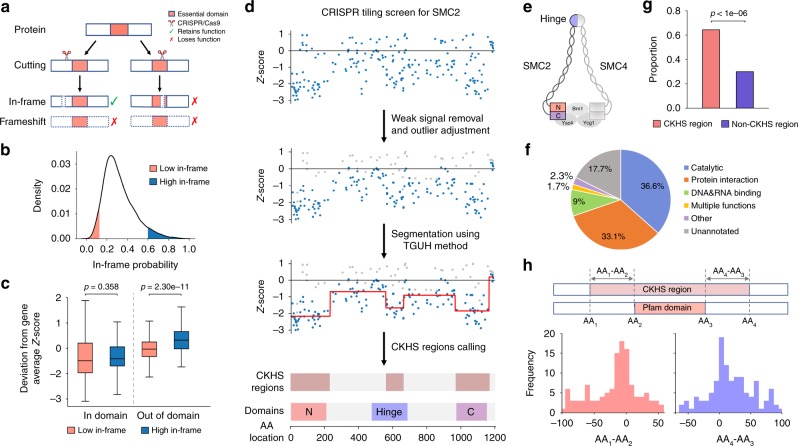
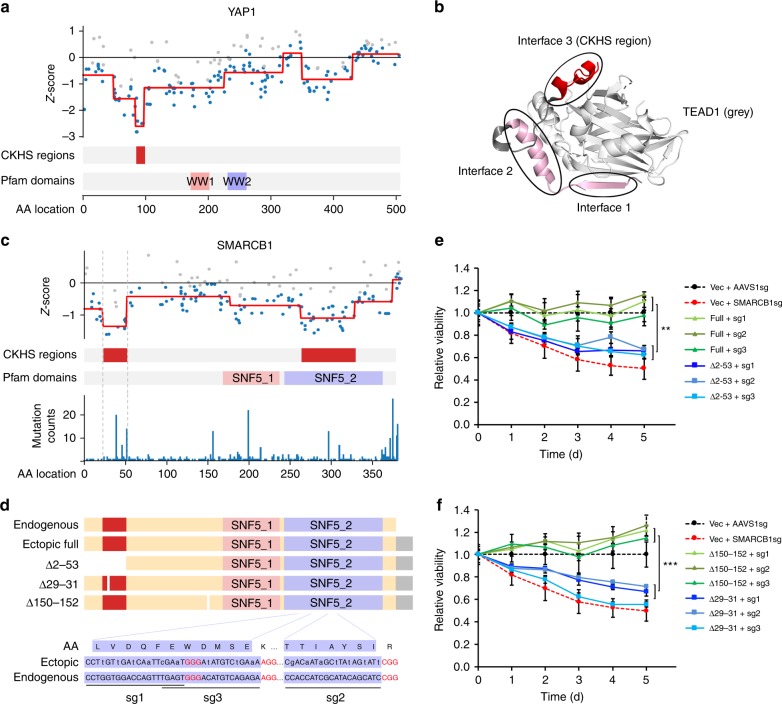
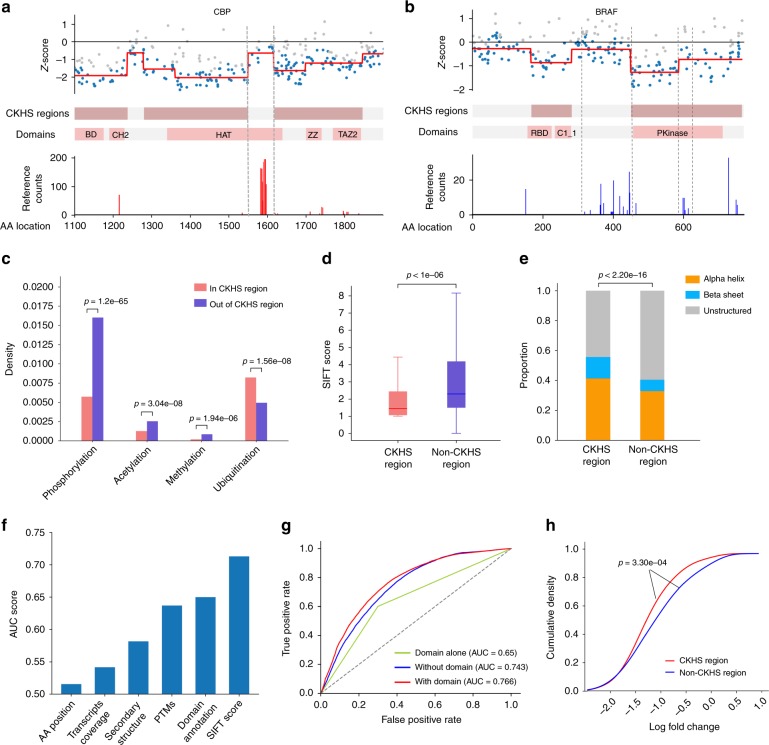
High-throughput CRISPR-Cas9 knockout screens using a tiling-sgRNA design permit in situ evaluation of protein domain function. Here, to facilitate de novo identification of essential protein domains from such screens, we propose ProTiler, a computational method for the robust mapping of CRISPR knockout hyper-sensitive (CKHS) regions, which refer to the protein regions associated with a strong sgRNA dropout effect in the screens. Applied to a published CRISPR tiling screen dataset, ProTiler identifies 175 CKHS regions in 83 proteins. Of these CKHS regions, more than 80% overlap with annotated Pfam domains, including all of the 15 known drug targets in the dataset. ProTiler also reveals unannotated essential domains, including the N-terminus of the SWI/SNF subunit SMARCB1, which is validated experimentally. Surprisingly, the CKHS regions are negatively correlated with phosphorylation and acetylation sites, suggesting that protein domains and post-translational modification sites have distinct sensitivities to CRISPR-Cas9 mediated amino acids loss.
Overview
The claims and statistics of this paper haven’t been checked yet.
Free: it reads the open-access text and checks the first 5 claims that cite a source we can check. Create a free account to check every claim.
Integrity signals
Registry
Cites
Statistics
Figures
Verification
Claims the paper makes
The claims and statistics of this paper haven’t been checked yet.
Free: it reads the open-access text and checks the first 5 claims that cite a source we can check. Create a free account to check every claim.
Self-check
Percentages, sums and reported differences re-computed from the paper’s own numbers.
The self-check needs the paper’s full text.
Citations
Cites
The new frontier of genome engineering with CRISPR-Cas9
Doudna, J. A., & Charpentier, E. (2014) · Science · doi:10.1126/science.1258096 · Cited by 7,062 · cited 1×
“Functional screens using CRISPR/Cas9 techniques facilitates the identification of essential genes on a genome-wide scale 1-4 .”
MethodKumar, P., Henikoff, S., & Ng, P. C. (2009) · Nature Protocols · doi:10.1038/nprot.2009.86 · Cited by 6,521 · cited 5×
“Consistently, we found that CKHS regions are associated with highly conserved regions (SIFT score) and molecular secondary structures (Fig.”
MethodInfluentialPfam: the protein families database
Finn, R. D., Bateman, A., Clements, J., Coggill, P., Eberhardt, R. Y., Eddy, S. R., Heger, A., Hetherington, K., Holm, L., Mistry, J., et al. (2014) · Nucleic Acids Research · doi:10.1093/nar/gkt1223 · Cited by 6,148 · cited 1×
“The Pfam domain annotation was downloaded from Pfam database 39 (version 31.0).”
MethodInfluentialDevelopment and Applications of CRISPR-Cas9 for Genome Engineering
Hsu, P. D., Lander, E. S., & Zhang, F. (2014) · Cell · doi:10.1016/j.cell.2014.05.010 · Cited by 5,762 · cited 1×
“We assigned a code of [1,0] for alpha helix, [0,1] for beta sheet, and [0,0] for unstructured.”
MethodCpf1 Is a Single RNA-Guided Endonuclease of a Class 2 CRISPR-Cas System
Zetsche, B., Gootenberg, J. S., Abudayyeh, O. O., Slaymaker, I. M., Makarova, K. S., Essletzbichler, P., Volz, S. E., Joung, J., van der Oost, J., Regev, A., et al. (2015) · Cell · doi:10.1016/j.cell.2015.09.038 · Cited by 4,761 · cited 1×
“Recently, several variants of the CRISPR system have been developed for genome editing 30-32 , each associated with a unique sequence preference for sgRNA activity.”
BackgroundOptimized sgRNA design to maximize activity and minimize off-target effects of CRISPR-Cas9
Doench, J. G., Fusi, N., Sullender, M., Hegde, M., Vaimberg, E. W., Donovan, K. F., Smith, I., Tothova, Z., Wilen, C., Orchard, R., et al. (2016) · Nature Biotechnology · doi:10.1038/nbt.3437 · Cited by 4,637
Programmable base editing of A•T to G•C in genomic DNA without DNA cleavage
Gaudelli, N. M., Komor, A. C., Rees, H. A., Packer, M. S., Badran, A. H., Bryson, D. I., & Liu, D. R. (2017) · Nature · doi:10.1038/nature24644 · Cited by 4,184
Genetic screens in human cells using the CRISPR-Cas9 system
Wang, T., Wei, J. J., Sabatini, D. M., & Lander, E. S. (2014) · Science · doi:10.1126/science.1246981 · Cited by 2,856 · cited 1×
“ProTiler takes three steps to identify CKHS regions: (1) weak signal removal and outlier adjustment; (2) segmentation using TGUH method; (3) CKHS region calling from segments.”
MethodMeyers, R. M., Bryan, J. G., McFarland, J. M., Weir, B. A., Sizemore, A. E., Xu, H., Dharia, N. V., Montgomery, P. G., Cowley, G. S., Pantel, S., et al. (2017) · Nature Genetics · doi:10.1038/ng.3984 · Cited by 1,952
Self-citationCOSMIC: somatic cancer genetics at high-resolution
Forbes, S. A., Beare, D., Boutselakis, H., Bamford, S., Bindal, N., Tate, J., Cole, C. G., Ward, S., Dawson, E., Ponting, L., et al. (2017) · Nucleic Acids Research · doi:10.1093/nar/gkw1121 · Cited by 1,922
Hornbeck, P. V., Kornhauser, J. M., Tkachev, S., Zhang, B., Skrzypek, E., Murray, B., Latham, V., & Sullivan, M. (2012) · Nucleic Acids Research · doi:10.1093/nar/gkr1122 · Cited by 1,646
CRISPRscan: designing highly efficient sgRNAs for CRISPR-Cas9 targeting in vivo
Moreno-Mateos, M. A., Vejnar, C. E., Beaudoin, J.-D., Fernandez, J. P., Mis, E. K., Khokha, M. K., & Giraldez, A. J. (2015) · Nature Methods · doi:10.1038/nmeth.3543 · Cited by 1,290 · cited 1×
“We note that a number of computational tools have been developed to predict on-target activities and off-targets 36-38 .”
BackgroundHigh-throughput functional genomics using CRISPR-Cas9
Shalem, O., Sanjana, N. E., & Zhang, F. (2015) · Nature Reviews Genetics · doi:10.1038/nrg3899 · Cited by 1,233 · cited 1×
“ProTiler takes three steps to identify CKHS regions: (1) weak signal removal and outlier adjustment; (2) segmentation using TGUH method; (3) CKHS region calling from segments.”
MethodEngineered CRISPR-Cas9 nuclease with expanded targeting space
Nishimasu, H., Shi, X., Ishiguro, S., Gao, L., Hirano, S., Okazaki, S., Noda, T., Abudayyeh, O. O., Gootenberg, J. S., Mori, H., et al. (2018) · Science · doi:10.1126/science.aas9129 · Cited by 1,100
Self-citationCREB-binding Protein and p300 in Transcriptional Regulation
Vo, N., & Goodman, R. H. (2001) · Journal of Biological Chemistry · doi:10.1074/jbc.r000025200 · Cited by 866 · cited 1×
“CBP, a paralog of p300, is a transcriptional co-activator that has been extensively studied over the last two decades 25 .”
BackgroundDiscovery of cancer drug targets by CRISPR-Cas9 screening of protein domains
Shi, J., Wang, E., Milazzo, J. P., Wang, Z., Kinney, J. B., & Vakoc, C. R. (2015) · Nature Biotechnology · doi:10.1038/nbt.3235 · Cited by 761 · cited 3×
“Therefore, a domain-focused CRISPR/Cas9 knockout screen has been proposed to evaluate the functional importance of individual domains, leading the way for in situ protein functional studies 5 .”
BackgroundBRD4 and Cancer: going beyond transcriptional regulation
Donati, B., Lorenzini, E., & Ciarrocchi, A. (2018) · Molecular Cancer · doi:10.1186/s12943-018-0915-9 · Cited by 708 · cited 1×
“Recently, several laboratories reported a BD1-dependent role of BRD4 in the DNA damage response pathway, raising additional concerns regarding BRD4 function involved in the viabilities of normal and cancer cells 20-22 .”
BackgroundSequence determinants of improved CRISPR sgRNA design
Xu, H., Xiao, T., Chen, C.-H., Li, W., Meyer, C. A., Wu, Q., Wu, D., Cong, L., Zhang, F., Liu, J. S., et al. (2015) · Genome Research · doi:10.1101/gr.191452.115 · Cited by 625 · cited 2×
“We note that a number of computational tools have been developed to predict on-target activities and off-targets 36-38 .”
BackgroundSelf-citationBrd4 Coactivates Transcriptional Activation of NF-κB via Specific Binding to Acetylated RelA
Huang, B., Yang, X.-D., Zhou, M.-M., Ozato, K., & Chen, L.-F. (2009) · Molecular and Cellular Biology · doi:10.1128/mcb.01365-08 · Cited by 579
Genomic Copy Number Dictates a Gene-Independent Cell Response to CRISPR/Cas9 Targeting
Aguirre, A. J., Meyers, R. M., Weir, B. A., Vazquez, F., Zhang, C.-Z., Ben-David, U., Cook, A., Ha, G., Harrington, W. F., Doshi, M. B., et al. (2016) · Cancer Discovery · doi:10.1158/2159-8290.cd-16-0154 · Cited by 577 · cited 2×
“212 predefined core essential genes 34 were used For Fig.”
MethodSelf-citationPredictable and precise template-free CRISPR editing of pathogenic variants
Shen, M. W., Arbab, M., Hsu, J. Y., Worstell, D., Culbertson, S. J., Krabbe, O., Cassa, C. A., Liu, D. R., Gifford, D. K., & Sherwood, R. I. (2018) · Nature · doi:10.1038/s41586-018-0686-x · Cited by 569
RaptorX-Property: a web server for protein structure property prediction
Wang, S., Li, W., Liu, S., & Xu, J. (2016) · Nucleic Acids Research · doi:10.1093/nar/gkw306 · Cited by 565 · cited 2×
“• Secondary structure: The secondary structures were predicted using RaptorX and were mapped to each AA.”
MethodPruitt, K. D., Harrow, J., Harte, R. A., Wallin, C., Diekhans, M., Maglott, D. R., Searle, S., Farrell, C. M., Loveland, J. E., Ruef, B. J., et al. (2009) · Genome Research · doi:10.1101/gr.080531.108 · Cited by 557 · cited 1×
“The transcript annotation was downloaded from NCBI CCDS database 41 .”
MethodGenome-wide identification of in vivo protein-DNA binding sites from ChIP-Seq data
Jothi, R., Cuddapah, S., Barski, A., Cui, K., & Zhao, K. (2008) · Nucleic Acids Research · doi:10.1093/nar/gkn488 · Cited by 539
Predicting the mutations generated by repair of Cas9-induced double-strand breaks
Allen, F., Crepaldi, L., Alsinet, C., Strong, A. J., Kleshchevnikov, V., De Angeli, P., Páleníková, P., Khodak, A., Kiselev, V., Kosicki, M., et al. (2019) · Nature Biotechnology · doi:10.1038/nbt.4317 · Cited by 496
RVX-208, an inhibitor of BET transcriptional regulators with selectivity for the second bromodomain
Picaud, S., Wells, C., Felletar, I., Brotherton, D., Martin, S., Savitsky, P., Diez-Dacal, B., Philpott, M., Bountra, C., Lingard, H., et al. (2013) · Proceedings of the National Academy of Sciences · doi:10.1073/pnas.1310658110 · Cited by 468 · cited 1×
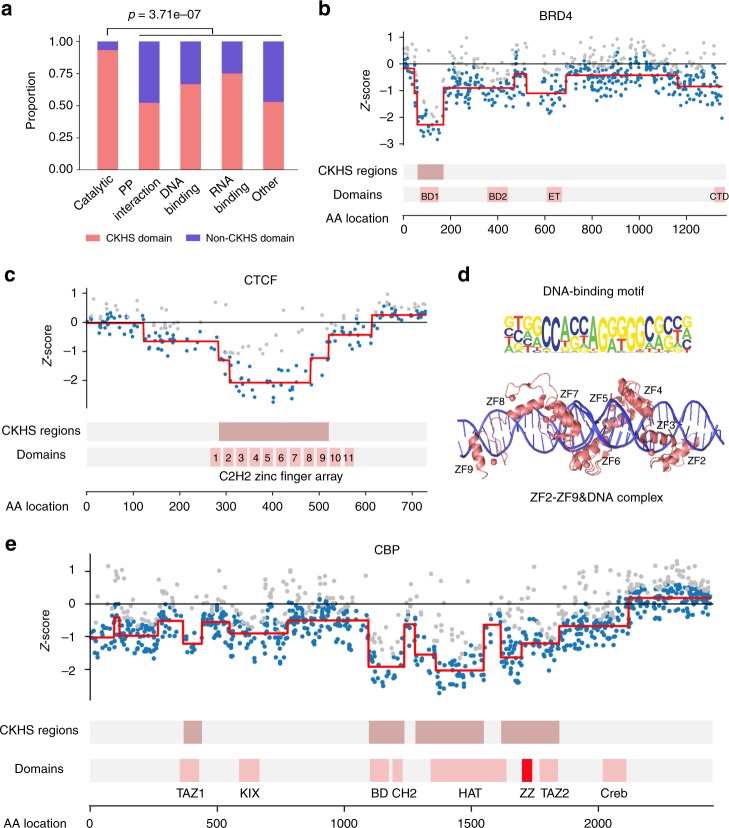
“In line with this observation, an earlier investigation reported that inhibition of BD2 inhibition had a milder effect on BRD4-dependent gene transcription than BD1 inhibition 19 .”
ResultRegulation of the p300 HAT domain via a novel activation loop
Thompson, P. R., Wang, D., Wang, L., Fulco, M., Pediconi, N., Zhang, D., An, W., Ge, Q., Roeder, R. G., Wong, J., et al. (2004) · Nature Structural & Molecular Biology · doi:10.1038/nsmb740 · Cited by 423
Structural insights into the YAP and TEAD complex
Li, Z., Zhao, B., Wang, P., Chen, F., Dong, Z., Yang, H., Guan, K.-L., & Xu, Y. (2010) · Genes & Development · doi:10.1101/gad.1865810 · Cited by 401 · cited 1×
“Consistent with previous findings, our results showed the importance of YAP1-TEAD1 interaction for cell viability, where the region of AA 86-99 is the most critical interaction site 13 (Fig.”
ResultMunoz, D. M., Cassiani, P. J., Li, L., Billy, E., Korn, J. M., Jones, M. D., Golji, J., Ruddy, D. A., Yu, K., McAllister, G., et al. (2016) · Cancer Discovery · doi:10.1158/2159-8290.cd-16-0178 · Cited by 359 · cited 4×
“6).”
BackgroundMethodInfluentialStructure of the p300 catalytic core and implications for chromatin targeting and HAT regulation
Delvecchio, M., Gaucher, J., Aguilar-Gurrieri, C., Ortega, E., & Panne, D. (2013) · Nature Structural & Molecular Biology · doi:10.1038/nsmb.2642 · Cited by 303 · cited 1×
“It has a catalytic core containing a HAT domain, a bromodomain, and a CH2 region 26 .”
BackgroundDrug Discovery Targeting Bromodomain-Containing Protein 4
Liu, Z., Wang, P., Chen, H., Wold, E. A., Tian, B., Brasier, A. R., & Zhou, J. (2017) · Journal of Medicinal Chemistry · doi:10.1021/acs.jmedchem.6b01761 · Cited by 303 · cited 1×
“It is also a major target of several BET inhibitors that have progressed to clinical trials 18 .”
BackgroundCTCF as a multifunctional protein in genome regulation and gene expression
Kim, S., Yu, N.-K., & Kaang, B.-K. (2015) · Experimental & Molecular Medicine · doi:10.1038/emm.2015.33 · Cited by 294 · cited 1×
“CTCF is a DNA-binding protein critical for maintaining high-order chromatin conformations 23 .”
BackgroundStructural Basis for the Versatile and Methylation-Dependent Binding of CTCF to DNA
Hashimoto, H., Wang, D., Horton, J. R., Zhang, X., Corces, V. G., & Cheng, X. (2017) · Molecular Cell · doi:10.1016/j.molcel.2017.05.004 · Cited by 268 · cited 1×
“Recently, a crystal structure of CTCF-DNA interaction was released, which showed that ZF2-ZF9 are required for the binding to the full nucleotide motif sequence 24 (Fig.”
BackgroundThe maintenance of chromosome structure: positioning and functioning of SMC complexes
Jeppsson, K., Kanno, T., Shirahige, K., & Sjögren, C. (2014) · Nature Reviews Molecular Cell Biology · doi:10.1038/nrm3857 · Cited by 208 · cited 1×
“These CKHS regions are highly consistent with a model of condensin structure, in which SMC2 and SMC4 form a heterodimer via their hinge domains and their ATPase head domains are associated with kleisin subunits to create a ring-like structure 12 (Fig.”
BackgroundSupport Vector Machine Ensemble with Bagging
Kim, H., Pang, S., Je, H.-M., Kim, D., & Bang, S.-Y. (2002) · Lecture notes in computer science · doi:10.1007/3-540-45665-1_31 · Cited by 158
Li, X., Baek, G., Ramanand, S. G., Sharp, A., Gao, Y., Yuan, W., Welti, J., Rodrigues, D. N., Dolling, D., Figueiredo, I., et al. (2018) · Cell Reports · doi:10.1016/j.celrep.2017.12.078 · Cited by 148
A Non-catalytic Function of SETD1A Regulates Cyclin K and the DNA Damage Response
Hoshii, T., Cifani, P., Feng, Z., Huang, C., Koche, R. P., Chen, C.-W. D., Delaney, C. D., Lowe, S. W., Kentsis, A., & Armstrong, S. A. (2018) · Cell · doi:10.1016/j.cell.2018.01.032 · Cited by 133
Complementary information derived from CRISPR Cas9 mediated gene deletion and suppression
Rosenbluh, J., Xu, H., Harrington, W., Gill, S., Wang, X., Vazquez, F., Root, D. E., Tsherniak, A., & Hahn, W. C. (2017) · Nature Communications · doi:10.1038/ncomms15403 · Cited by 114 · cited 1×
“Approximately 1/3 of the sgRNAs with a PAM-appended target are inactive, corresponding to weak dropout effects 36, 44 .”
BackgroundSelf-citationNeggers, J. E., Kwanten, B., Dierckx, T., Noguchi, H., Voet, A., Bral, L., Minner, K., Massant, B., Kint, N., Delforge, M., et al. (2018) · Nature Communications · doi:10.1038/s41467-017-02349-8 · Cited by 112 · cited 2×
“Previous applications have mainly focused on the validation of annotated or hypothetical domains 5, 7 .”
MethodStanlie, A., Yousif, A. S., Akiyama, H., Honjo, T., & Begum, N. A. (2014) · Molecular Cell · doi:10.1016/j.molcel.2014.05.018 · Cited by 101 · cited 1×
“Recently, several laboratories reported a BD1-dependent role of BRD4 in the DNA damage response pathway, raising additional concerns regarding BRD4 function involved in the viabilities of normal and cancer cells 20-22 .”
BackgroundA novel protein domain in an ancestral splicing factor drove the evolution of neural microexons
Torres-Méndez, A., Bonnal, S., Márquez, Y., Roth, J. F., Iglesias, M., Permanyer, J., Almudí, I., O’Hanlon, D., Guitart, T., Soller, M., et al. (2019) · Nature Ecology & Evolution · doi:10.1038/s41559-019-0813-6 · Cited by 98
SMARCB1 mutations in schwannomatosis and genotype correlations with rhabdoid tumors
Smith, M. J., Wallace, A. J., Bowers, N. L., Eaton, H., & Evans, D. G. (2014) · Cancer Genetics · doi:10.1016/j.cancergen.2014.04.001 · Cited by 94
The ZZ domain of p300 mediates specificity of the adjacent HAT domain for histone H3
Zhang, Y., Xue, Y., Shi, J., Ahn, J., Mi, W., Ali, M., Wang, X., Klein, B. J., Wen, H., Li, W., et al. (2018) · Nature Structural & Molecular Biology · doi:10.1038/s41594-018-0114-9 · Cited by 78
Self-citationTail-greedy bottom-up data decompositions and fast multiple change-point detection
Fryźlewicz, P. (2018) · The Annals of Statistics · doi:10.1214/17-aos1662 · Cited by 58
Publisher Correction: Programmable base editing of A•T to G•C in genomic DNA without DNA cleavage
Gaudelli, N. M., Komor, A. C., Rees, H. A., Packer, M. S., Badran, A. H., Bryson, D. I., & Liu, D. R. (2018) · Nature · doi:10.1038/s41586-018-0070-x · Cited by 56
Allen, M. D., Freund, S. M. V., Zinzalla, G., & Bycroft, M. (2015) · Structure · doi:10.1016/j.str.2015.04.021 · Cited by 49
Schoonenberg, V. A. C., Cole, M. A., Yao, Q., Macias-Treviño, C., Sher, F., Schupp, P. G., Canver, M. C., Maeda, T., Pinello, L., & Bauer, D. E. (2018) · Genome Biology · doi:10.1186/s13059-018-1563-5 · Cited by 48
VDAC3 regulates centriole assembly by targeting Mps1 to centrosomes
Majumder, S., Slabodnick, M. M., Pike, A. N., Marquardt, J. R., & Fisk, H. A. (2012) · Cell Cycle · doi:10.4161/cc.21927 · Cited by 30 · cited 1×
“ProTiler also identified a CKHS region in the N-terminus (AA 55-184) of MPS1/TTK, which contains three tetratricopeptide repeat domains that govern localization of the protein to either the kinetochore or the centrosome 14 (Supplementary Fig.”
BackgroundB-Raf activation loop phosphorylation revisited
Köhler, M., & Brummer, T. (2016) · Cell Cycle · doi:10.1080/15384101.2016.1159111 · Cited by 23
Cited by
CRISPR in cancer biology and therapy
Katti, A., Diaz, B. J., Caragine, C. M., Sanjana, N. E., & Dow, L. E. (2022) · Nature Reviews Cancer · doi:10.1038/s41568-022-00441-w · Cited by 424
Induced pluripotent stem cells (iPSCs): molecular mechanisms of induction and applications
Cerneckis, J., Cai, H., & Shi, Y. (2024) · Signal Transduction and Targeted Therapy · doi:10.1038/s41392-024-01809-0 · Cited by 452
Deletion and replacement of long genomic sequences using prime editing
Jiang, T., Zhang, X.-O., Weng, Z., & Xue, W. (2022) · Nature Biotechnology · doi:10.1038/s41587-021-01026-y · Cited by 196
Multilayered VBC score predicts sgRNAs that efficiently generate loss-of-function alleles
Michlits, G., Jude, J., Hinterndorfer, M., de Almeida, M., Vainorius, G., Hubmann, M., Neumann, T., Schleiffer, A., Burkard, T. R., Fellner, M., et al. (2020) · Nature Methods · doi:10.1038/s41592-020-0850-8 · Cited by 154
Computational Tools and Resources for CRISPR/Cas Genome Editing
Li, C., Chu, W., Gill, R. A., Sang, S., Shi, Y., Hu, X., Yang, Y., Zaman, Q. U., & Zhang, B. (2023) · Genomics, Proteomics & Bioinformatics · doi:10.1016/j.gpb.2022.02.006 · Cited by 129
“To meet the new applications of the CRISPR/Cas systems, new computational tools for performing and analyzing CRISPR/Cas events have also been recently developed, such as scMAGeCK [131], CRIS-PRO [132], and ProTiler [133]. scMAGeCK links genotypes with multiple phenotypes in single-cell CRISPR screens [131].”
Method
Metadata
- Authors
- He, W., Zhang, L., Villarreal, O. D., Fu, R., Bedford, E., Dou, J., Patel, A. Y., Bedford, M. T., Shi, X., Chen, T., Bartholomew, B., & Xu, H.
- Affiliations
- The University of Texas MD Anderson Cancer Center (US)
- Van Andel Institute (US)
- Corresponding author
- Xu, Han
- ORCID
- Venue
- Nature Communications
- Published
- 2019-10-04
- Volume
- 10
- Issue
- 1
- Pages
- 4541-4541
- ISSN
- 2041-1723 (ISSN-L)
- PMC
- PMC6778102
- OpenAlex
- W2978187183
- Cited by
- 69
- References
- 49
- Citations by year
- 2026: 9 · 2025: 8 · 2024: 11 · 2023: 10 · 2022: 11 · 2021: 9 · 2020: 9 · 2019: 1
- FWCI
- 2.48
- Type
- journal article
- Language
- en
- Update notices
- correction (2020-02-25)
- Open access
- gold
- doi.org
- Licence
- cc-by
- creativecommons.org/licenses/by/4.0 (tdm)
- creativecommons.org/licenses/by/4.0 (vor)
- Locations
- Nature Communications (publishedVersion, cc-by)
- bioRxiv (Cold Spring Harbor Laboratory) (acceptedVersion, cc-by-nc-nd)
- PubMed Central (publishedVersion, cc-by)
- PubMed (publishedVersion)
- RePEc: Research Papers in Economics (submittedVersion)
- DOAJ (DOAJ: Directory of Open Access Journals) (submittedVersion, cc-by-sa)
- DOAJ (DOAJ: Directory of Open Access Journals) (submittedVersion)
- Funders
- Cancer Prevention and Research Institute of Texas (RR160097)
- Topics
- Life Sciences › Biochemistry, Genetics and Molecular Biology › Molecular Biology › CRISPR and Genetic Engineering
- Life Sciences › Biochemistry, Genetics and Molecular Biology › Molecular Biology › Genomics and Chromatin Dynamics
- Life Sciences › Biochemistry, Genetics and Molecular Biology › Molecular Biology › Chromatin Remodeling and Cancer
- Keywords
- CRISPR-Cas9 knockout screen, Pfam domains, therapeutic target, SMARCB1, SWI/SNF complex, phosphorylation sites, acetylation sites, post-translational modification, protein domain function
- MeSH terms
- SMARCB1 Protein, Protein Domains, RNA, Guide, CRISPR-Cas Systems, Algorithms, Humans, Models, Genetic, Protein Processing, Post-Translational, Software, RNA, Guide, Kinetoplastida, Computational Biology, Cell Line, Tumor, Gene Knockout Techniques, High-Throughput Screening Assays, CRISPR-Cas Systems, Datasets as Topic
About these checks
Registry, retraction, Cites and statistics results are computed, not judged, with one exception: a printed reference that no index lists is read once by a model before it counts as a citation error. Claims are extracted by a model and kept only when their quote appears verbatim in the text; each cited source is then checked, with a model’s help, for whether it says what the claim relies on. Those verdicts can be wrong — read the claim’s quote and the cited source before relying on one.
Statistics and arithmetic are recomputed, not judged.
Confidence bands are shown only for fields calibrated on our annotated test set. None is calibrated yet, so no band is shown.
What counts as a claim ›How we measure confidence ›How we check this ›
Are you an author, or do you see a problem with this page? Request a review
Data sources
Bibliographic data: Semantic Scholar, OpenAlex, Crossref.
Contains information from the Semantic Scholar Academic Graph Datasets, made available under the ODC Attribution License (ODC-BY 1.0).
Semantic Scholar’s data is described in: Kinney, R., et al. (2023). The Semantic Scholar Open Data Platform. arXiv:2301.10140.
