

Genome-wide CRISPR/Cas9 library screening identified PHGDH as a critical driver for Sorafenib resistance in HCC
Open accessThe DOI matches its Crossref record; 48 of the 48 references it cites were found in a registry or an index.
Abstract
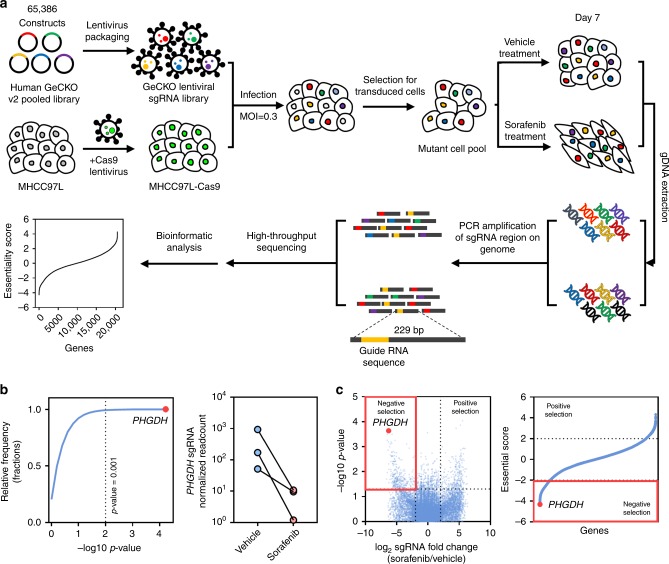
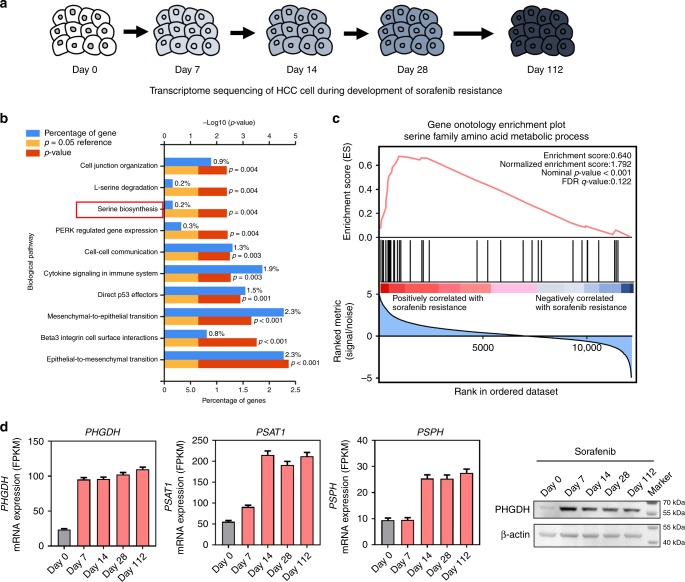
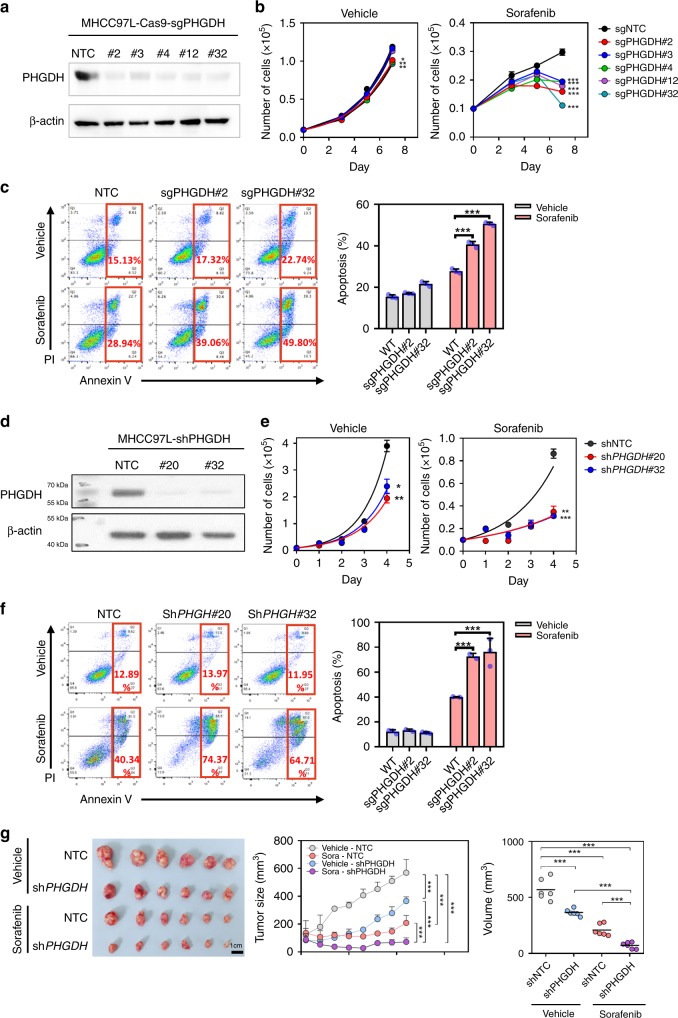
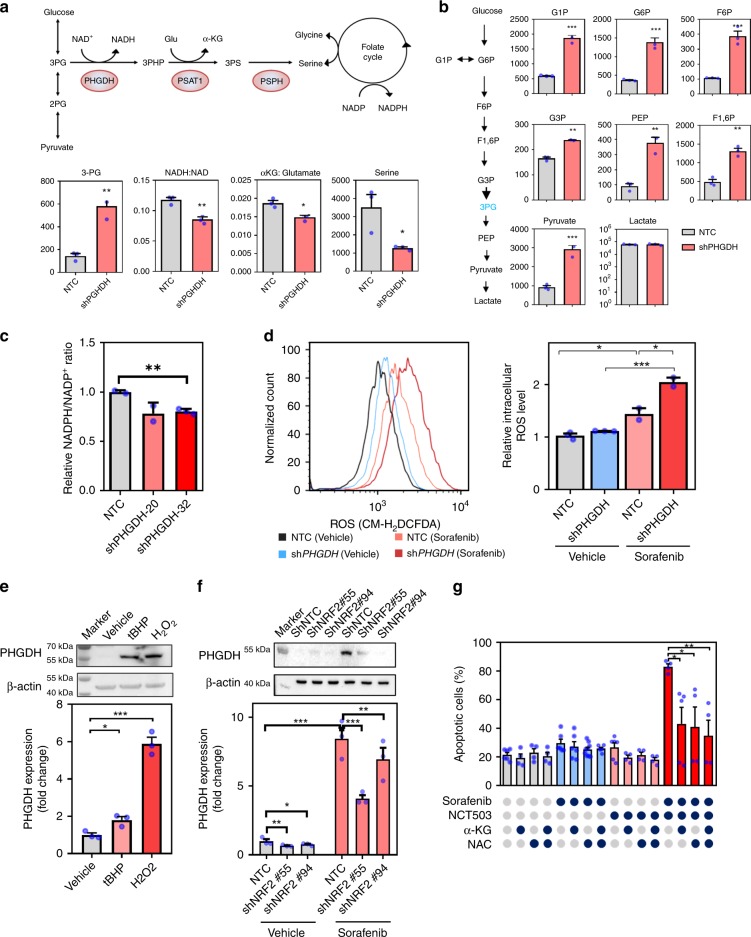
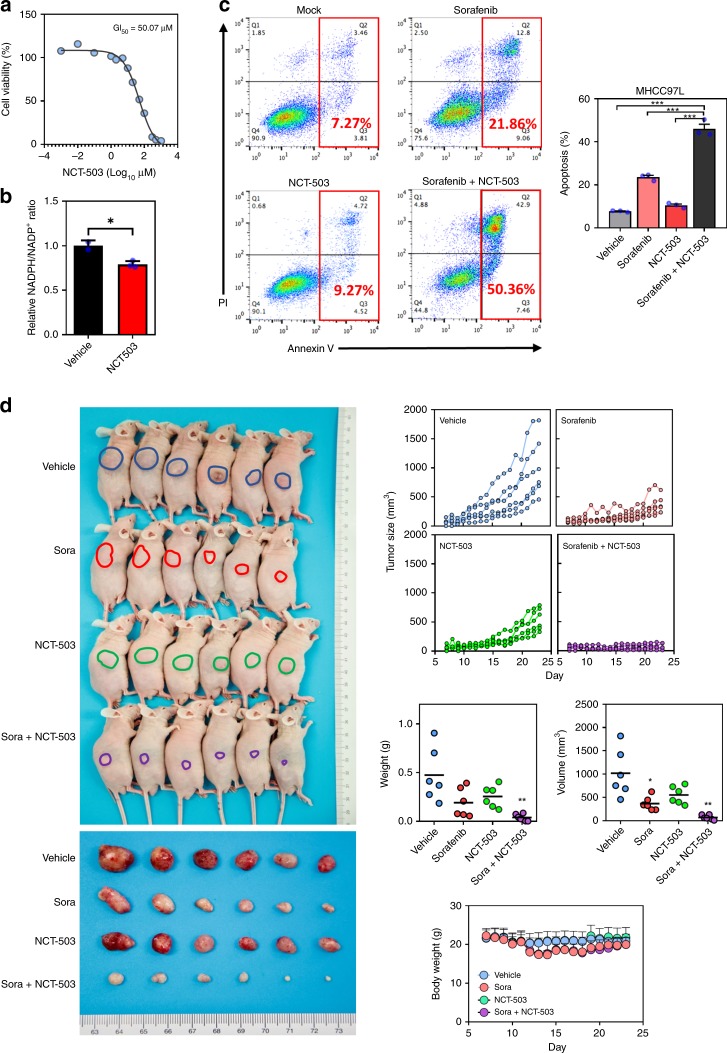
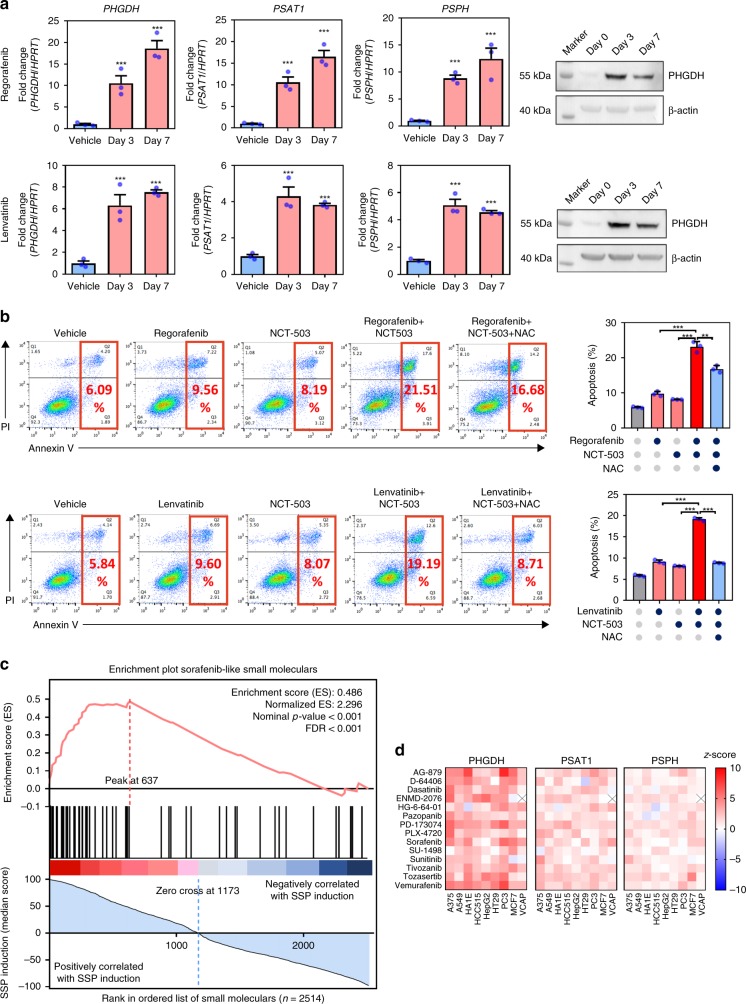
Sorafenib is the standard treatment for advanced hepatocellular carcinoma (HCC). However, the development of drug resistance is common. By using genome-wide CRISPR/Cas9 library screening, we identify phosphoglycerate dehydrogenase (PHGDH), the first committed enzyme in the serine synthesis pathway (SSP), as a critical driver for Sorafenib resistance. Sorafenib treatment activates SSP by inducing PHGDH expression. With RNAi knockdown and CRISPR/Cas9 knockout models, we show that inactivation of PHGDH paralyzes the SSP and reduce the production of αKG, serine, and NADPH. Concomitantly, inactivation of PHGDH elevates ROS level and induces HCC apoptosis upon Sorafenib treatment. More strikingly, treatment of PHGDH inhibitor NCT-503 works synergistically with Sorafenib to abolish HCC growth in vivo. Similar findings are also obtained in other FDA-approved tyrosine kinase inhibitors (TKIs), including Regorafenib or Lenvatinib. In summary, our results demonstrate that targeting PHGDH is an effective approach to overcome TKI drug resistance in HCC.
Overview
The claims and statistics of this paper haven’t been checked yet.
Free: it reads the open-access text and checks the first 5 claims that cite a source we can check. Create a free account to check every claim.
Integrity signals
Registry
Cites
Statistics
Figures
Verification
Claims the paper makes
The claims and statistics of this paper haven’t been checked yet.
Free: it reads the open-access text and checks the first 5 claims that cite a source we can check. Create a free account to check every claim.
Claims other papers make about this one
Each is checked against this paper’s own text: does it say what the citing paper says it does?
In the citing paper
“It has been used to identify genes that are essential for cancer cell survival, proliferation, and targeted drug resistance in vitro and in vivo [21–24].”
From Genome-wide CRISPR-cas9 knockout screening identifies GRB7 as a driver for MEK inhibitor resistance in KRAS mutant colon cancer (2022) · cites this paper as [22]
In the citing paper
“A subset of patients with MAFLD or hepatitis virus infection can develop progressive liver disease leading to cirrhosis and HCC [194].”
From Emerging role of liver-bone axis in osteoporosis (2024) · cites this paper as [194]
Self-check
Percentages, sums and reported differences re-computed from the paper’s own numbers.
The self-check needs the paper’s full text.
Citations
Cites
Sorafenib in advanced hepatocellular carcinoma
Llovet, J. M., Ricci, S., Mazzaferro, V., Hilgard, P., Gane, E., Blanc, J.-F., de Oliveira, A. C., Santoro, A., Raoul, J.-L., Forner, A., et al. (2008) · New England Journal of Medicine · doi:10.1056/nejmoa0708857 · Cited by 13,097
CRISPR Provides Acquired Resistance Against Viruses in Prokaryotes
Barrangou, R., Fremaux, C., Deveau, H., Richards, M., Boyaval, P., Moineau, S., Romero, D. A., & Horvath, P. (2007) · Science · doi:10.1126/science.1138140 · Cited by 5,947
Sorafenib in Advanced Hepatocellular Carcinoma
정, 재. (2008) · Cited by 5,586
Kudo, M., Finn, R. S., Qin, S., Han, K.-H., Ikeda, K., Piscaglia, F., Baron, A., Park, J.-W., Han, G., Jassem, J., et al. (2018) · The Lancet · doi:10.1016/s0140-6736(18)30207-1 · Cited by 5,497
Improved vectors and genome-wide libraries for CRISPR screening
Sanjana, N. E., Shalem, O., & Zhang, F. (2014) · Nature Methods · doi:10.1038/nmeth.3047 · Cited by 5,239
El-Khoueiry, A. B., Sangro, B., Yau, T., Crocenzi, T. S., Kudo, M., Hsu, C., Kim, T.-Y., Choo, S.-P., Trojan, J., Welling, T. H., et al. (2017) · The Lancet · doi:10.1016/s0140-6736(17)31046-2 · Cited by 4,280
Bruix, J., Qin, S., Merle, P., Granito, A., Huang, Y.-H., Bodoky, G., Pracht, M., Yokosuka, O., Rosmorduc, O., Breder, V., et al. (2017) · The Lancet · doi:10.1016/s0140-6736(16)32453-9 · Cited by 3,653
A Next Generation Connectivity Map: L1000 Platform and the First 1,000,000 Profiles
Subramanian, A., Narayan, R., Corsello, S. M., Peck, D. D., Natoli, T. E., Lu, X., Gould, J., Davis, J. F., Tubelli, A. A., Asiedu, J. K., et al. (2017) · Cell · doi:10.1016/j.cell.2017.10.049 · Cited by 3,515
Li, W., Xu, H., Xiao, T., Cong, L., Love, M. I., Zhang, F., Irizarry, R. A., Liu, J. S., Brown, M., & Liu, X. S. (2014) · Genome Biology · doi:10.1186/s13059-014-0554-4 · Cited by 2,684
Functional genomics reveal that the serine synthesis pathway is essential in breast cancer
Possemato, R., Marks, K. M., Shaul, Y. D., Pacold, M. E., Kim, D., Birsoy, K., Sethumadhavan, S., Woo, H.-K., Jang, H. G., Jha, A. K., et al. (2011) · Nature · doi:10.1038/nature10350 · Cited by 1,683
Cited by
Items 101–200 of 465
Yang, C., Lee, D., Zhang, M. S., Tse, A. P., Wei, L., Bao, M. H., Wong, B. P., Chan, C. Y., Yuen, V. W., Chen, Y., et al. (2022) · Advanced Science · doi:10.1002/advs.202202104 · Cited by 36
Self-citationGenome-guided discovery of cancer therapeutic targets
Konda, P., Garinet, S., Allen, E. M. V., & Viswanathan, S. R. (2023) · Cell Reports · doi:10.1016/j.celrep.2023.112978 · Cited by 36
Zhu, H., Yu, H. T., Zhou, H., Zhu, W., & Wang, X. (2023) · Advanced Science · doi:10.1002/advs.202205818 · Cited by 36
He, Y., Tu, X., Xue, Y., Chen, Y., Ye, B., Li, X., Li, D., Zhong, Z., & Zhong, Q. (2025) · Journal of Pharmaceutical Analysis · doi:10.1016/j.jpha.2025.101357 · Cited by 36
Kundu, S., Ali, M. A., Handin, N., Conway, L. P., Rendo, V., Artursson, P., He, L., Globisch, D., & Sjöblom, T. (2021) · Journal of Experimental & Clinical Cancer Research · doi:10.1186/s13046-021-02025-2 · Cited by 34
Patient-derived xenograft models in hepatopancreatobiliary cancer
Pan, B., Wei, X., & Xu, X. (2022) · Cancer Cell International · doi:10.1186/s12935-022-02454-9 · Cited by 34
“for surgery when the tumour is detected [29].”
BackgroundWang, H., He, X., Zhang, L., Dong, H., Huang, F., Xian, J., Li, M., Chen, W., Lu, X., Pathak, K. V., et al. (2022) · Blood · doi:10.1182/blood.2021015108 · Cited by 34
The E3 ubiquitin ligase MG53 inhibits hepatocellular carcinoma by targeting RAC1 signaling
Ma, X., Ma, X., Zhu, L., Zhao, Y., Chen, M., Li, T., Lin, Y., Ma, D., Sun, C., & Han, L. (2022) · Oncogenesis · doi:10.1038/s41389-022-00414-6 · Cited by 34
“However, primary and secondary resistance to sorafenib treatment remains the obstacle for the efficacy of sorafenib in HCC [32].”
BackgroundThe role of serine metabolism in lung cancer: From oncogenesis to tumor treatment
Zhou, X., Tian, C., Cao, Y., Zhao, M., & Wang, K. (2023) · Frontiers in Genetics · doi:10.3389/fgene.2022.1084609 · Cited by 34
Khan, A., & Zhang, X. (2022) · Bioengineering · doi:10.3390/bioengineering9080406 · Cited by 33
Fructose metabolism and its roles in metabolic diseases, inflammatory diseases, and cancer
Li, Z., Fan, X., Gao, F., Pan, S., Ma, X., Cheng, H., Nakatsukasa, H., Zhang, W., & Zhang, D. (2025) · Molecular Biomedicine · doi:10.1186/s43556-025-00287-2 · Cited by 33
Recent advances of the biological and biomedical applications of CRISPR/Cas systems
Wang, Y., Chun, H., & Zhao, W. (2022) · Molecular Biology Reports · doi:10.1007/s11033-022-07519-6 · Cited by 33
Research Progress of DUB Enzyme in Hepatocellular Carcinoma
Zhao, J., Guo, J., Wang, Y., Ma, Q., Shi, Y., Cheng, F., Lu, Q., Fu, W., Ouyang, G., Zhang, J., et al. (2022) · Frontiers in Oncology · doi:10.3389/fonc.2022.920287 · Cited by 34
“However, most patients will develop resistance to lenvatinib (77), so research on the mechanism of drug resistance in patients will help the development of targeted therapy for liver cancer (78).”
BackgroundWang, D., Wang, F., Kong, X., Li, Q., Shi, H., Zhao, S., Li, W., Li, Y., & Meng, J. (2022) · Biomedicine & Pharmacotherapy · doi:10.1016/j.biopha.2022.113376 · Cited by 33
Targeting ferroptosis in hepatocellular carcinoma
Mo, Y., Zou, Z., & Chen, E. (2023) · Hepatology International · doi:10.1007/s12072-023-10593-y · Cited by 33
“CRISPR library screening revealed that phosphoglycerate dehydrogenase (PHGDH) is a key gene of sorafenib resistance in HCC patients [95].”
Chen, J., Jiang, Y., Hou, M., Liu, C., Liu, E., Zong, Y., Wang, X., Meng, Z., Gu, M., Su, Y., et al. (2024) · Gut · doi:10.1136/gutjnl-2024-332902 · Cited by 32
Du, M., Gu, J., Liu, C., Liu, N., Yu, Z., Zhou, C.-P., Wei, H., Cao, Z., Wei, F., Zhu, K., et al. (2022) · Journal of Experimental & Clinical Cancer Research · doi:10.1186/s13046-022-02344-y · Cited by 32
Meng, F., Li, H., Huang, Y., Wang, C., Liu, Y., Zhang, C., Chen, D., Zeng, T., Zhang, S., Li, Y., et al. (2025) · Nature Cancer · doi:10.1038/s43018-025-00984-5 · Cited by 31
Ma, Z., Zhu, T., Wang, H., Wang, B., Fu, L., & Yu, G. (2023) · Current Molecular Pharmacology · doi:10.2174/1874467216666230306101653 · Cited by 31
Decoding the Roles of Long Noncoding RNAs in Hepatocellular Carcinoma
Wong, L.-S., & Wong, C. (2021) · International Journal of Molecular Sciences · doi:10.3390/ijms22063137 · Cited by 31
Self-citationZhao, J., Lin, E., Bai, Z., Jia, Y., Wang, B., Dai, Y., Zhuo, W., Zeng, G., Liu, X., Cai, C., et al. (2023) · BMC Cancer · doi:10.1186/s12885-023-11613-8 · Cited by 31
“Various groups have attempted to investigate the underlying mechanisms of sorafenib resistance in HCC and to identify new therapeutic targets to overcome drug resistance [24, 25].”
BackgroundPHGDH activation fuels glioblastoma progression and radioresistance via serine synthesis pathway
Liu, X., Liu, B., Wang, J., Liu, H., Wu, J., Qi, Y., Liu, Y., Zhu, H., Li, C., Liu, Y., et al. (2025) · Journal of Experimental & Clinical Cancer Research · doi:10.1186/s13046-025-03361-3 · Cited by 30
Inhibition of Serine Metabolism Promotes Resistance to Cisplatin in Gastric Cancer
Zhao, X., Fu, J., Tang, W., Yu, L., & Xu, W. (2020) · OncoTargets and Therapy · doi:10.2147/ott.s246430 · Cited by 29
Yao, F., Zhan, Y., Li, C., Lu, Y., Chen, J., Deng, J., Wu, Z., Li, Q., Song, Y., Chen, B., et al. (2022) · Frontiers in Cell and Developmental Biology · doi:10.3389/fcell.2021.734287 · Cited by 29
“TKIs are used for patients with advanced unresectable HCC and have proven clinically ef fi cacious (Wei et al., 2019; Lee et al., 2020).”
MethodQin, J., Chen, X., Liu, W., Chen, J., Liu, W., Xia, Y., Li, Z., Li, M., Wang, S., Yuan, Q., et al. (2022) · European Journal of Medicinal Chemistry · doi:10.1016/j.ejmech.2022.114849 · Cited by 29
Zhou, Y., Wang, S., Wu, W., Jing, L., Li, H., Jia, Q., Zheng, J., Zheng, X., Yu, R., Wu, Q., et al. (2022) · EBioMedicine · doi:10.1016/j.ebiom.2022.104397 · Cited by 29
A review of the literature on the use of CRISPR/Cas9 gene therapy to treat hepatocellular carcinoma
Amjad, E., Pezzani, R., & Sokouti, B. (2024) · Oncology Research Featuring Preclinical and Clinical Cancer Therapeutics · doi:10.32604/or.2023.044473 · Cited by 29
“Inactivation of PHGDH increases cell death in HCC cells [110].”
BackgroundFan, F., Fleishman, J. S., Jin, C., Chen, Z., & Dong, H. (2024) · Drug Discovery Today · doi:10.1016/j.drudis.2024.104069 · Cited by 31
Targeting phosphoglycerate dehydrogenase in multiple myeloma
Elsaadi, S., Steiro, I. J., Abdollahi, P., Vandsemb, E. N., Yang, R. R., Slørdahl, T. S., Rø, T. B., Menu, E., Sponaas, A., & Børset, M. (2021) · Experimental Hematology and Oncology · doi:10.1186/s40164-020-00196-w · Cited by 28
ZEB1 Transcriptionally Activates PHGDH to Facilitate Carcinogenesis and Progression of HCC
Wang, H., Lin, F., Xu, Z., Yu, S., Li, G., Liao, S., Zhao, W., Zhang, F., Wang, J., Wang, S., et al. (2023) · Cellular and Molecular Gastroenterology and Hepatology · doi:10.1016/j.jcmgh.2023.06.006 · Cited by 28
“Surprisingly, the elements synthesis pathway by up-regulating PHGDH in HCC. mor induced by DEN/CCl4.”
BackgroundInfluentialSHMT2 promotes papillary thyroid cancer metastasis through epigenetic activation of AKT signaling
Sun, M., Zhao, M., Li, R., Zhang, Y., Shi, X., Ding, C., Ma, C., Lu, J., & Yue, X. (2024) · Cell Death and Disease · doi:10.1038/s41419-024-06476-1 · Cited by 29
Chen, J., Shi, J., Shao, H., Li, B., Ji, T., Staiculescu, D., He, J., Zhao, J., Cai, L., Liang, X. H., et al. (2022) · Science China Life Sciences · doi:10.1007/s11427-021-2067-7 · Cited by 27
“Another interesting study reported that phosphoglycerate dehydrogenase (PHGDH) is a key promoter for TKI resistance in HCC through screening in a higher GI50 HCC cell line named MHCC97L (Wei et al., 2019).”
BackgroundCDK7 inhibition augments response to multidrug chemotherapy in pancreatic cancer
Zeng, S., Lan, B., Ren, X., Zhang, S., Schreyer, D., Eckstein, M., Yang, H., Britzen‐Laurent, N., Dahl, A., Mukhopadhyay, D., et al. (2022) · Journal of Experimental & Clinical Cancer Research · doi:10.1186/s13046-022-02443-w · Cited by 27
“library The CRISPR screen was performed essentially as described previously [12].”
MethodSgro, A., Cursons, J., Waryah, C. B., Woodward, E., Foroutan, M., Lyu, R., Yeoh, G. C., Leedman, P. J., & Blancafort, P. (2023) · Clinical Epigenetics · doi:10.1186/s13148-023-01482-0 · Cited by 27
“Similarly, a CRISPRa screening library has enabled the identification of key drivers of sorafenib resistance, such as PHGDH [23] and LRP8 [24].”
BackgroundSpillier, Q., Ravez, S., Unterlass, J. E., Corbet, C., Degavre, C., Féron, O., & Frédérick, R. (2020) · Pharmaceuticals · doi:10.3390/ph13020020 · Cited by 27
Sorafenib for hepatocellular carcinoma: potential molecular targets and resistance mechanisms
Dahiya, M., & Dureja, H. (2021) · Journal of Chemotherapy · doi:10.1080/1120009x.2021.1955202 · Cited by 26
“Thus PHGDH targeting may be a good advancement to counter drug resistance [84].”
BackgroundXu, Y., Wang, J., Wang, X., Zhou, X., Tang, J. P., Jie, X., Yang, X., Rao, X., Xu, Y., Xing, B., et al. (2022) · Cell Death Discovery · doi:10.1038/s41420-022-00818-8 · Cited by 26
“Supposedly, targeting key enzymes in the serine synthesis pathway (PHGDH, PSAT1, and PSPH) is an effective approach to overcoming resistance to sorafenib in HCC [30].”
BackgroundInfluentialAmino acid metabolism regulated by lncRNAs: the propellant behind cancer metabolic reprogramming
Hu, Q., Li, Y., Li, D., Yuan, Y., Wang, K., Lü, Y., Cheng, Z., & Han, T. (2023) · Cell Communication and Signaling · doi:10.1186/s12964-023-01116-1 · Cited by 26
Genome-wide CRISPR/Cas9 screening for drug resistance in tumors
Zhang, Z., Wang, H., Yan, Q., Cui, J., Chen, Y., Ruan, S., Yang, J., Wu, Z., Han, M., Huang, S., et al. (2023) · Frontiers in Pharmacology · doi:10.3389/fphar.2023.1284610 · Cited by 28
Khan, S., Kaur, K., Kumar, V., & Tiwari, S. (2023) · Plant Growth Regulation · doi:10.1007/s10725-023-00979-1 · Cited by 25
“It ensures genome-wide screening, controls transcription, modifies epigenomes, and images chromosomes (Wei et al. 2019).”
BackgroundDrug resistance in TKI therapy for hepatocellular carcinoma: Mechanisms and strategies
Jiang, X., Ge, X., Huang, Y., Xie, F., Chen, C., Wang, Z., Tao, W., Zeng, S., Lv, L., Zhan, Y., et al. (2025) · Cancer Letters · doi:10.1016/j.canlet.2025.217472 · Cited by 25
CRISPR screening in hematology research: from bulk to single-cell level
Meyers, S., Demeyer, S., & Cools, J. (2023) · Journal of Hematology & Oncology · doi:10.1186/s13045-023-01495-5 · Cited by 25
“2) [18–22].”
Ermi, A. G., & Sarkar, D. (2024) · Cancers · doi:10.3390/cancers16233944 · Cited by 25
“MT1G inhibition, genetic or pharmacological, augmented sorafenib activity in xenograft assays [111].”
InfluentialLiu, N., Shi, F., Yang, L., Liao, W., & Cao, Y. (2022) · Biochimica et Biophysica Acta (BBA) - Reviews on Cancer · doi:10.1016/j.bbcan.2022.188724 · Cited by 24
Shang, Y., Zhang, H., Cheng, Y., Cao, P., Cui, J., Yin, X., Fan, S., & Li, Y. (2022) · International Journal of Nanomedicine · doi:10.2147/ijn.s353803 · Cited by 24
“Introduction Hepatocellular carcinoma (HCC) is the most common primary liver cancer and has a high mortality rate due to its rapid progression, high malignancy and low cure rate.(1,2) Although early HCC can be managed by ablation,(3) the”
BackgroundSun, Y., He, Y., Tong, J., Liu, D., Zhang, H., He, T., & Bi, Y. (2022) · Genes & Diseases · doi:10.1016/j.gendis.2022.04.011 · Cited by 25
“The pharmacological inhibition of NRF2, combined with ferroptosis inducer, can be exploited for the treatment of HCC.”
BackgroundInfluentialGe, L., Huang, P., Miao, H., Yu, H., Wu, D., Chen, F., Lin, Y., Lin, Y., Li, W., & Hua, J. (2022) · Placenta · doi:10.1016/j.placenta.2022.11.012 · Cited by 25
Zhai, L., Yang, X., Cheng, Y., & Wang, J. (2023) · Cancer Medicine · doi:10.1002/cam4.6256 · Cited by 24
Meng, T., Han, J., Shi, J., Liao, H., Wen, K., Wang, W., Mui, S., Li, H., Yan, Y., & Xiao, Z. (2023) · Journal of Hepatocellular Carcinoma · doi:10.2147/jhc.s411806 · Cited by 24
“Wong et al identified phosphoglycerate dehydrogenase (PHGDH) as a crucial driver of sorafenib, regorafenib, and lenvatinib resistance utilizing genome-wide CRISPR/Cas9 library screening.(74) Similarly, other researchers discovered that neurofibromin 1 (NF1), dual-specificity phosphatase 9 (DUSP9), and dual-specificity…”
BackgroundYu, S., Zhao, R., Zhang, B., Lai, C., Li, L., Shen, J., Tan, X., & Shao, J. (2023) · Asian Journal of Pharmaceutical Sciences · doi:10.1016/j.ajps.2023.100828 · Cited by 25
“[88] Wei L , Lee D , Law CT , Zhang MS , Shen J , Chin DW , et al.”
BackgroundInfluentialSelf-citationThe application of CRISPR/Cas9–based genome-wide screening to disease research
Chen, X., Zheng, M., Lin, S., Huang, M., Chen, S., & Chen, S. (2024) · Molecular and Cellular Probes · doi:10.1016/j.mcp.2024.102004 · Cited by 25
Wang, J., Zhu, X., Dang, L., Jiang, H., Xie, Y., Li, X., Guo, J. R., Wang, Y., Peng, Z., Wang, M., et al. (2022) · Journal of Clinical Investigation · doi:10.1172/jci149526 · Cited by 24
RETRACTED ARTICLE: Elucidation of CRISPR-Cas9 application in novel cellular immunotherapy
Quazi, S. (2022) · Molecular Biology Reports · doi:10.1007/s11033-022-07147-0 · Cited by 24
RetractedThe effects of fructose and metabolic inhibition on hepatocellular carcinoma
Dewdney, B., Alanazy, M., Gillman, R., Walker, S. L., Wankell, M., Qiao, L., George, J., Roberts, A. A., & Hebbard, L. (2020) · Scientific Reports · doi:10.1038/s41598-020-73653-5 · Cited by 23
Dietary serine supplementation: Friend or foe?
Jiang, J., Li, B., He, W., & Huang, C. (2021) · Current Opinion in Pharmacology · doi:10.1016/j.coph.2021.08.011 · Cited by 23
Use of CRISPR-based screens to identify mechanisms of chemotherapy resistance
Alyateem, G., Wade, H. M., Bickert, A. A., Lipsey, C. C., Mondal, P., Smith, M. D., Labib, R. M., Mock, B. A., Robey, R. W., & Gottesman, M. M. (2023) · Cancer Gene Therapy · doi:10.1038/s41417-023-00608-z · Cited by 23
Pouliquen, D., Gall‐Tros̆elj, K., & Anto, R. J. (2023) · Pharmaceutics · doi:10.3390/pharmaceutics15061612 · Cited by 24
CRISPR in Targeted Therapy and Adoptive T Cell Immunotherapy for Hepatocellular Carcinoma
Palaz, F., Özsöz, M., Zarrinpar, A., & Şahin, İ. (2024) · Journal of Hepatocellular Carcinoma · doi:10.2147/jhc.s456683 · Cited by 24
Gan, G., Shi, Z., Liu, D., Zhang, S., Zhu, H., Wang, Y., & Mi, J. (2021) · Cell Death Discovery · doi:10.1038/s41420-021-00561-6 · Cited by 23
Tang, M., Huang, Y., Liang, X. H., Tao, Y., He, N., Li, Z., Guo, J. X., & Gui, S. (2022) · AAPS PharmSciTech · doi:10.1208/s12249-022-02214-y · Cited by 23
Tan, X., Xiong, B.-H., Zhang, Y., Wang, S.-L., Zuo, Q., & Li, J. (2022) · European Journal of Pharmacology · doi:10.1016/j.ejphar.2022.175186 · Cited by 23
Kawahara, I., Yoshino, H., Fukumoto, W., Arima, J., Saito, S., Li, G., Fukuda, I., Mitsuke, A., Sakaguchi, T., Inoguchi, S., et al. (2024) · Molecular Oncology · doi:10.1002/1878-0261.13684 · Cited by 22
“On the other hand, NCT503 may induce apoptosis by depletion of a -ketoglutaric acid and augmentation of Reactive Oxygen Species [34].”
BackgroundWang, H., Fu, Y., Da, B.-B., & Xiong, G. (2022) · Journal of Healthcare Engineering · doi:10.1155/2022/8256314 · Cited by 22
D-lactate and glycerol as potential biomarkers of sorafenib activity in hepatocellular carcinoma
Pedretti, S., Palermo, F., Braghin, M., Imperato, G., Tomaiuolo, P., Celikag, M., Boccazzi, M., Vallelonga, V., Dalt, L. D., Norata, G. D., et al. (2025) · Signal Transduction and Targeted Therapy · doi:10.1038/s41392-025-02282-z · Cited by 21
Emerging and potential use of CRISPR in human liver disease
Adlat, S., Vázquez-Salgado, A. M., Lee, M., Yin, D., & Wangensteen, K. J. (2025) · Hepatology · doi:10.1097/hep.0000000000000578 · Cited by 21
Chen, X., Lv, Y., Xu, K., Wang, X., Zhao, Y., Li, J., Qin, X., Shi, Y., Wang, L., Chang, A., et al. (2021) · Cancers · doi:10.3390/cancers13061403 · Cited by 21
“Although some evidence supported that PHGDH enhanced proliferation, migration and invasion of pancreatic cancer [36], and contributed to the resistance of sorafenib and other tyrosine kinase inhibitors in hepatocellular carcinoma [37].”
BackgroundA gentle introduction to understanding preclinical data for cancer pharmaco-omic modeling
Piyawajanusorn, C., Nguyen, L. C., Ghislat, G., & Ballester, P. J. (2021) · Briefings in Bioinformatics · doi:10.1093/bib/bbab312 · Cited by 21
PHGDH promotes esophageal squamous cell carcinoma progression via Wnt/β-catenin pathway
Duan, X., Chen, Y., Zhang, K., Chen, W., Zhao, J., Dai, X., Cao, W., Dong, Z., Mo, S., & Lü, J. (2023) · Cellular Signalling · doi:10.1016/j.cellsig.2023.110736 · Cited by 20
eIF3i promotes colorectal cancer cell survival via augmenting PHGDH translation
Zhang, Y., Wan, X., Yang, X., Liu, X., Huang, Q. B., Zhou, L., Zhang, S., Liu, S., Xiong, Q., Wei, M., et al. (2023) · Journal of Biological Chemistry · doi:10.1016/j.jbc.2023.105177 · Cited by 20
You, Q., Li, R., Yao, J., Zhang, Y., Sui, X. Y., Xiao, C., Zhang, J.-B., Xiao, J., Chen, H., Li, H., et al. (2024) · Medical Oncology · doi:10.1007/s12032-023-02295-0 · Cited by 21
“In contrast to the above mechanisms involving tumor signaling pathways, according to another study, a pivotal enzyme in the serine synthesis pathway (SSP), named phosphoglycerate dehydrogenase (PHGDH), was found to be responsible for resistance following TKI treatment [42].”
An integrated pipeline for mammalian genetic screening
Kramme, C. C., Pleşa, A. M., Wang, H. H., Wolf, B. K., Smela, M. P., Guo, X., Kohman, R. E., Chatterjee, P., & Church, G. M. (2021) · Cell Reports Methods · doi:10.1016/j.crmeth.2021.100082 · Cited by 20
“Studies such as genome-wide CRISPR screens for identifying chemotherapeutic drug targets (Wei et al., 2019), single-cell profiling of the entire human embryo developmental trajectory (Cao et al.”
BackgroundAn overview: Management of patients with advanced hepatocellular carcinoma
Wang, J., Wu, R., Sun, J.-Y., Lei, F., Tan, H., & Lu, X. (2022) · BioScience Trends · doi:10.5582/bst.2022.01109 · Cited by 19
Lin, H., Xu, Q., Zhang, F., Wu, H., Hu, B., Chen, G., Ban, X., Duan, X., & Yu, M. (2023) · Chemical Engineering Journal · doi:10.1016/j.cej.2023.145555 · Cited by 19
Wu, M.-Y., Li, Z.-W., & Lu, J. (2024) · International Journal of Biological Sciences · doi:10.7150/ijbs.83205 · Cited by 19
“In recent years, CRISPR-Cas9-based screening has rapidly developed, and this method has been widely used in selective autophagy modulator screening [22, 103, 143, 144].”
MethodALDH1L2 drives HCC progression through TAM polarization
Li, J., Zhang, C., Zhou, Q., Long, Q., Chen, J., Meng, L., Tian, W., Yang, Y., Ge, C., Su, Y.-T., et al. (2024) · JHEP Reports · doi:10.1016/j.jhepr.2024.101217 · Cited by 19
Baghini, S. S., Gardanova, Z. R., Zekiy, A. O., Shomali, N., Tosan, F., & Jarahian, M. (2021) · Frontiers in Bioengineering and Biotechnology · doi:10.3389/fbioe.2021.775309 · Cited by 19
“Cancer Gene Study model Main result References Colon cancer miR-17, miR-200c, and miR-141 In vitro CRISPR/cas9 is more effective for knocking down miRNA than the conventional technologies Chang et al. (2016) In vivo Ovarian cancer EPHA1 In vitro EPHA1 ablation suppressed proliferation, invasion, and migration in ovari…”
BackgroundInfluentialRetractedTian, Y., Lei, Y., Fu, Y., Sun, H., Wang, J., & Xia, F. (2022) · Current Cancer Drug Targets · doi:10.2174/1568009622666220330151725 · Cited by 19
Wong, L.-S., Wei, L., Wang, G., Law, C., Tsang, F. H., Chin, W., Ng, I. O., & Wong, C. (2022) · Cellular and Molecular Gastroenterology and Hepatology · doi:10.1016/j.jcmgh.2022.07.017 · Cited by 20
“Library preparation and 697 RNA sequencing of CASC11 knockdown cells and MYC knockout cells were performed as 698 described previously [5].”
BackgroundMethodSelf-citationACTR5 controls CDKN2A and tumor progression in an INO80-independent manner
Xu, X., Chan, A., Li, M., Liu, Q., Mattson, N., Pokharel, S. P., Chang, W.-H., Yuan, Y., Wang, J., Moore, R. E., et al. (2022) · Science Advances · doi:10.1126/sciadv.adc8911 · Cited by 18
“Genome-wide CRISPR-KO screens have been performed in more than 1000 cell lines (DepMap Project; including 22 HCC lines) ( 19 , 20 ) and identified numerous insights underlying the liver malignancies ( 40 – 42 ).”
Xia, W.-L., Zhao, X.-H., Guo, Y., Hu, H., Cao, G., Li, Z., Fan, W., Xu, S., & Li, H.-L. (2023) · Clinical and Translational Gastroenterology · doi:10.14309/ctg.0000000000000581 · Cited by 18
“Sorafenib targets multiple tyrosine kinases, including RAF, VEGFR, and PDGFR, while apatinib selectively inhibits VEGFR-2, and apatinib binding affinity toVEGFR-2 is 10 times that of sorafenib; therefore, the antiangiogenesis effect of apatinib is not weaker than that of sorafenib (13,14).”
Pashaei, E., Liu, S., Li, K., Zang, Y., Yang, L., Lautenschlaeger, T., Huang, J., Lü, X., & Wan, J. (2025) · Nucleic Acids Research · doi:10.1093/nar/gkaf609 · Cited by 19
“Large-scale functional screens, such as CRISPR (clustered regularly interspaced short palindromic repeats) and RNA interference (RNAi)-based knockout studies, have revealed their roles in tumor survival and adaptation [ 51–55 ].”
Dimerization of PHGDH via the catalytic unit is essential for its enzymatic function
Xu, H., Qing, X., Wang, Q., Li, C., & Lai, L. (2021) · Journal of Biological Chemistry · doi:10.1016/j.jbc.2021.100572 · Cited by 18
“For instance, PHGDH is identified as an attractive target to overcome tyrosine kinase inhibitor (TKI) drug resistance in hepatic cell carcinoma (HCC) by Genomewide CRISPR/Cas9 knockout library screen and chemical genetics (17).”
BackgroundHuang, D.-P., Liao, M., Tong, J.-J., Yuan, W., Peng, D., Lai, J., Zeng, Y., Qiu, Y., & Tong, G. (2021) · Aging · doi:10.18632/aging.203698 · Cited by 18
“In addition, the symptoms of HCC commonly appear late leading to most HCC patients being diagnosed with advanced cancer accompanied by intrahepatic or distant metastasis with poor effect of surgical treatment and the prognosis of HCC is still very poor with a 5-year survival rate of less than 20% [4, 5].”
BackgroundXu, M., Liu, Y., Wan, H. L., Wong, A. M., Ding, X., You, W., Lo, W. S., Ng, K. K., & Wong, N. (2022) · Cancer Letters · doi:10.1016/j.canlet.2022.215898 · Cited by 18
CRISPR technology: A versatile tool to model, screen, and reverse drug resistance in cancer
Shirani-Bidabadi, S., Tabatabaee, A., Tavazohi, N., Hariri, A., Aref, A. R., Zarrabi, A., Casarcia, N., Bishayee, A., & Mirian, M. (2023) · European Journal of Cell Biology · doi:10.1016/j.ejcb.2023.151299 · Cited by 18
Serine metabolism in macrophage polarization
Huang, X., Yang, X. F., Li, X., & Chen, Y. (2023) · Inflammation Research · doi:10.1007/s00011-023-01815-y · Cited by 17
“Types of cancer cells addict to serine and serine metabolism for their onset, expansion, metastasis and drug resistance [94–96]; and limiting the entry of L-serine into tumor cells and their mitochondria have produced promising anticancer effects in animal trials [97].”
Pralea, I.-E., Moldovan, R.-C., Țigu, A. B., Moldovan, C. S., Fischer‐Fodor, E., & Iuga, C. A. (2024) · Biomedicines · doi:10.3390/biomedicines12051087 · Cited by 17
“Several studies have proved that NCT-503 can enhance the sensitivity of cells to chemotherapy, making them more susceptible to the effects of anticancer drugs [14–16].”
BackgroundMechanistic study of lncRNA UCA1 promoting growth and cisplatin resistance in lung adenocarcinoma
Fu, J., Pan, J., Xiang, Y., Zhang, Y., Shao, F., Chen, J., Huang, K., & Wang, Y. (2021) · Cancer Cell International · doi:10.1186/s12935-021-02207-0 · Cited by 17
Li, L., Yu, S., Chen, J., Quan, M., Gao, Y., & Li, Y. (2022) · Cell Death Discovery · doi:10.1038/s41420-022-01094-2 · Cited by 17
“Accumulating studies have identified multiple potential drivers of sorafenib resistance in HCC, such as phosphoglycerate dehydrogenase (PHGDH), shugoshin 1 (SGOL1), and metaxin 1 (MTX1) [19, 21, 22].”
BackgroundWang, Y., Xu, Y., Qu, Y., Jin, Y., Cao, J., Zhan, J., Li, Z., Chai, C., Huang, C., & Li, M. (2024) · Photodiagnosis and Photodynamic Therapy · doi:10.1016/j.pdpdt.2024.104463 · Cited by 16
Systemic Therapy for Hepatocellular Carcinoma: Advances and Hopes
Zhang, C., Li, M., Lin, Y., & Gao, Q. (2020) · Current Gene Therapy · doi:10.2174/1566523220666200628014530 · Cited by 16
Wang, H., Chen, X., & Calvisi, D. F. (2021) · Expert Opinion on Therapeutic Targets · doi:10.1080/14728222.2021.1976142 · Cited by 16
The Application of the CRISPR/Cas9 System in the Treatment of Hepatitis B Liver Cancer
Lv, W., Li, T., Wang, S., Wang, H., Li, X., Zhang, S., Wang, L., Xu, Y., & Wei, W. (2021) · Technology in Cancer Research & Treatment · doi:10.1177/15330338211045206 · Cited by 16
“We can perform genome-wide screening using CRISPR-mediated genome editing to identify inhibitors or critical drivers such as the lncRNA(74) of liver tumor formation, and then develop strategies to suppress or reduce related factors to treat patients with liver cancer.(73,75,76) Recently, some Cas9 family members have…”
MethodZhu, X., Zhang, Y., Wu, Y., Diao, W., Deng, G., Li, Q., & Wu, C. (2022) · International Journal of Genomics · doi:10.1155/2022/9451557 · Cited by 16
Mechanisms of drug resistance in breast cancer liver metastases: Dilemmas and opportunities
Yan, C., Zhao, M., Wei, Y.-N., & Zhao, X. (2023) · Molecular Therapy — Oncolytics · doi:10.1016/j.omto.2023.02.001 · Cited by 17
“found that sorafenib resistance in HCC is linked to phosphoglycerate dehydrogenase, the first enzyme in the serine synthesis pathway.(74) These studies have revealed resistance to treatment of liver metastasis as well as improved survival through inhibition of dynamic metabolic mechanisms, suggesting new therapeutic i…”
BackgroundHigh-Throughput CRISPR Screening in Hematological Neoplasms
Ancos-Pintado, R., Bragado-García, I., Morales, M. L., García-Vicente, R., Arroyo-Barea, A., Rodríguez-García, A., Martínez-López, J., Linares, M., & Hernández-Sánchez, M. (2022) · Cancers · doi:10.3390/cancers14153612 · Cited by 15
“Another application of CRISPR screening is investigating the underlying mechanisms of drug action, particularly in identifying genes that work synergistically with the drug or develop resistance to it [18].”
BackgroundLi, W., Zhao, B., Wang, Q., Lu, J., Wu, X., & Chen, X. (2024) · International Immunopharmacology · doi:10.1016/j.intimp.2024.112807 · Cited by 15
Chen, S., Li, T., Liu, D., Liu, Y., Long, Z., Wu, Y. V., Zhong, Y., Zhao, J., Wu, T., He, W., et al. (2025) · Oncogene · doi:10.1038/s41388-025-03374-4 · Cited by 15
CRISPR/Cas9 in Gastrointestinal Malignancies
Jefremow, A., Neurath, M. F., & Waldner, M. J. (2021) · Frontiers in Cell and Developmental Biology · doi:10.3389/fcell.2021.727217 · Cited by 15
“Beyond that, the treatment with a PHGDH inhibitor, NCT-503, lead so similar results (Wei et al., 2019).”
Result
Metadata
- Authors
- Wei, L., Lee, D., Law, C.-T., Zhang, M. S., Shen, J., Chin, D. W.-C., Zhang, A., Tsang, F. H.-C., Wong, C. L.-S., Ng, I. O.-L., Wong, C. C.-L., & Wong, C.-M.
- Affiliations
- University of Hong Kong (HK)
- ORCID
- Venue
- Nature Communications
- Published
- 2019-10-15
- Volume
- 10
- Issue
- 1
- Pages
- 4681-4681
- ISSN
- 2041-1723 (ISSN-L)
- PMC
- PMC6794322
- OpenAlex
- W2980925374
- Semantic Scholar
- ef35ed45b83674f5470672caf00a154a3fe90507
- Cited by
- 428
- References
- 48
- Citations by year
- 2026: 29 · 2025: 61 · 2024: 87 · 2023: 87 · 2022: 73 · 2021: 69 · 2020: 22
- FWCI
- 13.09
- Type
- journal article
- Language
- en
- Open access
- gold
- doi.org
- Licence
- cc-by
- creativecommons.org/licenses/by/4.0 (tdm)
- creativecommons.org/licenses/by/4.0 (vor)
- Locations
- Nature Communications (publishedVersion, cc-by)
- PubMed Central (publishedVersion, cc-by)
- PubMed (publishedVersion)
- RePEc: Research Papers in Economics (submittedVersion)
- DOAJ (DOAJ: Directory of Open Access Journals) (submittedVersion, cc-by-sa)
- DOAJ (DOAJ: Directory of Open Access Journals) (submittedVersion)
- Funders
- Food and Health Bureau of the Government of the Hong Kong Special Administrative Region | Health and Medical Research Fund (06171586, 03142936)
- Topics
- Life Sciences › Biochemistry, Genetics and Molecular Biology › Cancer Research › Cancer, Hypoxia, and Metabolism
- Health Sciences › Medicine › Hepatology › Hepatocellular Carcinoma Treatment and Prognosis
- Life Sciences › Biochemistry, Genetics and Molecular Biology › Cancer Research › Cancer, Lipids, and Metabolism
- Keywords
- PHGDH, sorafenib resistance, hepatocellular carcinoma, serine synthesis pathway, drug resistance, tyrosine kinase inhibitors, alpha-ketoglutarate, reactive oxygen species, apoptosis, regorafenib, lenvatinib, CRISPR-Cas9 screen
- MeSH terms
- Sorafenib, Antineoplastic Agents, Carcinoma, Hepatocellular, Humans, Liver Neoplasms, Phenylurea Compounds, Pyridines, Quinolines, Apoptosis, Reactive Oxygen Species, Drug Resistance, Neoplasm, Cell Line, Tumor, Phosphoglycerate Dehydrogenase, Gene Knockout Techniques, Gene Knock-In Techniques, CRISPR-Cas Systems
About these checks
Registry, retraction, Cites and statistics results are computed, not judged, with one exception: a printed reference that no index lists is read once by a model before it counts as a citation error. Claims are extracted by a model and kept only when their quote appears verbatim in the text; each cited source is then checked, with a model’s help, for whether it says what the claim relies on. Those verdicts can be wrong — read the claim’s quote and the cited source before relying on one.
Statistics and arithmetic are recomputed, not judged.
Confidence bands are shown only for fields calibrated on our annotated test set. None is calibrated yet, so no band is shown.
What counts as a claim ›How we measure confidence ›How we check this ›
Are you an author, or do you see a problem with this page? Request a review
Data sources
Bibliographic data: Semantic Scholar, OpenAlex, Crossref.
Contains information from the Semantic Scholar Academic Graph Datasets, made available under the ODC Attribution License (ODC-BY 1.0).
Semantic Scholar’s data is described in: Kinney, R., et al. (2023). The Semantic Scholar Open Data Platform. arXiv:2301.10140.
