

Genome-wide CRISPR/Cas9 library screening identified PHGDH as a critical driver for Sorafenib resistance in HCC
Open accessThe DOI matches its Crossref record; 48 of the 48 references it cites were found in a registry or an index.
Abstract
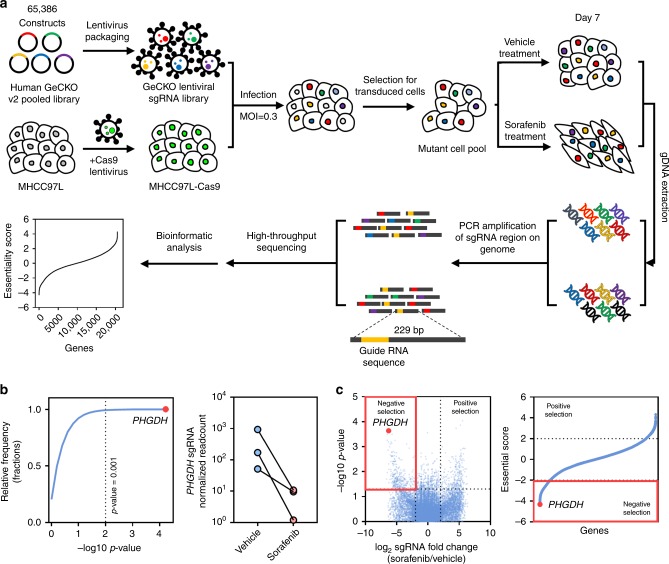
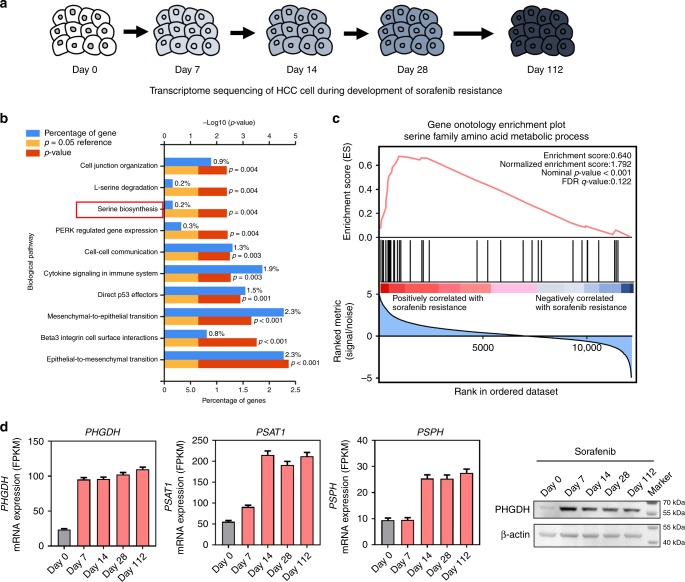
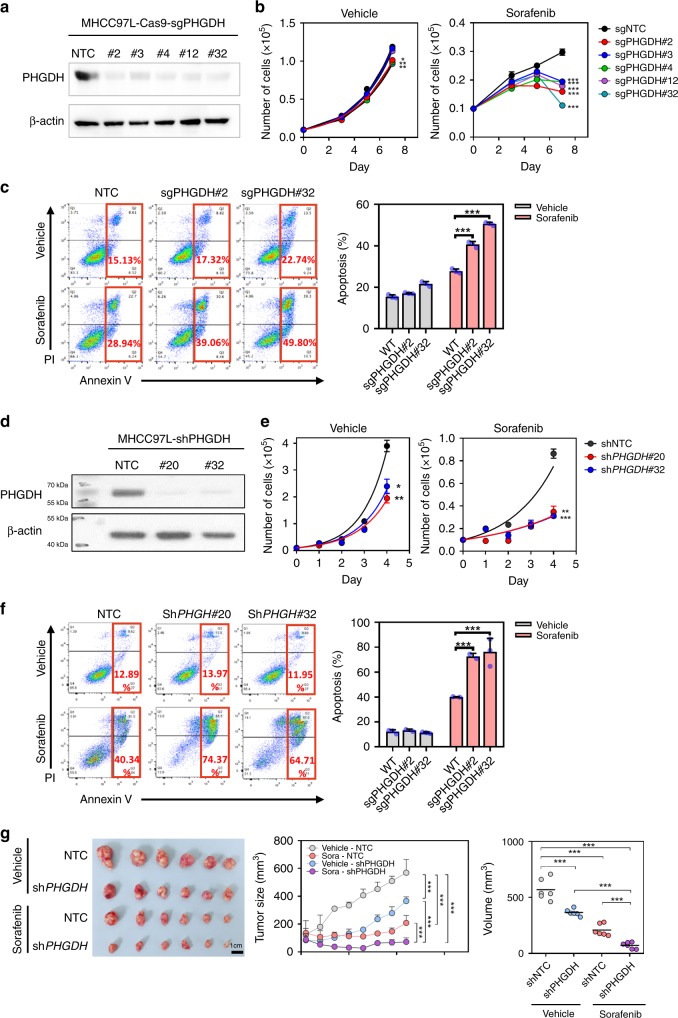
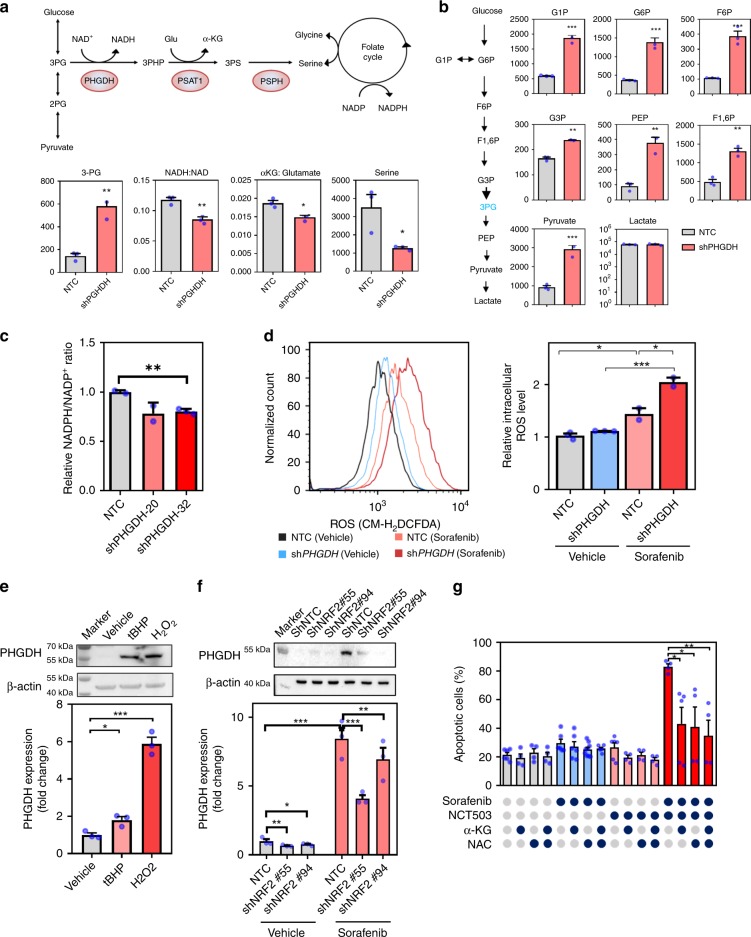
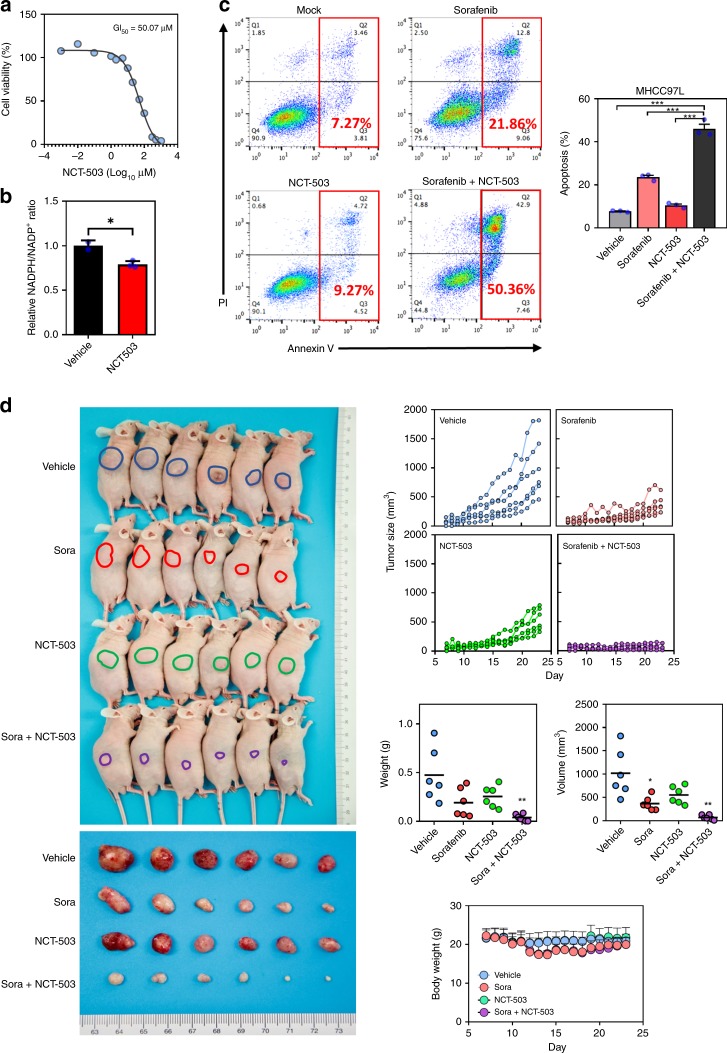
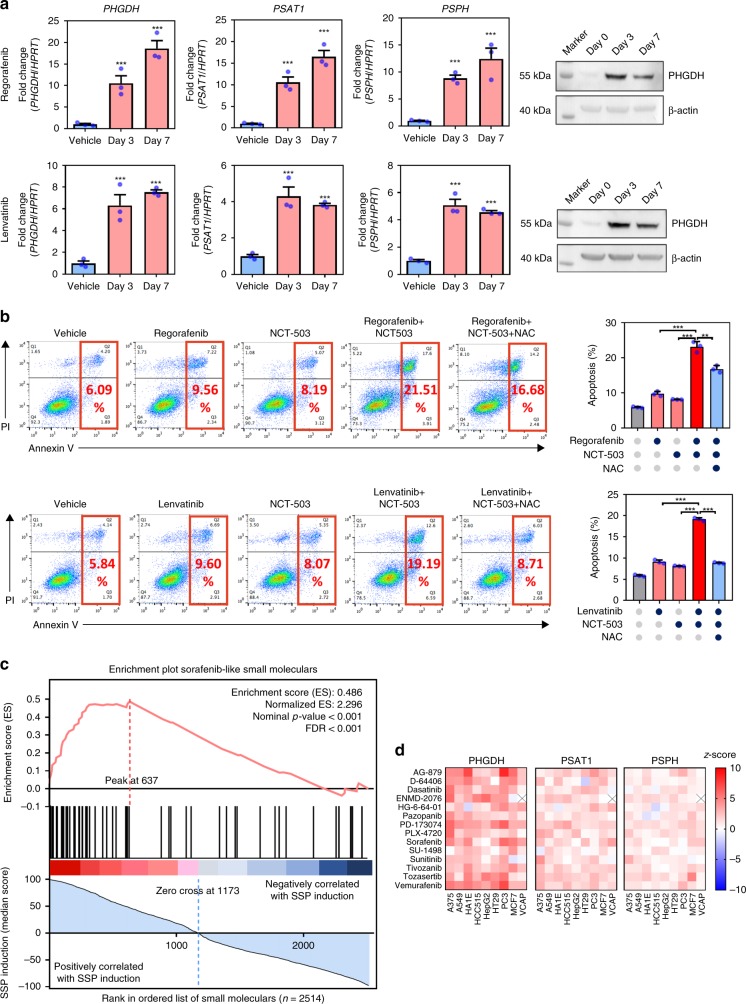
Sorafenib is the standard treatment for advanced hepatocellular carcinoma (HCC). However, the development of drug resistance is common. By using genome-wide CRISPR/Cas9 library screening, we identify phosphoglycerate dehydrogenase (PHGDH), the first committed enzyme in the serine synthesis pathway (SSP), as a critical driver for Sorafenib resistance. Sorafenib treatment activates SSP by inducing PHGDH expression. With RNAi knockdown and CRISPR/Cas9 knockout models, we show that inactivation of PHGDH paralyzes the SSP and reduce the production of αKG, serine, and NADPH. Concomitantly, inactivation of PHGDH elevates ROS level and induces HCC apoptosis upon Sorafenib treatment. More strikingly, treatment of PHGDH inhibitor NCT-503 works synergistically with Sorafenib to abolish HCC growth in vivo. Similar findings are also obtained in other FDA-approved tyrosine kinase inhibitors (TKIs), including Regorafenib or Lenvatinib. In summary, our results demonstrate that targeting PHGDH is an effective approach to overcome TKI drug resistance in HCC.
Overview
The claims and statistics of this paper haven’t been checked yet.
Free: it reads the open-access text and checks the first 5 claims that cite a source we can check. Create a free account to check every claim.
Integrity signals
Registry
Cites
Statistics
Figures
Verification
Claims the paper makes
The claims and statistics of this paper haven’t been checked yet.
Free: it reads the open-access text and checks the first 5 claims that cite a source we can check. Create a free account to check every claim.
Claims other papers make about this one
Each is checked against this paper’s own text: does it say what the citing paper says it does?
In the citing paper
“It has been used to identify genes that are essential for cancer cell survival, proliferation, and targeted drug resistance in vitro and in vivo [21–24].”
From Genome-wide CRISPR-cas9 knockout screening identifies GRB7 as a driver for MEK inhibitor resistance in KRAS mutant colon cancer (2022) · cites this paper as [22]
In the citing paper
“A subset of patients with MAFLD or hepatitis virus infection can develop progressive liver disease leading to cirrhosis and HCC [194].”
From Emerging role of liver-bone axis in osteoporosis (2024) · cites this paper as [194]
Self-check
Percentages, sums and reported differences re-computed from the paper’s own numbers.
The self-check needs the paper’s full text.
Citations
Cites
Sorafenib in advanced hepatocellular carcinoma
Llovet, J. M., Ricci, S., Mazzaferro, V., Hilgard, P., Gane, E., Blanc, J.-F., de Oliveira, A. C., Santoro, A., Raoul, J.-L., Forner, A., et al. (2008) · New England Journal of Medicine · doi:10.1056/nejmoa0708857 · Cited by 13,097
CRISPR Provides Acquired Resistance Against Viruses in Prokaryotes
Barrangou, R., Fremaux, C., Deveau, H., Richards, M., Boyaval, P., Moineau, S., Romero, D. A., & Horvath, P. (2007) · Science · doi:10.1126/science.1138140 · Cited by 5,947
Sorafenib in Advanced Hepatocellular Carcinoma
정, 재. (2008) · Cited by 5,586
Kudo, M., Finn, R. S., Qin, S., Han, K.-H., Ikeda, K., Piscaglia, F., Baron, A., Park, J.-W., Han, G., Jassem, J., et al. (2018) · The Lancet · doi:10.1016/s0140-6736(18)30207-1 · Cited by 5,497
Improved vectors and genome-wide libraries for CRISPR screening
Sanjana, N. E., Shalem, O., & Zhang, F. (2014) · Nature Methods · doi:10.1038/nmeth.3047 · Cited by 5,239
El-Khoueiry, A. B., Sangro, B., Yau, T., Crocenzi, T. S., Kudo, M., Hsu, C., Kim, T.-Y., Choo, S.-P., Trojan, J., Welling, T. H., et al. (2017) · The Lancet · doi:10.1016/s0140-6736(17)31046-2 · Cited by 4,280
Bruix, J., Qin, S., Merle, P., Granito, A., Huang, Y.-H., Bodoky, G., Pracht, M., Yokosuka, O., Rosmorduc, O., Breder, V., et al. (2017) · The Lancet · doi:10.1016/s0140-6736(16)32453-9 · Cited by 3,653
A Next Generation Connectivity Map: L1000 Platform and the First 1,000,000 Profiles
Subramanian, A., Narayan, R., Corsello, S. M., Peck, D. D., Natoli, T. E., Lu, X., Gould, J., Davis, J. F., Tubelli, A. A., Asiedu, J. K., et al. (2017) · Cell · doi:10.1016/j.cell.2017.10.049 · Cited by 3,515
Li, W., Xu, H., Xiao, T., Cong, L., Love, M. I., Zhang, F., Irizarry, R. A., Liu, J. S., Brown, M., & Liu, X. S. (2014) · Genome Biology · doi:10.1186/s13059-014-0554-4 · Cited by 2,684
Functional genomics reveal that the serine synthesis pathway is essential in breast cancer
Possemato, R., Marks, K. M., Shaul, Y. D., Pacold, M. E., Kim, D., Birsoy, K., Sethumadhavan, S., Woo, H.-K., Jang, H. G., Jha, A. K., et al. (2011) · Nature · doi:10.1038/nature10350 · Cited by 1,683
Cited by
Exploring treatment options in cancer: tumor treatment strategies
Liu, B., Zhou, H., Tan, L., Siu, K. T. H., & Guan, X.-Y. (2024) · Signal Transduction and Targeted Therapy · doi:10.1038/s41392-024-01856-7 · Cited by 1,201
Rational combinations of targeted cancer therapies: background, advances and challenges
Jin, H., Wang, L., & Bernards, R. (2023) · Nature Reviews Drug Discovery · doi:10.1038/s41573-022-00615-z · Cited by 503
Xu, Y., & Li, Z. (2020) · Computational and Structural Biotechnology Journal · doi:10.1016/j.csbj.2020.08.031 · Cited by 404
Mechanisms of drug resistance in HCC
Ladd, A. D., Duarte, S., Sahin, I., & Zarrinpar, A. (2024) · Hepatology · doi:10.1097/hep.0000000000000237 · Cited by 363
“[ 68 ] KEAP1 has been identified as a key gene related to acquired sorafenib resistance.”
BackgroundHypoxia, Metabolic Reprogramming, and Drug Resistance in Liver Cancer
Bao, M. H.-R., & Wong, C. C.-L. (2021) · Cells · doi:10.3390/cells10071715 · Cited by 316
“Regorafenib or Lenvatinib significantly induced expressions of genes in SSP, including PHGDH, PSAT1 and PSPH, in HCC cells [65].”
BackgroundMethodSelf-citationYang, Y., Li, S., Wang, Y., Zhao, Y., & Li, Q. (2022) · Signal Transduction and Targeted Therapy · doi:10.1038/s41392-022-01168-8 · Cited by 294
Lu, Y., Zhu, J., Zhang, Y., Li, W., Xiong, Y., Fan, Y., Wu, Y., Zhao, J., Shang, C., Liang, H., et al. (2024) · Advanced Science · doi:10.1002/advs.202401399 · Cited by 215
Eun, J. W., Yoon, J. H., Ahn, H. R., Kim, S., Kim, Y. B., Lim, S. B., Park, W., Kang, T. W., Baek, G. O., Yoon, M. G., et al. (2023) · Cancer Communications · doi:10.1002/cac2.12414 · Cited by 200
“Various studies have investigated the mechanisms underlying HCC resistance to TKIs in an attempt to identify novel therapeutic targets to overcome resistance [30, 31].”
BackgroundRecent advances and applications of CRISPR-Cas9 in cancer immunotherapy
Liu, Z., Shi, M., Ren, Y., Xu, H., Weng, S., Ning, W., Ge, X., Liu, L., Guo, C., Duo, M., et al. (2023) · Molecular Cancer · doi:10.1186/s12943-023-01738-6 · Cited by 180
“For instance, the metabolism-related factor Regnase-I is a negative regulator of antitumor response [110].”
BackgroundAcquired resistance in cancer: towards targeted therapeutic strategies
Soragni, A., Knudsen, E. S., O’Connor, T. N., Tognon, C. E., Tyner, J. W., Gini, B., Kim, D., Bivona, T. G., Zang, X., Witkiewicz, A. K., et al. (2025) · Nature reviews. Cancer · doi:10.1038/s41568-025-00824-9 · Cited by 182
New insights into antiangiogenic therapy resistance in cancer: Mechanisms and therapeutic aspects
Huang, M., Lin, Y., Wang, C., Deng, L., Chen, M., Assaraf, Y. G., Chen, Z.-S., Ye, W., & Zhang, D. (2022) · Drug Resistance Updates · doi:10.1016/j.drup.2022.100849 · Cited by 173
Shen, L., Zhang, J., Zheng, Z., Yang, F., Liu, S., Wu, Y., Chen, Y., Xu, T., Mao, S., Yan, Y., et al. (2022) · International Journal of Biological Sciences · doi:10.7150/ijbs.74546 · Cited by 170
“identified PHGDH as a key driver of sorafenib resistance in liver cancer by CRISPR/Cas9 library screening [24].”
BackgroundDrug Combination in Cancer Treatment—From Cocktails to Conjugated Combinations
Gilad, Y., Gellerman, G., Lonard, D. M., & O’Malley, B. W. (2021) · Cancers · doi:10.3390/cancers13040669 · Cited by 167
Impact of cancer metabolism on therapy resistance – Clinical implications
Gonçalves, A. C., Richiardone, E., Jorge, J., Polónia, B., Xavier, C. P. R., Salaroglio, I. C., Riganti, C., Vasconcelos, M. H., Corbet, C., & Sarmento-Ribeiro, A. B. (2021) · Drug Resistance Updates · doi:10.1016/j.drup.2021.100797 · Cited by 164
Li, Y., Xia, J., Shao, F., Zhou, Y., Yu, J., Wu, H., Du, J., & Ren, X. (2020) · Biochemical and Biophysical Research Communications · doi:10.1016/j.bbrc.2020.10.083 · Cited by 162
Targeting autophagy in prostate cancer: preclinical and clinical evidence for therapeutic response
Ashrafizadeh, M., Paskeh, M. D. A., Mirzaei, S., Gholami, M. H., Zarrabi, A., Hashemi, F., Hushmandi, K., Hashemi, M., Nabavi, N., Crea, F., et al. (2022) · Journal of Experimental & Clinical Cancer Research · doi:10.1186/s13046-022-02293-6 · Cited by 157
Xu, J., Ji, L., Ruan, Y., Wan, Z., Lin, Z., Xia, S., Tao, L., Zheng, J., Cai, L., Wang, Y., et al. (2021) · Signal Transduction and Targeted Therapy · doi:10.1038/s41392-021-00594-4 · Cited by 154
“Notably, our findings are consistent with a recent report from a genome-wide analysis of genes critical for sorafenib resistance.(43) The study found that phosphoglycerate dehydrogenase (PHGDH) is a critical driver for HCC sorafenib resistance.”
ResultWang, K., Luo, L., Fu, S., Wang, M., Wang, Z., Dong, L., Wu, X., Dai, L., Peng, Y., Shen, G., et al. (2023) · Nature Communications · doi:10.1038/s41467-023-36708-5 · Cited by 149
Meng, X. L., Lou, Q., Yang, W., Wang, Y., Chen, R., Wang, L., Xu, T., & Zhang, L. (2021) · 癌症:英文版 · doi:10.1002/cac2.12194 · Cited by 148
Challenge and countermeasures for EGFR targeted therapy in non-small cell lung cancer
Tian, X., Gu, T., Lee, M., & Dong, Z. (2021) · Biochimica et Biophysica Acta (BBA) - Reviews on Cancer · doi:10.1016/j.bbcan.2021.188645 · Cited by 145
Metabolic reprogramming in hepatocellular carcinoma: mechanisms and therapeutic implications
Park, S., & Hall, M. N. (2025) · Experimental & Molecular Medicine · doi:10.1038/s12276-025-01415-2 · Cited by 147
“PHGDH has been implicated as a driver of sorafenib resistance in HCC, and treatment with the PHGDH inhibitor NCT-503 has been shown to synergize with sorafenib, effectively inhibiting HCC growth in vivo 71 .”
New insights on sorafenib resistance in liver cancer with correlation of individualized therapy
Zhang, C., Wei-Qi, J., & Jin, D. (2020) · Biochimica et Biophysica Acta (BBA) - Reviews on Cancer · doi:10.1016/j.bbcan.2020.188382 · Cited by 138
Chen, Y., Li, L., Lan, J., Cui, Y., Rao, X., Zhao, J., Xing, T., Ju, G., Song, G., Lou, J., et al. (2022) · Molecular Cancer · doi:10.1186/s12943-021-01466-9 · Cited by 135
Zhang, P., Zhou, C., Ren, X., Jing, Q., Gao, Y., Yang, C., Shen, Y., Zhou, Y., Hu, W., Jin, F., et al. (2023) · Redox Biology · doi:10.1016/j.redox.2023.103007 · Cited by 136
“Currently, the FDA-approved chemotherapeutics for the treatment of HCC involve tyrosine kinase inhibitors sorafenib and lenvatinib [5,6].”
BackgroundTherapy of Primary Liver Cancer
Feng, M., Pan, Y., Kong, R., & Shu, S. (2020) · The Innovation · doi:10.1016/j.xinn.2020.100032 · Cited by 124
“During this time, many patients have benefited, though others quickly developed resistance to sorafenib.(104) Lenvatinib.”
Amino Acid Metabolism in Cancer Drug Resistance
Yoo, H.-C., & Han, J. M. (2022) · Cells · doi:10.3390/cells11010140 · Cited by 124
“Moreover, combined PHGDH inhibition and sorafenib treatment synergistically decreased tumor growth in vivo [84].”
BackgroundWang, J., Zeng, L., Wu, N., Liang, Y., Jin, J., Fan, M., Lai, X., Chen, Z., Pan, Y., Zeng, F., et al. (2023) · Drug Resistance Updates · doi:10.1016/j.drup.2023.100985 · Cited by 110
The Role of D-3-Phosphoglycerate Dehydrogenase in Cancer
Zhao, X., Fu, J., Du, J., & Xu, W. (2020) · International Journal of Biological Sciences · doi:10.7150/ijbs.41051 · Cited by 90
“PHGDH knocked down with RNAi and knocked out by CRISPR/Cas9 or inactivated by inhibitor can overcome tyrosine kinase inhibitor (TKI) drug resistance, including sorafenib, regorafenib, or lenvatinib, in hepatocellular carcinoma (HCC) [93].”
BackgroundPHGDH: a novel therapeutic target in cancer
Lee, C. M., Hwang, Y., Kim, M., Park, Y.-C., Kim, H., & Fang, S. (2024) · Experimental & Molecular Medicine · doi:10.1038/s12276-024-01268-1 · Cited by 99
Serine-dependent redox homeostasis regulates glioblastoma cell survival
Engel, A. L., Lorenz, N. I., Klann, K., Münch, C., Depner, C., Steinbach, J. P., Ronellenfitsch, M. W., & Luger, A.-L. (2020) · British Journal of Cancer · doi:10.1038/s41416-020-0794-x · Cited by 85
Advanced Nanotheranostics of CRISPR/Cas for Viral Hepatitis and Hepatocellular Carcinoma
Kong, H., Ju, E., Yi, K., Xu, W., Lao, Y., Cheng, D., Zhang, Q., Tao, Y., Li, M., & Ding, J. (2021) · Advanced Science · doi:10.1002/advs.202102051 · Cited by 85
Genome-scale CRISPR-Cas9 knockout screening in hepatocellular carcinoma with lenvatinib resistance
Lu, Y., Shen, H., Huang, W., He, S., Chen, J., Zhang, D., Shen, Y., & Sun, Y. (2021) · Cell Death Discovery · doi:10.1038/s41420-021-00747-y · Cited by 84
“For example, targeting PHGDH is an effective approach for overcoming sorafenib drug resistance in HCC [11].”
BackgroundHuang, Y., Yang, X. F., Meng, Y., Shao, C., Liao, J., Li, F., Li, R., Jing, Y., & Huang, A. (2021) · Cell & Bioscience · doi:10.1186/s13578-021-00683-5 · Cited by 82
“However, due to aggressive growth and late symptom presentation, most patients with HCC are diagnosed at advanced stages and are not eligible for surgical treatments [4].”
BackgroundYu, Q., Liu, Y., Yu, B., Hu, Y., Zhang, N., Zheng, Y., Yang, M., & Xu, F. (2020) · Advanced Science · doi:10.1002/advs.202001424 · Cited by 81
High Fructose Drives the Serine Synthesis Pathway in Acute Myeloid Leukemic Cells
Jeong, S., Savino, A. M., Chirayil, R., Barin, E., Cheng, Y., Park, S., Schurer, A., Mullarky, E., Cantley, L. C., Kharas, M. G., et al. (2020) · Cell Metabolism · doi:10.1016/j.cmet.2020.12.005 · Cited by 81
“The SSP has been reported to play a critical role in multiple cancers (Locasale et al., 2011; Possemato et al., 2011; Reid et al., 2018; Wei et al., 2019; Weng et al., 2018), but the importance of the redox cofactors, NAD+ ad NADH, on regulating the SSP is beginning to be appreciated (Diehl et al.”
BackgroundEffect of CRISPR/Cas9-Edited PD-1/PD-L1 on Tumor Immunity and Immunotherapy
Xu, Y., Chen, C., Guo, Y., Hu, S., & Sun, Z. (2022) · Frontiers in Immunology · doi:10.3389/fimmu.2022.848327 · Cited by 78
“At present, Cas9 technology has been used in the laboratory, and various sgRNA libraries constructed have revealed the internal molecular regulatory mechanisms of tumor proliferation and metastasis (79), tumor drug resistance (80, 81), tumor immune escape (82) and other malignant behaviors.”
BackgroundMou, L., Tian, X., Zhou, B., Zhan, Y., Chen, J., Lu, Y., Deng, J., Deng, Y., Wu, Z., Li, Q., et al. (2021) · Frontiers in Oncology · doi:10.3389/fonc.2021.752725 · Cited by 77
Zhou, P., Wei, J., Yuhua, L., Wang, L., & Zhang, Y. (2021) · Frontiers in Oncology · doi:10.3389/fonc.2021.661758 · Cited by 76
“Indeed, the median survival rate of advanced HCC patients is about nine months and the 5year overall survival rate is only 10% (2).”
BackgroundFornari, F., Giovannini, C., Piscaglia, F., & Gramantieri, L. (2021) · Journal of Hepatocellular Carcinoma · doi:10.2147/jhc.s285726 · Cited by 75
“a promising combinational option for the treatment of HCC.(18) A similar methodological approach applied on”
MethodCycling back to folate metabolism in cancer
Lee, Y., Vousden, K. H., & Hennequart, M. (2024) · Nature Cancer · doi:10.1038/s43018-024-00739-8 · Cited by 76
“Upregulation of 1C metabolism-mediated antioxidant defense may also contribute to therapy resistance 105 .”
Yu, C., Luo, D., Yu, J., Zhang, M., Zheng, X., Xu, G., Wang, J., Wang, H., Xu, Y., Jiang, K., et al. (2022) · Oncogene · doi:10.1038/s41388-021-02077-w · Cited by 70
Self-citationA retrospective overview of PHGDH and its inhibitors for regulating cancer metabolism
Zhao, J.-Y., Feng, K., Wang, F., Zhang, J., Cheng, J. F., Lin, G., Gao, D., & Tian, P. (2021) · European Journal of Medicinal Chemistry · doi:10.1016/j.ejmech.2021.113379 · Cited by 70
Therapeutic Targeting of Hypoxia-Inducible Factors in Cancer
Din, S. M. U., Streit, S., Huynh, B., Hana, C., Abraham, A., & Hussein, A. (2024) · International Journal of Molecular Sciences · doi:10.3390/ijms25042060 · Cited by 60
“Applicability beyond sorafenib resistance requires clarification [38].”
Ou, X., Ma, Q., Yin, W., Ma, X., & He, Z. (2021) · Frontiers in Cell and Developmental Biology · doi:10.3389/fcell.2021.674467 · Cited by 64
Huang, S., Ma, Z., Zhou, Q., Wang, A., Gong, Y., Li, Z., Wang, S., Yan, Q., Wang, D., Hou, B., et al. (2022) · International Journal of Biological Sciences · doi:10.7150/ijbs.69969 · Cited by 64
“However, RNAi by shRNA only knocks down the expression of target mRNA without eliminating the targeted genes [14-15].”
BackgroundOncology Therapeutics Targeting the Metabolism of Amino Acids
Muhammad, N., Lee, H. M., & Kim, J. (2020) · Cells · doi:10.3390/cells9081904 · Cited by 62
“More importantly, a recent study showed that NCT-503 works synergistically with sorafenib to inhibit hepatocellular carcinoma (HCC) growth in vivo [97].”
BackgroundPHGDH as a mechanism for resistance in metabolically-driven cancers
Rathore, R., Schutt, C. R., & Tine, B. A. V. (2020) · Cancer Drug Resistance · doi:10.20517/cdr.2020.46 · Cited by 61
“Wei L, Lee D, Law CT, Zhang MS, Shen J, et al. Genome-wide CRISPR/Cas9 library screening identified PHGDH as a critical driver for Sorafenib resistance in HCC. Nat Commun 2019;10:4681.”
BackgroundInfluentialLoss of lncRNA LINC01056 leads to sorafenib resistance in HCC
Chan, Y.-T., Wu, J., Lu, Y., Li, Q., Feng, Z., Xu, L., Yuan, H., Xing, T., Zhang, C., Tan, H., et al. (2024) · Molecular Cancer · doi:10.1186/s12943-024-01988-y · Cited by 62
“Via a knockout approach, essential genes can be identified using negative selection [17].”
BackgroundExploring liver cancer biology through functional genetic screens
Wang, C., Cao, Y., Yang, C. G., Bernards, R., & Qin, W. (2021) · Nature Reviews Gastroenterology & Hepatology · doi:10.1038/s41575-021-00465-x · Cited by 60
Progress and Perspective of CRISPR‐Cas9 Technology in Translational Medicine
Zheng, R., Zhang, L., Parvin, R., Su, L., Chi, J., Shi, K., Ye, F., & Huang, X. (2023) · Advanced Science · doi:10.1002/advs.202300195 · Cited by 60
Bao, M. H., Yang, C., Tse, A. P., Wei, L., Lee, D., Zhang, M. S., Goh, C. C., Chiu, D. K., Yuen, V. W., Law, C., et al. (2021) · Cell Reports · doi:10.1016/j.celrep.2020.108676 · Cited by 60
Self-citationWang, L., Wang, P., Chen, X., Yang, H., Song, S., Song, Z., Li, J., Chen, H., Bao, X., Guo, N., et al. (2023) · EMBO Molecular Medicine · doi:10.15252/emmm.202216235 · Cited by 59
“Although several reports have performed CRISPR/Cas9 screening to identify modifiers of the PARPi response (Zimmermann et al, 2018; Wei et al, 2019; Clements et al, 2020), our study is the first to report MCRS1 as a candidate modifier of response to PARPi.”
BackgroundSelf-citationLiu, N., Chen, L., Yan, M., Tao, Q., Wu, J., Chen, J., Chen, X., Zhang, W., & Peng, C. (2023) · Research · doi:10.34133/research.0127 · Cited by 41
“In addition, PHGDH, PSAT1, PSPH, and SHMT are key enzymes related to serine metabolism [55].”
BackgroundRathore, R., Caldwell, K. E., Schutt, C. R., Brashears, C. B., Prudner, B. C., Ehrhardt, W. R., Leung, C. H., Lin, H. Y., Daw, N. C., Beird, H. C., et al. (2021) · Cell Reports · doi:10.1016/j.celrep.2020.108678 · Cited by 59
“High PHGDH expression has been identified as a critical driver of sorafenib resistance, suggesting that PHGDH biology can drive efficacy of mTOR inhibition (Wei et al., 2019).”
Hou, J., He, Z., Liu, T., Chen, D., Wang, B., Wen, Q., & Zheng, X. (2022) · Frontiers in Oncology · doi:10.3389/fonc.2022.755053 · Cited by 59
“molecular targets VEGFR/PDGF inhibitor Hepatocellular carcinoma PHGDH (201), CDK12 (182) SGOL1 (181), KEAP1 (183),”
BackgroundInfluentialIntegrin subunit beta 8 contributes to lenvatinib resistance in HCC
Hou, W., Bridgeman, B. B., Malnassy, G., Ding, X., Cotler, S. J., Dhanarajan, A. R., & Qiu, W. (2022) · Hepatology Communications · doi:10.1002/hep4.1928 · Cited by 56
“committed enzyme in the serine synthesis pathway, was identified as a critical mediator of lenvatinib resistance in HCC cells.[9] Also, KEAP1 inactivation has been shown to contribute to lenvatinib resistance in human HCC cells through up- regulation of nuclear erythroid 2 p45- related factor 2 downstream genes and de…”
BackgroundLeung, R. W. H., & Lee, T. K. (2022) · Cancers · doi:10.3390/cancers14215468 · Cited by 57
Wang, C., Huang, M., Lin, Y., Zhang, Y., Pan, J., Jiang, C., Cheng, M.-J., Li, S., He, W., Li, Z., et al. (2023) · Nature Metabolism · doi:10.1038/s42255-023-00883-y · Cited by 55
“Metabolic reprogramming has been shown to mediate resistance to antiangiogenic therapy in many types of cancers 3,11 , which is associated with elevated expression of glucose and lactate transporters 12 or upregulation of metabolic enzymes related to glucose 12 , lipids 13 and amino acids 14 .”
BackgroundSerine Metabolic Reprogramming in Tumorigenesis, Tumor Immunity, and Clinical Treatment
Wang, S., Xiaoxue, Y., Guanbin, S., Yang, L., Junyu, J., & Liu, W. (2023) · Advances in Nutrition · doi:10.1016/j.advnut.2023.05.007 · Cited by 55
Ye, W.-L., Huang, L., Yang, X., Wan, S., Gan, W.-J., Yang, Y., He, X., Liu, F., Guo, X., Liu, Y.-X., et al. (2024) · Proceedings of the National Academy of Sciences · doi:10.1073/pnas.2406936121 · Cited by 54
3-Phosphoglycerate dehydrogenase: a potential target for cancer treatment
Li, M., Wu, C., Yang, Y., Zheng, M., Yu, S., Wang, J., Chen, L., & Li, H. (2021) · Cellular Oncology · doi:10.1007/s13402-021-00599-9 · Cited by 54
CRISPR/Cas9 application in cancer therapy: a pioneering genome editing tool
Baghini, S. S., Gardanova, Z. R., Abadi, S. A. H., Zaman, B. A., İlhan, A., Shomali, N., Adili, A., Moghaddar, R., & Yaseri, A. F. (2022) · Cellular & Molecular Biology Letters · doi:10.1186/s11658-022-00336-6 · Cited by 53
“(2019) highlighted its potency to compromise Sorafenib resistance [114].”
BackgroundInfluentialLu, Y., Chan, Y.-T., Wu, J., Feng, Z., Yuan, H., Li, Q., Xing, T., Xu, L., Zhang, C., Tan, H., et al. (2023) · Drug Resistance Updates · doi:10.1016/j.drup.2023.101015 · Cited by 53
E-Cadherin Induces Serine Synthesis to Support Progression and Metastasis of Breast Cancer
Lee, G., Wong, C., Cho, A., West, J. J., Crawford, A. J., Russo, G. C., Si, B. R., Kim, J.-W., Hoffner, L. A., Jang, C., et al. (2024) · Cancer Research · doi:10.1158/0008-5472.can-23-3082 · Cited by 54
“Therefore, SSP upregulation is associated with aggressiveness and drug resistance of various cancers, including breast and liver cancers (14,15).”
Self-citationFeng, J., Lu, H. J., Ma, W., Tian, W., Lu, Z., Yang, H., Cai, Y., Cai, P., Sun, Y., Zhou, Z., et al. (2022) · Protein & Cell · doi:10.1007/s13238-022-00906-6 · Cited by 53
“© The Author(s) 2022 826 © The Author(s) 2022 P ro te in & C e ll 2019; Wei et al. 2019; Jin et al. 2021).”
Chen, Y., Zhao, D., Xiao, F., Li, X., Li, J., Su, Z., & Jiang, X. (2023) · Advanced Materials · doi:10.1002/adma.202209672 · Cited by 53
CRISPR Gene Editing of Human Primary NK and T Cells for Cancer Immunotherapy
Elmas, E., Saljoughian, N., Pereira, M. D. S. F., Tullius, B. P., Sorathia, K., Nakkula, R. J., Lee, D. A., & Kararoudi, M. N. (2022) · Frontiers in Oncology · doi:10.3389/fonc.2022.834002 · Cited by 51
Self-citationLinking Serine/Glycine Metabolism to Radiotherapy Resistance
Sánchez‐Castillo, A., Vooijs, M., & Kampen, K. R. (2021) · Cancers · doi:10.3390/cancers13061191 · Cited by 50
“In hepatocellular carcinoma (HCC), high intracellular serine has been identified as a common metabolic feature of kinase inhibitor resistance to sorafenib, erlotinib, U0126, among other MEK inhibitors, being an important contributor of activation of the MAPK pathway via ERK phosphorylation upon glutamine withdrawal [6…”
BackgroundHou, J., Wang, Y., Shi, L., Chen, Y., Xu, C., Saeedi, A., Pan, K., Bohat, R., Egan, N. A., McKenzie, J. A., et al. (2021) · Journal for ImmunoTherapy of Cancer · doi:10.1136/jitc-2020-001819 · Cited by 49
CRISPR based therapeutics: a new paradigm in cancer precision medicine
Das, S., Bano, S., Kapse, P., & Kundu, G. C. (2022) · Molecular Cancer · doi:10.1186/s12943-022-01552-6 · Cited by 50
Bao, X., Shen, N., Lou, Y., Yu, H., Wang, Y., Liu, L., Tang, Z., & Chen, X. (2021) · Theranostics · doi:10.7150/thno.58164 · Cited by 48
“The oral multikinase inhibitor sorafenib was FDA-approved as a first-line treatment for advanced HCC in 2007 [4].”
BackgroundSTMN1 as a novel prognostic biomarker in HCC correlating with immune infiltrates and methylation
Zhang, E.-D., Li, C., Fang, Y., Li, N., Xiao, Z., Chen, C., Wei, B., Wang, H., Xie, J., Miao, Y., et al. (2022) · World Journal of Surgical Oncology · doi:10.1186/s12957-022-02768-y · Cited by 48
“Background The most common type of primary liver cancer is hepatocellular carcinoma (HCC) [1].”
BackgroundWang, Q., Liu, J., Chen, Z., Zheng, J., Wang, Y., & Dong, J. (2023) · Biomedicine & Pharmacotherapy · doi:10.1016/j.biopha.2023.116021 · Cited by 49
Chen, Y., Lee, D., Kwan, K. K., Wu, M., Wang, G., Zhang, M. S., Deng, H., Cheu, J. W., Lau, M., Chan, C. Y. K., et al. (2025) · Journal of Hepatology · doi:10.1016/j.jhep.2025.06.034 · Cited by 50
Self-citationRecent applications, future perspectives, and limitations of the CRISPR-Cas system
Park, S.-J., Lee, G. E., Cho, S. M., & Choi, E.-H. (2025) · Molecular Therapy — Nucleic Acids · doi:10.1016/j.omtn.2025.102634 · Cited by 49
Serine Biosynthesis Is a Metabolic Vulnerability in IDH2-Driven Breast Cancer Progression
Barnabas, G. D., Lee, J. S., Shami, T., Harel, M., Beck, L., Selitrennik, M., Jerby‐Arnon, L., Erez, N., Ruppin, E., & Geiger, T. (2021) · Cancer Research · doi:10.1158/0008-5472.can-19-3020 · Cited by 47
“The efficacy of PHGDH inhibitors has been reported in in vitro and in vivo models of breast and renal cancers and necessitates the need for clinical trials to improve cancer therapy in the future (42, 47, 48).”
BackgroundLiu, Y., Hao, C., Li, L., Zhang, H., Zha, W., Longbin, M., Chen, L., & Gan, J. (2023) · Current Cancer Drug Targets · doi:10.2174/1568009623666230418121130 · Cited by 47
Review of applications of CRISPR-Cas9 gene-editing technology in cancer research
Zhao, Z., Li, C., Tong, F., Deng, J., Huang, G., & Sang, Y. (2021) · Biological Procedures Online · doi:10.1186/s12575-021-00151-x · Cited by 47
“identified the first activated enzyme phosphoglycerate dehydrogenase (PHGDH) in the serine synthesis pathway (SSP) as a critical driver of sorafenib resistance through a genome-wide CRISPR-Cas9 screening and verified that the PHGDH inhibitor NCT-503 was synergistic with sorafenib to impair hepatocellular carcinoma (HC…”
BackgroundBergamini, C., Leoni, I., Rizzardi, N., Melli, M., Galvani, G., Coadǎ, C. A., Giovannini, C., Monti, E., Liparulo, I., Valenti, F., et al. (2023) · Journal of Experimental & Clinical Cancer Research · doi:10.1186/s13046-023-02718-w · Cited by 45
“Similarly, Wei and coworkers demonstrated a synergistic anticancer activity of phosphoglycerate dehydrogenase (PHGDH) blocking in combination with sorafenib treatment, leading to reduced α-ketoglutarate, serine, and NADPH levels in the presence of increased ROS production [64], suggesting the alteration of the oxidati…”
BackgroundJin, L., Kiang, K. M. Y., Cheng, S. Y., & Leung, G. (2021) · Laboratory Investigation · doi:10.1038/s41374-021-00666-7 · Cited by 44
Target enzymes in serine‐glycine‐one‐carbon metabolic pathway for cancer therapy
Sun, W. Y., Zhao, E., & Cui, H. (2022) · International Journal of Cancer · doi:10.1002/ijc.34353 · Cited by 43
“Recent research has confirmed that the rate-limiting enzyme, PHGDH, is a key driver of sorafenib resistance based on a genome-wide CRISPR/Cas9 library screen.(148) PHGDH knockdown blocks the SGOC pathway, increases the ROS levels, and thereby induces cell apoptosis.”
BackgroundLi, S., Xu, L., Wu, G., Huang, Z., Huang, L., Zhang, F., Wei, C., Shen, Q., Li, R., Zhang, L., et al. (2023) · Advanced Science · doi:10.1002/advs.202207118 · Cited by 43
Dihydroartemisinin induces ferroptosis of hepatocellular carcinoma via inhibiting ATF4‐xCT pathway
Ji, J., Cheng, Z., Zhang, J., Wu, J., Xu, X., Guo, C., & Feng, J. (2024) · Journal of Cellular and Molecular Medicine · doi:10.1111/jcmm.18335 · Cited by 43
“42,43 increases glutathione depletion and lipid peroxidation, leading to sorafenib-induced ferroptosis.”
BackgroundChan, F.-F., Kwan, K. K., Seoung, D.-H., Chin, D. W., Ng, I. O., Wong, C. C., & Wong, C. (2024) · Molecular Therapy · doi:10.1016/j.ymthe.2024.10.025 · Cited by 43
Self-citationGao, L., Morine, Y., Yamada, S., Saito, Y., Ikemoto, T., Tokuda, K., Takasu, C., Miyazaki, K., & Shimada, M. (2021) · PLoS ONE · doi:10.1371/journal.pone.0256755 · Cited by 43
TMX2 potentiates cell viability of hepatocellular carcinoma by promoting autophagy and mitophagy
Zhang, W., Tang, Y., Yang, P., Chen, Y., Xu, Z., Qi, C., Huang, H., Liu, R., Qin, H., Ke, H., et al. (2024) · Autophagy · doi:10.1080/15548627.2024.2358732 · Cited by 41
Shu, Y., Hao, Y., Feng, J., Liu, H., Li, S., Feng, J., Jiang, Z., Ye, L., Zhou, Y., Sun, Y., et al. (2022) · The EMBO Journal · doi:10.15252/embj.2022111550 · Cited by 38
CRISPR applications in cancer diagnosis and treatment
Wang, M., Chen, M., Wu, X., Huang, X., & Yu, B. (2023) · Cellular & Molecular Biology Letters · doi:10.1186/s11658-023-00483-4 · Cited by 40
“The use of the PHGDH inhibitor NCT-503 successfully overcame the resistance, resulting in the abolition of in vivo HCC growth [44].”
BackgroundGenome-wide pan-GPCR cell libraries accelerate drug discovery
Yang, H., Wang, Y., Liu, W., He, T., Liao, J., Qian, Z., Zhao, J., Cong, Z., Sun, D., Liu, Z., et al. (2024) · Acta Pharmaceutica Sinica B · doi:10.1016/j.apsb.2024.06.023 · Cited by 39
Zhu, H., Liu, Q., Meng, Q., Zhang, L., Ju, S., Lang, J., Zhu, D., Chen, Y., Aishan, N., Ouyang, X., et al. (2024) · Journal of Experimental & Clinical Cancer Research · doi:10.1186/s13046-024-03169-7 · Cited by 38
“Lai Wei and colleagues employed this approach to conduct a screening of 986 genes implicated in Sorafenib resistance in 97 L cells [22].”
MethodDescription of CRISPR/Cas9 development and its prospect in hepatocellular carcinoma treatment
Wu, X., Ma, W., Mei, C., Chen, X., Yao, Y., Liu, Y., Qin, X., & Yuan, Y. (2020) · Journal of Experimental & Clinical Cancer Research · doi:10.1186/s13046-020-01603-0 · Cited by 38
ABI2 ‐mediated MEOX2 / KLF4‐NANOG axis promotes liver cancer stem cell and drives tumour recurrence
Chen, J., Li, H., Zhang, B., Xiong, Z., Jin, Z., Chen, J., Zheng, Y., Zhu, X.-N., & Zhang, S. (2022) · Liver International · doi:10.1111/liv.15412 · Cited by 38
Pan, Q., Yu, F., Jin, H., Zhang, P., Huang, X., Peng, J., Xie, X., Li, X., Ma, N., Yue, W., et al. (2023) · Advanced Science · doi:10.1002/advs.202300759 · Cited by 38
Luo, W., Zou, Z., Nie, Y., Luo, J., Ming, Z., Hu, X., Luo, T., Ouyang, M., Mingquan, L., Tang, H., et al. (2024) · Cell Death and Disease · doi:10.1038/s41419-024-06672-z · Cited by 37
Metabolic Reprogramming: A Crucial Contributor to Anticancer Drug Resistance
Zhu, Y., Yan, W., Tong, L., Yang, J., Ge, S., Fan, J., Jia, R., & Wen, X. (2025) · MedComm · doi:10.1002/mco2.70358 · Cited by 38
“It has been demonstrated to ameliorate ROS levels, overcoming resistance to TKIs, including sorafenib, regorafenib and lenvatinib, in HCC; erlotinib in NSCLC; and the proteasome inhibitor bortezomib in multiple myeloma [234–237].”
An, L., & Li, Z. (2025) · Biomarker Research · doi:10.1186/s40364-025-00844-5 · Cited by 38
Zhang, G., Yang, Y., Hu, H., Liu, K., Li, B., Zhu, Y., Wang, Z., Wu, Q., & Mei, Y. (2021) · Oncogene · doi:10.1038/s41388-021-01749-x · Cited by 38
“PHGDH is also identified as a critical driver for sorafenib resistance in hepatocellular carcinoma [18].”
BackgroundBi, F., An, Y., Sun, T., You, Y., & Yang, Q. F. (2021) · Frontiers in Oncology · doi:10.3389/fonc.2021.643129 · Cited by 37
Emerging role of liver-bone axis in osteoporosis
Gao, H., Peng, X., Li, N., Gou, L., Xu, T., Wang, Y., Qin, J., Liang, H., Ma, P., Li, S., et al. (2024) · Journal of Orthopaedic Translation · doi:10.1016/j.jot.2024.07.008 · Cited by 36
“A subset of patients with MAFLD or hepatitis virus infection can develop progressive liver disease leading to cirrhosis and HCC [194].”
BackgroundIdentification of indocyanine green as a STT3B inhibitor against mushroom α-amanitin cytotoxicity
Wang, B., Wan, A. H., Xu, Y., Zhang, R.-X., Zhao, B.-C., Zhao, X., Shi, Y., Zhang, X., Xue, Y., Luo, Y., et al. (2023) · Nature Communications · doi:10.1038/s41467-023-37714-3 · Cited by 38
Metadata
- Authors
- Wei, L., Lee, D., Law, C.-T., Zhang, M. S., Shen, J., Chin, D. W.-C., Zhang, A., Tsang, F. H.-C., Wong, C. L.-S., Ng, I. O.-L., Wong, C. C.-L., & Wong, C.-M.
- Affiliations
- University of Hong Kong (HK)
- ORCID
- Venue
- Nature Communications
- Published
- 2019-10-15
- Volume
- 10
- Issue
- 1
- Pages
- 4681-4681
- ISSN
- 2041-1723 (ISSN-L)
- PMC
- PMC6794322
- OpenAlex
- W2980925374
- Semantic Scholar
- ef35ed45b83674f5470672caf00a154a3fe90507
- Cited by
- 428
- References
- 48
- Citations by year
- 2026: 29 · 2025: 61 · 2024: 87 · 2023: 87 · 2022: 73 · 2021: 69 · 2020: 22
- FWCI
- 13.09
- Type
- journal article
- Language
- en
- Open access
- gold
- doi.org
- Licence
- cc-by
- creativecommons.org/licenses/by/4.0 (tdm)
- creativecommons.org/licenses/by/4.0 (vor)
- Locations
- Nature Communications (publishedVersion, cc-by)
- PubMed Central (publishedVersion, cc-by)
- PubMed (publishedVersion)
- RePEc: Research Papers in Economics (submittedVersion)
- DOAJ (DOAJ: Directory of Open Access Journals) (submittedVersion, cc-by-sa)
- DOAJ (DOAJ: Directory of Open Access Journals) (submittedVersion)
- Funders
- Food and Health Bureau of the Government of the Hong Kong Special Administrative Region | Health and Medical Research Fund (06171586, 03142936)
- Topics
- Life Sciences › Biochemistry, Genetics and Molecular Biology › Cancer Research › Cancer, Hypoxia, and Metabolism
- Health Sciences › Medicine › Hepatology › Hepatocellular Carcinoma Treatment and Prognosis
- Life Sciences › Biochemistry, Genetics and Molecular Biology › Cancer Research › Cancer, Lipids, and Metabolism
- Keywords
- PHGDH, sorafenib resistance, hepatocellular carcinoma, serine synthesis pathway, drug resistance, tyrosine kinase inhibitors, alpha-ketoglutarate, reactive oxygen species, apoptosis, regorafenib, lenvatinib, CRISPR-Cas9 screen
- MeSH terms
- Sorafenib, Antineoplastic Agents, Carcinoma, Hepatocellular, Humans, Liver Neoplasms, Phenylurea Compounds, Pyridines, Quinolines, Apoptosis, Reactive Oxygen Species, Drug Resistance, Neoplasm, Cell Line, Tumor, Phosphoglycerate Dehydrogenase, Gene Knockout Techniques, Gene Knock-In Techniques, CRISPR-Cas Systems
About these checks
Registry, retraction, Cites and statistics results are computed, not judged, with one exception: a printed reference that no index lists is read once by a model before it counts as a citation error. Claims are extracted by a model and kept only when their quote appears verbatim in the text; each cited source is then checked, with a model’s help, for whether it says what the claim relies on. Those verdicts can be wrong — read the claim’s quote and the cited source before relying on one.
Statistics and arithmetic are recomputed, not judged.
Confidence bands are shown only for fields calibrated on our annotated test set. None is calibrated yet, so no band is shown.
What counts as a claim ›How we measure confidence ›How we check this ›
Are you an author, or do you see a problem with this page? Request a review
Data sources
Bibliographic data: Semantic Scholar, OpenAlex, Crossref.
Contains information from the Semantic Scholar Academic Graph Datasets, made available under the ODC Attribution License (ODC-BY 1.0).
Semantic Scholar’s data is described in: Kinney, R., et al. (2023). The Semantic Scholar Open Data Platform. arXiv:2301.10140.
