

Genome-wide CRISPR/Cas9 library screening identified PHGDH as a critical driver for Sorafenib resistance in HCC
Open accessThe DOI matches its Crossref record; 48 of the 48 references it cites were found in a registry or an index.
Abstract
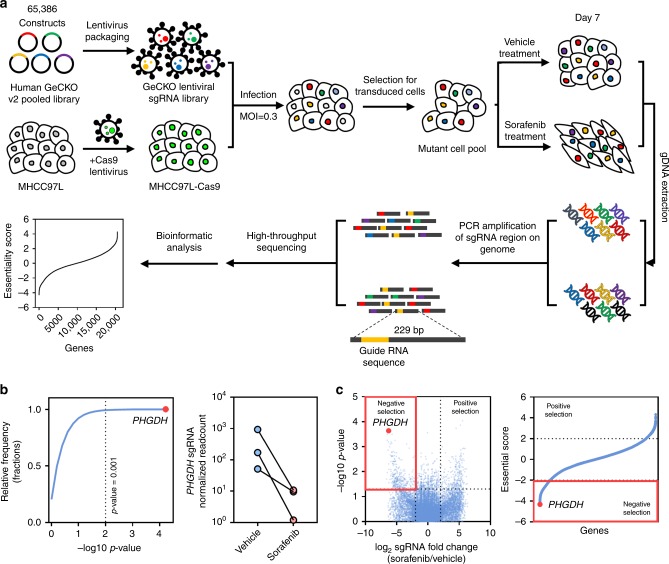
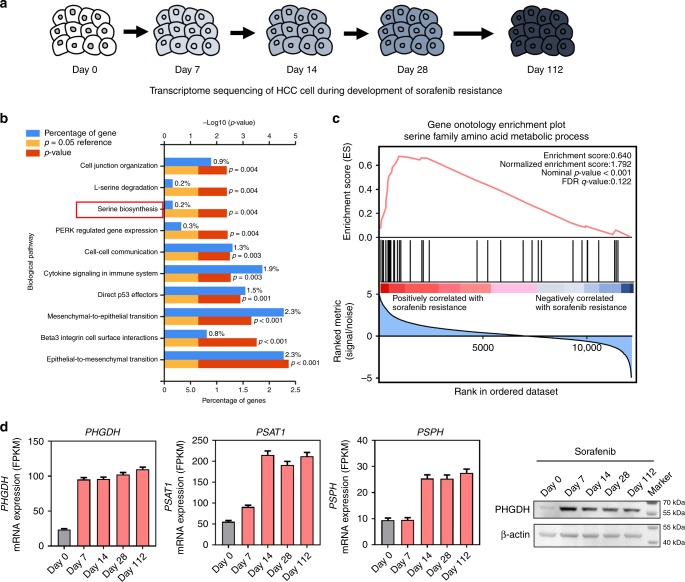
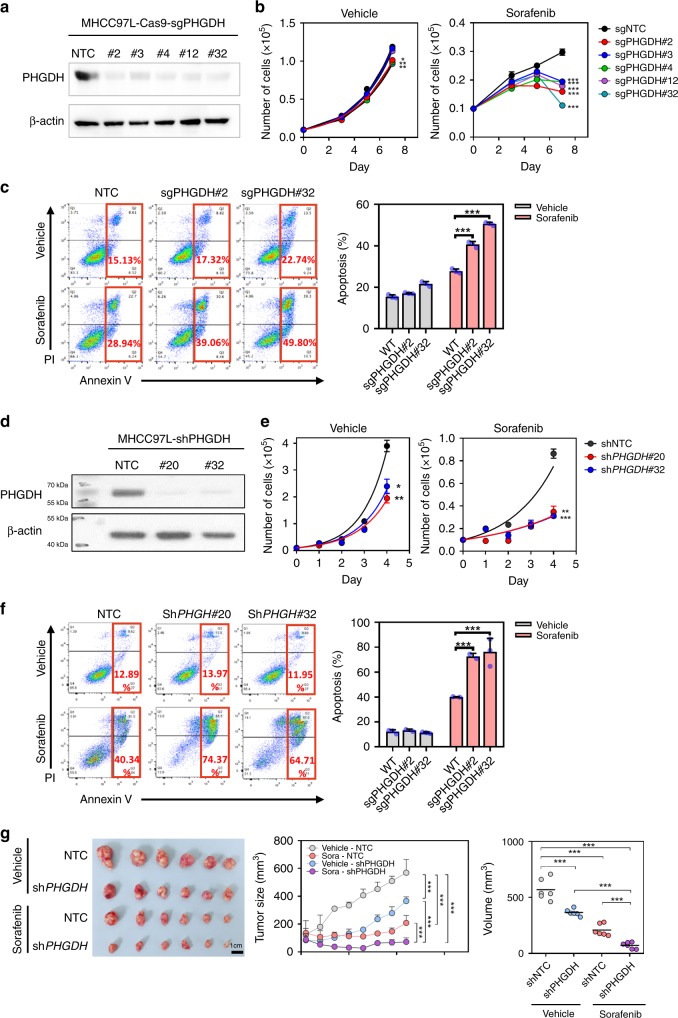
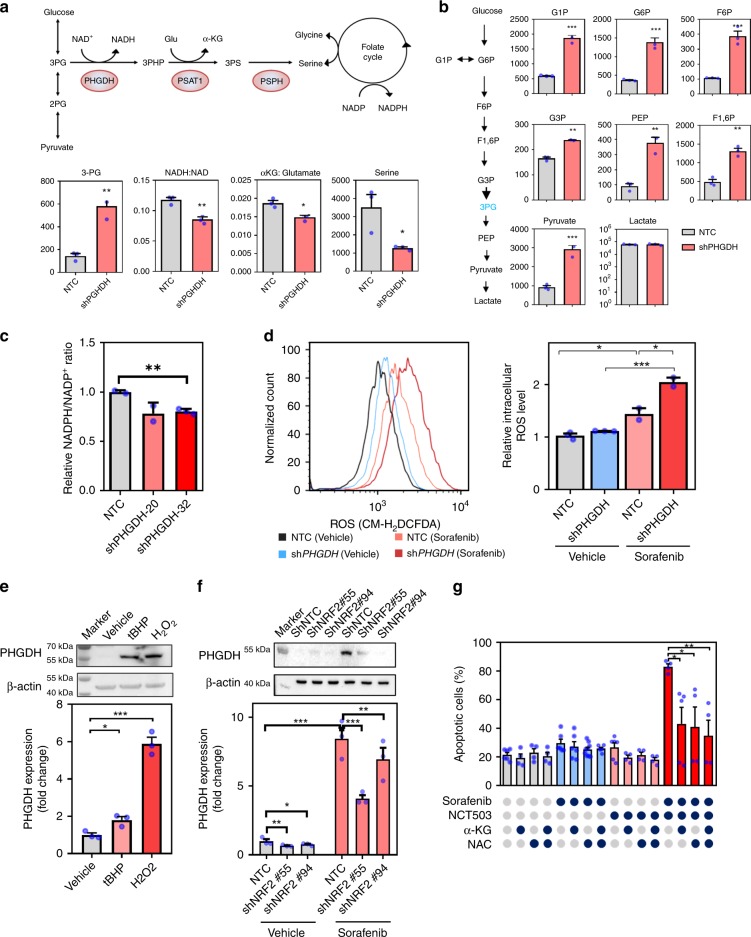
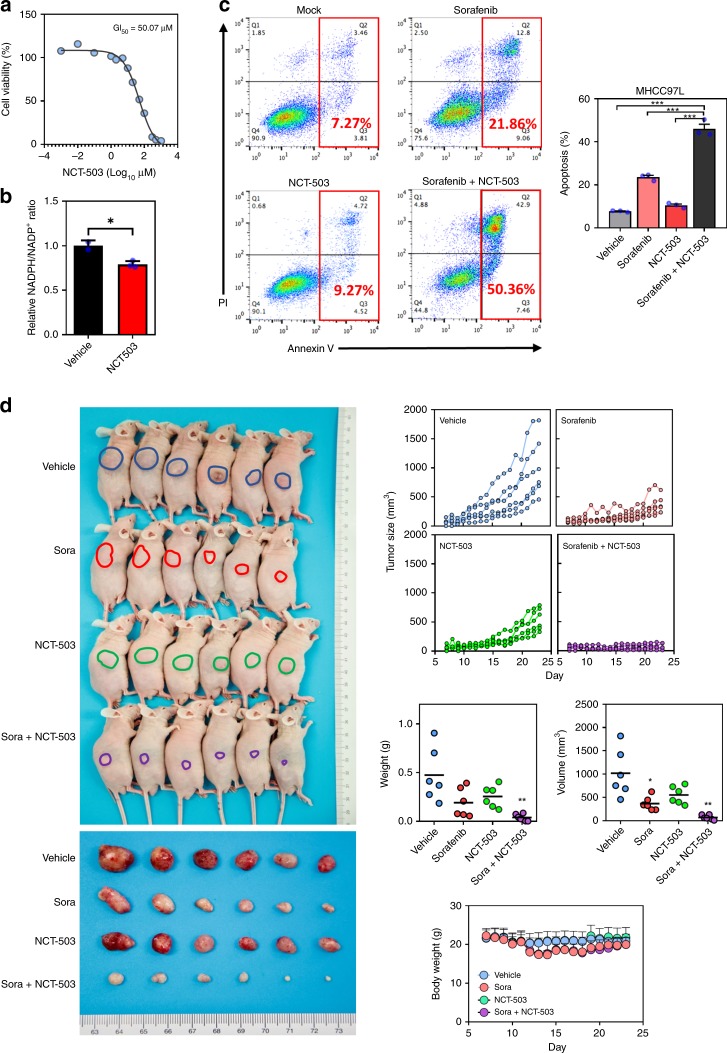
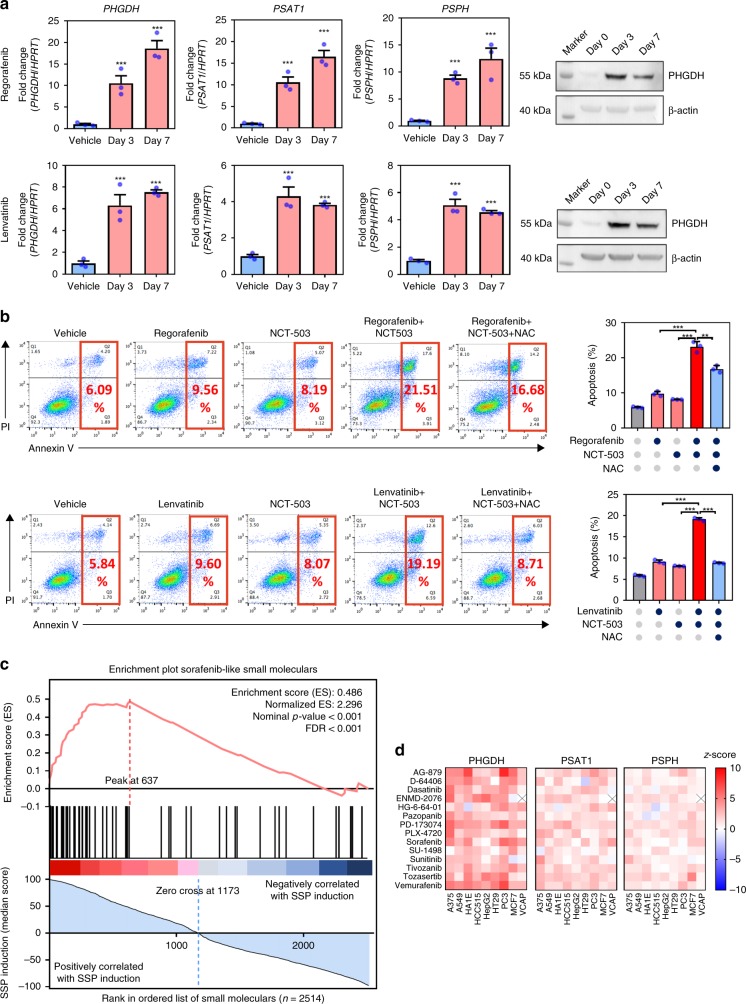
Sorafenib is the standard treatment for advanced hepatocellular carcinoma (HCC). However, the development of drug resistance is common. By using genome-wide CRISPR/Cas9 library screening, we identify phosphoglycerate dehydrogenase (PHGDH), the first committed enzyme in the serine synthesis pathway (SSP), as a critical driver for Sorafenib resistance. Sorafenib treatment activates SSP by inducing PHGDH expression. With RNAi knockdown and CRISPR/Cas9 knockout models, we show that inactivation of PHGDH paralyzes the SSP and reduce the production of αKG, serine, and NADPH. Concomitantly, inactivation of PHGDH elevates ROS level and induces HCC apoptosis upon Sorafenib treatment. More strikingly, treatment of PHGDH inhibitor NCT-503 works synergistically with Sorafenib to abolish HCC growth in vivo. Similar findings are also obtained in other FDA-approved tyrosine kinase inhibitors (TKIs), including Regorafenib or Lenvatinib. In summary, our results demonstrate that targeting PHGDH is an effective approach to overcome TKI drug resistance in HCC.
Overview
The claims and statistics of this paper haven’t been checked yet.
Free: it reads the open-access text and checks the first 5 claims that cite a source we can check. Create a free account to check every claim.
Integrity signals
Registry
Cites
Statistics
Figures
Verification
Claims the paper makes
The claims and statistics of this paper haven’t been checked yet.
Free: it reads the open-access text and checks the first 5 claims that cite a source we can check. Create a free account to check every claim.
Claims other papers make about this one
Each is checked against this paper’s own text: does it say what the citing paper says it does?
In the citing paper
“It has been used to identify genes that are essential for cancer cell survival, proliferation, and targeted drug resistance in vitro and in vivo [21–24].”
From Genome-wide CRISPR-cas9 knockout screening identifies GRB7 as a driver for MEK inhibitor resistance in KRAS mutant colon cancer (2022) · cites this paper as [22]
In the citing paper
“A subset of patients with MAFLD or hepatitis virus infection can develop progressive liver disease leading to cirrhosis and HCC [194].”
From Emerging role of liver-bone axis in osteoporosis (2024) · cites this paper as [194]
Self-check
Percentages, sums and reported differences re-computed from the paper’s own numbers.
The self-check needs the paper’s full text.
Citations
Cites
Sorafenib in advanced hepatocellular carcinoma
Llovet, J. M., Ricci, S., Mazzaferro, V., Hilgard, P., Gane, E., Blanc, J.-F., de Oliveira, A. C., Santoro, A., Raoul, J.-L., Forner, A., et al. (2008) · New England Journal of Medicine · doi:10.1056/nejmoa0708857 · Cited by 13,097
CRISPR Provides Acquired Resistance Against Viruses in Prokaryotes
Barrangou, R., Fremaux, C., Deveau, H., Richards, M., Boyaval, P., Moineau, S., Romero, D. A., & Horvath, P. (2007) · Science · doi:10.1126/science.1138140 · Cited by 5,947
Sorafenib in Advanced Hepatocellular Carcinoma
정, 재. (2008) · Cited by 5,586
Kudo, M., Finn, R. S., Qin, S., Han, K.-H., Ikeda, K., Piscaglia, F., Baron, A., Park, J.-W., Han, G., Jassem, J., et al. (2018) · The Lancet · doi:10.1016/s0140-6736(18)30207-1 · Cited by 5,497
Improved vectors and genome-wide libraries for CRISPR screening
Sanjana, N. E., Shalem, O., & Zhang, F. (2014) · Nature Methods · doi:10.1038/nmeth.3047 · Cited by 5,239
El-Khoueiry, A. B., Sangro, B., Yau, T., Crocenzi, T. S., Kudo, M., Hsu, C., Kim, T.-Y., Choo, S.-P., Trojan, J., Welling, T. H., et al. (2017) · The Lancet · doi:10.1016/s0140-6736(17)31046-2 · Cited by 4,280
Bruix, J., Qin, S., Merle, P., Granito, A., Huang, Y.-H., Bodoky, G., Pracht, M., Yokosuka, O., Rosmorduc, O., Breder, V., et al. (2017) · The Lancet · doi:10.1016/s0140-6736(16)32453-9 · Cited by 3,653
A Next Generation Connectivity Map: L1000 Platform and the First 1,000,000 Profiles
Subramanian, A., Narayan, R., Corsello, S. M., Peck, D. D., Natoli, T. E., Lu, X., Gould, J., Davis, J. F., Tubelli, A. A., Asiedu, J. K., et al. (2017) · Cell · doi:10.1016/j.cell.2017.10.049 · Cited by 3,515
Li, W., Xu, H., Xiao, T., Cong, L., Love, M. I., Zhang, F., Irizarry, R. A., Liu, J. S., Brown, M., & Liu, X. S. (2014) · Genome Biology · doi:10.1186/s13059-014-0554-4 · Cited by 2,684
Functional genomics reveal that the serine synthesis pathway is essential in breast cancer
Possemato, R., Marks, K. M., Shaul, Y. D., Pacold, M. E., Kim, D., Birsoy, K., Sethumadhavan, S., Woo, H.-K., Jang, H. G., Jha, A. K., et al. (2011) · Nature · doi:10.1038/nature10350 · Cited by 1,683
Cited by
Items 201–300 of 465
Potential Treatment Strategies for Hepatocellular Carcinoma Cell Sensitization to Sorafenib
Jiang, Z., & Dai, C. (2023) · Journal of Hepatocellular Carcinoma · doi:10.2147/jhc.s396231 · Cited by 15
“TKIs treatment.(80) There is an urgent need to understand the mechanisms underlying this resistance to potentiate the antitumor effects of sorafenib and identify novel chemotherapeutic agents.”
BackgroundGilad, Y., Eliaz, Y., Yu, Y., Dean, A. M., Han, S. J., Qin, L., O’Malley, B. W., & Lonard, D. M. (2021) · Communications Biology · doi:10.1038/s42003-021-01929-1 · Cited by 15
Wang, G., Ding, B., Sun, L., Guo, J., Wang, S., Li, W., Zhang, Y., Lv, J., & Qiu, W. (2022) · Frontiers in Genetics · doi:10.3389/fgene.2022.859544 · Cited by 14
“However, the cancer is often advanced when diagnosed and resection may thus no longer be appropriate (Wei et al., 2019).”
BackgroundSong, L., Xu, R., Cai, W., Liang, J., Cao, N., Gao, J., & Tang, X. (2023) · Scandinavian Journal of Immunology · doi:10.1111/sji.13271 · Cited by 14
Dong, Y., Chen, Y., Wang, Y., Zhao, X., Zi, R., Hao, J., Ding, Q., Jiang, H., Wang, X., Lu, F., et al. (2024) · Genes & Diseases · doi:10.1016/j.gendis.2024.101330 · Cited by 14
“29,30 However, their clinical efficacy in HCC is modest, with about a one-year extension of median overall survival.”
BackgroundAdvancements in elucidating the mechanisms of Sorafenib resistance in hepatocellular carcinoma
Huang, C. L., Li, Y., Zhang, F., Zhang, C., & Ding, Z. (2025) · International Journal of Surgery · doi:10.1097/js9.0000000000002294 · Cited by 14
“Conversely, downregulation of PHGDH expression has been shown to reverse Sorafenib resistance in HCC cells [ 136–138 ] .”
Genome-wide CRISPR screen identifies splicing factor SF3B4 in driving hepatocellular carcinoma
Guo, Y., Xu, M., Xue, H., Ding, X., Wong, A. M., Lin, N., Pu, D., Wong, A. M., Wang, X., Zhao, H., et al. (2025) · Science Advances · doi:10.1126/sciadv.adw7181 · Cited by 15
“Reports on CRISPR-Cas9 screening have, however, been largely conducted in cell lines ( 7 , 24 ), which somehow would render presence of artifacts from the long-term in vitro propagation.”
MiR-145-5p Suppresses Hepatocellular Carcinoma Progression by Targeting ABHD17C
Wang, L., Ma, X., Chen, Y., Zhang, J., Zhang, J., Wang, W. J., & Chen, S. (2022) · ONCOLOGIE · doi:10.32604/oncologie.2022.025693 · Cited by 14
Inferring cancer common and specific gene networks via multi-layer joint graphical model
Chen, Y., Zhang, X.-F., & Ou-Yang, L. (2023) · Computational and Structural Biotechnology Journal · doi:10.1016/j.csbj.2023.01.017 · Cited by 14
“For the HuH-1 cell line in HCC, the down-regulation of TBL1Y produces a dramatic increase in apoptosis in HCC cells [111].”
BackgroundHua, L., Song, Y., Min, J., Wang, R., Li, H., Zhu, L., Guo, Y., Gan, D., Li, S., Ma, P., et al. (2023) · Cancer Science · doi:10.1111/cas.15798 · Cited by 14
Competition between p53 and YY1 determines PHGDH expression and malignancy in bladder cancer
Shi, T., Yuan, Z., He, Y., Zhang, D., Chen, S., Wang, X., Yao, L., Shao, J., & Wang, X. (2023) · Cellular Oncology · doi:10.1007/s13402-023-00823-8 · Cited by 14
“PHGDH (phosphoglycerate dehydrogenase) is the first rate-limiting enzyme of SSP, and its mutation or abnormal expression can disrupt the ROS balance of tumor cells in the process of tumor cell proliferation [10] and drug resistance [11], which implies keeping the balance of the NADH/ NADPH pool.”
BackgroundMao, G., Li, L., Shan, C., Liang, B., Ma, L., & Zhang, S. (2022) · Frontiers in Medicine · doi:10.3389/fmed.2022.833301 · Cited by 14
“Risk factors associated with the etiology of HCC include hepatitis type B and C, cirrhosis, alcoholism, diabetes, non-alcoholic fatty liver disease (NAFLD) and toxin exposure (3, 4).”
BackgroundYe, J., Huang, X., Tian, S., Wang, J., Wang, H., Feng, H., Zhao, X., Cao, S., Xuan, Y., Li, X., et al. (2024) · Experimental Cell Research · doi:10.1016/j.yexcr.2024.113977 · Cited by 13
Shaikh, S., Chary, P. S., & Mehra, N. K. (2025) · ACS Applied Bio Materials · doi:10.1021/acsabm.4c01527 · Cited by 13
Li, K., Yi, X., Yu, Z., Xue, K., Wu, Y., Zhao, Y., Zhang, E., He, P., & Zeng, Q. (2025) · European Journal of Pharmacology · doi:10.1016/j.ejphar.2025.178211 · Cited by 13
Metabolic characteristics in hepatocellular carcinoma: amino acid metabolic reprogramming
Zhou, R., Li, Y., Li, G., Li, Y., Luo, L., Wang, B., & Wang, L. (2026) · Molecular Cancer · doi:10.1186/s12943-025-02492-7 · Cited by 13
“The PHGDH inhibitor NCT-503, when combined with tyrosine kinase inhibitors (TKIs) such as sorafenib and lenvatinib, can effectively inhibit HCC growth and overcome TKI resistance [266].”
Su, P., Yang, Y., & Zheng, H. (2026) · Frontiers in Immunology · doi:10.3389/fimmu.2026.1779543 · Cited by 13
Cai, Y., Xie, K., Alhmoud, M. N. A., Lan, T., Wan, H., Hu, D., Lan, L., Liu, C., & Wu, H. M. (2023) · Cancer Medicine · doi:10.1002/cam4.6422 · Cited by 13
“There are several limitations despite the promising results: (1) indeed, this was a retrospective study, the unknown variables may confound the result; thus, a prospective study including multiple medical centers needs to be conducted; (2) the population in subgroups were small to carry out a solid conclusion; therefo…”
BackgroundMethodResultInfluentialGenome-wide CRISPR screen identifies ESPL1 limits the response of gastric cancer cells to apatinib
Zhang, B., Chen, Y., Chen, X., Ren, Z., Xiang, H., Mao, L., & Zhu, G. (2024) · Cancer Cell International · doi:10.1186/s12935-024-03233-4 · Cited by 13
“Wei [20] et al. identified PHGDH as a critical driver for Sorafenib resistance in HCC by CRISPR/Cas9 library screening.”
BackgroundRole of ubiquitination-driven metabolisms in oncogenesis and cancer therapy
Yang, D., Yang, C., Huang, L., Guan, M. Y., & Song, C. (2025) · Seminars in Cancer Biology · doi:10.1016/j.semcancer.2025.02.004 · Cited by 13
Xing, H., Gao, M., Wang, Y., Zhang, X., Shi, J., Wang, X., Liu, X., Ma, Q., Kong, X., Yang, C., et al. (2022) · Clinical and Translational Medicine · doi:10.1002/ctm2.835 · Cited by 13
Moonlighting functions of phosphoglycerate dehydrogenase in cancer
Wang, C., An, S., Zhao, L., Li, S., Huang, J., & Ren, W. (2025) · Cell Reports · doi:10.1016/j.celrep.2025.115940 · Cited by 12
PHGDH drives 5-FU chemoresistance in colorectal cancer through the Hedgehog signaling
Mancini, C., Lori, G., Mattei, G., Iozzo, M., Desideri, D., Cianchi, F., Fortuna, L., Passagnoli, F., Massi, D., Ugolini, F., et al. (2025) · Journal of Experimental & Clinical Cancer Research · doi:10.1186/s13046-025-03447-y · Cited by 12
“…the high-PHGDH-mediated activation of SSP supports sorafenib resistance in hepatocellular carcinoma by sustaining enhanced antioxidant response [52]; similarly, PHGDH levels are significantly increased in lung adenocarcinoma that acquires resistance to erlotinib, regulating cellular redox…”
Zhang, H., Kong, W., Zhao, X., Xie, Y., Luo, D., & Chen, S. (2023) · BMC Medical Genomics · doi:10.1186/s12920-023-01463-5 · Cited by 12
Luo, T., Chen, X., Pan, W., Zhang, S., & Huang, J. (2024) · Cell Cycle · doi:10.1080/15384101.2024.2309020 · Cited by 12
“…different signaling pathways, including the Ras/Raf/mitogen-activated protein kinase (MAPK) pathway, vascular endothelial growth factor (VEGF), and platelet-derived growth factor (PDGF), thus affecting different aspects of cell biology, including proliferation, apoptosis, and angiogenesis [8,9].”
BackgroundZou, Y., Li, D., Guan, G., & Liu, W. (2024) · International Journal of General Medicine · doi:10.2147/ijgm.s473908 · Cited by 12
“11,12 Chen X et al have reported that PHGDH expression is positively correlated with the progression of Alzheimer’s disease pathology and symptoms.”
BackgroundLiu, B., Wang, Z., Gu, M., Wang, J., & Tan, J. (2024) · Translational Lung Cancer Research · doi:10.21037/tlcr-24-592 · Cited by 12
“By using CRISPR-Cas9 to knock out specific genes in lung cancer cells, researchers can identify which genes are integral to drug resistance and which genes can be targeted to overcome drug resistance (84,85).”
Schmieder, V., Novak, N., Dhiman, H., Ly, N. N., Serafimova, E., Klanert, G., Baumann, M., Kildegaard, H. F., & Borth, N. (2021) · Biotechnology Reports · doi:10.1016/j.btre.2021.e00649 · Cited by 12
Zhu, J., Huang, Q., Liu, S., Peng, X., Xue, J., Feng, T., Huang, W., Chen, Z., Lai, K., Ji, Y., et al. (2022) · Frontiers in Immunology · doi:10.3389/fimmu.2022.856186 · Cited by 13
“HCC is associated with hepatitis B virus (HBV) and hepatitis C virus infection, cirrhosis, alcoholism, and non-alcoholic fatty liver (3).”
BackgroundFiorentino, S., Urueña, C. P., Lasso, P., Prieto, K., & Barreto, A. (2020) · Frontiers in Oncology · doi:10.3389/fonc.2020.01334 · Cited by 12
“It also participates in the resistance to sorafenib in advanced cellular hepatocarcinoma (61).”
BackgroundCBX4 plays a bidirectional role in transcriptional regulation and lung adenocarcinoma progression
Zhao, R., Guo, Y., Zhang, L., Huang, Z., Li, X., Lan, B., Zhong, D., Chen, H., & Xuan, C. (2024) · Cell Death and Disease · doi:10.1038/s41419-024-06745-z · Cited by 11
“In colorectal cancer, CBX4 suppresses metastasis by recruiting HDAC3 to deacetylate histone H3K27 at the RUNX2 promoter, consequently inhibiting RUNX2 expression [39].”
InfluentialZhan, T., Liu, Y., Duan, S., Chen, L., Jia, H., Jin, M. L., Li, J., Du, X., Sun, S., Li, Y., et al. (2025) · International Journal of Biological Sciences · doi:10.7150/ijbs.104127 · Cited by 11
“Currently, chemotherapy and immunotherapy represent the foremost therapeutic modalities for patients with advanced stages, but their efficacy remains suboptimal [3, 4] .”
Li, J., Huang, Y., Li, J., Shi, M., Xiao, Y., Du, F., & Hu, G. (2026) · Molecular Cancer · doi:10.1186/s12943-026-02578-w · Cited by 13
“Conversely, knocking out PHGDH blocks the SSP, reduces the production of α-KG, serine, and NADPH, and consequently increases ROS levels and sensitivity to sorafenib [250].”
Hu, D., Wang, Y., Shen, X., Mao, T., Liang, X., Wang, T., Shen, W., Zhuang, Y., & Ding, J. J. (2023) · Genes & Diseases · doi:10.1016/j.gendis.2023.03.010 · Cited by 11
“Sorafenib is the first approved targeted drug for LIHC at an advanced stage; however, only a small number of patients can benefit from Sorafenib treatment.(3) To explore whether cuproptosis or CRGs affect the therapeutic effect of Sorafenib on LIHC, the Genomics of Drug Sensitivity in Cancer database was used.”
BackgroundYY2/PHGDH axis suppresses tumorigenesis by inhibiting tumor cell de novo serine biosynthesis
Li, J., Luo, X., Wei, M., Li, Z., Li, Y., Zhao, H., Miyagishi, M., Kasim, V., & Wu, S. (2023) · Biomedicine & Pharmacotherapy · doi:10.1016/j.biopha.2023.115006 · Cited by 11
Vianello, C., Monti, E., Leoni, I., Galvani, G., Giovannini, C., Piscaglia, F., Stefanelli, C., Gramantieri, L., & Fornari, F. (2024) · Cancers · doi:10.3390/cancers16040766 · Cited by 11
“An example is represented by the metabolic gene PHGDH (phosphoglycerate dehydrogenase), regulating the serine synthesis pathway, whose specific inhibition by NCT-503 acted synergistically with sorafenib to abolish in vivo tumorigenesis [55].”
BackgroundZou, L., Sun, P., & Zhang, L. (2021) · Journal of Oncology · doi:10.1155/2021/5391977 · Cited by 10
“At present, chemotherapy failure induced by drug resistance has become a major challenge in the clinical field of HCC treatment [15].”
BackgroundCRISPR/Cas9 genetic screens in hepatocellular carcinoma gene discovery
Chiu, C. H. (2023) · Current Research in Biotechnology · doi:10.1016/j.crbiot.2023.100127 · Cited by 10
“Interestingly, these studies demonstrated that sorafenib coupled with an additional inhibitor, such as PHGDH inhibitor, NMDAR inhibitor, THZ531 or NRF2 inhibitor, could reverse the drug resistance (Wei, 2019; Xu, 2021; Wang, 2020; Chen, 2022).”
Yuan, F., Tang, Y., Liang, H., Cao, M., Ren, Y., Li, Y., Yang, G., Zhong, Z., Xiong, Z., He, Z., et al. (2025) · Genomics · doi:10.1016/j.ygeno.2025.110999 · Cited by 10
Chen, C., Wang, L., Cui, X., Shang, X.-Y., Bai, S., Li, L., Wang, N., & Han, Z. (2025) · Cellular Signalling · doi:10.1016/j.cellsig.2025.111656 · Cited by 10
Xie, C., Li, K., Li, Y., Peng, X., Teng, B., He, K., Jin, A., Wang, W., & Wei, Z. (2022) · Frontiers in Oncology · doi:10.3389/fonc.2022.881487 · Cited by 10
Research progress and therapeutic strategies in hepatocellular carcinoma metabolic reprogramming
Wang, H., Lun, Y., Xu, D., Jiang, H., Yan, Y., & Yang, X. H. (2025) · Journal of Advanced Research · doi:10.1016/j.jare.2025.08.023 · Cited by 9
“The combined use of PHGDH inhibitor NCT-503 and sorafenib exhibits a synergistic effect in inhibiting HCC growth within a biological context [30].”
InfluentialCRISPR libraries: A powerful screening tool for function and mechanism study of cancer
Jia, C., Liang, Z., Yao, X., Lin, Q., & Zhang⋆, Y. (2025) · Cell investigation. · doi:10.1016/j.clnves.2025.100044 · Cited by 10
Wang, W., Xin, Y.-Y., Niu, J.-Q., & Jin, W.-L. (2026) · Molecular Aspects of Medicine · doi:10.1016/j.mam.2026.101460 · Cited by 9
Li, Z., Li, Y., Ouyang, Q., Li, X., & Huang, J. (2022) · Tissue and Cell · doi:10.1016/j.tice.2022.101922 · Cited by 9
Fu, D., Yan, J., Zhang, Z., Liu, Y., Ma, X., Ding, J., Yang, S., Zhao, R., Chang, A., Gao, C., et al. (2023) · Cancer Biology and Medicine · doi:10.20892/j.issn.2095-3941.2023.0039 · Cited by 10
Clonal dynamics limits detection of selection in tumour xenograft CRISPR/Cas9 screens
Lee, T. W., Hunter, F. W., Tsai, P., Print, C. G., Wilson, W. R., & Jamieson, S. M. F. (2023) · Cancer Gene Therapy · doi:10.1038/s41417-023-00664-5 · Cited by 10
Zhao, L., Ma, H., Jiang, Y., Li, Y., Guo, N., Chen, Y., Jiang, X., Zhao, Y., Yang, J., Liu, Y., et al. (2024) · Phytomedicine · doi:10.1016/j.phymed.2024.156002 · Cited by 9
Shao, Y., Pu, W., Su, R., Wang, Y., Yin, S., Zhong, H., Han, L., & Yu, H. (2024) · Phytomedicine · doi:10.1016/j.phymed.2024.156262 · Cited by 9
Combination therapy for HCC: from CRISPR screening to the design of clinical therapies
Wang, Y., Kui, L., & Wang, G. (2021) · Signal Transduction and Targeted Therapy · doi:10.1038/s41392-021-00775-1 · Cited by 9
“performed a genomewide CRISPR/Cas9 screening and identified phosphoglycerate dehydrogenase as a critical driver for sorafenib resistance.(5) Besides, we also have performed direct in vivo CRISPR screenings under checkpoint immunotherapy settings and identified several immunotherapy-relevant targets.”
BackgroundHao, L., Li, B., Lü, S., An, Z.-C., Yin, Z.-Y., Du, Z., & Wang, H.-Q. (2026) · Journal of Biomedical Science · doi:10.1186/s12929-025-01205-y · Cited by 8
“They can reverse EGFR inhibitor resistance in lung cancer [76], MEK inhibitor refractoriness in melanoma [77], sorafenib resistance in HCC [68], and BRAF inhibitor failure across diverse cancers [28].”
Wang, B., Xu, Y., Wan, A. H., Wan, G., & Wang, Q. (2024) · Nature Protocols · doi:10.1038/s41596-024-00995-z · Cited by 9
Sun, M., Zhang, Z., Chen, C., Zhong, J., Long, Z., Shen, L., Huang, H., & Lu, J. (2025) · Cancer Cell International · doi:10.1186/s12935-025-03728-8 · Cited by 9
“Our analysis linked low levels of miR-18a-5p and MAP2K4 with poor survival in patients with HCC. Previous studies have associated HCC [49] and renal carcinoma [50] with high levels of miR-18a-5p.”
Wang, X., Cramer, Z., Leu, N. A., Monaghan, K., Durning, K., Adams‐Tzivelekidis, S., Rhoades, J. H., Heintz, J. R., Tian, Y., Rico, J., et al. (2025) · Proceedings of the National Academy of Sciences · doi:10.1073/pnas.2510910122 · Cited by 9
A Flexible, Pooled CRISPR Library for Drug Development Screens
Blanck, M., Budnik-Zawilska, M., Lenger, S. R., McGonigle, J. E., Martin, G. R. A., le Sage, C., Lawo, S., Pemberton, H. N., Tiwana, G. S., Sorrell, D. A., et al. (2020) · The CRISPR Journal · doi:10.1089/crispr.2019.0066 · Cited by 8
Giannopoulou, A. F., Velentzas, A. D., Anagnostopoulos, A. K., Agalou, A., Papandreou, N. C., Katarachia, S. A., Koumoundourou, D. G., Konstantakou, E. G., Pantazopoulou, V. I., Delis, A. D., et al. (2021) · Cancers · doi:10.3390/cancers13092024 · Cited by 8
Liu, T., Ma, Q., Li, W., Hu, Y. W., Yang, J. J., & Yao, Q. (2021) · Bioengineered · doi:10.1080/21655979.2021.1979353 · Cited by 8
“inactivating PHGDH can promote ROS production and thus trigger apoptosis of hepatocellular carcinoma cells by drug treatment, like sorafenib [24].”
BackgroundExploring the mechanism of resistance to sorafenib in two hepatocellular carcinoma cell lines
Zhang, Z., He, C.-Z., Qin, Y., Liao, J., Huang, S.-T., Mo, S., Li, H., & Lin, J. (2020) · Aging · doi:10.18632/aging.104195 · Cited by 8
“Some studies have identified individual molecules that may confer SR, such as PHGDH [6], the Akt pathway activator SNHG1 [7] and PMPCB [8].”
BackgroundZhang, Y., Wei, W., Li, C., Yan, S., Wang, S., Xiao, S., He, C., Qi, Z., Qi, Z., Li, B., et al. (2022) · Cell Death and Disease · doi:10.1038/s41419-022-05490-5 · Cited by 8
“Once tumor sizes reached about 50 mm 3 , mice were randomized for different treatments ( n = 7~10), including IDA (0.25mg/kg, i.p, twice weekly), AA (0.5 mmol/kg, i.g, fi ve days per week) [55], and ENZ (10mg/kg, i.g, fi ve days per week) [56].”
InfluentialDu, J., Bai, D., Gu, C., Zhao, J., Zhou, C., Wang, Y., Zhao, Y., & Lu, N. (2024) · Oncogene · doi:10.1038/s41388-024-03142-w · Cited by 7
“Nonetheless, it is crucial to note that only 30% of advanced HCC patients experience the bene fi ts of sorafenib, and the majority develop drug resistance within six months of treatment [14 – 16].”
Zhong, J., Huang, K., Xie, S., Tan, A., Peng, J., Nie, D., Ma, L., & Li, Y. (2024) · Journal of Cancer · doi:10.7150/jca.90822 · Cited by 7
“Wei et al. found that PHGDH was a key driver of sorafenib resistance in hepatocellular carcinoma (HCC), and the synergistic effect of the PHGDH inhibitor NCT503 and sorafenib can effectively eliminate the growth of HCC in vivo [44].”
BackgroundZhang, S., Xue, X., Chen, F., Yang, Y., Zhang, N., Chen, Y., Wu, W., Wang, J., & Zheng, N. (2024) · Acta Biochimica et Biophysica Sinica · doi:10.3724/abbs.2024058 · Cited by 7
Bibliometric study on the utilization of sorafenib in hepatocellular carcinoma
Meng, W., Luo, Y., Zhao, L., Zhang, Y., Liu, J., Li, S., Du, Y., & Li, H. (2024) · Frontiers in Oncology · doi:10.3389/fonc.2024.1507608 · Cited by 7
A redox probe screens MTHFD1 as a determinant of gemcitabine chemoresistance in cholangiocarcinoma
Pan, R., Yuan, Z., Liu, Y., Sun, X., Wang, G., Wang, X., Qu, J., Wang, J., Yang, J., Zhao, Y., et al. (2021) · Cell Death Discovery · doi:10.1038/s41420-021-00476-2 · Cited by 8
Tumor evolution-targeted nanomedicineEVT
Zhang, L., Yang, J., Tang, D., Zhang, H., Ding, J., & Xiao, H. (2022) · Scientia Sinica Chimica · doi:10.1360/ssc-2022-0158 · Cited by 7
Zhao, K., Wei, B., Zhang, Y., Shi, W., Zhang, G., & Wang, Z. (2022) · Frontiers in Pharmacology · doi:10.3389/fphar.2022.1052177 · Cited by 6
“With the advent of targeted therapy and immunotherapy, the overall survival (OS) time of HCC patients has been improved to some extent (Ritchie et al., 2018; Wei et al., 2019).”
BackgroundZhan, T., Wang, W., Guan, X., Bao, W., Lü, N., & Zhang, J. (2023) · Frontiers in Immunology · doi:10.3389/fimmu.2023.1231543 · Cited by 7
Rodrigo, M. Á. M., Michalkova, H., Jimenez, A. M. J., Petrlak, F., Do, T., Sivák, L., Haddad, Y., Kubickova, P., Ríos, V. D. L., Casal, J. I., et al. (2024) · Biomarker Research · doi:10.1186/s40364-024-00584-y · Cited by 7
“Among the main challenges of HCC therapy remains the timely suppression of metastases and development of resistance to chemotherapeutic agents [48].”
BackgroundParkin on serine: a Parkinson disease gene suppresses serine synthesis in cancer
Dalton, W. B. (2020) · Journal of Clinical Investigation · doi:10.1172/jci137411 · Cited by 7
Ahmed, I., Tucci, F. A., Aflalo, A., Smith, K. G. C., & Bashford-Rogers, R. J. M. (2020) · Scientific Reports · doi:10.1038/s41598-020-67290-1 · Cited by 7
Islam, M. S., Kasana, S., Priya, S., Kurmi, B. D., Gupta, G. D., & Patel, P. (2025) · Archiv der Pharmazie · doi:10.1002/ardp.70083 · Cited by 6
“Alongside with diet interventions (e.g., by using serine ‐ restricted diets), this approach suggests an effective strategy to improve PHGDH inhibitor usage in cancer treatment [3, 74].”
He, J., Li, W., Zhao, W., Shen, H., Chang, Y., Liu, B., He, Q., Yu, H., Wang, Y., Shi, L., et al. (2024) · Heliyon · doi:10.1016/j.heliyon.2024.e24453 · Cited by 6
“Hepatocellular carcinoma (HCC) stands as a prevalent form of primary liver cancer and is globally the second leading cause of cancer-related deaths [1,2].”
BackgroundHe, Y., Li, H., Ju, X., & Gong, B. (2024) · Biochimica et Biophysica Acta (BBA) - Reviews on Cancer · doi:10.1016/j.bbcan.2024.189212 · Cited by 6
CRISPR/Cas9 system: a novel approach to overcome chemotherapy and radiotherapy resistance in cancer
Noruzi, S., Mohammadi, R., & Jamialahmadi, K. (2024) · Naunyn-Schmiedeberg s Archives of Pharmacology · doi:10.1007/s00210-024-03480-2 · Cited by 6
Decoding driver and phenotypic genes in cancer: Unveiling the essence behind the phenomenon
Liu, D., Liu, L., Zhang, X., Zhao, X., Li, X., Che, X., & Wu, G. (2025) · Molecular Aspects of Medicine · doi:10.1016/j.mam.2025.101358 · Cited by 6
Wang, M., Li, Y., Su, J., Dong, X., Liu, A., Yang, Y., Tang, X., Chen, R., Li, Q., Wang, H., et al. (2025) · Journal of Translational Medicine · doi:10.1186/s12967-025-06333-5 · Cited by 6
“3G, H, I and J), consistent with the ability of sorafenib to induce apoptosis through oxidative stress [34].”
Tsai, C., Yu, M., Lee, Y., Feng, K.-C., Wu, C.-H., Li, Y.-C., Cheng, M., Lin, S., Huang, S.-F., Lin, T., et al. (2025) · Cancer Gene Therapy · doi:10.1038/s41417-025-00951-3 · Cited by 6
CRISPR/Cas as a tool to overcome drug resistance in cancer: From challenge to opportunity
Hussen, B. M., Abdullah, S. R., Hidayat, H. J., Glassy, M. C., Safarzadeh, A., Komaki, A., Samsami, M., & Taheri, M. N. (2025) · Molecular and Cellular Probes · doi:10.1016/j.mcp.2025.102052 · Cited by 7
Yu, M., Hong, Y., Pan, Q., Zheng, P., He, Y., Zhu, W., Xu, S., & Lv, Q. (2026) · Journal of Experimental & Clinical Cancer Research · doi:10.1186/s13046-025-03627-w · Cited by 6
“Moreover, elevated levels of PHGDH can promote tumor growth and inhibit apoptosis in cancer cells induced by chemotherapy drugs through the activation of the SSP [23].”
Zhang, T., Li, Q., Wei, Y., Yao, S., Yuan, Y., Deng, L., Wu, D., Nie, L., Wei, X., Tang, H., et al. (2022) · Quantitative Imaging in Medicine and Surgery · doi:10.21037/qims-22-306 · Cited by 6
Li, F., & Xue, X. (2023) · Journal of Oncology · doi:10.1155/2023/4615297 · Cited by 6
“However, most patients develop primary or secondary drug resistance over time [4].”
Tong, L.-W., Hu, Y.-S., Yu, S.-J., Li, C., & Shao, J. (2024) · Nanotechnology · doi:10.1088/1361-6528/ad5f33 · Cited by 6
Tan, C., Wang, J., Ye, X., Kasimu, K., Li, Y., Luo, F., Hui, Y., & Luo, Y. (2025) · Frontiers in Molecular Biosciences · doi:10.3389/fmolb.2025.1507163 · Cited by 6
Miao, M., Peng, Y., Liu, H., Chen, H., Chen, H., Chen, S., Yan, K., Cheng, H., & Liu, G. (2025) · Chinese Chemical Letters · doi:10.1016/j.cclet.2025.111390 · Cited by 6
Sui, C., Wan, H., Han, W., Zhou, L., & Wang, S. (2022) · Current Pharmaceutical Biotechnology · doi:10.2174/1389201023666220307104501 · Cited by 6
Knowledge mapping and current trends of global research on CRISPR in the field of cancer
Liu, H., Lv, Z., Zhang, G., Wang, X., Wang, Y., & Wang, K. (2023) · Frontiers in Cell and Developmental Biology · doi:10.3389/fcell.2023.1178221 · Cited by 6
“Another individual researcher with a high citation number was Wei Lai (n = 1,046), who discovered a key driver of sorafenib resistance in hepatocellular carcinoma treatment through genome-wide CRISPRCas9 library screening (Wei et al., 2019).”
BackgroundZhang, Y., Ren, Y., Dong, G., Jiao, Q., Guo, N., Gao, P., Li, Y., Wang, Y., & Zhao, W. (2024) · Molecular Cancer Research · doi:10.1158/1541-7786.mcr-24-0060 · Cited by 5
Li, T., Shen, X., Zhang, T., Ren, J., Wang, W., Wang, D., & Zhang, P. (2025) · Journal of Clinical and Translational Hepatology · doi:10.14218/jcth.2024.00369 · Cited by 5
“Sorafenib inhibits tumor growth by increasing intracellular ROS levels 27,42,43 ; however, fabp3 , through its fatty acid-binding function, may mitigate ROS toxicity induced by SOR, making it a potential mechanism of SOR resistance.”
Qiu, M., Zhang, Q., Li, R., Wei, R., Zhao, J., Tan, J., Zhang, H., & Qiao, W. (2025) · Cell Death Discovery · doi:10.1038/s41420-025-02702-7 · Cited by 5
“CRISPR screening has proven to be a powerful tool for identifying genes that are critical to cancer cell resistance against drug treatments in various models [30 – 32] or for identifying host factors associated with infection by various viruses [33 – 35].”
Raninga, P. V., Giner, G., Sankarasubramanian, S., Kalimutho, M., Herold, M. J., de Weck, A., & Khanna, K. K. (2026) · Cell Death Discovery · doi:10.1038/s41420-026-03157-0 · Cited by 5
“The Fig. was adapted [35] and modi fi ed using BioRender.”
Chariou, P. L., Minnar, C. M., Tandon, M., Guest, M. R., Chari, R., Schlom, J., & Gameiro, S. R. (2024) · PLoS ONE · doi:10.1371/journal.pone.0287733 · Cited by 8
Deciphering the role of non-coding RNAs involved in sorafenib resistance
Jing, F.-J., Shi, Y., Jiang, D., Li, X., Sun, J., Zhang, X., & Guo, Q. (2024) · Heliyon · doi:10.1016/j.heliyon.2024.e29374 · Cited by 5
“Additionally, phosphoglycerate dehydrogenase (PHGDH), the first committed enzyme in the serine synthesis pathway (SSP), has been regarded as a critical driver for sorafenib resistance by increasing the α KG, serine, and NADPH production [46].”
BackgroundLiu, H., Deng, S., Cheng, T., Yuan, B., Zhou, F., Ye, Y., & Wei, Y. (2024) · Journal of Functional Foods · doi:10.1016/j.jff.2024.106270 · Cited by 5
Advances in hepatocellular carcinoma drug resistance models
Xiang, Y., Wu, J., & Qin, H. (2024) · Frontiers in Medicine · doi:10.3389/fmed.2024.1437226 · Cited by 6
“Wei et al. (185) found phosphoglycerate dehydrogenase (PHGDH) to be a critical sorafenib-resistance gene by genome-wide CRISPR/Cas9 library screening.”
BackgroundLiu, Z., Zhang, D., Lin, X., Sun, J., Abuduwaili, W., Zhang, G., Xu, R.-C., Wang, F., Yu, X., Shi, X., et al. (2022) · Frontiers in Pharmacology · doi:10.3389/fphar.2022.952482 · Cited by 5
“Frontiers in Pharmacology frontiersin.org14 with sorafenib resistance (Wei et al., 2019).”
Fukuoka, M., Kodama, T., Murai, K., Hikita, H., Sometani, E., Sung, J., Shimoda, A., Shigeno, S., Motooka, D., Nishio, A., et al. (2024) · Cancer Science · doi:10.1111/cas.16070 · Cited by 5
“25 26–28 Only a few specific cancer cell vulnerabilities, including ATRX-mutated cells, and under the hypoxic or glutamine-depleted states, have been reported 29–31 and the vulnerability in HBV-integrated cancer cells has not been reported to date.”
BackgroundRecent progress in serine metabolism reprogramming in tumors and strategies for serine deprivation
Liu, H., & Liu, Y. (2025) · Frontiers in Oncology · doi:10.3389/fonc.2025.1669565 · Cited by 4
Xiang, Y., Gao, Y., Yang, S., Zhang, J., & Yang, Y. (2024) · ACS Applied Nano Materials · doi:10.1021/acsanm.4c03779 · Cited by 4
Teubner, J.-P., Tümen, D., Kandulski, A., Heumann, P., Mester, P., Aschenbrenner, E., Pollinger, K., Gunckel, M., Volz, B., Hein, T., et al. (2025) · FEBS Journal · doi:10.1111/febs.70208 · Cited by 4
Tang, X., Miao, Y., Wang, J., Cai, T., Yang, L., & Mi, D. (2021) · Computational and Mathematical Methods in Medicine · doi:10.1155/2021/1205029 · Cited by 4
“The median survival of advanced HCC patients is about nine months, and the 5-year overall survival (OS) rate is only 10% [4].”
Background
Metadata
- Authors
- Wei, L., Lee, D., Law, C.-T., Zhang, M. S., Shen, J., Chin, D. W.-C., Zhang, A., Tsang, F. H.-C., Wong, C. L.-S., Ng, I. O.-L., Wong, C. C.-L., & Wong, C.-M.
- Affiliations
- University of Hong Kong (HK)
- ORCID
- Venue
- Nature Communications
- Published
- 2019-10-15
- Volume
- 10
- Issue
- 1
- Pages
- 4681-4681
- ISSN
- 2041-1723 (ISSN-L)
- PMC
- PMC6794322
- OpenAlex
- W2980925374
- Semantic Scholar
- ef35ed45b83674f5470672caf00a154a3fe90507
- Cited by
- 428
- References
- 48
- Citations by year
- 2026: 29 · 2025: 61 · 2024: 87 · 2023: 87 · 2022: 73 · 2021: 69 · 2020: 22
- FWCI
- 13.09
- Type
- journal article
- Language
- en
- Open access
- gold
- doi.org
- Licence
- cc-by
- creativecommons.org/licenses/by/4.0 (tdm)
- creativecommons.org/licenses/by/4.0 (vor)
- Locations
- Nature Communications (publishedVersion, cc-by)
- PubMed Central (publishedVersion, cc-by)
- PubMed (publishedVersion)
- RePEc: Research Papers in Economics (submittedVersion)
- DOAJ (DOAJ: Directory of Open Access Journals) (submittedVersion, cc-by-sa)
- DOAJ (DOAJ: Directory of Open Access Journals) (submittedVersion)
- Funders
- Food and Health Bureau of the Government of the Hong Kong Special Administrative Region | Health and Medical Research Fund (06171586, 03142936)
- Topics
- Life Sciences › Biochemistry, Genetics and Molecular Biology › Cancer Research › Cancer, Hypoxia, and Metabolism
- Health Sciences › Medicine › Hepatology › Hepatocellular Carcinoma Treatment and Prognosis
- Life Sciences › Biochemistry, Genetics and Molecular Biology › Cancer Research › Cancer, Lipids, and Metabolism
- Keywords
- PHGDH, sorafenib resistance, hepatocellular carcinoma, serine synthesis pathway, drug resistance, tyrosine kinase inhibitors, alpha-ketoglutarate, reactive oxygen species, apoptosis, regorafenib, lenvatinib, CRISPR-Cas9 screen
- MeSH terms
- Sorafenib, Antineoplastic Agents, Carcinoma, Hepatocellular, Humans, Liver Neoplasms, Phenylurea Compounds, Pyridines, Quinolines, Apoptosis, Reactive Oxygen Species, Drug Resistance, Neoplasm, Cell Line, Tumor, Phosphoglycerate Dehydrogenase, Gene Knockout Techniques, Gene Knock-In Techniques, CRISPR-Cas Systems
About these checks
Registry, retraction, Cites and statistics results are computed, not judged, with one exception: a printed reference that no index lists is read once by a model before it counts as a citation error. Claims are extracted by a model and kept only when their quote appears verbatim in the text; each cited source is then checked, with a model’s help, for whether it says what the claim relies on. Those verdicts can be wrong — read the claim’s quote and the cited source before relying on one.
Statistics and arithmetic are recomputed, not judged.
Confidence bands are shown only for fields calibrated on our annotated test set. None is calibrated yet, so no band is shown.
What counts as a claim ›How we measure confidence ›How we check this ›
Are you an author, or do you see a problem with this page? Request a review
Data sources
Bibliographic data: Semantic Scholar, OpenAlex, Crossref.
Contains information from the Semantic Scholar Academic Graph Datasets, made available under the ODC Attribution License (ODC-BY 1.0).
Semantic Scholar’s data is described in: Kinney, R., et al. (2023). The Semantic Scholar Open Data Platform. arXiv:2301.10140.
