

Highly efficient multiplex human T cell engineering without double-strand breaks using Cas9 base editors
Open accessPublished version of a preprint
The DOI matches its Crossref record; 52 of the 53 references it cites were found in a registry or an index.
Abstract
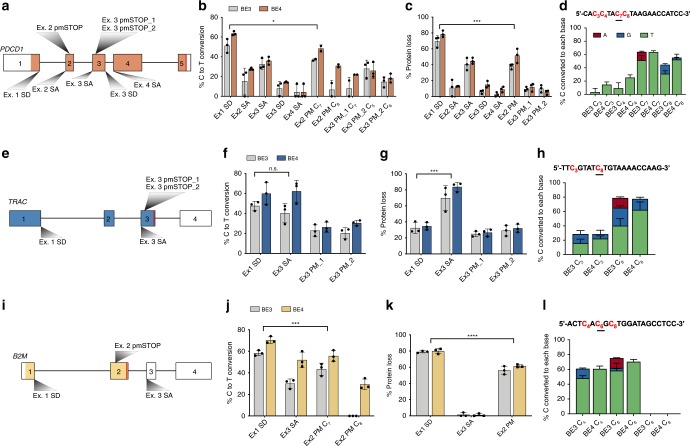
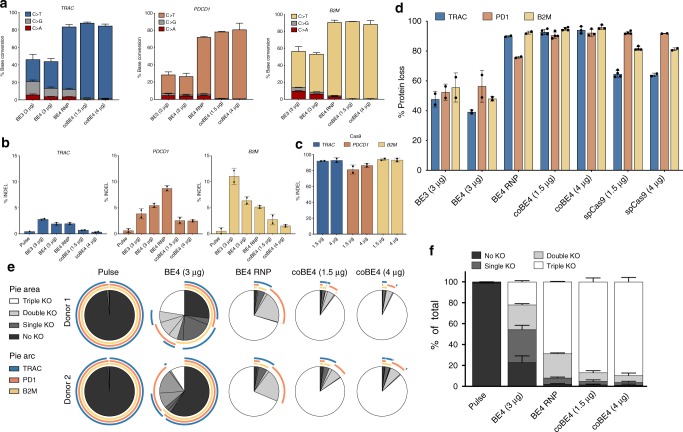
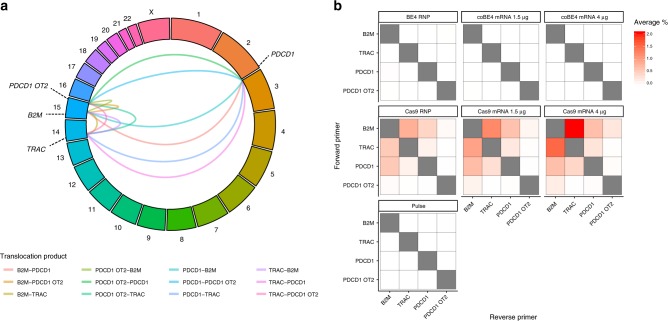
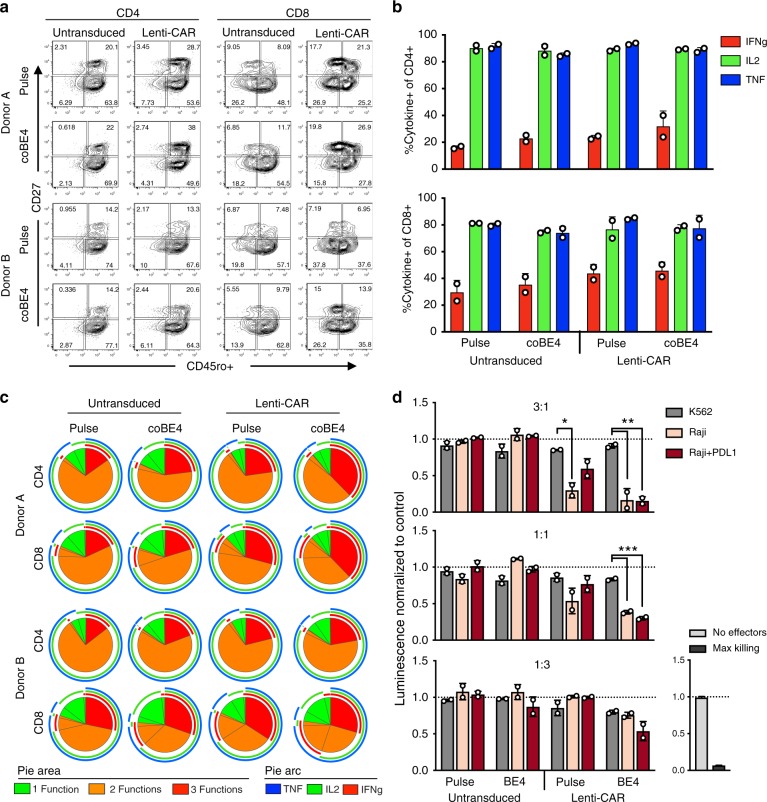
The fusion of genome engineering and adoptive cellular therapy holds immense promise for the treatment of genetic disease and cancer. Multiplex genome engineering using targeted nucleases can be used to increase the efficacy and broaden the application of such therapies but carries safety risks associated with unintended genomic alterations and genotoxicity. Here, we apply base editor technology for multiplex gene modification in primary human T cells in support of an allogeneic CAR-T platform and demonstrate that base editor can mediate highly efficient multiplex gene disruption with minimal double-strand break induction. Importantly, multiplex base edited T cells exhibit improved expansion and lack double strand break-induced translocations observed in T cells edited with Cas9 nuclease. Our findings highlight base editor as a powerful platform for genetic modification of therapeutically relevant primary cell types.
Overview
The claims and statistics of this paper haven’t been checked yet.
Free: it reads the open-access text and checks the first 5 claims that cite a source we can check. Create a free account to check every claim.
Integrity signals
Registry
Cites
Statistics
Figures
Verification
Claims the paper makes
The claims and statistics of this paper haven’t been checked yet.
Free: it reads the open-access text and checks the first 5 claims that cite a source we can check. Create a free account to check every claim.
Claims other papers make about this one
Each is checked against this paper’s own text: does it say what the citing paper says it does?
The source backs part of the claim, not all of it — or backs it for a different population, condition or comparison.
In the citing paper
“Many groups have highlighted pitfalls of CRISPR-Cas9 gene editing; the most extreme being unintended chromosomal losses and translocations, which are amplified when more than one gene is targeted simultaneously.12”
From Adenine base editor for knockout of proteins: A practical guide from design to analysis with updated MultiEditRbatch (2026) · cites this paper as [12]
Experimental — accuracy not yet measuredThe source backs part of the claim, not all of it — or backs it for a different population, condition or comparison.
In the citing paper
“Alternatively, CBEs can be used to introduce premature stop codons, which can cause early termination of translation and result in nonsense-mediated decay of the mRNA.4,12”
From Adenine base editor for knockout of proteins: A practical guide from design to analysis with updated MultiEditRbatch (2026) · cites this paper as [12]
Experimental — accuracy not yet measuredThe source backs part of the claim, not all of it — or backs it for a different population, condition or comparison.
In the citing paper
“Adenine base editor (ABE), first described in 2017, generally does not induce DSBs (<1%) and is therefore a favorable alternative to Cas9 for single and multiplex gene knockouts.12,14”
From Adenine base editor for knockout of proteins: A practical guide from design to analysis with updated MultiEditRbatch (2026) · cites this paper as [12]
Experimental — accuracy not yet measuredThe source backs part of the claim, not all of it — or backs it for a different population, condition or comparison.
In the citing paper
“One of the main advantages of ABE-based gene knockout is how amenable the system is to multiplex knockouts.11,12,27”
From Adenine base editor for knockout of proteins: A practical guide from design to analysis with updated MultiEditRbatch (2026) · cites this paper as [12]
Experimental — accuracy not yet measuredThe cited source says what the claim attributes to it.
In the citing paper
“The risk of chromosomal translocations is significantly increased if more than one gene is targeted with Cas9 simultaneously.12”
From Adenine base editor for knockout of proteins: A practical guide from design to analysis with updated MultiEditRbatch (2026) · cites this paper as [12]
Self-check
Percentages, sums and reported differences re-computed from the paper’s own numbers.
The self-check needs the paper’s full text.
Citations
Cites
Programmable editing of a target base in genomic DNA without double-stranded DNA cleavage
Komor, A. C., Kim, Y. B., Packer, M. S., Zuris, J. A., & Liu, D. R. (2016) · Nature · doi:10.1038/nature17946 · Cited by 5,437
Programmable base editing of A•T to G•C in genomic DNA without DNA cleavage
Gaudelli, N. M., Komor, A. C., Rees, H. A., Packer, M. S., Badran, A. H., Bryson, D. I., & Liu, D. R. (2017) · Nature · doi:10.1038/nature24644 · Cited by 4,184
Chimeric antigen receptor–modified T cells in chronic lymphoid leukemia
Porter, D. L., Levine, B. L., Kalos, M., Bagg, A., & June, C. H. (2011) · New England Journal of Medicine · doi:10.1056/nejmoa1103849 · Cited by 3,565
Double nicking by RNA-guided CRISPR Cas9 for enhanced genome editing specificity
Ran, F. A., Hsu, P. D., Lin, C.-Y., Gootenberg, J. S., Konermann, S., Trevino, A. E., Scott, D. A., Inoue, A., Matoba, S., Zhang, Y., et al. (2013) · Cell · doi:10.1016/j.cell.2013.08.021 · Cited by 3,299
DNA double-strand breaks: signaling, repair and the cancer connection
Khanna, K. K., & Jackson, S. P. (2001) · Nature Genetics · doi:10.1038/85798 · Cited by 2,455
Easy quantitative assessment of genome editing by sequence trace decomposition
Brinkman, E. K., Chen, T., Amendola, M., & van Steensel, B. (2014) · Nucleic Acids Research · doi:10.1093/nar/gku936 · Cited by 2,390
GUIDE-seq enables genome-wide profiling of off-target cleavage by CRISPR-Cas nucleases
Tsai, S. Q., Zheng, Z., Nguyen, N. T., Liebers, M., Topkar, V. V., Thapar, V., Wyvekens, N., Khayter, C., Iafrate, A. J., Le, L. P., et al. (2015) · Nature Biotechnology · doi:10.1038/nbt.3117 · Cited by 2,268
Efficient generation of mouse models of human diseases via ABE- and BE-mediated base editing
Liu, Z., Lu, Z., Yang, G., Huang, S., Li, G., Feng, S., Liu, Y., Li, J., Yu, W., Zhang, Y., et al. (2018) · Nature Communications · doi:10.1038/s41467-018-04768-7 · Cited by 2,074
Kosicki, M., Tomberg, K., & Bradley, A. (2018) · Nature Biotechnology · doi:10.1038/nbt.4192 · Cited by 1,883
Targeting a CAR to the TRAC locus with CRISPR/Cas9 enhances tumour rejection
Eyquem, J., Mansilla-Soto, J., Giavridis, T., van der Stegen, S. J. C., Hamieh, M., Cunanan, K. M., Odak, A., Gönen, M., & Sadelain, M. (2017) · Nature · doi:10.1038/nature21405 · Cited by 1,831
Cited by
Exploring treatment options in cancer: tumor treatment strategies
Liu, B., Zhou, H., Tan, L., Siu, K. T. H., & Guan, X.-Y. (2024) · Signal Transduction and Targeted Therapy · doi:10.1038/s41392-024-01856-7 · Cited by 1,201
Engineered Virus-like Particles for Efficient in Vivo Delivery of Therapeutic Proteins
Banskota, S., Raguram, A., Suh, S., Du, S. W., Davis, J. R., Choi, E. H., Wang, X., Nielsen, S. C., Newby, G. A., Randolph, P. B., et al. (2022) · Cell · doi:10.1016/j.cell.2021.12.021 · Cited by 668
“, 2020), translocations (Giannoukos et al., 2018; Stadtmauer et al., 2020; Turchiano et al., 2021; Webber et al., 2019), chromothripsis (Leibowitz et al.”
BackgroundSelf-citationDirected evolution of adenine base editors with increased activity and therapeutic application
Gaudelli, N. M., Lam, D. K., Rees, H. A., Solá-Esteves, N. M., Barrera, L. A., Born, D. A., Edwards, A., Gehrke, J. M., Lee, S.-J., Liquori, A. J., et al. (2020) · Nature Biotechnology · doi:10.1038/s41587-020-0491-6 · Cited by 524
Therapeutic in vivo delivery of gene editing agents
Raguram, A., Banskota, S., & Liu, D. R. (2022) · Cell · doi:10.1016/j.cell.2022.03.045 · Cited by 522
CAR T therapy beyond cancer: the evolution of a living drug
Baker, D. J., Arany, Z., Baur, J. A., Epstein, J. A., & June, C. H. (2023) · Nature · doi:10.1038/s41586-023-06243-w · Cited by 504
“More recent improvement in gene editing, such as base or prime editing, has also allowed for the generation of gene-edited CAR T cells without introducing double-strand breaks 80 .”
Base editing: advances and therapeutic opportunities
Porto, E. M., Komor, A. C., Slaymaker, I. M., & Yeo, G. W. (2020) · Nature Reviews Drug Discovery · doi:10.1038/s41573-020-0084-6 · Cited by 476
Engineering the next generation of cell-based therapeutics
Bashor, C. J., Hilton, I. B., Bandukwala, H., Smith, D. M., & Veiseh, O. (2022) · Nature Reviews Drug Discovery · doi:10.1038/s41573-022-00476-6 · Cited by 439
Engineering the next-generation of CAR T-cells with CRISPR-Cas9 gene editing
Dimitri, A., Herbst, F., & Fraietta, J. A. (2022) · Molecular Cancer · doi:10.1186/s12943-022-01559-z · Cited by 352
Continuous evolution of base editors with expanded target compatibility and improved activity
Thuronyi, B. W., Koblan, L. W., Levy, J. M., Yeh, W.-H., Zheng, C., Newby, G. A., Wilson, C., Bhaumik, M., Shubina-Oleinik, O., Holt, J. R., et al. (2019) · Nature Biotechnology · doi:10.1038/s41587-019-0193-0 · Cited by 347
Scalable Manufacturing of CAR T Cells for Cancer Immunotherapy
Abou-el-Enein, M., Elsallab, M., Feldman, S. A., Fesnak, A. D., Heslop, H. E., Marks, P., Till, B. G., Bauer, G., & Savoldo, B. (2021) · Blood Cancer Discovery · doi:10.1158/2643-3230.bcd-21-0084 · Cited by 321
“Using this technology, allogeneic CAR T cells were successfully edited to eliminate TCR, PD-1, and B2M (149).”
BackgroundChallenges and new technologies in adoptive cell therapy
Zhang, P., Zhang, G., & Wan, X. (2023) · Journal of Hematology & Oncology · doi:10.1186/s13045-023-01492-8 · Cited by 259
“After optimizing the system, the proportion of triple knockout cells was increased to more than 80% and generated anti-CD19 CAR-T cells [476].”
MethodEfficient prime editing in mouse brain, liver and heart with dual AAVs
Davis, J. R., Banskota, S., Levy, J. M., Newby, G. A., Wang, X., Anzalone, A. V., Nelson, A. T., Chen, P. J., Hennes, A. D., An, M., et al. (2024) · Nature Biotechnology · doi:10.1038/s41587-023-01758-z · Cited by 227
Frequent aneuploidy in primary human T cells after CRISPR–Cas9 cleavage
Nahmad, A. D., Reuveni, E., Goldschmidt, E., Tenne, T., Liberman, M., Horovitz-Fried, M., Khosravi, R., Kobo, H., Reinstein, E., Madi, A., et al. (2022) · Nature Biotechnology · doi:10.1038/s41587-022-01377-0 · Cited by 212
Mitigation of chromosome loss in clinical CRISPR-Cas9-engineered T cells
Tsuchida, C. A., Brandes, N., Bueno, R., Trinidad, M., Mazumder, T., Yu, B., Hwang, B., Chang, C., Liu, J., Sun, Y., et al. (2023) · Cell · doi:10.1016/j.cell.2023.08.041 · Cited by 209
CRISPR-based genome editing through the lens of DNA repair
Nambiar, T. S., Baudrier, L., Billon, P., & Ciccia, A. (2022) · Molecular Cell · doi:10.1016/j.molcel.2021.12.026 · Cited by 208
In vivo somatic cell base editing and prime editing
Newby, G. A., & Liu, D. R. (2021) · Molecular Therapy · doi:10.1016/j.ymthe.2021.09.002 · Cited by 199
Yu, Y., Leete, T. C., Born, D. A., Young, L., Barrera, L. A., Lee, S.-J., Rees, H. A., Ciaramella, G., & Gaudelli, N. M. (2020) · Nature Communications · doi:10.1038/s41467-020-15887-5 · Cited by 192
T cell receptor therapeutics: immunological targeting of the intracellular cancer proteome
Klebanoff, C. A., Chandran, S. S., Baker, B. M., Quezada, S. A., & Ribas, A. (2023) · Nature Reviews Drug Discovery · doi:10.1038/s41573-023-00809-z · Cited by 154
“The exogenous TCRs were inserted into the TRAC locus by homology-directed repair following CRISPR editing of TRAC / TRBC to remove the endogenous TCR. Immune monitoring revealed that TCR edited cells engrafted in the peripheral blood and trafficked to metastatic tumour sites.”
BackgroundInfluentialNext-Generation CAR T-cell Therapies
Young, R. M., Engel, N. W., Uslu, U., Wellhausen, N., & June, C. H. (2022) · Cancer Discovery · doi:10.1158/2159-8290.cd-21-1683 · Cited by 179
Lei, T., Wang, Y., Zhang, Y., Yang, Y., Cao, J., Huang, J., Chen, J., Chen, H., Zhang, J., wang, L., et al. (2024) · Leukemia · doi:10.1038/s41375-024-02444-y · Cited by 177
Designing and executing prime editing experiments in mammalian cells
Doman, J. L., Sousa, A. A., Randolph, P. B., Chen, P. J., & Liu, D. R. (2022) · Nature Protocols · doi:10.1038/s41596-022-00724-4 · Cited by 172
Current Status and Challenges of DNA Base Editing Tools
Jeong, Y. K., Song, B., & Bae, S. (2020) · Molecular Therapy · doi:10.1016/j.ymthe.2020.07.021 · Cited by 166
“promoter mutation could be achieved in primary human hematopoietic stem and progenitor cells, suggesting an effective way for curing blood disorders,(67) and multiplex gene modification in primary human T cells showed the potential to improve chimeric antigen receptor engineered T cell immunotherapy minimizing risks f…”
BackgroundEndowing universal CAR T-cell with immune-evasive properties using TALEN-gene editing
Jo, S., Das, S., Williams, A., Chretien, A.-S., Pagliardini, T., Le Roy, A., Fernandez, J. P., Le Clerre, D., Jahangiri, B., Chion-Sotinel, I., et al. (2022) · Nature Communications · doi:10.1038/s41467-022-30896-2 · Cited by 159
Base-edited CAR T cells for combinational therapy against T cell malignancies
Georgiadis, C., Rasaiyaah, J., Gkazi, S. A., Preece, R., Etuk, A., Christi, A., & Qasim, W. (2021) · Leukemia · doi:10.1038/s41375-021-01282-6 · Cited by 150
Peptide-mediated delivery of CRISPR enzymes for the efficient editing of primary human lymphocytes
Foss, D. V., Muldoon, J. J., Nguyen, D. N., Carr, D., Sahu, S. U., Hunsinger, J. M., Wyman, S. K., Krishnappa, N., Mendonsa, R., Schanzer, E. V., et al. (2023) · Nature Biomedical Engineering · doi:10.1038/s41551-023-01032-2 · Cited by 150
Cytosine base editing enables quadruple-edited allogeneic CART cells for T-ALL
Diorio, C. J., Murray, R. C., Naniong, M., Barrera, L. A., Camblin, A. J., Chukinas, J. A., Coholan, L. J., Edwards, A., Fuller, T. J., Gonzales, C., et al. (2022) · Blood · doi:10.1182/blood.2022015825 · Cited by 145
Integration of CRISPR/Cas9 with artificial intelligence for improved cancer therapeutics
Bhat, A. A., Nisar, S., Mukherjee, S., Saha, N., Yarravarapu, N., Lone, S. N., Masoodi, T., Chauhan, R., Maacha, S., Bagga, P., et al. (2022) · Journal of Translational Medicine · doi:10.1186/s12967-022-03765-1 · Cited by 130
Tieu, V., Sotillo, E., Bjelajac, J. R., Chen, C., Malipatlolla, M. B., Guerrero, J. A., Xu, P., Quinn, P. J., Fisher, C., Klysz, D. D., et al. (2024) · Cell · doi:10.1016/j.cell.2024.01.035 · Cited by 128
Allogeneic CAR-T Therapy Technologies: Has the Promise Been Met?
Lonez, C., & Breman, E. (2024) · Cells · doi:10.3390/cells13020146 · Cited by 125
“Through the use of a catalytically dead Cas9 or base editor technology, modifications can be made to optimize and improve the limitations of CRISPR/Cas9 [133].”
MethodKluesner, M. G., Lahr, W. S., Lonetree, C.-L., Smeester, B. A., Qiu, X., Slipek, N. J., Claudio Vázquez, P. N., Pitzen, S. P., Pomeroy, E. J., Vignes, M. J., et al. (2021) · Nature Communications · doi:10.1038/s41467-021-22009-2 · Cited by 121
Self-citationRecent Advances in Allogeneic CAR-T Cells
Kim, D. W., & Cho, J. (2020) · Biomolecules · doi:10.3390/biom10020263 · Cited by 119
“Recently, advanced multiplex engineering of T cells using CRISPR/Cas9 without double strand break-induced translocations was developed and showed improved expansion of engineered T cells and reduced safety risks associated with unintended genomic alterations and genotoxicity [55].”
BackgroundNext-Generation CRISPR Technologies and Their Applications in Gene and Cell Therapy
Zeballos C., M. A., & Gaj, T. (2021) · Trends in Biotechnology · doi:10.1016/j.tibtech.2020.10.010 · Cited by 94
Base-editing mutagenesis maps alleles to tune human T cell functions
Schmidt, R. L. J., Ward, C. C., Dajani, R., Armour-Garb, Z., Ota, M., Allain, V., Hernandez, R., Layeghi, M., Xing, G., Goudy, L., et al. (2023) · Nature · doi:10.1038/s41586-023-06835-6 · Cited by 107
“We base-edited T cells by co-electroporation of ABE8e (V106W) mRNA and synthetic sgRNA 15,23–25 , providing orthogonal validation for our initial experiments with lentiviral transduction (Fig.”
Base and Prime Editing Technologies for Blood Disorders
Antoniou, P., Miccio, A., & Brusson, M. (2021) · Frontiers in Genome Editing · doi:10.3389/fgeed.2021.618406 · Cited by 84
Advancing cell-based cancer immunotherapy through stem cell engineering
Li, Y.-R., Dunn, Z. S., Yu, Y., Li, M., Wang, P., & Yang, L. (2023) · Cell stem cell · doi:10.1016/j.stem.2023.02.009 · Cited by 100
A Review on Advanced CRISPR-Based Genome-Editing Tools: Base Editing and Prime Editing
Saber Sichani, A., Ranjbar, M., Baneshi, M., Torabi Zadeh, F., & Fallahi, J. (2023) · Molecular Biotechnology · doi:10.1007/s12033-022-00639-1 · Cited by 97
CRISPR/Cas9 revitalizes adoptive T-cell therapy for cancer immunotherapy
Ghaffari, S., Khalili, N., & Rezaei, N. (2021) · Journal of Experimental & Clinical Cancer Research · doi:10.1186/s13046-021-02076-5 · Cited by 96
“successfully performed TRAC, B2M, and PDCD1 abrogation in primary human T-cells, and the resultant CD19 CAR T-cells had significantly reduced DSB and translocation frequencies compared to Cas9 [128].”
BackgroundAparicio, C., Acebal, C., & González‐Vallinas, M. (2023) · Experimental Hematology and Oncology · doi:10.1186/s40164-023-00435-w · Cited by 92
“…instability due to double-strand breaks, it has also been proposed the use of base-editing proteins, such as BE3 and BE4, aimed at inducing exon skipping by disrupting splice acceptor sites or creating premature stop codons, thus avoiding double-strand breaks and minimising the genetic risk [56].”
BackgroundMultiplex base- and prime-editing with drive-and-process CRISPR arrays
Yuan, Q., & Gao, X. (2022) · Nature Communications · doi:10.1038/s41467-022-30514-1 · Cited by 90
Antoniou, P., Hardouin, G., Martinucci, P., Frati, G., Félix, T., Chalumeau, A., Fontana, L., Martin, J., Masson, C., Brusson, M., et al. (2022) · Nature Communications · doi:10.1038/s41467-022-34493-1 · Cited by 88
Ravi, N. S., Wienert, B., Wyman, S. K., Bell, H. W., George, A., Mahalingam, G., Vu, J. T., Prasad, K. M., Bandlamudi, B. P., Devaraju, N., et al. (2022) · eLife · doi:10.7554/elife.65421 · Cited by 78
CRISPR/Cas9 ribonucleoprotein-mediated genome and epigenome editing in mammalian cells
Bloomer, H., Khirallah, J., Li, Y., & Xu, Q. (2021) · Advanced Drug Delivery Reviews · doi:10.1016/j.addr.2021.114087 · Cited by 78
Genome-edited allogeneic donor “universal” chimeric antigen receptor T cells
Qasim, W. (2022) · Blood · doi:10.1182/blood.2022016204 · Cited by 73
Engineering strategies to safely drive CAR T-cells into the future
Rossi, M., & Breman, E. (2024) · Frontiers in Immunology · doi:10.3389/fimmu.2024.1411393 · Cited by 73
Zhang, E., Neugebauer, M. E., Krasnow, N. A., & Liu, D. R. (2024) · Nature Communications · doi:10.1038/s41467-024-45969-7 · Cited by 68
“Translocations were virtually undetected via ddPCR in a prior study using base editing with optimized reagents 43 .”
Mueller, K. P., Piscopo, N. J., Forsberg, M. H., Saraspe, L. A., Das, A., Russell, B., Smerchansky, M. E., Cappabianca, D., Shi, L., Shankar, K., et al. (2022) · Journal for ImmunoTherapy of Cancer · doi:10.1136/jitc-2021-004446 · Cited by 66
Glaser, V., Flugel, C., Kath, J., Du, W., Drosdek, V., Franke, C., Stein, M., Pruß, A., Schmueck-Henneresse, M., Volk, H.-D., et al. (2023) · Genome biology · doi:10.1186/s13059-023-02928-7 · Cited by 65
“This can be used to introduce stop codons or edit splice sites and consequently disrupt gene expression in T cells [26, 27].”
Roth, G. V., Gengaro, I. R., & Qi, L. S. (2024) · Cell chemical biology · doi:10.1016/j.chembiol.2024.07.007 · Cited by 65
Madison, B., Patil, D. P., Richter, M., Li, X., Tong, M., Cranert, S. A., Wang, X., Martin, R. M., Xi, H., Tan, Y., et al. (2022) · Molecular Therapy — Nucleic Acids · doi:10.1016/j.omtn.2022.06.003 · Cited by 62
“9% using a fourth-generation base editor (BE4).(10) However, this is likely to be context (or donor) dependent, since recent reports document much higher levels of off-target mutations (1.”
BackgroundInfluentialSuper-Treg: Toward a New Era of Adoptive Treg Therapy Enabled by Genetic Modifications
Amini, L., Greig, J., Schmueck‐Henneresse, M., Volk, H., Bézie, S., Reinke, P., Guillonneau, C., Wagner, D. L., & Anegón, I. (2021) · Frontiers in Immunology · doi:10.3389/fimmu.2020.611638 · Cited by 62
“Use of base editor proteins for gene multiplexing was successfully achieved with very high efficiency in Tconv (84).”
BackgroundGutiérrez-Guerrero, A., Abrey-Recalde, M. J., Mangeot, P. E., Costa, C., Bernadin, O., Perian, S., Fusil, F., Froment, G., Martinez-Turtos, A., Krug, A., et al. (2021) · Frontiers in Genome Editing · doi:10.3389/fgeed.2021.604371 · Cited by 60
Knipping, F., Newby, G. A., Eide, C. R., McElroy, A. N., Nielsen, S. C., Smith, K. D., Fang, Y., Cornu, T. I., Costa, C., Gutiérrez-Guerrero, A., et al. (2021) · Molecular Therapy · doi:10.1016/j.ymthe.2021.10.026 · Cited by 58
Self-citationDetection and Modulation of DNA Translocations During Multi-Gene Genome Editing in T Cells
Bothmer, A., Gareau, K. W., Abdulkerim, H. S., Buquicchio, F., Cohen, L., Viswanathan, R., Zuris, J. A., Marco, E., Fernandez, C. A., Myer, V. E., et al. (2020) · The CRISPR Journal · doi:10.1089/crispr.2019.0074 · Cited by 54
“8 However, the multiplexed base editing approach is not compatible with gene editing-mediated insertions, which may be limiting for the complex modi-fications required for future cell therapy products.”
In the business of base editors: Evolution from bench to bedside
Porto, E. M., & Komor, A. C. (2023) · PLoS Biology · doi:10.1371/journal.pbio.3002071 · Cited by 57
“Following A•T to G•C point mutation introduction, intron 1 is retained in the mature mRNA transcript, resulting in a premature stop codon and degradation of the mRNA through nonsense-mediated decay [28,76,77].”
BackgroundNonviral genome engineering of natural killer cells
Robbins, G. M., Wang, M., Pomeroy, E. J., & Moriarity, B. S. (2021) · Stem Cell Research & Therapy · doi:10.1186/s13287-021-02406-6 · Cited by 58
Self-citationPreclinical Evaluation of CRISPR-Edited CAR-NK-92 Cells for Off-the-Shelf Treatment of AML and B-ALL
Ureña-Bailén, G., Dobrowolski, J.-M., Hou, Y., Dirlam, A., Roig‐Merino, A., Schleicher, S., Atar, D., Seitz, C. M., Feucht, J., Antony, J. S., et al. (2022) · International Journal of Molecular Sciences · doi:10.3390/ijms232112828 · Cited by 52
“This sequential method was preferred to one-shot multiplexing to avoid potential translocations or chromosomic rearrangements generated by multiple DSBs’ induced at the same time [34].”
MethodUsing Gene Editing Approaches to Fine-Tune the Immune System
Pavlovic, K., Tristán‐Manzano, M., Maldonado‐Pérez, N., Cortijo-Gutierréz, M., Sánchez-Hernández, S., Justicia-Lirio, P., Carmona-Luque, M. D., Herrera, C., Martín, F., & Benabdellah, K. (2020) · Frontiers in Immunology · doi:10.3389/fimmu.2020.570672 · Cited by 54
“All these genes were silenced without DSBs while preserving their capacity to mediate target cell killing (33, 55).”
BackgroundMethodInfluentialGenome editing in large animal models
Maynard, L. H., Humbert, O., Peterson, C. W., & Kiem, H. (2021) · Molecular Therapy · doi:10.1016/j.ymthe.2021.09.026 · Cited by 51
O’Geen, H., Beitnere, U., Garcia, M. S., Adhikari, A., Cameron, D. L., Fenton, T. A., Copping, N. A., Deng, P., Lock, S., Halmai, J. A. N. M., et al. (2023) · Molecular Therapy · doi:10.1016/j.ymthe.2023.01.013 · Cited by 53
Altered cancer metabolism and implications for next-generation CAR T-cell therapies
Ramapriyan, R., Vykunta, V. S., Vandecandelaere, G., Richardson, L. G., Sun, J. M., Curry, W. T., & Choi, B. D. (2024) · Pharmacology & Therapeutics · doi:10.1016/j.pharmthera.2024.108667 · Cited by 49
Selective haematological cancer eradication with preserved haematopoiesis
Garaudé, S., Marone, R., Lepore, R., Devaux, A., Beerlage, A., Seyres, D., Aglio, A. D., Juškevičius, D., Zuin, J., Burgold, T., et al. (2024) · Nature · doi:10.1038/s41586-024-07456-3 · Cited by 52
“However, despite the favourable characteristics of the BE, such as the purported avoidance of DNA double-strand breaks and aptness for multiplexing 23,33 , we discontinued most base-editable CD45 shielding candidates for various reasons.”
In vivo base editing by a single i.v. vector injection for treatment of hemoglobinopathies
Li, C. L., Georgakopoulou, A., Newby, G. A., Everette, K. A., Nizamis, E., Paschoudi, K., Vlachaki, E., Gil, S., Anderson, A. K., Koob, T., et al. (2022) · JCI Insight · doi:10.1172/jci.insight.162939 · Cited by 49
Kabra, M., Shahi, P. K., Wang, Y., Sinha, D., Spillane, A., Newby, G. A., Saxena, S., Tong, Y., Chang, Y., Abdeen, A. A., et al. (2023) · Journal of Clinical Investigation · doi:10.1172/jci171356 · Cited by 48
“1 channel) to the bath solution (–41.5 ± 11.2 pA), suggesting a low uncontrolled indels and other undesired cellular consequences, such as chromosomal translocations, large deletions, aneuploidy, p53 activation, chromothripsis, or transposon insertions (15–24).”
InfluentialCRISPR/Cas9 system: recent applications in immuno-oncology and cancer immunotherapy
Chen, C., Wang, Z., & Qin, Y. (2023) · Experimental Hematology and Oncology · doi:10.1186/s40164-023-00457-4 · Cited by 49
“This technology has been validated in multiplexed gene disruption in primary T cells, highlighting its great prospects in the context of ACT [137].”
Enhancing cellular immunotherapies in cancer by engineering selective therapeutic resistance
Wellhausen, N., Baek, J. S., Gill, S. I., & June, C. H. (2024) · Nature reviews. Cancer · doi:10.1038/s41568-024-00723-5 · Cited by 50
“The feasibility of this approach has been demonstrated by silencing B2M , TRAC and PDCD1 (encoding PD1) in CD19 CAR T cells 64 .”
Odé, Z., Condori, J., Peterson, N. B., Zhou, S., & Krenciute, G. (2020) · Cancers · doi:10.3390/cancers12061704 · Cited by 47
“In addition, a newly emerging Cas9 base editor technology, which can make gene modifications without DSBs, holds great promise for gene KI in T cells [14].”
BackgroundRevolutionising healing: Gene Editing's breakthrough against sickle cell disease
Dimitrievska, M., Bansal, D., Vitale, M., Strouboulis, J., Miccio, A., Nicolaides, K. H., Hoss, S. E., Shangaris, P., & Jackow, J. (2024) · Blood Reviews · doi:10.1016/j.blre.2024.101185 · Cited by 46
Wang, M., Krueger, J. B., Gilkey, A. K., Stelljes, E. M., Kluesner, M. G., Pomeroy, E. J., Skeate, J. G., Slipek, N. J., Lahr, W. S., Claudio Vázquez, P. N., et al. (2025) · Journal for ImmunoTherapy of Cancer · doi:10.1136/jitc-2024-009560 · Cited by 45
“28 29–32 However, BEs have yet to be deployed for primary NK cell engineering to achieve similar multiplex base editing.”
Self-citationMapping variant effects on anti-tumor hallmarks of primary human T cells with base-editing screens
Walsh, Z. H., Shah, P., Kothapalli, N., Shah, S. B., Nikolényi, G., Brodtman, D. Z., Leuzzi, G., Rogava, M., Mu, M., Ho, P., et al. (2024) · Nature Biotechnology · doi:10.1038/s41587-024-02235-x · Cited by 45
“Building on prior reports showing feasibility of high-efficiency BE of PHTs 19–23 , we optimized methods to enable scalable BE screening and performed multiple BE screens in PHTs, generating thousands of variants across 102 genes important for T cell functions.”
InfluentialDevelopment of Stem Cell-Derived Immune Cells for Off-the-Shelf Cancer Immunotherapies
Li, Y.-R., Dunn, Z. S., Zhou, Y., Lee, D. P. H., & Yang, L. (2021) · Cells · doi:10.3390/cells10123497 · Cited by 45
“Various strategies have been applied to improve the manufacture, cancer-treating potential, and safety of allogeneic T cell products, including applying base editor technology to mediate highly efficient multiplex gene disruption with minimal double-strand break induction [94] and targeting the insertion of a CAR Tran…”
MethodRecent advances in universal chimeric antigen receptor T cell therapy
Jiang, N., Yang, Z., Miao, H., Xing, S., Wang, S., & Li, N. (2025) · Journal of Hematology & Oncology · doi:10.1186/s13045-025-01737-8 · Cited by 45
“Base editing technology offers a promising alternative that avoids DSBs by fusing a DNA deaminase with a nuclease-impaired Cas protein to facilitate targeted nucleotide conversion[44, 45].”
InfluentialEngel, N. W., Steinfeld, I., Ryan, D., Anupindi, K., Kim, S., Wellhausen, N., Chen, L., Wilkins, K., Baker, D. J., Rommel, P. C., et al. (2025) · Proceedings of the National Academy of Sciences · doi:10.1073/pnas.2427216122 · Cited by 39
“Furthermore, manufacturing yields of Cas9 mRNA - edited products with comparable quadruple editing efficiency were lower than those of ABE multiplex genome - edited products, consistent with previous studies ( 19 , 57 ).”
Xiong, X., Li, Z., Liang, J., Liu, K., Li, C., & Li, J.-F. (2022) · Nucleic Acids Research · doi:10.1093/nar/gkac166 · Cited by 41
“Moreover, for the base editor-mediated gene inactivation, such as inducing intron mis-splicing (Supplementary Figures S5 and S7) (18,83,84) or creating premature stop codons (14,15) or uORFs (Figure 5A–E), the bystander editing is inconsequential.”
Engineering the next generation of allogeneic CAR cells: iPSCs as a scalable and editable platform
Fang, Y., Chen, Y., & Li, Y.-R. (2025) · Stem Cell Reports · doi:10.1016/j.stemcr.2025.102515 · Cited by 41
Immune Editing: Overcoming Immune Barriers in Stem Cell Transplantation
Meissner, T. B., Schulze, H. S., & Dale, S. M. (2022) · Current Stem Cell Reports · doi:10.1007/s40778-022-00221-0 · Cited by 40
CRISPR applications in cancer diagnosis and treatment
Wang, M., Chen, M., Wu, X., Huang, X., & Yu, B. (2023) · Cellular & Molecular Biology Letters · doi:10.1186/s11658-023-00483-4 · Cited by 40
“Additionally, base editors have been utilized in the development of CAR-T platforms, demonstrating the disruption of multiple genes with high efficiency and minimal double-strand breaks [83].”
MethodHarnessing the evolving CRISPR/Cas9 for precision oncology
Li, T., Li, S., Kang, Y., Zhou, J., & Yi, M. (2024) · Journal of Translational Medicine · doi:10.1186/s12967-024-05570-4 · Cited by 40
“In 2019, Webber et al. demonstrated that base editors could induce multiplex human T cell engineering in support of an allogeneic CAR-T platform [302].”
BackgroundBeyond GWAS: from simple associations to functional insights
Ishigaki, K. (2021) · Seminars in Immunopathology · doi:10.1007/s00281-021-00894-5 · Cited by 38
Kluesner, M. G., Tasakis, R. N., Lerner, T., Arnold, A., Wüst, S., Binder, M., Webber, B. R., Moriarity, B. S., & Pecori, R. (2021) · Molecular Therapy — Nucleic Acids · doi:10.1016/j.omtn.2021.07.008 · Cited by 36
Self-citationPetri, K., D’Ippolito, E., Künkele, A., Koehl, U., Busch, D. H., Einsele, H., & Hudecek, M. (2025) · Nature Reviews Clinical Oncology · doi:10.1038/s41571-025-01072-4 · Cited by 36
Naeem, M., Hazafa, A., Bano, N., Ali, R., Farooq, M., Razak, S. I. A., Lee, T. Y., & Devaraj, S. (2023) · Life Sciences · doi:10.1016/j.lfs.2023.121409 · Cited by 34
Breaking genetic shackles: The advance of base editing in genetic disorder treatment
Xu, F., Zheng, C., Xu, W., Zhang, S., Liu, S., Chen, X., & Yao, K. (2024) · Frontiers in Pharmacology · doi:10.3389/fphar.2024.1364135 · Cited by 35
Novel insights into TCR-T cell therapy in solid neoplasms: optimizing adoptive immunotherapy
Shao, W., Yao, Y., Yang, L., Li, X., Ge, T., Zheng, Y., Zhu, Q., Ge, S., Gu, X., Jia, R., et al. (2024) · Experimental Hematology and Oncology · doi:10.1186/s40164-024-00504-8 · Cited by 33
“Webber et al. also achieved multiple base editing of the T cell genome using mRNA electroporation, with high efficiency in simultaneous editing of multiple T cell loci [248].”
BackgroundAdoptive Cellular Therapy for Solid Tumors
Bear, A. S., Fraietta, J. A., Narayan, V., O’Hara, M. H., & Haas, N. B. (2021) · American Society of Clinical Oncology Educational Book · doi:10.1200/edbk_321115 · Cited by 34
Focusing on CD8+ T-cell phenotypes: improving solid tumor therapy
Yao, Z., Zeng, Y., Liu, C., Jin, H., Wang, H., Zhang, Y., Ding, C., Chen, G., & Wu, D. (2024) · Journal of Experimental & Clinical Cancer Research · doi:10.1186/s13046-024-03195-5 · Cited by 34
Engineering CAR‐T Therapeutics for Enhanced Solid Tumor Targeting
Zhu, D., Kim, W., Lee, H., Bao, X., & Kim, P. (2025) · Advanced Materials · doi:10.1002/adma.202414882 · Cited by 32
Hsieh, J., Becklin, K. L., Givens, S. E., Komosa, E. R., Abrahante, J. E., Kamdar, F. D., Moriarity, B. S., Webber, B. R., Singh, B. N., & Ogle, B. M. (2022) · Frontiers in Cell and Developmental Biology · doi:10.3389/fcell.2022.894635 · Cited by 33
“2173C > Tmutation in theMYH6 locus in a hiPSC line reprogrammed from cardiac fibroblasts of a healthy female donor and modified to overexpress cyclin D2 to enhance differentiation yield (Gaudelli et al., 2017; Zhu et al., 2018; Webber et al., 2019; Zhao et al., 2021).”
BackgroundSelf-citationUsing CRISPR to enhance T cell effector function for therapeutic applications
Heeren, J. J. F. (2020) · Cytokine X · doi:10.1016/j.cytox.2020.100049 · Cited by 34
Menegatti, S., López‐Cobo, S., Galy, A. S. D., Fuentealba, J. R., Silva, L. E., Perrin, L., Heurtebise-Chrétien, S., Pottez-Jouatte, V., Darbois, A., Burgdorf, N., et al. (2024) · Nature Biomedical Engineering · doi:10.1038/s41551-024-01282-8 · Cited by 31
“To provide a clinically relevant multiplex gene editing approach, reducing the chromosomal translocations associated with multiple CRISPR–Cas9 double-strand break 7,29 , we switched to base-editing technology for the rest of the study.”
Self-citationThe Interface of Gene Editing with Regenerative Medicine
Farag, V., Devey, E. A., & Leong, K. W. (2024) · Engineering · doi:10.1016/j.eng.2024.10.019 · Cited by 31
Tumor antigen-loaded AAV vaccine drives protective immunity in a melanoma animal model
Krotova, K. Y., Kuoch, H., Caine, C., & Aslanidi, G. (2023) · Molecular Therapy — Methods & Clinical Development · doi:10.1016/j.omtm.2023.01.006 · Cited by 31
Webber, B. R., Johnson, M. J., Skeate, J. G., Slipek, N. J., Lahr, W. S., DeFeo, A. P., Mills, L. J., Qiu, X., Rathmann, B., Diers, M. D., et al. (2023) · Nature Biomedical Engineering · doi:10.1038/s41551-023-01157-4 · Cited by 31
“Moreover, knocking out additional genes in parallel simply requires additional gRNAs targeting those genes to be included in the electroporation mix, although it should be noted that this approach may lead to an increased risk of chromosomal aberrations and translocations 20 .”
Self-citationIn vivo base editing of Angptl3 via lipid nanoparticles to treat cardiovascular disease
Khirallah, J., Bloomer, H., Wich, D., Huang, C., Workman, J. N., Li, Y., Newby, G. A., Liu, D. R., & Xu, Q. (2025) · Molecular Therapy — Nucleic Acids · doi:10.1016/j.omtn.2025.102486 · Cited by 30
“40,41 To evaluate whether multiplex adenine base editing of Angptl3 and Pcsk9 induces unintended genomic alterations, we conducted PCR assays to detect potential deletions or inversions, as both genes are located on mouse chromosome 4.”
Genome Editing in Engineered T Cells for Cancer Immunotherapy
Bonini, C., Chapuis, A. G., Hudecek, M., Guedan, S., Magnani, C. F., & Qasim, W. (2023) · Human Gene Therapy · doi:10.1089/hum.2023.128 · Cited by 30
Calviño, C., Ceballos, C., Piérola, A. A., Jáuregui, P., Calleja-Cervantes, M. E., Martín‐Úriz, P. S., Rodríguez-Márquez, P., Martín-Mallo, Á., Iglesias, E., Abizanda, G., et al. (2023) · Frontiers in Immunology · doi:10.3389/fimmu.2023.1270843 · Cited by 28
Novel gene manipulation approaches to unlock the existing bottlenecks of CAR-NK cell therapy
Dehghan, F., Metanat, Y., Askarizadeh, M., Ahmadi, E., & Moradi, V. (2025) · Frontiers in Cell and Developmental Biology · doi:10.3389/fcell.2024.1511931 · Cited by 29
Better living through chemistry: CRISPR/Cas engineered T cells for cancer immunotherapy
Wellhausen, N., Agarwal, S., Rommel, P. C., Gill, S. I., & June, C. H. (2021) · Current Opinion in Immunology · doi:10.1016/j.coi.2021.10.008 · Cited by 28
CRISPR/Cas9 for the treatment of haematological diseases: a journey from bacteria to the bedside
Humbert, O., Samuelson, C., & Kiem, H. (2020) · British Journal of Haematology · doi:10.1111/bjh.16807 · Cited by 27
Preece, R., Pavesi, A., Gkazi, S. A., Stegmann, K. A., Georgiadis, C., Tan, Z. M., Aw, J. Y. J., Maini, M. K., Bertoletti, A., & Qasim, W. (2020) · Molecular Therapy — Methods & Clinical Development · doi:10.1016/j.omtm.2020.09.002 · Cited by 27
Stealth transgenes enable CAR-T cells to evade host immune responses
Grauwet, K., Berger, T. R., Kann, M. C., Silva, H., Larson, R. C., Leick, M. B., Bailey, S. R., Bouffard, A. A., Millar, D. G., Gallagher, K., et al. (2024) · Journal for ImmunoTherapy of Cancer · doi:10.1136/jitc-2023-008417 · Cited by 27
“45 An advantage of our technology is that it could be easily combined with other gene-editing strategies, such as CRISPR/Cas9 while economizing on the number of double-strand breaks or possible translocation events.”
Metadata
- Authors
- Webber, B. R., Lonetree, C.-L., Kluesner, M. G., Johnson, M. J., Pomeroy, E. J., Diers, M. D., Lahr, W. S., Draper, G. M., Slipek, N. J., Smeester, B. A., Lovendahl, K. N., McElroy, A. N., Gordon, W. R., Osborn, M. J., & Moriarity, B. S.
- Affiliations
- University of Minnesota (US)
- Corresponding author
- Moriarity, Branden S.
- ORCID
- Venue
- Nature Communications
- Published
- 2019-11-19
- Volume
- 10
- Issue
- 1
- Pages
- 5222-5222
- ISSN
- 2041-1723 (ISSN-L)
- PMC
- PMC6864045
- OpenAlex
- W2991627551
- Cited by
- 232
- References
- 52
- Citations by year
- 2026: 30 · 2025: 31 · 2024: 42 · 2023: 34 · 2022: 40 · 2021: 34 · 2020: 19 · 2019: 2
- FWCI
- 7.86
- Type
- journal article
- Language
- en
- Update notices
- correction (2019-12-06)
- Open access
- gold
- doi.org
- Licence
- cc-by
- creativecommons.org/licenses/by/4.0 (tdm)
- creativecommons.org/licenses/by/4.0 (vor)
- Locations
- Nature Communications (publishedVersion, cc-by)
- bioRxiv (Cold Spring Harbor Laboratory) (acceptedVersion, cc-by-nc-nd)
- PubMed Central (publishedVersion, cc-by)
- PubMed (publishedVersion)
- RePEc: Research Papers in Economics (submittedVersion)
- DOAJ (DOAJ: Directory of Open Access Journals) (submittedVersion, cc-by-sa)
- DOAJ (DOAJ: Directory of Open Access Journals) (submittedVersion)
- Funders
- Children's Cancer Research Fund
- University of Minnesota
- National Institutes of Health
- National Cancer Institute (P30CA077598)
- National Institute of General Medical Sciences (R35GM119483)
- National Institute of Allergy and Infectious Diseases (R03AI144840, T32AI007313)
- Topics
- Life Sciences › Biochemistry, Genetics and Molecular Biology › Molecular Biology › CRISPR and Genetic Engineering
- Health Sciences › Medicine › Oncology › CAR-T cell therapy research
- Life Sciences › Biochemistry, Genetics and Molecular Biology › Molecular Biology › RNA regulation and disease
- Keywords
- base editors, Cas9, multiplex genome editing, human T cells, allogeneic CAR T cells, DNA double-strand breaks, translocation, genotoxicity, adoptive cellular therapy
- MeSH terms
- Gene Editing, Cells, Cultured, Humans, T-Lymphocytes, Reproducibility of Results, Immunotherapy, Adoptive, DNA Breaks, Double-Stranded, High-Throughput Nucleotide Sequencing, Cell Engineering, CRISPR-Cas Systems
About these checks
Registry, retraction, Cites and statistics results are computed, not judged, with one exception: a printed reference that no index lists is read once by a model before it counts as a citation error. Claims are extracted by a model and kept only when their quote appears verbatim in the text; each cited source is then checked, with a model’s help, for whether it says what the claim relies on. Those verdicts can be wrong — read the claim’s quote and the cited source before relying on one.
Statistics and arithmetic are recomputed, not judged.
Confidence bands are shown only for fields calibrated on our annotated test set. None is calibrated yet, so no band is shown.
What counts as a claim ›How we measure confidence ›How we check this ›
Are you an author, or do you see a problem with this page? Request a review
Data sources
Bibliographic data: Semantic Scholar, OpenAlex, Crossref.
Contains information from the Semantic Scholar Academic Graph Datasets, made available under the ODC Attribution License (ODC-BY 1.0).
Semantic Scholar’s data is described in: Kinney, R., et al. (2023). The Semantic Scholar Open Data Platform. arXiv:2301.10140.
