

Modular detergents tailor the purification and structural analysis of membrane proteins including G-protein coupled receptors
Open accessThe DOI matches its Crossref record; 57 of the 57 references it cites were found in a registry or an index.
Abstract
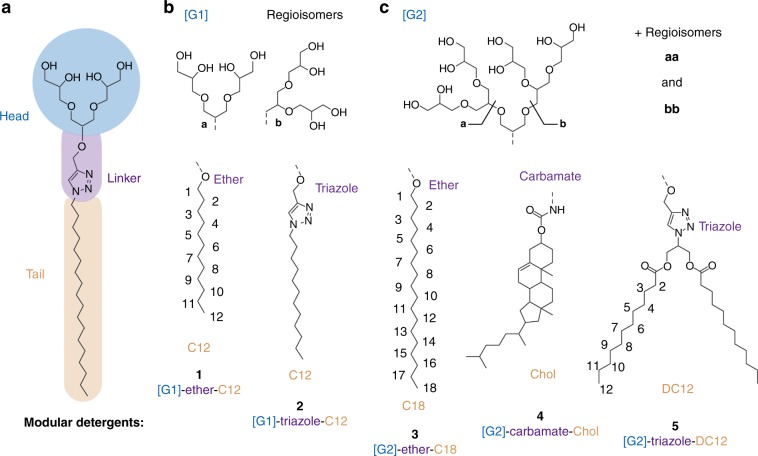
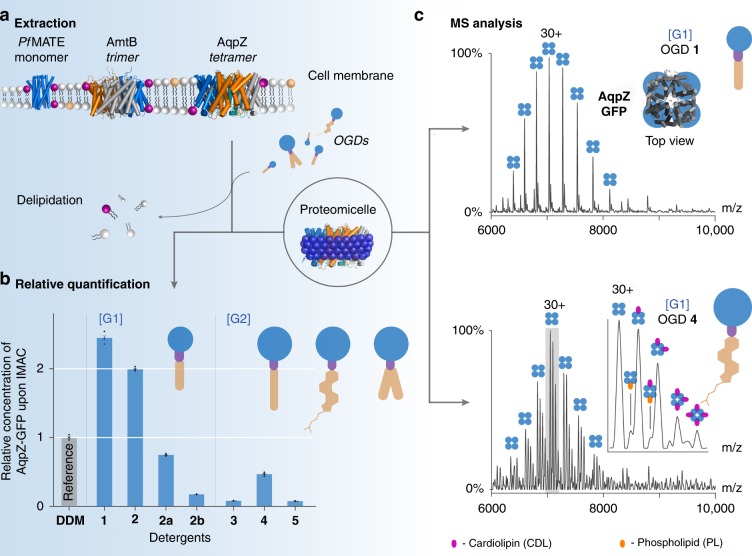
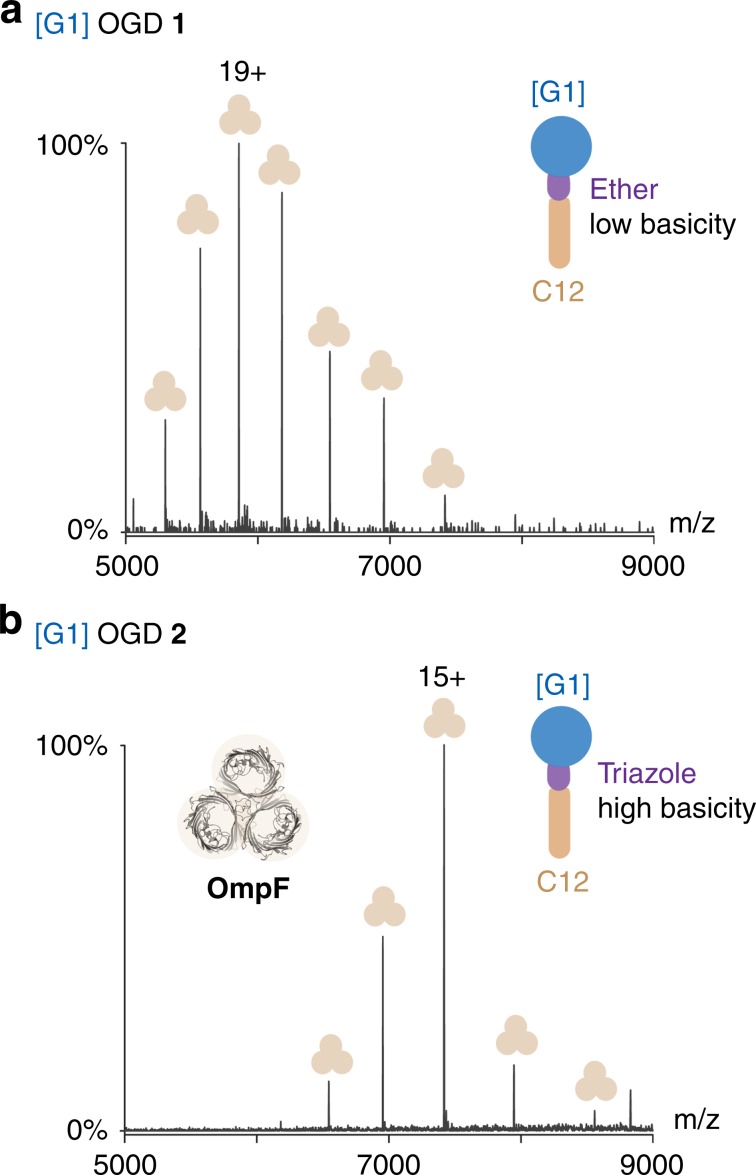
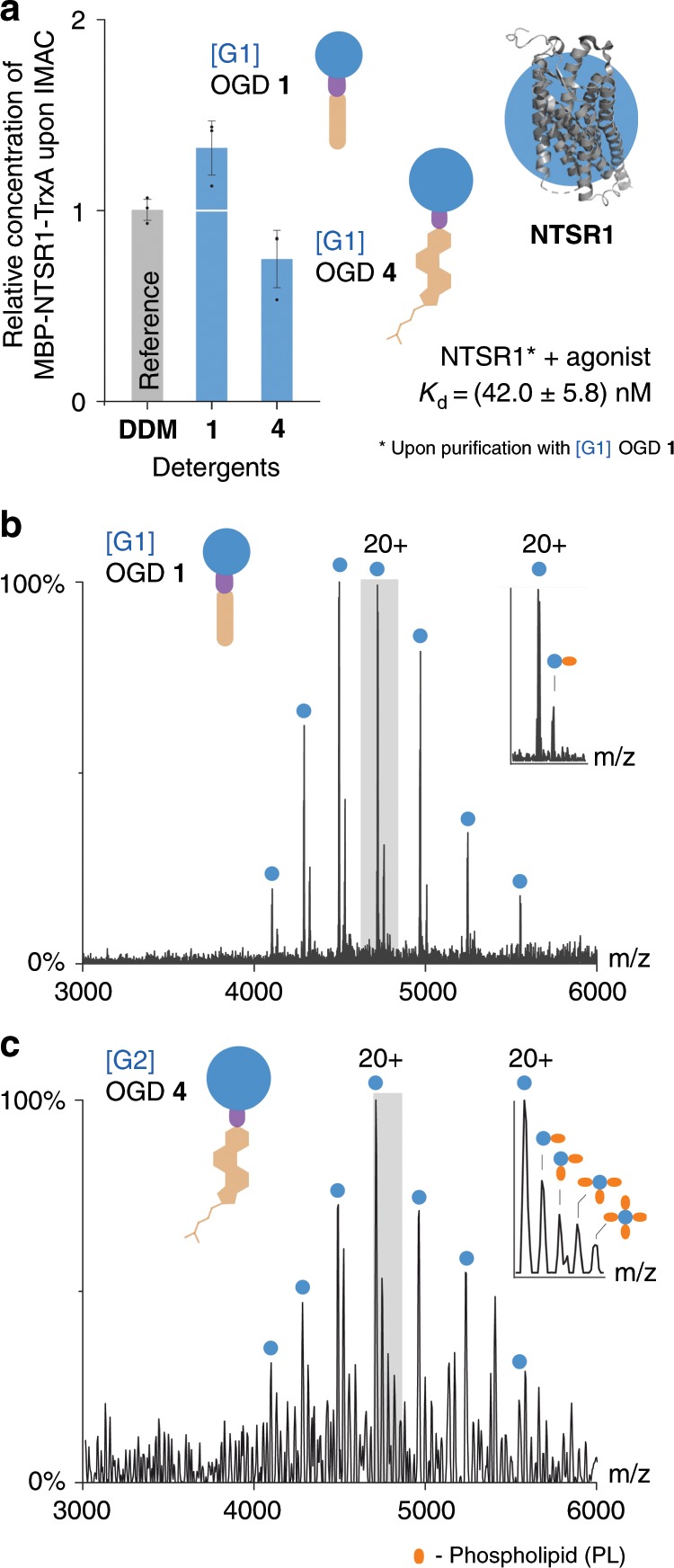
Detergents enable the purification of membrane proteins and are indispensable reagents in structural biology. Even though a large variety of detergents have been developed in the last century, the challenge remains to identify guidelines that allow fine-tuning of detergents for individual applications in membrane protein research. Addressing this challenge, here we introduce the family of oligoglycerol detergents (OGDs). Native mass spectrometry (MS) reveals that the modular OGD architecture offers the ability to control protein purification and to preserve interactions with native membrane lipids during purification. In addition to a broad range of bacterial membrane proteins, OGDs also enable the purification and analysis of a functional G-protein coupled receptor (GPCR). Moreover, given the modular design of these detergents, we anticipate fine-tuning of their properties for specific applications in structural biology. Seen from a broader perspective, this represents a significant advance for the investigation of membrane proteins and their interactions with lipids.
Overview
The claims and statistics of this paper haven’t been checked yet.
Free: it reads the open-access text and checks the first 5 claims that cite a source we can check. Create a free account to check every claim.
Integrity signals
Registry
Cites
Statistics
Figures
Verification
Claims the paper makes
The claims and statistics of this paper haven’t been checked yet.
Free: it reads the open-access text and checks the first 5 claims that cite a source we can check. Create a free account to check every claim.
Claims other papers make about this one
Each is checked against this paper’s own text: does it say what the citing paper says it does?
In the citing paper
“Due to the hydrophobic nature of membrane proteins, the use of nonionic surfactants, such as DDM or the recently developed oligoglycerol class of detergents (shown to improve purification and MS-based characterization of G-protein coupled receptors) [47], to solubilize and stabilize membrane proteins is generally required to enable native MS analysis [48–50].”
From Top-down proteomics: challenges, innovations, and applications in basic and clinical research (2020) · cites this paper as [47]
Self-check
Percentages, sums and reported differences re-computed from the paper’s own numbers.
The self-check needs the paper’s full text.
Citations
Cites
Trends in GPCR drug discovery: new agents, targets and indications
Hauser, A. S., Attwood, M. M., Rask-Andersen, M., Schiöth, H. B., & Gloriam, D. E. (2017) · Nature Reviews Drug Discovery · doi:10.1038/nrd.2017.178 · Cited by 2,627
Membrane proteins, lipids and detergents: not just a soap opera
Seddon, A. M., Curnow, P., & Booth, P. J. (2004) · Biochimica et Biophysica Acta (BBA) - Biomembranes · doi:10.1016/j.bbamem.2004.04.011 · Cited by 1,333
Variants in ELL2 influencing immunoglobulin levels associate with multiple myeloma
Swaminathan, B., Thorleifsson, G., Jöud, M., Ali, M., Johnsson, E., Ajore, R., Sulem, P., Halvarsson, B.-M., Eyjolfsson, G., Haraldsdottir, V., et al. (2015) · Nature Communications · doi:10.1038/ncomms8213 · Cited by 1,132
Interaction of membrane proteins and lipids with solubilizing detergents
le Maire, M., Champeil, P., & Møller, J. V. (2000) · Biochimica et Biophysica Acta (BBA) - Biomembranes · doi:10.1016/s0304-4157(00)00010-1 · Cited by 1,029
Marty, M. T., Baldwin, A. J., Marklund, E. G., Hochberg, G. K. A., Benesch, J. L. P., & Robinson, C. V. (2015) · Analytical Chemistry · doi:10.1021/acs.analchem.5b00140 · Cited by 1,000
Self-citationRay, U., & Das, S. (2011) · Scientific Reports · doi:10.1038/srep00001 · Cited by 884
Trends in the exploitation of novel drug targets
Rask-Andersen, M., Almén, M. S., & Schiöth, H. B. (2011) · Nature Reviews Drug Discovery · doi:10.1038/nrd3478 · Cited by 853
Membrane proteins bind lipids selectively to modulate their structure and function
Laganowsky, A., Reading, E., Allison, T. M., Ulmschneider, M. B., Degiacomi, M. T., Baldwin, A. J., & Robinson, C. V. (2014) · Nature · doi:10.1038/nature13419 · Cited by 781
Self-citationDetergents for the stabilization and crystallization of membrane proteins
Privé, G. G. (2007) · Methods · doi:10.1016/j.ymeth.2007.01.007 · Cited by 532
Mass spectrometry of intact membrane protein complexes
Laganowsky, A., Reading, E., Hopper, J. T. S., & Robinson, C. V. (2013) · Nature Protocols · doi:10.1038/nprot.2013.024 · Cited by 409
Self-citation
Cited by
Novel Strategies to Address the Challenges in Top-Down Proteomics
Melby, J. A., Roberts, D. S., Larson, E. J., Brown, K. A., Bayne, E. F., Jin, S., & Ge, Y. (2021) · Journal of the American Society for Mass Spectrometry · doi:10.1021/jasms.1c00099 · Cited by 190
Protein–Small Molecule Interactions in Native Mass Spectrometry
Bennett, J. L., Nguyen, G. T. H., & Donald, W. A. (2021) · Chemical Reviews · doi:10.1021/acs.chemrev.1c00293 · Cited by 168
Top-down proteomics: challenges, innovations, and applications in basic and clinical research
Brown, K. A., Melby, J. A., Roberts, D. S., & Ge, Y. (2020) · Expert Review of Proteomics · doi:10.1080/14789450.2020.1855982 · Cited by 152
“Due to the hydrophobic nature of membrane proteins, the use of nonionic surfactants, such as DDM or the recently developed oligoglycerol class of detergents (shown to improve purification and MS-based characterization of G-protein coupled receptors) [47], to solubilize and stabilize membrane proteins is generally requ…”
BackgroundNative Mass Spectrometry of Membrane Proteins
Keener, J. E., Zhang, G., & Marty, M. T. (2021) · Analytical Chemistry · doi:10.1021/acs.analchem.0c04342 · Cited by 126
Allostery revealed within lipid binding events to membrane proteins
Patrick, J. W., Boone, C. D., Liu, W., Conover, G. M., Liu, Y., Cong, X., & Laganowsky, A. (2018) · Proceedings of the National Academy of Sciences · doi:10.1073/pnas.1719813115 · Cited by 103
Impact of novel detergents on membrane protein studies
Lee, H. J., Lee, H. S., Youn, T., Byrne, B., & Chae, P. S. (2022) · Chem · doi:10.1016/j.chempr.2022.02.007 · Cited by 114
Structure and Dynamics of GPCRs in Lipid Membranes: Physical Principles and Experimental Approaches
Jones, A. J. Y., Gabriel, F., Tandale, A., & Nietlispach, D. (2020) · Molecules · doi:10.3390/molecules25204729 · Cited by 96
“Indeed, taking a modular approach a recent publication demonstrated that varying tail and head groups can greatly affect the functionality and lipid retention of preparations of NTR1 [180].”
BackgroundNative mass spectrometry—A valuable tool in structural biology
Barth, M., & Schmidt, C. (2020) · Journal of Mass Spectrometry · doi:10.1002/jms.4578 · Cited by 100
“Recent developments therefore include the design of specialised detergents for native MS analysis.(94)”
BackgroundAgasid, M. T., Sørensen, L., Urner, L. H., Yan, J., & Robinson, C. V. (2021) · Journal of the American Chemical Society · doi:10.1021/jacs.0c11837 · Cited by 78
Self-citationApproaches to Heterogeneity in Native Mass Spectrometry
Rolland, A. D., & Prell, J. S. (2021) · Chemical Reviews · doi:10.1021/acs.chemrev.1c00696 · Cited by 84
Membrane protein production and formulation for drug discovery
Gulezian, E., Crivello, C., Bednenko, J., Zafra, C., Zhang, Y., Colussi, P. A., & Hussain, S. (2021) · Trends in Pharmacological Sciences · doi:10.1016/j.tips.2021.05.006 · Cited by 80
Recent advances in top‐down proteome sample processing ahead of MS analysis
Nickerson, J. L., Baghalabadi, V., Rajendran, S. R. C. K., Jakubec, P. J., Said, H., McMillen, T. S., Dang, Z., & Doucette, A. A. (2023) · Mass Spectrometry Reviews · doi:10.1002/mas.21706 · Cited by 55
Gas-Phase Structural Analysis of Supramolecular Assemblies
Polewski, Ł., Springer, A., Pagel, K., & Schalley, C. A. (2021) · Accounts of Chemical Research · doi:10.1021/acs.accounts.1c00080 · Cited by 46
Self-citationRecent advances in membrane mimetics for membrane protein research
Young, J. W. (2023) · Biochemical Society Transactions · doi:10.1042/bst20230164 · Cited by 54
Emergence of mass spectrometry detergents for membrane proteomics
Behnke, J., & Urner, L. H. (2023) · Analytical and Bioanalytical Chemistry · doi:10.1007/s00216-023-04584-z · Cited by 54
“Like with other applications, the utility of detergents for membrane protein purification and nMS has initially been determined by empirical screening [13, 58, 60, 62].”
BackgroundMethodInfluentialSelf-citationThe importance of the membrane for biophysical measurements
Chorev, D. S., & Robinson, C. V. (2020) · Nature Chemical Biology · doi:10.1038/s41589-020-0574-1 · Cited by 44
Self-citationProbing membrane protein–lipid interactions
Agasid, M. T., & Robinson, C. V. (2021) · Current Opinion in Structural Biology · doi:10.1016/j.sbi.2021.03.010 · Cited by 47
Self-citationChanges in Membrane Protein Structural Biology
Birch, J., Cheruvara, H., Gamage, N., Harrison, P. J., Lithgo, R., & Quigley, A. (2020) · Biology · doi:10.3390/biology9110401 · Cited by 46
“In some cases, a suitable mixture of detergents must be used to alter the protein–detergent complex instead of a single detergent which is sufficient in most cases [188].”
BackgroundCai, H., Yao, H., Li, T., Hutter, C. A. J., Li, Y., Tang, Y., Seeger, M. A., & Li, D. (2020) · Communications Biology · doi:10.1038/s42003-020-01478-z · Cited by 36
Discovery of Potent Charge-Reducing Molecules for Native Ion Mobility Mass Spectrometry Studies
Lyu, J., Liu, Y., McCabe, J. W., Schrecke, S. R., Fang, L., Russell, D. H., & Laganowsky, A. D. (2020) · Analytical Chemistry · doi:10.1021/acs.analchem.0c01826 · Cited by 39
DeGrip, W. J., & Ganapathy, S. (2022) · Frontiers in Chemistry · doi:10.3389/fchem.2022.879609 · Cited by 43
Rationalizing the Optimization of Detergents for Membrane Protein Purification
Urner, L. H., Junge, F., Fiorentino, F., El‐Baba, T. J., Shutin, D., Nölte, G., Haag, R., & Robinson, C. V. (2023) · Chemistry - A European Journal · doi:10.1002/chem.202300159 · Cited by 35
Self-citationFunctional Surfactants for Molecular Fishing, Capsule Creation, and Single-Cell Gene Expression
Chowdhury, M. S., Zhang, X., Amini, L., Dey, P., Singh, A. K., Faghani, A., Schmueck‐Henneresse, M., & Haag, R. (2021) · Nano-Micro Letters · doi:10.1007/s40820-021-00663-x · Cited by 34
Self-citationLutomski, C. A., El‐Baba, T. J., Hinkle, J. D., Liko, I., Bennett, J. L., Kalmankar, N. V., Dolan, A., Kirschbaum, C., Greis, K., Urner, L. H., et al. (2023) · Angewandte Chemie International Edition · doi:10.1002/anie.202305694 · Cited by 40
Self-citationNon-ionic hybrid detergents for protein delipidation
Urner, L. H., Liko, I., Pagel, K., Haag, R., & Robinson, C. V. (2022) · Biochimica et Biophysica Acta (BBA) - Biomembranes · doi:10.1016/j.bbamem.2022.183958 · Cited by 37
“The expected tetrameric state of AqpZ could be retained in all three detergent environments during purification [1].”
InfluentialSelf-citationA new azobenzene-based design strategy for detergents in membrane protein research
Urner, L. H., Schulze, M., Maier, Y. B., Hoffmann, W., Warnke, S., Liko, I., Folmert, K., Manz, C., Robinson, C. V., Haag, R., et al. (2020) · Chemical Science · doi:10.1039/d0sc01022g · Cited by 34
Self-citationHale, O. J., & Cooper, H. J. (2022) · Angewandte Chemie International Edition · doi:10.1002/anie.202201458 · Cited by 33
Fiorentino, F., Rotili, D., & Mai, A. (2023) · Drug Discovery Today · doi:10.1016/j.drudis.2023.103548 · Cited by 31
Probiotic Effector Compounds: Current Knowledge and Future Perspectives
Daliri, E. B., Ofosu, F. K., Xiuqin, C., Chelliah, R., & Oh, D. (2021) · Frontiers in Microbiology · doi:10.3389/fmicb.2021.655705 · Cited by 34
“For membrane bound molecules, however, the cells are usually broken and the components separated (Urner et al., 2020) and tested for activity.”
BackgroundKosuge, H., Nakakido, M., Nagatoishi, S., Fukuda, T., Bando, Y., Ohnuma, S., & Tsumoto, K. (2021) · Journal of Biological Chemistry · doi:10.1016/j.jbc.2021.100278 · Cited by 25
“As different detergents solubilize different types of membrane proteins (25), using detergents other than DDM may enable identification of other protein partners of PRELP.”
BackgroundOchner, H., Szilagyi, S. A., Abb, S., Gault, J., Robinson, C. V., Malavolti, L., Rauschenbach, S., & Kern, K. (2021) · Proceedings of the National Academy of Sciences · doi:10.1073/pnas.2112651118 · Cited by 30
“P. W. A. Devine et al., Investigating the structural compaction of biomolecules upon transition to the gas-phase using ESI-TWIMS-MS.”
BackgroundMethodInfluentialSelf-citationG Protein-Coupled Receptor Pharmacology—Insights from Mass Spectrometry
Yen, H., Jazayeri, A., & Robinson, C. V. (2023) · Pharmacological Reviews · doi:10.1124/pharmrev.120.000237 · Cited by 26
“GCGR was released into the gas phase from micelles composed of G1(a tailored detergent (Urner et al., 2020)) and cholesteryl hemisuccinate in 50 mM NaCl, 5 mM Tris, pH 7.5 electrospray buffers.”
MethodInfluentialSelf-citationBarekatain, M., Johansson, L. C., Lam, J. H., Chang, H., Sadybekov, A., Han, G. W., Russo, J., Bliesath, J. R., Brice, N., Carlton, M. B. L., et al. (2024) · Science Signaling · doi:10.1126/scisignal.ado8741 · Cited by 25
Self-citationMembrane Protein Complexity Revealed Through Native Mass Spectrometry
Lawrence, S. A. S., Dolan, A., Miller, M. M., & Robinson, C. V. (2025) · Annual Review of Biochemistry · doi:10.1146/annurev-biochem-081424-044501 · Cited by 30
Self-citationUrner, L. H. (2022) · Current Opinion in Chemical Biology · doi:10.1016/j.cbpa.2022.102157 · Cited by 25
Self-citationCombinatorial synthesis enables scalable designer detergents for membrane protein studies
Urner, L. H., Ariamajd, A., & Weikum, A. (2022) · Chemical Science · doi:10.1039/d2sc03130b · Cited by 23
Self-citationWoubshete, M., Cioccolo, S., & Byrne, B. (2024) · ChemPlusChem · doi:10.1002/cplu.202300678 · Cited by 29
Mass spectrometry of intact membrane proteins: shifting towards a more native-like context
Oluwole, A. O., Shutin, D., & Bolla, J. R. (2023) · Essays in Biochemistry · doi:10.1042/ebc20220169 · Cited by 26
Self-citationLipid Modulation of a Class B GPCR: Elucidating the Modulatory Role of PI(4,5)P2 Lipids
Kjølbye, L. R., Sørensen, L., Yan, J., Berglund, N. A., Ferkinghoff‐Borg, J., Robinson, C. V., & Schiøtt, B. (2022) · Journal of Chemical Information and Modeling · doi:10.1021/acs.jcim.2c00635 · Cited by 22
Self-citationInvestigating the Lipid Selectivity of Membrane Proteins in Heterogeneous Nanodiscs
Keener, J. E., Jayasekera, H. S., & Marty, M. T. (2022) · Analytical Chemistry · doi:10.1021/acs.analchem.2c01488 · Cited by 26
Native Mass Spectrometry of Membrane Protein–Lipid Interactions in Different Detergent Environments
Kumar, S., Stover, L., Wang, L., Bahramimoghaddam, H., Zhou, M., Russell, D. H., & Laganowsky, A. D. (2024) · Analytical Chemistry · doi:10.1021/acs.analchem.4c03312 · Cited by 24
Sadaf, A., Kim, S., Bae, H. E., Wang, H., Nygaard, A., Uegaki, Y., Du, Y., Munk, C. F., Katsube, S., Lee, H. S., et al. (2021) · Acta Biomaterialia · doi:10.1016/j.actbio.2021.04.043 · Cited by 20
Bae, H. E., Cecchetti, C., Du, Y., Katsube, S., Mortensen, J. S., Huang, W., Rehan, S., Lee, H. J., Loland, C. J., Guan, L., et al. (2020) · Acta Biomaterialia · doi:10.1016/j.actbio.2020.06.001 · Cited by 21
“Very recently, oligoglycerolbased detergents (OGDs) with particular promise for native mass analysis of membrane proteins have been developed [41].”
BackgroundDendritic Oligoglycerol Regioisomer Mixtures and Their Utility for Membrane Protein Research
Urner, L. H., Goltsche, K., Selent, M., Liko, I., Schweder, M., Robinson, C. V., Pagel, K., & Haag, R. (2020) · Chemistry - A European Journal · doi:10.1002/chem.202003991 · Cited by 19
Self-citationTwo‐Dimensional Detergent Expansion Strategy for Membrane Protein Studies
Zhao, F., Zhu, Z., Xie, L., Luo, F., Wang, H., Qiu, Y., Luo, W., Zhou, F., Xue, D., Zhang, Z., et al. (2022) · Chemistry - A European Journal · doi:10.1002/chem.202201388 · Cited by 20
Polystyrene adsorbents: rapid and efficient surrogate for dialysis in membrane protein purification
Palanirajan, S. K., Govindasamy, P., & Gummadi, S. N. (2020) · Scientific Reports · doi:10.1038/s41598-020-73522-1 · Cited by 17
Anionic Dendritic Polyglycerol for Protein Purification and Delipidation
Urner, L. H., Mohammadifar, E., Ludwig, K., Shutin, D., Fiorentino, F., Liko, I., de Almeida, F. G., Kutifa, D., Haag, R., & Robinson, C. V. (2021) · ACS Applied Polymer Materials · doi:10.1021/acsapm.1c01127 · Cited by 16
Self-citationPolyamine detergents tailored for native mass spectrometry studies of membrane proteins
Zhu, Y. K., Peng, B.-J., Kumar, S., Stover, L., Chang, J., Lyu, J., Zhang, T., Schrecke, S. R., Azizov, D., Russell, D. H., et al. (2023) · Nature Communications · doi:10.1038/s41467-023-41429-w · Cited by 17
Trends in the Diversification of the Detergentome
Wycisk, V., Wagner, M., & Urner, L. H. (2023) · ChemPlusChem · doi:10.1002/cplu.202300386 · Cited by 19
Self-citationSingle-Molecule Fluorescence Techniques for Membrane Protein Dynamics Analysis
Yang, W., Xu, H., Wang, J., Chen, W., & Zhao, M. (2021) · Applied Spectroscopy · doi:10.1177/00037028211009973 · Cited by 19
“To maintain the native structure and facilitate protein purification, various detergents are needed which surround membrane proteins to form micelles.(71,72) Most of the above-mentioned labeling methods have low reactivity with the sites located in the TM domain because of the polar reactants, but the hydrophobic cycl…”
BackgroundKundlacz, T., Bender, J., & Schmidt, C. (2021) · International Journal of Mass Spectrometry · doi:10.1016/j.ijms.2021.116652 · Cited by 18
Capture of endogenous lipids in peptidiscs and effect on protein stability and activity
Jandu, R. S., Yu, H., Zhao, Z., Le, H.-T., Kim, S., Huan, T., & Duong, F. (2024) · iScience · doi:10.1016/j.isci.2024.109382 · Cited by 21
Travel light: Essential packing for membrane proteins with an active lifestyle
Johansen, N. T., Tidemand, F. G., Pedersen, M. C., & Arleth, L. (2022) · Biochimie · doi:10.1016/j.biochi.2022.07.014 · Cited by 19
Characterization of membrane protein interactions by peptidisc-mediated mass photometry
Young, J. W., Pfitzner, E., van Wee, R., Kirschbaum, C., Kukura, P., & Robinson, C. V. (2024) · iScience · doi:10.1016/j.isci.2024.108785 · Cited by 13
Self-citationElectrospray ionization of native membrane proteins proceeds via a charge equilibration step
Yen, H., Abramsson, M. L., Agasid, M. T., Lama, D., Gault, J., Liko, I., Kaldmäe, M., Saluri, M., Qureshi, A. A., Suades, A., et al. (2022) · RSC Advances · doi:10.1039/d2ra01282k · Cited by 17
Self-citationRational Approach to Improve Detergent Efficacy for Membrane Protein Stabilization
Yoon, S.-Y., Bae, H. E., Hariharan, P., Nygaard, A., Lan, B., Woubshete, M., Sadaf, A., Liu, X., Loland, C. J., Byrne, B., et al. (2024) · Bioconjugate Chemistry · doi:10.1021/acs.bioconjchem.3c00507 · Cited by 11
A Comprehensive Review of Protein Biomarkers for Invasive Lung Cancer
Mezentsev, A. V., Durymanov, M. O., & Макаров, В. А. (2024) · Current Oncology · doi:10.3390/curroncol31090360 · Cited by 11
“The new generation of solubilizers, such as Azo and modular surfactants, provide an opportunity to extract membrane and ECM proteins from tissue samples and, if possible, protect their structural integrity [271,272].”
BackgroundGlyco‐Steroidal Amphiphiles (GSAs) for Membrane Protein Structural Study
Ehsan, M., Wang, H., Katsube, S., Munk, C. F., Du, Y., Youn, T., Yoon, S.-Y., Byrne, B., Loland, C. J., Guan, L., et al. (2022) · ChemBioChem · doi:10.1002/cbic.202200027 · Cited by 14
Structural mass spectrometry of membrane proteins
Dafun, A. S., & Marcoux, J. (2022) · Biochimica et Biophysica Acta (BBA) - Proteins and Proteomics · doi:10.1016/j.bbapap.2022.140813 · Cited by 16
Evaluation of Drug Responses to Human β2AR Using Native Mass Spectrometry
Tajiri, M., Imai, S., Konuma, T., Shimamoto, K., Shimada, I., & Akashi, S. (2023) · ACS Omega · doi:10.1021/acsomega.3c02737 · Cited by 12
Urner, L. H., Fiorentino, F., Shutin, D., Sauer, J. B., Agasid, M. T., El‐Baba, T. J., Bolla, J. R., Stansfeld, P. J., & Robinson, C. V. (2024) · Journal of the American Chemical Society · doi:10.1021/jacs.3c14358 · Cited by 14
Self-citationSeewald, M., Nielinger, L., Alker, K., Behnke, J., Wycisk, V., & Urner, L. H. (2024) · Angewandte Chemie International Edition · doi:10.1002/anie.202403833 · Cited by 10
Self-citationLee, H. J., Ehsan, M., Zhang, X., Katsube, S., Munk, C. F., Wang, H., Ahmed, W., Kumar, A., Byrne, B., Loland, C. J., et al. (2022) · Chemical Science · doi:10.1039/d2sc00539e · Cited by 10
Wycisk, V., Behnke, J., Nielinger, L., Seewald, M., Weisner, J., Binsch, M., Wagner, M., Raisch, T., & Urner, L. H. (2024) · Chemistry - A European Journal · doi:10.1002/chem.202401833 · Cited by 10
Self-citationGu, Y., Liu, M., & Quinn, R. J. (2022) · Frontiers in Analytical Science · doi:10.3389/frans.2022.1014017 · Cited by 10
“There has been progress made in detergents and alternate systems for better stabilizing membrane proteins (Marty et al., 2016; Urner et al., 2020).”
BackgroundLi, Y., Xia, C., Zhao, H., Xie, Y., Zhang, Y., Zhang, W., Yu, Y., Wang, J., & Qin, W. (2022) · Chinese Chemical Letters · doi:10.1016/j.cclet.2022.03.100 · Cited by 9
Lutomski, C. A., El‐Baba, T. J., Hinkle, J. D., Liko, I., Bennett, J. L., Kalmankar, N. V., Dolan, A., Kirschbaum, C., Greis, K., Urner, L. H., et al. (2023) · Angewandte Chemie · doi:10.1002/ange.202305694 · Cited by 9
Self-citationGuffick, C., Hsieh, P., Ali, A., Shi, W., Howard, J., Chinthapalli, D. K., Kong, A. C., Salaa, I., Crouch, L. I., Ansbro, M. R., et al. (2022) · FEBS Journal · doi:10.1111/febs.16366 · Cited by 8
Self-citationAntony, F., Bhattacharya, A., Aoki, H., Jandu, R. S., Abdualkader, A. M., Batran, R. A., Babu, M., & Duong, F. (2025) · Molecular & Cellular Proteomics · doi:10.1016/j.mcpro.2025.101496 · Cited by 10
“Strong ionic detergents such as SDS-and RIPA-based buffers are highly effective for membrane solubilization but are incompatible with downstream workflows, as they inhibit protease activity (18), compromise chromatographic separation (19), and suppress peptide ionization (20).”
Probing the structures of G protein-coupled receptors with mass spectrometry-based techniques
Pan, C., Li, J., Yuan, S., & Shui, W. (2022) · International Journal of Mass Spectrometry · doi:10.1016/j.ijms.2022.116968 · Cited by 8
Ochner, H., Rauschenbach, S., & Malavolti, L. (2023) · Essays in Biochemistry · doi:10.1042/ebc20220165 · Cited by 6
Levesque, I., Juliano, B. R., Parson, K. F., & Ruotolo, B. T. (2023) · Journal of the American Society for Mass Spectrometry · doi:10.1021/jasms.3c00230 · Cited by 8
Advances and challenges in preparing membrane proteins for native mass spectrometry
Cheng, D., Guo, Y., Lyu, J., Liu, Y., Xu, W., Zheng, W., Wang, Y., & Qiao, P. (2024) · Biotechnology Advances · doi:10.1016/j.biotechadv.2024.108483 · Cited by 7
Singh, A. K., Seewald, M., Schade, B., Zoister, C., Haag, R., & Urner, L. H. (2025) · Communications Chemistry · doi:10.1038/s42004-025-01477-3 · Cited by 9
Self-citationLambos, J. C., Bhattacharya, A., Al‐Seragi, M., & Duong, F. (2025) · PROTEOMICS · doi:10.1002/pmic.70057 · Cited by 11
“Urner et al. first introduced oligoglycerol detergents (OGDs), a modularclassthatimprovedcharge-stateresolutioninnativeMS, preserved bound lipids, and maintained agonist binding of receptors such as NTSR1 [80].”
Lee, H. S., Das, M., Mahler, F., Ahmed, W., Wang, H., Mortensen, J. S., Hariharan, P., Ghani, L., Byrne, B., Guan, L., et al. (2022) · Chemistry - An Asian Journal · doi:10.1002/asia.202200941 · Cited by 8
Brown, K. A., Gugger, M. K., Roberts, D. S., Moreno, D., Chae, P. S., Ge, Y., & Jin, S. (2023) · Langmuir · doi:10.1021/acs.langmuir.2c02820 · Cited by 6
Li, L., Zhang, Y., Lv, Y., Qu, F., & Ma, Q. (2023) · TrAC Trends in Analytical Chemistry · doi:10.1016/j.trac.2023.117424 · Cited by 9
Fiorentino, F., Cervoni, M., Wang, Y., Urner, L. H., Sauer, J. B., Tran, T. A., Corey, R. A., Rotili, D., Mai, A., Stansfeld, P. J., et al. (2025) · Nature Communications · doi:10.1038/s41467-025-66182-0 · Cited by 7
Self-citationProtocol to test the utility of detergents for E. coli membrane protein extraction and delipidation
Wycisk, V., & Urner, L. H. (2023) · STAR Protocols · doi:10.1016/j.xpro.2023.102146 · Cited by 4
“coli, concentrated, and suspended according to established protocols.(1,5,6) Here, a His-tagged AqpZ-GFP construct was used as model system,(7) since this membrane protein construct expresses very well, and the related purification workflow is well established and understood.”
MethodSelf-citationImproved Pendant-Bearing Glucose-Neopentyl Glycols for Membrane Protein Stability
Youn, T., Kim, G., Hariharan, P., Li, X., Ahmed, W., Byrne, B., Liu, X., Guan, L., & Chae, P. S. (2025) · Bioconjugate Chemistry · doi:10.1021/acs.bioconjchem.4c00556 · Cited by 4
Campuzano, I. D. G. (2023) · Journal of the American Society for Mass Spectrometry · doi:10.1021/jasms.3c00175 · Cited by 4
Dai, Y., Yang, M., Luo, W., Qiu, Y., Zhou, F., Zheng, X., Zhao, F., Xu, Y., Zhao, S., & Tao, H. (2025) · Chemistry - A European Journal · doi:10.1002/chem.202501128 · Cited by 4
Chang, J., Azizov, D., Shinde, V. N., Yun, S. D., Rider, R. L., Zhu, Y., Bahramimoghaddam, H., Lynn, M., Russell, D. H., Fang, L., et al. (2025) · Journal of the American Chemical Society · doi:10.1021/jacs.5c10841 · Cited by 5
The high-throughput production of membrane proteins
Birch, J., & Quigley, A. (2021) · Emerging Topics in Life Sciences · doi:10.1042/etls20210196 · Cited by 3
Tailoring Purification and Analysis of Membrane Proteins with Modular Detergents
Urner, L. H. (2022) · Methods in molecular biology · doi:10.1007/978-1-0716-2368-8_19 · Cited by 5
Self-citationCai, H., Wu, X., Jin, S., Liu, Y., Liu, X., Lin, K., & Ding, N. (2025) · Carbohydrate Research · doi:10.1016/j.carres.2025.109560 · Cited by 2
Xu, T., Lai, S., Ajitha, M. J., Huang, K., & Yeung, Y. (2026) · Nature Communications · doi:10.1038/s41467-026-71201-9 · Cited by 2
Jieying, X. U. E., Liu, Z.-Y., & Wang, F. (2024) · Chinese Journal of Chromatography · doi:10.3724/sp.j.1123.2024.01021 · Cited by 3
Sadaf, A., Yun, H. S., Lee, H., Stanfield, S., Lan, B., Salomon, K., Woubshete, M., Kim, S., Ehsan, M., Bae, H., et al. (2025) · Biomacromolecules · doi:10.1021/acs.biomac.5c00036 · Cited by 2
Hale, O. J., & Cooper, H. J. (2022) · Angewandte Chemie · doi:10.1002/ange.202201458 · Cited by 1
Membrane Proteins: Challenging Biotherapeutic Targets
Jayasekera, H. S., Mohona, F. A., & Marty, M. T. (2025) · Wiley eBooks · doi:10.1002/9781394236145.ch18 · Cited by 2
Tajiri, M., Shida, T., Oi, R., Kondo, H., Shimamoto, K., Kato, Y., Nogi, T., & Akashi, S. (2025) · Analytical and Bioanalytical Chemistry · doi:10.1007/s00216-025-06173-8 · Cited by 1
“The detergent [G1]-ether-C12 (G1) was synthesized as previously reported [23, 24].”
Urner, L. H., Shutin, D., Agasid, M. T., & Robinson, C. V. (2025) · Chemistry - A European Journal · doi:10.1002/chem.202503191 · Cited by 1
Self-citationSeewald, M., Nielinger, L., Alker, K., Behnke, J., Wycisk, V., & Urner, L. H. (2024) · Angewandte Chemie · doi:10.1002/ange.202403833 · Cited by 1
Self-citationAlker, K., Behnke, J., & Urner, L. H. (2025) · Chemistry - A European Journal · doi:10.1002/chem.202501549 · Cited by 4
Self-citationMembrane Proteins: Challenging Biotherapeutic TargetsPreprint
Jayasekera, H. S., Mohona, F. A., & Marty, M. T. (2024) · ChemRxiv · doi:10.26434/chemrxiv-2024-dz7rf · Cited by 1
The ATCUN Motif as a Paramagnetic Beacon in Fragment-based Drug Discovery
Reet, J. V. (2020) · TSpace (University of Toronto)
Yonamine, D. K. (2023) · Digital Library of Theses and Dissertations (Universidade de São Paulo) · doi:10.11606/t.59.2023.tde-30012024-145043
Chen, Y., Huai, B., Wu, J. C., Zhang, N., Wang, Y., & Li, Q. (2025) · Protein Expression and Purification · doi:10.1016/j.pep.2025.106723
Metadata
- Authors
- Urner, L. H., Liko, I., Yen, H.-Y., Hoi, K.-K., Bolla, J. R., Gault, J., Almeida, F. G., Schweder, M.-P., Shutin, D., Ehrmann, S., Haag, R., Robinson, C. V., & Pagel, K.
- Affiliations
- University of Oxford (GB)
- Freie Universität Berlin (DE)
- Fritz Haber Institute of the Max Planck Society (DE)
- Corresponding author
- Haag, Rainer
- Robinson, Carol V.
- Pagel, Kevin
- ORCID
- Venue
- Nature Communications
- Published
- 2020-01-28
- Volume
- 11
- Issue
- 1
- Pages
- 564-564
- ISSN
- 2041-1723 (ISSN-L)
- PMC
- PMC6987200
- OpenAlex
- W2998301451
- Semantic Scholar
- bebd6368d5938596dbf0cdbee4e44a4d46f7e779
- Cited by
- 107
- References
- 57
- Citations by year
- 2026: 7 · 2025: 15 · 2024: 15 · 2023: 18 · 2022: 21 · 2021: 17 · 2020: 13
- FWCI
- 5.60
- Type
- journal article
- Language
- en
- Open access
- gold
- doi.org
- Licence
- cc-by
- creativecommons.org/licenses/by/4.0 (tdm)
- creativecommons.org/licenses/by/4.0 (vor)
- Locations
- Nature Communications (publishedVersion, cc-by)
- PubMed Central (publishedVersion, cc-by)
- PubMed (publishedVersion)
- RePEc: Research Papers in Economics (submittedVersion)
- DOAJ (DOAJ: Directory of Open Access Journals) (submittedVersion)
- DOAJ (DOAJ: Directory of Open Access Journals) (submittedVersion, cc-by-sa)
- MPG.PuRe (Max Planck Society) (submittedVersion, other-oa)
- Refubium (Universitätsbibliothek der Freien Universität Berlin) (submittedVersion, cc-by)
- OSF Preprints (OSF Preprints) (submittedVersion)
- Universitätsbibliothek der FU Berlin Hochschulschriftenstelle u. Dokumentenserver (cc-by)
- Funders
- University of Oxford
- Freie Universität Berlin
- H2020 European Research Council (695511)
- Topics
- Life Sciences › Biochemistry, Genetics and Molecular Biology › Molecular Biology › Lipid Membrane Structure and Behavior
- Physical Sciences › Chemistry › Spectroscopy › Mass Spectrometry Techniques and Applications
- Life Sciences › Biochemistry, Genetics and Molecular Biology › Molecular Biology › Protein Structure and Dynamics
- Keywords
- membrane protein purification, detergents, G protein-coupled receptors, membrane lipids, native mass spectrometry, bacterial membrane proteins, protein-lipid interactions
- MeSH terms
- Bacterial Outer Membrane Proteins, Bacterial Proteins, Detergents, Escherichia coli, Membrane Lipids, Models, Molecular, Peptide Hydrolases, Solubility, Mass Spectrometry, Escherichia coli Proteins, Receptors, G-Protein-Coupled, Protein Refolding
About these checks
Registry, retraction, Cites and statistics results are computed, not judged, with one exception: a printed reference that no index lists is read once by a model before it counts as a citation error. Claims are extracted by a model and kept only when their quote appears verbatim in the text; each cited source is then checked, with a model’s help, for whether it says what the claim relies on. Those verdicts can be wrong — read the claim’s quote and the cited source before relying on one.
Statistics and arithmetic are recomputed, not judged.
Confidence bands are shown only for fields calibrated on our annotated test set. None is calibrated yet, so no band is shown.
What counts as a claim ›How we measure confidence ›How we check this ›
Are you an author, or do you see a problem with this page? Request a review
Data sources
Bibliographic data: Semantic Scholar, OpenAlex, Crossref.
Contains information from the Semantic Scholar Academic Graph Datasets, made available under the ODC Attribution License (ODC-BY 1.0).
Semantic Scholar’s data is described in: Kinney, R., et al. (2023). The Semantic Scholar Open Data Platform. arXiv:2301.10140.
