

Social and environmental analysis of food waste abatement via the peer-to-peer sharing economy
Open accessThe DOI matches its Crossref record; 53 of the 54 references it cites were found in a registry or an index.
Abstract
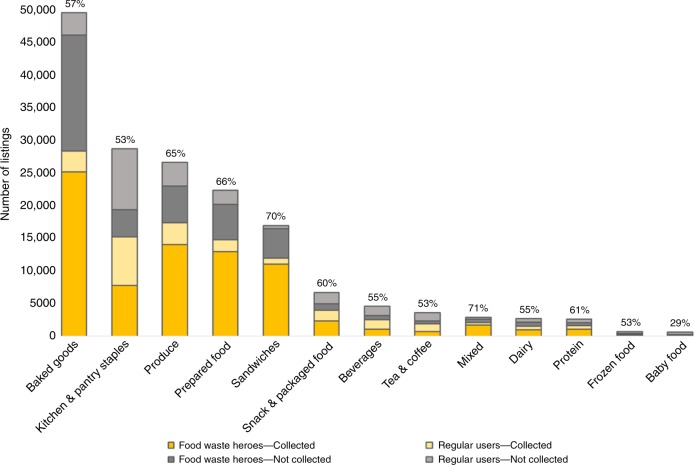
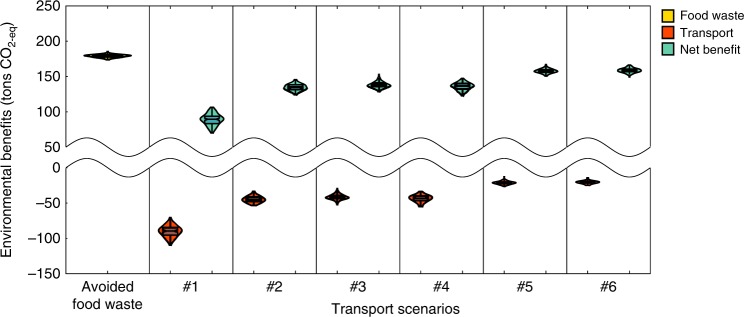
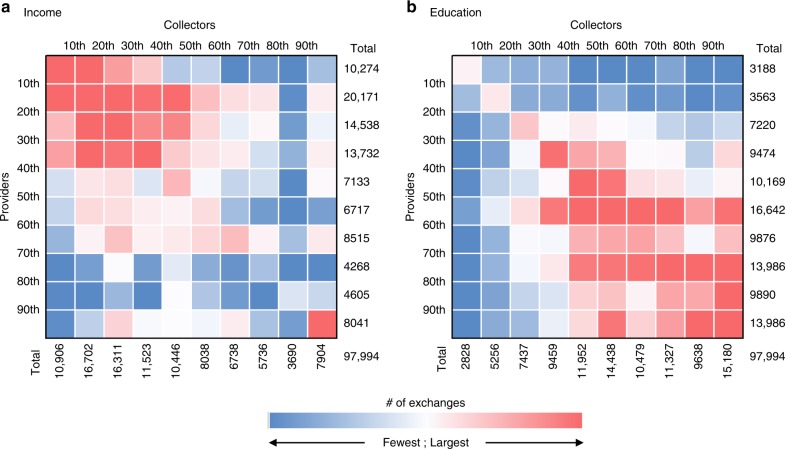
Reducing food waste is widely recognized as critical for improving resource efficiency and meeting the nutritional demand of a growing human population. Here we explore whether the sharing economy can provide meaningful assistance to reducing food waste in a relatively low-impact and environmentally-sound way. Analyzing 170,000 postings on a popular peer-to-peer food-sharing app, we find that over 19 months, 90t of food waste with an equivalent retail value of £0.7 million were collected by secondary consumers and diverted from disposal. An environmental analysis focused on Greater London reveals that these exchanges were responsible for avoiding emission of 87–156t of CO 2 eq. Our results indicate that most exchanges were among users associated with lower income yet higher levels of education. These findings, together with the high collection rates (60% on average) suggest that the sharing economy may offer powerful means for improving resource efficiency and reducing food waste.
Overview
The claims and statistics of this paper haven’t been checked yet.
Free: it reads the open-access text and checks the first 5 claims that cite a source we can check. Create a free account to check every claim.
Integrity signals
Registry
Cites
Statistics
Figures
Verification
Claims the paper makes
The claims and statistics of this paper haven’t been checked yet.
Free: it reads the open-access text and checks the first 5 claims that cite a source we can check. Create a free account to check every claim.
Claims other papers make about this one
Each is checked against this paper’s own text: does it say what the citing paper says it does?
The cited source says what the claim attributes to it.
In the citing paper
“In developed countries, a large portion of all food waste occurs at the consumer level (Makov et al., 2020).”
From Eco-Feedback for Food Waste Reduction in a Student Residence (2021) · cites this paper as Makov et al., 2020
Self-check
Percentages, sums and reported differences re-computed from the paper’s own numbers.
The self-check needs the paper’s full text.
Citations
Cites
Food Security: The Challenge of Feeding 9 Billion People
Godfray, H. C. J., Beddington, J. R., Crute, I. R., Haddad, L., Lawrence, D., Muir, J. F., Pretty, J., Robinson, S., Thomas, S. M., & Toulmin, C. (2010) · Science · doi:10.1126/science.1185383 · Cited by 11,943
Solutions for a cultivated planet
Foley, J. A., Ramankutty, N., Brauman, K. A., Cassidy, E. S., Gerber, J. S., Johnston, M., Mueller, N. D., O’Connell, C., Ray, D. K., West, P. C., et al. (2011) · Nature · doi:10.1038/nature10452 · Cited by 8,476
Reducing food's environmental impacts through producers and consumers
Poore, J., & Nemecek, T. (2018) · Science · doi:10.1126/science.aaq0216 · Cited by 6,085
Options for keeping the food system within environmental limits
Springmann, M., Clark, M., Mason-D’Croz, D., Wiebe, K., Bodirsky, B. L., Lassaletta, L., de Vries, W., Vermeulen, S. J., Herrero, M., Carlson, K. M., et al. (2018) · Nature · doi:10.1038/s41586-018-0594-0 · Cited by 3,380
Global diets link environmental sustainability and human health
Tilman, D., & Clark, M. (2014) · Nature · doi:10.1038/nature13959 · Cited by 3,026
Putting the sharing economy into perspective
Frenken, K., & Schor, J. (2017) · Environmental Innovation and Societal Transitions · doi:10.1016/j.eist.2017.01.003 · Cited by 1,105
Consumer-related food waste: causes and potential for action
Aschemann-Witzel, J., De Hooge, I., Amani, P., Bech-Larsen, T., & Oostindjer, M. (2015) · Sustainability · doi:10.3390/su7066457 · Cited by 910
Household Food Security in the United States in 2013
Coleman-Jensen, A., Gregory, C., & Singh, A. (2014) · SSRN Electronic Journal · doi:10.2139/ssrn.2504067 · Cited by 896
PIANTADOSI, S., BYAR, D. P., & GREEN, S. B. (1988) · American Journal of Epidemiology · doi:10.1093/oxfordjournals.aje.a114892 · Cited by 821
Impacts of Peer-to-Peer Accommodation Use on Travel Patterns
Tussyadiah, I. P., & Pesonen, J. (2016) · Journal of Travel Research · doi:10.1177/0047287515608505 · Cited by 804
Research works printed but not linked: 1
- 65. Makov T., Wolfram P. & Blass V. What is my share? Assessing the environmental impacts of secondary consumption. in: PLATE Product Lifetimes And The Environment 2019-Conference Proceedings (eds Nissen N. F. & Jaeger-Erben M.) (TU Berlin University Press, 2019).
Cited by
Items 101–132 of 132
Talwar, S., Dhir, A., Taheri, B., & Kaur, P. (2026) · International Journal of Hospitality Management · doi:10.1016/j.ijhm.2026.104563 · Cited by 4
Alfarizi, M. (2024) · Journal of Asian Wisdom and Islamic Behavior · doi:10.59371/jawab.v2i1.63 · Cited by 5
“…of various food waste research show that the main focus has been given to environmental and economic approaches, while religious approaches have been sidelined (Kumari, Bharti, and Rahaman 2022; Makov et al. 2020; Filimonau et al. 2022; Dudziak, Stoma, and Derkacz 2022; Waluyo and Kharisma 2023).”
BackgroundWyskwarski, M., Musioł-Urbańczyk, A., Sorychta-Wojsczyk, B., & Zdonek, D. (2025) · Sustainability · doi:10.3390/su17104443 · Cited by 1
Design and Development of a System to Facilitate Hunger Reduction Among Underprivileged Malaysians
Bakon, K. A., Wan, W. H. B., Vijayendran, T., & Hwei, L. C. (2025) · IEEE International Conference on Automatic Control and Intelligent Systems (I2CACIS) · doi:10.1109/i2cacis65476.2025.11101013 · Cited by 1
“While Too Good To Go primarily caters to businesses and urban consumers by providing discounted surplus food, OLIO focuses on households and communities, enabling free sharing of food and other items [17].”
Çolak, O., BÜLBÜL, S., & Eker, N. (2025) · Özgür Yayınları eBooks · doi:10.58830/ozgur.pub1024 · Cited by 1
Multi-Dimensional Predictors of Sharing Platform Growth: A Machine Learning Study
Bong, Y., Harvey, J., Nica‐Avram, G., Smith, G. J. D., & Goulding, J. (2026) · International Journal of Market Research · doi:10.1177/14707853261431371 · Cited by 1
“Drawing from the primary attribute of WDSD, the variance of superuser activities in a network, which are primarily volunteers in Olio ’ s case (Makov et al., 2020) has impact on the potential for growth of the overall network.”
Zhu, X., Wang, S., Zhang, D., Yang, H., Liu, H., & Sun, B. (2026) · Food Packaging and Shelf Life · doi:10.1016/j.fpsl.2026.101786 · Cited by 1
A low-cost wireless miniaturized device for food spoilage monitoring
(2023) · Nature Food · doi:10.1038/s43016-023-00752-7 · Cited by 1
The Sharing Economy Increases Social Network Activity and thus the Ability to Realize Traffic
Zhou, X. (2023) · Advances in Economics Management and Political Sciences · doi:10.54254/2754-1169/61/20231042 · Cited by 1
Hà, L. T. (2024) · Studies in Economics and Finance · doi:10.1108/sef-11-2023-0668 · Cited by 1
Pan, X., Liu, Q., Wang, Y., Shao, M., Wei, Y., Li, X., Huang, M., Cheng, L., Xu, Q., Zhou, X., et al. (2024) · Journal of Environmental Management · doi:10.1016/j.jenvman.2024.123795 · Cited by 1
Sharing as an Antidote to Food Waste: Understanding Food Rescuing Apps and Their Users
Rau, J. M. H., & Högberg, J. (2021) · Gothenburg University Publications Electronic Archive (Gothenburg University) · Cited by 3
Feasibility Study of the Food-sharing Model in the Context of Sustainable Economic Development
Song, J., Ye, L., & Zhou, S. (2022) · Advances in economics, business and management research/Advances in Economics, Business and Management Research · doi:10.2991/978-94-6463-036-7_90
Suh, J., & Graham, A. W. (2024) · Community Development · doi:10.1080/15575330.2023.2301693
“Many studies (e.g. Falcone & Imbert, 2017; Makov et al., 2020; Mazzucchelli et al., 2021; Morone et al., 2018) brought attention to the waste of surplus food.”
BackgroundSabancı, A. E., & Onur, N. (2024) · Journal of Tourism and Gastronomy Studies · doi:10.21325/jotags.2024.1397 · Cited by 6
Empirical Market Design in Surplus Food MarketplacesPreprint
Dong, A. Y., Siddiq, A., & Zhang, J. (2025) · SSRN Electronic Journal · doi:10.2139/ssrn.5648812 · Cited by 3
Peyron, G. (2024) · Epsilon Archive for Student Projects (Swedish University of Agricultural Sciences)
Reimagining Food Security Through Sustainable Agriculture and Reduced Food Waste
Özokcu, S. (2023) · OpenMETU (Middle East Technical University) · Cited by 1
Voices in the loop: policy networks shaping circular food consumption
Yeter, G., Masi, M., Dolfi, E., Marrocco, E. S., Vecchio, Y., Sala, P. L., & Adinolfi, F. (2025) · Food Policy · doi:10.1016/j.foodpol.2025.103030
The sharing economy in the context of reducing food waste in the catering market
Hanus, P., Kogut, Ł., Adamczyk, G., & Jaworska, G. (2025) · Polish Journal for Sustainable Development · doi:10.15584/pjsd.2025.29.2.4
“Research indicates that up to 60% of food transferred via the app was collected and consumed by other users instead of ending up in the trash [Makov et al. 2020].”
How emotions shape risks in buying food via a food rescue app?
Hallikainen, H., Reijonen, H., Tandon, A., Jahan, N., & Fatema, K. (2026) · International Journal of Hospitality Management · doi:10.1016/j.ijhm.2026.104650
Li, X., Liu, S., Kasturiratne, D., & Chen, H. (2026) · Lecture notes in business information processing · doi:10.1007/978-3-032-25146-6_4
Ascencio, F., & Hernández-Saavedra, N. Y. (2025) · Recursos Naturales y Sociedad · doi:10.18846/renaysoc.2025.11.11.02.0006
Il sistema agroalimentare nel prisma della sostenibilità: Strumenti, misure e politiche
d'Orsogna, M., Morelli, G., & Prencipe, A. (2026) · FrancoAngeli srl eBooks · doi:10.3280/oa-1586
Zhang, Y., Guo, Y., Zhang, Y., & Yang, Y. (2026) · Resources Conservation and Recycling · doi:10.1016/j.resconrec.2026.109051
Zhu, L., Gao, Z., Wang, J. J., Weng, Q. B., Chang, M., & Li, X. (2026) · Research Square · doi:10.21203/rs.3.rs-9781006/v1
Secondhand e-commerce reduces carbon emissions in clothing industry
Tang, L., Yang, K., Zeng, D., Li, L., Yang, J., Wang, S., & Mi, Z. (2026) · Fundamental Research · doi:10.1016/j.fmre.2026.07.003 · Cited by 1
Alves, D. M. S., Neto, C. L. D. A., & FARIAS, A. P. (2026) · Interações (Campo Grande) · doi:10.20435/inter.v27i1.5427
Investigate the Operating Temperature Effect on Fast Pyrolysis Products of Food Waste with Hydrogen
Asif, S., Zafar, S. K., Sadiq, M. T., Qasim, M. H., Ahmad, M., Amjad, N., & Mugheera, M. M. (2025) · International Journal of Innovations in Science and Technology · doi:10.33411/ijist/1237
Driving impact? How imperfect displacement shapes heterogeneous rebound in carsharing
Meshulam, T., Cossey, J., Vivanco, D. F., & Makov, T. (2026) · Ecological Economics · doi:10.1016/j.ecolecon.2026.109256
Self-citationUncovering household carbon emissions in a lower-fertility, shrinking society
Yang, K., Wu, J., Li, L., & Tang, L. (2026) · Energy Economics · doi:10.1016/j.eneco.2026.109672
Metadata
- Authors
- Makov, T., Shepon, A., Krones, J., Gupta, C., & Chertow, M.
- Affiliations
- Ben-Gurion University of the Negev (IL)
- Harvard University (US)
- Boston College (US)
- University of California, Davis (US)
- Yale University (US)
- Corresponding author
- Makov, Tamar
- Venue
- Nature Communications
- Published
- 2020-03-10
- Volume
- 11
- Issue
- 1
- Pages
- 1156-1156
- ISSN
- 2041-1723 (ISSN-L)
- PMC
- PMC7064594
- OpenAlex
- W3011315259
- Semantic Scholar
- daa29aece5f86c9cbd2fa2e0ed1340a42e17c55c
- Cited by
- 125
- References
- 54
- Citations by year
- 2026: 10 · 2025: 24 · 2024: 21 · 2023: 22 · 2022: 33 · 2021: 12 · 2020: 3
- FWCI
- 11.35
- Type
- journal article
- Language
- en
- Open access
- gold
- doi.org
- Licence
- cc-by
- creativecommons.org/licenses/by/4.0 (tdm)
- creativecommons.org/licenses/by/4.0 (vor)
- Locations
- Nature Communications (publishedVersion, cc-by)
- Europe PMC (PubMed Central) (publishedVersion, cc-by)
- PubMed Central (publishedVersion, cc-by)
- PubMed (publishedVersion)
- RePEc: Research Papers in Economics (submittedVersion)
- DOAJ (DOAJ: Directory of Open Access Journals) (submittedVersion, cc-by-sa)
- Funders
- Alfred P. Sloan Foundation
- Yale | Institute for Biospheric Studies, Yale University
- AS is supported by the Nature Conservancy.
- Topics
- Life Sciences › Agricultural and Biological Sciences › Food Science › Food Waste Reduction and Sustainability
- Social Sciences › Business, Management and Accounting › Marketing › Sharing Economy and Platforms
- Physical Sciences › Environmental Science › Waste Management and Disposal › Waste Management and Recycling
- Keywords
- food waste reduction, sharing economy, resource efficiency, Greater London
About these checks
Registry, retraction, Cites and statistics results are computed, not judged, with one exception: a printed reference that no index lists is read once by a model before it counts as a citation error. Claims are extracted by a model and kept only when their quote appears verbatim in the text; each cited source is then checked, with a model’s help, for whether it says what the claim relies on. Those verdicts can be wrong — read the claim’s quote and the cited source before relying on one.
Statistics and arithmetic are recomputed, not judged.
Confidence bands are shown only for fields calibrated on our annotated test set. None is calibrated yet, so no band is shown.
What counts as a claim ›How we measure confidence ›How we check this ›
Are you an author, or do you see a problem with this page? Request a review
Data sources
Bibliographic data: Semantic Scholar, OpenAlex, Crossref.
Contains information from the Semantic Scholar Academic Graph Datasets, made available under the ODC Attribution License (ODC-BY 1.0).
Semantic Scholar’s data is described in: Kinney, R., et al. (2023). The Semantic Scholar Open Data Platform. arXiv:2301.10140.
