

Social and environmental analysis of food waste abatement via the peer-to-peer sharing economy
Open accessThe DOI matches its Crossref record; 53 of the 54 references it cites were found in a registry or an index.
Abstract
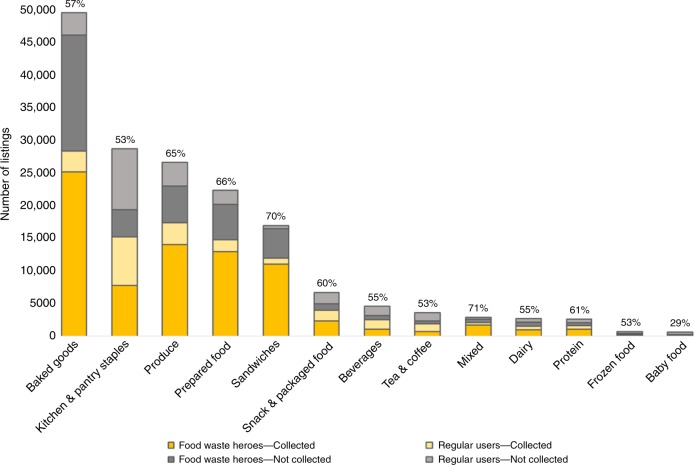
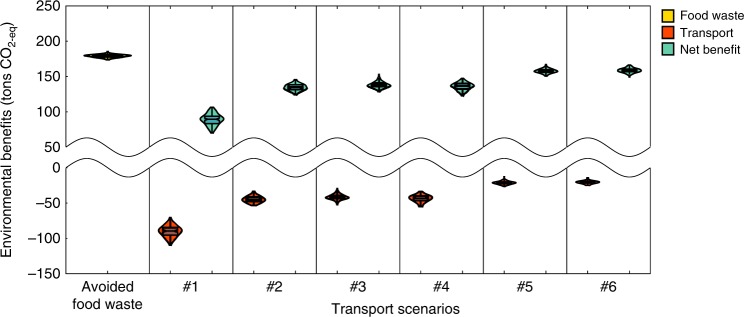
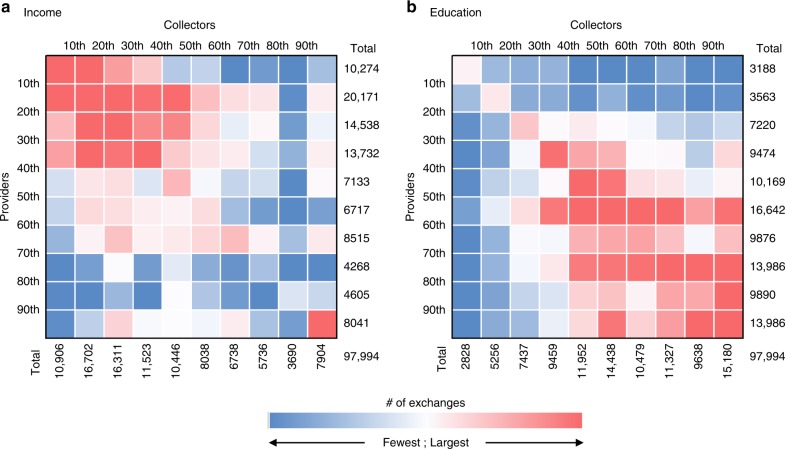
Reducing food waste is widely recognized as critical for improving resource efficiency and meeting the nutritional demand of a growing human population. Here we explore whether the sharing economy can provide meaningful assistance to reducing food waste in a relatively low-impact and environmentally-sound way. Analyzing 170,000 postings on a popular peer-to-peer food-sharing app, we find that over 19 months, 90t of food waste with an equivalent retail value of £0.7 million were collected by secondary consumers and diverted from disposal. An environmental analysis focused on Greater London reveals that these exchanges were responsible for avoiding emission of 87–156t of CO 2 eq. Our results indicate that most exchanges were among users associated with lower income yet higher levels of education. These findings, together with the high collection rates (60% on average) suggest that the sharing economy may offer powerful means for improving resource efficiency and reducing food waste.
Overview
The claims and statistics of this paper haven’t been checked yet.
Free: it reads the open-access text and checks the first 5 claims that cite a source we can check. Create a free account to check every claim.
Integrity signals
Registry
Cites
Statistics
Figures
Verification
Claims the paper makes
The claims and statistics of this paper haven’t been checked yet.
Free: it reads the open-access text and checks the first 5 claims that cite a source we can check. Create a free account to check every claim.
Claims other papers make about this one
Each is checked against this paper’s own text: does it say what the citing paper says it does?
The cited source says what the claim attributes to it.
In the citing paper
“In developed countries, a large portion of all food waste occurs at the consumer level (Makov et al., 2020).”
From Eco-Feedback for Food Waste Reduction in a Student Residence (2021) · cites this paper as Makov et al., 2020
Self-check
Percentages, sums and reported differences re-computed from the paper’s own numbers.
The self-check needs the paper’s full text.
Citations
Cites
Food Security: The Challenge of Feeding 9 Billion People
Godfray, H. C. J., Beddington, J. R., Crute, I. R., Haddad, L., Lawrence, D., Muir, J. F., Pretty, J., Robinson, S., Thomas, S. M., & Toulmin, C. (2010) · Science · doi:10.1126/science.1185383 · Cited by 11,943
Solutions for a cultivated planet
Foley, J. A., Ramankutty, N., Brauman, K. A., Cassidy, E. S., Gerber, J. S., Johnston, M., Mueller, N. D., O’Connell, C., Ray, D. K., West, P. C., et al. (2011) · Nature · doi:10.1038/nature10452 · Cited by 8,476
Reducing food's environmental impacts through producers and consumers
Poore, J., & Nemecek, T. (2018) · Science · doi:10.1126/science.aaq0216 · Cited by 6,085
Options for keeping the food system within environmental limits
Springmann, M., Clark, M., Mason-D’Croz, D., Wiebe, K., Bodirsky, B. L., Lassaletta, L., de Vries, W., Vermeulen, S. J., Herrero, M., Carlson, K. M., et al. (2018) · Nature · doi:10.1038/s41586-018-0594-0 · Cited by 3,380
Global diets link environmental sustainability and human health
Tilman, D., & Clark, M. (2014) · Nature · doi:10.1038/nature13959 · Cited by 3,026
Putting the sharing economy into perspective
Frenken, K., & Schor, J. (2017) · Environmental Innovation and Societal Transitions · doi:10.1016/j.eist.2017.01.003 · Cited by 1,105
Consumer-related food waste: causes and potential for action
Aschemann-Witzel, J., De Hooge, I., Amani, P., Bech-Larsen, T., & Oostindjer, M. (2015) · Sustainability · doi:10.3390/su7066457 · Cited by 910
Household Food Security in the United States in 2013
Coleman-Jensen, A., Gregory, C., & Singh, A. (2014) · SSRN Electronic Journal · doi:10.2139/ssrn.2504067 · Cited by 896
PIANTADOSI, S., BYAR, D. P., & GREEN, S. B. (1988) · American Journal of Epidemiology · doi:10.1093/oxfordjournals.aje.a114892 · Cited by 821
Impacts of Peer-to-Peer Accommodation Use on Travel Patterns
Tussyadiah, I. P., & Pesonen, J. (2016) · Journal of Travel Research · doi:10.1177/0047287515608505 · Cited by 804
Research works printed but not linked: 1
- 65. Makov T., Wolfram P. & Blass V. What is my share? Assessing the environmental impacts of secondary consumption. in: PLATE Product Lifetimes And The Environment 2019-Conference Proceedings (eds Nissen N. F. & Jaeger-Erben M.) (TU Berlin University Press, 2019).
Cited by
Demand-side solutions to climate change mitigation consistent with high levels of well-being
Creutzig, F., Niamir, L., Bai, X., Callaghan, M., Cullen, J., Díaz-José, J., Figueroa, M., Grubler, A., Lamb, W. F., Leip, A., et al. (2022) · Nature Climate Change · doi:10.1038/s41558-021-01219-y · Cited by 579
Aldaco, R., Hoehn, D., Laso, J., Margallo, M., Ruiz-Salmón, J., Cristobal, J., Kahhat, R., Villanueva-Rey, P., Bala, A., Batlle-Bayer, L., et al. (2020) · Science of The Total Environment · doi:10.1016/j.scitotenv.2020.140524 · Cited by 298
The Sharing Economy: Rhetoric and Reality
Schor, J. B., & Vallas, S. P. (2021) · Annual Review of Sociology · doi:10.1146/annurev-soc-082620-031411 · Cited by 172
Do, Q., Ramudhin, A., Colicchia, C., Creazza, A., & Li, D. (2021) · International Journal of Production Economics · doi:10.1016/j.ijpe.2021.108209 · Cited by 147
“P2P users are commonly found to be in the group with lower income yet higher education level (Makov et al., 2020).”
BackgroundInfluentialZhang, Y., Chen, J., Han, Y., Qian, M., Guo, X., Chen, R., Xu, D., & Chen, Y. (2021) · Land Use Policy · doi:10.1016/j.landusepol.2021.105306 · Cited by 124
Investigating logistics-related food loss drivers: A study on fresh fruit and vegetable supply chain
Surucu-Balci, E., & Tuna, O. (2021) · Journal of Cleaner Production · doi:10.1016/j.jclepro.2021.128561 · Cited by 131
Miniaturized wireless sensor enables real-time monitoring of food spoilage
Istif, E., Mirzajani, H., Dağ, Ç., Mirlou, F., Ozuaciksoz, E. Y., Cakır, C., Koydemir, H. C., Yılgör, İ., Yılgör, E., & Beker, L. (2023) · Nature Food · doi:10.1038/s43016-023-00750-9 · Cited by 101
“I is used to describe the 1H NMR integration intensity, and a subscript indicates the types of protons—for example, Iphenyl and Itotal represent the integration intensity of phenyl protons and total protons, respectively.”
BackgroundInfluentialWhat a waste! Evidence of consumer food waste prevention and its effectiveness
Casonato, C., García-Herrero, L., Caldeira, C., & Sala, S. (2023) · Sustainable Production and Consumption · doi:10.1016/j.spc.2023.08.002 · Cited by 113
Makov, T., & Fitzpatrick, C. (2021) · Journal of Cleaner Production · doi:10.1016/j.jclepro.2021.127561 · Cited by 66
Self-citationThe Role of Artificial Intelligence within Circular Economy Activities—A View from Ireland
Pathan, M. S., Richardson, E., Galván, E., & Mooney, P. (2023) · Sustainability · doi:10.3390/su15129451 · Cited by 93
“Applications can be found in predicting food demand based on consumption patterns to minimize food waste [76], predictive maintenance of equipment for reduced maintenance costs, and increasing the overall lifespan of equipment.”
BackgroundThe status of the global food waste mitigation policies: experience and inspiration for China
Shen, G., Li, Z., Hong, T., Ru, X., Wang, K., Gu, Y., Han, J., & Guo, Y. (2023) · Environment Development and Sustainability · doi:10.1007/s10668-023-03132-0 · Cited by 84
“Food sharing and food banks are a good solution to the problem of excess food and have a significant effect in reducing food waste (Capodistrias et al., 2022; Falcone & Imbert, 2017; Makov et al., 2020; Morone et al., 2018).”
Understanding food waste-reducing platforms: A mini-review
Oroski, F. D. A., & da Silva, J. M. (2022) · Waste Management & Research The Journal for a Sustainable Circular Economy · doi:10.1177/0734242x221135248 · Cited by 96
“Although the studies of Michelini et al. (2020) and Makov et al. (2020) recognize the social and economic benefits the sharing economy can give rise to, they point out the need for future studies to measure the actual environmental impacts of FWRPs.”
ResultQin, C. C., Abdalkarim, S. Y. H., Yang, M., Dong, Y. J., Yu, H., & Ge, D. (2023) · International Journal of Biological Macromolecules · doi:10.1016/j.ijbiomac.2023.125828 · Cited by 72
Sharing economy rebound: The case of peer‐to‐peer sharing of food waste
Meshulam, T., Vivanco, D. F., Blass, V. D., & Makov, T. (2022) · Journal of Industrial Ecology · doi:10.1111/jiec.13319 · Cited by 82
Self-citationPolicy framing, design and feedback can increase public support for costly food waste regulation
Fesenfeld, L., Rudolph, L., & Bernauer, T. (2022) · Nature Food · doi:10.1038/s43016-022-00460-8 · Cited by 73
Sharing Your Assets: A Holistic Review of Sharing Economy
Akbari, M., Foroudi, P., Khodayari, M., Fashami, R. Z., parizi, Z. S., & Shahriari, E. (2021) · Journal of Business Research · doi:10.1016/j.jbusres.2021.11.027 · Cited by 66
Liu, F., Xin, L., Tang, H., Qin, Y., Zhang, L., Dong, X., Zhang, Y., Wu, W., & Wang, L. (2023) · Nature Food · doi:10.1038/s43016-023-00842-6 · Cited by 60
“ei, j,m = fi, j,m × ai, j,m ∑(fi, j,m × ai, j,m) (2)”
Kitchen waste: sustainable bioconversion to value-added product and economic challenges
Sharma, A., Kuthiala, T., Thakur, K., Thatai, K. S., Singh, G., Kumar, P., & Arya, S. K. (2022) · Biomass Conversion and Biorefinery · doi:10.1007/s13399-022-02473-6 · Cited by 60
“8 A precise blueprint of the bioconversion of KW via a two-step enzymatic hydrolysis pretreatment [127, 187, 188, 189] bioconversion in the context of reducing the unwanted composites.”
Designing and Implementing the MySusCof App—A Mobile App to Support Food Waste Reduction
Haas, R., Aşan, H., Doğan, O., Michalek, C. R., Karaca, O., & Bulut, Z. A. (2022) · Foods · doi:10.3390/foods11152222 · Cited by 64
“Mobile apps that focus food redistribution are used to connect groups and individuals to redistribute food owing to the speed, flexibility, and relatively low cost of operation which deal with the perishability and fragility of food [22].”
BackgroundXu, F., Xue, M., Jia, R., Zhao, M. M., Wang, B., Qiao, Y., & Tian, Y. (2020) · Fuel Processing Technology · doi:10.1016/j.fuproc.2020.106558 · Cited by 55
Ranjbari, M., Esfandabadi, Z. S., Siebers, P., Pisano, P., & Quatraro, F. (2023) · Technovation · doi:10.1016/j.technovation.2023.102939 · Cited by 59
Charatsari, C., Lioutas, E. D., Rosa, M. D., & Vecchio, Y. (2022) · Frontiers in Sustainable Food Systems · doi:10.3389/fsufs.2022.872706 · Cited by 53
Sharing economy in the food sector: A systematic literature review and future research agenda
Puram, P., & Gurumurthy, A. (2023) · Journal of Hospitality and Tourism Management · doi:10.1016/j.jhtm.2023.06.027 · Cited by 55
Digital food sharing and food insecurity in the COVID-19 era
Makov, T., Meshulam, T., Cansoy, M., Shepon, A., & Schor, J. B. (2022) · Resources Conservation and Recycling · doi:10.1016/j.resconrec.2022.106735 · Cited by 47
Self-citationCompeting for food waste – Policies’ market feedbacks imply sustainability tradeoffs
Latka, C., Parodi, A., van Hal, O., Heckelei, T., Leip, A., Witzke, P., & van Zanten, H. H. E. (2022) · Resources Conservation and Recycling · doi:10.1016/j.resconrec.2022.106545 · Cited by 41
Green FinTech: sustainability of Bitcoin
Kabaklarlı, E. (2022) · Digital Finance · doi:10.1007/s42521-022-00053-x · Cited by 43
“One example of Green FinTech is a peer-to-peer food sharing company in London, that is aimed at preventing waste of food production and green gas emissions (Makov et al., 2020).”
BackgroundHaynes, E., Bhagtani, D., Iese, V., Brown, C. R., Fesaitu, J., Hambleton, I. R., Badrie, N., Kroll, F., Guell, C., Brugulat-Panés, A., et al. (2020) · Nutrients · doi:10.3390/nu12113350 · Cited by 41
“In a separate study, it was estimated that use of one food-sharing app in London, UK, led to a substantial reduction in food waste [38].”
BackgroundMarco de referencia y tendencias de investigación de economía colaborativa
Castellanos, J. D. G., Duque, P., Barahona, L. E. A., & Peña, E. (2022) · Revista En-contexto · doi:10.53995/23463279.1159 · Cited by 39
Aizudin, M., Sudha, M. K., Goei, R., Lua, S. K., Pottammel, R. P., Tok, A. I. Y., & Ang, E. H. (2022) · Chemistry - A European Journal · doi:10.1002/chem.202203184 · Cited by 32
Multi-functional edible coatings tailored with nanocellulose for perishable fruits
Zhang, L., Cui, M., Tong, H., Zhang, J., Li, Q. Y., Gao, X., Qi, W., Lam, H. L., Huang, R., & Su, R. (2025) · Carbohydrate Polymers · doi:10.1016/j.carbpol.2025.123520 · Cited by 32
Wang, C., Nakakoji, S., Ng, T. C. A., Zhu, P., Tsukada, R., Tatara, M., & Ng, H. Y. (2023) · Water Research · doi:10.1016/j.watres.2023.120299 · Cited by 34
Miao, X., Jiang, Y., Liu, W., Lu, C., Tan, W., Li, F., & Zhang, M. (2025) · ACS Sensors · doi:10.1021/acssensors.5c00490 · Cited by 30
Claudelin, A., Tuominen, K., & Vanhamäki, S. (2022) · Sustainability · doi:10.3390/su14116627 · Cited by 34
The sharing economy is not always greener: a review and consolidation of empirical evidence
Meshulam, T., Goldberg, S., Ivanova, D., & Makov, T. (2023) · Environmental Research Letters · doi:10.1088/1748-9326/ad0f00 · Cited by 36
“Similar to PSS, the sharing economy is commonly thought to deliver environmental benefits through better utilization of existing product stocks (Botsman and Rogers 2011, Heinrichs 2013, Nijland and van Meerkerk 2017, Makov et al 2020).”
BackgroundSelf-citationAdelodun, B., Agbelusi, O., Soma, T., Odey, G., Adeyi, Q., Kumar, P., Ajibade, F. O., Goala, M., Silva, L. F. O., Mostafa, Y. S., et al. (2024) · Waste Management & Research The Journal for a Sustainable Circular Economy · doi:10.1177/0734242x241257655 · Cited by 34
“While FLW is associated with various impacts, including socio-economic and environmental impacts (Makov et al., 2020), environmental impacts, especially GHG emissions (sometimes referred to as the carbon footprint), are the focus of many researchers due to their link and contribution to global…”
Manika, D., Iacovidou, E., Canhoto, A. I., Pei, E., & Mach, K. (2022) · Journal of Cleaner Production · doi:10.1016/j.jclepro.2022.133449 · Cited by 33
Mobile applications to reduce food waste within Canada: A review
Hanson, V., & Ahmadi, L. (2021) · Canadian Geographies / Géographies canadiennes · doi:10.1111/cag.12733 · Cited by 33
Climate change mitigation policies in agriculture: An overview of sociopolitical barriers
Kabir, K., Robbe, S. A. D. V., & Godinho, C. (2024) · Wiley Interdisciplinary Reviews Climate Change · doi:10.1002/wcc.916 · Cited by 30
Xu, H., Chen, T., Shan, Y., Chen, K., Ling, N., Ren, L., Qu, H., Berge, N. D., Flora, J. R. V., Goel, R., et al. (2024) · Chemical Engineering Journal · doi:10.1016/j.cej.2024.153710 · Cited by 28
Sharma, C., & Deutsch, J. M. (2023) · Current Opinion in Biotechnology · doi:10.1016/j.copbio.2023.102920 · Cited by 26
Sohail, M., Khan, S., Akbar, A., & Svobodová, L. (2024) · Journal of Infrastructure Policy and Development · doi:10.24294/jipd.v8i7.4979 · Cited by 30
“Green Fintech solutions like London’s peer-to-peer food sharing enterprise reduce food waste and green gas emissions (Makov et al., 2020).”
BackgroundA Note on Data-driven Actor-differentiation and SDGs 2 and 12: Insights from a Food-sharing App
Lucas, B., Francu, R. E., Goulding, J., Harvey, J., Nica‐Avram, G., & Perrat, B. (2021) · Research Policy · doi:10.1016/j.respol.2021.104266 · Cited by 27
Jia, L., & Qiao, G. (2022) · Sustainability · doi:10.3390/su141811293 · Cited by 26
Wang, F., Shreedhar, G., Galizzi, M. M., & Mourato, S. (2022) · Resources Conservation & Recycling Advances · doi:10.1016/j.rcradv.2022.200106 · Cited by 33
Eco-Feedback for Food Waste Reduction in a Student Residence
Lim, V., Bartram, L., Funk, M., & Rauterberg, M. (2021) · Frontiers in Sustainable Food Systems · doi:10.3389/fsufs.2021.658898 · Cited by 22
“In developed countries, a large portion of all food waste occurs at the consumer level (Makov et al., 2020).”
BackgroundThrowing Food Away and Food Rescue Practices in Russia (Microlevel Analysis)
Андриановна, Ш. М. (2022) · Journal of Economic Sociology · doi:10.17323/1726-3247-2022-1-11-38 · Cited by 28
Pugazhendhi, A., & Sharma, A. K. (2024) · Chemical Engineering Journal · doi:10.1016/j.cej.2024.149593 · Cited by 20
Aging Population, Balanced Diet and China’s Grain Demand
Liu, X., Ho, M. S., Hewings, G. J. D., Dou, Y., Wang, S., Wang, G., Guan, D., & Li, S. (2023) · Nutrients · doi:10.3390/nu15132877 · Cited by 19
“Many have argued that food waste should be included in prediction of future GD [52,56,57].”
BackgroundBiomimetic functional food packaging materials
Liu, G., Min, T., Li, X., Zhao, Y., Liu, J., Liu, J., & Wen, Y. (2024) · Chemical Engineering Journal · doi:10.1016/j.cej.2024.156146 · Cited by 25
Lonska, J., Kodors, S., Dekšne, J., Litavniece, L., Zvaigzne, A., Silicka, I., & Kotāne, I. (2025) · Foods · doi:10.3390/foods14010126 · Cited by 19
Li, W., Waris, I., Sun, C., Hameed, I., Bhutto, M. Y., & Ali, R. (2022) · Frontiers in Psychology · doi:10.3389/fpsyg.2022.970444 · Cited by 21
Penalver, J. G., & Aldaya, M. M. (2022) · Foods · doi:10.3390/foods11020163 · Cited by 20
“The reduction of food waste along the value chain would help to increase global food security and mitigate the environmental impacts generated by the agri-food sector [4].”
BackgroundBarriers and enablers around radical sharing
Ivanova, D., & Büchs, M. (2023) · The Lancet Planetary Health · doi:10.1016/s2542-5196(23)00168-7 · Cited by 16
Wang, D., Yan, L., Ruan, F., & Zeng, X. (2022) · Sustainability · doi:10.3390/su14073996 · Cited by 17
“However, few studies have realized and discussed such skill discrimination derived from technological progress being detrimental to equity commitment [82].”
BackgroundLeveraging collaborations to increase the impact of food sharing platforms
Michelini, L., Grieco, C., & Dentchev, N. A. (2023) · British Food Journal · doi:10.1108/bfj-10-2022-0900 · Cited by 15
Impact of household size and structure on carbon emissions in China
Yang, K., Jun, W., Li, L., Mi, Z., Yang, J., & Tang, L. (2025) · Structural Change and Economic Dynamics · doi:10.1016/j.strueco.2025.05.002 · Cited by 12
Hayashi, A., Homma, T., & Akimoto, K. (2022) · Environmental Challenges · doi:10.1016/j.envc.2022.100588 · Cited by 12
Rutt, R. L., & Jakobsen, J. (2022) · Environment and Planning E Nature and Space · doi:10.1177/25148486221131195 · Cited by 14
“Environmental aspects here refer to the waste of eggs for consumption, conceivable as ‘ food waste ’ – a keyword in contemporary sustainability narratives (e.g. Makov et al., 2020).”
Rizzo, C., Sestino, A., Gutuleac, R., & Bertoldi, B. (2023) · Management Decision · doi:10.1108/md-05-2023-0685 · Cited by 15
Operations research on the sharing economy: A bibliometric analysis and literature review
Zou, L., Wu, J., Gong, Y. Y., Chen, M., & Xia, M. (2023) · Electronic Commerce Research and Applications · doi:10.1016/j.elerap.2023.101265 · Cited by 15
Travel distance and travel time using Stata: New features and major improvements in georoute
Weber, S., Péclat, M., & Warren, A. (2022) · The Stata Journal Promoting communications on statistics and Stata · doi:10.1177/1536867x221083857 · Cited by 12
“The capabilities of the first version of georoute were relatively modest.”
Ruiner, C., & Klumpp, M. (2022) · Information Communication & Society · doi:10.1080/1369118x.2022.2097016 · Cited by 11
“In this sense, the study contributes to revealing the role of self-organization aided by digital technologies (Harvey et al., 2019; Makov et al., 2020; Michelini et al., 2020; Morrow, 2019) which is likewise related to self-optimization and self-management (Shapiro, 2018) and platform governance…”
MethodThe Role of FinTech in Sustainability and United Nations’ Sustainable Development Goals
Jain, P., Gupta, P., & Bhawna (2024) · Journal of Computers Mechanical and Management · doi:10.57159/jcmm.3.5.24168 · Cited by 14
“Using technologies such as artificial intelligence, big data, and cloud platforms, the private sector drives sustainability by improving resource efficiency, simplifying operations, and reducing costs [8–10].”
Fligstein, N., & McAdam, D. (2022) · Journal of Economic Sociology · doi:10.17323/1726-3247-2022-1-60-100 · Cited by 21
Sustainability of shared economy in the agri-food, tourism, and hospitality industries
Alloh, K., Abrhám, J., Šánová, P., Čermák, M., Petrzilka, S., & Schilla, F. (2024) · Frontiers in Sustainable Food Systems · doi:10.3389/fsufs.2024.1369089 · Cited by 11
Smart food waste fighters: insights from mobile apps and users
Özdemir, C., Kaman, G. S., & Yilmaz, H. (2024) · Journal of Hospitality and Tourism Insights · doi:10.1108/jhti-04-2024-0324 · Cited by 10
Meenakshi, N., Dhir, A., Kaur, P., & Camilleri, M. A. (2025) · International Journal of Hospitality Management · doi:10.1016/j.ijhm.2025.104175 · Cited by 17
Farm to Institution to Farm: Circular Food Systems With Native Entomoculture
Shafer, P. J., Chen, Y. H., Reynolds, T., & von Wettberg, E. (2022) · Frontiers in Sustainable Food Systems · doi:10.3389/fsufs.2021.721985 · Cited by 10
“The world continues to face widespread food insecurity, in both caloric shortfalls and nutritional deficiencies, particularly for protein, despite more than adequate production of calories from global agricultural systems (Vandermeer et al., 2018; Makov et al., 2020; Huizar et al., 2021).”
BackgroundEbrahim, S. A., Jiang, X., Kodra, O., Couillard, M., Baranova, E. A., & Singh, D. P. (2024) · Applied Energy · doi:10.1016/j.apenergy.2024.124808 · Cited by 9
Ming, Z., Zhou, M., Liu, X., Guan, P. F., Nugen, S. R., Menghwar, H., Huang, C., & Wang, X. (2025) · Chemical Engineering Journal · doi:10.1016/j.cej.2025.170578 · Cited by 9
Disparities in access to sustainable dining options across the Tokyo Metropolis
Huang, L., Huang, Y., Lv, X., Montagna, S., Yoshida, Y., & Long, Y. (2025) · Nature Cities · doi:10.1038/s44284-025-00235-9 · Cited by 8
“Broadening the scope of dining out to include the environmental impacts like waste management and water pollution 48–50 , along with extending the analysis to include comparative studies across cities, would also be beneficial.”
The Sharing Economy and Environmental Sustainability
Eckelman, M. J., & Kalmykova, Y. (2023) · Cambridge University Press eBooks · doi:10.1017/9781108865630.004 · Cited by 10
Business Incentive to Reduce Food Losses in Japan
Igeta, J., & Nakamura, H. (2022) · Sustainability · doi:10.3390/su14042266 · Cited by 10
Food Banks against Climate Change, a Solution That Works: A Case Study in Navarra, Spain
Penalver, J. G., Armijos, A., Soret, B., & Aldaya, M. M. (2022) · Foods · doi:10.3390/foods11223645 · Cited by 11
Perspective—Evaluating the impact of food waste reduction policies
Nikravech, M. (2023) · Frontiers in Sustainable Food Systems · doi:10.3389/fsufs.2023.1170226 · Cited by 10
“Existing food waste impact assessments were achieved mostly in the form of quantification (Schneider, 2013; Reynolds et al., 2015; Makov et al., 2020), whereby food and food waste inputs and outputs are measured up and downstream of the food waste prevention initiatives.”
BackgroundA sustainability perspective for sharing economy business model and its unintended effects
Foroozanfar, M. H., Imanipour, N., Sajadi, S. M., & Habibi, M. R. (2025) · Journal of Cleaner Production · doi:10.1016/j.jclepro.2025.145177 · Cited by 8
Why does Australia need to mitigate food loss and waste to ensure food security?
Islam, M. Z. (2024) · Sustainable Development · doi:10.1002/sd.2968 · Cited by 7
Self-Employment, Secondary Jobholding, and Labor Income Inequality
Lukiyanova, A. (2022) · Journal of Economic Sociology · doi:10.17323/1726-3247-2022-1-101-124 · Cited by 6
Ceballos, Á. M. G., & Antonopoulou, V. (2024) · Current Psychology · doi:10.1007/s12144-024-06219-7 · Cited by 11
“Some mobile applications suggest not only behaviour change results (i.e., increased number of food donations/collections via the app) but also positive environmental impacts (Makov et al., 2020 ).”
Food Waste Management in Hospitality Operations: A Study of 4- and 5-Star Hotels in Konya Province
Öztürk, D., Seçim, Y., & Seçuk, B. (2023) · Journal of Tourismology · doi:10.26650/jot.2023.9.1.1254147 · Cited by 10
Carrillo, M. B. M., Pérez, M. S., Terán-Yépez, E., & López, N. R. (2025) · Management Review Quarterly · doi:10.1007/s11301-025-00509-5 · Cited by 7
“In a study in another P2P sector, Makov et al. (2020) found that users associated with lower income are more able to participate in food waste reduction through SE.”
Pereira, I. K. S., Camillo, L. S. D. O., Matias, A. M., & José, J. F. B. D. S. (2023) · Ensaios e Ciência C Biológicas Agrárias e da Saúde · doi:10.17921/1415-6938.2022v26n4p475-484 · Cited by 7
Digital platforms for food waste reduction: The promise and pitfalls of food sharing apps
Frank, B., & Ishikawa, H. (2025) · Journal of Cleaner Production · doi:10.1016/j.jclepro.2025.147050 · Cited by 5
Petrescu‐Mag, R. M., Selaru, L. R., Ivan, A., Malutan, D., & Petrescu, D. C. (2025) · Discover Sustainability · doi:10.1007/s43621-025-02216-3 · Cited by 6
“Digital tools and mobile apps [90].”
Voluntary Work in Digital Contexts as Gift Exchange
Ruiner, C. (2021) · Sustainability · doi:10.3390/su132112176 · Cited by 9
“Previous research points to the scalability, flexibility, and potential for high-speed exchange, which makes digital sharing platforms well-suited for the exchange of perishable food items; studies have also analyzed the sustainability and environmental impacts of peer-to-peer food exchanges with regard to, for exampl…”
BackgroundTo Share or Not: Drivers and Barriers of Sustainable Peer-to-Peer Food Sharing Platform Adoption
Soloveva, D., Skippari, M., & Karjaluoto, H. (2023) · Palgrave studies in cross-disciplinary business research, in association with EuroMed Academy of Business · doi:10.1007/978-3-031-37365-7_6 · Cited by 6
Hà, L. T. (2024) · Environmental Science and Pollution Research · doi:10.1007/s11356-024-33765-1 · Cited by 5
“An instance of green finance is a collaborative food-sharing enterprise in London that aims to reduce food wastage and greenhouse gas pollution (Makov et al. 2020).”
Chang, H. (2024) · Asia Pacific Journal of Marketing and Logistics · doi:10.1108/apjml-02-2024-0151 · Cited by 7
Corbier, D., Pettifor, H., Agnew, M. D., & Drouet, L. (2024) · Journal of Industrial Ecology · doi:10.1111/jiec.13587 · Cited by 5
“…Spendsmoreonpurchasesrelatedto maintenanceandrefurbishment Spendsmoreonpurchasesrelatedto maintenanceandrefurbishment sharing economy (refer to Chitnis et al., 2014, Fraiberger & Sundararajan, 2017, Grabs, 2015, Kim, 2019, Makov et al., 2020, and Meshulam et al., 2022).”
Lebedeva, D. (2022) · Journal of Economic Sociology · doi:10.17323/1726-3247-2022-1-154-170 · Cited by 5
Zhu, X., Su, J., Wang, Y., Zhang, D., & Liu, H. (2025) · Journal of Advanced Research · doi:10.1016/j.jare.2025.11.071 · Cited by 8
“This waste consumes 30 % of farmland use, 20 % of freshwater consumption, and 8 % of global greenhouse gas emissions [5].”
Bayat, M., Farzadkia, M., & Dehdari, T. (2025) · Scientific Reports · doi:10.1038/s41598-025-93711-0 · Cited by 5
“Makov et al. reported that peer-to-peer sharing is an effective strategy for reducing food waste 35 .”
Sharing to prevent waste: The effectiveness of an intervention encouraging food sharing
Zhang, Y., van Herpen, E., & Loo, E. J. V. (2025) · Resources Conservation and Recycling · doi:10.1016/j.resconrec.2025.108461 · Cited by 4
Challenges, risks and costs of food sharing. Insights from a systematic literature review
Sadovska, V., Palgan, Y. V., & Mont, O. (2025) · Journal of Cleaner Production · doi:10.1016/j.jclepro.2025.147292 · Cited by 4
Social Mobility of Russians in Terms of Life Chances and Risks
Slobodenyuk, E. D. (2022) · Journal of Economic Sociology · doi:10.17323/1726-3247-2022-1-39-59 · Cited by 3
Hà, L. T. (2024) · Borsa Istanbul Review · doi:10.1016/j.bir.2024.11.006 · Cited by 3
Wang, D., Yan, L., & Ruan, F. (2022) · Sustainability · doi:10.3390/su14095592 · Cited by 4
Achieving food supply chain sustainability through digital sharing platforms: prospects in China
Tian, S., Wu, L., & Pawar, K. S. (2025) · Industrial Management & Data Systems · doi:10.1108/imds-10-2023-0722 · Cited by 3
Fieldwork Challenges Stemming from Doing Studies in Illegal Wildlife Trade (IWT)
Ermolin, I., Svolkinas, L., Суворков, П., Holmes, G., & Goodman, S. J. (2022) · Journal of Economic Sociology · doi:10.17323/1726-3247-2022-1-125-153 · Cited by 3
Zhang, Y., van Herpen, E., Pandelaere, M., & Geuens, M. (2025) · Journal of Business Research · doi:10.1016/j.jbusres.2025.115694 · Cited by 3
Metadata
- Authors
- Makov, T., Shepon, A., Krones, J., Gupta, C., & Chertow, M.
- Affiliations
- Ben-Gurion University of the Negev (IL)
- Harvard University (US)
- Boston College (US)
- University of California, Davis (US)
- Yale University (US)
- Corresponding author
- Makov, Tamar
- Venue
- Nature Communications
- Published
- 2020-03-10
- Volume
- 11
- Issue
- 1
- Pages
- 1156-1156
- ISSN
- 2041-1723 (ISSN-L)
- PMC
- PMC7064594
- OpenAlex
- W3011315259
- Semantic Scholar
- daa29aece5f86c9cbd2fa2e0ed1340a42e17c55c
- Cited by
- 125
- References
- 54
- Citations by year
- 2026: 10 · 2025: 24 · 2024: 21 · 2023: 22 · 2022: 33 · 2021: 12 · 2020: 3
- FWCI
- 11.35
- Type
- journal article
- Language
- en
- Open access
- gold
- doi.org
- Licence
- cc-by
- creativecommons.org/licenses/by/4.0 (tdm)
- creativecommons.org/licenses/by/4.0 (vor)
- Locations
- Nature Communications (publishedVersion, cc-by)
- Europe PMC (PubMed Central) (publishedVersion, cc-by)
- PubMed Central (publishedVersion, cc-by)
- PubMed (publishedVersion)
- RePEc: Research Papers in Economics (submittedVersion)
- DOAJ (DOAJ: Directory of Open Access Journals) (submittedVersion, cc-by-sa)
- Funders
- Alfred P. Sloan Foundation
- Yale | Institute for Biospheric Studies, Yale University
- AS is supported by the Nature Conservancy.
- Topics
- Life Sciences › Agricultural and Biological Sciences › Food Science › Food Waste Reduction and Sustainability
- Social Sciences › Business, Management and Accounting › Marketing › Sharing Economy and Platforms
- Physical Sciences › Environmental Science › Waste Management and Disposal › Waste Management and Recycling
- Keywords
- food waste reduction, sharing economy, resource efficiency, Greater London
About these checks
Registry, retraction, Cites and statistics results are computed, not judged, with one exception: a printed reference that no index lists is read once by a model before it counts as a citation error. Claims are extracted by a model and kept only when their quote appears verbatim in the text; each cited source is then checked, with a model’s help, for whether it says what the claim relies on. Those verdicts can be wrong — read the claim’s quote and the cited source before relying on one.
Statistics and arithmetic are recomputed, not judged.
Confidence bands are shown only for fields calibrated on our annotated test set. None is calibrated yet, so no band is shown.
What counts as a claim ›How we measure confidence ›How we check this ›
Are you an author, or do you see a problem with this page? Request a review
Data sources
Bibliographic data: Semantic Scholar, OpenAlex, Crossref.
Contains information from the Semantic Scholar Academic Graph Datasets, made available under the ODC Attribution License (ODC-BY 1.0).
Semantic Scholar’s data is described in: Kinney, R., et al. (2023). The Semantic Scholar Open Data Platform. arXiv:2301.10140.
