

Metagenome-wide association of gut microbiome features for schizophrenia
Open accessPublished version of a preprint
The DOI matches its Crossref record; 81 of the 81 references it cites were found in a registry or an index.
Abstract
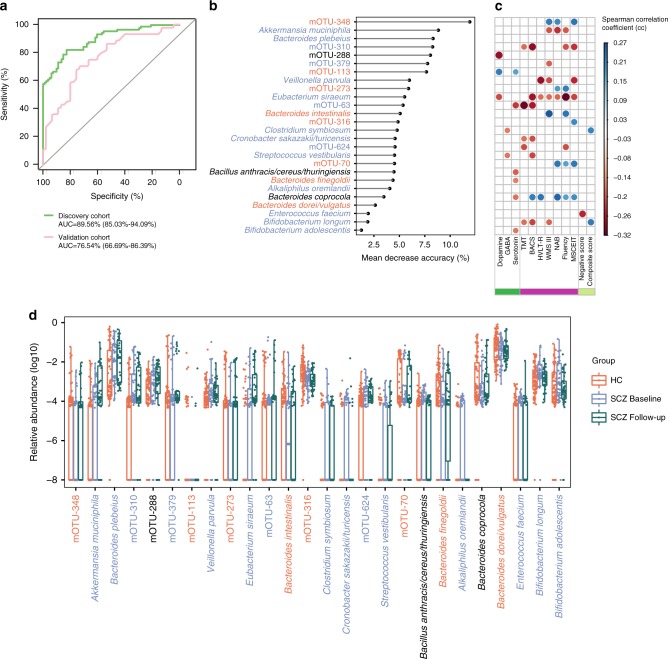
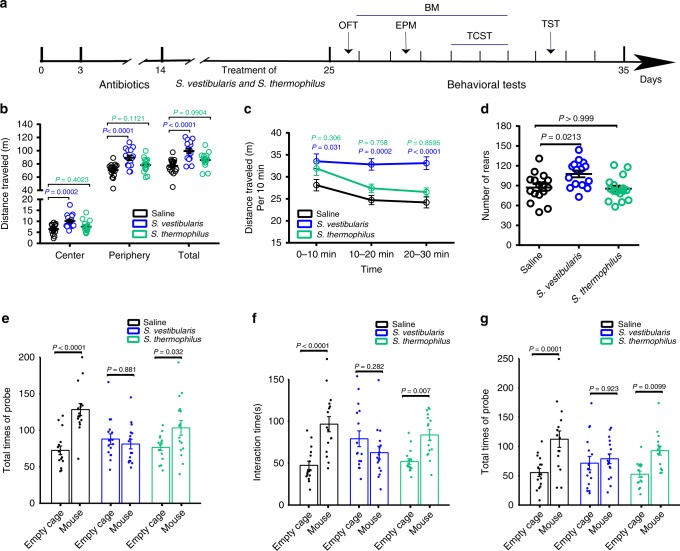
Evidence is mounting that the gut-brain axis plays an important role in mental diseases fueling mechanistic investigations to provide a basis for future targeted interventions. However, shotgun metagenomic data from treatment-naïve patients are scarce hampering comprehensive analyses of the complex interaction between the gut microbiota and the brain. Here we explore the fecal microbiome based on 90 medication-free schizophrenia patients and 81 controls and identify a microbial species classifier distinguishing patients from controls with an area under the receiver operating characteristic curve (AUC) of 0.896, and replicate the microbiome-based disease classifier in 45 patients and 45 controls (AUC = 0.765). Functional potentials associated with schizophrenia include differences in short-chain fatty acids synthesis, tryptophan metabolism, and synthesis/degradation of neurotransmitters. Transplantation of a schizophrenia-enriched bacterium, Streptococcus vestibularis, appear to induces deficits in social behaviors, and alters neurotransmitter levels in peripheral tissues in recipient mice. Our findings provide new leads for further investigations in cohort studies and animal models.
Overview
The claims and statistics of this paper haven’t been checked yet.
Free: it reads the open-access text and checks the first 5 claims that cite a source we can check. Create a free account to check every claim.
Integrity signals
Registry
Cites
Statistics
Figures
Verification
Claims the paper makes
The claims and statistics of this paper haven’t been checked yet.
Free: it reads the open-access text and checks the first 5 claims that cite a source we can check. Create a free account to check every claim.
Claims other papers make about this one
Each is checked against this paper’s own text: does it say what the citing paper says it does?
The cited source says what the claim attributes to it.
In the citing paper
“In the brain, reduced tryptophan level was reported in the prefrontal cortex [176].”
From The Role of Microbiota-Gut-Brain Axis in Neuropsychiatric and Neurological Disorders (2021) · cites this paper as [176]
In the citing paper
“a metagenome-wide association study showed that gut microbiota diversity based on genus level taxonomy and annotated genes was much higher in patients with schizophrenia than in healthy controls [176].”
From The Role of Microbiota-Gut-Brain Axis in Neuropsychiatric and Neurological Disorders (2021) · cites this paper as [176]
In the citing paper
“Thus, altered tryptophan-kynurenine metabolism may be an important link between gut microbiota and the pathogenesis of schizophrenia [175,176].”
From The Role of Microbiota-Gut-Brain Axis in Neuropsychiatric and Neurological Disorders (2021) · cites this paper as [176]
Self-check
Percentages, sums and reported differences re-computed from the paper’s own numbers.
The self-check needs the paper’s full text.
Citations
Cites
The Positive and Negative Syndrome Scale (PANSS) for schizophrenia.
Kay, S. R., Fiszbein, A., & Opler, L. A. (1987) · Schizophrenia Bulletin · doi:10.1093/schbul/13.2.261 · Cited by 21,378
A metagenome-wide association study of gut microbiota in type 2 diabetes
Qin, J., Li, Y., Cai, Z., Li, S., Zhu, J., Zhang, F., Liang, S., Zhang, W., Guan, Y., Shen, D., et al. (2012) · Nature · doi:10.1038/nature11450 · Cited by 6,762
Self-citationSOAP2: an improved ultrafast tool for short read alignment
Li, R., Yu, C., Li, Y., Lam, T.-W., Yiu, S.-M., Kristiansen, K., & Wang, J. (2009) · Bioinformatics · doi:10.1093/bioinformatics/btp336 · Cited by 3,760
Self-citationGut microbiota regulate motor deficits and neuroinflammation in a model of Parkinson's disease
Sampson, T. R., Debelius, J. W., Thron, T., Janssen, S., Shastri, G. G., Ilhan, Z. E., Challis, C., Schretter, C. E., Rocha, S., Gradinaru, V., et al. (2016) · Cell · doi:10.1016/j.cell.2016.11.018 · Cited by 3,622
Hsiao, E. Y., McBride, S. W., Hsien, S., Sharon, G., Hyde, E. R., McCue, T., Codelli, J. A., Chow, J., Reisman, S. E., Petrosino, J. F., et al. (2013) · Cell · doi:10.1016/j.cell.2013.11.024 · Cited by 3,283
The MATRICS Consensus Cognitive Battery, part 1: test selection, reliability, and validity
Nuechterlein, K. H., Green, M. F., Kern, R. S., Baade, L. E., Barch, D. M., Cohen, J. D., Essock, S., Fenton, W. S., Frese, F. J., Gold, J. M., et al. (2008) · American Journal of Psychiatry · doi:10.1176/appi.ajp.2007.07010042 · Cited by 2,342
Zheng, P., Zeng, B., Zhou, C., Liu, M., Fang, Z., Xu, X., Zeng, L., Chen, J., Fan, S., Du, X., et al. (2016) · Molecular Psychiatry · doi:10.1038/mp.2016.44 · Cited by 2,023
Self-citationvan Os, J., & Kapur, S. (2009) · The Lancet · doi:10.1016/s0140-6736(09)60995-8 · Cited by 1,971
The neuroactive potential of the human gut microbiota in quality of life and depression
Valles-Colomer, M., Falony, G., Darzi, Y., Tigchelaar, E. F., Wang, J., Tito, R. Y., Schiweck, C., Kurilshikov, A., Joossens, M., Wijmenga, C., et al. (2019) · Nature Microbiology · doi:10.1038/s41564-018-0337-x · Cited by 1,963
Self-citationThe gut microbiome in atherosclerotic cardiovascular disease
Jie, Z., Xia, H., Zhong, S.-L., Feng, Q., Li, S., Liang, S., Zhong, H., Liu, Z., Gao, Y., Zhao, H., et al. (2017) · Nature Communications · doi:10.1038/s41467-017-00900-1 · Cited by 1,638
Self-citation
Cited by
Items 101–200 of 484
Verma, H., Phian, S., Lakra, P., Kaur, J., Subudhi, S., Lal, R., & Rawat, C. D. (2020) · Indian Journal of Microbiology · doi:10.1007/s12088-020-00898-z · Cited by 38
Li, Z., Qing, Y., Cui, G., Li, M., Liu, T., Zeng, Y., Zhou, C., Hu, X., Jiang, J., Wang, D., et al. (2023) · Schizophrenia Research · doi:10.1016/j.schres.2023.03.005 · Cited by 37
Ling, Z., Cheng, Y., Liu, X., Yan, X., Wu, L., Shao, L., Gao, J., Lei, W., Song, Q., Zhao, N., et al. (2023) · Translational Psychiatry · doi:10.1038/s41398-023-02682-1 · Cited by 36
Tomofuji, Y., Kishikawa, T., Maeda, Y., Ogawa, K., Otake-Kasamoto, Y., Kawabata, S., Nii, T., Okuno, T., Oguro-Igashira, E., Kinoshita, M., et al. (2022) · Cell Genomics · doi:10.1016/j.xgen.2022.100219 · Cited by 35
Gut-microbiota-directed strategies to treat epilepsy: clinical and experimental evidence
Granados, D. M. M., Villasana‐Salazar, B., Lozano‐García, L., Cavalheiro, É. A., & Striano, P. (2021) · Seizure · doi:10.1016/j.seizure.2021.03.009 · Cited by 35
Gut microbial signatures and their functions in Behcet's uveitis and Vogt-Koyanagi-Harada disease
Wang, Q., Wu, S., Ye, X., Tan, S., Huang, F., Su, G., Kijlstra, A., & Yang, P. (2023) · Journal of Autoimmunity · doi:10.1016/j.jaut.2023.103055 · Cited by 36
Self-citationZhu, B., Liang, L., Chen, S., Li, H., Huang, Y., Wang, W., Zhang, H., Zhou, J., Xiong, D., Li, X., et al. (2025) · Translational Psychiatry · doi:10.1038/s41398-025-03449-6 · Cited by 35
Self-citationPapRIV, a BV-2 microglial cell activating quorum sensing peptide
Janssens, Y., Debunne, N., Spiegeleer, A. D., Wynendaele, E., Planas, M., Feliu, L., Quarta, A., Claes, C., Dam, D. V., Deyn, P. P. D., et al. (2021) · Scientific Reports · doi:10.1038/s41598-021-90030-y · Cited by 34
“77 Microbial dysbiosis is observed in a variety of neurodevelopmental- , neurodegenerative- and 78 psychiatric disorders such as autism spectrum disorders (ASD), schizophrenia, Alzheimer’s 79 disease (AD), major depressive disorder, and Parkinson’s disease (PD) [16-24].”
Microglial cells: Sensors for neuronal activity and microbiota-derived molecules
D’Alessandro, G., Marrocco, F., & Limatola, C. (2022) · Frontiers in Immunology · doi:10.3389/fimmu.2022.1011129 · Cited by 34
Ben‐Azu, B., del Re, E. C., VanderZwaag, J., Carrier, M., Keshavan, M. S., Khakpour, M., & Tremblay, M. (2023) · Frontiers in Cellular Neuroscience · doi:10.3389/fncel.2023.1139357 · Cited by 34
“…by hyperlocomotion, sensorimotor gating deficit, anhedonia-like symptoms and neurochemical imbalance characterized by decreased glutamate in the hippocampus, increased cellular basal dopamine in the prefrontal cortex and serotonin levels in the hippocampus (Zheng et al., 2019; Zhu et al., 2020a).”
BackgroundIs There a Link between Oropharyngeal Microbiome and Schizophrenia? A Narrative Review
Martin, S., Foulon, A., El‐Hage, W., Dufour‐Rainfray, D., & Denis, F. (2022) · International Journal of Molecular Sciences · doi:10.3390/ijms23020846 · Cited by 33
“A case-control study called “metagenome-wide association study” [51] reports the presence of bacteria that are often present in the oral cavity (Veillonella atypica, Veillonella dispar, Bifidobacterium dentium, Dialister invisus, Lactobacillus oris, and Streptococcus salivarius) were more abundant in PWS than in healt…”
BackgroundJin, D.-M., Morton, J. T., & Bonneau, R. (2024) · mSystems · doi:10.1128/msystems.00295-24 · Cited by 31
Modulation of Gut Microbial Diversity through Non-Pharmaceutical Approaches to Treat Schizophrenia
Munawar, N., Ahmad, A., Anwar, M. A., & Muhammad, K. (2022) · International Journal of Molecular Sciences · doi:10.3390/ijms23052625 · Cited by 33
Diamanti, T., Prete, R., Battista, N., Corsetti, A., & Jaco, A. D. (2022) · Antibiotics · doi:10.3390/antibiotics11121767 · Cited by 32
“However, higher levels of oropharyngeal microbial species such as Bifidobacterium dentium, Lactobacillus oris, Veillonella atypica, Dialister invisus, Veillonella dispar, and Streptococcus salivarius were found in SCZ individuals with respect to healthy controls [95,96].”
BackgroundAlterations of the gut microbiota in patients with schizophrenia
Li, Z., Tao, X., Wang, D., Pu, J., Liu, Y., Gui, S., Zhong, X., Yang, D., Zhou, H., Tao, W., et al. (2024) · Frontiers in Psychiatry · doi:10.3389/fpsyt.2024.1366311 · Cited by 32
Self-citationMulti-modal molecular determinants of clinically relevant osteoporosis subtypes
Yuan, C., Yu, X., Wang, J., Shu, B., Wang, X., Huang, C., Lv, X., Peng, Q., Qi, W.-H., Zhang, J., et al. (2024) · Cell Discovery · doi:10.1038/s41421-024-00652-5 · Cited by 31
Self-citationCognition and gut microbiota in schizophrenia spectrum and mood disorders: A systematic review
Frileux, S., Boltri, M., Dore, J. M., Leboyer, M., & Roux, P. (2024) · Neuroscience & Biobehavioral Reviews · doi:10.1016/j.neubiorev.2024.105722 · Cited by 34
Gut microbiome at the crossroad of genetic variants and behavior disorders
Cheng, L., Wu, H., Chen, Z., Hao, H., & Zheng, X. (2023) · Gut Microbes · doi:10.1080/19490976.2023.2201156 · Cited by 31
Karpiński, P., Żebrowska-Różańska, P., Kujawa, D., Łaczmański, Ł., Samochowiec, J., Jabłoński, M., Plichta, P., Piotrowski, P., Bielawski, T., & Misiak, B. (2023) · Psychoneuroendocrinology · doi:10.1016/j.psyneuen.2023.106335 · Cited by 32
Dziedziak, M., Mytych, A., Szyller, H. P., Lasocka, M., Augustynowicz, G., Szydziak, J., Hrapkowicz, A., Dyda, M., Braksator, J., & Pytrus, T. (2025) · Biomedicines · doi:10.3390/biomedicines13092104 · Cited by 31
“Zhu et al. (2020) identified elevated levels of anaerobic and oral cavity-associated bacteria in the intestines of SCZ patients, with transplantation of Streptococcus vestibularis into mice inducing SCZ-like behaviors [56].”
The schizophrenia and gut microbiota: A bibliometric and visual analysis
Yang, C., Lin, X., Wang, X., Liu, H., Huang, J., & Wang, S. (2022) · Frontiers in Psychiatry · doi:10.3389/fpsyt.2022.1022472 · Cited by 30
“…Research 85 2019 Tanya T Nguyen 19 Metagenome-wide association of gut microbiome features for schizophrenia Nature Communications 84 2020 Feng Zhu 20 Transplantation of microbiota from drug-free patients with schizophrenia causes schizophrenia-like abnormal behaviors and dysregulated…”
BackgroundInfluentialGut microbial signatures and differences in bipolar disorder and schizophrenia of emerging adulthood
Chen, Y., Zhou, C., Yu, H., Wu, W., Wang, Y., Liu, L., Guang-tao, H., Li, B., Peng, Z., & Wang, H. (2022) · CNS Neuroscience & Therapeutics · doi:10.1111/cns.14044 · Cited by 31
Self-citationLing, Z., Lan, Z., Cheng, Y., Liu, X., Li, Z., Yu, Y., Wang, Y., Shao, L., Zhu, Z., Gao, J., et al. (2024) · Journal of Translational Medicine · doi:10.1186/s12967-024-05533-9 · Cited by 29
“Research also suggests SZ-MetS influence disease progression, affecting negative symptoms, cognitive function, and brain white matter integrity [8, 9].”
BackgroundBastiaanssen, T. F. S., & Cryan, J. F. (2021) · The International Journal of Neuropsychopharmacology · doi:10.1093/ijnp/pyaa088 · Cited by 28
Gut mycobiota dysbiosis in drug-naïve, first-episode schizophrenia
Yuan, X., Li, X., Kang, Y., Pang, L., Hei, G., Zhang, X., Wang, S., Zhao, X., Zhang, S., Tao, Q., et al. (2022) · Schizophrenia Research · doi:10.1016/j.schres.2022.10.011 · Cited by 28
Metagenomic association analysis of cognitive impairment in community-dwelling older adults
Li, J., Zhu, S., Wang, Y., Fan, M., Dai, J., Zhu, C., Xu, K., Cui, M., Suo, C., Li, J., et al. (2023) · Neurobiology of Disease · doi:10.1016/j.nbd.2023.106081 · Cited by 28
Gokulakrishnan, K., Nikhil, J., Viswanath, B., Thirumoorthy, C., Narasimhan, S., Devarajan, B., Joseph, E., David, A. K. D., Sharma, S., Vasudevan, K., et al. (2023) · Journal of Psychiatric Research · doi:10.1016/j.jpsychires.2023.05.021 · Cited by 29
Gut microbiota from mice with cerebral ischemia-reperfusion injury affects the brain in healthy mice
Wang, H., Ren, S., Lv, H., & Cao, L. (2021) · Aging · doi:10.18632/aging.202763 · Cited by 27
Stress and the Role of the Gut–Brain Axis in the Pathogenesis of Schizophrenia: A Literature Review
Vafadari, B. (2021) · International Journal of Molecular Sciences · doi:10.3390/ijms22189747 · Cited by 27
“Additionally, transplantation of Streptococcus vestibularis (schizophrenia-enriched bacterium) can cause social behavior deficits and change the peripheral tissues neurotransmitters levels in mice [64].”
BackgroundJensen, S. B., Sheikh, M. A., Akkouh, I. A., Szabó, A., O’Connell, K. S., Lekva, T., Engh, J. A., Agartz, I., Elvsåshagen, T., Ormerod, M. B. E. G., et al. (2022) · Schizophrenia Bulletin · doi:10.1093/schbul/sbac191 · Cited by 27
Association of midlife antibiotic use with subsequent cognitive function in women
Mehta, R. S., Lochhead, P., Wang, Y., Ma, W., Nguyen, L. H., Kochar, B., Huttenhower, C., Grodstein, F., & Chan, A. T. (2022) · PLoS ONE · doi:10.1371/journal.pone.0264649 · Cited by 26
“The brain-gut axis [1] as mediated by the intestinal microbiome may contribute to neuropsychiatric illnesses including depression [2], schizophrenia [3], autism [4], and anxiety [5].”
BackgroundDeciphering the personalized functional redundancy hierarchy in the gut microbiome
Jiang, Y., Che, L., & Li, S. C. (2025) · Microbiome · doi:10.1186/s40168-025-02273-w · Cited by 26
Wei, Q., Jiang, Z., Shi, H., Zou, J., Lu, W., Xiao, X., & Zhang, Y. (2022) · Psychoneuroendocrinology · doi:10.1016/j.psyneuen.2022.105787 · Cited by 26
Darmanto, A. G., Yen, T., Jan, J., Linh, T. T. D., Taliyan, R., Yang, C. H., & Sheu, J. (2024) · Pharmacological Research · doi:10.1016/j.phrs.2024.107564 · Cited by 25
Wang, H., Lv, X., Zhao, S., Yuan, W., Zhou, Q., Sadiq, F. A., Zhao, J., Lu, W., & Wu, W. (2023) · Nutrients · doi:10.3390/nu15194163 · Cited by 25
“In this context, it is worth noting that metagenomic shotgun sequencing, in conjunction with bioinformatics tools, offers an enhanced means to characterize the microbiota [18].”
BackgroundMore than just a number: the gut microbiota and brain function across the extremes of life
Nuzum, N. D., Deady, C., Kittel‐Schneider, S., Cryan, J. F., O’Mahony, S. M., & Clarke, G. A. (2024) · Gut Microbes · doi:10.1080/19490976.2024.2418988 · Cited by 25
Metagenomic symphony of the intestinal ecosystem: How the composition affects the mind
Malan-Müller, S., Martín-Hernández, D., Caso, J. R., Matthijnssens, J., Rodríguez-Urrutia, A., Lowry, C. A., & Leza, J. C. (2025) · Brain, Behavior, and Immunity · doi:10.1016/j.bbi.2024.09.033 · Cited by 24
“Higher abundances of hydrogen sulfide producers (e.g., Desulfotomaculum , Desulfosporosinus , and Desul-fovibrio ) (Rong, 2019) and methane producers (e.g., Methanobrevibacter ) have been detected in individuals with mental health disorders (Zhu, 2020).”
Sales-Millán, A. D., Reyes-Ferreira, P., Garrido, J. F. A., Guillé, I. C., Barrientos-Ríos, R., & Velázquez-Aragón, J. A. (2024) · International Journal of Molecular Sciences · doi:10.3390/ijms25126701 · Cited by 24
Hawkins, B., Montgomery, M., Bokota, G., Santoyo, M., Giron, E., & Eltokhi, A. (2025) · Gut Microbes · doi:10.1080/19490976.2025.2574934 · Cited by 24
The Brain–Gut Health Initiative (BIGHI): A Prospective Cohort on Psychiatric Disorders in China
Wu, F., Zhu, B., Feng, S., Li, H., Zhou, J., Ning, Y., Huang, Y., & Wu, K. (2026) · Research · doi:10.34133/research.1142 · Cited by 24
“…microbiota from patients with SZ or depression into germ-free mice induces behavioral phenotypes similar to those of psychiatric disorders, such as social withdrawal, cognitive deficits, and emotional abnormalities, suggesting that the MGBA may harbor an underlying causal mechanism [ 77 , 78 ].”
He, Y., Zhang, X., Gao, J., Gao, H., Cheng, J., Xu, Z., Pan, R., Yi, W., Song, J. G., Liu, X., et al. (2022) · Environmental Research · doi:10.1016/j.envres.2022.113243 · Cited by 24
The diagnostic potential and barriers of microbiome based therapeutics
Acharjee, A., Singh, U., Choudhury, S. P., & Gkoutos, G. V. (2022) · Diagnosis · doi:10.1515/dx-2022-0052 · Cited by 24
Yan, F., Xia, L., Xu, L., Deng, L., & Jin, G. (2022) · BMC Psychiatry · doi:10.1186/s12888-022-04328-w · Cited by 24
Zajkowska, I., Niczyporuk, P., Urbaniak, A. D., Tomaszek, N., Modzelewski, S., & Waszkiewicz, N. (2024) · Nutrients · doi:10.3390/nu16142228 · Cited by 24
“The researchers observed deficits in social behavior and alterations in neurotransmitter levels in the peripheral tissues, resembling those observed in patients diagnosed with schizophrenia [61].”
ResultEnhanced intestinal protein fermentation in schizophrenia
Liang, Y., Shi, X., Shen, Y., Huang, Z., Wang, J., Shao, C., Chu, Y., Chen, J., Yu, J. M., & Kang, Y. (2022) · BMC Medicine · doi:10.1186/s12916-022-02261-z · Cited by 23
“The only previously published study based on whole metagenome sequencing (WMS) also reported altered abundance in some microbial species and metabolic pathways in SZ, especially enhanced tryptophan metabolism correlated to clinical manifestation [25].”
BackgroundSelf-citationZheng, J., Lin, Z., Ko, C., Xu, J., Lin, Y., & Wang, J. (2022) · Behavioural Neurology · doi:10.1155/2022/4262094 · Cited by 24
“Moreover, Dorea formicigenerans was enriched in SCZ; Dorea is part of the Lachnospiraceae family which can produce butyric acid [31].”
BackgroundSelf-citationYi, W., Ji, Y., Gao, H., Luo, S., Pan, R., Song, J., He, Y., Li, Y., Wu, Y., Yan, S., et al. (2022) · The Science of The Total Environment · doi:10.1016/j.scitotenv.2022.159305 · Cited by 23
Li, Y., Zhu, F., Li, Y., Pan, S., Wang, H., Yang, Z., Wang, Z., Hu, Z., Yu, J., Barritt, J. D., et al. (2022) · Cell Reports Methods · doi:10.1016/j.crmeth.2022.100324 · Cited by 23
“For example, schizophrenia-like behaviors can be induced by Streptococcus vestibularis in the gut (Zhu et al., 2020), and patients with depression often have reduced levels of Coprococcus and Dialister (VallesColomer et al.”
BackgroundSelf-citationZhang, H., Jin, K., Xiong, K., Jing, W., Pang, Z., Feng, M., & Cheng, X. (2023) · Cancer Medicine · doi:10.1002/cam4.6194 · Cited by 23
A review of the auditory-gut-brain axis
Graham, A. S., Ben‐Azu, B., Tremblay, M., Torre, P., Senekal, M., Laughton, B., van der Kouwe, A. J. W., Jankiewicz, M., Kaba, M., & Holmes, M. (2023) · Frontiers in Neuroscience · doi:10.3389/fnins.2023.1183694 · Cited by 23
“Probiotic treatment in mice has been shown to influence the levels of neurotransmitters, such as gamma-aminobutyric acid (GABA) and glutamate, in the brain (Janik et al., 2016).”
BackgroundInfluentialIntricate role of intestinal microbe and metabolite in schizophrenia
Shi, L., Ju, P., Meng, X., Wang, Z., Yao, L., Zheng, M., Cheng, X., Li, J., Yu, T., Xia, Q., et al. (2023) · BMC Psychiatry · doi:10.1186/s12888-023-05329-z · Cited by 24
Ioannou, M., Borkent, J., Andreu‐Sánchez, S., Wu, J., Fu, J., Sommer, I. E., & Haarman, B. C. M. (2024) · Brain Behavior and Immunity · doi:10.1016/j.bbi.2024.07.009 · Cited by 23
“The results of the differential abundance analysis for the validation cohort of Zhu et al and DMP can be found at Supplementary Table 4 and 5 respectively.”
MethodInfluentialLai, Y., Dhingra, R., Zhang, Z., Ball, L. M., Zylka, M. J., & Lü, K. (2021) · Biochemistry · doi:10.1021/acs.biochem.1c00656 · Cited by 23
Sheng, Y., Wang, J., Gao, Y., Peng, Y., Li, X., Huang, W., Zhou, H., Liu, R., & Zhang, W. (2023) · Computational and Structural Biotechnology Journal · doi:10.1016/j.csbj.2023.11.047 · Cited by 22
Self-citationWan, X., Eguchi, A., Qu, Y., Yang, Y., Chang, L., Shan, J., Mori, C., & Hashimoto, K. (2022) · European Archives of Psychiatry and Clinical Neuroscience · doi:10.1007/s00406-022-01437-1 · Cited by 21
Zhang, F., Li, R., Liu, Y., Liang, J., Gong, Y., Xiao, C., Cai, J., Wang, T., You, Q., Zhang, J., et al. (2025) · iMeta · doi:10.1002/imt2.70027 · Cited by 21
The microbiome-gut-brain axis in nutritional neuroscience
Schellekens, H., Ribeiro, G., Cuesta‐Marti, C., & Cryan, J. F. (2022) · Nutritional Neuroscience · doi:10.1080/1028415x.2022.2128007 · Cited by 21
Xu, X., Zhuo, L., Zhang, L., Peng, H., Lyu, Y., Sun, H., Zhai, Y., Luo, D., Wang, X., Li, X., et al. (2023) · Psychiatry Research · doi:10.1016/j.psychres.2023.115172 · Cited by 21
“The results were consistent with a previous report that the effect of bacterial transplantation on behavior could last at least 10 days (Zhu et al., 2020).”
Self-citationHan, L., Liu, X., Lan, Y., Hua, Y., Fan, Z., & Li, Y. (2024) · Frontiers in Immunology · doi:10.3389/fimmu.2024.1416185 · Cited by 21
Roles of oral and gut microbiota in acute myocardial infarction
Li, Y., Chen, B., Feng, Z., Zhou, L.-J., Liu, T., Lin, W.-Z., Zhu, H., Xu, S., Bai, X., Meng, X.-Q., et al. (2024) · Journal of Advanced Research · doi:10.1016/j.jare.2024.10.009 · Cited by 22
“Both V.a and V.p are oral bacteria that may play roles through ectopic colonization in the intestine [26,37,38].”
Xu, Z., Lu, H., Hu, C., Wen, Y., Shang, D., Gan, T., Guo, Z., Dai, L., & Luo, Y. (2025) · International Journal of Biological Macromolecules · doi:10.1016/j.ijbiomac.2025.139503 · Cited by 22
Does the gut microbiome mediate antipsychotic-induced metabolic side effects in schizophrenia?
Vasileva, S. S., Tucker, J., Siskind, D. J., & Eyles, D. W. (2022) · Expert Opinion on Drug Safety · doi:10.1080/14740338.2022.2042251 · Cited by 21
“using shotgun metagenomics sequencing, and found that people with schizophrenia had differential abundance for 42 species and that some of these species were significantly associated with symptom severity, cognitive performance, and schizophrenia diagnosis[20].”
BackgroundResultKong, L., Wang, X., Chen, G., Zhu, Y., Wang, L., Yan, M., Zeng, J., Zhou, X., Lui, S. S. Y., & Chan, R. C. K. (2025) · Neuroscience & Biobehavioral Reviews · doi:10.1016/j.neubiorev.2025.106167 · Cited by 21
Sun, Q., Ho, C., Zhang, X., Liu, Y., Zhang, R., & Wu, Z. (2022) · Food & Function · doi:10.1039/d1fo02716f · Cited by 20
Self-citationRamírez‐Acosta, S., Huertas-Abril, P. V., Selma‐Royo, M., Prieto‐Álamo, M., Collado, M. C., Abril, N., & García‐Barrera, T. (2023) · The Journal of Nutritional Biochemistry · doi:10.1016/j.jnutbio.2023.109323 · Cited by 20
Gupta, S., Dinesh, S., & Sharma, S. (2024) · Central Nervous System Agents in Medicinal Chemistry · doi:10.2174/0118715249271548231115071021 · Cited by 20
Tanelian, A., Nankova, B. B., Miari, M., & Sabban, E. L. (2024) · Biology of Sex Differences · doi:10.1186/s13293-024-00590-7 · Cited by 21
Mental Health and the Microbiome: A Review of Psychological Impacts of Gut Microflora
Gupt, A., Naudiyal, S., Rani, A., & Kumar, S. (2024) · Current Pharmacology Reports · doi:10.1007/s40495-024-00357-z · Cited by 20
“…that, gut microflora of medication-free patients with schizophrenia contained many facultative anaerobes like; Lactobacillus fermentum, Alkaliphilus oremlandii , Enterococcus faecium, and Cronobacter sakazakii/turicensis , which are normally unusual in a healthy gut [50] (PMID: 32,235,826).”
Supervised machine learning for microbiomics: Bridging the gap between current and best practices
Dudek, N. K., Chakhvadze, M., Kobakhidze, S., Kantidze, O. L., & Gankin, Y. V. (2024) · Machine Learning with Applications · doi:10.1016/j.mlwa.2024.100607 · Cited by 20
“For this purpose, shotgun sequencing data was obtained for 171 fecal samples; 90 from medication-free individuals with diagnosed schizophrenia and 81 from individuals without diagnosed schizophrenia 64 .”
Ruohan, Z., Ruting, W., Hongxi, W., Zhenjin, H., Jiale, L., Rongxin, Z., Jiang, F., & Yuanbo, S. (2025) · Frontiers in Microbiology · doi:10.3389/fmicb.2025.1664800 · Cited by 19
Misiak, B., Piotrowski, P., Cyran, A., Kowalski, K., Samochowiec, J., Jabłoński, M., Plichta, P., Łaczmański, Ł., Żebrowska-Różańska, P., Kujawa, D., et al. (2022) · Acta Neuropsychiatrica · doi:10.1017/neu.2022.38 · Cited by 19
Yang, P. C., Huang, S., Luo, Z., Zhou, S., Zhang, C., Zhu, Y., Yang, J., & Li, L. (2024) · Biomedicine & Pharmacotherapy · doi:10.1016/j.biopha.2024.116267 · Cited by 19
Misera, A., Kaczmarczyk, M., Łoniewski, I., Liśkiewicz, P., Podsiadło, K., Misiak, B., Skonieczna‐Żydecka, K., & Samochowiec, J. (2024) · Psychoneuroendocrinology · doi:10.1016/j.psyneuen.2024.107208 · Cited by 19
“(Zhu et al., 2020a).”
The Role of Gut Microbiota in the High-Risk Construct of Severe Mental Disorders: A Mini Review
Sani, G., Manchia, M., Simonetti, A., Janiri, D., Paribello, P., Pinna, F., & Carpiniello, B. (2021) · Frontiers in Psychiatry · doi:10.3389/fpsyt.2020.585769 · Cited by 19
“Of note the schizophrenia-associated bacterium Streptococcus vestibularis, which contributed to the microbiota metagenomic-based discrimination of patients with schizophrenia from healthy controls, when transplanted to mice gut induced deficits in social behaviors, altering neurotransmitter levels in peripheral tissue…”
BackgroundResultBugs as features (part 2): a perspective on enriching microbiome–gut–brain axis analyses
Bastiaanssen, T. F. S., Quinn, T. P., & Loughman, A. (2023) · Nature Mental Health · doi:10.1038/s44220-023-00149-2 · Cited by 19
The Role of the Microbiome in First Episode of Psychosis
Nuncio-Mora, L., Lanzagorta, N., Nicolini, H., Sarmiento, E., Ortiz, G., Sosa, F., & Mendoza, A. D. G. (2023) · Biomedicines · doi:10.3390/biomedicines11061770 · Cited by 18
“This suggests that changes in the gut microbiota are associated with some, but not all, of the endophenotypes characteristic of mouse models of SZ [58,59].”
BackgroundInfluentialGautam, P., Yadav, R., Vishwakarma, R. K., Shekhar, S., Pathak, A., & Singh, C. (2025) · ACS Chemical Neuroscience · doi:10.1021/acschemneuro.5c00254 · Cited by 18
Skillington, O., Mills, S., Gupta, A., Mayer, E. A., Gill, C. I. R., Rio, D. D., O’Riordan, K. J., Cryan, J. F., Ross, R. P., & Stanton, C. (2021) · Nutrition and Healthy Aging · doi:10.3233/nha-210129 · Cited by 18
“Alterations in the gut microbiota have also been implicated in schizophrenia [157], with a recent study reporting the schizophrenia gut to be specifically enriched in Streptococcus vestibularis [158].”
BackgroundCaffeine consumption and schizophrenia: A highlight on adenosine receptor–independent mechanisms
Huang, L., & Sperlágh, B. (2021) · Current Opinion in Pharmacology · doi:10.1016/j.coph.2021.09.003 · Cited by 19
The Microbiome and Mental Health Across the Lifespan
Dickerson, F., Dilmore, A. H., Godoy‐Vitorino, F., Nguyen, T. T., Paulus, M. P., Pinto‐Tomás, A. A., Moya-Roman, C., Zúñiga-Chaves, I., Severance, E. G., & Jeste, D. V. (2022) · Current topics in behavioral neurosciences · doi:10.1007/7854_2022_384 · Cited by 18
Stiernborg, M., Prast‐Nielsen, S., Melas, P. A., Skott, M., Millischer, V., Boulund, F., Forsell, Y., & Lavebratt, C. (2024) · Brain Behavior and Immunity · doi:10.1016/j.bbi.2024.01.218 · Cited by 17
“In accordance with our findings, Zhu et al., found a higher abundance of bacteria often present in the oral cavity in early SSD/relapsed SSD (Zhu et al., 2020b).”
BackgroundResultInfluentialJohnson, K., Weldon, A. J., & Burmeister, M. A. (2024) · Frontiers in Psychiatry · doi:10.3389/fpsyt.2024.1386263 · Cited by 17
“Environmental factors include low birth weight, gestational diabetes, delivery via emergency Cesarean section (suggesting a role for gut microbiome dysbiosis), and vitamin D de fi ciency (30, 40, 41).”
BackgroundWu, H., Jiawei, X., Wen, Z., Han, Y., Liu, Y., Chen, S., Ye, Z., Li, J., Xie, L., & Wu, X. (2025) · Schizophrenia Bulletin · doi:10.1093/schbul/sbaf028 · Cited by 17
Chen, W., Wang, X., Zhu, R., Gao, W., Tao, L., Yang, R., Wei, Q., Zhang, Y., Gong, Y., Zhong, H., et al. (2025) · Cell Reports Medicine · doi:10.1016/j.xcrm.2025.102516 · Cited by 16
Self-citationNutrition and the gut microbiome: a symbiotic dialogue influencing health and disease
Ray, S., & Shankaran, P. (2026) · Frontiers in Nutrition · doi:10.3389/fnut.2026.1761992 · Cited by 16
Alterations of the gut microbiota in borderline personality disorder
Rössler, H., Flasbeck, V., Gatermann, S. G., & Brüne, M. (2022) · Journal of Psychosomatic Research · doi:10.1016/j.jpsychores.2022.110942 · Cited by 16
Xiang, M., Zheng, L., Pu, D., Lin, F., Ma, X., Ye, H., Pu, D., Zhang, Y., Wang, D., Wang, X., et al. (2022) · Frontiers in Microbiology · doi:10.3389/fmicb.2022.909729 · Cited by 16
Self-citationCharacterizing serum amino acids in schizophrenic patients: Correlations with gut microbes
Ma, Q., Gao, F., Zhou, L., Fan, Y., Zhao, B., Xi, W., Wang, C., Zhu, F., Ma, X., Wang, W., et al. (2022) · Journal of Psychiatric Research · doi:10.1016/j.jpsychires.2022.07.006 · Cited by 16
Self-citationThe Leap of Inulin Fructans from Food Industry to Medical Application
Zhou, X., Wang, S., Xu, C., Li, J., Liu, H., He, L., Zhong, S., & Li, K. (2023) · Chemistry & Biodiversity · doi:10.1002/cbdv.202201126 · Cited by 15
The Core of Gut Life: Firmicutes Profile in Patients with Relapsing-Remitting Multiple Sclerosis
Kozhieva, M. K., Naumova, N., Alikina, T. Y., Boyко, A., Vlassov, V. V., & Kabilov, M. R. (2021) · Life · doi:10.3390/life11010055 · Cited by 16
Sen, P., Prandovszky, E., Honkanen, J. K., Chen, O., Yolken, R. H., & Suvisaari, J. (2023) · Biological Psychiatry · doi:10.1016/j.biopsych.2023.10.024 · Cited by 15
Cheng, W., Zhao, M., Zhang, X., Zhou, X., Yan, J., Li, R., & Shen, H. (2024) · Schizophrenia Research · doi:10.1016/j.schres.2024.07.053 · Cited by 15
OneNet—One network to rule them all: Consensus network inference from microbiome data
Champion, C., Momal, R., Chatelier, E. L., Sola, M., Mariadassou, M., & Berland, M. (2024) · PLoS Computational Biology · doi:10.1371/journal.pcbi.1012627 · Cited by 15
“…is notable as it contains species associated to chronic diseases: obesity after weight-loss intervention (OB after WL) [31], schizophrenia (SCHIZO) [32]), atherosclerotic cardiovascular disease (AVCD) https://doi.org/10.1371/journal.pcbi.1012627.g006 [33], Crohn disease (CROHN) [34] and liver…”
InfluentialPeng, R., Wang, W., Liang, L., Han, R., Li, Y., Wang, H., Wang, Y., Li, W., Feng, S., Zhou, J., et al. (2025) · NeuroImage · doi:10.1016/j.neuroimage.2025.121052 · Cited by 15
“With the growing body of research on multimodal data in SZ patients, increasing evidence suggests that SZ is not merely a brain disorder but also a systemic disorder involving abnormalities throughout the entire body (Kirkpatrick, 2009; Zhu et al., 2020).”
Self-citationDu, Y., Gao, Y., Wu, G., Li, Z., Du, X., Li, J., Li, X., Liu, Z., Xu, Y., & Liu, S. (2022) · Frontiers in Immunology · doi:10.3389/fimmu.2022.878997 · Cited by 15
“However, the precise pathogenesis of SZ is not elucidated yet (5).”
BackgroundKrzyściak, W., Karcz, P., Bystrowska, B., Szwajca, M., Bryll, A., Śmierciak, N., Ligezka, A. N., Turek, A., Kozicz, T., Skalniak, A., et al. (2023) · Biomedicines · doi:10.3390/biomedicines11020240 · Cited by 15
“Pathways related to methane metabolism and oxidation have also found their place in the pathophysiology of psychiatric disorders [20].”
BackgroundTryptophan Metabolism and the Microbiome-Gut-Brain Axis
Clarke, G. A., Villalobos-Manríquez, F., & Marin, D. C. (2021) · Oxford University Press eBooks · doi:10.1093/oxfordhb/9780190931544.013.13 · Cited by 14
Association of gut dysbiosis with first‑episode psychosis (Review)
Theleritis, C. G., Stefanou, M., Demetriou, M., Alevyzakis, E., Τriantafyllou, Κ., Smyrnis, N., Spandidos, D. A., & Rizos, E. N. (2024) · Molecular Medicine Reports · doi:10.3892/mmr.2024.13254 · Cited by 14
“In the study by Zhu et al (14), the transfer of fecal microbiota from patients with SCH into antibiotic‑treated mice resulted in psychomotor hyperactivity, diminished learning systems (15)].”
BackgroundInfluentialWang, B., & Luan, Y. (2024) · Frontiers in Genetics · doi:10.3389/fgene.2024.1369628 · Cited by 14
Jiang, Y., Wang, Y., Che, L., Yang, S., Zhang, X., Lin, Y., Shi, Y., Zou, N., Wang, S., Zhang, Y., et al. (2024) · Nucleic Acids Research · doi:10.1093/nar/gkae1007 · Cited by 14
Metadata
- Authors
- Zhu, F., Ju, Y., Wang, W., Wang, Q., Guo, R., Ma, Q., Sun, Q., Fan, Y., Xie, Y., Yang, Z., Jie, Z., Zhao, B., Xiao, L., Yang, L., Zhang, T., Feng, J., Guo, L., He, X., Chen, Y., Chen, C., Gao, C., Xu, X., Yang, H., Wang, J., Dang, Y., Madsen, L., Brix, S., Kristiansen, K., Jia, H., & Ma, X.
- Affiliations
- First Affiliated Hospital of Xi'an Jiaotong University (CN)
- BGI Group (China) (CN)
- Michigan State University (US)
- Xi'an Jiaotong University (CN)
- Corresponding author
- Kristiansen, Karsten
- Jia, Huijue
- Ma, Xiancang
- ORCID
- Venue
- Nature Communications
- Published
- 2020-03-31
- Volume
- 11
- Issue
- 1
- Pages
- 1612-1612
- ISSN
- 2041-1723 (ISSN-L)
- PMC
- PMC7109134
- OpenAlex
- W3014950179
- Semantic Scholar
- 88c2817df2df90533febdffc7f39b06b1e26eb9b
- Cited by
- 409
- References
- 81
- Citations by year
- 2026: 35 · 2025: 79 · 2024: 68 · 2023: 71 · 2022: 94 · 2021: 47 · 2020: 13
- FWCI
- 19.85
- Type
- journal article
- Language
- en
- Open access
- gold
- doi.org
- Licence
- cc-by
- creativecommons.org/licenses/by/4.0 (tdm)
- creativecommons.org/licenses/by/4.0 (vor)
- Locations
- Nature Communications (publishedVersion, cc-by)
- bioRxiv (Cold Spring Harbor Laboratory) (acceptedVersion, cc-by-nc-nd)
- PubMed Central (publishedVersion, cc-by)
- PubMed (publishedVersion)
- Research at the University of Copenhagen (University of Copenhagen) (publishedVersion, cc-by)
- RePEc: Research Papers in Economics (submittedVersion)
- DOAJ (DOAJ: Directory of Open Access Journals) (submittedVersion, cc-by-sa)
- NORA - Norwegian Open Research Archives (submittedVersion, other-oa)
- Technical University of Denmark, DTU Orbit (Technical University of Denmark, DTU) (submittedVersion, cc-by)
- Funders
- Xi’an Jiaotong University
- Government of Jiangxi Province
- Topics
- Life Sciences › Biochemistry, Genetics and Molecular Biology › Molecular Biology › Gut microbiota and health
- Health Sciences › Medicine › Psychiatry and Mental health › Schizophrenia research and treatment
- Life Sciences › Neuroscience › Biological Psychiatry › Tryptophan and brain disorders
- Keywords
- schizophrenia, gut microbiota, gut-brain axis, fecal microbiota, short-chain fatty acids, tryptophan metabolism, neurotransmitter synthesis, Streptococcus vestibularis, fecal microbiota transplantation, social behavior deficits, treatment-naive patients
- MeSH terms
- Gastrointestinal Microbiome, Fecal Microbiota Transplantation, Animals, Bacteria, Behavior, Animal, Disease Models, Animal, Feces, Humans, Male, Mice, Inbred C57BL, Risk Factors, RNA, Ribosomal, 16S, ROC Curve, Schizophrenia, Social Behavior, Streptococcus, Mice, Metagenome, Metagenomics
About these checks
Registry, retraction, Cites and statistics results are computed, not judged, with one exception: a printed reference that no index lists is read once by a model before it counts as a citation error. Claims are extracted by a model and kept only when their quote appears verbatim in the text; each cited source is then checked, with a model’s help, for whether it says what the claim relies on. Those verdicts can be wrong — read the claim’s quote and the cited source before relying on one.
Statistics and arithmetic are recomputed, not judged.
Confidence bands are shown only for fields calibrated on our annotated test set. None is calibrated yet, so no band is shown.
What counts as a claim ›How we measure confidence ›How we check this ›
Are you an author, or do you see a problem with this page? Request a review
Data sources
Bibliographic data: Semantic Scholar, OpenAlex, Crossref.
Contains information from the Semantic Scholar Academic Graph Datasets, made available under the ODC Attribution License (ODC-BY 1.0).
Semantic Scholar’s data is described in: Kinney, R., et al. (2023). The Semantic Scholar Open Data Platform. arXiv:2301.10140.
