

Metagenome-wide association of gut microbiome features for schizophrenia
Open accessPublished version of a preprint
The DOI matches its Crossref record; 81 of the 81 references it cites were found in a registry or an index.
Abstract
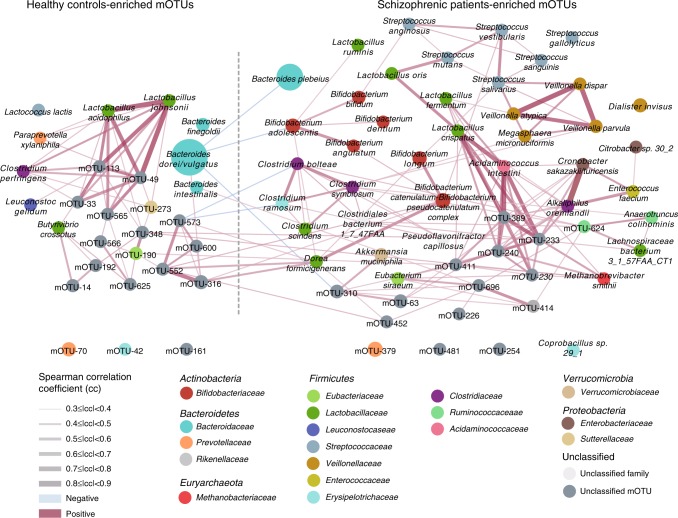
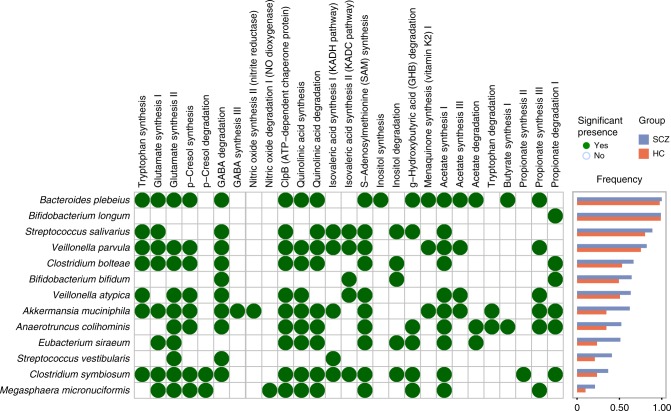
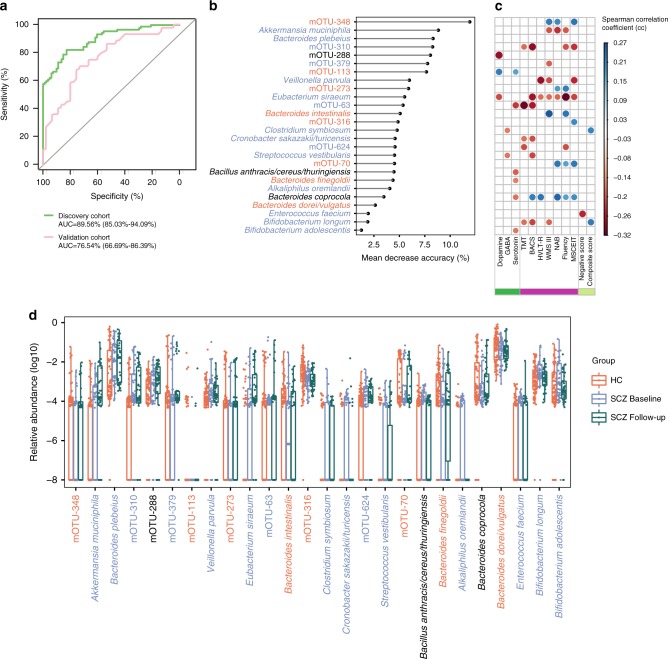
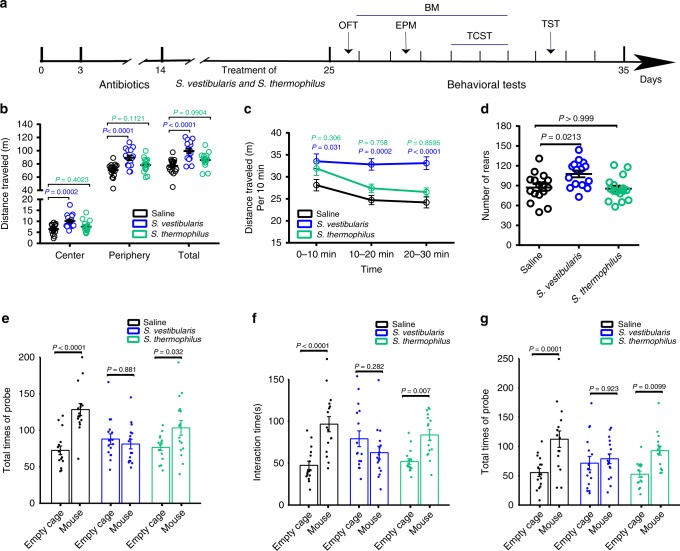
Evidence is mounting that the gut-brain axis plays an important role in mental diseases fueling mechanistic investigations to provide a basis for future targeted interventions. However, shotgun metagenomic data from treatment-naïve patients are scarce hampering comprehensive analyses of the complex interaction between the gut microbiota and the brain. Here we explore the fecal microbiome based on 90 medication-free schizophrenia patients and 81 controls and identify a microbial species classifier distinguishing patients from controls with an area under the receiver operating characteristic curve (AUC) of 0.896, and replicate the microbiome-based disease classifier in 45 patients and 45 controls (AUC = 0.765). Functional potentials associated with schizophrenia include differences in short-chain fatty acids synthesis, tryptophan metabolism, and synthesis/degradation of neurotransmitters. Transplantation of a schizophrenia-enriched bacterium, Streptococcus vestibularis, appear to induces deficits in social behaviors, and alters neurotransmitter levels in peripheral tissues in recipient mice. Our findings provide new leads for further investigations in cohort studies and animal models.
Overview
The claims and statistics of this paper haven’t been checked yet.
Free: it reads the open-access text and checks the first 5 claims that cite a source we can check. Create a free account to check every claim.
Integrity signals
Registry
Cites
Statistics
Figures
Verification
Claims the paper makes
The claims and statistics of this paper haven’t been checked yet.
Free: it reads the open-access text and checks the first 5 claims that cite a source we can check. Create a free account to check every claim.
Claims other papers make about this one
Each is checked against this paper’s own text: does it say what the citing paper says it does?
The cited source says what the claim attributes to it.
In the citing paper
“In the brain, reduced tryptophan level was reported in the prefrontal cortex [176].”
From The Role of Microbiota-Gut-Brain Axis in Neuropsychiatric and Neurological Disorders (2021) · cites this paper as [176]
In the citing paper
“a metagenome-wide association study showed that gut microbiota diversity based on genus level taxonomy and annotated genes was much higher in patients with schizophrenia than in healthy controls [176].”
From The Role of Microbiota-Gut-Brain Axis in Neuropsychiatric and Neurological Disorders (2021) · cites this paper as [176]
In the citing paper
“Thus, altered tryptophan-kynurenine metabolism may be an important link between gut microbiota and the pathogenesis of schizophrenia [175,176].”
From The Role of Microbiota-Gut-Brain Axis in Neuropsychiatric and Neurological Disorders (2021) · cites this paper as [176]
Self-check
Percentages, sums and reported differences re-computed from the paper’s own numbers.
The self-check needs the paper’s full text.
Citations
Cites
The Positive and Negative Syndrome Scale (PANSS) for schizophrenia.
Kay, S. R., Fiszbein, A., & Opler, L. A. (1987) · Schizophrenia Bulletin · doi:10.1093/schbul/13.2.261 · Cited by 21,378
A metagenome-wide association study of gut microbiota in type 2 diabetes
Qin, J., Li, Y., Cai, Z., Li, S., Zhu, J., Zhang, F., Liang, S., Zhang, W., Guan, Y., Shen, D., et al. (2012) · Nature · doi:10.1038/nature11450 · Cited by 6,762
Self-citationSOAP2: an improved ultrafast tool for short read alignment
Li, R., Yu, C., Li, Y., Lam, T.-W., Yiu, S.-M., Kristiansen, K., & Wang, J. (2009) · Bioinformatics · doi:10.1093/bioinformatics/btp336 · Cited by 3,760
Self-citationGut microbiota regulate motor deficits and neuroinflammation in a model of Parkinson's disease
Sampson, T. R., Debelius, J. W., Thron, T., Janssen, S., Shastri, G. G., Ilhan, Z. E., Challis, C., Schretter, C. E., Rocha, S., Gradinaru, V., et al. (2016) · Cell · doi:10.1016/j.cell.2016.11.018 · Cited by 3,622
Hsiao, E. Y., McBride, S. W., Hsien, S., Sharon, G., Hyde, E. R., McCue, T., Codelli, J. A., Chow, J., Reisman, S. E., Petrosino, J. F., et al. (2013) · Cell · doi:10.1016/j.cell.2013.11.024 · Cited by 3,283
The MATRICS Consensus Cognitive Battery, part 1: test selection, reliability, and validity
Nuechterlein, K. H., Green, M. F., Kern, R. S., Baade, L. E., Barch, D. M., Cohen, J. D., Essock, S., Fenton, W. S., Frese, F. J., Gold, J. M., et al. (2008) · American Journal of Psychiatry · doi:10.1176/appi.ajp.2007.07010042 · Cited by 2,342
Zheng, P., Zeng, B., Zhou, C., Liu, M., Fang, Z., Xu, X., Zeng, L., Chen, J., Fan, S., Du, X., et al. (2016) · Molecular Psychiatry · doi:10.1038/mp.2016.44 · Cited by 2,023
Self-citationvan Os, J., & Kapur, S. (2009) · The Lancet · doi:10.1016/s0140-6736(09)60995-8 · Cited by 1,971
The neuroactive potential of the human gut microbiota in quality of life and depression
Valles-Colomer, M., Falony, G., Darzi, Y., Tigchelaar, E. F., Wang, J., Tito, R. Y., Schiweck, C., Kurilshikov, A., Joossens, M., Wijmenga, C., et al. (2019) · Nature Microbiology · doi:10.1038/s41564-018-0337-x · Cited by 1,963
Self-citationThe gut microbiome in atherosclerotic cardiovascular disease
Jie, Z., Xia, H., Zhong, S.-L., Feng, Q., Li, S., Liang, S., Zhong, H., Liu, Z., Gao, Y., Zhao, H., et al. (2017) · Nature Communications · doi:10.1038/s41467-017-00900-1 · Cited by 1,638
Self-citation
Cited by
Blanco-Míguez, A., Beghini, F., Cumbo, F., McIver, L. J., Thompson, K. N., Zolfo, M., Manghi, P., Dubois, L., Huang, K. D., Thomas, A. M., et al. (2023) · Nature Biotechnology · doi:10.1038/s41587-023-01688-w · Cited by 1,442
“This set of methods enabled deep exploration of human microbiomes and the discovery of microbial associations with multiple health conditions 10–18 and dietary patterns 19–23 , as well as the characterization of the evolution and transmission of microbial species and strains 24–29 .”
BackgroundChen, Y., Xu, J., & Chen, Y. (2021) · Nutrients · doi:10.3390/nu13062099 · Cited by 917
Self-citationThe Role of Microbiota-Gut-Brain Axis in Neuropsychiatric and Neurological Disorders
Socała, K., Doboszewska, U., Szopa, A., Serefko, A., Włodarczyk, M., Zielińska, A., Poleszak, E., Fichna, J., & Wlaź, P. (2021) · Pharmacological Research · doi:10.1016/j.phrs.2021.105840 · Cited by 857
Perturbations in Gut Microbiota Composition in Psychiatric Disorders: A Review and Meta-analysis
Nikolova, V. L., Smith, M. R. B., Hall, L. J., Cleare, A. J., Stone, J. M., & Young, A. H. (2021) · JAMA Psychiatry · doi:10.1001/jamapsychiatry.2021.2573 · Cited by 731
Short-chain fatty acids in diseases
Zhang, D., Jian, Y.-P., Zhang, Y.-N., Li, Y., Gu, L.-T., Sun, H.-H., Liu, M.-D., Zhou, H.-L., Wang, Y.-S., & Xu, Z.-X. (2023) · Cell Communication and Signaling · doi:10.1186/s12964-023-01219-9 · Cited by 718
Opening the black box: the promise and limitations of explainable machine learning in cardiology
Petch, J., Di, S., & Nelson, W. (2022) · Canadian Journal of Cardiology · doi:10.1016/j.cjca.2021.09.004 · Cited by 552
“36 Local explainability aims to provide insight about why a model made a specific prediction, and it has been identified by clinicians as critical in the context of using a model’s outputs to inform clinical practice.”
McGuinness, A. J., Davis, J. A., Dawson, S. L., Loughman, A., Collier, F., O’Hely, M., Simpson, C. A., Green, J., Marx, W., Hair, C., et al. (2022) · Molecular Psychiatry · doi:10.1038/s41380-022-01456-3 · Cited by 502
“Study quality was rated as ‘Good’, ‘Fair’ or ‘Poor’ by two reviewers (AJM, CS), with discrepancies addressed through discussion.”
BackgroundResultInfluentialMou, Y., Du, Y., Zhou, L., Yue, J., Hu, X., Liu, Y., Chen, S., Lin, X., Zhang, G., Xiao, H., et al. (2022) · Frontiers in Immunology · doi:10.3389/fimmu.2022.796288 · Cited by 432
“For another example, schizophrenia and its subtype are associated with several enterobacterial strains, such as Streptococcus vestibulitis (7).”
BackgroundRETRACTED ARTICLE: Role of the gut microbiome in chronic diseases: a narrative review
Vijay, A., & Valdes, A. M. (2022) · European Journal of Clinical Nutrition · doi:10.1038/s41430-021-00991-6 · Cited by 361
RetractedA core microbiome signature as an indicator of health
Wu, G., Xu, T., Zhao, N., Lam, Y. Y., Ding, X., Wei, D., Fan, J., Shi, Y., Li, X., Li, M., et al. (2024) · Cell · doi:10.1016/j.cell.2024.09.019 · Cited by 250
Xiong, R.-G., Li, J., Cheng, J., Zhou, D.-D., Wu, S.-X., Huang, S.-Y., Saimaiti, A., Yang, Z.-J., Gan, R.-Y., & Li, H.-B. (2023) · Nutrients · doi:10.3390/nu15143258 · Cited by 249
“Metagenome-wide association study 90 medication-free schizophrenia patients and 81 NCs ↑ Lactobacillus fermentum, Enterococcus faecium, and Alkaliphilus oremlandii [52]”
BackgroundSelf-citationMitrea, L., Nemeş, S.-A., Szabo, K., Teleky, B.-E., & Vodnar, D.-C. (2022) · Frontiers in Medicine · doi:10.3389/fmed.2022.813204 · Cited by 237
“In most neurodevelopmental disorders, as well as in SCZ, gut dysbiosis has a prominent role in affecting behavior (172), so gastrointestinal inflammations and decreased intestinal motility are related to SCZ progression (173, 174).”
BackgroundLi, Z., Lai, J., Zhang, P., Ding, J., Jiang, J., Liu, C., Huang, H., Zhen, H., Xi, C., Sun, Y., et al. (2022) · Molecular Psychiatry · doi:10.1038/s41380-022-01569-9 · Cited by 221
“vestibularis, have been found to be associated with schizophrenia [54].”
BackgroundSelf-citationAlli, S. R., Gorbovskaya, I., Liu, J. C. W., Kolla, N. J., Brown, L., & Müller, D. J. (2022) · International Journal of Molecular Sciences · doi:10.3390/ijms23094494 · Cited by 202
Tian, Z., Zhang, Y., Zheng, Z., Zhang, M., Zhang, T., Jin, J., Zhang, X., Yao, G., Kong, D., Zhang, C., et al. (2022) · Cell Host & Microbe · doi:10.1016/j.chom.2022.09.004 · Cited by 195
Self-citationDash, S., Syed, Y. A., & Khan, M. R. (2022) · Frontiers in Cell and Developmental Biology · doi:10.3389/fcell.2022.880544 · Cited by 171
Bacterial Metabolites of Human Gut Microbiota Correlating with Depression
Averina, O. V., Zorkina, Y. A., Yunes, R. A., Kovtun, A. S., Ushakova, V. M., Morozova, A. Y., Kostyuk, G. P., Danilenko, V. N., & Chekhonin, V. P. (2020) · International Journal of Molecular Sciences · doi:10.3390/ijms21239234 · Cited by 163
Gheorghe, C. E., Ritz, N. L., Martin, J. A., Wardill, H. R., Cryan, J. F., & Clarke, G. (2021) · Gut Microbes · doi:10.1080/19490976.2021.1941711 · Cited by 148
Eicher, T. P., & Mohajeri, M. H. (2022) · Nutrients · doi:10.3390/nu14132661 · Cited by 142
Zhao, J., Ning, X., Liu, B., Dong, R., Bai, M., & Sun, S. (2021) · Renal Failure · doi:10.1080/0886022x.2020.1864404 · Cited by 156
“Six (6/9), three (3/9), two (2/9), and two (2/9) studies showed that Escherichia Shigella [17,18,20,27,32,33], Bacteroides [17,32,33], Desulfovibrio [27,30], and Lachnoclostridium [17,32] were more abundant, while four (4/9), three (3/ 9), three (3/9), two (2/9), and two (2/9) studies reported that Roseburia [27,28,32…”
ResultRole of the gut microbiome in three major psychiatric disorders
Borkent, J., Ioannou, M., Laman, J. D., Haarman, B. C. M., & Sommer, I. E. (2022) · Psychological Medicine · doi:10.1017/s0033291722000897 · Cited by 155
The gut microbiome and mental health: advances in research and emerging priorities
Shoubridge, A. P., Choo, J. M., Martin, A. M., Keating, D. J., Wong, M., Licinio, J., & Rogers, G. B. (2022) · Molecular Psychiatry · doi:10.1038/s41380-022-01479-w · Cited by 145
Roles of oral microbiota and oral-gut microbial transmission in hypertension
Chen, B., Lin, W.-Z., Li, Y., Bi, C., Du, L., Liu, Y., Zhou, L.-J., Liu, T., Xu, S., Shi, C., et al. (2022) · Journal of Advanced Research · doi:10.1016/j.jare.2022.03.007 · Cited by 145
“In addition, oral microbiota such as Veillonella atypical and Veillonella dispar may translocate to the gut of patients with schizophrenia[50].”
BackgroundThe gut microbiome in social anxiety disorder: evidence of altered composition and function
Butler, M., Bastiaanssen, T. F. S., Long-Smith, C. M., Mörkl, S., Berding, K., Ritz, N. L., Strain, C., Patangia, D. V., Patel, S. H., Stanton, C., et al. (2023) · Translational Psychiatry · doi:10.1038/s41398-023-02325-5 · Cited by 141
The gut microbiota in multiple sclerosis varies with disease activity
Thirion, F., Sellebjerg, F. T., Fan, Y., Lyu, L., Hansen, T. H., Pons, N., Levenez, F., Quinquis, B., Stankevič, E., Søndergaard, H. B., et al. (2023) · Genome Medicine · doi:10.1186/s13073-022-01148-1 · Cited by 140
“This result is unexpected since a high gut bacterial richness is commonly considered as a beneficial marker of health [36], even if it was reportedly increased in schizophrenia [59].”
BackgroundSelf-citationYan, Q., Li, S., Yan, Q., Huo, X., Wang, C., Wang, X., Sun, Y., Zhao, W., Yu, Z., Zhang, Y., et al. (2024) · Cell · doi:10.1016/j.cell.2024.04.043 · Cited by 137
Self-citationEmerging Evidence for the Widespread Role of Glutamatergic Dysfunction in Neuropsychiatric Diseases
McGrath, T., Baskerville, R., Rogero, M. M., & Castell, L. M. (2022) · Nutrients · doi:10.3390/nu14050917 · Cited by 135
Lagoumintzis, G., & Patrinos, G. P. (2023) · Human Genomics · doi:10.1186/s40246-023-00561-w · Cited by 132
Spichak, S., Bastiaanssen, T. F. S., Berding, K., Vlckova, K., Clarke, G., Dinan, T. G., & Cryan, J. F. (2021) · Neuroscience & Biobehavioral Reviews · doi:10.1016/j.neubiorev.2021.02.044 · Cited by 127
Zhao, X., Dong, Q., Han, Y., Zhang, K., Shi, X., Yang, X., Yuan, Y., Zhou, D., Wang, K., Wang, X., et al. (2022) · BMC Microbiology · doi:10.1186/s12866-021-02425-6 · Cited by 127
“8x magnetic beads to form a sequencing library (SMRT Bell), and the library was subjected to quality inspection [49, 50].”
MethodLess is more: Antibiotics at the beginning of life
Stocker, M., Klingenberg, C., Navér, L., Nordberg, V., Berardi, A., el Helou, S., Fusch, G., Bliss, J. M., Lehnick, D., Dimopoulou, V., et al. (2023) · Nature Communications · doi:10.1038/s41467-023-38156-7 · Cited by 130
Schizophrenia: The new etiological synthesis
Rantala, M. J., Luoto, S., Borráz-León, J. I., & Krams, I. A. (2022) · Neuroscience & Biobehavioral Reviews · doi:10.1016/j.neubiorev.2022.104894 · Cited by 127
Shobeiri, P., Kalantari, A., Teixeira, A. L., & Rezaei, N. (2022) · Biology of Sex Differences · doi:10.1186/s13293-022-00422-6 · Cited by 125
Lou, M., Cao, A., Jin, C., Mi, K., Xiong, X., Zeng, Z., Pan, X., Qie, J., Qiu, S., Niu, Y., et al. (2022) · Gut · doi:10.1136/gutjnl-2021-325115 · Cited by 95
Leclercq, S., Schwarz, M., Delzenne, N. M., Stärkel, P., & de Timary, P. (2021) · Translational Psychiatry · doi:10.1038/s41398-021-01610-5 · Cited by 109
Ischemia-Selective Cardioprotection by Malonate for Ischemia/Reperfusion Injury
Prag, H. A., Aksentijević, D., Dannhorn, A., Giles, A. V., Mulvey, J. F., Sauchanka, O., Du, L., Bates, G. R., Reinhold, J., Kula‐Alwar, D., et al. (2022) · Circulation Research · doi:10.1161/circresaha.121.320717 · Cited by 110
The Gut–Brain Axis in Schizophrenia: The Implications of the Gut Microbiome and SCFA Production
Ju, S., Shin, Y., Han, S., Kwon, J., Choi, T. G., Kang, I., & Kim, S. S. (2023) · Nutrients · doi:10.3390/nu15204391 · Cited by 108
“Remarkably, when researchers transplanted Streptococcus vestibularis , an oral bacterium, into mice, it led to the development of schizophrenia-like behavior [190].”
BackgroundA key genetic factor governing arabinan utilization in the gut microbiome alleviates constipation
Zhang, C., Yu, L., Ma, C., Jiang, S., Zhang, Y., Wang, S., Tian, F., Xue, Y., Zhao, J., Zhang, H., et al. (2023) · Cell Host & Microbe · doi:10.1016/j.chom.2023.10.011 · Cited by 102
Nguyen, T. T., Kosciolek, T., Daly, R. E., Vázquez-Baeza, Y., Swafford, A., Knight, R., & Jeste, D. V. (2021) · Brain, Behavior, and Immunity · doi:10.1016/j.bbi.2020.10.003 · Cited by 83
Gao, F., Guo, R., Ma, Q., Li, Y., Wang, W., Fan, Y., Ju, Y., Zhao, B., Gao, Y., Li, Q., et al. (2022) · Journal of Affective Disorders · doi:10.1016/j.jad.2022.02.024 · Cited by 97
Self-citationInfant gut microbiome composition is associated with non-social fear behavior in a pilot study
Carlson, A. L., Xia, K., Azcárate-Peril, M. A., Rosin, S. P., Fine, J. P., Mu, W., Zopp, J. B., Kimmel, M., Styner, M. A., Thompson, A. L., et al. (2021) · Nature Communications · doi:10.1038/s41467-021-23281-y · Cited by 96
Microbiota-immune-brain interactions: A lifespan perspective
Ratsika, A., Cruz Pereira, J. S., Lynch, C. M. K., Clarke, G., & Cryan, J. F. (2023) · Current Opinion in Neurobiology · doi:10.1016/j.conb.2022.102652 · Cited by 74
Puig‐Castellví, F., Pacheco‐Tapia, R., Deslande, M., Jia, M., Andrikopoulos, P., Chechi, K., Bonnefond, A., Froguel, P., & Dumas, M. (2023) · TrAC Trends in Analytical Chemistry · doi:10.1016/j.trac.2023.117248 · Cited by 91
Zhong, H., Xu, J., Yang, M., Hussain, M., Liu, X., Feng, F., & Guan, R. (2023) · Nutrients · doi:10.3390/nu15030496 · Cited by 88
Guan, F., Ni, T., Zhu, W., Williams, L. K., Cui, L., Li, M., Tubbs, J. D., Sham, P. C., & Gui, H. (2021) · Molecular Psychiatry · doi:10.1038/s41380-021-01201-2 · Cited by 83
Andreu-Sánchez, S., Blanco-Míguez, A., Wang, D., Golzato, D., Manghi, P., Heidrich, V., Fackelmann, G., Zhernakova, D. V., Kurilshikov, A., Valles-Colomer, M., et al. (2025) · Cell · doi:10.1016/j.cell.2025.04.014 · Cited by 81
Generalized reporter score-based enrichment analysis for omics data
Chen, P., Chen, Q., Tan, S., Shen, X., & Jiang, C. (2024) · Briefings in Bioinformatics · doi:10.1093/bib/bbae116 · Cited by 80
“The RSA has recently gained popularity due to its extended application in functional enrichment analysis in microbiome research [13].”
BackgroundResistome expansion in disease-associated human gut microbiomes
Fredriksen, S., de Warle, S., van Baarlen, P., Boekhorst, J., & Wells, J. M. (2023) · Microbiome · doi:10.1186/s40168-023-01610-1 · Cited by 78
Bastiaanssen, T. F. S., Quinn, T. P., & Loughman, A. (2023) · Nature Mental Health · doi:10.1038/s44220-023-00148-3 · Cited by 75
Inulin ameliorates schizophrenia via modulation of the gut microbiota and anti-inflammation in mice
Guo, L., Xiao, P., Zhang, X., Yang, Y., Yang, M., Wang, T., Lu, H., Tian, H., Wang, H., & Liu, J. (2021) · Food & Function · doi:10.1039/d0fo02778b · Cited by 74
Self-citationBipolar disorder and the gut microbiome: A systematic review
Sublette, M. E., Cheung, S. G., Lieberman, E. E., Hu, S., Mann, J. J., Uhlemann, A., & Miller, J. M. (2021) · Bipolar Disorders · doi:10.1111/bdi.13049 · Cited by 75
Gounot, J.-S., Chia, M., Bertrand, D., Saw, W., Ravikrishnan, A., Low, A., Ding, Y., Ng, A. H. Q., Tan, L. W. L., Teo, Y., et al. (2022) · Nature Communications · doi:10.1038/s41467-022-33782-z · Cited by 75
The Gut Microbiome in Schizophrenia and the Potential Benefits of Prebiotic and Probiotic Treatment
Liu, J. C. W., Gorbovskaya, I., Hahn, M., & Müller, D. J. (2021) · Nutrients · doi:10.3390/nu13041152 · Cited by 76
“Another study by Zhu et al. (2020) examined the GMB of medication-free first-episode SCZ patients using shotgun sequencing.”
BackgroundMethodInfluentialYuan, X., Wang, Y., Li, X., Jiang, J., Kang, Y., Pang, L., Zhang, P., Li, A., Lv, L., Andreassen, O. A., et al. (2021) · Translational Psychiatry · doi:10.1038/s41398-021-01531-3 · Cited by 73
Aggarwal, V., Sunder, S., & Verma, S. R. (2022) · Folia Microbiologica · doi:10.1007/s12223-022-00973-6 · Cited by 71
“Schizophrenia Elevated Shotgun sequencing Faeces (Zhu et al. 2020)”
Multi-Omics Analysis Reveals Aberrant Gut-Metabolome-Immune Network in Schizophrenia
Fan, Y., Gao, Y., Ma, Q., Yang, Z., Zhao, B., He, X., Yang, J., Yan, B., Gao, F., Li, Q., et al. (2022) · Frontiers in Immunology · doi:10.3389/fimmu.2022.812293 · Cited by 67
“org 3 Shotgun Metagenomic Sequencing and Metagenome-Wide Association Study Shotgun metagenomic sequencing and alignment methods were based on our previously published literature (9).”
MethodResultSelf-citationDiagnosis of Crohn’s disease and ulcerative colitis using the microbiome
Kang, D.-Y., Park, J., Yeo, M., Kang, S., Kim, J., Kim, J., & Kim, S. (2023) · BMC Microbiology · doi:10.1186/s12866-023-03084-5 · Cited by 69
Thirion, F., Speyer, H., Hansen, T. H., Nielsen, T., Fan, Y., Chatelier, E. L., Fromentin, S., Berland, M., Oñate, F. P., Pons, N., et al. (2022) · Biological Psychiatry Global Open Science · doi:10.1016/j.bpsgos.2022.01.009 · Cited by 67
“Having a closer look at the Bi fi do-bacterium genus, reported to be more abundant in SCZ (11), we found that it correlated positively with SANS and negatively with BACS ( p # .05), although it was signi fi cantly more abundant in SCZ only when considering the MS cohort as control subjects.”
BackgroundResultInfluentialSelf-citationMurray, N., Khalaf, S. Y. A., Bastiaanssen, T. F. S., Kaulmann, D., Lonergan, E., Cryan, J. F., Clarke, G. A., Khashan, A. S., & O’Connor, K. (2023) · Schizophrenia Bulletin · doi:10.1093/schbul/sbad049 · Cited by 65
Misiak, B., Pawlak, E., Rembacz, K. P., Kotas, M., Żebrowska-Różańska, P., Kujawa, D., Łaczmański, Ł., Piotrowski, P., Bielawski, T., Samochowiec, J., et al. (2024) · Journal of Psychiatric Research · doi:10.1016/j.jpsychires.2024.01.036 · Cited by 62
Tang, X., Zhang, Y., Jiang, J., Meng, X., Huang, Z., Wu, H., He, L., Xiong, F., Liu, J., Zhong, R., et al. (2021) · PeerJ · doi:10.7717/peerj.10880 · Cited by 60
Jia, Y. P., Niu, C., Xu, X., Zheng, F., Liu, C., Wang, J., Lu, Z., Xu, Z., & Li, Q. (2021) · Food Research International · doi:10.1016/j.foodres.2021.110533 · Cited by 59
Self-citationMetagenomic analysis characterizes stage-specific gut microbiota in Alzheimer’s disease
Jia, L., Ke, Y., Zhao, S., Liu, J., Luo, X., Cao, J., Liu, Y., Guo, Q., Chen, W., Chen, F., et al. (2025) · Molecular Psychiatry · doi:10.1038/s41380-025-02973-7 · Cited by 58
“…signatures identi fi ed in the discovery cohort, several fecal metagenomic shotgun sequencing datasets were collected for other brain disorders, such as preclinical AD [21], Parkinson ’ s disease (PD) [46], schizophrenia (SCZ) [47], bipolar disorder (BD) [48] and autism spectrum disorder(ASD) [49].”
Self-citationCognitive impairment in psychiatric diseases: Biomarkers of diagnosis, treatment, and prevention
Wang, Y., Meng, W., Liu, Z., An, Q., & Hu, X. (2022) · Frontiers in Cellular Neuroscience · doi:10.3389/fncel.2022.1046692 · Cited by 57
The Role of the Gut Microbiome in Psychiatric Disorders
Andrioaie, I.-M., Duhaniuc, A., Năstase, E. V., Iancu, L. S., Luncă, C., Trofin, F., Anton-Păduraru, D.-T., & Dorneanu, O. (2022) · Microorganisms · doi:10.3390/microorganisms10122436 · Cited by 59
“Schizophrenia (SCZ) is a destructive illness associated with hallucinations, delusions and thought disorders affecting up to 1% of the general population worldwide [63,64].”
Wang, Z., Yuan, X., Zhu, Z., Pang, L., Ding, S., Li, X., Kang, Y., Hei, G., Zhang, L., Zhang, X., et al. (2023) · Schizophrenia Bulletin · doi:10.1093/schbul/sbad026 · Cited by 57
Gut microbiota: An intermediary between metabolic syndrome and cognitive deficits in schizophrenia
Zeng, C., Yang, P., Cao, T., Gu, Y., Li, N., Zhang, B., Xu, P., Liu, Y., Luo, Z., & Cai, H. (2020) · Progress in Neuro-Psychopharmacology and Biological Psychiatry · doi:10.1016/j.pnpbp.2020.110097 · Cited by 55
Salivary microbiome profiling reveals a dysbiotic schizophrenia-associated microbiota
Qing, Y., Xu, L., Cui, G., Sun, L., Hu, X., Yang, X., Jiang, J., Zhang, J., Zhang, T., Wang, T., et al. (2021) · Schizophrenia · doi:10.1038/s41537-021-00180-1 · Cited by 55
Self-citationGut Biofactory—Neurocompetent Metabolites within the Gastrointestinal Tract. A Scoping Review
Skonieczna‐Żydecka, K., Jakubczyk, K., Maciejewska, D., Janda, K., Kaźmierczak-Siedlecka, K., Kaczmarczyk, M., Łoniewski, I., & Marlicz, W. M. (2020) · Nutrients · doi:10.3390/nu12113369 · Cited by 54
“the CNS and could play a significant role in MDD pathogenesis [58,224].”
BackgroundInfluentialLiang, S., Sin, Z. Y., Yu, J., Zhao, S., Zhang, X., Bruzzone, R., & Tun, H. M. (2022) · Cellular and Molecular Life Sciences · doi:10.1007/s00018-022-04650-2 · Cited by 52
“plebeius PB-SLKZP can synthesize glutamate [36, 37], a primary precursor of γ-aminobutyric acid (GABA), which plays a prominent role in stress control by the brain, improving the resilience of individuals towards depression [38].”
BackgroundReconstruction of the personal information from human genome reads in gut metagenome sequencing data
Tomofuji, Y., Sonehara, K., Kishikawa, T., Maeda, Y., Ogawa, K., Kawabata, S., Nii, T., Okuno, T., Oguro-Igashira, E., Kinoshita, M., et al. (2023) · Nature Microbiology · doi:10.1038/s41564-023-01381-3 · Cited by 50
Ling, Z., Jin, G., Yan, X., Cheng, Y., Shao, L., Song, Q., Liu, X., & Zhao, N. (2022) · Frontiers in Cellular and Infection Microbiology · doi:10.3389/fcimb.2022.886872 · Cited by 51
Das, N., Kumar, V., Chaure, K., & Pandey, P. (2025) · Environmental Science Advances · doi:10.1039/d4va00203b · Cited by 49
“280 To address this limitation, emerging methodologies and advanced omics technologies have been developed to explore the physiological, metabolic, and structural aspects of the microbiome linked to the degradation of pollutants.”
Gut Microbiome: A Brief Review on Its Role in Schizophrenia and First Episode of Psychosis
Tsamakis, K., Galinaki, S., Alevyzakis, E., Hortis, I., Tsiptsios, D., Kollintza, E., Kympouropoulos, S. P., Τriantafyllou, Κ., Smyrnis, N., & Rizos, E. N. (2022) · Microorganisms · doi:10.3390/microorganisms10061121 · Cited by 49
“Additionally, lower serum tryptophan levels and higher kynurenic acid (KYNA) levels have been observed in medication-free psychotic patients implying that, in psychosis, altered gut microbiota may be associated with changes in serum levels of tryptophan and KYNA [70].”
BackgroundInfluentialThe Microbiota‐Gut‐Brain Connection: A New Horizon in Neurological and Neuropsychiatric Disorders
Faysal, M. F., Zehravi, M., Sutradhar, B., Amin, M. A., Shanmugarajan, T. S., Arjun, U. V. N. V., Ethiraj, S., Durairaj, A., Dayalan, G., Ahamad, S. K., et al. (2025) · CNS Neuroscience & Therapeutics · doi:10.1111/cns.70593 · Cited by 49
“Schizophrenic individuals exhibit decreased serum tryptophan concentrations and higher kynurenic acid levels, with the prefrontal cortex exhibiting a lower tryptophan level [106].”
Gut microbiota and microbiome in schizophrenia
Samochowiec, J., & Misiak, B. (2021) · Current Opinion in Psychiatry · doi:10.1097/yco.0000000000000733 · Cited by 48
Deng, H., He, L., Wang, C., Zhang, T., Guo, H., Zhang, H., Song, Y., & Chen, B. (2022) · BMC Psychiatry · doi:10.1186/s12888-022-04255-w · Cited by 49
Self-citationGut microbes exacerbate systemic inflammation and behavior disorders in neurologic disease CADASIL
Liu, S., Men, X., Guo, Y., Cai, W., Wu, R., Gao, R., Zhong, W., Guo, H., Ruan, H., Qin, B., et al. (2023) · Microbiome · doi:10.1186/s40168-023-01638-3 · Cited by 47
“Alterations in gut microbiota composition have been demonstrated to be associated with ALS [21, 22], autistic spectrum disorder (ASD) [23, 24], depression [25, 26], schizophrenia [27, 28], Parkinson’s disease [29, 30], Alzheimer’s disease [31], and HD [32].”
BackgroundAssociations of the Gut Microbiome With Treatment Resistance in Schizophrenia
Vasileva, S. S., Yang, Y., Baker, A., Siskind, D. J., Gratten, J., & Eyles, D. W. (2024) · JAMA Psychiatry · doi:10.1001/jamapsychiatry.2023.5371 · Cited by 47
Kishikawa, T., Ogawa, K., Motooka, D., Hosokawa, A., Kinoshita, M., Ken, S., Yamamoto, K., Masuda, T., Matsumoto, Y., Nii, T., et al. (2020) · Frontiers in Cellular and Infection Microbiology · doi:10.3389/fcimb.2020.585973 · Cited by 45
“In addition, this novel method has another benefit of analyzing microbiome’s biological functional features, by conducting metagenome-wide association study (MWAS; (Kishikawa et al., 2020a; Kishikawa et al., 2020b; Zhu et al., 2020).”
MethodGut microbiome and schizophrenia: insights from two-sample Mendelian randomization
Zhou, K., Baranova, A. V., Cao, H., Sun, J., & Zhang, F. (2024) · Schizophrenia · doi:10.1038/s41537-024-00497-7 · Cited by 44
Host genetics influences the relationship between the gut microbiome and psychiatric disorders
Martins‐Silva, T., Salatino‐Oliveira, A., Genro, J. P., Meyer, F. D. T., Li, Y., Rohde, L. A., Hutz, M. H., & Tovo‐Rodrigues, L. (2020) · Progress in Neuro-Psychopharmacology and Biological Psychiatry · doi:10.1016/j.pnpbp.2020.110153 · Cited by 47
Goguyer‐Deschaumes, R., Waeckel, L., Killian, M., Rochereau, N., & Paul, S. (2021) · Trends in Immunology · doi:10.1016/j.it.2021.11.005 · Cited by 44
Gut microbiome in schizophrenia and antipsychotic-induced metabolic alterations: a scoping review
Singh, R., Stogios, N., Smith, E., Lee, J., Maksyutynska, K., Au, E., Wright, D. C., Palma, G. D., Graff‐Guerrero, A., Gerretsen, P., et al. (2022) · Therapeutic Advances in Psychopharmacology · doi:10.1177/20451253221096525 · Cited by 45
Yue, M., & Zhang, L. (2024) · Microorganisms · doi:10.3390/microorganisms12020323 · Cited by 44
An accurate aging clock developed from large-scale gut microbiome and human gene expression data
Gopu, V., Cai, Y., Krishnan, S., Rajagopal, S., Camacho, F. R., Toma, R., Torres, P. J., Vuyisich, M., Perlina, A., Banavar, G. S., et al. (2023) · iScience · doi:10.1016/j.isci.2023.108538 · Cited by 43
Unraveling the Gut–Liver–Brain Axis: Microbiome, Inflammation, and Emerging Therapeutic Approaches
Aghara, H., Patel, M., Chadha, P., Parwani, K., Chaturvedi, R., & Mandal, P. (2025) · Mediators of Inflammation · doi:10.1155/mi/6733477 · Cited by 43
“Transplantation of Streptococcus vestibularis , in mice caused development of schizophrenia-like behavior [160].”
Vasiliu, O. (2023) · Frontiers in Psychiatry · doi:10.3389/fpsyt.2023.1074736 · Cited by 42
“81 controls, it was observed that the first group presented differences in SCFAs, and neurotransmitters degradation or synthesis; therefore, at least some changes exist prior to the onset of the antipsychotic treatment in schizophrenia (70).”
BackgroundGubert, C., Kong, G., Uzungil, V., Zeleznikow-Johnston, A., Burrows, E. L., Renoir, T., & Hannan, A. J. (2020) · Frontiers in Cell and Developmental Biology · doi:10.3389/fcell.2020.582320 · Cited by 42
“In several studies, fecal matter transplant of gut microbiota from SZ patients has been reported to result in behavioral changes in mice reminiscent of SZ symptoms (Zheng et al., 2019; Zhu et al., 2019, 2020).”
BackgroundJuckel, G., Manitz, M. P., Freund, N., & Gatermann, S. G. (2021) · Progress in Neuro-Psychopharmacology and Biological Psychiatry · doi:10.1016/j.pnpbp.2021.110306 · Cited by 42
Gut-Brain Axis and Neurological Disorders-How Microbiomes Affect our Mental Health
Bhatia, N. Y., Jalgaonkar, M. P., Hargude, A. B., Sherje, A. P., Oza, M. J., & Doshi, G. (2022) · CNS & Neurological Disorders - Drug Targets · doi:10.2174/1871527321666220822172039 · Cited by 44
Elementary methods provide more replicable results in microbial differential abundance analysis
Pelto, J., Auranen, K. J., Kujala, J. V., & Lahti, L. (2025) · Briefings in Bioinformatics · doi:10.1093/bib/bbaf130 · Cited by 42
Role of the microbiota in inflammation-related related psychiatric disorders
Zhou, L., Wu, Q. J., Jiang, L., Rao, J., Gao, J., Zhao, F., & Wang, X. (2025) · Frontiers in Immunology · doi:10.3389/fimmu.2025.1613027 · Cited by 41
“Notably, the abundance of Lachnoclostridium might predict poor cognitive improvement (34), whereas acute-phase patients display Streptococcus vestibularis enrichment associated with cognitive decline (35).”
Wei, Y., Chang, L., Ishima, T., Wan, X., Ma, L., Wuyun, G., Pu, Y., & Hashimoto, K. (2021) · Brain Behavior & Immunity - Health · doi:10.1016/j.bbih.2021.100198 · Cited by 42
Consensus on potential biomarkers developed for use in clinical tests for schizophrenia
Lin, P., Sun, J., Lou, X., Li, D., Shi, Y., Li, Z., Ma, P., Li, P., Chen, S., Jin, W., et al. (2022) · General Psychiatry · doi:10.1136/gpsych-2021-100685 · Cited by 41
Jeste, D. V., Malaspina, D., Bagot, K. S., Barch, D. M., Cole, S. W., Dickerson, F., Dilmore, A. H., Ford, C. L., Karcher, N. R., Luby, J. L., et al. (2023) · Schizophrenia Bulletin · doi:10.1093/schbul/sbad031 · Cited by 43
Ketogenic Therapy in Serious Mental Illness: Emerging Evidence
Sarnyai, Z., & Palmer, C. (2020) · The International Journal of Neuropsychopharmacology · doi:10.1093/ijnp/pyaa036 · Cited by 40
Li, L., Yang, K., Li, C., Zhang, H., Yu, H., Chen, K., Yang, X., & Liu, L. (2022) · Frontiers in Immunology · doi:10.3389/fimmu.2022.943325 · Cited by 39
“The composition and essential functional disorders of the gut microbiota are related to the pathophysiology of most chronic diseases, including obesity (1), cardiovascular system-related diseases (2), chronic kidney diseases (3), neurological diseases (4), and mental disorders (5).”
BackgroundBashir, Y., & Khan, A. U. (2022) · Frontiers in Neuroscience · doi:10.3389/fnins.2022.1030694 · Cited by 38
Ye, P., Chiu, A. T. G., Li, V. W. Y., Zhang, X., Yeung, W. L., Chan, H. S., & Tun, H. M. (2023) · Frontiers in Neurology · doi:10.3389/fneur.2023.1109469 · Cited by 38
“Interestingly, Veillonella was not only reported to be the most abundant genera in CPE patients (6), but it was also increased in ADHD (25) and schizophrenia patients (26).”
Background
Metadata
- Authors
- Zhu, F., Ju, Y., Wang, W., Wang, Q., Guo, R., Ma, Q., Sun, Q., Fan, Y., Xie, Y., Yang, Z., Jie, Z., Zhao, B., Xiao, L., Yang, L., Zhang, T., Feng, J., Guo, L., He, X., Chen, Y., Chen, C., Gao, C., Xu, X., Yang, H., Wang, J., Dang, Y., Madsen, L., Brix, S., Kristiansen, K., Jia, H., & Ma, X.
- Affiliations
- First Affiliated Hospital of Xi'an Jiaotong University (CN)
- BGI Group (China) (CN)
- Michigan State University (US)
- Xi'an Jiaotong University (CN)
- Corresponding author
- Kristiansen, Karsten
- Jia, Huijue
- Ma, Xiancang
- ORCID
- Venue
- Nature Communications
- Published
- 2020-03-31
- Volume
- 11
- Issue
- 1
- Pages
- 1612-1612
- ISSN
- 2041-1723 (ISSN-L)
- PMC
- PMC7109134
- OpenAlex
- W3014950179
- Cited by
- 409
- References
- 81
- Citations by year
- 2026: 35 · 2025: 79 · 2024: 68 · 2023: 71 · 2022: 94 · 2021: 47 · 2020: 13
- FWCI
- 19.85
- Type
- journal article
- Language
- en
- Open access
- gold
- doi.org
- Licence
- cc-by
- creativecommons.org/licenses/by/4.0 (tdm)
- creativecommons.org/licenses/by/4.0 (vor)
- Locations
- Nature Communications (publishedVersion, cc-by)
- bioRxiv (Cold Spring Harbor Laboratory) (acceptedVersion, cc-by-nc-nd)
- PubMed Central (publishedVersion, cc-by)
- PubMed (publishedVersion)
- Research at the University of Copenhagen (University of Copenhagen) (publishedVersion, cc-by)
- RePEc: Research Papers in Economics (submittedVersion)
- DOAJ (DOAJ: Directory of Open Access Journals) (submittedVersion, cc-by-sa)
- NORA - Norwegian Open Research Archives (submittedVersion, other-oa)
- Technical University of Denmark, DTU Orbit (Technical University of Denmark, DTU) (submittedVersion, cc-by)
- Funders
- Xi’an Jiaotong University
- Government of Jiangxi Province
- Topics
- Life Sciences › Biochemistry, Genetics and Molecular Biology › Molecular Biology › Gut microbiota and health
- Health Sciences › Medicine › Psychiatry and Mental health › Schizophrenia research and treatment
- Life Sciences › Neuroscience › Biological Psychiatry › Tryptophan and brain disorders
- Keywords
- schizophrenia, gut microbiota, gut-brain axis, fecal microbiota, short-chain fatty acids, tryptophan metabolism, neurotransmitter synthesis, Streptococcus vestibularis, fecal microbiota transplantation, social behavior deficits, treatment-naive patients
- MeSH terms
- Gastrointestinal Microbiome, Fecal Microbiota Transplantation, Animals, Bacteria, Behavior, Animal, Disease Models, Animal, Feces, Humans, Male, Mice, Inbred C57BL, Risk Factors, RNA, Ribosomal, 16S, ROC Curve, Schizophrenia, Social Behavior, Streptococcus, Mice, Metagenome, Metagenomics
About these checks
Registry, retraction, Cites and statistics results are computed, not judged, with one exception: a printed reference that no index lists is read once by a model before it counts as a citation error. Claims are extracted by a model and kept only when their quote appears verbatim in the text; each cited source is then checked, with a model’s help, for whether it says what the claim relies on. Those verdicts can be wrong — read the claim’s quote and the cited source before relying on one.
Statistics and arithmetic are recomputed, not judged.
Confidence bands are shown only for fields calibrated on our annotated test set. None is calibrated yet, so no band is shown.
What counts as a claim ›How we measure confidence ›How we check this ›
Are you an author, or do you see a problem with this page? Request a review
Data sources
Bibliographic data: Semantic Scholar, OpenAlex, Crossref.
Contains information from the Semantic Scholar Academic Graph Datasets, made available under the ODC Attribution License (ODC-BY 1.0).
Semantic Scholar’s data is described in: Kinney, R., et al. (2023). The Semantic Scholar Open Data Platform. arXiv:2301.10140.
