

The CD153 vaccine is a senotherapeutic option for preventing the accumulation of senescent T cells in mice
Open accessThe DOI matches its Crossref record; 30 of the 30 references it cites were found in a registry or an index.
Abstract
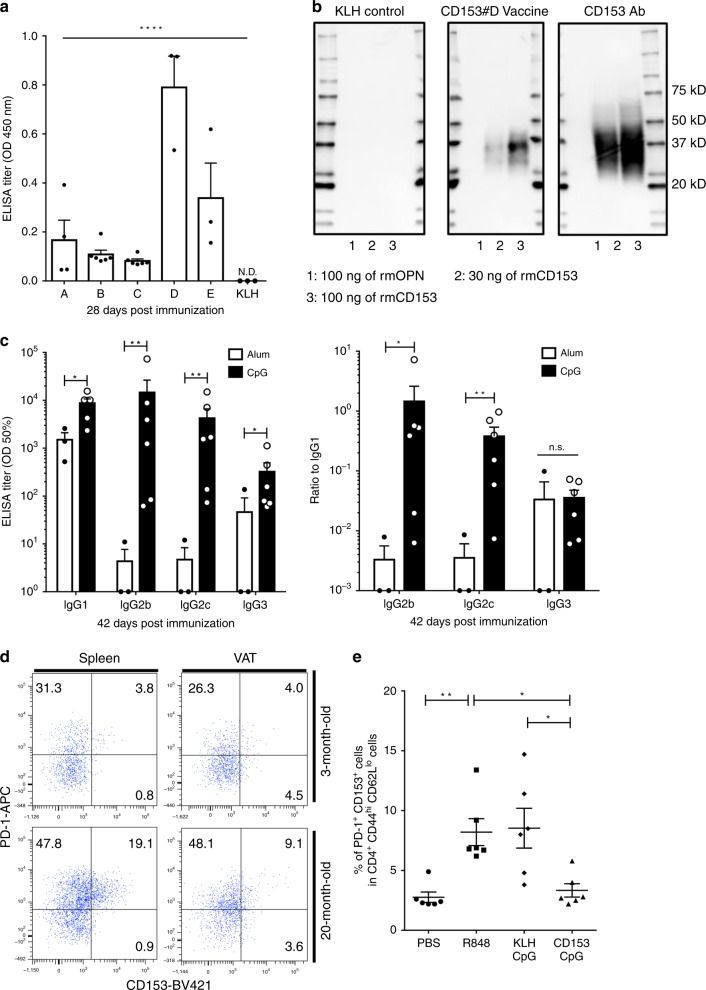
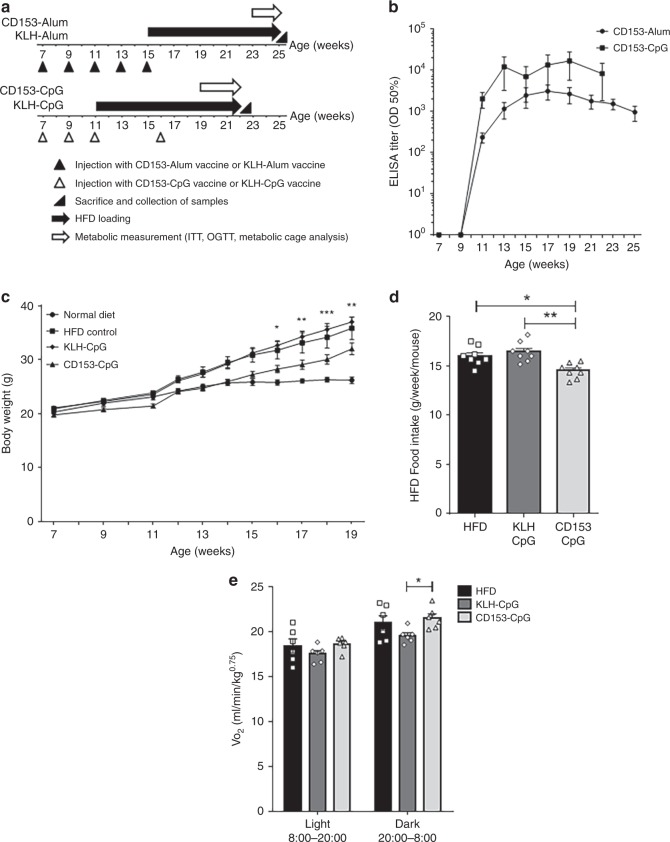
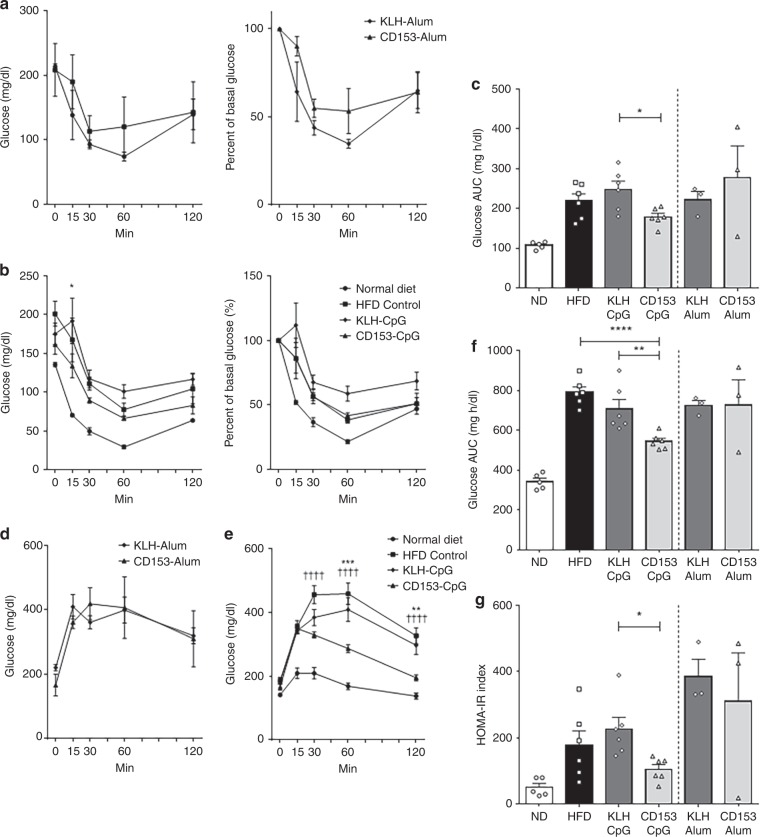
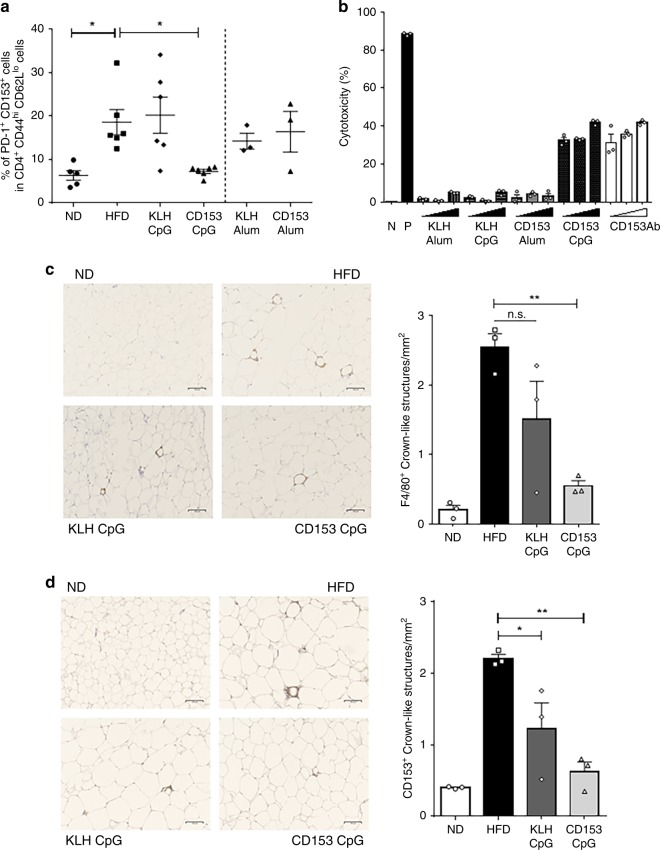
Senotherapy targeting for senescent cells is designed to attenuate age-related dysfunction. Senescent T cells, defined as CD4 + CD44 high CD62L low PD-1 + CD153 + cells, accumulate in visceral adipose tissues (VAT) in obese individuals. Here, we show the long-lasting effect of using CD153 vaccination to remove senescent T cells from high-fat diet (HFD)-induced obese C57BL/6J mice. We administered a CD153 peptide-KLH (keyhole limpet hemocyanin) conjugate vaccine with Alhydrogel (CD153-Alum) or CpG oligodeoxynucleotide (ODN) 1585 (CD153-CpG) and confirmed an increase in anti-CD153 antibody levels that was sustained for several months. After being fed a HFD for 10–11 weeks, adipose senescent T cell accumulation was significantly reduced in the VAT of CD153-CpG-vaccinated mice, accompanied by glucose tolerance and insulin resistance. A complement-dependent cytotoxicity (CDC) assay indicated that the mouse IgG2 antibody produced in the CD153-CpG-vaccinated mice successfully reduced the number of senescent T cells. The CD153-CpG vaccine is an optional tool for senolytic therapy.
Overview
The claims and statistics of this paper haven’t been checked yet.
Free: it reads the open-access text and checks the first 5 claims that cite a source we can check. Create a free account to check every claim.
Integrity signals
Registry
Cites
Statistics
Figures
Verification
Claims the paper makes
The claims and statistics of this paper haven’t been checked yet.
Free: it reads the open-access text and checks the first 5 claims that cite a source we can check. Create a free account to check every claim.
Claims other papers make about this one
Each is checked against this paper’s own text: does it say what the citing paper says it does?
The source backs part of the claim, not all of it — or backs it for a different population, condition or comparison.
In the citing paper
“Each of these approaches eliminates senescent cells, although in some cases, activated macrophages and other non-senescent cell types are also affected96–99.”
From Cellular senescence and senolytics: the path to the clinic (2022) · cites this paper as [97]
Experimental — accuracy not yet measuredThe source backs part of the claim, not all of it — or backs it for a different population, condition or comparison.
In the citing paper
“Certain cell surface proteins tend to be more highly expressed by senescent cells than most other cell types, which prompted development of engineered chimeric antigen receptor (CAR) T cells, vaccines and antibody–drug conjugates targeting these cell surface markers.”
From Cellular senescence and senolytics: the path to the clinic (2022) · cites this paper as [97]
Experimental — accuracy not yet measuredThe cited source says what the claim attributes to it.
In the citing paper
“using a mouse model, the CD153 vaccine demonstrated potential as an optional tool for senolytic therapy [117].”
From The role of cellular senescence and SASP in tumour microenvironment (2023) · cites this paper as [117]
Self-check
Percentages, sums and reported differences re-computed from the paper’s own numbers.
The self-check needs the paper’s full text.
Citations
Cites
The senescence-associated secretory phenotype: the dark side of tumor suppression
Coppé, J.-P., Desprez, P.-Y., Krtolica, A., & Campisi, J. (2010) · Annual Review of Pathology: Mechanisms of Disease · doi:10.1146/annurev-pathol-121808-102144 · Cited by 5,206
Cellular senescence: when bad things happen to good cells
Campisi, J., & d'Adda di Fagagna, F. (2007) · Nature Reviews Molecular Cell Biology · doi:10.1038/nrm2233 · Cited by 4,441
Aging, Cellular Senescence, and Cancer
Campisi, J. (2013) · Annual Review of Physiology · doi:10.1146/annurev-physiol-030212-183653 · Cited by 2,954
Naturally occurring p16Ink4a-positive cells shorten healthy lifespan
Baker, D. J., Childs, B. G., Durik, M., Wijers, M. E., Sieben, C. J., Zhong, J., A. Saltness, R., Jeganathan, K. B., Verzosa, G. C., Pezeshki, A., et al. (2016) · Nature · doi:10.1038/nature16932 · Cited by 2,876
The role of senescent cells in ageing
van Deursen, J. M. (2014) · Nature · doi:10.1038/nature13193 · Cited by 2,623
Cinti, S., Mitchell, G., Barbatelli, G., Murano, I., Ceresi, E., Faloia, E., Wang, S., Fortier, M., Greenberg, A. S., & Obin, M. S. (2005) · Journal of Lipid Research · doi:10.1194/jlr.m500294-jlr200 · Cited by 2,529
Cellular senescence in aging and age-related disease: from mechanisms to therapy
Childs, B. G., Durik, M., Baker, D. J., & van Deursen, J. M. (2015) · Nature Medicine · doi:10.1038/nm.4000 · Cited by 2,363
Body Fat Distribution and Risk of Cardiovascular Disease: An Update
Després, J.-P. (2012) · Circulation · doi:10.1161/circulationaha.111.067264 · Cited by 1,481
Adipocyte Death, Adipose Tissue Remodeling, and Obesity Complications
Strissel, K. J., Stancheva, Z., Miyoshi, H., Perfield, J. W., DeFuria, J., Jick, Z., Greenberg, A. S., & Obin, M. S. (2007) · Diabetes · doi:10.2337/db07-0767 · Cited by 1,007
Bode, C., Zhao, G., Steinhagen, F., Kinjo, T., & Klinman, D. M. (2011) · Expert Review of Vaccines · doi:10.1586/erv.10.174 · Cited by 891
Cited by
Items 101–171 of 171
Insights and Interventions in Age-Associated Inflammation
Huang, H., Ren, J., & Liu, G. (2025) · Current Opinion in Genetics & Development · doi:10.1016/j.gde.2024.102306 · Cited by 8
Relationship of Ageing to Insulin Resistance and Atherosclerosis
Hao, X., Tu, S., Pan, D., Liao, W., Yang, L., Wang, S., & Sun, G. (2025) · Metabolites · doi:10.3390/metabo15090613 · Cited by 9
“Senescent T-cell populations accumulate in obese adipose tissue and can lead to local and systemic inflammation [61].”
Intestinal T cells in aging: implications for gut barrier integrity and inflammaging
Stevens, C. M., Schaaf, C. R., DeConne, T. M., & Kavanagh, K. (2026) · GeroScience · doi:10.1007/s11357-026-02292-x · Cited by 6
Recent Advances in Senotherapeutics Delivery
Choi, J. Y., Yee, S. F., Tchangalova, T., Yang, G., & Fisher, J. P. (2022) · Tissue Engineering Part B Reviews · doi:10.1089/ten.teb.2021.0212 · Cited by 6
“73 This study demonstrated an approach using peptide vaccine of CD153 to lower the level of senescent T cells in the obese mice.”
Yonemoto, Y., Nemoto, Y., Morikawa, R., Shibayama, N., Oshima, S., Nagaishi, T., Mizutani, T., Ito, G., Fujii, S., & Okamoto, R. (2024) · Frontiers in Immunology · doi:10.3389/fimmu.2024.1340048 · Cited by 7
Zhang, K., Yin, Q., Ma, Y. F., Cao, M., Li, L., Jin, X. M., & Leng, J. (2025) · Human Vaccines & Immunotherapeutics · doi:10.1080/21645515.2025.2479229 · Cited by 7
“7,15,27 For instance, a vaccine designed to target CD153-expressing senescent T cells significantly enhanced glucose metabolism in obese mice.”
Kitsuka, T., Shiraki, A., Oyama, J., Nakagami, H., Tanaka, A., & Node, K. (2022) · Scientific Reports · doi:10.1038/s41598-022-10641-x · Cited by 6
Self-citationSenolytic Vaccines from the Central and Peripheral Tolerance Perspective
Vasilieva, M. I., Shatalova, R., Matveeva, K., Shindyapin, V., Minskaia, E., Ivanov, R., & Shevyrev, D. (2024) · Vaccines · doi:10.3390/vaccines12121389 · Cited by 5
“Furthermore, the anti-CD153 peptide vaccine reduced the number of senescent T cells in adipose tissue, increased glucose tolerance, and improved the response to endogenous insulin [80].”
InfluentialGuilatco, A. J., Shah, M. V., & Weivoda, M. M. (2024) · Journal of bone oncology · doi:10.1016/j.jbo.2024.100620 · Cited by 5
“Another route being pursued for senescent cell ablation is immune mediated targeting of membrane proteins expressed by senescent cells, such as GPNMB [73], uPAR [74], and CD153 [75].”
BackgroundTang, W., Zhang, Q., Qin, L., Yang, X., Chu, D., Li, H., Zhang, J., Zhang, Y., & Zhang, H. (2025) · Phytomedicine · doi:10.1016/j.phymed.2025.157089 · Cited by 5
The potential for senotherapy as a novel approach to extend life quality in veterinary medicine
Williams, Z. J., Chow, L., Dow, S., & Pezzanite, L. M. (2024) · Frontiers in Veterinary Science · doi:10.3389/fvets.2024.1369153 · Cited by 6
Immuno(T)herapy for age‐related diseases
Gabandé‐Rodríguez, E., Pfeiffer, M., & Mittelbrunn, M. (2022) · EMBO Molecular Medicine · doi:10.15252/emmm.202216301 · Cited by 5
“A potential candidate could be CD153, which has been identified as a senescent T-cell marker in the visceral adipose tissue of mice fed on a high-fat diet (Yoshida et al , 2020).”
Multiple characteristic alterations and available therapeutic strategies of cellular senescence
Zhao, Y., Li, H., Guo, Q., & Hui, H. (2023) · Journal of Zhejiang University SCIENCE B · doi:10.1631/jzus.b2200178 · Cited by 5
“As for immuno‑ senescence itself, the CD153-cytosine phosphogua‐ nine (CpG) vaccine was one such case strongly recom‐ mended to prevent the accumulation of senescent T cells (Yoshida et al., 2020).”
BackgroundSi, Y., Zhang, Y., & Yang, Q. (2025) · Frontiers in Immunology · doi:10.3389/fimmu.2025.1619196 · Cited by 4
The pathophysiological mechanisms of immunosenescence in coronary artery disease
Bie, H., & Tao, Z. (2025) · Frontiers in Cell and Developmental Biology · doi:10.3389/fcell.2025.1686947 · Cited by 4
Immune surveillance and immune evasion of senescent cells
Garcia-Baucells, P., Serrano, M., & Amor, C. (2026) · Nature reviews. Immunology · doi:10.1038/s41577-026-01335-w · Cited by 6
Development of a Novel and Simple Anti-Metastatic Cancer Treatment Targeting Vasohibin-2
Lee, E., Suzuki, Y., Tomioka, H., Nakagami, H., & Sato, Y. (2023) · The Tohoku Journal of Experimental Medicine · doi:10.1620/tjem.2023.j076 · Cited by 4
Self-citationElevated CD153 Expression on Aged T Follicular Helper Cells Is Vital for B Cell ResponsesPreprint
Thomas, A. L., Wayman, J. A., Almanan, M., Bejjani, A. T., Miraldi, E. R., Chougnet, C. A., & Hildeman, D. A. (2023) · SSRN Electronic Journal · doi:10.2139/ssrn.4487679 · Cited by 4
Kawamoto, S., Horiguchi, H., Torigoe, D., Wakita, M., Ito, K., Sugawara, S., Zhou, X., Mikawa, T., Park, J. H., Jung, B. K., et al. (2026) · EMBO Reports · doi:10.1038/s44319-026-00740-5 · Cited by 3
“Therefore, the indiscriminate elimination of senescent cells may result in severe adverse effects, underscoring the need for a more selective and cautious approach in the development of senolytic drugs (Amor et al, 2020; Suda et al, 2021; Yoshida et al, 2020).”
Wu, Z.-G., Zhao, Q.-Q., Lin, S., Lei, J.-Y., Yang, C.-J., Sun, S., Yang, Z.-Q., Ni, S.-H., Chen, X.-L., & Lu, L. (2026) · npj Aging · doi:10.1038/s41514-026-00433-2 · Cited by 4
Gerosuppressive and Senolytic Nutrients
Nehlin, J. O. (2021) · Healthy ageing and longevity · doi:10.1007/978-3-030-83017-5_22 · Cited by 3
Therapeutic Vaccines and Nucleic Acid Drugs for Cardiovascular Disease
Nakagami, H., Hayashi, H., & Morishita, R. (2024) · Journal of Lipid and Atherosclerosis · doi:10.12997/jla.2024.13.3.328 · Cited by 4
“6 This is the first report of a senolytic vaccine in the world.”
BackgroundSelf-citationDevelopment of therapeutic cancer vaccines based on cancer immunity cycle
Zhang, J., Zheng, Y., Xu, L., Gao, J., Ou, Z., Zhu, M., & Wang, W. (2025) · Frontiers of Medicine · doi:10.1007/s11684-025-1134-6 · Cited by 2
Montero-Vergara, J., Darski, P., Harding, A. L., & Hunter, K. D. (2026) · Cancers · doi:10.3390/cancers18071126 · Cited by 3
“Senescentimmunecelltargeting CD153vaccination Immune-mediatedclearanceofsenescentimmunecells TargetsCD153-positivesenescentTcells; [193] Preclinical[193] Senescentcelltargeting GPNMBvaccination Immune-mediatedclearanceofsenescentcells…”
Molecular mechanisms and recent advances in cellular senescence
Hussain, A., Tatar, M., & Gong, R. (2026) · Cell & Bioscience · doi:10.1186/s13578-026-01596-x · Cited by 4
“Selective targeting of CD153 high cells, resulted in reduced accumulation of senescent T cells in adipose tissues and improvement of physiological functions like glucose tolerance [265].”
T cell senescence: A novel therapeutic target for aging
Pulido, S. D., Escrig-Larena, J. I., & Mittelbrunn, M. (2022) · ANALES RANM · doi:10.32440/ar.2022.139.02.doc01 · Cited by 3
Senescent T Cells: The Silent Culprit in Acute Myeloid Leukemia Progression?
Zhang, X., & Liu, L. (2024) · International Journal of Molecular Sciences · doi:10.3390/ijms252312550 · Cited by 2
“There are three strategies to address the dormancy of T cell pools: (1) select and optimize T cell populations, identify markers of T cell senescence, and induce apoptosis [106] or the selective depletion of terminally differentiated populations [107].”
Olson, N. C., Doyle, M. F., Bůžková, P., Huber, S. A., de Boer, I. H., Sitlani, C. M., Tracy, R. P., Psaty, B. M., Mukamal, K. J., & Delaney, J. A. (2022) · Endocrinology Diabetes & Metabolism · doi:10.1002/edm2.384 · Cited by 1
Takase, K., Harakawa, A., Yokota, M., Lau, L.-M., Amano, Y., Ichida, K., Koiwai, K., Hırono, I., & Kondo, H. (2024) · Aquaculture · doi:10.1016/j.aquaculture.2024.741605 · Cited by 1
Vaccines as Prophylactics and Therapeutics
Bagwe, P., Vijayanand, S., & Gaur, A. (2025) · Springer eBooks · doi:10.1007/978-3-031-81787-8_2 · Cited by 3
Suzuki, N., Nishiura, H., Okuno, M., Imasaka, M., Sugimoto, M., Nakamura, I., Tachibana, T., Fujimoto, J., & Ohmuraya, M. (2025) · Laboratory Investigation · doi:10.1016/j.labinv.2025.104260 · Cited by 1
Dual roles of immunosenescence in cancer immunotherapy
Yu, Y., Sun, L., & Fan, J. (2026) · Frontiers in Immunology · doi:10.3389/fimmu.2026.1779141 · Cited by 1
Hematopoietic stem cell senescence and opportunities for intervention
Barve, A., Dabas, P., Cain, T. L., & McKinney‐Freeman, S. (2026) · Experimental Hematology · doi:10.1016/j.exphem.2026.105425 · Cited by 1
From systemic disease to the eye: Why senescence deserves attention in ocular infections
Maiti, S., & Joseph, J. (2026) · Experimental Eye Research · doi:10.1016/j.exer.2026.111095 · Cited by 1
Katsuumi, G., & Minamino, T. (2021) · Elsevier eBooks · doi:10.1016/b978-0-12-822514-1.00007-9 · Cited by 2
Jatal, R. (2021) · theses.fr (ABES) · doi:10.70675/7299ae44z37f8z4e79z8e0dz67e48edb7144 · Cited by 3
Clearance of senescent cells: potent anti-aging approach
Ferreira, J., & Deamer, A. (2022) · Elsevier eBooks · doi:10.1016/b978-0-323-90235-9.00002-1
¿Combatir la senescencia para un envejecimiento saludable?
Resano, M. M. (2024) · doi:10.18567/sebbmdiv_r.202403
Farr, J. N., & Chandra, A. (2024) · Elsevier eBooks · doi:10.1016/b978-0-443-15500-0.00017-7
Contribution of senescent cells to anti-tumoral vaccine responses in the elderly
Çobanoglu, Ö. (2023) · theses.fr (ABES) · doi:10.70675/4bf1ebafz05efz4b3dz80e4z3d15c894b081
Senescent Cells and Antiaging Medicine: Selective Removal of Senescent Cells
Nakagami, H. (2024) · Springer eBooks · doi:10.1007/978-981-97-8514-8_27
Self-citationImmunology and Antiaging Medicine: Aging Immune Cells and Antiaging
Yamamoto, S., & Yanagita, M. (2024) · Springer eBooks · doi:10.1007/978-981-97-8514-8_34
Impact of viruses and retrotransposons on genetic instability and aging
Lysakova, E. V., Burak, M. Y., Navrotsky, M., & Александрович, Р. С. (2025) · Russian Journal of Infection and Immunity · doi:10.15789/2220-7619-iov-17834
Anti-aging strategies for dogs
Lim, J. R., Yoon, J. H., & Han, H. J. (2025) · Journal of Veterinary Science · doi:10.4142/jvs.25202 · Cited by 1
“Similarly, the administration of a CD153-derived peptide vaccine effectively reduced the accumulation of senescent T cells, leading to improvements in glucose tolerance and insulin sensitivity [109].”
Insights into tumor vaccines for elderly individuals in the context of immunosenescence
Li, C., Chen, Z., Zhu, C., Chen, M., Li, J., Zhong, L., & Hou, Y. (2025) · Frontiers in Immunology · doi:10.3389/fimmu.2025.1660874 · Cited by 2
Hematopoietic (stem) cells—The elixir of life?
Cerezo, E. L., Anderson, J., Vedrenne, E. D., Martín, N. Y., & Lengefeld, J. (2025) · FEBS Letters · doi:10.1002/1873-3468.70215
PEPITEM, a regulator of leukocyte trafficking in ageing
Hopkin, S. J. (2023) · University of Birmingham Institutional Research Archive (University of Birmingham) · Cited by 1
Age-associated Autoimmunity Driven by T cell ImmunosenescencePreprint
McCarthy, E. C., Seyedsadr, M., Bang, M. F., Pham, C. L. H., Bustillos, C. G., Salazar, I., Salladay-Perez, I. A., Whitmire, J. K., Fu, C., Blanc, S. F., et al. (2026) · bioRxiv (Cold Spring Harbor Laboratory) · doi:10.64898/2026.01.07.698250
“In addition, age-associated CD4+ T cells upregulate cell type-specific age-associated markers, such as the signaling molecule Tnfsf8 (CD153) 14, 15, 16, 17 .”
Type 2 inflammation accelerates CD4+ T-cell senescence in asthma
Liu, H., Li, Z., Sun, Y., Aili, A., & Chang, C. (2026) · Journal of Zhejiang University SCIENCE B · doi:10.1631/jzus.b2500233 · Cited by 1
“We found that CD153 + PD-1 + CD4 + senescent cell abundance was increased in asthmatic mice, and previous studies have shown that a vaccine targeting Tsens expressing CD153 could effectively improve glucose metabolism in obese mice (Yoshida et al., 2020; Mendelsohn and Larrick, 2022).”
Immune-targeted therapies: Management of diabetes and fostering healthy aging
Nainu, F., Ophinni, Y., Mamada, S. S., & Latada, N. P. (2026) · Elsevier eBooks · doi:10.1016/b978-0-443-44665-8.00024-9
Lier la méthylation de l'ADN et la sénescence dans les cellules cancéreuses
Chen, X. (2025) · theses.fr (ABES) · doi:10.70675/498e6681z2d9fz469cz876dz8902dda81cc6
Multicellular Cross Talk and Therapeutic Vaccines in Heart Failure
Katoh, M., Nomura, S., Ko, T., Komuro, J., Hayashi, H., Nakagami, H., & Komuro, I. (2026) · Physiology · doi:10.1152/physiol.00007.2026
Self-citationCsoka, A. B., Stambler, I., West, M. D., Heinbockel, T., Bhowmik, D., Herbig, U., & Stair, S. E. (2026) · Healthy ageing and longevity · doi:10.1007/978-3-032-20006-8_9
Immunotherapy for senescent cell clearance: Hallmarks, strategies and translational challenges
Zhang, W., Chen, S., & Zhuang, X. (2026) · Ageing Research Reviews · doi:10.1016/j.arr.2026.103174
Zhang, L., Lai, Y., Wang, J., Liu, L., An, J., Qu, M., Liang, Y., Tan, B., Yang, G., Yang, X., et al. (2026) · Advanced Science · doi:10.1002/advs.75770
“Several senescence-associated antigens (SAAs) have been identified as potential targets, including CD153 [ 7 ], glycoprotein non-metastatic melanoma protein B (GPNMB) [ 8 ], urokinase-type plasminogen activator (uPAR) [ 9, 10 ], dipeptidyl-peptidase 4 (DPP4) [ 11 ], beta-2 microglobulin (B-2 M) […”
Research progress on the mechanism and intervention strategies of immunosenescence
Zhong-Yu, H. U., Chan-Chan, X. I. A. O., Yu-Dai, X. U., & Chen, G. (2026) · Shengming kexue · doi:10.3724/cbls.2026102
CD153 promotes B-cell responses to immunization in aged mice
Thomas, A. L., Wayman, J. A., Almanan, M., Ferguson, A., Bejjani, A. T., Miraldi, E. R., Chougnet, C. A., & Hildeman, D. A. (2026) · The Journal of Immunology · doi:10.1093/jimmun/vkag188
Chimezie, J., Agbonifo, W. O., Francis, H. O., Awoleye, M. O., Akinyemi, B. G., Aleruwa, S. O., Oguntade, I. A., Amoo, Z. A., & Adedeji, T. G. (2026) · Research Square · doi:10.21203/rs.3.rs-10383026/v1
ISTA strategy: A hierarchical nanosystem empowers sequential senotherapy in lung cancer
Yao, P., Wang, S., Wang, S., 全正扬, Li, W., Chen, X., Fan, Y., Sun, M., Zhang, C., Xing, P., et al. (2026) · Cell Biomaterials · doi:10.1016/j.celbio.2026.100549
The Future of Vaccines and Vaccine Confidence
Moulton, M., Dhillon, S., & Chatterjee, A. (2026) · Springer eBooks · doi:10.1007/978-1-0716-5464-4_29
Transmembrane Protein PTCHD4 Is a Novel Regulator of Cellular Senescence and Age‐Related Pathologies
Wang, M., Yang, Z., Wang, Q., Li, Z., Huang, Z., Wang, L., Sun, X., Yu, D., Yu, W., Bao, X., et al. (2026) · Aging Cell · doi:10.1111/acel.70711
“…et al. 2022; Basar et al. 2020; Cheng et al. 2023), B cell (Schloss et al. 2022) based therapies and vaccines (Wu et al. 2024; Dugan et al. 2020; Yoshida et al. 2020; Yu et al. 2025; Suda et al. 2021) that primarily target surface molecules highly expressed on senescent cells to enable the…”
Deng, J., Zeng, X., Guo, J., Li, L., Zou, S., Liu, N., He, S., Yan, L., Wang, Q., Zhu, Y., et al. (2026) · Aging Cell · doi:10.1111/acel.70742
“For example, senolytic vaccines targeting CD153 or glycoprotein non-metastatic melanoma protein B (GPNMB) were reported to effectively induce the clearance of senescent cells, thereby alleviating the aging phenotype in mice (Suda et al. 2021; Yoshida et al. 2020).”
Cellular senescence: six decades of discovery and reinvention
Klaver, M., Steeneken, L. S., Veeningen, N., Altulea, A., & Demaria, M. (2026) · The EMBO Journal · doi:10.1038/s44318-026-00922-w
Targeting senescence-mediated immune resistance for enhanced tumor immunotherapy
Chen, S., Su, J., Jin, A., Liu, C., Zhang, P., Xu, Z., Pan, J., Lai, Y., & Yu, H. (2026) · Journal of Cancer Metastasis and Treatment · doi:10.20517/2394-4722.2026.26
Zhang, J., Su, W., Duan, J., Sun, Y., & Liu, B. (2026) · The Innovation Life · doi:10.59717/j.xinn-life.2026.100262
Next-generation natural killer cell therapy: bench to bedside and beyond
Zhao, A., Xu, J., Deng, W., Zhang, M., Shao, Y., Liu, Y., Liang, A., Wang, X., Niu, T., & Qian, W. (2026) · Signal Transduction and Targeted Therapy · doi:10.1038/s41392-026-02911-1
“453 461 Although CAR-NK senolytic therapies remain preclinical, rapid progress in understanding senescence in age-related diseases, including fi brosis to neurode-generation, provides a strong conceptual basis for future clinical translation.”
Yamasaki, T., Yamanegi, K., OTA, H., Fujimoto, D., NAKANISHI, M., Funaki, S., KIJIMA, T., & Ohe, C. (2026) · Anticancer Research · doi:10.21873/anticanres.18449
Niazi, S. K. (2026) · Frontiers in Systems Biology · doi:10.3389/fsysb.2026.1940319
Song, Q., Du, X., Dong, W., Wang, Y., Wang, X., & Yin, Q. (2026) · Advanced Science · doi:10.1002/advs.78545
“According to previous studies, a high-fat diet (HFD) can induce adipose tissue senescence in mice and lead to the development of senescence-associated pathological phenotypes [ 7, 8 ].”
InfluentialWu, L., Wei, X., Zhang, M., Huang, C., & Shi, W. (2026) · ALPHA PSYCHIATRY · doi:10.31083/ap52507
Immunosenescence in radio-immunotherapy: From biological mechanisms to therapeutic opportunities?
Liu, S., Li, L., 张德意, Yin, Z., Guan, Y., & Yuan, Z. (2026) · Ageing Research Reviews · doi:10.1016/j.arr.2026.103434
Metadata
- Authors
- Yoshida, S., Nakagami, H., Hayashi, H., Ikeda, Y., Sun, J., Tenma, A., Tomioka, H., Kawano, T., Shimamura, M., Morishita, R., & Rakugi, H.
- Affiliations
- The University of Osaka (JP)
- ORCID
- Venue
- Nature Communications
- Published
- 2020-05-18
- Volume
- 11
- Issue
- 1
- Pages
- 2482-2482
- ISSN
- 2041-1723 (ISSN-L)
- PMC
- PMC7235045
- OpenAlex
- W3025956887
- Semantic Scholar
- 7856893165da5b4139d121c171f382a8f459f9d1
- Cited by
- 161
- References
- 30
- Citations by year
- 2026: 28 · 2025: 35 · 2024: 40 · 2023: 18 · 2022: 21 · 2021: 16 · 2020: 3
- FWCI
- 8.72
- Type
- journal article
- Language
- en
- Open access
- gold
- doi.org
- Licence
- cc-by
- creativecommons.org/licenses/by/4.0 (tdm)
- creativecommons.org/licenses/by/4.0 (vor)
- Locations
- Nature Communications (publishedVersion, cc-by)
- PubMed Central (publishedVersion, cc-by)
- PubMed (publishedVersion)
- RePEc: Research Papers in Economics (submittedVersion)
- DOAJ (DOAJ: Directory of Open Access Journals) (submittedVersion, cc-by-sa)
- Funders
- MEXT | Japan Society for the Promotion of Science (JP15K15310)
- Topics
- Life Sciences › Biochemistry, Genetics and Molecular Biology › Cell Biology › Telomeres, Telomerase, and Senescence
- Life Sciences › Immunology and Microbiology › Immunology › T-cell and B-cell Immunology
- Health Sciences › Medicine › Endocrinology, Diabetes and Metabolism › Adipokines, Inflammation, and Metabolic Diseases
- Keywords
- senolytic therapy, senescent T cells, T cell senescence, visceral adipose tissue, obesity, high-fat diet, CpG oligodeoxynucleotides, Alhydrogel, glucose tolerance, insulin resistance, complement-dependent cytotoxicity
- MeSH terms
- Adipose Tissue, Animals, Blood Glucose, Female, Glucose Tolerance Test, Immunization, Insulin Resistance, Male, Mice, Inbred C57BL, Oligodeoxyribonucleotides, Time Factors, Vaccines, Cellular Senescence, CD30 Ligand, Diet, High-Fat
About these checks
Registry, retraction, Cites and statistics results are computed, not judged, with one exception: a printed reference that no index lists is read once by a model before it counts as a citation error. Claims are extracted by a model and kept only when their quote appears verbatim in the text; each cited source is then checked, with a model’s help, for whether it says what the claim relies on. Those verdicts can be wrong — read the claim’s quote and the cited source before relying on one.
Statistics and arithmetic are recomputed, not judged.
Confidence bands are shown only for fields calibrated on our annotated test set. None is calibrated yet, so no band is shown.
What counts as a claim ›How we measure confidence ›How we check this ›
Are you an author, or do you see a problem with this page? Request a review
Data sources
Bibliographic data: Semantic Scholar, OpenAlex, Crossref.
Contains information from the Semantic Scholar Academic Graph Datasets, made available under the ODC Attribution License (ODC-BY 1.0).
Semantic Scholar’s data is described in: Kinney, R., et al. (2023). The Semantic Scholar Open Data Platform. arXiv:2301.10140.
