

The CD153 vaccine is a senotherapeutic option for preventing the accumulation of senescent T cells in mice
Open accessThe DOI matches its Crossref record; 30 of the 30 references it cites were found in a registry or an index.
Abstract
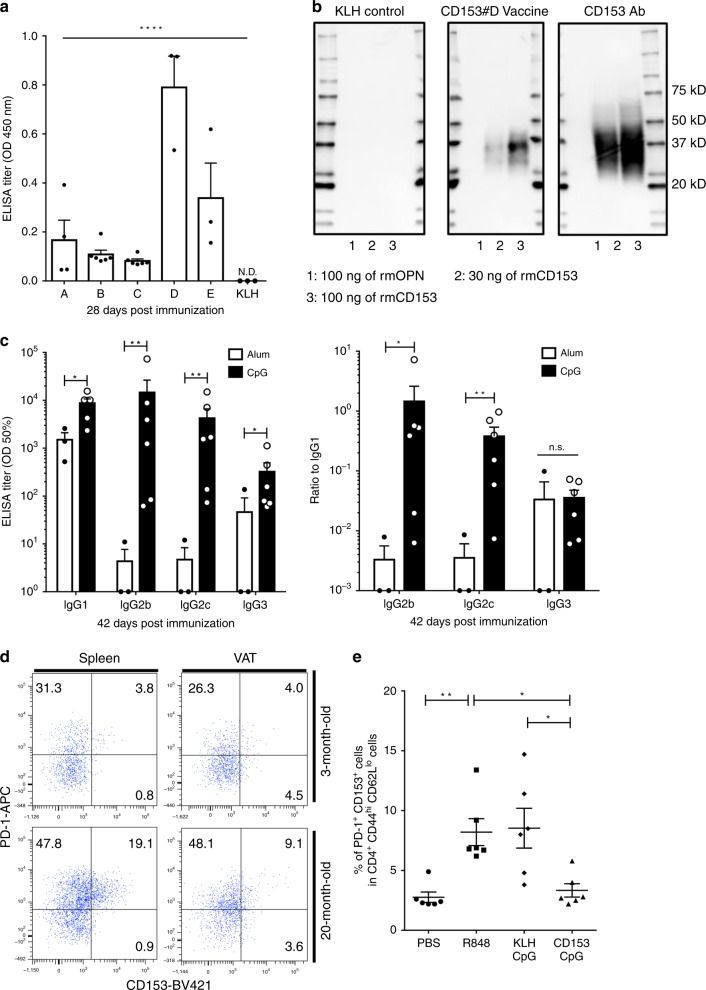
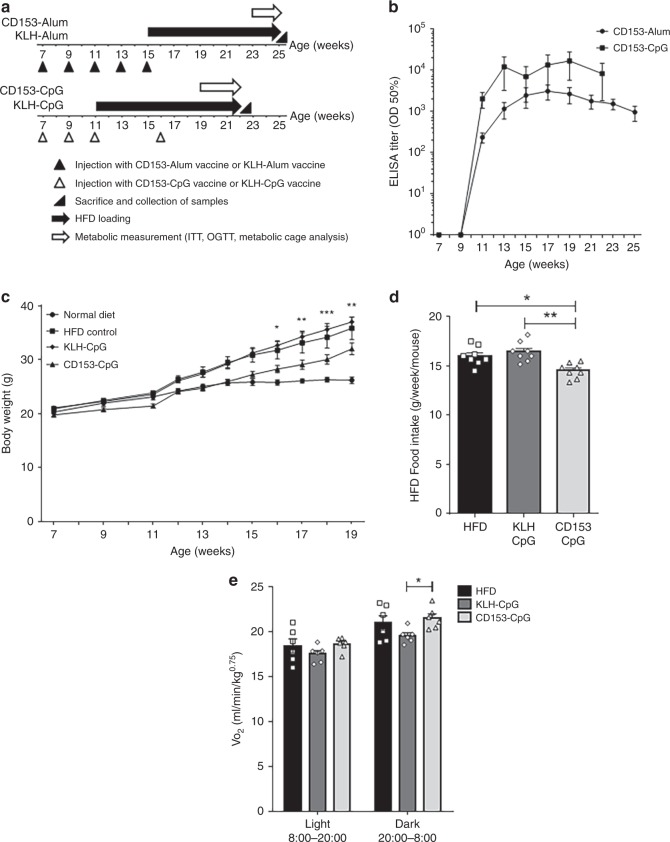
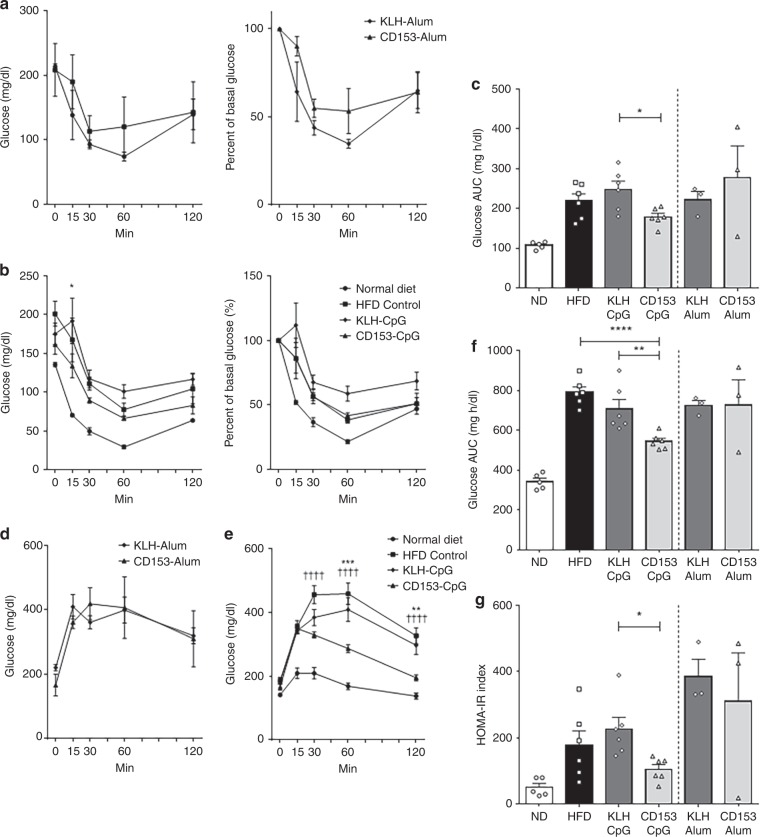
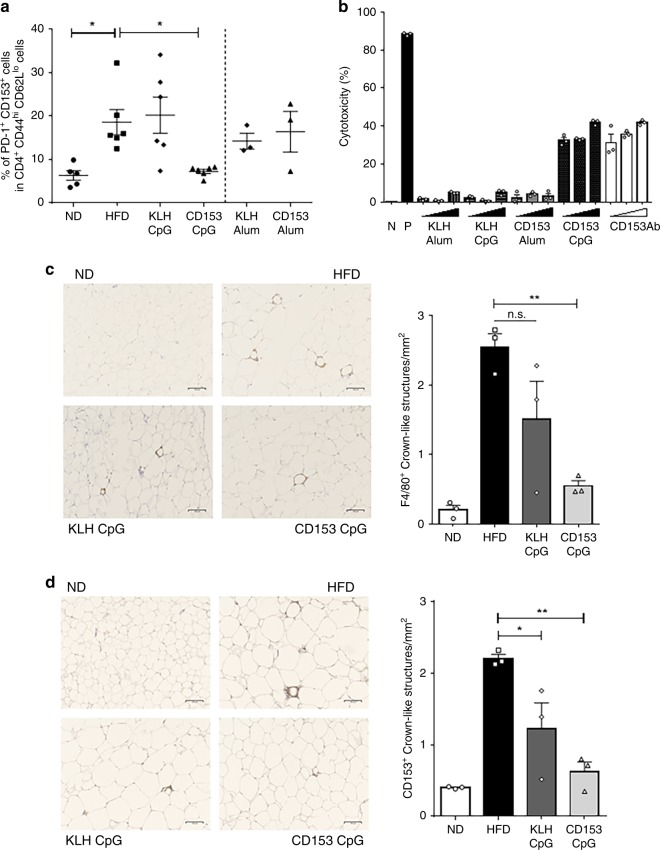
Senotherapy targeting for senescent cells is designed to attenuate age-related dysfunction. Senescent T cells, defined as CD4 + CD44 high CD62L low PD-1 + CD153 + cells, accumulate in visceral adipose tissues (VAT) in obese individuals. Here, we show the long-lasting effect of using CD153 vaccination to remove senescent T cells from high-fat diet (HFD)-induced obese C57BL/6J mice. We administered a CD153 peptide-KLH (keyhole limpet hemocyanin) conjugate vaccine with Alhydrogel (CD153-Alum) or CpG oligodeoxynucleotide (ODN) 1585 (CD153-CpG) and confirmed an increase in anti-CD153 antibody levels that was sustained for several months. After being fed a HFD for 10–11 weeks, adipose senescent T cell accumulation was significantly reduced in the VAT of CD153-CpG-vaccinated mice, accompanied by glucose tolerance and insulin resistance. A complement-dependent cytotoxicity (CDC) assay indicated that the mouse IgG2 antibody produced in the CD153-CpG-vaccinated mice successfully reduced the number of senescent T cells. The CD153-CpG vaccine is an optional tool for senolytic therapy.
Overview
The claims and statistics of this paper haven’t been checked yet.
Free: it reads the open-access text and checks the first 5 claims that cite a source we can check. Create a free account to check every claim.
Integrity signals
Registry
Cites
Statistics
Figures
Verification
Claims the paper makes
The claims and statistics of this paper haven’t been checked yet.
Free: it reads the open-access text and checks the first 5 claims that cite a source we can check. Create a free account to check every claim.
Claims other papers make about this one
Each is checked against this paper’s own text: does it say what the citing paper says it does?
The source backs part of the claim, not all of it — or backs it for a different population, condition or comparison.
In the citing paper
“Each of these approaches eliminates senescent cells, although in some cases, activated macrophages and other non-senescent cell types are also affected96–99.”
From Cellular senescence and senolytics: the path to the clinic (2022) · cites this paper as [97]
Experimental — accuracy not yet measuredThe source backs part of the claim, not all of it — or backs it for a different population, condition or comparison.
In the citing paper
“Certain cell surface proteins tend to be more highly expressed by senescent cells than most other cell types, which prompted development of engineered chimeric antigen receptor (CAR) T cells, vaccines and antibody–drug conjugates targeting these cell surface markers.”
From Cellular senescence and senolytics: the path to the clinic (2022) · cites this paper as [97]
Experimental — accuracy not yet measuredThe cited source says what the claim attributes to it.
In the citing paper
“using a mouse model, the CD153 vaccine demonstrated potential as an optional tool for senolytic therapy [117].”
From The role of cellular senescence and SASP in tumour microenvironment (2023) · cites this paper as [117]
Self-check
Percentages, sums and reported differences re-computed from the paper’s own numbers.
The self-check needs the paper’s full text.
Citations
Cites
The senescence-associated secretory phenotype: the dark side of tumor suppression
Coppé, J.-P., Desprez, P.-Y., Krtolica, A., & Campisi, J. (2010) · Annual Review of Pathology: Mechanisms of Disease · doi:10.1146/annurev-pathol-121808-102144 · Cited by 5,206
Cellular senescence: when bad things happen to good cells
Campisi, J., & d'Adda di Fagagna, F. (2007) · Nature Reviews Molecular Cell Biology · doi:10.1038/nrm2233 · Cited by 4,441
Aging, Cellular Senescence, and Cancer
Campisi, J. (2013) · Annual Review of Physiology · doi:10.1146/annurev-physiol-030212-183653 · Cited by 2,954
Naturally occurring p16Ink4a-positive cells shorten healthy lifespan
Baker, D. J., Childs, B. G., Durik, M., Wijers, M. E., Sieben, C. J., Zhong, J., A. Saltness, R., Jeganathan, K. B., Verzosa, G. C., Pezeshki, A., et al. (2016) · Nature · doi:10.1038/nature16932 · Cited by 2,876
The role of senescent cells in ageing
van Deursen, J. M. (2014) · Nature · doi:10.1038/nature13193 · Cited by 2,623
Cinti, S., Mitchell, G., Barbatelli, G., Murano, I., Ceresi, E., Faloia, E., Wang, S., Fortier, M., Greenberg, A. S., & Obin, M. S. (2005) · Journal of Lipid Research · doi:10.1194/jlr.m500294-jlr200 · Cited by 2,529
Cellular senescence in aging and age-related disease: from mechanisms to therapy
Childs, B. G., Durik, M., Baker, D. J., & van Deursen, J. M. (2015) · Nature Medicine · doi:10.1038/nm.4000 · Cited by 2,363
Body Fat Distribution and Risk of Cardiovascular Disease: An Update
Després, J.-P. (2012) · Circulation · doi:10.1161/circulationaha.111.067264 · Cited by 1,481
Adipocyte Death, Adipose Tissue Remodeling, and Obesity Complications
Strissel, K. J., Stancheva, Z., Miyoshi, H., Perfield, J. W., DeFuria, J., Jick, Z., Greenberg, A. S., & Obin, M. S. (2007) · Diabetes · doi:10.2337/db07-0767 · Cited by 1,007
Bode, C., Zhao, G., Steinhagen, F., Kinjo, T., & Klinman, D. M. (2011) · Expert Review of Vaccines · doi:10.1586/erv.10.174 · Cited by 891
Cited by
Cellular senescence and senolytics: the path to the clinic
Chaib, S., Tchkonia, T., & Kirkland, J. L. (2022) · Nature Medicine · doi:10.1038/s41591-022-01923-y · Cited by 1,134
Mittelbrunn, M., & Kroemer, G. (2021) · Nature Immunology · doi:10.1038/s41590-021-00927-z · Cited by 702
Strategies for targeting senescent cells in human disease
Gasek, N. S., Kuchel, G. A., Kirkland, J. L., & Xu, M. (2021) · Nature Aging · doi:10.1038/s43587-021-00121-8 · Cited by 501
The roles of tertiary lymphoid structures in chronic diseases
Sato, Y., Silina, K., van den Broek, M., Hirahara, K., & Yanagita, M. (2023) · Nature Reviews Nephrology · doi:10.1038/s41581-023-00706-z · Cited by 320
“Studies that investigated the effects of loss of function of SAT cells and ABCs demonstrated their pathogenic potentials in these contexts 13,180,183,184,186 , which is consistent with the findings in aged, injured kidneys that are described above.”
Skeletal Aging and Osteoporosis: Mechanisms and Therapeutics
Chandra, A., & Rajawat, J. (2021) · International Journal of Molecular Sciences · doi:10.3390/ijms22073553 · Cited by 264
The role of T cells in age-related diseases
Carrasco, E., Gómez de las Heras, M. M., Gabandé-Rodríguez, E., Desdín-Micó, G., Aranda, J. F., & Mittelbrunn, M. (2022) · Nature Reviews Immunology · doi:10.1038/s41577-021-00557-4 · Cited by 239
Targeting immune dysfunction in aging
Borgoni, S., Kudryashova, K. S., Burka, K., & de Magalhães, J. P. (2021) · Ageing Research Reviews · doi:10.1016/j.arr.2021.101410 · Cited by 223
NKG2D-CAR T cells eliminate senescent cells in aged mice and nonhuman primates
Yang, D., Sun, B., Li, S., Wei, W., Liu, X., Cui, X., Zhang, X., Liu, N., Yan, L., Deng, Y., et al. (2023) · Science Translational Medicine · doi:10.1126/scitranslmed.add1951 · Cited by 217
“A vaccine targeting CD153 has also been found to deplete senescent T cells from high-fat diet–induced obese mice (17).”
BackgroundRoles of extracellular vesicles in the aging microenvironment and age‐related diseases
Yin, Y., Chen, H., Wang, Y., Zhang, L., & Wang, X. (2021) · Journal of Extracellular Vesicles · doi:10.1002/jev2.12154 · Cited by 196
Senescence as a therapeutic target in cancer and age-related diseases
McHugh, D., Durán, I., & Gil, J. (2025) · Nature Reviews Drug Discovery · doi:10.1038/s41573-024-01074-4 · Cited by 197
“…immunity against SnCs. Vac-cines targeting CD153, which is highly expressed in senescent T cells, improved glucose tolerance and insulin resistance in mice fed a high-fat diet 145 , whereas vaccines targeting GPNMB reduced the SnC burden and improved detrimental age-related phenotypes 142 .”
Cellular senescence and the tumour microenvironment
Takasugi, M., Yoshida, Y., & Ohtani, N. (2022) · Molecular Oncology · doi:10.1002/1878-0261.13268 · Cited by 172
Senescent T cells: a potential biomarker and target for cancer therapy
Zhang, J., He, T., Xue, L., & Guo, H. (2021) · EBioMedicine · doi:10.1016/j.ebiom.2021.103409 · Cited by 171
“Another is to identify specific surface markers on senescent T cells to perform selective depletion [96].”
BackgroundImmunosenescence: signaling pathways, diseases and therapeutic targets
Fu, Y., Wang, B., Alu, A., Hong, W., Hong, L., He, X., Shi, H., Cheng, P., & Yang, X. (2025) · Signal Transduction and Targeted Therapy · doi:10.1038/s41392-025-02371-z · Cited by 187
“401 Additionally, the adoptive transfer of in vitro expanded or genetically engineered CD4 + T cells has emerged as a promising therapeutic approach to rejuvenating immune function in the context of immunosenes-cence.”
The role of cellular senescence and SASP in tumour microenvironment
Takasugi, M., Yoshida, Y., Hara, E., & Ohtani, N. (2023) · The FEBS Journal · doi:10.1111/febs.16381 · Cited by 144
Lelarge, V., Capelle, R., Oger, F., Mathieu, T., & Le Calvé, B. (2024) · npj Aging · doi:10.1038/s41514-024-00138-4 · Cited by 140
“This approach of senescent T-cells elimination has a great potential to restore immune system function and therefore, to protect the aged animal against numerous aging-associated disorders 70 .”
BackgroundNew Dawn for Atherosclerosis: Vascular Endothelial Cell Senescence and Death
Bu, L.-L., Yuan, H., Xie, L., Guo, M.-H., Liao, D., & Zheng, X. (2023) · International Journal of Molecular Sciences · doi:10.3390/ijms242015160 · Cited by 146
Murakami, T., Inagaki, N., & Kondoh, H. (2022) · Frontiers in Endocrinology · doi:10.3389/fendo.2022.869414 · Cited by 153
Particulate Alum via Pickering Emulsion for an Enhanced COVID‐19 Vaccine Adjuvant
Peng, S., Cao, F., Xia, Y., Gao, X., Dai, L., Yan, J., & Ma, G. (2020) · Advanced Materials · doi:10.1002/adma.202004210 · Cited by 128
Senescent Cells: A Therapeutic Target in Cardiovascular Diseases
Suda, M., Paul, K. H., Minamino, T., Miller, J. D., Lerman, A., Ellison-Hughes, G. M., Tchkonia, T., & Kirkland, J. L. (2023) · Cells · doi:10.3390/cells12091296 · Cited by 112
“Recently, CD153+PD-1+CD4+ T cells were identified as senescence-associated T (SAT) cells [82] and a peptide vaccine targeting CD153 was successfully senolytic [83].”
BackgroundReshaping of the tumor microenvironment by cellular senescence: An opportunity for senotherapies
D’Ambrosio, M., & Gil, J. (2023) · Developmental Cell · doi:10.1016/j.devcel.2023.05.010 · Cited by 119
Targeting immunosenescence and inflammaging: advancing longevity research
Nguyen, T. Q. T., & Cho, K. A. (2025) · Experimental & Molecular Medicine · doi:10.1038/s12276-025-01527-9 · Cited by 115
“Additionally, CD153-targeted vaccination reduces senescent T cells, improving metabolic balance in aging and obesity-related disorders 104 .”
T Cell Immunosenescence in Aging, Obesity, and Cardiovascular Disease
Shirakawa, K., & Sano, M. (2021) · Cells · doi:10.3390/cells10092435 · Cited by 98
“, demonstrated that vaccine for CD153-CpG showed a significant decrease in adipose senescent T cell accumulation and concomitant improvement in glucose tolerance and insulin resistance in n HFD-induced obese mice [83].”
BackgroundEmerging insights in senescence: pathways from preclinical models to therapeutic innovations
Mansfield, L., Ramponi, V., Gupta, K., Stevenson, T., Mathew, A. B., Barinda, A. J., Herbstein, F., & Morsli, S. (2024) · npj Aging · doi:10.1038/s41514-024-00181-1 · Cited by 88
Targeting Cell Senescence and Senolytics: Novel Interventions for Age-Related Endocrine Dysfunction
Suda, M., Paul, K. H., Tripathi, U., Minamino, T., Tchkonia, T., & Kirkland, J. L. (2024) · Endocrine Reviews · doi:10.1210/endrev/bnae010 · Cited by 100
The interplay between obesity, immunosenescence, and insulin resistance
Shimi, G., Sohouli, M. H., Ghorbani, A., Shakery, A., & Zand, H. (2024) · Immunity & Ageing · doi:10.1186/s12979-024-00414-7 · Cited by 90
“Based on a study, a vaccine targeting CD153 was shown to reduce senescent T-cells in the visceral fat of obese mice and improve insulin resistance [70].”
BackgroundThe senescence journey in cancer immunoediting
Zingoni, A., Antonangeli, F., Sozzani, S., Santoni, A., Cippitelli, M., & Soriani, A. (2024) · Molecular Cancer · doi:10.1186/s12943-024-01973-5 · Cited by 84
“For example, a vaccine targeting CD153 has been found to deplete senescent T lymphocytes from high-fat diet-induced obese mice [206].”
BackgroundLiu, Y., Lomeli, I., & Kron, S. J. (2024) · Cells · doi:10.3390/cells13151281 · Cited by 77
“Senolytic vaccination with an SnC-specific marker cleared marker-positive cells [356,357].”
BackgroundObesity and immune status in children
Fang, X., Henao-Mejia, J., & Henrickson, S. E. (2020) · Current Opinion in Pediatrics · doi:10.1097/mop.0000000000000953 · Cited by 82
Targeting aging and age-related diseases with vaccines
Wu, R., Sun, F., Zhang, W., Ren, J., & Liu, G.-H. (2024) · Nature Aging · doi:10.1038/s43587-024-00597-0 · Cited by 66
“Recently, proof-of-concept studies have been conducted for vaccines targeting senescent cells with elevated levels of CD153 or glycoprotein non-metastatic melanoma protein B (GPNMB) 28,160 .”
InfluentialCell senescence in cardiometabolic diseases
Grootaert, M. O. J. (2024) · npj Aging · doi:10.1038/s41514-024-00170-4 · Cited by 61
“Yoshida et al. developed a CD153 targeting vaccine shown to prevent the accumulation of CD153 + senescent T cells in visceral adipose tissue in mice on a high-fat diet, which was associated with improved glucose tolerance 166 .”
BackgroundImmune Alterations with Aging: Mechanisms and Intervention Strategies
Yu, W., Yu, Y., Sun, S., Lu, C., Zhai, J., Lei, Y., Bai, F., Wang, R., & Chen, J. (2024) · Nutrients · doi:10.3390/nu16223830 · Cited by 61
“Additionally, CD57 and CD95 have been employed to identify senescent human T cells [45], and CD153 is commonly used to identify a minor population of senescent T cells in mice [46].”
Immune surveillance of senescent cells in aging and disease
Majewska, J., & Krizhanovsky, V. (2025) · Nature Aging · doi:10.1038/s43587-025-00910-5 · Cited by 58
“In a mouse model of diabetes, immunization against CD153 prevented the accumulation of senescent T cells in the adipose tissue of animals fed a high-fat diet, as well as ameliorated glucose intolerance and insulin resistance 94 .”
Immune surveillance of senescence: potential application to age-related diseases
Wang, T., & Nakanishi, M. (2024) · Trends in Cell Biology · doi:10.1016/j.tcb.2024.06.007 · Cited by 54
Omura, T., & Araki, A. (2022) · Geriatrics & Gerontology International · doi:10.1111/ggi.14339 · Cited by 47
Recent Advances in Aging and Immunosenescence: Mechanisms and Therapeutic Strategies
Wang, S., Huo, T., Lu, M., Zhao, Y., Zhang, J., He, W., & Chen, H. (2025) · Cells · doi:10.3390/cells14070499 · Cited by 57
“In 2020, a research paper published in Nature Communications reported for the first time the use of a vaccine as a therapeutic tool to eliminate SCs [32].”
The AI-Assisted Identification and Clinical Efficacy of Baricitinib in the Treatment of COVID-19
Richardson, P. J., Robinson, B. W. S., Smith, D. P., & Stebbing, J. (2022) · Vaccines · doi:10.3390/vaccines10060951 · Cited by 48
“In rodent models, senescent T cells can induce diabetes and obesity, while their clearance moderates the disease [13,14].”
BackgroundEnhancing immunity during ageing by targeting interactions within the tissue environment
Bracken, O. V., Maeyer, R. P. H. D., & Akbar, A. N. (2025) · Nature Reviews Drug Discovery · doi:10.1038/s41573-024-01126-9 · Cited by 46
“Yoshida et al. 208 demonstrated the use of vaccination as a targeted senolytic therapy in a mouse model of obesity.”
Zhu, X., Wang, X., Li, B., Zhang, Y., Chen, Y., Zhang, W., Wang, Y., Zhai, W., Liu, Z., Liu, S., et al. (2022) · Small · doi:10.1002/smll.202107001 · Cited by 41
Self-citationT-cell senescence: A crucial player in autoimmune diseases
Lu, Y., Ruan, Y., Pan, H., Rui, K., Liu, Q., Wang, S., & Cui, D. (2022) · Clinical Immunology · doi:10.1016/j.clim.2022.109202 · Cited by 42
Liang, Y., Kaushal, D., & Wilson, R. B. (2024) · International Journal of Molecular Sciences · doi:10.3390/ijms25147943 · Cited by 45
Targeting the hallmarks of aging: mechanisms and therapeutic opportunities
Sanada, F., Hayashi, S., & Morishita, R. (2025) · Frontiers in Cardiovascular Medicine · doi:10.3389/fcvm.2025.1631578 · Cited by 44
Self-citationTargeting senescent cells for the treatment of age-associated diseases
Suda, M., Tchkonia, T., Kirkland, J. L., & Minamino, T. (2024) · The Journal of Biochemistry · doi:10.1093/jb/mvae091 · Cited by 40
Cellular Senescence in Immunity against Infections
Marrella, V., Facoetti, A., & Cassani, B. (2022) · International Journal of Molecular Sciences · doi:10.3390/ijms231911845 · Cited by 45
“CD153 peptide (vaccination) CD4+ CD44high CD62Llow PD-1+ CD153+ cells in VAT tissue Elimination of infiltrating senescent T cells in adipose tissue in obese mice Improved glucose tolerance and insulin resistance Contraindicated in case of mycobacterial infections [226,227]”
BackgroundPotential Clinical Implications of Senotherapies for Cardiovascular Disease
Suda, M., Katsuumi, G., Tchkonia, T., Kirkland, J. L., & Minamino, T. (2023) · Circulation Journal · doi:10.1253/circj.cj-23-0657 · Cited by 39
Senescent cells as a target for anti-aging interventions: From senolytics to immune therapies
Fu, T., & Zhou, Z. (2025) · Journal of Translational Internal Medicine · doi:10.1515/jtim-2025-0005 · Cited by 44
“[90] Another study revealed GPNMB to be a potent seno-antigen.”
Emerging peptide-based nanovaccines: From design synthesis to defense against cancer and infection
Xu, F., Yuan, Y., Wang, Y., & Yin, Q. (2022) · Biomedicine & Pharmacotherapy · doi:10.1016/j.biopha.2022.114117 · Cited by 40
Drastic transformation of visceral adipose tissue and peripheral CD4 T cells in obesity
Shirakawa, K., & Sano, M. (2023) · Frontiers in Immunology · doi:10.3389/fimmu.2022.1044737 · Cited by 38
“Recently, vaccination targeting CD153 was shown to reduce senescent cells in visceral fat of obese mice fed a HFD for 10 to 11 weeks and to improve VAT inflammation and insulin resistance (132).”
BackgroundAnti-senescence therapies: a new concept to address cardiovascular disease
Stojanović, S. D., Thum, T., & Bauersachs, J. K. (2025) · Cardiovascular Research · doi:10.1093/cvr/cvaf030 · Cited by 34
“167 Vaccination by injecting entire senescent carcinoma cells, triggering a subsequent T-cell response, suppresses tumour growth and metastasis in mice, while effects of the CV system remain unknown.”
Targeting DNA damage in ageing: towards supercharging DNA repair
Bujarrabal-Dueso, A., Garinis, G. A., Robbins, P. D., Vijg, J., & Schumacher, B. (2025) · Nature Reviews Drug Discovery · doi:10.1038/s41573-025-01212-6 · Cited by 38
“Another vaccination approach targeting the protein CD153 to eliminate senescent T cells showed interesting results in obese mice 149 .”
Yoshida, S., Hayashi, H., Kawahara, T., Katsuki, S., Kimura, M., Hino, R., Sun, J., Nakamaru, R., Tenma, A., Toyoura, M., et al. (2024) · Circulation Research · doi:10.1161/circresaha.124.325017 · Cited by 32
Self-citationCounteracting Immunosenescence—Which Therapeutic Strategies Are Promising?
Hieber, C., Grabbe, S., & Bros, M. (2023) · Biomolecules · doi:10.3390/biom13071085 · Cited by 30
Antiaging Vaccines Targeting Senescent Cells
Mendelsohn, A. R., & Larrick, J. W. (2022) · Rejuvenation Research · doi:10.1089/rej.2022.0008 · Cited by 29
“29 More in-depth characterization of rescue of immune system function would be helpful in determining if this approach helps rejuvenate the immune system.”
Reliable Hallmarks and Biomarkers of Senescent Lymphocytes
Сергеевна, М. Ю., Tereshchenko, V., Bogdanova, D. A., & Александрович, Р. С. (2023) · International Journal of Molecular Sciences · doi:10.3390/ijms242115653 · Cited by 32
“[78,79] For example, NOTCH1 and SCAMP4, involved in inflammation, were recently iden-tified on senescent cells [67,69].”
BackgroundCD28null T cells in aging and diseases: From biology to assessment and intervention
Guan, Y., Cao, M., Wu, X., Yan, J., Hao, Y., & Zhang, C. (2024) · International Immunopharmacology · doi:10.1016/j.intimp.2024.111807 · Cited by 28
Targeting vascular senescence in cardiovascular disease with aging
Hall, S. A., & Lesniewski, L. A. (2024) · The Journal of Cardiovascular Aging · doi:10.20517/jca.2023.45 · Cited by 32
“Other newly identified markers of senescence include PD-L [43] , uPAR [44] , GPNMB [45] , and CD153 [46] .”
BackgroundYan, X., Imano, N., Tamaki, K., Sano, M., & Shinmura, K. (2021) · PLoS ONE · doi:10.1371/journal.pone.0252547 · Cited by 27
“have clearly demonstrated that the CD153-CpG vaccine is promising for a senotherapeutic method for preventing the accumulation of SA-T cells in mice [13].”
BackgroundSenescent neutrophils: a hidden role in cancer progression
Rys, R. N., & Calcinotto, A. (2024) · Trends in Cell Biology · doi:10.1016/j.tcb.2024.09.001 · Cited by 28
SMARCA4 regulates the NK-mediated killing of senescent cells
Reen, V., D’Ambrosio, M., Søgaard, P. P., Tyson, K., Leeke, B. J., Clément, I., Dye, I. C., Pombo, J., Kuba, A., Lan, Y., et al. (2025) · Science Advances · doi:10.1126/sciadv.adn2811 · Cited by 33
“Immune-centric approaches include chimeric antigen receptor T cells targeting antigens present in senescent cells ( 18 ), senescence vaccines ( 19 ), or the use of immune checkpoint inhibitors (ICIs) ( 20 , 21 ).”
How age affects human hematopoietic stem and progenitor cells and the strategies to mitigate aging
Li, X., Wang, J., Hu, L., & Cheng, T. (2025) · Experimental Hematology · doi:10.1016/j.exphem.2025.104711 · Cited by 27
Cells in Atherosclerosis: Focus on Cellular Senescence from Basic Science to Clinical Practice
Molnár, A., Pásztor, D. T., Tarcza, Z., & Merkely, B. P. (2023) · International Journal of Molecular Sciences · doi:10.3390/ijms242417129 · Cited by 27
“Yoshida and coworkers found that a vaccine targeting CD153-expressing senescent T cells can prevent the accumulation of senescent T-cells and improve glucose metabolism [129].”
BackgroundKurosawa, M., Shikama, Y., Furukawa, M., Arakaki, R., Ishimaru, N., & Matsushita, K. (2021) · International Journal of Molecular Sciences · doi:10.3390/ijms22052302 · Cited by 24
“recently reported that the elimination of SA-T cells using a CD153 vaccine improved glucose tolerance and insulin sensitivity [44].”
BackgroundA new clinical age of aging research
Zhang, Z., Yang, R., Zi, Z., & Liu, B. (2024) · Trends in Endocrinology and Metabolism · doi:10.1016/j.tem.2024.08.004 · Cited by 28
“A vaccine comprising a CD153 peptide and CpG as an adjuvant led to the successful production of anti-CD153 antibodies in immunized mice [38].”
Virus-Induced Membrane Fusion in Neurodegenerative Disorders
Osorio, C. P., Sfera, A., Anton, J. J., Thomas, K. G., Andronescu, C. V., Li, E., Yahia, R., Avalos, A. G., & Kozlakidis, Z. (2022) · Frontiers in Cellular and Infection Microbiology · doi:10.3389/fcimb.2022.845580 · Cited by 23
“Anovel senolytic vaccine, recently tested inprogeroidmice,may usher a new era in senolytic interventions as it opens the possibility ofpreventing thedevelopmentofneurodegenerativedisorders, viral infections and possibly cancer (Yoshida et al., 2020; Suda et al., 2021).”
BackgroundWang, J., Xin, Y., Dong, Z., Li, S., & Yang, G. (2025) · Experimental Gerontology · doi:10.1016/j.exger.2025.112974 · Cited by 22
Therapeutic vaccine for chronic diseases after the COVID-19 Era
Nakagami, H., Hayashi, H., Shimamura, M., Rakugi, H., & Morishita, R. (2021) · Hypertension Research · doi:10.1038/s41440-021-00677-3 · Cited by 24
Self-citationCellular Senescence in Cardiovascular Diseases: From Pathogenesis to Therapeutic Challenges
Li, D., Li, Y., Ding, H., Wang, Y., Xie, Y., & Zhang, X. (2023) · Journal of Cardiovascular Development and Disease · doi:10.3390/jcdd10100439 · Cited by 22
“Similarly, another senolytic vaccine focused on CD153, identified as a hallmark of obesity-related T cells within adipose tissue, successfully decreased the buildup of senescent T cells [156].”
BackgroundNew Trends in Aging Drug Discovery
Benhamú, B., Martín‐Fontecha, M., Vázquez‐Villa, H., López-Rodríguez, M. L., & Ortega‐Gutiérrez, S. (2022) · Biomedicines · doi:10.3390/biomedicines10082006 · Cited by 22
“In this sense, a CD153 peptide vaccine that uses a specific peptide to induce high production of anti-CD153 antibodies has been recently described [208].”
BackgroundThe ageing immune system as a potential target of senolytics
Du, P. Y., Gandhi, A., Bawa, M., & Gromala, J. (2023) · Oxford Open Immunology · doi:10.1093/oxfimm/iqad004 · Cited by 22
“The role of vaccines in removal of senescent T-cells has been examined in utilizing a CD153 vaccine in mice, which showed a reduction in SnCs [88].”
BackgroundXu, Y., Wang, Z., Li, S., Su, J., Gao, L., Ou, J., Lin, Z., Luo, O. J., Xiao, C., & Chen, G. (2024) · Science China Life Sciences · doi:10.1007/s11427-024-2695-x · Cited by 21
“Conversely, removing senescent T cells from the adipose tissue of obese mice can significantly improve insulin sensitivity (Shirakawa et al., 2016; Yoshida et al., 2020).”
Senescent T Cells in Age-Related Diseases
Yu, P.-J., Zhou, M. L., Liu, Y., & Du, J. (2024) · Aging and Disease · doi:10.14336/ad.2024.0219 · Cited by 22
Unraveling the ROS-Inflammation-Immune Balance: A New Perspective on Aging and Disease
Fang, S., Jiang, M., Jiao, J., Zhao, H., Liu, D., Gao, D., Wang, T., Yang, Z. X., & Yuan, H. (2025) · Aging and Disease · doi:10.14336/ad.2024.1253 · Cited by 33
“In obese adipose tissue, senescent T cell accumulation contributes to inflammation through both local and global effects [171].”
Xia, T., Zhou, Y., An, J., Cui, Z. G., Zhong, X., Cui, T., Lv, B., Zhao, X., & Gao, X. (2024) · Aging Cell · doi:10.1111/acel.14317 · Cited by 17
“CD153 vac - cine reduces the number of senescent T cells in mice through the production of mouse IgG2 antibodies upon administration (van Deursen, 2014; Yoshida et al., 2020 ).”
BackgroundRecent Advances in Senolysis for Age-Related Diseases
Aratani, S., & Nakanishi, M. (2023) · Physiology · doi:10.1152/physiol.00003.2023 · Cited by 19
Seyedsadr, M., Bang, M. F., McCarthy, E. C., Zhang, S., Chen, H.-C., Mohebbi, M., Hugo, W., Whitmire, J. K., Lechner, M. G., & Su, M. A. (2024) · Journal of Clinical Investigation · doi:10.1172/jci178602 · Cited by 15
BpOmpW Antigen Stimulates the Necessary Protective T-Cell Responses Against Melioidosis
Tomás‐Cortázar, J., Bossi, L., Quinn, C., Reynolds, C. J., Butler, D. K., Corcoran, N., Murchú, M. Ó., McMahon, E., Singh, M., Rongkard, P., et al. (2021) · Frontiers in Immunology · doi:10.3389/fimmu.2021.767359 · Cited by 14
“HFD-fed C57BL/6J mouse models have been previously used to study the immune responses impaired by DM in vaccine development (36 – 39).”
MethodHallmarks of the ageing lung: 10 years later
Baker, J. R., Beaulieu, D., Avcı, E., Huang, E. L., Eickelberg, O., Meiners, S., Savai, R., Lehmann, M., & Königshoff, M. (2026) · European Respiratory Journal · doi:10.1183/13993003.01272-2025 · Cited by 14
T cell aging and exhaustion: Mechanisms and clinical implications
Zhang, W., Kong, D., Zhang, X., Hu, L., Nian, Y., & Shen, Z. (2025) · Clinical Immunology · doi:10.1016/j.clim.2025.110486 · Cited by 14
The enchanting canvas of CAR technology: Unveiling its wonders in non-neoplastic diseases
Shu, J., Xie, W., Chen, Z., Offringa, R., Hu, Y., & Mei, H. (2024) · Med · doi:10.1016/j.medj.2024.03.016 · Cited by 16
Future Directions of Therapeutic Vaccines for Chronic Diseases
Nakamaru, R., Nakagami, H., Rakugi, H., & Morishita, R. (2020) · Circulation Journal · doi:10.1253/circj.cj-20-0703 · Cited by 13
Self-citationÇobanoglu, Ö., Delval, L., Ferrari, D. P., Deruyter, L., Heumel, S., Wolowczuk, I., Hussein, A., Menevse, A. N., Bernard, D., Beckhove, P., et al. (2023) · Aging Cell · doi:10.1111/acel.14007 · Cited by 12
“To substantiate ABT-263's impact in vivo, we analyzed the drug's effect on senescent CD4 + T cells (defined as CD44 high CD62L low PD1 + CD153 + in the mouse system (Yoshida et al., 2020 ).”
BackgroundCao, Y., Du, X., Yu, J., Wang, Y., Jin, X. M., Gu, B., & Yin, Q. (2024) · Biomedicine & Pharmacotherapy · doi:10.1016/j.biopha.2024.117433 · Cited by 14
Shi, H., Xiao, M., Li, Y., Liu, X., Na, J., Liang, C., Hua, J., Meng, Q., Wei, M., Wang, W., et al. (2025) · Theranostics · doi:10.7150/thno.112633 · Cited by 15
“CD153, differentially expressed in senescent T cells, could be applied as a vaccine to selectively clear senescent T cells in mice [333].”
Bacca, L. F. G., Brandariz, J., Zacchi, F., Zivi, A., Mateo, J., & Labbé, D. P. (2025) · Gene · doi:10.1016/j.gene.2025.149774 · Cited by 16
Insights into the therapeutic strategies for aging and aging-associated diseases
Dong, R., Wu, Q., Kan, J., Fu, C., Sorrentino, V., Chow, A., Lei, Y., Wu, D., Xu, Z., Du, J., et al. (2026) · Signal Transduction and Targeted Therapy · doi:10.1038/s41392-026-02662-z · Cited by 17
Sugiyama, Y., Harada, T., Kamei, Y., Yasuda, T., Mashimo, T., Nishikimi, A., & Maruyama, M. (2023) · Experimental Gerontology · doi:10.1016/j.exger.2023.112130 · Cited by 12
“Recent studies revealed rapid increases in senolytic approaches that target surface antigens on senescent cells, including chimeric antigen receptor T cells and vaccinations (Amor et al., 2020; Yoshida et al., 2020; Suda et al., 2021; Rossi and Abdelmohsen, 2021).”
BackgroundAbove and beyond senescence and CAR T cell: advances and future perspectives
Rosas-Campos, R., Arceo-Orozco, S., Sandoval-Rodriguez, A. S., Madrigal, J. A., & Armendáriz‐Borunda, J. (2025) · Frontiers in Immunology · doi:10.3389/fimmu.2025.1701655 · Cited by 11
“In mice fed a high-fat diet to induce obesity, the authors observed a decrease in adipose-senescent T cells and an improvement in obesity-related features (71).”
Chen, Y., Yim, W. Y., Li, C., Wang, Z., Hou, J., Peng, Y., Liu, F., Liu, Z., Dong, N., & Wang, Y. (2026) · Molecular Therapy · doi:10.1016/j.ymthe.2026.02.015 · Cited by 12
“25,26 In fact, in studies on humans, there are also cases of using terminal TEM cells to mark senescent T cells.”
Senolytic CAR T cells reverse aging-associated defects in intestinal regeneration and fitnessPreprint
Eskiocak, O., Chowdhury, S., Shah, V., Nnuji-John, E., Chung, C., Boyer, J. A., Harris, A. S., Habel, J., Sadelain, M., Beyaz, S., et al. (2024) · bioRxiv (Cold Spring Harbor Laboratory) · doi:10.1101/2024.03.19.585779 · Cited by 11
Immune therapeutic strategies for the senescent tumor microenvironment
Yasuda, T., & Wang, Y. (2024) · British Journal of Cancer · doi:10.1038/s41416-024-02865-7 · Cited by 10
“A vaccine targeting CD153 has also been found to deplete senescent T cells, de fi ned as CD4 + /CD44 high/CD62 low/ PD-1 + /CD153 + cells, from high-fat diet – induced obese mice [100].”
Liu, W., Fan, B., Fang, T., Li, H., Zhang, J., Liu, B., & Liu, Z. (2025) · Acta Pharmaceutica Sinica B · doi:10.1016/j.apsb.2025.08.010 · Cited by 10
“Vaccination with CD153 vaccine can also reduce the number of aging T cells and prevent the accumulation of fat aging T cells 252 .”
Wakita, M., Ito, K., Fujii, K., Sakamoto, D., Mikawa, T., Sugawara, S., Zhou, X., Park, J. H., Miyagawa, H., Motooka, D., et al. (2026) · Nature Aging · doi:10.1038/s43587-025-01057-z · Cited by 9
“Approaches using antibodies 59–62 or chimeric antigen receptor T cells 63 also underscore the potential of senolysis, although compound-based strategies may be advantageous for reversible modulation.”
Cellular senescence as a therapeutic target for aging intervention
Bi, Y., & Ji, G. (2026) · Biomedical Journal · doi:10.1016/j.bj.2026.100948 · Cited by 11
“Practical options include conditionally activated prodrugs to limit systemic toxicity, ADC or ligand-guided payloads to exploit surface antigens, and modalities such as PROTACs, vaccines, or engineered cell therapies when durable or localized action is required [149,180].”
Rejuvenation Strategy for Inducing and Enhancing Autoimmune Response to Eliminate Senescent Cells
Wang, X., Zhang, C., Su, J., Ren, S., Wang, X., Zhang, Y., Yuan, Z., He, X., Wu, X., Li, M., et al. (2025) · Aging and disease · doi:10.14336/ad.2024.0579 · Cited by 8
CD38 ‐Targeting Peptide Vaccine Ameliorates Aging‐Associated Phenotypes in Mice
Yu, S., Zhi-qiang, L., Tang, Y., Chen, Y., Ma, Y., Du, K., Zong, Z., Feng, K., Wei, Y., Chen, L., et al. (2025) · Aging Cell · doi:10.1111/acel.70147 · Cited by 8
“…the inherent benefits of requiring few doses and eliciting longer efficacy through autologous immune responses, has demonstrated protective effects against HFD-induced aging and age-related metabolic diseases (Yoshida et al. 2020, 2019; Pang et al. 2014; Fukami et al. 2021, 2023; Suda et al. 2021).”
Regenerative therapeutics for chronic obstructive pulmonary disease
van der Koog, L., Showell, H., Nugraha, D. F., Lehmann, M., Conlon, T. M., Yildirim, A. Ö., Fuentes‐Mateos, R., Baarsma, H. A., Ng-Blichfeldt, J.-P., Melgert, B. N., et al. (2026) · Pharmacological Reviews · doi:10.1016/j.pharmr.2026.100124 · Cited by 8
Aging and immunity: the age-old tango
Fernández-Maestre, I., Harris, A. S., & Amor, C. (2025) · Genes & Development · doi:10.1101/gad.352644.125 · Cited by 8
“CD153 expression has more recently been associated with T-cell senescence, particularly in CD4 + T cells, which exhibit impaired TCR stimulation, increased SASP production, and reduced proliferation (Tahir et al. 2015; Yoshida et al. 2020).”
Senolytic vaccination: a new mandate for cardiovascular health?
Lear, T. B., & Finkel, T. (2022) · The Journal of Cardiovascular Aging · doi:10.20517/jca.2022.03 · Cited by 8
“Although a form of this approach has been described previously[11], identification of a truly senescence-specific antigen has remained a significant obstacle.”
BackgroundImmunotherapies for Aging and Age-Related Diseases: Advances, Pitfalls, and Prospects
Yang, M., Wu, S., Zhang, J., Lu, L., Deng, D., Xia, Q., Lovell, J. F., Shi, X., & Jin, H. (2025) · Research · doi:10.34133/research.0866 · Cited by 12
“To inhibit the signaling, Yoshida et al. [ 14 ] developed a CD153 vaccine composed of CD153 peptide–keyhole limpet hemocyanin (KLH) and the adjuvants [aluminum or CpG-oligodeoxynucleotide (ODN)].”
Cellular senescence in precancer lesions and early-stage cancers
Hoi, X. P., Stangis, M. M., Glass, S. E., Kim, J., Kang, S. W., Brennen, W. N., Li, Z., Grady, W. M., Yegnasubramanian, S., Kühn, P., et al. (2025) · Cancer Cell · doi:10.1016/j.ccell.2025.10.006 · Cited by 8
Topical administration of a BCL-2 inhibitor alleviates cutaneous lupus erythematosus
Jiang, J., Zhu, H., Yang, M., Yang, B., Wu, H., & Lu, Q. (2024) · International Immunopharmacology · doi:10.1016/j.intimp.2024.113132 · Cited by 8
Metadata
- Authors
- Yoshida, S., Nakagami, H., Hayashi, H., Ikeda, Y., Sun, J., Tenma, A., Tomioka, H., Kawano, T., Shimamura, M., Morishita, R., & Rakugi, H.
- Affiliations
- The University of Osaka (JP)
- ORCID
- Venue
- Nature Communications
- Published
- 2020-05-18
- Volume
- 11
- Issue
- 1
- Pages
- 2482-2482
- ISSN
- 2041-1723 (ISSN-L)
- PMC
- PMC7235045
- OpenAlex
- W3025956887
- Cited by
- 161
- References
- 30
- Citations by year
- 2026: 28 · 2025: 35 · 2024: 40 · 2023: 18 · 2022: 21 · 2021: 16 · 2020: 3
- FWCI
- 8.72
- Type
- journal article
- Language
- en
- Open access
- gold
- doi.org
- Licence
- cc-by
- creativecommons.org/licenses/by/4.0 (tdm)
- creativecommons.org/licenses/by/4.0 (vor)
- Locations
- Nature Communications (publishedVersion, cc-by)
- PubMed Central (publishedVersion, cc-by)
- PubMed (publishedVersion)
- RePEc: Research Papers in Economics (submittedVersion)
- DOAJ (DOAJ: Directory of Open Access Journals) (submittedVersion, cc-by-sa)
- Funders
- MEXT | Japan Society for the Promotion of Science (JP15K15310)
- Topics
- Life Sciences › Biochemistry, Genetics and Molecular Biology › Cell Biology › Telomeres, Telomerase, and Senescence
- Life Sciences › Immunology and Microbiology › Immunology › T-cell and B-cell Immunology
- Health Sciences › Medicine › Endocrinology, Diabetes and Metabolism › Adipokines, Inflammation, and Metabolic Diseases
- Keywords
- senolytic therapy, senescent T cells, T cell senescence, visceral adipose tissue, obesity, high-fat diet, CpG oligodeoxynucleotides, Alhydrogel, glucose tolerance, insulin resistance, complement-dependent cytotoxicity
- MeSH terms
- Adipose Tissue, Animals, Blood Glucose, Female, Glucose Tolerance Test, Immunization, Insulin Resistance, Male, Mice, Inbred C57BL, Oligodeoxyribonucleotides, Time Factors, Vaccines, Cellular Senescence, CD30 Ligand, Diet, High-Fat
About these checks
Registry, retraction, Cites and statistics results are computed, not judged, with one exception: a printed reference that no index lists is read once by a model before it counts as a citation error. Claims are extracted by a model and kept only when their quote appears verbatim in the text; each cited source is then checked, with a model’s help, for whether it says what the claim relies on. Those verdicts can be wrong — read the claim’s quote and the cited source before relying on one.
Statistics and arithmetic are recomputed, not judged.
Confidence bands are shown only for fields calibrated on our annotated test set. None is calibrated yet, so no band is shown.
What counts as a claim ›How we measure confidence ›How we check this ›
Are you an author, or do you see a problem with this page? Request a review
Data sources
Bibliographic data: Semantic Scholar, OpenAlex, Crossref.
Contains information from the Semantic Scholar Academic Graph Datasets, made available under the ODC Attribution License (ODC-BY 1.0).
Semantic Scholar’s data is described in: Kinney, R., et al. (2023). The Semantic Scholar Open Data Platform. arXiv:2301.10140.
