

Causality matters in medical imaging
Open accessThe DOI matches its Crossref record; 54 of the 54 references it cites were found in a registry or an index.
Abstract
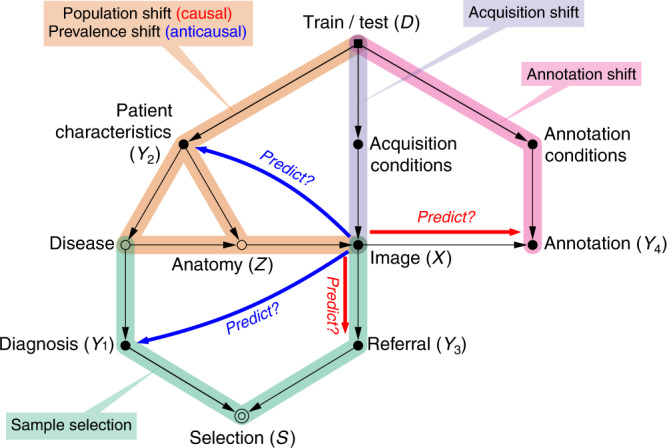
Causal reasoning can shed new light on the major challenges in machine learning for medical imaging: scarcity of high-quality annotated data and mismatch between the development dataset and the target environment. A causal perspective on these issues allows decisions about data collection, annotation, preprocessing, and learning strategies to be made and scrutinized more transparently, while providing a detailed categorisation of potential biases and mitigation techniques. Along with worked clinical examples, we highlight the importance of establishing the causal relationship between images and their annotations, and offer step-by-step recommendations for future studies.
Overview
The claims and statistics of this paper haven’t been checked yet.
Free: it reads the open-access text and checks the first 5 claims that cite a source we can check. Create a free account to check every claim.
Integrity signals
Registry
Cites
Statistics
Figures
Verification
Claims the paper makes
The claims and statistics of this paper haven’t been checked yet.
Free: it reads the open-access text and checks the first 5 claims that cite a source we can check. Create a free account to check every claim.
Claims other papers make about this one
Each is checked against this paper’s own text: does it say what the citing paper says it does?
The cited source says what the claim attributes to it.
In the citing paper
“In radiology, for example, imaging hardware manufacturer, model, software versions and acquisition parameters all meaningfully alter the characteristics of diagnostic images40.”
From Bias recognition and mitigation strategies in artificial intelligence healthcare applications (2025) · cites this paper as [40]
The cited source says what the claim attributes to it.
In the citing paper
“Nevertheless, causality has recently enjoyed increasing attention again, with discussion about causality in deep learning68 and medical imaging69,70.”
From Orchestrating explainable artificial intelligence for multimodal and longitudinal data in medical imaging (2024) · cites this paper as [70]
The check wasn’t confident either way, so it gives no verdict — never disputed.
In the citing paper
“In the hip fracture detection audit, 20 the risk of false positives in cases of femoral deformities was found to require further monitoring, with a potential modification of the intended use (to exclude cases with deformities) as an appropriate mitigation action, if they were confirmed to cause a failure mode.”
From The medical algorithmic audit (2022) · cites this paper as [20]
Experimental — accuracy not yet measuredThe check wasn’t confident either way, so it gives no verdict — never disputed.
In the citing paper
“In the hip fracture detection audit, 20 the discovery of algorithmic errors in cases with abnormal bones prompted an additional labelling exercise of all hips with abnormal bones and joints to find that the error rate in those cases was 50%, compared with 2•5% in the overall dataset (figure 2).”
From The medical algorithmic audit (2022) · cites this paper as [20]
Experimental — accuracy not yet measured
Self-check
Percentages, sums and reported differences re-computed from the paper’s own numbers.
The self-check needs the paper’s full text.
Citations
Cites
Dermatologist-level classification of skin cancer with deep neural networks
Esteva, A., Kuprel, B., Novoa, R. A., Ko, J., Swetter, S. M., Blau, H. M., & Thrun, S. (2017) · Nature · doi:10.1038/nature21056 · Cited by 14,362
Causality: Models, Reasoning, and Inference
Pearl, J. (2009) · doi:10.1017/cbo9780511803161 · Cited by 11,653
RUBIN, D. B. (1976) · Biometrika · doi:10.1093/biomet/63.3.581 · Cited by 9,925
Domain-Adversarial Training of Neural Networks
Ganin, Y., Ustinova, E., Ajakan, H., Germain, P., Larochelle, H., Laviolette, F., Marchand, M., & Lempitsky, V. (2017) · Advances in Computer Vision and Pattern Recognition · doi:10.1007/978-3-319-58347-1_10 · Cited by 8,318 · cited 1×
“In addition, the increasingly active research area of domain adaptation investigates data harmonization by means of more complex transformations, such as extracting domain-invariant representations 25,26 or translating between imaging modalities 27 (e.g. synthesizing MRI volumes from CT scans 28 ).”
BackgroundThe multimodal brain tumor image segmentation benchmark (BRATS)
Menze, B. H., Jakab, A., Bauer, S., Kalpathy-Cramer, J., Farahani, K., Kirby, J., Burren, Y., Porz, N., Slotboom, J., Wiest, R., et al. (2015) · IEEE Transactions on Medical Imaging · doi:10.1109/tmi.2014.2377694 · Cited by 6,781
Self-citation(2006) · The MIT Press eBooks · doi:10.7551/mitpress/9780262033589.001.0001 · Cited by 4,280
Collins, G. S., Reitsma, J. B., Altman, D. G., & Moons, K. G. M. (2015) · Annals of Internal Medicine · doi:10.7326/m14-0697 · Cited by 3,267
A structural approach to selection bias
Hernán, M. A., Hernández-Díaz, S., & Robins, J. M. (2004) · Epidemiology · doi:10.1097/01.ede.0000135174.63482.43 · Cited by 2,844
Model Cards for Model Reporting
Mitchell, M., Wu, S., Zaldivar, A., Barnes, P., Vasserman, L., Hutchinson, B., Spitzer, E., Raji, I. D., & Gebru, T. (2019) · Proceedings of the Conference on Fairness, Accountability, and Transparency · doi:10.1145/3287560.3287596 · Cited by 2,681 · cited 1×
“Scholars in FAT have proposed checklist-style guidelines for reporting datasets 59 and models 60 , for example, and have been investigating sources of failure for machine-learning models, among which is poor reporting 61 .”
MethodGebru, T., Morgenstern, J., Vecchione, B., Vaughan, J. W., Wallach, H., Daumé, H., & Crawford, K. (2018) · arXiv · doi:10.48550/arxiv.1803.09010 · Cited by 2,474 · cited 1×
“Scholars in FAT have proposed checklist-style guidelines for reporting datasets 59 and models 60 , for example, and have been investigating sources of failure for machine-learning models, among which is poor reporting 61 .”
Method
Research works printed but not linked: 9
- Schölkopf, B. et al. On causal and anticausal learning. In Proc. 29th International Conference on Machine Learning (ICML 2012) 459–466 (2012).
- Oliver, A., Odena, A., Raffel, C. A., Cubuk, E. D. & Goodfellow, I. in Advances in Neural Information Processing Systems Vol. 31 (NeurIPS 2018), 3235–3246 (2018).
- Singh, A., Nowak, R. & Zhu, X. in Advances in Neural Information Processing Systems Vol. 21 (NIPS 2008), 1513–1520 (2008).
- Storkey, A. J. in Dataset Shift in Machine Learning (eds Quiñonero-Candela, J. et al.), Ch. 1, 3–28 (MIT Press, Cambridge, MA, 2009).
- Zhang, K., Schölkopf, B., Muandet, K. & Wang, Z. Domain adaptation under target and conditional shift. In Proc. 30th International Conference on Machine Learning (ICML 2013), Vol. 28, 819–827 (PMLR, 2013).
- Lipton, Z. C., Wang, Y.-X. & Smola, A. J. Detecting and correcting for label shift with black box predictors. In Proc. 35th International Conference on Machine Learning (ICML 2018), Vol. 80, 3122–3130 (PMLR, 2018).
- Mohan, K., Pearl, J. & Tian, J. in Advances in Neural Information Processing Systems Vol. 26 (NIPS 2013), 1277–1285 (2013).
- Subbaswamy, A., Schulam, P. & Saria, S. Preventing failures due to dataset shift: Learning predictive models that transport. In Proc. Twenty-Second International Conference on Artificial Intelligence and Statistics (AISTATS 2019), Vol. 89, 3118–3127 (PMLR, 2019).
- Peters J Janzing D Schölkopf B Elements of Causal Inference: Foundations and Learning Algorithms 2017 Cambridge, MA MIT Press
Cited by
Items 101–200 of 452
Searching for robust associations with a multi-environment knockoff filter
Li, S., Sesia, M., Romano, Y., Candès, E. J., & Sabatti, C. (2021) · Biometrika · doi:10.1093/biomet/asab055 · Cited by 39
Generalization Challenges in Drug-Resistant Tuberculosis Detection from Chest X-rays
Karki, M., Kantipudi, K., Yang, F., Yu, H., Wáng, Y. X. J., Yaniv, Z., & Jaeger, S. (2022) · Diagnostics · doi:10.3390/diagnostics12010188 · Cited by 31
“While CXR imaging is a low cost modality that is in widespread use, the variations in the standards of the acquired images is significant [18,19], bringing into question the utility of any proposed method which is not evaluated on its generalization capability.”
Improving Generalization of CNN-Based Motor-Imagery EEG Decoders via Dynamic Convolutions
Barmpas, K., Panagakis, Y., Bakas, S., Adamos, D. A., Laskaris, N., & Zafeiriou, S. P. (2023) · IEEE Transactions on Neural Systems and Rehabilitation Engineering · doi:10.1109/tnsre.2023.3265304 · Cited by 33
“In machine learning tasks, given the input X and the prediction target Y , we can establish that the task to estimate P ( Y | X ) can be either [43]: • Causal: when X → Y , predict effect from cause • Anti-causal: when Y → X , predict cause from effect Using the above basis, we can define an MI EEG…”
BackgroundSignal domain adaptation network for limited-view optoacoustic tomography
Klimovskaia, A., Lafci, B., Özdemir, F., Davoudi, N., Deán‐Ben, X. L., Pérez‐Cruz, F., & Razansky, D. (2023) · Medical Image Analysis · doi:10.1016/j.media.2023.103012 · Cited by 31
Data-driven causal inference of process-structure relationships in nanocatalysis
Ting, J. Y. C., & Barnard, A. S. (2022) · Current Opinion in Chemical Engineering · doi:10.1016/j.coche.2022.100818 · Cited by 33
Supervised fine-tuned approach for automated detection of diabetic retinopathy
Ohri, K., & Kumar, M. (2023) · Multimedia Tools and Applications · doi:10.1007/s11042-023-16049-7 · Cited by 33
Pavlović, M., Hajj, G. S. A., Kanduri, C., Pensar, J., Wood, M. E., Sollid, L. M., Greiff, V., & Sandve, G. K. (2024) · Nature Machine Intelligence · doi:10.1038/s42256-023-00781-8 · Cited by 33
“Although causality for ML in the high-dimensional setting of medical imaging 8 might have some parallels with molecular datasets, the imaging causal models differ substantially from molecular biomarkers, posing the question of exactly how the different biases discussed earlier manifest in…”
Emerging Synergies in Causality and Deep Generative Models: A Survey
Zhou, G., Xie, S., Hao, G.-Y., Chen, S., Huang, B., Xu, X., Wang, C., Zhu, L., Yao, L., & Zhang, K. (2025) · IEEE Transactions on Artificial Intelligence · doi:10.1109/tai.2025.3646958 · Cited by 38
“Causality, by rigorously modeling the data-generating process, offers a promising perspective for mitigating such issues [183], [184].”
Not All Clinical AI Monitoring Systems Are Created Equal: Review and Recommendations
Feng, J., Xia, F., Singh, K., & Pirracchio, R. (2025) · NEJM AI · doi:10.1056/aira2400657 · Cited by 28
Piccininni, M., Rohmann, J. L., Wechsung, M., Logroscino, G., & Kurth, T. (2022) · American Journal of Epidemiology · doi:10.1093/aje/kwac159 · Cited by 30
Dreizin, D., Staziaki, P. V., Khatri, G. D., Beckmann, N. M., Feng, Z., Liang, Y., DelProposto, Z., Klug, M., Spann, J. S., Sarkar, N., et al. (2023) · Emergency Radiology · doi:10.1007/s10140-023-02120-1 · Cited by 36
“Dedicated round-the-clock ER/trauma staff are rarely available outside of busy level I referral centers, and such tools may stand to have the greatest impact on patient outcomes in locations with fewer resources and human expertise [1].”
BackgroundImage-Level Harmonization of Multi-site Data Using Image-and-Spatial Transformer Networks
Robinson, R., Dou, Q., Castro, D. C., Kamnitsas, K., de Groot, M., Summers, R. M., Rueckert, D., & Glocker, B. (2020) · Lecture notes in computer science · doi:10.1007/978-3-030-59728-3_69 · Cited by 28
Self-citationMahmood, U. A., Shrestha, R., Bates, . D. B., Mannelli, L., Corrias, G., Erdi, Y. E., & Kanan, C. (2021) · Frontiers in Digital Health · doi:10.3389/fdgth.2021.671015 · Cited by 30
“, 2020) and methods that encourage grounding on causal factors instead of spurious correlations (Selvaraju et al., 2019; Qi et al., 2020; Agarwal et al., 2020; Castro et al., 2020).”
Gabler, P., Geiger, B. C., Schuppler, B., & Kern, R. (2023) · Information · doi:10.3390/info14020137 · Cited by 35
“As there are only four possibilities, resulting from the combinations of causal direction (i.e., mode) and the location of the intervention, we propose an exhaustive terminology of shifts for the bivariate ASR setting following Castro et al. [79], visualized in Figure 5.”
Self-distillation for Surgical Action Recognition
Yamlahi, A., Tran, T. N., Godau, P., Schellenberg, M., Michael, D., Smidt, F.-H., Nölke, J.-H., Adler, T. J., Tizabi, M. D., Nwoye, C. I., et al. (2023) · Lecture notes in computer science · doi:10.1007/978-3-031-43996-4_61 · Cited by 24
Causal Effect Estimation: Recent Progress, Challenges, and Opportunities
Chu, Z., & Li, S. (2023) · Springer eBooks · doi:10.1007/978-3-031-35051-1_5 · Cited by 34
A Review of Causality for Learning Algorithms in Medical Image Analysis
Vlontzos, A., Rueckert, D., & Kainz, B. (2022) · The Journal of Machine Learning for Biomedical Imaging · doi:10.59275/j.melba.2022-4gf2 · Cited by 29
OoD-Bench: Benchmarking and Understanding Out-of-Distribution Generalization Datasets and AlgorithmsPreprint
Ye, N., Li, K., Hong, L., Bai, H., Chen, Y.-T., Zhou, F., & Li, Z. (2021) · arXiv (Cornell University) · Cited by 32
Galanty, M., Luitse, D. M. R., Noteboom, S. H., Croon, P. M., Vlaar, A. P. J., Poell, T., Sánchez, C. I., Blanke, T., & Išgum, I. (2024) · Scientific Reports · doi:10.1038/s41598-024-83218-5 · Cited by 29
Automatic Dataset Shift Identification to Support Safe Deployment of Medical Imaging AI
Roschewitz, M., Mehta, R., Jones, C., & Glocker, B. (2025) · Lecture notes in computer science · doi:10.1007/978-3-032-04981-0_7 · Cited by 27
“This is particularly problematic in clinical settings, where dataset shift is a common occurrence and may arise from various factors [4].”
Self-citationShen, H., He, P., Ya, R., Huang, Z., Li, S., Wang, G., Cong, M., Luo, D., Shao, D., Lee, E. Y.-P., et al. (2023) · Quantitative Imaging in Medicine and Surgery · doi:10.21037/qims-22-330 · Cited by 25
Fehr, J., Piccininni, M., Kurth, T., Konigorski, S., & Initiative, T. A. D. N. (2023) · BMC Medical Research Methodology · doi:10.1186/s12874-023-02003-6 · Cited by 25
“Another work suggested that predictors derived from medical images may often predict in the anti-causal direction as they depict the consequences of a disease, which may raise a caveat towards transportability [15].”
BackgroundA Review of Methods for Trustworthy AI in Medical Imaging: The FUTURE-AI Guidelines
Kondylakis, H., Osuala, R. O., Puig-Bosch, X., Lazrak, N., Díaz, O., Kushibar, K., Chouvarda, I., Charalambous, S., Starmans, M. P. A., Colantonio, S., et al. (2025) · IEEE Journal of Biomedical and Health Informatics · doi:10.1109/jbhi.2025.3614546 · Cited by 31
“These sources of data heterogeneity, along with their causal reasons and relationships [123], must be carefully considered during the development, evaluation, and deployment of imaging AI algorithms (see Table V).”
An Interpretable Approach to Automated Severity Scoring in Pelvic Trauma
Zapaishchykova, A., Dreizin, D., Li, Z., Wu, J. Y., Roohi, S. F., & Unberath, M. (2021) · Lecture notes in computer science · doi:10.1007/978-3-030-87199-4_40 · Cited by 26
CaRTS: Causality-Driven Robot Tool Segmentation from Vision and Kinematics Data
Ding, H., Zhang, J., Kazanzides, P., Wu, J. Y., & Unberath, M. (2022) · Lecture notes in computer science · doi:10.1007/978-3-031-16449-1_37 · Cited by 27
Gatidis, S., Kart, T., Fischer, M., Winzeck, S., Glocker, B., Bai, W., Bülow, R., Emmel, C., Friedrich, L., Kauczor, H., et al. (2022) · Investigative Radiology · doi:10.1097/rli.0000000000000941 · Cited by 22
Self-citationStanley, E. A. M., Souza, R., Wilms, M., & Forkert, N. D. (2024) · EBioMedicine · doi:10.1016/j.ebiom.2024.105501 · Cited by 30
“This is also a problem when dataset shift occurs, 28 in which the distribution of data in the test set is different than that of the training set, such that learned feature representations inadequately generalise.”
Common Pitfalls and Recommendations for Grand Challenges in Medical Artificial Intelligence
Reinke, A., Tizabi, M. D., Eisenmann, M., & Maier‐Hein, L. (2021) · European Urology Focus · doi:10.1016/j.euf.2021.05.008 · Cited by 25
Continual Hippocampus Segmentation with Transformers
Ranem, A., González, C., & Mukhopadhyay, A. (2022) · IEEE/CVF Conference on Computer Vision and Pattern Recognition Workshops (CVPRW) · doi:10.1109/cvprw56347.2022.00415 · Cited by 31
“Medical data such as Computer Tomography (CT) scans and Magnetic Resonance Images (MRIs) are particularly susceptible to domain shifts caused by changing acquisition parameters [4].”
BackgroundPark, S., Saw, S. N., Li, X., Paknezhad, M., Coppola, D., Dinish, U. S., Attia, A. B. E., Yew, Y. W., Thng, S. T. G., Lee, H. K., et al. (2021) · Biomedical Optics Express · doi:10.1364/boe.415105 · Cited by 21
Zhu, H., Rohling, R. N., & Salcudean, S. E. (2022) · Lecture notes in computer science · doi:10.1007/978-3-031-12053-4_44 · Cited by 25
Loftus, T. J., Ruppert, M. M., Shickel, B., Ozrazgat‐Baslanti, T., Balch, J. A., Hu, D., Javed, A., Madbak, F., Skarupa, D. J., Guirgis, F. W., et al. (2022) · Journal of the American College of Surgeons · doi:10.1097/xcs.0000000000000471 · Cited by 21
Site-Invariant Meta-Modulation Learning for Multisite Autism Spectrum Disorders Diagnosis
Lee, J., Kang, E., Heo, D.-W., & Suk, H. (2023) · IEEE Transactions on Neural Networks and Learning Systems · doi:10.1109/tnnls.2023.3311195 · Cited by 25
“Second, machine and deep learning models are generally trained under the assumption that the training and test data have identical distributions [12].”
Robustness and Cybersecurity in the EU Artificial Intelligence Act
Nolte, H., Rateike, M., & Finck, M. (2025) · ACM Conference on Fairness, Accountability, and Transparency (FAccT) · doi:10.1145/3715275.3732020 · Cited by 35
“This phenomenon can occur across various models and data types.”
A robust deep learning detector for sleep spindles and K-complexes: towards population norms
Tapia, N. I., Estévez, P. A., & Cortes-Briones, J. (2024) · Scientific Reports · doi:10.1038/s41598-023-50736-7 · Cited by 21
“Since SS detection on EEG recordings is a segmentation task, such shifts are known to require knowledge of the target distribution to correct the detector 49 .”
BackgroundLEGAN: A Light and Effective Generative Adversarial Network for medical image synthesis
Gao, J., Zhao, W., Li, P., Huang, W., & Chen, Z. (2022) · Computers in Biology and Medicine · doi:10.1016/j.compbiomed.2022.105878 · Cited by 21
Toward MR protocol-agnostic, unbiased brain age predicted from clinical-grade MRIs
Valdes-Hernandez, P. A., Nodarse, C. L., Peraza, J. A., Cole, J. H., & Cruz‐Almeida, Y. (2023) · Scientific Reports · doi:10.1038/s41598-023-47021-y · Cited by 20
RadEdit: Stress-Testing Biomedical Vision Models via Diffusion Image Editing
Pérez‐García, F., Bond-Taylor, S., Sanchez, P. P., van Breugel, B., Castro, D. C., Sharma, H., Salvatelli, V., Wetscherek, M. T., Richardson, H., Lungren, M. P., et al. (2024) · Lecture notes in computer science · doi:10.1007/978-3-031-73254-6_21 · Cited by 51
“Specifically, such data mismatch may arise from genuine differences in upstream data acquisition as well as from the se-* lection criteria for dataset creation, which materialise as various forms of dataset shifts (population, acquisition, annotation, prevalence, manifestation) [9].”
BackgroundMethodInfluentialSelf-citationApplication of Artificial Intelligence in Otology: Past, Present, and Future
Koyama, H., Kashio, A., & Yamasoba, T. (2024) · Journal of Clinical Medicine · doi:10.3390/jcm13247577 · Cited by 22
How Reliable Are Out-of-Distribution Generalization Methods for Medical Image Segmentation?
Sanner, A., González, C., & Mukhopadhyay, A. (2021) · Lecture notes in computer science · doi:10.1007/978-3-030-92659-5_39 · Cited by 23
Explainable AI for computational pathology identifies model limitations and tissue biomarkersPreprint
Kaczmarzyk, J., Kim, C., Gadgil, S. U., Savant, D., Zhao, Z., Saltz, J. H., Lee, S., & Koo, P. K. (2024) · Cold Spring Harbor Laboratory Institutional Repository (Cold Spring Harbor Laboratory) · doi:10.48550/arxiv.2409.03080 · Cited by 40
“However, the widespread adoption of ABMIL models in clinical settings is hindered by challenges in model interpretability and trustworthiness 9,10,38,39 .”
Zalevskyi, V., Sanchez, T., Kaandorp, M., Roulet, M., Fajardo-Rojas, D., Li, L., Hutter, J. M., Li, H., Barkovich, M. J., Ji, H., et al. (2026) · Medical Image Analysis · doi:10.1016/j.media.2026.103941 · Cited by 22
Yin, H., Parmar, P., Xu, D., Zhang, Y., Zheng, T., & Fu, W. (2026) · International Journal of Computer Vision · doi:10.1007/s11263-025-02672-4 · Cited by 21
Machine Learning in Lung Cancer Radiomics
Li, J., Li, Z., Wei, L., & Zhang, X. (2023) · Machine Intelligence Research · doi:10.1007/s11633-022-1364-x · Cited by 21
Analysing Race and Sex Bias in Brain Age Prediction
Piçarra, C., & Glocker, B. (2023) · Lecture notes in computer science · doi:10.1007/978-3-031-45249-9_19 · Cited by 25
Self-citationVbir-Based Assessment of Radiographic-Divergence Agent Attention in Prostate Melanoma PatientsPreprint
Rangaiah, P. K. B., Kumar, P., & Augustine, R. (2024) · SSRN Electronic Journal · doi:10.2139/ssrn.4752359 · Cited by 20
Küstner, T., Qin, C., Sun, C., Ning, L., & Scannell, C. M. (2024) · Magnetic Resonance Materials in Physics Biology and Medicine · doi:10.1007/s10334-024-01179-2 · Cited by 20
“However, questions about the reliability of AI are still present for post-processing applications in the presence of biases and domain shifts [23].”
BackgroundRaeisi, Z., Rokhva, S., Rahmani, F., Goodarzi, A., & Najaf-Zadeh, H. (2025) · Oral and Maxillofacial Surgery · doi:10.1007/s10006-025-01463-y · Cited by 18
Radiomics in clinical radiology: advances, challenges, and future directions
Linton‐Reid, K., Chen, M., Martell, M. B., Posma, J. M., & Aboagye, E. O. (2025) · Clinical Radiology · doi:10.1016/j.crad.2025.107165 · Cited by 21
Deploying deep learning models on unseen medical imaging using adversarial domain adaptation
Valliani, A. A.-A., Gulamali, F. F., Kwon, Y. J., Martini, M. L., Wang, C., Kondziolka, D. S., Chen, V. J., Wang, W., Costa, A. B., & Oermann, E. K. (2022) · PLoS ONE · doi:10.1371/journal.pone.0273262 · Cited by 16
A Hybrid Skin Lesions Segmentation Approach Based on Image Processing Methods
Moussaoui, H., Akkad, N. E., & Benslimane, M. (2023) · Statistics Optimization & Information Computing · doi:10.19139/soic-2310-5070-1549 · Cited by 18
“Medical imaging [7] is very different than many other areas of image processing.”
BackgroundCross-Modal Tumor Segmentation Using Generative Blending Augmentation and Self-Training
Sallé, G., Andrade-Miranda, G. X., Conze, P.-H., Boussion, N., Bert, J., Visvikis, D., & Jaouen, V. (2024) · IEEE Transactions on Biomedical Engineering · doi:10.1109/tbme.2024.3384014 · Cited by 18
“are drawn from the same data distribution [1].”
BackgroundA causal perspective on brainwave modeling for brain–computer interfaces
Barmpas, K., Panagakis, Y., Zoumpourlis, G., Adamos, D. A., Laskaris, N., & Zafeiriou, S. P. (2024) · Journal of Neural Engineering · doi:10.1088/1741-2552/ad3eb5 · Cited by 17
“Causal reasoning is the analysis of a task/problem in terms of cause-effect relationships between the different variables of interest [25]: if a variable A is a direct cause of variable B, we express it as A → B (causal diagram: A causes B or B is the effect of A).”
BackgroundMethodInfluentialGross, M., Spektor, M., Jaffe, A., Kucukkaya, A. S., Iseke, S., Haider, S. P., Strazzabosco, M., Chapiro, J., & Onofrey, J. A. (2021) · PLoS ONE · doi:10.1371/journal.pone.0260630 · Cited by 16
“This is a problem of distributional shift, or dataset shift, where a mismatch between distributions of training data and testing data exists [44].”
BackgroundAre demographically invariant models and representations in medical imaging fair?Preprint
Petersen, E., Ferrante, E., Ganz, M., & Feragen, A. (2023) · arXiv (Cornell University) · doi:10.48550/arxiv.2305.01397 · Cited by 18
“Moreover, all representation invariance approaches suffer from their neglect of differences in intra-class variations between groups due to, for example, different disease subtypes or manifestations [8, 23, 26, 31].”
BackgroundOut-of-Distribution Generalization Analysis via Influence FunctionPreprint
Ye, H., Xie, C., Liu, Y., & Li, Z. (2021) · arXiv (Cornell University) · doi:10.48550/arxiv.2101.08521 · Cited by 18
“The mismatch between the development dataset and the target domain is one major challenge in machine learning (Castro et al. (2020); Kuang et al. (2020 (2019) proposes Invariant Risk Minimization (IRM) to extract causal (invariant) features and learn invariant optimal predictor on the top of the…”
BackgroundLu, J., Tong, X., Wu, H., Liu, Y., Ouyang, H., & Zeng, Q. (2023) · Heliyon · doi:10.1016/j.heliyon.2023.e20186 · Cited by 15
“Medical doctors diagnose a disease mainly by integrating clinical symptoms, medical images, and laboratory test results [8].”
Deployment of Image Analysis Algorithms Under Prevalence Shifts
Godau, P., Kalinowski, P., Christodoulou, E., Reinke, A., Tizabi, M. D., Ferrer, L., Jäger, P. F., & Maier-Hein, L. (2023) · Lecture notes in computer science · doi:10.1007/978-3-031-43898-1_38 · Cited by 21
Yu, L., Liu, J., Wu, Q., Wang, J., & Qu, A. (2023) · IEEE Journal of Biomedical and Health Informatics · doi:10.1109/jbhi.2023.3332419 · Cited by 17
“It led to major degradation in the reliability of many deep learning algorithms for medical imaging [39], [40].”
BackgroundA Causality-Informed Graph Intervention Model for Pancreatic Cancer Early Diagnosis
Li, X., Guo, R., Zhu, H., Chen, T., & Qian, X. (2024) · IEEE Transactions on Artificial Intelligence · doi:10.1109/tai.2024.3395586 · Cited by 16
“However, data selection biases and variations in data collection and annotation procedures are quite common [40].”
BackgroundData-Driven Healthcare: The Role of Computational Methods in Medical Innovation
Hariharasakthisudhan, P., Rajendran, S., Khalkar, V., Devarajan, G., & Kamaraj, L. (2025) · Computer Modeling in Engineering & Sciences · doi:10.32604/cmes.2024.056605 · Cited by 23
Kayser, M., Soberanis-Mukul, R. D., Zvereva, A.-M., Klare, P., Navab, N., & Albarqouni, S. (2020) · arXiv (Cornell University) · doi:10.48550/arxiv.2002.02883 · Cited by 27
Lin, J., Zhu, C., Kneuertz, P. J., Bai, Y., & Xue, Y. (2026) · 2026 IEEE/CVF Conference on Computer Vision and Pattern Recognition- FINDINGS Track (CVPRF) · doi:10.1109/cvprf71909.2026.00534 · Cited by 23
“Causal reasoning addresses fundamental limitations of correlation-based learning that remains vulnerable to spurious associations and dataset shift [5, 19, 54, 104].”
Chen, H., Dreizin, D., Gómez, C., Zapaishchykova, A., & Unberath, M. (2024) · IEEE Transactions on Medical Imaging · doi:10.1109/tmi.2024.3428836 · Cited by 14
“According to [45], careful interpretation of a diagram (in our case, for a widely used pelvic fracture scheme) gives insights about potential biases that are important to consider when designing experimental studies and drawing conclusions from statistical analysis.”
Navigating prevalence shifts in image analysis algorithm deployment
Godau, P., Kalinowski, P., Christodoulou, E., Reinke, A., Tizabi, M. D., Ferrer, L., Jäger, P. F., & Maier-Hein, L. (2025) · Medical Image Analysis · doi:10.1016/j.media.2025.103504 · Cited by 19
A Review of Generative Adversarial Networks in Cancer Imaging: New Applications, New Solutions.Preprint
Osuala, R. O., Kushibar, K., Garrucho, L., Linardos, A., Szafranowska, Z., Klein, S., Glocker, B., Díaz, O., & Lekadir, K. (2021) · arXiv (Cornell University) · Cited by 15
Self-citationFair Machine Learning in Healthcare: A Survey
Feng, Q., Du, M., Zou, N., & Hu, X. (2025) · IEEE Transactions on Artificial Intelligence · doi:10.1109/tai.2024.3361836 · Cited by 12
“In pathology, there is also a great deal of heterogeneity in tissue preparation, staining protocols, and specific scanner camera parameters, which has been shown to affect model performance in cancer diagnostic tasks [26], [33].”
Nolin-Lapalme, A., Corbin, D., Tastet, O., Avram, R., & Hussin, J. (2024) · Canadian Journal of Cardiology · doi:10.1016/j.cjca.2024.04.026 · Cited by 21
Inferring brain causal and temporal-lag networks for recognizing abnormal patterns of dementia
Xia, Z., Zhou, T., Mamoon, S., & Lu, J. (2024) · Medical Image Analysis · doi:10.1016/j.media.2024.103133 · Cited by 12
“In brief, current modeling algorithms are blind to the distinction between correlation and causality, which may lead to wrong conclusions in terms of model interpretability (Castro et al., 2020; Wu et al., 2023).”
Santinha, J., Matos, C., Figueiredo, M. A. T., & Papanikolaou, N. K. (2021) · Journal of medical imaging · doi:10.1117/1.jmi.8.3.031905 · Cited by 12
Soylu, U., & Oelze, M. L. (2023) · IEEE Transactions on Ultrasonics Ferroelectrics and Frequency Control · doi:10.1109/tuffc.2023.3263119 · Cited by 15
Image-based Treatment Effect HeterogeneityPreprint
Jerzak, C., Johansson, F., & Daoud, A. (2022) · arXiv (Cornell University) · doi:10.48550/arxiv.2206.06417 · Cited by 17
“However, despite the potential offered by images for causal inference, as evident by the growing literature (Castro et al., 2020; Chalupka et al., 2016b,a, 2015; Schölkopf et al., 2021; Yi et al., 2020; Ding et al., 2021; Paciorek, 2010; Kaddour et al., 2021b; Louizos et al., 2017; Pawlowski et al., 2020; Lopez-Paz et…”
BackgroundMethodInfluentialA Causality-Driven Graph Convolutional Network for Postural Abnormality Diagnosis in Parkinsonians
Tang, X., Guo, R., Zhang, C., Zhuang, X., & Qian, X. (2023) · IEEE Transactions on Medical Imaging · doi:10.1109/tmi.2023.3305378 · Cited by 12
“Medical image analysis now recognizes the significance of causal inference [33].”
BackgroundThe Transition From Homogeneous to Heterogeneous Machine Learning in Neuropsychiatric Research
Zhao, Q., Nooner, K. B., Tapert, S. F., Adeli, E., Pohl, K. M., Kuceyeski, A. F., & Sabuncu, M. R. (2024) · Biological Psychiatry Global Open Science · doi:10.1016/j.bpsgos.2024.100397 · Cited by 13
A causal research pipeline and tutorial for psychologists and social scientists.
Vowels, M. J. (2025) · Psychological Methods · doi:10.1037/met0000673 · Cited by 12
“Indeed, causal approaches are being recommended and applied in other fields such as epidemiology [135, 140], biology [137], medicine [18, 161], advertisement [13],and economics [64, 67].”
BackgroundWang, R., Guo, J., Zhang, J., Qi, L., Yu, Q., & Shi, Y. (2025) · Pattern Recognition · doi:10.1016/j.patcog.2025.112082 · Cited by 13
Deep Structural Causal Shape Models
Rasal, R., Castro, D. C., Pawlowski, N., & Glocker, B. (2023) · Lecture notes in computer science · doi:10.1007/978-3-031-25075-0_28 · Cited by 15
Self-citationUnderstanding Silent Failures in Medical Image Classification
Bungert, T. J., Kobelke, L., & Jäger, P. F. (2023) · Lecture Notes in Computer Science · doi:10.1007/978-3-031-43898-1_39 · Cited by 8
The Role of Subgroup Separability in Group-Fair Medical Image Classification
Jones, C., Roschewitz, M., & Glocker, B. (2023) · Lecture notes in computer science · doi:10.1007/978-3-031-43898-1_18 · Cited by 19
Self-citationSarkar, N., Kumagai, M., Meyr, S., Pothapragada, S., Unberath, M., Li, G., Ahmed, S. R., Smith, E. B., Davis, M. A., Khatri, G. D., et al. (2024) · Emergency Radiology · doi:10.1007/s10140-024-02202-8 · Cited by 11
“An interpretable method should ideally provide chunks of symbolic information that approximate the clinical reasoning used by an expert to arrive at a conclusion [23].”
Huynh, B. N., Groendahl, A. R., Tomić, O., Liland, K. H., Knudtsen, I. S., Hoebers, F. J. P., van Elmpt, W., Dale, E., Malinen, E., & Futsæther, C. M. (2024) · Biomedical Physics & Engineering Express · doi:10.1088/2057-1976/ad6dcd · Cited by 12
Rigney, G. H., Lennon, M. J., & Holderrieth, P. (2021) · Seizure · doi:10.1016/j.seizure.2021.06.006 · Cited by 11
Szafranowska, Z., Osuala, R. O., Breier, B., Kushibar, K., Lekadir, K., & Díaz, O. (2022) · International Workshop on Breast Imaging (IWBI) · doi:10.1117/12.2625781 · Cited by 11
“Scarcity of expert-annotated medical images often constrains deep learning based methods to be trained and evaluated on a small dataset coming from a single centre [8].”
BackgroundOn the Composition and Limitations of Publicly Available COVID-19 X-Ray Imaging DatasetsPreprint
Cruz, B. G. S., Sölter, J., Bossa, M. N., & Husch, A. (2020) · arXiv (Cornell University) · doi:10.48550/arxiv.2008.11572 · Cited by 15
“Other sources of bias [15], such as image noise, errors in outcome assignment or population prevalence imbalance could also lead to biased models.”
BackgroundKabil, A. M., Khoriba, G. A., Yousef, M., & Rashed, E. A. (2025) · Computers in Biology and Medicine · doi:10.1016/j.compbiomed.2025.111171 · Cited by 14
Awotunde, J. B., Imoize, A. L., Adeniyi, A. E., Abiodun, M. K., Ayo, F. E., Kavitha, K. V. N., Ajamu, G. J., & Ogundokun, R. O. (2023) · Springer eBooks · doi:10.1007/978-3-031-38036-5_2 · Cited by 13
Contrastive image adaptation for acquisition shift reduction in medical imaging
Hognon, C., Conze, P.-H., Bourbonne, V., Gallinato, O., Colin, T., Jaouen, V., & Visvikis, D. (2023) · Artificial Intelligence in Medicine · doi:10.1016/j.artmed.2023.102747 · Cited by 13
Yilmaz, F., Brickman, A., Najdawi, F., Yakirevich, E., Egger, R., & Resnick, M. B. (2024) · Laboratory Investigation · doi:10.1016/j.labinv.2024.102043 · Cited by 11
Bae, H., Park, S.-Y., & Kim, C.-E. (2024) · Integrative Medicine Research · doi:10.1016/j.imr.2024.101067 · Cited by 14
“33 To mitigate these, it’s crucial to gather comprehensive metadata, including details about the data collection, annotation process, patient demographics and environmental factors.”
BackgroundAddressing Fairness, Bias and Class Imbalance in Machine Learning: the FBI-lossPreprint
Ferrari, E., & Bacciu, D. (2021) · arXiv (Cornell University) · doi:10.48550/arxiv.2105.06345 · Cited by 12
“To date, explainable algorithms (Ribeiro et al., 2016; Ross et al., 2017), causal models and graphs (D. C. Castro et al., 2020) can be used to understand whether the classifier learned a wrong or unexpected pattern.”
BackgroundMACAW: A Causal Generative Model for Medical ImagingPreprint
Vigneshwaran, V., Ohara, E. Y., Wilms, M., & Forkert, N. D. (2024) · arXiv (Cornell University) · doi:10.48550/arxiv.2412.02900 · Cited by 10
Robust Uncertainty-Informed Glaucoma Classification Under Data Shift
Rashidisabet, H., Chan, R. V. P., Leiderman, Y. I., Vajaranant, T. S., & Yi, D. (2025) · Translational Vision Science & Technology · doi:10.1167/tvst.14.6.3 · Cited by 9
“9,11,21 Their performance significantly degrades when the model is trained on a different dataset than the testing dataset due to a shift in distribution, 9,11,21 a challenge commonly known as out-of-distribution (OOD) generalization.”
Han, T., Žigutytė, L., Huck, L. C., Huppertz, M., Siepmann, R. M., Gandelsman, Y., Blüthgen, C., Khader, F., Kuhl, C. K., Nebelung, S., et al. (2024) · Cell Reports Medicine · doi:10.1016/j.xcrm.2024.101713 · Cited by 11
“4 For instance, neural networks trained on radiological data for detecting pneumothorax—a pathological air collection in the pleural space—may inadvertently learn to associate the presence of a chest tube with the disease, rather than identifying pneumo-thorax itself.”
Few-shot learning for inference in medical imaging with subspace feature representations
Liu, J., Fan, K., Cai, X., & Niranjan, M. (2024) · PLoS ONE · doi:10.1371/journal.pone.0309368 · Cited by 9
“However, compared with natural images, the application of deep learning in the medical domain poses more challenges, such as causality [8], uncertainty [9], and the need to integrate clinical information along with features extracted from images [10].”
BackgroundAI-ECG and prediction of new atrial fibrillation: when the heart tells the age
Ribeiro, A. H., & Ribeiro, A. L. P. (2024) · European Heart Journal · doi:10.1093/eurheartj/ehae809 · Cited by 9
Hu, Z., Hu, R., Yau, O., Teng, M. Y., Wang, P., Hu, G., & Singla, R. (2022) · JMIR Medical Informatics · doi:10.2196/34304 · Cited by 11
“Thus, rigorous validation is required with a diverse data set to address the major machine learning challenges of data scarcity, population shifts from different data sets, prevalence shifts, and selection biases [12].”
BackgroundKishikawa, R., Kodera, S., Setoguchi, N., Tanabe, K., Kushida, S., Nanasato, M., Maki, H., Fujita, H., Kato, N., Watanabe, H., et al. (2025) · European Heart Journal - Digital Health · doi:10.1093/ehjdh/ztae097 · Cited by 8
Domain shift, domain adaptation, and generalization
Richiardi, J., Ravano, V., Molchanova, N., Gordaliza, P. M., Kober, T., & Cuadra, M. B. (2025) · Elsevier eBooks · doi:10.1016/b978-0-44-323761-4.00015-8 · Cited by 13
Causal insights from clinical information in radiology: Enhancing future multimodal AI development
Jantscher, M., Gunzer, F., Reishofer, G., & Kern, R. (2025) · Computer Methods and Programs in Biomedicine · doi:10.1016/j.cmpb.2025.108810 · Cited by 12
Causal graph neural networks for healthcare
Mesinovic, M., Buhlan, M., & Zhu, T. (2026) · Nature Biomedical Engineering · doi:10.1038/s41551-026-01742-3 · Cited by 17
“Would this patient have developed complications under alternative treatment?, yet current models learn statistical associations that may reflect institutional practices, equipment characteristics, patient selection, or confounding variables rather than biological reality [5, 6].”
Metadata
- Authors
- Castro, D. C., Walker, I., & Glocker, B.
- Affiliations
- Imperial College London (GB)
- Corresponding author
- Castro, Daniel C.
- Glocker, Ben
- Venue
- Nature Communications
- Published
- 2020-07-22
- Volume
- 11
- Issue
- 1
- Pages
- 3673-3673
- ISSN
- 2041-1723 (ISSN-L)
- PMC
- PMC7376027
- OpenAlex
- W2995750307
- Cited by
- 364
- References
- 49
- Citations by year
- 2026: 70 · 2025: 77 · 2024: 59 · 2023: 72 · 2022: 52 · 2021: 33 · 2020: 1
- FWCI
- 3.02
- Type
- journal article
- Language
- en
- Open access
- gold
- doi.org
- Licence
- cc-by
- creativecommons.org/licenses/by/4.0 (tdm)
- creativecommons.org/licenses/by/4.0 (vor)
- Locations
- Nature Communications (publishedVersion, cc-by)
- PubMed Central (publishedVersion, cc-by)
- PubMed (publishedVersion)
- arXiv (Cornell University) (submittedVersion)
- DOAJ (DOAJ: Directory of Open Access Journals) (submittedVersion, cc-by-sa)
- Spiral (Imperial College London) (submittedVersion, other-oa)
- Spiral (Imperial College London) (submittedVersion, cc-by)
- arXiv (Cornell University)
- Funders
- European Commission (ERC-2017, 757173, HORIZON2020)
- Coordenação de Aperfeiçoamento de Pessoal de Nível Superior
- Natural Environment Research Council (NE/L002515/1)
- Topics
- Health Sciences › Medicine › Health Informatics › Artificial Intelligence in Healthcare and Education
- Physical Sciences › Computer Science › Artificial Intelligence › Explainable Artificial Intelligence (XAI)
- Physical Sciences › Computer Science › Computer Vision and Pattern Recognition › Medical Image Segmentation Techniques
- Keywords
- causal reasoning, diagnostic imaging, annotated data scarcity, domain shift, annotation bias, image annotation, bias mitigation, data collection, image preprocessing, learning strategies
- MeSH terms
- Machine Learning, Diagnostic Imaging, Humans, Image Interpretation, Computer-Assisted, Causality
About these checks
Registry, retraction, Cites and statistics results are computed, not judged, with one exception: a printed reference that no index lists is read once by a model before it counts as a citation error. Claims are extracted by a model and kept only when their quote appears verbatim in the text; each cited source is then checked, with a model’s help, for whether it says what the claim relies on. Those verdicts can be wrong — read the claim’s quote and the cited source before relying on one.
Statistics and arithmetic are recomputed, not judged.
Confidence bands are shown only for fields calibrated on our annotated test set. None is calibrated yet, so no band is shown.
What counts as a claim ›How we measure confidence ›How we check this ›
Are you an author, or do you see a problem with this page? Request a review
Data sources
Bibliographic data: Semantic Scholar, OpenAlex, Crossref.
Contains information from the Semantic Scholar Academic Graph Datasets, made available under the ODC Attribution License (ODC-BY 1.0).
Semantic Scholar’s data is described in: Kinney, R., et al. (2023). The Semantic Scholar Open Data Platform. arXiv:2301.10140.
