

Causality matters in medical imaging
Open accessThe DOI matches its Crossref record; 54 of the 54 references it cites were found in a registry or an index.
Abstract
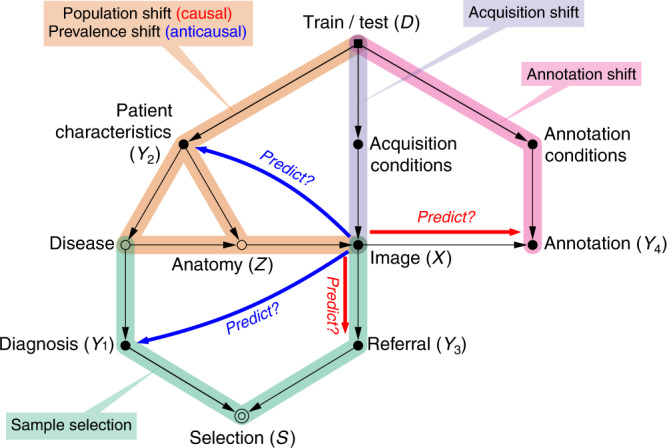
Causal reasoning can shed new light on the major challenges in machine learning for medical imaging: scarcity of high-quality annotated data and mismatch between the development dataset and the target environment. A causal perspective on these issues allows decisions about data collection, annotation, preprocessing, and learning strategies to be made and scrutinized more transparently, while providing a detailed categorisation of potential biases and mitigation techniques. Along with worked clinical examples, we highlight the importance of establishing the causal relationship between images and their annotations, and offer step-by-step recommendations for future studies.
Overview
The claims and statistics of this paper haven’t been checked yet.
Free: it reads the open-access text and checks the first 5 claims that cite a source we can check. Create a free account to check every claim.
Integrity signals
Registry
Cites
Statistics
Figures
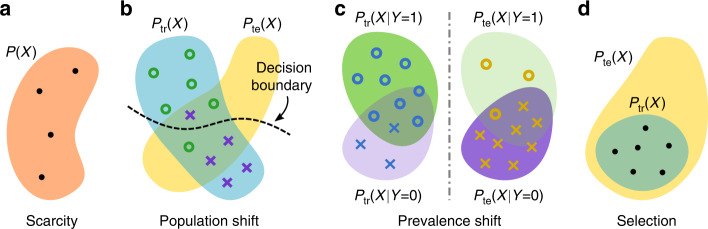
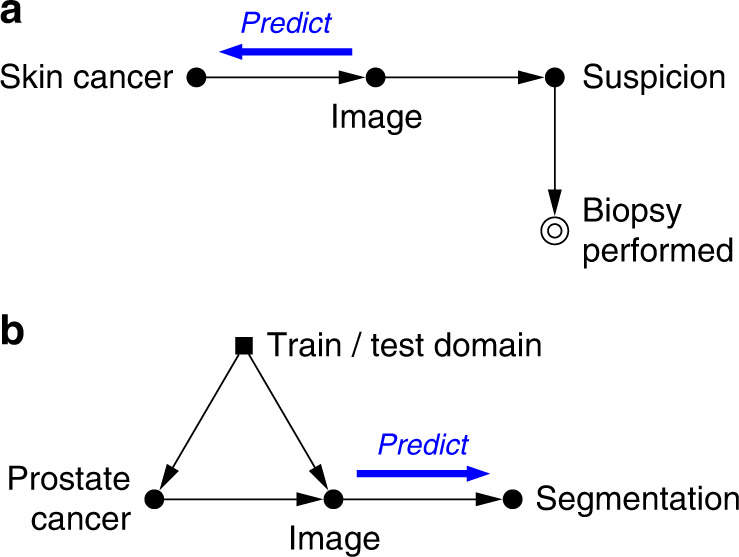
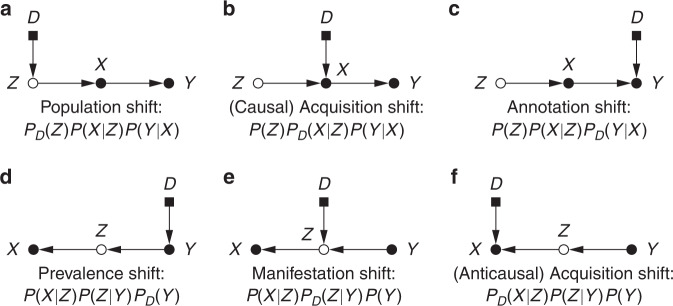
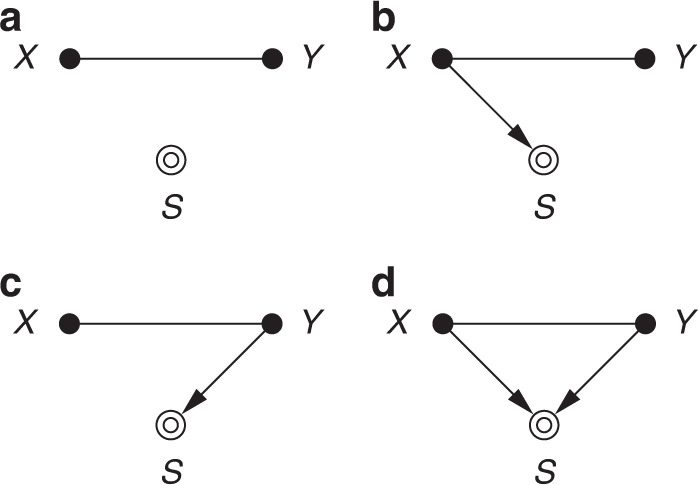
Verification
Claims the paper makes
The claims and statistics of this paper haven’t been checked yet.
Free: it reads the open-access text and checks the first 5 claims that cite a source we can check. Create a free account to check every claim.
Claims other papers make about this one
Each is checked against this paper’s own text: does it say what the citing paper says it does?
The cited source says what the claim attributes to it.
In the citing paper
“In radiology, for example, imaging hardware manufacturer, model, software versions and acquisition parameters all meaningfully alter the characteristics of diagnostic images40.”
From Bias recognition and mitigation strategies in artificial intelligence healthcare applications (2025) · cites this paper as [40]
The cited source says what the claim attributes to it.
In the citing paper
“Nevertheless, causality has recently enjoyed increasing attention again, with discussion about causality in deep learning68 and medical imaging69,70.”
From Orchestrating explainable artificial intelligence for multimodal and longitudinal data in medical imaging (2024) · cites this paper as [70]
The check wasn’t confident either way, so it gives no verdict — never disputed.
In the citing paper
“In the hip fracture detection audit, 20 the risk of false positives in cases of femoral deformities was found to require further monitoring, with a potential modification of the intended use (to exclude cases with deformities) as an appropriate mitigation action, if they were confirmed to cause a failure mode.”
From The medical algorithmic audit (2022) · cites this paper as [20]
Experimental — accuracy not yet measuredThe check wasn’t confident either way, so it gives no verdict — never disputed.
In the citing paper
“In the hip fracture detection audit, 20 the discovery of algorithmic errors in cases with abnormal bones prompted an additional labelling exercise of all hips with abnormal bones and joints to find that the error rate in those cases was 50%, compared with 2•5% in the overall dataset (figure 2).”
From The medical algorithmic audit (2022) · cites this paper as [20]
Experimental — accuracy not yet measured
Self-check
Percentages, sums and reported differences re-computed from the paper’s own numbers.
The self-check needs the paper’s full text.
Citations
Cites
Dermatologist-level classification of skin cancer with deep neural networks
Esteva, A., Kuprel, B., Novoa, R. A., Ko, J., Swetter, S. M., Blau, H. M., & Thrun, S. (2017) · Nature · doi:10.1038/nature21056 · Cited by 14,362
Causality: Models, Reasoning, and Inference
Pearl, J. (2009) · doi:10.1017/cbo9780511803161 · Cited by 11,653
RUBIN, D. B. (1976) · Biometrika · doi:10.1093/biomet/63.3.581 · Cited by 9,925
Domain-Adversarial Training of Neural Networks
Ganin, Y., Ustinova, E., Ajakan, H., Germain, P., Larochelle, H., Laviolette, F., Marchand, M., & Lempitsky, V. (2017) · Advances in Computer Vision and Pattern Recognition · doi:10.1007/978-3-319-58347-1_10 · Cited by 8,318 · cited 1×
“In addition, the increasingly active research area of domain adaptation investigates data harmonization by means of more complex transformations, such as extracting domain-invariant representations 25,26 or translating between imaging modalities 27 (e.g. synthesizing MRI volumes from CT scans 28 ).”
BackgroundThe multimodal brain tumor image segmentation benchmark (BRATS)
Menze, B. H., Jakab, A., Bauer, S., Kalpathy-Cramer, J., Farahani, K., Kirby, J., Burren, Y., Porz, N., Slotboom, J., Wiest, R., et al. (2015) · IEEE Transactions on Medical Imaging · doi:10.1109/tmi.2014.2377694 · Cited by 6,781
Self-citation(2006) · The MIT Press eBooks · doi:10.7551/mitpress/9780262033589.001.0001 · Cited by 4,280
Collins, G. S., Reitsma, J. B., Altman, D. G., & Moons, K. G. M. (2015) · Annals of Internal Medicine · doi:10.7326/m14-0697 · Cited by 3,267
A structural approach to selection bias
Hernán, M. A., Hernández-Díaz, S., & Robins, J. M. (2004) · Epidemiology · doi:10.1097/01.ede.0000135174.63482.43 · Cited by 2,844
Model Cards for Model Reporting
Mitchell, M., Wu, S., Zaldivar, A., Barnes, P., Vasserman, L., Hutchinson, B., Spitzer, E., Raji, I. D., & Gebru, T. (2019) · Proceedings of the Conference on Fairness, Accountability, and Transparency · doi:10.1145/3287560.3287596 · Cited by 2,681 · cited 1×
“Scholars in FAT have proposed checklist-style guidelines for reporting datasets 59 and models 60 , for example, and have been investigating sources of failure for machine-learning models, among which is poor reporting 61 .”
MethodGebru, T., Morgenstern, J., Vecchione, B., Vaughan, J. W., Wallach, H., Daumé, H., & Crawford, K. (2018) · arXiv · doi:10.48550/arxiv.1803.09010 · Cited by 2,474 · cited 1×
“Scholars in FAT have proposed checklist-style guidelines for reporting datasets 59 and models 60 , for example, and have been investigating sources of failure for machine-learning models, among which is poor reporting 61 .”
Method
Research works printed but not linked: 9
- Schölkopf, B. et al. On causal and anticausal learning. In Proc. 29th International Conference on Machine Learning (ICML 2012) 459–466 (2012).
- Oliver, A., Odena, A., Raffel, C. A., Cubuk, E. D. & Goodfellow, I. in Advances in Neural Information Processing Systems Vol. 31 (NeurIPS 2018), 3235–3246 (2018).
- Singh, A., Nowak, R. & Zhu, X. in Advances in Neural Information Processing Systems Vol. 21 (NIPS 2008), 1513–1520 (2008).
- Storkey, A. J. in Dataset Shift in Machine Learning (eds Quiñonero-Candela, J. et al.), Ch. 1, 3–28 (MIT Press, Cambridge, MA, 2009).
- Zhang, K., Schölkopf, B., Muandet, K. & Wang, Z. Domain adaptation under target and conditional shift. In Proc. 30th International Conference on Machine Learning (ICML 2013), Vol. 28, 819–827 (PMLR, 2013).
- Lipton, Z. C., Wang, Y.-X. & Smola, A. J. Detecting and correcting for label shift with black box predictors. In Proc. 35th International Conference on Machine Learning (ICML 2018), Vol. 80, 3122–3130 (PMLR, 2018).
- Mohan, K., Pearl, J. & Tian, J. in Advances in Neural Information Processing Systems Vol. 26 (NIPS 2013), 1277–1285 (2013).
- Subbaswamy, A., Schulam, P. & Saria, S. Preventing failures due to dataset shift: Learning predictive models that transport. In Proc. Twenty-Second International Conference on Artificial Intelligence and Statistics (AISTATS 2019), Vol. 89, 3118–3127 (PMLR, 2019).
- Peters J Janzing D Schölkopf B Elements of Causal Inference: Foundations and Learning Algorithms 2017 Cambridge, MA MIT Press
Cited by
Items 401–452 of 452
Federated Learning for Breast Cancer Classification: A Comparative Study of Aggregation Methods
LACHEMI, N. S., Merati, M., & Mahmoudi, S. (2026) · Information · doi:10.3390/info17060545
Masked Autoencoding for Complete Feature Learning in Spurious Correlation MitigationPreprint
Li, C., Wu, D., & Tian, H. (2026) · SSRN Electronic Journal · doi:10.2139/ssrn.6902297
Causal counterfactual simulation for treatment decisions in multimodal lung disease data
Zhu, Y., Zhang, L., Sainsbury, C., Dong, F., Maclay, J. D., Lowe, D. J., & Ye, X. (2026) · Computers in Biology and Medicine · doi:10.1016/j.compbiomed.2026.111807
Causal-Driven Severity Grading for Myocardial Ischemia Diagnosis Based on Magnetocardiography
Cao, Z., Shi, J., & Feng, X. (2026) · Electronics · doi:10.3390/electronics15122697
Benito, D., Aguilar, J., Ramírez, J. M., Mora‐Cantallops, M., & Anta, A. F. (2026) · Applied Soft Computing · doi:10.1016/j.asoc.2026.115925
CIPHER: Causal Intervention Pathways for Healthcare Equity and Robustness
Jia, X., Guo, W., Zhao, W., Guo, Y., Li, Z., & Wang, Y. (2026) · Lecture notes in computer science · doi:10.1007/978-3-032-38079-1_8
Heroza, R. I. (2026) · Open Access at Essex (University of Essex) · doi:10.5526/err-00043533
Yin, X.-L., Wang, B.-Y., & Song, G.-L. (2026) · Pattern Recognition · doi:10.1016/j.patcog.2026.114446
He, J., Fu, B., Pan, C., Li, D. J., Peng, Y., Xu, Z., & Wang, R. (2026) · Pattern Recognition · doi:10.1016/j.patcog.2026.114387
Chen, S., & Ishida, T. (2026) · Medical Sciences · doi:10.3390/medsci14030389
“Nevertheless, compared with the CPH model, ML-based survival models are often less interpretable because their decision processes are more difficult to explain clinically [30].”
Application of deep learning in prognostic prediction of non-small cell lung cancer
Lun, X. (2026) · Frontiers in Cell and Developmental Biology · doi:10.3389/fcell.2026.1878798
“They further extended causal representation learning to multimodal medical data fusion, where spurious correlations across modalities were identified and removed using structural causal models (Castro et al., 2020).”
Challenges of deep learning in bioinformatics and biology
Izadkhah, H. (2026) · Elsevier eBooks · doi:10.1016/b978-0-44-344629-0.00023-9
Federated causal discovery in medicine: trends, opportunities, and challenges
Rocchi, N., Scutari, M., Zanga, A., Nagarajan, R., & Stella, F. (2026) · Frontiers in Digital Health · doi:10.3389/fdgth.2026.1846020
“Methodological research should also focus on developing FCD techniques for longitudinal and censored data (100), as well as modalities such as medical imaging (101) and natural language processing (64).”
Sadeghi, M. H., Sina, S., Mohammadian-Behbahani, M.-R., Parsi, M., Kheirabadi, S. S., Lobato, E. E., Paez, D., & Balazs, B. (2026) · Indian journal of radiology and imaging - new series/Indian journal of radiology and imaging/Indian Journal of Radiology & Imaging · doi:10.1055/s-0046-1825536
“15,16 Whilequalitativesaliency mapsoffera clear view of model attention, they are not enough for clinical validation.”
Liu, B., & Xie, M. (2026) · Rare Disease and Orphan Drugs Journal · doi:10.20517/rdodj.2025.88
Zhang, W., Ramezani, R., Han, T., Hwang, K., & Guo, M. (2026) · The Visual Computer · doi:10.1007/s00371-026-04584-x
“In applied domains such as image-derived clinical or phenotypic modeling, this structural view also supports clearer communication of assumptions and fairness-related risks in downstream use [6, 28].”
Cai, D., Huang, H., Chen, Z., Zhu, C., Li, Z., Chen, M., Guo, Z., Liu, J., 蔡賡喜, Mao, W., et al. (2026) · Research · doi:10.34133/research.1402
“A key limitation is their inherent inability to elucidate the underlying causal mechanisms, such as the dynamics of cellular plasticity or the specific regulation of molecular pathways [ 25 – 27 ].”
ToxicFreeMed: BERT-enhanced BPR algorithm for toxic-free medication recommendation
Davidopoulos, S., Symeonidis, P., Andras, C., Manolopoulos, Y., & Danilatou, V. (2026) · Health Information Science and Systems · doi:10.1007/s13755-026-00475-6 · Cited by 1
“%) is consistent with prior findings in clinical machine learning, where distribution shifts between healthcare systems frequently lead to measurable degradation in predictive performance [32, 33].”
Khan, M. F., & Ahmad, K. (2026) · Diagnostics · doi:10.3390/diagnostics16152453
“Structural causal models can represent the relationships among lesion attributes, nuisance artifacts and diagnostic labels, while backdoor adjustment can reduce confounding by conditioning on, intervening on or marginalizing nuisance variables [15–17].”
Shu, K., Li, J., Zhang, R., Cheng, N., Yang, P., Song, X., & Lei, B. (2026) · Medical Image Analysis · doi:10.1016/j.media.2026.104243
Multi-scale feature fusion and reweighting based domain generalization for mammogram classification
Gao, Y., Chen, J., Jiang, W., Liu, W., Yu, Z., Li, C., & Liu, B. (2026) · Multimedia Systems · doi:10.1007/s00530-026-02572-8
“However, the application of current deep learning models in medical imaging diagnosis is often hindered by their limited robustness to distribution shifts between internal and external cohorts [11–13], which may arise from variations across different mammography devices.”
Li, W., Sun, X., & Pei, S. (2026) · BMC Medicine · doi:10.1186/s12916-026-05141-y
“Domain shift between training and target populations is a recognized failure mode in medical deep learning [3].”
Shen, Z., Hou, Q., Cao, P., Yang, J., Fu, H., Zai͏̈ane, O. R., & Chen, Z. (2026) · Artificial Intelligence in Medicine · doi:10.1016/j.artmed.2026.103512
Automatic bioinformatic software named entity recognition from literaturePreprint
Xuan, H., Pasupuleti, R., Liu, B., Sun, H., Zhang, J., Yao, Z., & Zhong, C. (2026) · bioRxiv (Cold Spring Harbor Laboratory) · doi:10.64898/2026.08.26.731133
“…been propelled by innovations in instrumentation that enable low-cost, high-throughput, and largely unbiased acquisition of diverse biological data, including three-dimensional molecular structures (1-4), imaging datasets (5, 6), chemical compound profiles (7, 8), and genomic sequences (9, 10).”
A Causal Inference–Driven Treatment Effect Governance Model for Observational Clinical Systems
Larsson, S., Johansson, E., & Nilsson, A. (2026) · Journal of Artificial Intelligence for Healthcare Systems · doi:10.68159/a120078888
Medical AI Encodes a “Feeling of Error”: Verifying Cancer Segmentation via Internal Concepts
Ma, M., Peng, Y., Li, T., Lin, L., Zhao, B., Akın, O., & Peng, X. (2026) · Lecture notes in computer science · doi:10.1007/978-3-032-36846-1_31
“Quality control methods based on image quality assessment [9] or ensemble disagreement [38] similarly lack interpretability.”
Nakhle, F. (2023) · UnitusOpen (Tuscia University) · Cited by 1
Dharanika, S., Dharsana Dharani, V. G., Ramala, T., Jenitha, T., & Preethi, M. (2026) · International Conference on Modern Sustainable Systems (CMSS) · doi:10.1109/cmss69636.2026.11689287
“Castro et al. introduced the causal framework for medical imaging analysis and data shift [12].”
Niu, J., Li, Z., Zou, Y., Wang, Z., Sun, M., Ning, B., Wang, W., & Liu, R. (2026) · Artificial Intelligence Surgery · doi:10.20517/ais.2026.48
Asgari, H., Zarafshan, F., talaeipor, A., & Mazinan, E. (2026) · Research Square · doi:10.21203/rs.3.rs-10929754/v1
SLICE-MIL: Counterfactual Semantic Anchoring of Disentangled Evidence for Child-Pugh Grading
Deng, Y., Huang, H., Peng, Y., He, L., Cui, W., Leng, Y., Wang, S., Cheng, Q., & Zheng, J. (2026) · Lecture notes in computer science · doi:10.1007/978-3-032-38172-9_52
Zeng, Q., Guan, Z., Chen, Y., Wu, Z., Li, H., Ma, Q., Lu, Z., He, W., Chen, L., Zhou, W., et al. (2026) · Lecture notes in computer science · doi:10.1007/978-3-032-38260-3_56
Lin, H., Huang, B., Wang, M., Ren, Y., Liu, Z., & Huang, B. (2026) · Lecture notes in computer science · doi:10.1007/978-3-032-38470-6_58
PhysioTRACE: Provenance-Aware Stress Tests for Physiological Foundation ModelsPreprint
Mussabayeva, A., Aimoldin, A., Oullier, O., Liu, X., & Zhang, K. (2026) · arXiv (Cornell University) · doi:10.48550/arxiv.2609.34466
“Provenance is not biological evidence about the target, yet in a collected dataset it is rarely independent of it, because sites and datasets differ in whom they recruit (Castro et al., 2020): site, device, and preprocessing co-vary with diagnosis, age, and case mix.”
A Review of Deep Learning Models and Explainable Artificial Intelligence for Pathology Recognition
Toala-Paz, A., Becerra-Andrade, A., Cevallos-Levicek, D., Peláez, E., Domínguez, F., & Loayza, F. R. (2026) · International Conference on eDemocracy & eGovernment · doi:10.1109/icedeg70169.2026.11695396
“CNNs may also learn spurious correlations related to acquisition protocols, artifacts, or dataset-specific biases [53].”
Freitas, S. A., da Costa, C. A., & Ramos, G. D. O. (2026) · Lecture notes in computer science · doi:10.1007/978-3-032-39892-5_39
Sun, H., Zhang, Y., Shi, Y., Ji, B., Li, C., Yang, J., Grzegorzek, M., & 郭启勇 (2026) · Medical Review · doi:10.1515/mr-2025-0083
“Emerging approaches such as neural architecture search, meta-learning, explainable AI, and causal inference seek to improve adaptability, transparency, and robustness [88, 89].”
Ghaffari, H., Refahi, S., & Falahatpour, M. (2026) · Radiological Physics and Technology · doi:10.1007/s12194-026-01146-7
Wicaksono, D. B., & Widhianingrum, T. (2026) · Jurnal Kesehatan Tambusai
Patel, K., Beedala, P., Vora, D., & Mehta, H. (2026) · medRxiv · doi:10.64898/2026.10.03.26364646
An Ethical Framework for Domain Adaptation in AI-Based Medical Imaging
Bhattarai, A., Bhattarai, J., Sharma, S., Kaasbøll, J., & Bista, R. (2026) · IFIP advances in information and communication technology · doi:10.1007/978-3-032-30942-6_14
Hypothesis-level reference argumentation network for case-based clinical reasoning in medical AI
Kandpal, K. C., & Verma, P. (2026) · Journal of Intelligent & Fuzzy Systems · doi:10.1177/18758967261494064
Liu, X., Lin, G., Majeed, W., Lu, S., DaCosta, C. A., & Khor, S. (2026) · Current Radiopharmaceuticals · doi:10.1016/j.craph.2026.100110
Mitigating Domain Shift and Dataset Bias in Deep Learning Models for Cancer Diagnostics
Ameyaw, S. A., & Ameyaw, J. A. (2026) · Journal of Imaging Informatics in Medicine · doi:10.1007/s10278-026-02353-9
Sabarish, G., & Parashar, D. (2026) · arXiv (Cornell University) · doi:10.48550/arxiv.2610.22437
“Differences in retinal cameras, illumination, field of view, acquisition protocols, image quality, and patient populations can alter the appearance of fundus images and lead to confident but incorrect grades [6], [7].”
DISCERN: Identifiable Disease Evidence for Generalizable Medical Multimodal LearningPreprint
Zhu, X., Jiang, P., Guo, J., Wu, J., Sun, L., & Liu, Y. (2026) · arXiv (Cornell University) · doi:10.48550/arxiv.2610.23952
“Clinical DG frameworks [62] and harmonization [63], [64] address site effects; Subbaswamy et al. [65]], [ Subbaswamy and Saria [66]], [ Castro et al. [67] argue for causal modelling of clinical shifts.”
Causal Agentic AI for Explainable Disease Progression Modeling from Imaging
Verma, V., Dubey, S., Pathak, M., Tiwari, M., Bhattacharya, S., & Kasture, P. (2026) · International Conference on Integrated Circuits, Communication, and Computing Systems (ICIC3S) · doi:10.1109/icic3s72305.2026.11737299
“The explanation as to why causality is important in medical imaging was given by Castro and Glocker [12] who asserted that causal models were more appropriate in describing underlying disease processes as opposed to their purely discriminative counterparts.”
Estimating performance for safe deployment of machine learning models
Li, Z., Kamnitsas, K., Islam, M., Roschewitz, M., Ouyang, C., Chen, C., & Glocker, B. (2026) · Medical Image Analysis · doi:10.1016/j.media.2026.104364
Self-citationNimma, D., Akabirkhodjaeva, D., Abdurasul, B., Karthika, M., Gopukumar, S. T., & Bhandarkar, V. D. (2026) · International Conference on Intelligent Computing and Sustainable Innovations in Technology (IC-SIT) · doi:10.1109/ic-sit69723.2026.11736152
“In total, it creates a framework of incorporating causal knowledge into the imaging systems powered by AI [10].”
Akash, M., Suer, S., Ferdous, K. M., Aygün, R. S., & Karakaya, M. (2026) · doi:10.2196/preprints.114649
FAME-Bench: Benchmarking Measurement Bias in Fair Tongue-Image Diagnosis
Wang, Z., Huang, H., Yu, H., Wang, Z., Gu, J., & Chen, C. (2026) · ACM International Conference on Multimedia (ACM MM) · doi:10.1145/3767308.3836241
Beyond Closed-Set Medical Diseases: Towards LLM-Driven Lifelong Disease Diagnosing and Attributing
Zheng, W., & Wang, J. (2026) · ACM International Conference on Multimedia (ACM MM) · doi:10.1145/3767308.3836115
Metadata
- Authors
- Castro, D. C., Walker, I., & Glocker, B.
- Affiliations
- Imperial College London (GB)
- Corresponding author
- Castro, Daniel C.
- Glocker, Ben
- Venue
- Nature Communications
- Published
- 2020-07-22
- Volume
- 11
- Issue
- 1
- Pages
- 3673-3673
- ISSN
- 2041-1723 (ISSN-L)
- PMC
- PMC7376027
- OpenAlex
- W2995750307
- Semantic Scholar
- 57397cd298fb8e8a827cf5b51bc009a503d9c489
- Cited by
- 364
- References
- 49
- Citations by year
- 2026: 70 · 2025: 77 · 2024: 59 · 2023: 72 · 2022: 52 · 2021: 33 · 2020: 1
- FWCI
- 3.02
- Type
- journal article
- Language
- en
- Open access
- gold
- doi.org
- Licence
- cc-by
- creativecommons.org/licenses/by/4.0 (tdm)
- creativecommons.org/licenses/by/4.0 (vor)
- Locations
- Nature Communications (publishedVersion, cc-by)
- PubMed Central (publishedVersion, cc-by)
- PubMed (publishedVersion)
- arXiv (Cornell University) (submittedVersion)
- DOAJ (DOAJ: Directory of Open Access Journals) (submittedVersion, cc-by-sa)
- Spiral (Imperial College London) (submittedVersion, other-oa)
- Spiral (Imperial College London) (submittedVersion, cc-by)
- arXiv (Cornell University)
- Funders
- European Commission (ERC-2017, 757173, HORIZON2020)
- Coordenação de Aperfeiçoamento de Pessoal de Nível Superior
- Natural Environment Research Council (NE/L002515/1)
- Topics
- Health Sciences › Medicine › Health Informatics › Artificial Intelligence in Healthcare and Education
- Physical Sciences › Computer Science › Artificial Intelligence › Explainable Artificial Intelligence (XAI)
- Physical Sciences › Computer Science › Computer Vision and Pattern Recognition › Medical Image Segmentation Techniques
- Keywords
- causal reasoning, diagnostic imaging, annotated data scarcity, domain shift, annotation bias, image annotation, bias mitigation, data collection, image preprocessing, learning strategies
- MeSH terms
- Machine Learning, Diagnostic Imaging, Humans, Image Interpretation, Computer-Assisted, Causality
About these checks
Registry, retraction, Cites and statistics results are computed, not judged, with one exception: a printed reference that no index lists is read once by a model before it counts as a citation error. Claims are extracted by a model and kept only when their quote appears verbatim in the text; each cited source is then checked, with a model’s help, for whether it says what the claim relies on. Those verdicts can be wrong — read the claim’s quote and the cited source before relying on one.
Statistics and arithmetic are recomputed, not judged.
Confidence bands are shown only for fields calibrated on our annotated test set. None is calibrated yet, so no band is shown.
What counts as a claim ›How we measure confidence ›How we check this ›
Are you an author, or do you see a problem with this page? Request a review
Data sources
Bibliographic data: Semantic Scholar, OpenAlex, Crossref.
Contains information from the Semantic Scholar Academic Graph Datasets, made available under the ODC Attribution License (ODC-BY 1.0).
Semantic Scholar’s data is described in: Kinney, R., et al. (2023). The Semantic Scholar Open Data Platform. arXiv:2301.10140.
