

Causality matters in medical imaging
Open accessThe DOI matches its Crossref record; 54 of the 54 references it cites were found in a registry or an index.
Abstract
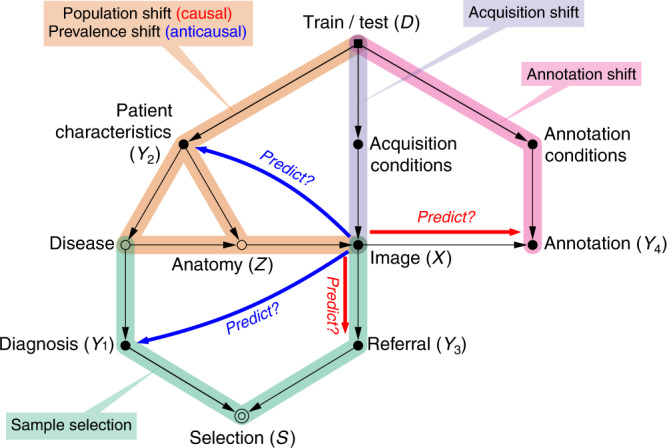
Causal reasoning can shed new light on the major challenges in machine learning for medical imaging: scarcity of high-quality annotated data and mismatch between the development dataset and the target environment. A causal perspective on these issues allows decisions about data collection, annotation, preprocessing, and learning strategies to be made and scrutinized more transparently, while providing a detailed categorisation of potential biases and mitigation techniques. Along with worked clinical examples, we highlight the importance of establishing the causal relationship between images and their annotations, and offer step-by-step recommendations for future studies.
Overview
The claims and statistics of this paper haven’t been checked yet.
Free: it reads the open-access text and checks the first 5 claims that cite a source we can check. Create a free account to check every claim.
Integrity signals
Registry
Cites
Statistics
Figures
Verification
Claims the paper makes
The claims and statistics of this paper haven’t been checked yet.
Free: it reads the open-access text and checks the first 5 claims that cite a source we can check. Create a free account to check every claim.
Claims other papers make about this one
Each is checked against this paper’s own text: does it say what the citing paper says it does?
The cited source says what the claim attributes to it.
In the citing paper
“In radiology, for example, imaging hardware manufacturer, model, software versions and acquisition parameters all meaningfully alter the characteristics of diagnostic images40.”
From Bias recognition and mitigation strategies in artificial intelligence healthcare applications (2025) · cites this paper as [40]
The cited source says what the claim attributes to it.
In the citing paper
“Nevertheless, causality has recently enjoyed increasing attention again, with discussion about causality in deep learning68 and medical imaging69,70.”
From Orchestrating explainable artificial intelligence for multimodal and longitudinal data in medical imaging (2024) · cites this paper as [70]
The check wasn’t confident either way, so it gives no verdict — never disputed.
In the citing paper
“In the hip fracture detection audit, 20 the risk of false positives in cases of femoral deformities was found to require further monitoring, with a potential modification of the intended use (to exclude cases with deformities) as an appropriate mitigation action, if they were confirmed to cause a failure mode.”
From The medical algorithmic audit (2022) · cites this paper as [20]
Experimental — accuracy not yet measuredThe check wasn’t confident either way, so it gives no verdict — never disputed.
In the citing paper
“In the hip fracture detection audit, 20 the discovery of algorithmic errors in cases with abnormal bones prompted an additional labelling exercise of all hips with abnormal bones and joints to find that the error rate in those cases was 50%, compared with 2•5% in the overall dataset (figure 2).”
From The medical algorithmic audit (2022) · cites this paper as [20]
Experimental — accuracy not yet measured
Self-check
Percentages, sums and reported differences re-computed from the paper’s own numbers.
The self-check needs the paper’s full text.
Citations
Cites
Dermatologist-level classification of skin cancer with deep neural networks
Esteva, A., Kuprel, B., Novoa, R. A., Ko, J., Swetter, S. M., Blau, H. M., & Thrun, S. (2017) · Nature · doi:10.1038/nature21056 · Cited by 14,362
Causality: Models, Reasoning, and Inference
Pearl, J. (2009) · doi:10.1017/cbo9780511803161 · Cited by 11,653
RUBIN, D. B. (1976) · Biometrika · doi:10.1093/biomet/63.3.581 · Cited by 9,925
Domain-Adversarial Training of Neural Networks
Ganin, Y., Ustinova, E., Ajakan, H., Germain, P., Larochelle, H., Laviolette, F., Marchand, M., & Lempitsky, V. (2017) · Advances in Computer Vision and Pattern Recognition · doi:10.1007/978-3-319-58347-1_10 · Cited by 8,318 · cited 1×
“In addition, the increasingly active research area of domain adaptation investigates data harmonization by means of more complex transformations, such as extracting domain-invariant representations 25,26 or translating between imaging modalities 27 (e.g. synthesizing MRI volumes from CT scans 28 ).”
BackgroundThe multimodal brain tumor image segmentation benchmark (BRATS)
Menze, B. H., Jakab, A., Bauer, S., Kalpathy-Cramer, J., Farahani, K., Kirby, J., Burren, Y., Porz, N., Slotboom, J., Wiest, R., et al. (2015) · IEEE Transactions on Medical Imaging · doi:10.1109/tmi.2014.2377694 · Cited by 6,781
Self-citation(2006) · The MIT Press eBooks · doi:10.7551/mitpress/9780262033589.001.0001 · Cited by 4,280
Collins, G. S., Reitsma, J. B., Altman, D. G., & Moons, K. G. M. (2015) · Annals of Internal Medicine · doi:10.7326/m14-0697 · Cited by 3,267
A structural approach to selection bias
Hernán, M. A., Hernández-Díaz, S., & Robins, J. M. (2004) · Epidemiology · doi:10.1097/01.ede.0000135174.63482.43 · Cited by 2,844
Model Cards for Model Reporting
Mitchell, M., Wu, S., Zaldivar, A., Barnes, P., Vasserman, L., Hutchinson, B., Spitzer, E., Raji, I. D., & Gebru, T. (2019) · Proceedings of the Conference on Fairness, Accountability, and Transparency · doi:10.1145/3287560.3287596 · Cited by 2,681 · cited 1×
“Scholars in FAT have proposed checklist-style guidelines for reporting datasets 59 and models 60 , for example, and have been investigating sources of failure for machine-learning models, among which is poor reporting 61 .”
MethodGebru, T., Morgenstern, J., Vecchione, B., Vaughan, J. W., Wallach, H., Daumé, H., & Crawford, K. (2018) · arXiv · doi:10.48550/arxiv.1803.09010 · Cited by 2,474 · cited 1×
“Scholars in FAT have proposed checklist-style guidelines for reporting datasets 59 and models 60 , for example, and have been investigating sources of failure for machine-learning models, among which is poor reporting 61 .”
Method
Research works printed but not linked: 9
- Schölkopf, B. et al. On causal and anticausal learning. In Proc. 29th International Conference on Machine Learning (ICML 2012) 459–466 (2012).
- Oliver, A., Odena, A., Raffel, C. A., Cubuk, E. D. & Goodfellow, I. in Advances in Neural Information Processing Systems Vol. 31 (NeurIPS 2018), 3235–3246 (2018).
- Singh, A., Nowak, R. & Zhu, X. in Advances in Neural Information Processing Systems Vol. 21 (NIPS 2008), 1513–1520 (2008).
- Storkey, A. J. in Dataset Shift in Machine Learning (eds Quiñonero-Candela, J. et al.), Ch. 1, 3–28 (MIT Press, Cambridge, MA, 2009).
- Zhang, K., Schölkopf, B., Muandet, K. & Wang, Z. Domain adaptation under target and conditional shift. In Proc. 30th International Conference on Machine Learning (ICML 2013), Vol. 28, 819–827 (PMLR, 2013).
- Lipton, Z. C., Wang, Y.-X. & Smola, A. J. Detecting and correcting for label shift with black box predictors. In Proc. 35th International Conference on Machine Learning (ICML 2018), Vol. 80, 3122–3130 (PMLR, 2018).
- Mohan, K., Pearl, J. & Tian, J. in Advances in Neural Information Processing Systems Vol. 26 (NIPS 2013), 1277–1285 (2013).
- Subbaswamy, A., Schulam, P. & Saria, S. Preventing failures due to dataset shift: Learning predictive models that transport. In Proc. Twenty-Second International Conference on Artificial Intelligence and Statistics (AISTATS 2019), Vol. 89, 3118–3127 (PMLR, 2019).
- Peters J Janzing D Schölkopf B Elements of Causal Inference: Foundations and Learning Algorithms 2017 Cambridge, MA MIT Press
Cited by
Items 201–300 of 452
Influence of uncertainty estimation techniques on false-positive reduction in liver lesion detection
Bhat, I., Pluim, J. P. W., Viergever, M. A., & Kuijf, H. J. (2022) · The Journal of Machine Learning for Biomedical Imaging · doi:10.59275/j.melba.2022-5937 · Cited by 8
“These arise due to a variety of reasons, for example, the model overfitting to the training data, presence of noise/artefacts in the image, or mismatch between the training and clinical data distributions (Castro et al., 2020).”
BackgroundConfidence-Aware Paced-Curriculum Learning by Label Smoothing for Surgical Scene Understanding
Xu, M., Islam, M., Glocker, B., & Ren, H. (2023) · IEEE Transactions on Automation Science and Engineering · doi:10.1109/tase.2023.3276361 · Cited by 8
“The model performance often degrades with the distribution shift arising from images such as domain shift, population shift, and acquisition shift [1], [2], [3].”
BackgroundSelf-citationData AUDIT: Identifying Attribute Utility- and Detectability-Induced Bias in Task Models
Pavlak, M., Drenkow, N. G., Petrick, N., Farhangi, M. M., & Unberath, M. (2023) · Lecture notes in computer science · doi:10.1007/978-3-031-43898-1_43 · Cited by 10
Invariant Shape Representation Learning for Image Classification
Hossain, T., Ma, J., Li, J., & Zhang, M. (2025) · IEEE Winter Conference on Applications of Computer Vision · doi:10.1109/wacv61041.2025.00420 · Cited by 10
“A few research groups have initial attempts to capture more reliable information instead of spurious correlations to facilitate the robustness of image classification under different scenarios, mainly including confounding biases [63,68] and weak/noisy supervision [8,59,66].”
Disentangling representations of retinal images with generative models
Müller, S., Koch, L. M., Lensch, H. P. A., & Berens, P. (2025) · Medical Image Analysis · doi:10.1016/j.media.2025.103628 · Cited by 11
“Our approach is inspired by our DAG structure, which implies a disentangled factorization of causal conditionals due to the causal Markov condition (Castro et al., 2020).”
InfluentialRobustness Stress Testing in Medical Image Classification
Islam, M., Li, Z., & Glocker, B. (2023) · Lecture notes in computer science · doi:10.1007/978-3-031-44336-7_17 · Cited by 14
Self-citationRe-using Adversarial Mask Discriminators for Test-time Training under Distribution Shifts
Valvano, G., Leo, A., & Tsaftaris, S. A. (2022) · The Journal of Machine Learning for Biomedical Imaging · doi:10.59275/j.melba.2022-bd5e · Cited by 9
“In recent years, improving model robustness under distribution shifts has attracted considerable attention in medical imaging, where images vary among scanners, patients, and acquisition protocols (Castro et al., 2020).”
BackgroundRethinking causality-driven robot tool segmentation with temporal constraints
Ding, H., Wu, J. Y., Li, Z., & Unberath, M. (2023) · International Journal of Computer Assisted Radiology and Surgery · doi:10.1007/s11548-023-02872-8 · Cited by 12
“Some researchers focus on posing the underlying causal model of the vision task [24, 31].”
BackgroundA comparison of causal discovery and explainable AI (XAI) for image datasets
Rawal, A., Raglin, A. J., Wang, Q., & Tang, Z. (2024) · Artificial Intelligence and Machine Learning for Multi-Domain Operations Applications · doi:10.1117/12.3013193 · Cited by 7
Brenes, D., Kortum, A., Coole, J. B., Carns, J., Schwarz, R. A., Vohra, I. S., Richards-Kortum, R. R., Liu, Y., Cai, Z., Sigel, K. M., et al. (2023) · Scientific Reports · doi:10.1038/s41598-023-49197-9 · Cited by 7
Occupational Health and Safety, Training, and Teamwork for Hospital Medical Performance
Sa’diyah, K. (2024) · Safety and Health For Medical Workers · doi:10.69725/ehxp3d73 · Cited by 9
“The sample selection criteria were aligned with these considerations, as they directly influenced the variables under investigation (Castro et al., 2020).”
BackgroundTing, J. Y. C., Li, S., & Barnard, A. S. (2022) · Advanced Theory and Simulations · doi:10.1002/adts.202200330 · Cited by 7
Biomechanical modelling of brain atrophy through deep learningPreprint
da Silva, M., Garcia, K., Sudre, C. H., Bass, C., Cardoso, M. J., & Robinson, E. C. (2020) · arXiv (Cornell University) · doi:10.48550/arxiv.2012.07596 · Cited by 7
“In recent years, a lot of attention has been given to the development of interpretable DL models, as well as to the importance of causality in the context of medical imaging [15].”
BackgroundYao, Z., Yan, Y., Liu, Z., Chen, T., Cho, L., Leung, Y.-W., Lu, T., Niu, W., Qiu, Z., Wang, Y., et al. (2025) · Bioengineering · doi:10.3390/bioengineering12101030 · Cited by 7
“An investigation of adversarial robustness and out-of-distribution detection remains important for ensuring reliable performance under potential distribution shifts in clinical deployment [41,51,52].”
Bootstrap-Based Layerwise Refining for Causal Structure Learning
Xiang, G. Y., Wang, H., Yu, K., Guo, X., Cao, F., & Song, Y. (2023) · IEEE Transactions on Artificial Intelligence · doi:10.1109/tai.2023.3329786 · Cited by 9
“Causal structures have been widely used in various fields, such as biology [4], medical imaging [5], [6], machine learning [7], [8], [9], [10], and many others [11], [12], [13], [14].”
BackgroundSong, J., Chen, H., Lyu, Y., Nie, W., & Liu, A.-A. (2025) · IEEE Transactions on Circuits and Systems for Video Technology · doi:10.1109/tcsvt.2025.3562650 · Cited by 7
“Causal mechanisms have emerged as potent instruments for addressing persistent challenges in medical imaging [42], [43].”
Sahidullah, M., Shim, H.-J., Hautamäki, R. G., & Kinnunen, T. (2025) · IEEE Journal of Selected Topics in Signal Processing · doi:10.1109/jstsp.2025.3569430 · Cited by 13
“The intervention process parameters are known, with other relevant variables fixed throughout each experiment, which facilitates causal analysis [75].”
A systematic review on the generative AI applications in human medical genetics
Changalidis, A. I., Barbitoff, Y. A., Nasykhova, Y. A., & Glotov, A. S. (2026) · Frontiers in Genetics · doi:10.3389/fgene.2025.1694070 · Cited by 9
Robust optimization for PPG-based blood pressure estimation
Lim, S., Kim, T., Lee, H., Kim, Y., Park, M., Kim, K. H., Kim, M., Kim, K. H., Jung, J., & Song, K. (2025) · Biomedical Signal Processing and Control · doi:10.1016/j.bspc.2025.107585 · Cited by 6
SimulAD: a dynamical model for personalized simulation and disease staging in Alzheimer’s disease
Nader, C. A., Ribaldi, F., Frisoni, G. B., Garibotto, V., Robert, P. H., Ayache, N., & Lorenzi, M. (2022) · Neurobiology of Aging · doi:10.1016/j.neurobiolaging.2021.12.015 · Cited by 7
Deng, J., Yang, J., Hou, L., Wu, J., He, Y. F., Zhao, M., Ni, B., Wei, D., Pfister, H., Zhou, C., et al. (2022) · iScience · doi:10.1016/j.isci.2022.105382 · Cited by 6
Reyes, D. M., Bose, A., Karavani, E., & Parida, L. (2022) · Pacific Symposium on Biocomputing (PSB) · doi:10.1142/9789811270611_0019 · Cited by 11
“28,29 (More formally, race disparities are more of an acquisition shift, rather than population or prevalence shift 30 ).”
Cruz, B. G. S., Vega, C., & Hertel, F. (2022) · Lecture notes in computer science · doi:10.1007/978-3-031-20837-9_16 · Cited by 6
“For example, the data collection process might be biased, or the training process may wrongly use features, producing a biased model [7].”
BackgroundMedical world models in healthcare: capabilities, evidence, and trustworthy clinical translationPreprint
Fan, W., Cong, Z., Chen, Z., Jin, Z., Ai, Q., Gong, H., Liao, C., Liu, X., Zhou, D., & Wang, C. (2026) · arXiv (Cornell University) · doi:10.48550/arxiv.2607.25242 · Cited by 6
“Relevant methodological foundations include potential-outcome frameworks, causal Transformers, target-trial emulation, and individualized treatment-effect estimation 6–9,66–68 .”
InfluentialRobust agents learn causal world models
Richens, J., & Everitt, T. (2024) · arXiv · doi:10.48550/arxiv.2402.10877 · Cited by 5
“In this example the labels cause the features Y → X (for examples where features cause labels see Castro et al., 2020; Schölkopf et al., 2012).”
BackgroundCausal representation learning through higher-level information extraction
Silva, F., Oliveira, H. P., & Pereira, T. (2024) · ACM Computing Surveys · doi:10.1145/3696412 · Cited by 10
“…principled modeling insights inspired by causality have shown increased capacity of capturing possible causal factors (diagnostic) that led a certain observation (e.g., a medical image) to be presented as it is, which could leverage generalization even in rare clinical cases [ 43 , 207 , 212 ].”
Tafti, A., & Shmueli, G. (2024) · MIS Quarterly · doi:10.25300/misq/2024/18422 · Cited by 7
Singh, V. P., Sahidullah, M., & Kinnunen, T. (2025) · Computer Speech & Language · doi:10.1016/j.csl.2025.101859 · Cited by 7
IUGC: A benchmark of landmark detection in end-to-end intrapartum ultrasound biometry
Bai, J., Tang, Y., Liu, X., Hu, J., Li, Y. D., Chen, X., Wang, Y. T., Ma, C., Li, Y., Guo, B., et al. (2026) · Medical Image Analysis · doi:10.1016/j.media.2026.103960 · Cited by 8
Machine-to-Machine Transfer Function in Deep Learning-Based Quantitative Ultrasound
Soylu, U., & Oelze, M. L. (2024) · IEEE Transactions on Ultrasonics Ferroelectrics and Frequency Control · doi:10.1109/tuffc.2024.3384815 · Cited by 5
“Two main technical challenges hinder the implementation of DL-driven algorithms in actual clinical environments [2].”
BackgroundCROCODILE: Causality Aids RObustness via COntrastive DIsentangled LEarning
Carloni, G., Tsaftaris, S. A., & Colantonio, S. (2024) · Lecture notes in computer science · doi:10.1007/978-3-031-73158-7_10 · Cited by 6
Quantifying the Impact of Population Shift Across Age and Sex for Abdominal Organ Segmentation
Čevora, K., Glocker, B., & Bai, W. (2024) · Lecture notes in computer science · doi:10.1007/978-3-031-72787-0_9 · Cited by 9
Self-citationSemi-Supervised Learning for Deep Causal Generative Models
Ibrahim, Y., Warr, H., & Kamnitsas, K. (2024) · Lecture notes in computer science · doi:10.1007/978-3-031-72390-2_28 · Cited by 5
Benchmarking Dependence Measures to Prevent Shortcut Learning in Medical Imaging
Müller, S., Fay, L., Koch, L. M., Gatidis, S., Küstner, T., & Berens, P. (2024) · Lecture notes in computer science · doi:10.1007/978-3-031-73290-4_6 · Cited by 5
On the Use of Causal Models to Build Better Datasets
Garcea, F., Morra, L., & Lamberti, F. (2021) · IEEE Annual International Computer Software and Applications Conference (COMPSAC) · doi:10.1109/compsac51774.2021.00225 · Cited by 6
Automatic Placenta Abnormality Detection Using Convolutional Neural Networks on Ultrasound Texture
Hu, Z., Hu, R., Yan, R., Mayer, C., Rohling, R. N., & Singla, R. (2021) · Lecture notes in computer science · doi:10.1007/978-3-030-87735-4_14 · Cited by 5
Causality-Inspired Source-Free Domain Adaptation for Medical Image Classification
Qiu, S. (2023) · Lecture notes in computer science · doi:10.1007/978-3-031-46317-4_7 · Cited by 10
Perkonigg, M., Hofmanninger, J., Herold, C., Prosch, H., & Langs, G. (2022) · The Journal of Machine Learning for Biomedical Imaging · doi:10.59275/j.melba.2022-4g6b · Cited by 8
An Interpretable Causal Approach for Bronchopulmonary Dysplasia Prediction
Sun, S., Ji, W., Tang, L., Zhang, X., Zhang, Y., & Feng, R. (2022) · IEEE International Conference on Bioinformatics and Biomedicine (BIBM) · doi:10.1109/bibm55620.2022.9995412 · Cited by 8
“However, most of these interpretable methods are designed for natural images, which may not work well on medical images [8], [14].”
BackgroundTranslational Lung Imaging Analysis Through Disentangled RepresentationsPreprint
Gordaliza, P. M., Vaquero, J. J., & Muñoz‐Barrutia, A. (2022) · arXiv (Cornell University) · doi:10.48550/arxiv.2203.01668 · Cited by 7
Lv, P., Wang, Y., Liu, M., Zhang, Z., Ma, Y., Liu, L., & Meijering, E. H. W. (2025) · IEEE Transactions on Medical Imaging · doi:10.1109/tmi.2025.3620585 · Cited by 11
“Castro et al. [29] emphasized establishing causal relationships between images and annotations, o ff ering recommendations for future research.”
CIMB-MVQA: Causal intervention on modality-specific biases for medical visual question answering
Liu, B., Liu, L., Ding, J., Yang, X., Peng, W., & Liu, L. (2025) · Medical Image Analysis · doi:10.1016/j.media.2025.103850 · Cited by 7
DCL: Dynamic Causal Learning for Cross-Modality Cardiac Image Segmentation
Guo, S., Liu, X., Lin, Q., Cai, W., Zhao, G., Wu, M., Lv, Q., & Yang, L. T. (2026) · IEEE Transactions on Image Processing · doi:10.1109/tip.2026.3673293 · Cited by 4
“Castro et al. [39] highlight the importance of the causal relationship between medical images and their labels.”
Artificial intelligence in medical imaging is a tool for clinical routine and scientific discovery
Langs, G. (2023) · Seminars in Arthritis and Rheumatism · doi:10.1016/j.semarthrit.2023.152321 · Cited by 6
RobustCLEVR: A Benchmark and Framework for Evaluating Robustness in Object-centric Learning
Drenkow, N. G., & Unberath, M. (2024) · IEEE Winter Conference on Applications of Computer Vision · doi:10.1109/wacv57701.2024.00446 · Cited by 8
“Causal inference for robustness Lastly, causal inference and computer vision research have become increasingly intertwined in recent years [5, 13, 44].”
BackgroundCausal reasoning in medical imaging
Vlontzos, A., Müller, C., & Kainz, B. (2025) · Elsevier eBooks · doi:10.1016/b978-0-44-323761-4.00029-8 · Cited by 4
Ting, J. Y. C., & Barnard, A. S. (2025) · Advanced Intelligent Discovery · doi:10.1002/aidi.202500033 · Cited by 5
Rethinking the framework constructed by counterfactual functional model
Wang, C., Liu, L., Sun, S., & Wang, W. (2022) · Applied Intelligence · doi:10.1007/s10489-022-03161-8 · Cited by 4
“The evaluation of CQs has benefited many research fields and tasks, such as the determination of person liable [10], marketing and economics [11], personalized policies [12], medical imaging analysis [13, 14], Bayesian network [7], high dimensional data analysis [15], abduction reasoning [16], the intervention of tabu…”
BackgroundKhan, M. A., & Park, H. (2025) · Multimedia Tools and Applications · doi:10.1007/s11042-025-20911-1 · Cited by 5
Learning from Partially Overlapping Labels: Image Segmentation Under Annotation Shift
Filbrandt, G., Kamnitsas, K., Bernstein, D., Taylor, A., & Glocker, B. (2021) · Lecture notes in computer science · doi:10.1007/978-3-030-87722-4_12 · Cited by 4
Self-citationLensink, K., Lo, F., Eddy, R. L., Law, M., Laradji, I., Haber, E., Nicolaou, S., Murphy, D., & Parker, W. A. (2022) · Academic Radiology · doi:10.1016/j.acra.2022.03.025 · Cited by 5
Jerzak, C., Vashistha, R. N., & Daoud, A. (2024) · arXiv (Cornell University) · doi:10.48550/arxiv.2407.11674 · Cited by 4
On the Link Between Model Performance and Causal Scoring of Medical Image Explanations
Flores-Araiza, D., Villegas-Jimenez, A., Lopez-Tiro, F., González-Mendoza, M., Guéant‐Rodriguez, R., Hubert, J., Ochoa‐Ruiz, G., & Daul, C. (2024) · Proceedings - IEEE Symposium on Computer-Based Medical Systems · doi:10.1109/cbms61543.2024.00009 · Cited by 3
“…been highlighted within the DL field, with emphasis on the importance of developing systematic causal analysis methods for medical applications; this is particularly pressing due to data scarcity in such applications, as well as a manner to enhance the reliability of DL models in this domain [10].”
MethodMulti-site validation of an interpretable model to analyze breast masses
Moffett, L., Barnett, A. J., Donnelly, J. P., Schwartz, F. R., Trivedi, H., Lo, J. Y.-C., & Rudin, C. D. (2025) · PLoS ONE · doi:10.1371/journal.pone.0320091 · Cited by 3
“Castro et al. propose a taxonomy of five types of distributional shifts between training and testing in medical imaging that may impede model generalization, all of which are relevant to our setting [23].”
Artificial intelligence (AI) in ORL: pitfalls and challenges
El‐Anwar, M. W. (2025) · The Egyptian Journal of Otolaryngology · doi:10.1186/s43163-025-00935-y · Cited by 3
“[10].”
Latent Variable Modeling for Robust Causal Effect Estimation
Morimura, T., Oka, T., Suzuki, Y., & Moriwaki, D. (2025) · ACM International Conference on Information and Knowledge Management (CIKM) · doi:10.1145/3746252.3761252 · Cited by 5
Yao, F., Zhu, D., Lin, H., Miao, C., Lin, Q., Li, T., Zhuang, Y., Bian, S., Yang, Y., Lin, J. J., et al. (2025) · Prostate Cancer and Prostatic Diseases · doi:10.1038/s41391-025-01063-7 · Cited by 4
“2, medical images are frequently subject to domain shift [30] due to differences in acquisition equipment and parameter settings, leading to variations in image brightness or texture across different domains [31].”
A Two-Layer Causal Knowledge Network Construction Method Based on Quality Problem-Solving Data
Wang, Y., Qiang, S., Yue, X., Li, T., & Zhang, K. (2025) · Systems · doi:10.3390/systems13030142 · Cited by 3
Gordaliza, P. M., Müller, J., Cagol, A., Molchanova, N., Rosa, F. L., Tsagkas, C., Granziera, C., & Cuadra, M. B. (2025) · NeuroImage Clinical · doi:10.1016/j.nicl.2025.103818 · Cited by 3
“Notably, the MP 2 RAGE + F LAW S union model consistently shows the closest alignment with the consensus annotations across various scenarios,”
Exploring Deep Registration Latent Spaces
Estienne, T., Vakalopoulou, M., Christodoulidis, S., Battistella, E., Henry, T., Lerousseau, M., Leroy, A., Chassagnon, G., Revel, M., Nikos Paragios, A., et al. (2021) · Lecture notes in computer science · doi:10.1007/978-3-030-87722-4_11 · Cited by 3
Transductive Image Segmentation: Self-training and Effect of Uncertainty Estimation
Kamnitsas, K., Winzeck, S., Kornaropoulos, E., Whitehouse, D. P., Englman, C., Phyu, P., Pao, N., Menon, D. K., Rueckert, D., Das, T., et al. (2021) · Lecture notes in computer science · doi:10.1007/978-3-030-87722-4_8 · Cited by 4
Self-citationArtificial Intelligence Algorithm Advances in Medical Imaging and Image Analysis
Zhou, S. K., Dou, Q., Gao, Y., Han, H., Ma, J., Sun, J., Zhang, D., Zhao, S., & Zheng, Y. (2024) · Springer eBooks · doi:10.1007/978-981-99-8441-1_5 · Cited by 4
Diffusion‐Based Causality‐Preserving Neural Network for Dementia Recognition
Mamoon, S., Xia, Z., Alfakih, A., & Lu, J. (2024) · International Journal of Imaging Systems and Technology · doi:10.1002/ima.70005 · Cited by 3
The fundamentals of AI ethics in medical imaging
Amann, J., Bürger, V. K., Livne, M., Bui, C. K. T., & Madai, V. I. (2025) · Elsevier eBooks · doi:10.1016/b978-0-44-323761-4.00010-9 · Cited by 3
Rullyni, N. T., Harianja, R. R., Dewi, U., Jayanti, V., Rahmadona, & Darwitri, D. (2025) · Innovation Midwifery and Child Health Practice · doi:10.69725/imchp.v1i2.218 · Cited by 3
Costa, J. B., Silva‐Correia, J., Reis, R. L., & Oliveira, J. M. (2021) · Journal of 3D Printing in Medicine · doi:10.2217/3dp-2021-0007 · Cited by 3
Park, S. J., Tafti, A., & Shmueli, G. (2023) · Information Systems Research · doi:10.1287/isre.2023.1236 · Cited by 3
Explainability-aided Domain Generalization for Image ClassificationPreprint
Schmidt, R. M. (2021) · arXiv (Cornell University) · doi:10.48550/arxiv.2104.01742 · Cited by 3
“Examples are application scenarios where intelligent systems don’t generalize well across health centers if the training data was only collected in a single hospital [4, 31, 142] or when self-driving cars struggle under alternative lighting or weather conditions [36, 191].”
BackgroundSince Faithfulness Fails: The Performance Limits of Neural Causal DiscoveryPreprint
Olko, M., Gajewski, M., Wojciechowska, J., Morzy, M., Sankowski, P., & Miłoś, P. (2025) · arXiv (Cornell University) · doi:10.48550/arxiv.2502.16056 · Cited by 5
“…causal discovery methods in recent years (Brouillard et al., 2020; Lorch et al., 2021; Annadani et al., 2023; Nazaret et al., 2024), their performance remains insufficient for real-world applications, particularly in fields like medicine and biology (de Castro et al., 2019; Peters et al., 2016).”
Posselt, C., Avci, M. Y., Yiğitsoy, M., Schuenke, P., Kolbitsch, C., Schaeffter, T., & Remmele, S. (2024) · Journal of medical imaging · doi:10.1117/1.jmi.11.2.024013 · Cited by 2
“Castro et al. 2 described different sources of “ shifts ” between training and test domains and among those, the “ acquisition shift, resulting from the use of different scanners or imaging protocols, which is one of the most notorious and well-studied sources of dataset shift in medical imaging.”
BackgroundDebiasing Medical Knowledge for Prompting Universal Model in CT Image Segmentation
Yun, B., Zhao, S., Li, Q., Kot, A. C., & Wang, Y. (2025) · IEEE Transactions on Medical Imaging · doi:10.1109/tmi.2025.3589399 · Cited by 4
“The concept of causal effect has been a driving force in inspiring various studies within computer vision [21], [22], [23], [24], spanning from natural image analysis to medical imaging processing [6].”
Applications of Computer Vision and Machine Learning in Bioimaging
Argunşah, A. Ö., Erdil, E., & Ünay, D. (2025) · Springer eBooks · doi:10.1007/978-3-031-99410-4_28 · Cited by 3
Stanley, E. A. M., Vigneshwaran, V., Ohara, E. Y., Vamosi, F. G., Forkert, N. D., & Wilms, M. (2025) · Lecture notes in computer science · doi:10.1007/978-3-032-04984-1_52 · Cited by 2
To see and to know: the power of live imaging in illuminating and decoding biological complexity
Yang, M., & Du, Z. (2025) · Journal of genetics and genomics/Journal of Genetics and Genomics · doi:10.1016/j.jgg.2025.10.003 · Cited by 3
OoDBench+: Quantifying and Understanding Two Dimensions of Out-of-Distribution Generalization
Ye, N., Li, K., Wu, F., Zhou, J., Bai, H., Yu, R., Hong, L., Zhou, F., Li, Z., Zhu, J., et al. (2025) · IEEE Transactions on Pattern Analysis and Machine Intelligence · doi:10.1109/tpami.2025.3628027 · Cited by 5
“Consequently, the effectiveness and reliability of deep learning systems are still not satisfactory, particularly in safety-critical applications such as medical imaging analysis [10], [11], autonomous driving [12], [13], [14], [15], [16], and security systems [17].”
Wu, J., Chen, Z., Chen, Y., Cui, Z., Du, S., Yang, X., & Xin, J. (2025) · Medical Physics · doi:10.1002/mp.70118 · Cited by 2
“9,10 To address domain shift, unsupervised domain adaptation (UDA) methods use the unlabeled target domain during training to help narrow the potential distribution gap between source and target domains.”
Wang, H. J., & Sun, L. (2025) · Applied Sciences · doi:10.3390/app152413008 · Cited by 2
Zhu, Y., Zhang, L., Sainsbury, C., Dong, F., MacLellan, C., Maclay, J. D., Lowe, D. J., & Ye, X. (2025) · IEEE Access · doi:10.1109/access.2025.3615683 · Cited by 4
“Although causal models enabling counterfactual image generation could revolutionise clinical reasoning [12], [13], current medical image synthesis approaches face dual challenges: inadequate integration of prior medical knowledge during generation, and insufficient validation of clinical relevance…”
CAMEL-Dx: A Causal Meta-Learning Framework for Rare Disease Diagnosis with Limited Samples
Sathishkumar, B., & Muthusenthil, B. (2026) · International Conference on Intelligent and Innovative Technologies in Computing, Electrical and Electronics (IITCEE) · doi:10.1109/iitcee67948.2026.11394655 · Cited by 2
Liu, L., Wang, X., Huang, S., Deng, Z., Wang, S., Wu, G., Yang, D., Zha, S., Su, G., & Tao, Q. (2026) · Engineering Applications of Artificial Intelligence · doi:10.1016/j.engappai.2026.114540 · Cited by 2
Are Natural Language Processing Tools Ready for Predicting Violence Toward Self or Others?
Grenier, S., St-André, M. F. A., Nguyen, B. T., Pierre, R., & Hudon, A. (2026) · Psychiatric Annals · doi:10.3928/00485713-20260324-03 · Cited by 2
From black-box to clinical reasoning: CARE-MD a novel framework for Self-eXplainable skin lesions
Kandpal, K. C., & Verma, P. (2026) · Computer Methods and Programs in Biomedicine · doi:10.1016/j.cmpb.2026.109478 · Cited by 2
The effect of dataset confounding on predictions of deep neural networks for medical imaging
Cruz, B. G. S., Husch, A., & Hertel, F. (2022) · Proceedings of the Northern Lights Deep Learning Workshop · doi:10.7557/18.6302 · Cited by 2
“data acquisition devices, population characteristics) [1].”
A Hybrid Medical Causal Inference Platform Based on Data Lake
Ren, P., Liu, X., Zheng, S., Liao, L., Li, X., Lu, L., Wang, X., Wang, R., & Sheng, M. (2022) · Lecture notes in computer science · doi:10.1007/978-3-031-20627-6_13 · Cited by 2
Sebro, R., & Kahn, C. E. (2023) · Journal of the American Medical Informatics Association · doi:10.1093/jamia/ocad119 · Cited by 2
Molamohammadi, M., Taïk, A., Roux, N. L., & Farnadi, G. (2023) · ACM Conference on Equity and Access in Algorithms, Mechanisms, and Optimization (EAAMO) · doi:10.1145/3617694.3623256 · Cited by 4
Applying Adaptive Sharpness-Aware Minimization to Improve Out-of-distribution Generalization
Luong, H.-C., & Tran, M. (2023) · International Symposium on Information and Communication Technology · doi:10.1145/3628797.3629009 · Cited by 2
“About healthcare, models trained using medical data gathered from a specific hospital exhibit limited generalization when applied to others [2], [6].”
MethodCARE-30: A Causally Driven Multi-Modal Model for Enhanced 30-Day ICU Readmission Predictions
Wang, L., Zhao, L., Luo, Z., Wang, X., Feng, Z., & Lu, L. P. (2023) · IEEE International Conference on Bioinformatics and Biomedicine (BIBM) · doi:10.1109/bibm58861.2023.10385349 · Cited by 5
“The discovery and modeling of causal relationships between variables is a well-established field of inquiry, with applications across genetics, biology, economics, and more [27]–[29].”
BackgroundUnbiased Recommendation Through Invariant Representation Learning
Tang, M., Zou, L., Cui, S., Liang, S.-N., & Jin, Z. (2024) · Lecture notes in computer science · doi:10.1007/978-3-031-70381-2_18 · Cited by 3
Toward Identifying Cyber Dependencies in Water Distribution Systems Using Causal AI
Sobien, D., Kulkarni, A., & Batarseh, F. A. (2024) · Journal of Water Resources Planning and Management · doi:10.1061/jwrmd5.wreng-6488 · Cited by 4
CCLNet: Causal and Contrastive Learning Framework for Enhanced Pulmonary Embolism Detection
Wang, Z., Ge, R., Yu, J., Qin, F., Tian, Y., Li, N., Min, W., Elazab, A., & Wang, C. (2024) · IEEE International Conference on Bioinformatics and Biomedicine (BIBM) · doi:10.1109/bibm62325.2024.10821899 · Cited by 2
Zhu, J., Li, K., Mai, Z., Xie, H., AbdAlmageed, W., & Abraham, Z. (2025) · IEEE International Conference on Acoustics Speech and Signal Processing · doi:10.1109/icassp49660.2025.10889219 · Cited by 2
“Analyzing causal relationships in time series data is crucial in various domains, including medical research [1], [2], [3], sensor networks [4], and traffic analysis [5], [6].”
Causal recurrent intervention for cross-modal cardiac image segmentation
Lin, Q., Guo, S., Zhang, H., & Gao, Z. (2025) · Computerized Medical Imaging and Graphics · doi:10.1016/j.compmedimag.2025.102549 · Cited by 2
Research Advance of Causal Inference in Clinical Medicine: A Bibliometrics Analysis via Citespace
Qin, G., Wei, J., Sun, Y., & Du, W. (2025) · Journal of Multidisciplinary Healthcare · doi:10.2147/jmdh.s516826 · Cited by 2
Shen, Z., Cao, P., Zhou, Q., Yang, J., & Zai͏̈ane, O. R. (2025) · IEEE Transactions on Medical Imaging · doi:10.1109/tmi.2025.3596247 · Cited by 4
“From a causal perspective, causal factors should be invariant across domains [40].”
Orthogonal Fourier Analysis on Directed Acyclic Graphs via Möbius Total Variation
Mihal, V., & Püschel, M. (2025) · IEEE Transactions on Signal Processing · doi:10.1109/tsp.2025.3603696 · Cited by 3
“It has applications within many areas, primarily machine learning [18], [19], but also medicine [20], social science [21], and others.”
Blum, D., Hepp, T., Belov, V., Goya‐Maldonado, R., la Fougère, C., & Reimold, M. (2023) · Human Brain Mapping · doi:10.1002/hbm.26246 · Cited by 2
“While powerful algorithms are continuously improving medical image analysis, their application in clinical practice remains aggravated due to limited availability of training data (Castro et al., 2020).”
BackgroundCausal Discovery Based on Hybrid Structural Equation Model
Zhou, X., & Wan, Y. (2022) · Asian Conference on Artificial Intelligence Technology (ACAIT) · doi:10.1109/acait56212.2022.10137972 · Cited by 2
“With the continuous development of computer technology, the discovery of causal structures from observed data has become possible, simultaneously driving research and development in areas including biology [1], medicine [2], and social sciences [3].”
BackgroundAn Empirical Analysis of Vision Transformers Robustness to Spurious Correlations in Health Data
Lacerda, A. M., Ayala, D., Malaguth, F., & Kanadani, F. N. (2023) · International Joint Conference on Neural Networks (IJCNN) · doi:10.1109/ijcnn54540.2023.10191635 · Cited by 2
“Mainly regarding the bias contained in the data acquisition process or its content, the change in distribution between training and inference data [15]; and the lack of robustness of CNNs against the presence of biases in consequent data creation of spurious correlations [16].”
BackgroundIt is Not Time to Kick Out Radiologists
Nakamura, Y., Sonoda, Y., Yamagishi, Y., Kikuchi, T., Nakao, T., Miki, S., Hanaoka, S., Yoshikawa, T., & Abe, O. (2024) · Asian Bioethics Review · doi:10.1007/s41649-024-00325-1 · Cited by 3
Metadata
- Authors
- Castro, D. C., Walker, I., & Glocker, B.
- Affiliations
- Imperial College London (GB)
- Corresponding author
- Castro, Daniel C.
- Glocker, Ben
- Venue
- Nature Communications
- Published
- 2020-07-22
- Volume
- 11
- Issue
- 1
- Pages
- 3673-3673
- ISSN
- 2041-1723 (ISSN-L)
- PMC
- PMC7376027
- OpenAlex
- W2995750307
- Cited by
- 364
- References
- 49
- Citations by year
- 2026: 70 · 2025: 77 · 2024: 59 · 2023: 72 · 2022: 52 · 2021: 33 · 2020: 1
- FWCI
- 3.02
- Type
- journal article
- Language
- en
- Open access
- gold
- doi.org
- Licence
- cc-by
- creativecommons.org/licenses/by/4.0 (tdm)
- creativecommons.org/licenses/by/4.0 (vor)
- Locations
- Nature Communications (publishedVersion, cc-by)
- PubMed Central (publishedVersion, cc-by)
- PubMed (publishedVersion)
- arXiv (Cornell University) (submittedVersion)
- DOAJ (DOAJ: Directory of Open Access Journals) (submittedVersion, cc-by-sa)
- Spiral (Imperial College London) (submittedVersion, other-oa)
- Spiral (Imperial College London) (submittedVersion, cc-by)
- arXiv (Cornell University)
- Funders
- European Commission (ERC-2017, 757173, HORIZON2020)
- Coordenação de Aperfeiçoamento de Pessoal de Nível Superior
- Natural Environment Research Council (NE/L002515/1)
- Topics
- Health Sciences › Medicine › Health Informatics › Artificial Intelligence in Healthcare and Education
- Physical Sciences › Computer Science › Artificial Intelligence › Explainable Artificial Intelligence (XAI)
- Physical Sciences › Computer Science › Computer Vision and Pattern Recognition › Medical Image Segmentation Techniques
- Keywords
- causal reasoning, diagnostic imaging, annotated data scarcity, domain shift, annotation bias, image annotation, bias mitigation, data collection, image preprocessing, learning strategies
- MeSH terms
- Machine Learning, Diagnostic Imaging, Humans, Image Interpretation, Computer-Assisted, Causality
About these checks
Registry, retraction, Cites and statistics results are computed, not judged, with one exception: a printed reference that no index lists is read once by a model before it counts as a citation error. Claims are extracted by a model and kept only when their quote appears verbatim in the text; each cited source is then checked, with a model’s help, for whether it says what the claim relies on. Those verdicts can be wrong — read the claim’s quote and the cited source before relying on one.
Statistics and arithmetic are recomputed, not judged.
Confidence bands are shown only for fields calibrated on our annotated test set. None is calibrated yet, so no band is shown.
What counts as a claim ›How we measure confidence ›How we check this ›
Are you an author, or do you see a problem with this page? Request a review
Data sources
Bibliographic data: Semantic Scholar, OpenAlex, Crossref.
Contains information from the Semantic Scholar Academic Graph Datasets, made available under the ODC Attribution License (ODC-BY 1.0).
Semantic Scholar’s data is described in: Kinney, R., et al. (2023). The Semantic Scholar Open Data Platform. arXiv:2301.10140.
