

Elevated rates of autism, other neurodevelopmental and psychiatric diagnoses, and autistic traits in transgender and gender-diverse individuals
Open accessThe DOI matches its Crossref record; 81 of the 81 references it cites were found in a registry or an index.
Abstract
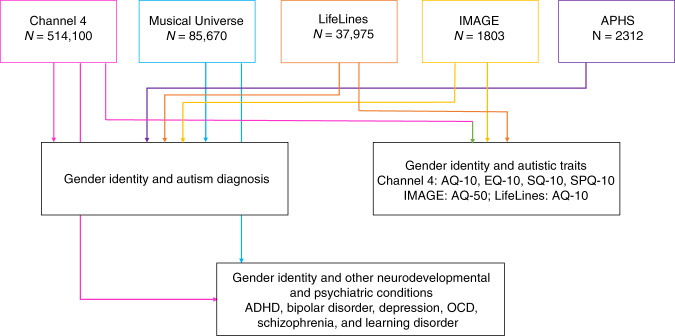
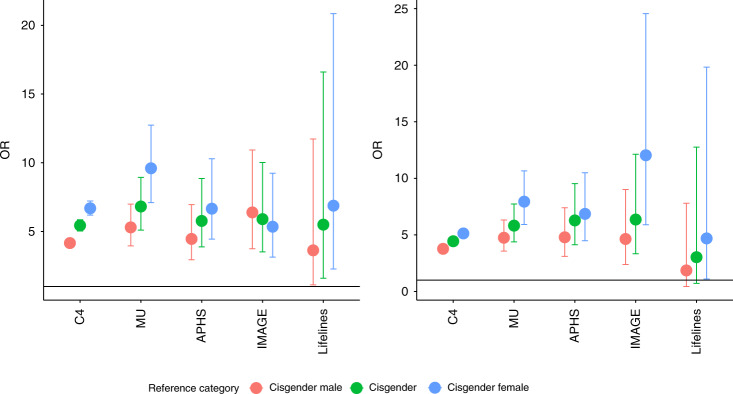
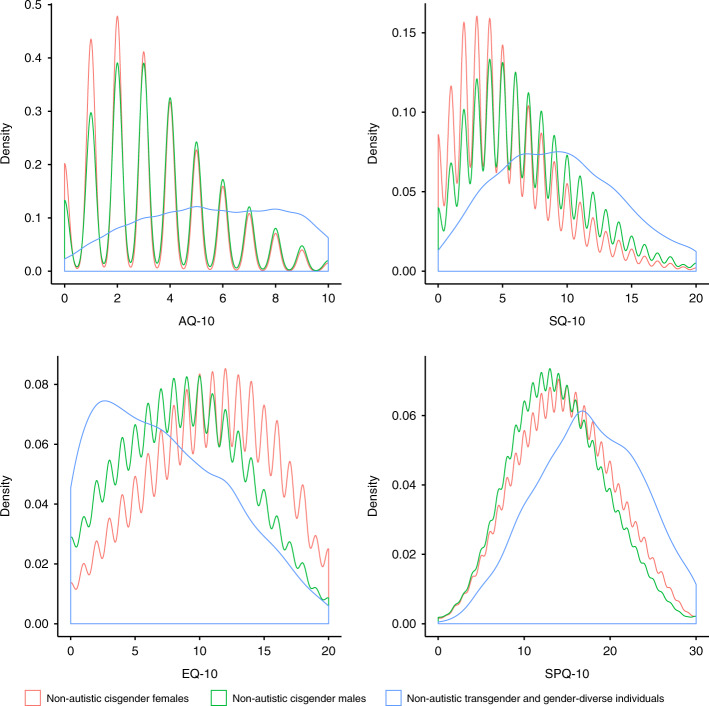
It is unclear whether transgender and gender-diverse individuals have elevated rates of autism diagnosis or traits related to autism compared to cisgender individuals in large non-clinic-based cohorts. To investigate this, we use five independently recruited cross-sectional datasets consisting of 641,860 individuals who completed information on gender, neurodevelopmental and psychiatric diagnoses including autism, and measures of traits related to autism (self-report measures of autistic traits, empathy, systemizing, and sensory sensitivity). Compared to cisgender individuals, transgender and gender-diverse individuals have, on average, higher rates of autism, other neurodevelopmental and psychiatric diagnoses. For both autistic and non-autistic individuals, transgender and gender-diverse individuals score, on average, higher on self-report measures of autistic traits, systemizing, and sensory sensitivity, and, on average, lower on self-report measures of empathy. The results may have clinical implications for improving access to mental health care and tailoring adequate support for transgender and gender-diverse individuals.
Overview
The claims and statistics of this paper haven’t been checked yet.
Free: it reads the open-access text and checks the first 5 claims that cite a source we can check. Create a free account to check every claim.
Integrity signals
Registry
Cites
Statistics
Figures
Verification
Claims the paper makes
The claims and statistics of this paper haven’t been checked yet.
Free: it reads the open-access text and checks the first 5 claims that cite a source we can check. Create a free account to check every claim.
Claims other papers make about this one
Each is checked against this paper’s own text: does it say what the citing paper says it does?
In the citing paper
“Furthermore, sex and gender7,8 and co-occurring ID and developmental, behavioral and medical conditions9,10 alter the presentation and measurement of core autism features.”
From Genetic correlates of phenotypic heterogeneity in autism (2022) · cites this paper as [8]
Self-check
Percentages, sums and reported differences re-computed from the paper’s own numbers.
The self-check needs the paper’s full text.
Citations
Cites
Diagnostic and Statistical Manual of Mental Disorders
American Psychiatric Association (2013) · doi:10.1176/appi.books.9780890425596 · Cited by 116,369
Baron-Cohen, S., Wheelwright, S., Skinner, R., Martin, J., & Clubley, E. (2001) · Journal of Autism and Developmental Disorders · doi:10.1023/a:1005653411471 · Cited by 6,450
Self-citationBaio, J., Wiggins, L., Christensen, D. L., Maenner, M. J., Daniels, J., Warren, Z., Kurzius-Spencer, M., Zahorodny, W., Robinson, C., Rosenberg, et al. (2018) · MMWR. Surveillance Summaries · doi:10.15585/mmwr.ss6706a1 · Cited by 6,078
What Is the Male-to-Female Ratio in Autism Spectrum Disorder? A Systematic Review and Meta-Analysis
Loomes, R., Hull, L., & Mandy, W. P. L. (2017) · Journal of the American Academy of Child & Adolescent Psychiatry · doi:10.1016/j.jaac.2017.03.013 · Cited by 2,804
Global Prevalence of Autism and Other Pervasive Developmental Disorders
Elsabbagh, M., Divan, G., Koh, Y., Kim, Y. S., Kauchali, S., Marcín, C., Montiel‐Nava, C., Patel, V., Paula, C. S., Wang, C., et al. (2012) · Autism Research · doi:10.1002/aur.239 · Cited by 2,636
Baird, G., Simonoff, E., Pickles, A., Chandler, S., Loucas, T., Meldrum, D., & Charman, T. (2006) · The Lancet · doi:10.1016/s0140-6736(06)69041-7 · Cited by 2,104
Lai, M.-C., Kassee, C., Besney, R., Bonato, S., Hull, L., Mandy, W., Szatmari, P., & Ameis, S. H. (2019) · The Lancet Psychiatry · doi:10.1016/s2215-0366(19)30289-5 · Cited by 1,892
Self-citationGlobal health burden and needs of transgender populations: a review
Reisner, S. L., Poteat, T., Keatley, J., Cabral, M., Mothopeng, T., Dunham, E., Holland, C. E., Max, R., & Baral, S. D. (2016) · The Lancet · doi:10.1016/s0140-6736(16)00684-x · Cited by 1,476
Genomic Relationships, Novel Loci, and Pleiotropic Mechanisms across Eight Psychiatric Disorders
Lee, P. H., Anttila, V., Won, H., Feng, Y.-C. A., Rosenthal, J., Zhu, Z., Tucker-Drob, E. M., Nivard, M. G., Grotzinger, A. D., Posthuma, D., et al. (2019) · Cell · doi:10.1016/j.cell.2019.11.020 · Cited by 1,381
The epidemiology and global burden of autism spectrum disorders
Baxter, A. J., Brugha, T. S., Erskine, H. E., Scheurer, R. W., Vos, T., & Scott, J. G. (2015) · Psychological Medicine · doi:10.1017/s003329171400172x · Cited by 1,224
Cited by
Items 201–300 of 662
Demartini, B., Ingrosso, G., Serio, F., Nisticò, V., Broglia, G., Bertani, A., Faggioli, R., Gambini, O., Massimetti, G., Dell’Osso, L., et al. (2024) · European Psychiatry · doi:10.1192/j.eurpsy.2024.1791 · Cited by 10
Nimbley, E., Maloney, E., Gillespie‐Smith, K., Sharpe, H., Buchan, K., Kettley, S., Bragg, J., Shepherd, A., Choat, B., Long, J., et al. (2024) · Eating Disorders · doi:10.1080/10640266.2024.2441540 · Cited by 9
“Furthermore, it has been reported that autistic individuals are five times more likely to be gender diverse (Warrier et al., 2020).”
Bartick, M., Dahlen, H. G., Gamble, J. A., Walker, S., Mathisen, R., & Gribble, K. D. (2025) · Sexual & Reproductive Healthcare · doi:10.1016/j.srhc.2025.101088 · Cited by 13
Vellingiri, B., Bharathi, G., Jayaramayya, K., Venugopal, A., Iyer, M., Narayanasamy, A., Bharathi, A., Gopalakrishnan, A. V., Kumar, N. S., & Subramaniam, M. D. (2021) · Brain Disorders · doi:10.1016/j.dscb.2021.100024 · Cited by 10
Zinchuk, M., Kustov, G., Beghi, M., Voinova, N., Pashnin, E., Beghi, E., Аведисова, А. С., & Guekht, A. B. (2022) · Archives of Sexual Behavior · doi:10.1007/s10508-022-02424-2 · Cited by 11
“While atypical gender identity is neither psychopathology nor a somatic disease, these individuals have greater health needs than cisgender people (Scandurra et al., 2019; Warrier et al., 2020).”
BackgroundFurente, F., Matera, E., Margari, L., Lavorato, E., Annecchini, F., Mugnozza, F. S., Colacicco, G., Gabellone, A., & Petruzzelli, M. G. (2023) · Journal of Clinical Medicine · doi:10.3390/jcm12093236 · Cited by 9
“Recent researches are underlying the importance to consider autism in a dimensional spectrum that ranges from neurotypical phenotypes to atypical ones [50] and, interestingly, it has been also suggested that, according to the Extreme Male Brain (EMB) theory [48,51] the presentation of autism in many cisgender girls an…”
BackgroundPsychological disorders and positive mental health in gender-diverse youth
Gallagher, K. A. S., & Axelrad, M. E. (2023) · Bulletin of the Menninger Clinic · doi:10.1521/bumc.2023.87.2.162 · Cited by 9
Granger, C., Hameed, Z., & Kelly, R. (2023) · BMJ Leader · doi:10.1136/leader-2023-000809 · Cited by 11
Putnam, O. C., Eddy, G., Crowley, S., Swisher, M., & Harrop, C. (2025) · Neurodiversity · doi:10.1177/27546330251324007 · Cited by 9
“…population is also known to signi fi cantly overlap with the transgender and gender-diverse (TGD) population, with TGD people receiving autism diagnoses at an estimated rate 6 to 10 times higher than cisgender people (Heylens et al., 2018; Kallitsounaki & Williams, 2023; Warrier et al., 2020).”
Strengths, Challenges, and Experiences of Neurodivergent Faculty in Academia
Bressman, N. R., Fritz, H. L., Freeman, A. R., Bradley, C. J., Koehl, M. A. R., Müller, U. K., & Carlson, H. N. (2026) · Integrative and Comparative Biology · doi:10.1093/icb/icag019 · Cited by 8
El autismo en el Perú: Una mirada desde el Equipo de Investigación y Trabajo en Autismo
Autismo, E. D. I. Y. T. E., & Carranza, E. R. (2022) · Revista de Investigaciones de la Universidad Le Cordon Bleu · doi:10.36955/riulcb.2022v9n1.009 · Cited by 11
Why critical psychology and the neurodiversity movement need each other
Thomas, E. (2024) · Frontiers in Psychology · doi:10.3389/fpsyg.2024.1149743 · Cited by 9
Brown, T. R., Jansen, M. O., Zhou, A. N., Moog, D., Xie, H., Liebesny, K. V., Xu, K. Y., Lin, B. Y., & Deng, W. (2024) · Frontiers in Psychiatry · doi:10.3389/fpsyt.2024.1402312 · Cited by 11
“NDDs have been found to be higher in transgender and gender diverse individuals compared to their cisgender peers (25, 44).”
Karaminis, T. N., Gabrielatos, C., Maden-Weinberger, U., & Beattie, G. W. (2024) · Autism · doi:10.1177/13623613241303547 · Cited by 10
“Furthermore, transgender and gender-diverse people are more likely to exhibit higher levels of autistic characteristics or to have an autism diagnosis (Strauss et al., 2021; Warrier et al., 2020).”
Allen-Biddell, D., & Bond, C. (2022) · Educational and Child Psychology · doi:10.53841/bpsecp.2022.39.1.76 · Cited by 13
Gender Identity Discrimination and Religious Freedom
Parkinson, P. (2023) · Journal of Law and Religion · doi:10.1017/jlr.2022.45 · Cited by 12
Greer, K. M., Stanojević, I. S., Cary, K. M., PettyJohn, M. E., Piatt, J. A., & Yarber, W. L. (2023) · Journal of Trauma & Dissociation · doi:10.1080/15299732.2023.2212405 · Cited by 9
“Gender-diverse individuals are three to six times more likely than cisgender individuals to have an autism diagnosis (Warrier et al., 2020), and adults with autism are significantly more likely to identify as non-heterosexual (George & Stokes, 2018; Pecora et al.”
Backgroundde la Roche, L., & Kelley, E. A. (2024) · Review Journal of Autism and Developmental Disorders · doi:10.1007/s40489-024-00451-4 · Cited by 9
“Importantly, current research has demonstrated higher rates of gender-dysphoria in autistic youth compared to neurotypical populations (de Vries et al., 2010; Warrier et al., 2020).”
Strang, J. F., Fischbach, A. L., Rao, S., Clawson, A., Knauss, M., Bernstein, S. N., van der Miesen, A. I. R., Inge, A. P., Alonzo, K., Zeroth, J. A., et al. (2024) · The Clinical Neuropsychologist · doi:10.1080/13854046.2024.2318155 · Cited by 9
“The intersection of autism and gender diversity is common: The odds of being autistic are 3–6.4 times greater for gender-diverse people as compared to cisgender individuals (Warrier et al., 2020).”
InfluentialFélix, S. B., Poirier, M., & Pandeirada, J. N. S. (2023) · PLoS ONE · doi:10.1371/journal.pone.0289755 · Cited by 8
Essays on Household Behavior and Time-Use
Hallberg, D. (2002) · Cited by 33
van der Miesen, A. I. R., Rao, S., Fischbach, A. L., Bakker, A. C., van den Brink, M., Sanders, R. A., Ryan, C., Rosenthal, S. M., Roeffen, J., Esq, A. O., et al. (2025) · International Journal of Transgender Health · doi:10.1080/15532739.2025.2464238 · Cited by 9
A qualitative exploration into diagnostic barriers of gender-diverse autistic individuals
Tien, I. S., Seibold, J., Pearson, A., & Seers, K. (2025) · Feminism & Psychology · doi:10.1177/09593535251345159 · Cited by 7
“Gaining insight into gender-diverse individuals ’ experience is needed due to the relationship between gender-diverse identities and autistic traits (Warrier et al., 2020), suggesting that a higher proportion of autistic individuals identify as gender diverse and vice versa.”
InfluentialSubtyping Autism Spectrum Disorder Using Multimodal Multilayer Hypergraphs
Zheng, W., Li, J., Yang, S., Fu, X., Wang, Y., Yao, Z., Yang, M., & Hu, B. (2025) · IEEE Transactions on Affective Computing · doi:10.1109/taffc.2025.3590247 · Cited by 8
“ASD is more prevalent in males than in females [72], [73], leading to a significantly higher number of males ASD cases.”
Schnabel, A., & Bastow, C. (2023) · Advances in Autism · doi:10.1108/aia-11-2021-0046 · Cited by 7
Nah, Y., & Tan, J. W. (2021) · The Educational and Developmental Psychologist · doi:10.1080/20590776.2021.1985378 · Cited by 7
Pinciotti, C. M., Wadsworth, L. P., Miron, L. R., Riemann, B. C., & Leonard, R. C. (2022) · Behavior Therapy · doi:10.1016/j.beth.2022.05.004 · Cited by 7
Kearns, S., O'Shea, D. B., & Neff, K. (2022) · Irish Journal of Medical Science (1971 -) · doi:10.1007/s11845-022-03163-y · Cited by 9
How can universities promote academic freedom? Insights from the front line of the gender wars
Suissa, J., & Sullivan, A. (2022) · Impact · doi:10.1111/2048-416x.2022.12007.x · Cited by 8
Moody, C. T., Schiltz, H. K., Ratto, A. B., Gulsrud, A. C., & Laugeson, E. A. (2022) · International review of research in developmental disabilities · doi:10.1016/bs.irrdd.2022.05.007 · Cited by 9
Bungert, L., Li, C. E., Cardinaux, A. L., O’Brien, A. M., Cannon, J. J., Shkolnik, V., Gabrieli, J. D. E., Strang, J. F., & Sinha, P. (2024) · Autism in Adulthood · doi:10.1089/aut.2023.0121 · Cited by 8
“6 As such, it is important to advance understanding of the prevalence of gender diversity in autistic individuals, and the mental health challenges that they may experience.”
Visualizing the dynamics of DNA replication and repair at the single-molecule level
Berger, S. E., & Chistol, G. (2023) · Methods in cell biology · doi:10.1016/bs.mcb.2023.07.001 · Cited by 9
Hodge, M. A., Sutherland, R., Boulton, K., Baracz, S. J., Ong, N., Bennett, B., Guastella, A. J., & Silove, N. (2024) · Autism · doi:10.1177/13623613241303550 · Cited by 7
“; Warrier et al., 2020).”
First Impressions Towards Autistic People: A Systematic Review and Meta‐Analysis
Wanigasekera, L. C., Maybery, M. T., Palermo, R., Whitehouse, A., & Tan, D. W. (2025) · Autism Research · doi:10.1002/aur.70019 · Cited by 7
“…have examined first impressions using binary categories of gender; however, given the elevated rates of autism in gender-diverse individuals (Warrier et al. 2020), it would be important to further explore the intersectionality between autism and gender expressions, and how this influences…”
Skierś, K., Pai, Y. S., Nakagawa, M., Minamizawa, K., & Barbareschi, G. (2025) · IEEE Transactions on Visualization and Computer Graphics · doi:10.1109/tvcg.2025.3616828 · Cited by 7
“While research specifically addressing non-binary neurodivergent experiences remains limited, emerging evidence suggests a significantly higher prevalence of neurodivergence among gender-diverse populations compared to cisgender cohorts [19,75].”
Transgender and gender diverse autistic adults’ experiences of (un)belonging
Munday, K., Kapp, S. K., & Morris, C. (2025) · PLoS ONE · doi:10.1371/journal.pone.0338569 · Cited by 7
“Due to the higher frequency of TGD identities in the autistic community and autism within gender diverse communities [25,80], it is important to understand these specific experiences of (un)belonging at work.”
Lieneman, C. C., Guastello, A. D., Munson, M. S., Barthle-Herrera, M. A., Bailey, B. A., Higham, M., Druskin, L. R., & McNeil, C. B. (2024) · Journal of Indian Association for Child and Adolescent Mental Health · doi:10.1177/09731342241252560 · Cited by 10
“119 Elevated rates of gender diversity among autistic individuals may also be attributable to broader differences in socialization.”
Birtwell, K., Bramwell, D., Gowen, E., BROWN, L. J. E., Hulme, L., Corsellis, E., & Rowland, C. (2025) · Autism in Adulthood · doi:10.1089/aut.2024.0028 · Cited by 6
Stelling, U., Sundsgaard, L., von Strachwitz, A., Romer, G., & Rölver, A. (2025) · Zeitschrift für Kinder- und Jugendpsychiatrie und Psychotherapie · doi:10.1024/1422-4917/a001026 · Cited by 6
Autistic perspectives on the moral and ethical considerations of genetic testing for autism
Hendry, M., Byres, L., & Austin, J. (2025) · European Journal of Human Genetics · doi:10.1038/s41431-025-01862-5 · Cited by 6
“Future work can continue to characterize the opinions of other groups of Autistic adults, and supports, comorbidities, and Autistic leadership.”
Jacobsen, K. (2025) · International Journal of Transgender Health · doi:10.1080/26895269.2025.2566190 · Cited by 7
Putnam, O. C., Sasson, N. J., Parish‐Morris, J., & Harrop, C. (2022) · Autism Research · doi:10.1002/aur.2851 · Cited by 7
“As autistic individuals are more likely to identify with a gender that may not align with their assigned sex (Nobili et al., 2018; Warrier et al., 2020), this may impact the interpretation of alignment between biological sex and gendered objects.”
BackgroundNeurodiversity, psychological inertia and mental health
Chellappa, S. L. (2023) · Neuroscience & Biobehavioral Reviews · doi:10.1016/j.neubiorev.2023.105203 · Cited by 6
Love, A. M. A., Cai, R. Y., Edwards, C., & Gibbs, V. (2023) · Autism in Adulthood · doi:10.1089/aut.2023.0005 · Cited by 6
“Research suggests much higher rates of sexual orientation and gender diversity in the autistic community when compared with nonautistic people, 11–13 and these intersecting identities may also be important features of identity for autistic individuals, among other features that are yet to be…”
Liénard, J., Aubin, L., Cos, I., & Girard, B. (2024) · European Journal of Neuroscience · doi:10.1111/ejn.16271 · Cited by 7
Optimizing Self-Sufficiency and Independence Through Adaptive Behavior
Saulnier, C. A., & Klaiman, C. (2024) · Springer eBooks · doi:10.1007/978-3-031-46463-8_8 · Cited by 7
Pattar, B. S. B., Gulamhusein, N., Rytz, C. L., Miranda, K. T., Beach, L. B., Marshall, Z., Collister, D., Greene, D. N., Whitley, C. T., Saad, N., et al. (2024) · PLoS ONE · doi:10.1371/journal.pone.0309169 · Cited by 8
Sexual Orientation and Gender Identity (SOGI): A Tutorial on Ethical Data Practices
Oda, F. S., & Stiehl, C. M. (2025) · Behavior Analysis in Practice · doi:10.1007/s40617-024-01014-z · Cited by 6
“In addition, the primary population served by ABA practitioners, autistic individuals, are more likely to report an SGM identity compared to the neurotypical population (Dattaro, 2020; Warrier et al., 2020).”
Understanding Vulnerability in Girls and Young Women with High-Functioning Autism Spectrum Disorder
Bradley, S. J. (2022) · Women · doi:10.3390/women2010007 · Cited by 6
Morningstar, M. A., Thomas, P., Anderson, A. M., Mattson, W. I., Nahata, L., Leibowitz, S. F., Chen, D., Strang, J. F., & Nelson, E. E. (2022) · Developmental Cognitive Neuroscience · doi:10.1016/j.dcn.2022.101194 · Cited by 6
A Systematic Review of Gender Dysphoria Measures in Autistic Samples
Mears, K., Rai, D., Shah, P., Cooper, K., & Ashwin, C. (2024) · Archives of Sexual Behavior · doi:10.1007/s10508-024-02896-4 · Cited by 6
“Warrier et al. (2020) studied a very large sample ( N = 641,860) consisting of cisgender, transgender and gender-diverse individuals and reported that transgender and gender-diverse individuals had significantly higher rates of autism diagnoses and autistic traits when compared to those who…”
BackgroundProsopagnosia is highly comorbid in individuals with probable developmental coordination disorder
Maw, K., Beattie, G. W., & Burns, E. J. (2025) · Quarterly Journal of Experimental Psychology · doi:10.1177/17470218241275977 · Cited by 6
“Gender issues have been raised in the diagnosis of ASD and ADHD (Lai et al., 2015; Mowlem et al., 2019; Rynkiewicz et al., 2016; Warrier et al., 2020), and this may also be worthy of consideration in future DCD research.”
Incorporating environmental time series into species distribution modelsPreprint
Smith, A., Capinha, C., & Kramer, A. M. (2022) · bioRxiv (Cold Spring Harbor Laboratory) · doi:10.1101/2022.10.26.513922 · Cited by 6
Sternberg, K. F., Cloutier, J. G., Ahlers, K. P., Moore, C. C., Koth, K. A., Soda, T., Malhi, N. K., Verma, S., Yeh, L. C., & McLaren, J. (2025) · Journal of Applied Research in Intellectual Disabilities · doi:10.1111/jar.70010 · Cited by 5
Maroney, M. R., Chickerella, R., Coombs, E. C., Levitt, H. M., & Horne, S. G. (2025) · Autism in Adulthood · doi:10.1089/aut.2024.0326 · Cited by 5
“Prior research suggests a high co-occurrence of Autistic individuals who are transgender, nonbinary, or gender diverse 37 – 39 along with greater diversity of sexual orientation.”
Chan, R. C. H., & Hung, F. N. (2025) · Archives of Sexual Behavior · doi:10.1007/s10508-025-03170-x · Cited by 5
“The results align with findings from epidemiological studies in allosexual populations, which have observed higher rates of autism among cisgender men (Elsabbagh et al., 2012) and transgender and gender diverse individuals (Warrier et al., 2020).”
Constructing the Autistic–Transgender Intersection: A Critical Discourse Analysis
Kerr, M., & Ewert, R. (2025) · Sociology of Health & Illness · doi:10.1111/1467-9566.70063 · Cited by 5
“However, reactionary anti‐trans movements in the United States are connected to a global rise in anti‐ trans and anti‐gender politics (Amery and Mondon 2024).”
InfluentialReisinger, S. N., & Hannan, A. J. (2025) · Nature Mental Health · doi:10.1038/s44220-025-00495-3 · Cited by 6
“This is despite evidence that this population actually has higher rates of neurodevelopmental and other psychiatric disorders 329 .”
Suominen, E. H., Zahir, R., Hampton, S., Cooper, K., Midouhas, E., Flouri, E., Saunders, R., & Mandy, W. (2025) · Journal of Affective Disorders · doi:10.1016/j.jad.2025.120678 · Cited by 6
Lee, H., Ko, K., Kim, S., Lee, G. Q., Kim, S., Lee, J., Song, D.-Y., Bong, G., Han, J. H., Lee, J., et al. (2026) · Genome biology · doi:10.1186/s13059-026-04041-x · Cited by 7
“5A; Additional file 14: Table S13) [11, 19, 21, 50].”
Pampati, S., Flanders, W. D., Zhang, Q., Ahmedani, B. K., Bhasin, S., Getahun, D., Lash, T. L., McCracken, C., Sandberg, D. E., Silverberg, M. J., et al. (2023) · Annals of Epidemiology · doi:10.1016/j.annepidem.2023.03.003 · Cited by 5
Osuna, A., Sabini, K., Yamane, E., Flores, J. A., Pierce, N. E., Lemus-Valle, J., & Vernon, T. W. (2023) · Journal of Autism and Developmental Disorders · doi:10.1007/s10803-023-06100-9 · Cited by 5
“Additionally, since autistic individuals are more likely to identify as trans or non-binary (Warrier et al., 2020), it is important that social support for autistic people include competency, this study sought to assess overall improvements in Facebook usage.”
BackgroundLi, J., Zheng, W., Fu, X., Zhang, Y., Yang, S., Wang, Y., Zhang, Z., Hu, B., & Xu, G. (2024) · Brain Sciences · doi:10.3390/brainsci14080738 · Cited by 5
“Numerous studies have shown that ASD is a neurodevelopmental disorder more prevalent in males than in females [52,53], leading to a much higher number of males with ASD than females.”
BackgroundCusano, J. L., Holmes, L. G., Caplan, R., & Rothman, E. F. (2024) · Journal of Interpersonal Violence · doi:10.1177/08862605241275997 · Cited by 5
“Gender-diverse individuals, specifically, are at greater risk of experiencing victimization compared to cisgender people (Cantor et al., 2020), and a higher number of gender-diverse individuals are autistic compared to the general population (Warrier et al., 2020).”
Obsessive-compulsive symptoms in individuals with a history of eating disorders
Kapadia, A., Thornton, L. M., Munn‐Chernoff, M. A., Abramovitch, A., McKay, D., Abramowitz, J. S., Yılmaz, Z., Crowley, J. J., Bulik, C. M., & Watson, H. J. (2025) · Journal of Affective Disorders · doi:10.1016/j.jad.2025.01.068 · Cited by 5
“Gender-diverse individuals and men in the ED cohort reported more severe OCD dimensions, consistent with higher OCD rates in gender minorities (Pinciotti et al., 2022; Warrier et al., 2020) and greater checking and ordering in men with OCD (Mathis et al., 2011).”
Suicidal ideation and avoidant/restrictive food intake disorder: Findings from the ARFID-GEN study
Qi, B., Kalantzis, M. A., Thornton, L. M., White, J. P., MacDermod, C. M., Ortiz, S. N., Pisetsky, E. M., Dinkler, L., Guintivano, J., Johnson, J., et al. (2025) · Psychiatry Research · doi:10.1016/j.psychres.2025.116471 · Cited by 5
“TGD individuals have also been found to report higher sensory sensitivity scores, a key dimension of ARFID, compared to cis-gender individuals (Warrier et al., 2020).”
A systematic review of functional neurological disorder in transgender people
Bradlow, R. C. J., Zwickl, S., Reardon, P., Cheung, A. S., & Kanaan, R. (2025) · International Journal of Transgender Health · doi:10.1080/26895269.2025.2538742 · Cited by 5
“…norms, thus making them more likely to express gender identification outside of the binary (Warrier et al., 2020), or that they may share a precursor (e.g., that prenatal influences on brain development contribute to a person being more likely to neu-roatypical and trans) (Warrier et al., 2020).”
Gutiérrez‐Sacristán, A., Sáez, C., Niz, C. D., Jalali, N., DeSain, T., Kumar, R., Zachariasse, J. M., Fox, K. P., Palmer, N., Kohane, I. S., et al. (2021) · Journal of the American Medical Informatics Association · doi:10.1093/jamia/ocab144 · Cited by 5
DeThorne, L. S., Pierce, K., Rang, M., Schafer, S., VanRyswyk, K., & Angulo-Jiménez, H. (2024) · Topics in Language Disorders · doi:10.1097/tld.0000000000000333 · Cited by 5
“As examples of key intersectional issues, autism is reported across racial groups in the United States with continued concerns regarding diagnostic disparities (cf. Pham & Charles, 2023), and the prevalence of autism is particularly high within the transgender community (e.g., Warrier et al., 2020).”
BackgroundFertility preservation for transgender individuals
Barrett, J. (2022) · Reproduction and Fertility · doi:10.1530/raf-21-0090 · Cited by 5
Romanescu, R. G., Hu, S., Nanton, D., Torabi, M., Tremblay-Savard, O., & Haque, M. A. (2023) · Epidemics · doi:10.1016/j.epidem.2023.100708 · Cited by 8
Definition, Diagnosis, and Prevalence of Autism Spectrum Disorder
Bertelli, M. O., Bianco, A., Boniotti, V., & Chaplin, E. (2025) · Springer eBooks · doi:10.1007/978-3-031-40858-8_229-1 · Cited by 8
Vogel, E. A., Romm, K. F., McMaughan, D., LoParco, C. R., Bhanot, P., Cavazos‐Rehg, P. A., Szlyk, H. S., Kasson, E. M., & Berg, C. J. (2025) · Substance Use & Addiction Journal · doi:10.1177/29767342251338946 · Cited by 4
Fredriksen, K. L., Page, A. G., Lindhardt, C., & Chahboun, S. (2025) · Frontiers in Education · doi:10.3389/feduc.2025.1552943 · Cited by 4
Castañares, C., Bagatolli, L., & Folguera, G. (2021) · Salud Colectiva · doi:10.18294/sc.2021.3809 · Cited by 4
“Así, hay investigaciones que afirman la presencia elevada de rasgos autistas entre personas que han intentado cometer suicidio(9), entre mujeres con anorexia nerviosa(10), entre criminales de una prisión de máxima seguridad en Portugal(11), entre personas en situación de indigencia(28), entre nietas de abuelas materna…”
BackgroundDIAGNÓSTICO DO TRANSTORNO DO ESPECTRO DO AUTISMO EM POPULAÇÃO ADULTA: UMA REVISÃO SISTEMÁTICA
Hartwig, M. D., & Pires, E. U. (2023) · Revista Contemporânea · doi:10.56083/rcv3n9-036 · Cited by 5
Exploring Online Communication in Self-Identified Autistic Adolescents
Oates, M., McCauley, R. J., & Bean, A. (2024) · Journal of Speech Language and Hearing Research · doi:10.1044/2024_jslhr-23-00707 · Cited by 4
Voice pitch and gender in autism
Kissine, M., & Clin, É. (2024) · Autism · doi:10.1177/13623613241287973 · Cited by 5
“This hypothesis would gel well with the social atypicalities, inherent in the autism diagnosis, but also with higher rates of gender diversity in autism (Warrier et al., 2020) and lower rates of gendered play in autistic boys (Hull et al., 2023).”
Sloan, S., Kuvalanka, K. A., Johnson, N. N., Bellis, C., & Davis., L. A. (2025) · Family Court Review · doi:10.1111/fcre.12846 · Cited by 4
Zubizarreta, S. C.-P., Tubío-Fungueiriño, M., Pozo-Rodríguez, M., Carracedo, Á., Cernadas, E., Fernández-Delgado, M., & Fernández‐Prieto, M. (2025) · Research in Autism · doi:10.1016/j.reia.2025.202712 · Cited by 4
Greenberg, D. M., Bodner, E., Shrira, A., & Fricke, K. (2021) · Music & Science · doi:10.1177/2059204321993992 · Cited by 4
“Demographic information and data about clinical diagnoses were collected as part of previous research (Fricke et al., 2018; Greenberg et al., 2018; Greenberg & Rentfrow, 2017; Warrier et al., 2020).”
BackgroundMethodSelf-citationModels of care for gender dysphoria in young persons: How Psychiatry lost and is finding its voice
Ouliaris, C. (2022) · Psychiatry Research · doi:10.1016/j.psychres.2022.114923 · Cited by 4
“…has been an unexplained proliferation in the number of trans young persons seeking medical treatment (Kenny, 2020) with an increased proportion of presentations amongst sex-assigned females (Kaltiala et al., 2020) and those with a co-occurrence of autism spectrum disorder (Warrier et al., 2020).”
Maroney, M. R., Levitt, H. M., & Horne, S. G. (2023) · Journal of Autism and Developmental Disorders · doi:10.1007/s10803-023-06027-1 · Cited by 4
Bovill, H., Chicken, S., Bovill, E., Buckland, J., & McCartan, K. (2023) · Springer eBooks · doi:10.1007/978-3-031-32379-9_12 · Cited by 4
Link between autism and transness being misused, scientists say
Fraizer, E. (2023) · The Transmitter · doi:10.53053/pjia9558 · Cited by 4
Executive functions in adolescents with gender dysphoria
Akgül, G. Y., Budak, B. Y., Fiş, N. P., & Yıldırım, A. B. E. (2023) · Applied Neuropsychology Child · doi:10.1080/21622965.2023.2270096 · Cited by 4
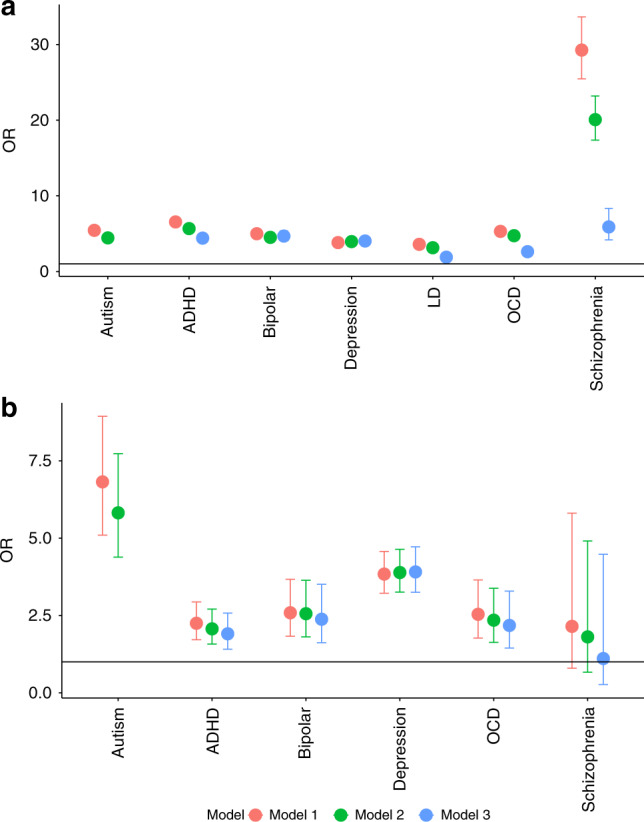
“A recent study reported that compared to cisgender individuals, transgender individuals had higher rates of ADHD, bipolar disorder, depression, learning disorder, obsessive compulsive disorder, and schizophrenia, even after accounting for level of education and age (Warrier et al., 2020).”
Oliver, M., Poysden, Z., & Gillespie‐Smith, K. (2024) · Review Journal of Autism and Developmental Disorders · doi:10.1007/s40489-024-00472-z · Cited by 4
Magaña, S., Yu, A. P., & Hussein, Q. (2024) · Contemporary clinical neuroscience · doi:10.1007/978-3-031-66932-3_3 · Cited by 4
Neuro-Affirming Practices for Voice Care
Kapila, R., Gaddy, C., & Pilchman, R. (2024) · Perspectives of the ASHA Special Interest Groups · doi:10.1044/2024_persp-23-00133 · Cited by 4
Gender and sexuality in autism, explained
Dattaro, L. (2020) · The Transmitter · doi:10.53053/ybta7630 · Cited by 4
Allman, M. E., Kerr, S., Roldan, C. I., Harris, G. M., & Harris, G. E. (2024) · Advances in Autism · doi:10.1108/aia-02-2024-0013 · Cited by 4
Autism and Gender and Sexuality Diversity
Dewinter, J., Zaks, Z., Brörmann, N., Henczyk, I., Graham, E. K., & Strang, J. F. (2024) · Springer eBooks · doi:10.1007/978-3-031-62072-0_11 · Cited by 4
Cai, C., Bucher, J., Finkers, R., & Bonnema, G. (2022) · bioRxiv (Cold Spring Harbor Laboratory) · doi:10.1101/2022.10.27.514037 · Cited by 4
Rosenau, K. A., Baroni, E., Keenan, E. G., & Massolo, M. L. (2023) · Cureus · doi:10.7759/cureus.51060 · Cited by 4
Holloway, B. T., & Walls, N. E. (2025) · International Journal of Transgender Health · doi:10.1080/26895269.2025.2447963 · Cited by 5
Neurodivergent Students' Views on Internet Threats: A Call for Research
Stone, B. G., Saggers, B. R., Campbell, M. A., & Yates, C. (2025) · Advances in social networking and online communities book series · doi:10.4018/979-8-3693-4191-9.ch003 · Cited by 6
Reyes-Diaz, S. A., Priego-Parra, B. A., Alvarez, H. R. O., Núñez-Jiménez, E. L., Dorantes-Nava, C. L., la Tijera, F. H., Amieva‐Balmori, M., Vélez, C. D., & Remes-Troche, J. M. (2025) · Clinical and Translational Gastroenterology · doi:10.14309/ctg.0000000000000883 · Cited by 4
“Contributing factors include prenatal in fl uences on brain development, which predispose individuals to these conditions and in fl uence gender behavioral tendencies (35).”
Robinson, J., Allison, C. L., Auyeung, B., Clare, I. C. H., Lombardo, M. V., Nagra, N., & Baron‐Cohen, S. (2025) · PLoS ONE · doi:10.1371/journal.pone.0333875 · Cited by 4
Self-citationNuzum, E., Medeisyte, R., Eshetu, A., Hoare, S., Corbett, A., Ballard, C. G., Hampshire, A., O’Nions, E., John, A., Stewart, G. R., et al. (2026) · Nature Mental Health · doi:10.1038/s44220-025-00579-0 · Cited by 3
Chronic pain in transgender and gender-diverse youth: a biopsychosocial perspective
Han, G. T., Basch, M. C., Chen, D., & Zeltzer, L. K. (2026) · Frontiers in Pain Research · doi:10.3389/fpain.2025.1709268 · Cited by 4
Metadata
- Authors
- Warrier, V., Greenberg, D. M., Weir, E., Buckingham, C., Smith, P., Lai, M.-C., Allison, C., & Baron-Cohen, S.
- Affiliations
- University of Cambridge (GB)
- Bar-Ilan University (IL)
- Centre for Addiction and Mental Health (CA)
- Corresponding author
- Warrier, Varun
- Venue
- Nature Communications
- Published
- 2020-08-07
- Volume
- 11
- Issue
- 1
- Pages
- 3959-3959
- ISSN
- 2041-1723 (ISSN-L)
- PMC
- PMC7415151
- OpenAlex
- W3048303946
- Semantic Scholar
- 25126b5e678a39bf76c343bb11981fdced24a433
- Cited by
- 595
- References
- 81
- Citations by year
- 2026: 112 · 2025: 109 · 2024: 118 · 2023: 121 · 2022: 84 · 2021: 40 · 2020: 9
- FWCI
- 34.13
- Type
- journal article
- Language
- en
- Open access
- gold
- doi.org
- Licence
- cc-by
- creativecommons.org/licenses/by/4.0 (tdm)
- creativecommons.org/licenses/by/4.0 (vor)
- Locations
- Nature Communications (publishedVersion, cc-by)
- PubMed Central (publishedVersion, cc-by)
- PubMed (publishedVersion)
- RePEc: Research Papers in Economics (submittedVersion)
- DOAJ (DOAJ: Directory of Open Access Journals) (submittedVersion, cc-by-sa)
- Apollo (University of Cambridge) (submittedVersion)
- Apollo (University of Cambridge) (submittedVersion, cc-by)
- Apollo
- Apollo (cc-by)
- Funders
- Autism Speaks (777394)
- Ontario Brain Institute (IDS-Il-02)
- Wellcome Trust (214322, 777394, 214322/Z/18/Z)
- European Federation of Pharmaceutical Industries and Associations (777394)
- Simons Foundation Autism Research Initiative (777394)
- Centre for Addiction and Mental Health Foundation
- National Institute for Health and Care Research
- European Commission (HORIZON2020, 777394)
- Rosetrees Trust
- University of Toronto
- Innovative Medicines Initiative (777394)
- Templeton World Charity Foundation
- Department of Psychiatry, University of Toronto
- Canadian Institutes of Health Research (159578_1, 777394, GSB 17137 3)
- Medical Research Council (777394)
- Topics
- Life Sciences › Neuroscience › Cognitive Neuroscience › Autism Spectrum Disorder Research
- Social Sciences › Psychology › Social Psychology › LGBTQ Health, Identity, and Policy
- Health Sciences › Medicine › Endocrinology, Diabetes and Metabolism › Sexual Differentiation and Disorders
- Keywords
- transgender people, gender-diverse people, autism spectrum disorder, autistic traits, neurodevelopmental disorders, psychiatric diagnosis, empathy, systemizing, sensory sensitivity, cisgender comparison, access to mental health care
- MeSH terms
- Adolescent, Adult, Aged, Aged, 80 and over, Autistic Disorder, Female, Humans, Male, Middle Aged, Confidence Intervals, Odds Ratio, Young Adult, Self Report, Transgender Persons
About these checks
Registry, retraction, Cites and statistics results are computed, not judged, with one exception: a printed reference that no index lists is read once by a model before it counts as a citation error. Claims are extracted by a model and kept only when their quote appears verbatim in the text; each cited source is then checked, with a model’s help, for whether it says what the claim relies on. Those verdicts can be wrong — read the claim’s quote and the cited source before relying on one.
Statistics and arithmetic are recomputed, not judged.
Confidence bands are shown only for fields calibrated on our annotated test set. None is calibrated yet, so no band is shown.
What counts as a claim ›How we measure confidence ›How we check this ›
Are you an author, or do you see a problem with this page? Request a review
Data sources
Bibliographic data: Semantic Scholar, OpenAlex, Crossref.
Contains information from the Semantic Scholar Academic Graph Datasets, made available under the ODC Attribution License (ODC-BY 1.0).
Semantic Scholar’s data is described in: Kinney, R., et al. (2023). The Semantic Scholar Open Data Platform. arXiv:2301.10140.
