

Elevated rates of autism, other neurodevelopmental and psychiatric diagnoses, and autistic traits in transgender and gender-diverse individuals
Open accessThe DOI matches its Crossref record; 81 of the 81 references it cites were found in a registry or an index.
Abstract
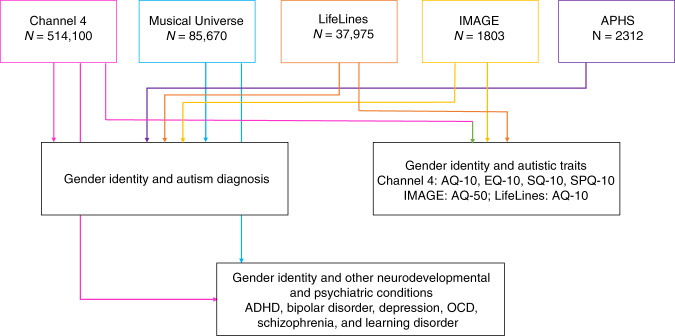
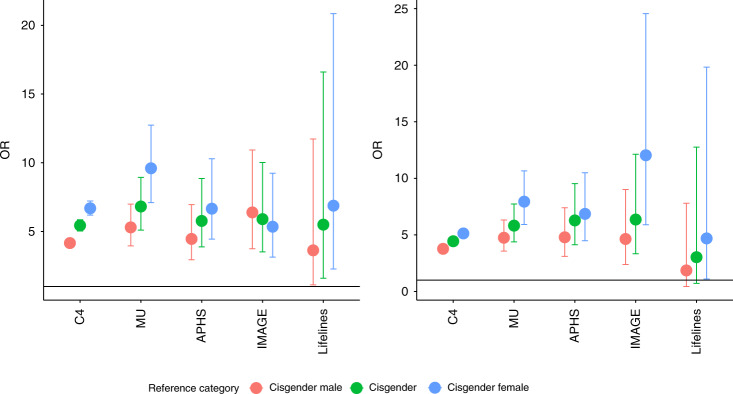
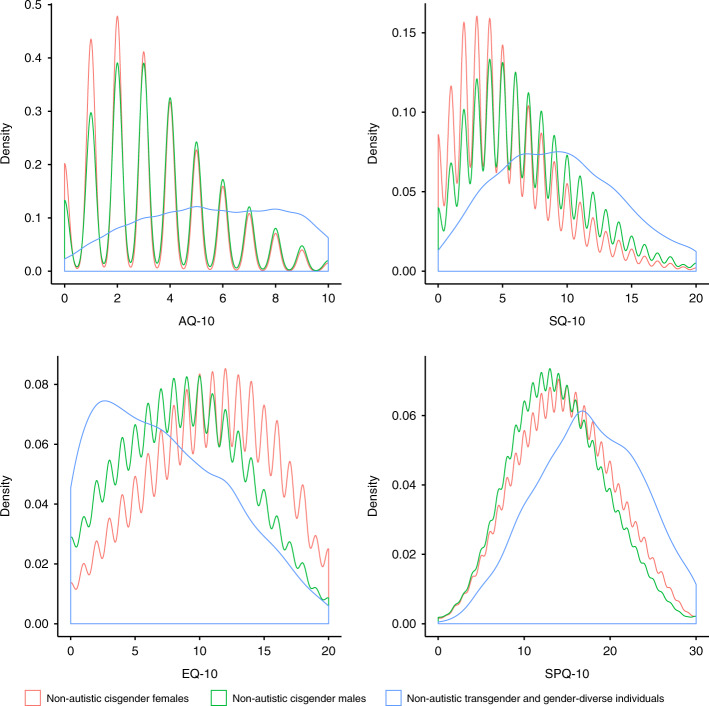
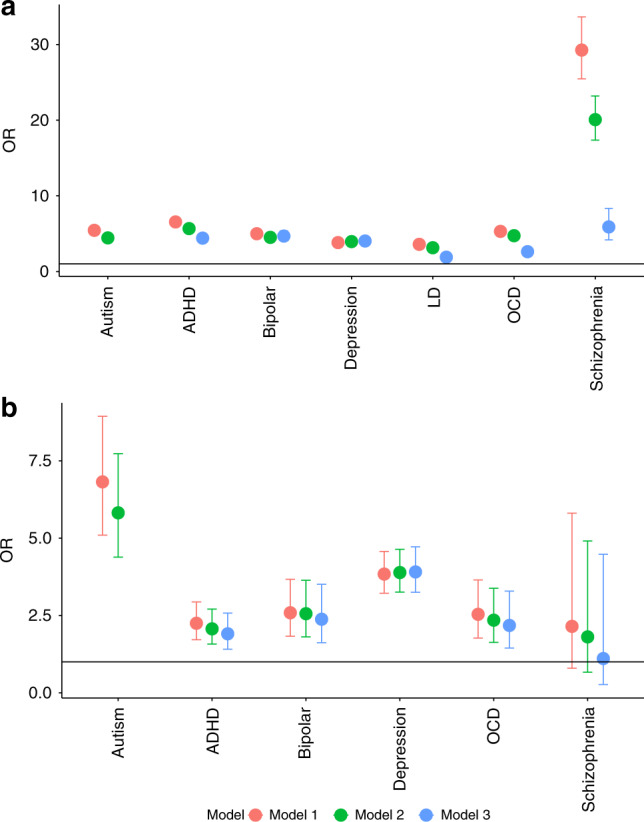
It is unclear whether transgender and gender-diverse individuals have elevated rates of autism diagnosis or traits related to autism compared to cisgender individuals in large non-clinic-based cohorts. To investigate this, we use five independently recruited cross-sectional datasets consisting of 641,860 individuals who completed information on gender, neurodevelopmental and psychiatric diagnoses including autism, and measures of traits related to autism (self-report measures of autistic traits, empathy, systemizing, and sensory sensitivity). Compared to cisgender individuals, transgender and gender-diverse individuals have, on average, higher rates of autism, other neurodevelopmental and psychiatric diagnoses. For both autistic and non-autistic individuals, transgender and gender-diverse individuals score, on average, higher on self-report measures of autistic traits, systemizing, and sensory sensitivity, and, on average, lower on self-report measures of empathy. The results may have clinical implications for improving access to mental health care and tailoring adequate support for transgender and gender-diverse individuals.
Overview
The claims and statistics of this paper haven’t been checked yet.
Free: it reads the open-access text and checks the first 5 claims that cite a source we can check. Create a free account to check every claim.
Integrity signals
Registry
Cites
Statistics
Figures
Verification
Claims the paper makes
The claims and statistics of this paper haven’t been checked yet.
Free: it reads the open-access text and checks the first 5 claims that cite a source we can check. Create a free account to check every claim.
Claims other papers make about this one
Each is checked against this paper’s own text: does it say what the citing paper says it does?
In the citing paper
“Furthermore, sex and gender7,8 and co-occurring ID and developmental, behavioral and medical conditions9,10 alter the presentation and measurement of core autism features.”
From Genetic correlates of phenotypic heterogeneity in autism (2022) · cites this paper as [8]
Self-check
Percentages, sums and reported differences re-computed from the paper’s own numbers.
The self-check needs the paper’s full text.
Citations
Cites
Diagnostic and Statistical Manual of Mental Disorders
American Psychiatric Association (2013) · doi:10.1176/appi.books.9780890425596 · Cited by 116,369
Baron-Cohen, S., Wheelwright, S., Skinner, R., Martin, J., & Clubley, E. (2001) · Journal of Autism and Developmental Disorders · doi:10.1023/a:1005653411471 · Cited by 6,450
Self-citationBaio, J., Wiggins, L., Christensen, D. L., Maenner, M. J., Daniels, J., Warren, Z., Kurzius-Spencer, M., Zahorodny, W., Robinson, C., Rosenberg, et al. (2018) · MMWR. Surveillance Summaries · doi:10.15585/mmwr.ss6706a1 · Cited by 6,078
What Is the Male-to-Female Ratio in Autism Spectrum Disorder? A Systematic Review and Meta-Analysis
Loomes, R., Hull, L., & Mandy, W. P. L. (2017) · Journal of the American Academy of Child & Adolescent Psychiatry · doi:10.1016/j.jaac.2017.03.013 · Cited by 2,804
Global Prevalence of Autism and Other Pervasive Developmental Disorders
Elsabbagh, M., Divan, G., Koh, Y., Kim, Y. S., Kauchali, S., Marcín, C., Montiel‐Nava, C., Patel, V., Paula, C. S., Wang, C., et al. (2012) · Autism Research · doi:10.1002/aur.239 · Cited by 2,636
Baird, G., Simonoff, E., Pickles, A., Chandler, S., Loucas, T., Meldrum, D., & Charman, T. (2006) · The Lancet · doi:10.1016/s0140-6736(06)69041-7 · Cited by 2,104
Lai, M.-C., Kassee, C., Besney, R., Bonato, S., Hull, L., Mandy, W., Szatmari, P., & Ameis, S. H. (2019) · The Lancet Psychiatry · doi:10.1016/s2215-0366(19)30289-5 · Cited by 1,892
Self-citationGlobal health burden and needs of transgender populations: a review
Reisner, S. L., Poteat, T., Keatley, J., Cabral, M., Mothopeng, T., Dunham, E., Holland, C. E., Max, R., & Baral, S. D. (2016) · The Lancet · doi:10.1016/s0140-6736(16)00684-x · Cited by 1,476
Genomic Relationships, Novel Loci, and Pleiotropic Mechanisms across Eight Psychiatric Disorders
Lee, P. H., Anttila, V., Won, H., Feng, Y.-C. A., Rosenthal, J., Zhu, Z., Tucker-Drob, E. M., Nivard, M. G., Grotzinger, A. D., Posthuma, D., et al. (2019) · Cell · doi:10.1016/j.cell.2019.11.020 · Cited by 1,381
The epidemiology and global burden of autism spectrum disorders
Baxter, A. J., Brugha, T. S., Erskine, H. E., Scheurer, R. W., Vos, T., & Scott, J. G. (2015) · Psychological Medicine · doi:10.1017/s003329171400172x · Cited by 1,224
Cited by
Items 101–200 of 661
Elkadi, J., Chudleigh, C., Maguire, A., Ambler, G. R., Scher, S., & Kozlowska, K. (2023) · Children · doi:10.3390/children10020314 · Cited by 24
Why do we need sex‐balanced studies of autism?
Nordahl, C. W. (2023) · Autism Research · doi:10.1002/aur.2971 · Cited by 29
“Current estimates suggest that gender diversity occurs at higher rates in autistic individuals than in non-autistic individuals (4 – 8% vs. (cid:1) 1%; Janssen et al., 2016; Kallitsounaki & Williams, 2022; Warrier et al., 2020).”
Effective digital support for autism: digital social stories
Camilleri, L. J., Maras, K., & Brosnan, M. (2024) · Frontiers in Psychiatry · doi:10.3389/fpsyt.2023.1272157 · Cited by 26
Tollit, M. A., Maloof, T., Hoq, M., Haebich, K. M., Pace, C. C., Rodriguez, Z. M., Sial, M., Payne, J. M., & Pang, K. C. (2024) · The Lancet Regional Health - Western Pacific · doi:10.1016/j.lanwpc.2024.101084 · Cited by 27
“11,18 The objective of this study was therefore to describe the clinical presentation of trans children and adolescents with autistic traits and to compare their pro fi le with those who do not have such traits.”
BackgroundMournet, A. M., Kellerman, J. K., Garner, R. C., & Kleiman, E. M. (2024) · JAMA Network Open · doi:10.1001/jamanetworkopen.2024.38345 · Cited by 23
Online safety experiences of autistic young people: An Interpretative Phenomenological Analysis
Macmillan, K., Berg, T., Just, M., & Stewart, M. E. (2022) · Research in Autism · doi:10.1016/j.rasd.2022.101995 · Cited by 22
Warreman, E. B., Nooteboom, L., Terry, M.-B., Hoek, H. W., Leenen, P., van Rossum, E. F. C., Ramlal, D., Vermeiren, R. R. J. M., & Ester, W. (2023) · Autism · doi:10.1177/13623613231155324 · Cited by 24
“However, the AQ-10 is indeed a valid measure in epidemiological studies to grade the level of autistic symptoms in adult participants (Lundin et al., 2019; Warrier et al., 2020).”
BackgroundJones, F., Hamilton, J., & Kargas, N. (2024) · Counselling and Psychotherapy Research · doi:10.1002/capr.12742 · Cited by 23
Rea, H. M., Øien, R. A., Webb, S. J., Bansal, S., Strang, J. F., & Nordahl‐Hansen, A. (2024) · Journal of Autism and Developmental Disorders · doi:10.1007/s10803-024-06650-6 · Cited by 23
Garg, A. K., Mitra, T., Schips, M., Bandyopadhyay, A., & Meyer‐Hermann, M. (2023) · Frontiers in Immunology · doi:10.3389/fimmu.2023.1080853 · Cited by 23
Girolamo, T. M., Shen, L., Monroe‐Gulick, A., Rice, M. L., & Eigsti, I. (2023) · Autism · doi:10.1177/13623613231166749 · Cited by 22
“…gender and sex, as well as specifying which information is provided, is critical to understanding the generalizability of findings, especially considering that autistic individuals are more likely than neurotypical individuals to be gender diverse (Walsh et al., 2018; Warrier et al., 2020).”
BackgroundVoltaire, S., Steinberg, H., Garfield, T., Chvasta, K., Ardeleanu, K., Brown, M., & Shea, L. (2024) · Autism · doi:10.1177/13623613241257600 · Cited by 21
“There is a documented high co-occurrence of autism and transgender identity (Cooper et al., 2018; Warrier et al., 2020), but only one (fairly new) study has examined the nonbinary autistic experience specifically (Peachey & Crane, 2024), and few studies include nonbinary participants (Gratton,…”
Capriotti, M. R., & Donaldson, J. M. (2021) · Journal of Applied Behavior Analysis · doi:10.1002/jaba.884 · Cited by 22
Hilton, M., Boulton, K., Kozlowska, K., McClure, G., & Guastella, A. J. (2022) · Journal of Psychiatric Research · doi:10.1016/j.jpsychires.2022.02.018 · Cited by 21
Acupuncture for children with autism spectrum disorder: A systematic review and meta-analysis
Lun, T., Lin, S., Chen, Y., Zhao, Y., Wang, D., Li, L., & Yu, J. (2023) · Medicine · doi:10.1097/md.0000000000033079 · Cited by 27
Bailey, C. (2023) · Literacy · doi:10.1111/lit.12320 · Cited by 29
Cunff, A. L., Giampietro, V., & Dommett, E. J. (2024) · Education Sciences · doi:10.3390/educsci14050516 · Cited by 31
Maciver, D., Roy, A. S., Johnston, L., Boilson, M., Curnow, E., Johnstone‐Cooke, V., & Rutherford, M. (2025) · Autism · doi:10.1177/13623613251383343 · Cited by 21
“This limitation may be particularly impactful in the study of neurodivergence, as gender-diverse individuals are known to be disproportionately represented in this population (Corbett et al., 2023; Kourti & MacLeod, 2019; Strang et al., 2023; Warrier et al., 2020).”
Gender Diverse Autistic Young Adults: A Mental Health Perspective
Genovese, A., Singh, S. C., Casubhoy, I., & Hellings, J. A. (2022) · Archives of Sexual Behavior · doi:10.1007/s10508-022-02443-z · Cited by 19
“Several studies have suggested an overrepresentation of autism spectrum disorder (ASD) among individuals with gender dysphoria (Thrower et al., 2020; Warrier et al., 2020).”
BackgroundIncorporating cell hierarchy to decipher the functional diversity of single cells
Chen, L., & Li, S. C. (2022) · Nucleic Acids Research · doi:10.1093/nar/gkac1044 · Cited by 22
Kirby, A. V., Conner, C. M., & Mazefsky, C. A. (2024) · Autism Research · doi:10.1002/aur.3120 · Cited by 21
“Further, beyond viewing gender as synonymous with birth sex and as binary (Torgrimson & Minson, 2005), there has also been increased awareness of and attention to the needs and experiences of autistic transgender and nonbin-ary people (Strang et al., 2020; Warrier et al., 2020).”
BackgroundAdams, N., Jacobsen, K., Li, L., Francino, M., Rutherford, L. L., Tei, C., Scheim, A. I., & Bauer, G. R. (2024) · Autism in Adulthood · doi:10.1089/aut.2023.0024 · Cited by 19
Soto, E. F., Orantes, D., Russo, N. N., & Antshel, K. M. (2024) · Autism · doi:10.1177/13623613241236228 · Cited by 21
“Another study found higher rates of autism along with other mental health conditions in individuals (ages 16–90 years old) identifying as transgender (Warrier et al., 2020).”
BackgroundGhassabian, A., Suleri, A., Blok, E., Franch, B., Hillegers, M. H. J., & White, T. J. H. (2022) · Journal of Child Psychology and Psychiatry · doi:10.1111/jcpp.13588 · Cited by 20
A Special Issue of Autism in Adulthood Dedicated to the Intersection of Autism and the Broad LGBTQ+
Strang, J. F., & Fischbach, A. L. (2023) · Autism in Adulthood · doi:10.1089/aut.2023.0056.editorial · Cited by 19
Martin, L. J., & Nagalakshmi, M. (2024) · arXiv (Cornell University) · doi:10.48550/arxiv.2404.17730 · Cited by 20
“While wanting personalized voices is not unique to autistic adults, there is a large overlap between trans* and autistic populations [Warrier et al. 2020], making gender-diverse speech synthesis valuable to the autistic community.”
Goldberg, C., & Willham, E. (2024) · Human Resource Management · doi:10.1002/hrm.22219 · Cited by 19
Simpson, A., Rensburg, M. V., Ding, L., & Rydzewska, E. (2024) · Research in Autism · doi:10.1016/j.rasd.2024.102427 · Cited by 19
Płatos, M., & Pisula, E. (2020) · Research in Autism · doi:10.1016/j.rasd.2020.101716 · Cited by 20
Williams, T., Barclay, I., Jones, R. B., Livingston, L. A., Agha, S. S., Ford, T. J., John, A. M., Sayal, K. S., Thapar, A., & Martin, J. (2025) · The British Journal of Psychiatry · doi:10.1192/bjp.2025.10376 · Cited by 17
Not robots; Cyborgs — Furthering anti-ableist research in human-computer interaction
Guberman, J., & Haimson, O. L. (2023) · First Monday · doi:10.5210/fm.v28i1.12910 · Cited by 18
Flynn, S. (2021) · Children and Youth Services Review · doi:10.1016/j.childyouth.2021.106185 · Cited by 16
Taylor, S. C., Gehringer, B. N., Dow, H. C., Langer, A., Rawot, E., Smernoff, Z., Steeman, S. L., Almasy, L. A., Rader, D. J., Bućan, M., et al. (2022) · Journal of Autism and Developmental Disorders · doi:10.1007/s10803-022-05822-6 · Cited by 17
“Recent work has taken multiple approaches to examine the intersection of gender diversity and the autism spectrum (George & Stokes, 2018; Manjra & Masic, 2022; Moore et al., 2022; Strang et al., 2020; Warrier et al., 2020).”
Pisula, E., Płatos, M., Banasiak, A., Danielewicz, D., Gosztyła, T., Podgórska-Jachnik, D., Pyszkowska, A., Rumińska, A., & Winczura, B. (2024) · Oficyna Wydawnicza "Impuls" eBooks · doi:10.62634/9788382943139 · Cited by 27
Thomas, K. S., Keating, J., Ross, A. A., Cooper, K., & Jones, C. R. G. (2025) · Journal of Eating Disorders · doi:10.1186/s40337-025-01215-z · Cited by 19
Intersecting effects of sex/gender and autism on structural language: A scoping review
Oates, M., & Bean, A. (2023) · Autism · doi:10.1177/13623613221151095 · Cited by 15
Ortega, J. T., Roca, J., Coelho-Martinho, R., Orozko, Z., Sanromà‐Ortíz, M., & Valls-Ibáñez, V. (2023) · BMC Psychiatry · doi:10.1186/s12888-023-05380-w · Cited by 15
“As such, establishing a reliable support network would make it easier for them to express their fears, concerns, and difficulties on the path to full affective expression [41, 42].”
BackgroundFischbach, A. L., Hindenach, A., van der Miesen, A. I. R., Yang, J. S., Buckley, O. J., Song, M., Campos, L., & Strang, J. F. (2024) · British Journal of Developmental Psychology · doi:10.1111/bjdp.12486 · Cited by 15
Disability barriers autistic girls face in secondary education: A systematic review
Urbaniak, K., & D’Amico, M. (2024) · Autism · doi:10.1177/13623613241294189 · Cited by 19
“It is also important to note that the binary approach used in this review is a product of the literature available; however, it excludes a substantial minority of transgender, non-binary and gender-fluid autistic people (Dewinter et al., 2017; Warrier et al., 2020).”
Clin, É., Maes, P., Stercq, F., & Kissine, M. (2020) · Molecular Autism · doi:10.1186/s13229-020-00398-3 · Cited by 15
Psychopharmacological Considerations for Gender-Affirming Hormone Therapy
Kim, H.-H., Goetz, T. G., Grieve, V. L. B., & Keuroghlian, A. S. (2023) · Harvard Review of Psychiatry · doi:10.1097/hrp.0000000000000373 · Cited by 15
Divergent perspectives: autistic adults' perceptions of the police
Parry, M. M., & Huff, J. (2022) · Policing An International Journal · doi:10.1108/pijpsm-10-2021-0144 · Cited by 16
Buswinka, C. J., Osgood, R. T., Simikyan, R. G., Rosenberg, D. B., & Indzhykulian, A. A. (2023) · PLoS Biology · doi:10.1371/journal.pbio.3002041 · Cited by 15
Gould, W. A., MacKinnon, K. R., Lam, J. S. H., Enxuga, G., Abramovich, A., & Ross, L. E. (2023) · Culture Medicine and Psychiatry · doi:10.1007/s11013-023-09838-0 · Cited by 15
“…disorder (BPD) (Anzani et al., 2020; Furlong & Janca, 2022; Lam et al., 2022), schizophrenia or bipolar disorder (Stusinski & Lew-Starowicz, 2018; Warrier et al., 2020; Hanna et al., 2019), as well as autism spectrum disorder (ASD) (War-rier et al., 2020; Thrower et al., 2019; Wattel et al.,…”
Brierley, J., Larcher, V., Hadjipanayis, A., & Grossman, Z. (2024) · Frontiers in Pediatrics · doi:10.3389/fped.2024.1298884 · Cited by 18
Parents’ and professionals’ views on autistic motherhood using a participatory research design
Sutcliffe-Khan, F., Larkin, F., & Hamilton, L. (2024) · Current Psychology · doi:10.1007/s12144-024-05999-2 · Cited by 15
Beyond the Binary: Gender Inclusivity in Schizophrenia Research
Nolan, C. J., Roepke, T. A., & Perreault, M. L. (2023) · Biological Psychiatry · doi:10.1016/j.biopsych.2023.03.018 · Cited by 14
“As studies are beginning to demonstrate that there is a substantially elevated risk for TGNC adults and youth to develop schizophrenia (11,12), this indicates that a greater research focus on TGNC populations needs to be prioritized.”
BackgroundPolygenic Scores Clarify the Relationship Between Mental Health and Gender Diversity
Thomas, T., Tener, A. J., Pearlman, A. M., Imborek, K. L., Yang, J. S., Strang, J. F., & Michaelson, J. J. (2024) · Biological Psychiatry Global Open Science · doi:10.1016/j.bpsgos.2024.100291 · Cited by 15
“Previous studies have shown that there is an enrichment of gender diversity in autism (22), and gender-diverse individuals have been found to have increased levels of clinically relevant autistic traits and an increased likelihood of an autism diagnosis (23).”
Best practices for interpretable machine learning in computational biology
Chen, V., Yang, M., Cui, W., Kim, J. S., Talwalkar, A., & Ma, J. (2022) · doi:10.1101/2022.10.28.513978 · Cited by 14
Genetic correlates of phenotypic heterogeneity in autism
(2020) · doi:10.1101/2020.07.21.20159228 · Cited by 14
Procyshyn, T. L., Moseley, R. L., Marsden, S. J. E., Allison, C. L., Parsons, T. A., Cassidy, S., Pelton, M., Weir, E. M., Chikaura, T., Hodges, H., et al. (2025) · Autism · doi:10.1177/13623613251370789 · Cited by 17
“…trans/gender-divergent participants in our study, which reflects the overlap between being autistic/neurodivergent and being trans/gender-divergent (Warrier et al., 2020), higher suicidality in trans/ gender-divergent individuals (Erlangsen et al., 2023) and particularly heightened suicidality in…”
Self-citation“I wish I could just be myself”: Experiences of social camouflaging in adults with ADHD
Mylett, M. L., Boucher, T. Q., & Iarocci, G. (2026) · Research in Neurodiversity · doi:10.1016/j.rin.2026.100018 · Cited by 13
Brief Report: An Exploration of Alexithymia in Autistic and Nonautistic Transgender Adults
Kallitsounaki, A., & Williams, D. M. (2023) · Autism in Adulthood · doi:10.1089/aut.2022.0113 · Cited by 14
“16,17 There are also a number of transgender and gender diverse people who report clinical levels of autistic traits but do not meet the full diagnostic criteria for autism, forming a sub-clinical autistic group.”
Paricos, A., Sturrock, A., Twomey, K. E., & Leadbitter, K. (2024) · Research in Autism · doi:10.1016/j.rasd.2024.102338 · Cited by 16
Manley, J., Brownlow, C., & Brömdal, A. (2024) · International Journal of Transgender Health · doi:10.1080/26895269.2024.2317392 · Cited by 13
“Parallel to this, it is important to note that any statistic may change depending on the terms used to define who is trans (Warrier et al., 2020; Zhang et al., 2020).”
BackgroundInfluentialSocial Media as Marginalisation Machine: The Trans Desire for Solidarity Spaces
Kender, K., & Spiel, K. (2025) · CHI Conference on Human Factors in Computing Systems · doi:10.1145/3706598.3713136 · Cited by 15
“…aspect of our fndings fundamental to the experiences of our participants: six of our seven participants were neurodivergent, although we were not specifcally looking for neurodivergent participants— perhaps unsurprisingly, as neurodivergence and transgender identities often co-occur [16, 54, 111].”
Schiltz, H. K., McVey, A. J., van Dyk, I. S., Adler, E. J., & Hecke, A. V. V. (2021) · Journal of Autism and Developmental Disorders · doi:10.1007/s10803-021-05033-5 · Cited by 14
“1 3 traits than cisgender adults based on a recent large nonclinical study (Warrier et al., 2020).”
BackgroundToft, A. (2023) · Journal of Bisexuality · doi:10.1080/15299716.2023.2214134 · Cited by 13
Autistic Traits of People Who Engage in Pup Play: Occurrence, Characteristics and Social Connections
Wignall, L., Moseley, R. L., & McCormack, M. (2023) · The Journal of Sex Research · doi:10.1080/00224499.2023.2239225 · Cited by 13
“These difficulties may also be amplified by being LGBT or having a minoritized gender and/or sexual identity, as is more common in autistic people (McQuaid et al., 2022; Warrier et al., 2020).”
Fithall, K., Gray, I. E., Linardon, J., Phillipou, A., Donaldson, P. H., Albein‐Urios, N., Enticott, P. G., Fuller‐Tyszkiewicz, M., & Kirkovski, M. (2023) · BMC Psychology · doi:10.1186/s40359-023-01306-z · Cited by 14
“Finally, as rates of gender diversity are higher among neurodiverse cohorts [82, 83], and eating disorder risk is higher among gender diverse communities [84–86], it is important that both biological sex and gender identity are considered in future research.”
BackgroundExamining Diagnostic Trends and Gender Differences in the ADOS-II
Tien, I. S., Johnson, A. R., Kim, J., & Wood, J. J. (2023) · Journal of Autism and Developmental Disorders · doi:10.1007/s10803-023-06191-4 · Cited by 16
Giovanardi, G., Mirabella, M., Giuseppe, M. D., Lombardo, F. P., Speranza, A. M., & Lingiardi, V. (2021) · Frontiers in Psychology · doi:10.3389/fpsyg.2021.665547 · Cited by 14
“Furthermore, recent studies have identified a potential link between GD and autism spectrum disorders (Hisle-Gorman et al., 2019; Warrier et al., 2020); however, this association is highly debated by experts in the field (e.g., Turban and van Schalkwyk, 2018).”
BackgroundBarriers to an autistic identity: How RRBs may contribute to the underdiagnosis of females
Cary, E., Rao, A., Matsuba, E. S. M., & Russo, N. (2023) · Research in Autism Spectrum Disorders · doi:10.1016/j.rasd.2023.102275 · Cited by 12
Hechler, F. C., Tuomainen, O., Weber, N., Fahr, F., Karlek, B., Maroske, M., Misia, M., & Caruana, N. (2025) · Molecular Autism · doi:10.1186/s13229-025-00643-7 · Cited by 12
“Previous studies evaluating inventories of autistic traits only compared biologically female and male individuals (e.g., [8, 16]), whereas autistic people are more likely than non-autistic people to be gender diverse [88, 89].”
Does the M-Chat-R Give Important Information for the Diagnosis of the Autism Spectrum Disorder?
Pop-Jordanova, N. D., & Zorčec, T. (2021) · PRILOZI · doi:10.2478/prilozi-2021-0005 · Cited by 14
Financial literacy among autistic adults
Galizzi, M., Hillier, A. J., & Schena, D. A. (2023) · Journal of Consumer Affairs · doi:10.1111/joca.12564 · Cited by 13
Schweizer, K. W., Austin, F., Wright, K. E., Jackson, B., Lin, A. P., Strauss, P., & Furzer, B. J. (2025) · International Journal of Transgender Health · doi:10.1080/26895269.2024.2447765 · Cited by 12
Pearson, A., Brennan-Devine, N., Clarke, C., Kakoulidou, M., Kelly, L., Moyse, R., & Pavlopoulou, G. (2025) · School Mental Health · doi:10.1007/s12310-025-09813-7 · Cited by 11
“Autistic people are also more likely than non-autistic people to be non-binary or transgender and not identify with their sex assigned at birth (Warrier et al., 2020).”
What Category Best Fits: Understanding Transgender Identity in a Survey of Autistic Individuals
Steinberg, H., Garfield, T., Becker, A., & Shea, L. (2023) · Autism in Adulthood · doi:10.1089/aut.2021.0079 · Cited by 11
Pliskin, A. E. (2022) · Ought The Journal of Autistic Culture · doi:10.9707/2833-1508.1107 · Cited by 13
Affirming Care for Autism and Gender Diversity
Hadland, S. E., Solomon, E. D., & Guss, C. E. (2023) · PEDIATRICS · doi:10.1542/peds.2023-061813 · Cited by 11
Baylor, C. R., Bamer, A. M., Brown, C., Jin, J. L., Teixeira, J. C., & Nuara, M. J. (2024) · American Journal of Speech-Language Pathology · doi:10.1044/2023_ajslp-23-00260 · Cited by 11
Diagnostic assessment of autism spectrum disorder in transgender and gender diverse youth
Greene, R. K., Rutter, T. M., Phelps, R. A., Olsen, E., Harmon, R., & Moyer, D. N. (2024) · The Clinical Neuropsychologist · doi:10.1080/13854046.2024.2331272 · Cited by 11
“Results of a large cross-sectional survey of TGD individuals found elevated rate of neurodivergence or neurodevelopmental conditions including ADHD and learning disorders (Warrier et al., 2020).”
InfluentialEdwardson, S., Flower, L., Fawcett, E., Medlock, R., Cheung, A. S., Kamaruddin, K., McCormack, V. L., & Agarwal, S. (2024) · Anaesthesia · doi:10.1111/anae.16378 · Cited by 13
“They also show increased rates of psychiatric disorders including anxiety; depression; bipolar disorder; obsessive compulsive disorder; attention de fi cit hyperactivity disorder; and schizophrenia [62].”
Frigaux, A., Vacant, C., & Évrard, R. (2022) · L Évolution Psychiatrique · doi:10.1016/j.evopsy.2022.06.001 · Cited by 14
Cardon, G. J., McQuarrie, M., Calton, S., & Gabrielsen, T. P. (2023) · Research in Autism · doi:10.1016/j.rasd.2023.102263 · Cited by 15
Autism traits in transgender and gender-diverse adults seeking gender-affirming medical treatment
Huisman, B., Noens, I. L. J., Steensma, T. D., Kreukels, B. P. C., & van der Miesen, A. I. R. (2024) · International Journal of Transgender Health · doi:10.1080/26895269.2024.2368077 · Cited by 12
Gormley, L., Ramey, D., Grennan, C., & Koka, N. (2024) · European Journal of Education · doi:10.1111/ejed.12800 · Cited by 13
Experiences of Gender-Diverse Youth Living With Chronic Pain
Boerner, K. E., Fox, D. A., Du, L., Metzger, D. L., Marshall, S. K., Moore, E. M., Narang, P., Wharton, M.-N., & Oberlander, T. F. (2025) · PEDIATRICS · doi:10.1542/peds.2024-067035 · Cited by 11
Bayeh, R., & Ryder, A. G. (2025) · Autism in Adulthood · doi:10.1089/aut.2024.0120 · Cited by 11
“In 34 – 36 Autistic people seem to also be more likely to report satisfaction in singlehood, 35 more likely to identify (and less likely to be acknowledged) as asexual 37 or demis-exual, 38 and more likely to adhere to non-normative relationship styles such as polyamory.”
Grant, R., Lim, G., Russell, A., Bailey, S., & Dane, S. K. (2025) · International Journal of Transgender Health · doi:10.1080/26895269.2025.2458702 · Cited by 10
Liang, S., Cormier, M. V., Bohrer, R., & Dugas, P. O. T. (2025) · CHI Conference on Human Factors in Computing Systems · doi:10.1145/3706598.3714081 · Cited by 10
Molecular and Genetic Mechanisms in Autism Spectrum Disorder
Pruitt, A., Gupta, A. R., & Hoffman, E. J. (2025) · Annals of Neurology · doi:10.1002/ana.70013 · Cited by 12
“35 More work needs to be done to better understand the clinical presentation of ASDs in gender-diverse individuals, leading to more personalized support and mental health care.”
Disordered eating in autistic trans and gender diverse people: a lived experience-led scoping review
White, L., Schweizer, K., & Thomas, K. S. (2025) · Journal of Eating Disorders · doi:10.1186/s40337-025-01447-z · Cited by 11
“Early evidence suggests that having multiple minority identities equates to a greater risk of EDs [88, 89].”
Ly, A., Heron, J. E., Rai, D., & Wright, C. (2022) · Psychological Medicine · doi:10.1017/s0033291722000940 · Cited by 10
Friedman, S., Noble, R., Archer, S., Gibson, J. L., & Hughes, C. H. (2023) · Autism · doi:10.1177/13623613231166462 · Cited by 12
“However, the gender diversity in this sample is to be expected, as biological sex and gender identity are not interchangeable concepts and transgender and gender-diverse people have higher rates of autism (Warrier et al., 2020).”
Girolamo, T. M., Butler, L. K., Canale, R. R., Aslin, R. Ν., & Eigsti, I. (2023) · Neuropsychology Review · doi:10.1007/s11065-023-09618-y · Cited by 12
Neurological care for LGBT+ people
Volpe, S. G., Ahmad, J., Patel, R. A., & Rosendale, N. (2024) · Nature Reviews Neurology · doi:10.1038/s41582-024-00944-0 · Cited by 10
Webb, E. L., Gencarelli, B. L., Keaveney, G., & Morris, D. J. (2024) · Advances in Autism · doi:10.1108/aia-07-2023-0037 · Cited by 10
Is it still autism? The increasing broadening of the autism spectrum
Bertelli, M. O., Boniotti, V., & Scior, K. (2024) · Autism Research · doi:10.1002/aur.3282 · Cited by 10
“…number of studies have detailed the high prevalence of subthreshold autism spectrum disorder (sASD) or AT in various demographic samples, particularly in individuals with diagnosed psychiatric conditions (Chisholm et al., 2019; Dell ’ Osso et al., 2017; Matsuo et al., 2015; Warrier et al., 2020).”
David, L. W., Stenberg, N., Diseth, T. H., Helverschou, S. B., Nyquist, C. B., Øien, R. A., & Wæhre, A. (2023) · Journal of Autism and Developmental Disorders · doi:10.1007/s10803-023-06181-6 · Cited by 11
Mo, K., Anagnostou, E. A., Lerch, J. P., Taylor, M. J., VanderLaan, D. P., Szatmári, P., Crosbie, J., Nicolson, R., Georgiadis, S., Kelley, E. A., et al. (2024) · Journal of Child Psychology and Psychiatry · doi:10.1111/jcpp.13965 · Cited by 10
Self-citationOliver, M., Poysden, Z., Crowe, E., Parkin, F., Mair, A. P. A., Hendry, N., Macey, E., & Gillespie‐Smith, K. (2025) · Journal of Autism and Developmental Disorders · doi:10.1007/s10803-024-06688-6 · Cited by 11
“…likely to experience GD than people in the general population and those with GD are more likely to be autistic than the general population (Glid-den et al., 2016 ; Nabbijohn et al., 2019 ; van der Miesen et al., 2018a ; van der Miesen, de Vries, Miesen et al., 2018a , b ; Warrier et al., 2020 ).”
Thomas, K. S., Cooper, K., & Jones, C. R. G. (2025) · Neurodiversity · doi:10.1177/27546330241308649 · Cited by 9
“…2018; Goetz & Adams, 2022; van der Miesen et al., 2018), with evidence suggesting both autism and ADHD are around 2 – 6 times more common in gender diverse individuals compared to cisgen-der individuals (people whose gender identity aligns with their sex assigned at birth; Warrier et al., 2020).”
Özel, F., White, R. A., Clark, K. D., Indremo, M., Zejlon, I., Rüegg, J., & Papadopoulos, F. C. (2025) · Psychiatry Research · doi:10.1016/j.psychres.2025.116591 · Cited by 10
Is This Autism? A Guide for Clinicians and Everyone Else
Henderson, D., Wayland, S. C., & White, J. (2023) · Routledge eBooks · doi:10.4324/9781003242130 · Cited by 15
Neurodivergence is also an LGBTQ+ topic: Making space for “neuroqueering” in the outdoors
Loy-Ashe, T. (2023) · Parks Stewardship Forum · doi:10.5070/p539260972 · Cited by 9
Salz, R., Saraiva-Agostinho, N., Vorsteveld, E. E., van der Made, C. I., Kersten, S., Stemerdink, M., Allen, J., Volders, P., Hunt, S. E., Hoischen, A., et al. (2023) · BMC Genomics · doi:10.1186/s12864-023-09391-5 · Cited by 10
de Rooy, F. B. B., Arnoldussen, M., van der Miesen, A. I. R., Steensma, T. D., Kreukels, B. P. C., Popma, A., & de Vries, A. L. C. (2024) · Archives of Sexual Behavior · doi:10.1007/s10508-024-02940-3 · Cited by 11
“…has been widely reported (de Vries et al., 2010; Holt et al., 2016; Leef et al., 2019; Mahfouda et al., 2019; Strang et al., 2018b; van der Miesen et al., 2018b; Warrier et al., 2020), and both ASD and gender incongruence are associated with experiencing additional mental health difficulties.”
BackgroundDemartini, B., Ingrosso, G., Serio, F., Nisticò, V., Broglia, G., Bertani, A., Faggioli, R., Gambini, O., Massimetti, G., Dell’Osso, L., et al. (2024) · European Psychiatry · doi:10.1192/j.eurpsy.2024.1791 · Cited by 10
Metadata
- Authors
- Warrier, V., Greenberg, D. M., Weir, E., Buckingham, C., Smith, P., Lai, M.-C., Allison, C., & Baron-Cohen, S.
- Affiliations
- University of Cambridge (GB)
- Bar-Ilan University (IL)
- Centre for Addiction and Mental Health (CA)
- Corresponding author
- Warrier, Varun
- Venue
- Nature Communications
- Published
- 2020-08-07
- Volume
- 11
- Issue
- 1
- Pages
- 3959-3959
- ISSN
- 2041-1723 (ISSN-L)
- PMC
- PMC7415151
- OpenAlex
- W3048303946
- Cited by
- 595
- References
- 81
- Citations by year
- 2026: 112 · 2025: 109 · 2024: 118 · 2023: 121 · 2022: 84 · 2021: 40 · 2020: 9
- FWCI
- 34.13
- Type
- journal article
- Language
- en
- Open access
- gold
- doi.org
- Licence
- cc-by
- creativecommons.org/licenses/by/4.0 (tdm)
- creativecommons.org/licenses/by/4.0 (vor)
- Locations
- Nature Communications (publishedVersion, cc-by)
- PubMed Central (publishedVersion, cc-by)
- PubMed (publishedVersion)
- RePEc: Research Papers in Economics (submittedVersion)
- DOAJ (DOAJ: Directory of Open Access Journals) (submittedVersion, cc-by-sa)
- Apollo (University of Cambridge) (submittedVersion)
- Apollo (University of Cambridge) (submittedVersion, cc-by)
- Apollo
- Apollo (cc-by)
- Funders
- Autism Speaks (777394)
- Ontario Brain Institute (IDS-Il-02)
- Wellcome Trust (214322, 777394, 214322/Z/18/Z)
- European Federation of Pharmaceutical Industries and Associations (777394)
- Simons Foundation Autism Research Initiative (777394)
- Centre for Addiction and Mental Health Foundation
- National Institute for Health and Care Research
- European Commission (HORIZON2020, 777394)
- Rosetrees Trust
- University of Toronto
- Innovative Medicines Initiative (777394)
- Templeton World Charity Foundation
- Department of Psychiatry, University of Toronto
- Canadian Institutes of Health Research (159578_1, 777394, GSB 17137 3)
- Medical Research Council (777394)
- Topics
- Life Sciences › Neuroscience › Cognitive Neuroscience › Autism Spectrum Disorder Research
- Social Sciences › Psychology › Social Psychology › LGBTQ Health, Identity, and Policy
- Health Sciences › Medicine › Endocrinology, Diabetes and Metabolism › Sexual Differentiation and Disorders
- Keywords
- transgender people, gender-diverse people, autism spectrum disorder, autistic traits, neurodevelopmental disorders, psychiatric diagnosis, empathy, systemizing, sensory sensitivity, cisgender comparison, access to mental health care
- MeSH terms
- Adolescent, Adult, Aged, Aged, 80 and over, Autistic Disorder, Female, Humans, Male, Middle Aged, Confidence Intervals, Odds Ratio, Young Adult, Self Report, Transgender Persons
About these checks
Registry, retraction, Cites and statistics results are computed, not judged, with one exception: a printed reference that no index lists is read once by a model before it counts as a citation error. Claims are extracted by a model and kept only when their quote appears verbatim in the text; each cited source is then checked, with a model’s help, for whether it says what the claim relies on. Those verdicts can be wrong — read the claim’s quote and the cited source before relying on one.
Statistics and arithmetic are recomputed, not judged.
Confidence bands are shown only for fields calibrated on our annotated test set. None is calibrated yet, so no band is shown.
What counts as a claim ›How we measure confidence ›How we check this ›
Are you an author, or do you see a problem with this page? Request a review
Data sources
Bibliographic data: Semantic Scholar, OpenAlex, Crossref.
Contains information from the Semantic Scholar Academic Graph Datasets, made available under the ODC Attribution License (ODC-BY 1.0).
Semantic Scholar’s data is described in: Kinney, R., et al. (2023). The Semantic Scholar Open Data Platform. arXiv:2301.10140.
