

Elevated rates of autism, other neurodevelopmental and psychiatric diagnoses, and autistic traits in transgender and gender-diverse individuals
Open accessThe DOI matches its Crossref record; 81 of the 81 references it cites were found in a registry or an index.
Abstract
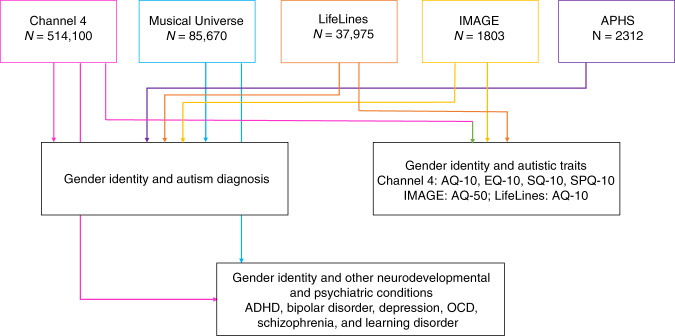
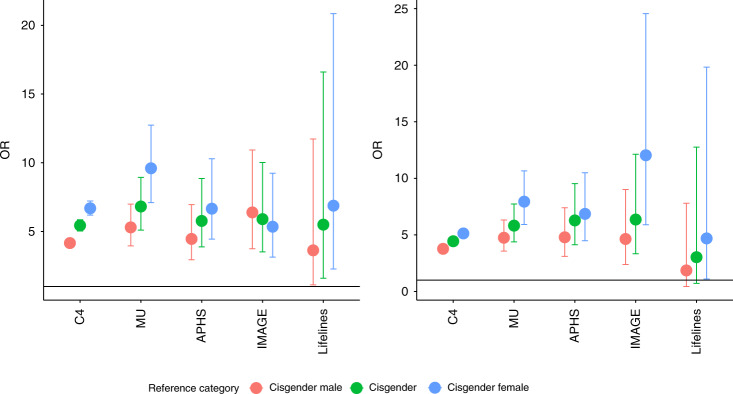
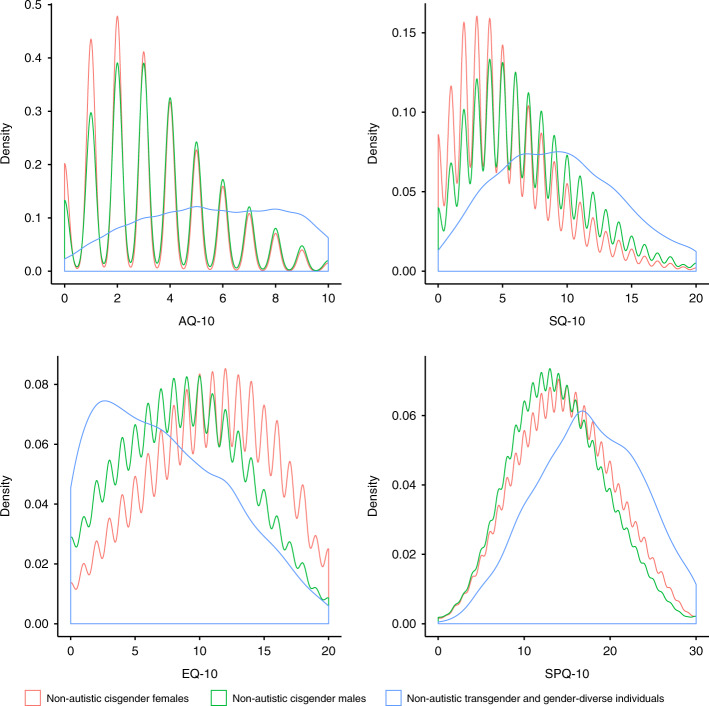
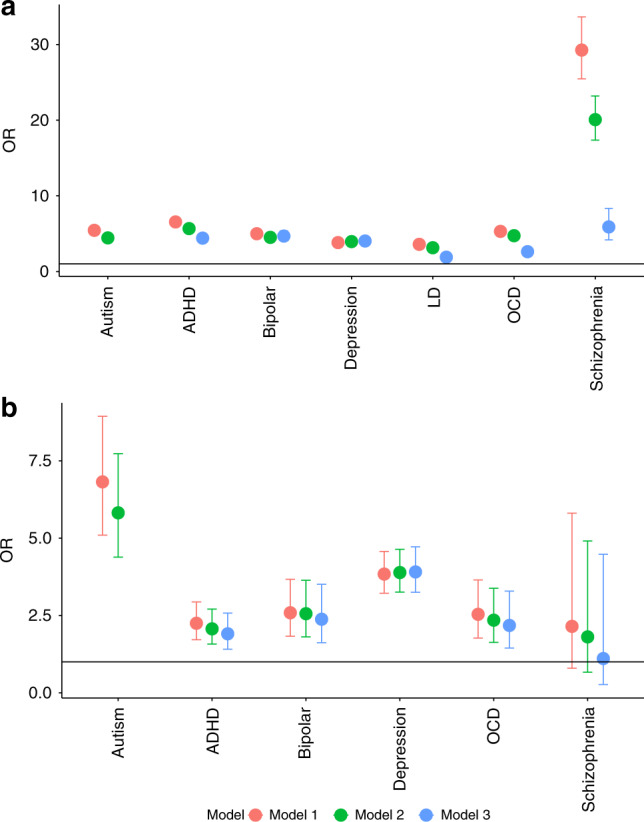
It is unclear whether transgender and gender-diverse individuals have elevated rates of autism diagnosis or traits related to autism compared to cisgender individuals in large non-clinic-based cohorts. To investigate this, we use five independently recruited cross-sectional datasets consisting of 641,860 individuals who completed information on gender, neurodevelopmental and psychiatric diagnoses including autism, and measures of traits related to autism (self-report measures of autistic traits, empathy, systemizing, and sensory sensitivity). Compared to cisgender individuals, transgender and gender-diverse individuals have, on average, higher rates of autism, other neurodevelopmental and psychiatric diagnoses. For both autistic and non-autistic individuals, transgender and gender-diverse individuals score, on average, higher on self-report measures of autistic traits, systemizing, and sensory sensitivity, and, on average, lower on self-report measures of empathy. The results may have clinical implications for improving access to mental health care and tailoring adequate support for transgender and gender-diverse individuals.
Overview
The claims and statistics of this paper haven’t been checked yet.
Free: it reads the open-access text and checks the first 5 claims that cite a source we can check. Create a free account to check every claim.
Integrity signals
Registry
Cites
Statistics
Figures
Verification
Claims the paper makes
The claims and statistics of this paper haven’t been checked yet.
Free: it reads the open-access text and checks the first 5 claims that cite a source we can check. Create a free account to check every claim.
Claims other papers make about this one
Each is checked against this paper’s own text: does it say what the citing paper says it does?
In the citing paper
“Furthermore, sex and gender7,8 and co-occurring ID and developmental, behavioral and medical conditions9,10 alter the presentation and measurement of core autism features.”
From Genetic correlates of phenotypic heterogeneity in autism (2022) · cites this paper as [8]
Self-check
Percentages, sums and reported differences re-computed from the paper’s own numbers.
The self-check needs the paper’s full text.
Citations
Cites
Diagnostic and Statistical Manual of Mental Disorders
American Psychiatric Association (2013) · doi:10.1176/appi.books.9780890425596 · Cited by 116,369
Baron-Cohen, S., Wheelwright, S., Skinner, R., Martin, J., & Clubley, E. (2001) · Journal of Autism and Developmental Disorders · doi:10.1023/a:1005653411471 · Cited by 6,450
Self-citationBaio, J., Wiggins, L., Christensen, D. L., Maenner, M. J., Daniels, J., Warren, Z., Kurzius-Spencer, M., Zahorodny, W., Robinson, C., Rosenberg, et al. (2018) · MMWR. Surveillance Summaries · doi:10.15585/mmwr.ss6706a1 · Cited by 6,078
What Is the Male-to-Female Ratio in Autism Spectrum Disorder? A Systematic Review and Meta-Analysis
Loomes, R., Hull, L., & Mandy, W. P. L. (2017) · Journal of the American Academy of Child & Adolescent Psychiatry · doi:10.1016/j.jaac.2017.03.013 · Cited by 2,804
Global Prevalence of Autism and Other Pervasive Developmental Disorders
Elsabbagh, M., Divan, G., Koh, Y., Kim, Y. S., Kauchali, S., Marcín, C., Montiel‐Nava, C., Patel, V., Paula, C. S., Wang, C., et al. (2012) · Autism Research · doi:10.1002/aur.239 · Cited by 2,636
Baird, G., Simonoff, E., Pickles, A., Chandler, S., Loucas, T., Meldrum, D., & Charman, T. (2006) · The Lancet · doi:10.1016/s0140-6736(06)69041-7 · Cited by 2,104
Lai, M.-C., Kassee, C., Besney, R., Bonato, S., Hull, L., Mandy, W., Szatmari, P., & Ameis, S. H. (2019) · The Lancet Psychiatry · doi:10.1016/s2215-0366(19)30289-5 · Cited by 1,892
Self-citationGlobal health burden and needs of transgender populations: a review
Reisner, S. L., Poteat, T., Keatley, J., Cabral, M., Mothopeng, T., Dunham, E., Holland, C. E., Max, R., & Baral, S. D. (2016) · The Lancet · doi:10.1016/s0140-6736(16)00684-x · Cited by 1,476
Genomic Relationships, Novel Loci, and Pleiotropic Mechanisms across Eight Psychiatric Disorders
Lee, P. H., Anttila, V., Won, H., Feng, Y.-C. A., Rosenthal, J., Zhu, Z., Tucker-Drob, E. M., Nivard, M. G., Grotzinger, A. D., Posthuma, D., et al. (2019) · Cell · doi:10.1016/j.cell.2019.11.020 · Cited by 1,381
The epidemiology and global burden of autism spectrum disorders
Baxter, A. J., Brugha, T. S., Erskine, H. E., Scheurer, R. W., Vos, T., & Scott, J. G. (2015) · Psychological Medicine · doi:10.1017/s003329171400172x · Cited by 1,224
Cited by
Items 501–600 of 662
Łaskawiec, J., & Krogulska, A. (2025) · Psychology and Sexuality · doi:10.1080/19419899.2025.2596049
“Neurodivergence and queerness frequently co-exist, distinguishing individuals’ behaviours/expressions from social and cultural conventions (Goetz & Adams, 2024; Warrier et al., 2020).”
Transgender and gender-diverse autistic adolescents are at elevated risk of depression
Pereira, J. A., Ramos, N., Snyder, L. G., Veenstra-VanderWeele, J. M., & Jutla, A. (2025) · Autism · doi:10.1177/13623613251396712
“…(Cook et al., 2017; De Vries et al., 2010; Kallitsounaki & Williams, 2022; Nabbijohn et al., 2019; Nahata et al., 2017; Strang et al., 2018; Warrier et al., 2020), although methodological heterogeneity across studies make prevalence difficult to estimate (Mittertreiner et al., 2024).”
Thomas, K. S., & Cooper, K. (2025) · Child and Adolescent Mental Health · doi:10.1111/camh.70056
“…as attention de fi cit hyper-activity disorder (ADHD), which has also been found to co-occur with both autism and gender dysphoria (Micai et al., 2023; Warrier, Greenberg, Weir, et al., 2020), and is linked to anxiety and depression in children and adolescents (Zhang, Liao, Rao, Gao, & Yang, 2025).”
Clin, É., Maes, P., Stercq, F., & Kissine, M. (2020) · Figshare · doi:10.6084/m9.figshare.13257557
Grant, S., Norton, S., Weiland, R. F., Scheeren, A. M., Begeer, S., & Hoekstra, R. A. (2022) · Figshare · doi:10.6084/m9.figshare.19174890
Ortega, J. T., Roca, J., Coelho-Martinho, R., Orozko, Z., Sanromà‐Ortíz, M., & Valls-Ibáñez, V. (2024) · Figshare · doi:10.6084/m9.figshare.26641945
Grant, S., Norton, S., Weiland, R. F., Scheeren, A. M., Begeer, S., & Hoekstra, R. A. (2022) · Figshare · doi:10.6084/m9.figshare.19174896
Impacts of Identity Change on Trans and Disabled College Students
Klager, A. (2023) · University Libraries (University of Maryland) · doi:10.13016/dspace/aors-nuwk
Underwood, R. (2023) · Oxford University Research Archive (ORA) (University of Oxford) · doi:10.5287/ora-deajyprke
Gavnik, A. (2023) · Library, Museums and Press - UDSpace (University of Delaware) · doi:10.58088/4skz-3e02 · Cited by 3
Martin, L. J., & Nagalakshmi, M. (2024) · Maryland Shared Open Access Repository (USMAI Consortium) · doi:10.13016/m2su0e-zgnr · Cited by 1
Metwally, A. M., Helmy, M. A., Salah El-Din, E. M., Saleh, R. M., Raouf, E. R. A., Abdallah, A. M., Khadr, Z., Elsaied, A., El-Saied, M. M., Bassiouni, R., et al. (2024) · Figshare · doi:10.6084/m9.figshare.26600485
Kallitsounaki, A. (2022) · Kent Academic Repository (University of Kent) · doi:10.22024/unikent/01.02.94951
Fletcher, A. (2025) · Enlighten: Theses (The University of Glasgow) · doi:10.5525/gla.thesis.85238 · Cited by 4
Metwally, A. M., Helmy, M. A., Salah El-Din, E. M., Saleh, R. M., Raouf, E. R. A., Abdallah, A. M., Khadr, Z., Elsaied, A., El-Saied, M. M., Bassiouni, R., et al. (2024) · Figshare · doi:10.6084/m9.figshare.26600488
Field, S. L., Fox, J. R. E., Jones, C. R. G., & Williams, M. O. (2024) · Figshare · doi:10.6084/m9.figshare.26567414
Newell, V., Phillips, L., Jones, C. A., Townsend, E., Richards, C., & Cassidy, S. (2023) · Figshare · doi:10.6084/m9.figshare.22625015
Gender in Autistic Late-Diagnosis Narratives
Ellis, K. (2023) · YorkSpace (York University)
Stephensen, Ó. S. (2024) · Skemman
The Production of Autistic Sexual Subjectivity in Reality Television
Landmark, S. E. (2023) · OakTrust (Texas A&M University Libraries)
Queering autism: Heteronormative barriers to autism identification
Dekker, E. D. (2024) · Mspace (University of Manitoba) · Cited by 2
Tomasi, D. (2023) · PhilPapers (PhilPapers Foundation)
Andersson, E., & Bäck, E. (2025) · Örebro University Library (Örebro University)
Factors associated with autistic traits and age of diagnosis for autistic people
Kendall, S. (2023) · University of Birmingham Institutional Research Archive (University of Birmingham)
Crawford, B. (2024) · UCL Discovery (University College London)
Axbey, H. (2023) · Durham e-Theses (Durham University) · Cited by 1
Rogan, L. (2023) · White Rose eTheses Online (University of Leeds, The University of Sheffield, University of York) · Cited by 2
Claveau, V. (2024) · Archipel (Université du Québec à Montréal) · Cited by 2
Meredith, A. (2024) · eScholarship@McGill (McGill) · doi:10.82308/9915
Marshall, E. L. (2022) · Nottingham ePrints (University of Nottingham)
Chowdhury, I. (2023) · UCL Discovery (University College London)
Suominen, E. H. (2024) · UCL Discovery (University College London)
Baczewski, L. M. (2023) · eScholarship (California Digital Library) · Cited by 5
Autistic traits of people who engage in pup play: Occurrence, characteristics, and neurodivergence
Wignall, L., Moseley, R. L., & MacCormack, M. (2025) · Bournemouth University Research Online (Bournemouth University)
Nuzum, E. (2024) · UCL Discovery (University College London)
Epidemiological and clinical aspects in gender dysphoria
Indremo, M. (2025) · Uppsala University Publications (Uppsala University)
Kirbyson, K. B. (2024) · Scholarship@Western (Western University) · Cited by 1
Trans kynvitund í kynjuðu samfélagi
Hönnudóttir, B. Ó. (2023) · Skemman
Exploring Educational Transition Experiences and Strengths in Autistic Women
Barker, R. (2024) · White Rose eTheses Online (University of Leeds, The University of Sheffield, University of York)
The relationship of stalking behaviours to autism spectrum disorders and personality
Linenberg, O. (2021) · Nottingham ePrints (University of Nottingham) · Cited by 2
LGBTQ Identity in Adolescence and the Peer Effects of Coming OutPreprint
Ruebeck, H. (2025) · SSRN Electronic Journal · doi:10.2139/ssrn.5603291
Retamal-Parra, D., & Muñoz‐Pareja, M. (2025) · International journal of LGBTQ+ youth studies. · doi:10.1080/29968992.2025.2577330
“There is a high prevalence of autism spectrum disorder (ASD) in the transgender and gender-diverse youth population (Mahfouda et al., 2019; Retamal, Arancibia, et al., 2021; Warrier et al., 2020; Wittlin et al., 2023).”
InfluentialAutism and Menstrual Health: A Scoping Review of Challenges and Interventions
Cavallini, M. C., Toscani, D., & Tirelli, V. (2025) · Journal of Clinical & Developmental Psychology · doi:10.13129/2612-4033/0110-5080
Bellert, A., Bonyhady, B., Cleveland, B., Cohn, E. G., Eadie, T., Harrison, M., Hyde, C., Imms, C., Klieve, S., McKay-Brown, L., et al. (2025) · Cross Connect (Southern Cross University) · doi:10.17613/k375g-hg640
The Experiences of Internalized Ableism of Seven Transgender Autistic Adults
Merit, J. (2025) · The Proceedings of the International Conference on Gender Studies and Sexuality. · doi:10.33422/icgss.v1i2.913 · Cited by 1
Llorente Llorente, E. (2023) · Gredos (University of Salamanca)
André, T. G. (2025) · Repository of Digital Objects for Teaching Research and Culture (University of Valencia)
Complex ADHD in a Transgender Adolescent: Case Study and Clinical Implications
Wang, Y., Jiang, W., Zhang, X., & Li, Y. J. (2026) · Clinical Child Psychology and Psychiatry · doi:10.1177/13591045261417379
“The prevalence of ADHD is 4.7-12.6 times greater in adolescents (10-17 years old) with GD than in their cisgender peers (Becerra-Culqui et al., 2018; Warrier et al., 2020).”
InfluentialNeurodiversity in Foreign Language Classrooms: An Examination of Assessment Types
Groenhaug, T. M. (2025) · Carleton University's Institutional Repository (MacOdrum Library, Carleton University) · doi:10.22215/etd/2025-16884
López-Correa, M., & Neira, M. D. C. O. (2026) · Futures · doi:10.1016/j.futures.2026.103765
In Times of Need: Psychiatric Emergency Department Presentations in Autistic Adults
Courchesne, V., Frayne, M., Castelino, C., Luk, V., Man, L. L. Y., Lee, C.-H. J., Baharikhoob, P., Pace-Tonna, C., Jachyra, P., Ameis, S. H., et al. (2026) · Autism in Adulthood · doi:10.1177/25739581251415125
Self-citationINFLUÊNCIA DO SEXO, IDENTIDADE DE GÊNERO E TEMPO DE DIAGNÓSTICO NA CAMUFLAGEM SOCIAL NO AUTISMO
Elias, N. C., & Cassaguerra, B. F. (2026) · Revista Saber Incluir · doi:10.24065/rsi.v3i1.3001
Autism, Neurodiversity, and Gender Diversity: Converging Dimensions of Identity
Sokol, S. M. (2026) · IGI Global eBooks · doi:10.4018/979-8-3373-2632-0.ch003
Transgender Individuals and the Law: Part II Introductory Essay
Daou, M. A. Z., & Felthous, A. R. (2026) · Behavioral Sciences & the Law · doi:10.1002/bsl.70031
Exploring the experiences of autistic transgender adults with or without intellectual disabilities
Marsden, D., Russ, M., Brown, M., Heaton‐Shrestha, C., & Power, L. (2026) · International Journal of Developmental Disabilities · doi:10.1080/20473869.2025.2589993
Janicki, M. P., McCallion, P., Jokinen, N. S., Larsen, F., Mughal, D. T., Service, K. P., Gomiero, T., Marsack‐Topolewski, C. N., Watchman, K., Santos, F. H., et al. (2026) · Autism · doi:10.1177/13623613261416670 · Cited by 1
“…gay, bisexual, transgender, queer/questioning (LGBTQ +) or gender diverse (Bonazzi et al., 2025; Rudolph et al., 2018; Weir et al., 2021), with transgender and gender-diverse individuals being three to six times more likely to be autistic than their cisgender age peers (Warrier et al., 2020).”
Migration genetics link excitatory neurons to ancient selection and economic growthPreprint
Casten, L. G., Tener, A. J., Elsadany, M., Yang, J. S., Strang, J. F., & Michaelson, J. J. (2026) · bioRxiv (Cold Spring Harbor Laboratory) · doi:10.64898/2026.02.05.703995
Gender identity development in autistic individuals: An interview study
Michiels, R., Groffi, M., Dewinter, J., Noens, I. L. J., & Enzlin, P. (2026) · Autism · doi:10.1177/13623613261421391
“…that gender incongruence/gender dysphoria (GI/ GD) is more common in autistic individuals than in non-autistic individuals (Thrower et al., 2020; Warrier et al., 2020), and that 8% to 16% of individuals with GI or GD are diagnosed with autism (Kallitsounaki & Williams, 2022), compared to 1% in…”
Tomas, V. (2023) · TSpace (University of Toronto) · Cited by 2
Mossa, K. M., Lundwall, R. A., & South, M. (2026) · Frontiers in Psychology · doi:10.3389/fpsyg.2026.1603606
“In addition, there are significantly higher rates of self-reported autism diagnoses in the TGNC community regardless of dysphoria compared to cisgender peers (Kristensen and Broome, 2015; Warrier et al., 2020).”
Neuroqueer embodiment and nomadic subjectivity in autistic life writing
Selvam, B., & Meenu, B. (2026) · Medical Humanities · doi:10.1136/medhum-2025-013552
“More recent studies report higher rates of gender dysphoria and LGBTQ+identity among autistic populations than non-autistic (Glidden et al 2016; Van Der et al 2018; Warrier et al 2020).”
Autism and Indigenous peoples in Canada: a scoping review
Ressel, M. (n.d.) · Summit (Simon Fraser University)
Bushell, A. (n.d.) · Summit (Simon Fraser University)
Losier-Bedard, E. (2026) · Archipel (Université du Québec à Montréal)
Autism Spectrum Disorder Among Gender‐Diverse Children and Adolescents: A National Cohort Study
Topaz, E., Sheppes, T., Segev‐Becker, A., Israeli, G., Oren, A., Lebenthal, Y., Shechner, T., & Perl, L. (2026) · Autism Research · doi:10.1002/aur.70235 · Cited by 1
Lurie, K. J., Gross, R. L., Berry, R., Vincent, L. B., Hayes, B. E., & Wolfer, K. (2026) · Journal of Applied Research in Intellectual Disabilities · doi:10.1111/jar.70221
“Important to this discussion is that disabled people are more likely to be LGBTQ+ than the general population (Leonard and Mann 2018), and gender nonconfor-mity is particularly common among people with intellectual and developmental disabilities (Warrier et al. 2020).”
Stern, A. P., & Sullivan, J. P. (2026) · Pediatric Annals · doi:10.3928/19382359-20260127-06
Schuler, M. S., & Suryavanshi, A. (2026) · Academic Pediatrics · doi:10.1016/j.acap.2026.103315
Schweizer, K. W., Mundt, M., Austin, F., Buist, B. D., Wright, K. E., Strauss, P., Lin, A. P., Jackson, B., Wilkinson, K., & Furzer, B. J. (2026) · Psychology of Sexual Orientation and Gender Diversity · doi:10.1037/sgd0000910
Oates, M., & Bean, A. (2026) · Current Developmental Disorders Reports · doi:10.1007/s40474-026-00349-2
Thibeault, C.-A., & Sansfaçon, A. P. (2026) · International Journal of Transgender Health · doi:10.1080/26895269.2026.2652517
Autism Spectrum Disorder: Supporting Families Through Evaluation, Diagnosis, and Beyond
Hopkins, K. (2026) · American Academy of PediatricsItasca, IL eBooks · doi:10.1542/9781610028493-ch12
No-One Left behind: Adulthood, Autism, and Applied Behaviour Analysis
Booth, N., Pickersgill, G., & Dillenburger, K. (2026) · Springer eBooks · doi:10.1007/978-981-95-2889-9_3
Hi, how do I human this: Neurodiversity-Affirming Design for Autistic Adults' Formation of Identity
Silva, M. P., Steeds, M., & Doherty, K. (2026) · CHI Conference on Human Factors in Computing Systems · doi:10.1145/3772318.3791446
“Autistic W&GDA in turn often go under-diagnosed as a result of a significant male-bias in society’s understanding of autism [40, 53, 74], and the degree to which their observable autistic traits differ from the traditional medical definition of autism [1, 18, 40, 53, 74, 118].”
Nowell, S. W., Malone, K. M., Pflum, S. R., & Shaw, C. (2026) · International Journal of Transgender Health · doi:10.1080/26895269.2026.2656442
Sexual and mental wellbeing of non-binary populations: individual factors and overlapping identities
Mastrantonio, F. (2026) · ePrints Soton (University of Southampton)
Representationalism and the impossibility of autistic transgender identification
Maddox, R. (2024) · Culture, theory and critique/Culture, theory & critique · doi:10.1080/14735784.2026.2647790
“The perceived over-representation of autism in trans-identified populations has attracted interest from many psychologists, autism specialists, health care professionals, and gender health care providers (Warrier et al., 2020).”
Kanellopoulou, C., Adusumilli, N., Saud, Y. A., & Zhong, Y. (2026) · Research in Neurodiversity · doi:10.1016/j.rin.2026.100026
Thomas, K. S., Cooper, K., & Jones, C. R. G. (2026) · Archives of Sexual Behavior · doi:10.1007/s10508-026-03448-8
“Research also suggests a high co-occurrence between gender diversity and both autism and ADHD (Antshel et al., 2013; Corbett et al., 2023; Goetz & Adams, 2024; Reiersen & Todd, 2008; Thrower et al., 2020; van der Miesen et al., 2016, 2018a, 2018b; Warrier et al., 2020).”
Deakin, M., Hamilton, L., Heasman, B., & Petty, S. (2026) · Autism & Developmental Language Impairments · doi:10.1177/23969415261436238
“Few studies represented gender as a nonbinary construct, yet recent discussions have identi fi ed that representation of transgender and gender-diverse identities is important for inclusive practices (Strang et al., 2020; Warrier et al., 2020).”
Trew, S., & Lawson, W. B. (2026) · Child Psychiatry & Human Development · doi:10.1007/s10578-026-02021-7
Inklusivität bei queeren Veranstaltungen und ihre Relevanz für die Musiktherapie
Himmelbauer, S. (2026) · Musiktherapeutische Umschau · doi:10.13109/muum.2026.47.2.115
Marciniec, K., Szczypińska, Z., & Pawlak, A. (2026) · Postępy Psychiatrii i Neurologii · doi:10.5114/ppn.2026.161376
“Transgender people may be up to 3-6 times more likely to be diagnosed with autism than cisgender people [2].”
Advancing Trauma Responsiveness in Gender-Affirming Voice Care at a University Clinic
Pospisil, Y. (2026) · Perspectives of the ASHA Special Interest Groups · doi:10.1044/2026_persp-25-00002
Matasovska, K. (2026) · Goldsmiths (University of London) · doi:10.25602/gold.00040433
Understanding the Impact of Camouflaging in Autistic People
Osborne, C. (2025) · UEA Digital Repository (University of East Anglia)
Marsden, D., England, M., Russ, M., Brown, M., Power, L., & Heaton‐Shrestha, C. (2026) · Tizard Learning Disability Review · doi:10.1108/tldr-09-2025-0045
McCormick, J. (2026) · Northumbria Student Academic Journal · doi:10.19164/nusaj.v2i1.1872
“…that neurodivergent people, being less constrained by social norms, may be more open to exploring other non-conforming identities such as queerness (Warrier et al., 2020 This distinction matters: where early participants in the Northumbria University study expressed that they not only think of…”
Tassiopoulos, K. N., Primeau, C. A., Bui, E., & Johnson, E. (2026) · Epilepsy & Behavior · doi:10.1016/j.yebeh.2026.111132
Malone, K. M. (2026) · Carolina Digital Repository (University of North Carolina at Chapel Hill) · doi:10.17615/fsxh-pg76
RUTTENBERG, D. (2026) · Frontiers in Psychiatry · doi:10.3389/fpsyt.2026.1852731
“Beyond sex-based patterns, autistic people are disproportionately likely to identify as transgender, non-binary, or otherwise gender-diverse, a recurrent feature of autistic population studies (33 – 35).”
Tien, I. S., Luo, J., Huang, Y., & Jeon, M. (2026) · Research in Autism · doi:10.1016/j.reia.2026.202948
Autism Spectrum Disorder in Childhood
Sterrett, K., Schiltz, H. K., Byrne, K., & Lord, C. (2026) · Cambridge University Press eBooks · doi:10.1017/9781009706896
Evidence-Based Intervention With Autistic Youth
Quetsch, L. B., Brown, C., Moreno, P., Houck, A., & Ortiz, S. R. (2026) · Elsevier eBooks · doi:10.1016/b978-0-443-29009-1.00110-4
Bergeron, M., Goyer, M.-F., Després, L., Carignan-Allard, M., St-Hilaire, M., Blais, M., Dubuc, D., Kirouac, E., Martin‐Storey, A., Pagé, G., et al. (2023) · Bibliothèque et Archives nationales du Québec (Québec government) · Cited by 8
Greenlee, J. L. (2026) · Theory & Psychology · doi:10.1177/09593543261458008
Tsonis, O., Shanbhag, N., Grace, J., El‐Toukhy, T., Khalaf, Y., & Kopeika, J. (2026) · Reproductive BioMedicine Online · doi:10.1016/j.rbmo.2026.105839
Almeida, M., Zekelman, L., Lan, Z., Rushmore, J., Karayumak, S. C., Zhang, F., Pieper, S., Makris, N., Golby, A. J., Rathi, Y., et al. (2026) · Brain Structure and Function · doi:10.1007/s00429-026-03148-y
“…to a degree of biological dissocia - bility between symptom domains consistent with recent studies that have suggested that specific ASD symptoms, such as SCI and RRB, while co-occurring, may each have distinct genetic patterns and neural correlates (Litman et al. 2025 ; Warrier et al. 2020 ).”
Neurodiversity and fair work: understanding barriers and facilitators in the workplace
Carnegie, P. (2026) · Personnel Review · doi:10.1108/pr-11-2025-1368
Metadata
- Authors
- Warrier, V., Greenberg, D. M., Weir, E., Buckingham, C., Smith, P., Lai, M.-C., Allison, C., & Baron-Cohen, S.
- Affiliations
- University of Cambridge (GB)
- Bar-Ilan University (IL)
- Centre for Addiction and Mental Health (CA)
- Corresponding author
- Warrier, Varun
- Venue
- Nature Communications
- Published
- 2020-08-07
- Volume
- 11
- Issue
- 1
- Pages
- 3959-3959
- ISSN
- 2041-1723 (ISSN-L)
- PMC
- PMC7415151
- OpenAlex
- W3048303946
- Semantic Scholar
- 25126b5e678a39bf76c343bb11981fdced24a433
- Cited by
- 595
- References
- 81
- Citations by year
- 2026: 112 · 2025: 109 · 2024: 118 · 2023: 121 · 2022: 84 · 2021: 40 · 2020: 9
- FWCI
- 34.13
- Type
- journal article
- Language
- en
- Open access
- gold
- doi.org
- Licence
- cc-by
- creativecommons.org/licenses/by/4.0 (tdm)
- creativecommons.org/licenses/by/4.0 (vor)
- Locations
- Nature Communications (publishedVersion, cc-by)
- PubMed Central (publishedVersion, cc-by)
- PubMed (publishedVersion)
- RePEc: Research Papers in Economics (submittedVersion)
- DOAJ (DOAJ: Directory of Open Access Journals) (submittedVersion, cc-by-sa)
- Apollo (University of Cambridge) (submittedVersion)
- Apollo (University of Cambridge) (submittedVersion, cc-by)
- Apollo
- Apollo (cc-by)
- Funders
- Autism Speaks (777394)
- Ontario Brain Institute (IDS-Il-02)
- Wellcome Trust (214322, 777394, 214322/Z/18/Z)
- European Federation of Pharmaceutical Industries and Associations (777394)
- Simons Foundation Autism Research Initiative (777394)
- Centre for Addiction and Mental Health Foundation
- National Institute for Health and Care Research
- European Commission (HORIZON2020, 777394)
- Rosetrees Trust
- University of Toronto
- Innovative Medicines Initiative (777394)
- Templeton World Charity Foundation
- Department of Psychiatry, University of Toronto
- Canadian Institutes of Health Research (159578_1, 777394, GSB 17137 3)
- Medical Research Council (777394)
- Topics
- Life Sciences › Neuroscience › Cognitive Neuroscience › Autism Spectrum Disorder Research
- Social Sciences › Psychology › Social Psychology › LGBTQ Health, Identity, and Policy
- Health Sciences › Medicine › Endocrinology, Diabetes and Metabolism › Sexual Differentiation and Disorders
- Keywords
- transgender people, gender-diverse people, autism spectrum disorder, autistic traits, neurodevelopmental disorders, psychiatric diagnosis, empathy, systemizing, sensory sensitivity, cisgender comparison, access to mental health care
- MeSH terms
- Adolescent, Adult, Aged, Aged, 80 and over, Autistic Disorder, Female, Humans, Male, Middle Aged, Confidence Intervals, Odds Ratio, Young Adult, Self Report, Transgender Persons
About these checks
Registry, retraction, Cites and statistics results are computed, not judged, with one exception: a printed reference that no index lists is read once by a model before it counts as a citation error. Claims are extracted by a model and kept only when their quote appears verbatim in the text; each cited source is then checked, with a model’s help, for whether it says what the claim relies on. Those verdicts can be wrong — read the claim’s quote and the cited source before relying on one.
Statistics and arithmetic are recomputed, not judged.
Confidence bands are shown only for fields calibrated on our annotated test set. None is calibrated yet, so no band is shown.
What counts as a claim ›How we measure confidence ›How we check this ›
Are you an author, or do you see a problem with this page? Request a review
Data sources
Bibliographic data: Semantic Scholar, OpenAlex, Crossref.
Contains information from the Semantic Scholar Academic Graph Datasets, made available under the ODC Attribution License (ODC-BY 1.0).
Semantic Scholar’s data is described in: Kinney, R., et al. (2023). The Semantic Scholar Open Data Platform. arXiv:2301.10140.
