

Elevated rates of autism, other neurodevelopmental and psychiatric diagnoses, and autistic traits in transgender and gender-diverse individuals
Open accessThe DOI matches its Crossref record; 81 of the 81 references it cites were found in a registry or an index.
Abstract
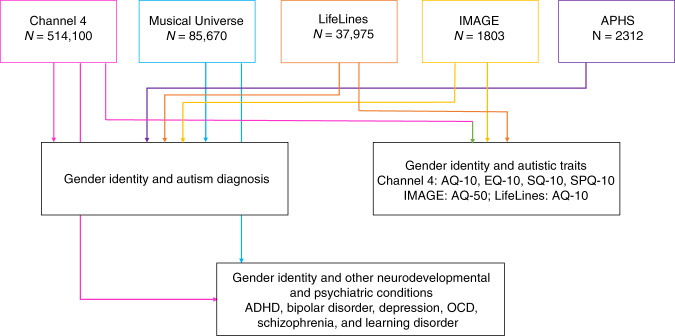
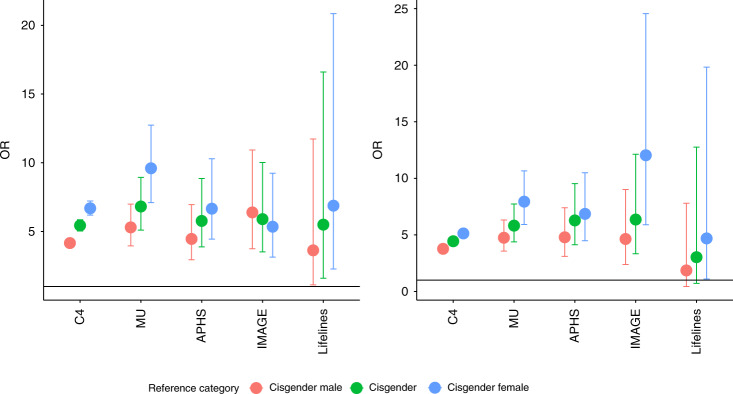
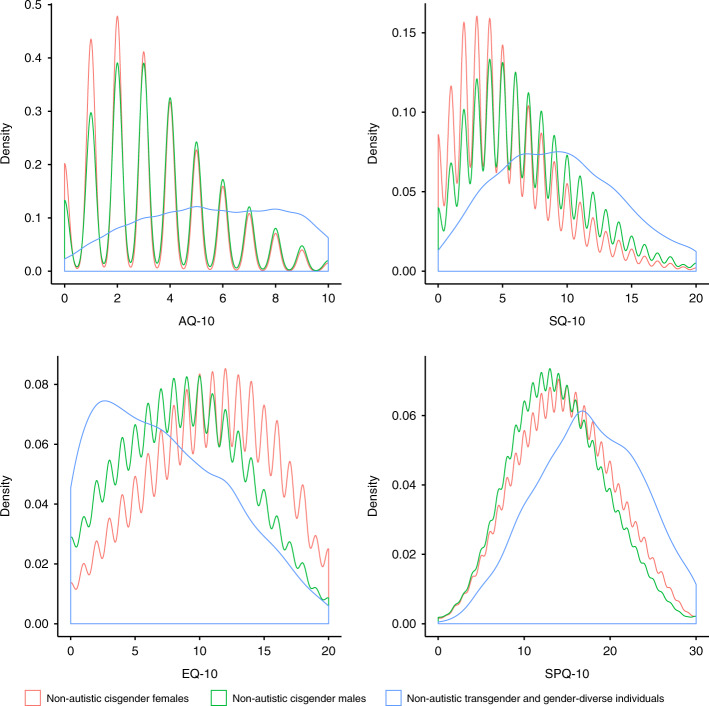
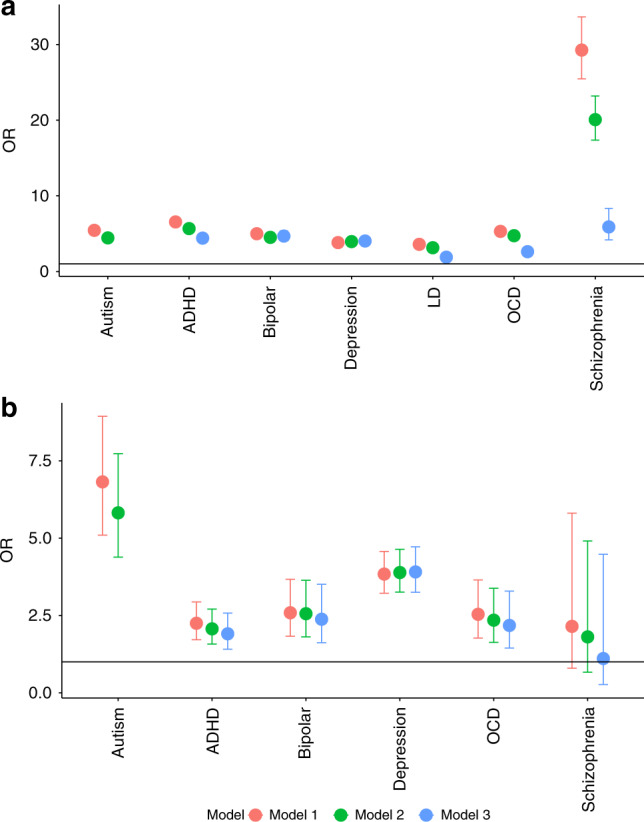
It is unclear whether transgender and gender-diverse individuals have elevated rates of autism diagnosis or traits related to autism compared to cisgender individuals in large non-clinic-based cohorts. To investigate this, we use five independently recruited cross-sectional datasets consisting of 641,860 individuals who completed information on gender, neurodevelopmental and psychiatric diagnoses including autism, and measures of traits related to autism (self-report measures of autistic traits, empathy, systemizing, and sensory sensitivity). Compared to cisgender individuals, transgender and gender-diverse individuals have, on average, higher rates of autism, other neurodevelopmental and psychiatric diagnoses. For both autistic and non-autistic individuals, transgender and gender-diverse individuals score, on average, higher on self-report measures of autistic traits, systemizing, and sensory sensitivity, and, on average, lower on self-report measures of empathy. The results may have clinical implications for improving access to mental health care and tailoring adequate support for transgender and gender-diverse individuals.
Overview
The claims and statistics of this paper haven’t been checked yet.
Free: it reads the open-access text and checks the first 5 claims that cite a source we can check. Create a free account to check every claim.
Integrity signals
Registry
Cites
Statistics
Figures
Verification
Claims the paper makes
The claims and statistics of this paper haven’t been checked yet.
Free: it reads the open-access text and checks the first 5 claims that cite a source we can check. Create a free account to check every claim.
Claims other papers make about this one
Each is checked against this paper’s own text: does it say what the citing paper says it does?
In the citing paper
“Furthermore, sex and gender7,8 and co-occurring ID and developmental, behavioral and medical conditions9,10 alter the presentation and measurement of core autism features.”
From Genetic correlates of phenotypic heterogeneity in autism (2022) · cites this paper as [8]
Self-check
Percentages, sums and reported differences re-computed from the paper’s own numbers.
The self-check needs the paper’s full text.
Citations
Cites
Diagnostic and Statistical Manual of Mental Disorders
American Psychiatric Association (2013) · doi:10.1176/appi.books.9780890425596 · Cited by 116,369
Baron-Cohen, S., Wheelwright, S., Skinner, R., Martin, J., & Clubley, E. (2001) · Journal of Autism and Developmental Disorders · doi:10.1023/a:1005653411471 · Cited by 6,450
Self-citationBaio, J., Wiggins, L., Christensen, D. L., Maenner, M. J., Daniels, J., Warren, Z., Kurzius-Spencer, M., Zahorodny, W., Robinson, C., Rosenberg, et al. (2018) · MMWR. Surveillance Summaries · doi:10.15585/mmwr.ss6706a1 · Cited by 6,078
What Is the Male-to-Female Ratio in Autism Spectrum Disorder? A Systematic Review and Meta-Analysis
Loomes, R., Hull, L., & Mandy, W. P. L. (2017) · Journal of the American Academy of Child & Adolescent Psychiatry · doi:10.1016/j.jaac.2017.03.013 · Cited by 2,804
Global Prevalence of Autism and Other Pervasive Developmental Disorders
Elsabbagh, M., Divan, G., Koh, Y., Kim, Y. S., Kauchali, S., Marcín, C., Montiel‐Nava, C., Patel, V., Paula, C. S., Wang, C., et al. (2012) · Autism Research · doi:10.1002/aur.239 · Cited by 2,636
Baird, G., Simonoff, E., Pickles, A., Chandler, S., Loucas, T., Meldrum, D., & Charman, T. (2006) · The Lancet · doi:10.1016/s0140-6736(06)69041-7 · Cited by 2,104
Lai, M.-C., Kassee, C., Besney, R., Bonato, S., Hull, L., Mandy, W., Szatmari, P., & Ameis, S. H. (2019) · The Lancet Psychiatry · doi:10.1016/s2215-0366(19)30289-5 · Cited by 1,892
Self-citationGlobal health burden and needs of transgender populations: a review
Reisner, S. L., Poteat, T., Keatley, J., Cabral, M., Mothopeng, T., Dunham, E., Holland, C. E., Max, R., & Baral, S. D. (2016) · The Lancet · doi:10.1016/s0140-6736(16)00684-x · Cited by 1,476
Genomic Relationships, Novel Loci, and Pleiotropic Mechanisms across Eight Psychiatric Disorders
Lee, P. H., Anttila, V., Won, H., Feng, Y.-C. A., Rosenthal, J., Zhu, Z., Tucker-Drob, E. M., Nivard, M. G., Grotzinger, A. D., Posthuma, D., et al. (2019) · Cell · doi:10.1016/j.cell.2019.11.020 · Cited by 1,381
The epidemiology and global burden of autism spectrum disorders
Baxter, A. J., Brugha, T. S., Erskine, H. E., Scheurer, R. W., Vos, T., & Scott, J. G. (2015) · Psychological Medicine · doi:10.1017/s003329171400172x · Cited by 1,224
Cited by
Items 301–400 of 662
Psychometric Investigation of Preliminary Item-Set for the Self-Assessment of Autistic Traits
Kenworthy, L. E., daVanport, S., Bascom, J., Ratto, A. B., Anthony, L. G., Khuu, A., Carel, E., Strang, J. F., Verbalis, A. D., Pugliese, C. E., et al. (2025) · Autism in Adulthood · doi:10.1177/25739581251366048 · Cited by 3
Case series of autistic people diagnosed in adulthood: Factors leading to late diagnoses
Porthukaran, A., Man, L., Fernandes, N., Matsuba, E. S. M., & Lunsky, Y. (2026) · Research in Autism · doi:10.1016/j.reia.2026.202868 · Cited by 3
Autism in Adulthood: Challenges, Strengths, and Support Systems
Rahman, A. M., & Rawitt, R. R. (2026) · Psychiatric Annals · doi:10.3928/00485713-20260113-02 · Cited by 3
Crawford, K. A., & Hamidi, F. (2026) · CHI Conference on Human Factors in Computing Systems · doi:10.1145/3772318.3790635 · Cited by 3
“Communication thus becomes a living, adaptive system that partners must continually negotiate as their bodies, contexts, and identities change, particularly given the higher prevalence of autistic traits among transgender and gender-diverse adults [75].”
Barroso, I. A., Marimpietri, F. S., Ribeiro, G. M., Lee, P. A., & Barroso, U. (2026) · Journal of Pediatric Urology · doi:10.1016/j.jpurol.2026.105960 · Cited by 3
Behavioral manifestations and neural mechanisms of empathic pain
Yang, S., Zhang, J., Zhang, Q., Hu, S.-W., Ji, Y., Zhou, X., Pan, Y., & Wang, Y. (2025) · Neuropharmacology · doi:10.1016/j.neuropharm.2025.110344 · Cited by 3
Mears, K., Rai, D., Shah, P., & Ashwin, C. (2025) · Molecular Autism · doi:10.1186/s13229-025-00649-1 · Cited by 3
“In addition, unlike previous research [47, 56], the present study was focussed on measuring the relationship between autistic traits and traits of GD across clinical and non-clinical samples, and not concerned about measuring the degree of autistic traits in trans and gender dysphoric people.”
Transgender and Gender Diverse (TGD) students and online education in Australia
Fletcher, J., Jones, T. M., & Bergen, P. V. (2025) · Children and Youth Services Review · doi:10.1016/j.childyouth.2025.108258 · Cited by 3
Smoller, C., Burch, L., Salas, J., Huang, R. (., Stenersen, M. R., & Messias, E. (2026) · Comprehensive Psychiatry · doi:10.1016/j.comppsych.2026.152688 · Cited by 3
Mühlberg, A., Ritter, P. D., Langer, S., Goossens, C., Nübler, S., Schneidereit, D., Taubmann, O., Denzinger, F., Nörenberg, D., Haug, M., et al. (2023) · Advanced Science · doi:10.1002/advs.202206319 · Cited by 4
McClellan, L. S., van der Miesen, A. I. R., Tishelman, A. C., Fischbach, A. L., Song, M., Campos, L., & Strang, J. F. (2023) · Journal of Clinical Child & Adolescent Psychology · doi:10.1080/15374416.2023.2292045 · Cited by 3
“…given the significant overrepre-sentation of neurodivergence, especially autism, among transgender individuals (Kallitsounaki & Williams, 2022; Warrier et al., 2020), and findings that transgender youth at the intersection of neurodivergence and gender diversity are at higher risk for mental…”
Moonsammy, S. U., Procter, T., Goodwin, M. E., & Crumpton, P. (2024) · Perspectives of the ASHA Special Interest Groups · doi:10.1044/2023_persp-23-00138 · Cited by 3
Demographic and mental health profile of youth in a gender service: An African case series
Pickstone-Taylor, S. D., Davids, E. L., de Bever, G. N., & de Vries, P. J. (2024) · South African Journal of Psychiatry · doi:10.4102/sajpsychiatry.v30i0.2160 · Cited by 3
“Previous studies have reported heightened autistic traits in transgender and gender-diverse young people, 32,33 which has clinical implications for mental healthcare that is gender-affirming and adequate to the neurodiverse needs of trans-and gender-diverse young people.”
BackgroundBallester-Galí, A., & García-Molina, I. (2025) · Autism in Adulthood · doi:10.1089/aut.2024.0226 · Cited by 3
“6 Within the autistic community, research mainly highlights that autistic women have a higher risk of receiving some type of violence in general, 7 experiencing higher rates of harassment and physical violence in comparison with non-autistic women.”
Visual awareness during the attentional blink is determined by representational similarityPreprint
Tang, M. F., Shapiro, K. L., Enns, J. T., Visser, T. A. W., Mattingley, J. B., & Arabzadeh, E. (2022) · bioRxiv (Cold Spring Harbor Laboratory) · doi:10.1101/2022.10.25.513789 · Cited by 3
Spatially controlled microtubule nucleation and organization from crosslinker MAP65 condensatesPreprint
Sahu, S., Chauhan, P., Lumen, E., Moody, K. J., Peddireddy, K., Mani, N., Subramanian, R., Robertson‐Anderson, R. M., Wolfe, A. J., & Ross, J. L. (2022) · bioRxiv (Cold Spring Harbor Laboratory) · doi:10.1101/2022.10.23.513406 · Cited by 3
Nordahl, C. W. (2023) · Elsevier eBooks · doi:10.1016/b978-0-12-820480-1.00033-4 · Cited by 3
Novel estimators for family-based genome-wide association studies increase power and robustness
Guan, J., Nehzati, S. M., Benjamin, D. J., & Young, A. I. (2022) · doi:10.1101/2022.10.24.513611 · Cited by 2
Analysing Autism and Gender Diversity with an Intersectional Approach: a Scoping Review
Gava, M. M., Mairena, M. Á., Polo-Rangel, D., Coll‐Planas, G., Sanz-Huidobro, E., & Marsà-Sambola, F. (2025) · Review Journal of Autism and Developmental Disorders · doi:10.1007/s40489-025-00503-3 · Cited by 5
Petersen, E., Kiy, F., Winterdahl, M., Dal, J., Pop, M. L., Telléus, G. K., Stensballe, A., Kesmodel, U. S., & Højgaard, A. D. (2025) · BMJ Open · doi:10.1136/bmjopen-2024-091366 · Cited by 2
Autism and Gender Identity: Social, Cognitive, and Behavioral Profiles in a Self-Identified Sample
Voulgarakis, H. M., Lisa, J. S., Carpenter, M., & El‐Meouchy, P. (2025) · Advances in Neurodevelopmental Disorders · doi:10.1007/s41252-025-00453-1 · Cited by 2
Burke, S., Kroeze, D. B. A., Kiewiet, S. L., & Ballering, A. (2025) · EClinicalMedicine · doi:10.1016/j.eclinm.2025.103359 · Cited by 3
Chest Binding and the Role of the Physical Therapist: A Commitment to Care
Marengo, J., Sutkowi-Hemstreet, A., Condran, C. W., Goodman, N., Offstein, K., & Nippins, M. (2025) · Physical Therapy · doi:10.1093/ptj/pzaf132 · Cited by 2
Sorby, M. L., & Dahl, E. (2025) · Journal of American College Health · doi:10.1080/07448481.2025.2597912 · Cited by 2
“31 For example, data from the 2020 Behavioral Risk Factor Surveillance System showed that 25% of SGM adults identified as having a cognitive disability compared to 9% of cis-het adults.”
Neurodivergence & Gender (Mis)Recognition: Addressing Inequity Through Neuroqueer Knowing
Barnett, J. P. (2026) · Societies · doi:10.3390/soc16010031 · Cited by 2
Priorities for change for autistic people across Europe
Ikhsan, S. N. B. M., Holt, R., Ruigrok, A. N. V., Man, J., Parsons, T. A., Gibbs, K., Bullock, E., Baranger, A., Allison, C. L., Doherty, M., et al. (2026) · Molecular Autism · doi:10.1186/s13229-026-00706-3 · Cited by 2
“In future surveys, greater effort should be put into recruiting frequently underrepresented groups such as gender-diverse people, especially since gender diversity is more common among autistic than non-autistic people [65].”
Self-citationNeurodiversity and intersectionality in the workplace: A narrative review and research agenda
Calvard, T. S., Gottardello, D., & Song, J. (2026) · International Journal of Management Reviews · doi:10.1111/ijmr.70024 · Cited by 3
Schier, H. E., Chetty, K., Induri, S., & Gunther, C. W. (2026) · Journal of the Academy of Nutrition and Dietetics · doi:10.1016/j.jand.2026.156354 · Cited by 2
Toms, P., Nolte, L., & Doswell, S. (2026) · Autism in Adulthood · doi:10.1177/25739581261438423 · Cited by 2
Underrecognition of Autism and Implications for Adult Psychiatric Practice: A Narrative Review
Guerra, A. D. J. G., Cortes, E. D. R. M., Rocha, G. H. A., Mancias, A. C. M., & Zambrano, S. M. F. (2026) · Cureus · doi:10.7759/cureus.107164 · Cited by 3
“However, the limited inclusion of gender identity variables in epidemiological studies restricts the precision of current estimates [13,36], underscoring the need for more inclusive approaches in adult psychiatric assessment.”
Kallitsounaki, A., Williams, D. M., & Fysh, M. C. (2026) · International Journal of Transgender Health · doi:10.1080/26895269.2026.2658857 · Cited by 2
Rosati, F., Miscioscia, M., & Anzani, A. (2026) · Psychology and Sexuality · doi:10.1080/19419899.2026.2670483 · Cited by 2
Autism, ADHD and the menopause
Moseley, R. L., Turner‐Cobb, J. M., Kim, E., & Spencer, C. (2026) · Post Reproductive Health · doi:10.1080/20533691.2026.2631222 · Cited by 3
Khudiakova, V., Sin, J., Bhattacharya, P., & Barnicot, K. (2026) · Research in Neurodiversity · doi:10.1016/j.rin.2026.100058 · Cited by 2
Providing mental healthcare to LGBTQIA+ people in general practice
Russell, D. (2026) · Australian Journal of General Practice · doi:10.31128/ajgp-10-25-7868 · Cited by 2
Psychiatric Comorbidity in Individuals with Autism
Thom, R. P., Balaj, K., & McDougle, C. J. (2022) · Autism and child psychopathology series · doi:10.1007/978-3-030-98507-3_5 · Cited by 2
Tang, S., Liu, X., Nie, L., Chen, Z., Ran, Q., & He, L. (2022) · Frontiers in Psychiatry · doi:10.3389/fpsyt.2022.1038471 · Cited by 2
“Children with ADHD usually have additional mental disorders, namely, autism spectrum disorder (ASD) and depression, which can aggravate the condition and impair social function (4, 5).”
BackgroundInfluentialA Gender-Based Point of View in Pediatric Neurology
Diana, P., & Esposito, S. (2023) · Journal of Personalized Medicine · doi:10.3390/jpm13030483 · Cited by 3
Creating a Trans-Affirmative Assessment Practice
Wolff, M., & Gouge, N. (2023) · Journal of Health Service Psychology · doi:10.1007/s42843-023-00090-z · Cited by 2
“, the range of presentations across the autism spectrum) among TGD people, such that a neurodivergent presentation is more than six times more prevalent among TGD individuals than their cisgender peers (Warrier et al., 2020)—yet we have no validated norms or protocols for completing neuropsychological assessments in a…”
BackgroundThematic Analysis of Personal Narratives Spoken by Autistic Adults of Underrepresented Genders
Coburn, K. L., & Williams, D. L. (2023) · Perspectives of the ASHA Special Interest Groups · doi:10.1044/2023_persp-23-00095 · Cited by 2
Considerations in the assessment and management of ADHD within the TGDNB Population
Menkes, D., Kristensen, Z., Drinkwater, C., & Johnson, R. (2023) · New Zealand Medical Journal · doi:10.26635/6965.6291 · Cited by 3
Gender Incongruence and Autistic Traits: Cerebral and Behavioral Underpinnings
Khorashad, B. S., Wang, Y., Holmberg, M., Dhejne, C., & Savic, I. (2024) · Archives of Sexual Behavior · doi:10.1007/s10508-024-02809-5 · Cited by 2
“Several studies have shown high co-occurrence rates between gender dysphoria and ASD (de Vries et al., 2010; van der Miesen et al., 2018a, 2018b; Warrier et al., 2020).”
BackgroundMatasovska, K. (2024) · Journal of LGBT Youth · doi:10.1080/19361653.2024.2334065 · Cited by 3
“In addition to this, approximately 17% of ‘same-sex attracted young people are disabled’ (Hillier et al., 2010, cited in Toft et al., 2019, p.158) and autistic people might be three times more likely to be trans-gender (Warrier et al., 2020).”
BackgroundUnderstanding the Social Drivers for LGBTQIA+ Youth Suicide
Cosner, C. R., Dubose, B., Soni, T., Johnson, B. J., & Schapiro, N. A. (2024) · Child and Adolescent Psychiatric Clinics of North America · doi:10.1016/j.chc.2024.03.017 · Cited by 2
Hayward, S. M., Bury, S. M., Hedley, D., & Spoor, J. R. (2024) · Palgrave studies in equity, diversity, inclusion, and indigenization in business · doi:10.1007/978-3-031-55072-0_4 · Cited by 4
McAuliffe, T., Dimech, S., & Setchell, J. (2024) · International Journal of Disability Development and Education · doi:10.1080/1034912x.2024.2362319 · Cited by 3
“…the diagnostic ratio of autism between men/boys and women/girls is often cited as approximately 3:1 (Loomes et al., 2017), there are discussions about under-diagnosis in girls/women (Loomes et al., 2017) and links between being non-binary /transgender and autism diagnoses (Warrier et al., 2020).”
Femme-bracing Neurodiversity: Applying Femme Theory to the Experiences of Feminine Autistics
Coombs, E. C., & Comeau, E. E. (2024) · Journal of femininities. · doi:10.1163/29501229-bja10006 · Cited by 3
Abela, D., Patlamazoglou, L., & Lea, S. (2024) · Journal of Child and Adolescent Mental Health · doi:10.2989/17280583.2024.2393838 · Cited by 2
“By framing intersectionality in this way, we emphasise that the negative mental health outcomes are a product of intersecting systems of”
Autistic adults, financial risk preference, and economic outcomes
Galizzi, M., Hillier, A. J., & Schena, D. A. (2025) · Journal of Behavioral and Experimental Finance · doi:10.1016/j.jbef.2025.101065 · Cited by 2
Voices Unheard: How School Shapes Mental Health for Gender and Neurodiverse Youth
Vines, A., Sargeant, C., & Wright, S. M. (2025) · Neurodiversity · doi:10.1177/27546330251346881 · Cited by 3
“Warrier et al. (2020) also found that gender-diverse participants had higher rates of various neurodiverse and psychiatric conditions, including ADHD, bipolar disorder, depression, learning disorders, Obsessive Compulsive Disorder, and schizophrenia, compared to cis-gender participants, with autism…”
Kiyar, M., Allaert, J., Collet, S., Vanderhasselt, M., T'Sjoen, G. G., & Mueller, S. C. (2025) · BMC Psychology · doi:10.1186/s40359-025-03020-4 · Cited by 3
“Lastly, it has been found that transgender people have elevated rates of autism diagnoses [55].”
Kuvalanka, K. A., Fiera, M., Abram, J., & Goldberg, S. (2025) · Journal of Family Theory & Review · doi:10.1111/jftr.70012 · Cited by 2
Kulatunga-Moruzi, C., Sim, P., Mitchell, I., Palmer, D., & Joffe, A. R. (2025) · Archives of Sexual Behavior · doi:10.1007/s10508-025-03335-8 · Cited by 2
“…the elevated rates of neurodevelopmental conditions such as autism spectrum disorders and attention-deficit hyper-activity disorder frequently associated with gender distress (Kallitsounaki & Williams, 2022; Lehmann et al., 2020; Warrier et al., 2020), which cannot be explained by minority stress.”
Exercise experiences of adolescents engaged with gender diversity services: A qualitative approach
Austin, F., Lin, A. P., Wright, K. E., Jackson, B., Simpson, A., & Furzer, B. J. (2026) · Psychology of sport and exercise · doi:10.1016/j.psychsport.2026.103148 · Cited by 2
Robinson, G. C., Toliver-Smith, A., & Stigar, L. V. (2023) · Seminars in Speech and Language · doi:10.1055/s-0043-1761947 · Cited by 2
Des jeunes « exceptionnel·le·s » : traduire les protagonistes autistes dans la littérature jeunesse
Coussy, A. (2023) · Revue de l’Université de Moncton · doi:10.7202/1099201ar · Cited by 2
Romantic Relationships, Sexuality, and Autism
Koegel, L. K., Detar, W. J., Fox, A., & Koegel, R. L. (2024) · Springer eBooks · doi:10.1007/978-3-031-46463-8_5 · Cited by 2
Identification of Rare Genetic Variants in the PCDH Genetic Family in a Cohort of Transgender Women
Theisen, J., Chorich, L. P., Xu, H., Knight, J., Kim, H.-G., & Layman, L. C. (2023) · F&S Science · doi:10.1016/j.xfss.2024.06.005 · Cited by 2
Trait-based predictors of genomic diversity within freshwater fish communities of the OzarksPreprint
Zbinden, Z. D., Douglas, M. R., Chafin, T. K., & Douglas, M. E. (2022) · bioRxiv (Cold Spring Harbor Laboratory) · doi:10.1101/2022.10.26.513843 · Cited by 2
Recognising and Responding to Physical and Mental Health Issues in Neurodivergent WomenPreprint
Kelly, C. A., Martin, R., & Taylor, R. (2023) · Qeios · doi:10.32388/nfb3fk.11 · Cited by 2
Bartle, G. E., Braren, J. T. B., & Reed, F. D. D. (2024) · Journal of Applied Behavior Analysis · doi:10.1002/jaba.1066 · Cited by 2
A Neurodevelopmental Perspective on Sex-Differentiated Genetic Effects on Behavior
Gui, A. (2021) · Biological Psychiatry · doi:10.1016/j.biopsych.2021.04.011 · Cited by 1
Autism and Learning Disabilities: A relational-intersectional perspective
Cano, F. U. (2022) · Murmurations Journal of Transformative Systemic Practice · doi:10.28963/4.2.7 · Cited by 1
“• Gender-diverse people are also more likely to report autism traits and to suspect they have undiagnosed autism (Warrier et al., 2020).”
BackgroundInfluentialTurello, A. L. C., & Rudón, E. A. A. (2022) · Revista de estudios socioeducativos RESED · doi:10.25267/rev_estud_socioeducativos.2022.i10.04 · Cited by 1
Accompagnement des transidentiteés chez l’enfant et l’adolescent(e)
Fiot, E., Lebrun, C., Delcour, C., Rogez, C., Cohen, A., & Martinerie, L. (2022) · médecine/sciences · doi:10.1051/medsci/2022150 · Cited by 1
Moores, J. B., & Oates, S. (2024) · Transactional Analysis Journal · doi:10.1080/03621537.2023.2286575 · Cited by 1
“For example, gender, identity, and sexuality are more varied among autistic people than in the general population, and autism is more common among people who do not identify as their assigned sex (Warrier et al., 2020).”
BackgroundGender diversity among adolescents with obesity in a weight management programme
Zytner, Z. J. E., Stanley, J. R., Grewal, P., Dettmer, E. L., Toulany, A., Palmert, M. R., & Sorbara, J. (2024) · Clinical Obesity · doi:10.1111/cob.12664 · Cited by 1
“38 Interestingly, despite the well-established association of ASD and gender diversity, 15 this particular association was not identified among respondents in our study.”
Leveraging Polygenic Scores to Go Beyond Examinations of Pathology Among Gender-Diverse Individuals
Potter, A. (2024) · Biological Psychiatry Global Open Science · doi:10.1016/j.bpsgos.2024.100311 · Cited by 1
Terroso, S. R., McKenney, E. E., Brunwasser, S. M., Richards, J. K., Day, T. C., Kofner, B., McDonald, R. G., Gillespie‐Lynch, K., Kang, E., Lerner, M. D., et al. (2024) · Autism in Adulthood · doi:10.1089/aut.2024.0090 · Cited by 2
Formulating gender dysphoria as an affective-perceptual disturbance involving the body
Zyl, J. V. (2024) · Psychodynamic Practice · doi:10.1080/14753634.2024.2371655 · Cited by 1
“…arrested due to: ● attachment complications and traumatic shock (Kozlowska et al., 2021), ● counterproductive coping mechanisms (Evans, 2022), ● socialisation difficulties (Shrier, 2020), ● inherent difficulties with symbolisation (Warrier et al., 2020), ● unexplored and unintegrated homosexuality.”
Frisch, M., Canale, R. R., Yantz, C. L., & Barton, M. L. (2024) · Applied Neuropsychology Child · doi:10.1080/21622965.2024.2418447 · Cited by 1
“Transgender and gender diverse identities have also been linked with higher rates of autistic features (Warrier et al., 2020).”
Borelli, C., Marocchini, E., & Scarpini, M. (2024) · EDUCATIONAL REFLECTIVE PRACTICES · doi:10.3280/erp1-2024oa18297 · Cited by 3
Tawata, S., Sakaguchi, K., & Saito, A. (2024) · Frontiers in Child and Adolescent Psychiatry · doi:10.3389/frcha.2024.1356802 · Cited by 1
“With respect to gender dysphoric state, the result was consistent with that of a study using the Sensory Perception Quotient-10, which reported that transgender and gender-diverse individuals ’ scores were higher than those of cisgender individuals (45).”
Compensación social e identidad en los adolescentes con trastorno del espectro autista
Ageitos, A. G., Vicente-Alba, J., Pérez, V. Á., Hijano, C. M. G., & Millares, M. V. (2024) · Revista de Psiquiatría Infanto-Juvenil · doi:10.31766/revpsij.v41n4a5 · Cited by 1
A Critical Analysis of How Local Autism Strategies Represent Autistic Adults’ Intimate Lives
Jay, B., Huysamen, M., & Hatton, C. (2024) · Autism in Adulthood · doi:10.1089/aut.2024.0182 · Cited by 1
Social and Cultural Determinants of Suicide
Sarli, G., Polidori, L., & Pompili, M. (2024) · Sustainable development goals series · doi:10.1007/978-3-031-70165-8_16 · Cited by 1
The development of pervasive social dysphoria in autistic people with gender dysphoria in Japan
Shimoyama, S., & Endo, T. (2025) · The Japanese journal of psychology · doi:10.4992/jjpsy.96.23035 · Cited by 1
Tokarek͐, A., Gąsiorowska, A., & Król, M. E. (2025) · Research in Autism · doi:10.1016/j.reia.2025.202590 · Cited by 2
Waite-Jones, J. M., & Rodriguez, A. (2025) · Springer eBooks · doi:10.1007/978-3-031-88177-0_8 · Cited by 1
Mournet, A. M., Wilkinson, E. H., Libsack, E. J., Dekker, E. D., Bal, V. H., & Kleiman, E. M. (2026) · International Journal of Transgender Health · doi:10.1080/26895269.2026.2664760 · Cited by 1
Lam, J. S. H., Kurdyak, P. A., Sabbah, S. G., Abramovich, A., MacKinnon, K. R., Stark, R. K., Anderson, V. I. R., Butler, K. J. D., Lawford, C., Kenny, T., et al. (2025) · International Journal of Transgender Health · doi:10.1080/26895269.2025.2554293 · Cited by 1
Autism and attention deficit hyperactivity disorder
Edwards, J. A., & Moosajee, S. (2025) · Dental Update · doi:10.12968/denu.2025.52.8.541 · Cited by 1
Cooper, K., van der Miesen, A. I. R., & Lai, M. (2025) · JAACAP Open · doi:10.1016/j.jaacop.2025.10.001 · Cited by 1
Self-citationEndorsement of the Neurodiversity Framework and Self-Esteem Among Autistic and Non-Autistic Adults
VanDaalen, R. A., & Liu, S. Y. (2025) · Autism in Adulthood · doi:10.1177/25739581251398955 · Cited by 1
Gender Diversity and Mental Health in Young People
Ghassabian, A., Santos, M., & White, T. J. H. (2025) · Cambridge University Press eBooks · doi:10.1017/9781009110266.020 · Cited by 1
Common Genetic Variants in TRIO Are Associated With Autism in Chinese Han Population
Shen, H., Sun, X., Wang, Z., Jiang, M., Wang, J., Lu, T., Yue, W., Zhang, D., Wang, L., & Li, J. (2025) · Genetics Research · doi:10.1155/genr/7762302 · Cited by 1
Validating the German Translation of the Revised Comprehensive Autistic Trait Inventory
Hechler, F. C., Caruana, N., Fahr, F., Karlek, B., Maroske, M., Misia, M., & Tuomainen, O. (2026) · Autism in Adulthood · doi:10.1177/25739581251406751 · Cited by 1
Kennedy, B. S., Weir, E. M., Fysh, M. C., Tsompanidis, A., Payne, R., Allison, C. L., Matthews, F. E., & Baron‐Cohen, S. (2026) · Molecular Autism · doi:10.1186/s13229-025-00698-6 · Cited by 1
“As gender diversity is over-represented in autism [62, 63], this may affect the validity of our matching criteria based on gender. v) As outlined in Fig.”
Self-citationMurphy, R., & Sharpe, H. (2026) · Nutrients · doi:10.3390/nu18030458 · Cited by 1
“This is consistent with prior findings of significantly elevated odds of neurodevelopmental diagnoses in GD populations [67].”
Anunciação, L., Murray, C., & Marques, L. D. N. (2026) · Advances in Autism · doi:10.1108/aia-08-2025-0087 · Cited by 1
Gender-Affirming Care: A 21st Century Bibliometric Perspective
Vervalcke, J., Barouti, K., Ciancia, S., Motmans, J., & T'Sjoen, G. G. (2026) · International Journal of Sexual Health · doi:10.1080/19317611.2026.2633626 · Cited by 1
“Large review studies have consistently confirmed higher ASD rates (Kallitsounaki & Williams, 2023; Warrier et al., 2020).”
Burgess, A. Z. Z., van der Zwaag, W., Jonkman, K. M., & Begeer, S. (2026) · Autism · doi:10.1177/13623613261425136 · Cited by 1
“Gender-diverse individuals are six times more likely to be autistic compared to cisgender individuals, that is, individuals whose gender identity aligns with their sex assigned at birth (Warrier et al., 2020).”
López-Fernández, M., & Martìnez, C. (2026) · New Ideas in Psychology · doi:10.1016/j.newideapsych.2026.101256 · Cited by 1
Pascoe, M. I., Vincent, J., Lai, M., Desarkar, P., Vitopoulos, N. A., Lunsky, Y., MacKinnon, K. R., & Lam, J. S. H. (2026) · The Canadian Journal of Psychiatry · doi:10.1177/07067437261442432 · Cited by 1
Self-citationHartwig, M. D., Pires, E. U., Ritvo-Slifka, R. A., & de Souza, I. E. (2026) · Journal of Autism and Developmental Disorders · doi:10.1007/s10803-025-07112-3 · Cited by 1
Raish, S. M. A., Shokr, M. M., Eladawy, R. M., & Azar, Y. O. (2026) · Biology · doi:10.3390/biology15100745 · Cited by 1
Warner, C., Curtis, A., Keller, K., & Kim, S. (2026) · Research in Neurodiversity · doi:10.1016/j.rin.2026.100035 · Cited by 1
Thomas, K. S., Keith, M., Williams, G. T., Blackbrook, H., Bainbridge, R., Merry, J., LEADING Lived Experience Advisory Group, Williams, M. O., Henley, J., Jones, C. R. G., et al. (2026) · Journal of Eating Disorders · doi:10.21203/rs.3.rs-9556606/v1 · Cited by 4
Demasculinized digit ratios in a sample of boys with childhood autism
Hampson, E., Waxman, S. E., & Nicolson, R. (2026) · Hormones and Behavior · doi:10.1016/j.yhbeh.2026.105950 · Cited by 1
Metadata
- Authors
- Warrier, V., Greenberg, D. M., Weir, E., Buckingham, C., Smith, P., Lai, M.-C., Allison, C., & Baron-Cohen, S.
- Affiliations
- University of Cambridge (GB)
- Bar-Ilan University (IL)
- Centre for Addiction and Mental Health (CA)
- Corresponding author
- Warrier, Varun
- Venue
- Nature Communications
- Published
- 2020-08-07
- Volume
- 11
- Issue
- 1
- Pages
- 3959-3959
- ISSN
- 2041-1723 (ISSN-L)
- PMC
- PMC7415151
- OpenAlex
- W3048303946
- Semantic Scholar
- 25126b5e678a39bf76c343bb11981fdced24a433
- Cited by
- 595
- References
- 81
- Citations by year
- 2026: 112 · 2025: 109 · 2024: 118 · 2023: 121 · 2022: 84 · 2021: 40 · 2020: 9
- FWCI
- 34.13
- Type
- journal article
- Language
- en
- Open access
- gold
- doi.org
- Licence
- cc-by
- creativecommons.org/licenses/by/4.0 (tdm)
- creativecommons.org/licenses/by/4.0 (vor)
- Locations
- Nature Communications (publishedVersion, cc-by)
- PubMed Central (publishedVersion, cc-by)
- PubMed (publishedVersion)
- RePEc: Research Papers in Economics (submittedVersion)
- DOAJ (DOAJ: Directory of Open Access Journals) (submittedVersion, cc-by-sa)
- Apollo (University of Cambridge) (submittedVersion)
- Apollo (University of Cambridge) (submittedVersion, cc-by)
- Apollo
- Apollo (cc-by)
- Funders
- Autism Speaks (777394)
- Ontario Brain Institute (IDS-Il-02)
- Wellcome Trust (214322, 777394, 214322/Z/18/Z)
- European Federation of Pharmaceutical Industries and Associations (777394)
- Simons Foundation Autism Research Initiative (777394)
- Centre for Addiction and Mental Health Foundation
- National Institute for Health and Care Research
- European Commission (HORIZON2020, 777394)
- Rosetrees Trust
- University of Toronto
- Innovative Medicines Initiative (777394)
- Templeton World Charity Foundation
- Department of Psychiatry, University of Toronto
- Canadian Institutes of Health Research (159578_1, 777394, GSB 17137 3)
- Medical Research Council (777394)
- Topics
- Life Sciences › Neuroscience › Cognitive Neuroscience › Autism Spectrum Disorder Research
- Social Sciences › Psychology › Social Psychology › LGBTQ Health, Identity, and Policy
- Health Sciences › Medicine › Endocrinology, Diabetes and Metabolism › Sexual Differentiation and Disorders
- Keywords
- transgender people, gender-diverse people, autism spectrum disorder, autistic traits, neurodevelopmental disorders, psychiatric diagnosis, empathy, systemizing, sensory sensitivity, cisgender comparison, access to mental health care
- MeSH terms
- Adolescent, Adult, Aged, Aged, 80 and over, Autistic Disorder, Female, Humans, Male, Middle Aged, Confidence Intervals, Odds Ratio, Young Adult, Self Report, Transgender Persons
About these checks
Registry, retraction, Cites and statistics results are computed, not judged, with one exception: a printed reference that no index lists is read once by a model before it counts as a citation error. Claims are extracted by a model and kept only when their quote appears verbatim in the text; each cited source is then checked, with a model’s help, for whether it says what the claim relies on. Those verdicts can be wrong — read the claim’s quote and the cited source before relying on one.
Statistics and arithmetic are recomputed, not judged.
Confidence bands are shown only for fields calibrated on our annotated test set. None is calibrated yet, so no band is shown.
What counts as a claim ›How we measure confidence ›How we check this ›
Are you an author, or do you see a problem with this page? Request a review
Data sources
Bibliographic data: Semantic Scholar, OpenAlex, Crossref.
Contains information from the Semantic Scholar Academic Graph Datasets, made available under the ODC Attribution License (ODC-BY 1.0).
Semantic Scholar’s data is described in: Kinney, R., et al. (2023). The Semantic Scholar Open Data Platform. arXiv:2301.10140.
