

Elevated rates of autism, other neurodevelopmental and psychiatric diagnoses, and autistic traits in transgender and gender-diverse individuals
Open accessThe DOI matches its Crossref record; 81 of the 81 references it cites were found in a registry or an index.
Abstract
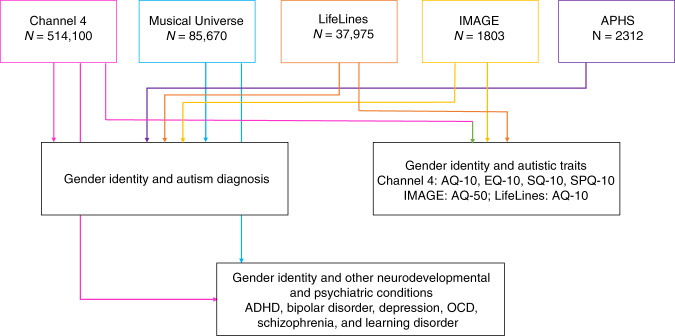
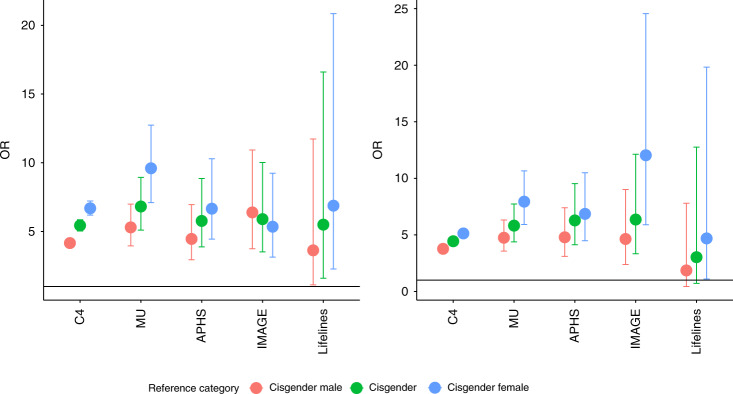
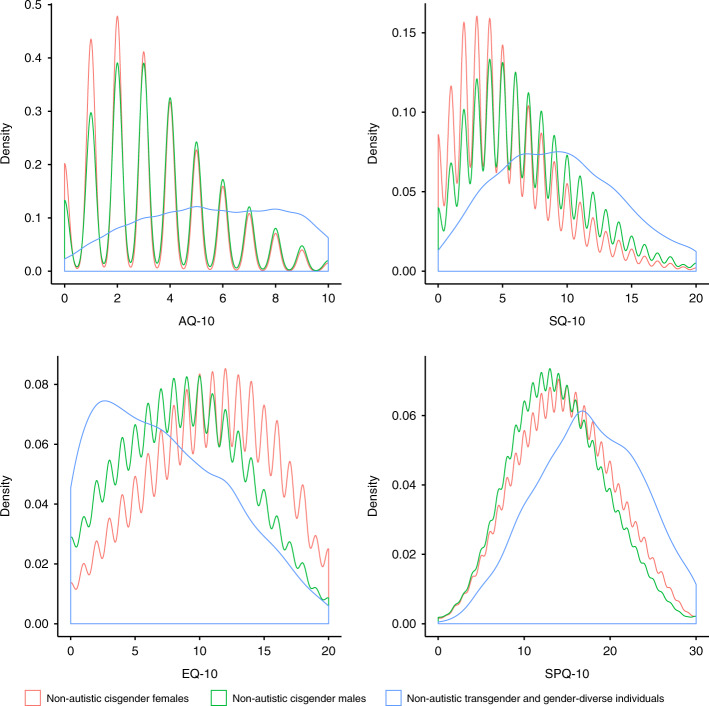
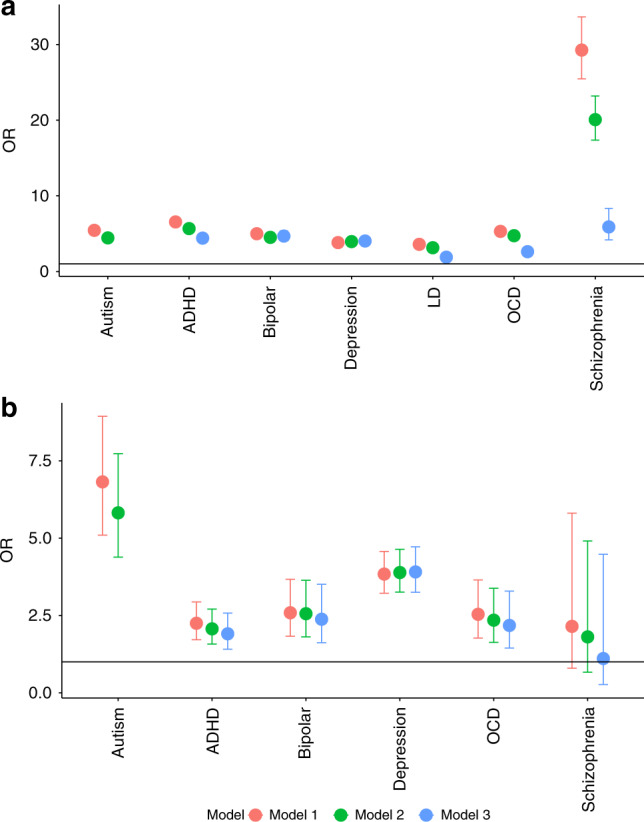
It is unclear whether transgender and gender-diverse individuals have elevated rates of autism diagnosis or traits related to autism compared to cisgender individuals in large non-clinic-based cohorts. To investigate this, we use five independently recruited cross-sectional datasets consisting of 641,860 individuals who completed information on gender, neurodevelopmental and psychiatric diagnoses including autism, and measures of traits related to autism (self-report measures of autistic traits, empathy, systemizing, and sensory sensitivity). Compared to cisgender individuals, transgender and gender-diverse individuals have, on average, higher rates of autism, other neurodevelopmental and psychiatric diagnoses. For both autistic and non-autistic individuals, transgender and gender-diverse individuals score, on average, higher on self-report measures of autistic traits, systemizing, and sensory sensitivity, and, on average, lower on self-report measures of empathy. The results may have clinical implications for improving access to mental health care and tailoring adequate support for transgender and gender-diverse individuals.
Overview
The claims and statistics of this paper haven’t been checked yet.
Free: it reads the open-access text and checks the first 5 claims that cite a source we can check. Create a free account to check every claim.
Integrity signals
Registry
Cites
Statistics
Figures
Verification
Claims the paper makes
The claims and statistics of this paper haven’t been checked yet.
Free: it reads the open-access text and checks the first 5 claims that cite a source we can check. Create a free account to check every claim.
Claims other papers make about this one
Each is checked against this paper’s own text: does it say what the citing paper says it does?
In the citing paper
“Furthermore, sex and gender7,8 and co-occurring ID and developmental, behavioral and medical conditions9,10 alter the presentation and measurement of core autism features.”
From Genetic correlates of phenotypic heterogeneity in autism (2022) · cites this paper as [8]
Self-check
Percentages, sums and reported differences re-computed from the paper’s own numbers.
The self-check needs the paper’s full text.
Citations
Cites
Diagnostic and Statistical Manual of Mental Disorders
American Psychiatric Association (2013) · doi:10.1176/appi.books.9780890425596 · Cited by 116,369
Baron-Cohen, S., Wheelwright, S., Skinner, R., Martin, J., & Clubley, E. (2001) · Journal of Autism and Developmental Disorders · doi:10.1023/a:1005653411471 · Cited by 6,450
Self-citationBaio, J., Wiggins, L., Christensen, D. L., Maenner, M. J., Daniels, J., Warren, Z., Kurzius-Spencer, M., Zahorodny, W., Robinson, C., Rosenberg, et al. (2018) · MMWR. Surveillance Summaries · doi:10.15585/mmwr.ss6706a1 · Cited by 6,078
What Is the Male-to-Female Ratio in Autism Spectrum Disorder? A Systematic Review and Meta-Analysis
Loomes, R., Hull, L., & Mandy, W. P. L. (2017) · Journal of the American Academy of Child & Adolescent Psychiatry · doi:10.1016/j.jaac.2017.03.013 · Cited by 2,804
Global Prevalence of Autism and Other Pervasive Developmental Disorders
Elsabbagh, M., Divan, G., Koh, Y., Kim, Y. S., Kauchali, S., Marcín, C., Montiel‐Nava, C., Patel, V., Paula, C. S., Wang, C., et al. (2012) · Autism Research · doi:10.1002/aur.239 · Cited by 2,636
Baird, G., Simonoff, E., Pickles, A., Chandler, S., Loucas, T., Meldrum, D., & Charman, T. (2006) · The Lancet · doi:10.1016/s0140-6736(06)69041-7 · Cited by 2,104
Lai, M.-C., Kassee, C., Besney, R., Bonato, S., Hull, L., Mandy, W., Szatmari, P., & Ameis, S. H. (2019) · The Lancet Psychiatry · doi:10.1016/s2215-0366(19)30289-5 · Cited by 1,892
Self-citationGlobal health burden and needs of transgender populations: a review
Reisner, S. L., Poteat, T., Keatley, J., Cabral, M., Mothopeng, T., Dunham, E., Holland, C. E., Max, R., & Baral, S. D. (2016) · The Lancet · doi:10.1016/s0140-6736(16)00684-x · Cited by 1,476
Genomic Relationships, Novel Loci, and Pleiotropic Mechanisms across Eight Psychiatric Disorders
Lee, P. H., Anttila, V., Won, H., Feng, Y.-C. A., Rosenthal, J., Zhu, Z., Tucker-Drob, E. M., Nivard, M. G., Grotzinger, A. D., Posthuma, D., et al. (2019) · Cell · doi:10.1016/j.cell.2019.11.020 · Cited by 1,381
The epidemiology and global burden of autism spectrum disorders
Baxter, A. J., Brugha, T. S., Erskine, H. E., Scheurer, R. W., Vos, T., & Scott, J. G. (2015) · Psychological Medicine · doi:10.1017/s003329171400172x · Cited by 1,224
Cited by
Autism Spectrum Disorder: A Review
Hirota, T., & King, B. H. (2023) · JAMA · doi:10.1001/jama.2022.23661 · Cited by 957
Sex and gender in neurodevelopmental conditions
Bölte, S., Neufeld, J., Marschik, P. B., Williams, Z. J., Gallagher, L., & Lai, M.-C. (2023) · Nature Reviews Neurology · doi:10.1038/s41582-023-00774-6 · Cited by 249
Self-citationA capabilities approach to understanding and supporting autistic adulthood
Pellicano, E., Fatima, U., Hall, G., Heyworth, M., Lawson, W., Lilley, R., Mahony, J., & Stears, M. (2022) · Nature Reviews Psychology · doi:10.1038/s44159-022-00099-z · Cited by 237
Kallitsounaki, A., & Williams, D. M. (2023) · Journal of Autism and Developmental Disorders · doi:10.1007/s10803-022-05517-y · Cited by 235
The Autism Spectrum: Behavioral, Psychiatric and Genetic Associations
Genovese, A., & Butler, M. G. (2023) · Genes · doi:10.3390/genes14030677 · Cited by 211
“Multiple studies report that ASD is over-represented in those with gender dysphoria and in gender-affirming specialty care clinics [34,35].”
BackgroundNeurodivergence-informed therapy
Chapman, R., & Botha, M. (2023) · Developmental Medicine & Child Neurology · doi:10.1111/dmcn.15384 · Cited by 212
“In a study of five independently recruited crosssectional clinicbased cohorts (614 860 people), it was found that transgender and/or nonbinary people are 3 to 6 times more likely to be autistic compared to neurotypical people.(32) A separate study in the New York University Child Study Center cohort (n = 1605) showed…”
BackgroundWhy are females less likely to be diagnosed with ADHD in childhood than males?
Martin, J. (2024) · The Lancet Psychiatry · doi:10.1016/s2215-0366(24)00010-5 · Cited by 200
D'Mello, A. M., Frosch, I. R., Li, C. E., Cardinaux, A. L., & Gabrieli, J. D. E. (2022) · Autism Research · doi:10.1002/aur.2795 · Cited by 185
“…ABIDE, autism brain imaging data exchange; ADOS, autism diagnostic observation schedule; ASD, autism spectrum disorder; SR, self-report. aThe Warrier et al., 2020 sample is comprised of five individual datasets, all of which included information about gender identity (asking participants to…”
BackgroundMethodInfluentialTANKBind: Trigonometry-Aware Neural NetworKs for Drug-Protein Binding Structure Prediction
Lu, W., Wu, Q., Zhang, J., Rao, J., Li, C., & Zheng, S. (2022) · neural information processing systems · doi:10.52202/068431-0525 · Cited by 178
Genetic contributions to autism spectrum disorder
Havdahl, A., Niarchou, M., Starnawska, A., Uddin, M., van der Merwe, C., & Warrier, V. (2021) · Psychological Medicine · doi:10.1017/s0033291721000192 · Cited by 179
“There are marked sex and gender differences in autism (Halladay et al., 2015; Warrier et al., 2020).”
BackgroundSelf-citationCOVID-19 Pandemic and Impact on Patients with Autism Spectrum Disorder
Baweja, R., Brown, S. L., Edwards, E. M., & Murray, M. J. (2022) · Journal of Autism and Developmental Disorders · doi:10.1007/s10803-021-04950-9 · Cited by 166
Genetic correlates of phenotypic heterogeneity in autism
Warrier, V., Zhang, X., Reed, P., Havdahl, A., Moore, T. M., Cliquet, F., Leblond, C. S., Rolland, T., Rosengren, A., LEAP, E.-A., et al. (2022) · Nature Genetics · doi:10.1038/s41588-022-01072-5 · Cited by 152
Self-citationNewell, V., Phillips, L., Jones, C., Townsend, E., Richards, C., & Cassidy, S. (2023) · Molecular Autism · doi:10.1186/s13229-023-00544-7 · Cited by 143
“Along with this, autistic people are more likely to be gender diverse than non-autistic people [74, 92], and gender-diverse people are also more likely to be autistic [93].”
BackgroundStrang, J. F., Anthony, L. G., Song, A. Y., Lai, M., Knauss, M., Sadikova, E., Graham, E. K., Zaks, Z., Wimms, H., Willing, L. M., et al. (2021) · Journal of Clinical Child & Adolescent Psychology · doi:10.1080/15374416.2021.1916940 · Cited by 126
“In the largest study to date (N = 641,860), which analyzed five separate datasets, the presence of an ASD diagnosis was 3–6.4 times more common in transgender- and genderdiverse-identified individuals than those who were cisgender (Warrier et al., 2020).”
BackgroundInfluentialSelf-citationMirusviruses link herpesviruses to giant viruses
Gaïa, M., Meng, L., Pelletier, E., Forterre, P., Vanni, C., Fernandez-Guerra, A., Jaillon, O., Wincker, P., Ogata, H., Krupovic, M., et al. (2023) · Nature · doi:10.1038/s41586-023-05962-4 · Cited by 108
Gender‐affirming hormone therapy: An updated literature review with an eye on the future
D'hoore, L., & T'Sjoen, G. (2022) · Journal of Internal Medicine · doi:10.1111/joim.13441 · Cited by 134
Autism and Employment: A Review of the “New Frontier” of Diversity Research
Ezerins, M. E., Simon, L. S., Vogus, T. J., Gabriel, A. S., Calderwood, C., & Rosen, C. C. (2024) · Journal of Management · doi:10.1177/01492063231193362 · Cited by 98
“…intentionally intersectional approach (Cascio, Weiss, & Racine, 2021), especially given the relative prevalence of asexuality, bisexuality, and homosexuality (George & Stokes, 2018), as well as gender diversity, such as transgender or nonbinary identity (Warrier et al., 2020), for autistic people.”
BackgroundRivera, R. A., & Bennetto, L. (2023) · Frontiers in Psychiatry · doi:10.3389/fpsyt.2023.1243657 · Cited by 132
“They found that autistic adults reported lower social identification with gender norms compared to non-autistic adults which is concordant with recent findings that autistic people are six times more likely to be transgender or gender diverse than non-autistic people (156).”
ResultCooper, K., Mandy, W., Butler, C., & Russell, A. (2021) · Autism · doi:10.1177/13623613211039113 · Cited by 114
“This association may not be unique to autism; systematic reviews and large-scale studies have indicated that attention deficit hyperactivity disorder (ADHD) may also be more common in transgender individuals compared to cisgender individuals (Thrower et al., 2020; Warrier et al., 2020).”
BackgroundInfluentialLai, M.-C., Lin, H.-Y., & Ameis, S. H. (2022) · Current Opinion in Psychiatry · doi:10.1097/yco.0000000000000770 · Cited by 86
Self-citationWhite, J., McGarry, S., Williams, J., & Black, M. H. (2025) · Autism · doi:10.1177/13623613251348557 · Cited by 87
“…et al., 2023), and that individuals who are gender-diverse are more likely to be autistic and may face unique challenges in school contexts (Warrier et al., 2020), future research should deliberately seek to examine the perspectives and experience of females and gender-diverse participants…”
Attachment Patterns in Children and Adolescents With Gender Dysphoria
Kozlowska, K., Chudleigh, C., McClure, G., Maguire, A., & Ambler, G. R. (2021) · Frontiers in Psychology · doi:10.3389/fpsyg.2020.582688 · Cited by 90
“This finding coheres with other studies showing that gender dysphoria is highly comorbid with a broad range of mental health symptoms and disorders (Reisner et al., 2015; Holt et al., 2016; Van Der Miesen et al., 2016; Bechard et al., 2017; Mann et al., 2019; Strauss et al., 2020a; Warrier et al., 2020) and with an em…”
ResultThe sexual health, orientation, and activity of autistic adolescents and adults
Weir, E., Allison, C., & Baron‐Cohen, S. (2021) · Autism Research · doi:10.1002/aur.2604 · Cited by 79
“, inadequate insurance coverage for healthcare needs) and minority stress (George & Stokes, 2018b; Hall et al., 2020; Pecora, Hancock, et al., 2020; Warrier et al., 2020).”
BackgroundSelf-citationKozlowska, K., McClure, G., Chudleigh, C., Maguire, A., Gessler, D., Scher, S., & Ambler, G. R. (2021) · Human Systems Therapy Culture and Attachments · doi:10.1177/26344041211010777 · Cited by 81
Diemer, M. C., Gerstein, E. D., & Regester, A. (2022) · Autism · doi:10.1177/13623613221113501 · Cited by 106
“Indeed, transgender people have a higher rate of autism than cisgender, and as a population, have a higher rate of autistic traits (Warrier et al., 2020).”
BackgroundÖzel, F., & Griffin, G. (2025) · Frontiers in Sociology · doi:10.3389/fsoc.2025.1610206 · Cited by 74
Diaz, A. D., Baweja, R., Bonatakis, J., & Baweja, R. K. (2021) · World Journal of Psychiatry · doi:10.5498/wjp.v11.i4.94 · Cited by 79
Transidentities and autism spectrum disorder: A systematic review
Bouzy, J., Brunelle, J., Cohen, D., & Condat, A. (2023) · Psychiatry Research · doi:10.1016/j.psychres.2023.115176 · Cited by 90
A Systematic Review of Passing as Non-autistic in Autism Spectrum Disorder
Libsack, E. J., Keenan, E. G., Freden, C. E., Mirmina, J., Iskhakov, N., Krishnathasan, D., & Lerner, M. D. (2021) · Clinical Child and Family Psychology Review · doi:10.1007/s10567-021-00365-1 · Cited by 68
Rubenstein, E., & Furnier, S. (2021) · Autism in Adulthood · doi:10.1089/aut.2020.0031 · Cited by 65
“21 With that level of response, there is the desire to make population-level inferences.”
The Gender Wars, Academic Freedom and Education
Suissa, J., & Sullivan, A. (2021) · Journal of Philosophy of Education · doi:10.1111/1467-9752.12549 · Cited by 64
“There is also an apparent overlap between gender dysphoria and other mental health conditions, including autism (Shumer et al., 2016; Warrier et al., 2020).”
BackgroundDoyle, N., McDowall, A., & Waseem, U. (2022) · Autism in Adulthood · doi:10.1089/aut.2021.0082 · Cited by 60
“17 In summary, variability in access to diagnosis and early support contributes to increased risk of social exclusion, 12 even though active support for a positive identity increases the likelihood of gainful and meaningful work experiences.”
Siepe, D. H., Picton, L. K., & García, K. C. (2023) · ACS Synthetic Biology · doi:10.1021/acssynbio.2c00587 · Cited by 65
Care of Transgender Patients: A General Practice Quality Improvement Approach
Boyd, I. L., Hackett, T., & Bewley, S. (2021) · Healthcare · doi:10.2139/ssrn.3949427 · Cited by 61
Testosterone treatment, internalizing symptoms, and body image dissatisfaction in transgender boys
Grannis, C., Leibowitz, S. F., Gahn, S. W., Nahata, L., Morningstar, M. A., Mattson, W. I., Chen, D., Strang, J. F., & Nelson, E. E. (2021) · Psychoneuroendocrinology · doi:10.1016/j.psyneuen.2021.105358 · Cited by 62
Mental Healthcare Utilization of Transgender Youth Before and After Affirming Treatment
Hisle-Gorman, E. J., Schvey, N. A., Adirim, T. A., Rayne, A. K., Susi, A., Roberts, T. A., & Klein, D. A. (2021) · The Journal of Sexual Medicine · doi:10.1016/j.jsxm.2021.05.014 · Cited by 60
Centering the Inner Experience of Autism: Development of the Self-Assessment of Autistic Traits
Ratto, A. B., Bascom, J., daVanport, S., Strang, J. F., Anthony, L. G., Verbalis, A. D., Pugliese, C. E., Nadwodny, N., Brown, L. X. Z., Cruz, M., et al. (2023) · Autism in Adulthood · doi:10.1089/aut.2021.0099 · Cited by 66
Autism-Related Language Preferences of French-Speaking Autistic Adults: An Online Survey
Geelhand, P., Papastamou, F., Belenger, M., Clin, E., Hickman, L., Keating, C. T., & Sowden, S. (2023) · Autism in Adulthood · doi:10.1089/aut.2022.0056 · Cited by 71
Drost, F., An, Y., Bonafonte-Pardàs, I., Dratva, L. M., Lindeboom, R. G. H., Haniffa, M. A., Teichmann, S. A., Theis, F. J., Lotfollahi, M., & Schubert, B. (2024) · Nature Communications · doi:10.1038/s41467-024-49806-9 · Cited by 64
Mulcahy, A. C., Streed, C. G., Wallisch, A. M., Batza, K., Kurth, N. K., Hall, J. P., & McMaughan, D. J. (2022) · International Journal of Environmental Research and Public Health · doi:10.3390/ijerph19052588 · Cited by 59
“(2020) reported that the transgender and gender-diverse participants had higher rates of autism and other neurodevelopmental conditions compared to cisgender participants [80].”
BackgroundMcQuaid, G. A., Weiss, C. H. H., Said, A. J., Pelphrey, K. A., Lee, N., & Wallace, G. L. (2022) · Autism Research · doi:10.1002/aur.2779 · Cited by 63
“…in gender identity and sexual orientation, which appear to be more common in autistic persons (Dewinter et al., 2017; George & Stokes, 2017; Warrier et al., 2020; Weir et al., 2021), may increase minority stressors experienced by autistic individuals, and in turn contribute to elevated…”
BackgroundGender-specific approach in psychiatric diseases: Because sex matters
Franceschini, A., & Fattore, L. (2021) · European Journal of Pharmacology · doi:10.1016/j.ejphar.2021.173895 · Cited by 61
Wang, C., Zhang, T., Chen, X., He, S., Li, S., & Wu, S. (2023) · eLife · doi:10.7554/elife.86365 · Cited by 71
Monahan, J. L., Freedman, B. H., Pini, K., & Lloyd, R. (2021) · Review Journal of Autism and Developmental Disorders · doi:10.1007/s40489-021-00280-9 · Cited by 61
“Given the frequency that autistic individuals identify with a gender outside of the binary male and female (Warrier et al., 2020), it is likely that this was not given as a demographic option, or perhaps individuals who identify as non-binary could not access the interventions under study.”
BackgroundNeurodiversity-Affirming Applied Behavior Analysis
Allen, L. L., Mellon, L. S., Syed, N. Y., Johnson, J. F., & Bernal, A. J. (2024) · Behavior Analysis in Practice · doi:10.1007/s40617-024-00918-0 · Cited by 61
“Transgender and gender diverse individuals were Autistic three to six times as often as cisgender individuals (Warrier et al., 2020).”
Grant, S., Norton, S., Weiland, R. F., Scheeren, A. M., Begeer, S., & Hoekstra, R. A. (2022) · Molecular Autism · doi:10.1186/s13229-022-00486-6 · Cited by 45
Prototypical autism: New diagnostic criteria and asymmetrical bifurcation model
Mottron, L., & Gagnon, D. (2023) · Acta Psychologica · doi:10.1016/j.actpsy.2023.103938 · Cited by 67
Gratton, F. V., Strang, J. F., Song, M., Cooper, K., Kallitsounaki, A., Lai, M., Lawson, W. B., van der Miesen, A. I. R., & Wimms, H. (2023) · Autism in Adulthood · doi:10.1089/aut.2023.0042 · Cited by 51
Self-citationBruce, H., Munday, K., & Kapp, S. K. (2023) · Autism in Adulthood · doi:10.1089/aut.2023.0003 · Cited by 52
“Gender clinics have a disproportionate representation of autistic people, reflecting that autistic people more likely have gender diverse identities than non-autistic people.(28) In addition, people accessing gender clinics more commonly have high levels of autistic traits, ranging from 5% to 26% internationally.”
BackgroundEdwards, H., Wright, S. M., Sargeant, C., Cortese, S., & Wood‐Downie, H. (2023) · Journal of Child Psychology and Psychiatry · doi:10.1111/jcpp.13855 · Cited by 63
Belcher, H., Uglik‐Marucha, N., Vitoratou, S., Ford, R. M., & Morein‐Zamir, S. (2023) · BJPsych Open · doi:10.1192/bjo.2023.562 · Cited by 61
Potential mechanisms underlying the association between feeding and eating disorders and autism
Adams, K. L., Mandy, W., Catmur, C., & Bird, G. (2024) · Neuroscience & Biobehavioral Reviews · doi:10.1016/j.neubiorev.2024.105717 · Cited by 55
“…hyperactivity disorder (ADHD) and the experience of gender dysphoria (Kerr-Gaffney et al., 2018; Kirsch et al., 2020; Postorino et al., 2017; Hollocks et al., 2019; Pezzimenti et al., 2019; Warrier et al., 2020; Milano et al., 2020; Lai et al., 2019; Kaisari et al., 2017; Murphy et al., 2020).”
Maggio, M. G., Calatozzo, P., Cerasa, A., Pioggia, G., Quartarone, A., & Calabrò, R. S. (2022) · Brain Sciences · doi:10.3390/brainsci12111427 · Cited by 58
“reported higher rates of autism diagnosis in transgender and gender-different adults than cisgender controls [54].”
BackgroundBehavioral Health Diagnoses in Youth with Gender Dysphoria Compared with Controls: A PEDSnet Study
Nunes-Moreno, M., Buchanan, C., Cole, F. S., Davis, S., Dempsey, A. F., Dowshen, N., Furniss, A., Kazak, A. E., Kerlek, A. J., Margolis, P. A., et al. (2021) · The Journal of Pediatrics · doi:10.1016/j.jpeds.2021.09.032 · Cited by 50
Phenomenology of gender dysphoria in autism: a multiperspective qualitative analysis
Cooper, K., Mandy, W., Butler, C., & Russell, A. (2022) · Journal of Child Psychology and Psychiatry · doi:10.1111/jcpp.13691 · Cited by 49
“…64:2 (2023), pp 265–276 doi:10.1111/jcpp.13691 high co-occurrence of being transgender or gender nonconforming and having an autism diagnosis (Warrier et al., 2020), and investigating the relationship between various autistic traits and diagnoses and being transgender or accessing gender…”
BackgroundInfluentialSelf-reported service needs and barriers reported by autistic adults: Differences by gender identity
Miller, K. H. K., Cooper, D., Song, W., & Shea, L. (2022) · Research in Autism · doi:10.1016/j.rasd.2022.101916 · Cited by 55
Valentine, A., Davis, S., Furniss, A., Dowshen, N., Kazak, A. E., Lewis, C. S., Loeb, D. F., Nahata, L., Pyle, L. L., Schilling, L. M., et al. (2022) · The Journal of Clinical Endocrinology & Metabolism · doi:10.1210/clinem/dgac469 · Cited by 43
Building Community and Identity Online: A Content Analysis of Highly Viewed #Autism TikTok Videos
Gilmore, D., Radford, D., Haas, M. K., Shields, M. C., Bishop, L., & Hand, B. N. (2023) · Autism in Adulthood · doi:10.1089/aut.2023.0019 · Cited by 55
“41 Similarly, individuals who are nonbinary, who are three to six times as likely to be autistic, 42 may have difficulty finding representative communities as well.”
Strang, J. F., Chen, D., Nelson, E. E., Leibowitz, S. F., Nahata, L., Anthony, L. G., Song, A. Y., Grannis, C., Graham, E. K., Henise, S. B., et al. (2021) · Child Psychiatry & Human Development · doi:10.1007/s10578-021-01195-6 · Cited by 45
Marocchini, E. (2023) · Applied Psycholinguistics · doi:10.1017/s0142716423000024 · Cited by 47
“During the past four decades, developmental psycholinguistics and experimental pragmatics focused extensively on pragmatic abilities in atypical development and, particularly, in the Autism Spectrum.”
BackgroundInfluentialSaunders, C. L., Berner, A., Lund, J., Mason, A. M., Oakes-Monger, T., Roberts, M., Smith, J., & Duschinsky, R. (2023) · BMJ Open · doi:10.1136/bmjopen-2022-068099 · Cited by 37
Does camouflaging predict age at autism diagnosis? A comparison of autistic men and women
Milner, V. L., Colvert, E., Hull, L., Cook, J. M., Ali, D., Mandy, W., & Happe, F. G. E. (2023) · Autism Research · doi:10.1002/aur.3059 · Cited by 66
“This is a limitation as there is emerging evidence that autistic people may have different conceptualization/perceptions of gender than nonautistic individuals and are more likely to be gender diverse or nonbinary (De Vries et al., 2010; DeWinter et al., 2017; Warrier et al., 2020).”
BackgroundAutistic mothers’ perinatal well-being and parenting styles
Hampton, S., Allison, C. L., Aydin, E., Baron‐Cohen, S., & Holt, R. (2022) · Autism · doi:10.1177/13623613211065544 · Cited by 50
“While all participants identified as women, it is acknowledged that autistic people may have higher rates of genderdiverse identities (Warrier et al., 2020) and that gender expression and norms may be perceived differently by autistic women (Kanfiszer et al.”
BackgroundSelf-citationStrang, J. F., Wallace, G. L., Michaelson, J. J., Fischbach, A. L., Thomas, T., Jack, A., Shen, J., Chen, D., Freeman, A., Knauss, M., et al. (2023) · American Psychologist · doi:10.1037/amp0001117 · Cited by 36
Wattel, L. L., Walsh, R. J., & Krabbendam, L. (2022) · Review Journal of Autism and Developmental Disorders · doi:10.1007/s40489-022-00338-2 · Cited by 52
“Alternatively, different studies proposed that ASC traits in trans people reflect feelings of not fitting in due to TGM rather than actual ASC symptomology (Warrier et al., 2020; Akgül et al., 2018).”
BackgroundThe Link Between Autism and Sex-Related Neuroanatomy, and Associated Cognition and Gene Expression
Floris, D. L., Peng, H., Warrier, V., Lombardo, M. V., Pretzsch, C. M., Moreau, C. A., Tsompanidis, A., Gong, W., Mennes, M., Llera, A., et al. (2022) · American Journal of Psychiatry · doi:10.1176/appi.ajp.20220194 · Cited by 38
Self-citationMurphy, S., Flower, R. L., & Jellett, R. (2022) · Autism · doi:10.1177/13623613221117911 · Cited by 44
“However, we recognise that gender is not binary and that there is gender diversity in the autistic community, which is beginning to be reflected in the literature (e.g. Warrier et al., 2020).”
BackgroundSakata, Y., Cheng, K., Mayama, M., Seita, Y., Detlefsen, A. J., Mesaros, C., Penning, T. M., Shishikura, K., Yang, W., Auchus, R. J., et al. (2022) · Developmental Cell · doi:10.1016/j.devcel.2022.10.010 · Cited by 40
McQuaid, G. A., Ratto, A. B., Jack, A., Khuu, A., Smith, J. V., Duane, S. C., Clawson, A., Lee, N., Verbalis, A. D., Pelphrey, K. A., et al. (2024) · Autism · doi:10.1177/13623613241243117 · Cited by 47
“…be more common in autistic relative to neurotypical individuals, and autism is proportionally overrepresented in gender-diverse populations (Hisle-Gorman et al., 2019; Kallitsounaki & Williams, 2022; Stagg & Vincent, 2019; Strauss et al., 2017; van der Miesen et al., 2016; Warrier et al., 2020).”
Brunissen, L., Rapoport, E., Chawarska, K., & ADESMAN, A. R. (2020) · Autism Research · doi:10.1002/aur.2441 · Cited by 42
Engineering transmembrane signal transduction in synthetic membranes using two-component systems
Peruzzi, J. A., Galvez, N. R., & Kamat, N. P. (2023) · Proceedings of the National Academy of Sciences · doi:10.1073/pnas.2218610120 · Cited by 34
Healthcare clinician perspectives on the intersection of autism and gender dysphoria
Cooper, K., Mandy, W., Russell, A., & Butler, C. (2022) · Autism · doi:10.1177/13623613221080315 · Cited by 45
“…as impacting on experiences of gender identity and dysphoria, in line with qualitative findings from autistic adults with gender dysphoria (Cooper et al., 2021) and of higher sensory hypersensitivity in autistic transgender people compared to non-autistic transgender people (Warrier et al., 2020).”
BackgroundResultInfluentialExploring Autistic adults’ perspectives on genetic testing for autism
Byres, L., Morris, E. M., & Austin, J. (2023) · Genetics in Medicine · doi:10.1016/j.gim.2023.100021 · Cited by 36
Common Intersection of Autism and Gender Diversity in Youth
Strang, J. F., van der Miesen, A. I. R., Fischbach, A. L., Wolff, M., Harris, M. C., & Klomp, S. E. (2023) · Child and Adolescent Psychiatric Clinics of North America · doi:10.1016/j.chc.2023.06.001 · Cited by 40
McQuaid, G. A., Gendy, J., Lee, N., & Wallace, G. L. (2022) · Autism in Adulthood · doi:10.1089/aut.2021.0088 · Cited by 43
“22 Autistic persons may also be more likely to identify with a sexual orientation such as asexual, bisexual, or gay (i.e., sexual orientations other than heterosexual), hereafter referred to as ‘‘sexual minority.’’”
Metwally, A. M., Helmy, M. A., El-Din, E. M. S., Saleh, R. M., Raouf, E. R. A., Abdallah, A. M., Khadr, Z., Elsaied, A., El‐Saied, M. M., Bassiouni, R., et al. (2023) · BMC Psychiatry · doi:10.1186/s12888-023-04977-5 · Cited by 46
Duvall, S. W., Armstrong, K., Shahabuddin, A., Grantz, C. J., FEIN, D. A., & Lord, C. (2021) · The Clinical Neuropsychologist · doi:10.1080/13854046.2021.1921276 · Cited by 69
“Finally, Warrier et al. (2020) reported higher rates of ASD in transgender and gender-diverse youth (not limited to individuals with gender dysphoria) using a large, cross-sectional dataset.”
Field, S. L., Fox, J. R. E., Jones, C. R. G., & Williams, M. O. (2023) · Journal of Eating Disorders · doi:10.1186/s40337-023-00740-z · Cited by 40
Health Care Disparities Among Autistic LGBTQ+ People
Wallisch, A. M., Boyd, B. A., Hall, J. P., Kurth, N. K., Streed, C. G., Mulcahy, A. C., McMaughan, D. J., & Batza, K. (2023) · Autism in Adulthood · doi:10.1089/aut.2022.0006 · Cited by 37
“23 More autistic people identify as LGBTQ + than the general population 24–26 ; yet, this group as a whole remains under-studied.”
Suicide by Clinic-Referred Transgender Adolescents in the United Kingdom
Biggs, M. (2022) · Archives of Sexual Behavior · doi:10.1007/s10508-022-02287-7 · Cited by 36
Autistic traits, systemising, empathising, and theory of mind in transgender and non-binary adults
Kung, K. T. F. (2020) · Molecular Autism · doi:10.1186/s13229-020-00378-7 · Cited by 39
“In particular, a recent large-scale general population study found increased autistic traits and systemising but reduced empathising in gender minority individuals compared with cisgender individuals, although it was not possible for the study to make comparisons based on sex assigned at birth due to the way the sex/g…”
BackgroundInfluentialQuinton, A. M. G., Ali, D., Danese, A., Happe, F. G. E., & Rumball, F. (2024) · Review Journal of Autism and Developmental Disorders · doi:10.1007/s40489-024-00430-9 · Cited by 45
“A large population study showed higher numbers of transgender and gender diverse people are autistic when compared to cisgender people (Warrier et al., 2020).”
Co-occurring Autism Spectrum Disorder and Gender Dysphoria in Adolescents
Kahn, N. F., Sequeira, G. M., Garrison, M. M., Orlich, F., Christakis, D., Aye, T., Conard, L. A. E., Dowshen, N., Kazak, A. E., Nahata, L., et al. (2023) · PEDIATRICS · doi:10.1542/peds.2023-061363 · Cited by 33
McQuaid, G. A., Strang, J. F., & Jack, A. (2024) · Autism in Adulthood · doi:10.1089/aut.2023.0034 · Cited by 40
A thematic analysis of disinformation in gender-affirming healthcare bans in the United States
McNamara, M., McLamore, Q., Meade, N. G., Olgun, M., Robinson, H., & Alstott, A. L. (2024) · Social Science & Medicine · doi:10.1016/j.socscimed.2024.116943 · Cited by 29
Cooper, K., Butler, C., Russell, A., & Mandy, W. (2022) · European Child & Adolescent Psychiatry · doi:10.1007/s00787-022-01979-8 · Cited by 33
“Moreover, a large-scale study in adults found that transgender and gender diverse adults were 3–6 times more likely to be autistic than cisgender people [40].”
BackgroundKallitsounaki, A., & Williams, D. M. (2022) · Archives of Sexual Behavior · doi:10.1007/s10508-022-02386-5 · Cited by 34
“This is in keeping with previous research findings (Walsh et al., 2018; Warrier et al., 2020), but further research is required to understand this finding.”
BackgroundMethodResultInfluentialAutistic Traits, Gender Minority Stress, and Mental Health in Transgender and Non-Binary Adults
Kung, K. T. F. (2023) · Journal of Autism and Developmental Disorders · doi:10.1007/s10803-022-05875-7 · Cited by 33
Differential Diagnosis of ICD-11 Personality Disorder and Autism Spectrum Disorder in Adolescents
Bach, B., & Vestergaard, M. (2023) · Children · doi:10.3390/children10060992 · Cited by 27
“In relation to gender-related identity, the ICD-11 also recognizes research showing that ASD is overrepresented among children and adolescents with gender incongruence [40], which also applies to individuals with PD [41].”
BackgroundFowler, J. A., Buckley, L., Muir, M., Viskovich, S., Paradisis, C., Zanganeh, P., & Dean, J. A. (2023) · Journal of Clinical Psychology · doi:10.1002/jclp.23571 · Cited by 31
Peachey, M., & Crane, L. (2024) · Autism in Adulthood · doi:10.1089/aut.2023.0071 · Cited by 29
The impact of suppressing puberty on neuropsychological function: A review
Baxendale, S. (2024) · Acta Paediatrica · doi:10.1111/apa.17150 · Cited by 33
“55,56 Neurodiversity is overrepresented in TGD peo - ple, who are three to six times more likely to have a diagnosis of autism than their peers.”
BackgroundBarriers to healthcare for Australian autistic adults
Arnold, S. R. C., Bruce, G., Weise, J. C., Mills, C., Trollor, J. N., & Coxon, K. (2023) · Autism · doi:10.1177/13623613231168444 · Cited by 30
“One study by Warrier et al. (2020) found within their sample that transgender and gender-diverse people were 3.03 to 6.36 times as likely to be autistic than cisgender individuals (identifying with the sex assigned at birth); however, this increased rate of gender diversity is not specific only to…”
BackgroundInfluentialZheng, S., Adams, R. E., Taylor, J. L., Pezzimenti, F., & Bishop, S. L. (2021) · Autism · doi:10.1177/13623613211008276 · Cited by 30
“…suggests that gender identity (and particularly non-binary gender) is related to a greater risk for mental health problems (Meyer, 2003), and individuals on the autism spectrum are more likely than those in the general population to be gender diverse (Dewinter et al., 2017; Warrier et al., 2020).”
BackgroundChang, J.-C., Lai, M., Tai, Y., & Gau, S. S. (2021) · Autism · doi:10.1177/13623613211024098 · Cited by 27
“…with previously reported co-occurrence of ASD and GD in children and adolescents (Shumer et al., 2016; Skagerberg et al., 2015; van der Miesen et al., 2018; Warrier et al., 2020) as well as adults (Jones et al., 2012; Pasterski et al., 2014; van der Miesen et al., 2018; Warrier et al., 2020).”
BackgroundResultInfluentialSelf-citationShifts in Gender-Related Medical Requests by Transgender and Gender-Diverse Adolescents
Cohen, A., Gomez‐Lobo, V., Willing, L. M., Call, D. C., Damle, L. F., D’Angelo, L. J., Song, A. Y., & Strang, J. F. (2022) · Journal of Adolescent Health · doi:10.1016/j.jadohealth.2022.10.020 · Cited by 26
Friedman, A., Paltoglou, A. E., & Sorte, R. (2024) · Neurodiversity · doi:10.1177/27546330241307828 · Cited by 39
“Transgender and gender-diverse individuals are more likely to be autistic than cisgender populations (Warrier et al., 2020) and, as minoritized groups, share many of the same experiences as autistic women (Bruce et al., 2023).”
A Case Series on Disordered Eating Among Transgender Youth With Autism Spectrum Disorder
Pham, A., Kasenic, A., Hayden, L., Inwards-Breland, D. J., Sumerwell, C., Twible, H., Ahrens, K. R., & Orlich, F. (2021) · Journal of Adolescent Health · doi:10.1016/j.jadohealth.2020.12.143 · Cited by 25
How autistic adults’ priorities for autism research differ by gender identity: A mixed-methods study
Putnam, O. C., Eddy, G., Goldblum, J., Swisher, M., & Harrop, C. (2023) · Women s Health · doi:10.1177/17455057231160342 · Cited by 38
Exploring the role of sex hormones and gender diversity in multiple sclerosis
Nesbitt, C., van der Walt, A., Butzkueven, H., Cheung, A. S., & Jokubaitis, V. (2024) · Nature Reviews Neurology · doi:10.1038/s41582-024-01042-x · Cited by 25
“Additionally, the incidence of neuro-diversity is notably higher in the trans population, highlighting the need for tailored health care that addresses the unique needs of this patient group 166–168 .”
Metadata
- Authors
- Warrier, V., Greenberg, D. M., Weir, E., Buckingham, C., Smith, P., Lai, M.-C., Allison, C., & Baron-Cohen, S.
- Affiliations
- University of Cambridge (GB)
- Bar-Ilan University (IL)
- Centre for Addiction and Mental Health (CA)
- Corresponding author
- Warrier, Varun
- Venue
- Nature Communications
- Published
- 2020-08-07
- Volume
- 11
- Issue
- 1
- Pages
- 3959-3959
- ISSN
- 2041-1723 (ISSN-L)
- PMC
- PMC7415151
- OpenAlex
- W3048303946
- Cited by
- 595
- References
- 81
- Citations by year
- 2026: 112 · 2025: 109 · 2024: 118 · 2023: 121 · 2022: 84 · 2021: 40 · 2020: 9
- FWCI
- 34.13
- Type
- journal article
- Language
- en
- Open access
- gold
- doi.org
- Licence
- cc-by
- creativecommons.org/licenses/by/4.0 (tdm)
- creativecommons.org/licenses/by/4.0 (vor)
- Locations
- Nature Communications (publishedVersion, cc-by)
- PubMed Central (publishedVersion, cc-by)
- PubMed (publishedVersion)
- RePEc: Research Papers in Economics (submittedVersion)
- DOAJ (DOAJ: Directory of Open Access Journals) (submittedVersion, cc-by-sa)
- Apollo (University of Cambridge) (submittedVersion)
- Apollo (University of Cambridge) (submittedVersion, cc-by)
- Apollo
- Apollo (cc-by)
- Funders
- Autism Speaks (777394)
- Ontario Brain Institute (IDS-Il-02)
- Wellcome Trust (214322, 777394, 214322/Z/18/Z)
- European Federation of Pharmaceutical Industries and Associations (777394)
- Simons Foundation Autism Research Initiative (777394)
- Centre for Addiction and Mental Health Foundation
- National Institute for Health and Care Research
- European Commission (HORIZON2020, 777394)
- Rosetrees Trust
- University of Toronto
- Innovative Medicines Initiative (777394)
- Templeton World Charity Foundation
- Department of Psychiatry, University of Toronto
- Canadian Institutes of Health Research (159578_1, 777394, GSB 17137 3)
- Medical Research Council (777394)
- Topics
- Life Sciences › Neuroscience › Cognitive Neuroscience › Autism Spectrum Disorder Research
- Social Sciences › Psychology › Social Psychology › LGBTQ Health, Identity, and Policy
- Health Sciences › Medicine › Endocrinology, Diabetes and Metabolism › Sexual Differentiation and Disorders
- Keywords
- transgender people, gender-diverse people, autism spectrum disorder, autistic traits, neurodevelopmental disorders, psychiatric diagnosis, empathy, systemizing, sensory sensitivity, cisgender comparison, access to mental health care
- MeSH terms
- Adolescent, Adult, Aged, Aged, 80 and over, Autistic Disorder, Female, Humans, Male, Middle Aged, Confidence Intervals, Odds Ratio, Young Adult, Self Report, Transgender Persons
About these checks
Registry, retraction, Cites and statistics results are computed, not judged, with one exception: a printed reference that no index lists is read once by a model before it counts as a citation error. Claims are extracted by a model and kept only when their quote appears verbatim in the text; each cited source is then checked, with a model’s help, for whether it says what the claim relies on. Those verdicts can be wrong — read the claim’s quote and the cited source before relying on one.
Statistics and arithmetic are recomputed, not judged.
Confidence bands are shown only for fields calibrated on our annotated test set. None is calibrated yet, so no band is shown.
What counts as a claim ›How we measure confidence ›How we check this ›
Are you an author, or do you see a problem with this page? Request a review
Data sources
Bibliographic data: Semantic Scholar, OpenAlex, Crossref.
Contains information from the Semantic Scholar Academic Graph Datasets, made available under the ODC Attribution License (ODC-BY 1.0).
Semantic Scholar’s data is described in: Kinney, R., et al. (2023). The Semantic Scholar Open Data Platform. arXiv:2301.10140.
