

The DOI matches its Crossref record; 84 of the 85 references it cites were found in a registry or an index, and 1 are not checked yet.
The reductive glycine pathway allows autotrophic growth of Desulfovibrio desulfuricans
Open accessAbstract
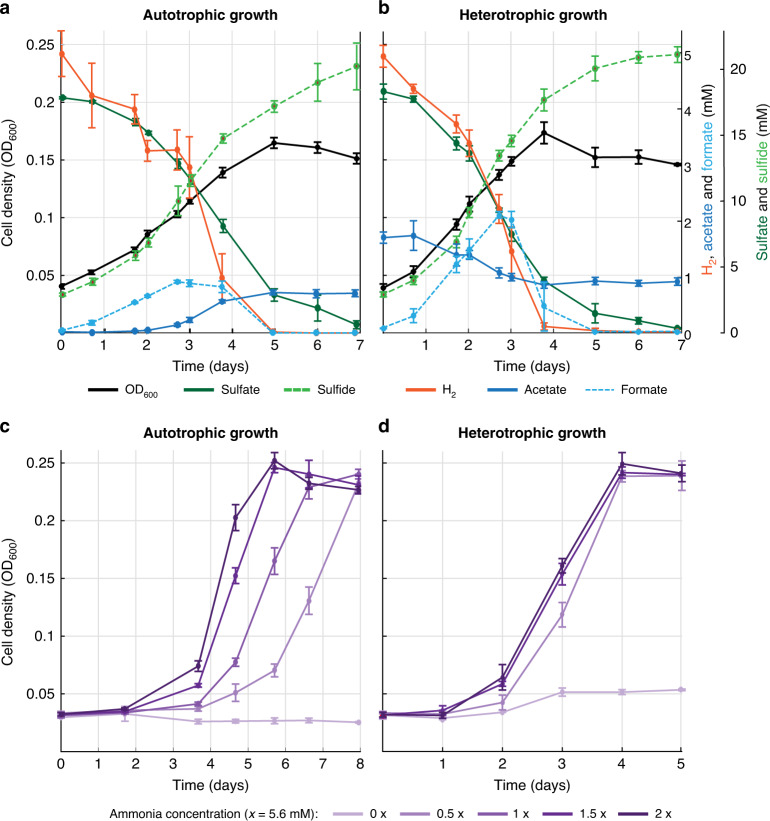
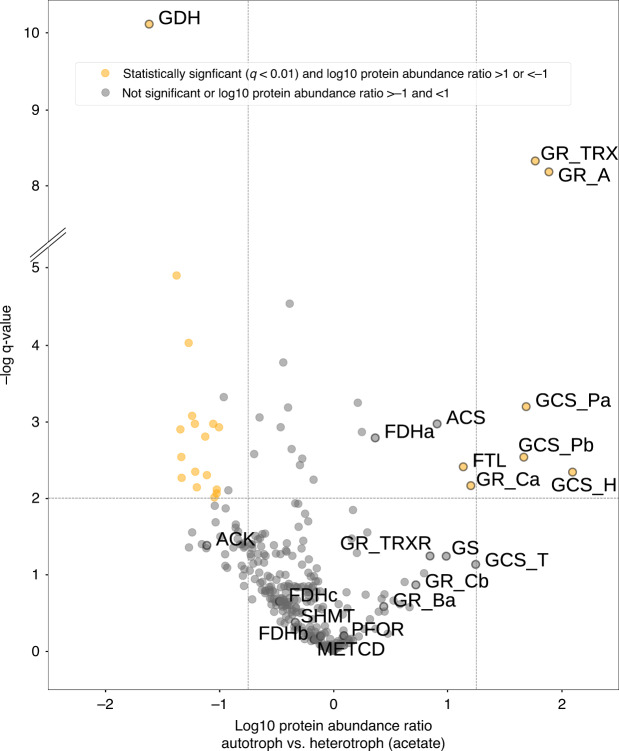
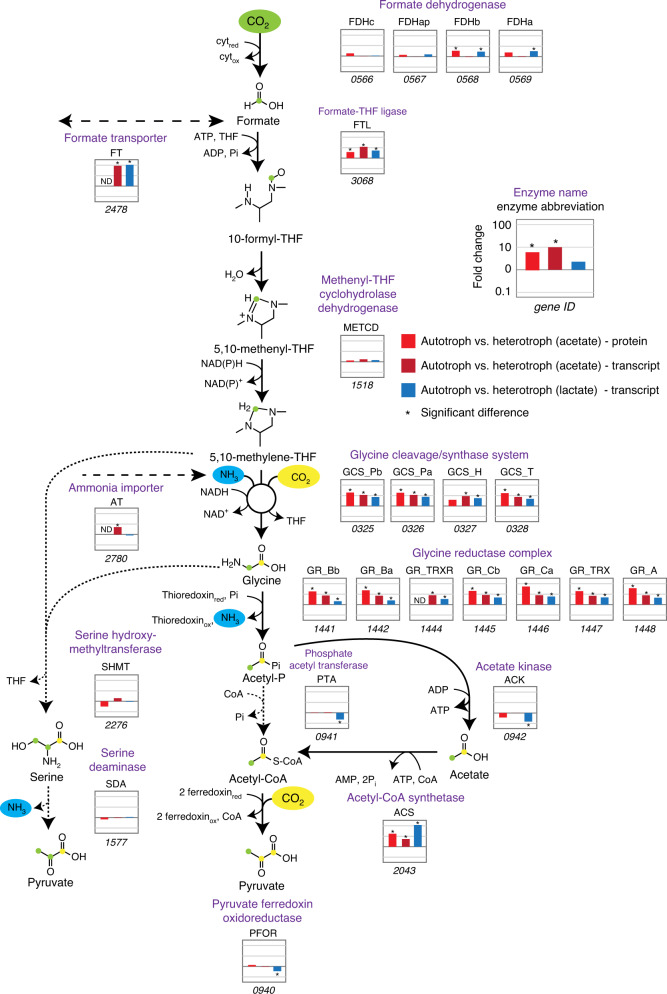
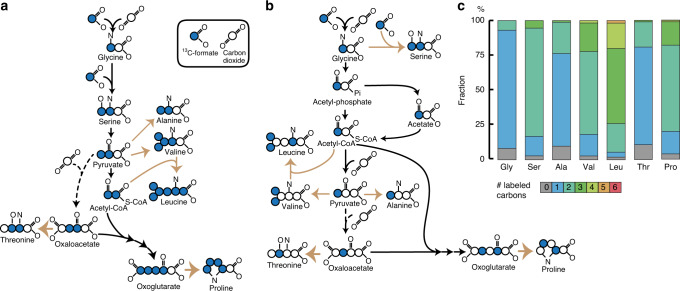
Six CO 2 fixation pathways are known to operate in photoautotrophic and chemoautotrophic microorganisms. Here, we describe chemolithoautotrophic growth of the sulphate-reducing bacterium Desulfovibrio desulfuricans (strain G11) with hydrogen and sulphate as energy substrates. Genomic, transcriptomic, proteomic and metabolomic analyses reveal that D. desulfuricans assimilates CO 2 via the reductive glycine pathway, a seventh CO 2 fixation pathway. In this pathway, CO 2 is first reduced to formate, which is reduced and condensed with a second CO 2 to generate glycine. Glycine is further reduced in D. desulfuricans by glycine reductase to acetyl-P, and then to acetyl-CoA, which is condensed with another CO 2 to form pyruvate. Ammonia is involved in the operation of the pathway, which is reflected in the dependence of the autotrophic growth rate on the ammonia concentration. Our study demonstrates microbial autotrophic growth fully supported by this highly ATP-efficient CO 2 fixation pathway.
Overview
The claims and statistics of this paper haven’t been checked yet.
Run the check — free, no account needed. It reads the open-access text and checks the sources it cites.
Integrity signals
Registry
Cites
Statistics
Figures
Verification
Claims the paper makes
The claims and statistics of this paper haven’t been checked yet.
Run the check — free, no account needed. It reads the open-access text and checks the sources it cites.
Claims other papers make about this one
Each is checked against this paper’s own text: does it say what the citing paper says it does?
The cited source says what the claim attributes to it.
In the citing paper
“It is distinct from the H2-dependent glycine reductase pathway of autotrophic CO2 fixation used by Desulfovibrio desulfuricans (Sánchez-Andrea et al., 2020).”
From Serpentinization as the source of energy, electrons, organics, catalysts, nutrients and pH gradients for the origin of LUCA and life (2023) · cites this paper as Sánchez-Andrea et al., 2020
Self-check
Percentages, sums and reported differences re-computed from the paper’s own numbers.
The self-check needs the paper’s full text.
Citations
Cites
Basic local alignment search tool
Altschul, S. F., Gish, W., Miller, W., Myers, E. W., & Lipman, D. J. (1990) · Journal of Molecular Biology · doi:10.1006/jmbi.1990.9999 · Cited by 98,669
Moderated estimation of fold change and dispersion for RNA-seq data with DESeq2
Love, M. I., Huber, W., & Anders, S. (2014) · Genome Biology · doi:10.1186/s13059-014-0550-8 · Cited by 95,106
The Sequence Alignment/Map format and SAMtools
Li, H., Handsaker, B., Wysoker, A., Fennell, T., Ruan, J., Homer, N., Marth, G., Abecasis, G., Durbin, R., & 1000 Genome Project Data Processing Subgroup (2009) · Bioinformatics · doi:10.1093/bioinformatics/btp352 · Cited by 62,041
Fast gapped-read alignment with Bowtie 2
Langmead, B., & Salzberg, S. L. (2012) · Nature Methods · doi:10.1038/nmeth.1923 · Cited by 56,400
Matplotlib: a 2D graphics environment
Hunter, J. D. (2007) · Computing in Science & Engineering · doi:10.1109/mcse.2007.55 · Cited by 39,249
Cutadapt removes adapter sequences from high-throughput sequencing reads
Martin, M. (2011) · EMBnet.journal · doi:10.14806/ej.17.1.200 · Cited by 33,889
HTSeq—a Python framework to work with high-throughput sequencing data
Anders, S., Pyl, P. T., & Huber, W. (2015) · Bioinformatics · doi:10.1093/bioinformatics/btu638 · Cited by 21,464
Prodigal: prokaryotic gene recognition and translation initiation site identification
Hyatt, D., Chen, G.-L., LoCascio, P. F., Land, M., Larimer, F. W., & Hauser, L. (2010) · BMC Bioinformatics · doi:10.1186/1471-2105-11-119 · Cited by 12,692
Parks, D. H., Imelfort, M., Skennerton, C. T., Hugenholtz, P., & Tyson, G. W. (2015) · Genome Research · doi:10.1101/gr.186072.114 · Cited by 12,496
A framework for variation discovery and genotyping using next-generation DNA sequencing data
DePristo, M. A., Banks, E., Poplin, R. E., Garimella, K. V., Maguire, J., Hartl, C., Philippakis, A., del Angel, G., Rivas, M. A., Hanna, M., et al. (2011) · Nature Genetics · doi:10.1038/ng.806 · Cited by 11,508
Cited by
Sorted by citations
A rooted phylogeny resolves early bacterial evolution
Coleman, G. A., Davín, A. A., Mahendrarajah, T. A., Szánthó, L. L., Spang, A., Hugenholtz, P., Szöllősi, G. J., & Williams, T. A. (2021) · Science · doi:10.1126/science.abe0511 · Cited by 285
Enzymatic Conversion of CO 2 : From Natural to Artificial Utilization
Bierbaumer, S., Nattermann, M., Schulz, L., Zschoche, R., Erb, T. J., Winkler, C. K., Tinzl, M., & Glueck, S. M. (2023) · Chemical Reviews · doi:10.1021/acs.chemrev.2c00581 · Cited by 283
Metabolic engineering strategies to enable microbial utilization of C1 feedstocks
Jiang, W., Hernández Villamor, D., Peng, H., Chen, J., Liu, L., Haritos, V., & Ledesma-Amaro, R. (2021) · Nature Chemical Biology · doi:10.1038/s41589-021-00836-0 · Cited by 216
Physiological limitations and opportunities in microbial metabolic engineering
López, J. M., Duran, L. A., & Avalos, J. L. (2021) · Nature Reviews Microbiology · doi:10.1038/s41579-021-00600-0 · Cited by 205
Fackler, N., Heijstra, B. D., Rasor, B. J., Brown, H., Martin, J. P., Ni, Z., Shebek, K. M., Rosin, R. R., Simpson, S. D., Tyo, K. E. J., et al. (2021) · Annual Review of Chemical and Biomolecular Engineering · doi:10.1146/annurev-chembioeng-120120-021122 · Cited by 176
Huang, Q., Huang, Y., Wang, B., Dippold, M. A., Li, H., Li, N., Jia, P., Zhang, H., An, S., & Kuzyakov, Y. V. (2022) · Soil Biology and Biochemistry · doi:10.1016/j.soilbio.2022.108764 · Cited by 148
Correa, S. S., Schultz, J., Lauersen, K. J., & Rosado, A. S. (2022) · Journal of Advanced Research · doi:10.1016/j.jare.2022.07.011 · Cited by 159
Awakening a latent carbon fixation cycle in Escherichia coli
Satanowski, A., Dronsella, B., Noor, Ε., Vögeli, B., He, H., Wichmann, P., Erb, T. J., Lindner, S. N., & Bar‐Even, A. (2020) · Nature Communications · doi:10.1038/s41467-020-19564-5 · Cited by 115
Self-citationCarbon fixation pathways across the bacterial and archaeal tree of life
Garritano, A. N., Song, W., & Thomas, T. (2022) · PNAS Nexus · doi:10.1093/pnasnexus/pgac226 · Cited by 116
A cell-free self-replenishing CO2-fixing system
Luo, S., Lin, P. P.-C., Nieh, L.-Y., Liao, G., Tang, P., Chen, C., & Liao, J. C. (2022) · Nature Catalysis · doi:10.1038/s41929-022-00746-x · Cited by 110
Synthetic Biology Approaches To Enhance Microalgal Productivity
Naduthodi, M. I. S., Claassens, N. J., D’Adamo, S., John van der, O. O. S. T., & Barbosa, M. J. (2021) · Trends in biotechnology · doi:10.1016/j.tibtech.2020.12.010 · Cited by 109
Self-citationLife in the Dark: Phylogenetic and Physiological Diversity of Chemosynthetic Symbioses
Sogin, E. M., Kleiner, M., Borowski, C., Gruber‐Vodicka, H. R., & Dubilier, N. (2021) · Annual Review of Microbiology · doi:10.1146/annurev-micro-051021-123130 · Cited by 96
Hou, J., Wang, Y., Zhu, P., Yang, N., Liang, L., Yu, T., Niu, M., Konhauser, K. O., Woodcroft, B. J., & Wang, F. (2023) · Science Advances · doi:10.1126/sciadv.adf5069 · Cited by 108
Chem-bio interface design for rapid conversion of CO2 to bioplastics in an integrated system
Zhang, P., Chen, K., Xu, B., Li, J., Hu, C., Yuan, J. S., & Dai, S. Y. (2022) · Chem · doi:10.1016/j.chempr.2022.09.005 · Cited by 94
Pavan, M., Reinmets, K., Garg, S., Mueller, A. P., Marcellin, E., Köpke, M., & Valgepea, K. (2022) · Metabolic Engineering · doi:10.1016/j.ymben.2022.01.015 · Cited by 90
Construction and modular implementation of the THETA cycle for synthetic CO2 fixation
Luo, S., Diehl, C., He, H., Bae, Y., Klose, M., Claus, P., Cortina, N. S., Fernandez, C. A., Schulz-Mirbach, H., McLean, R., et al. (2023) · Nature Catalysis · doi:10.1038/s41929-023-01079-z · Cited by 91
Opportunities of CO2-based biorefineries for production of fuels and chemicals
Liu, Z., Shi, S., Ji, Y., Wang, K., Tan, T., & Nielsen, J. (2023) · Green Carbon · doi:10.1016/j.greenca.2023.09.002 · Cited by 89
Zhang, C., Ottenheim, C., Weingarten, M., & Ji, L. (2022) · Frontiers in Bioengineering and Biotechnology · doi:10.3389/fbioe.2022.874612 · Cited by 75
Bernardini, N., Basile, A., Zampieri, G., Kovalovszki, A., Diaz, B. D. D., Offer, E., Wongfaed, N., Angelidaki, İ., Kougias, P., Campanaro, S., et al. (2022) · Microbiome · doi:10.1186/s40168-022-01311-1 · Cited by 72
Tian, J., Deng, W., Zhang, Z., Xu, J., Yang, G., Zhao, G., Yang, S., Jiang, W., & Gu, Y. (2023) · Nature Communications · doi:10.1038/s41467-023-43631-2 · Cited by 71
Schwander, L., Brabender, M., Mrnjavac, N., Wimmer, J. L. E., Preiner, M., & Martin, W. F. (2023) · Frontiers in Microbiology · doi:10.3389/fmicb.2023.1257597 · Cited by 65
C1-based biomanufacturing: Advances, challenges and perspectives
Lv, X., Yu, W., Zhang, C., Ning, P., Li, J., Liu, Y., Du, G., & Liu, L. (2022) · Bioresource Technology · doi:10.1016/j.biortech.2022.128259 · Cited by 65
Bioconversion of C1 feedstocks for chemical production using Pichia pastoris
Guo, F., Qiao, Y., Xin, F., Zhang, W., & Jiang, M. (2023) · Trends in biotechnology · doi:10.1016/j.tibtech.2023.03.006 · Cited by 65
Khomyakova, M. A., Zavarzina, D. G., Merkel, A. Y., Klyukina, A. A., Pikhtereva, V. A., Gavrilov, S. N., & Slobodkin, A. I. (2022) · Frontiers in Microbiology · doi:10.3389/fmicb.2022.1047580 · Cited by 66
Humboldt Review: Photorespiration – Rubisco's repair crew
Bauwe, H. (2022) · Journal of Plant Physiology · doi:10.1016/j.jplph.2022.153899 · Cited by 60
Bruinsma, L., Wenk, S., Claassens, N. J., & dos Santos, V. A. P. M. (2023) · Metabolic Engineering · doi:10.1016/j.ymben.2023.02.004 · Cited by 57
Self-citationMetal ion availability and homeostasis as drivers of metabolic evolution and enzyme function
Aulakh, S. K., Varma, S. J., & Ralser, M. (2022) · Current Opinion in Genetics & Development · doi:10.1016/j.gde.2022.101987 · Cited by 59
Mitic, B. M., Troyer, C., Lutz, L., Baumschabl, M., Hann, S., & Mattanovich, D. (2023) · Nature Communications · doi:10.1038/s41467-023-43610-7 · Cited by 54
Wagner, N., Wen, L., Frazão, C. J. R., & Walther, T. (2023) · Biotechnology Advances · doi:10.1016/j.biotechadv.2023.108276 · Cited by 47
The diversity and evolution of microbial dissimilatory phosphite oxidation
Ewens, S. D., Gomberg, A. F. S., Barnum, T. P., Borton, M. A., Carlson, H. K., Wrighton, K. C., & Coates, J. D. (2021) · Proceedings of the National Academy of Sciences · doi:10.1073/pnas.2020024118 · Cited by 48
Orsi, E., Nikel, P. I., Nielsen, L. K., & Donati, S. (2023) · Nature Communications · doi:10.1038/s41467-023-42166-w · Cited by 49
Adaptive laboratory evolution and reverse engineering enhances autotrophic growth in Pichia pastoris
Gassler, T., Baumschabl, M., Sallaberger, J., Egermeier, M., & Mattanovich, D. (2021) · Metabolic Engineering · doi:10.1016/j.ymben.2021.11.007 · Cited by 48
Engineering Rubisco to enhance CO2 utilization
Zhao, L., Cai, Z., Li, Y., & Zhang, Y. (2023) · Synthetic and Systems Biotechnology · doi:10.1016/j.synbio.2023.12.006 · Cited by 51
Establishing Mixotrophic Growth of Cupriavidus necator H16 on CO2 and Volatile Fatty Acids
Jawed, K., Irorere, V. U., Bommareddy, R. R., Minton, N. P., & Kovács, K. (2022) · Fermentation · doi:10.3390/fermentation8030125 · Cited by 48
Bysani, V. R., Alam, A. S., Bar‐Even, A., & Machens, F. (2023) · Metabolic Engineering · doi:10.1016/j.ymben.2023.11.007 · Cited by 49
Self-citationWenk, S., Rainaldi, V., Schann, K., He, H., Bouzon, M., Döring, V., Lindner, S. N., & Bar‐Even, A. (2024) · Metabolic Engineering · doi:10.1016/j.ymben.2024.10.007 · Cited by 60
Self-citationSynthetic or natural? Metabolic engineering for assimilation and valorization of methanol
Sanford, P. A., & Woolston, B. M. (2021) · Current Opinion in Biotechnology · doi:10.1016/j.copbio.2021.12.001 · Cited by 47
Engineering a synthetic energy-efficient formaldehyde assimilation cycle in Escherichia coli
Wu, T., Gómez-Coronado, P. A., Kubis, A., Lindner, S. N., Marlière, P., Erb, T. J., Bar‐Even, A., & He, H. (2023) · Nature Communications · doi:10.1038/s41467-023-44247-2 · Cited by 46
Self-citationStöckl, M., Claassens, N. J., Lindner, S. N., Klemm, E., & Holtmann, D. (2021) · Current Opinion in Biotechnology · doi:10.1016/j.copbio.2021.11.007 · Cited by 45
Self-citationReductive Glycine Pathway: A Versatile Route for One-Carbon Biotech
Claassens, N. J. (2021) · Trends in biotechnology · doi:10.1016/j.tibtech.2021.02.005 · Cited by 44
Self-citationTranslating advances in microbial bioproduction to sustainable biotechnology
Carruthers, D. N., & Lee, T. S. (2022) · Frontiers in Bioengineering and Biotechnology · doi:10.3389/fbioe.2022.968437 · Cited by 44
Perspectives for Using CO2 as a Feedstock for Biomanufacturing of Fuels and Chemicals
Kurt, E., Qin, J., Williams, A. R., Zhao, Y., & Xie, D. (2023) · Bioengineering · doi:10.3390/bioengineering10121357 · Cited by 46
Karishma, S., Kamalesh, R., Saravanan, A., Deivayanai, V. C., Yaashikaa, P. R., & Vickram, A. S. (2024) · Biochemical Engineering Journal · doi:10.1016/j.bej.2024.109366 · Cited by 41
Bacterial conversion of CO2 to organic compounds
Choi, K. R., Ahn, Y., & Lee, S. Y. (2022) · Journal of CO2 Utilization · doi:10.1016/j.jcou.2022.101929 · Cited by 41
Embracing a low-carbon future by the production and marketing of C1 gas protein
Xu, J., Wang, J., Ma, C., Wei, Z., Zhai, Y., Tian, N., Zhu, Z., Xue, M., & Li, D. (2023) · Biotechnology Advances · doi:10.1016/j.biotechadv.2023.108096 · Cited by 42
Henard, C. A., Wu, C., Xiong, W., Henard, J. M., Davidheiser‐Kroll, B., Orata, F. D., & Guarnieri, M. T. (2021) · Applied and Environmental Microbiology · doi:10.1128/aem.00881-21 · Cited by 40
Li, J., Chen, B., Gu, S., Zhao, Z., Liu, Q., Sun, T., Zhang, Y., Wu, T., Liu, D., Sun, W., et al. (2021) · Biotechnology for Biofuels · doi:10.1186/s13068-021-02042-5 · Cited by 38
Acetyl-CoA synthesis through a bicyclic carbon-fixing pathway in gas-fermenting bacteria
Wu, C., Lo, J., Urban, C., Gao, X., Yang, B., Humphreys, J. R., Shinde, S., Wang, X., Chou, K., Maness, P., et al. (2022) · Nature Synthesis · doi:10.1038/s44160-022-00095-4 · Cited by 40
Engineering a Highly Efficient Carboligase for Synthetic One-Carbon Metabolism
Nattermann, M., Burgener, S., Pfister, P., Chou, A., Schulz, L., Lee, S. H., Paczia, N., Zarzycki, J., González, R., & Erb, T. J. (2021) · ACS Catalysis · doi:10.1021/acscatal.1c01237 · Cited by 39
Creating new-to-nature carbon fixation: A guide
Schulz-Mirbach, H., Dronsella, B., He, H., & Erb, T. J. (2023) · Metabolic Engineering · doi:10.1016/j.ymben.2023.12.012 · Cited by 35
Bringing carbon to life via one-carbon metabolism
O’Keeffe, S., Garcia, L., Chen, Y., Law, R. C., Liu, C., & Park, J. O. (2024) · Trends in biotechnology · doi:10.1016/j.tibtech.2024.08.014 · Cited by 38
Metabolic strategies shared by basement residents of the lost City hydrothermal field
Brazelton, W. J., McGonigle, J. M., Motamedi, S., Pendleton, H. L., Twing, K. I., Miller, B. C., Lowe, W. J., Hoffman, A. M., Prator, C. A., Chadwick, G. L., et al. (2022) · Applied and Environmental Microbiology · doi:10.1128/aem.00929-22 · Cited by 36
Zhang, A., Cai, Y., Guo, L., Wang, C., Wa, Q., Xu, Y., Zhou, J. H., Fan, H., Li, Z., Long, X., et al. (2025) · SmartMat · doi:10.1002/smm2.70058 · Cited by 36
Satanowski, A., Marchal, D. G., Perret, A., Petit, J., Bouzon, M., Döring, V., Dubois, I., He, H., Smith, E. N., Pellouin, V., et al. (2025) · Nature Communications · doi:10.1038/s41467-025-57549-4 · Cited by 31
Self-citationBiochemistry of methanol‐dependent acetogenesis in Eubacterium callanderi KIST612
Dietrich, H. M., Kremp, F., Öppinger, C., Ribaric, L., & Müller, V. (2021) · Environmental Microbiology · doi:10.1111/1462-2920.15643 · Cited by 33
TCA Cycle Replenishing Pathways in Photosynthetic Purple Non-Sulfur Bacteria Growing with Acetate
Petushkova, E. P., Mayorova, E., & Tsygankov, A. A. (2021) · Life · doi:10.3390/life11070711 · Cited by 32
Design and Construction of Artificial Biological Systems for One-Carbon Utilization
Zhong, W., Li, H., & Wang, Y. (2023) · BioDesign Research · doi:10.34133/bdr.0021 · Cited by 31
Kelso, P. A., Chow, L., Carpenter, A. C., Paulsen, I. T., & Williams, T. C. (2022) · ACS Synthetic Biology · doi:10.1021/acssynbio.2c00110 · Cited by 31
Biotransforming CO2 into valuable chemicals
Xia, Q. X., Yang, J., Hu, L., Zhao, H., & Lu, Y. (2023) · Journal of Cleaner Production · doi:10.1016/j.jclepro.2023.140185 · Cited by 32
Slobodkin, A. I., Ratnikova, N. M., Slobodkina, G. B., Klyukina, A. A., Chernyh, N. A., & Merkel, A. Y. (2023) · Microorganisms · doi:10.3390/microorganisms11030555 · Cited by 30
Liu, X., Luo, H., Yu, D., Tan, J., Yuan, J., & Li, H. (2022) · Bioresources and Bioprocessing · doi:10.1186/s40643-022-00615-2 · Cited by 30
Sulfide and transition metals - A partnership for life
Maiti, B. K., Maia, L. B., & Moura, J. J. G. (2021) · Journal of Inorganic Biochemistry · doi:10.1016/j.jinorgbio.2021.111687 · Cited by 30
Challenges and opportunities in C1-based biomanufacturing
Qiao, W., Xu, S., Liu, Z., Fu, X., Zhao, H., & Shi, S. (2022) · Bioresource Technology · doi:10.1016/j.biortech.2022.128095 · Cited by 30
Bährle, R., Böhnke, S., Englhard, J., Bachmann, J., & Perner, M. (2023) · Bioresources and Bioprocessing · doi:10.1186/s40643-023-00705-9 · Cited by 31
Tan, S., & Ng, I. (2021) · Green Chemistry · doi:10.1039/d1gc00456e · Cited by 30
Wood-Ljungdahl pathway utilisation during in situ H2 biomethanation
de Jonge, N., Poulsen, J. S., Vechi, N. T., Kofoed, M. V. W., & Nielsen, J. L. (2021) · The Science of The Total Environment · doi:10.1016/j.scitotenv.2021.151254 · Cited by 29
Xu, Y., Ren, J., Wang, W., & Zeng, A. (2021) · Engineering in Life Sciences · doi:10.1002/elsc.202100047 · Cited by 29
Feng, Y., Bui, T. P. N., Stams, A. J. M., Boeren, S. A., Sánchez‐Andrea, I., & de Vos, W. M. (2022) · Environmental Microbiology · doi:10.1111/1462-2920.15886 · Cited by 31
Self-citationCarbon recycling with synthetic CO2 fixation pathways
Chen, P.-R., & Xia, P. (2023) · Current Opinion in Biotechnology · doi:10.1016/j.copbio.2023.103023 · Cited by 31
Shi, Y., Zhang, K., Chen, J., Zhang, B., Guan, X., Wang, X., Zhang, T., Han, S., Zou, L., Duan, X., et al. (2024) · Angewandte Chemie International Edition · doi:10.1002/anie.202412072 · Cited by 29
Wang, W., Jiang, S., Xu, C., Tang, L., Liang, Y., Zhao, Y., & Zhu, G. (2022) · Frontiers in Aging Neuroscience · doi:10.3389/fnagi.2022.976316 · Cited by 29
Feng, J., Ma, D., Gao, S., Liao, Y., Feng, J., Xu, S., Wang, X., & Chen, K. (2023) · ACS Sustainable Chemistry & Engineering · doi:10.1021/acssuschemeng.2c06627 · Cited by 28
Laguillaumie, L., Lavigne, M. P., Grimalt‐Alemany, A., Gavala, H. N., Skiadas, I. V., Paul, E., & Dumas, C. (2023) · Journal of Cleaner Production · doi:10.1016/j.jclepro.2023.137549 · Cited by 29
Qian, Y., Liu, X., Hu, P., Gao, L., & Gu, J. (2024) · The Science of The Total Environment · doi:10.1016/j.scitotenv.2024.176757 · Cited by 28
Functional compartmentalization and metabolic separation in a prokaryotic cell
Flechsler, J., Heimerl, T., Huber, H., Rachel, R., & Berg, I. A. (2021) · Proceedings of the National Academy of Sciences · doi:10.1073/pnas.2022114118 · Cited by 26
Deciphering the fate of sulfate in one- and two-chamber bioelectrochemical systems
Dai, S., Korth, B., Schwab, L., Aulenta, F., Vogt, C., & Harnisch, F. (2022) · Electrochimica Acta · doi:10.1016/j.electacta.2022.139942 · Cited by 26
Weng, N., Singh, A., Ohlsson, J. A., Dolfing, J., & Westerholm, M. (2024) · Frontiers in Microbiology · doi:10.3389/fmicb.2024.1389257 · Cited by 28
Claassens, N. J., Satanowski, A., Bysani, V. R., Dronsella, B., Orsi, E., Rainaldi, V., Yilmaz, S., Wenk, S., & Lindner, S. N. (2022) · Advances in biochemical engineering, biotechnology · doi:10.1007/10_2021_181 · Cited by 26
Self-citationSingle carbon metabolism – A new paradigm for microbial bioprocesses?
Baumschabl, M., Ata, Ö., & Mattanovich, D. (2024) · Synthetic and Systems Biotechnology · doi:10.1016/j.synbio.2024.03.003 · Cited by 23
Formaldehyde: An Essential Intermediate for C1 Metabolism and Bioconversion
Jia, M., Liu, M., Li, J., Jiang, W., Xin, F., Zhang, W., Jiang, Y., & Jiang, M. (2024) · ACS Synthetic Biology · doi:10.1021/acssynbio.4c00454 · Cited by 24
Hirayama, H., Takaki, Y., Abe, M., Imachi, H., Ikuta, T., Miyazaki, J., Tasumi, E., Uematsu, K., Tame, A., Tsuda, M., et al. (2021) · Applied and Environmental Microbiology · doi:10.1128/aem.00758-21 · Cited by 24
Synthetic biology approaches and bioseparations in syngas fermentation
Devi, N. B., Pugazhenthi, G., & Pakshirajan, K. (2024) · Trends in biotechnology · doi:10.1016/j.tibtech.2024.07.008 · Cited by 25
Biester, A., Grahame, D. A., & Drennan, C. L. (2024) · Proceedings of the National Academy of Sciences · doi:10.1073/pnas.2410995121 · Cited by 24
Wang, S., Zhao, Z., Cheng, R., Cui, L., Wang, J., Rubin‐Blum, M., Zhang, Y., Liu, B., Chen, X., Baltar, F., et al. (2025) · Microbiome · doi:10.1186/s40168-025-02177-9 · Cited by 23
Microbial conversion of CO 2 to organic compounds
Li, Y., Zhang, J., & Chen, X. (2024) · Energy & Environmental Science · doi:10.1039/d4ee02262a · Cited by 24
Schulz-Mirbach, H., Wichmann, P., Satanowski, A., Meusel, H., Wu, T., Nattermann, M., Burgener, S., Paczia, N., Bar‐Even, A., & Erb, T. J. (2024) · Nature Communications · doi:10.1038/s41467-024-53762-9 · Cited by 22
Self-citationZhou, L., Lai, Y., Zeng, R., Zhao, B., Jian, Y., Ou, P., Zhang, W., Ng, H. Y., & Zhuang, W. (2022) · The Science of The Total Environment · doi:10.1016/j.scitotenv.2022.155483 · Cited by 22
Metabolic Versatility of the FamilyHalieaceaeRevealed by the Genomics of Novel Cultured Isolates
Li, S., Kang, I., & Cho, J. (2023) · Microbiology Spectrum · doi:10.1128/spectrum.03879-22 · Cited by 27
Li, K., Zhang, X., Li, C., Liang, Y.-C., Zhao, X., Liu, C., Sinskey, A. J., & Bai, F. (2024) · Bioresource Technology · doi:10.1016/j.biortech.2024.130774 · Cited by 22
Lawson, C. E., Mundinger, A. B., Koch, H., Jacobson, T. B., Weathersby, C. A., Jetten, M. S. M., Pabst, M., Amador‐Noguez, D., Noguera, D. R., McMahon, K. D., et al. (2021) · mSystems · doi:10.1128/msystems.00173-21 · Cited by 21
Self-citationBranduardi, P. (2020) · Microbial Biotechnology · doi:10.1111/1751-7915.13713 · Cited by 21
Hong, Y., Arbter, P., Wang, W., Rojas, L. N., & Zeng, A. (2020) · Biotechnology and Bioengineering · doi:10.1002/bit.27658 · Cited by 21
Biocatalytic C-C Bond Formation for One Carbon Resource Utilization
Yang, Q., Guo, X., Liu, Y., & Jiang, H. (2021) · International Journal of Molecular Sciences · doi:10.3390/ijms22041890 · Cited by 21
Direct CO 2 Transformation to Malate via Bioelectrosynthesis upon Engineered Shewanella oneidensis
Li, Y., Xia, D., Xie, Y., Dong, R., Cao, M., Li, Q., & Wang, Y. (2025) · Journal of the American Chemical Society · doi:10.1021/jacs.5c01494 · Cited by 20
Kinetics of the ancestral carbon metabolism pathways in deep-branching bacteria and archaea
Sumi, T., & Harada, K. (2021) · Communications Chemistry · doi:10.1038/s42004-021-00585-0 · Cited by 20
Bounaga, A., Alsanea, A., Danouche, M., Rittmann, B. E., Zhou, C., Boulif, R., Zeroual, Y., Benhida, R., & Lyamlouli, K. (2023) · The Science of The Total Environment · doi:10.1016/j.scitotenv.2023.166296 · Cited by 21
Frolova, A. A., Merkel, A. Y., Kuchierskaya, A. A., Bonch-Osmolovskaya, E. A., & Slobodkin, A. I. (2021) · Antonie van Leeuwenhoek · doi:10.1007/s10482-021-01608-5 · Cited by 20
Engineering a Novel Acetyl-CoA Pathway for Efficient Biosynthesis of Acetyl-CoA-Derived Compounds
Nie, M., Wang, J., & Zhang, K. (2023) · ACS Synthetic Biology · doi:10.1021/acssynbio.3c00613 · Cited by 20
Assessing environmental gradients in relation to dark CO 2 fixation in estuarine wetland microbiomes
Grüterich, L., Woodhouse, J. N., Mueller, P., Tiemann, A., Ruscheweyh, H., Sunagawa, S., Grossart, H., & Streit, W. R. (2024) · Applied and Environmental Microbiology · doi:10.1128/aem.02177-24 · Cited by 18
Recent advancements in microbial carbon dioxide fixation: metabolic engineering strategies
Mustafa, Z., Auroona, N., Sarwar, A., & Lee, E. Y. (2025) · Green Chemistry · doi:10.1039/d5gc03349g · Cited by 19
Metadata
- Authors
- Sánchez-Andrea, I., Guedes, I. A., Hornung, B., Boeren, S., Lawson, C. E., Sousa, D. Z., Bar-Even, A., Claassens, N. J., & Stams, A. J. M.
- Affiliations
- Leiden University Medical Center (NL)
- Wageningen University & Research (NL)
- University of Wisconsin–Madison (US)
- Max Planck Institute of Molecular Plant Physiology (DE)
- Corresponding author
- Claassens, Nico J.
- Stams, Alfons J. M.
- ORCID
- Venue
- Nature Communications
- Published
- 2020-10-09
- Volume
- 11
- Issue
- 1
- Pages
- 5090-5090
- ISSN
- 2041-1723 (ISSN-L)
- PMC
- PMC7547702
- OpenAlex
- W3092013556
- Cited by
- 306
- References
- 84
- Citations by year
- 2026: 39 · 2025: 57 · 2024: 54 · 2023: 58 · 2022: 50 · 2021: 42 · 2020: 5
- FWCI
- 12.65
- Type
- journal article
- Language
- en
- Open access
- gold
- doi.org
- Locations
- Nature Communications (publishedVersion, cc-by)
- PubMed Central (publishedVersion, cc-by)
- PubMed (publishedVersion)
- Socio-Environmental Systems Modeling (acceptedVersion, cc-by)
- Portuguese National Funding Agency for Science, Research and Technology (RCAAP Project by FCT) (submittedVersion, cc-by)
- RePEc: Research Papers in Economics (submittedVersion)
- DOAJ (DOAJ: Directory of Open Access Journals) (submittedVersion, cc-by-sa)
- MPG.PuRe (Max Planck Society) (submittedVersion)
- Portuguese National Funding Agency for Science, Research and Technology (RCAAP Project by FCT) (submittedVersion, cc-by-nc-nd)
- Data Archiving and Networked Services (DANS) (submittedVersion, cc-by)
- Funders
- Nederlandse Organisatie voor Wetenschappelijk Onderzoek (024.002.002, Gravitation Grant 024.002.002, SIAM Gravitation Grant 024.002.002, 019.163LW.035, VI.Veni.192.156)
- Topics
- Life Sciences › Biochemistry, Genetics and Molecular Biology › Molecular Biology › Microbial metabolism and enzyme function
- Life Sciences › Biochemistry, Genetics and Molecular Biology › Biochemistry › Metalloenzymes and iron-sulfur proteins
- Life Sciences › Biochemistry, Genetics and Molecular Biology › Molecular Biology › Microbial Metabolic Engineering and Bioproduction
- Keywords
- reductive glycine pathway, Desulfovibrio desulfuricans, chemolithoautotrophic growth, CO2 fixation, sulfate reduction, glycine reductase, acetyl-CoA, sulfate-reducing bacteria
- MeSH terms
- Adenosine Triphosphate, Ammonia, Bacterial Proteins, Carbon Dioxide, Glycine, Genome, Bacterial, Gene Expression Profiling, Desulfovibrio desulfuricans, Autotrophic Processes, Metabolomics
About these checks
Registry, retraction, Cites and statistics results are computed, not judged, with one exception: a printed reference that no index lists is read once by a model before it counts as a citation error. Claims are extracted by a model and kept only when their quote appears verbatim in the text; each cited source is then checked, with a model’s help, for whether it says what the claim relies on. Those verdicts can be wrong — read the claim’s quote and the cited source before relying on one.
Statistics and arithmetic are recomputed, not judged.
Confidence bands are shown only for fields calibrated on our annotated test set. None is calibrated yet, so no band is shown.
What counts as a claim ›How we measure confidence ›How we check this ›
Are you an author, or do you see a problem with this page? Request a review
