

A computational method for detection of ligand-binding proteins from dose range thermal proteome profiles
Open accessPublished version of a preprint
The DOI matches its Crossref record; 32 of the 32 references it cites were found in a registry or an index.
Abstract
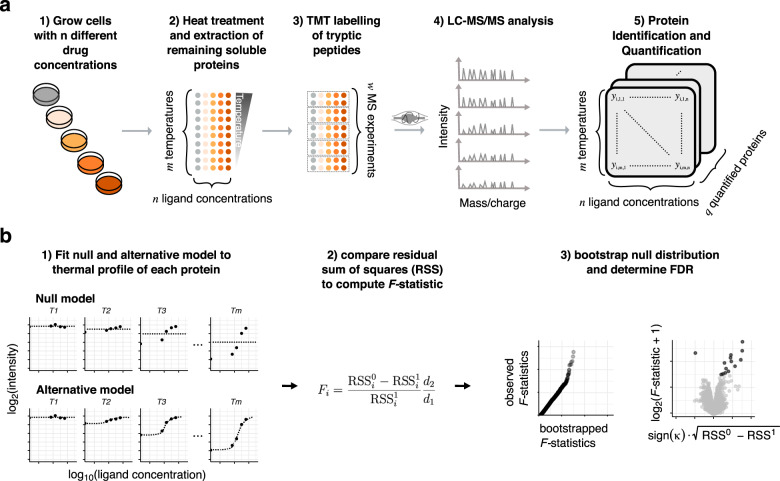
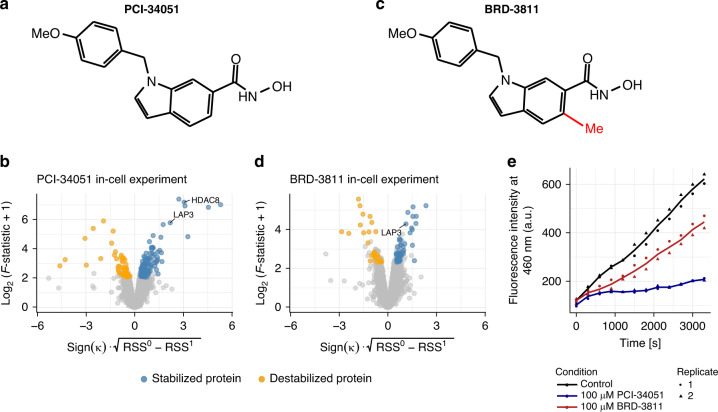
Detecting ligand-protein interactions in living cells is a fundamental challenge in molecular biology and drug research. Proteome-wide profiling of thermal stability as a function of ligand concentration promises to tackle this challenge. However, current data analysis strategies use preset thresholds that can lead to suboptimal sensitivity/specificity tradeoffs and limited comparability across datasets. Here, we present a method based on statistical hypothesis testing on curves, which provides control of the false discovery rate. We apply it to several datasets probing epigenetic drugs and a metabolite. This leads us to detect off-target drug engagement, including the finding that the HDAC8 inhibitor PCI-34051 and its analog BRD-3811 bind to and inhibit leucine aminopeptidase 3. An implementation is available as an R package from Bioconductor ( https://bioconductor.org/packages/TPP2D ). We hope that our method will facilitate prioritizing targets from thermal profiling experiments.
Overview
The claims and statistics of this paper haven’t been checked yet.
Free: it reads the open-access text and checks the first 5 claims that cite a source we can check. Create a free account to check every claim.
Integrity signals
Registry
Cites
Statistics
Figures
Verification
Claims the paper makes
The claims and statistics of this paper haven’t been checked yet.
Free: it reads the open-access text and checks the first 5 claims that cite a source we can check. Create a free account to check every claim.
Claims other papers make about this one
Each is checked against this paper’s own text: does it say what the citing paper says it does?
The source backs part of the claim, not all of it — or backs it for a different population, condition or comparison.
In the citing paper
“Thermal stabilization (i) is leveraged in thermal proteomics profiling (TPP), an approach that has been employed to, for instance, identify the ferrochelatase FECH as a frequent off-target of kinase inhibitors,224 or to uncover leucine aminopeptidase 3 as an off-target of several HDAC inhibitors.225”
From Advancing Targeted Protein Degradation via Multiomics Profiling and Artificial Intelligence (2023) · cites this paper as [225]
Experimental — accuracy not yet measured
Self-check
Percentages, sums and reported differences re-computed from the paper’s own numbers.
The self-check needs the paper’s full text.
Citations
Cites
limma powers differential expression analyses for RNA-sequencing and microarray studies
Ritchie, M. E., Phipson, B., Wu, D., Hu, Y., Law, C. W., Shi, W., & Smyth, G. K. (2015) · Nucleic Acids Research · doi:10.1093/nar/gkv007 · Cited by 40,458
Smyth, G. K. (2004) · Statistical Applications in Genetics and Molecular Biology · doi:10.2202/1544-6115.1027 · Cited by 11,829
A Limited Memory Algorithm for Bound Constrained Optimization
Byrd, R. H., Lu, P., Nocedal, J., & Zhu, C. (1995) · SIAM Journal on Scientific Computing · doi:10.1137/0916069 · Cited by 6,221
Selective inhibition of BET bromodomains
Filippakopoulos, P., Qi, J., Picaud, S., Shen, Y., Smith, W. B., Fedorov, O., Morse, E. M., Keates, T., Hickman, T. T., Felletar, I., et al. (2010) · Nature · doi:10.1038/nature09504 · Cited by 4,262 · cited 2×
“Next, we re-analyzed a dataset probing the BET bromodomain inhibitor JQ1 22 in THP1 cell lysate 23 .”
MethodMonitoring Drug Target Engagement in Cells and Tissues Using the Cellular Thermal Shift Assay
Molina, D. M., Jafari, R., Ignatushchenko, M., Seki, T., Larsson, E. A., Dan, C., Sreekumar, L., Cao, Y., & Nordlund, P. (2013) · Science · doi:10.1126/science.1233606 · Cited by 2,261
Tracking cancer drugs in living cells by thermal profiling of the proteome
Savitski, M. M., Reinhard, F. B. M., Franken, H., Werner, T., Savitski, M. F., Eberhard, D., Molina, D. M., Jafari, R., Dovega, R. B., Klaeger, S., et al. (2014) · Science · doi:10.1126/science.1255784 · Cited by 1,187
Self-citationQuantitative mass spectrometry in proteomics: critical review update from 2007 to the present
Bantscheff, M., Lemeer, S., Savitski, M. M., & Kuster, B. (2012) · Analytical and Bioanalytical Chemistry · doi:10.1007/s00216-012-6203-4 · Cited by 801
Self-citationFranken, H., Mathieson, T., Childs, D., Sweetman, G. M. A., Werner, T., Tögel, I., Doce, C., Gade, S., Bantscheff, M., Drewes, G., et al. (2015) · Nature Protocols · doi:10.1038/nprot.2015.101 · Cited by 659
Self-citationSignificance analysis of time course microarray experiments
Storey, J. D., Xiao, W., Leek, J. T., Tompkins, R. G., & Davis, R. W. (2005) · Proceedings of the National Academy of Sciences · doi:10.1073/pnas.0504609102 · Cited by 567
A Map of Protein-Metabolite Interactions Reveals Principles of Chemical Communication
Piazza, I., Kochanowski, K., Cappelletti, V., Fuhrer, T., Noor, E., Sauer, U., & Picotti, P. (2018) · Cell · doi:10.1016/j.cell.2017.12.006 · Cited by 556 · cited 8×
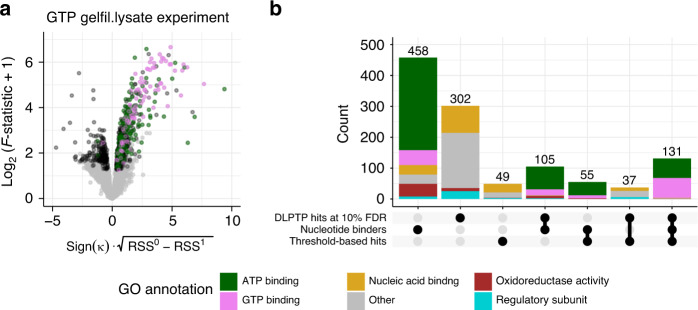
“The samples from each GTP concentration were split into 12 portions, which were then heated each at a temperature (42 – 63.9 °C) for 3min.”
ResultInfluentialBalasubramanian, S., Ramos, J., Luo, W., Sirisawad, M., Verner, E., & Buggy, J. J. (2008) · Leukemia · doi:10.1038/leu.2008.9 · Cited by 458
Li, J., Van Vranken, J. G., Pontano Vaites, L., Schweppe, D. K., Huttlin, E. L., Etienne, C., Nandhikonda, P., Viner, R., Robitaille, A. M., Thompson, A. H., et al. (2020) · Nature Methods · doi:10.1038/s41592-020-0781-4 · Cited by 449
A Scalable Approach for Protein False Discovery Rate Estimation in Large Proteomic Data Sets
Savitski, M. M., Wilhelm, M., Hahne, H., Kuster, B., & Bantscheff, M. (2015) · Molecular & Cellular Proteomics · doi:10.1074/mcp.m114.046995 · Cited by 445
Self-citationThermal proteome profiling monitors ligand interactions with cellular membrane proteins
Reinhard, F. B. M., Eberhard, D., Werner, T., Franken, H., Childs, D., Doce, C., Savitski, M. F., Huber, W., Bantscheff, M., Savitski, M. M., et al. (2015) · Nature Methods · doi:10.1038/nmeth.3652 · Cited by 315 · cited 1×
“For inference, we used an empirical Bayes moderated version of (3), as implemented in the squeezeVar function in the R/Bioconductor package limma31.”
MethodSelf-citationMeltome atlas—thermal proteome stability across the tree of life
Jarzab, A., Kurzawa, N., Hopf, T., Moerch, M., Zecha, J., Leijten, N., Bian, Y., Musiol, E., Maschberger, M., Stoehr, G., et al. (2020) · Nature Methods · doi:10.1038/s41592-020-0801-4 · Cited by 281 · cited 1×
“TPP has been used to study binding of ligands and their downstream effects in cultured human 1,2 and bacterial cells 15,16 , and has recently been adapted to animal tissues and human blood 17 .”
MethodSelf-citationProteome-wide solubility and thermal stability profiling reveals distinct regulatory roles for ATP
Sridharan, S., Kurzawa, N., Werner, T., Günthner, I., Helm, D., Huber, W., Bantscheff, M., & Savitski, M. M. (2019) · Nature Communications · doi:10.1038/s41467-019-09107-y · Cited by 267
Self-citationThermal proteome profiling for interrogating protein interactions
Mateus, A., Kurzawa, N., Becher, I., Sridharan, S., Helm, D., Stein, F., Typas, A., & Savitski, M. M. (2020) · Molecular Systems Biology · doi:10.15252/msb.20199232 · Cited by 258
Self-citationPanobinostat for the Treatment of Multiple Myeloma
Laubach, J. P., Moreau, P., San-Miguel, J. F., & Richardson, P. G. (2015) · Clinical Cancer Research · doi:10.1158/1078-0432.ccr-15-0530 · Cited by 255
Thermal profiling reveals phenylalanine hydroxylase as an off-target of panobinostat
Becher, I., Werner, T., Doce, C., Zaal, E. A., Tögel, I., Khan, C. A., Rueger, A., Muelbaier, M., Salzer, E., Berkers, C. R., et al. (2016) · Nature Chemical Biology · doi:10.1038/nchembio.2185 · Cited by 251
Self-citationPervasive Protein Thermal Stability Variation during the Cell Cycle
Becher, I., Andrés-Pons, A., Romanov, N., Stein, F., Schramm, M., Baudin, F., Helm, D., Kurzawa, N., Mateus, A., Mackmull, M.-T., et al. (2018) · Cell · doi:10.1016/j.cell.2018.03.053 · Cited by 230
Self-citationThermal proximity coaggregation for system-wide profiling of protein complex dynamics in cells
Tan, C. S. H., Go, K. D., Bisteau, X., Dai, L., Yong, C. H., Prabhu, N., Ozturk, M. B., Lim, Y. T., Sreekumar, L., Lengqvist, J., et al. (2018) · Science · doi:10.1126/science.aan0346 · Cited by 224
Multiplexed Proteome Dynamics Profiling Reveals Mechanisms Controlling Protein Homeostasis
Savitski, M. M., Zinn, N., Faelth-Savitski, M., Poeckel, D., Gade, S., Becher, I., Muelbaier, M., Wagner, A. J., Strohmer, K., Werner, T., et al. (2018) · Cell · doi:10.1016/j.cell.2018.02.030 · Cited by 218
Self-citationProteome-wide drug and metabolite interaction mapping by thermal-stability profiling
Huber, K. V. M., Olek, K. M., Müller, A. C., Tan, C. S. H., Bennett, K. L., Colinge, J., & Superti-Furga, G. (2015) · Nature Methods · doi:10.1038/nmeth.3590 · Cited by 210
Thermal proteome profiling in bacteria: probing protein state in vivo
Mateus, A., Bobonis, J., Kurzawa, N., Stein, F., Helm, D., Hevler, J., Typas, A., & Savitski, M. M. (2018) · Molecular Systems Biology · doi:10.15252/msb.20188242 · Cited by 189
Self-citationIdentifying drug targets in tissues and whole blood with thermal-shift profiling
Perrin, J., Werner, T., Kurzawa, N., Rutkowska, A., Childs, D. D., Kalxdorf, M., Poeckel, D., Stonehouse, E., Strohmer, K., Heller, B., et al. (2020) · Nature Biotechnology · doi:10.1038/s41587-019-0388-4 · Cited by 178
Self-citationModulation of Protein-Interaction States through the Cell Cycle
Dai, L., Zhao, T., Bisteau, X., Sun, W., Prabhu, N., Lim, Y. T., Sobota, R. M., Kaldis, P., & Nordlund, P. (2018) · Cell · doi:10.1016/j.cell.2018.03.065 · Cited by 168
Nonparametric Analysis of Thermal Proteome Profiles Reveals Novel Drug-binding Proteins*
Childs, D., Bach, K., Franken, H., Anders, S., Kurzawa, N., Bantscheff, M., Savitski, M. M., & Huber, W. (2019) · Molecular & Cellular Proteomics · doi:10.1074/mcp.tir119.001481 · Cited by 102
Self-citationAn Unbiased Approach To Identify Endogenous Substrates of “Histone” Deacetylase 8
Olson, D. E., Udeshi, N. D., Wolfson, N. A., Pitcairn, C. A., Sullivan, E. D., Jaffe, J. D., Svinkina, T., Natoli, T., Lu, X., Paulk, J., et al. (2014) · ACS Chemical Biology · doi:10.1021/cb500492r · Cited by 81
Wang, X., Shi, L., Deng, Y., Qu, M., Mao, S., Xu, L., Xu, W., & Fang, C. (2015) · European Journal of Pharmacology · doi:10.1016/j.ejphar.2015.10.039 · Cited by 37 · cited 1×
“The expression of LAP3 correlates with hepatocellular carcinoma cell proliferation 25 and its inhibition suppresses invasion of ovarian cancer 26 .”
BackgroundTian, S., Chen, S.-H., Shao, B., Cai, H., Zhou, Y., Zhou, Y., & Xu, A. (2014) · PubMed Central · Cited by 31
Rtpca: an R package for differential thermal proximity coaggregation analysis
Kurzawa, N., Mateus, A., & Savitski, M. M. (2020) · Bioinformatics · doi:10.1093/bioinformatics/btaa682 · Cited by 25
Self-citationNon-parametric analysis of thermal proteome profiles reveals novel drug-binding proteinsPreprint
Childs, D., Bach, K., Franken, H., et al. (2018) · bioRxiv (Cold Spring Harbor Laboratory) · doi:10.1101/373845 · Cited by 14
Self-citation
Cited by
Tu, Y., Tan, L., Tao, H., Li, Y., & Liu, H. (2023) · Phytomedicine · doi:10.1016/j.phymed.2023.154862 · Cited by 190
In-Cell Structural Biology by NMR: The Benefits of the Atomic Scale
Theillet, F. (2022) · Chemical Reviews · doi:10.1021/acs.chemrev.1c00937 · Cited by 137
Small molecule photocatalysis enables drug target identification via energy transfer
Trowbridge, A., Seath, C. P., Rodriguez‐Rivera, F. P., Li, B. X., Dul, B. E., Schwaid, A. G., Buksh, B. F., Geri, J. B., Oakley, J. V., Fadeyi, O., et al. (2022) · Proceedings of the National Academy of Sciences · doi:10.1073/pnas.2208077119 · Cited by 127
“We also identi-fi ed two previously annotated ( + )-JQ1 off-targets, HADHA (33) and SRRM2 (34).”
Recent advances in isobaric labeling and applications in quantitative proteomics
Sivanich, M. K., Gu, T., Tabang, D. N., & Li, L. (2022) · PROTEOMICS · doi:10.1002/pmic.202100256 · Cited by 83
Systematic analysis of drug combinations against Gram-positive bacteria
Cacace, E., Kim, V., Varik, V., Knopp, M. R., Tietgen, M., Brauer-Nikonow, A., İnecik, K., Mateus, A., Milanese, A., Mårli, M. T., et al. (2023) · Nature Microbiology · doi:10.1038/s41564-023-01486-9 · Cited by 86
Self-citation
Metadata
- Authors
- Kurzawa, N., Becher, I., Sridharan, S., Franken, H., Mateus, A., Anders, S., Bantscheff, M., Huber, W., & Savitski, M. M.
- Affiliations
- Heidelberg University (DE)
- European Molecular Biology Laboratory (DE)
- GlaxoSmithKline (Germany) (DE)
- Corresponding author
- Bantscheff, Marcus
- Huber, Wolfgang
- Savitski, Mikhail M.
- ORCID
- Venue
- Nature Communications
- Published
- 2020-11-13
- Volume
- 11
- Issue
- 1
- Pages
- 5783-5783
- ISSN
- 2041-1723 (ISSN-L)
- PMC
- PMC7666118
- OpenAlex
- W3099234957
- Cited by
- 53
- References
- 31
- Citations by year
- 2026: 5 · 2025: 9 · 2024: 9 · 2023: 15 · 2022: 10 · 2021: 4 · 2020: 1
- FWCI
- 2.86
- Type
- journal article
- Language
- en
- Update notices
- correction (2021-12-08)
- Open access
- gold
- doi.org
- Licence
- cc-by
- creativecommons.org/licenses/by/4.0 (tdm)
- creativecommons.org/licenses/by/4.0 (vor)
- Locations
- Nature Communications (publishedVersion, cc-by)
- bioRxiv (Cold Spring Harbor Laboratory) (acceptedVersion, cc-by-nc-nd)
- PubMed Central (publishedVersion, cc-by)
- PubMed (publishedVersion)
- RePEc: Research Papers in Economics (submittedVersion)
- DOAJ (DOAJ: Directory of Open Access Journals) (submittedVersion, cc-by-sa)
- Funders
- European Molecular Biology Laboratory
- European Commission (H2020, 633974)
- Deutsche Forschungsgemeinschaft (SFB 1036)
- Horizon 2020 Framework Programme (633974)
- Topics
- Physical Sciences › Chemistry › Spectroscopy › Advanced Proteomics Techniques and Applications
- Physical Sciences › Chemistry › Physical and Theoretical Chemistry › thermodynamics and calorimetric analyses
- Life Sciences › Biochemistry, Genetics and Molecular Biology › Molecular Biology › Protein Degradation and Inhibitors
- Keywords
- ligand-binding proteins, thermal proteome profiling, false discovery rate control, epigenetic drugs, HDAC8 inhibitors, target prioritization, R/Bioconductor package
- MeSH terms
- Adenosine Triphosphate, Pharmaceutical Preparations, Guanosine Triphosphate, Histone Deacetylases, Humans, Hydroxamic Acids, Indoles, Leucyl Aminopeptidase, Ligands, Protein Binding, Repressor Proteins, Temperature, Computational Biology, Proteome, Databases, Protein, Proteomics, Histone Deacetylase Inhibitors, Hep G2 Cells
About these checks
Registry, retraction, Cites and statistics results are computed, not judged, with one exception: a printed reference that no index lists is read once by a model before it counts as a citation error. Claims are extracted by a model and kept only when their quote appears verbatim in the text; each cited source is then checked, with a model’s help, for whether it says what the claim relies on. Those verdicts can be wrong — read the claim’s quote and the cited source before relying on one.
Statistics and arithmetic are recomputed, not judged.
Confidence bands are shown only for fields calibrated on our annotated test set. None is calibrated yet, so no band is shown.
What counts as a claim ›How we measure confidence ›How we check this ›
Are you an author, or do you see a problem with this page? Request a review
Data sources
Bibliographic data: Semantic Scholar, OpenAlex, Crossref.
Contains information from the Semantic Scholar Academic Graph Datasets, made available under the ODC Attribution License (ODC-BY 1.0).
Semantic Scholar’s data is described in: Kinney, R., et al. (2023). The Semantic Scholar Open Data Platform. arXiv:2301.10140.
