

Single ion qubit with estimated coherence time exceeding one hour
Open accessThe DOI matches its Crossref record; 57 of the 57 references it cites were found in a registry or an index.
Abstract
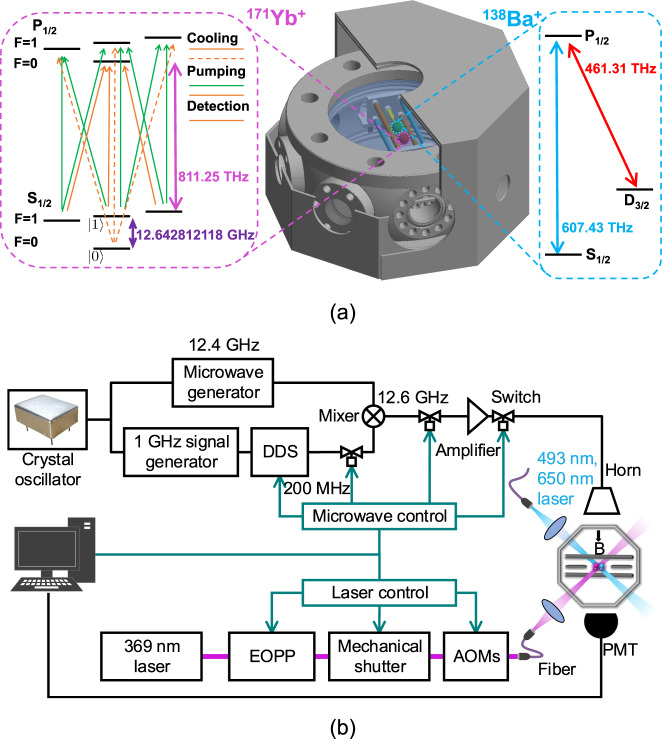
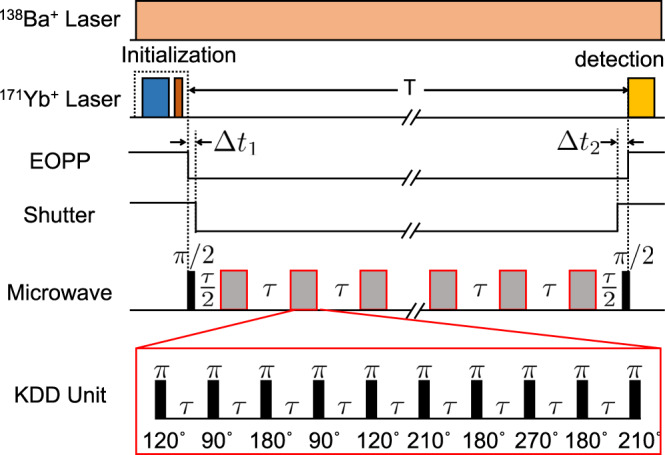
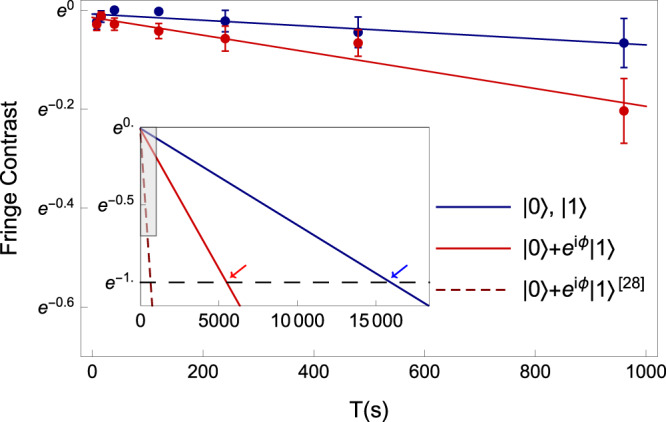
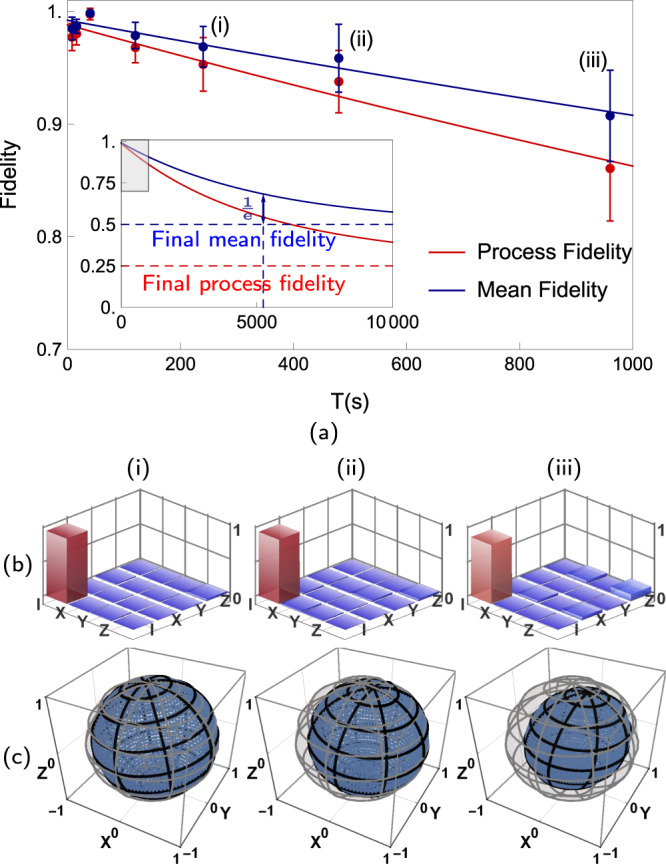
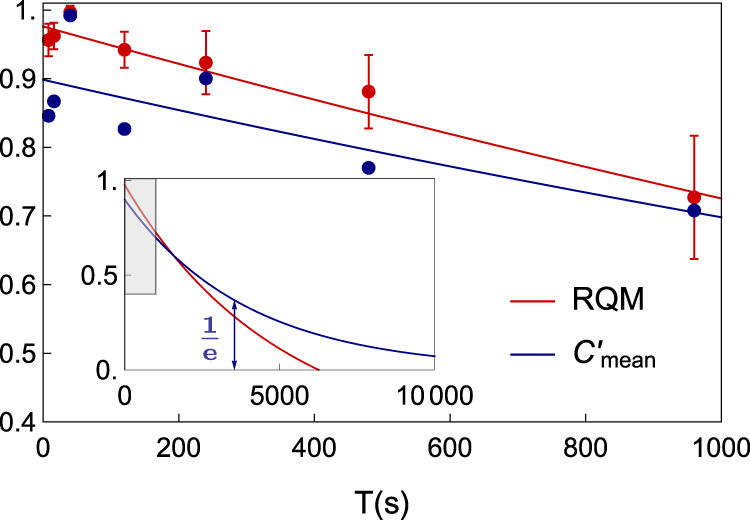
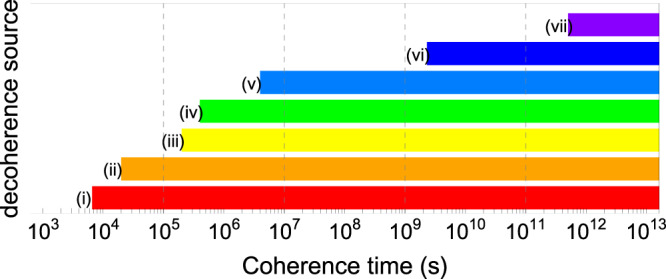
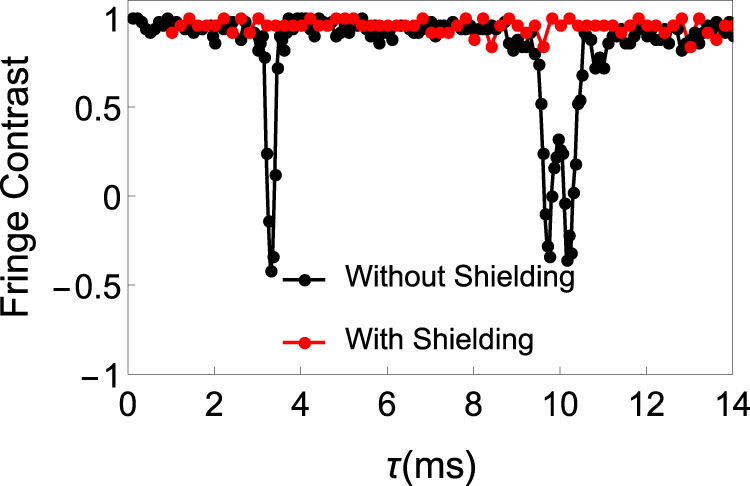
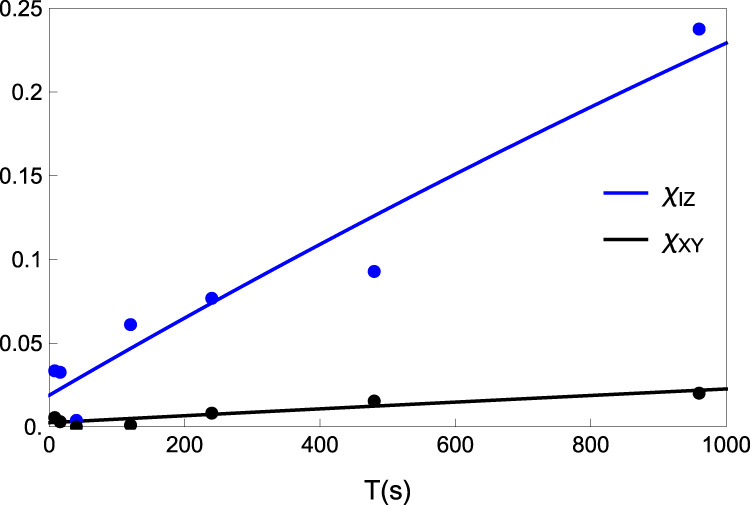
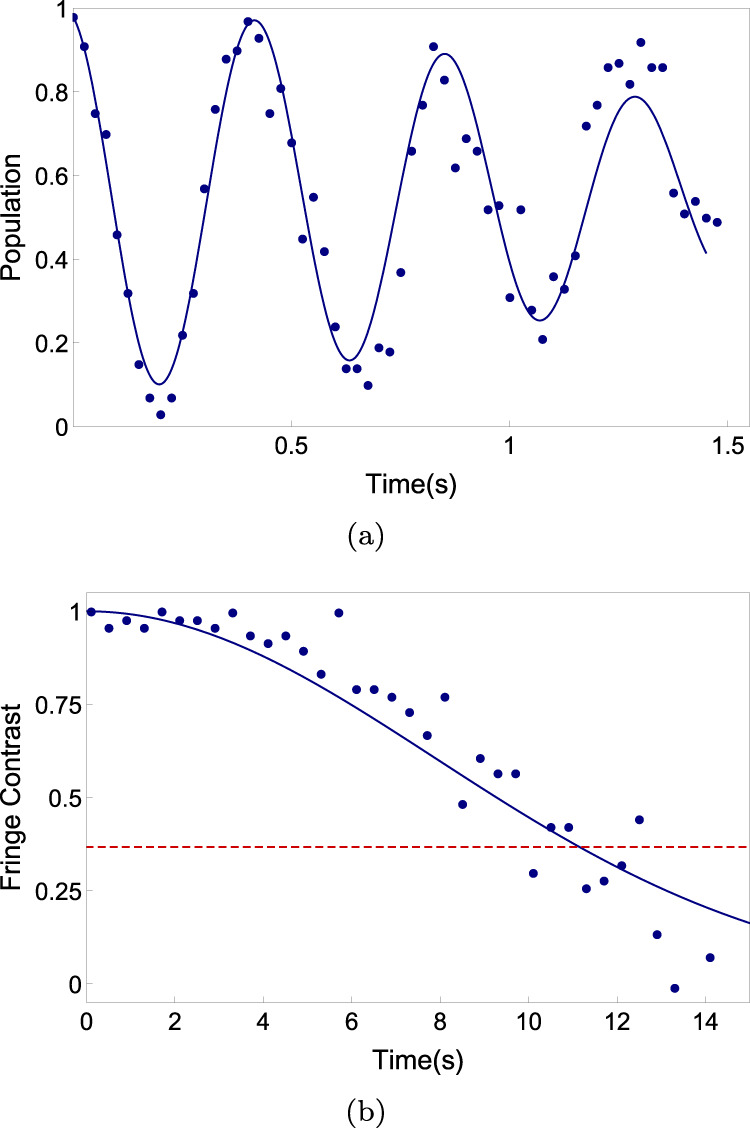
Realizing a long coherence time quantum memory is a major challenge of current quantum technology. Until now, the longest coherence-time of a single qubit was reported as 660 s in a single 171 Yb + ion-qubit through the technical developments of sympathetic cooling and dynamical decoupling pulses, which addressed heating-induced detection inefficiency and magnetic field fluctuations. However, it was not clear what prohibited further enhancement. Here, we identify and suppress the limiting factors, which are the remaining magnetic-field fluctuations, frequency instability and leakage of the microwave reference-oscillator. Then, we observe the coherence time of around 5500 s for the 171 Yb + ion-qubit, which is the time constant of the exponential decay fit from the measurements up to 960 s. We also systematically study the decoherence process of the quantum memory by using quantum process tomography and analyze the results by applying recently developed resource theories of quantum memory and coherence. Our experimental demonstration will accelerate practical applications of quantum memories for various quantum information processing, especially in the noisy-intermediate-scale quantum regime.
Overview
The claims and statistics of this paper haven’t been checked yet.
Free: it reads the open-access text and checks the first 5 claims that cite a source we can check. Create a free account to check every claim.
Integrity signals
Registry
Cites
Statistics
Figures
Verification
Claims the paper makes
The claims and statistics of this paper haven’t been checked yet.
Free: it reads the open-access text and checks the first 5 claims that cite a source we can check. Create a free account to check every claim.
Self-check
Percentages, sums and reported differences re-computed from the paper’s own numbers.
The self-check needs the paper’s full text.
Citations
Cites
Degen, C. L., Reinhard, F., & Cappellaro, P. (2017) · Reviews of Modern Physics · doi:10.1103/revmodphys.89.035002 · Cited by 4,045
Quantum Computations with Cold Trapped Ions
Cirac, J. I., & Zoller, P. (1995) · Physical Review Letters · doi:10.1103/physrevlett.74.4091 · Cited by 3,733
Ladd, T. D., Jelezko, F., Laflamme, R., Nakamura, Y., Monroe, C., & O’Brien, J. L. (2010) · Nature · doi:10.1038/nature08812 · Cited by 3,592
Quantum Repeaters: The Role of Imperfect Local Operations in Quantum Communication
Briegel, H.-J., Dür, W., Cirac, J. I., & Zoller, P. (1998) · Physical Review Letters · doi:10.1103/physrevlett.81.5932 · Cited by 3,481
Decoherence-Free Subspaces for Quantum Computation
Lidar, D. A., Chuang, I. L., & Whaley, K. B. (1998) · Physical Review Letters · doi:10.1103/physrevlett.81.2594 · Cited by 1,858
Colloquium: Quantum coherence as a resource
Streltsov, A., Adesso, G., & Plenio, M. B. (2017) · Reviews of Modern Physics · doi:10.1103/revmodphys.89.041003 · Cited by 1,794
Architecture for a large-scale ion-trap quantum computer
Kielpinski, D., Monroe, C., & Wineland, D. J. (2002) · Nature · doi:10.1038/nature00784 · Cited by 1,589
Wiesner, S. (1983) · ACM SIGACT News · doi:10.1145/1008908.1008920 · Cited by 1,520
Randomized benchmarking of quantum gates
Knill, E., Leibfried, D., Reichle, R., Britton, J., Blakestad, R. B., Jost, J. D., Langer, C., Ozeri, R., Seidelin, S., & Wineland, D. J. (2008) · Physical Review A · doi:10.1103/physreva.77.012307 · Cited by 1,019
Operational Resource Theory of Coherence
Winter, A., & Yang, D. (2016) · Physical Review Letters · doi:10.1103/physrevlett.116.120404 · Cited by 933
Research works printed but not linked: 3
- Nielsen, M. A. & Chuang, I. L. Quantum Computation and Quantum Information (Cambridge University Press, 2010).
- Sarvepalli PK Klappenecker A Rotteler M Asymmetric quantum codes: constructions, bounds and performance Proc. R. Soc. Lond., Ser. A 2009 465 1645 1672
- May, V. & Kühn, O. Charge and Energy Transfer Dynamics in Molecular Systems (John Wiley and Sons, Ltd, 2007).
Cited by
Items 201–300 of 368
Quantum aggregation with temporal delay
Piparo, N. L., Munro, W. J., & Nemoto, K. (2024) · Physical Review A · doi:10.1103/physreva.110.032613 · Cited by 5
Noise-aware circuit compilations for a continuously parameterized two-qubit gateset
Yale, C. G., Rines, R., Omole, V., Thotakura, B., Burch, A. D., Chow, M. N. H., Ivory, M., Lobser, D., McFarland, B., Revelle, M., et al. (2025) · Physical Review Applied · doi:10.1103/3cmg-5rk7 · Cited by 7
“Trapped-ion approaches are a significant player in the quantum computing landscape providing high-fidelity operations [1, 2], long-lived coherence [3], high degree of connectivity [4], and paths to fault tolerance [1, 5–7].”
Characterizing the spatial potential of an ion trap chip
Qin, Q., Chen, T., Zhang, X., Ou, B.-Q., Zhang, J., Wu, C.-W., Xie, Y., Wu, W., & Chen, P. (2025) · Chip · doi:10.1016/j.chip.2024.100126 · Cited by 5
Self-citationOperating a Multi-Ion Clock with Dynamical Decoupling
Akerman, N., & Ozeri, R. (2025) · Physical Review Letters · doi:10.1103/physrevlett.134.013201 · Cited by 13
Observation of anomalous heat transport in a trapped ion chain
Mao, Z., Xu, Y., Mei, Q.-X., Zhao, W.-D., Jiang, Y., Cheng, Z., Chang, X.-Y., He, L., Yao, L., Zhou, Z.-C., et al. (2022) · Physical Review A · doi:10.1103/physreva.105.033107 · Cited by 5
Numerical investigation of a segmented-blade ion trap with biasing rods
Hong, J., Kim, M., Lee, H., & Lee, M. (2022) · Applied Physics B · doi:10.1007/s00340-022-07955-z · Cited by 6
Dijck, E., Warnecke, C., Wehrheim, M., Henninger, R. B., Eff, J., Georgiou, K., Graf, A., Kokh, S., Sajith, L. P. K., Mayo, C., et al. (2023) · Review of Scientific Instruments · doi:10.1063/5.0160537 · Cited by 5
Micromotion compensation of trapped ions by qubit transition and direct scanning of dc voltages
Lee, W., Chung, D., Kang, J., Jeon, H., Jung, C., Cho, D., & Kim, T. (2023) · Optics Express · doi:10.1364/oe.497721 · Cited by 8
“They possess multiple advantages including narrow linewidths resulting in long coherence time [3], well-studied methods of controlling lasers employed from traditional and modern optics [4–6], and intrinsic reproducibility as natural identical particles [7].”
BackgroundEffect of Ultrasonic Treatment on the Surface Topography of Quartz Glass
Lunin, B. S., & Nikolaev, A. L. (2023) · Inorganic Materials · doi:10.1134/s0020168523030093 · Cited by 5
“Ultrasound-induced changes in surface topography can be quantified using the Allan variance, an approach that was successfully employed to analyze random scalar values [15–18].”
MethodPolarization-insensitive state preparation for trapped-ion hyperfine qubits
Leu, A. D., Smith, M. C., Gely, M. F., & Lucas, D. M. (2024) · Physical Review A · doi:10.1103/physreva.110.l040402 · Cited by 6
Quantum internet building blocks state of research and development
Meddeb, A. (2025) · Computer Networks · doi:10.1016/j.comnet.2025.111151 · Cited by 8
Exploring the Role of Material Science in Advancing Quantum Machine Learning: A Scientometric Study
Tomar, M., Prajapat, S., Kumar, D., Kumar, P., Kumar, R., & Vasilakos, A. V. (2025) · Mathematics · doi:10.3390/math13060958 · Cited by 5
Zalivako, I. V., Gircha, A. I., Kiktenko, E. O., Nikolaeva, A. S., Drozhzhin, D. A., Borisenko, A. S., Korolkov, A. E., Semenin, N. V., Galstyan, K. P., Kamenskikh, P. A., et al. (2025) · Physical Review A · doi:10.1103/physreva.111.052436 · Cited by 5
“Rich level structure also provides several ways of qubits encoding, such as in hyperfine sublevels of the ground state 2 S 1 / 2 (microwave qubit) [70–72] or in the states coupled by a narrow E2 optical transition 2 S 1 / 2 → 2 D 3 / 2 (optical qubit) [66].”
Quantum repeaters: current research trends and latest achievements
Ахмеджанов, Р. А., Balega, Y. Y., Deev, A. D., & Kalachev, A. A. (2025) · Physics-Uspekhi · doi:10.3367/ufne.2025.05.039918 · Cited by 7
Squeezing-enhanced parameter estimation with a hybrid spin-oscillator interferometer
Feng, X. N., Huang, J., Wei, L. F., & Lee, C. (2022) · Physical Review A · doi:10.1103/physreva.106.022413 · Cited by 5
Compatibility of Trapped Ions and Dielectrics at Cryogenic Temperatures
Bruff, M., Sonderhouse, L., David, K., Stuart, J., Slichter, D. H., & Leibfried, D. G. (2026) · Physical Review Letters · doi:10.1103/wj8m-1nlq · Cited by 7
Quantum coherence and relaxation of single spins on surfaces probed by ESR-STM
Xuan, D., Wu, D., Geng, X., Li, S., Wu, X., Wang, Y., & Zhang, X. (2025) · Nanoscale · doi:10.1039/d5nr03773e · Cited by 4
Self-citationCoherence of Microwave and Optical Qubit Levels in Neutral Thulium
Mishin, D., Tregubov, D. O., Kolachevsky, N., & Golovizin, A. A. (2025) · PRX Quantum · doi:10.1103/f8xg-w57m · Cited by 7
“…superconductors demonstrate potential for scalability [1, 2] and the shortest operation times [3, 4], ions exhibit unmatched coherence times [5] and high operation fidelity [6, 7], while neutral atoms offer thousand-scale atomic registers [8], independent all-to-all connectivity achieved…”
High-Performance Quantum Memory for Quantum Interconnects
Luo, H., Li, C., Ren, J.-L., Yuan, Y., Wen, Y.-L., Li, J., Wang, Y., Zhang, S., Yan, H., & Zhu, S.-L. (2026) · Physical Review Letters · doi:10.1103/k35f-7k9s · Cited by 6
“Notably, the intrinsic coherence time of atomic qubits has already reached the minute scale [67–69], which positions our system as a practical platform for long-distance quantum intercon-nects between remote processors.”
Self-citationGuiding charged particles in vacuum via Lagrange points
Luo, H., Wei, Y., Pyrialakos, G. G., Khajavikhan, M., & Christodoulides, D. N. (2024) · Nature Communications · doi:10.1038/s41467-024-51083-5 · Cited by 4
Fast Quantum Gates with Electric Field Pulses and Optical Tweezers in Trapped Ions
Pereira, C. R., Bond, L. J., Mazzanti, M., Gerritsma, R., & Safavi-Naini, A. (2025) · Entropy · doi:10.3390/e27060595 · Cited by 6
Control Protocol for Entangled Pair Verification in Quantum Optical Networks
Vasan, V., Agrawal, A., Nico-Katz, A., Horgan, J., Bash, B. A., Kilper, D. C., & Ruffini, M. (2025) · International Conference on Communications · doi:10.1109/icc52391.2025.11161247 · Cited by 4
Precision polarization tuning for light shift mitigation in trapped-ion qubits
Tu, H., Luan, C., Zou, M., Yin, Z., Rehan, K., & Kim, K. (2025) · Physical Review Research · doi:10.1103/z4zk-l7w9 · Cited by 7
“Trapped ions represent one of the most promising platforms for quantum computation and simulation, characterized by exceptional coherence times [1, 2] and high-fidelity single-and two-qubit gate operations [3–5].”
Self-citationRealization of a functioning dual-type trapped-ion quantum network node
Huang, Y.-Y., Feng, L., Wu, Y., Xu, Y.-L., Zhang, L., Cui, Z.-B., Huang, C., Zhang, C., Guo, S., Mei, Q.-X., et al. (2025) · Science Advances · doi:10.1126/sciadv.aeb4076 · Cited by 6
“Among these physical systems, trapped ions have the advantages of a long coherence time ( 23 ) and deterministic and high-fidelity gate operations ( 24 – 27 ) for the matter qubits, as well as their high-fidelity entanglement with photons that can transmit in commercial optical fibers ( 28 – 32 ).”
Quantum computing hardware in the cloud: Should a computational chemist care?
Rossi, A., Baity, P. G., Schäfer, V. M., & Weides, M. (2021) · International Journal of Quantum Chemistry · doi:10.1002/qua.26688 · Cited by 5
Bester, S., & Steenkamp, C. M. (2023) · Journal of the Optical Society of America B · doi:10.1364/josab.481238 · Cited by 4
Efficient numerical approach to high-fidelity phase-modulated gates in long chains of trapped ions
Liu, S.-C., Cheng, L., Yao, G.-Z., Wang, Y.-X., & Peng, L.-Y. (2023) · Physical review. E · doi:10.1103/physreve.107.035304 · Cited by 5
Self-citationAnalyzing the contribution of material science in quantum cryptography: A scientometric study
Sharma, P., Gupta, V., & Sood, S. K. (2023) · International Journal of Quantum Chemistry · doi:10.1002/qua.27280 · Cited by 4
Xu, H., Zhang, Y., & Wang, M. (2024) · Macromolecules · doi:10.1021/acs.macromol.3c01694 · Cited by 4
Optimized Surface Ion Trap Design for Tight Confinement and Separation of Ion Chains
Gerasin, I., Zhadnov, N. O., Kudeyarov, K. S., Khabarova, K. Y., Kolachevsky, N., & Semerikov, I. A. (2024) · Quantum Reports · doi:10.3390/quantum6030029 · Cited by 5
A Fast Heuristic Entanglement Distribution Algorithm for Quantum Repeater Chains
Cen, W., Zhang, J., Cai, K., Sun, S., & Lui, J. C. S. (2024) · IEEE Transactions on Networking · doi:10.1109/tnet.2024.3475378 · Cited by 7
Self-citationNoise-tolerant public-key quantum money from a classical oracle
Yuen, P. (2025) · Quantum · doi:10.22331/q-2025-04-07-1691 · Cited by 4
Development of a bipolar 50 V output digital-to-analog converter system for ion-shuttling operations
Oshio, T., Nishimoto, R., Higuchi, T., Hayasaka, K., Koike, K., Morisaka, S., Miyoshi, T., Ohira, R., & Tanaka, U. (2025) · Journal of Applied Physics · doi:10.1063/5.0252358 · Cited by 4
“Trapped-ion qubits 1 are one of the most promising physical platforms for realizing quantum computers due to their long coherence times 2 and high-fidelity quantum gate operations 3–5 .”
Wu, J., Tan, W., Qiao, X., Ma, Y., & Ma, D. (2025) · Advanced Quantum Technologies · doi:10.1002/qute.202500369 · Cited by 4
Noninvasive mid-circuit measurement and reset on atomic qubits
Chen, Z.-Y., Goetting, I., Toh, G., Yu, Y., Shalaev, M., Saha, S., Kalakuntla, A., Shi, H. B., Monroe, C., Kozhanov, A. E., et al. (2025) · Physical Review A · doi:10.1103/ct8k-jgsn · Cited by 4
Design of an Integrated Bell-State Analyzer on a Thin-Film Lithium Niobate Platform
Saha, U., & Waks, E. (2021) · IEEE photonics journal · doi:10.1109/jphot.2021.3136502 · Cited by 4
Li, S., Bao, J., Deng, Q., Chen, L., & Wang, H. (2022) · Applied Sciences · doi:10.3390/app12136522 · Cited by 5
Cheng, L., Liu, S.-C., Geng, L., Fang, Y.-K., & Peng, L.-Y. (2023) · Physical Review A · doi:10.1103/physreva.107.042617 · Cited by 4
Jeong, J., Jung, C., Kim, T., & Cho, D. (2023) · Optics Express · doi:10.1364/oe.491301 · Cited by 7
Resolved-sideband micromotion sensing in Yb+ on the 935 nm repump transition
Goham, C., & Britton, J. (2022) · AIP Advances · doi:10.1063/5.0128113 · Cited by 6
“The magnetic field insensitive clock states of the HF qubit exhibit long-lived coherence [5].”
BackgroundKilometer-scale ion-photon entanglement with a metastable Sr + 88 qubit
Zalewski, M. A., Wu, D., Ferrari, A. L., Xie, Y., & Linke, N. M. (2026) · Physical Review A · doi:10.1103/nc84-zjp3 · Cited by 6
Robust Two-Qubit Geometric Phase Gates Using Amplitude and Frequency Ramping
Bowers, C. M., Palani, D., Barta, J. J., Guglielmo, T., Libby, S. B., Leibfried, D., & Slichter, D. H. (2026) · Physical Review Letters · doi:10.1103/x9b9-5d78 · Cited by 4
Efficient optical configurations for trapped-ion entangling gates
Kolhatkar, A. M., & Mehta, K. K. (2026) · Physical Review A · doi:10.1103/ly5s-tjk2 · Cited by 4
“…for gates driven on qubits encoded in Zeeman or hyperfine ground-state sublevels, enabling use of long-lived and high-coherence internal states [35], as well as taking advantage of the two-photon nature of the drive that results in gate times τ g that scale with the peak laser intensity I…”
Tissot, B., Maiti, S., Hellebek, E. R., & Sørensen, A. S. (2026) · Physical Review Research · doi:10.1103/27kc-fxpw · Cited by 4
“However, trapped ions have already demonstrated long coherence times, compatible with the multiplexed protocols [53, 54].”
Quantum Simulation with Rydberg Ions in a Penning Trap
Martins, W. S., Hennrich, M., Schmidt‐Kaler, F., & Lesanovsky, I. (2026) · PRX Quantum · doi:10.1103/lsny-pn24 · Cited by 3
“This regime enables the observation of frustration and entan-glement in a two-dimensional quantum magnet formed by a Rydberg-excited three-ion crystal, well within experimentally relevant coherence times [81–83].”
High-Performance Quantum Frequency Conversion from Ultraviolet to Telecom Band
Yang, Y., Wang, B., Lin, J.-C., Gao, Y., Li, X., Chen, J.-P., Hou, L., Wang, Y., Wan, Y., Xie, X.-P., et al. (2026) · Physical Review Letters · doi:10.1103/wx56-plcm · Cited by 3
Self-citationFirst-principles determination of magnetic properties of CoCp2 on the Cr(001) surface
Song, S., Wang, Z., Li, J., & Wu, R. (2022) · Physical review. B./Physical review. B · doi:10.1103/physrevb.105.064415 · Cited by 3
The Impact of the Sun on Trapped-Ion Quantum Computers
Mills, M., Sedlacek, J. A., Peterson, T., Campbell, S., Johansen, J., Dreiling, J., & Francois, D. (2022) · IEEE International Conference on Quantum Computing and Engineering (QCE) · doi:10.1109/qce53715.2022.00151 · Cited by 5
“Despite this engineering challenge, mu-metal has been effectively implemented to suppress magnetic field noise in several trapped-ion systems [6]–[8].”
BackgroundProgress towards a three-node ion-trap quantum network
Toh, G., O'Reilly, J. P., Saha, S., Shalaev, M. I., Goetting, I., Li, T., & Monroe, C. R. (2023) · Quantum Computing, Communication, and Simulation · doi:10.1117/12.2657155 · Cited by 3
“1 Dual-species ion traps We use 171Yb as our memory qubit, for its high fidelity gate operations,(7,8) and long coherence times.(2) For the communication qubit, we chose 138Ba due to it having atomic mass similar to that of 171Yb, and having the longest-wavelength S to P transition of all commonly trapped ions.”
MethodA fast-tunable and stable fiber microcavity for coupling Ba+ ions in quantum networks
Ding, F., Zhang, C., Chen, W., Cui, J., Huang, Y., Li, C., & Guo, G.-C. (2025) · Chinese Optics Letters · doi:10.3788/col202523.120201 · Cited by 3
Susceptibility of trapped-ion qubits to low-dose radiation sources
Cui, J., Rasmusson, A. J., D’Onofrio, M., Xie, Y., Wolanski, E., & Richerme, P. (2021) · Journal of Physics B Atomic Molecular and Optical Physics · doi:10.1088/1361-6455/ac076c · Cited by 3
STQS: A Unified System Architecture for Spatial Temporal Quantum Sensing
Jebraeilli, A., Liu, C., Yin, K., Stein, S., Lentz, E., Ding, Y., & Li, A. (2026) · ACM Transactions on Quantum Computing · doi:10.1145/3795881 · Cited by 4
Shaftan, T., & Blinov, B. B. (2021) · Physical Review Accelerators and Beams · doi:10.1103/physrevaccelbeams.24.094701 · Cited by 5
Indirect Cooling of Weakly Coupled Trapped-Ion Mechanical OscillatorsPreprint
Hou, P., Wu, J. J., Erickson, S. D., Zarantonello, G., Brandt, A. D., Cole, D. C., Wilson, A. C., Slichter, D. H., & Leibfried, D. G. (2023) · arXiv (Cornell University) · doi:10.48550/arxiv.2308.05158 · Cited by 3
“Trapped-ion systems are a leading platform for quantum information processing and quantum metrology because of their long coherence times [1], the ability to perform high-fidelity quantum state preparation and measurement [2–8], and high-fidelity coherent quantum operations [3, 9–13].”
BackgroundDemonstration of measurement-free universal logical quantum computation
Butt, F., Pogorelov, I., Freund, R., Steiner, A., Meyer, M., Monz, T., & Müller, M. (2026) · Nature Communications · doi:10.1038/s41467-026-68533-x · Cited by 2
Doubly ionized lanthanum as a qubit candidate for quantum networks
Olmschenk, S. (2022) · Physical Review A · doi:10.1103/physreva.105.042617 · Cited by 2
Research progress of heat transport in trapped-ion crystals
Li, J., Chen, L., & Feng, M. (2023) · Acta Physica Sinica · doi:10.7498/aps.73.20231719 · Cited by 2
Microgram BaCl2 ablation targets for trapped ion experiments
Greenberg, N., Jozani, A. J., Epstein, C. J. C., Tan, X., Islam, R., & Senko, C. (2024) · Review of Scientific Instruments · doi:10.1063/5.0198336 · Cited by 2
Neutral atom quantum computers for the applications in condensed matter physics
Shweta, Kaur, I., Singh, N., Kanjilal, S., & Santra, B. (2025) · Journal of Physics Condensed Matter · doi:10.1088/1361-648x/adbb9b · Cited by 3
Phase-modulated dynamical decoupling sequences robust to systematic amplitude error
陈, S. 思. C., Chen, G., 黄, J. 嘉. H., Liu, P., Zhuang, M., & Lee, C. (2025) · Chinese Physics B · doi:10.1088/1674-1056/adcd43 · Cited by 2
MUSS-TI: Multi-level Shuttle Scheduling for Large-Scale Entanglement Module Linked Trapped-Ion
Wu, X., Zhu, C., Wang, J., & Wang, X. (2025) · IEEE/ACM International Symposium on Microarchitecture (MICRO) · doi:10.1145/3725843.3756129 · Cited by 5
“Recent technological advancements in trapped-ion platforms have demonstrated qubit lifetimes exceeding one hour, high-lighting the robustness and reliability of this system for quantum computing applications [88].”
Design and fabrication of metal-shielded fiber-cavity mirrors for ion-trap systems
Wei-Bin, C., Fang, D., Zhang, C.-H., Cui, J., Huang, Y., Li, C.-F., & Guo, G. (2026) · Quantum Science and Technology · doi:10.1088/2058-9565/ae379e · Cited by 3
Cavity-enhanced optical readout and control of nuclear spin qubits
Ulanowski, A., Früh, J., Salamon, F., Holzäpfel, A., & Reiserer, A. (2026) · Nature Communications · doi:10.1038/s41467-026-77060-8 · Cited by 2
“Previous experiments used atoms trapped in vacuum 9,10 or embedded as dopants in crystals with a low density of magnetic moments, such as diamond 11 – 15 , silicon 16 , silicon carbide 17 , and silicate crystals 18,19 .”
Toward Scalable Gate-Level Parallelism on Trapped-Ion Processors with Racetrack Electrodes
Jang, E., Kim, D., Lee, Y., Kwon, J., Huang, Y., & Ro, W. W. (2026) · IEEE International Symposium on High-Performance Computer Architecture (HPCA) · doi:10.1109/hpca68181.2026.11408608 · Cited by 3
“Today, trapped ions are one of the promising qubit candidates [53], [78], [80], [81].”
Sidorov, P., Kamenskikh, P. A., Gerasin, I., Borisenko, A. S., Zalivako, I. V., Semerikov, I. A., Khabarova, K. Y., & Kolachevsky, N. (2026) · Physical Review A · doi:10.1103/kkbx-nzg2 · Cited by 2
Stability of a high-finesse optical cavity at 493 nm in vacuum for cavity QED with barium ions
Das, D., Kassa, E., & Takahashi, H. (2026) · Applied Optics · doi:10.1364/ao.596113 · Cited by 3
“Among various systems that can be interfaced with optical cavities, trapped ions possess remarkable features such as long trapping lifetimes, long coherence times [13] and high-fidelity quantum operations [14].”
Long-lived metastable states in the 4 f 13 5 d 6 s configuration of Yb +
Ackerman, Z. E. D., Quevedo, A. C., Maran, I., Gallagher, L. P. H., Spreeuw, R. J. C., Berengut, J. C., & Gerritsma, R. (2026) · Physical Review A · doi:10.1103/pjf5-r82f · Cited by 3
“Its level structure thus offers first-order magnetic field in-sensitivity on transitions resulting in unmatched qubit coherence times [14] while minimizing complications due to hyperfine structure.”
Advances in the study of ion trap structures in quantum computation and simulation
Wang, C., He, R., Li, R.-R., Chen, Y., Ding, F., Cui, J., Huang, Y., Li, C., & Guo, G. (2022) · Acta Physica Sinica · doi:10.7498/aps.71.20220224 · Cited by 4
Noise-resistant quantum memory enabled by Hamiltonian engineering
Jing, L., Du, P. D., Tang, H., & Zhang, W. (2023) · Physical Review A · doi:10.1103/physreva.107.012601 · Cited by 2
Real-time hybrid quantum-classical computations for trapped ions with Python control-flow
Schmale, T., Temesi, B., Trittschanke, N., Pulido-Mateo, N., Elenskiy, I., Krinner, L., Dubielzig, T., Ospelkaus, C., Weimer, H., & Borcherding, D. (2023) · IEEE International Conference on Quantum Software (QSW) · doi:10.1109/qsw59989.2023.00031 · Cited by 5
Application of RFSoC-based arbitrary waveform generator for coherent control of atomic qubits
Maetani, K., Machino, A., Koike, K., Morisaka, S., Miyanishi, K., Kobayashi, T., Toyoda, K., Negoro, M., Miyoshi, T., & Ohira, R. (2024) · Japanese Journal of Applied Physics · doi:10.35848/1347-4065/ad40ea · Cited by 2
Current status and future development of quantum computing
Jin, Y. (2024) · Theoretical and Natural Science · doi:10.54254/2753-8818/36/20240606 · Cited by 2
Scalable quantum eraser with superconducting integrated circuits
Diniz, C. M., Villas-Bôas, C. J., & Santos, A. C. (2025) · Quantum Science and Technology · doi:10.1088/2058-9565/adbded · Cited by 5
Improved laser-filtering scheme for quantum manipulations with the 171 Yb + optical qubit
Semenin, N. V., Zalivako, I. V., Smirnov, V. N., Semerikov, I. A., Borisenko, A., Korolkov, A. E., Sidorov, P., Galstyan, K. P., Khabarova, K. Y., & Kolachevsky, N. (2025) · Physical Review Applied · doi:10.1103/physrevapplied.23.034080 · Cited by 2
Photonic networking of quantum memories in high dimensions
Shalaev, M. I., Saha, S., Toh, G., Goetting, I., Kalakuntla, A., Shi, H. B., O'Reilly, J. P., Yu, Y., & Monroe, C. R. (2026) · Science Advances · doi:10.1126/sciadv.aed8404 · Cited by 3
Unbiased observable estimation with approximate channels in fault-tolerant quantum computation
Khitrin, D., Brown, K. R., & Anand, A. (2026) · Quantum Science and Technology · doi:10.1088/2058-9565/ae2efa · Cited by 4
Precise and extensive characterization of an optical resonator for cavity-based quantum networks
Lee, D., Kim, M., Hong, J., Ha, T., Kim, J., Kang, S., Choi, Y., An, K., & Lee, M. (2022) · Optics Continuum · doi:10.1364/optcon.450451 · Cited by 4
Tang, X., Yu, X.-L., Zhang, Y., An, R., Han, S., Qiu, W., Miao, X.-J., Mei, J.-H., & Sun, Y. (2023) · Physica B Condensed Matter · doi:10.1016/j.physb.2023.415628 · Cited by 2
Enhanced measurement precision with continuous interrogation during dynamical decoupling
张, J. 军. Z., 杜, P. 鹏. D., 敬, L. 雷. J., 徐, P. 鹏. X., 尤, L. 力. Y., & 张, W. 文. Z. (2023) · Chinese Physics B · doi:10.1088/1674-1056/ad1985 · Cited by 3
Scalable quantum error mitigation for dynamical decoupling via Hadamard phase cyclingPreprint
Ni, W., Li, Z., Qu, G., Equbal, A., Sun, Z., Dai, J., Shi, F., & Sun, L. (2025) · arXiv (Cornell University) · doi:10.48550/arxiv.2511.12227 · Cited by 2
Yu, J., Ranawat, K., Horn, A. V., Whitlow, J., Baek, S., Kim, J., & Kim, J. (2026) · arXiv (Cornell University) · doi:10.48550/arxiv.2601.01647 · Cited by 2
“Recent experiments have shown near-perfect state preparation and measurement (SPAM) 5–9 , very long coherence time exceeding one hour 10,11 , and high-fidelity entangling gate operations 12–18 , primarily through ion-laser or ion-microwave interactions.”
Изменение рельефа поверхности кварцевого стекла при ультразвуковой обработке
Lunin, B. S., & Nikolaev, A. L. (2023) · Неорганические материалы · doi:10.31857/s0002337x23030090 · Cited by 1
Ion-trap chip architecture optimized for the implementation of quantum error-correcting codes
Lee, J., Jeon, H., & Kim, T. (2026) · Physical Review A · doi:10.1103/tk99-76gb · Cited by 2
“Trapped-ion systems are among the most promising platforms for quantum computing [1–5], offering advantages such as long coherence times [6] and high-fidelity operations, including state preparation, readout, and gate operations [7–13].”
Firsov, G. V., & Коренева, А. М. (2025) · Journal of Computer Virology and Hacking Techniques · doi:10.1007/s11416-025-00554-4 · Cited by 1
“In [13] published one year later, Saaeedi et al. achieve coherence time of more than 39min, that is, more than 2300 times longer than in the exper-iment conducted by Maurer et al. In [14], Wang et al. report preserving cubit coherence for more than one hour.”
Wang, P., Yang, X., Wu, C.-W., Li, C.-Y., Wu, W., & Chen, P.-X. (2025) · Physical Review A · doi:10.1103/79nd-mr7f · Cited by 3
Self-citationSuganthi, M. D., So, V., Menon, A., Tomaras, G., Zhuravel, R., & Pagano, G. (2025) · Physical Review Research · doi:10.1103/mwwc-kng1 · Cited by 1
Experimental proposal on scalable radio-frequency magnetometer with trapped ions
Huang, Y., Wu, W., Mei, Q., & Lin, Y. (2025) · Physical Review Applied · doi:10.1103/vsp7-6mc5 · Cited by 1
Kumar, S., Piel, J., Greene, C. H., & Shivaram, N. (2026) · Physical Review Research · doi:10.1103/nfbf-h6hc · Cited by 1
Zeeman degenerate sideband cooling in Lu + 176
Qichen, Q., Zhao, Q., Lee, M. D. K., Zhang, Z., Jayjong, N., Arnold, K. J., & Barrett, M. D. (2025) · Physical Review A · doi:10.1103/tjwn-bq6b · Cited by 1
Routing for an aggregated quantum network
Piparo, N. L., Munro, W. J., & Nemoto, K. (2025) · IEEE Conference on Computer Communications Workshops (INFOCOM WKSHPS) · doi:10.1109/infocomwkshps65812.2025.11153012 · Cited by 1
“Our results provide a quantitative framework for identifying suitable quantum memories for such networks, including current technologies like ion-qubit-based memories [11], superconducting cavities [12], and ensemble-based quantum memories [13].”
The convergence of quantum computing and machine learning
Khou, T., & Stuetzle, C. S. (2026) · Elsevier eBooks · doi:10.1016/b978-0-443-34193-9.00012-0 · Cited by 1
You, J., Kang, J., KIM, K., Choi, W., & Kim, T. (2026) · Scientific Reports · doi:10.1038/s41598-026-49820-5 · Cited by 3
Self-citationDaka, C., & Bhattacharyya, S. (2026) · New Journal of Physics · doi:10.1088/1367-2630/ae8053 · Cited by 1
Practical quantum tokens: challenges and perspectives
Kukharchyk, N., Boche, H., Deppe, C., Fedorov, K. G., Garcia, M. E., Gerhardt, I., Groß, R., Halfmann, T., Huebl, H., Hunger, D., et al. (2026) · Quantum Science and Technology · doi:10.1088/2058-9565/ae92ad · Cited by 2
“However, since the ensemble based quantum token protocol is hardware agnostic, it could be easily adapted to other promising physical systems like trapped ions with coherence times exceeding 1 hour [53] and cold atoms with coherence times up to 20 s [177].”
Zhe-yu, S., Cheng, L., Liu, S.-C., Jun-Yi, D. E. N. G., & Peng, L.-Y. (2026) · APS Open Science · doi:10.1103/rfgl-6q15 · Cited by 1
Individual addressing of ion qubits with counterpropagating optical frequency combs
Anikin, E. V., Akopyan, L. A., Popov, M., Suleimen, Y., Lakhmanskaya, O., & Lakhmanskiy, K. (2023) · Physical Review A · doi:10.1103/physreva.108.022402 · Cited by 1
Floquet dynamical decoupling at zero bias
Xu, P., & Zhang, J. (2023) · Physical review. B./Physical review. B · doi:10.1103/physrevb.108.174310 · Cited by 2
Self-citationEnhancing Quantum Network Establishment Through Multi-Objective Genetic Algorithm
Chianvichai, P., Pathumsoot, P., & Suwanna, S. (2024) · International Conference on Quantum Communications, Networking, and Computing (QCNC) · doi:10.1109/qcnc62729.2024.00022 · Cited by 1
“In quantum communications, the time it takes for a qubit to change its state, termed coherence time , is influenced by many factors from the surrounding environment of the qubit such as temperature, fluctuations of control parameters in quantum operations and interactions with other qubits [9].”
BackgroundFirst-principles calculations of optical and positron annihilation properties of NV center in 3C-SiC
Zhang, H., Yan, L., Tang, X., & Cheng, G. (2024) · Physics Letters A · doi:10.1016/j.physleta.2024.129888 · Cited by 1
Efficient quantum repeater with single atoms in cavities
Lei, Y. (2026) · Discover Quantum Science · doi:10.1007/s44464-026-00016-w · Cited by 1
“Co-herence time of more than one hour has been observed in trapped ions [59].”
Metadata
- Authors
- Wang, P., Luan, C.-Y., Qiao, M., Um, M., Zhang, J., Wang, Y., Yuan, X., Gu, M., Zhang, J., & Kim, K.
- Affiliations
- Tsinghua University (CN)
- Southern University of Science and Technology (CN)
- Duke University (US)
- Peking University (CN)
- Centre for Quantum Technologies (SG)
- Corresponding author
- Wang, Pengfei
- Kim, Kihwan
- Venue
- Nature Communications
- Published
- 2021-01-11
- Volume
- 12
- Issue
- 1
- Pages
- 233-233
- ISSN
- 2041-1723 (ISSN-L)
- PMC
- PMC7801401
- OpenAlex
- W3046827789
- Cited by
- 321
- References
- 57
- Citations by year
- 2026: 45 · 2025: 81 · 2024: 58 · 2023: 62 · 2022: 47 · 2021: 27
- FWCI
- 17.14
- Type
- journal article
- Language
- en
- Open access
- gold
- doi.org
- Licence
- cc-by
- creativecommons.org/licenses/by/4.0 (tdm)
- creativecommons.org/licenses/by/4.0 (vor)
- Locations
- Nature Communications (publishedVersion, cc-by)
- Europe PMC (PubMed Central) (publishedVersion, other-oa)
- PubMed Central (publishedVersion, cc-by)
- PubMed (publishedVersion)
- arXiv (Cornell University) (submittedVersion)
- National University of Singapore (submittedVersion, cc-by)
- RePEc: Research Papers in Economics (submittedVersion)
- DOAJ (DOAJ: Directory of Open Access Journals) (submittedVersion, cc-by-sa)
- DR-NTU (Nanyang Technological University) (submittedVersion)
- Funders
- National Natural Science Foundation of China (11504197)
- Topics
- Physical Sciences › Physics and Astronomy › Atomic and Molecular Physics, and Optics › Quantum Information and Cryptography
- Physical Sciences › Physics and Astronomy › Atomic and Molecular Physics, and Optics › Quantum optics and atomic interactions
- Physical Sciences › Computer Science › Artificial Intelligence › Quantum Computing Algorithms and Architecture
- Keywords
- 171Yb, coherence time, quantum memory, decoherence, magnetic fluctuations, frequency instability, quantum process tomography, coherence, noisy intermediate-scale quantum computing
About these checks
Registry, retraction, Cites and statistics results are computed, not judged, with one exception: a printed reference that no index lists is read once by a model before it counts as a citation error. Claims are extracted by a model and kept only when their quote appears verbatim in the text; each cited source is then checked, with a model’s help, for whether it says what the claim relies on. Those verdicts can be wrong — read the claim’s quote and the cited source before relying on one.
Statistics and arithmetic are recomputed, not judged.
Confidence bands are shown only for fields calibrated on our annotated test set. None is calibrated yet, so no band is shown.
What counts as a claim ›How we measure confidence ›How we check this ›
Are you an author, or do you see a problem with this page? Request a review
Data sources
Bibliographic data: Semantic Scholar, OpenAlex, Crossref.
Contains information from the Semantic Scholar Academic Graph Datasets, made available under the ODC Attribution License (ODC-BY 1.0).
Semantic Scholar’s data is described in: Kinney, R., et al. (2023). The Semantic Scholar Open Data Platform. arXiv:2301.10140.
