

Single ion qubit with estimated coherence time exceeding one hour
Open accessThe DOI matches its Crossref record; 57 of the 57 references it cites were found in a registry or an index.
Abstract
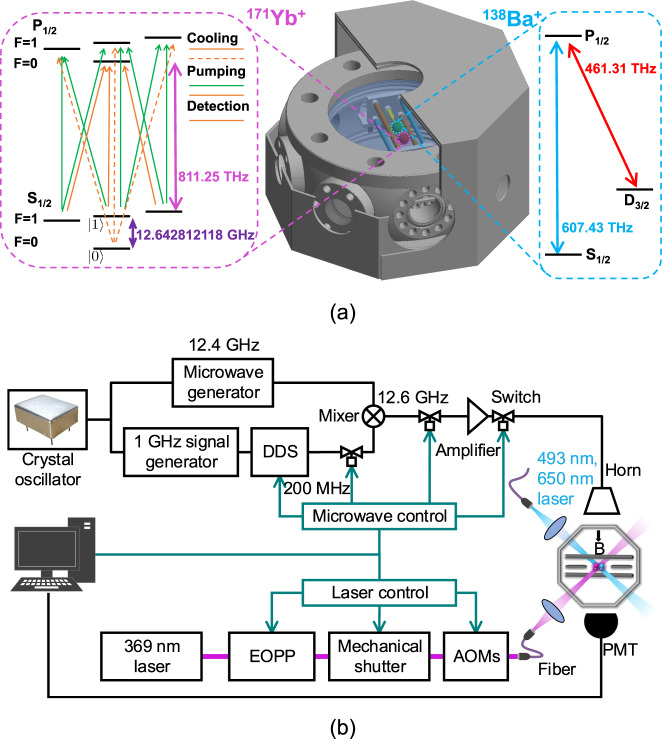
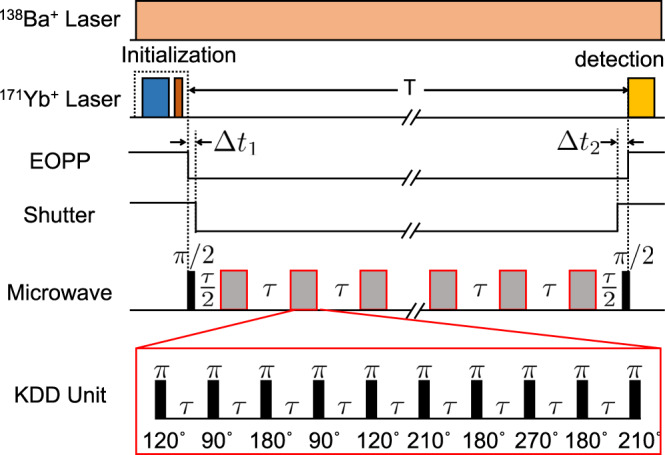
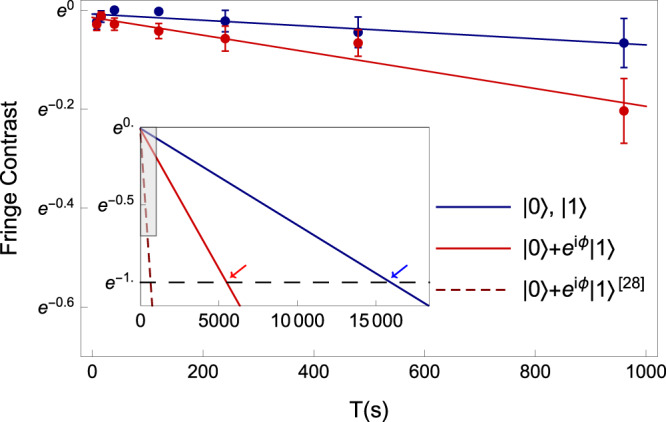
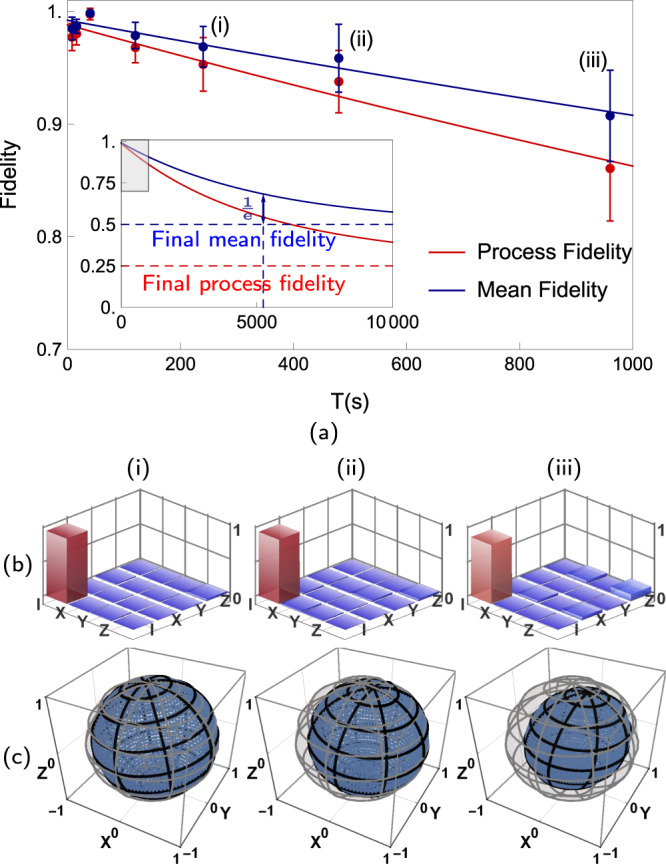
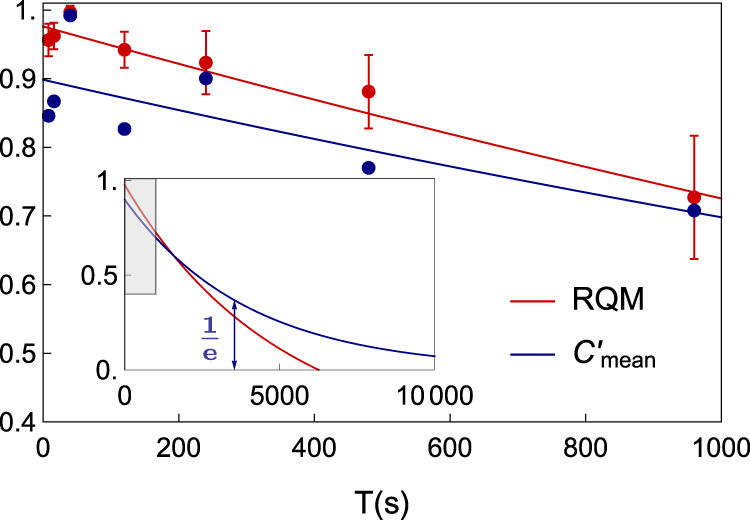
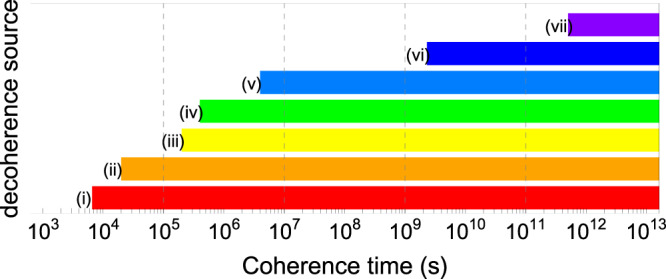
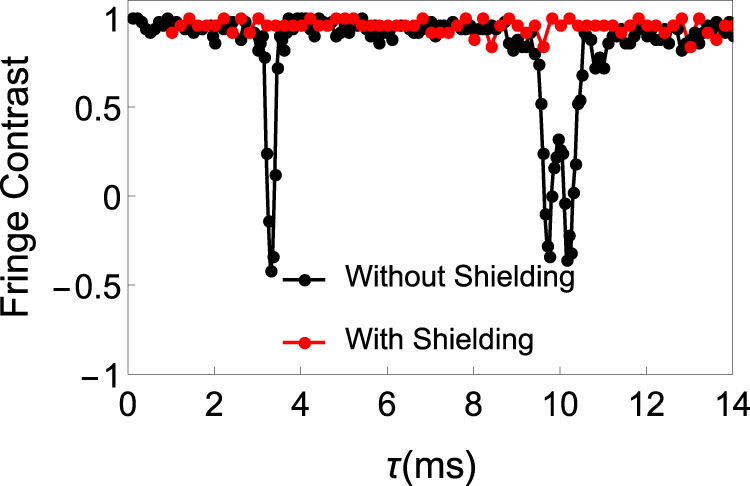
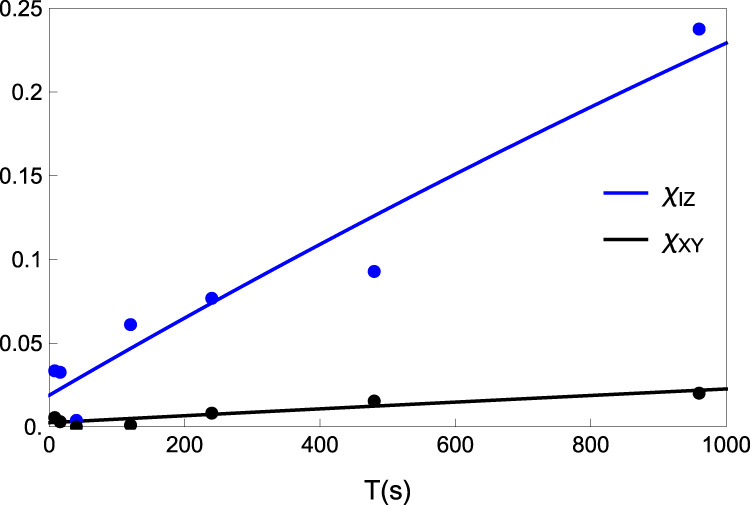
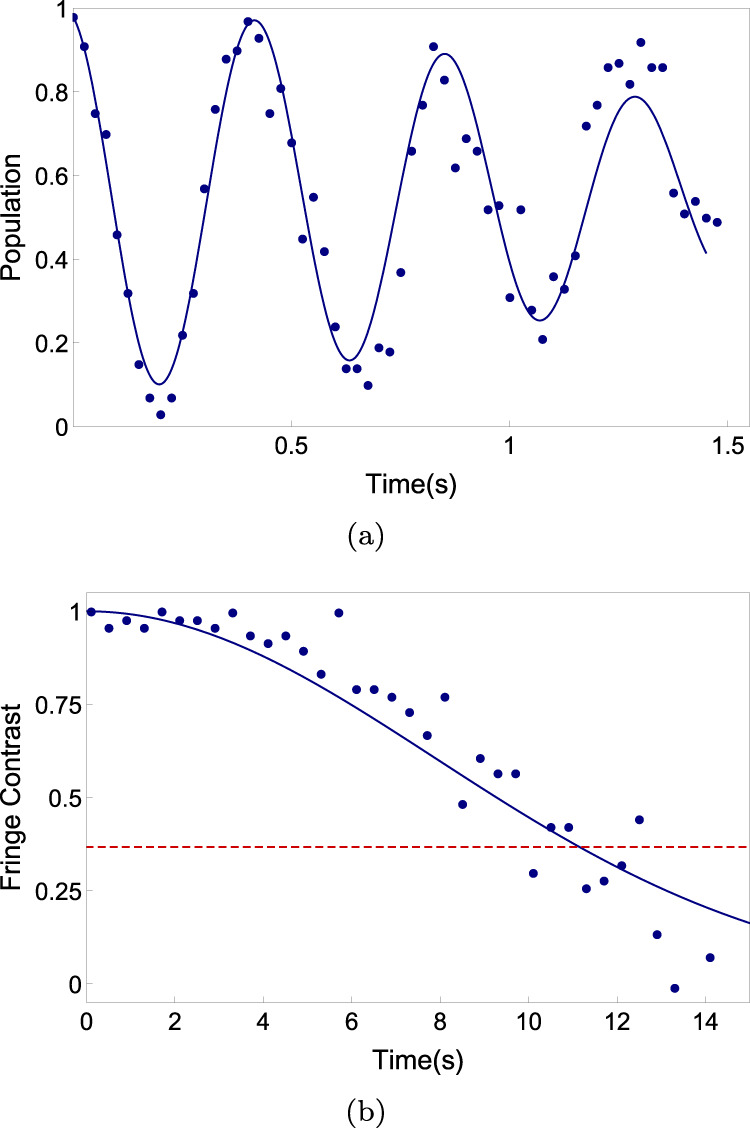
Realizing a long coherence time quantum memory is a major challenge of current quantum technology. Until now, the longest coherence-time of a single qubit was reported as 660 s in a single 171 Yb + ion-qubit through the technical developments of sympathetic cooling and dynamical decoupling pulses, which addressed heating-induced detection inefficiency and magnetic field fluctuations. However, it was not clear what prohibited further enhancement. Here, we identify and suppress the limiting factors, which are the remaining magnetic-field fluctuations, frequency instability and leakage of the microwave reference-oscillator. Then, we observe the coherence time of around 5500 s for the 171 Yb + ion-qubit, which is the time constant of the exponential decay fit from the measurements up to 960 s. We also systematically study the decoherence process of the quantum memory by using quantum process tomography and analyze the results by applying recently developed resource theories of quantum memory and coherence. Our experimental demonstration will accelerate practical applications of quantum memories for various quantum information processing, especially in the noisy-intermediate-scale quantum regime.
Overview
The claims and statistics of this paper haven’t been checked yet.
Free: it reads the open-access text and checks the first 5 claims that cite a source we can check. Create a free account to check every claim.
Integrity signals
Registry
Cites
Statistics
Figures
Verification
Claims the paper makes
The claims and statistics of this paper haven’t been checked yet.
Free: it reads the open-access text and checks the first 5 claims that cite a source we can check. Create a free account to check every claim.
Self-check
Percentages, sums and reported differences re-computed from the paper’s own numbers.
The self-check needs the paper’s full text.
Citations
Cites
Degen, C. L., Reinhard, F., & Cappellaro, P. (2017) · Reviews of Modern Physics · doi:10.1103/revmodphys.89.035002 · Cited by 4,045
Quantum Computations with Cold Trapped Ions
Cirac, J. I., & Zoller, P. (1995) · Physical Review Letters · doi:10.1103/physrevlett.74.4091 · Cited by 3,733
Ladd, T. D., Jelezko, F., Laflamme, R., Nakamura, Y., Monroe, C., & O’Brien, J. L. (2010) · Nature · doi:10.1038/nature08812 · Cited by 3,592
Quantum Repeaters: The Role of Imperfect Local Operations in Quantum Communication
Briegel, H.-J., Dür, W., Cirac, J. I., & Zoller, P. (1998) · Physical Review Letters · doi:10.1103/physrevlett.81.5932 · Cited by 3,481
Decoherence-Free Subspaces for Quantum Computation
Lidar, D. A., Chuang, I. L., & Whaley, K. B. (1998) · Physical Review Letters · doi:10.1103/physrevlett.81.2594 · Cited by 1,858
Colloquium: Quantum coherence as a resource
Streltsov, A., Adesso, G., & Plenio, M. B. (2017) · Reviews of Modern Physics · doi:10.1103/revmodphys.89.041003 · Cited by 1,794
Architecture for a large-scale ion-trap quantum computer
Kielpinski, D., Monroe, C., & Wineland, D. J. (2002) · Nature · doi:10.1038/nature00784 · Cited by 1,589
Wiesner, S. (1983) · ACM SIGACT News · doi:10.1145/1008908.1008920 · Cited by 1,520
Randomized benchmarking of quantum gates
Knill, E., Leibfried, D., Reichle, R., Britton, J., Blakestad, R. B., Jost, J. D., Langer, C., Ozeri, R., Seidelin, S., & Wineland, D. J. (2008) · Physical Review A · doi:10.1103/physreva.77.012307 · Cited by 1,019
Operational Resource Theory of Coherence
Winter, A., & Yang, D. (2016) · Physical Review Letters · doi:10.1103/physrevlett.116.120404 · Cited by 933
Research works printed but not linked: 3
- Nielsen, M. A. & Chuang, I. L. Quantum Computation and Quantum Information (Cambridge University Press, 2010).
- Sarvepalli PK Klappenecker A Rotteler M Asymmetric quantum codes: constructions, bounds and performance Proc. R. Soc. Lond., Ser. A 2009 465 1645 1672
- May, V. & Kühn, O. Charge and Energy Transfer Dynamics in Molecular Systems (John Wiley and Sons, Ltd, 2007).
Cited by
Materials challenges and opportunities for quantum computing hardware
de Leon, N. P., Itoh, K. M., Kim, D., Mehta, K. K., Northup, T. E., Paik, H., Palmer, B. S., Samarth, N., Sangtawesin, S., & Steuerman, D. W. (2021) · Science · doi:10.1126/science.abb2823 · Cited by 710
Quantum repeaters: From quantum networks to the quantum internet
Azuma, K., Economou, S. E., Elkouss, D., Hilaire, P., Jiang, L., Lo, H.-K., & Tzitrin, I. (2023) · Reviews of Modern Physics · doi:10.1103/revmodphys.95.045006 · Cited by 559
Fault-tolerant control of an error-corrected qubit
Egan, L., Debroy, D. M., Noel, C., Risinger, A., Zhu, D., Biswas, D., Newman, M., Li, M., Brown, K. R., Cetina, M., et al. (2021) · Nature · doi:10.1038/s41586-021-03928-y · Cited by 348
Realization of Real-Time Fault-Tolerant Quantum Error Correction
Ryan-Anderson, C., Bohnet, J. G., Lee, K., Gresh, D., Hankin, A., Gaebler, J. P., Francois, D., Chernoguzov, A., Lucchetti, D., Brown, N. C., et al. (2021) · Physical Review X · doi:10.1103/physrevx.11.041058 · Cited by 306
Distributed quantum computing across an optical network link
Main, D., Drmota, P., Nadlinger, D. P., Ainley, E. M., Agrawal, A., Nichol, B. C., Srinivas, R., Araneda, G., & Lucas, D. M. (2025) · Nature · doi:10.1038/s41586-024-08404-x · Cited by 192
“A ∼ 5 ps pulse excites the Sr + ion to the upper P 1 / 2 level, which rapidly decays to one of the ground Zeeman levels (lifetime ∼ 7 ns), thereby generating ion-photon entanglement.”
Microwaves in Quantum Computing
Bardin, J. C., Slichter, D. H., & Reilly, D. J. (2021) · IEEE Journal of Microwaves · doi:10.1109/jmw.2020.3034071 · Cited by 213
High-fidelity laser-free universal control of trapped ion qubits
Srinivas, R., Burd, S. C., Knaack, H. M., Sutherland, R. T., Kwiatkowski, A., Glancy, S., Knill, E., Wineland, D. J., Leibfried, D., Wilson, A. C., et al. (2021) · Nature · doi:10.1038/s41586-021-03809-4 · Cited by 174
“Such field-insensitive qubits can have measured coherence times of many seconds (43) or even minutes (44).”
BackgroundNoisy intermediate-scale quantum computers
Cheng, B., Deng, X., Gu, X. Q., He, Y., Hu, G., Huang, P., Li, J., Lin, B., Lu, D., Lu, Y., et al. (2023) · Frontiers of Physics · doi:10.1007/s11467-022-1249-z · Cited by 182
Materials challenges for trapped-ion quantum computers
Brown, K. R., Chiaverini, J., Sage, J. M., & Häffner, H. (2021) · Nature Reviews Materials · doi:10.1038/s41578-021-00292-1 · Cited by 120
Ultrafast energy exchange between two single Rydberg atoms on a nanosecond timescale
Chew, Y., Tomita, T., Mahesh, T. P., Sugawa, S., de Léséleuc, S., & Ohmori, K. (2022) · Nature Photonics · doi:10.1038/s41566-022-01047-2 · Cited by 113
Optimized Compiler for Distributed Quantum Computing
Cuomo, D., Caleffi, M., Krsulich, K., Tramonto, F., Agliardi, G., Prati, E., & Cacciapuoti, A. S. (2023) · ACM Transactions on Quantum Computing · doi:10.1145/3579367 · Cited by 133
Opportunities for fundamental physics research with radioactive molecules
Arrowsmith-Kron, G., Athanasakis-Kaklamanakis, M., Au, M., Ballof, J., Berger, R., Borschevsky, A., Breier, A. A., Buchinger, F., Budker, D., Caldwell, L., et al. (2024) · Reports on Progress in Physics · doi:10.1088/1361-6633/ad1e39 · Cited by 126
Quantum optical memory for entanglement distribution
Lei, Y., Asadi, F. K., Zhong, T., Kuzmich, A., Simon, C., & Hosseini, M. S. (2023) · Optica · doi:10.1364/optica.493732 · Cited by 138
Colloquium : Cavity-enhanced quantum network nodes
Reiserer, A. (2022) · Reviews of Modern Physics · doi:10.1103/revmodphys.94.041003 · Cited by 116
“This is avoided in electrical traps, where sympathetic cooling has recently enabled coherence times on the scale of one hour for Yb+, still far from the fundamental limitations of background gas scattering and hyperfine lifetime (Wang et al., 2021).”
BackgroundRobust Quantum Memory in a Trapped-Ion Quantum Network Node
Drmota, P., Main, D., Nadlinger, D. P., Nichol, B. C., Weber, M., Ainley, E. M., Agrawal, A., Srinivas, R., Araneda, G., Ballance, C. J., et al. (2023) · Physical Review Letters · doi:10.1103/physrevlett.130.090803 · Cited by 111
“We employ Knill dynamical decoupling [25, 50] with 40 spin flips to suppress the effect of magnetic field noise [Fig.”
MethodEntanglement Routing in Quantum Networks: A Comprehensive Survey
Abane, A., Cubeddu, M., Mai, V. S., & Battou, A. (2025) · IEEE Transactions on Quantum Engineering · doi:10.1109/tqe.2025.3541123 · Cited by 130
Practical Introduction to Benchmarking and Characterization of Quantum Computers
Hashim, A., Nguyen, L. B., Goss, N., Marinelli, B., Naik, R., Chistolini, T., Hines, J., Marceaux, J. P., Kim, Y., Gokhale, P., et al. (2025) · PRX Quantum · doi:10.1103/prxquantum.6.030202 · Cited by 133
Robust storage qubits in ultracold polar molecules
Gregory, P. D., Blackmore, J. A., Bromley, S., Hutson, J. M., & Cornish, S. L. (2021) · Nature Physics · doi:10.1038/s41567-021-01328-7 · Cited by 82
Analysis of multipartite entanglement distribution using a central quantum-network node
Avis, G., Rozpędek, F., & Wehner, S. (2023) · Physical Review A · doi:10.1103/physreva.107.012609 · Cited by 93
High-fidelity remote entanglement of trapped atoms mediated by time-bin photons
Saha, S., Shalaev, M. I., O'Reilly, J. P., Goetting, I., Toh, G., Kalakuntla, A., Yu, Y., & Monroe, C. R. (2025) · Nature Communications · doi:10.1038/s41467-025-57557-4 · Cited by 96
“Moreover, by extending the above protocol to any number of time-bins, this type of photonic interconnect can easily interface with high-dimensional qubit registers 2,37 to generate particular entangled qudit states for applications in networking 38 and quantum computation 39 .”
Demonstration of Fault-Tolerant Steane Quantum Error Correction
Postler, L., Butt, F., Pogorelov, I., Marciniak, C. D., Heußen, S., Blatt, R., Schindler, P., Rispler, M., Müller, M., & Monz, T. (2024) · PRX Quantum · doi:10.1103/prxquantum.5.030326 · Cited by 66
“Experimental improvements like an extended coherence time on the order of seconds [36–38] or composite pulses robust against laser amplitude noise and crosstalk [39, 40] could further mitigate perturbations of idling data qubits during mid-circuit measurements and therefore extend the advantage in…”
BackgroundFault-Tolerant Operation of a Quantum Error-Correction Code
Egan, L., Debroy, D. M., Noel, C., Risinger, A., Zhu, D., Biswas, D., Newman, M., Li, M., Brown, K. R., Cetina, M., et al. (2020) · arXiv · doi:10.48550/arxiv.2009.11482 · Cited by 65
Entanglement of Spin-Pair Qubits with Intrinsic Dephasing Times Exceeding a Minute
Bartling, H. P., Abobeih, M. H., Pingault, B., Degen, M. J., Loenen, S. J. H., Bradley, C. E., Randall, J., Markham, M., Twitchen, D. J., & Taminiau, T. H. (2022) · Physical Review X · doi:10.1103/physrevx.12.011048 · Cited by 83
Efficient Quantum Network Communication Using Optimized Entanglement Swapping Trees
Ghaderibaneh, M., Zhan, C., Gupta, H., & Ramakrishnan, C. R. (2022) · IEEE Transactions on Quantum Engineering · doi:10.1109/tqe.2022.3168784 · Cited by 75
“For trapped ion memories, decoherence times from several minutes to few hours have been demonstrated [30], [31].”
BackgroundMethodSingle-Qubit Gates with Errors at the 10 − 7 Level
Smith, M. C., Leu, A. D., Miyanishi, K., Gely, M. F., & Lucas, D. M. (2025) · Physical Review Letters · doi:10.1103/42w2-6ccy · Cited by 99
“These are transitions which, in the presence of the correct static magnetic field, are insensitive to changes in magnetic field (to first order), enabling coherence times in excess of an hour [20].”
A high-fidelity quantum matter-link between ion-trap microchip modules
Akhtar, M., Bonus, F., Lebrun-Gallagher, F. R., Johnson, N. I., Siegele-Brown, M., Hong, S., Hile, S. J., Kulmiya, S. A., Weidt, S., & Hensinger, W. K. (2023) · Nature Communications · doi:10.1038/s41467-022-35285-3 · Cited by 59
“The two states are separated by 12,642,812,118+311B(2) Hz where B is the magnetic field in Gauss [2].”
BackgroundInfluentialPost-quantum cryptography and the quantum future of cybersecurity
Liu, Y.-K., & Moody, D. (2024) · Physical Review Applied · doi:10.1103/physrevapplied.21.040501 · Cited by 69
“Some of these systems have the potential to achieve hour-long coherence times, even at room temperature [84–87].”
How to Wire a 1000 -Qubit Trapped-Ion Quantum Computer
Malinowski, M., Allcock, D. T. C., & Ballance, C. J. (2023) · PRX Quantum · doi:10.1103/prxquantum.4.040313 · Cited by 54
Realizing quantum gates with optically addressable Yb + 171 ion qudits
Aksenov, M. A., Zalivako, I. V., Semerikov, I. A., Borisenko, A. S., Semenin, N. V., Sidorov, P., Fedorov, A. K., Khabarova, K. Y., & Kolachevsky, N. (2023) · Physical Review A · doi:10.1103/physreva.107.052612 · Cited by 52
Multi-site integrated optical addressing of trapped ions
Kwon, J., Setzer, W., Gehl, M. R., Karl, N. J., Wall, J. W. V. D., Law, R., Blain, M. G., Stick, D., & McGuinness, H. (2024) · Nature Communications · doi:10.1038/s41467-024-47882-5 · Cited by 68
“Ions stored in RF Paul traps [1] have provided an effective platform for quantum information due to their stability [2], long coherence times [3], and high fidelities [4].”
Simulating a measurement-induced phase transition for trapped-ion circuits
Czischek, S., Torlai, G., Ray, S., Islam, R., & Melko, R. G. (2021) · Physical Review A · doi:10.1103/physreva.104.062405 · Cited by 55
Engineering Dynamically Decoupled Quantum Simulations with Trapped Ions
Morong, W., Collins, K. S., De, A., Stavropoulos, E., You, T., & Monroe, C. R. (2023) · PRX Quantum · doi:10.1103/prxquantum.4.010334 · Cited by 58
Experimental fault-tolerant code switching
Pogorelov, I., Butt, F., Postler, L., Marciniak, C. D., Schindler, P., Müller, M., & Monz, T. (2025) · Nature Physics · doi:10.1038/s41567-024-02727-2 · Cited by 78
Error statistics and scalability of quantum error mitigation formulas
Qin, D., Chen, Y., & Li, Y. (2023) · npj Quantum Information · doi:10.1038/s41534-023-00707-7 · Cited by 51
“The depolarising error N and dephasing error Z simulates the relaxation process and the dephasing process [53, 54], which are the main contributions to noise in realistic quantum devices.”
BackgroundBatch Optimization of Frequency-Modulated Pulses for Robust Two-Qubit Gates in Ion Chains
Kang, M., Liang, Q., Zhang, B., Huang, S., Wang, Y., Fang, C., Kim, J., & Brown, K. R. (2021) · Physical Review Applied · doi:10.1103/physrevapplied.16.024039 · Cited by 48
“In addition to near-perfect coherence properties [3, 4] and single-qubit gates with error rates below 10−4 [5–8], trapped-ion qubits have significant advantages in terms of entangling-gate fidelities.”
BackgroundSelf-citationIdentification of an X-Band Clock Transition in Cp′3Pr–Enabled by a 4f25d1Configuration
Smith, P. W., Hrubý, J., Evans, W. J., Hill, S., & Minasian, S. G. (2024) · Journal of the American Chemical Society · doi:10.1021/jacs.3c12725 · Cited by 40
Ai, M.-Z., Li, S., He, R., Xue, Z., Cui, J., Huang, Y., Li, C., & Guo, G. (2021) · Fundamental Research · doi:10.1016/j.fmre.2021.11.031 · Cited by 38
Shih, C.-Y., Motlakunta, S., Kotibhaskar, N., Sajjan, M., Hablützel, R., & Islam, R. (2021) · npj Quantum Information · doi:10.1038/s41534-021-00396-0 · Cited by 41
Single-qubit universal classifier implemented on an ion-trap quantum device
Dutta, T., Pérez-Salinas, A., Cheng, J. P. S., Latorre, J. I., & Mukherjee, M. (2022) · Physical Review A · doi:10.1103/physreva.106.012411 · Cited by 39
Enhancing quantum computer performance via symmetrizationPreprint
Maksymov, A., Nguyen, J., Nam, Y., & Markov, I. L. (2023) · arXiv (Cornell University) · doi:10.48550/arxiv.2301.07233 · Cited by 36
Penning micro-trap for quantum computing
Jain, S., Sägesser, T., Hrmo, P., Torkzaban, C., Stadler, M., Oswald, R., Axline, C., Bautista-Salvador, A., Ospelkaus, C., Kienzler, D., et al. (2024) · Nature · doi:10.1038/s41586-024-07111-x · Cited by 33
“Trapped atomic ions are among the most advanced technologies for realizing quantum computation and quantum simulation, based on a combination of high-fidelity quantum gates 1–3 and long coherence times 7 .”
Schwerdt, D., Peleg, L., Shapira, Y., Priel, N., Florshaim, Y., Gross, A., Zalic, A., Afek, G., Akerman, N., Stern, A., et al. (2024) · Physical Review X · doi:10.1103/physrevx.14.041017 · Cited by 47
Zalivako, I. V., Nikolaeva, A. S., Borisenko, A. S., Korolkov, A. E., Sidorov, P., Galstyan, K. P., Semenin, N. V., Smirnov, V. N., Aksenov, M. A., Makushin, K. M., et al. (2025) · Quantum Reports · doi:10.3390/quantum7020019 · Cited by 40
“Today the 171 Yb + is one of the most widely used ions for quantum processors [30, 31], with several world-best results, e.g., the highest quantum volume [106] and the longest coherence time [32].”
High-resolution vibronic spectroscopy of a single molecule embedded in a crystal
Zirkelbach, J., Mirzaei, M., Deperasińska, I., Kozankiewicz, Β., Gurlek, B., Shkarin, A., Utikal, T., Götzinger, S., & Sandoghdar, V. (2022) · The Journal of Chemical Physics · doi:10.1063/5.0081297 · Cited by 40
Optimized Distribution of Entanglement Graph States in Quantum Networks
Fan, X., Zhan, C., Gupta, H., & Ramakrishnan, C. R. (2025) · IEEE Transactions on Quantum Engineering · doi:10.1109/tqe.2025.3552006 · Cited by 42
Quantum control methods for robust entanglement of trapped ions
Valahu, C. H., Apostolatos, I., Weidt, S., & Hensinger, W. K. (2022) · Journal of Physics B Atomic Molecular and Optical Physics · doi:10.1088/1361-6455/ac8eff · Cited by 34
“While trapped ions can achieve long coherence times with clock states [29], laser-free entanglement with a static magnetic field gradient necessitates a transition that is magnetically sensitive to increase spin-motion coupling [20].”
BackgroundQuantum Interference Paves the Way for Long-Lived Electronic Coherences
Dey, D., Kuleff, A. I., & Worth, G. A. (2022) · Physical Review Letters · doi:10.1103/physrevlett.129.173203 · Cited by 33
Hybrid quantum simulations with qubits and qumodes on trapped-ion platforms
Araz, J. Y., Grau, M., Montgomery, J., & Ringer, F. (2025) · Physical Review A · doi:10.1103/kbv4-jj51 · Cited by 37
“Instead of analog-digital hybrid simulations considered in previous work [79–81], here we focus on gate-based simulations using qubit-qumode hybrid platforms.”
An overview of quantum error mitigation formulas
Qin, D., Xu, X., & Li, Y. (2022) · Chinese Physics B · doi:10.1088/1674-1056/ac7b1e · Cited by 40
Low cross-talk optical addressing of trapped-ion qubits using a novel integrated photonic chip
Sotirova, A., Sun, B., Leppard, J., Wang, A., Wang, M., Vazquez-Brennan, A., Nadlinger, D. P., Moser, S., Jesacher, A., He, C., et al. (2024) · Light Science & Applications · doi:10.1038/s41377-024-01542-x · Cited by 38
“To date, small-scale trapped-ion systems have demonstrated the highest single-and two-qubit gate fi delities 2 – 5 , longest coherence times 6 , and lowest state preparation and measurement errors 7 of any quantum computing platform.”
BackgroundFeasibility study of quantum computing using trapped electrons
Yu, Q., Alonso, A., Caminiti, J., Beck, K. M., Sutherland, R. T., Leibfried, D. G., Rodriguez, K., Dhital, M., Hemmerling, B., & Häffner, H. (2022) · Physical Review A · doi:10.1103/physreva.105.022420 · Cited by 40
Q-DDCA: Decentralized Dynamic Congestion Avoid Routing in Large-Scale Quantum Networks
Chen, L., Xue, K., Li, J., Li, R., Yu, N., Sun, Q., & Lu, J. (2023) · IEEE/ACM Transactions on Networking · doi:10.1109/tnet.2023.3285093 · Cited by 33
Tunable quantum simulation of spin models with a two-dimensional ion crystal
Qiao, M., Cai, Z., Wang, Y., Du, B., Jin, N., Chen, W., Wang, P., Luan, C., Gao, E., Sun, X., et al. (2024) · Nature Physics · doi:10.1038/s41567-023-02378-9 · Cited by 38
Self-citationOn Optimum Entanglement Purification Scheduling in Quantum Networks
Chen, L., & Jia, Z. (2024) · IEEE Journal on Selected Areas in Communications · doi:10.1109/jsac.2024.3380080 · Cited by 37
“We note that the typical qubit lifetime spans to tens of seconds, and one of the latest research [43] demonstrates that the qubit lifetime can exceed 1 hour.”
BackgroundKey issues review: useful autonomous quantum machines
Guzmán, J. A. M., Erker, P., Gasparinetti, S., Huber, M., & Halpern, N. Y. (2024) · Reports on Progress in Physics · doi:10.1088/1361-6633/ad8803 · Cited by 39
“Isolated 171 Yb + ions have exhibited T 2 times of over an hour [180], although collections of ions decohere more quickly [123].”
Wang, H., Kim, H., Dong, D., Shinokita, K., Watanabe, K., Taniguchi, T., & Matsuda, K. (2024) · Nature Communications · doi:10.1038/s41467-024-48623-4 · Cited by 32
“Hence, for platforms aiming to achieve qubits, a suf fi ciently long coherence time is imperative 21,22 .”
BackgroundC-band single photons from a trapped ion via two-stage frequency conversion
Hannegan, J., Saha, U., Siverns, J. D., Cassell, J., Waks, E., & Quraishi, Q. (2021) · Applied Physics Letters · doi:10.1063/5.0059966 · Cited by 31
Photon-Interfaced Ten-Qubit Register of Trapped Ions
Canteri, M., Koong, Z. X., Bate, J., Winkler, A., Krutyanskiy, V. L., & Lanyon, B. P. (2025) · Physical Review Letters · doi:10.1103/v5k1-whwz · Cited by 32
Industrially microfabricated ion trap with 1 eV trap depth
Auchter, S., Axline, C., Decaroli, C., Valentini, M., Purwin, L., Oswald, R., Matt, R., Aschauer, E., Colombe, Y., Holz, P., et al. (2022) · Quantum Science and Technology · doi:10.1088/2058-9565/ac7072 · Cited by 23
Controlling NMR spin systems for quantum computation
Jones, J. A. (2024) · Progress in Nuclear Magnetic Resonance Spectroscopy · doi:10.1016/j.pnmrs.2024.02.002 · Cited by 37
Liu, Y., Martyn, J. M., Sinanan-Singh, J., Smith, K. C., Girvin, S. M., & Chuang, I. L. (2025) · IEEE Transactions on Signal Processing · doi:10.1109/tsp.2025.3599462 · Cited by 37
“The qubit lifetime on trapped ions, on the other hand, can be extremely long ( > 1 hour [71]).”
Continuous dynamical decoupling of optical 171Yb+ qudits with radiofrequency fields
Zalivako, I. V., Borisenko, A. S., Semerikov, I. A., Korolkov, A. E., Sidorov, P., Galstyan, K. P., Semenin, N. V., Smirnov, V. N., Aksenov, M. D., Fedorov, A. K., et al. (2023) · Frontiers in Quantum Science and Technology · doi:10.3389/frqst.2023.1228208 · Cited by 23
“The reasons behind these results are the ability to demonstrate high-fidelity operations between the qubits [24] and long coherence times [25], which also allows one to prototype quantum error correction techniques [26–32].”
BackgroundExperimental realization of a multiqubit quantum memory in a 218-ion chain
Yao, R., Lian, W., Wu, Y., Wang, G. X., Li, B.-W., Mei, Q.-X., Qi, B., Yao, L., Zhou, Z.-C., He, L., et al. (2022) · Physical Review A · doi:10.1103/physreva.106.062617 · Cited by 24
Binai-Motlagh, A., Day, M., Videnov, N., Greenberg, N., Senko, C., & Islam, R. (2023) · Quantum Science and Technology · doi:10.1088/2058-9565/ace6cb · Cited by 25
“Trapped ions have the longest coherence times [1, 2], highest fidelity single and two qubit gate operations [3–5] as well as state-preparation and measurement (SPAM) fidelities [6–8] of any experimental quantum information processing (QIP) platform.”
BackgroundMinute-scale Schrödinger-cat state of spin-5/2 atoms
Yang, Y., Luo, W.-T., Zhang, J.-L., Wang, S.-Z., Zou, C., Xia, T., & Lu, Z. (2024) · Nature Photonics · doi:10.1038/s41566-024-01555-3 · Cited by 40
“In particular, the spin coherence time has reached up to 5,500 s for 171 Yb + -ion qubits using dynamical decoupling sequences, highlighting a significant advancement in quantum information science 29,30 .”
Self-citationDynamic Quantum Circuit Compilation
Fang, K., Zhang, M., Shi, R., & Li, Y. (2025) · IEEE Transactions on Computers · doi:10.1109/tc.2025.3643826 · Cited by 25
Leveraging quantum computing for dynamic analyses of logical networks in systems biology
Weidner, F. M., Schwab, J. D., Wölk, S., Rupprecht, F., Ikonomi, N., Werle, S. D., Hoffmann, S., Kühl, M., & Kestler, H. A. (2023) · Patterns · doi:10.1016/j.patter.2023.100705 · Cited by 21
“47 Furthermore, in principle, any component in a BN can be regulated by any other.”
BackgroundLong-lived metastable-qubit memory
Shi, X., Sinanan-Singh, J., DeBry, K., Todaro, S., Chuang, I. L., & Chiaverini, J. (2025) · Physical Review A · doi:10.1103/physreva.111.l020601 · Cited by 27
Patil, A., Jacobson, E. S., Milligen, E. A. V., Towsley, D., & Guha, S. (2021) · IEEE International Conference on Quantum Computing and Engineering (QCE) · doi:10.1109/qce52317.2021.00050 · Cited by 25
“ions, which exhibit exponentially decaying qubit fidelities with a measurable time constant [14].”
BackgroundDynamical quantum phase transitions in a noisy lattice gauge theory
Jensen, R. B., Pedersen, S. P., & Zinner, N. T. (2022) · Physical review. B./Physical review. B · doi:10.1103/physrevb.105.224309 · Cited by 21
“[42] Pengfei Wang, Chun-Yang Luan, Mu Qiao, Mark Um, Junhua Zhang, Ye Wang, Xiao Yuan, Mile Gu, Jingning”
BackgroundObservation of supersymmetry and its spontaneous breaking in a trapped ion quantum simulator
Cai, M.-L., Wu, Y., Mei, Q.-X., Zhao, W.-D., Jiang, Y., Yao, L., He, L., Zhou, Z.-C., & Duan, L.-M. (2022) · Nature Communications · doi:10.1038/s41467-022-31058-0 · Cited by 28
Entanglement between a trapped-ion qubit and a 780-nm photon via quantum frequency conversion
Hannegan, J., Siverns, J., & Quraishi, Q. S. (2022) · Physical Review A · doi:10.1103/physreva.106.042441 · Cited by 26
Synthesizing a σ̂z spin-dependent force for optical, metastable, and ground-state trapped-ion qubits
Băzăvan, O., Saner, S., Minder, M., Hughes, A. C., Sutherland, R. T., Lucas, D. M., Srinivas, R., & Ballance, C. J. (2023) · Physical Review A · doi:10.1103/physreva.107.022617 · Cited by 25
Experimental Quantum Channel Discrimination Using Metastable States of a Trapped Ion
DeBry, K., Sinanan-Singh, J., Bruzewicz, C., Reens, D., Kim, M. E., Roychowdhury, M., McConnell, R., Chuang, I. L., & Chiaverini, J. (2023) · Physical Review Letters · doi:10.1103/physrevlett.131.170602 · Cited by 30
Generation and Distribution of GHZ States in Quantum Networks
Ghaderibaneh, M., Gupta, H., & Ramakrishnan, C. R. (2023) · IEEE International Conference on Quantum Computing and Engineering (QCE) · doi:10.1109/qce57702.2023.00127 · Cited by 28
“As in [15], we choose a decoherence time of two secs based on achievable values with single-atom memory platforms [42]; note that decoherence times of even several minutes [43], [44] to hours [45], [46] has been demonstrated for other memory platforms.”
MethodBenchmarking Noise and Dephasing in Emerging Electrical Materials for Quantum Technologies
Islam, S., Shamim, S., & Ghosh, A. (2022) · Advanced Materials · doi:10.1002/adma.202109671 · Cited by 21
Low-Noise Quantum Frequency Conversion of Photons from a Trapped Barium Ion to the Telecom O-band
Saha, U., Siverns, J., Hannegan, J., Quraishi, Q. S., & Waks, E. (2023) · ACS Photonics · doi:10.1021/acsphotonics.3c00581 · Cited by 27
Gyöngyösi, L., & Imre, S. (2025) · Quantum Information and Computation · doi:10.2478/qic-2025-0006 · Cited by 40
Efficient implementation of a quantum algorithm with a trapped ion qudit
Shi, X., Sinanan-Singh, J., Burke, T., Chiaverini, J., & Chuang, I. L. (2026) · Nature Communications · doi:10.1038/s41467-026-68746-0 · Cited by 25
“These methods have been shown to signi fi cantly increase the coherence time of qubit systems 47 .”
Algorithm-oriented qubit mapping for variational quantum algorithms
Ji, Y., Chen, X., Polian, I., & Ban, Y. (2025) · Physical Review Applied · doi:10.1103/physrevapplied.23.034022 · Cited by 19
“On the other hand, trapped ions showcase relatively long coherence times [30], and photons exhibit low noise [31].”
Optimizing Stabilizer Parities for Improved Logical Qubit Memories
Debroy, D. M., Egan, L., Noel, C., Risinger, A., Zhu, D., Biswas, D., Cetina, M., Monroe, C., & Brown, K. R. (2021) · Physical Review Letters · doi:10.1103/physrevlett.127.240501 · Cited by 20
Preserving multilevel quantum coherence by dynamical decoupling
Yuan, X., Li, Y., Zhang, M., Liu, C., Zhu, M., Qin, X., Vitanov, N. V., Lin, Y., & Du, J. (2022) · Physical Review A · doi:10.1103/physreva.106.022412 · Cited by 21
Self-citationIon trap with in-vacuum high numerical aperture imaging for a dual-species modular quantum computer
Carter, A. L., O'Reilly, J. P., Toh, G., Saha, S., Shalaev, M. I., Goetting, I., & Monroe, C. R. (2024) · Review of Scientific Instruments · doi:10.1063/5.0180732 · Cited by 19
Quantum computing with trapped ions: principles, achievements, and prospects
Zalivako, I. V., Semenin, N. V., Zhadnov, N. O., Galstyan, K. P., Kamenskikh, P. A., Smirnov, V. N., Korolkov, A. E., Leonidovich, S. P., Borisenko, A. S., Anosov, Y. P., et al. (2024) · Physics-Uspekhi · doi:10.3367/ufne.2024.12.039884 · Cited by 19
Experimental Realization of Multi-ion Sympathetic Cooling on a Trapped Ion Crystal
Mao, Z., Xu, Y., Mei, Q.-X., Zhao, W.-D., Jiang, Y., Wang, Y., Chang, X.-Y., He, L., Yao, L., Zhou, Z.-C., et al. (2021) · Physical Review Letters · doi:10.1103/physrevlett.127.143201 · Cited by 23
Self-citationTransversal fault tolerant distributed quantum computing operations
Stack, J., Wang, M., & Mueller, F. (2026) · Nature Communications · doi:10.1038/s41467-026-75693-3 · Cited by 22
“Whilst challenging, longer coherence times on the order of 10s-100s on these platforms are not intrinsically impossible 41 , so the one-at-a-time approach is within feasible experimental reach.”
Routing Single Photons from a Trapped Ion Using a Photonic Integrated Circuit
Saha, U., Siverns, J., Hannegan, J., Prabhu, M., Quraishi, Q. S., Englund, D. R., & Waks, E. (2023) · Physical Review Applied · doi:10.1103/physrevapplied.19.034001 · Cited by 18
Trapped ions quantum logic gate with optical tweezers and the Magnus effect
Mazzanti, M., Gerritsma, R., Spreeuw, R. J. C., & Safavi-Naini, A. (2023) · Physical Review Research · doi:10.1103/physrevresearch.5.033036 · Cited by 21
“This qubit is insensitive to magnetic field noise, and coherence times of up to an hour have been measured [22].”
Coherent Control of Trapped-Ion Qubits with Localized Electric Fields
Srinivas, R., Löschnauer, C., Malinowski, M., Hughes, A. C., Nourshargh, R., Negnevitsky, V., Allcock, D. T. C., King, S. A., Matthiesen, C., Harty, T. P., et al. (2023) · Physical Review Letters · doi:10.1103/physrevlett.131.020601 · Cited by 16
An ion trap apparatus with high optical access in multiple directions
He, R., Cui, J., Li, R., Qian, Z.-H., Chen, Y., Ai, M.-Z., Huang, Y., Li, C., & Guo, G. (2021) · Review of Scientific Instruments · doi:10.1063/5.0043985 · Cited by 17
Quantum information technology: Current status and prospects
Pan, J.-W. (2023) · Acta Physica Sinica · doi:10.7498/aps.73.20231795 · Cited by 18
Kotibhaskar, N., Shih, C.-Y., Motlakunta, S., Vogliano, A., Hahn, L., Chen, Y.-T., & Islam, R. (2024) · Physical Review Research · doi:10.1103/physrevresearch.6.033038 · Cited by 22
Current experimental upper bounds on spacetime diffusion
Janse, M., Uitenbroek, D. G., van Everdingen, L., Plugge, J., Hensen, B., & Oosterkamp, T. H. (2024) · Physical Review Research · doi:10.1103/physrevresearch.6.033076 · Cited by 14
“Next, Wang et al. [11] report the coherence of a 171 Yb + ion qubit with a decoherence rate of λ = 182 µ Hz.”
BackgroundProgrammable Quantum Simulations on a Trapped-Ion Quantum Computer with a Global Drive
Shapira, Y., Markov, J., Akerman, N., Stern, A., & Ozeri, R. (2025) · Physical Review Letters · doi:10.1103/physrevlett.134.010602 · Cited by 24
“Ion-crystals trapped in radio frequency (RF) traps are an especially prolific tool for quantum simulations [7– 16], due to their long coherence times [17], high-fidelity control [18–21] and rich connectivity [22–25].”
BackgroundRealization of a Crosstalk-Free Two-Ion Node for Long-Distance Quantum Networking
Lai, P.-C., Wang, Y., Shi, J.-X., Cui, Z.-B., Wang, Z.-Q., Zhang, S. F., Liu, P.-Y., Tian, Z., Sun, Y.-D., Chang, X.-Y., et al. (2025) · Physical Review Letters · doi:10.1103/physrevlett.134.070801 · Cited by 19
“Other advantages include the long coherence time at the scale of an hour [30], and the record-high fidelity and rate in entangling two network nodes [15, 16].”
Self-citationExperimental Protection of the Spin Coherence of a Molecular Qubit Exceeding a Millisecond
Dai, Y., Fu, Y., Shi, Z., Qin, X., Mu, S., Wu, Y., Su, J., Deng, Y., Qin, L., Zhai, Y., et al. (2021) · Chinese Physics Letters · doi:10.1088/0256-307x/38/3/030303 · Cited by 16
Fast multi-qubit global-entangling gates without individual addressing of trapped ions
Wang, K., Yu, J.-F., Wang, P., Luan, C., Zhang, J.-N., & Kim, K. (2022) · Quantum Science and Technology · doi:10.1088/2058-9565/ac84a3 · Cited by 18
“The longest coherence time of single-qubits [5, 6] and the highest fidelity of the entangling gates [7–9] among all physical platforms have been demonstrated in trapped-ion systems.”
Self-citationComparison of Quantum PUF models
Galetsky, V., Ghosh, S., Deppe, C., & Ferrara, R. (2022) · IEEE Globecom Workshops (GC Wkshps) · doi:10.1109/gcwkshps56602.2022.10008722 · Cited by 21
“[23] the decoherence rate reaches an order (O) of minutes (O(8)) for the same population concentration.”
BackgroundMeasurement and suppression of magnetic field noise of trapped ion qubit
Wei, W., Hao, P., Ma, Z., Zhang, H., Pang, L., Wu, F.-F., Deng, K., Zhang, J., & Lu, Z. H. (2022) · Journal of Physics B Atomic Molecular and Optical Physics · doi:10.1088/1361-6455/ac5e7d · Cited by 20
Self-citationEntanglement generation in a quantum network with finite quantum memory lifetime
Semenenko, V., Hu, X., Figueroa, E. V., & Perebeinos, V. (2022) · AVS Quantum Science · doi:10.1116/5.0082239 · Cited by 16
Metadata
- Authors
- Wang, P., Luan, C.-Y., Qiao, M., Um, M., Zhang, J., Wang, Y., Yuan, X., Gu, M., Zhang, J., & Kim, K.
- Affiliations
- Tsinghua University (CN)
- Southern University of Science and Technology (CN)
- Duke University (US)
- Peking University (CN)
- Centre for Quantum Technologies (SG)
- Corresponding author
- Wang, Pengfei
- Kim, Kihwan
- Venue
- Nature Communications
- Published
- 2021-01-11
- Volume
- 12
- Issue
- 1
- Pages
- 233-233
- ISSN
- 2041-1723 (ISSN-L)
- PMC
- PMC7801401
- OpenAlex
- W3046827789
- Cited by
- 321
- References
- 57
- Citations by year
- 2026: 45 · 2025: 81 · 2024: 58 · 2023: 62 · 2022: 47 · 2021: 27
- FWCI
- 17.14
- Type
- journal article
- Language
- en
- Open access
- gold
- doi.org
- Licence
- cc-by
- creativecommons.org/licenses/by/4.0 (tdm)
- creativecommons.org/licenses/by/4.0 (vor)
- Locations
- Nature Communications (publishedVersion, cc-by)
- Europe PMC (PubMed Central) (publishedVersion, other-oa)
- PubMed Central (publishedVersion, cc-by)
- PubMed (publishedVersion)
- arXiv (Cornell University) (submittedVersion)
- National University of Singapore (submittedVersion, cc-by)
- RePEc: Research Papers in Economics (submittedVersion)
- DOAJ (DOAJ: Directory of Open Access Journals) (submittedVersion, cc-by-sa)
- DR-NTU (Nanyang Technological University) (submittedVersion)
- Funders
- National Natural Science Foundation of China (11504197)
- Topics
- Physical Sciences › Physics and Astronomy › Atomic and Molecular Physics, and Optics › Quantum Information and Cryptography
- Physical Sciences › Physics and Astronomy › Atomic and Molecular Physics, and Optics › Quantum optics and atomic interactions
- Physical Sciences › Computer Science › Artificial Intelligence › Quantum Computing Algorithms and Architecture
- Keywords
- 171Yb, coherence time, quantum memory, decoherence, magnetic fluctuations, frequency instability, quantum process tomography, coherence, noisy intermediate-scale quantum computing
About these checks
Registry, retraction, Cites and statistics results are computed, not judged, with one exception: a printed reference that no index lists is read once by a model before it counts as a citation error. Claims are extracted by a model and kept only when their quote appears verbatim in the text; each cited source is then checked, with a model’s help, for whether it says what the claim relies on. Those verdicts can be wrong — read the claim’s quote and the cited source before relying on one.
Statistics and arithmetic are recomputed, not judged.
Confidence bands are shown only for fields calibrated on our annotated test set. None is calibrated yet, so no band is shown.
What counts as a claim ›How we measure confidence ›How we check this ›
Are you an author, or do you see a problem with this page? Request a review
Data sources
Bibliographic data: Semantic Scholar, OpenAlex, Crossref.
Contains information from the Semantic Scholar Academic Graph Datasets, made available under the ODC Attribution License (ODC-BY 1.0).
Semantic Scholar’s data is described in: Kinney, R., et al. (2023). The Semantic Scholar Open Data Platform. arXiv:2301.10140.
