

The DOI matches its Crossref record; 41 of the 41 references it cites were found in a registry or an index.
Self-clocking fast and variation tolerant true random number generator based on a stochastic mott memristor
Open accessPublished version of a preprint
Abstract
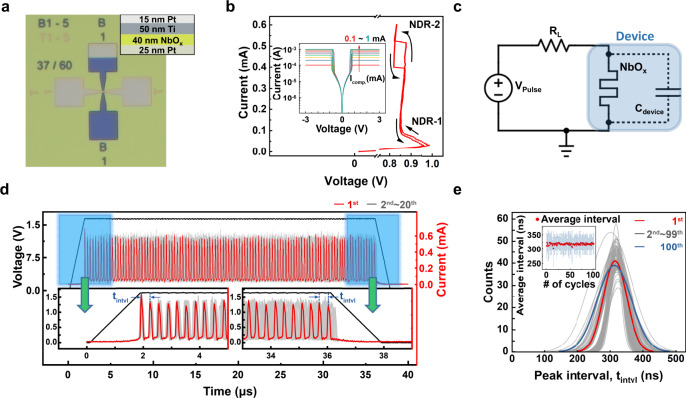
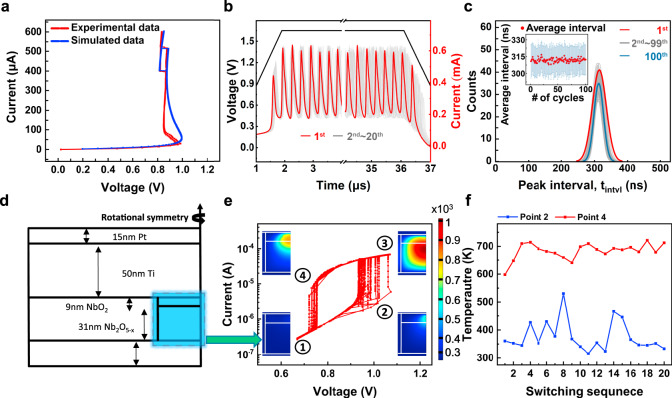
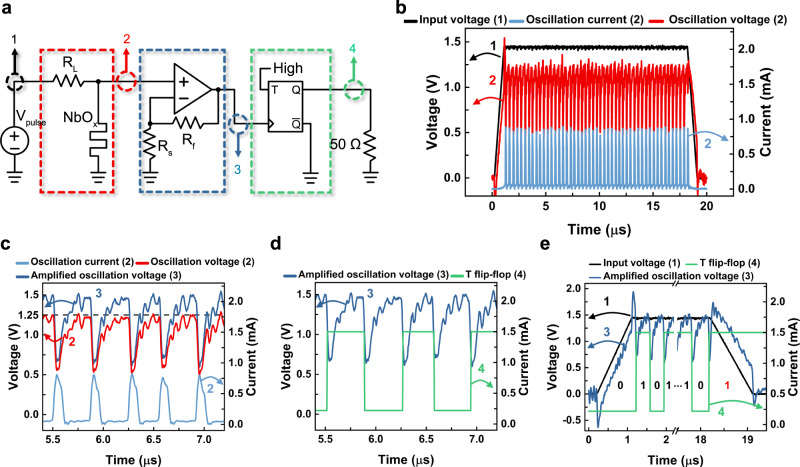
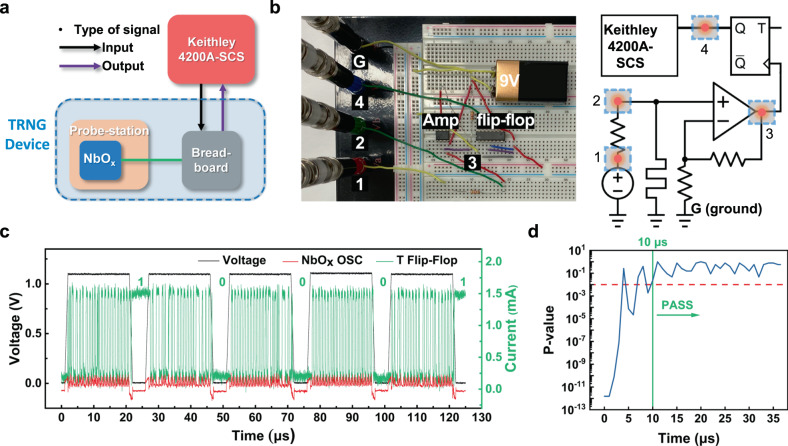
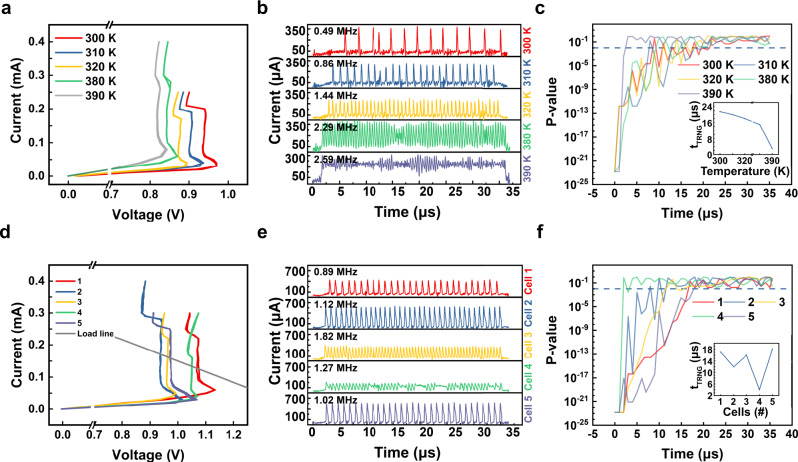
Abstract The intrinsic stochasticity of the memristor can be used to generate true random numbers, essential for non-decryptable hardware-based security devices. Here we propose a novel and advanced method to generate true random numbers utilizing the stochastic oscillation behavior of a NbOx mott memristor, exhibiting self-clocking, fast and variation tolerant characteristics. The random number generation rate of the device can be at least 40 kbs-1, which is the fastest record compared with previous volatile memristor-based TRNG devices. Also, its dimensionless operating principle provides high tolerance against both ambient temperature variation and device-to-device variation, enabling robust security hardware applicable in harsh environments.
Overview
The claims and statistics of this paper haven’t been checked yet.
Run the check — free, no account needed. It reads the open-access text and checks the sources it cites.
Integrity signals
Registry
Cites
Statistics
Figures
Verification
Claims the paper makes
The claims and statistics of this paper haven’t been checked yet.
Run the check — free, no account needed. It reads the open-access text and checks the sources it cites.
Claims other papers make about this one
Each is checked against this paper’s own text: does it say what the citing paper says it does?
The source backs part of the claim, not all of it — or backs it for a different population, condition or comparison.
In the citing paper
“For example, tRNGs such as RRAM or MRAM, which are not Si-based complementary metal-oxide semiconductor (CMOS) devices, are widely studied given their inherent switching stochasticity as an entropy source, which relies on material-induced variations (11–18).”
From Cryptographic transistor for true random number generator with low power consumption (2024) · cites this paper as [18]
Experimental — accuracy not yet measuredThe check wasn’t confident either way, so it gives no verdict — never disputed.
In the citing paper
“Moreover, their lack of compatibility with CMOS fabrication standards makes it difficult to apply them directly to the current CMOS logic platform used for mass production.”
From Cryptographic transistor for true random number generator with low power consumption (2024) · cites this paper as [18]
Experimental — accuracy not yet measuredThe check wasn’t confident either way, so it gives no verdict — never disputed.
In the citing paper
“However, these tRNGs require a few entropy extraction circuits, each of which consumes power at the milliwatt level.”
From Cryptographic transistor for true random number generator with low power consumption (2024) · cites this paper as [18]
Experimental — accuracy not yet measured
Self-check
Percentages, sums and reported differences re-computed from the paper’s own numbers.
The self-check needs the paper’s full text.
Citations
Cites
A scalable neuristor built with Mott memristors
Pickett, M. D., Medeiros‐Ribeiro, G., & Williams, R. S. (2012) · Nature Materials · doi:10.1038/nmat3510 · Cited by 1,046
Chaotic dynamics in nanoscale NbO2 Mott memristors for analogue computing
Kumar, S., Strachan, J. P., & Williams, R. S. (2017) · Nature · doi:10.1038/nature23307 · Cited by 620
A novel true random number generator based on a stochastic diffusive memristor
Jiang, H., Belkin, D., Savel’ev, S. E., Lin, S., Wang, Z., Li, Y., Joshi, S., Midya, R., Li, C., Rao, M., et al. (2017) · Nature Communications · doi:10.1038/s41467-017-00869-x · Cited by 459
2018 IEEE International Electron Devices Meeting (IEDM)
(2018) · doi:10.1109/iedm13552.2018 · Cited by 459
An artificial spiking afferent nerve based on Mott memristors for neurorobotics
Zhang, X., Zhuo, Y., Luo, Q., Wu, Z., Midya, R., Wang, Z., Song, W., Wang, R., Upadhyay, N. K., Fang, Y., et al. (2020) · Nature Communications · doi:10.1038/s41467-019-13827-6 · Cited by 401
Pickett, M. D., & Stanley Williams, R. (2012) · Nanotechnology · doi:10.1088/0957-4484/23/21/215202 · Cited by 385
Third-order nanocircuit elements for neuromorphic engineering
Kumar, S., Williams, R. S., & Wang, Z. (2020) · Nature · doi:10.1038/s41586-020-2735-5 · Cited by 370
Stochastic memristive devices for computing and neuromorphic applications
Gaba, S., Sheridan, P., Zhou, J., Choi, S., & Lu, W. (2013) · Nanoscale · doi:10.1039/c3nr01176c · Cited by 307
2005 IEEE International Electron Devices Meeting
(2005) · Journal of Lightwave Technology · doi:10.1109/jlt.2005.853686 · Cited by 258
Spin dice: A scalable truly random number generator based on spintronics
Fukushima, A., Seki, T., Yakushiji, K., Kubota, H., Imamura, H., Yuasa, S., & Ando, K. (2014) · Applied Physics Express · doi:10.7567/apex.7.083001 · Cited by 238
Research works printed but not linked: 2
- Hashim, N. A. B. N., Teo, J., Hamid, M. S. A. & Hamid, F. A. B. IEEE student conference on research and development (SCOReD). 1–5 (2016)
- Wang, Y., Wen, W., Li, H. & Hu, M. Proceedings of the 25th edition on Great Lakes Symposium on VLSI, 271–276 (2015).
Cited by
Sorted by citations
Items 101–126 of 126
Synapse with versatility based on the Pt /LaMnO3/Pt heterojunction
Ma, L., Yin, Y., Jia, C., & Zhang, W. (2023) · Journal of Physics D Applied Physics · doi:10.1088/1361-6463/acbe0b · Cited by 1
Chen, S.-M., Shih, L., Gao, J.-C., You, S., Chen, K., Lin, P.-L., Hsu, K., Chen, C. L. P., Chen, W.-L., & Chen, J. (2025) · Nanoscale Horizons · doi:10.1039/d5nh00268k · Cited by 2
Exploiting Read Noise of Filamentary VCM ReRAM for Robust TRNG
Schnieders, K., Bai, P., Wang, Y., Kempen, T., Sarantopoulos, A., Wouters, D., Rana, V., Dittmann, R., Waser, R. M., Menzel, S., et al. (2025) · IEEE Transactions on Electron Devices · doi:10.1109/ted.2025.3611916
A Bioinspired Flexible Artificial Mechanoreceptor Based on VO 2 Insulator-Metal Transition MemristorPreprint
Fang, S. L., Han, C., Liu, W., Han, Z. R., Ma, B., Cui, Y. L., Fan, S. Q., Li, X., Wang, X. L., Zhang, G. H., et al. (2022) · SSRN Electronic Journal · doi:10.2139/ssrn.4001272
Kim, K. M., Cheong, W. H., In, J. H., Jeon, J. B., & Kim, G. Y. (2024) · Research Square · doi:10.21203/rs.3.rs-4019510/v1
Self-citationZhou, R., Huang, J., Liu, X., Wang, Y., Zhang, X., Peng, Y., & Yu, Z. (2024) · IEEE International Conference on Solid-State and Integrated Circuit Technology · doi:10.1109/icsict62049.2024.10831655
A Low-Complexity True Random Number Generation Scheme Using 3D-NAND Flash Memory
Zhou, R., Huang, J., Liu, X., Wang, Y., Zhang, X., Peng, Y., & Yu, Z. (2025) · Design, Automation, and Test in Europe · doi:10.23919/date64628.2025.10993008
Quantized-memristor-enabled generative AI for predictive skin laser treatment imaging
Kim, N. J., Cha, J., Kim, Y. K., Oh, J., Kim, I., Jeong, M., Choi, J., & Jang, B. C. (2025) · Device · doi:10.1016/j.device.2025.100908
Self-citationCMOS‐Compatible LiNbO 3 Domain‐Wall Entropy Engine for Ultrafast True Random Number Generation
Tang, H., Wang, Z., Wang, X., Hu, X., Hu, D., Huang, Q., Zhang, W. D., & Jiang, A. (2025) · Advanced Materials · doi:10.1002/adma.202510981
Maxwell, C. L., Yu, D., & Leng, Y. (2025) · Computers & Electrical Engineering · doi:10.1016/j.compeleceng.2025.110857
Zhu, Y., Xie, C., Ye, Z., Jiang, T., Zhang, Y., Wang, K., Wu, X., Tang, H., Zhang, J., Hu, Y., et al. (2026) · Materials Horizons · doi:10.1039/d5mh01754h
Nanomaterials in Cybersecurity Industry: Enhancing Data Protection and System Integrity
Singh, G., & Singh, D. K. (2026) · Engineering materials · doi:10.1007/978-981-95-7912-9_6
An Extended Memristive Switching Uncertainty Model
Huang, G. S., Rowlinson, B. D., Serb, A., Wang, S., & Prodromakis, T. (2026) · IEEE Transactions on Electron Devices · doi:10.1109/ted.2026.3692142
A High-Throughput True Random Number Generator Based on the Competitive Turn-On of OTS Devices
Mu, D., Wang, H., Li, N., Li, K., Zhong, Y., Liu, P., Xu, M., Miao, X., & Wang, X. (2026) · IEEE Electron Device Letters · doi:10.1109/led.2026.3698689
Physical Unclonable Function Based on 3D‐NAND Flash Array Structure With Multi‐Chip Implementation
Hwang, H., Youn, S., Park, J., Yu, D., & Kim, H. (2026) · Small · doi:10.1002/smll.202506326 · Cited by 1
Self-citationA Compact Dual-Entropy True Random Number Generator Based on Nb 2 O 5 Memristors
Liu, P., Zhong, Y., Mu, D., Li, K., Yan, B., Miao, X., & Wang, X. (2026) · IEEE Electron Device Letters · doi:10.1109/led.2026.3710702
Lee, S., Heo, S., Kim, D., Kwon, O., & Hwang, H. (2026) · Advanced Electronic Materials · doi:10.1002/aelm.202500770
NbO x Mott Memristor‐Based Oscillatory P‐trit for Ternary Potts Machine
Rhee, H., Jang, S., Go, T., Park, W., Kim, G., Kim, D. K., Song, H., Lee, Y., Kang, J., Kim, D. K., et al. (2026) · Advanced Science · doi:10.1002/advs.76754
Self-citationShi, S., Zhang, Y., Zhou, M., Xu, M., Qian, J., Chen, Q., Yan, X., Guo, Y., Pu, M., & Luo, X. J. (2026) · Photonics Research · doi:10.1364/prj.605478
Kim, S.-I., Hong, I., Lee, S.-W., You, H.-J., An, U.-S., Han, J.-A., Kim, M., Ryu, S., & Choi, Y. (2026) · ACS Nano · doi:10.1021/acsnano.6c02362
Xiao, Y., Zhong, Z., Chen, Y., Li, R., Liu, L., Zhang, S., Jin, Y., & Ye, C. (2026) · IEEE Journal of the Electron Devices Society · doi:10.1109/jeds.2026.3720383
Research on Memristors in Hardware Security
Zhong, Z., Dai, C., Luo, G., Jin, Y., Peng, X., Wang, T., Zhang, S., & Ye, C. (2026) · Micromachines · doi:10.3390/mi17091040
Dual‐State Programmable Oxide Transistor for Time‐Based Cryptography
Noh, H., Lee, M. G., Kim, H., Ko, M., Noh, J., Go, T., Yu, J., Park, S. K., Cho, H., & Kim, K. M. (2026) · Advanced Materials · doi:10.1002/adma.74951
Self-citationAtomristors: A new memristive paradigm enabled by atomic-scale switching
Xu, J., Huo, S., Tian, Q., Wang, Y., Wang, Z., Song, Z., Xie, Y., Hu, X., & Wu, E. (2026) · Journal of Material Science and Technology · doi:10.1016/j.jmst.2026.08.095 · Cited by 2
Xu, Z., Xu, W., Feng, Z., Xu, L., Lu, W., Zhu, Y., Wu, Z., Wang, S., & Dai, Y. (2026) · Microelectronics Journal · doi:10.1016/j.mejo.2026.107551
Metadata
- Authors
- Kim, G., In, J. H., Kim, Y. S., Rhee, H., Park, W., Song, H., Park, J., & Kim, K. M.
- Affiliations
- Korea Advanced Institute of Science and Technology (KR)
- Corresponding author
- Kim, Kyung Min
- ORCID
- Venue
- Nature Communications
- Published
- 2021-05-18
- Volume
- 12
- Issue
- 1
- Pages
- 2906-2906
- ISSN
- 2041-1723 (ISSN-L)
- PMC
- PMC8131590
- OpenAlex
- W3112007195
- Cited by
- 126
- References
- 41
- Citations by year
- 2026: 23 · 2025: 27 · 2024: 32 · 2023: 29 · 2022: 11 · 2021: 3
- FWCI
- 5.51
- Type
- journal article
- Language
- en
- Open access
- gold
- doi.org
- Locations
- Nature Communications (publishedVersion, cc-by)
- Research Square (acceptedVersion, cc-by)
- PubMed Central (publishedVersion, cc-by)
- PubMed (publishedVersion)
- RePEc: Research Papers in Economics (submittedVersion)
- DOAJ (DOAJ: Directory of Open Access Journals) (submittedVersion, cc-by-sa)
- Funders
- Ministry of Trade, Industry and Energy (20003655, 20003789)
- Korea Advanced Institute of Science and Technology
- Korea Semiconductor Research Consortium
- Topics
- Physical Sciences › Engineering › Electrical and Electronic Engineering › Advanced Memory and Neural Computing
- Physical Sciences › Computer Science › Hardware and Architecture › Physical Unclonable Functions (PUFs) and Hardware Security
- Physical Sciences › Computer Science › Computer Vision and Pattern Recognition › Chaos-based Image/Signal Encryption
- Keywords
- true random number generation, memristors, Mott transition, variation tolerance, temperature variation, device-to-device variation, hardware security, hardware-based cryptography
About these checks
Registry, retraction, Cites and statistics results are computed, not judged, with one exception: a printed reference that no index lists is read once by a model before it counts as a citation error. Claims are extracted by a model and kept only when their quote appears verbatim in the text; each cited source is then checked, with a model’s help, for whether it says what the claim relies on. Those verdicts can be wrong — read the claim’s quote and the cited source before relying on one.
Statistics and arithmetic are recomputed, not judged.
Confidence bands are shown only for fields calibrated on our annotated test set. None is calibrated yet, so no band is shown.
What counts as a claim ›How we measure confidence ›How we check this ›
Are you an author, or do you see a problem with this page? Request a review
