

High-throughput single-cell chromatin accessibility CRISPR screens enable unbiased identification of regulatory networks in cancer
Open accessPublished version of a preprint
The DOI matches its Crossref record; 32 of the 32 references it cites were found in a registry or an index.
Abstract
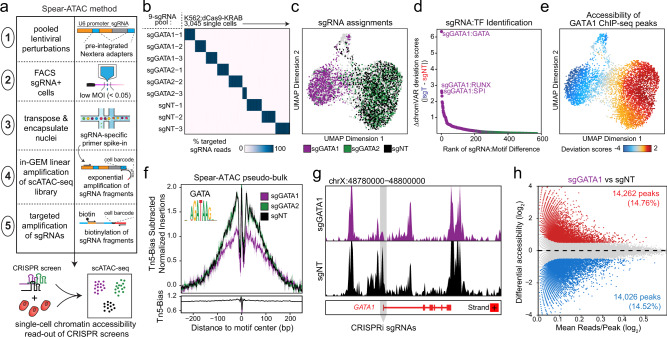
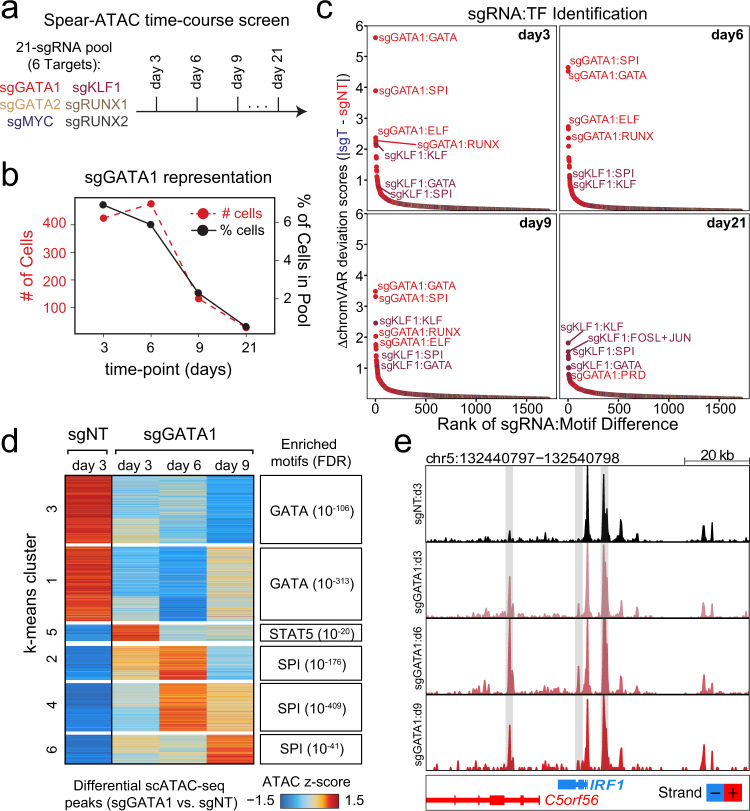
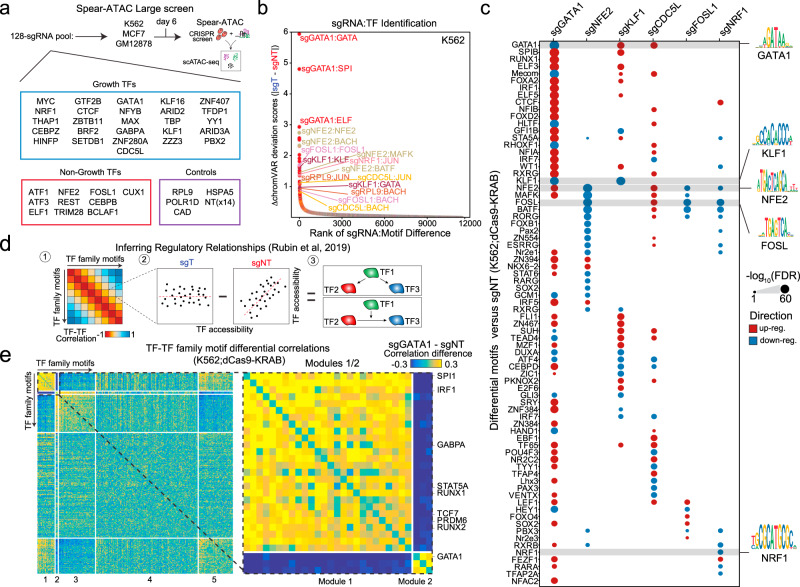
Chromatin accessibility profiling can identify putative regulatory regions genome wide; however, pooled single-cell methods for assessing the effects of regulatory perturbations on accessibility are limited. Here, we report a modified droplet-based single-cell ATAC-seq protocol for perturbing and evaluating dynamic single-cell epigenetic states. This method (Spear-ATAC) enables simultaneous read-out of chromatin accessibility profiles and integrated sgRNA spacer sequences from thousands of individual cells at once. Spear-ATAC profiling of 104,592 cells representing 414 sgRNA knock-down populations reveals the temporal dynamics of epigenetic responses to regulatory perturbations in cancer cells and the associations between transcription factor binding profiles.
Overview
The claims and statistics of this paper haven’t been checked yet.
Free: it reads the open-access text and checks the first 5 claims that cite a source we can check. Create a free account to check every claim.
Integrity signals
Registry
Cites
Statistics
Figures
Verification
Claims the paper makes
The claims and statistics of this paper haven’t been checked yet.
Free: it reads the open-access text and checks the first 5 claims that cite a source we can check. Create a free account to check every claim.
Claims other papers make about this one
Each is checked against this paper’s own text: does it say what the citing paper says it does?
The cited source says what the claim attributes to it.
In the citing paper
“We included scATAC-seq data from three different sources: Spear-ATAC42, CRISPR-sciATAC59 and ASAP-seq39.”
From scPerturb: harmonized single-cell perturbation data (2024) · cites this paper as [42]
The cited source says what the claim attributes to it.
In the citing paper
“Compared to Perturb-ATAC, both Spear-ATAC and CRISPR–sciATAC offer higher throughput.”
From A mini-review on perturbation modelling across single-cell omic modalities (2024) · cites this paper as [20]
The cited source says what the claim attributes to it.
In the citing paper
“CRISPR screens have been coupled with other methods such as scATAC-seq — for example, in developing Spear-ATAC-seq, which characterized over 100,000 single-cell epigenetic states and over 400 CRISPR perturbations87.”
From The technological landscape and applications of single-cell multi-omics (2023) · cites this paper as [87]
In the citing paper
“Protein, RNA and ATAC readouts for CRISPRi perturbation of MYC are all available for K562 cells6,20,42.”
From scPerturb: harmonized single-cell perturbation data (2024) · cites this paper as [42]
In the citing paper
“The Spear-ATAC [20] technique combines integrated sgRNA spacer sequences and chromatin accessibility profiles from hundreds of individual cells.”
From A mini-review on perturbation modelling across single-cell omic modalities (2024) · cites this paper as [20]
Self-check
Percentages, sums and reported differences re-computed from the paper’s own numbers.
The self-check needs the paper’s full text.
Citations
Cites
Buenrostro, J. D., Giresi, P. G., Zaba, L. C., Chang, H. Y., & Greenleaf, W. J. (2013) · Nature Methods · doi:10.1038/nmeth.2688 · Cited by 6,422
Self-citationSearch-and-replace genome editing without double-strand breaks or donor DNA
Anzalone, A. V., Randolph, P. B., Davis, J. R., Sousa, A. A., Koblan, L. W., Levy, J. M., Chen, P. J., Wilson, C., Newby, G. A., Raguram, A., et al. (2019) · Nature · doi:10.1038/s41586-019-1711-4 · Cited by 4,767
GREAT improves functional interpretation of cis-regulatory regions
McLean, C. Y., Bristor, D., Hiller, M., Clarke, S. L., Schaar, B. T., Lowe, C. B., Wenger, A. M., & Bejerano, G. (2010) · Nature Biotechnology · doi:10.1038/nbt.1630 · Cited by 4,502
The Human Transcription Factors
Lambert, S. A., Jolma, A., Campitelli, L. F., Das, P. K., Yin, Y., Albu, M., Chen, X., Taipale, J., Hughes, T. R., & Weirauch, M. T. (2018) · Cell · doi:10.1016/j.cell.2018.01.029 · Cited by 3,399
Genome-Scale CRISPR-Mediated Control of Gene Repression and Activation
Gilbert, L. A., Horlbeck, M. A., Adamson, B., Villalta, J. E., Chen, Y., Whitehead, E. H., Guimaraes, C., Panning, B., Ploegh, H. L., Bassik, M. C., et al. (2014) · Cell · doi:10.1016/j.cell.2014.09.029 · Cited by 2,728
An improved ATAC-seq protocol reduces background and enables interrogation of frozen tissues
Corces, M. R., Trevino, A. E., Hamilton, E. G., Greenside, P. G., Sinnott-Armstrong, N. A., Vesuna, S., Satpathy, A. T., Rubin, A. J., Montine, K. S., Wu, B., et al. (2017) · Nature Methods · doi:10.1038/nmeth.4396 · Cited by 2,496
Self-citationSingle-cell chromatin accessibility reveals principles of regulatory variation
Buenrostro, J. D., Wu, B., Litzenburger, U. M., Ruff, D., Gonzales, M. L., Snyder, M. P., Chang, H. Y., & Greenleaf, W. J. (2015) · Nature · doi:10.1038/nature14590 · Cited by 2,308
Self-citationGenome editing with CRISPR–Cas nucleases, base editors, transposases and prime editors
Anzalone, A. V., Koblan, L. W., & Liu, D. R. (2020) · Nature Biotechnology · doi:10.1038/s41587-020-0561-9 · Cited by 2,237
Dixit, A., Parnas, O., Li, B., Chen, J., Fulco, C. P., Jerby-Arnon, L., Marjanovic, N. D., Dionne, D., Burks, T., Raychowdhury, R., et al. (2016) · Cell · doi:10.1016/j.cell.2016.11.038 · Cited by 1,863
chromVAR: inferring transcription-factor-associated accessibility from single-cell epigenomic data
Schep, A. N., Wu, B., Buenrostro, J. D., & Greenleaf, W. J. (2017) · Nature Methods · doi:10.1038/nmeth.4401 · Cited by 1,680
Self-citation
Research works printed but not linked: 1
- Pierce S. E., Granja J. M., Greenleaf W. J. High-throughput single-cell chromatin accessibility CRISPR screens enable unbiased identification of regulatory networks in cancer, Zenodo, 10.5281/zenodo.4655236, (2021). PMC8137922 34016988 · DOI
Cited by
Items 101–155 of 155
Decoding cell fate: integrated experimental and computational analysis at the single-cell level
Zhou, Y., Hou, S., Miao, X., Zhang, G., Li, Z., Zhang, D., Lin, Y., & Lin, Y. (2025) · Bioinformatics · doi:10.1093/bioinformatics/btaf603 · Cited by 4
“…2019, Frangieh et al. 2021, Papalexi et al. 2021, Wessels et al. 2023), chromatin accessibility (Rubin et al. 2019, Liscovitch-Brauer et al. 2021, Pierce, Granja and Greenleaf 2021)], spatial perturbation, and cell hashing methods (Mimitou et al. 2019) to enhance throughput and accuracy.…”
Yan, R. E., Greenfield, J. P., & Dahmane, N. (2022) · Epigenomics · doi:10.2217/epi-2022-0093 · Cited by 4
Sequencing-based methods for single-cell multi-omics studies
Qin, S., Liu, S., & Weng, X. (2023) · Science China Chemistry · doi:10.1007/s11426-023-1793-7 · Cited by 3
scDecouple: decoupling cellular response from infected proportion bias in scCRISPR-seq
Meng, Q., Wei, L., Ma, K., Shi, M., Lin, X., Ho, J. W. K., Li, Y., & Zhang, X. (2024) · Briefings in Bioinformatics · doi:10.1093/bib/bbae011 · Cited by 3
Every cell every gene all at once: Systems genetic approaches toward corticogenesis
Wu, B., Li, J., & Jin, X. (2025) · Current Opinion in Neurobiology · doi:10.1016/j.conb.2025.103034 · Cited by 3
“Following this, several related genetic screen technologies were developed that incorporate various approaches for genetic perturbation and phenotype readouts [56,57].”
Adding a Chemical Biology Twist to CRISPR Screening
Huang, S., & Baskin, J. M. (2022) · Israel Journal of Chemistry · doi:10.1002/ijch.202200056 · Cited by 3
Single-cell protein-DNA interactomics and multiomics tools for deciphering genome regulation
Xiong, H., Wang, R., & He, A. (2023) · National Science Open · doi:10.1360/nso/20220057 · Cited by 3
Conrad, D. N., Phong, K. T., Korotkevich, E., McGinnis, C. S., Zhu, Q., Chow, E. D., & Gartner, Z. J. (2025) · bioRxiv (Cold Spring Harbor Laboratory) · doi:10.1101/2025.02.14.638353 · Cited by 3
Moribe, F., Iskar, M., Durdu, S., Wirbelauer, C., Hoerner, L., Smallwood, S., Burger, L., & Schübeler, D. (2026) · bioRxiv (Cold Spring Harbor Laboratory) · doi:10.64898/2026.05.04.722487 · Cited by 3
BIT: Bayesian Identification of Transcriptional regulators from epigenomics-based query region sets
Lu, Z., Xu, L., & Wang, X. (2025) · Nature Communications · doi:10.1038/s41467-025-60269-4 · Cited by 2
“Among them, GATA1 knockdown exhibited the strongest target perturbation, consistent with the fi nding from the original study 60 .”
Dissecting cellular ecosystem with single-cell CRISPR screens
Liu, Z., Lan, Z., Kang, X., Yao, Y., & Rao, S. (2025) · Blood Science · doi:10.1097/bs9.0000000000000266 · Cited by 2
“Epigenetic methodologies, such as Perturb-ATAC, 39 CRISPR– sciATAC, 37 or SPEAR-ATAC, 38 unveil the impact of individual gene or regulatory element perturbations on the chromatin landscape.”
Next-generation CRISPR screens enable causal systems immunology
Shi, H., & Chi, H. (2026) · The Journal of Experimental Medicine · doi:10.1084/jem.20241266 · Cited by 2
CRISPR in the Tumor Microenvironment: From Diagnostic Profiling to Precision Therapy
Zhou, L., Mu, M., Yang, M., Liu, X., Zou, G., & Liu, C. (2026) · Cancer Biome and Targeted Therapy · doi:10.66505/cbtt.v1i1.12 · Cited by 2
A Comprehensive Review on CRISPR-Based Screening and Its Applications
Sichani, A. S., Hassani, M., Gila, F., Shafieipour, N., Dabbaghipour, R., Heidari, Z., Sisakht, M., Hassani, M., & Fallahi, J. (2026) · Molecular Biotechnology · doi:10.1007/s12033-026-01562-5 · Cited by 2
The single-cell RNA sequencing technology and its application
Zhang, Y. (2023) · International Conference on Modern Medicine and Global Health (ICMMGH) · doi:10.1117/12.2692190 · Cited by 2
“10X Chromium Single-Cell Gene Expression technology has been successfully introduced by Drop-Seq [16], and it is very similar to the Drop-Seq.”
Discovering mechanisms of human genetic variation and controlling cell states at scale
Frenkel, M. P. C., & Raman, S. (2024) · Trends in Genetics · doi:10.1016/j.tig.2024.03.010 · Cited by 2
Inference of heterogeneous effects in single-cell genetic perturbation screensPreprint
Fu, Z., & Hou, L. (2024) · bioRxiv (Cold Spring Harbor Laboratory) · doi:10.1101/2024.05.28.596224 · Cited by 2
Advances and breakthroughs in single-cell nucleic acid omics
Sun, Z., Li, Z., Tang, Y., & Dong, F. (2025) · Scientia Sinica Vitae · doi:10.1360/ssv-2025-0107 · Cited by 1
Innovative methodologies for elucidating bushfire smoke-induced pathophysiological mechanism
Paudel, K. R., Hegarty, K. J., Shrestha, J., Budden, K. F., Awatade, N. T., Sadaf, T., Malyla, V., Waters, S. A., Papagianis, P. C., Bourke, J. E., et al. (2026) · The Science of The Total Environment · doi:10.1016/j.scitotenv.2026.181645 · Cited by 1
As 5mC enters a programmable era: charted avenues for cancer understanding and intervention
Shi, Q., Liu, P., Zhu, J.-K., & Sun, S. (2026) · Oral Science and Homeostatic Medicine · doi:10.26599/oshm.2026.9610044 · Cited by 1
Charting the computational landscape of single-cell genetic perturbation
Zhang, Y., Huang, J., Li, Y., Liu, T., Ren, L., Huang, J. H., Lin, H., Feng, J., & Zhang, Y. (2026) · Journal of Advanced Research · doi:10.1016/j.jare.2026.06.012 · Cited by 1
Intersectionality and genetic ancestry: New methods to solve old problems
Vera, C. D., Mullen, M., Minhas, N., & Wu, J. C. (2022) · EBioMedicine · doi:10.1016/j.ebiom.2022.104049 · Cited by 1
Mechanisms of enhancer function in neuronal systems in health and disease
Zea-Redondo, L., & Pombo, A. (2022) · Current Opinion in Systems Biology · doi:10.1016/j.coisb.2022.100443 · Cited by 1
Inferring Gene Regulatory Network Based on scATAC-seq Data with Gene Perturbation
Shao, W., Liu, Y., Zhang, S., Chen, S., Liu, Q., Zhou, J., & Zeng, W. (2024) · IEEE International Conference on Bioinformatics and Biomedicine (BIBM) · doi:10.1109/bibm62325.2024.10822868 · Cited by 1
Characterizing Transposon-Derived Enhancers in Human Immunity
Buttler, C. A. (2023) · CU Scholar (University of Colorado Boulder) · Cited by 1
Li, L., Liu, W., Cheng, G., Qu, F., Zhong, S., & Ho, Y. (2025) · bioRxiv (Cold Spring Harbor Laboratory) · doi:10.64898/2025.12.29.696950 · Cited by 1
Addressing technical variations in ATAC-seq data and improving motif accessibility analysesPreprint
Wang, J., Sonder, E., Domcke, S., Robinson, M. D., & Germain, P. (2026) · bioRxiv (Cold Spring Harbor Laboratory) · doi:10.64898/2026.08.21.746151 · Cited by 1
bdo311 (2024) · Zenodo (CERN European Organization for Nuclear Research) · doi:10.5281/zenodo.10892931 · Cited by 1
Single‐Cell Transcriptomics and Epigenomics for CRISPR‐Mediated Perturbation Studies
Saumyaa, S., Elgendy, R., & Bonetti, A. (2022) · Wiley eBooks · doi:10.1002/9781119671404.ch12
Challenges for single-cell epigenetic analysis
Metzl-Raz, E., Kim, S. H., Zhang, C. R., & Greenleaf, W. J. (2023) · Elsevier eBooks · doi:10.1016/b978-0-323-91367-6.00021-0
Self-citationProteins shaping global chromatin accessibility
(2024) · Nature Genetics · doi:10.1038/s41588-024-01667-0
Song, Y., Zheng, X., Cao, Y., Wang, Y., Zhang, H., Ge, K., Zhang, Q., Wang, M., Zhang, X., Wang, H., et al. (2025) · Research Square · doi:10.21203/rs.3.rs-5798177/v1
Patrinos, D. H., Noblitt, D. W., Whitworth, G. B., Udvadia, A. J., & Watson, F. L. (2025) · Elsevier eBooks · doi:10.1016/b978-0-443-15580-2.00009-6
A review on single-cell perturbation data analysis
Fu, Z., Yang, M., & Hou, L. (2025) · Scientia Sinica Mathematica · doi:10.1360/ssm-2024-0315
Functional enhancers: concept, screening, and validation
Lin, H., Chen, F., & Huang, J. (2025) · Scientia Sinica Vitae · doi:10.1360/ssv-2025-0113
Advances in single-cell perturbation modeling
Qi, X., Zhao, L., Chen, R., & Zhao, Y. C. (2025) · Chinese Science Bulletin (Chinese Version) · doi:10.1360/csb-2025-0682
Engineering Cancer with Next-Generation Genome Editing Tools
Roth, J. F., Chen, E., Cevasco, H., & Rivera, F. J. S. (2025) · Annual Review of Cancer Biology · doi:10.1146/annurev-cancerbio-070824-123431
CHROMATIN ACCESSIBILITY CHANGES DURING ADIPOSE BEIGING AND MELANOCYTE STEM CELL ACTIVATION
Lee, S. (2022) · eCommons (Cornell University) · doi:10.7298/w7e7-kv88
Three-Dimensional Epigenomic Characterization of Human Brain Development
Jones, I. R. (2025) · eScholarship (California Digital Library)
Clonal structures and cell interactions in cancer
Andrews, N. (2023) · Open Archive (Karolinska Institutet)
Identification and characterization of novel modulators of chromatin accessibility
石井, 智., イシイ, サ., & ISHII, S. (2024) · SOKENDAI (Graduate University for Advanced Studies)
Tay, T. (2024) · Digital Access to Scholarship at Harvard (DASH) (Harvard University)
Single-Cell Analysis and Cancer Research: Implications for Diagnosis and Treatment
Biswas, P., Rahim, M. A., Chatterjee, D., Ali, M. S., Tabia, J. N., Siam, M. K. S., & Siam, M. K. S. (2026) · Interdisciplinary biotechnological advances · doi:10.1007/978-981-95-3612-2_3
Decoding Single-Cell Omics of Perturbation Responses Using DeSCOPEPreprint
Wu, P., Wei, H., Li, Y., Zheng, X., Zhou, C., Hu, X. S., & Wang, C. (2026) · bioRxiv (Cold Spring Harbor Laboratory) · doi:10.64898/2026.04.13.718147
“The rapid development of single-cell resolution technologies has facilitated systematic, multi-dimensional characterization of these responses at transcriptomic 2, 3, 4 , epigenomic 5, 6, 7 , proteomic 8, 9 , and morphological 10 levels.”
Systematic mapping of chromatin dysregulation driven by viral transcriptional regulators at scalePreprint
Corban, J. E., Reilly, K., Rottenberg, J. T., Hunger, A., Frenkel, M., Bass, J. I. F., & Raman, S. (2026) · bioRxiv (Cold Spring Harbor Laboratory) · doi:10.64898/2026.05.17.725756
“Particularly relevant are the Perturb-seq 18 and Spear-ATAC platforms 19 , pooled variant single-cell CRISPR-based screening platforms coupled to transcriptomic and epigenomic readouts, respectively.”
Duan, J., Kang, H., & Keleş, S. (2026) · bioRxiv (Cold Spring Harbor Laboratory) · doi:10.64898/2026.05.21.726924
DeGolier, K., Devoe, S., Abushawish, M., Prete, A., Fry, T., & Scott-Browne, J. P. (2026) · Research Square · doi:10.21203/rs.3.rs-9859689/v1
“Spear-ATAC (single-cell perturbations with an accessibility read-out using assay for transposase accessible chromatin with sequencing) was previously used to determine the effects of CRISPR/Cas9 perturbations on chromatin profiles of pooled cell lines in vitro at single cell resolution 21 .”
Akhtar, M. S., & Amin, A. (2026) · Functional & Integrative Genomics · doi:10.1007/s10142-026-02026-4
クロマチンアクセシビリティを制御する新規遺伝子の同定とその作用機序解析
ISHII, S. (2024) · Institutional Repositories DataBase (IRDB)
Qian, Q., Xu, Y., & Wei, L. (2026) · Acta Biochimica et Biophysica Sinica · doi:10.3724/abbs.2026165
Nguyen, T.-H., Nguyen, T.-D., Hoang, O.-T., Can, T.-T. T., Nguyen, M.-H. T., Tran, M.-H., Chu, H.-C., & Nguyen, D.-V. (2026) · Clinical Reviews in Allergy & Immunology · doi:10.1007/s12016-026-09211-0
RegDesign-Bench: Benchmarking computational methods for cell-type-specific regulatory DNA designPreprint
Xu, J., Guo, Z., Zhong, C., Yin, Q., He, Y., Chen, Z., Xin, H., Jin, P., & Deng, P. (2026) · bioRxiv (Cold Spring Harbor Laboratory) · doi:10.64898/2026.10.18.759890
“To refine these candidate sets, we searched published studies in Nature, Cell and selected related journals for cell-type-relevant TF and motif evidence [17, 40–43].”
Resolving how genetic perturbations act through gene regulatory pathsPreprint
Ren, L., & Duren, Z. (2026) · bioRxiv (Cold Spring Harbor Laboratory) · doi:10.64898/2026.11.02.763749
Menon, A. V., Song, B., Chao, L., Sriram, D., Chansky, P., Bakshi, I., Ulianova, J., & Li, W. (2025) · doi:10.3389/fgeed.2025.1565387.s005
Metadata
- Authors
- Pierce, S. E., Granja, J. M., & Greenleaf, W. J.
- Affiliations
- Stanford Medicine (US)
- Chan Zuckerberg Biohub San Francisco (US)
- Corresponding author
- Greenleaf, William J.
- Venue
- Nature Communications
- Published
- 2021-05-20
- Volume
- 12
- Issue
- 1
- Pages
- 2969-2969
- ISSN
- 2041-1723 (ISSN-L)
- PMC
- PMC8137922
- OpenAlex
- W3161116336
- Semantic Scholar
- 8586756d0d3d32fa1d7552fe6bbfede4d4634192
- Cited by
- 146
- References
- 31
- Citations by year
- 2026: 17 · 2025: 33 · 2024: 30 · 2023: 21 · 2022: 30 · 2021: 13
- FWCI
- 7.37
- Type
- journal article
- Language
- en
- Open access
- gold
- doi.org
- Licence
- cc-by
- creativecommons.org/licenses/by/4.0 (tdm)
- creativecommons.org/licenses/by/4.0 (vor)
- Locations
- Nature Communications (publishedVersion, cc-by)
- bioRxiv (Cold Spring Harbor Laboratory) (acceptedVersion, cc-by-nc-nd)
- PubMed Central (publishedVersion, cc-by)
- PubMed (publishedVersion)
- RePEc: Research Papers in Economics (submittedVersion)
- DOAJ (DOAJ: Directory of Open Access Journals) (submittedVersion, cc-by-sa)
- Funders
- National Science Foundation
- National Institutes of Health (R01- HG00990901, AI057266, RM1-HG007735, HG007735)
- National Human Genome Research Institute (RM1HG007735, UM1HG009436, P50HG007735, UM1HG009442)
- National Cancer Institute (T32CA009302)
- National Institute of Allergy and Infectious Diseases (U19AI057266)
- Topics
- Life Sciences › Biochemistry, Genetics and Molecular Biology › Molecular Biology › Genomics and Chromatin Dynamics
- Life Sciences › Biochemistry, Genetics and Molecular Biology › Molecular Biology › Chromatin Remodeling and Cancer
- Life Sciences › Biochemistry, Genetics and Molecular Biology › Molecular Biology › Single-cell and spatial transcriptomics
- Keywords
- chromatin accessibility, single-cell ATAC-seq, CRISPR screen, epigenetic perturbation, transcription factor binding, regulatory networks, cancer epigenetics
- MeSH terms
- Chromatin Immunoprecipitation Sequencing, RNA, Guide, CRISPR-Cas Systems, Binding Sites, Chromatin, Humans, Neoplasms, Transcription Factors, Gene Expression Regulation, Neoplastic, Epigenesis, Genetic, Cell Line, Tumor, Gene Regulatory Networks, Gene Knockdown Techniques, High-Throughput Screening Assays, Epigenomics, Single-Cell Analysis, CRISPR-Cas Systems
About these checks
Registry, retraction, Cites and statistics results are computed, not judged, with one exception: a printed reference that no index lists is read once by a model before it counts as a citation error. Claims are extracted by a model and kept only when their quote appears verbatim in the text; each cited source is then checked, with a model’s help, for whether it says what the claim relies on. Those verdicts can be wrong — read the claim’s quote and the cited source before relying on one.
Statistics and arithmetic are recomputed, not judged.
Confidence bands are shown only for fields calibrated on our annotated test set. None is calibrated yet, so no band is shown.
What counts as a claim ›How we measure confidence ›How we check this ›
Are you an author, or do you see a problem with this page? Request a review
Data sources
Bibliographic data: Semantic Scholar, OpenAlex, Crossref.
Contains information from the Semantic Scholar Academic Graph Datasets, made available under the ODC Attribution License (ODC-BY 1.0).
Semantic Scholar’s data is described in: Kinney, R., et al. (2023). The Semantic Scholar Open Data Platform. arXiv:2301.10140.
