

High-throughput single-cell chromatin accessibility CRISPR screens enable unbiased identification of regulatory networks in cancer
Open accessPublished version of a preprint
The DOI matches its Crossref record; 32 of the 32 references it cites were found in a registry or an index.
Abstract
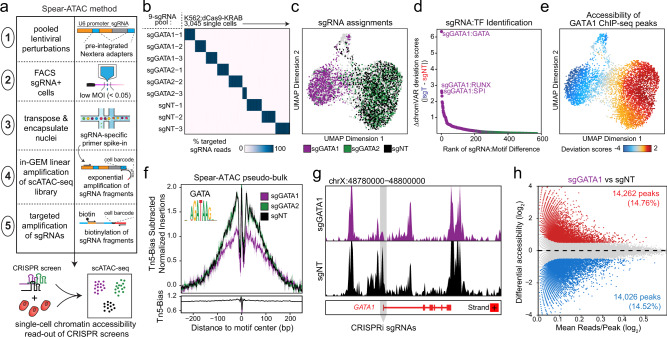
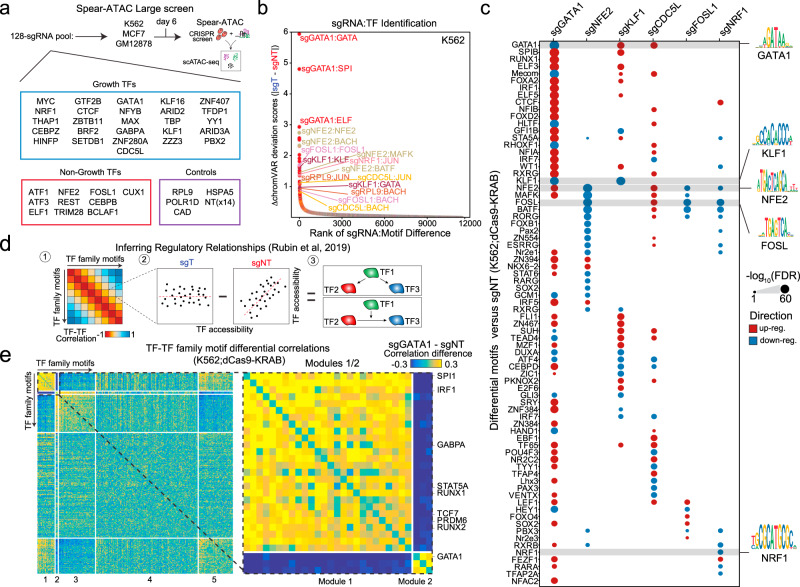
Chromatin accessibility profiling can identify putative regulatory regions genome wide; however, pooled single-cell methods for assessing the effects of regulatory perturbations on accessibility are limited. Here, we report a modified droplet-based single-cell ATAC-seq protocol for perturbing and evaluating dynamic single-cell epigenetic states. This method (Spear-ATAC) enables simultaneous read-out of chromatin accessibility profiles and integrated sgRNA spacer sequences from thousands of individual cells at once. Spear-ATAC profiling of 104,592 cells representing 414 sgRNA knock-down populations reveals the temporal dynamics of epigenetic responses to regulatory perturbations in cancer cells and the associations between transcription factor binding profiles.
Overview
The claims and statistics of this paper haven’t been checked yet.
Free: it reads the open-access text and checks the first 5 claims that cite a source we can check. Create a free account to check every claim.
Integrity signals
Registry
Cites
Statistics
Figures
Verification
Claims the paper makes
The claims and statistics of this paper haven’t been checked yet.
Free: it reads the open-access text and checks the first 5 claims that cite a source we can check. Create a free account to check every claim.
Claims other papers make about this one
Each is checked against this paper’s own text: does it say what the citing paper says it does?
The cited source says what the claim attributes to it.
In the citing paper
“We included scATAC-seq data from three different sources: Spear-ATAC42, CRISPR-sciATAC59 and ASAP-seq39.”
From scPerturb: harmonized single-cell perturbation data (2024) · cites this paper as [42]
The cited source says what the claim attributes to it.
In the citing paper
“Compared to Perturb-ATAC, both Spear-ATAC and CRISPR–sciATAC offer higher throughput.”
From A mini-review on perturbation modelling across single-cell omic modalities (2024) · cites this paper as [20]
The cited source says what the claim attributes to it.
In the citing paper
“CRISPR screens have been coupled with other methods such as scATAC-seq — for example, in developing Spear-ATAC-seq, which characterized over 100,000 single-cell epigenetic states and over 400 CRISPR perturbations87.”
From The technological landscape and applications of single-cell multi-omics (2023) · cites this paper as [87]
In the citing paper
“Protein, RNA and ATAC readouts for CRISPRi perturbation of MYC are all available for K562 cells6,20,42.”
From scPerturb: harmonized single-cell perturbation data (2024) · cites this paper as [42]
In the citing paper
“The Spear-ATAC [20] technique combines integrated sgRNA spacer sequences and chromatin accessibility profiles from hundreds of individual cells.”
From A mini-review on perturbation modelling across single-cell omic modalities (2024) · cites this paper as [20]
Self-check
Percentages, sums and reported differences re-computed from the paper’s own numbers.
The self-check needs the paper’s full text.
Citations
Cites
Buenrostro, J. D., Giresi, P. G., Zaba, L. C., Chang, H. Y., & Greenleaf, W. J. (2013) · Nature Methods · doi:10.1038/nmeth.2688 · Cited by 6,422
Self-citationSearch-and-replace genome editing without double-strand breaks or donor DNA
Anzalone, A. V., Randolph, P. B., Davis, J. R., Sousa, A. A., Koblan, L. W., Levy, J. M., Chen, P. J., Wilson, C., Newby, G. A., Raguram, A., et al. (2019) · Nature · doi:10.1038/s41586-019-1711-4 · Cited by 4,767
GREAT improves functional interpretation of cis-regulatory regions
McLean, C. Y., Bristor, D., Hiller, M., Clarke, S. L., Schaar, B. T., Lowe, C. B., Wenger, A. M., & Bejerano, G. (2010) · Nature Biotechnology · doi:10.1038/nbt.1630 · Cited by 4,502
The Human Transcription Factors
Lambert, S. A., Jolma, A., Campitelli, L. F., Das, P. K., Yin, Y., Albu, M., Chen, X., Taipale, J., Hughes, T. R., & Weirauch, M. T. (2018) · Cell · doi:10.1016/j.cell.2018.01.029 · Cited by 3,399
Genome-Scale CRISPR-Mediated Control of Gene Repression and Activation
Gilbert, L. A., Horlbeck, M. A., Adamson, B., Villalta, J. E., Chen, Y., Whitehead, E. H., Guimaraes, C., Panning, B., Ploegh, H. L., Bassik, M. C., et al. (2014) · Cell · doi:10.1016/j.cell.2014.09.029 · Cited by 2,728
An improved ATAC-seq protocol reduces background and enables interrogation of frozen tissues
Corces, M. R., Trevino, A. E., Hamilton, E. G., Greenside, P. G., Sinnott-Armstrong, N. A., Vesuna, S., Satpathy, A. T., Rubin, A. J., Montine, K. S., Wu, B., et al. (2017) · Nature Methods · doi:10.1038/nmeth.4396 · Cited by 2,496
Self-citationSingle-cell chromatin accessibility reveals principles of regulatory variation
Buenrostro, J. D., Wu, B., Litzenburger, U. M., Ruff, D., Gonzales, M. L., Snyder, M. P., Chang, H. Y., & Greenleaf, W. J. (2015) · Nature · doi:10.1038/nature14590 · Cited by 2,308
Self-citationGenome editing with CRISPR–Cas nucleases, base editors, transposases and prime editors
Anzalone, A. V., Koblan, L. W., & Liu, D. R. (2020) · Nature Biotechnology · doi:10.1038/s41587-020-0561-9 · Cited by 2,237
Dixit, A., Parnas, O., Li, B., Chen, J., Fulco, C. P., Jerby-Arnon, L., Marjanovic, N. D., Dionne, D., Burks, T., Raychowdhury, R., et al. (2016) · Cell · doi:10.1016/j.cell.2016.11.038 · Cited by 1,863
chromVAR: inferring transcription-factor-associated accessibility from single-cell epigenomic data
Schep, A. N., Wu, B., Buenrostro, J. D., & Greenleaf, W. J. (2017) · Nature Methods · doi:10.1038/nmeth.4401 · Cited by 1,680
Self-citation
Research works printed but not linked: 1
- Pierce S. E., Granja J. M., Greenleaf W. J. High-throughput single-cell chromatin accessibility CRISPR screens enable unbiased identification of regulatory networks in cancer, Zenodo, 10.5281/zenodo.4655236, (2021). PMC8137922 34016988 · DOI
Cited by
Single-cell chromatin state analysis with Signac
Stuart, T., Srivastava, A., Madad, S., Lareau, C. A., & Satija, R. (2021) · Nature Methods · doi:10.1038/s41592-021-01282-5 · Cited by 1,769
ArchR is a scalable software package for integrative single-cell chromatin accessibility analysis
Granja, J. M., Corces, M. R., Pierce, S. E., Bagdatli, S. T., Choudhry, H., Chang, H. Y., & Greenleaf, W. J. (2021) · Nature Genetics · doi:10.1038/s41588-021-00790-6 · Cited by 1,392
Self-citationMethods and applications for single-cell and spatial multi-omics
Vandereyken, K., Sifrim, A., Thienpont, B., & Voet, T. (2023) · Nature Reviews Genetics · doi:10.1038/s41576-023-00580-2 · Cited by 1,244
“Methods to profile the impact of such perturbations on chromatin accessibility include CRISPR-sciATAC 92 , Perturb-ATAC 91 and Spear-ATAC 93 .”
MethodThe technological landscape and applications of single-cell multi-omics
Baysoy, A., Bai, Z., Satija, R., & Fan, R. (2023) · Nature Reviews Molecular Cell Biology · doi:10.1038/s41580-023-00615-w · Cited by 1,037
Bock, C., Datlinger, P., Chardon, F., Coelho, M. A., Dong, M. B., Lawson, K. A., Lu, T., Maroc, L., Norman, T. M., Song, B., et al. (2022) · Nature Reviews Methods Primers · doi:10.1038/s43586-021-00093-4 · Cited by 571
Mimitou, E. P., Lareau, C. A., Chen, K. Y., Zorzetto-Fernandes, A. L., Hao, Y., Takeshima, Y., Luo, W., Huang, T.-S., Yeung, B. Z., Papalexi, E., et al. (2021) · Nature Biotechnology · doi:10.1038/s41587-021-00927-2 · Cited by 529
The present and future of the Cancer Dependency Map
Arafeh, R., Shibue, T., Dempster, J. M., Hahn, W. C., & Vazquez, F. (2025) · Nature Reviews Cancer · doi:10.1038/s41568-024-00763-x · Cited by 454
“CRISPR screens have also been coupled with other methods such as CROP-seq 246 , CRISP-seq 247 , Mosaiq-seq 248 and Spear-ATAC-seq 249 to study phenotypes different from cell viability.”
Epigenetic regulation of T cell exhaustion
Belk, J. A., Daniel, B., & Satpathy, A. T. (2022) · Nature Immunology · doi:10.1038/s41590-022-01224-z · Cited by 319
Characterizing cis-regulatory elements using single-cell epigenomics
Preissl, S., Gaulton, K. J., & Ren, B. (2023) · Nature Reviews Genetics · doi:10.1038/s41576-022-00509-1 · Cited by 251
(2022) · Nature Reviews Methods Primers · doi:10.1038/s43586-022-00098-7 · Cited by 250
scPerturb: harmonized single-cell perturbation data
Peidli, S., Green, T. D., Shen, C., Gross, T., Min, J., Garda, S., Yuan, B., Schumacher, L. J., Taylor-King, J. P., Marks, D. S., et al. (2024) · Nature Methods · doi:10.1038/s41592-023-02144-y · Cited by 194
“Following prior studies, we generated five feature sets of scATAC-seq data, each of which addresses different biological questions 40–42 .”
InfluentialGenerating specificity in genome regulation through transcription factor sensitivity to chromatin
Isbel, L., Grand, R. S., & Schübeler, D. (2022) · Nature Reviews Genetics · doi:10.1038/s41576-022-00512-6 · Cited by 171
A framework for clinical cancer subtyping from nucleosome profiling of cell-free DNA
Doebley, A.-L., Ko, M., Liao, H., Cruikshank, A. E., Santos, K., Kikawa, C., Hiatt, J. B., Patton, R. D., Sarkar, N. D., Collier, K. A., et al. (2022) · Nature Communications · doi:10.1038/s41467-022-35076-w · Cited by 157
scBasset: sequence-based modeling of single-cell ATAC-seq using convolutional neural networks
Yuan, H., & Kelley, D. R. (2022) · Nature Methods · doi:10.1038/s41592-022-01562-8 · Cited by 148
“Pierce et al. introduced a technique called spear-ATAC, in which they targeted specific TFs with CRISPRi in single cells and read out the perturbed ATAC-seq profile 27 .”
MethodscBasset: Sequence-based modeling of single cell ATAC-seq using convolutional neural networks
Yuan, H., & Kelley, D. R. (2021) · doi:10.1101/2021.09.08.459495 · Cited by 138
Integration of CRISPR/Cas9 with artificial intelligence for improved cancer therapeutics
Bhat, A. A., Nisar, S., Mukherjee, S., Saha, N., Yarravarapu, N., Lone, S. N., Masoodi, T., Chauhan, R., Maacha, S., Bagga, P., et al. (2022) · Journal of Translational Medicine · doi:10.1186/s12967-022-03765-1 · Cited by 130
Le, J., Dian, Y., Zhao, D., Guo, Z., Luo, Z., Chen, X., Zeng, F., & Deng, G. (2025) · Molecular Cancer · doi:10.1186/s12943-025-02426-3 · Cited by 130
Single cell cancer epigenetics
Casado-Peláez, M., Bueno-Costa, A., & Esteller, M. (2022) · Trends in cancer · doi:10.1016/j.trecan.2022.06.005 · Cited by 124
CRISPR screens for functional interrogation of immunity
Shi, H., Doench, J. G., & Chi, H. (2022) · Nature reviews. Immunology · doi:10.1038/s41577-022-00802-4 · Cited by 110
Data navigation on the ENCODE portal
Kagda, M. S., Lam, B. R., Litton, C., Small, C., Sloan, C. A., Spragins, E., Tanaka, F. Y., Whaling, I., Gabdank, I., Youngworth, I., et al. (2025) · Nature Communications · doi:10.1038/s41467-025-64343-9 · Cited by 112
“The experiments from modERN and modENCODE projectshave data from threedifferentDrosophila species (with a majority being from Drosophila melanogaster ) as well as from Caenorhabditis elegans .”
Multimodal deep learning approaches for single-cell multi-omics data integration
Athaya, T., Ripan, R. C., Li, X., & Hu, H. (2023) · Briefings in Bioinformatics · doi:10.1093/bib/bbad313 · Cited by 109
“…lung [ 116] (GSE161383) and mouse kidney [117] (GSE157079) scRNA-seq, scATAC-seq CRISPR-perturbed single-cell K562 Perturb-seq [47] (GSE90063) scRNA-seq Spear-ATAC [118] (GSE168851) scATAC-seq scDART [119] Unpaired Diagonal Mouse neonatal brain cortex [51] (GSE126074) SNARE-seq scRNA-seq/scATAC-seq”
Revolutionizing DNA repair research and cancer therapy with CRISPR–Cas screens
Awwad, S. W., Serrano-Benítez, A., Thomas, J. C., Gupta, V., & Jackson, S. P. (2023) · Nature Reviews Molecular Cell Biology · doi:10.1038/s41580-022-00571-x · Cited by 101
Single-cell omics: experimental workflow, data analyses and applications
Sun, F., Li, H., Sun, D., Fu, S., Gu, L., Shao, X., Wang, Q., Dong, X., Duan, B., Xing, F., et al. (2024) · Science China Life Sciences · doi:10.1007/s11427-023-2561-0 · Cited by 102
Jiang, L., Dalgarno, C., Papalexi, E., Mascio, I., Wessels, H., Yun, H., Iremadze, N., Lithwick‐Yanai, G., Lipson, D., & Satija, R. (2025) · Nature Cell Biology · doi:10.1038/s41556-025-01622-z · Cited by 90
“While our study focused on transcriptional signatures, incorporating additional modalities, such as chromatin accessibility 101–103 and protein levels 104 , could provide further insights.”
SCEPTRE improves calibration and sensitivity in single-cell CRISPR screen analysis
Barry, T., Wang, X., Morris, J. A., Roeder, K., & Katsevich, E. (2021) · Genome Biology · doi:10.1186/s13059-021-02545-2 · Cited by 86
“For example, screens of candidate CREs could be extended to different, disease-relevant cell types and tissues (although this remains a challenge); new combinatorial indexing strategies, such as scifi-RNA-seq, could enable the scaling-up of such screens to millions of cells [24]; different CRISPR technologies, such as…”
Into the multiverse: advances in single-cell multiomic profiling
Ogbeide, S., Giannese, F., Mincarelli, L., & Macaulay, I. C. (2022) · Trends in Genetics · doi:10.1016/j.tig.2022.03.015 · Cited by 82
Transcriptional enhancers and their communication with gene promoters
Ray-Jones, H., & Spivakov, M. (2021) · Cellular and Molecular Life Sciences · doi:10.1007/s00018-021-03903-w · Cited by 81
“To enable CRISPRmediated enhancer targeting in high throughput, populations of cells are transduced with pooled gRNA libraries, followed by single-cell readouts of enhancer or transcriptional activity from scRNA-seq [180, 181], scATAC-seq [182] and flow cytometry-based RNA FISH [183, 184] to obtain tiled maps of funct…”
MethodNetwork-based approaches for modeling disease regulation and progression
Galindez, G., Sadegh, S., Baumbach, J., Kacprowski, T., & List, M. (2023) · Computational and Structural Biotechnology Journal · doi:10.1016/j.csbj.2022.12.022 · Cited by 79
Advances and applications in single-cell and spatial genomics
Wang, J., Ye, F., Chai, H., Jiang, Y., Wang, T., Ran, X., Xia, Q., Xu, Z., Fu, Y., Zhang, G., et al. (2024) · Science China Life Sciences · doi:10.1007/s11427-024-2770-x · Cited by 79
The use of new CRISPR tools in cardiovascular research and medicine
Nishiga, M., Liu, C., Qi, L. S., & Wu, J. C. (2022) · Nature Reviews Cardiology · doi:10.1038/s41569-021-00669-3 · Cited by 73
Emerging roles for endogenous retroviruses in immune epigenetic regulation*
Buttler, C. A., & Chuong, E. B. (2021) · Immunological Reviews · doi:10.1111/imr.13042 · Cited by 63
LKB1 inactivation modulates chromatin accessibility to drive metastatic progression
Pierce, S. E., Granja, J. M., Corces, M. R., Brady, J. J., Tsai, M. K., Pierce, A. B., Tang, R., Chu, P., Feldser, D. M., Chang, H. Y., et al. (2021) · Nature Cell Biology · doi:10.1038/s41556-021-00728-4 · Cited by 59
Self-citationMetzner, E., Southard, K. M., & Norman, T. M. (2024) · Cell Systems · doi:10.1016/j.cels.2024.12.002 · Cited by 58
“Overall, our ID assignment workflow represents a greater-than-40% improvement over the current state-of-the-art single-cell ATAC-seq screening approach on the 10x platform (spear-ATAC: 48% assignment, Chromium Single Cell ATAC v1), 32 while additionally providing gene expression phenotypes.”
A mini-review on perturbation modelling across single-cell omic modalities
Gavriilidis, G. I., Vasileiou, V., Orfanou, A., Ishaque, N., & Psomopoulos, F. (2024) · Computational and Structural Biotechnology Journal · doi:10.1016/j.csbj.2024.04.058 · Cited by 54
“The Spear-ATAC [20] technique combines integrated sgRNA spacer sequences and chromatin accessibility profiles from hundreds of individual cells.”
MethodNucleotide depletion promotes cell fate transitions by inducing DNA replication stress
Do, B. T., Hsu, P. P., Vermeulen, S. Y., Wang, Z., Hirz, T., Abbott, K. L., Aziz, N., Replogle, J. M., Bjelosevic, S., Paolino, J. D., et al. (2024) · Developmental Cell · doi:10.1016/j.devcel.2024.05.010 · Cited by 49
Comprehensive transcription factor perturbations recapitulate fibroblast transcriptional states
Southard, K. M., Ardy, R. C., Tang, A., O'Sullivan, D., Metzner, E., Guruvayurappan, K., & Norman, T. M. (2025) · Nature Genetics · doi:10.1038/s41588-025-02284-1 · Cited by 49
CRISPR based therapeutics: a new paradigm in cancer precision medicine
Das, S., Bano, S., Kapse, P., & Kundu, G. C. (2022) · Molecular Cancer · doi:10.1186/s12943-022-01552-6 · Cited by 50
Massively Parallel CRISPR‐Based Genetic Perturbation Screening at Single‐Cell Resolution
Cheng, J., Lin, G., Wang, T., Wang, Y., Guo, W., Liao, J., Yang, P., Chen, J., Shao, X., Lu, X., et al. (2022) · Advanced Science · doi:10.1002/advs.202204484 · Cited by 48
EpiAgent: foundation model for single-cell epigenomics
Chen, X., Li, K., Cui, X., Wang, Z., Jiang, Q., Lin, J., Li, Z., Gao, Z., Lv, H., & Jiang, R. (2025) · Nature Methods · doi:10.1038/s41592-025-02822-z · Cited by 46
PerturBase: a comprehensive database for single-cell perturbation data analysis and visualization
Wei, Z., Si, D., Duan, B., Gao, Y., Yu, Q., Zhang, Z., Guo, L., & Liu, Q. (2024) · Nucleic Acids Research · doi:10.1093/nar/gkae858 · Cited by 44
Xu, Y., Begoli, E., & McCord, R. P. (2022) · npj Systems Biology and Applications · doi:10.1038/s41540-022-00245-6 · Cited by 37
“We selected single-cell K562 RNA-seq data from Perturb-seq and single-cell K562 ATAC-seq data generated by Spear-ATAC 47,49 .”
MethodMorris, J. A., Sun, J. S., & Sanjana, N. E. (2023) · Trends in Genetics · doi:10.1016/j.tig.2023.10.012 · Cited by 37
“Perturb-ATAC [70] relies on physical isolation of single cells, whereas CRISPR-sciATAC [47] and Spear-ATAC [71] capitalize on more scalable methods (combinatorial indexing and micro fl uidic droplets, respectively) to analyze larger numbers of single cells, albeit with less sequencing depth (Table…”
MethodTagmentation-based single-cell genomics
Adey, A. (2021) · Genome Research · doi:10.1101/gr.275223.121 · Cited by 35
Methods and applications of in vivo CRISPR screening
Santinha, A. J., Strano, A., & Platt, R. J. (2025) · Nature Reviews Genetics · doi:10.1038/s41576-025-00873-8 · Cited by 34
“…read-outs are particularly useful for investigating biological systems involving cellular heterogeneity and cell state changes where transcriptional phenotypes are informative, such as stem cell 123,124 and organoid differentiation 14,15,125 , cancer heterogeneity 118,126 and drug resistance 127 .”
Transcription factor networks disproportionately enrich for heritability of blood cell phenotypes
Martin-Rufino, J. D., Caulier, A., Lee, S., Castano, N., King, E., Joubran, S. R., Jones, M. K., Goldman, S. R., Arora, U. P., Wahlster, L., et al. (2025) · Science · doi:10.1126/science.ads7951 · Cited by 33
“GATA1-sensitive genes and ACRs were in agreement with independent GATA1 loss-of-function datasets (31, 32) (fig.”
Pooled Genome-Scale CRISPR Screens in Single Cells
Schraivogel, D., Steinmetz, L. M., & Parts, L. (2023) · Annual Review of Genetics · doi:10.1146/annurev-genet-072920-013842 · Cited by 33
Perturb-tracing enables high-content screening of multi-scale 3D genome regulators
Cheng, Y., Hu, M., Yang, B., Jensen, T. B., Zhang, Y., Yang, T., Yu, R., Ma, Z., Radda, J. S. D., Jin, S., et al. (2025) · Nature Methods · doi:10.1038/s41592-025-02652-z · Cited by 33
“Recently, high-content CRISPR screens combining Perturb-seq and single-cell assay for transposase-accessible chromatin with sequencing have enabled the high-throughput discovery of candidate regulators of local chromatin accessibility 7,8 .”
Phospho-seq: integrated, multi-modal profiling of intracellular protein dynamics in single cells
Blair, J. D., Hartman, A., Zenk, F. L., Wahle, P., Brancati, G., Dalgarno, C., Treutlein, B., & Satija, R. (2025) · Nature Communications · doi:10.1038/s41467-025-56590-7 · Cited by 32
“Further extensions that enable guide RNA capture (i.e. Perturb-ATAC 75 , Spear-ATAC 76 ) would enable multiplexed genetic screens to utilize Phospho-seq to perform massively parallel identi fi cation and characterization of signaling regulators.”
Farheen, J., Hosmane, N. S., Zhao, R., Zhao, Q. D., Iqbal, M. Z., & Kong, X. (2022) · Materials Today Bio · doi:10.1016/j.mtbio.2022.100450 · Cited by 30
“TTATTTAAACTTGCTATGCTGTTTCCAGCTT pSP618 [249]”
BackgroundMenon, A. V., Song, B., Chao, L., Sriram, D., Chansky, P. A., Bakshi, I., Ulianova, J., & Li, W. (2025) · Frontiers in Genome Editing · doi:10.3389/fgeed.2025.1565387 · Cited by 30
A cis-regulatory lexicon of DNA motif combinations mediating cell-type-specific gene regulation
Donohue, L. K. H., Guo, M. G., Zhao, Y., Jung, N., Bussat, R. T., Kim, D. S., Neela, P. H., Kellman, L. N., Garcia, O. S., Meyers, R. M., et al. (2022) · Cell Genomics · doi:10.1016/j.xgen.2022.100191 · Cited by 29
High-content CRISPR screening in tumor immunology
Holcomb, E. A., Pearson, A. N., Jungles, K. M., Tate, A., James, J. G., Jiang, L., Huber, A. K., & Green, M. D. (2022) · Frontiers in Immunology · doi:10.3389/fimmu.2022.1041451 · Cited by 28
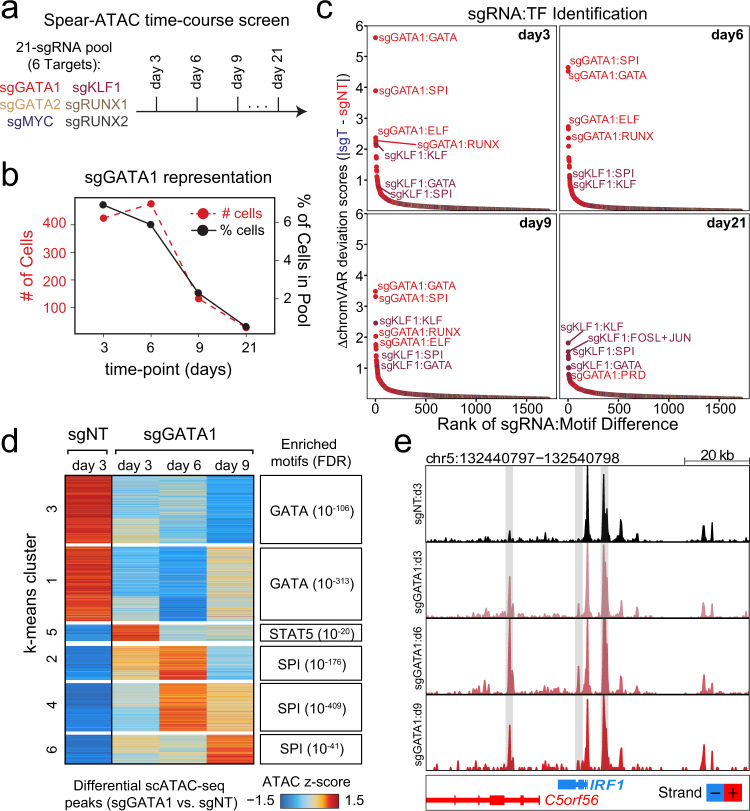
“For instance, GATA1 deletion resulted in increased accessibility of hematopoietic transcription factor binging regions such as RUNX, SPI1, and IRF1 (20).”
BackgroundMethodInfluentialNew horizons in the stormy sea of multimodal single-cell data integration
Jackson, C. A., & Vogel, C. (2022) · Molecular Cell · doi:10.1016/j.molcel.2021.12.012 · Cited by 26
Gene Regulatory Circuits in Innate and Adaptive Immune Cells
Saini, A., Ghoneim, H. E., Lio, C. J., Collins, P. L., & Oltz, E. M. (2022) · Annual Review of Immunology · doi:10.1146/annurev-immunol-101320-025949 · Cited by 26
CRISPR screening in hematology research: from bulk to single-cell level
Meyers, S., Demeyer, S., & Cools, J. (2023) · Journal of Hematology & Oncology · doi:10.1186/s13045-023-01495-5 · Cited by 25
“Additionally, GATA1 was shown to be an essential gene in the myeloid lineage and its perturbation initially caused increased accessibility of STAT5 motifs, while increase of SPI1 motif accessibility had longer latency, highlighting time-dependent epigenetic dynamics [125].”
BackgroundApplications of single-cell technologies in drug discovery for tumor treatment
Liu, B., Hu, S., & Wang, X. (2024) · iScience · doi:10.1016/j.isci.2024.110486 · Cited by 25
Benchmarking AI Models for In Silico Gene Perturbation of Cells
Li, C., Gao, H., She, Y., Bian, H., Chen, Q., Liu, K., Wei, L., & Zhang, X. (2024) · doi:10.1101/2024.12.20.629581 · Cited by 24
Pooled CRISPR screens with joint single-nucleus chromatin accessibility and transcriptome profiling
Yan, R. E., Corman, A., Katgara, L., Xiao, W., Xue, X., Gajic, Z. Z., Sam, R., Farid, M., Friedman, S. M., Choo, J., et al. (2024) · Nature Biotechnology · doi:10.1038/s41587-024-02475-x · Cited by 24
“Several groups have developed methods that expand single-cell perturbation screens to capture modalities such as protein 3,4 , chromatin accesibility 5–7 and three-dimensional genome conformation 8 .”
New Tools for Lineage Tracing in Cancer In Vivo
Jones, M. G., Yang, D., & Weissman, J. S. (2023) · Annual Review of Cancer Biology · doi:10.1146/annurev-cancerbio-061421-123301 · Cited by 24
Single-Cell Toolkits Opening a New Era for Cell Engineering
Lee, S., Kim, J., & Park, J.-E. (2021) · Molecules and Cells · doi:10.14348/molcells.2021.0002 · Cited by 21
“Pierce et al. (2020) reported that this approach could be used to accurately and cost-effectively ($9.80/cell for ~30 Perturb-ATAC runs compared to one $0.46/cell for Spear-ATAC) characterize the effects of CRISPR/Cas9-based perturbations on chromatin accessibility.”
BackgroundInfluentialTurkalj, S., Jakobsen, N. A., Groom, A., Metzner, M., Riva, S. G., Gür, E. R., Usukhbayar, B., Salazar, M. A., Hentges, L. D., Mickute, G., et al. (2023) · Cell Stem Cell · doi:10.1016/j.stem.2023.04.012 · Cited by 20
Shevade, K., Yang, Y. A., Feng, K., Mader, K., Sevim, V., Parsons, J., Arora, G., Elfawy, H. A., Mace, R., Federman, S. M., et al. (2025) · Cell Reports Methods · doi:10.1016/j.crmeth.2025.101222 · Cited by 19
“14 These methods employ various single-cell platforms and have guide capture efficiencies ranging from 40% to 90%.”
Concepts and new developments in droplet-based single cell multi-omics
Chow, A., & Lareau, C. A. (2024) · Trends in biotechnology · doi:10.1016/j.tibtech.2024.07.006 · Cited by 18
Manipulating and studying gene function in human pluripotent stem cell models
Balmas, E., Sozza, F., Bottini, S., Ratto, M. L., Savoré, G., Becca, S., Snijders, K. E., & Bertero, A. (2023) · FEBS Letters · doi:10.1002/1873-3468.14709 · Cited by 18
“…LoF screens [272]; CRISPR BE and PE screens — which enable pooled CoF mutagenesis screens [273 – 275]; Perturb-ATACseq [276], Spear-ATAC [277], and CRISPR-sciATAC [278] — which combine CRISPR pooled screens with single-cell assay for transposable accessible chromatin by NGS…”
BackgroundResolving the hematopoietic stem cell state by linking functional and molecular assays
Jassinskaja, M., Gońka, M., & Kent, D. G. (2023) · Blood · doi:10.1182/blood.2022017864 · Cited by 19
Lu, Y., Ma, S., Chan, Y.-T., Wu, Y., Feng, Y., & Wang, N. (2025) · Journal of Advanced Research · doi:10.1016/j.jare.2025.08.057 · Cited by 16
“An even more high-throughput variant, Spear-ATAC (Single-cell perturbation ATAC-seq), profiles thousands of CRISPR perturbations at single-cell resolution, simultaneously mapping how 414 different gene knockouts impact chromatin accessibility across 104,592 cells [95].”
Mapping convergent regulators of melanoma drug resistance by PerturbFate
Xu, Z., Lu, Z., Ugurbil, A., Abdulraouf, A., Liao, A. S.-H., Zhang, J., Zhou, W. Y., & Cao, J. (2026) · Nature · doi:10.1038/s41586-026-10367-0 · Cited by 16
“3a,b and Supplementary Table 2).”
InfluentialSingle-cell epigenomics and proteomics methods integrated in multiomics
Bi, H., & Weng, X. (2024) · Fundamental Research · doi:10.1016/j.fmre.2023.11.014 · Cited by 14
“Examples of such meth-ods include Perturb-ATAC [31] , CRISPR-sciATAC [93] , and Spear-ATAC [94] ( Table 3 ).”
Expanding horizons of CRISPR applications beyond genome editing
Liang, Y., Tong, S., Zhang, J., Tan, G., Zhang, L., Lee, S. Y., & Tong, Y. (2025) · Trends in Genetics · doi:10.1016/j.tig.2025.06.003 · Cited by 14
Unveiling causal regulatory mechanisms through cell-state parallax
Wu, A. P., Singh, R., Walsh, C. A., & Berger, B. (2025) · Nature Communications · doi:10.1038/s41467-025-61337-5 · Cited by 14
“Gene expression representations were 472 constructed by (1) scaling the transformed RNA-seq data to unit variance and zero mean, (2) 473 retaining the top 2000 most highly variable genes, (3) and projecting these normalized 474 expression values onto their top 100 principal components (excluding components that have 4…”
Kwok, A. W. C., Shim, H., & McCarthy, D. J. (2025) · Genome biology · doi:10.1186/s13059-025-03735-y · Cited by 13
“The fragment files and processed data objects with cell , called peak set, and cell type annotations for K562 SpearATAC dataset [48] were downloaded from GEO with accession number GSE168851.”
Decoding Human Biology and Disease Using Single-Cell Omics Technologies
Shi, Q., Chen, X., & Zhang, Z. (2023) · Genomics Proteomics & Bioinformatics · doi:10.1016/j.gpb.2023.06.003 · Cited by 13
The Current Situation and Development Prospect of Whole-Genome Screening
Yang, C., Lei, Y., Ren, T., & Yao, M. (2024) · International Journal of Molecular Sciences · doi:10.3390/ijms25010658 · Cited by 13
“Single-cell CRISPR screening can also detect the alterations in chromatin state after CRISPR interference [142–144].”
Omnireg-gpt: a high-efficiency foundation model for comprehensive genomic sequence understanding
Wang, A., Li, J., Dong, H., Xu, B., Yin, Q., Xu, Y., Fu, J., & Zhao, J. (2025) · Nature Communications · doi:10.1038/s41467-025-65066-7 · Cited by 13
Human-scATAC-Corpus: a comprehensive database of scATAC-seq data
Chen, X., Gao, Z., Li, K., Wang, Z., Jiang, Q., Cui, X., Li, Z., & Jiang, R. (2025) · Nucleic Acids Research · doi:10.1093/nar/gkaf1216 · Cited by 12
“Second, the scope of applications has been expanding, with techniques such as CRISPR-sciA T AC [ 9 ] and Spear-A T AC [ 10 ] integrating CRISPR-based genome editing to capture cell state changes under various perturbations.”
Unlocking biological mechanisms with integrative functional genomics approaches
Yun, S., Noh, M., Yu, J., Kim, H.-J., Hui, C., Lee, H., & Son, J. E. (2024) · Molecules and Cells · doi:10.1016/j.mocell.2024.100092 · Cited by 12
Functional Neurogenomics to Dissect Disease Mechanisms Across Models
Zheng, X., Li, J., & Jin, X. (2025) · Annual Review of Genomics and Human Genetics · doi:10.1146/annurev-genom-120823-125811 · Cited by 11
Conditional resampling improves calibration and sensitivity in single-cell CRISPR screen analysisPreprint
Barry, T., Wang, X., Morris, J. A., Roeder, K., & Katsevich, E. (2020) · bioRxiv (Cold Spring Harbor Laboratory) · doi:10.1101/2020.08.13.250092 · Cited by 11
Applying CRISPR-Cas9 screens to dissect hematological malignancies
Iyer, D. N., Schimmer, A. D., & Chang, H. (2023) · Blood Advances · doi:10.1182/bloodadvances.2022008966 · Cited by 10
Wei, H., Han, T., Li, T., Wu, Q., & Wang, C. (2023) · Briefings in Bioinformatics · doi:10.1093/bib/bbad123 · Cited by 10
CRISPR/Cas9 genetic screens in hepatocellular carcinoma gene discovery
Chiu, C. H. (2023) · Current Research in Biotechnology · doi:10.1016/j.crbiot.2023.100127 · Cited by 10
“The feasibility of CRISPR/Cas9 screen analyzed with single-cell sequencing in cancer research has offered promising results, further deepening our understanding of cancer cell epigenetics and transcription regulation (Pierce et al., 2021; Yang, 2021).”
Towards a CRISPeR understanding of homologous recombination with high-throughput functional genomics
Hayward, S. B., & Ciccia, A. (2021) · Current Opinion in Genetics & Development · doi:10.1016/j.gde.2021.08.006 · Cited by 9
Jones, I. R., Ren, X., & Shen, Y. (2022) · Human Molecular Genetics · doi:10.1093/hmg/ddac193 · Cited by 9
McDiarmid, T. A., Taylor, M. L., Chen, W., Chardon, F. M., Choi, J., Liao, H., Li, X., Kim, H., Lalanne, J., Li, T. Y., et al. (2025) · Nature Biotechnology · doi:10.1038/s41587-025-02896-2 · Cited by 8
“The human RNU6-1 promoter was again among the top-performing promoters in mESCs, consistently outper-forming a commonly used, modified mouse U6 promoter 11,50,51 as well as another mouse U6 promoter that was part of the evolutionarily diversified set (Supplementary Figs.”
Radiation target: Moving from theory to practice
Li, Q., Zhao, G., Han, W., Xu, S., & Wu, L. (2022) · Nuclear Analysis · doi:10.1016/j.nucana.2022.100024 · Cited by 8
On the identification of differentially-active transcription factors from ATAC-seq data
Gerbaldo, F. E., Sonder, E., Fischer, V., Frei, S., Wang, J., Gapp, K., Robinson, M. D., & Germain, P. (2024) · PLoS Computational Biology · doi:10.1371/journal.pcbi.1011971 · Cited by 8
“In particular, it is plausible that the sample-permutation mode of diffTF, and more generally methods that compute per-sample scores, would benefit more from increased sample sizes.”
MethodFrenkel, M. P. C., Corban, J. E., Hujoel, M. L. A., Morris, Z. S., & Raman, S. (2024) · Nature Biotechnology · doi:10.1038/s41587-024-02347-4 · Cited by 7
“Finally, the necessary primer binding sites for Spear-ATAC were added.”
InfluentialPierce, S. E., Kim, S. H., & Greenleaf, W. J. (2021) · Current Opinion in Genetics & Development · doi:10.1016/j.gde.2020.11.008 · Cited by 7
“While this limitation does not entirely preclude doing CRISPR screens with a scATAC-seq read-out, it does restrict our ability to associate sgRNAs to chromatin accessibility profiles to 50% of cells assayed in a given experiment [29].”
BackgroundSelf-citationComputational single cell oncology: state of the art
Paas-Oliveros, E., Lemus, E. H., & de Anda‐Jáuregui, G. (2023) · Frontiers in Genetics · doi:10.3389/fgene.2023.1256991 · Cited by 7
Kovačević, L., Gaudelet, T., Opzoomer, J. W., Triendl, H., Whittaker, J. C., Uhler, C., Edwards, L., & Taylor‐King, J. P. (2025) · arXiv (Cornell University) · doi:10.48550/arxiv.2501.19178 · Cited by 7
“…how the perturbation and application of media leads to dysregulation of chromatin accessibility (Liscovitch-Brauer et al., 2021; Rubin et al., 2019; Pierce et al., 2021), the transcriptome (Lara-Astiaso et al., 2023), or select members of the proteome via oligonucleotide-tagged antibodies…”
Disordered protein LAT encodes relative levels of signaling pathways in T cell activation
Rubin, A. J., Dao, T. T., Schueppert, A. V., Choi, S., Groves, J. T., Regev, A., & Shalek, A. K. (2026) · Science · doi:10.1126/science.ads6847 · Cited by 6
Representing and extracting knowledge from single-cell data
Mihai, I. S., Chafle, S., & Henriksson, J. (2023) · Biophysical Reviews · doi:10.1007/s12551-023-01091-4 · Cited by 6
“In addition, the ATAC-seq protocol can be modified for detection of CRISPR sgRNAs (Pierce et al. 2021), and for quantification of other genomic regions (unpublished).”
MethodMinkina, A., Cao, J., & Shendure, J. (2022) · bioRxiv (Cold Spring Harbor Laboratory) · doi:10.1101/2022.05.12.491602 · Cited by 6
BioXArena: Benchmarking LLM Agents on Multi-Modal Biomedical Machine Learning TasksPreprint
Li, L., Zhang, D., Du, X., Song, L., Wang, Z., Aukenov, A., Thomas, N., Sailaukan, S., Yang, Y., Chen, F., et al. (2026) · arXiv (Cornell University) · doi:10.48550/arxiv.2605.15766 · Cited by 6
Single-cell multiomics: a new frontier in drug research and development
Ma, J., Dong, C. F., He, A., & Xiong, H. (2024) · Frontiers in Drug Discovery · doi:10.3389/fddsv.2024.1474331 · Cited by 5
Yang, C., Jin, Y., & Yin, Y. (2024) · Life Medicine · doi:10.1093/lifemedi/lnae015 · Cited by 5
Retinal organoids mirror CRISPR-Cas9 gene editing efficiency observed in vivo
Pulman, J., Malki, H., Oudin, P., Aydin, E., Tran, S., Visticot, L., Robert, C., Cian, A. D., As, M., Goureau, O., et al. (2025) · Molecular Therapy — Methods & Clinical Development · doi:10.1016/j.omtm.2025.101627 · Cited by 5
Multiplexed multimodal single-cell technologies: From observation to perturbation analysis
Lee, S.-H., Park, J., & Hwang, B. (2024) · Molecules and Cells · doi:10.1016/j.mocell.2024.100147 · Cited by 5
Decoding neurodegeneration one cell at a time
Gautier, O., Nguyen, T. P., & Gitler, A. D. (2026) · Journal of Clinical Investigation · doi:10.1172/jci199841 · Cited by 4
Single‐Cell CRISPR: An Efficient Strategy for Decoding Plant Cis ‐Regulatory Complexity
Zhang, Y., Luo, X., Li, H., Jin, S., Zhang, X., & Wang, Y. (2026) · Plant Biotechnology Journal · doi:10.1111/pbi.70647 · Cited by 4
“(2) LTR recombinant engineering: This approach integrates a U6-gRNA expression cassette into the functionally inert region of the viral 3′ long terminal repeat (3′LTR) (Pierce et al. 2021; Liang et al. 2023; Liscovitch-Brauer et al. 2021).”
Metadata
- Authors
- Pierce, S. E., Granja, J. M., & Greenleaf, W. J.
- Affiliations
- Stanford Medicine (US)
- Chan Zuckerberg Biohub San Francisco (US)
- Corresponding author
- Greenleaf, William J.
- Venue
- Nature Communications
- Published
- 2021-05-20
- Volume
- 12
- Issue
- 1
- Pages
- 2969-2969
- ISSN
- 2041-1723 (ISSN-L)
- PMC
- PMC8137922
- OpenAlex
- W3161116336
- Cited by
- 146
- References
- 31
- Citations by year
- 2026: 17 · 2025: 33 · 2024: 30 · 2023: 21 · 2022: 30 · 2021: 13
- FWCI
- 7.37
- Type
- journal article
- Language
- en
- Open access
- gold
- doi.org
- Licence
- cc-by
- creativecommons.org/licenses/by/4.0 (tdm)
- creativecommons.org/licenses/by/4.0 (vor)
- Locations
- Nature Communications (publishedVersion, cc-by)
- bioRxiv (Cold Spring Harbor Laboratory) (acceptedVersion, cc-by-nc-nd)
- PubMed Central (publishedVersion, cc-by)
- PubMed (publishedVersion)
- RePEc: Research Papers in Economics (submittedVersion)
- DOAJ (DOAJ: Directory of Open Access Journals) (submittedVersion, cc-by-sa)
- Funders
- National Science Foundation
- National Institutes of Health (R01- HG00990901, AI057266, RM1-HG007735, HG007735)
- National Human Genome Research Institute (RM1HG007735, UM1HG009436, P50HG007735, UM1HG009442)
- National Cancer Institute (T32CA009302)
- National Institute of Allergy and Infectious Diseases (U19AI057266)
- Topics
- Life Sciences › Biochemistry, Genetics and Molecular Biology › Molecular Biology › Genomics and Chromatin Dynamics
- Life Sciences › Biochemistry, Genetics and Molecular Biology › Molecular Biology › Chromatin Remodeling and Cancer
- Life Sciences › Biochemistry, Genetics and Molecular Biology › Molecular Biology › Single-cell and spatial transcriptomics
- Keywords
- chromatin accessibility, single-cell ATAC-seq, CRISPR screen, epigenetic perturbation, transcription factor binding, regulatory networks, cancer epigenetics
- MeSH terms
- Chromatin Immunoprecipitation Sequencing, RNA, Guide, CRISPR-Cas Systems, Binding Sites, Chromatin, Humans, Neoplasms, Transcription Factors, Gene Expression Regulation, Neoplastic, Epigenesis, Genetic, Cell Line, Tumor, Gene Regulatory Networks, Gene Knockdown Techniques, High-Throughput Screening Assays, Epigenomics, Single-Cell Analysis, CRISPR-Cas Systems
About these checks
Registry, retraction, Cites and statistics results are computed, not judged, with one exception: a printed reference that no index lists is read once by a model before it counts as a citation error. Claims are extracted by a model and kept only when their quote appears verbatim in the text; each cited source is then checked, with a model’s help, for whether it says what the claim relies on. Those verdicts can be wrong — read the claim’s quote and the cited source before relying on one.
Statistics and arithmetic are recomputed, not judged.
Confidence bands are shown only for fields calibrated on our annotated test set. None is calibrated yet, so no band is shown.
What counts as a claim ›How we measure confidence ›How we check this ›
Are you an author, or do you see a problem with this page? Request a review
Data sources
Bibliographic data: Semantic Scholar, OpenAlex, Crossref.
Contains information from the Semantic Scholar Academic Graph Datasets, made available under the ODC Attribution License (ODC-BY 1.0).
Semantic Scholar’s data is described in: Kinney, R., et al. (2023). The Semantic Scholar Open Data Platform. arXiv:2301.10140.
