

Adaptive and multifunctional hydrogel hybrid probes for long-term sensing and modulation of neural activity
Open accessThe DOI matches its Crossref record; 45 of the 46 references it cites were found in a registry or an index.
Abstract
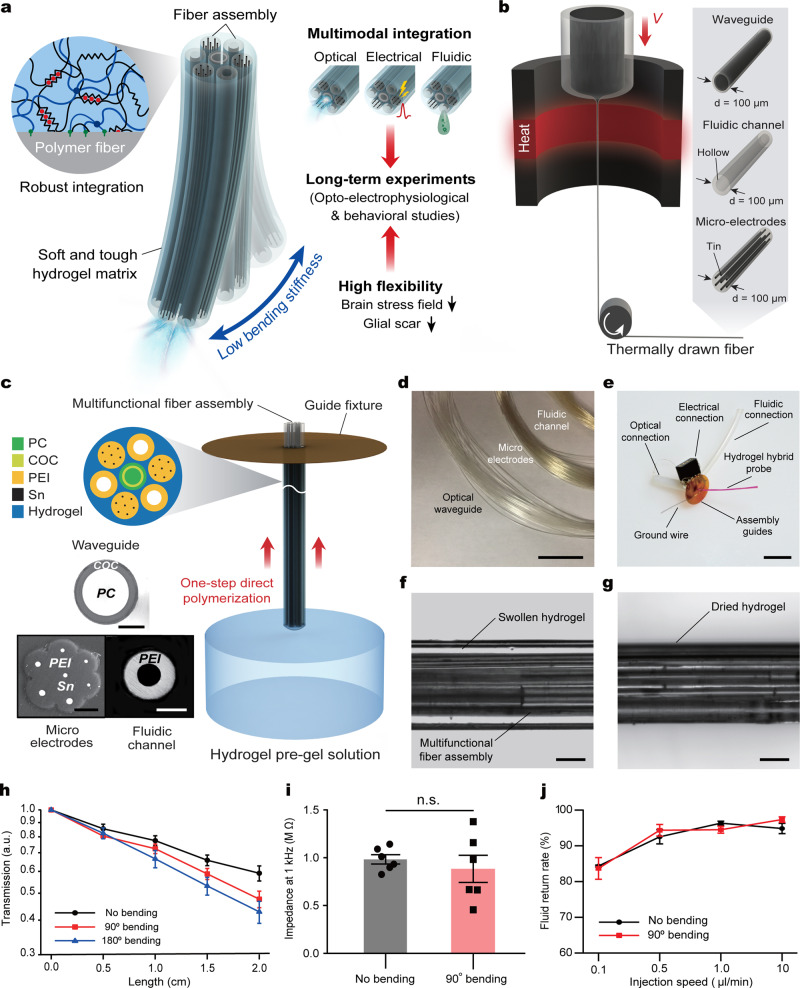
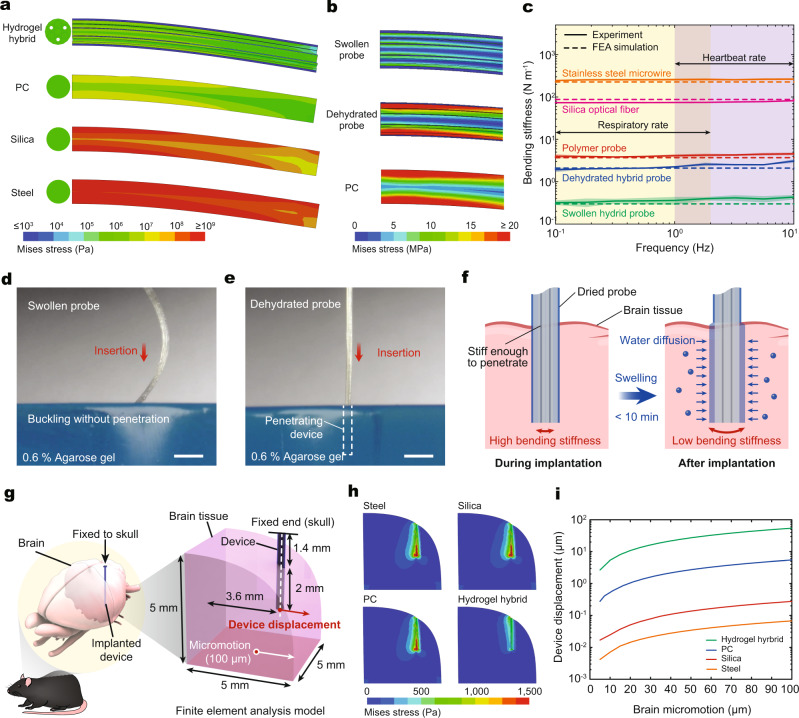
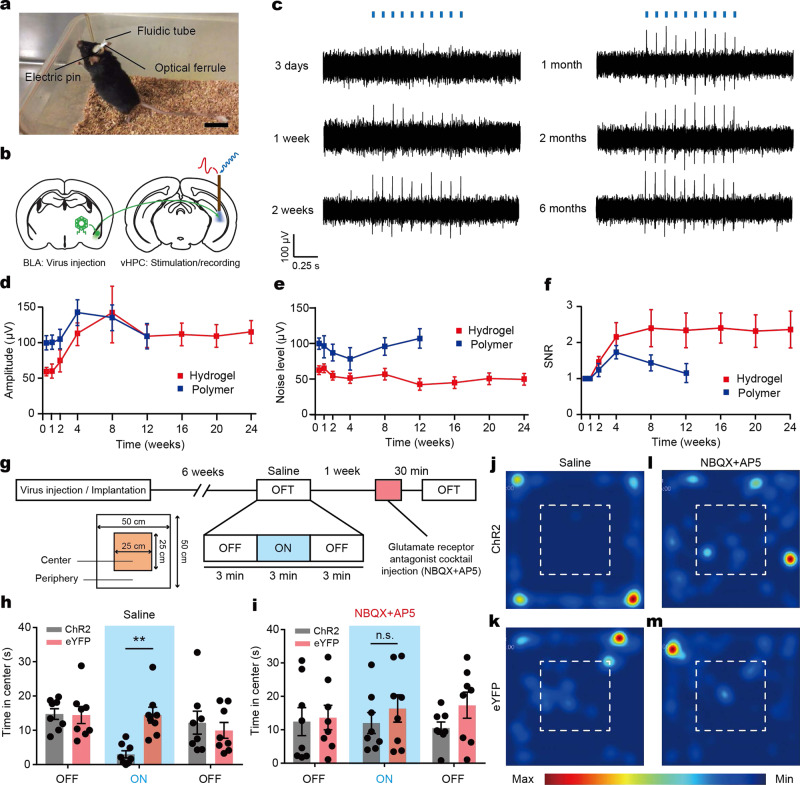
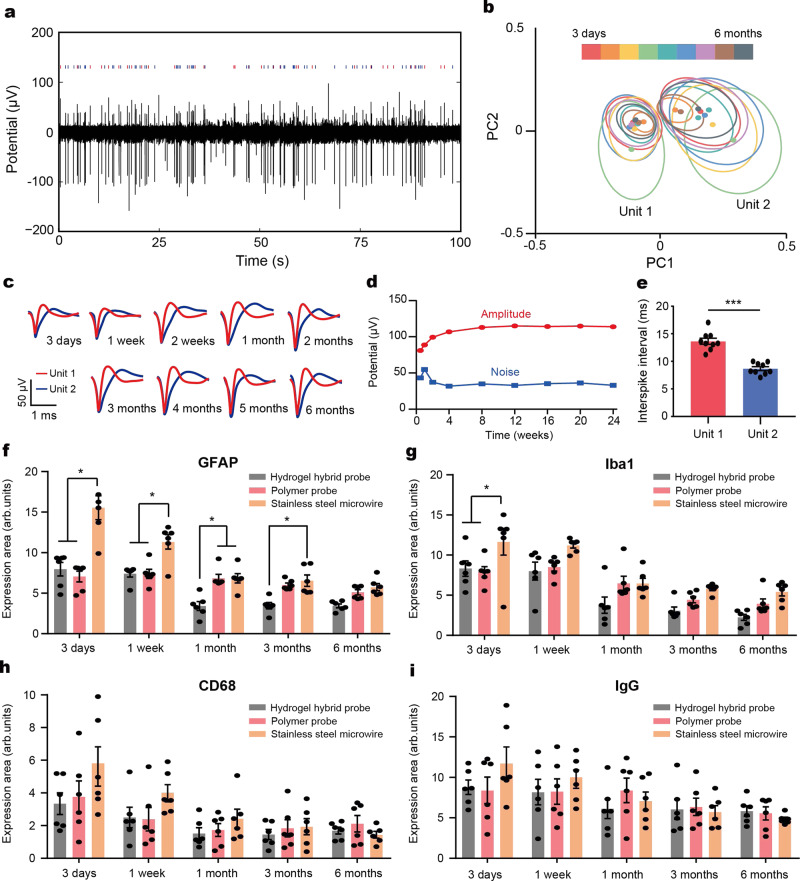
To understand the underlying mechanisms of progressive neurophysiological phenomena, neural interfaces should interact bi-directionally with brain circuits over extended periods of time. However, such interfaces remain limited by the foreign body response that stems from the chemo-mechanical mismatch between the probes and the neural tissues. To address this challenge, we developed a multifunctional sensing and actuation platform consisting of multimaterial fibers intimately integrated within a soft hydrogel matrix mimicking the brain tissue. These hybrid devices possess adaptive bending stiffness determined by the hydration states of the hydrogel matrix. This enables their direct insertion into the deep brain regions, while minimizing tissue damage associated with the brain micromotion after implantation. The hydrogel hybrid devices permit electrophysiological, optogenetic, and behavioral studies of neural circuits with minimal foreign body responses and tracking of stable isolated single neuron potentials in freely moving mice over 6 months following implantation.
Overview
The claims and statistics of this paper haven’t been checked yet.
Free: it reads the open-access text and checks the first 5 claims that cite a source we can check. Create a free account to check every claim.
Integrity signals
Registry
Cites
Statistics
Figures
Verification
Claims the paper makes
The claims and statistics of this paper haven’t been checked yet.
Free: it reads the open-access text and checks the first 5 claims that cite a source we can check. Create a free account to check every claim.
Claims other papers make about this one
Each is checked against this paper’s own text: does it say what the citing paper says it does?
The source backs part of the claim, not all of it — or backs it for a different population, condition or comparison.
In the citing paper
“As a material whose features resemble water-rich tissue in the human body, hydrogels can greatly reduce the inflammatory response of foreign objects, regulate cell or protein attachment, and prevent device failure in vivo,[52] which is important for implants.[53,54]”
From Flexible Electronics and Devices as Human–Machine Interfaces for Medical Robotics (2022) · cites this paper as [52]
Experimental — accuracy not yet measuredThe source backs part of the claim, not all of it — or backs it for a different population, condition or comparison.
In the citing paper
“Consequently, many integrated flexible stimulation systems can also perform electrophysiological recording.[52]”
From Flexible Electronics and Devices as Human–Machine Interfaces for Medical Robotics (2022) · cites this paper as [52]
Experimental — accuracy not yet measured
Self-check
Percentages, sums and reported differences re-computed from the paper’s own numbers.
The self-check needs the paper’s full text.
Citations
Cites
Highly stretchable and tough hydrogels
Sun, J.-Y., Zhao, X., Illeperuma, W. R. K., Chaudhuri, O., Oh, K. H., Mooney, D. J., Vlassak, J. J., & Suo, Z. (2012) · Nature · doi:10.1038/nature11409 · Cited by 5,481
Self-citationHydrogels for Tissue Engineering
Lee, K. Y., & Mooney, D. J. (2001) · Chemical Reviews · doi:10.1021/cr000108x · Cited by 5,277
Neurodegenerative Disorders: Parkinson's Disease and Huntington's Disease
Hague, S., Klaffke, S., & Bandmann, O. (2006) · IMPERIAL COLLEGE PRESS eBooks · doi:10.1142/9781860948961_0007 · Cited by 2,766
Response of brain tissue to chronically implanted neural electrodes
Polikov, V. S., Tresco, P. A., & Reichert, W. M. (2005) · Journal of Neuroscience Methods · doi:10.1016/j.jneumeth.2005.08.015 · Cited by 1,896
Stretchable, Transparent, Ionic Conductors
Keplinger, C., Sun, J.-Y., Foo, C. C., Rothemund, P., Whitesides, G. M., & Suo, Z. (2013) · Science · doi:10.1126/science.1240228 · Cited by 1,754
Optical Deconstruction of Parkinsonian Neural Circuitry
Gradinaru, V., Mogri, M., Thompson, K. R., Henderson, J. M., & Deisseroth, K. (2009) · Science · doi:10.1126/science.1167093 · Cited by 1,526
Tough bonding of hydrogels to diverse non-porous surfaces
Yuk, H., Zhang, T., Lin, S., Parada, G. A., & Zhao, X. (2016) · Nature Materials · doi:10.1038/nmat4463 · Cited by 1,184
Self-citationElectronic dura mater for long-term multimodal neural interfaces
Minev, I. R., Musienko, P., Hirsch, A., Barraud, Q., Wenger, N., Moraud, E. M., Gandar, J., Capogrosso, M., Milekovic, T., Asboth, L., et al. (2015) · Science · doi:10.1126/science.1260318 · Cited by 1,082
Skin-inspired hydrogel–elastomer hybrids with robust interfaces and functional microstructures
Yuk, H., Zhang, T., Parada, G. A., Liu, X., & Zhao, X. (2016) · Nature Communications · doi:10.1038/ncomms12028 · Cited by 1,035
Self-citationBioresorbable silicon electronic sensors for the brain
Kang, S.-K., Murphy, R. K. J., Hwang, S.-W., Lee, S. M., Harburg, D. V., Krueger, N. A., Shin, J., Gamble, P., Cheng, H., Yu, S., et al. (2016) · Nature · doi:10.1038/nature16492 · Cited by 998
Research works printed but not linked: 1
- 13. Park, S. I. et al. Soft, stretchable, fully implantable miniaturized optoelectronic systems for wireless optogenetics. Nat. Biotechnol. 33, 1280 (2015). · DOI · Paper page
Cited by
Items 101–200 of 334
Totally Organic Hydrogel‐Based Self‐Closing Cuff Electrode for Vagus Nerve Stimulation
Terutsuki, D., Yoroizuka, H., Osawa, S., Ogihara, Y., Abe, H., Nakagawa, A., Iwasaki, M., & Nishizawa, M. (2022) · Advanced Healthcare Materials · doi:10.1002/adhm.202201627 · Cited by 29
Khan, A. Q., Guo, W., Li, S., Zhu, Y., Bai, J., Liu, Z., Zhao, W., & Zhou, X. Y. (2024) · SusMat · doi:10.1002/sus2.205 · Cited by 28
Flexible multimaterial fibers in modern biomedical applications
Kim, J., & Jia, X. (2024) · National Science Review · doi:10.1093/nsr/nwae333 · Cited by 28
“To enhance the biocompatibility and feature density of the fiber neural probes, Park et al. devised a hybrid fiber probe by integrating the polymer fibers within a hydrogel matrix [99 ].”
MethodEmerging fiber-based neural interfaces with conductive composites
Won, C., Cho, S., Jang, K., Park, J., Cho, J. H., & Lee, T. (2025) · Materials Horizons · doi:10.1039/d4mh01854k · Cited by 28
Lin, X., Zhang, X., Chen, J., & Liu, J. (2025) · Advanced Materials · doi:10.1002/adma.202413938 · Cited by 27
Material and design strategies for chronically-implantable neural probes
Liu, F., & Fu, T.-M. (2025) · NPG Asia Materials · doi:10.1038/s41427-025-00613-8 · Cited by 28
“To address this limitation, researchers directly utilized hydrogel as a substrate material 83 .”
InfluentialModular Integration of Hydrogel Neural Interfaces
Tabet, A., Antonini, M., Sahasrabudhe, A., Park, J., Rosenfeld, D., Koehler, F., Yuk, H., Hanson, S., Stinson, J. A., Stok, M., et al. (2021) · ACS Central Science · doi:10.1021/acscentsci.1c00592 · Cited by 29
Self-citationImplantable neural electrodes: from preparation optimization to application
Zhang, B., Xie, R., Jiang, J., Hao, S., Fang, B., Zhang, J., Bai, H., Peng, B., Li, L., Liu, Z., et al. (2023) · Journal of Materials Chemistry C · doi:10.1039/d2tc05162a · Cited by 28
Shang, X., Ling, W., Chen, Y., Li, C., & Huang, X. L. (2023) · Small · doi:10.1002/smll.202302241 · Cited by 27
Hybrid Endometrial‐Derived Hydrogels: Human Organoid Culture Models and In Vivo Perspectives
Gómez‐Álvarez, M., Bueno-Fernández, C., Rodríguez‐Eguren, A., Francés‐Herrero, E., Agustina‐Hernández, M., Faus, A., Roca, F. G., Martínez‐Ramos, C., Galán, A., Pellicer, A., et al. (2023) · Advanced Healthcare Materials · doi:10.1002/adhm.202303838 · Cited by 27
Wang, J., Yan-wen, L., Yu, C., Wang, X., & Wang, X. (2024) · Journal of Hazardous Materials · doi:10.1016/j.jhazmat.2024.134216 · Cited by 26
Recent advances in recording and modulation technologies for next-generation neural interfaces.
Hong, J.-W., Yoon, C., Jo, K., Won, J. H., & Park, S. (2021) · iScience · doi:10.1016/j.isci.2021.103550 · Cited by 25
Self-citationSmart Textile Optoelectronics for Human‐Interfaced Logic Systems
Peng, H., Li, H., Tao, G., Xia, L., Xu, W., & Zhai, T. (2023) · Advanced Functional Materials · doi:10.1002/adfm.202308136 · Cited by 30
Nanostructured Photonics Probes: A Transformative Approach in Neurotherapeutics and Brain Circuitry
Taha, B. A., Addie, A. J., Saeed, A. Q., Haider, A. J., Chaudhary, V., & Arsad, N. (2024) · Neuroscience · doi:10.1016/j.neuroscience.2024.10.046 · Cited by 25
Flexible optoelectric neural interfaces
Ahmed, Z., Reddy, J. W., Malekoshoaraie, M. H., Hassanzade, V., Kimukin, Ï., Jain, V., & Chamanzar, M. (2021) · Current Opinion in Biotechnology · doi:10.1016/j.copbio.2021.11.001 · Cited by 27
Implantable Neural Microelectrodes: How to Reduce Immune Response
Xiang, Y., Zhao, Y., Cheng, T., Sun, S., Wang, J., & Pei, R. (2024) · ACS Biomaterials Science & Engineering · doi:10.1021/acsbiomaterials.4c00238 · Cited by 26
Neuromechanobiology: An Expanding Field Driven by the Force of Greater Focus
Motz, C. T., Kabat, V., Saxena, T. K., Bellamkonda, R. V., & Zhu, C. (2021) · Advanced Healthcare Materials · doi:10.1002/adhm.202100102 · Cited by 29
Research Progress on Hydrogel–Elastomer Adhesion
Meng, L., He, J., & Pan, C. (2022) · Materials · doi:10.3390/ma15072548 · Cited by 25
Emerging Penetrating Neural Electrodes: In Pursuit of Large Scale and Longevity
Luan, L., Yin, R., Zhu, H., & Xie, C. (2023) · Annual Review of Biomedical Engineering · doi:10.1146/annurev-bioeng-090622-050507 · Cited by 28
“Another study integrated fibers in a soft hydrogel matrix to construct a multifunctional soft device with adaptive bending stiffness that showed minimal FBRs and the ability to track stable isolated single units in freely moving mice over 6 months (115).”
BackgroundZhu, S., Liu, X., Lu, X., Liao, Q., Luo, H., Tian, Y., Xu, C., Jiang, Y., Liu, G., & Chen, J. (2023) · Neural Regeneration Research · doi:10.4103/1673-5374.391179 · Cited by 25
“In light of these benefits, hybrid hydrogels assembled from both synthetic and natural components might provide a more promising avenue for therapeutic applications in CNS regrowth and engineering (Man et al., 2021; Park et al., 2021; Asghari et al., 2022).”
BackgroundRecent Advances in Hydrogel‐Based Soft Bioelectronics and its Convergence with Machine Learning
Lee, E. S., Lee, M. Y., Kim, D., & Koo, J. H. (2024) · Advanced Engineering Materials · doi:10.1002/adem.202401432 · Cited by 25
Manipulating immune activity of macrophages: a materials and mechanics perspective
Clevenger, A. J., Jha, A., Moore, E., & Raghavan, S. A. (2024) · Trends in biotechnology · doi:10.1016/j.tibtech.2024.07.009 · Cited by 23
Recent progress of hydrogels in brain-machine interface
Zhang, M., Hao, M., Liu, B., Chen, J., Ren, G., Zhao, Y., Guo, J., Zhuang, L., Zhao, S., Peng, Z., et al. (2024) · Soft Science · doi:10.20517/ss.2024.34 · Cited by 27
Smart Bioelectronics for Real-Time Diagnosis and Therapy of Body Organ Functions
Guo, L., Lee, H. K., Oh, S., Koirala, G. R., & Kim, T. (2025) · ACS Sensors · doi:10.1021/acssensors.5c00024 · Cited by 24
Sui, K., Meneghetti, M., Kaur, J., Sørensen, J. F., Berg, R. W., & Markos, C. (2022) · Journal of Neural Engineering · doi:10.1088/1741-2552/ac5267 · Cited by 24
“Furthermore, the high softness (low Young’s modulus) of FEP endows this material with a natural advantage to reduce the FBR and thus provide the possibility to conduct improved chronic experiments involving optical neuromodulation and fiber photometry.”
InfluentialFlexible fiberbotic laser scalpels: Material and fabrication challenges
Zou, Y., Ren, Z., Xiang, Y., Liu, C., Gao, A., Huang, S., Yang, L., Hou, C., Guo, H., Yang, G., et al. (2024) · Matter · doi:10.1016/j.matt.2024.01.007 · Cited by 23
Thermally Drawn Shape and Stiffness Programmable Fibers for Medical Devices
Choi, J., Zheng, Q., Abdelaziz, M. E. M. K., Dysli, T., Bautista‐Salinas, D., Leber, A., Jiang, S., Zhang, J., Demirçalı, A. A., Zhao, J., et al. (2024) · Advanced Healthcare Materials · doi:10.1002/adhm.202403235 · Cited by 24
Lee, J., Choi, Y.-S., Song, J., Seong, D., Jin, S., Ju, J., Son, D., & Shin, M. (2024) · ACS Nano · doi:10.1021/acsnano.4c13097 · Cited by 23
Li, J., Ban, Q., Xu, M. Q., Wang, S., Geng, J., Zhang, Z., Li, C., Cui, X., Gu, Z., & Xu, H. (2025) · Journal of Colloid and Interface Science · doi:10.1016/j.jcis.2025.137455 · Cited by 22
Smart Hydrogel Tactile Sensors and Systems: A Comprehensive Review
Long, Y., Zhao, B., Liu, M., Hu, W., & Pu, X. (2025) · SmartSys · doi:10.1002/sys3.70015 · Cited by 23
Flexible, ultrathin bioelectronic materials and devices for chronically stable neural interfaces
Zhou, L., Wu, Z., Sun, M., Park, J., Han, M., Wang, M., Yu, J., Di, Z., Mei, Y., Bai, W., et al. (2023) · Brain‐X · doi:10.1002/brx2.47 · Cited by 29
Lee, M., Lee, Y., Choi, J. H., Kim, H.-J., Jeong, D., Park, K., Kim, J., Park, J., Jang, W. Y., Seo, J., et al. (2024) · ACS Nano · doi:10.1021/acsnano.4c00396 · Cited by 22
Multimaterial Fibers for Multifunctional Sensing Applications
Du, M., Lv, S., Qiu, J., Guo, T., & Zhou, S. (2024) · Laser & Photonics Review · doi:10.1002/lpor.202301125 · Cited by 22
Qin, H., Sun, M., Li, P., Li, J., Zhang, Z., Dai, S., Huang, M., Lu, B., Pan, X., & Wu, L. (2023) · Advanced Materials Technologies · doi:10.1002/admt.202300406 · Cited by 21
Biocompatible optical fiber for photomedical application
Guo, Y., Zheng, J., Wang, Z., Chen, G., Hou, K., & Zhu, M. (2023) · Giant · doi:10.1016/j.giant.2023.100195 · Cited by 22
Hydrogel-based wearable and implantable biosensors in health monitoring
Wang, Y., Gao, Y., Tang, L., Guo, Y., Sha, B., & Jiang, Y. (2026) · Biomaterials Science · doi:10.1039/d5bm01789k · Cited by 26
Jiang, X., Yan, N., Wang, M., Feng, M. H., Guan, Q., & Lei, X. (2022) · The Science of The Total Environment · doi:10.1016/j.scitotenv.2022.154545 · Cited by 20
Multifunctional Fiber‐Based Optoacoustic Emitter as a Bidirectional Brain Interface
Zheng, N., Jiang, Y., Jiang, S., Kim, J., Chen, G., Li, Y., Cheng, J., Jia, X., & Yang, C. (2023) · Advanced Healthcare Materials · doi:10.1002/adhm.202300430 · Cited by 22
A Promising Optical Bio‐Interface: Graded‐Index Hydrogel Fiber
Zhuo, X., Han, Y., Bian, Y., Xu, A., & Shen, H. (2023) · Advanced Optical Materials · doi:10.1002/adom.202301613 · Cited by 21
Flexible 3D Kirigami Probes for In Vitro and In Vivo Neural Applications
Jung, M., Shihada, J. A., Decke, S., Koschinski, L., Graff, P. S., Pazmino, S. M., Höllig, A., Koch, H., Musall, S., Offenhäusser, A., et al. (2025) · Advanced Materials · doi:10.1002/adma.202418524 · Cited by 20
Nanostructured Photonic Hydrogels for Real-Time Alcohol Detection
Ahmed, I., Elsherif, M., Park, S., Yetisen, A. K., & Butt, H. (2022) · ACS Applied Nano Materials · doi:10.1021/acsanm.2c00576 · Cited by 21
Self-citationEffect of mechanical loading on PLGA biodegradation
Samanta, D., Koithan, J. A., Muliana, A. H., & Pharr, M. (2025) · Polymer Degradation and Stability · doi:10.1016/j.polymdegradstab.2025.111485 · Cited by 20
Xia, Y., Zhu, T., Chen, K., Li, B., Wang, Y., Chen, B., Li, Y., Zhuang, Q., Wu, K., Zhang, J., et al. (2026) · Nature Electronics · doi:10.1038/s41928-025-01503-1 · Cited by 21
“During long-term cyclic electrical stimulation, repetitive volumetric expansion/shrinkage of the film/substrate system can induce fatigue damage, deteriorating the recording and stimulating efficacy 52,53 .”
Soft Bioelectronics for Neuroengineering: New Horizons in the Treatment of Brain Tumor and Epilepsy
Yoo, S., Kim, M.-J., Choi, C., Kim, D., & Cha, G. D. (2023) · Advanced Healthcare Materials · doi:10.1002/adhm.202303563 · Cited by 23
Dopamine-integrated all-hydrogel multi-electrode arrays for neural activity recording
Zeng, M., Ding, J., Tian, Y., Zhang, Y., Liu, X., Chen, Z., Sun, J., Wu, C., Yin, H., Wei, D., et al. (2024) · Materials Horizons · doi:10.1039/d4mh00939h · Cited by 22
Qiu, Z., Wu, Z., Zhong, M., Yang, M., Xu, J., Zhang, G., Qin, Z., & Yang, B. (2021) · Advanced Materials Technologies · doi:10.1002/admt.202100961 · Cited by 19
Bioengineering innovations for neural organoids with enhanced fidelity and function
Sun, Y., Ikeuchi, Y., Guo, F., Hyun, I., Ming, G., & Fu, J. (2025) · Cell stem cell · doi:10.1016/j.stem.2025.03.014 · Cited by 18
“162 However, these probes are primarily designed for in vivo testing and are too bulky and thus could affect structural integrity of neural organoids.”
Tissue-like Bioelectronic Material Strategies for Personalized Closed-Loop Neuroprostheses
Kim, Y., Lee, H., Lee, J., Shin, M., & Son, D. (2025) · ACS Nano · doi:10.1021/acsnano.5c07150 · Cited by 21
Fiber‐type soft bioelectronics for wearable and implantable sensing and therapy
Kim, H., Kim, H. Y., Koo, J. H., Cha, G. D., Kim, D., & Kim, H. J. (2025) · BMEMat · doi:10.1002/bmm2.70043 · Cited by 21
Optoelectronic and mechanical properties of microstructured polymer optical fiber neural probes
Sui, K., Meneghetti, M., Berg, R. W., & Markos, C. (2023) · Optics Express · doi:10.1364/oe.493602 · Cited by 18
Adaptive Interfacial Materials and Implants for Visual Restoration
Zhu, X., Wang, F., Zhao, Q., & Du, X. (2024) · Advanced Functional Materials · doi:10.1002/adfm.202314575 · Cited by 21
Tracking the enzyme-response mechanism of tannic acid-embedded chitosan/γ-polyglutamic acid hydrogel
Han, Z., Wang, M., Hu, Z., Wang, Y., Tong, J., Zhao, X., Yue, W., & Nie, G. (2024) · Communications Materials · doi:10.1038/s43246-024-00577-2 · Cited by 18
Self-citationSung, C., Nam, K. S., Kim, Y., Kang, H., Kim, K., Yoon, C., Lee, S., Chung, A., Kang, J., Park, Y.-G., et al. (2025) · Advanced Materials · doi:10.1002/adma.202511634 · Cited by 21
Self-citationFerromagnetic Flexible Electronics for Brain‐Wide Selective Neural Recording
Liu, Y., Chen, X., Liang, Y., Song, H., Yu, P., Guan, S., Liu, Z., Yang, A., Tang, M., Zhou, Y., et al. (2022) · Advanced Materials · doi:10.1002/adma.202208251 · Cited by 18
Revealing the complexity of ultra-soft hydrogel re-swelling inside the brain
Michael, S., Akouissi, O., Rizzo, O., Colin, D., Kolinski, J. M., & Lacour, S. P. (2023) · Biomaterials · doi:10.1016/j.biomaterials.2023.122024 · Cited by 18
“Several studies examined the dimensional recovery of de-hydrated hydrogel-coated neural implants using in vitro models, such as agarose gel, but these materials do not accurately imitate the physical chemistry, water content, or mechanical properties of neural tissues [18,27,28].”
Macrophage microRNA-146a is a central regulator of the foreign body response to biomaterial implants
Mahanty, M., Dutta, B., Ou, W., Zhu, X., Bromberg, J. S., He, X., & Rahaman, S. O. (2024) · Biomaterials · doi:10.1016/j.biomaterials.2024.122855 · Cited by 17
Wang, T., Chen, Y., Wang, Y., Lee, S., Lee, Y., & Dong, J. (2024) · Advanced Sensor Research · doi:10.1002/adsr.202400142 · Cited by 19
Multifunctional Hydrogel Materials for Advanced Neural Interfaces
Ma, C., Li, W., Gao, C. C., Li, X., She, J., Zou, Z., Zhang, D., Jin, Y., Xu, C., Liu, B., et al. (2025) · Small Methods · doi:10.1002/smtd.202501134 · Cited by 18
Carbohydrate based biomaterials for neural interface applications
Dhawan, V., & Cui, X. T. (2022) · Journal of Materials Chemistry B · doi:10.1039/d2tb00584k · Cited by 17
Sui, K., Ioannou, A., Meneghetti, M., Li, G., Berg, R. W., Kalli, K., & Markos, C. (2023) · Optical Fiber Technology · doi:10.1016/j.yofte.2023.103478 · Cited by 16
Novel Biomaterials for Wound Healing and Tissue Regeneration
Zhong, Y. P., Wei, E.-T., Wu, L., Wang, Y., Lin, Q., Wu, N., Chen, H., & Tang, N. (2024) · ACS Omega · doi:10.1021/acsomega.4c02775 · Cited by 26
Biomaterial‐Based Fibrous Implantable Probes for Tissue‐Electronics Interface
Xu, M., Lin, Z., Tong, X., Yang, D., & Shao, Y. (2025) · Advanced Materials · doi:10.1002/adma.202504372 · Cited by 22
Graphene-based implantable neural electrodes for insect flight control
Xiong, J., Zhang, B., Balilonda, A., Yang, S., Li, K., Zhang, Q., Li, Y., Wang, H., & Hou, C. (2022) · Journal of Materials Chemistry B · doi:10.1039/d2tb00906d · Cited by 15
Functional material-mediated wireless physical stimulation for neuro-modulation and regeneration
Li, J., Wu, C., Zeng, M., Zhang, Y., Wei, D., Sun, J., & Fan, H. (2023) · Journal of Materials Chemistry B · doi:10.1039/d3tb01354e · Cited by 14
Hydrogel-Based Multifunctional Deep Brain Probe for Neural Sensing, Manipulation, and Therapy
Chen, Z., Zhang, Y., Ding, J., Li, Z., Tian, Y., Zeng, M., Wu, X., Su, B., Jiang, J., Wu, C., et al. (2025) · ACS Nano · doi:10.1021/acsnano.5c03865 · Cited by 14
Chen, X., Wang, L., Duan, Q., Zheng, Z., Xue, Y., Feng, Y., Lu, Y., & Liu, J. (2025) · Advanced Materials · doi:10.1002/adma.202517771 · Cited by 14
Cleanroom strategies for micro- and nano-fabricating flexible implantable neural electronics
Walton, F., Cerezo‐Sánchez, M., McGlynn, E., Das, R., & Heidari, H. (2022) · Philosophical Transactions of the Royal Society A Mathematical Physical and Engineering Sciences · doi:10.1098/rsta.2021.0009 · Cited by 13
“…desirable for the bulk substrate to be biocompatible, but biocompatibility issues can also be addressed by the device being (mostly or entirely) coated with a thin encapsulating layer which can be chosen from a wider range of materials such an dexamethasone [35] or alginate hydrogels [36].”
Uniaxial extending neural probes for bleeding-absent implantation
Ren, X., Bai, W., Chen, S., Yuan, Y., Shao, X., Zhu, X., Wang, L., Jiang, Q., & Hu, B. (2024) · npj Flexible Electronics · doi:10.1038/s41528-024-00323-1 · Cited by 14
Lee, J., Kim, S., Chung, W. G., Kim, E., Song, H., Oh, M., Kim, E.-M., Liu, J., Jang, K., Lee, T., et al. (2024) · Advanced Engineering Materials · doi:10.1002/adem.202400499 · Cited by 12
Jia, T.-T., Kang, G., Jiang, L., Li, Z., Zhao, R., Qin, J., Niu, H., & Ma, L. (2025) · TrAC Trends in Analytical Chemistry · doi:10.1016/j.trac.2025.118338 · Cited by 13
Self-citationHydrogel‐Based Implantable Medical Devices: Pioneering Therapies and Monitoring
Yao, P., Deng, X., Zhang, R., & Liu, Z. (2026) · Advanced Functional Materials · doi:10.1002/adfm.202531960 · Cited by 16
Multimaterial Glass Fiber Probe for Deep Neural Stimulation and Detection
Dai, Y., Du, M., Huang, L., Zheng, J., Wei, L., Qiu, J., Ren, C., & Zhou, S. (2022) · Advanced Optical Materials · doi:10.1002/adom.202202184 · Cited by 12
Meng, Z., Zhang, Y., Lu, Y., Zhao, S., Zhou, Q., Chen, J., Sui, J., Wang, J., Guo, L., Chang, L., et al. (2023) · Research · doi:10.34133/research.0149 · Cited by 14
“Thus, electrodes should be stable, biocompatible, and resistant to harm from outside forces [10–13], and an excellent electrode modification strategy is particularly crucial.”
Mechanoadaptive Bioelectronics for Deep Tissue Sensing
Ren, X., Yuan, Y., Li, J., & Hu, B. (2024) · Chinese Journal of Chemistry · doi:10.1002/cjoc.202400879 · Cited by 11
Ehrenhofer, A., & Wallmersperger, T. (2025) · Smart Materials and Structures · doi:10.1088/1361-665x/adbdb3 · Cited by 11
Wearable and implantable microfluidic technologies for future digital therapeutics
Lee, S., Chung, W. G., Kim, E., Kim, E., Paek, J., Kim, D., An, S. H., Lee, T., Lim, J. A., & Park, J. (2025) · Lab on a Chip · doi:10.1039/d5lc00525f · Cited by 11
Li, Z., Ge, R., Zhao, Z., Xiao, H., Du, C., Lai, Y., & Wang, L. (2026) · Advanced Materials · doi:10.1002/adma.202523422 · Cited by 12
Terutsuki, D., Miyazawa, S., Takagi, J., Yamada, A., Sun, Y., Abe, H., Wang, G., & Nishizawa, M. (2023) · Advanced Functional Materials · doi:10.1002/adfm.202304946 · Cited by 13
Zhang, M., An, H., Gu, Z., Zhang, Y.-C., Wan, T., Jiang, H.-R., Zhang, F., Jiang, B., Han, N., Wen, Y., et al. (2023) · International Journal of Biological Macromolecules · doi:10.1016/j.ijbiomac.2023.126793 · Cited by 11
Progresses and Perspectives of 1D Soft Sensing Devices for Healthcare Applications
Kim, J., Kim, H.-J., Lee, M., Lee, J., Lee, Y., Kim, D., & Lee, J. (2024) · Advanced Functional Materials · doi:10.1002/adfm.202406651 · Cited by 11
Fluidic enabled bioelectronic implants: opportunities and challenges
Coles, L., Oluwasanya, P. W., Karam, N., & Proctor, C. M. (2022) · Journal of Materials Chemistry B · doi:10.1039/d2tb00942k · Cited by 11
A nanoscale inorganic coating strategy for stabilizing hydrogel neural probes in vivo
Huang, S., Villafranca, S. U., Mehta, I., Yosfan, O., Hong, E., Wang, A., Wu, N., Wang, Q., & Rao, S. (2023) · Journal of Materials Chemistry B · doi:10.1039/d3tb00710c · Cited by 11
Modulus self-adaptive hydrogel optical fiber for long-term modulation of neural activity
Chen, G., Xu, S., Zhang, Z., Guo, Y., Zheng, J., Yang, J., Pan, J., Hou, K., & Zhu, M. (2024) · Chinese Chemical Letters · doi:10.1016/j.cclet.2024.110440 · Cited by 10
Bioaugmented design and functional evaluation of low damage implantable array electrodes
Wang, L., Zhang, C., Hao, Z., Yao, S., Bai, L., Oliveira, J. M., Wang, P., Zhang, K., Zhang, C., He, J., et al. (2025) · Bioactive Materials · doi:10.1016/j.bioactmat.2024.12.033 · Cited by 15
Park, C., Kim, Y., Nam, S., Kang, H., Moon, J., Kim, J. H., Cha, G. D., Lee, S., Sunwoo, S., & Kim, D. (2025) · APL Bioengineering · doi:10.1063/5.0260773 · Cited by 10
Mariello, M. (2026) · Advanced Sensor Research · doi:10.1002/adsr.202500111 · Cited by 11
Chen, B., & Suo, Z. (2021) · Small · doi:10.1002/smll.202103882 · Cited by 10
Transient shuttle for a widespread neural probe with minimal perturbation
Roh, Y., Kim, H., Kim, E.-A. L., Ji, K., Kang, M.-J., Gong, D., Im, S., Hong, I., Park, J., Park, S.-J., et al. (2024) · npj Flexible Electronics · doi:10.1038/s41528-024-00328-w · Cited by 10
Self-citationCharacterization of a conductive hydrogel@Carbon fibers electrode as a novel intraneural interface
Giannotti, A., Santanché, R., Zinno, C., Carpaneto, J., Micera, S., & Riva, E. R. (2024) · Bioelectronic Medicine · doi:10.1186/s42234-024-00154-5 · Cited by 10
“Furthermore, a recent study supported hydrogel coating benefits by demonstrating that it could effectively reduce FBR effects on tissue, by reducing immune system activation and scar formation in a chronic 6-months rodents study (Park et al. 2021).”
BackgroundJeong, J., Heo, G., Kwon, Y. W., Chae, S. Y., Kim, M. J., Yu, K. J., Shin, H. K., & Hong, S. W. (2025) · Advanced Functional Materials · doi:10.1002/adfm.202417727 · Cited by 11
Lee, S., Kim, M. K., Kwon, S., Leong, J. C., Noh, B., Sim, J., Jeong, E. G., Lee, H. J., & Choi, K. C. (2025) · Advanced Functional Materials · doi:10.1002/adfm.202420758 · Cited by 9
Liu, Y., Su, L., Wang, X., Liu, X., Wang, J., & Liu, Z. (2025) · Analytical Chemistry · doi:10.1021/acs.analchem.5c01013 · Cited by 9
Smart nanocomposite hydrogel for controlled bioactive delivery in environmental remediation
Martin, S. S., Zhang, L., Cen, X., Liu, P., Zhou, J., Tan, Z., Shi, H. S., & Li, X. (2025) · Journal of environmental chemical engineering · doi:10.1016/j.jece.2025.117367 · Cited by 9
Multi‐Channel Neural Interface for Neural Recording and Neuromodulation
Kim, E.-M., Chung, W. G., Kim, E., Oh, M., Paek, J., Lee, T., Kim, D., An, S. H., Kim, S., & Park, J. (2025) · Small Methods · doi:10.1002/smtd.202501227 · Cited by 9
Zhang, K., Tang, C., Yu, S., Guan, H., Sun, X. J., Cao, M., Zhang, S., Sun, X., & Peng, H. (2024) · Journal of Materials Chemistry B · doi:10.1039/d4tb00789a · Cited by 9
Implantation-assistance-free flexible waveguide probe for optogenetic stimulation
Chen, Z., Li, X., Tang, Y., Huang, Z., Huang, J., Liu, H., Weng, Y., Zhu, Y. C., Zhao, J., Tang, R., et al. (2024) · Cell Reports Physical Science · doi:10.1016/j.xcrp.2024.102217 · Cited by 10
Cho, Y., Kim, S., Cho, H. J., Ham, H., Lee, K. E., Kang, H. W., Jeong, Y. W., Ahn, J., Choi, N., Kang, J. H., et al. (2024) · Small Structures · doi:10.1002/sstr.202400314 · Cited by 9
Self-citationBiogenic materials for CRISPR delivery and therapeutics
Yang, K., Qian, J., Zhang, C., Wang, Z., Huang, Q., Shi, G., Zhang, Z., Yang, Y., & Han, X. (2023) · Biomaterials Science · doi:10.1039/d2bm02169b · Cited by 9
Biodegradable materials and devices for neuroelectronics
Kim, G., Hong, M., Lee, Y., & Koo, J. (2023) · MRS Bulletin · doi:10.1557/s43577-023-00529-0 · Cited by 10
The Rise of Soft Neural Electronics
Chen, C., Sun, X., & Peng, H. (2021) · Giant · doi:10.1016/j.giant.2021.100075 · Cited by 9
Metadata
- Authors
- Park, S., Yuk, H., Zhao, R., Yim, Y. S., Woldeghebriel, E. W., Kang, J., Canales, A., Fink, Y., Choi, G. B., Zhao, X., & Anikeeva, P.
- Affiliations
- Korea Advanced Institute of Science and Technology (KR)
- Massachusetts Institute of Technology (US)
- The Ohio State University (US)
- McGovern Institute for Brain Research (US)
- Institute for Soldier Nanotechnologies (US)
- Corresponding author
- Zhao, Xuanhe
- Anikeeva, Polina
- ORCID
- Venue
- Nature Communications
- Published
- 2021-06-08
- Volume
- 12
- Issue
- 1
- Pages
- 3435-3435
- ISSN
- 2041-1723 (ISSN-L)
- PMC
- PMC8187649
- OpenAlex
- W3168009682
- Semantic Scholar
- 7839d6da46ddf95544a4fefa83d5e067981c25fd
- Cited by
- 312
- References
- 46
- Citations by year
- 2026: 42 · 2025: 74 · 2024: 72 · 2023: 67 · 2022: 41 · 2021: 16
- FWCI
- 22.59
- Type
- journal article
- Language
- en
- Open access
- gold
- doi.org
- Licence
- cc-by
- creativecommons.org/licenses/by/4.0 (tdm)
- creativecommons.org/licenses/by/4.0 (vor)
- Locations
- Nature Communications (publishedVersion, cc-by)
- PubMed Central (publishedVersion, cc-by)
- PubMed (publishedVersion)
- RePEc: Research Papers in Economics (submittedVersion)
- DOAJ (DOAJ: Directory of Open Access Journals) (submittedVersion, cc-by-sa)
- DSpace@MIT (Massachusetts Institute of Technology) (submittedVersion, cc-by-nc)
- Seoul National University Open Repository (Seoul National University) (submittedVersion)
- Funders
- National Research Foundation of Korea (2020R1C1C100758911)
- Electronics and Telecommunications Research Institute (20ZB1100)
- United States Department of Defense | United States Army | US Army Corps of Engineers | Engineer Research and Development Center (W911NF-13-D-0001)
- NSF | ENG/OAD | Division of Civil, Mechanical and Manufacturing Innovation (CMMI-1661627)
- U.S. Department of Health & Human Services | NIH | National Institute of Neurological Disorders and Stroke (5R01NS086804)
- NSF | Directorate for Mathematical & Physical Sciences | Division of Materials Research (DMR-1419807)
- NSF | ENG/OAD | Division of Engineering Education and Centers (EEC-1028725)
- Topics
- Life Sciences › Neuroscience › Cellular and Molecular Neuroscience › Neuroscience and Neural Engineering
- Physical Sciences › Materials Science › Polymers and Plastics › Conducting polymers and applications
- Physical Sciences › Materials Science › Biomaterials › Hydrogels: synthesis, properties, applications
- Keywords
- neural interfaces, foreign body reaction, optogenetics, electrophysiological recording, multimaterial fibers, freely moving mice
- MeSH terms
- Action Potentials, Animals, Behavior, Animal, Biological Assay, Brain, Foreign-Body Reaction, Male, Mice, Inbred C57BL, Neurons, Stress, Mechanical, Time Factors, Molecular Probes, Biosensing Techniques, Hydrogels, Mice, Electrophysiological Phenomena, Optogenetics
About these checks
Registry, retraction, Cites and statistics results are computed, not judged, with one exception: a printed reference that no index lists is read once by a model before it counts as a citation error. Claims are extracted by a model and kept only when their quote appears verbatim in the text; each cited source is then checked, with a model’s help, for whether it says what the claim relies on. Those verdicts can be wrong — read the claim’s quote and the cited source before relying on one.
Statistics and arithmetic are recomputed, not judged.
Confidence bands are shown only for fields calibrated on our annotated test set. None is calibrated yet, so no band is shown.
What counts as a claim ›How we measure confidence ›How we check this ›
Are you an author, or do you see a problem with this page? Request a review
Data sources
Bibliographic data: Semantic Scholar, OpenAlex, Crossref.
Contains information from the Semantic Scholar Academic Graph Datasets, made available under the ODC Attribution License (ODC-BY 1.0).
Semantic Scholar’s data is described in: Kinney, R., et al. (2023). The Semantic Scholar Open Data Platform. arXiv:2301.10140.
