

The DOI matches its Crossref record; 43 of the 43 references it cites were found in a registry or an index.
iPLA2β-mediated lipid detoxification controls p53-driven ferroptosis independent of GPX4
Open accessAbstract
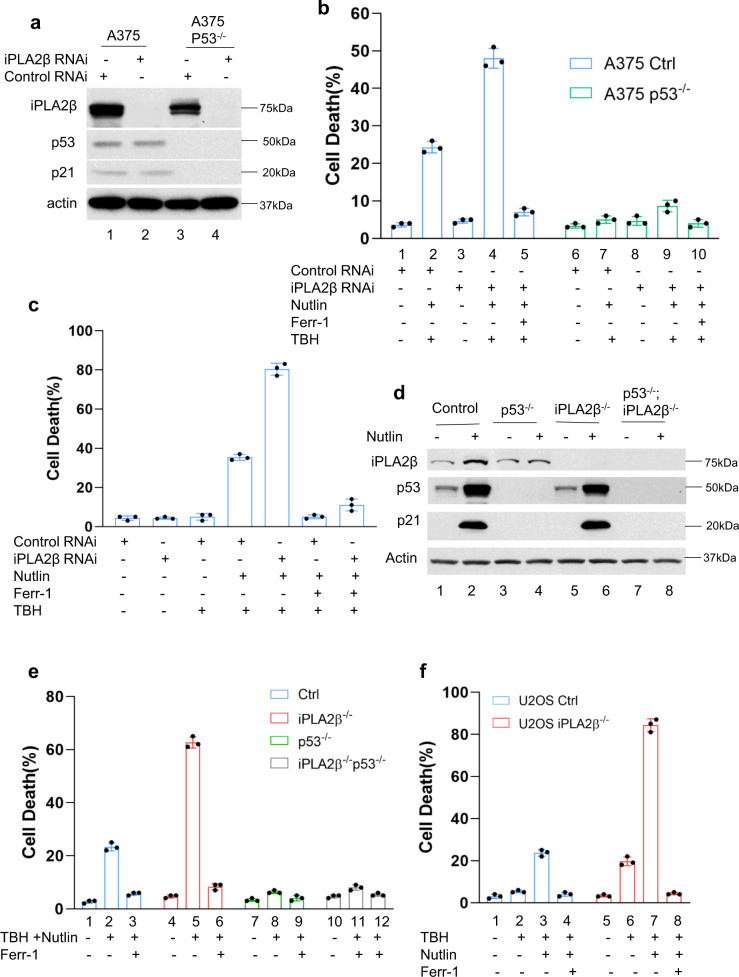
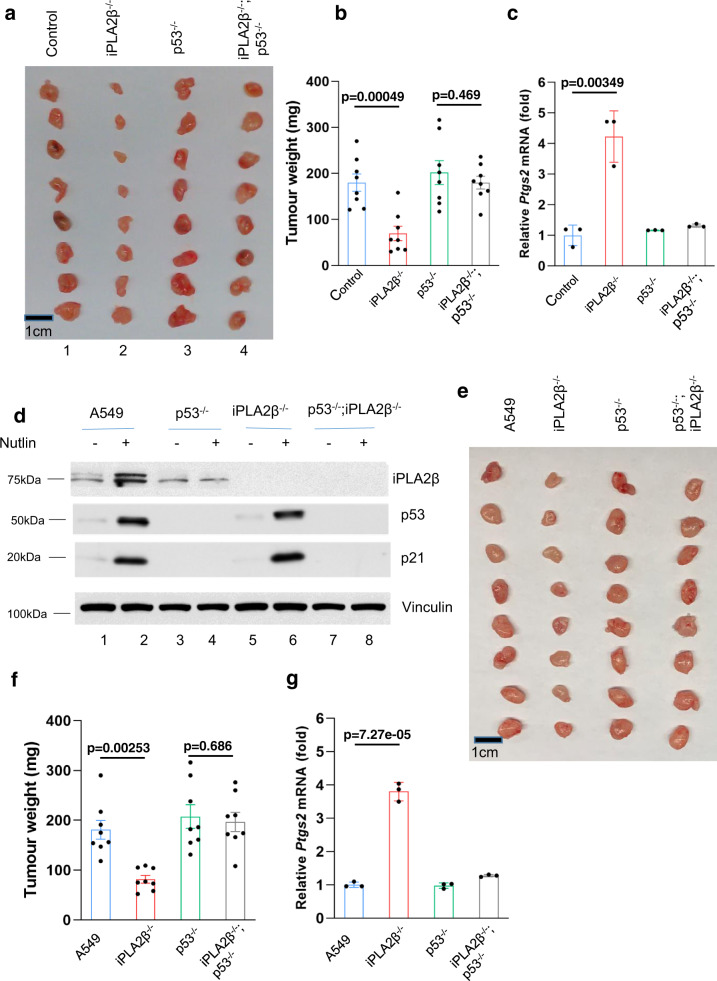
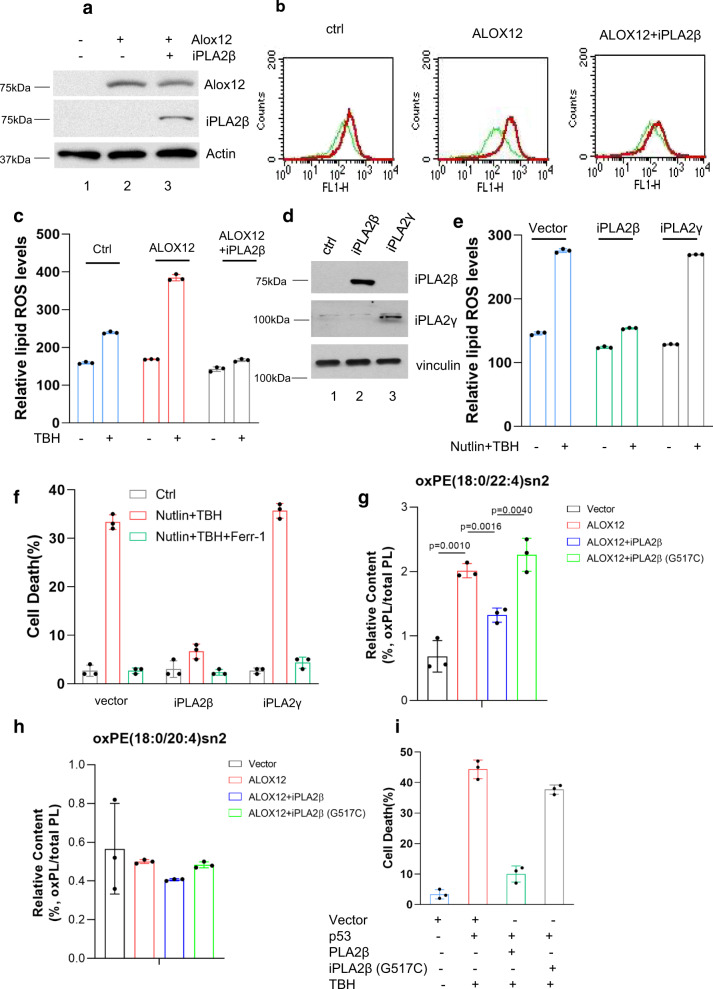
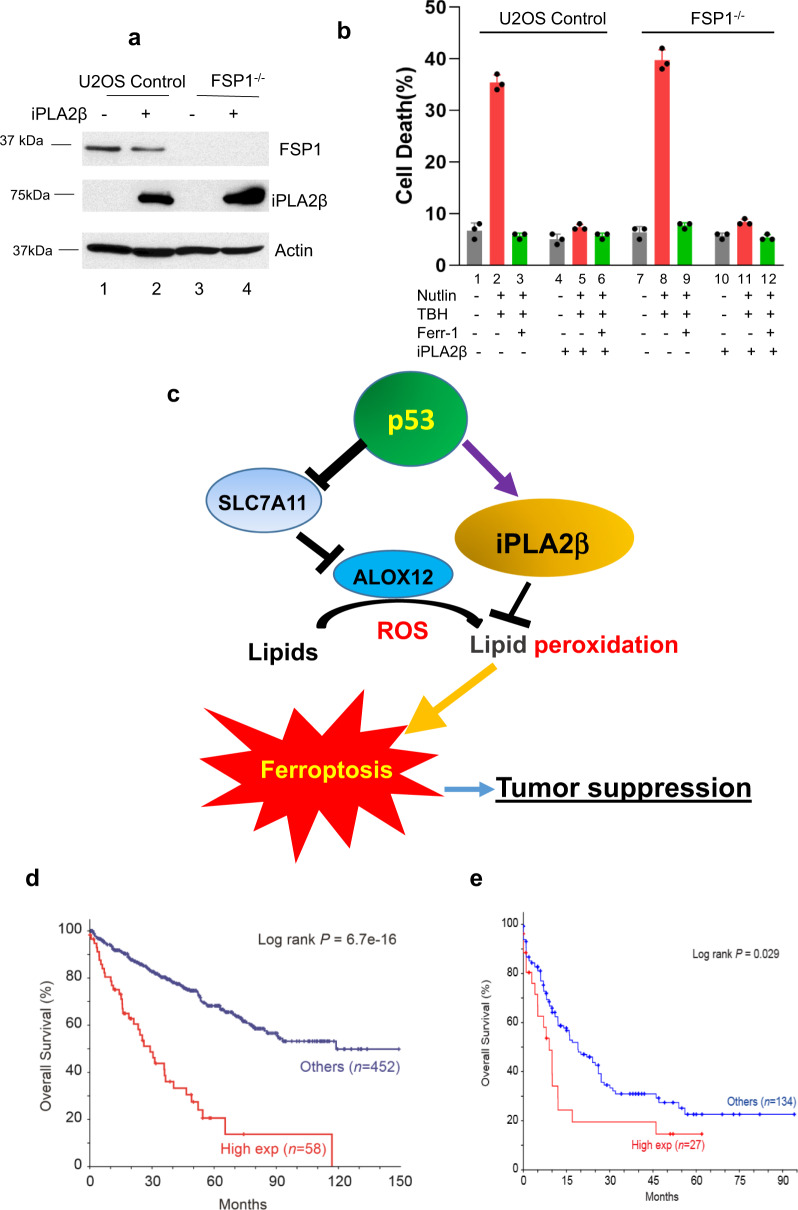
Here, we identify iPLA2β as a critical regulator for p53-driven ferroptosis upon reactive oxygen species (ROS)-induced stress. The calcium-independent phospholipase iPLA2β is known to cleave acyl tails from the glycerol backbone of lipids and release oxidized fatty acids from phospholipids. We found that iPLA2β-mediated detoxification of peroxidized lipids is sufficient to suppress p53-driven ferroptosis upon ROS-induced stress, even in GPX4-null cells. Moreover, iPLA2β is overexpressed in human cancers; inhibition of endogenous iPLA2β sensitizes tumor cells to p53-driven ferroptosis and promotes p53-dependent tumor suppression in xenograft mouse models. These results demonstrate that iPLA2β acts as a major ferroptosis repressor in a GPX4-independent manner. Notably, unlike GPX4, loss of iPLA2β has no obvious effect on normal development or cell viability in normal tissues but iPLA2β plays an essential role in regulating ferroptosis upon ROS-induced stress. Thus, our study suggests that iPLA2β is a promising therapeutic target for activating ferroptosis-mediated tumor suppression without serious toxicity concerns.
Overview
The claims and statistics of this paper haven’t been checked yet.
Run the check — free, no account needed. It reads the open-access text and checks the sources it cites.
Integrity signals
Registry
Cites
Statistics
Figures
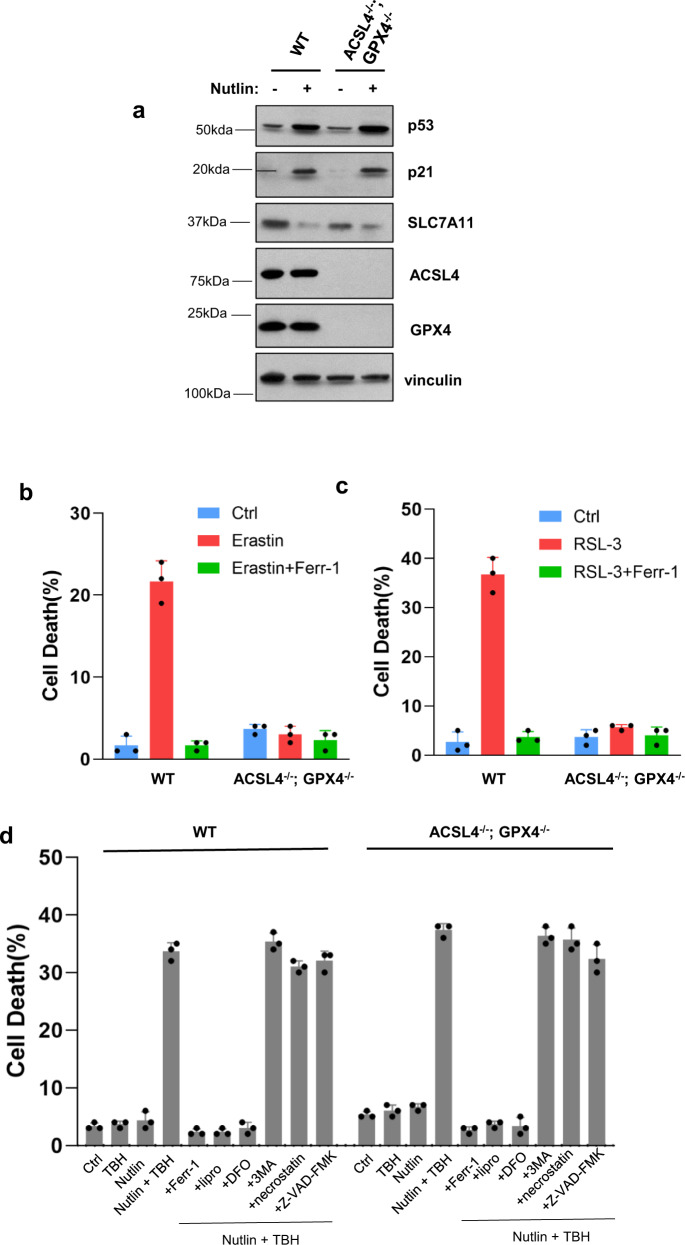
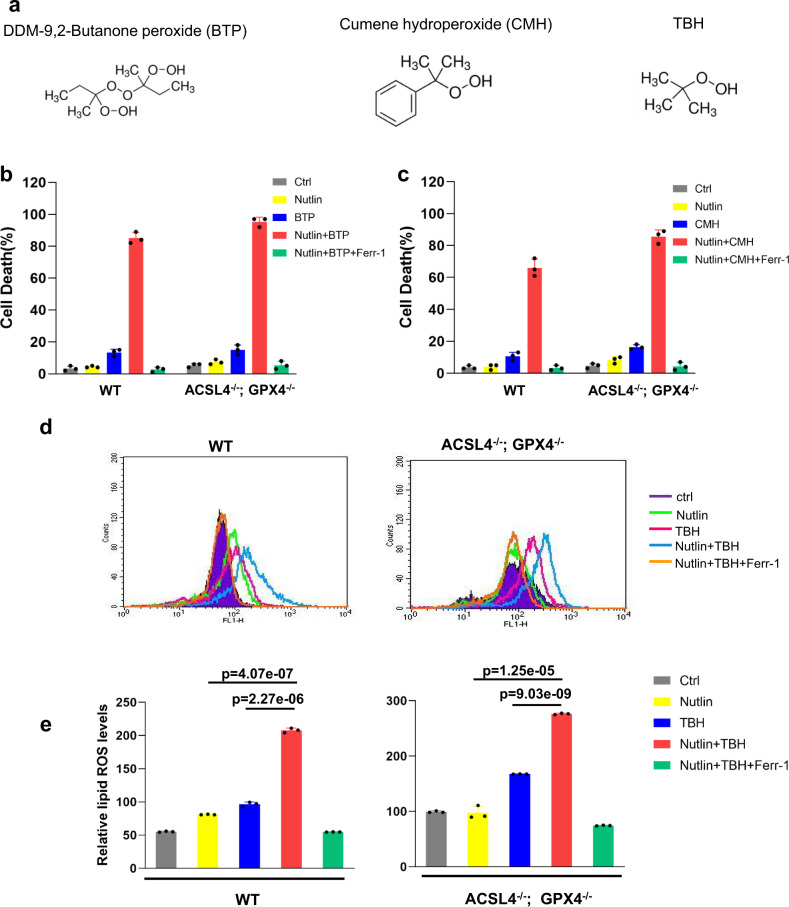
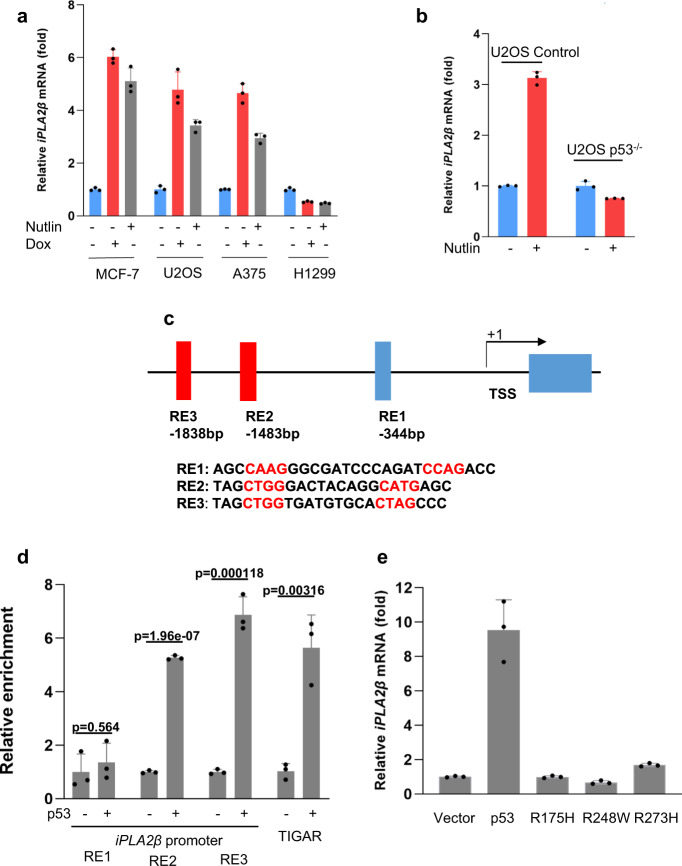
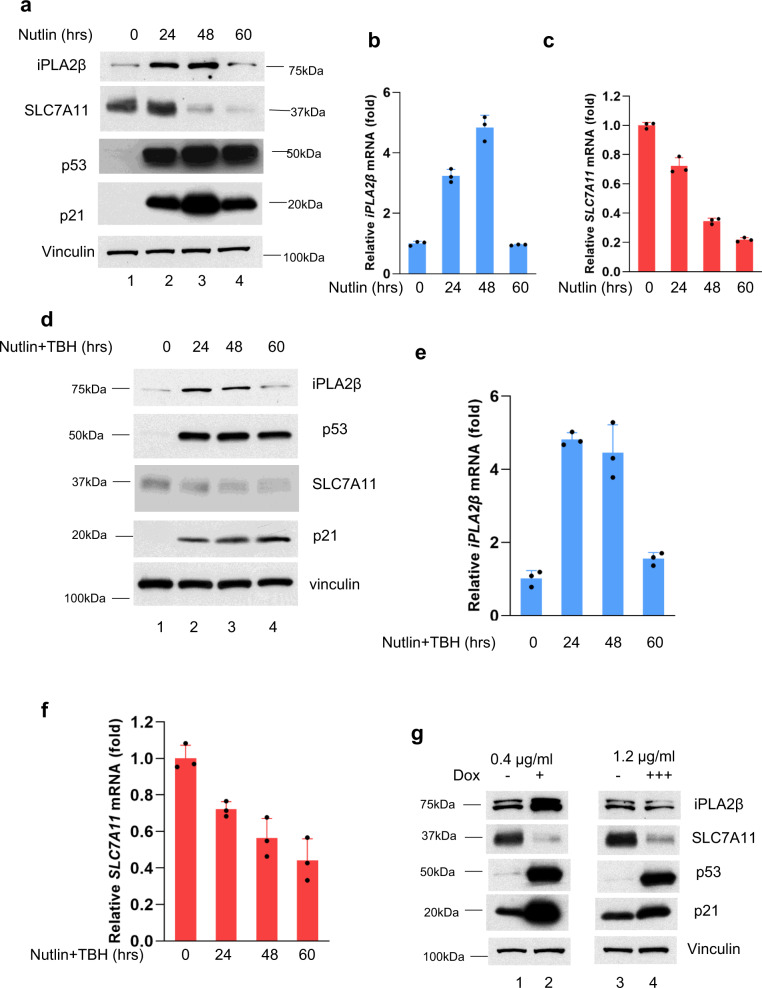
Verification
Claims the paper makes
The claims and statistics of this paper haven’t been checked yet.
Run the check — free, no account needed. It reads the open-access text and checks the sources it cites.
Claims other papers make about this one
Each is checked against this paper’s own text: does it say what the citing paper says it does?
The source backs part of the claim, not all of it — or backs it for a different population, condition or comparison.
In the citing paper
“Each type of PLA2 has a substrate-specific activity, and depending on the substrate, PLA2 can either promote or block ferroptosis (28–31).”
From Secreted Apoe rewires melanoma cell state vulnerability to ferroptosis (2024) · cites this paper as [28]
Experimental — accuracy not yet measuredThe source backs part of the claim, not all of it — or backs it for a different population, condition or comparison.
In the citing paper
“In contrast, inhibition of the calcium-independent iPLA2β, which cleaves acyl tails from the glycerol backbone of lipids, fostered p53-driven ferroptosis and tumor suppression by depleting the pool of oxidized lipids in response to ROS-generating drugs (28).”
From Secreted Apoe rewires melanoma cell state vulnerability to ferroptosis (2024) · cites this paper as [28]
Experimental — accuracy not yet measured
Self-check
Percentages, sums and reported differences re-computed from the paper’s own numbers.
The self-check needs the paper’s full text.
Citations
Cites
Regulation of Ferroptotic Cancer Cell Death by GPX4
Yang, W. S., SriRamaratnam, R., Welsch, M. E., Shimada, K., Skouta, R., Viswanathan, V. S., Cheah, J. H., Clemons, P. A., Shamji, A. F., Clish, C. B., et al. (2014) · Cell · doi:10.1016/j.cell.2013.12.010 · Cited by 7,713
Self-citationACSL4 dictates ferroptosis sensitivity by shaping cellular lipid composition
Doll, S., Proneth, B., Tyurina, Y. Y., Panzilius, E., Kobayashi, S., Ingold, I., Irmler, M., Beckers, J., Aichler, M., Walch, A., et al. (2017) · Nature Chemical Biology · doi:10.1038/nchembio.2239 · Cited by 4,293
Inactivation of the ferroptosis regulator Gpx4 triggers acute renal failure in mice
Friedmann Angeli, J. P., Schneider, M., Proneth, B., Tyurina, Y. Y., Tyurin, V. A., Hammond, V. J., Herbach, N., Aichler, M., Walch, A., Eggenhofer, E., et al. (2014) · Nature Cell Biology · doi:10.1038/ncb3064 · Cited by 3,732
Self-citationFerroptosis: process and function
Xie, Y., Hou, W., Song, X., Yu, Y., Huang, J., Sun, X., Kang, R., & Tang, D. (2016) · Cell Death & Differentiation · doi:10.1038/cdd.2015.158 · Cited by 3,727
The CoQ oxidoreductase FSP1 acts parallel to GPX4 to inhibit ferroptosis
Bersuker, K., Hendricks, J. M., Li, Z., Magtanong, L., Ford, B., Tang, P. H., Roberts, M. A., Tong, B., Maimone, T. J., Zoncu, R., et al. (2019) · Nature · doi:10.1038/s41586-019-1705-2 · Cited by 3,703
Ferroptosis as a p53-mediated activity during tumour suppression
Jiang, L., Kon, N., Li, T., Wang, S.-J., Su, T., Hibshoosh, H., Baer, R., & Gu, W. (2015) · Nature · doi:10.1038/nature14344 · Cited by 3,398
Self-citationFSP1 is a glutathione-independent ferroptosis suppressor
Doll, S., Freitas, F. P., Shah, R., Aldrovandi, M., da Silva, M. C., Ingold, I., Goya Grocin, A., Xavier da Silva, T. N., Panzilius, E., Scheel, C. H., et al. (2019) · Nature · doi:10.1038/s41586-019-1707-0 · Cited by 3,341
Oxidized arachidonic and adrenic PEs navigate cells to ferroptosis
Kagan, V. E., Mao, G., Qu, F., Angeli, J. P. F., Doll, S., Croix, C. S., Dar, H. H., Liu, B., Tyurin, V. A., Ritov, V. B., et al. (2017) · Nature Chemical Biology · doi:10.1038/nchembio.2238 · Cited by 3,029
Self-citationTIGAR, a p53-Inducible Regulator of Glycolysis and Apoptosis
Bensaad, K., Tsuruta, A., Selak, M. A., Vidal, M. N. C., Nakano, K., Bartrons, R., Gottlieb, E., & Vousden, K. H. (2006) · Cell · doi:10.1016/j.cell.2006.05.036 · Cited by 2,019
Dependency of a therapy-resistant state of cancer cells on a lipid peroxidase pathway
Viswanathan, V. S., Ryan, M. J., Dhruv, H. D., Gill, S., Eichhoff, O. M., Seashore-Ludlow, B., Kaffenberger, S. D., Eaton, J. K., Shimada, K., Aguirre, A. J., et al. (2017) · Nature · doi:10.1038/nature23007 · Cited by 2,011
Self-citation
Cited by
Sorted by citations
Items 301–349 of 349
Current understanding of phospholipase A2s based on knockout/transgenic mice and human diseases
Murakami, M., & Taketomi, Y. (2023) · Elsevier eBooks · doi:10.1016/b978-0-443-15313-6.00013-2
Understanding Ferroptosis from a Free Radical Perspective
Fujii, J. (2023) · Springer eBooks · doi:10.1007/978-3-031-39171-2_9
Jiang, S., & Xie, Y. (2023) · Springer eBooks · doi:10.1007/978-3-031-39171-2_7
Wang, S., Xu, W., He, W., Hu, X., Qu, Y.-Y., Liu, Y., Yan, Y., & Jiang, R. (2023) · Chinese Science Bulletin (Chinese Version) · doi:10.1360/tb-2023-0909
Matsumoto, T., Murakami, Y., Yoshida‐Sakai, N., Katsuchi, D., Kanazawa, K., Okamura, T., Imamura, Y., Ono, M., & Kuwano, M. (2024) · International Journal of Molecular Sciences · doi:10.3390/ijms25094583
Bi, Y., Luo, L., Duan, P., Jin, Z., Zhang, X., He, G., Li, X., Feng, W., & Zhang, B. (2025) · Free Radical Research · doi:10.1080/10715762.2025.2465282
Liang, H., Huang, F.-Y., Xie, W.-J., Chen, M., Wu, R.-H., Dai, S.-Z., Xu, W.-T., Zheng, W.-P., & Tan, G. (2025) · Discover Oncology · doi:10.1007/s12672-025-02687-w
The Effective Stress Response Role of p53 in Inducing Ferroptotic Cell Death
Munshi, C., Mondal, S., Pal, I., Jamil, F., Das, U., & Iyer, M. (2025) · IntechOpen eBooks · doi:10.5772/intechopen.1010651
Unveiling the Hidden Power of Ferroptosis: A Promising Strategy for Treating Colorectal Cancer
Li, Y., Cheng, J., Li, M., Miao, J., Yang, J., Zhang, L., Yang, C., & Zhang, H. (2025) · Journal of Biomedical Science and Engineering · doi:10.4236/jbise.2025.188025
Saiz-Gonzalo, G., Singh, R., Hanrahan, N., Cluzel, G. L., Manning, C., Quilter, K., Crowley, T., Šrůtková, D., Hudcovic, T., Schwarzer, M., et al. (2025) · bioRxiv (Cold Spring Harbor Laboratory) · doi:10.1101/2025.08.29.673091
Involvement of ferroptosis in methymercury-induced neurotoxicity in SH-SY5Y neuroblastoma cell
Liu, L., Ma, N., Xu, E., Gao, M., Liu, Z., Cheng, S., Bao, L., & Ma, J. (2025) · Toxicological & Environmental Chemistry Reviews · doi:10.1080/02772248.2025.2556169
Self-citationResearch Progress on Acupuncture in Inhibiting Ferroptosis after Intracerebral Hemorrhage
张, 晓. (2025) · Advances in Clinical Medicine · doi:10.12677/acm.2025.15113100
Qiu, Z., Fan, J., Huang, X., Shang, R.-Y., & Jin, L. (2025) · Journal of Taibah University for Science · doi:10.1080/16583655.2025.2582283
Ferroptosis governs lymphatic vessel growth and regressionPreprint
Drekolia, M.-K., Wang, D., Chen, Y., Du, Y., Wittig, J., Xu, R., Schilling, D., Aliraj, B., Mettner, J., Gupta, L., et al. (2025) · bioRxiv (Cold Spring Harbor Laboratory) · doi:10.1101/2025.11.18.689033
Wang, S., Wang, R., Hu, D., Zhang, C., Cao, P., Huang, J., & Wang, B. (2024) · Figshare · doi:10.6084/m9.figshare.26730049
Wang, S., Wang, R., Hu, D., Zhang, C., Cao, P., Huang, J., & Wang, B. (2024) · Figshare · doi:10.6084/m9.figshare.26730046
Wang, X., Shen, T., Lian, J., Deng, K., Qu, C., Li, E., Gan, L., Ren, Y., Wang, Z., Jiang, Z., et al. (2024) · Figshare · doi:10.6084/m9.figshare.26629204
The protective role of vitamins against neurotoxicity associated with ferroptosis
Jakaria, M., & Cannon, J. (2025) · Advances in neurotoxicology · doi:10.1016/bs.ant.2025.04.004
Liu, Y.-F., He, T.-F., Zhao, Z., Wu, B.-S., Liang, Y., Li, L.-M., Chen, J., & Yu, Y.-P. (2026) · Marine Life Science & Technology · doi:10.1007/s42995-025-00346-1
p53 and fatty acids collaborate to trigger ferroptosis via the FBXO2-FABP5 axis in colorectal cancer
Tong, J., Han, T., Deng, J., Gan, Y., Ruan, R., Zhao, W., Xiong, C., Liao, Q., Chen, S., Bu, H., et al. (2026) · Redox Biology · doi:10.1016/j.redox.2026.104043 · Cited by 1
PLA2R1-mediated ERK-Dependent ferroptosis: A key pathogenic mechanism in epileptic neuronal injury
Chen, H., Wu, G., & Song, Q. (2026) · Experimental Cell Research · doi:10.1016/j.yexcr.2026.114904
Иванович, В. В., Sorokoletova, E. F., & Shabanov, P. D. (2026) · Reviews on Clinical Pharmacology and Drug Therapy · doi:10.17816/rcf691330
Chen, X., Hou, Y., Chen, X.-X., Zhou, Q., & Wang, X. (2026) · Frontiers in Cell and Developmental Biology · doi:10.3389/fcell.2026.1766502
Sun, T., Bi, J., Zhang, J., & ye, L. (2026) · Critical Reviews in Eukaryotic Gene Expression · doi:10.1615/critreveukaryotgeneexpr.2026063605
Advances and challenges of ferroptosis in tumor immunity
Liu, Y., Lin, S., Zhang, Z., Wang, D. Q., & Fu, B. (2026) · Journal of Physiology and Biochemistry · doi:10.1007/s13105-026-01144-8
The Regulation of Ferroptosis by circRNAs in Various Cancers
Wei, L., Yu, J., Wu, S., 李贵芹, Gong, Y., Zeng, J., Lei, X., & Yang, X. (2026) · Current Cancer Drug Targets · doi:10.2174/0115680096453459260313072912
Self-citationMembrane instability as a propagation–repair imbalance in ferroptosis
Lee, J., & Roh, J.-L. (2026) · Free Radical Biology and Medicine · doi:10.1016/j.freeradbiomed.2026.06.018
Tumor cell ferroptosis in antitumor immunity and immunotherapy efficacy
Li, S., & Gajewski, T. (2026) · Journal for ImmunoTherapy of Cancer · doi:10.1136/jitc-2025-014762 · Cited by 2
From Ferroptotic Stress to Stemness: TNT-Mediated EMT Plasticity in Cancer Progression
Sengupta, A., Samanta, P., Basu, J., Biswas, S., Pakhira, S., Mondal, M., Saha, P., & Hajra, S. (2026) · Stem Cell Reviews and Reports · doi:10.1007/s12015-026-11179-5
Hao, D., Liu, L., Chen, Z., Zhang, X., Li, J., Xu, W., Wang, D., & Li, P. (2026) · Food Chemistry · doi:10.1016/j.foodchem.2026.150410
Li, J., Shao, W., Xie, Y. B., Li, S., Gao, J., Xu, J., Tong, R., Li, D. M., & Sun, Q. (2026) · Journal of Neuroinflammation · doi:10.1186/s12974-026-03973-2
Wu, W., Liu, M. M., Lv, Q., Ming, Z., Song, L., & Chu, J. (2026) · Frontiers in Oncology · doi:10.3389/fonc.2026.1888793
Mondal, A., Acharya, R., & Jain, S. (2026) · ACS Pharmacology & Translational Science · doi:10.1021/acsptsci.6c00163
Belbe, A.-A., Pîrlog, L.-M., Sporiș, A., Pitforodeschi, A.-D., Pilatec, A.-N., Băilă, R.-M., Rusu, I., Dobrescu, M. A., Militaru, M.-S., Iordănescu, I. I., et al. (2026) · Cells · doi:10.3390/cells15151421
Li, Z., Gao, J., Fu, J., Zhang, X., Zhou, Y., Li, C., Nam, J., & Gao, H. (2026) · Molecular Biomedicine · doi:10.1186/s43556-026-00546-w
Yang, Q., Xia, Y., Wu, Y., Zeng, L., Yu, G., & Sun, L. (2026) · Frontiers in Pharmacology · doi:10.3389/fphar.2026.1834222
Wang, X., Chen, F., Zhang, Z., Zhang, M., Wang, M., Chen, L., Suo, A., Zhuang, X., Ling, T., Chai, R., et al. (2026) · Molecular Therapy · doi:10.1016/j.ymthe.2026.08.041
Self-citationWu, Y., Tao, Y., Wei, L., Liu, Q., Liu, J., Jiang, W., Shi, W., Cao, P., Fu, X., & Cheng, C. (2026) · Smart Medicine · doi:10.1002/smmd.70054
Phospholipase A 2 : Structural Basis, Heterologous Expression, and Applications in Oil Degumming
Lei, J., Niu, Z., Zhai, Z., 李翠香, Lv, Y., Lei, Y., Wei, S., Zhao, F., Huang, L., & Hu, Y. (2026) · Food Reviews International · doi:10.1080/87559129.2026.2731371
Zhao, H., Gao, X., Xie, R., & Zhao, M. (2026) · Cancer Letters · doi:10.1016/j.canlet.2026.218808
Sikder, M. M., & Labony, S. A. (2026) · Journal of Lipid and Atherosclerosis · doi:10.12997/jla.2026.15.3.411
Phospholipases: Where Do We Stand?
Malcles, L., Wu, Z., Snini, S., Aloulou, A., Noiriel, A., & Abousalham, A. (2026) · Methods in molecular biology · doi:10.1007/978-1-0716-5472-9_2
Zdanowicz, A., Pradhan, B., Pyrzyńska, B., Otto‐Ślusarczyk, D., & Struga, M. (2026) · Pharmacological Reports · doi:10.1007/s43440-026-00910-1
Xia, S., Shen, X., Chen, G., Liu, R., & Yang, X. P. (2026) · Viruses · doi:10.3390/v18101075
Self-citationHu, Y.-W., Du, H.-L., Zhen, W.-J., Gong, X., & Yang, J.-K. (2026) · Tissue and Cell · doi:10.1016/j.tice.2026.104057
Judijanto, L. (2026) · Journal of Biomedical Advance Scientific Research · doi:10.63721/26jbasr0173
Oxidized phospholipids: evolution, signaling, cell death, and human diseases
Ouyang, S., Sun, W., Duan, W., Wu, Y.-P., Lin, X., Gong, H.-B., Sun, J., Luo, X., Niu, J., Li, K., et al. (2026) · 中国科学通报:英文版 · doi:10.1016/j.scib.2026.10.026
Ferroptosis in health and disease
Oyedokun, P. A., Ashonibare, V. J., Akhigbe, T. M., Ashonibare, P. J., Adeogun, A. E., Adegbola, C. A., Omole, A. I., & Akhigbe, R. E. (2026) · Molecular Biomedicine · doi:10.1186/s43556-026-00637-8
Qu, B., Feng, M., Liu, L., Cong, S., Cai, S., Xiaoning, Y., Wang, T., Qiao, Y., Gao, J., Liu, J., et al. (2026) · Journal of Ethnopharmacology · doi:10.1016/j.jep.2026.122571
Metadata
- Authors
- Chen, D., Chu, B., Yang, X., Liu, Z., Jin, Y., Kon, N., Rabadan, R., Jiang, X., Stockwell, B. R., & Gu, W.
- Affiliations
- Herbert Irving Comprehensive Cancer Center (US)
- Columbia University (US)
- Memorial Sloan Kettering Cancer Center (US)
- Corresponding author
- Gu, Wei
- ORCID
- Venue
- Nature Communications
- Published
- 2021-06-15
- Volume
- 12
- Issue
- 1
- Pages
- 3644-3644
- ISSN
- 2041-1723 (ISSN-L)
- PMC
- PMC8206155
- OpenAlex
- W3168103972
- Cited by
- 348
- References
- 43
- Citations by year
- 2026: 51 · 2025: 72 · 2024: 88 · 2023: 86 · 2022: 40 · 2021: 10
- FWCI
- 36.53
- Type
- journal article
- Language
- en
- Open access
- gold
- doi.org
- Locations
- Nature Communications (publishedVersion, cc-by)
- PubMed Central (publishedVersion, cc-by)
- PubMed (publishedVersion)
- RePEc: Research Papers in Economics (submittedVersion)
- DOAJ (DOAJ: Directory of Open Access Journals) (submittedVersion, cc-by-sa)
- Funders
- U.S. Department of Health & Human Services | NIH | National Cancer Institute (5R01CA216884, 5R01CA085533, 5R01CA254970, 5RO1CA224272)
- Topics
- Life Sciences › Biochemistry, Genetics and Molecular Biology › Cancer Research › Ferroptosis and cancer prognosis
- Life Sciences › Biochemistry, Genetics and Molecular Biology › Cancer Research › Cancer, Lipids, and Metabolism
- Health Sciences › Medicine › Hematology › Iron Metabolism and Disorders
- Keywords
- iPLA2β, phospholipase A2, ferroptosis, p53, lipid peroxidation, reactive oxygen species, tumor suppression, cancer therapy targets
- MeSH terms
- A549 Cells, Ferroptosis, Phospholipid Hydroperoxide Glutathione Peroxidase, Animals, Cell Survival, Disease Models, Animal, Fatty Acids, Female, Humans, Mice, Nude, Phospholipids, Tumor Suppressor Protein p53, Reactive Oxygen Species, Xenograft Model Antitumor Assays, Cell Line, Tumor, Mice, Group VI Phospholipases A2
About these checks
Registry, retraction, Cites and statistics results are computed, not judged, with one exception: a printed reference that no index lists is read once by a model before it counts as a citation error. Claims are extracted by a model and kept only when their quote appears verbatim in the text; each cited source is then checked, with a model’s help, for whether it says what the claim relies on. Those verdicts can be wrong — read the claim’s quote and the cited source before relying on one.
Statistics and arithmetic are recomputed, not judged.
Confidence bands are shown only for fields calibrated on our annotated test set. None is calibrated yet, so no band is shown.
What counts as a claim ›How we measure confidence ›How we check this ›
Are you an author, or do you see a problem with this page? Request a review
