

High-resolution characterization of gene function using single-cell CRISPR tiling screen
Open accessPublished version of a preprint
The DOI matches its Crossref record; 52 of the 52 references it cites were found in a registry or an index.
Abstract
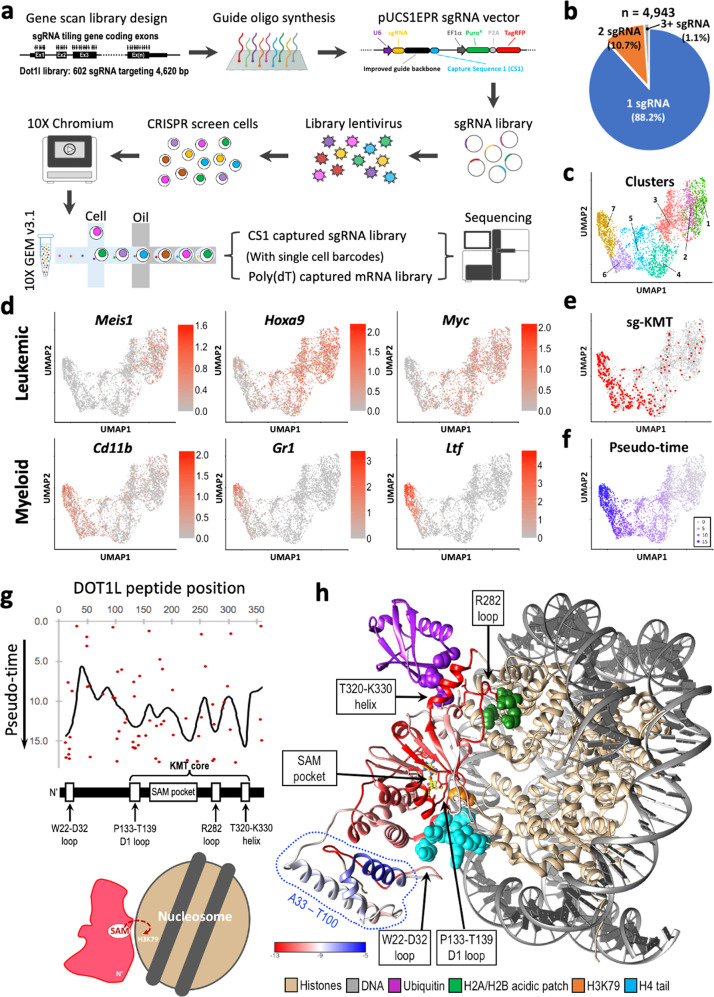
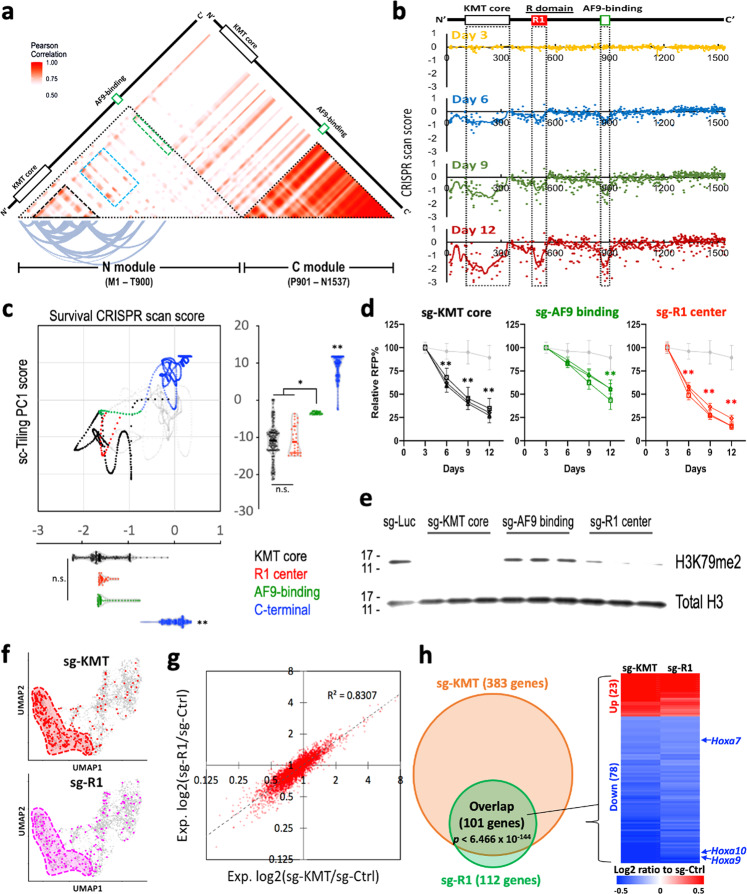
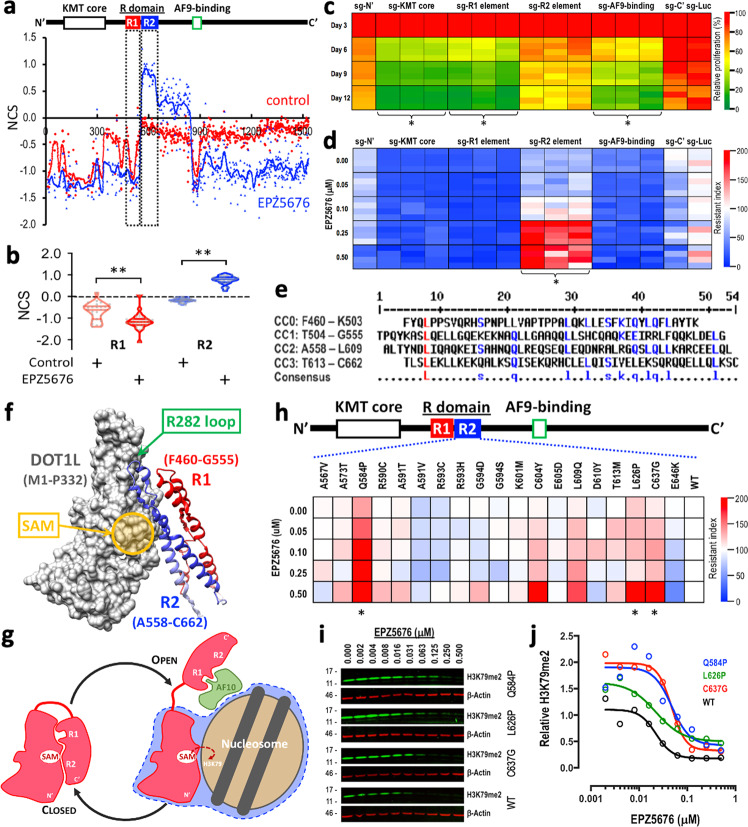
Identification of novel functional domains and characterization of detailed regulatory mechanisms in cancer-driving genes is critical for advanced cancer therapy. To date, CRISPR gene editing has primarily been applied to defining the role of individual genes. Recently, high-density mutagenesis via CRISPR tiling of gene-coding exons has been demonstrated to identify functional regions in genes. Furthermore, breakthroughs in combining CRISPR library screens with single-cell droplet RNA sequencing (sc-RNAseq) platforms have revealed the capacity to monitor gene expression changes upon genetic perturbations at single-cell resolution. Here, we present “sc-Tiling,” which integrates a CRISPR gene-tiling screen with single-cell transcriptomic and protein structural analyses. Distinct from other reported single-cell CRISPR screens focused on observing gene function and gene-to-gene/enhancer-to-gene regulation, sc-Tiling enables the capacity to identify regulatory mechanisms within a gene-coding region that dictate gene activity and therapeutic response.
Overview
The claims and statistics of this paper haven’t been checked yet.
Free: it reads the open-access text and checks the first 5 claims that cite a source we can check. Create a free account to check every claim.
Integrity signals
Registry
Cites
Statistics
Figures
Verification
Claims the paper makes
The claims and statistics of this paper haven’t been checked yet.
Free: it reads the open-access text and checks the first 5 claims that cite a source we can check. Create a free account to check every claim.
Claims other papers make about this one
Each is checked against this paper’s own text: does it say what the citing paper says it does?
In the citing paper
“sc-Tiling [18] is introduced as a technique to combine single-cell transcriptome and protein structure analysis with a CRISPR gene-tiling screen.”
From A mini-review on perturbation modelling across single-cell omic modalities (2024) · cites this paper as [18]
Self-check
Percentages, sums and reported differences re-computed from the paper’s own numbers.
The self-check needs the paper’s full text.
Citations
Cites
NIH Image to ImageJ: 25 years of image analysis
Schneider, C. A., Rasband, W. S., & Eliceiri, K. W. (2012) · Nature Methods · doi:10.1038/nmeth.2089 · Cited by 64,638
UCSF Chimera—A visualization system for exploratory research and analysis
Pettersen, E. F., Goddard, T. D., Huang, C. C., Couch, G. S., Greenblatt, D. M., Meng, E. C., & Ferrin, T. E. (2004) · Journal of Computational Chemistry · doi:10.1002/jcc.20084 · Cited by 45,828
Robinson, M. D., McCarthy, D. J., & Smyth, G. K. (2010) · Bioinformatics · doi:10.1093/bioinformatics/btp616 · Cited by 41,364
Ultrafast and memory-efficient alignment of short DNA sequences to the human genome.
Langmead, B., Trapnell, C., Pop, M., & Salzberg, S. L. (2009) · Genome Biology · doi:10.1186/gb-2009-10-3-r25 · Cited by 21,849
Integrative Analysis of Complex Cancer Genomics and Clinical Profiles Using the cBioPortal
Gao, J., Aksoy, B. A., Dogrusoz, U., Dresdner, G., Gross, B., Sumer, S. O., Sun, Y., Jacobsen, A., Sinha, R., Larsson, E., et al. (2013) · Science Signaling · doi:10.1126/scisignal.2004088 · Cited by 15,160
Integrating single-cell transcriptomic data across different conditions, technologies, and species
Butler, A., Hoffman, P., Smibert, P., Papalexi, E., & Satija, R. (2018) · Nature Biotechnology · doi:10.1038/nbt.4096 · Cited by 13,174
dbSNP: the NCBI database of genetic variation
Sherry, S. T. (2001) · Nucleic Acids Research · doi:10.1093/nar/29.1.308 · Cited by 7,502
Trapnell, C., Cacchiarelli, D., Grimsby, J., Pokharel, P., Li, S., Morse, M., Lennon, N. J., Livak, K. J., Mikkelsen, T. S., & Rinn, J. L. (2014) · Nature Biotechnology · doi:10.1038/nbt.2859 · Cited by 7,314
Self-citationThe I-TASSER Suite: protein structure and function prediction
Yang, J., Yan, R., Roy, A., Xu, D., Poisson, J., & Zhang, Y. (2015) · Nature Methods · doi:10.1038/nmeth.3213 · Cited by 5,596
Multiple sequence alignment with hierarchical clustering
Corpet, F. (1988) · Nucleic Acids Research · doi:10.1093/nar/16.22.10881 · Cited by 5,393
Cited by
Induced pluripotent stem cells (iPSCs): molecular mechanisms of induction and applications
Cerneckis, J., Cai, H., & Shi, Y. (2024) · Signal Transduction and Targeted Therapy · doi:10.1038/s41392-024-01809-0 · Cited by 452
Xue, M., Dong, L., Zhang, H., Li, Y., Qiu, K., Zhao, Z., Gao, M., Han, L., Chan, A., Li, W., et al. (2024) · Journal of Hematology & Oncology · doi:10.1186/s13045-024-01526-9 · Cited by 99
“The CRISPR-Cas9-based tiling KO screen was performed based on the concept that the sgRNAs targeting essential regions exhibits a higher drop efficiency compared to those targeting nonessential regions [27, 53, 54].”
MethodSelf-citationDiverse Roles of Protein Palmitoylation in Cancer Progression, Immunity, Stemness, and Beyond
Li, M., Zhang, L., & Chen, C.-W. D. (2023) · Cells · doi:10.3390/cells12182209 · Cited by 85
Self-citationGold, S. R., & Shilatifard, A. (2024) · Journal of Clinical Investigation · doi:10.1172/jci183391 · Cited by 69
“However, given the catalytic-independent functions we have demonstrated for DOT1L (49) and the pinometo-stat resistance mechanisms identified by single-cell CRISPR tiling of the DOT1L gene (50), targeted DOT1L degradation or DOTCOM disruption strategies might be required.”
BackgroundA mini-review on perturbation modelling across single-cell omic modalities
Gavriilidis, G. I., Vasileiou, V., Orfanou, A., Ishaque, N., & Psomopoulos, F. (2024) · Computational and Structural Biotechnology Journal · doi:10.1016/j.csbj.2024.04.058 · Cited by 54
“…of the KRAB epigenetic repressor and a library of different sgRNAs, ultimately leading to targeted epigenetic changes and altered gene expression. sc-Tiling [18] is introduced as a technique to combine single-cell transcriptome and protein structure analysis with a CRISPR gene-tiling screen.”
MethodMassively Parallel CRISPR‐Based Genetic Perturbation Screening at Single‐Cell Resolution
Cheng, J., Lin, G., Wang, T., Wang, Y., Guo, W., Liao, J., Yang, P., Chen, J., Shao, X., Lu, X., et al. (2022) · Advanced Science · doi:10.1002/advs.202204484 · Cited by 48
Self-citationBase editor screens for in situ mutational scanning at scale
Lue, N. Z., & Liau, B. B. (2023) · Molecular Cell · doi:10.1016/j.molcel.2023.06.009 · Cited by 38
Epigenetic Control of Translation Checkpoint and Tumor Progression via RUVBL1‐EEF1A1 Axis
Li, M., Yang, L., Chan, A., Pokharel, S. P., Liu, Q., Mattson, N., Xu, X., Chang, W., Miyashita, K., Singh, P. A., et al. (2023) · Advanced Science · doi:10.1002/advs.202206584 · Cited by 30
Self-citationMattson, N. M., Chan, A., Miyashita, K., Mukhaleva, E., Chang, W.-H., Yang, L., Ma, N., Wang, Y., Pokharel, S. P., Li, M., et al. (2024) · Nature Structural & Molecular Biology · doi:10.1038/s41594-024-01211-y · Cited by 26
“For example, high-resolution CRISPR gene tiling screens have been used to identify the essential elements within catalytic core domains 22,24,26 .”
InfluentialSelf-citationLi, M., & Chen, C.-W. D. (2022) · Biomedicines · doi:10.3390/biomedicines10061325 · Cited by 25
Self-citationCRISPR screening in hematology research: from bulk to single-cell level
Meyers, S., Demeyer, S., & Cools, J. (2023) · Journal of Hematology & Oncology · doi:10.1186/s13045-023-01495-5 · Cited by 25
“Intragenic sc-Tiling screening revealed a novel regulatory domain of DOTL1 which impacts the methyltransferase activity as well as the response of MLL-AF9 leukemia cells to pharmacological DOTL1 targeting [106].”
BackgroundApplications of single-cell technologies in drug discovery for tumor treatment
Liu, B., Hu, S., & Wang, X. (2024) · iScience · doi:10.1016/j.isci.2024.110486 · Cited by 25
Self-citationThe role of single-cell genomics in human genetics
Sreenivasan, V. K. A., Balachandran, S., & Spielmann, M. (2022) · Journal of Medical Genetics · doi:10.1136/jmedgenet-2022-108588 · Cited by 20
Integrative insights and clinical applications of single-cell sequencing in cancer immunotherapy
Liu, Z., Li, H., Dang, Q., Weng, S., Duo, M., Lv, J., & Han, X. (2022) · Cellular and Molecular Life Sciences · doi:10.1007/s00018-022-04608-4 · Cited by 19
“Combing gene editing and scRNA-seq enhanced the capacity to supervise gene expression variations in response to genetic perturbations [141] and contributed to constructing different mouse disease models [142].”
BackgroundSelf-citationTian, Y., Dong, D., Wang, Z., Wu, L., Park, J. Y., Wei, G., & Wang, L. (2023) · The American Journal of Human Genetics · doi:10.1016/j.ajhg.2023.07.003 · Cited by 21
Epistatic interactions between NMD and TRP53 control progenitor cell maintenance and brain size
Lin, L., Zhao, J., Kubota, N., Li, Z., Lam, Y.-L., Nguyen, L. P., Yang, L., Pokharel, S. P., Blue, S. M., Yee, B. A., et al. (2024) · Neuron · doi:10.1016/j.neuron.2024.04.006 · Cited by 18
Self-citationLagan, E., Gannon, D., Silva, A. J., Bibawi, P., Doherty, A. M., Nimmo, D., McCole, R., Monger, C., Genesi, G. L., Vanderlinden, A., et al. (2025) · Molecular Cell · doi:10.1016/j.molcel.2025.04.026 · Cited by 19
Self-citationACTR5 controls CDKN2A and tumor progression in an INO80-independent manner
Xu, X., Chan, A., Li, M., Liu, Q., Mattson, N., Pokharel, S. P., Chang, W.-H., Yuan, Y., Wang, J., Moore, R. E., et al. (2022) · Science Advances · doi:10.1126/sciadv.adc8911 · Cited by 18
“4A) ( 22 , 23 ).”
Self-citationTP63 fusions drive multicomplex enhancer rewiring, lymphomagenesis, and EZH2 dependence
Wu, G., Yoshida, N., Liu, J., Zhang, X., Xiong, Y., Heavican, T. B., Mandato, E., Liu, H., Nelson, G. M., Yang, L., et al. (2023) · Science Translational Medicine · doi:10.1126/scitranslmed.adi7244 · Cited by 16
Self-citationTherapeutic targeting Tudor domains in leukemia via CRISPR-Scan Assisted Drug Discovery
Chan, A., Han, L., Delaney, C. D., Wang, X., Mukhaleva, E., Li, M., Yang, L., Pokharel, S. P., Mattson, N. M., Garcia, M., et al. (2024) · Science Advances · doi:10.1126/sciadv.adk3127 · Cited by 16
Self-citationHigh-Throughput CRISPR Screening in Hematological Neoplasms
Ancos-Pintado, R., Bragado-García, I., Morales, M. L., García-Vicente, R., Arroyo-Barea, A., Rodríguez-García, A., Martínez-López, J., Linares, M., & Hernández-Sánchez, M. (2022) · Cancers · doi:10.3390/cancers14153612 · Cited by 15
Community-driven ELIXIR activities in single-cell omics
Czarnewski, P., Mahfouz, A. E., Calogero, R., Palagi, P. M., Portell-Silva, L., Gonzalez‐Uriarte, A., Soneson, C., Burdett, T., Szomolay, B., Videm, P., et al. (2022) · F1000Research · doi:10.12688/f1000research.122312.1 · Cited by 14
Nuclear Control of Mitochondrial Homeostasis and Venetoclax Efficacy in AML via COX4I1
Zhang, L., Zhang, H., Wang, T., Li, M., Chan, A., Kang, H., Foong, L. C., Liu, Q., Pokharel, S. P., Mattson, N. M., et al. (2024) · Advanced Science · doi:10.1002/advs.202404620 · Cited by 14
Self-citationDDX6 undergoes phase separation to modulate metabolic plasticity and chemoresistance
Bi, H., Li, W., Ren, L., Zhang, H., Dong, L., Chan, A. W. H., Wang, X., Yang, L., Zhang, X., Xue, M., et al. (2025) · Nature Communications · doi:10.1038/s41467-025-66966-4 · Cited by 10
“Lentiviral CRISPR library construction CRISPR sgRNAs were selected using the Genetic Perturbation Platform (Broad Institute), and the CRISPR library was constructed following our previous publications 74 – 78 .”
Self-citationCRISPR/Cas9 genetic screens in hepatocellular carcinoma gene discovery
Chiu, C. H. (2023) · Current Research in Biotechnology · doi:10.1016/j.crbiot.2023.100127 · Cited by 10
“The WWOX is a tumour suppressor where low expression was found in tumour samples (Zhou, 2018).”
InfluentialSingle-cell CRISPR immune screens reveal immunological roles of tumor intrinsic factors
Hou, J., Liang, S., Xu, C., Wei, Y., Wang, Y., Tan, Y., Sahni, N., McGrail, D. J., Bernatchez, C., Davies, M. A., et al. (2022) · NAR Cancer · doi:10.1093/narcan/zcac038 · Cited by 9
“By incorporating capture sequences in gRNA scaffolds and their complementary primers into single-cell gel beads, both gRNAs and mRNAs from individual cells can be simultaneously captured (14,15).”
BackgroundSelf-citationKumar, A., Lee, S. J., Liu, Q., Chan, A., Pokharel, S. P., Yu, J., Chen, C.-W. D., & Swaminathan, S. (2021) · STAR Protocols · doi:10.1016/j.xpro.2021.100874 · Cited by 8
Self-citationViewing AML through a New Lens: Technological Advances in the Study of Epigenetic Regulation
Godfrey, L., & Rodríguez-Meira, A. (2022) · Cancers · doi:10.3390/cancers14235989 · Cited by 8
“This approach has been used to examine the importance of individual DOT1L domains in MLL-r leukemia [99].”
BackgroundCRISPR screening reveals ZNF217 as a vulnerability in high-risk B-cell acute lymphoblastic leukemia
Qin, X., Zhou, K., Dong, L., Lü, Y., Li, W., Chen, Z., Shen, C., Li, H., Li, Y., Chan, A., et al. (2025) · Theranostics · doi:10.7150/thno.100295 · Cited by 7
“The CRISPR editing efficiency of the single clones was assessed using an ipUSEPR-sgRFP reporter, adhering to an established protocol [94].”
Self-citationThe photoinduced β-carotene synthesis in Blakeslea trispora is dependent on WC-2A
Zheng, Q., Zhu, K., Wang, K., Wang, Y., Yu, X., & Luo, W. (2025) · Frontiers in Microbiology · doi:10.3389/fmicb.2025.1554367 · Cited by 6
Development of DOT1L-Targeted Protein Degraders for Treating MLL-r Leukemia
Quan, S., Unno, K., Gupta, D. G., Yang, W., Guo, Q., Dufficy, M. F., Kerber, M. M., Elmashae, A. A., Pan, H., Zhu, J. L., et al. (2026) · Journal of Medicinal Chemistry · doi:10.1021/acs.jmedchem.5c03128 · Cited by 5
Multiplexed multimodal single-cell technologies: From observation to perturbation analysis
Lee, S.-H., Park, J., & Hwang, B. (2024) · Molecules and Cells · doi:10.1016/j.mocell.2024.100147 · Cited by 5
Systematic genome-wide discovery of host factors governing bacteriophage infectivity
Chitboonthavisuk, C., Martin, C., Huss, P., Peters, J. M., Anantharaman, K., & Raman, S. (2024) · Cell Systems · doi:10.1016/j.cels.2025.101427 · Cited by 5
Decoding crops one cell at a time: from cell atlases to single-cell genetics
Zhang, H., & Schmitz, R. J. (2025) · Journal of Experimental Botany · doi:10.1093/jxb/eraf516 · Cited by 4
ITGB1 Regulates Triple‐Negative Breast Cancer Development by Modulating the Tumor Microenvironment
Song, N., Chen, S., Wang, L., Dang, J., Cao, X., Singh, S., Yang, L., Wang, J., Rosen, S. T., Wang, Y., et al. (2026) · Advanced Science · doi:10.1002/advs.202513672 · Cited by 4
“Guide RNA oligos were synthesized by microarray (CustomArray; for library cloning) and cloned into the ipUSEPR lentiviral sgRNA vector [ 116– 118 ] using the BsmBI (NEB) restriction sites.”
Self-citationRNA Modifications in Cancer Stem Cell Biology
Cerneckis, J., Cui, Q., Liu, W., & Shi, Y. (2023) · Cancer treatment and research · doi:10.1007/978-3-031-45654-1_2 · Cited by 4
Ghamsari, M. R. E., Rosenbluh, J., Menon, A. V., Lovell, N. H., & Alinejad-Rokny, H. (2023) · Cancers · doi:10.3390/cancers15143566 · Cited by 3
“By integrating direct-capture Perturb-seq with CRISPR gene-tiling screen, Sc-Tiling was developed to investigate the functional domain of a gene at a sub-gene resolution [25].”
MethodExpanding the CRISPR/Cas toolkit: applications in proteomics and theranostics
Punde, A., Dey, S., Pandire, R., Bhattacharjee, A., & Patra, C. (2025) · Frontiers in Bioengineering and Biotechnology · doi:10.3389/fbioe.2025.1713700 · Cited by 3
Zemnou, C. T., & Ngakam, R. (2026) · Cell Biochemistry and Biophysics · doi:10.1007/s12013-026-02070-8 · Cited by 2
“Such approaches permit the detection of subtle or cell type–specific effects that may be invisible in bulk assays and are especially valuable for dissecting heterogeneous tissues [205].”
The identification of functional regions of MEK1 using CRISPR tiling screens
Zhang, Z., Abreu, B., Brothwood, J. L., Alexander, J. J., Sims, M., Lyons, J. F., Munck, J. M., & Hindley, C. J. (2025) · Communications Biology · doi:10.1038/s42003-025-07966-4 · Cited by 1
Charting the computational landscape of single-cell genetic perturbation
Zhang, Y., Huang, J., Li, Y., Liu, T., Ren, L., Huang, J. H., Lin, H., Feng, J., & Zhang, Y. (2026) · Journal of Advanced Research · doi:10.1016/j.jare.2026.06.012 · Cited by 1
Single-Cell RNA Sequencing (sc-RNAseq) in the Development of Biomedical Therapeutics
Saw, P. E., & Song, E. (2025) · Springer eBooks · doi:10.1007/978-981-96-3041-7_17 · Cited by 1
AEBP2-Directed H3K27me2 Defines a Specific Vulnerability in EZH2-mutant LymphomaPreprint
Angelov, D., Nolan, J., Holland, G., Nimmo, D., Davies, M., Monger, C., Dillon, E., Mucha, M., Wang, C., Gannon, D., et al. (2025) · bioRxiv (Cold Spring Harbor Laboratory) · doi:10.1101/2025.10.14.682307
Self-citationXue, M., Dong, L., Zhang, H., Li, Y., Qiu, K., Zhao, Z., Gao, M., Han, L., Chan, A., Li, W., et al. (2024) · Figshare · doi:10.6084/m9.figshare.25132035
Self-citationThe functional roles and therapeutic potential of protein palmitoylation in hepatocellular carcinoma
Wei, F., Zhu, Z. Q., Meng, Y., Shen, Y., Zhu, D., & Wu, J. (2026) · Discover Oncology · doi:10.1007/s12672-026-05047-4
“Emerging imaging technologies, including multiplex fluorescence resonance energy transfer–based approaches, further enable real‑time monitoring of palmitoylation processes at subcellular resolution [81].”
FANCM is required for the PAX3::FOXO1-driven oncogenic program in rhabdomyosarcoma
Delaney, C. D., Lu, M., Zimmerman, S. P., Meng, Y., Vaganay, C., Cerda-Smith, C. G., Liu, A., Hoj, J. P., Killarney, S. T., Dillon, K. A., et al. (2026) · Cell Reports · doi:10.1016/j.celrep.2026.117960
Self-citationRole of Chromatin-Associated RNAs in Eye Physiology and Pathology
Savickyte, I., & Lapinaitė, A. (2026) · Methods in molecular biology · doi:10.1007/978-1-0716-5627-3_1
Metadata
- Authors
- Yang, L., Chan, A. K. N., Miyashita, K., Delaney, C. D., Wang, X., Li, H., Pokharel, S. P., Li, S., Li, M., Xu, X., Lu, W., Liu, Q., Mattson, N., Chen, K. Y., Wang, J., Yuan, Y.-C., Horne, D., Rosen, S. T., Soto-Feliciano, Y., Feng, Z., Hoshii, T., Xiao, G., Müschen, M., Chen, J., Armstrong, S. A., & Chen, C.-W.
- Affiliations
- City Of Hope National Medical Center (US)
- Harvard University (US)
- Corresponding author
- Armstrong, Scott A.
- Chen, Chun-Wei
- ORCID
- Venue
- Nature Communications
- Published
- 2021-07-01
- Volume
- 12
- Issue
- 1
- Pages
- 4063-4063
- ISSN
- 2041-1723 (ISSN-L)
- PMC
- PMC8249386
- OpenAlex
- W3118373840
- Semantic Scholar
- 0be5c94bb279b287a35488d9b3005ee4a8b798f6
- Cited by
- 45
- References
- 52
- Citations by year
- 2026: 5 · 2025: 9 · 2024: 12 · 2023: 9 · 2022: 9 · 2021: 1
- FWCI
- 2.43
- Type
- journal article
- Language
- en
- Open access
- gold
- doi.org
- Licence
- cc-by
- creativecommons.org/licenses/by/4.0 (tdm)
- creativecommons.org/licenses/by/4.0 (vor)
- Locations
- Nature Communications (publishedVersion, cc-by)
- Research Square (acceptedVersion, cc-by)
- PubMed Central (publishedVersion, cc-by)
- PubMed (publishedVersion)
- RePEc: Research Papers in Economics (submittedVersion)
- DOAJ (DOAJ: Directory of Open Access Journals) (submittedVersion, cc-by-sa)
- Funders
- U.S. Department of Health & Human Services | NIH | National Cancer Institute (CA197498, CA233691, CA236626)
- American Society of Hematology (ASH Scholar)
- Alex’s Lemonade Stand Foundation for Childhood Cancer (ALSF Innovation)
- Topics
- Life Sciences › Biochemistry, Genetics and Molecular Biology › Molecular Biology › CRISPR and Genetic Engineering
- Life Sciences › Biochemistry, Genetics and Molecular Biology › Molecular Biology › Chromatin Remodeling and Cancer
- Life Sciences › Biochemistry, Genetics and Molecular Biology › Molecular Biology › Single-cell and spatial transcriptomics
- Keywords
- single-cell transcriptomics, gene function, functional domains, gene expression regulation, protein structure, treatment response
- MeSH terms
- Gene Editing, Drug Screening Assays, Antitumor, Genetic Testing, Histones, Humans, Models, Molecular, Neoplasms, Phenotype, Histone-Lysine N-Methyltransferase, Genome, Human, Gene Expression Regulation, Neoplastic, Mutagenesis, Transcriptome, Clustered Regularly Interspaced Short Palindromic Repeats, CRISPR-Cas Systems
About these checks
Registry, retraction, Cites and statistics results are computed, not judged, with one exception: a printed reference that no index lists is read once by a model before it counts as a citation error. Claims are extracted by a model and kept only when their quote appears verbatim in the text; each cited source is then checked, with a model’s help, for whether it says what the claim relies on. Those verdicts can be wrong — read the claim’s quote and the cited source before relying on one.
Statistics and arithmetic are recomputed, not judged.
Confidence bands are shown only for fields calibrated on our annotated test set. None is calibrated yet, so no band is shown.
What counts as a claim ›How we measure confidence ›How we check this ›
Are you an author, or do you see a problem with this page? Request a review
Data sources
Bibliographic data: Semantic Scholar, OpenAlex, Crossref.
Contains information from the Semantic Scholar Academic Graph Datasets, made available under the ODC Attribution License (ODC-BY 1.0).
Semantic Scholar’s data is described in: Kinney, R., et al. (2023). The Semantic Scholar Open Data Platform. arXiv:2301.10140.
