

High-resolution characterization of gene function using single-cell CRISPR tiling screen
Open accessPublished version of a preprint
The DOI matches its Crossref record; 52 of the 52 references it cites were found in a registry or an index.
Abstract
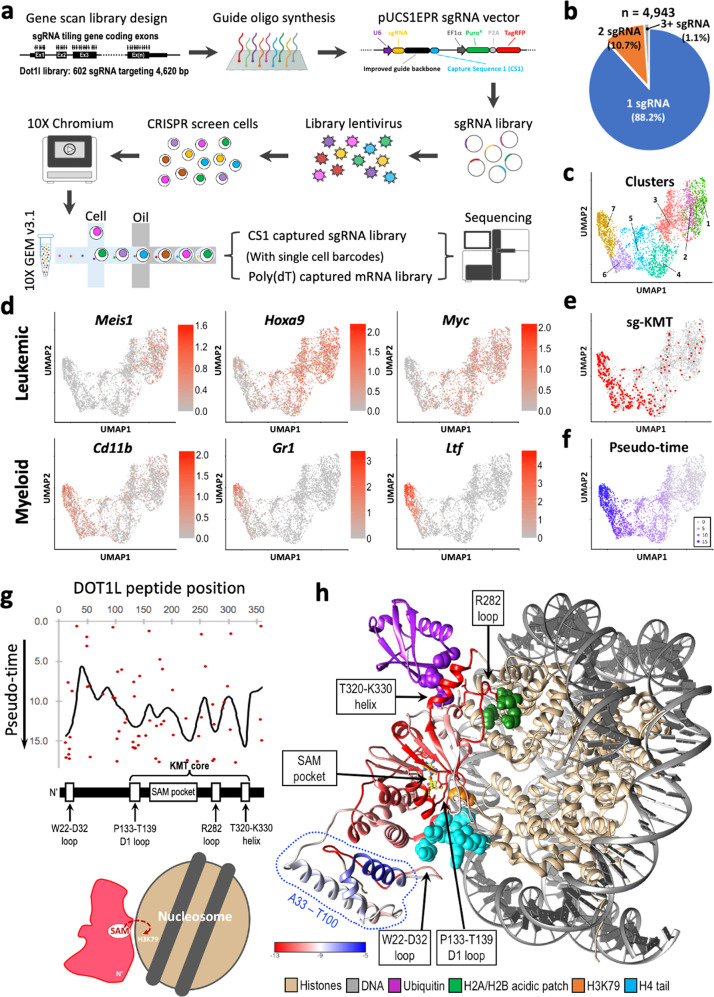
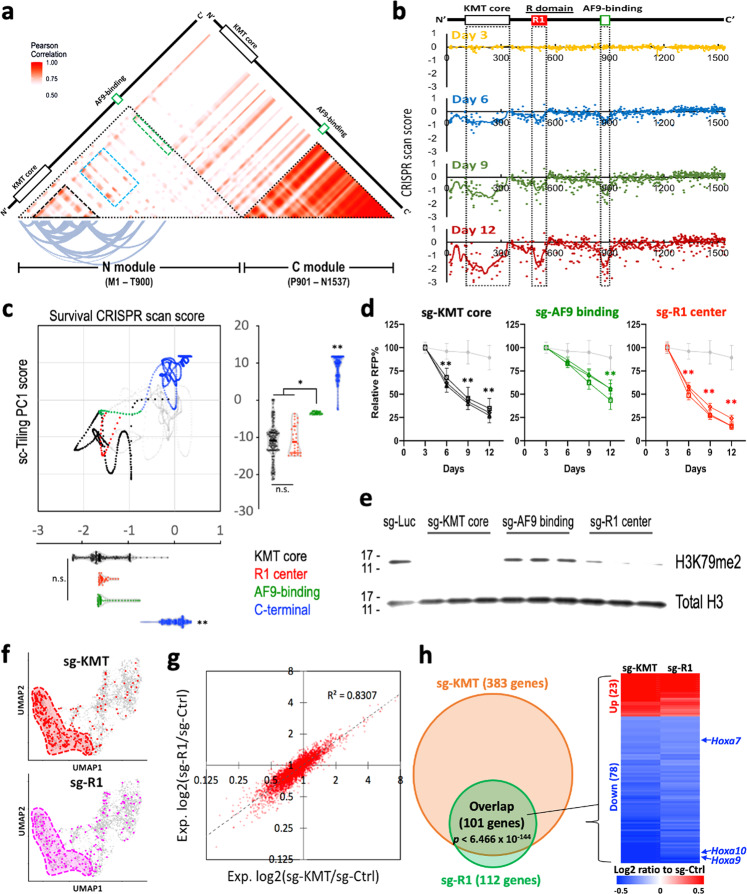
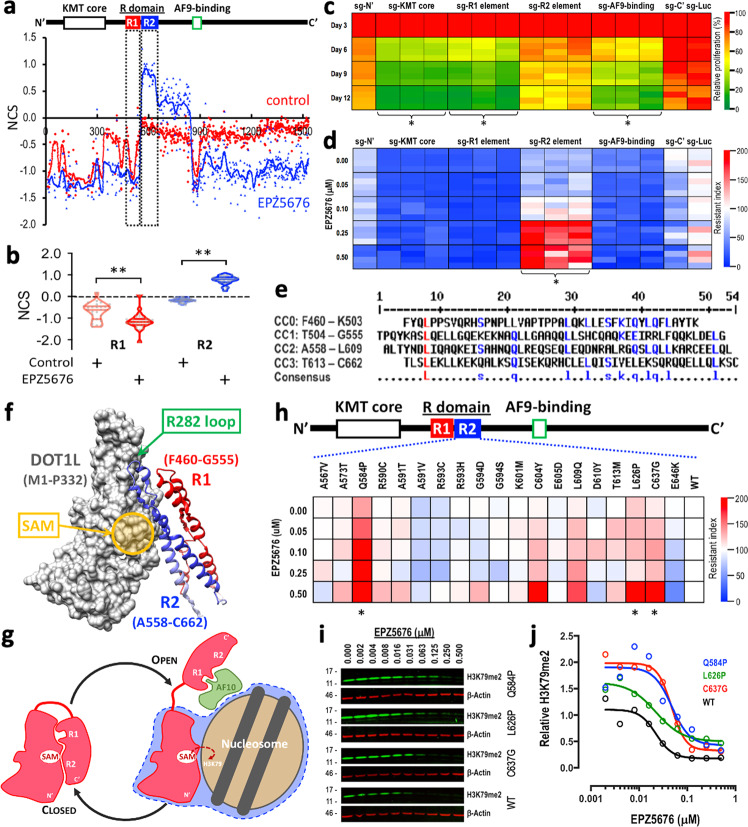
Identification of novel functional domains and characterization of detailed regulatory mechanisms in cancer-driving genes is critical for advanced cancer therapy. To date, CRISPR gene editing has primarily been applied to defining the role of individual genes. Recently, high-density mutagenesis via CRISPR tiling of gene-coding exons has been demonstrated to identify functional regions in genes. Furthermore, breakthroughs in combining CRISPR library screens with single-cell droplet RNA sequencing (sc-RNAseq) platforms have revealed the capacity to monitor gene expression changes upon genetic perturbations at single-cell resolution. Here, we present “sc-Tiling,” which integrates a CRISPR gene-tiling screen with single-cell transcriptomic and protein structural analyses. Distinct from other reported single-cell CRISPR screens focused on observing gene function and gene-to-gene/enhancer-to-gene regulation, sc-Tiling enables the capacity to identify regulatory mechanisms within a gene-coding region that dictate gene activity and therapeutic response.
Overview
The claims and statistics of this paper haven’t been checked yet.
Free: it reads the open-access text and checks the first 5 claims that cite a source we can check. Create a free account to check every claim.
Integrity signals
Registry
Cites
Statistics
Figures
Verification
Claims the paper makes
The claims and statistics of this paper haven’t been checked yet.
Free: it reads the open-access text and checks the first 5 claims that cite a source we can check. Create a free account to check every claim.
Claims other papers make about this one
Each is checked against this paper’s own text: does it say what the citing paper says it does?
In the citing paper
“sc-Tiling [18] is introduced as a technique to combine single-cell transcriptome and protein structure analysis with a CRISPR gene-tiling screen.”
From A mini-review on perturbation modelling across single-cell omic modalities (2024) · cites this paper as [18]
Self-check
Percentages, sums and reported differences re-computed from the paper’s own numbers.
The self-check needs the paper’s full text.
Citations
Cites
NIH Image to ImageJ: 25 years of image analysis
Schneider, C. A., Rasband, W. S., & Eliceiri, K. W. (2012) · Nature Methods · doi:10.1038/nmeth.2089 · Cited by 64,638
UCSF Chimera—A visualization system for exploratory research and analysis
Pettersen, E. F., Goddard, T. D., Huang, C. C., Couch, G. S., Greenblatt, D. M., Meng, E. C., & Ferrin, T. E. (2004) · Journal of Computational Chemistry · doi:10.1002/jcc.20084 · Cited by 45,828
Robinson, M. D., McCarthy, D. J., & Smyth, G. K. (2010) · Bioinformatics · doi:10.1093/bioinformatics/btp616 · Cited by 41,364
Ultrafast and memory-efficient alignment of short DNA sequences to the human genome.
Langmead, B., Trapnell, C., Pop, M., & Salzberg, S. L. (2009) · Genome Biology · doi:10.1186/gb-2009-10-3-r25 · Cited by 21,849
Integrative Analysis of Complex Cancer Genomics and Clinical Profiles Using the cBioPortal
Gao, J., Aksoy, B. A., Dogrusoz, U., Dresdner, G., Gross, B., Sumer, S. O., Sun, Y., Jacobsen, A., Sinha, R., Larsson, E., et al. (2013) · Science Signaling · doi:10.1126/scisignal.2004088 · Cited by 15,160
Integrating single-cell transcriptomic data across different conditions, technologies, and species
Butler, A., Hoffman, P., Smibert, P., Papalexi, E., & Satija, R. (2018) · Nature Biotechnology · doi:10.1038/nbt.4096 · Cited by 13,174
dbSNP: the NCBI database of genetic variation
Sherry, S. T. (2001) · Nucleic Acids Research · doi:10.1093/nar/29.1.308 · Cited by 7,502
Trapnell, C., Cacchiarelli, D., Grimsby, J., Pokharel, P., Li, S., Morse, M., Lennon, N. J., Livak, K. J., Mikkelsen, T. S., & Rinn, J. L. (2014) · Nature Biotechnology · doi:10.1038/nbt.2859 · Cited by 7,314
Self-citationThe I-TASSER Suite: protein structure and function prediction
Yang, J., Yan, R., Roy, A., Xu, D., Poisson, J., & Zhang, Y. (2015) · Nature Methods · doi:10.1038/nmeth.3213 · Cited by 5,596
Multiple sequence alignment with hierarchical clustering
Corpet, F. (1988) · Nucleic Acids Research · doi:10.1093/nar/16.22.10881 · Cited by 5,393
Improved vectors and genome-wide libraries for CRISPR screening
Sanjana, N. E., Shalem, O., & Zhang, F. (2014) · Nature Methods · doi:10.1038/nmeth.3047 · Cited by 5,239
Optimized sgRNA design to maximize activity and minimize off-target effects of CRISPR-Cas9
Doench, J. G., Fusi, N., Sullender, M., Hegde, M., Vaimberg, E. W., Donovan, K. F., Smith, I., Tothova, Z., Wilen, C., Orchard, R., et al. (2016) · Nature Biotechnology · doi:10.1038/nbt.3437 · Cited by 4,637
Next-generation characterization of the Cancer Cell Line Encyclopedia
Ghandi, M., Huang, F. W., Jané-Valbuena, J., Kryukov, G. V., Lo, C. C., McDonald, E. R., Barretina, J., Gelfand, E. T., Bielski, C. M., Li, H., et al. (2019) · Nature · doi:10.1038/s41586-019-1186-3 · Cited by 3,394
Self-citationDefining a Cancer Dependency Map
Tsherniak, A., Vazquez, F., Montgomery, P. G., Weir, B. A., Kryukov, G., Cowley, G. S., Gill, S., Harrington, W. F., Pantel, S., Krill-Burger, J. M., et al. (2017) · Cell · doi:10.1016/j.cell.2017.06.010 · Cited by 3,276
Transformation from committed progenitor to leukaemia stem cell initiated by MLL–AF9
Krivtsov, A. V., Twomey, D., Feng, Z., Stubbs, M. C., Wang, Y., Faber, J., Levine, J. E., Wang, J., Hahn, W. C., Gilliland, D. G., et al. (2006) · Nature · doi:10.1038/nature04980 · Cited by 1,513
Self-citationScalable web services for the PSIPRED Protein Analysis Workbench
Buchan, D. W. A., Minneci, F., Nugent, T. C. O., Bryson, K., & Jones, D. T. (2013) · Nucleic Acids Research · doi:10.1093/nar/gkt381 · Cited by 1,318
Burley, S. K., Berman, H. M., Bhikadiya, C., Bi, C., Chen, L., Di Costanzo, L., Christie, C., Dalenberg, K., Duarte, J. M., Dutta, S., et al. (2019) · Nucleic Acids Research · doi:10.1093/nar/gky1004 · Cited by 1,243
Self-citationHigh-throughput functional genomics using CRISPR-Cas9
Shalem, O., Sanjana, N. E., & Zhang, F. (2015) · Nature Reviews Genetics · doi:10.1038/nrg3899 · Cited by 1,233
Adamson, B., Norman, T. M., Jost, M., Cho, M. Y., Nuñez, J. K., Chen, Y., Villalta, J. E., Gilbert, L. A., Horlbeck, M. A., Hein, M. Y., et al. (2016) · Cell · doi:10.1016/j.cell.2016.11.048 · Cited by 1,193
Pooled CRISPR screening with single-cell transcriptome readout.
Datlinger, P., Rendeiro, A. F., Schmidl, C., Krausgruber, T., Traxler, P., Klughammer, J., Schuster, L. C., Kuchler, A., Alpar, D., & Bock, C. (2017) · Nature Methods · doi:10.1038/nmeth.4177 · Cited by 1,096
BCL11A enhancer dissection by Cas9-mediated in situ saturating mutagenesis
Canver, M. C., Smith, E. C., Sher, F., Pinello, L., Sanjana, N. E., Shalem, O., Chen, D. D., Schupp, P. G., Vinjamur, D. S., Garcia, S. P., et al. (2015) · Nature · doi:10.1038/nature15521 · Cited by 886
MLL-Rearranged Leukemia Is Dependent on Aberrant H3K79 Methylation by DOT1L
Bernt, K. M., Zhu, N., Sinha, A. U., Vempati, S., Faber, J., Krivtsov, A. V., Feng, Z., Punt, N., Daigle, A., Bullinger, L., et al. (2011) · Cancer Cell · doi:10.1016/j.ccr.2011.06.010 · Cited by 870
Self-citationDissecting Immune Circuits by Linking CRISPR-Pooled Screens with Single-Cell RNA-Seq
Jaitin, D. A., Weiner, A., Yofe, I., Lara-Astiaso, D., Keren-Shaul, H., David, E., Salame, T. M., Tanay, A., van Oudenaarden, A., & Amit, I. (2016) · Cell · doi:10.1016/j.cell.2016.11.039 · Cited by 777
Discovery of cancer drug targets by CRISPR-Cas9 screening of protein domains
Shi, J., Wang, E., Milazzo, J. P., Wang, Z., Kinney, J. B., & Vakoc, C. R. (2015) · Nature Biotechnology · doi:10.1038/nbt.3235 · Cited by 761
Potent inhibition of DOT1L as treatment of MLL-fusion leukemia
Daigle, S. R., Olhava, E. J., Therkelsen, C. A., Basavapathruni, A., Jin, L., Boriack-Sjodin, P. A., Allain, C. J., Klaus, C. R., Raimondi, A., Scott, M. P., et al. (2013) · Blood · doi:10.1182/blood-2013-04-497644 · Cited by 722
Accelerating Protein Docking in ZDOCK Using an Advanced 3D Convolution Library
Pierce, B. G., Hourai, Y., & Weng, Z. (2011) · PLoS ONE · doi:10.1371/journal.pone.0024657 · Cited by 644
A Genome-wide Framework for Mapping Gene Regulation via Cellular Genetic Screens
Gasperini, M., Hill, A. J., McFaline-Figueroa, J. L., Martin, B., Kim, S., Zhang, M. D., Jackson, D., Leith, A., Schreiber, J., Noble, W. S., et al. (2019) · Cell · doi:10.1016/j.cell.2018.11.029 · Cited by 613
CRISPR Interference-Based Platform for Multimodal Genetic Screens in Human iPSC-Derived Neurons
Tian, R., Gachechiladze, M. A., Ludwig, C. H., Laurie, M. T., Hong, J. Y., Nathaniel, D., Prabhu, A. V., Fernandopulle, M. S., Patel, R., Abshari, M., et al. (2019) · Neuron · doi:10.1016/j.neuron.2019.07.014 · Cited by 543
Simossis, V. A., & Heringa, J. (2005) · Nucleic Acids Research · doi:10.1093/nar/gki390 · Cited by 497
Combinatorial single-cell CRISPR screens by direct guide RNA capture and targeted sequencing
Replogle, J. M., Norman, T. M., Xu, A., Hussmann, J. A., Chen, J., Cogan, J. Z., Meer, E. J., Terry, J. M., Riordan, D. P., Srinivas, N., et al. (2020) · Nature Biotechnology · doi:10.1038/s41587-020-0470-y · Cited by 465
Self-citationStein, E. M., Garcia-Manero, G., Rizzieri, D. A., Tibes, R., Berdeja, J. G., Savona, M. R., Jongen-Lavrenic, M., Altman, J. K., Thomson, B., Blakemore, S. J., et al. (2018) · Blood · doi:10.1182/blood-2017-12-818948 · Cited by 461
Self-citationMin, J., Feng, Q., Li, Z., Zhang, Y., & Xu, R.-M. (2003) · Cell · doi:10.1016/s0092-8674(03)00114-4 · Cited by 428
Exploring genetic interaction manifolds constructed from rich single-cell phenotypes
Norman, T. M., Horlbeck, M. A., Replogle, J. M., Ge, A. Y., Xu, A., Jost, M., Gilbert, L. A., & Weissman, J. S. (2019) · Science · doi:10.1126/science.aax4438 · Cited by 392
Giladi, A., Paul, F., Herzog, Y., Lubling, Y., Weiner, A., Yofe, I., Jaitin, D., Cabezas-Wallscheid, N., Dress, R., Ginhoux, F., et al. (2018) · Nature Cell Biology · doi:10.1038/s41556-018-0121-4 · Cited by 366
Munoz, D. M., Cassiani, P. J., Li, L., Billy, E., Korn, J. M., Jones, M. D., Golji, J., Ruddy, D. A., Yu, K., McAllister, G., et al. (2016) · Cancer Discovery · doi:10.1158/2159-8290.cd-16-0178 · Cited by 359
Transcription control by the ENL YEATS domain in acute leukaemia
Erb, M. A., Scott, T. G., Li, B. E., Xie, H., Paulk, J., Seo, H.-S., Souza, A., Roberts, J. M., Dastjerdi, S., Buckley, D. L., et al. (2017) · Nature · doi:10.1038/nature21688 · Cited by 318
Catalytic site remodelling of the DOT1L methyltransferase by selective inhibitors
Yu, W., Chory, E. J., Wernimont, A. K., Tempel, W., Scopton, A., Federation, A., Marineau, J. J., Qi, J., Barsyte-Lovejoy, D., Yi, J., et al. (2012) · Nature Communications · doi:10.1038/ncomms2304 · Cited by 281
Mechanism of Cross-talk between H2B Ubiquitination and H3 Methylation by Dot1L
Worden, E. J., Hoffmann, N. A., Hicks, C. W., & Wolberger, C. (2019) · Cell · doi:10.1016/j.cell.2019.02.002 · Cited by 236
Chen, C.-W., Koche, R. P., Sinha, A. U., Deshpande, A. J., Zhu, N., Eng, R., Doench, J. G., Xu, H., Chu, S. H., Qi, J., et al. (2015) · Nature Medicine · doi:10.1038/nm.3832 · Cited by 228
Self-citationAF10 Regulates Progressive H3K79 Methylation and HOX Gene Expression in Diverse AML Subtypes
Deshpande, A. J., Deshpande, A., Sinha, A. U., Chen, L., Chang, J., Cihan, A., Fazio, M., Chen, C.-W., Zhu, N., Koche, R., et al. (2014) · Cancer Cell · doi:10.1016/j.ccell.2014.10.009 · Cited by 174
Self-citationMcFaline-Figueroa, J. L., Hill, A. J., Qiu, X., Jackson, D., Shendure, J., & Trapnell, C. (2019) · Nature Genetics · doi:10.1038/s41588-019-0489-5 · Cited by 174
Structural Basis of Dot1L Stimulation by Histone H2B Lysine 120 Ubiquitination
Valencia-Sánchez, M. I., De Ioannes, P., Wang, M., Vasilyev, N., Chen, R., Nudler, E., Armache, J.-P., & Armache, K.-J. (2019) · Molecular Cell · doi:10.1016/j.molcel.2019.03.029 · Cited by 153
Targeting DOT1L and HOX gene expression in MLL-rearranged leukemia and beyond
Chen, C.-W., & Armstrong, S. A. (2015) · Experimental Hematology · doi:10.1016/j.exphem.2015.05.012 · Cited by 125
Self-citationKuntimaddi, A., Achille, N. J., Thorpe, J., Lokken, A. A., Singh, R., Hemenway, C. S., Adli, M., Zeleznik-Le, N. J., & Bushweller, J. H. (2015) · Cell Reports · doi:10.1016/j.celrep.2015.04.004 · Cited by 121
Klein, S., McCormick, F. P., & Levitzki, A. (2005) · Nature reviews. Cancer · doi:10.1038/nrc1651 · Cited by 99
Chan, A., & Chen, C.-W. D. (2019) · Frontiers in Cell and Developmental Biology · doi:10.3389/fcell.2019.00081 · Cited by 95
Self-citationDe novo identification of essential protein domains from CRISPR-Cas9 tiling-sgRNA knockout screens
He, W., Zhang, L., Villarreal, O. D., Fu, R., Bedford, E., Dou, J., Patel, A. Y., Bedford, M. T., Shi, X., Chen, T., et al. (2019) · Nature Communications · doi:10.1038/s41467-019-12489-8 · Cited by 69
Characterization of the DOT1L Network: Implications of Diverse Roles for DOT1L
Park, G., Gong, Z., Chen, J., & Kim, J. (2010) · The Protein Journal · doi:10.1007/s10930-010-9242-8 · Cited by 56
Self-citationSchoonenberg, V. A. C., Cole, M. A., Yao, Q., Macias-Treviño, C., Sher, F., Schupp, P. G., Canver, M. C., Maeda, T., Pinello, L., & Bauer, D. E. (2018) · Genome Biology · doi:10.1186/s13059-018-1563-5 · Cited by 48
Rapid generation of drug-resistance alleles at endogenous loci using CRISPR-Cas9 indel mutagenesis
Ipsaro, J. J., Shen, C., Arai, E., Xu, Y., Kinney, J. B., Joshua‐Tor, L., Vakoc, C. R., & Shi, J. (2017) · PLoS ONE · doi:10.1371/journal.pone.0172177 · Cited by 32
Zhang, H., Zhou, B. O., Su, Q., Xu, J., Harding, R., Tempel, W., Nayak, V., Li, Y., Loppnau, P., Dou, Y., et al. (2018) · Genes & Development · doi:10.1101/gad.311639.118 · Cited by 26
Chen, C.-W. D. (2022) · Research Square · doi:10.21203/rs.3.pex-1544/v1 · Cited by 1
Self-citation
Cited by
Induced pluripotent stem cells (iPSCs): molecular mechanisms of induction and applications
Cerneckis, J., Cai, H., & Shi, Y. (2024) · Signal Transduction and Targeted Therapy · doi:10.1038/s41392-024-01809-0 · Cited by 452
Xue, M., Dong, L., Zhang, H., Li, Y., Qiu, K., Zhao, Z., Gao, M., Han, L., Chan, A., Li, W., et al. (2024) · Journal of Hematology & Oncology · doi:10.1186/s13045-024-01526-9 · Cited by 99
“The CRISPR-Cas9-based tiling KO screen was performed based on the concept that the sgRNAs targeting essential regions exhibits a higher drop efficiency compared to those targeting nonessential regions [27, 53, 54].”
MethodSelf-citationDiverse Roles of Protein Palmitoylation in Cancer Progression, Immunity, Stemness, and Beyond
Li, M., Zhang, L., & Chen, C.-W. D. (2023) · Cells · doi:10.3390/cells12182209 · Cited by 85
Self-citationGold, S. R., & Shilatifard, A. (2024) · Journal of Clinical Investigation · doi:10.1172/jci183391 · Cited by 69
“However, given the catalytic-independent functions we have demonstrated for DOT1L (49) and the pinometo-stat resistance mechanisms identified by single-cell CRISPR tiling of the DOT1L gene (50), targeted DOT1L degradation or DOTCOM disruption strategies might be required.”
BackgroundA mini-review on perturbation modelling across single-cell omic modalities
Gavriilidis, G. I., Vasileiou, V., Orfanou, A., Ishaque, N., & Psomopoulos, F. (2024) · Computational and Structural Biotechnology Journal · doi:10.1016/j.csbj.2024.04.058 · Cited by 54
“…of the KRAB epigenetic repressor and a library of different sgRNAs, ultimately leading to targeted epigenetic changes and altered gene expression. sc-Tiling [18] is introduced as a technique to combine single-cell transcriptome and protein structure analysis with a CRISPR gene-tiling screen.”
Method
Metadata
- Authors
- Yang, L., Chan, A. K. N., Miyashita, K., Delaney, C. D., Wang, X., Li, H., Pokharel, S. P., Li, S., Li, M., Xu, X., Lu, W., Liu, Q., Mattson, N., Chen, K. Y., Wang, J., Yuan, Y.-C., Horne, D., Rosen, S. T., Soto-Feliciano, Y., Feng, Z., Hoshii, T., Xiao, G., Müschen, M., Chen, J., Armstrong, S. A., & Chen, C.-W.
- Affiliations
- City Of Hope National Medical Center (US)
- Harvard University (US)
- Corresponding author
- Armstrong, Scott A.
- Chen, Chun-Wei
- ORCID
- Venue
- Nature Communications
- Published
- 2021-07-01
- Volume
- 12
- Issue
- 1
- Pages
- 4063-4063
- ISSN
- 2041-1723 (ISSN-L)
- PMC
- PMC8249386
- OpenAlex
- W3118373840
- Cited by
- 45
- References
- 52
- Citations by year
- 2026: 5 · 2025: 9 · 2024: 12 · 2023: 9 · 2022: 9 · 2021: 1
- FWCI
- 2.43
- Type
- journal article
- Language
- en
- Open access
- gold
- doi.org
- Licence
- cc-by
- creativecommons.org/licenses/by/4.0 (tdm)
- creativecommons.org/licenses/by/4.0 (vor)
- Locations
- Nature Communications (publishedVersion, cc-by)
- Research Square (acceptedVersion, cc-by)
- PubMed Central (publishedVersion, cc-by)
- PubMed (publishedVersion)
- RePEc: Research Papers in Economics (submittedVersion)
- DOAJ (DOAJ: Directory of Open Access Journals) (submittedVersion, cc-by-sa)
- Funders
- U.S. Department of Health & Human Services | NIH | National Cancer Institute (CA197498, CA233691, CA236626)
- American Society of Hematology (ASH Scholar)
- Alex’s Lemonade Stand Foundation for Childhood Cancer (ALSF Innovation)
- Topics
- Life Sciences › Biochemistry, Genetics and Molecular Biology › Molecular Biology › CRISPR and Genetic Engineering
- Life Sciences › Biochemistry, Genetics and Molecular Biology › Molecular Biology › Chromatin Remodeling and Cancer
- Life Sciences › Biochemistry, Genetics and Molecular Biology › Molecular Biology › Single-cell and spatial transcriptomics
- Keywords
- single-cell transcriptomics, gene function, functional domains, gene expression regulation, protein structure, treatment response
- MeSH terms
- Gene Editing, Drug Screening Assays, Antitumor, Genetic Testing, Histones, Humans, Models, Molecular, Neoplasms, Phenotype, Histone-Lysine N-Methyltransferase, Genome, Human, Gene Expression Regulation, Neoplastic, Mutagenesis, Transcriptome, Clustered Regularly Interspaced Short Palindromic Repeats, CRISPR-Cas Systems
About these checks
Registry, retraction, Cites and statistics results are computed, not judged, with one exception: a printed reference that no index lists is read once by a model before it counts as a citation error. Claims are extracted by a model and kept only when their quote appears verbatim in the text; each cited source is then checked, with a model’s help, for whether it says what the claim relies on. Those verdicts can be wrong — read the claim’s quote and the cited source before relying on one.
Statistics and arithmetic are recomputed, not judged.
Confidence bands are shown only for fields calibrated on our annotated test set. None is calibrated yet, so no band is shown.
What counts as a claim ›How we measure confidence ›How we check this ›
Are you an author, or do you see a problem with this page? Request a review
Data sources
Bibliographic data: Semantic Scholar, OpenAlex, Crossref.
Contains information from the Semantic Scholar Academic Graph Datasets, made available under the ODC Attribution License (ODC-BY 1.0).
Semantic Scholar’s data is described in: Kinney, R., et al. (2023). The Semantic Scholar Open Data Platform. arXiv:2301.10140.
