

Microbial short-chain fatty acids modulate CD8+ T cell responses and improve adoptive immunotherapy for cancer
Open accessThe DOI matches its Crossref record; 47 of the 47 references it cites were found in a registry or an index; 19 of the 66 sources its claims cite were checked for support.
Abstract
Emerging data demonstrate that the activity of immune cells can be modulated by microbial molecules. Here, we show that the short-chain fatty acids (SCFAs) pentanoate and butyrate enhance the anti-tumor activity of cytotoxic T lymphocytes (CTLs) and chimeric antigen receptor (CAR) T cells through metabolic and epigenetic reprograming. We show that in vitro treatment of CTLs and CAR T cells with pentanoate and butyrate increases the function of mTOR as a central cellular metabolic sensor, and inhibits class I histone deacetylase activity. This reprogramming results in elevated production of effector molecules such as CD25, IFN-γ and TNF-α, and significantly enhances the anti-tumor activity of antigen-specific CTLs and ROR1-targeting CAR T cells in syngeneic murine melanoma and pancreatic cancer models. Our data shed light onto microbial molecules that may be used for enhancing cellular anti-tumor immunity. Collectively, we identify pentanoate and butyrate as two SCFAs with therapeutic utility in the context of cellular cancer immunotherapy.
Overview
CoChat Summary
TL;DR
The paper shows that the microbial short-chain fatty acids pentanoate and butyrate enhance the anti-tumor activity of cytotoxic T lymphocytes and chimeric antigen receptor T cells through metabolic and epigenetic reprogramming. It identifies these SCFAs as potential tools for improving adoptive cancer immunotherapy.
Key findings
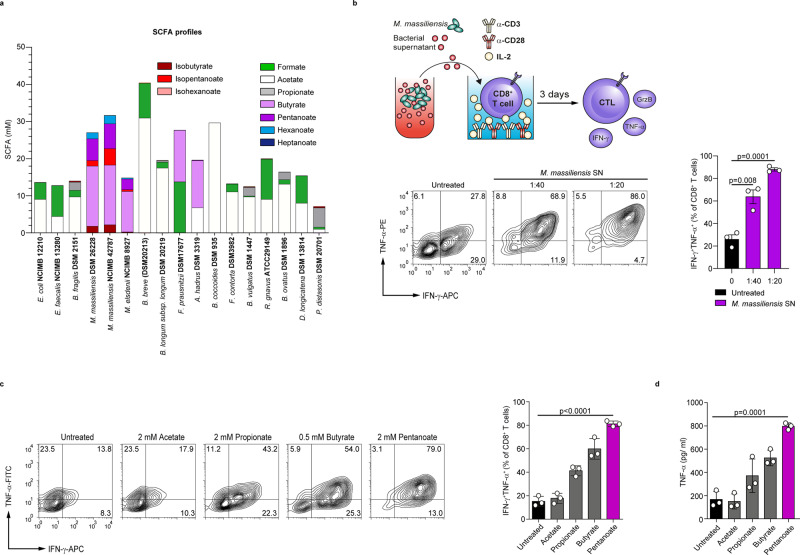
- Among 16 human commensals tested, the two *Megasphaera massiliensis* strains DSM 26228 and NCIMB 42787 were the only strong producers of both pentanoate and butyrate; *M. elsdenii* also produced pentanoate but at lower levels, while *F. prausnitzii* and *A. hadrus* produced high butyrate.
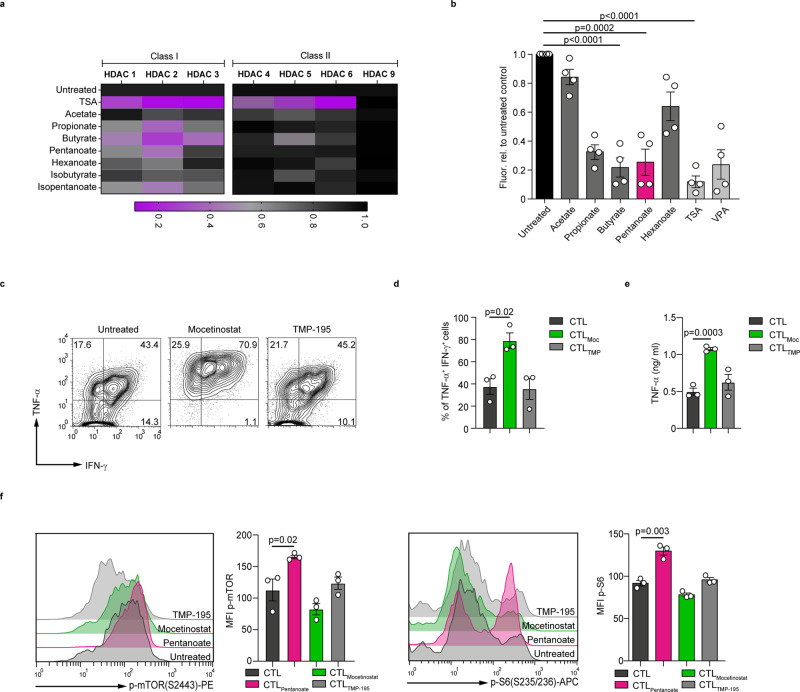
- Pentanoate and butyrate increased IFN-γ+TNF-α+ CTLs and TNF-α secretion, inhibited class I HDAC enzymes but not class II HDACs, increased mTOR and S6 phosphorylation and ECAR, and acted independently of GPR41/GPR43.
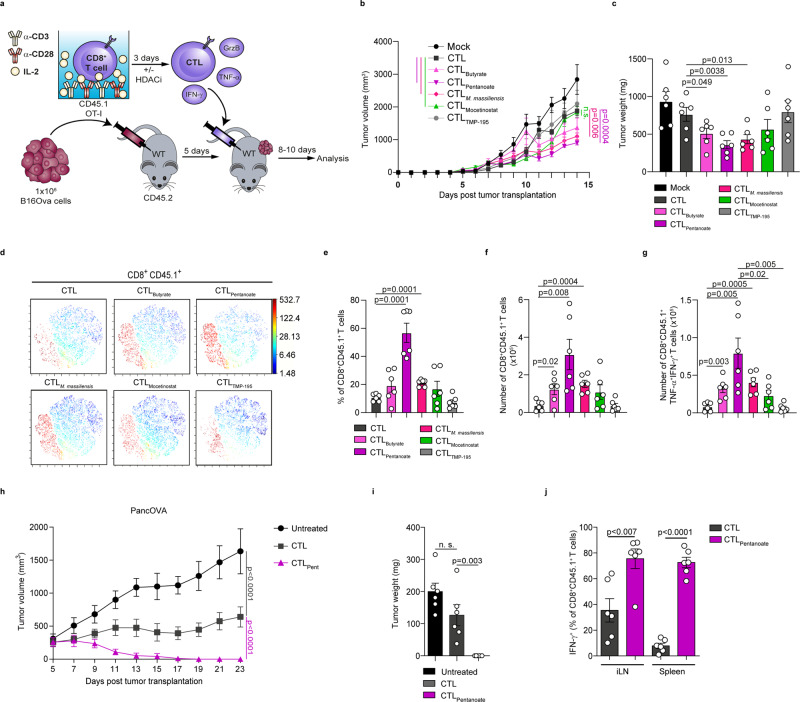
- Ex vivo pretreatment with pentanoate or butyrate improved anti-tumor immunity in B16OVA melanoma, with decreased tumor volume and weight and higher transferred CD8+ T cells producing IFN-γ and TNF-α in draining lymph nodes; pentanoate-treated OT-I CTLs abrogated PancOVA tumor growth and persisted after remission.
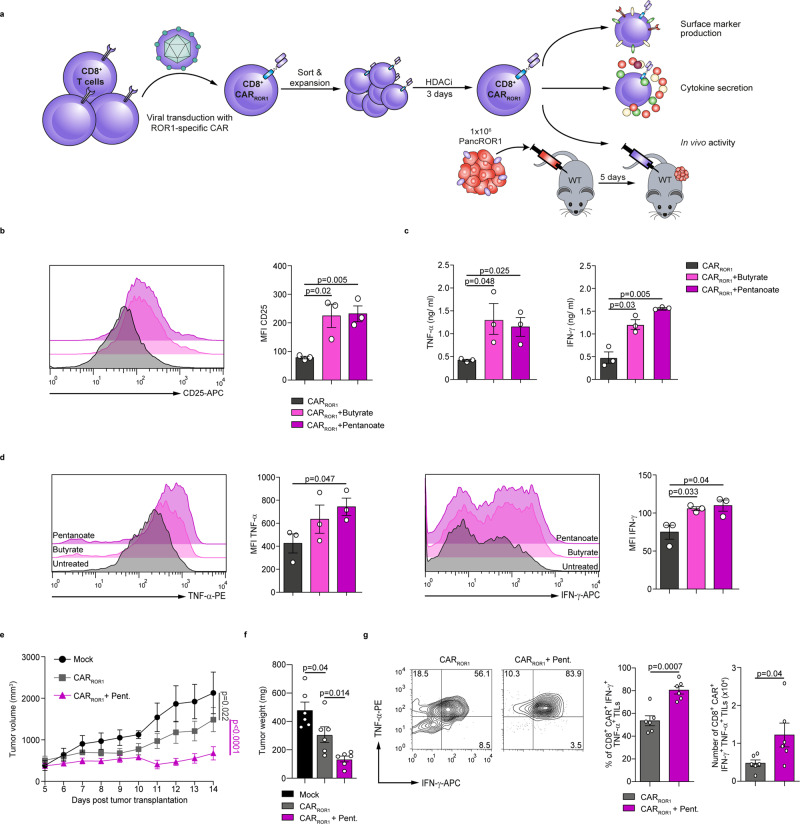
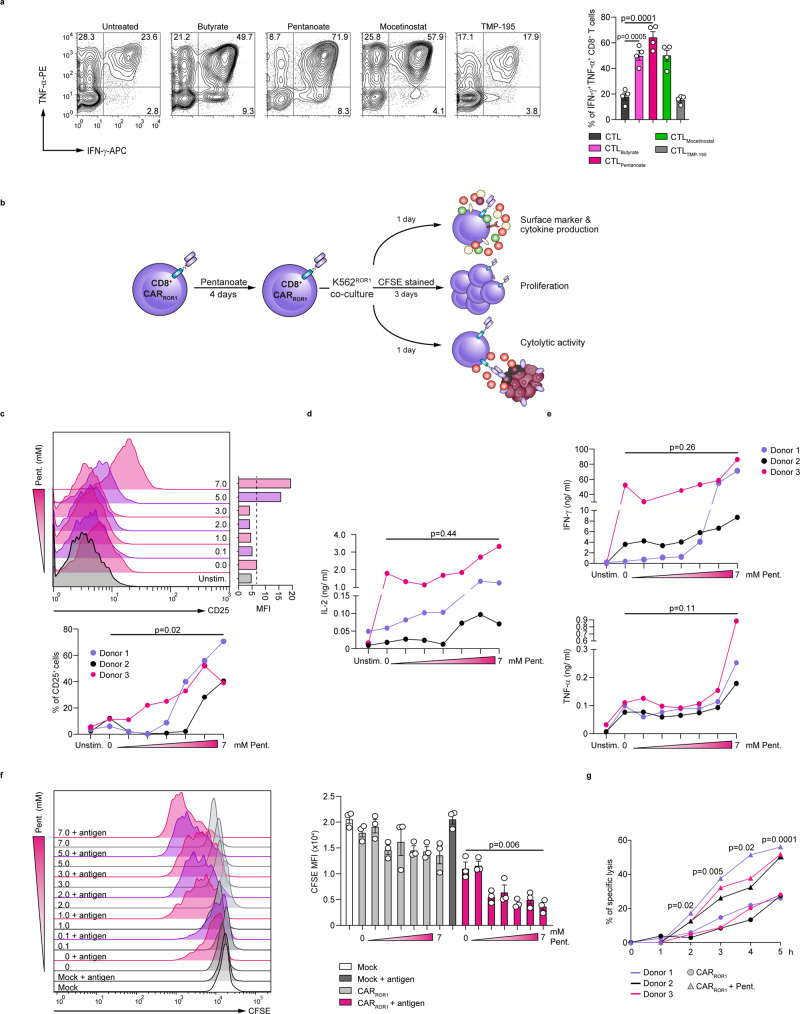
- Pentanoate and butyrate enhanced murine ROR1-CAR T cells (CD25, TNF-α, IFN-γ; reduced tumor volume and weight) and human ROR1-CAR T cells (CD25, IL-2, IFN-γ, TNF-α, proliferation, cytolysis); however, in vivo pentanoate administration did not enhance anti-tumor immunity or anti-PD-1 therapy.
Methods
- Murine and human CD8+ T cells, CTLs, and CAR T cells were cultured with SCFAs (e.g., 0.75 mM butyrate and 2.5 mM pentanoate for murine CAR T cells; 1 mM butyrate and 4 mM pentanoate for human CD8+ T cells) or HDAC inhibitors; bacterial supernatants from 16 commensals were analyzed by GC-MS, and HDAC activity, ECAR, ELISA, and flow cytometry were used.
- In vivo, B16OVA, PancOVA, or Panc02/ROR1 tumors were injected s.c. into CD45.2+ mice, followed by adoptive transfer of CD45.1+ OT-I CTLs or ROR1-CAR T cells on day 5; tumor volume/weight and T cell responses were analyzed, with persistence studied in Rag1-deficient mice co-transferred with Tregs and Foxp3−CD4+ T cells.
- Statistical analysis used two-tailed unpaired Student’s t-test and, for multiple groups, a linear-mixed effects model with Tukey correction; p < 0.05 was considered significant.
Limitations
- The paper states that involvement of other microbial metabolites in supernatant effects cannot be excluded, that clinical implementation of SCFA administration requires further investigation of optimal route, dosing, and schedule to balance effector versus regulatory immune subsets, and that the complex crosstalk between SCFA-mediated epigenetic changes and metabolic effects should be investigated further.
- Evident from the text: most mechanistic and efficacy data are from murine models and in vitro human CAR T cells, with no human clinical trial data; systemic in vivo pentanoate did not enhance anti-tumor immunity or anti-PD-1 therapy, so the therapeutic benefit shown is mainly from ex vivo pretreatment.
- Evident from the text: several experiments used small samples, such as n = 3 mice or three human donors, which limits generalizability.
Model-written summary. Check it against the paper before relying on it.
Integrity signals
Registry
Cites
Statistics
Figures
Verification
Claims the paper makes
13 Valid · 0 Not valid · 28 Not checked · 81 Own results and interpretations
The cited sources support only part of this claim — read each source’s verdict below.
In the paper
“The intestinal microbiota has been shown to directly impact on the efficacy of specific cancer immune therapies1–3.”
§ Microbial short-chain fatty acids modulate CD8+ T cell responses and improve adoptive immunotherapy for cancer > Introduction
What the sources say
- Supportedcites [1] Sivan A Commensal Bifidobacterium promotes antitumor immunity and facilitates anti-PD-L1 efficacy Science 2015 350 1084 1089 10.1126/science.aac4255 26541606 PMC4873287 source
The Results passage on combining fecal transfer with checkpoint blockade (p. null, 'To test whether manipulation of the microbial community could be effective as a therapy...') states outright that 'commensal microbial composition can influence spontaneous antitumor immunity, as well as a response to immunotherapy with αPD-L1 mAb,' and that αPD-L1 therapy alone was significantly more efficacious in JAX than TAC mice. The Abstract and Discussion likewise tie intestinal microbiota (Bifidobacterium) to the activity of anti–PD-1/PD-L1 immunotherapy, exactly the topic the citing sentence invokes as background. The evidence is murine and the mechanism is host-T-cell-mediated rather than a direct effect on tumor cells, but the attributed content — microbiota impacting the efficacy of a specific cancer immunotherapy — is what our copy reports. (LLM, conf=0.85)
- Partly supportedcites [2] Matson V The commensal microbiome is associated with anti-PD-1 efficacy in metastatic melanoma patients Science 2018 359 104 108 10.1126/science.aao3290 29302014 PMC6707353 sourceExperimental — accuracy not yet measured
Our copy supports the substance: in metastatic melanoma patients a significant association was found between commensal microbial composition and clinical response to anti–PD-1 (Abstract), and fecal reconstitution of germ-free mice with responder vs. nonresponder stool made anti–PD-L1 'markedly efficacious in mice colonized with R microbiota yet completely ineffective in NR-derived mice... demonstrating a profound impact of the commensal microbiota on immunotherapy efficacy in vivo' (Results, Fig. 3F passage). However, the direct/causal demonstration is in the mouse reconstitution model, while in patients the paper reports an association and hedges the mechanism: 'Our results suggest that the commensal microbiome may have a mechanistic impact on antitumor immunity in human cancer patients' (Abstract), and its Discussion stresses that comparisons across the other microbiome–checkpoint studies (refs. 7,14) 'should be addressed with caution'. So the unqualified 'has been shown to directly impact the efficacy of specific cancer immune therapies' states as established fact, and generalizes beyond PD-1/PD-L1 blockade in melanoma, what this source shows causally only in germ-free mice and as association in humans. (LLM, conf=0.72)
- Not checked yetcites [3] Routy B Gut microbiome influences efficacy of PD-1-based immunotherapy against epithelial tumors Science 2018 359 91 97 10.1126/science.aan3706 29097494 source
boostedstates a cause- Asserted: passes — The authors put it forward as true.
- Checkable: passes — It can be checked against evidence.
- Load-bearing: passes — The paper’s conclusions depend on it.
- Based: passes — The paper gives a reason why it holds.
- Supported
The cited sources support only part of this claim — read each source’s verdict below.
In the paper
“Our broad screening approach revealed that among the commensal strains tested, only a few bacterial species exhibited a strong pan-HDAC inhibitory capacity21.”
§ Microbial short-chain fatty acids modulate CD8+ T cell responses and improve adoptive immunotherapy for cancer > Results > Butyrate and pentanoate inhibit HDAC class I enzymes and increase mTOR activity in CD8+ T cells
What the sources say
- Partly supportedcites [21] Yuille S Reichardt N Panda S Dunbar H Mulder IE Human gut bacteria as potent class I histone deacetylase inhibitors in vitro through production of butyric acid and valeric acid PLoS ONE 2018 13 e0201073 10.1371/journal.pone.0201073 30052654 PMC6063406 sourceExperimental — accuracy not yet measured
The screening part is supported: our copy (Results, 'Gut commensals inhibit total HDAC activity in whole HT-29 cells and on HT-29 cell lysate'; Fig 1A legend) reports that CFS of 79 commensal strains were screened for total HDAC inhibition and only three strains — M. massiliensis MRx0029, R. intestinalis MRx0071, B. massiliensis MRx1342 — had the strongest effect, with the Discussion adding that no propionate-producing strain showed strong inhibition. However, the 'pan-HDAC' descriptor is not what this source supports: the isoform-level work ('Potent total HDAC inhibitors investigated target class I HDACs'; Fig 4 legend) states only class I HDAC2 and HDAC3 were inhibited, with no significant impact on class II HDACs and no HDAC1 inhibition, and the paper frames these commensals as selective class I inhibitors. So the claim's magnitude/'few species' element is in it, but attributing pan-HDAC capacity to these strains overstates the source. (LLM, conf=0.75)
plain- Asserted: passes — The authors put it forward as true.
- Checkable: passes — It can be checked against evidence.
- Load-bearing: unclear — It is unclear whether the paper’s conclusions depend on it.
- Based: passes — The paper gives a reason why it holds.
- Partly supported
Every source the paper cites for this claim was checked and supports it.
In the paper
“It is known that the glycolytic metabolic pathway promotes IFN-γ expression and T cell effector function20,24–27.”
§ Microbial short-chain fatty acids modulate CD8+ T cell responses and improve adoptive immunotherapy for cancer > Results > Butyrate and pentanoate inhibit HDAC class I enzymes and increase mTOR activity in CD8+ T cells
What the sources say
- Supportedcites [20] Luu M The short-chain fatty acid pentanoate suppresses autoimmunity by modulating the metabolic-epigenetic crosstalk in lymphocytes Nat. Commun. 2019 10 760 10.1038/s41467-019-08711-2 30770822 PMC6377655 source
The Discussion of our copy states outright that "Normally, upon activation of T cells, the metabolic reprogramming towards glycolysis supports their inflammatory phenotype and production of cytokines such as IFN-γ or IL-17A" (Discussion, p. ~10), which is exactly the background point the citing sentence attributes ("It is known that..."). The Results ("Pentanoate induces IL-10 expression in effector T cells") reinforce the link between glucose/glycolytic metabolism and effector cytokine output, and the paper's refs 42–43 (Shi et al. 2011; Chang et al. 2013) are the works it credits for this established point — consistent with a general background citation rather than a claim of original discovery here. (LLM, conf=0.86)
- Supportedcites [24] Chang CH Posttranscriptional control of T cell effector function by aerobic glycolysis Cell 2013 153 1239 1251 10.1016/j.cell.2013.05.016 23746840 PMC3804311 source
The SUMMARY (p. 1) states that aerobic glycolysis is specifically required for effector function in T cells and that blocking glycolysis markedly compromises IFNg production. The section 'Aerobic Glycolysis Is Required for Optimal IFNg Cytokine Production in T Cells' (p. 4) reports that galactose-cultured (non-glycolyzing) T cells had a severe defect in IFNg (and IL-2) production, and the DISCUSSION (p. 10) concludes that only aerobic glycolysis can facilitate full effector status. The mechanism is translational (p. 4-5, 'Aerobic Glycolysis Controls the Preferential Translation of IFNg mRNA'), so 'expression' here refers to IFNg protein rather than mRNA, which does not contradict the claim. (LLM, conf=0.93)
- Supportedcites [25] Peng M Aerobic glycolysis promotes T helper 1 cell differentiation through an epigenetic mechanism Science 2016 354 481 484 10.1126/science.aaf6284 27708054 PMC5539971 source
The Abstract of Peng et al. (2016) states that aerobic glycolysis 'is a metabolic hallmark of activated T cells, and has been implicated in augmenting effector T cell responses including expression of the pro-inflammatory cytokine interferon (IFN)-γ', and concludes that 'aerobic glycolysis promotes effector T cell differentiation' via LDHA maintaining acetyl-CoA for histone acetylation and Ifng transcription. A body passage (Introduction/Results, p. cited as [2]) likewise opens 'Glycolysis promotes expression of effector molecules including the type 1 cytokine IFN-γ', and the LDHA-deficient Th1 cells showed diminished IFN-γ expression, matching the paraphrased claim. (LLM, conf=0.92)
- Supportedcites [26] Qiu J Acetate promotes T cell effector function during glucose restriction Cell Rep. 2019 27 2063 2074 10.1016/j.celrep.2019.04.022 31091446 PMC6544383 source
The INTRODUCTION of our copy states directly that "Glycolysis promotes IFN-γ expression both through epigenetic and post-transcriptional mechanisms," and that glycolysis inhibition raises PD-1 and drives exhaustion, i.e. impairs effector function. The same section frames glucose/glycolysis as required for T cell activation, clonal expansion and effector molecule expression (IFN-γ), so the broad background statement in the citing sentence matches how this paper treats the topic. The citing sentence adds no population or magnitude beyond what the source asserts. (LLM, conf=0.90)
- Supportedcites [27] Cham CM Gajewski TF Glucose availability regulates IFN-gamma production and p70S6 kinase activation in CD8+ effector T cells J. Immunol. 2005 174 4670 4677 10.4049/jimmunol.174.8.4670 15814691 source
The Discussion/abstract passage (p. 4670) states that glucose deprivation strongly inhibited IFN-γ gene expression while IL-2 was little affected, and that optimal induction of IFN-γ transcription is a glucose-dependent process. The Introduction (p. 4670) adds that effector CD8+ T cells up-regulate eight glycolytic enzyme genes, display higher glucose uptake and glycolytic rate, and that 'glucose is mandatory for a subset of signaling pathways and gene expression events' with implications for T cell effector function. This is a fair paraphrase of the source, though the source's data are in vitro CD8+ effector T cells rather than T cells generally. (LLM, conf=0.88)
boostedstates a cause- Asserted: passes — The authors put it forward as true.
- Checkable: passes — It can be checked against evidence.
- Load-bearing: passes — The paper’s conclusions depend on it.
- Based: passes — The paper gives a reason why it holds.
- Supported
Every source the paper cites for this claim was checked and supports it.
In the paper
“We have recently demonstrated that the SCFA pentanoate (valerate) is also a bacterial metabolite present in the gut of conventional but not of germ-free (GF) mice20.”
§ Microbial short-chain fatty acids modulate CD8+ T cell responses and improve adoptive immunotherapy for cancer > Introduction
What the sources say
- Supportedcites [20] Luu M The short-chain fatty acid pentanoate suppresses autoimmunity by modulating the metabolic-epigenetic crosstalk in lymphocytes Nat. Commun. 2019 10 760 10.1038/s41467-019-08711-2 30770822 PMC6377655 source
The Results section, “Pentanoate suppresses IL-17A production,” reports pentanoate in the gut lumen of wild-type mice but not germ-free mice and describes it as a likely product of bacterial fermentation. The Discussion explicitly says it is present in conventional but not germ-free mice. (LLM, conf=0.94)
boosted- Asserted: passes — The authors put it forward as true.
- Checkable: passes — It can be checked against evidence.
- Load-bearing: unclear — It is unclear whether the paper’s conclusions depend on it.
- Based: passes — The paper gives a reason why it holds.
- Supported
A result the paper reports from its own data — it cites no other source for it, so there is none to check. The quote shows it is in the paper.
In the paper
“We show that in vitro treatment of CTLs and CAR T cells with pentanoate and butyrate increases the function of mTOR as a central cellular metabolic sensor”
§ Microbial short-chain fatty acids modulate CD8+ T cell responses and improve adoptive immunotherapy for cancer > Abstract
plainstates a cause- Asserted: passes — The authors put it forward as true.
- Checkable: passes — It can be checked against evidence.
- Load-bearing: passes — The paper’s conclusions depend on it.
- Based: passes — The paper gives a reason why it holds.
71 more claims
Create a free account to see all 122 claims and to verify the 47 references still open.
- It may state two separate claims as one. 27
- Probably not a substantial claim. 27
Claims other papers make about this one
Each is checked against this paper’s own text: does it say what the citing paper says it does?
The source backs part of the claim, not all of it — or backs it for a different population, condition or comparison.
In the citing paper
“Selective metabolites produced by distinct intestinal bacteria modulate cancer immunosurveillance in extraintestinal tumors.”
From Impact of the ONCOBIOME network in cancer microbiome research (2025) · cites this paper as [71]
Experimental — accuracy not yet measuredThe cited source says what the claim attributes to it.
In the citing paper
“Pending further confirmation, these results suggest that SCFAs display context-dependent immune effects that range from the differentiation of Treg cells to the enhancement of effector T cell functions.”
From Melanoma and microbiota: Current understanding and future directions (2024) · cites this paper as [56]
The cited source says what the claim attributes to it.
In the citing paper
“the production of gut microbial metabolites (polyamines 58,65-67 , short-chain fatty acids [68][69][70][71] , indoles [72][73][74][75] , vitamins [76][77][78][79] , bile acids 80,81 ) that impact the cancer-immunity dialog.”
From Impact of the ONCOBIOME network in cancer microbiome research (2025) · cites this paper as [71]
In the citing paper
“SCFAs can directly promote the antitumor cytotoxicity of CD8 T cells in vivo and in vitro [6, 88] (Fig. 4B).”
From Gut microbiota influence immunotherapy responses: mechanisms and therapeutic strategies (2022) · doi:10.1186/s13045-022-01273-9 · cites this paper as [88]
Self-check
Percentages, sums and reported differences re-computed from the paper’s own numbers.
Each contradiction between two passages listed here was confirmed by an independent check.
Rated minor: it would not touch a result — a value no result rests on, a p-value that stays on the same side of the significance level, or a conflict that is clerical, resolved elsewhere in the paper, or outside its own findings.
In the paper
§ Microbial short-chain fatty acids modulate CD8+ T cell responses and improve adoptive immunotherapy for cancer > Results > Pentanoate and butyrate treatment enhances the anti-tumor reactivity of antigen-specific CD8+ T cells
“On day 10 after adoptive transfer of CTLs, we detected a higher percentage as well as absolute number of pentanoate- and butyrate-pretreated CD8+ T cells, expressing more TNF-α and IFN-γ in comparison to non-treated OT-I CTLs in draining LNs (Fig. 3d–g).”
§ Microbial short-chain fatty acids modulate CD8+ T cell responses and improve adoptive immunotherapy for cancer > Results > Pentanoate and butyrate treatment enhances the anti-tumor reactivity of antigen-specific CD8+ T cells
“The percentage (e) and total cell number (f) of transferred CD8+CD45.1+ OT-I CTLs in the tumor-draining LNs at day 14 after tumor inoculation are shown.”
Citations
Cites
From Dietary Fiber to Host Physiology: Short-Chain Fatty Acids as Key Bacterial Metabolites
Koh, A., De Vadder, F., Kovatcheva-Datchary, P., & Bäckhed, F. (2016) · Cell · doi:10.1016/j.cell.2016.05.041 · Cited by 7,070
Gut microbiome influences efficacy of PD-1-based immunotherapy against epithelial tumors
Routy, B., Le Chatelier, E., Derosa, L., Duong, C. P. M., Alou, M. T., Daillère, R., Fluckiger, A., Messaoudene, M., Rauber, C., Roberti, M. P., et al. (2018) · Science · doi:10.1126/science.aan3706 · Cited by 5,671
Commensal microbe-derived butyrate induces the differentiation of colonic regulatory T cells
Furusawa, Y., Obata, Y., Fukuda, S., Endo, T. A., Nakato, G., Takahashi, D., Nakanishi, Y., Uetake, C., Kato, K., Kato, T., et al. (2013) · Nature · doi:10.1038/nature12721 · Cited by 5,549
The Microbial Metabolites, Short-Chain Fatty Acids, Regulate Colonic T reg Cell Homeostasis
Smith, P. M., Howitt, M. R., Panikov, N., Michaud, M., Gallini, C. A., Bohlooly-Y, M., Glickman, J. N., & Garrett, W. S. (2013) · Science · doi:10.1126/science.1241165 · Cited by 5,413
Metabolites produced by commensal bacteria promote peripheral regulatory T-cell generation
Arpaia, N., Campbell, C., Fan, X., Dikiy, S., van der Veeken, J., deRoos, P., Liu, H., Cross, J. R., Pfeffer, K., Coffer, P. J., et al. (2013) · Nature · doi:10.1038/nature12726 · Cited by 4,838
Commensal Bifidobacterium promotes antitumor immunity and facilitates anti–PD-L1 efficacy
Sivan, A., Corrales, L., Hubert, N., Williams, J. B., Aquino-Michaels, K., Earley, Z. M., Benyamin, F. W., Man Lei, Y., Jabri, B., Alegre, M.-L., et al. (2015) · Science · doi:10.1126/science.aac4255 · Cited by 3,888
Anticancer immunotherapy by CTLA-4 blockade relies on the gut microbiota
Vétizou, M., Pitt, J. M., Daillère, R., Lepage, P., Waldschmitt, N., Flament, C., Rusakiewicz, S., Routy, B., Roberti, M. P., Duong, C. P. M., et al. (2015) · Science · doi:10.1126/science.aad1329 · Cited by 3,488
The commensal microbiome is associated with anti-PD-1 efficacy in metastatic melanoma patients
Matson, V., Fessler, J., Bao, R., Chongsuwat, T., Zha, Y., Alegre, M.-L., Luke, J. J., & Gajewski, T. F. (2018) · Science · doi:10.1126/science.aao3290 · Cited by 3,107
Brown, A. J., Goldsworthy, S. M., Barnes, A. A., Eilert, M. M., Tcheang, L., Daniels, D., Muir, A. I., Wigglesworth, M. J., Kinghorn, I., Fraser, N. J., et al. (2003) · Journal of Biological Chemistry · doi:10.1074/jbc.m211609200 · Cited by 2,409
Posttranscriptional Control of T Cell Effector Function by Aerobic Glycolysis
Chang, C.-H., Curtis, J. D., Maggi, L. B., Faubert, B., Villarino, A. V., O’Sullivan, D., Huang, S. C.-C., van der Windt, G. J. W., Blagih, J., Qiu, J., et al. (2013) · Cell · doi:10.1016/j.cell.2013.05.016 · Cited by 2,204
Cited by
Items 301–400 of 838
Honeys with anti-inflammatory capacity can alter the elderly gut microbiota in an ex vivo gut model
Wu, D., Chen, L., Teh, J. P. Y., Sim, E., Schlundt, J., & Conway, P. L. (2022) · Food Chemistry · doi:10.1016/j.foodchem.2022.133229 · Cited by 19
Luu, K., Ye, J. Y., Lagishetty, V., Liang, F., Hauer, M. C., Sedighian, F., Kwaan, M. R., Kazanjian, K. K., Hecht, J. R., Lin, A., et al. (2023) · Nutrients · doi:10.3390/nu15020316 · Cited by 18
“A common mechanism for the disease-protective effects of these microbes is their production of butyrate, a SCFA with immunomodulatory effects that has recently been reported in preclinical models to promote the long term survival and anti-tumor activity of cytotoxic T cells [51,52].”
BackgroundGut microbiome in gastrointestinal neoplasms: from mechanisms to precision therapeutic strategies
Song, J., Zhang, W., & Wang, D. (2025) · Gut Pathogens · doi:10.1186/s13099-025-00734-z · Cited by 18
“Clinical data indicate a strong link between programmed cell death protein 1 (PD-1) inhibitor resistance and elevated AhR activity in the gut of CRC patients [34] (Fig.”
Chen, J., Gao, Y., Chen, Y., Wang, Q., Zhang, Y., Huang, Y., Xian, X., Zhou, D., Zhou, H., Liu, R., et al. (2025) · Cell Reports Medicine · doi:10.1016/j.xcrm.2025.102306 · Cited by 23
“36,50,53,54 Nevertheless, recent studies have proposed the opposite role of SCFAs.”
Wang, J., Zi, F., Liu, W., ChengRui, L. I. U., Zhang, Z., Kong, L., Xu, X., Wei, J., Chen, T., & Li, J. (2026) · Gut Microbes · doi:10.1080/19490976.2025.2609455 · Cited by 17
“16 However, its role in MM and the underlying mechanisms remain unexplored.”
Qiao, S., Li, T.-T., Jeong, M., Chuanfa, L. I. U., Mizutani, S., Hwang, S.-M., Li, Y., Lyu, M., Nishiyama, K., Tang, Y.-A., et al. (2026) · Cell Host & Microbe · doi:10.1016/j.chom.2025.12.003 · Cited by 18
Ko, H., Kim, C. J., Choi, S., Noh, J., Kim, S. W., Lee, J., Byun, S., Lee, H., Park, J. C., Park, H. E., et al. (2026) · Microbiome · doi:10.1186/s40168-025-02284-7 · Cited by 17
“In addition, butyrate has been reported to stimulate effector immune responses, such as enhancing the cytotoxic activity and memory potential of CD8 ⁺ T cells in a context-dependent manner [70, 71].”
Microbial metabolites in tumor epigenetic regulation
Zhang, W., Zhang, H., Liao, Y., Jiang, S., Zhang, H., Huang, C., Song, Z., Zhao, R., Lü, P., Kang, X., et al. (2026) · iMeta · doi:10.1002/imt2.70115 · Cited by 20
Gut microbiota: A novel and potential target for radioimmunotherapy in colorectal cancer
Yuan, H., Gui, R., Wang, Z., Fang, F., & Zhao, H. (2023) · Frontiers in Immunology · doi:10.3389/fimmu.2023.1128774 · Cited by 18
“short-chain fatty acids (SCFAs) (67, 68), arachidonic acid (66), bile acids and tryptophan are considered to be effective targets for improving the efficacy of ICB.”
BackgroundConsistent Stool Metagenomic Biomarkers Associated with the Response To Melanoma Immunotherapy
Olekhnovich, E. I., Ivanov, A. B., Babkina, A. A., Sokolov, A. A., Игоревич, У. В., Fedorov, D. E., & Ilina, E. N. (2023) · mSystems · doi:10.1128/msystems.01023-22 · Cited by 21
Lv, G., Wang, H., Wei, X., Lu, M., Yang, W., Aalim, H., Çapanoğlu, E., Zou, X., Battino, M. A., & Zhang, D. (2023) · Foods · doi:10.3390/foods12234322 · Cited by 17
T-cell subsets and cytokines are indicative of neoadjuvant chemoimmunotherapy responses in NSCLC
Yi, L., Xu, Z., Ma, T., Wang, C., Wei, P., Xiao, B., Zhang, H., Che, N., Liu, Z., & Han, Y. (2024) · Cancer Immunology Immunotherapy · doi:10.1007/s00262-024-03687-5 · Cited by 18
“Moreover, TNF-α, as a pleiotropic cytokine, plays a key role in tumor immunity and inflammation [65, 66].”
BackgroundGut microbiota plays pivotal roles in benign and malignant hematopoiesis
Li, Y., Zhang, B., Jiang, L., Cheng, T., Cheng, H., & Qian, P. (2024) · Blood Science · doi:10.1097/bs9.0000000000000200 · Cited by 17
“65 Elucidating the relationship between the gut microbiota and the outcome of various treatments may contribute to preventive and therapeutic interventions for patients with hematological diseases.”
BackgroundCai, S., Gou, Y., Chen, Y., Hou, X., Zhang, J., Bi, C., Gu, P., Yang, M., Zhang, H., Zhong, W., et al. (2024) · Journal of Cellular and Molecular Medicine · doi:10.1111/jcmm.18535 · Cited by 18
Gut microbiota — bidirectional modulator: role in inflammatory bowel disease and colorectal cancer
Cui, X., Li, C., Zhong, J., Liu, Y., Xiao, P., Liu, C., Zhao, M., & Yang, W. (2025) · Frontiers in Immunology · doi:10.3389/fimmu.2025.1523584 · Cited by 17
Gao, Y., Ma, L., & Su, J. (2022) · Microbiological Research · doi:10.1016/j.micres.2022.127113 · Cited by 17
Zhou, Z., Lv, Y., Zuo, A., Zhu, X., Xu, Y., Zuo, L., Xu, H., Liu, S., Zhang, Y., Weng, S., et al. (2025) · hLife · doi:10.1016/j.hlife.2025.05.008 · Cited by 16
“SCFAs, especially valerate and butyrate, induce cytotoxic T lymphocytes (CTLs) to secrete interferon-gamma (IFN-g ) and TNF-a , and promote anti-tumor effects [68].”
The Sunrise of Tertiary Lymphoid Structures in Cancer
Rochefort, J., Marodon, G., Teillaud, J., & Dieu‐Nosjean, M. (2025) · Immunological Reviews · doi:10.1111/imr.70046 · Cited by 16
“…of antitumor immunity [61] SCFAs Nonspecific Enhance the antitumor activation of cytotoxic T lymphocytes (CTLs) and effector CD4 + T cells [62, 63] Ginseng polysaccharides Gastric cancer Enhance the antitumor response to anti- PD-1 monoclonal antibody (anti- PD-1 mAb) by increasing gut…”
Mitochondrial lipid metabolism in tumor immunosurveillance and evasion
Plata-Gómez, A. B., Chen, W., Ho, P., & Ling, G. S. (2025) · Trends in Immunology · doi:10.1016/j.it.2025.08.005 · Cited by 17
Targeting gut microbiota and metabolites in cancer radiotherapy
Ma, S., Li, X., Shang, S., Zhai, Z., Wu, M., Song, Q., & Chen, D. (2025) · Clinical and Translational Medicine · doi:10.1002/ctm2.70481 · Cited by 17
“85 These observations collectively suggest that microbiota-derived metabolites modulate T cell function at multiple levels, thereby amplifying immune-mediated tumour control.”
Zheng, S., Li, K.-Z., Feng, G., Wang, Y.-T., Jia-ning, W. A. N. G., Li, S., & Sun, Y.-D. (2025) · Molecular Cancer · doi:10.1186/s12943-025-02513-5 · Cited by 17
Fan, S., Tu, Z., Zhang, Z., Fu, L. H., Shen, N., & Xiao, X. (2026) · Journal of Agricultural and Food Chemistry · doi:10.1021/acs.jafc.5c12022 · Cited by 17
A guide to CAR T cell therapies: development, current status and future prospects
Rafei, H., Upadhyay, R., & Sharma, P. (2026) · Nature reviews. Immunology · doi:10.1038/s41577-026-01322-1 · Cited by 17
Gao, Y., Fu, Y., Li, N., Jiang, Y., Liu, X., Gao, C., Wang, L., Wu, J., & Zhou, T. (2023) · Food Chemistry · doi:10.1016/j.foodchem.2023.136321 · Cited by 16
Qian, J., Zhang, X., Wei, B., Tang, Z., & Zhang, B. (2023) · Biochimica et Biophysica Acta (BBA) - Reviews on Cancer · doi:10.1016/j.bbcan.2023.188943 · Cited by 17
Xu, J., Tian, Y., Zhao, B., Hu, D., Wu, S., Ma, J., & Yang, L. (2024) · Molecular Biomedicine · doi:10.1186/s43556-024-00200-3 · Cited by 16
“In addition, studies have confirmed that valerate and butyric acid also have important functions in the immunotherapy of cell cancer [68].”
Jia, R., Liu, L., Chen, W., Chen, W., Wang, X., & Guo, Z. (2024) · Food Bioscience · doi:10.1016/j.fbio.2024.105694 · Cited by 16
Jin, H., He, H., Li, J., Liu, X., Cai, Q., Shi, J. T., Hao, Z., & He, J. (2025) · International Journal of Biological Sciences · doi:10.7150/ijbs.107256 · Cited by 16
“Consistent with the results of metagenomic sequencing, the levels of antitumor and anti-inflammatory metabolites such as butyrate, arachidonic acid, and raspberry ketone in the blood and taurine in the feces were significantly greater in the mannose-treated group than in the control group[31-34].”
Saha, S., Rehman, L., Rehman, A., Darbaniyan, F., Weber, D. M., Becnel, M., Gaballa, M., Thomas, S. K., Lee, H. C., Chang, C., et al. (2025) · Blood Advances · doi:10.1182/bloodadvances.2024014476 · Cited by 16
“26 Our data also suggest that SCFAs are associated with ide-cel therapy responses, 27 because bene fi cial bacteria in our cohort strongly associated with higher levels of SCFAs.”
Liu, Z., Xu, H., Weng, S., Guo, C., Dang, Q., Zhang, Y., Ren, Y., Liu, L., Wang, L., Ge, X., et al. (2022) · Cancer Immunology Immunotherapy · doi:10.1007/s00262-022-03279-1 · Cited by 17
“As previous studies have shown [35], the cytokines IFN-γ and TNF-α play a pivotal role in the activation process of melanoma-specific T cells and are expressed by DCs and macrophages of the M1 phenotype.”
ResultLuo, J., Xiao, S., Wang, B., Cai, Y., & Wang, J. (2023) · LWT · doi:10.1016/j.lwt.2023.115637 · Cited by 16
Fatty acid metabolism: The crossroads in intestinal homeostasis and tumor
Lu, Y., Chen, L., Lin, Y., Zhang, Y., Wang, Y., Yu, W., Ren, F., & Guo, H. (2025) · Metabolism · doi:10.1016/j.metabol.2025.156273 · Cited by 17
Feigenberg, S. J., Costabile, F., Tanes, C., Bittinger, K. L., O'Connor, R., Agarwal, D., Skoufos, G., Salaris, S., Hatzigeorgiou, A. G., Κωστόπουλος, Ν., et al. (2025) · Journal for ImmunoTherapy of Cancer · doi:10.1136/jitc-2024-011356 · Cited by 15
Harnessing intratumoral microbiota: new horizons in immune microenvironment and immunotherapy
Zhang, J., You, Z., Li, X., Hu, J., Li, J., & Jing, Z. (2025) · Journal of Translational Medicine · doi:10.1186/s12967-025-06916-2 · Cited by 19
“Microbial short-chain fatty acids, such as valer-ate and butyrate, have the potential to reprogram metabolism and induce epigenetic modifications in CD8 + T cell and CAR-T cells, thereby enhancing antitumor efficacy in murine melanoma models [90].”
Self-assembling butyric acid prodrug acts as a sensitizer for cancer radiotherapy
Shashni, B., & Nagasaki, Y. (2023) · Nano Today · doi:10.1016/j.nantod.2023.102103 · Cited by 15
The Rational Engineered Bacteria Based Biohybrid Living System for Tumor Therapy
Wang, C., Feng, Q., Shi, S., Qin, Y., Lu, H., Zhang, P., Liu, J., & Chen, B. (2024) · Advanced Healthcare Materials · doi:10.1002/adhm.202401538 · Cited by 15
The role of short-chain fatty acid metabolism in the pathogenesis, diagnosis and treatment of cancer
Hou, M., Yu, Q., Yang, L., Zhao, H., Jiang, P., Qin, L. Y., & Zhang, Q. (2024) · Frontiers in Oncology · doi:10.3389/fonc.2024.1451045 · Cited by 16
Du, C., Zhao, Y., Shen, F., & Qian, H. (2024) · Foods · doi:10.3390/foods13223704 · Cited by 15
Accelerating CAR-T Cell Therapies with Small-Molecule Inhibitors
Mestermann, K., Garitano-Trojaola, A., & Hudecek, M. (2024) · BioDrugs · doi:10.1007/s40259-024-00688-9 · Cited by 15
Self-citationAltrawy, A., Khalifa, M. M., Abdelmaksoud, A., khaled, Y., Saleh, Z. M., Sobhy, H., Abdel-Ghany, S. E., Alqosaibi, A. I., Almuhanna, A., Almulhim, J., et al. (2024) · Cancers · doi:10.3390/cancers16244132 · Cited by 15
Wegner, V. D., Feile, A., Alb, M., Hudecek, M., Hewitt, P. G., & Mosig, A. S. (2025) · Advanced Healthcare Materials · doi:10.1002/adhm.202405003 · Cited by 15
Self-citationHadjigeorgiou, A. G., Harkos, C., Mishra, A. K., Morad, G., Johnson, S. B., Ajami, N. J., Wargo, J. A., Munn, L. L., Stylianopoulos, T., & Jain, R. K. (2025) · Cancer Research · doi:10.1158/0008-5472.can-24-2232 · Cited by 17
“Additionally, microbiota-derived short-chain fatty acids can increase the antitumor activity of CD8 + T cells (35) and modulate macrophage polarization (36).”
Adoptive cell therapy for cancer: combination strategies and biomarkers
Liu, S., Jiang, W., Sheng, J., Wang, L., & Cui, M. (2025) · Frontiers in Immunology · doi:10.3389/fimmu.2025.1603792 · Cited by 16
Hinshaw, D. C., Swain, C. A., Chen, D., Hanna, A., Molina, P. A., Maynard, C. L., Lee, G., McFarland, B. C., Samant, R. S., & Shevde, L. A. (2022) · Laboratory Investigation · doi:10.1038/s41374-022-00828-1 · Cited by 16
Fan, S., Tian, W., Wang, Q., Shangguan, C., Liu, X., Zhang, X., Yue, L., & Chen, C. (2022) · LWT · doi:10.1016/j.lwt.2022.113924 · Cited by 15
Maternal γδ T cells shape offspring pulmonary type 2 immunity in a microbiota-dependent manner
Papotto, P. H., Yılmaz, B., Pimenta, G. F., Mensurado, S., Cunha, C., Fiala, G. J., da Costa, D. G., Gonçalves‐Sousa, N., Chan, B. H. K., Blankenhaus, B., et al. (2023) · Cell Reports · doi:10.1016/j.celrep.2023.112074 · Cited by 18
Diet and immune response: how today’s plate shapes tomorrow’s health
Siracusa, F., Tintelnot, J., Cortesi, F., & Gagliani, N. (2023) · Trends in Immunology · doi:10.1016/j.it.2023.10.010 · Cited by 16
Elango, A., Nesam, V. D., Sukumar, P., Lawrence, I., & Radhakrishnan, A. (2024) · Archives of Microbiology · doi:10.1007/s00203-024-03914-8 · Cited by 15
“In vivo (Luu et al. 2021) Abbreviations : Apc Min/ + : A mouse model of intestinal tumour genesis, HBD: Haemoglobin subunit delta, BUK: Butyrate kinase, PTB: Polypy-rimidine tract-binding protein, CD8 + T-cells: Cytotoxic T cell (Consists pre-defined cytotoxic role within the immune system)”
Jin, J., Cheng, K., Chen, M., Liang, H., & Zhang, W. (2025) · International Journal of Biological Sciences · doi:10.7150/ijbs.117394 · Cited by 16
“…which elevate tumor necrosis factor receptor superfamily 19 (TNFRSF19) levels and suppress the secretion of senescence-associated secretory phenotype (SASP)-like cytokines, such as IL-6 and CXCL8, fostering an immune-excluded ‘cold’ TME that exacerbates CD8+ T cells dysfunction [101, 102].”
Cedó, L., Madeira, A., & Caro, P. (2025) · Seminars in Cancer Biology · doi:10.1016/j.semcancer.2025.10.007 · Cited by 14
González-Brito, A., & Uribe‐Herranz, M. (2023) · Frontiers in Immunology · doi:10.3389/fimmu.2023.1083303 · Cited by 14
“CARTs ↑↑IFNg (27) ↑TNFa (27) ↑CD25 (27) ↑↑IFNg (27) ↑↑TNFa (27) ↑CD25 (27) ↑IL2 (27) ↑Tumor control (27) ↑Cytolytic activity (27) ↑Proliferation (27)”
Gut–Kidney–Heart: A Novel Trilogy
Caldarelli, M., Franza, L., Rio, P., Gasbarrini, A., Gambassi, G., & Cianci, R. (2023) · Biomedicines · doi:10.3390/biomedicines11113063 · Cited by 14
“SCFAs also play a role in the differentiation of T-lymphocytes, promoting the equilibrium between effector T-cells and T-helpers [49].”
BackgroundThe role of microbiota in tumorigenesis, progression and treatment of bladder cancer
Peng, Z., Zhuang, J., & Shen, B. (2023) · Microbiome Research Reports · doi:10.20517/mrr.2023.47 · Cited by 15
Restriction of Glycolysis Increases Serial Killing Capacity of Natural Killer Cells
Picard, L. K., Niemann, J. A., Littwitz-Salomon, E., Waldmann, H., & Watzl, C. (2024) · International Journal of Molecular Sciences · doi:10.3390/ijms25052917 · Cited by 15
“The metabolism of short-chain fatty acids (SCFA) such as butyrate or pentanoate can increase the cytotoxic activity of T cells [20].”
BackgroundThe Role of Gut Microbiome on Glioblastoma Oncogenesis and Malignant Evolution
Mohamed, Z. S., Wu, Q., Jacome, M. A., Chen, J., & Etame, A. B. (2025) · International Journal of Molecular Sciences · doi:10.3390/ijms26072935 · Cited by 14
“More specifically, SCFAs can enhance the anti-tumor activity of CD8+ T cells by upregulating the expression of mTOR and the production of effector molecules such as CD25, IFN-γ , and TNF-α [75,76].”
Qiao, Z., Feng, X., Sun, W., Wang, F., & Lu, C. (2025) · Environmental Pollution · doi:10.1016/j.envpol.2025.126321 · Cited by 14
Recent advances and challenges of cellular immunotherapies in lung cancer treatment
Yang, C., Liu, Y., Huang, Z., Liu, S., Zhang, X., Liu, Q., & Dai, J. (2025) · Experimental Hematology and Oncology · doi:10.1186/s40164-025-00679-8 · Cited by 14
Innovative engineering approaches to model host-microbiome interactions in vitro
Azamar, K. M. M., Sudi, S. D., Mohammadalizadeh, Z., Coffin, C., Parker, I., & Porras, A. M. (2025) · Advanced Drug Delivery Reviews · doi:10.1016/j.addr.2025.115677 · Cited by 15
Importance of temperature on immuno‐metabolic regulation and cancer progression
Wang, H., Çolakoğlu, M., & Trajkovski, M. (2022) · FEBS Journal · doi:10.1111/febs.16632 · Cited by 15
“Microbial molecules, such as butyrate and pentanoate, enhance the activation of cytotoxic T cells and chimeric antigen receptor (CAR) T cells by increasing their mTOR activity and epigenetic reprogramming [144,145].”
BackgroundOrieux, A., Enaud, R., Imbert, S., Boyer, P., Begot, E., Camino, A., Boyer, A., Berger, P., Gruson, D., Delhaès, L., et al. (2023) · Microbiology Spectrum · doi:10.1128/spectrum.00641-23 · Cited by 14
“…is associated with the absence of VAP occurrence which is on high interest due to the ability of M. massiliensis to produce valerate, butyrate, and pentanoate, decreasing the production of IL-6 in vitro , having HDAC inhibitory function and modulating both CD4 and CD8 T cells functions (62–64).”
Li, J., Ding, Y., Wang, Z., Cheng, Q., Wei, J., Yang, Z., & Wang, R. (2023) · Nano Today · doi:10.1016/j.nantod.2023.102104 · Cited by 15
Wu, P., Li, X., Long, W., Ma, Y., Xue, B., Xie, W., & Ma, X. (2025) · Annals of Medicine · doi:10.1080/07853890.2025.2557514 · Cited by 14
“The anti-inflammatory effects of spermine stem from the macrophages’ generation of IL-10 and the suppression of IL-12 and IFN-γ production [162–164].”
Turcu, S., Grama, F. A., & Gazouli, M. (2025) · Biomedicines · doi:10.3390/biomedicines13092262 · Cited by 14
“In the healthy gut, SCFA production arises largely from Firmicutes (especially Clostridiales ) and Bacteroidetes , with contributions from some Actinobacteria [41–44].”
Zhou, H., Sun, R., Nie, X., Xia, L., Dong, H., Liu, Y., Hou, S., Dong, W., Zhu, X., Yao, Y., et al. (2026) · Nature Microbiology · doi:10.1038/s41564-026-02279-6 · Cited by 14
“In addition, butyrate and inosine can serve as an energy or carbon source for CD8 + T cells 58,59 .”
Leung, E. L., Huang, J., Zhang, J., Zhang, J., Wang, M., Zhu, Y., Meng, Z., Yu, H., Neher, E., Ma, L., et al. (2023) · Antioxidants and Redox Signaling · doi:10.1089/ars.2021.0243 · Cited by 14
“Multiple studies have suggested that microbial metabolites potentiated the efficacy of immune checkpoint inhibitors (ICIs) (He et al, 2021; Luu et al, 2021; Mager et al, 2020).”
Xiang, Q., Chen, Z., Ji, X., Ji, Y., Wang, J., Liu, Y.-C., Zhou, X.-C., Li, Q., Li, C., & Zhang, A. (2024) · Heliyon · doi:10.1016/j.heliyon.2024.e29404 · Cited by 13
Chambers, L., Grencewicz, D. J., & Spakowicz, D. J. (2024) · Cell Host & Microbe · doi:10.1016/j.chom.2024.07.015 · Cited by 13
Salvestrini, V., Conti, G., D’Amico, F., Cristiano, G., Candela, M., Cavo, M., Turroni, S., & Curti, A. (2025) · Cancer Medicine · doi:10.1002/cam4.70501 · Cited by 14
Wang, Y., Wang, X., Li, W., Huang, H., Di, C., & Yang, Q. (2025) · Journal of Ethnopharmacology · doi:10.1016/j.jep.2025.119723 · Cited by 13
Florfenicol-induced dysbiosis impairs intestinal homeostasis and host immune system in laying hens
Yu, K., Choi, I., Kim, M., Pyung, Y. J., Lee, J.-S., Choi, Y., Won, S., Kim, Y., Park, B.-C., Han, S. H., et al. (2025) · Journal of Animal Science and Biotechnology/Journal of animal science and biotechnology · doi:10.1186/s40104-025-01186-w · Cited by 13
“Aside from γδ T cells, other immune cells that functionally respond to SCFAs include Tregs, macrophages, and CD8 + T cells [72, 73].”
Liu, C., Lin, M., Xin, Y., Sun, M., Cui, J., Liu, D., Zang, D., & Chen, J. (2025) · Thoracic Cancer · doi:10.1111/1759-7714.70068 · Cited by 14
“SCFAs have been shown to influence immune responses by modulating the differentiation and function of T cells and macrophages [27, 28].”
Application of bifidobacterium in tumor therapy
Kong, Y., Bai, H., Deng, F., Zhao, Y., Li, Q., & Chang, L. (2025) · Frontiers in Oncology · doi:10.3389/fonc.2025.1551924 · Cited by 13
Metabolic hallmarks of type 2 diabetes compromise T cell function
Liang, Y., Chen, W., Gao, Q., Tan, K. C. B., Lee, C., & Ling, G. S. (2025) · Trends in Endocrinology and Metabolism · doi:10.1016/j.tem.2025.08.005 · Cited by 13
From Dysbiosis to Diagnosis: The Role of Gut Microbiota in Breast Cancer Etiology and Management
Mishra, P., Mishra, S. P., Pattnaik, A., Singh, S., Shakri, A. R., Badhai, J., Ganguly, S., Guria, A., & Cheekatla, S. S. (2025) · Applied Microbiology · doi:10.3390/applmicrobiol5040134 · Cited by 15
Liu, B., Liu, Z., Jiang, T., Gu, X., Yin, X., Cai, Z., Zou, X., Dai, L., & Zhang, B. (2024) · European journal of medical research · doi:10.1186/s40001-024-01741-7 · Cited by 13
“These metabolites were shown to improve the anti-cancer function of effector T cells, but they also seem to exhibit anti-inflammatory characteristics [67, 68].”
BackgroundSystemic metabolic depletion of gut microbiome undermines responsiveness to melanoma immunotherapy
Zakharevich, N. V., Morozov, M. D., Kanaeva, V. A., Filippov, M. S., Zyubko, T., Ivanov, A. B., Игоревич, У. В., Klimina, K. M., & Olekhnovich, E. I. (2024) · Life Science Alliance · doi:10.26508/lsa.202302480 · Cited by 12
“Butyrate, a product of gut bacteria, enhances cytotoxic immunity and maximizes the results of immunotherapy, as shown in several studies (Bachem et al, 2019; Danne & Sokol, 2021; He et al, 2021; Luu et al, 2021).”
BackgroundYin, Q., Ni, J., & Ying, J. (2024) · Immunity Inflammation and Disease · doi:10.1002/iid3.1263 · Cited by 13
“72 77 Lithocholic acid (LCA) and deoxycholic acid (DCA) produced by SBAs have been discovered in C. hiranonis , C. hylemonae , and C. scindens .”
BackgroundFasting-Mimicking Diet Prevents Pancreatic Carcinogenesis via Gut Microbiota and Metabolites
Li, H., Li, C., Ren, M., Zhang, F., Cao, L., Ren, K., & Ren, H. (2024) · Journal of Agricultural and Food Chemistry · doi:10.1021/acs.jafc.4c06475 · Cited by 12
Guo, J., Wang, C., Li, H., & Ding, C. (2025) · Journal of Ovarian Research · doi:10.1186/s13048-025-01610-9 · Cited by 12
Yang, H. K., Cao, B., Tang, J., & Wang, J. (2025) · Frontiers in Microbiology · doi:10.3389/fmicb.2025.1592549 · Cited by 13
Chen, X., Lu, L., Liang, Z., Yu, B., Shao, Z., Li, J., Cen, Y., Liu, Y., Li, S., & Chen, X. S. (2025) · Angewandte Chemie International Edition · doi:10.1002/anie.202502120 · Cited by 12
Unraveling the Role of the Microbiota in Cancer Immunotherapy: A New Frontier
Wang, S., Li, S., Zhang, M., Liu, R., Ye, X., Mao, S., Yu, J., Xie, X., & Tan, W. (2025) · Research · doi:10.34133/research.0744 · Cited by 13
Nutrition and Diet Patterns as Key Modulators of Metabolic Reprogramming in Melanoma Immunotherapy
Grafanaki, K., Maniatis, A., Anastogianni, A., Bania, A., Pasmatzi, E., & Stathopoulos, C. (2025) · Journal of Clinical Medicine · doi:10.3390/jcm14124193 · Cited by 14
“Emerging studies have shown that microbial short-chain fatty acids (SCFAs), which are produced from dietary fiber fermentation, can influence CD8+ T-cell responses and improve the efficacy of adoptive immunotherapy [51].”
García-Vicente, R., Rodríguez-García, A., Ancos-Pintado, R., Arroyo, A., Ortega‐Hernández, A., Bragado-García, I., Castellano, E., Ortiz-Ruiz, A., Navarro-Aguadero, M. Á., Modrego, J., et al. (2025) · Clinical Cancer Research · doi:10.1158/1078-0432.ccr-25-1676 · Cited by 13
“Consequently, SCFAs are emerging as a powerful tool for modulating immunotherapy, as recently demonstrated in the context of adoptive cell therapy against solid tumors (27).”
InfluentialJia, K., Chen, Y., Dai, D., Xie, Y., Peng, H., Cao, Y., Zou, H., Qiu, C., Tan, Y., zhang, X., et al. (2026) · BMC Medicine · doi:10.1186/s12916-025-04575-0 · Cited by 12
“Among them, butanoate is believed to promote cell metabolism and enhance the memory potential of activated CD8 + T cells, which is beneficial for immunotherapy [31, 32].”
Agoni, L., Roselletti, E., Marasco, G., Martinelli, C. V., Pericolini, E., & Seta, F. D. (2026) · Microorganisms · doi:10.3390/microorganisms14061327 · Cited by 12
Sun, Y., Bedlack, R., Armon, C., Beauchamp, M. T., Bertorini, T. E., Bowser, R. P., Bromberg, M. B., Caress, J. B., Carter, G. L., Crayle, J. I., et al. (2022) · Amyotrophic Lateral Sclerosis and Frontotemporal Degeneration · doi:10.1080/21678421.2022.2045323 · Cited by 12
Crohn’s disease and breast cancer: a literature review of the mechanisms and treatment
Zhou, S., & Yu, J. (2023) · Internal and Emergency Medicine · doi:10.1007/s11739-023-03281-0 · Cited by 12
Tumor Microenvironment Heterogeneity, Potential Therapeutic Avenues, and Emerging Therapies
Peng, X., Zheng, J., Liu, T., Zhou, Z., Chen, S., Geng, Y., Wang, Z., & Huang, Y. (2023) · Current Cancer Drug Targets · doi:10.2174/1568009623666230712095021 · Cited by 12
Microbes in the tumor microenvironment: New additions to break the tumor immunotherapy dilemma
Zhou, L., Fan, S., Zhang, W., Wang, D., & Tang, D. (2024) · Microbiological Research · doi:10.1016/j.micres.2024.127777 · Cited by 13
Zhen, Y., Chen, Y., Ge, L., Wei, W., Wang, Y., Hu, L., Loor, J. J., Wang, M., & Yin, J. (2022) · International Journal of Molecular Sciences · doi:10.3390/ijms23116008 · Cited by 12
“Microbial valerate and butyrate have been associated with enhancing the anti-tumor activity of cytotoxic T lymphocytes (CTL) and chimeric antigen receptor (CAR) T cells, thus improving cancer immunotherapy [24].”
BackgroundThe Diet as a Modulator of Tumor Microenvironment in Colorectal Cancer Patients
Collado, M., Castillo, M., de Mier, G. M., de la Pinta, C., & Peña, C. (2023) · International Journal of Molecular Sciences · doi:10.3390/ijms24087317 · Cited by 12
“In addition, the butyrate induces strong production of effector molecules in cytolytic T lymphocytes (CTLs) such as CD25, IFN-γ, and TNF-α, resulting in increased anti-tumor reactivity and improved therapeutic outcomes [99].”
BackgroundHossain, S. M., Ly, K., Sung, Y. J., Braithwaite, A. W., & Li, K. (2024) · International Journal of Molecular Sciences · doi:10.3390/ijms251810120 · Cited by 13
“…SCFAs pentanoate and butyrate from microbes can act as enhancers of anti-tumour immunity by modulating cytotoxic T lymphocytes and Chimeric Antigen Receptor (CAR) T cells through metabolic and epigenetic reprogramming, thus improving their efficacy in treating melanoma and pancreatic cancer [94].”
BackgroundZhang, J., Sun, Z., Xu, L., Wang, Y., Wang, Y., & Dong, B. (2025) · Frontiers in Endocrinology · doi:10.3389/fendo.2025.1543003 · Cited by 15
Block, M. S., Nelson, G. D., Chen, J., Johnson, S. P., Yang, L., Flotte, T. J., Grewal, E. P., McWilliams, R. R., Kottschade, L. A., Domingo‐Musibay, E., et al. (2025) · Journal for ImmunoTherapy of Cancer · doi:10.1136/jitc-2025-011706 · Cited by 11
Innovative approaches to CAR-T cell therapy: the role of lipid metabolism pathways
Guo, M., Zhang, Y., Yuan, X. H., & Wang, X. (2025) · Journal of Translational Medicine · doi:10.1186/s12967-025-06718-6 · Cited by 11
Xian, Y., Chen, Z., Lan, Z., Zhang, C., Sun, H., Liu, Z., Kong, P., Liang, Y., Zhao, Y., Liu, S. M., et al. (2025) · Gut Microbes · doi:10.1080/19490976.2025.2557978 · Cited by 12
“74 In addition, pathogen-associated molecular patterns (PAMPs), like LPS and flagellin, derived from microbes, interact with host pattern recognition receptors (PRRs), including toll-like receptors (TLRs), NOD-like receptors (NLRs), RIG-I-like receptors, and STING, to activate the innate immune…”
Pan, D., Bao, Y., Lu, X., Gu, Q., Zhang, Y., & Zheng, Y. (2025) · International Journal of Molecular Medicine · doi:10.3892/ijmm.2025.5655 · Cited by 11
Diabetic kidney disease and aging: Focus on gut microbiota
Rong, J., Dai, Y., Zhang, B., Li, Y., Chen, K., Li, H., Zhao, T., & Liu, S. (2025) · Life Sciences · doi:10.1016/j.lfs.2025.123999 · Cited by 12
Dysregulated immunometabolism in gut inflammation
Zheng, M., Tian, Q., Shen, J., & Li, S. (2025) · Acta Biochimica et Biophysica Sinica · doi:10.3724/abbs.2025192 · Cited by 11
Metadata
- Authors
- Luu, M., Riester, Z., Baldrich, A., Reichardt, N., Yuille, S., Busetti, A., Klein, M., Wempe, A., Leister, H., Raifer, H., Picard, F., Muhammad, K., Ohl, K., Romero, R., Fischer, F., Bauer, C. A., Huber, M., Gress, T. M., Lauth, M., Danhof, S., Bopp, T., Nerreter, T., Mulder, I. E., Steinhoff, U., Hudecek, M., & Visekruna, A.
- Affiliations
- Philipps University of Marburg (DE)
- Universitätsklinikum Würzburg (DE)
- Johannes Gutenberg University Mainz (DE)
- United Arab Emirates University (AE)
- RWTH Aachen University (DE)
- Corresponding author
- Hudecek, Michael
- Visekruna, Alexander
- ORCID
- Luu, Maik
- Riester, Zeno
- Busetti, Alessandro
- Klein, Matthias
- Raifer, Hartmann
- Picard, Felix
- Muhammad, Khalid
- Ohl, Kim
- Romero, Rossana
- Bauer, Christian A.
- Huber, Magdalena
- Gress, Thomas M.
- Lauth, Matthias
- Danhof, Sophia
- Bopp, Tobias
- Nerreter, Thomas
- Mulder, Imke E.
- Steinhoff, Ulrich
- Hudecek, Michael
- Visekruna, Alexander
- Venue
- Nature Communications
- Published
- 2021-07-01
- Volume
- 12
- Issue
- 1
- Pages
- 4077-4077
- ISSN
- 2041-1723 (ISSN-L)
- PMC
- PMC8249424
- OpenAlex
- W3175895832
- Cited by
- 771
- References
- 47
- Citations by year
- 2026: 193 · 2025: 217 · 2024: 157 · 2023: 118 · 2022: 79 · 2021: 7
- FWCI
- 33.96
- Type
- journal article
- Language
- en
- Open access
- gold
- doi.org
- Licence
- cc-by
- creativecommons.org/licenses/by/4.0 (tdm)
- creativecommons.org/licenses/by/4.0 (vor)
- Locations
- Nature Communications (publishedVersion, cc-by)
- PubMed Central (publishedVersion, cc-by)
- PubMed (publishedVersion)
- RePEc: Research Papers in Economics (submittedVersion)
- DOAJ (DOAJ: Directory of Open Access Journals) (submittedVersion, cc-by-sa)
- Online Publication Service of Würzburg University (Würzburg University) (submittedVersion, cc-by)
- RWTH Publications (RWTH Aachen) (submittedVersion, other-oa)
- RWTH Publications (RWTH Aachen)
- Funders
- Deutsche Forschungsgemeinschaft (DFG-KFO325)
- Topics
- Life Sciences › Immunology and Microbiology › Immunology › Immunotherapy and Immune Responses
- Health Sciences › Medicine › Oncology › Cancer Immunotherapy and Biomarkers
- Life Sciences › Immunology and Microbiology › Immunology › T-cell and B-cell Immunology
- Keywords
- short-chain fatty acids, butyrate, CD8+ T cells, cytotoxic T lymphocytes, chimeric antigen receptor T cells, ROR1, adoptive immunotherapy, cancer immunotherapy, mTOR signaling, histone deacetylase, epigenetic reprogramming, cellular metabolism, melanoma, pancreatic cancer, antitumor immunity
- MeSH terms
- Animals, Butyrates, Fatty Acids, Volatile, Female, Immunologic Factors, Immunotherapy, Interferon-gamma, Melanoma, Mice, Inbred C57BL, Neoplasms, Peptide Fragments, T-Lymphocytes, Cytotoxic, Tumor Necrosis Factor-alpha, Cytokines, Immunotherapy, Adoptive, CD8-Positive T-Lymphocytes, Receptors, G-Protein-Coupled, Cell Line, Tumor, Megasphaera, Mice, Interleukin-2 Receptor alpha Subunit, Receptor Tyrosine Kinase-like Orphan Receptors, Microbiota
About these checks
Registry, retraction, Cites and statistics results are computed, not judged, with one exception: a printed reference that no index lists is read once by a model before it counts as a citation error. Claims are extracted by a model and kept only when their quote appears verbatim in the text; each cited source is then checked, with a model’s help, for whether it says what the claim relies on. Those verdicts can be wrong — read the claim’s quote and the cited source before relying on one.
The claim verdicts this report counts are experimental: their accuracy is not yet measured.
A language model drew the claims from the paper on 2026-10-05, under version 3 of the claim definition (model deepseek-v4.1-flash, prompt extract-v3).
A second model labelled each claim on 2026-10-05 (model jev-1.13-20260917, definition revision gold-guideline-v0.2).
Cited sources are checked with a language model’s help (qwen3.8-omni-flash and gpt-6-sol).
Statistics and arithmetic are recomputed, not judged.
Confidence bands are shown only for fields calibrated on our annotated test set. None is calibrated yet, so no band is shown.
What counts as a claim ›How we measure confidence ›How we check this ›
Are you an author, or do you see a problem with this page? Request a review
Data sources
Bibliographic data: Semantic Scholar, OpenAlex, Crossref.
Contains information from the Semantic Scholar Academic Graph Datasets, made available under the ODC Attribution License (ODC-BY 1.0).
Semantic Scholar’s data is described in: Kinney, R., et al. (2023). The Semantic Scholar Open Data Platform. arXiv:2301.10140.
