

Microbial short-chain fatty acids modulate CD8+ T cell responses and improve adoptive immunotherapy for cancer
Open accessThe DOI matches its Crossref record; 47 of the 47 references it cites were found in a registry or an index; 19 of the 66 sources its claims cite were checked for support.
Abstract
Emerging data demonstrate that the activity of immune cells can be modulated by microbial molecules. Here, we show that the short-chain fatty acids (SCFAs) pentanoate and butyrate enhance the anti-tumor activity of cytotoxic T lymphocytes (CTLs) and chimeric antigen receptor (CAR) T cells through metabolic and epigenetic reprograming. We show that in vitro treatment of CTLs and CAR T cells with pentanoate and butyrate increases the function of mTOR as a central cellular metabolic sensor, and inhibits class I histone deacetylase activity. This reprogramming results in elevated production of effector molecules such as CD25, IFN-γ and TNF-α, and significantly enhances the anti-tumor activity of antigen-specific CTLs and ROR1-targeting CAR T cells in syngeneic murine melanoma and pancreatic cancer models. Our data shed light onto microbial molecules that may be used for enhancing cellular anti-tumor immunity. Collectively, we identify pentanoate and butyrate as two SCFAs with therapeutic utility in the context of cellular cancer immunotherapy.
Overview
CoChat Summary
TL;DR
The paper shows that the microbial short-chain fatty acids pentanoate and butyrate enhance the anti-tumor activity of cytotoxic T lymphocytes and chimeric antigen receptor T cells through metabolic and epigenetic reprogramming. It identifies these SCFAs as potential tools for improving adoptive cancer immunotherapy.
Key findings
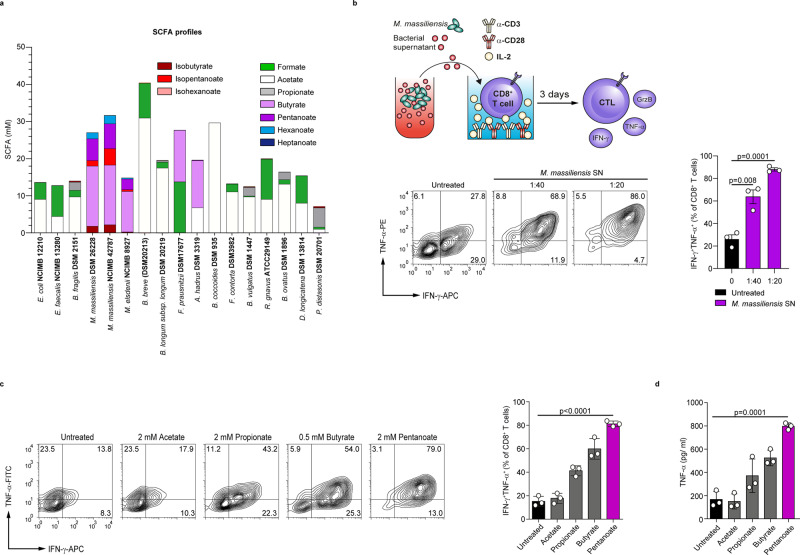
- Among 16 human commensals tested, the two *Megasphaera massiliensis* strains DSM 26228 and NCIMB 42787 were the only strong producers of both pentanoate and butyrate; *M. elsdenii* also produced pentanoate but at lower levels, while *F. prausnitzii* and *A. hadrus* produced high butyrate.
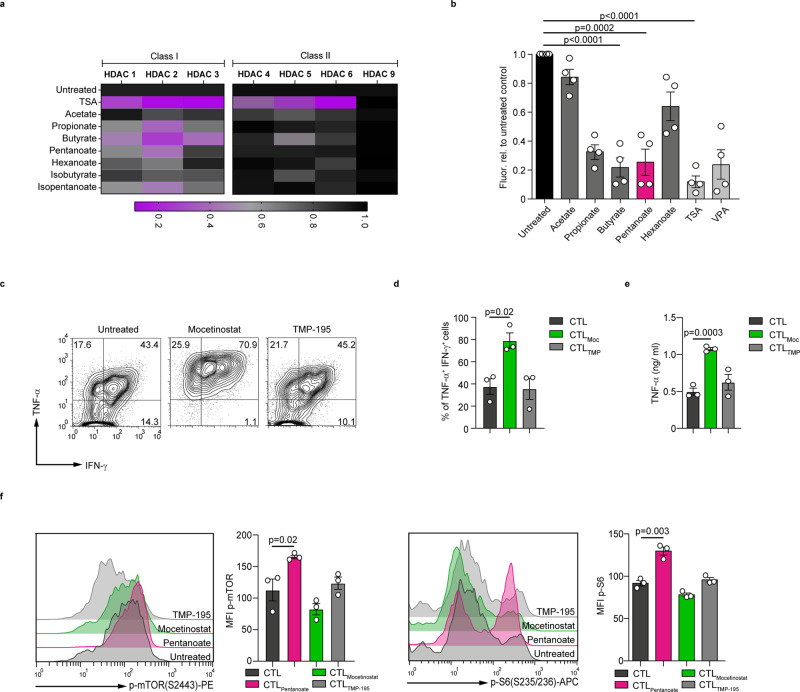
- Pentanoate and butyrate increased IFN-γ+TNF-α+ CTLs and TNF-α secretion, inhibited class I HDAC enzymes but not class II HDACs, increased mTOR and S6 phosphorylation and ECAR, and acted independently of GPR41/GPR43.
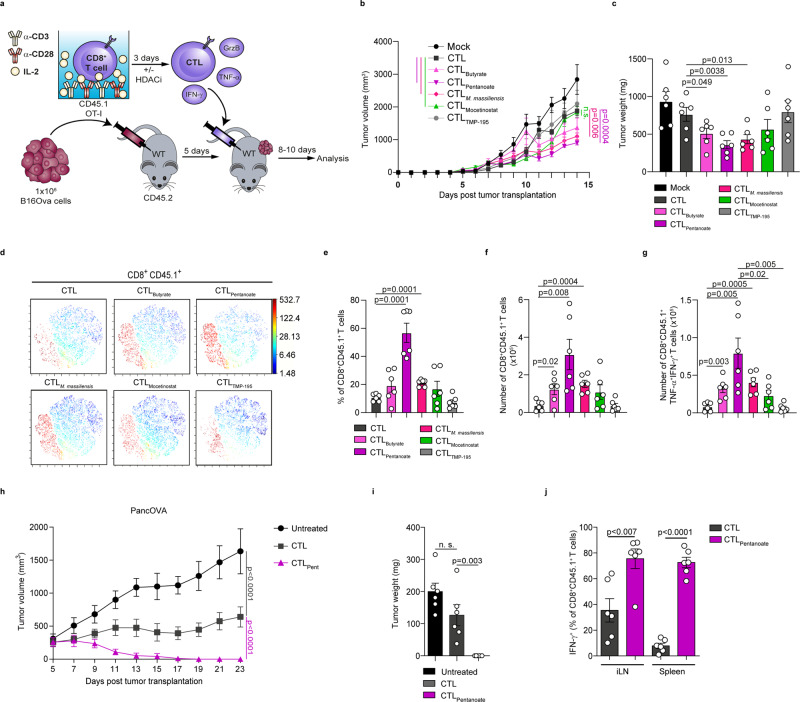
- Ex vivo pretreatment with pentanoate or butyrate improved anti-tumor immunity in B16OVA melanoma, with decreased tumor volume and weight and higher transferred CD8+ T cells producing IFN-γ and TNF-α in draining lymph nodes; pentanoate-treated OT-I CTLs abrogated PancOVA tumor growth and persisted after remission.
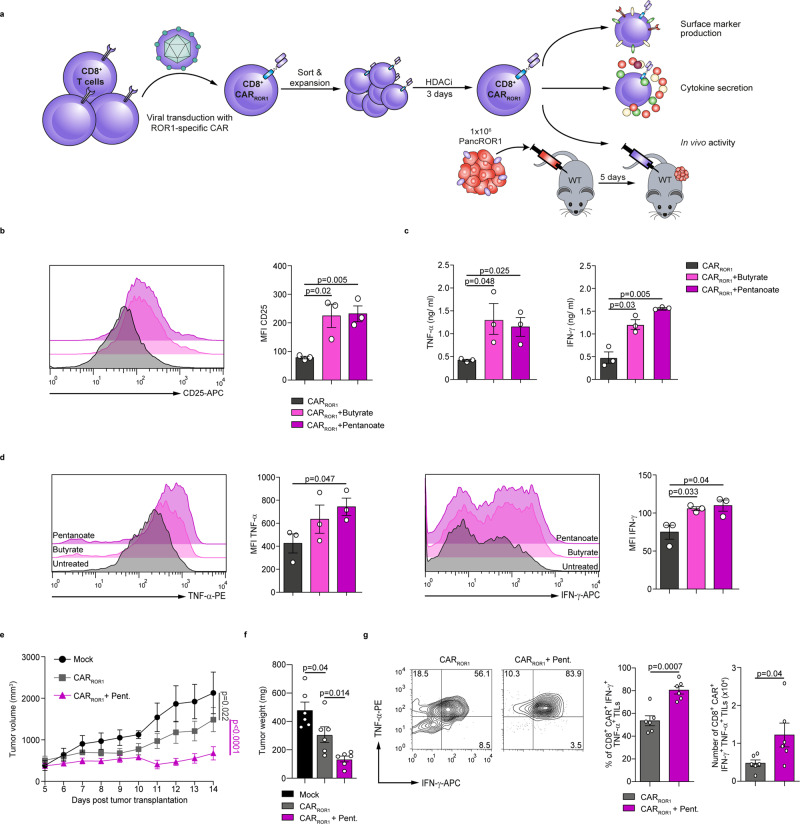
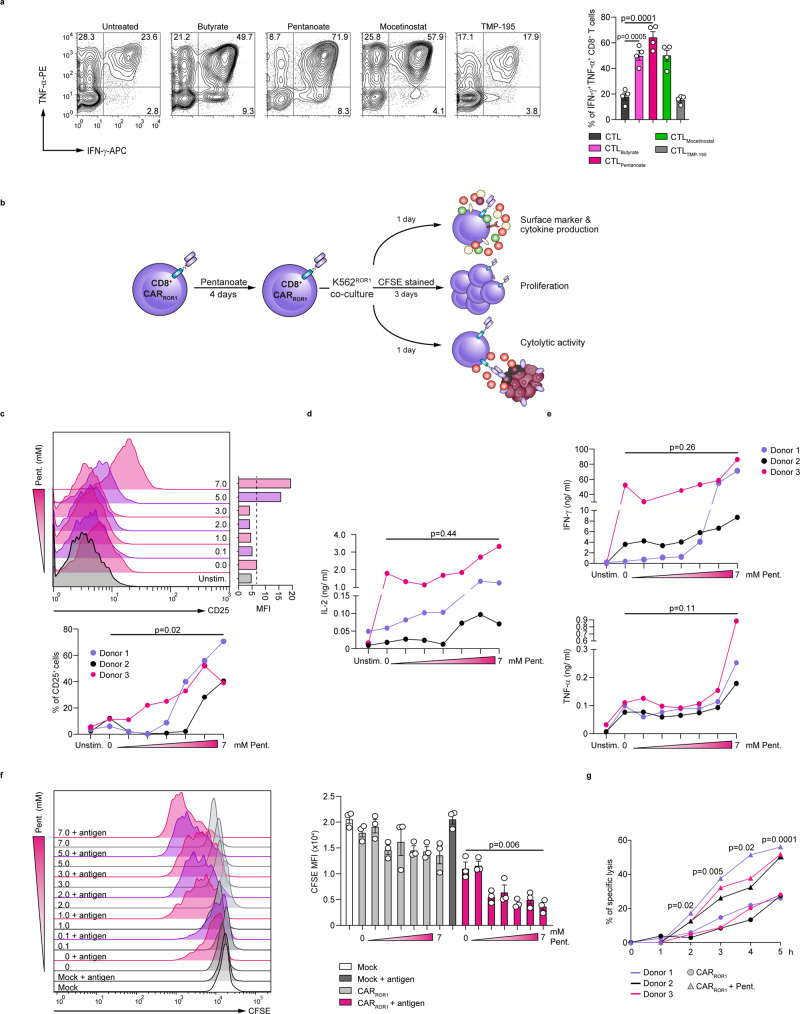
- Pentanoate and butyrate enhanced murine ROR1-CAR T cells (CD25, TNF-α, IFN-γ; reduced tumor volume and weight) and human ROR1-CAR T cells (CD25, IL-2, IFN-γ, TNF-α, proliferation, cytolysis); however, in vivo pentanoate administration did not enhance anti-tumor immunity or anti-PD-1 therapy.
Methods
- Murine and human CD8+ T cells, CTLs, and CAR T cells were cultured with SCFAs (e.g., 0.75 mM butyrate and 2.5 mM pentanoate for murine CAR T cells; 1 mM butyrate and 4 mM pentanoate for human CD8+ T cells) or HDAC inhibitors; bacterial supernatants from 16 commensals were analyzed by GC-MS, and HDAC activity, ECAR, ELISA, and flow cytometry were used.
- In vivo, B16OVA, PancOVA, or Panc02/ROR1 tumors were injected s.c. into CD45.2+ mice, followed by adoptive transfer of CD45.1+ OT-I CTLs or ROR1-CAR T cells on day 5; tumor volume/weight and T cell responses were analyzed, with persistence studied in Rag1-deficient mice co-transferred with Tregs and Foxp3−CD4+ T cells.
- Statistical analysis used two-tailed unpaired Student’s t-test and, for multiple groups, a linear-mixed effects model with Tukey correction; p < 0.05 was considered significant.
Limitations
- The paper states that involvement of other microbial metabolites in supernatant effects cannot be excluded, that clinical implementation of SCFA administration requires further investigation of optimal route, dosing, and schedule to balance effector versus regulatory immune subsets, and that the complex crosstalk between SCFA-mediated epigenetic changes and metabolic effects should be investigated further.
- Evident from the text: most mechanistic and efficacy data are from murine models and in vitro human CAR T cells, with no human clinical trial data; systemic in vivo pentanoate did not enhance anti-tumor immunity or anti-PD-1 therapy, so the therapeutic benefit shown is mainly from ex vivo pretreatment.
- Evident from the text: several experiments used small samples, such as n = 3 mice or three human donors, which limits generalizability.
Model-written summary. Check it against the paper before relying on it.
Integrity signals
Registry
Cites
Statistics
Figures
Verification
Claims the paper makes
13 Valid · 0 Not valid · 28 Not checked · 81 Own results and interpretations
The cited sources support only part of this claim — read each source’s verdict below.
In the paper
“The intestinal microbiota has been shown to directly impact on the efficacy of specific cancer immune therapies1–3.”
§ Microbial short-chain fatty acids modulate CD8+ T cell responses and improve adoptive immunotherapy for cancer > Introduction
What the sources say
- Supportedcites [1] Sivan A Commensal Bifidobacterium promotes antitumor immunity and facilitates anti-PD-L1 efficacy Science 2015 350 1084 1089 10.1126/science.aac4255 26541606 PMC4873287 source
The Results passage on combining fecal transfer with checkpoint blockade (p. null, 'To test whether manipulation of the microbial community could be effective as a therapy...') states outright that 'commensal microbial composition can influence spontaneous antitumor immunity, as well as a response to immunotherapy with αPD-L1 mAb,' and that αPD-L1 therapy alone was significantly more efficacious in JAX than TAC mice. The Abstract and Discussion likewise tie intestinal microbiota (Bifidobacterium) to the activity of anti–PD-1/PD-L1 immunotherapy, exactly the topic the citing sentence invokes as background. The evidence is murine and the mechanism is host-T-cell-mediated rather than a direct effect on tumor cells, but the attributed content — microbiota impacting the efficacy of a specific cancer immunotherapy — is what our copy reports. (LLM, conf=0.85)
- Partly supportedcites [2] Matson V The commensal microbiome is associated with anti-PD-1 efficacy in metastatic melanoma patients Science 2018 359 104 108 10.1126/science.aao3290 29302014 PMC6707353 sourceExperimental — accuracy not yet measured
Our copy supports the substance: in metastatic melanoma patients a significant association was found between commensal microbial composition and clinical response to anti–PD-1 (Abstract), and fecal reconstitution of germ-free mice with responder vs. nonresponder stool made anti–PD-L1 'markedly efficacious in mice colonized with R microbiota yet completely ineffective in NR-derived mice... demonstrating a profound impact of the commensal microbiota on immunotherapy efficacy in vivo' (Results, Fig. 3F passage). However, the direct/causal demonstration is in the mouse reconstitution model, while in patients the paper reports an association and hedges the mechanism: 'Our results suggest that the commensal microbiome may have a mechanistic impact on antitumor immunity in human cancer patients' (Abstract), and its Discussion stresses that comparisons across the other microbiome–checkpoint studies (refs. 7,14) 'should be addressed with caution'. So the unqualified 'has been shown to directly impact the efficacy of specific cancer immune therapies' states as established fact, and generalizes beyond PD-1/PD-L1 blockade in melanoma, what this source shows causally only in germ-free mice and as association in humans. (LLM, conf=0.72)
- Not checked yetcites [3] Routy B Gut microbiome influences efficacy of PD-1-based immunotherapy against epithelial tumors Science 2018 359 91 97 10.1126/science.aan3706 29097494 source
boostedstates a cause- Asserted: passes — The authors put it forward as true.
- Checkable: passes — It can be checked against evidence.
- Load-bearing: passes — The paper’s conclusions depend on it.
- Based: passes — The paper gives a reason why it holds.
- Supported
The cited sources support only part of this claim — read each source’s verdict below.
In the paper
“Our broad screening approach revealed that among the commensal strains tested, only a few bacterial species exhibited a strong pan-HDAC inhibitory capacity21.”
§ Microbial short-chain fatty acids modulate CD8+ T cell responses and improve adoptive immunotherapy for cancer > Results > Butyrate and pentanoate inhibit HDAC class I enzymes and increase mTOR activity in CD8+ T cells
What the sources say
- Partly supportedcites [21] Yuille S Reichardt N Panda S Dunbar H Mulder IE Human gut bacteria as potent class I histone deacetylase inhibitors in vitro through production of butyric acid and valeric acid PLoS ONE 2018 13 e0201073 10.1371/journal.pone.0201073 30052654 PMC6063406 sourceExperimental — accuracy not yet measured
The screening part is supported: our copy (Results, 'Gut commensals inhibit total HDAC activity in whole HT-29 cells and on HT-29 cell lysate'; Fig 1A legend) reports that CFS of 79 commensal strains were screened for total HDAC inhibition and only three strains — M. massiliensis MRx0029, R. intestinalis MRx0071, B. massiliensis MRx1342 — had the strongest effect, with the Discussion adding that no propionate-producing strain showed strong inhibition. However, the 'pan-HDAC' descriptor is not what this source supports: the isoform-level work ('Potent total HDAC inhibitors investigated target class I HDACs'; Fig 4 legend) states only class I HDAC2 and HDAC3 were inhibited, with no significant impact on class II HDACs and no HDAC1 inhibition, and the paper frames these commensals as selective class I inhibitors. So the claim's magnitude/'few species' element is in it, but attributing pan-HDAC capacity to these strains overstates the source. (LLM, conf=0.75)
plain- Asserted: passes — The authors put it forward as true.
- Checkable: passes — It can be checked against evidence.
- Load-bearing: unclear — It is unclear whether the paper’s conclusions depend on it.
- Based: passes — The paper gives a reason why it holds.
- Partly supported
Every source the paper cites for this claim was checked and supports it.
In the paper
“It is known that the glycolytic metabolic pathway promotes IFN-γ expression and T cell effector function20,24–27.”
§ Microbial short-chain fatty acids modulate CD8+ T cell responses and improve adoptive immunotherapy for cancer > Results > Butyrate and pentanoate inhibit HDAC class I enzymes and increase mTOR activity in CD8+ T cells
What the sources say
- Supportedcites [20] Luu M The short-chain fatty acid pentanoate suppresses autoimmunity by modulating the metabolic-epigenetic crosstalk in lymphocytes Nat. Commun. 2019 10 760 10.1038/s41467-019-08711-2 30770822 PMC6377655 source
The Discussion of our copy states outright that "Normally, upon activation of T cells, the metabolic reprogramming towards glycolysis supports their inflammatory phenotype and production of cytokines such as IFN-γ or IL-17A" (Discussion, p. ~10), which is exactly the background point the citing sentence attributes ("It is known that..."). The Results ("Pentanoate induces IL-10 expression in effector T cells") reinforce the link between glucose/glycolytic metabolism and effector cytokine output, and the paper's refs 42–43 (Shi et al. 2011; Chang et al. 2013) are the works it credits for this established point — consistent with a general background citation rather than a claim of original discovery here. (LLM, conf=0.86)
- Supportedcites [24] Chang CH Posttranscriptional control of T cell effector function by aerobic glycolysis Cell 2013 153 1239 1251 10.1016/j.cell.2013.05.016 23746840 PMC3804311 source
The SUMMARY (p. 1) states that aerobic glycolysis is specifically required for effector function in T cells and that blocking glycolysis markedly compromises IFNg production. The section 'Aerobic Glycolysis Is Required for Optimal IFNg Cytokine Production in T Cells' (p. 4) reports that galactose-cultured (non-glycolyzing) T cells had a severe defect in IFNg (and IL-2) production, and the DISCUSSION (p. 10) concludes that only aerobic glycolysis can facilitate full effector status. The mechanism is translational (p. 4-5, 'Aerobic Glycolysis Controls the Preferential Translation of IFNg mRNA'), so 'expression' here refers to IFNg protein rather than mRNA, which does not contradict the claim. (LLM, conf=0.93)
- Supportedcites [25] Peng M Aerobic glycolysis promotes T helper 1 cell differentiation through an epigenetic mechanism Science 2016 354 481 484 10.1126/science.aaf6284 27708054 PMC5539971 source
The Abstract of Peng et al. (2016) states that aerobic glycolysis 'is a metabolic hallmark of activated T cells, and has been implicated in augmenting effector T cell responses including expression of the pro-inflammatory cytokine interferon (IFN)-γ', and concludes that 'aerobic glycolysis promotes effector T cell differentiation' via LDHA maintaining acetyl-CoA for histone acetylation and Ifng transcription. A body passage (Introduction/Results, p. cited as [2]) likewise opens 'Glycolysis promotes expression of effector molecules including the type 1 cytokine IFN-γ', and the LDHA-deficient Th1 cells showed diminished IFN-γ expression, matching the paraphrased claim. (LLM, conf=0.92)
- Supportedcites [26] Qiu J Acetate promotes T cell effector function during glucose restriction Cell Rep. 2019 27 2063 2074 10.1016/j.celrep.2019.04.022 31091446 PMC6544383 source
The INTRODUCTION of our copy states directly that "Glycolysis promotes IFN-γ expression both through epigenetic and post-transcriptional mechanisms," and that glycolysis inhibition raises PD-1 and drives exhaustion, i.e. impairs effector function. The same section frames glucose/glycolysis as required for T cell activation, clonal expansion and effector molecule expression (IFN-γ), so the broad background statement in the citing sentence matches how this paper treats the topic. The citing sentence adds no population or magnitude beyond what the source asserts. (LLM, conf=0.90)
- Supportedcites [27] Cham CM Gajewski TF Glucose availability regulates IFN-gamma production and p70S6 kinase activation in CD8+ effector T cells J. Immunol. 2005 174 4670 4677 10.4049/jimmunol.174.8.4670 15814691 source
The Discussion/abstract passage (p. 4670) states that glucose deprivation strongly inhibited IFN-γ gene expression while IL-2 was little affected, and that optimal induction of IFN-γ transcription is a glucose-dependent process. The Introduction (p. 4670) adds that effector CD8+ T cells up-regulate eight glycolytic enzyme genes, display higher glucose uptake and glycolytic rate, and that 'glucose is mandatory for a subset of signaling pathways and gene expression events' with implications for T cell effector function. This is a fair paraphrase of the source, though the source's data are in vitro CD8+ effector T cells rather than T cells generally. (LLM, conf=0.88)
boostedstates a cause- Asserted: passes — The authors put it forward as true.
- Checkable: passes — It can be checked against evidence.
- Load-bearing: passes — The paper’s conclusions depend on it.
- Based: passes — The paper gives a reason why it holds.
- Supported
Every source the paper cites for this claim was checked and supports it.
In the paper
“We have recently demonstrated that the SCFA pentanoate (valerate) is also a bacterial metabolite present in the gut of conventional but not of germ-free (GF) mice20.”
§ Microbial short-chain fatty acids modulate CD8+ T cell responses and improve adoptive immunotherapy for cancer > Introduction
What the sources say
- Supportedcites [20] Luu M The short-chain fatty acid pentanoate suppresses autoimmunity by modulating the metabolic-epigenetic crosstalk in lymphocytes Nat. Commun. 2019 10 760 10.1038/s41467-019-08711-2 30770822 PMC6377655 source
The Results section, “Pentanoate suppresses IL-17A production,” reports pentanoate in the gut lumen of wild-type mice but not germ-free mice and describes it as a likely product of bacterial fermentation. The Discussion explicitly says it is present in conventional but not germ-free mice. (LLM, conf=0.94)
boosted- Asserted: passes — The authors put it forward as true.
- Checkable: passes — It can be checked against evidence.
- Load-bearing: unclear — It is unclear whether the paper’s conclusions depend on it.
- Based: passes — The paper gives a reason why it holds.
- Supported
A result the paper reports from its own data — it cites no other source for it, so there is none to check. The quote shows it is in the paper.
In the paper
“We show that in vitro treatment of CTLs and CAR T cells with pentanoate and butyrate increases the function of mTOR as a central cellular metabolic sensor”
§ Microbial short-chain fatty acids modulate CD8+ T cell responses and improve adoptive immunotherapy for cancer > Abstract
plainstates a cause- Asserted: passes — The authors put it forward as true.
- Checkable: passes — It can be checked against evidence.
- Load-bearing: passes — The paper’s conclusions depend on it.
- Based: passes — The paper gives a reason why it holds.
71 more claims
Create a free account to see all 122 claims and to verify the 47 references still open.
- It may state two separate claims as one. 27
- Probably not a substantial claim. 27
Claims other papers make about this one
Each is checked against this paper’s own text: does it say what the citing paper says it does?
The source backs part of the claim, not all of it — or backs it for a different population, condition or comparison.
In the citing paper
“Selective metabolites produced by distinct intestinal bacteria modulate cancer immunosurveillance in extraintestinal tumors.”
From Impact of the ONCOBIOME network in cancer microbiome research (2025) · cites this paper as [71]
Experimental — accuracy not yet measuredThe cited source says what the claim attributes to it.
In the citing paper
“Pending further confirmation, these results suggest that SCFAs display context-dependent immune effects that range from the differentiation of Treg cells to the enhancement of effector T cell functions.”
From Melanoma and microbiota: Current understanding and future directions (2024) · cites this paper as [56]
The cited source says what the claim attributes to it.
In the citing paper
“the production of gut microbial metabolites (polyamines 58,65-67 , short-chain fatty acids [68][69][70][71] , indoles [72][73][74][75] , vitamins [76][77][78][79] , bile acids 80,81 ) that impact the cancer-immunity dialog.”
From Impact of the ONCOBIOME network in cancer microbiome research (2025) · cites this paper as [71]
In the citing paper
“SCFAs can directly promote the antitumor cytotoxicity of CD8 T cells in vivo and in vitro [6, 88] (Fig. 4B).”
From Gut microbiota influence immunotherapy responses: mechanisms and therapeutic strategies (2022) · doi:10.1186/s13045-022-01273-9 · cites this paper as [88]
Self-check
Percentages, sums and reported differences re-computed from the paper’s own numbers.
Each contradiction between two passages listed here was confirmed by an independent check.
Rated minor: it would not touch a result — a value no result rests on, a p-value that stays on the same side of the significance level, or a conflict that is clerical, resolved elsewhere in the paper, or outside its own findings.
In the paper
§ Microbial short-chain fatty acids modulate CD8+ T cell responses and improve adoptive immunotherapy for cancer > Results > Pentanoate and butyrate treatment enhances the anti-tumor reactivity of antigen-specific CD8+ T cells
“On day 10 after adoptive transfer of CTLs, we detected a higher percentage as well as absolute number of pentanoate- and butyrate-pretreated CD8+ T cells, expressing more TNF-α and IFN-γ in comparison to non-treated OT-I CTLs in draining LNs (Fig. 3d–g).”
§ Microbial short-chain fatty acids modulate CD8+ T cell responses and improve adoptive immunotherapy for cancer > Results > Pentanoate and butyrate treatment enhances the anti-tumor reactivity of antigen-specific CD8+ T cells
“The percentage (e) and total cell number (f) of transferred CD8+CD45.1+ OT-I CTLs in the tumor-draining LNs at day 14 after tumor inoculation are shown.”
Citations
Cites
From Dietary Fiber to Host Physiology: Short-Chain Fatty Acids as Key Bacterial Metabolites
Koh, A., De Vadder, F., Kovatcheva-Datchary, P., & Bäckhed, F. (2016) · Cell · doi:10.1016/j.cell.2016.05.041 · Cited by 7,070
Gut microbiome influences efficacy of PD-1-based immunotherapy against epithelial tumors
Routy, B., Le Chatelier, E., Derosa, L., Duong, C. P. M., Alou, M. T., Daillère, R., Fluckiger, A., Messaoudene, M., Rauber, C., Roberti, M. P., et al. (2018) · Science · doi:10.1126/science.aan3706 · Cited by 5,671
Commensal microbe-derived butyrate induces the differentiation of colonic regulatory T cells
Furusawa, Y., Obata, Y., Fukuda, S., Endo, T. A., Nakato, G., Takahashi, D., Nakanishi, Y., Uetake, C., Kato, K., Kato, T., et al. (2013) · Nature · doi:10.1038/nature12721 · Cited by 5,549
The Microbial Metabolites, Short-Chain Fatty Acids, Regulate Colonic T reg Cell Homeostasis
Smith, P. M., Howitt, M. R., Panikov, N., Michaud, M., Gallini, C. A., Bohlooly-Y, M., Glickman, J. N., & Garrett, W. S. (2013) · Science · doi:10.1126/science.1241165 · Cited by 5,413
Metabolites produced by commensal bacteria promote peripheral regulatory T-cell generation
Arpaia, N., Campbell, C., Fan, X., Dikiy, S., van der Veeken, J., deRoos, P., Liu, H., Cross, J. R., Pfeffer, K., Coffer, P. J., et al. (2013) · Nature · doi:10.1038/nature12726 · Cited by 4,838
Commensal Bifidobacterium promotes antitumor immunity and facilitates anti–PD-L1 efficacy
Sivan, A., Corrales, L., Hubert, N., Williams, J. B., Aquino-Michaels, K., Earley, Z. M., Benyamin, F. W., Man Lei, Y., Jabri, B., Alegre, M.-L., et al. (2015) · Science · doi:10.1126/science.aac4255 · Cited by 3,888
Anticancer immunotherapy by CTLA-4 blockade relies on the gut microbiota
Vétizou, M., Pitt, J. M., Daillère, R., Lepage, P., Waldschmitt, N., Flament, C., Rusakiewicz, S., Routy, B., Roberti, M. P., Duong, C. P. M., et al. (2015) · Science · doi:10.1126/science.aad1329 · Cited by 3,488
The commensal microbiome is associated with anti-PD-1 efficacy in metastatic melanoma patients
Matson, V., Fessler, J., Bao, R., Chongsuwat, T., Zha, Y., Alegre, M.-L., Luke, J. J., & Gajewski, T. F. (2018) · Science · doi:10.1126/science.aao3290 · Cited by 3,107
Brown, A. J., Goldsworthy, S. M., Barnes, A. A., Eilert, M. M., Tcheang, L., Daniels, D., Muir, A. I., Wigglesworth, M. J., Kinghorn, I., Fraser, N. J., et al. (2003) · Journal of Biological Chemistry · doi:10.1074/jbc.m211609200 · Cited by 2,409
Posttranscriptional Control of T Cell Effector Function by Aerobic Glycolysis
Chang, C.-H., Curtis, J. D., Maggi, L. B., Faubert, B., Villarino, A. V., O’Sullivan, D., Huang, S. C.-C., van der Windt, G. J. W., Blagih, J., Qiu, J., et al. (2013) · Cell · doi:10.1016/j.cell.2013.05.016 · Cited by 2,204
Cited by
Short-chain fatty acids: Linking diet, the microbiome and immunity
Mann, E. R., Lam, Y. K., & Uhlig, H. H. (2024) · Nature reviews. Immunology · doi:10.1038/s41577-024-01014-8 · Cited by 1,595
“The immunomodulatory properties of SCFAs, particularly butyrate, might apply to tumour-specific cytotoxic T lymphocytes and CAR T cells 96 .”
Gut microbiota in colorectal cancer development and therapy
Wong, C. C., & Yu, J. (2023) · Nature Reviews Clinical Oncology · doi:10.1038/s41571-023-00766-x · Cited by 721
Gut-Microbiota-Derived Metabolites Maintain Gut and Systemic Immune Homeostasis
Wang, J., Zhu, N., Su, X., Gao, Y., & Yang, R. (2023) · Cells · doi:10.3390/cells12050793 · Cited by 588
Cullin, N., Azevedo Antunes, C., Straussman, R., Stein-Thoeringer, C. K., & Elinav, E. (2021) · Cancer Cell · doi:10.1016/j.ccell.2021.08.006 · Cited by 578
Gut microbiota influence immunotherapy responses: mechanisms and therapeutic strategies
(2022) · doi:10.1186/s13045-022-01273-9 · Cited by 495
Health Benefits and Side Effects of Short-Chain Fatty Acids
Xiong, R.-G., Zhou, D.-D., Wu, S.-X., Huang, S.-Y., Saimaiti, A., Yang, Z.-J., Shang, A., Zhao, C.-N., Gan, R.-Y., & Li, H.-B. (2022) · Foods · doi:10.3390/foods11182863 · Cited by 466
“T lymphocytes and chimeric antigen receptor T cells via epigenetic and metabolic reprogramming [101].”
BackgroundZhang, Q., Zhao, Q., Li, T., Lu, L., Wang, F., Zhang, H., Liu, Z., Ma, H., Zhu, Q., Wang, J., et al. (2023) · Cell Metabolism · doi:10.1016/j.cmet.2023.04.015 · Cited by 457
Wang, H., Rong, X., Zhao, G., Zhou, Y., Xiao, Y., Ma, D., Jin, X., Wu, Y., Yan, Y., Yang, H., et al. (2022) · Cell Metabolism · doi:10.1016/j.cmet.2022.02.010 · Cited by 411
Regulation of short-chain fatty acids in the immune system
Liu, X.-F., Shao, J.-H., Liao, Y.-T., Wang, L.-N., Jia, Y., Dong, P.-J., Liu, Z.-Z., He, D.-D., Li, C., & Zhang, X. (2023) · Frontiers in Immunology · doi:10.3389/fimmu.2023.1186892 · Cited by 403
Facchin, S., Bertin, L., Bonazzi, E., Lorenzon, G., De Barba, C., Barberio, B., Zingone, F., Maniero, D., Scarpa, M., Ruffolo, C., et al. (2024) · Life · doi:10.3390/life14050559 · Cited by 380
“However, as tumor-targeted T-cell responses are crucial for antitumor immunity and treatment efficacy, SCFAs like butyrate may suppress such responses, potentially fueling tumor progression and compromising treatment outcomes [166–169].”
BackgroundEpigenetic regulation by gut microbiota
Woo, V., & Alenghat, T. (2022) · Gut Microbes · doi:10.1080/19490976.2021.2022407 · Cited by 319
“tumor reactivity of antigen-specific CD8 T cells by increasing their production of effector cytokines IFNγ and TNF-α through HDAC inhibition.(90) Additionally, studies showed that increased SCFAs from high-fiber feeding in mice encouraged CD8 T cell activation and later transition into memory cells in context of viral…”
BackgroundNey, L.-M., Wipplinger, M., Grossmann, M., Engert, N., Wegner, V. D., & Mosig, A. S. (2023) · Open Biology · doi:10.1098/rsob.230014 · Cited by 315
Targeting the gut microbiota for cancer therapy
Fernandes, M. R., Aggarwal, P., Costa, R. G. F., Cole, A. M., & Trinchieri, G. (2022) · Nature Reviews Cancer · doi:10.1038/s41568-022-00513-x · Cited by 290
Challenges and new technologies in adoptive cell therapy
Zhang, P., Zhang, G., & Wan, X. (2023) · Journal of Hematology & Oncology · doi:10.1186/s13045-023-01492-8 · Cited by 259
Stein-Thoeringer, C. K., Saini, N. Y., Zamir, E., Blumenberg, V., Schubert, M.-L., Mor, U., Fante, M. A., Schmidt, S., Hayase, E., Hayase, T., et al. (2023) · Nature Medicine · doi:10.1038/s41591-023-02234-6 · Cited by 255
Metabolic reprogramming and therapeutic resistance in primary and metastatic breast cancer
Liu, S., Zhang, X., Wang, W., Li, X., Sun, X., Zhao, Y., Wang, Q., Li, Y., Hu, F., & Ren, H. (2024) · Molecular Cancer · doi:10.1186/s12943-024-02165-x · Cited by 246
A Review of Gut Microbiota‐Derived Metabolites in Tumor Progression and Cancer Therapy
Yang, Q., Wang, B., Zheng, Q., Li, H., Meng, X., Zhou, F., & Zhang, L. (2023) · Advanced Science · doi:10.1002/advs.202207366 · Cited by 240
Zhu, X., Li, K., Liu, G., Wu, R., Zhang, Y., Wang, S., Xu, M., Lu, L., & Li, P. (2023) · Gut Microbes · doi:10.1080/19490976.2023.2249143 · Cited by 220
Effects of dietary intervention on human diseases: molecular mechanisms and therapeutic potential
Xiao, Y.-L., Gong, Y., Qi, Y.-J., Shao, Z.-M., & Jiang, Y.-Z. (2024) · Signal Transduction and Targeted Therapy · doi:10.1038/s41392-024-01771-x · Cited by 202
“286 Inosine is another important metabolite produced by the microbiome and is closely associated with immunotherapy.”
BackgroundGut microbiota shapes cancer immunotherapy responses
Lei, W., Zhou, K., Lei, Y., Li, Q., & Zhu, H. (2025) · npj Biofilms and Microbiomes · doi:10.1038/s41522-025-00786-8 · Cited by 195
Zhang, Y.-W., Cao, M.-M., Li, Y.-J., Lu, P.-P., Dai, G.-C., Zhang, M., Wang, H., & Rui, Y.-F. (2022) · Journal of Orthopaedic Translation · doi:10.1016/j.jot.2022.08.003 · Cited by 184
“Furthermore, SCFAs, as one of the significant components of intestinal metabolites, are mainly consisted of the carboxylic acids and small hydrocarbon chains, and can be produced by intestinal symbiotic bacteria via fermenting the indigestible carbohydrates in foods [59,60].”
BackgroundSun, Y., Zhang, X., Hang, D., Lau, H. C.-H., Du, J., Liu, C., Xie, M., Pan, Y., Wang, L., Liang, C., et al. (2024) · Cancer Cell · doi:10.1016/j.ccell.2024.07.005 · Cited by 188
Lickefett, B., Chu, L., Ortiz-Maldonado, V., Warmuth, L., Barba, P., Doglio, M., Henderson, D., Hudecek, M., Kremer, A., Markman, J., et al. (2023) · Frontiers in Immunology · doi:10.3389/fimmu.2023.1303935 · Cited by 178
Self-citationModulating gut microbiome in cancer immunotherapy: Harnessing microbes to enhance treatment efficacy
Kang, X., Lau, H. C.-H., & Yu, J. Q. (2024) · Cell Reports Medicine · doi:10.1016/j.xcrm.2024.101478 · Cited by 197
Critical role of the gut microbiota in immune responses and cancer immunotherapy
Li, Z., Xiong, W., Liang, Z., Wang, J., Zeng, Z., Kołat, D., Li, X., Zhou, D., Xu, X., & Zhao, L. (2024) · Journal of Hematology & Oncology · doi:10.1186/s13045-024-01541-w · Cited by 176
“The antitumor effect was boosted by the inhibition of class I HDAC enzymes via an IL-12-dependent signaling pathway [274, 275].”
BackgroundDietary regulation in health and disease
Wu, Q., Gao, Z.-J., Yu, X., & Wang, P. (2022) · Signal Transduction and Targeted Therapy · doi:10.1038/s41392-022-01104-w · Cited by 176
Visekruna, A., & Luu, M. (2021) · Frontiers in Cell and Developmental Biology · doi:10.3389/fcell.2021.703218 · Cited by 174
Self-citationThe Notch signaling pathway: a potential target for cancer immunotherapy
Li, X., Yan, X., Wang, Y., Kaur, B., Han, H., & Yu, J. (2023) · Journal of Hematology & Oncology · doi:10.1186/s13045-023-01439-z · Cited by 167
“, IFN-γ and TNF-α) by CD8+ T cells, and enhanced the anti-tumor responses of antigen-specific CTLs and CAR-T cells [159].”
BackgroundLiu, J., Bai, Y., Li, Y., Li, X., & Luo, K. (2024) · eBioMedicine · doi:10.1016/j.ebiom.2024.105301 · Cited by 163
Gut Microbiota-Derived Short-Chain Fatty Acids: Impact on Cancer Treatment Response and Toxicities
Al-Qadami, G. H., Secombe, K. R., Subramaniam, C. B., Wardill, H. R., & Bowen, J. M. (2022) · Microorganisms · doi:10.3390/microorganisms10102048 · Cited by 162
“[10] B16-OVA melanoma/ PancOVA pancreatic cancer mouse model CTLs and CAR T cells +/− valerate / butyrate Transferring valerate or butyrate-treated cytotoxic T cells and chimeric antigen receptor T cells into tumor-bearing mice increased the production of CD25, IFN-γ, and TNF-α and enhances the anti-tumor activity.”
BackgroundButyrate as a promising therapeutic target in cancer: From pathogenesis to clinic (Review)
Sun, J., Chen, S., Zang, D., Sun, H., Sun, Y., & Chen, J. (2024) · International Journal of Oncology · doi:10.3892/ijo.2024.5632 · Cited by 165
“Inhibition of HDAC by butyric acid in T cells increases the acetylation of p70 S6 kinase and the phos‑ phorylation of ribosomal protein S6; activates mTOR and STAT3; and promotes the differentiation of T lymphocytes into effector T cells (such as Th1 and Th2 cells) (110,111).”
BackgroundShort-chain fatty acids in cancer pathogenesis
Feitelson, M. A., Arzumanyan, A. L., Medhat, A., & Spector, I. (2023) · Cancer and Metastasis Reviews · doi:10.1007/s10555-023-10117-y · Cited by 162
Role of the microbiota in response to and recovery from cancer therapy
Blake, S. J., Wolf, Y., Boursi, B., & Lynn, D. J. (2023) · Nature reviews. Immunology · doi:10.1038/s41577-023-00951-0 · Cited by 158
Trans-vaccenic acid reprograms CD8+ T cells and anti-tumour immunity
Fan, H., Xia, S., Xiang, J., Li, Y., Ross, M. O., Lim, S. A., Yang, F., Tu, J., Xie, L., Dougherty, U., et al. (2023) · Nature · doi:10.1038/s41586-023-06749-3 · Cited by 152
Fatty acid metabolism of immune cells: a new target of tumour immunotherapy
Zhang, S., Lv, K., Liu, Z., Zhao, R., & Li, F. (2024) · Cell Death Discovery · doi:10.1038/s41420-024-01807-9 · Cited by 153
“At the same time, the function of mTOR as a metabolic sensor of central cells was increased [55].”
BackgroundInfluentialMicrobial Metabolites and Gut Immunology
Takeuchi, T., Nakanishi, Y., & Ohno, H. (2024) · Annual Review of Immunology · doi:10.1146/annurev-immunol-090222-102035 · Cited by 150
Zhu, P., Lu, T., Wu, J., Fan, D.-D., Liu, B., Zhu, X.-X., Guo, H., Du, Y., Liu, F., Tian, Y., et al. (2022) · Cell Research · doi:10.1038/s41422-022-00645-7 · Cited by 112
“A recent report showed that Megasphaera massiliensis is a source to produce VA.(37) We then transferred Megasphaera massiliensis to SPF or GF mice via intragastric administration.”
BackgroundThe role of gut microbiota in T cell immunity and immune mediated disorders
Shim, J. A., Ryu, J. H., Jo, Y., & Hong, C. (2023) · International Journal of Biological Sciences · doi:10.7150/ijbs.79430 · Cited by 155
“massiliensis, they detected higher IFNγ and TNFα expression, and this positively influenced the efficacy of adoptive T cell therapy [61] (Fig.”
Gut OncoMicrobiome Signatures (GOMS) as next-generation biomarkers for cancer immunotherapy
Thomas, A. M., Fidelle, M., Routy, B., Kroemer, G., Wargo, J. A., Segata, N., & Zitvogel, L. (2023) · Nature Reviews Clinical Oncology · doi:10.1038/s41571-023-00785-8 · Cited by 141
The gut microbiota in cancer immunity and immunotherapy
Xie, M., Li, X., Lau, H. C.-H., & Yu, J. (2025) · Cellular and Molecular Immunology · doi:10.1038/s41423-025-01326-2 · Cited by 139
“A recent preclinical study reported that receptor tyrosine kinase-like orphan 1 (ROR1)-targeted CAR-T cells reduce the pancreatic tumor burden in mice, whereas treatment ef fi cacy is increased by supplementation with microbe-derived butyrate and pentanoate [127].”
Advancing CAR T cell therapy through the use of multidimensional omics data
Yang, J., Chen, Y., Jing, Y., Green, M. R., & Han, L. (2023) · Nature Reviews Clinical Oncology · doi:10.1038/s41571-023-00729-2 · Cited by 136
Regulation of CD8+ T cells by lipid metabolism in cancer progression
Tang, Y., Chen, Z., Zuo, Q., & Kang, Y. (2024) · Cellular and Molecular Immunology · doi:10.1038/s41423-024-01224-z · Cited by 137
Short-chain fatty acids and cancer
Li, S., Duan, Y., Luo, S., Zhou, F., Wu, Q., & Lu, Z. (2024) · Trends in cancer · doi:10.1016/j.trecan.2024.11.003 · Cited by 135
Role of short‐chain fatty acids in host physiology
Liu, M., Lu, Y., Xue, G., Han, L., Jia, H., Wang, Z., Zhang, J., Liu, P., Yang, C., & Zhou, Y. (2024) · Animal Models and Experimental Medicine · doi:10.1002/ame2.12464 · Cited by 132
“58 On the other hand, the traditional ‘butyrate paradox’ suggests that the effects of butyrate depend on its concentration: low butyrate doses promote tumor development, while high butyrate doses inhibit tumor development.”
BackgroundGao, G., Shen, S., Zhang, T., Zhang, J., Huang, S. W., Sun, Z., & Zhang, H. (2023) · EBioMedicine · doi:10.1016/j.ebiom.2023.104533 · Cited by 125
“24 However, adjuvant probiotics often achieved the synergistic therapeutic effect with ICB in a strain-speci fi c manner.”
Zhang, Y., Cao, M., Li, Y., Dai, G.-C., Lu, P., Zhang, M., Bai, L., Chen, X.-X., Zhang, C., Shi, L., et al. (2022) · Critical Reviews in Food Science and Nutrition · doi:10.1080/10408398.2022.2047005 · Cited by 119
Ye, L., Hou, Y., Hu, W., Wang, H., Yang, R., Zhang, Q., Feng, Q., Zheng, X., Yao, G., & Hao, H. (2023) · Nature Communications · doi:10.1038/s41467-023-41817-2 · Cited by 118
Microbial short-chain fatty acids: a strategy to tune adoptive T cell therapy
Rangan, P., & Mondino, A. (2022) · Journal for ImmunoTherapy of Cancer · doi:10.1136/jitc-2021-004147 · Cited by 104
He, Y., Ling, Y., Zhang, Z., Mertens, R. T., Cao, Q., Xu, X., Guo, K., Shi, Q., Zhang, X., Huo, L., et al. (2023) · Redox Biology · doi:10.1016/j.redox.2023.102822 · Cited by 113
Che, Y., Chen, G., Guo, Q., Duan, Y., Feng, H., & Xia, Q. (2023) · Hepatology · doi:10.1097/hep.0000000000000047 · Cited by 108
“[25] Our results have shown that butyrate can inhibit proliferation and migration of HCC cells, and previous studies prove that gut metabolite butyrate could directly promote antitumor CD8+ T-cell response and facilitate chemotherapy efficacy.[4,10] Thus, we hypothesized that the combination of NaBu and sorafenib may…”
BackgroundResultDong, Y., Zhang, K., Wei, J., Ding, Y., Wang, X., Hou, H., Wu, J., Liu, T., Wang, B., & Cao, H. (2023) · Frontiers in Immunology · doi:10.3389/fimmu.2023.1158200 · Cited by 107
“Pentanoate Clostridioides difficile; Megasphaera massiliensis (48) Increased the function of mTOR as a central cellular metabolic sensor and inhibited class I HDAC activity to enhance the anti-tumor activity of CTLs and CAR T cells (9), same as butyrate;”
BackgroundInfluentialYang, K., Wang, X., Huang, R., Wang, H., Lan, P., & Zhao, Y. (2022) · Advanced Science · doi:10.1002/advs.202104089 · Cited by 115
A major mechanism for immunomodulation: Dietary fibres and acid metabolites
Xie, L., Alam, J., Marques, F. Z., & Mackay, C. R. (2023) · Seminars in Immunology · doi:10.1016/j.smim.2023.101737 · Cited by 111
Lin, A., Xiong, M., Jiang, A., Huang, L., Wong, H. Z. H., Feng, S., Zhang, C., Yu, H., Chen, L., Chi, H., et al. (2025) · iMeta · doi:10.1002/imt2.70070 · Cited by 108
Zou, Y., Wang, S., Zhang, H., Gu, Y., Chen, H., Huang, Z., Yang, F., Li, W., Chen, C., Men, L., et al. (2023) · Medicinal Research Reviews · doi:10.1002/med.21989 · Cited by 109
“Subsequently, we shifted our focus to specific intestinal flora and evaluated the different metabolites (SCFAs 57,216 ; lipopolysaccharides (LPS), trimethylamine ‐”
BackgroundCrosstalk between gut microbiota and host immune system and its response to traumatic injury
Ullah, H., Arbab, S., Tian, Y., Chen, Y., Liu, C., Li, Q., & Li, K. (2024) · Frontiers in Immunology · doi:10.3389/fimmu.2024.1413485 · Cited by 112
Rajapakse, J., Khatiwada, S., Akon, A. C., Yu, K. L., Shen, S., & Zekry, A. (2023) · Gut Microbes · doi:10.1080/19490976.2023.2240031 · Cited by 102
“This may have been mediated by increased tumor antigen-specific anti-cancer activity by these pretreated T cells, as evidenced by their enhanced proliferative capacity and higher expression of the proinflammatory cytokines, TNF-α and interferon (IFN)-γ.(49) However, other studies have demonstrated increased SCFA conce…”
BackgroundResultMicrobiota-driven mechanisms at different stages of cancer development
Ivleva, E., & Grivennikov, S. I. (2022) · Neoplasia · doi:10.1016/j.neo.2022.100829 · Cited by 103
The human microbiome and cancer: a diagnostic and therapeutic perspective
Kandalai, S., Li, H., Zhang, N., Peng, H., & Zheng, Q. (2023) · Cancer Biology & Therapy · doi:10.1080/15384047.2023.2240084 · Cited by 101
Wang, R., Li, B., Huang, B., Li, Y., Liu, Q., Lyu, Z., Chen, R., Qian, Q., Liang, X. S., Pu, X., et al. (2024) · Gastroenterology · doi:10.1053/j.gastro.2024.05.014 · Cited by 99
Huang, Y., Zhu, N., Zheng, X., Liu, Y., Lu, H., Yin, X., Hao, H., Tan, Y., Wang, D., Hu, H., et al. (2022) · Frontiers in Immunology · doi:10.3389/fimmu.2022.785422 · Cited by 86
Zhu, M., Han, Y., Gu, T., Wang, R. Y., Si, X., Kong, D., Zhao, P., Wang, X., Li, J., Zhai, X., et al. (2024) · Cell Reports · doi:10.1016/j.celrep.2024.114065 · Cited by 99
Li, N., Niu, L., Liu, Y., Wang, Y., Su, X., Xu, C., Sun, Z., Guo, H., Gong, J., & Shen, S. (2024) · Journal of Nanobiotechnology · doi:10.1186/s12951-024-02506-4 · Cited by 103
Wang, J., Zhao, Q., Zhang, S., Liu, J., Fan, X., Han, B., Hou, Y., & Ai, X. (2025) · International Journal of Molecular Medicine · doi:10.3892/ijmm.2025.5687 · Cited by 104
“For instance, research conducted by Li et al (141) revealed that ScFAs are capable of suppressing the endothelial inflammatory responses induced by LPS or TNF‑ α , as well as the overexpression of vascular cell adhesion molecule‑1.”
InfluentialThe emerging role of microbiota-derived short-chain fatty acids in immunometabolism
Jasim, S. A., Opulencia, M. J. C., Ramírez‐Coronel, A. A., Abdelbasset, W. K., Abed, M. H., Markov, A. A., Al‐Awsi, G. R. L., Shamsiev, J. A., Hammid, A. T., Shalaby, M. N., et al. (2022) · International Immunopharmacology · doi:10.1016/j.intimp.2022.108983 · Cited by 97
Melanoma and microbiota: Current understanding and future directions
Routy, B., Jackson, T., Mählmann, L., Baumgartner, C. K., Blaser, M., Byrd, A., Corvaia, N., Couts, K., Davar, D., Derosa, L., et al. (2024) · Cancer Cell · doi:10.1016/j.ccell.2023.12.003 · Cited by 89
Preglej, T., & Ellmeier, W. (2022) · Immunology Letters · doi:10.1016/j.imlet.2022.05.001 · Cited by 93
Tumor hijacks macrophages and microbiota through extracellular vesicles
Jiang, J., Mei, J., Ma, Y., Jiang, S., Zhang, J., Yi, S., Feng, C., Liu, Y., & Liu, Y. (2022) · Exploration · doi:10.1002/exp.20210144 · Cited by 91
Microbial metabolites in colorectal tumorigenesis and cancer therapy
Liu, Y., Lau, H. C.-H., & Yu, J. Q. (2023) · Gut Microbes · doi:10.1080/19490976.2023.2203968 · Cited by 89
Li, W., Zhou, Q., Lv, B., Li, N., Bian, X., Chen, L., Kong, M., Shen, Y., Zheng, W., Zhang, J., et al. (2024) · Journal of Agricultural and Food Chemistry · doi:10.1021/acs.jafc.3c08385 · Cited by 88
Han, B., Shi, L., Bao, M.-Y., Yu, F.-L., Zhang, Y., Lu, X., Wang, Y., Lin, J., Lin, J.-C., Jia, W., et al. (2024) · Microbiome · doi:10.1186/s40168-024-01819-8 · Cited by 89
“…as a low-toxicity drug candidate for the treatment of MS. Previous studies reported that beneficial effects of one postbiotic is limited, and the use of prebiotics or symbiotics can better promote host health by directly regulating gut microbiota homeostasis to produce more metabolites [54].”
BackgroundGut microbiota as a new target for anticancer therapy: from mechanism to means of regulation
Sun, J., Song, S., Liu, J., Chen, F., Li, X., & Wu, G. (2025) · npj Biofilms and Microbiomes · doi:10.1038/s41522-025-00678-x · Cited by 89
“…Megasphaeramassiliensis increasedthebiological activity of mTOR and inhibited class I histone deacetylase, resulting in increased production of effector molecules such as CD25, IFN-γ , and TNF-α , signi fi cantly enhancing the antitumor activity of CAR-T cells in melanoma mice 55 .”
Schiweck, C., Thanarajah, S. E., Aichholzer, M., Matura, S., Reif, A., Vrieze, E., Weigert, A., & Visekruna, A. (2022) · International Journal of Molecular Sciences · doi:10.3390/ijms23158272 · Cited by 86
“Luu and colleagues demonstrated that both butyrate and pentanoate improved immunotherapy for cancer by boosting CD8+ T cell and chimeric antigen receptor (CAR) T cell responses [44].”
BackgroundSelf-citationThe heightened importance of the microbiome in cancer immunotherapy
Villemin, C., Six, A., Neville, B. A., Lawley, T. D., Robinson, M. J., & Bakdash, G. (2023) · Trends in Immunology · doi:10.1016/j.it.2022.11.002 · Cited by 73
Gut microbiota mediated T cells regulation and autoimmune diseases
Bhutta, N. K., Xu, X., Jian, C., Wang, Y., Liu, Y., Sun, J., Han, B., Wu, S., & Javeed, A. (2024) · Frontiers in Microbiology · doi:10.3389/fmicb.2024.1477187 · Cited by 83
Microenvironmental regulation of solid tumour resistance to CAR T cell therapy
Lamplugh, Z. L., Wellhausen, N., June, C. H., & Fan, Y. (2025) · Nature reviews. Immunology · doi:10.1038/s41577-025-01229-3 · Cited by 87
Nanomaterials: small particles show huge possibilities for cancer immunotherapy
Chen, Z., Yue, Z., Yang, K., & Li, S. (2022) · Journal of Nanobiotechnology · doi:10.1186/s12951-022-01692-3 · Cited by 80
Short chain fatty acids prime colorectal cancer cells to activate antitumor immunity
Mowat, C., Dhatt, J., Bhatti, I., Hamie, A., & Baker, K. (2023) · Frontiers in Immunology · doi:10.3389/fimmu.2023.1190810 · Cited by 82
Cao, S., Budina, E., Raczy, M. M., Solanki, A., Nguyen, M., Beckman, T. N., Reda, J. W., Hultgren, K., Ang, P. S., Slezak, A. J., et al. (2024) · Nature Biomedical Engineering · doi:10.1038/s41551-024-01190-x · Cited by 81
The role of the gut microbiota in tumor, immunity, and immunotherapy
Xie, Y., & Liu, F. (2024) · Frontiers in Immunology · doi:10.3389/fimmu.2024.1410928 · Cited by 77
Prasad, R., Rehman, A., Rehman, L., Darbaniyan, F., Blumenberg, V., Schubert, M., Mor, U., Zamir, E., Schmidt, S., Hayase, T., et al. (2024) · Blood · doi:10.1182/blood.2024025366 · Cited by 80
Joachim, L., Göttert, S., Sax, A., Steiger, K., Neuhaus, K., Heinrich, P., Fan, K., Orberg, E. T., Kleigrewe, K., Ruland, J., et al. (2023) · eBioMedicine · doi:10.1016/j.ebiom.2023.104834 · Cited by 67
“52 While direct stimulatory effects on T cells via epigenetic reprogramming have been described for the SCFA butyrate, 53 its systemic administration was found to limit the anti-tumour effect of CTLA-4 blockade in mice via impaired DC maturation and subsequent T-cell priming.”
BackgroundReprogramming of lipid metabolism in the tumor microenvironment: a strategy for tumor immunotherapy
Wu, Y., Pu, X., Wang, X., & Xu, M. (2024) · Lipids in Health and Disease · doi:10.1186/s12944-024-02024-0 · Cited by 74
Zheng, M., Zhang, W., Chen, X., Guo, H., Wu, H., Xu, Y., He, Q., Ding, L., & Yang, B. (2022) · Acta Pharmaceutica Sinica B · doi:10.1016/j.apsb.2022.10.027 · Cited by 73
Zhang, H., Xie, Y., Cao, F., & Song, X. (2024) · Gut Microbes · doi:10.1080/19490976.2024.2382336 · Cited by 78
“113 However, there are conflicting observations of SCFAs in anti-tumor immunity.”
BackgroundUribe‐Herranz, M., Beghi, S., Ruella, M., Parvathaneni, K., Salaris, S., Κωστόπουλος, Ν., George, S. S., Pierini, S., Krimitza, E., Costabile, F., et al. (2023) · Molecular Therapy · doi:10.1016/j.ymthe.2023.01.012 · Cited by 72
Saadh, M. J., Allela, O. Q. B., Ballal, S., Mahdi, M. S., Chahar, M., Verma, R., Al-Hussein, R. K. A., Adil, M., Jawad, M. J., & Al-Nuaimi, A. M. A. (2025) · Seminars in Oncology · doi:10.1016/j.seminoncol.2025.152398 · Cited by 74
Gut Microbial Metabolites on Host Immune Responses in Health and Disease
Yoon, J.-H., Do, J.-S., Velankanni, P., Lee, C., & Kwon, H. (2023) · Immune Network · doi:10.4110/in.2023.23.e6 · Cited by 71
“Moreover, it significantly enhanced their anti-tumor activity in syngeneic murine melanoma and pancreatic cancer models by increasing mTOR and inhibiting class I HDAC activities (59).”
BackgroundNan, K., Zhong, Z., Yue, Y., Shen, Y., Zhang, H., Wang, Z., Zhuma, K., Yu, B., Fu, Y., Wang, L., et al. (2025) · Gut · doi:10.1136/gutjnl-2024-333020 · Cited by 69
Microbiota-derived butyrate alleviates asthma via inhibiting Tfh13-mediated IgE production
Yu, B., Pei, C., Peng, W., Zheng, Y., Fu, Y. L., Wang, X., Wang, W., Wang, Z., Chen, Y., Wang, Q., et al. (2025) · Signal Transduction and Targeted Therapy · doi:10.1038/s41392-025-02263-2 · Cited by 72
The Impact of Gut Microbiota-Derived Metabolites on the Tumor Immune Microenvironment
Luu, M., Schütz, B., Lauth, M., & Visekruna, A. (2023) · Cancers · doi:10.3390/cancers15051588 · Cited by 70
“Notably, both SCFAs and the valerate‐producing bacterium Megasphaera massiliensis (a low‐abundant commensal isolated from human gut) substan‐ tially increased CTL‐mediated anti‐tumor immunity in vivo, which resulted in reduced tumor growth in experimental models of melanoma and pancreatic cancer [45].”
BackgroundSelf-citationThe role of the gut microbiota in gastric cancer: the immunoregulation and immunotherapy
Wang, M., Yang, G., Tian, Y., Zhang, Q., Liu, Z., & Xin, Y. (2023) · Frontiers in Immunology · doi:10.3389/fimmu.2023.1183331 · Cited by 74
Ding, X., Zeng, T., Wei, Z., Yu, Z.-Z., Huang, W., Yi, H., Lu, S.-S., Feng, J., Feng, X., Wu, D., et al. (2023) · Cancer Immunology Research · doi:10.1158/2326-6066.cir-22-0896 · Cited by 67
Wang, W., Zhang, L., Zhang, Y., Liu, X., Song, A., Ren, J., & Qu, X. (2023) · Advanced Materials · doi:10.1002/adma.202310063 · Cited by 67
Gut microbiota-derived short chain fatty acids act as mediators of the gut-liver-brain axis
Li, C., Yao, J., Yang, C., Yu, S., Yang, Z., Wang, L., Li, S., & He, N. (2025) · Metabolic Brain Disease · doi:10.1007/s11011-025-01554-5 · Cited by 69
Abdelhalim, K. A. (2023) · Chemico-Biological Interactions · doi:10.1016/j.cbi.2023.110851 · Cited by 66
Microbiota and Colorectal Cancer: From Gut to Bedside
Silva, M. G., Brunner, V., & Tschurtschenthaler, M. (2021) · Frontiers in Pharmacology · doi:10.3389/fphar.2021.760280 · Cited by 67
Microbiota-derived metabolites: Key modulators of cancer immunotherapies
Perl, M., Fante, M. A., Herfeld, K., Scherer, J. N., Poeck, H., & Orberg, E. T. (2025) · Med · doi:10.1016/j.medj.2025.100773 · Cited by 66
“128,130 To date, several interventions have been shown to increase beneficial metabolites, including dietary modifications (e.g., high-fiber prebiotics to boost SCFAs), probiotic supplementation with metabolite-producing LBPs (e.g., Akkermansia mucini-phila or Faecalibacterium prausnitzii ), and…”
The gut microbiome, immune modulation, and cognitive decline: insights on the gut-brain axis
Zhang, R., Ding, N., Feng, X., & Liao, W. (2025) · Frontiers in Immunology · doi:10.3389/fimmu.2025.1529958 · Cited by 81
Metabolites as agents and targets for cancer immunotherapy
Trefny, M. P., Kroemer, G., Zitvogel, L., & Kobold, S. (2025) · Nature Reviews Drug Discovery · doi:10.1038/s41573-025-01227-z · Cited by 67
“In vitro SCFA supplementation during expansion of CAR-T cells improves their function 216 , again highlighting how the ex vivo application of metabolites could be a potential clinical avenue.”
Metadata
- Authors
- Luu, M., Riester, Z., Baldrich, A., Reichardt, N., Yuille, S., Busetti, A., Klein, M., Wempe, A., Leister, H., Raifer, H., Picard, F., Muhammad, K., Ohl, K., Romero, R., Fischer, F., Bauer, C. A., Huber, M., Gress, T. M., Lauth, M., Danhof, S., Bopp, T., Nerreter, T., Mulder, I. E., Steinhoff, U., Hudecek, M., & Visekruna, A.
- Affiliations
- Philipps University of Marburg (DE)
- Universitätsklinikum Würzburg (DE)
- Johannes Gutenberg University Mainz (DE)
- United Arab Emirates University (AE)
- RWTH Aachen University (DE)
- Corresponding author
- Hudecek, Michael
- Visekruna, Alexander
- ORCID
- Luu, Maik
- Riester, Zeno
- Busetti, Alessandro
- Klein, Matthias
- Raifer, Hartmann
- Picard, Felix
- Muhammad, Khalid
- Ohl, Kim
- Romero, Rossana
- Bauer, Christian A.
- Huber, Magdalena
- Gress, Thomas M.
- Lauth, Matthias
- Danhof, Sophia
- Bopp, Tobias
- Nerreter, Thomas
- Mulder, Imke E.
- Steinhoff, Ulrich
- Hudecek, Michael
- Visekruna, Alexander
- Venue
- Nature Communications
- Published
- 2021-07-01
- Volume
- 12
- Issue
- 1
- Pages
- 4077-4077
- ISSN
- 2041-1723 (ISSN-L)
- PMC
- PMC8249424
- OpenAlex
- W3175895832
- Cited by
- 771
- References
- 47
- Citations by year
- 2026: 193 · 2025: 217 · 2024: 157 · 2023: 118 · 2022: 79 · 2021: 7
- FWCI
- 33.96
- Type
- journal article
- Language
- en
- Open access
- gold
- doi.org
- Licence
- cc-by
- creativecommons.org/licenses/by/4.0 (tdm)
- creativecommons.org/licenses/by/4.0 (vor)
- Locations
- Nature Communications (publishedVersion, cc-by)
- PubMed Central (publishedVersion, cc-by)
- PubMed (publishedVersion)
- RePEc: Research Papers in Economics (submittedVersion)
- DOAJ (DOAJ: Directory of Open Access Journals) (submittedVersion, cc-by-sa)
- Online Publication Service of Würzburg University (Würzburg University) (submittedVersion, cc-by)
- RWTH Publications (RWTH Aachen) (submittedVersion, other-oa)
- RWTH Publications (RWTH Aachen)
- Funders
- Deutsche Forschungsgemeinschaft (DFG-KFO325)
- Topics
- Life Sciences › Immunology and Microbiology › Immunology › Immunotherapy and Immune Responses
- Health Sciences › Medicine › Oncology › Cancer Immunotherapy and Biomarkers
- Life Sciences › Immunology and Microbiology › Immunology › T-cell and B-cell Immunology
- Keywords
- short-chain fatty acids, butyrate, CD8+ T cells, cytotoxic T lymphocytes, chimeric antigen receptor T cells, ROR1, adoptive immunotherapy, cancer immunotherapy, mTOR signaling, histone deacetylase, epigenetic reprogramming, cellular metabolism, melanoma, pancreatic cancer, antitumor immunity
- MeSH terms
- Animals, Butyrates, Fatty Acids, Volatile, Female, Immunologic Factors, Immunotherapy, Interferon-gamma, Melanoma, Mice, Inbred C57BL, Neoplasms, Peptide Fragments, T-Lymphocytes, Cytotoxic, Tumor Necrosis Factor-alpha, Cytokines, Immunotherapy, Adoptive, CD8-Positive T-Lymphocytes, Receptors, G-Protein-Coupled, Cell Line, Tumor, Megasphaera, Mice, Interleukin-2 Receptor alpha Subunit, Receptor Tyrosine Kinase-like Orphan Receptors, Microbiota
About these checks
Registry, retraction, Cites and statistics results are computed, not judged, with one exception: a printed reference that no index lists is read once by a model before it counts as a citation error. Claims are extracted by a model and kept only when their quote appears verbatim in the text; each cited source is then checked, with a model’s help, for whether it says what the claim relies on. Those verdicts can be wrong — read the claim’s quote and the cited source before relying on one.
The claim verdicts this report counts are experimental: their accuracy is not yet measured.
A language model drew the claims from the paper on 2026-10-05, under version 3 of the claim definition (model deepseek-v4.1-flash, prompt extract-v3).
A second model labelled each claim on 2026-10-05 (model jev-1.13-20260917, definition revision gold-guideline-v0.2).
Cited sources are checked with a language model’s help (qwen3.8-omni-flash and gpt-6-sol).
Statistics and arithmetic are recomputed, not judged.
Confidence bands are shown only for fields calibrated on our annotated test set. None is calibrated yet, so no band is shown.
What counts as a claim ›How we measure confidence ›How we check this ›
Are you an author, or do you see a problem with this page? Request a review
Data sources
Bibliographic data: Semantic Scholar, OpenAlex, Crossref.
Contains information from the Semantic Scholar Academic Graph Datasets, made available under the ODC Attribution License (ODC-BY 1.0).
Semantic Scholar’s data is described in: Kinney, R., et al. (2023). The Semantic Scholar Open Data Platform. arXiv:2301.10140.
