

Microbial short-chain fatty acids modulate CD8+ T cell responses and improve adoptive immunotherapy for cancer
Open accessThe DOI matches its Crossref record; 47 of the 47 references it cites were found in a registry or an index; 19 of the 66 sources its claims cite were checked for support.
Abstract
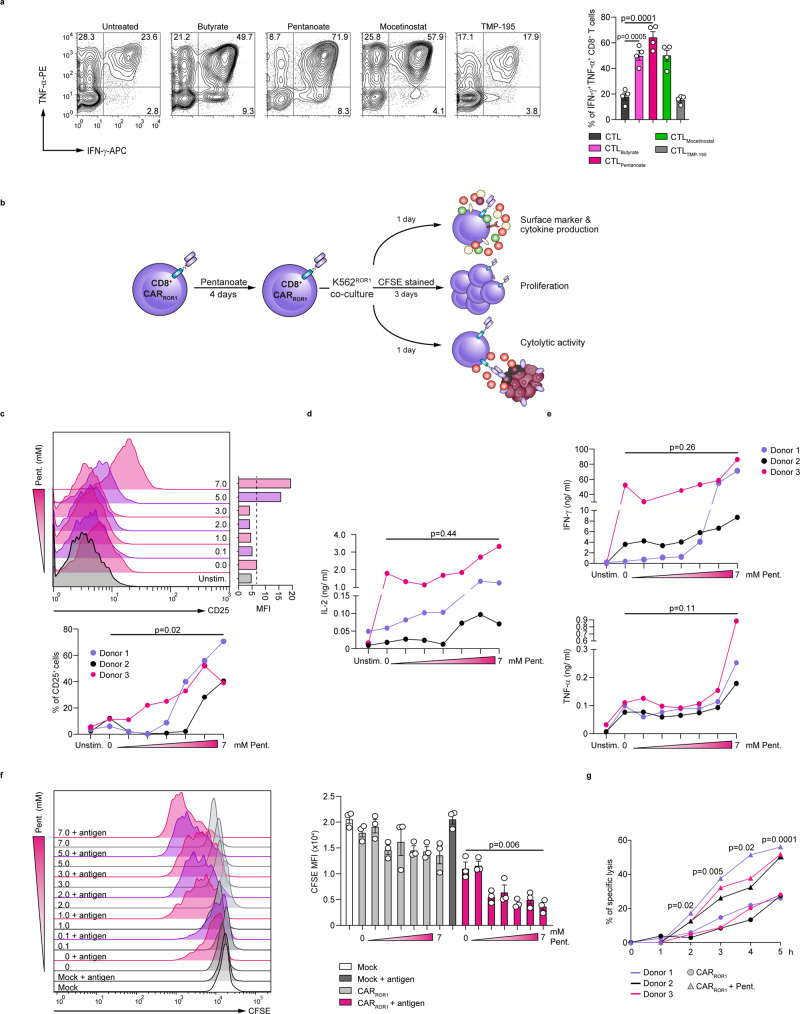
Emerging data demonstrate that the activity of immune cells can be modulated by microbial molecules. Here, we show that the short-chain fatty acids (SCFAs) pentanoate and butyrate enhance the anti-tumor activity of cytotoxic T lymphocytes (CTLs) and chimeric antigen receptor (CAR) T cells through metabolic and epigenetic reprograming. We show that in vitro treatment of CTLs and CAR T cells with pentanoate and butyrate increases the function of mTOR as a central cellular metabolic sensor, and inhibits class I histone deacetylase activity. This reprogramming results in elevated production of effector molecules such as CD25, IFN-γ and TNF-α, and significantly enhances the anti-tumor activity of antigen-specific CTLs and ROR1-targeting CAR T cells in syngeneic murine melanoma and pancreatic cancer models. Our data shed light onto microbial molecules that may be used for enhancing cellular anti-tumor immunity. Collectively, we identify pentanoate and butyrate as two SCFAs with therapeutic utility in the context of cellular cancer immunotherapy.
Overview
CoChat Summary
TL;DR
The paper shows that the microbial short-chain fatty acids pentanoate and butyrate enhance the anti-tumor activity of cytotoxic T lymphocytes and chimeric antigen receptor T cells through metabolic and epigenetic reprogramming. It identifies these SCFAs as potential tools for improving adoptive cancer immunotherapy.
Key findings
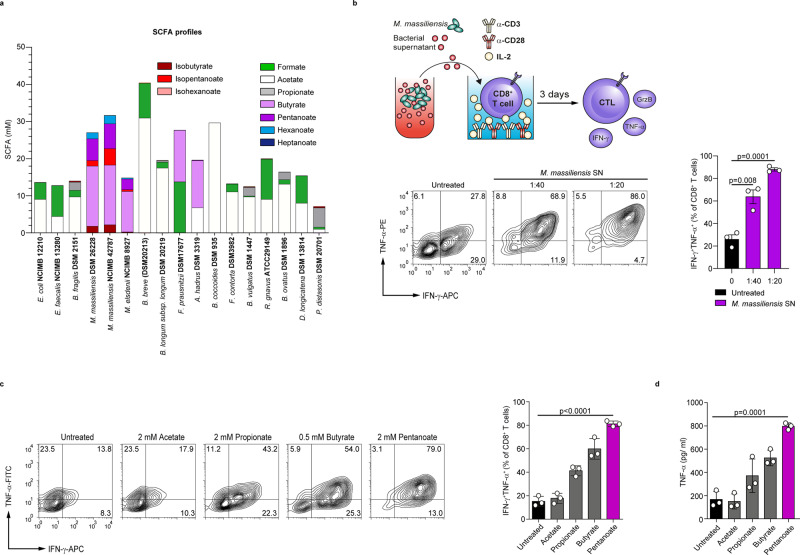
- Among 16 human commensals tested, the two *Megasphaera massiliensis* strains DSM 26228 and NCIMB 42787 were the only strong producers of both pentanoate and butyrate; *M. elsdenii* also produced pentanoate but at lower levels, while *F. prausnitzii* and *A. hadrus* produced high butyrate.
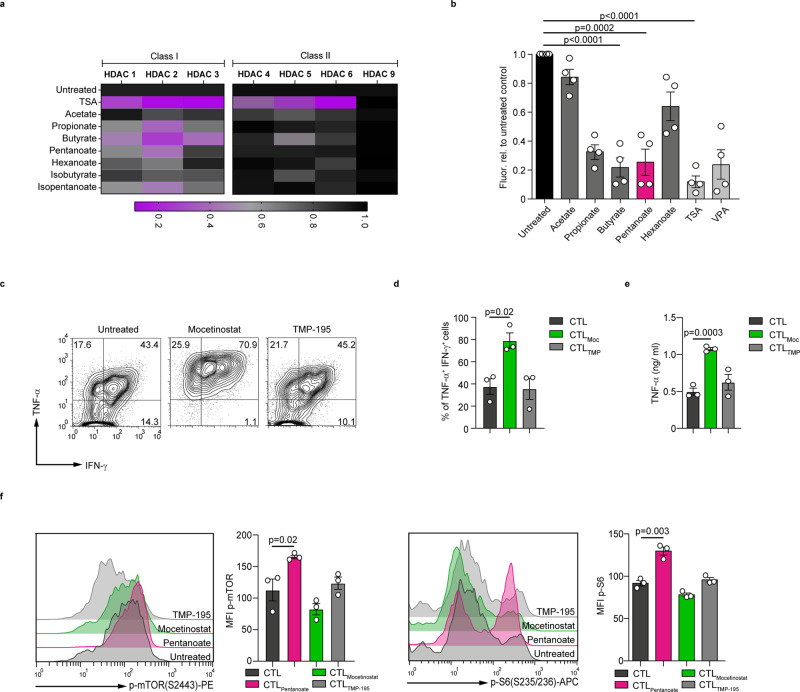
- Pentanoate and butyrate increased IFN-γ+TNF-α+ CTLs and TNF-α secretion, inhibited class I HDAC enzymes but not class II HDACs, increased mTOR and S6 phosphorylation and ECAR, and acted independently of GPR41/GPR43.
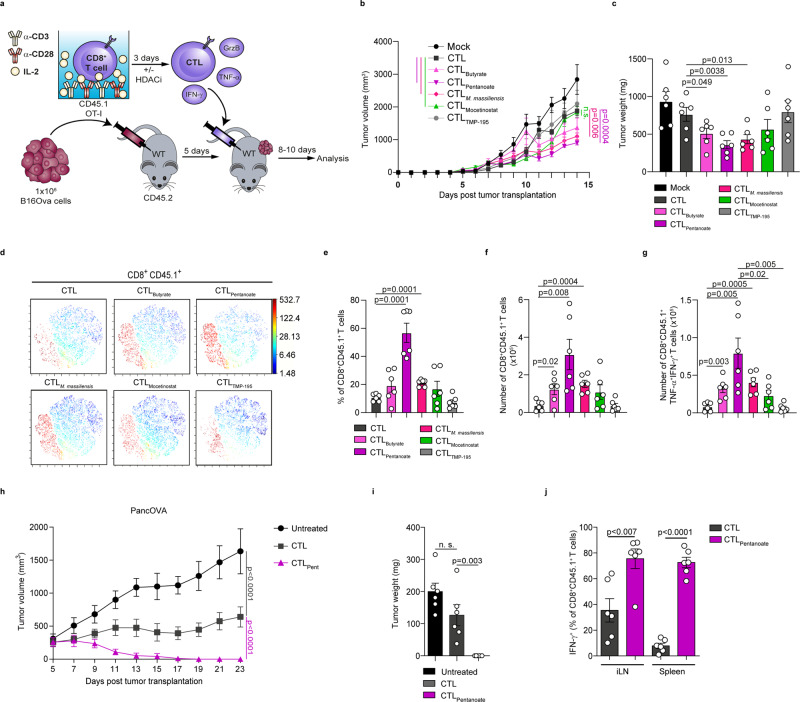
- Ex vivo pretreatment with pentanoate or butyrate improved anti-tumor immunity in B16OVA melanoma, with decreased tumor volume and weight and higher transferred CD8+ T cells producing IFN-γ and TNF-α in draining lymph nodes; pentanoate-treated OT-I CTLs abrogated PancOVA tumor growth and persisted after remission.
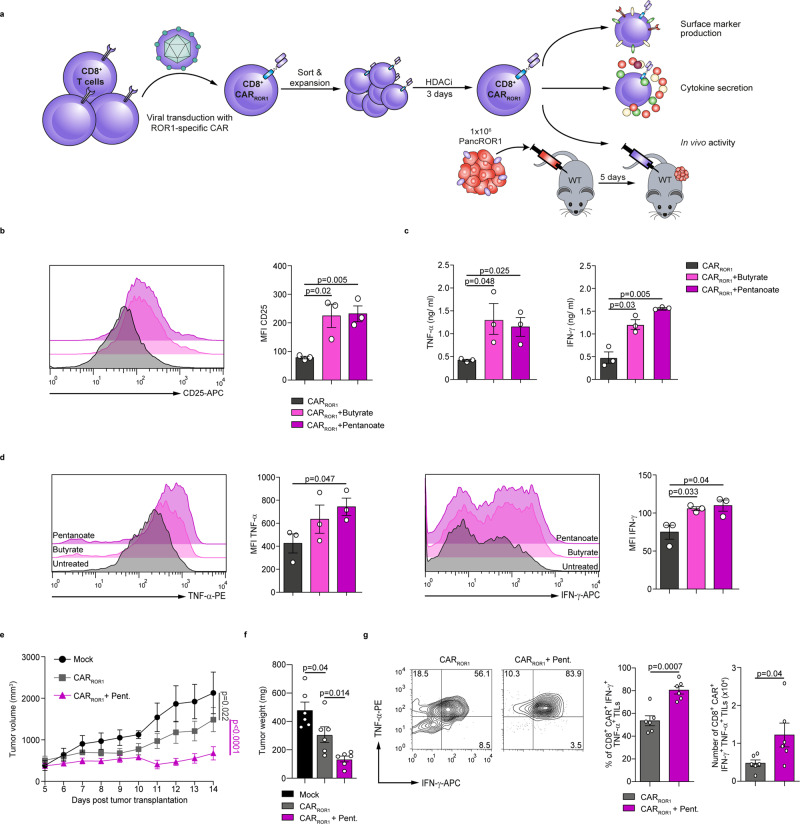
- Pentanoate and butyrate enhanced murine ROR1-CAR T cells (CD25, TNF-α, IFN-γ; reduced tumor volume and weight) and human ROR1-CAR T cells (CD25, IL-2, IFN-γ, TNF-α, proliferation, cytolysis); however, in vivo pentanoate administration did not enhance anti-tumor immunity or anti-PD-1 therapy.
Methods
- Murine and human CD8+ T cells, CTLs, and CAR T cells were cultured with SCFAs (e.g., 0.75 mM butyrate and 2.5 mM pentanoate for murine CAR T cells; 1 mM butyrate and 4 mM pentanoate for human CD8+ T cells) or HDAC inhibitors; bacterial supernatants from 16 commensals were analyzed by GC-MS, and HDAC activity, ECAR, ELISA, and flow cytometry were used.
- In vivo, B16OVA, PancOVA, or Panc02/ROR1 tumors were injected s.c. into CD45.2+ mice, followed by adoptive transfer of CD45.1+ OT-I CTLs or ROR1-CAR T cells on day 5; tumor volume/weight and T cell responses were analyzed, with persistence studied in Rag1-deficient mice co-transferred with Tregs and Foxp3−CD4+ T cells.
- Statistical analysis used two-tailed unpaired Student’s t-test and, for multiple groups, a linear-mixed effects model with Tukey correction; p < 0.05 was considered significant.
Limitations
- The paper states that involvement of other microbial metabolites in supernatant effects cannot be excluded, that clinical implementation of SCFA administration requires further investigation of optimal route, dosing, and schedule to balance effector versus regulatory immune subsets, and that the complex crosstalk between SCFA-mediated epigenetic changes and metabolic effects should be investigated further.
- Evident from the text: most mechanistic and efficacy data are from murine models and in vitro human CAR T cells, with no human clinical trial data; systemic in vivo pentanoate did not enhance anti-tumor immunity or anti-PD-1 therapy, so the therapeutic benefit shown is mainly from ex vivo pretreatment.
- Evident from the text: several experiments used small samples, such as n = 3 mice or three human donors, which limits generalizability.
Model-written summary. Check it against the paper before relying on it.
Integrity signals
Registry
Cites
Statistics
Figures
Verification
Claims the paper makes
13 Valid · 0 Not valid · 28 Not checked · 81 Own results and interpretations
The cited sources support only part of this claim — read each source’s verdict below.
In the paper
“The intestinal microbiota has been shown to directly impact on the efficacy of specific cancer immune therapies1–3.”
§ Microbial short-chain fatty acids modulate CD8+ T cell responses and improve adoptive immunotherapy for cancer > Introduction
What the sources say
- Supportedcites [1] Sivan A Commensal Bifidobacterium promotes antitumor immunity and facilitates anti-PD-L1 efficacy Science 2015 350 1084 1089 10.1126/science.aac4255 26541606 PMC4873287 source
The Results passage on combining fecal transfer with checkpoint blockade (p. null, 'To test whether manipulation of the microbial community could be effective as a therapy...') states outright that 'commensal microbial composition can influence spontaneous antitumor immunity, as well as a response to immunotherapy with αPD-L1 mAb,' and that αPD-L1 therapy alone was significantly more efficacious in JAX than TAC mice. The Abstract and Discussion likewise tie intestinal microbiota (Bifidobacterium) to the activity of anti–PD-1/PD-L1 immunotherapy, exactly the topic the citing sentence invokes as background. The evidence is murine and the mechanism is host-T-cell-mediated rather than a direct effect on tumor cells, but the attributed content — microbiota impacting the efficacy of a specific cancer immunotherapy — is what our copy reports. (LLM, conf=0.85)
- Partly supportedcites [2] Matson V The commensal microbiome is associated with anti-PD-1 efficacy in metastatic melanoma patients Science 2018 359 104 108 10.1126/science.aao3290 29302014 PMC6707353 sourceExperimental — accuracy not yet measured
Our copy supports the substance: in metastatic melanoma patients a significant association was found between commensal microbial composition and clinical response to anti–PD-1 (Abstract), and fecal reconstitution of germ-free mice with responder vs. nonresponder stool made anti–PD-L1 'markedly efficacious in mice colonized with R microbiota yet completely ineffective in NR-derived mice... demonstrating a profound impact of the commensal microbiota on immunotherapy efficacy in vivo' (Results, Fig. 3F passage). However, the direct/causal demonstration is in the mouse reconstitution model, while in patients the paper reports an association and hedges the mechanism: 'Our results suggest that the commensal microbiome may have a mechanistic impact on antitumor immunity in human cancer patients' (Abstract), and its Discussion stresses that comparisons across the other microbiome–checkpoint studies (refs. 7,14) 'should be addressed with caution'. So the unqualified 'has been shown to directly impact the efficacy of specific cancer immune therapies' states as established fact, and generalizes beyond PD-1/PD-L1 blockade in melanoma, what this source shows causally only in germ-free mice and as association in humans. (LLM, conf=0.72)
- Not checked yetcites [3] Routy B Gut microbiome influences efficacy of PD-1-based immunotherapy against epithelial tumors Science 2018 359 91 97 10.1126/science.aan3706 29097494 source
boostedstates a cause- Asserted: passes — The authors put it forward as true.
- Checkable: passes — It can be checked against evidence.
- Load-bearing: passes — The paper’s conclusions depend on it.
- Based: passes — The paper gives a reason why it holds.
- Supported
The cited sources support only part of this claim — read each source’s verdict below.
In the paper
“Our broad screening approach revealed that among the commensal strains tested, only a few bacterial species exhibited a strong pan-HDAC inhibitory capacity21.”
§ Microbial short-chain fatty acids modulate CD8+ T cell responses and improve adoptive immunotherapy for cancer > Results > Butyrate and pentanoate inhibit HDAC class I enzymes and increase mTOR activity in CD8+ T cells
What the sources say
- Partly supportedcites [21] Yuille S Reichardt N Panda S Dunbar H Mulder IE Human gut bacteria as potent class I histone deacetylase inhibitors in vitro through production of butyric acid and valeric acid PLoS ONE 2018 13 e0201073 10.1371/journal.pone.0201073 30052654 PMC6063406 sourceExperimental — accuracy not yet measured
The screening part is supported: our copy (Results, 'Gut commensals inhibit total HDAC activity in whole HT-29 cells and on HT-29 cell lysate'; Fig 1A legend) reports that CFS of 79 commensal strains were screened for total HDAC inhibition and only three strains — M. massiliensis MRx0029, R. intestinalis MRx0071, B. massiliensis MRx1342 — had the strongest effect, with the Discussion adding that no propionate-producing strain showed strong inhibition. However, the 'pan-HDAC' descriptor is not what this source supports: the isoform-level work ('Potent total HDAC inhibitors investigated target class I HDACs'; Fig 4 legend) states only class I HDAC2 and HDAC3 were inhibited, with no significant impact on class II HDACs and no HDAC1 inhibition, and the paper frames these commensals as selective class I inhibitors. So the claim's magnitude/'few species' element is in it, but attributing pan-HDAC capacity to these strains overstates the source. (LLM, conf=0.75)
plain- Asserted: passes — The authors put it forward as true.
- Checkable: passes — It can be checked against evidence.
- Load-bearing: unclear — It is unclear whether the paper’s conclusions depend on it.
- Based: passes — The paper gives a reason why it holds.
- Partly supported
Every source the paper cites for this claim was checked and supports it.
In the paper
“It is known that the glycolytic metabolic pathway promotes IFN-γ expression and T cell effector function20,24–27.”
§ Microbial short-chain fatty acids modulate CD8+ T cell responses and improve adoptive immunotherapy for cancer > Results > Butyrate and pentanoate inhibit HDAC class I enzymes and increase mTOR activity in CD8+ T cells
What the sources say
- Supportedcites [20] Luu M The short-chain fatty acid pentanoate suppresses autoimmunity by modulating the metabolic-epigenetic crosstalk in lymphocytes Nat. Commun. 2019 10 760 10.1038/s41467-019-08711-2 30770822 PMC6377655 source
The Discussion of our copy states outright that "Normally, upon activation of T cells, the metabolic reprogramming towards glycolysis supports their inflammatory phenotype and production of cytokines such as IFN-γ or IL-17A" (Discussion, p. ~10), which is exactly the background point the citing sentence attributes ("It is known that..."). The Results ("Pentanoate induces IL-10 expression in effector T cells") reinforce the link between glucose/glycolytic metabolism and effector cytokine output, and the paper's refs 42–43 (Shi et al. 2011; Chang et al. 2013) are the works it credits for this established point — consistent with a general background citation rather than a claim of original discovery here. (LLM, conf=0.86)
- Supportedcites [24] Chang CH Posttranscriptional control of T cell effector function by aerobic glycolysis Cell 2013 153 1239 1251 10.1016/j.cell.2013.05.016 23746840 PMC3804311 source
The SUMMARY (p. 1) states that aerobic glycolysis is specifically required for effector function in T cells and that blocking glycolysis markedly compromises IFNg production. The section 'Aerobic Glycolysis Is Required for Optimal IFNg Cytokine Production in T Cells' (p. 4) reports that galactose-cultured (non-glycolyzing) T cells had a severe defect in IFNg (and IL-2) production, and the DISCUSSION (p. 10) concludes that only aerobic glycolysis can facilitate full effector status. The mechanism is translational (p. 4-5, 'Aerobic Glycolysis Controls the Preferential Translation of IFNg mRNA'), so 'expression' here refers to IFNg protein rather than mRNA, which does not contradict the claim. (LLM, conf=0.93)
- Supportedcites [25] Peng M Aerobic glycolysis promotes T helper 1 cell differentiation through an epigenetic mechanism Science 2016 354 481 484 10.1126/science.aaf6284 27708054 PMC5539971 source
The Abstract of Peng et al. (2016) states that aerobic glycolysis 'is a metabolic hallmark of activated T cells, and has been implicated in augmenting effector T cell responses including expression of the pro-inflammatory cytokine interferon (IFN)-γ', and concludes that 'aerobic glycolysis promotes effector T cell differentiation' via LDHA maintaining acetyl-CoA for histone acetylation and Ifng transcription. A body passage (Introduction/Results, p. cited as [2]) likewise opens 'Glycolysis promotes expression of effector molecules including the type 1 cytokine IFN-γ', and the LDHA-deficient Th1 cells showed diminished IFN-γ expression, matching the paraphrased claim. (LLM, conf=0.92)
- Supportedcites [26] Qiu J Acetate promotes T cell effector function during glucose restriction Cell Rep. 2019 27 2063 2074 10.1016/j.celrep.2019.04.022 31091446 PMC6544383 source
The INTRODUCTION of our copy states directly that "Glycolysis promotes IFN-γ expression both through epigenetic and post-transcriptional mechanisms," and that glycolysis inhibition raises PD-1 and drives exhaustion, i.e. impairs effector function. The same section frames glucose/glycolysis as required for T cell activation, clonal expansion and effector molecule expression (IFN-γ), so the broad background statement in the citing sentence matches how this paper treats the topic. The citing sentence adds no population or magnitude beyond what the source asserts. (LLM, conf=0.90)
- Supportedcites [27] Cham CM Gajewski TF Glucose availability regulates IFN-gamma production and p70S6 kinase activation in CD8+ effector T cells J. Immunol. 2005 174 4670 4677 10.4049/jimmunol.174.8.4670 15814691 source
The Discussion/abstract passage (p. 4670) states that glucose deprivation strongly inhibited IFN-γ gene expression while IL-2 was little affected, and that optimal induction of IFN-γ transcription is a glucose-dependent process. The Introduction (p. 4670) adds that effector CD8+ T cells up-regulate eight glycolytic enzyme genes, display higher glucose uptake and glycolytic rate, and that 'glucose is mandatory for a subset of signaling pathways and gene expression events' with implications for T cell effector function. This is a fair paraphrase of the source, though the source's data are in vitro CD8+ effector T cells rather than T cells generally. (LLM, conf=0.88)
boostedstates a cause- Asserted: passes — The authors put it forward as true.
- Checkable: passes — It can be checked against evidence.
- Load-bearing: passes — The paper’s conclusions depend on it.
- Based: passes — The paper gives a reason why it holds.
- Supported
Every source the paper cites for this claim was checked and supports it.
In the paper
“We have recently demonstrated that the SCFA pentanoate (valerate) is also a bacterial metabolite present in the gut of conventional but not of germ-free (GF) mice20.”
§ Microbial short-chain fatty acids modulate CD8+ T cell responses and improve adoptive immunotherapy for cancer > Introduction
What the sources say
- Supportedcites [20] Luu M The short-chain fatty acid pentanoate suppresses autoimmunity by modulating the metabolic-epigenetic crosstalk in lymphocytes Nat. Commun. 2019 10 760 10.1038/s41467-019-08711-2 30770822 PMC6377655 source
The Results section, “Pentanoate suppresses IL-17A production,” reports pentanoate in the gut lumen of wild-type mice but not germ-free mice and describes it as a likely product of bacterial fermentation. The Discussion explicitly says it is present in conventional but not germ-free mice. (LLM, conf=0.94)
boosted- Asserted: passes — The authors put it forward as true.
- Checkable: passes — It can be checked against evidence.
- Load-bearing: unclear — It is unclear whether the paper’s conclusions depend on it.
- Based: passes — The paper gives a reason why it holds.
- Supported
A result the paper reports from its own data — it cites no other source for it, so there is none to check. The quote shows it is in the paper.
In the paper
“We show that in vitro treatment of CTLs and CAR T cells with pentanoate and butyrate increases the function of mTOR as a central cellular metabolic sensor”
§ Microbial short-chain fatty acids modulate CD8+ T cell responses and improve adoptive immunotherapy for cancer > Abstract
plainstates a cause- Asserted: passes — The authors put it forward as true.
- Checkable: passes — It can be checked against evidence.
- Load-bearing: passes — The paper’s conclusions depend on it.
- Based: passes — The paper gives a reason why it holds.
71 more claims
Create a free account to see all 122 claims and to verify the 47 references still open.
- It may state two separate claims as one. 27
- Probably not a substantial claim. 27
Claims other papers make about this one
Each is checked against this paper’s own text: does it say what the citing paper says it does?
The source backs part of the claim, not all of it — or backs it for a different population, condition or comparison.
In the citing paper
“Selective metabolites produced by distinct intestinal bacteria modulate cancer immunosurveillance in extraintestinal tumors.”
From Impact of the ONCOBIOME network in cancer microbiome research (2025) · cites this paper as [71]
Experimental — accuracy not yet measuredThe cited source says what the claim attributes to it.
In the citing paper
“Pending further confirmation, these results suggest that SCFAs display context-dependent immune effects that range from the differentiation of Treg cells to the enhancement of effector T cell functions.”
From Melanoma and microbiota: Current understanding and future directions (2024) · cites this paper as [56]
The cited source says what the claim attributes to it.
In the citing paper
“the production of gut microbial metabolites (polyamines 58,65-67 , short-chain fatty acids [68][69][70][71] , indoles [72][73][74][75] , vitamins [76][77][78][79] , bile acids 80,81 ) that impact the cancer-immunity dialog.”
From Impact of the ONCOBIOME network in cancer microbiome research (2025) · cites this paper as [71]
In the citing paper
“SCFAs can directly promote the antitumor cytotoxicity of CD8 T cells in vivo and in vitro [6, 88] (Fig. 4B).”
From Gut microbiota influence immunotherapy responses: mechanisms and therapeutic strategies (2022) · doi:10.1186/s13045-022-01273-9 · cites this paper as [88]
Self-check
Percentages, sums and reported differences re-computed from the paper’s own numbers.
Each contradiction between two passages listed here was confirmed by an independent check.
Rated minor: it would not touch a result — a value no result rests on, a p-value that stays on the same side of the significance level, or a conflict that is clerical, resolved elsewhere in the paper, or outside its own findings.
In the paper
§ Microbial short-chain fatty acids modulate CD8+ T cell responses and improve adoptive immunotherapy for cancer > Results > Pentanoate and butyrate treatment enhances the anti-tumor reactivity of antigen-specific CD8+ T cells
“On day 10 after adoptive transfer of CTLs, we detected a higher percentage as well as absolute number of pentanoate- and butyrate-pretreated CD8+ T cells, expressing more TNF-α and IFN-γ in comparison to non-treated OT-I CTLs in draining LNs (Fig. 3d–g).”
§ Microbial short-chain fatty acids modulate CD8+ T cell responses and improve adoptive immunotherapy for cancer > Results > Pentanoate and butyrate treatment enhances the anti-tumor reactivity of antigen-specific CD8+ T cells
“The percentage (e) and total cell number (f) of transferred CD8+CD45.1+ OT-I CTLs in the tumor-draining LNs at day 14 after tumor inoculation are shown.”
Citations
Cites
From Dietary Fiber to Host Physiology: Short-Chain Fatty Acids as Key Bacterial Metabolites
Koh, A., De Vadder, F., Kovatcheva-Datchary, P., & Bäckhed, F. (2016) · Cell · doi:10.1016/j.cell.2016.05.041 · Cited by 7,070
Gut microbiome influences efficacy of PD-1-based immunotherapy against epithelial tumors
Routy, B., Le Chatelier, E., Derosa, L., Duong, C. P. M., Alou, M. T., Daillère, R., Fluckiger, A., Messaoudene, M., Rauber, C., Roberti, M. P., et al. (2018) · Science · doi:10.1126/science.aan3706 · Cited by 5,671
Commensal microbe-derived butyrate induces the differentiation of colonic regulatory T cells
Furusawa, Y., Obata, Y., Fukuda, S., Endo, T. A., Nakato, G., Takahashi, D., Nakanishi, Y., Uetake, C., Kato, K., Kato, T., et al. (2013) · Nature · doi:10.1038/nature12721 · Cited by 5,549
The Microbial Metabolites, Short-Chain Fatty Acids, Regulate Colonic T reg Cell Homeostasis
Smith, P. M., Howitt, M. R., Panikov, N., Michaud, M., Gallini, C. A., Bohlooly-Y, M., Glickman, J. N., & Garrett, W. S. (2013) · Science · doi:10.1126/science.1241165 · Cited by 5,413
Metabolites produced by commensal bacteria promote peripheral regulatory T-cell generation
Arpaia, N., Campbell, C., Fan, X., Dikiy, S., van der Veeken, J., deRoos, P., Liu, H., Cross, J. R., Pfeffer, K., Coffer, P. J., et al. (2013) · Nature · doi:10.1038/nature12726 · Cited by 4,838
Commensal Bifidobacterium promotes antitumor immunity and facilitates anti–PD-L1 efficacy
Sivan, A., Corrales, L., Hubert, N., Williams, J. B., Aquino-Michaels, K., Earley, Z. M., Benyamin, F. W., Man Lei, Y., Jabri, B., Alegre, M.-L., et al. (2015) · Science · doi:10.1126/science.aac4255 · Cited by 3,888
Anticancer immunotherapy by CTLA-4 blockade relies on the gut microbiota
Vétizou, M., Pitt, J. M., Daillère, R., Lepage, P., Waldschmitt, N., Flament, C., Rusakiewicz, S., Routy, B., Roberti, M. P., Duong, C. P. M., et al. (2015) · Science · doi:10.1126/science.aad1329 · Cited by 3,488
The commensal microbiome is associated with anti-PD-1 efficacy in metastatic melanoma patients
Matson, V., Fessler, J., Bao, R., Chongsuwat, T., Zha, Y., Alegre, M.-L., Luke, J. J., & Gajewski, T. F. (2018) · Science · doi:10.1126/science.aao3290 · Cited by 3,107
Brown, A. J., Goldsworthy, S. M., Barnes, A. A., Eilert, M. M., Tcheang, L., Daniels, D., Muir, A. I., Wigglesworth, M. J., Kinghorn, I., Fraser, N. J., et al. (2003) · Journal of Biological Chemistry · doi:10.1074/jbc.m211609200 · Cited by 2,409
Posttranscriptional Control of T Cell Effector Function by Aerobic Glycolysis
Chang, C.-H., Curtis, J. D., Maggi, L. B., Faubert, B., Villarino, A. V., O’Sullivan, D., Huang, S. C.-C., van der Windt, G. J. W., Blagih, J., Qiu, J., et al. (2013) · Cell · doi:10.1016/j.cell.2013.05.016 · Cited by 2,204
Cited by
Items 701–800 of 838
Liu, B., Liu, Z., Jiang, T., Gu, X., Yin, X., Cai, Z., Zou, X., Dai, L., & Zhang, B. (2024) · Figshare · doi:10.6084/m9.figshare.26692108
Han, B., Shi, L., Bao, M., Yu, F.-L., Zhang, Y., Lu, X.-Y., Wang, Y., Li, D.-X., Lin, J.-C., Jia, W., et al. (2024) · Figshare · doi:10.6084/m9.figshare.26738118
Han, B., Shi, L., Bao, M., Yu, F.-L., Zhang, Y., Lu, X.-Y., Wang, Y., Li, D.-X., Lin, J.-C., Jia, W., et al. (2024) · Figshare · doi:10.6084/m9.figshare.26738112
Liu, B., Liu, Z., Jiang, T., Gu, X., Yin, X., Cai, Z., Zou, X., Dai, L., & Zhang, B. (2024) · Figshare · doi:10.6084/m9.figshare.26692111
Then, C., Paillas, S., Moomin, A., Misheva, M., Moir, R., Hay, S. M., Bremner, D. M., Roberts (nee Nellany), K. S., Smith, E. E., Heidari, Z., et al. (2024) · Figshare · doi:10.6084/m9.figshare.25824694
Han, B., Shi, L., Bao, M., Yu, F.-L., Zhang, Y., Lu, X.-Y., Wang, Y., Li, D.-X., Lin, J.-C., Jia, W., et al. (2024) · Figshare · doi:10.6084/m9.figshare.26094351
Li, N., Niu, L., Liu, Y., Wang, Y., Su, X., Xu, C., Sun, Z., Guo, H., Gong, J., & Shen, S. (2024) · Figshare · doi:10.6084/m9.figshare.25807378
Han, B., Shi, L., Bao, M., Yu, F.-L., Zhang, Y., Lu, X.-Y., Wang, Y., Li, D.-X., Lin, J.-C., Jia, W., et al. (2024) · Figshare · doi:10.6084/m9.figshare.26094469
Bacterial-Derived Metabolites in the Context of Immune Checkpoint Inhibitor Cancer Therapy
Joachim, L., Poeck, H., & München, T. U. (2023)
Avaliação in vitro e in vivo dos efeitos de ácidos graxos de cadeia curta no câncer de mama
Muradás, T. C. (2022) · LA Referencia (Red Federada de Repositorios Institucionales de Publicaciones Científicas)
Educación nutricional precoz en la prevención de la obesidad infantil.
Gato-Moreno, M. (2023) · Repositorio Institucional de la Universidad de Málaga (University of Málaga) · Cited by 1
ENGINEERING PROBIOTIC YEAST DRUG DELIVERY SYSTEMS
Heavey, M. K. (2023) · Carolina Digital Repository (University of North Carolina at Chapel Hill) · doi:10.17615/84en-ax67
Function of Gut Microbiota in Cancer as a Microbial Approach for Personalised Therapy
Malik, S., Bora, J., Mishra, A., & Мадан, А. К. (2026) · IGI Global eBooks · doi:10.4018/979-8-3373-4382-2.ch009
Mikrobiom, Ernährung und Rheuma
Heidt, C., & Kriegel, M. A. (2026) · Rheuma Plus / Schweiz · doi:10.1007/s44332-026-00108-w
Gut Microbiota-Derived Metabolites in Cancer Immunotherapy: Mechanisms and Clinical Potential
He, Y. (2026) · BIO Web of Conferences · doi:10.1051/bioconf/202621401024
Zhang, S., Ma, L., Cao, Q., Zhang, M., Yan, G., Jiang, W., Xie, X., Zhang, W., & Cao, Y. (2026) · PLoS neglected tropical diseases · doi:10.1371/journal.pntd.0013951
Gao, X., Feng, C., Deng, Y., Chen, R., Wu, H., Wu, S., Yang, J., Xu, Q., Hu, N., Zhang, W., et al. (2026) · International Immunopharmacology · doi:10.1016/j.intimp.2026.116406
Boscá‐Sánchez, I., Rodríguez‐Díaz, J., & Yebra, M. J. (2026) · MicrobiologyOpen · doi:10.1002/mbo3.70264
“Megasphaera massiliensis is a low‐abundant commensal in the human gastrointestinal tract that has gained relevance due to the production of high amounts of the short‐chain fatty acid (SCFA) valerate, a molecule that may be used for enhancing cellular anti‐tumor immunity (Luu et al. 2021).”
Greier, M. D. C., Dudás, J., Hartl, R., Schmutzler, L., & Hofauer, B. G. (2026) · Frontiers in Nutrition · doi:10.3389/fnut.2026.1731077
“Butyrate and propionate for example, enhance CD8 + T cell metabolism and effector function by supporting mitochondrial fitness and promoting IFN-γ production, improving the efficacy of T cell therapy in preclinical models (20).”
Co-targeting an AMPK–MAPK axis reprograms fibroblasts and suppresses PDACPreprint
Yamamura, R., Satoh, Y., Fukuda, J., Kimura, T., Otsuka, T., Sekiya, S., Hirata, T., Hata, S., Sato, R., Kamijo, C., et al. (2026) · bioRxiv (Cold Spring Harbor Laboratory) · doi:10.64898/2026.03.16.711738
Lung microbiota analysis in early-stage lung adenocarcinoma
Sun, K., Li, B., Zhang, C., Zhou, K., Zheng, Z., Gao, C., Lin, Y., Zhang, N., Wang, Z., Li, J., et al. (2026) · Microbiology Spectrum · doi:10.1128/spectrum.01987-25
Short Chain Fatty Acids: A Novel Potential Target for Cadmium Hepatotoxicity
Wang, T., Yan, J., & Li, X. (2026) · Journal of Applied Toxicology · doi:10.1002/jat.70190
“…antigen-specific cytotoxic T lymphocyte (CTL) mediated anti-tumor immunity, resulting in diminished tumor volume and weight in a pancreatic cancer mouse model, alongside increased production of TNF-α and interferon-γ (IFN-γ) in ROR1-CAR T cells treated with butyrate or valerate (Luu et al. 2021).”
Gitton-Quent, O. (2023) · theses.fr (ABES) · doi:10.70675/536e095fz1980z46a0za2daz41cbc1fb26b5
Kim, T.-Y., Kim, S., Lee, S., Lee, S.-H., Yu, J., Kim, K. O., & Kweon, M. (2026) · iScience · doi:10.1016/j.isci.2026.115642
Marcos-Kovandzic, L. (2024) · theses.fr (ABES) · doi:10.70675/3bde4b45z23ecz4b69zb90dzabccd7cd7fca
The cancer–microbiome axis: Mechanisms and emerging therapeutic strategies
Walker, M., Schwarzfischer, M., & Scharl, M. M. (2026) · Seminars in Immunopathology · doi:10.1007/s00281-026-01072-1
A “healthy gut state” as the key determinant of immune checkpoint inhibitor efficacy
Sokol, H., Elkrief, A., & Routy, B. (2026) · Molecular Therapy · doi:10.1016/j.ymthe.2026.04.034
Bao, Q., Wang, Z., Gu, G., Wang, W., Qin, S., Zhang, S., & Zhu, W. (2026) · Reproductive Sciences · doi:10.1007/s43032-026-02070-2
Liu, T., Zhao, X., Hui, Y., Yang, J., Li, J., Qin, H., Zhao, K., Li, J., Bian, X., Wang, X., et al. (2026) · Microorganisms · doi:10.3390/microorganisms14050949 · Cited by 1
“Valeric acid has also been reported not only to exert anti-inflammatory via HDAC inhibition [60], but also to enhance the effector function of CD8+ T cells and cellular metabolism [61].”
Wang, L., Gao, D., Chen, X., & Chen, Y. (2026) · Marine Drugs · doi:10.3390/md24050148
“Through histone deacetylase inhibition and mechanistic targets of rapamycin activation, SCFAs upregulate CD25, IFN-γ , and TNF-α expression in CD8 + T cells [91].”
Bioproduction of short- and medium-chain fatty acids
Grigore‐Gurgu, L., Horincar, G., Oprișanu, M., Cotârleț, M., & Bahrim, G. E. (2026) · Elsevier eBooks · doi:10.1016/b978-0-12-819533-8.00001-4
Modern view on the role of microbiota in chemotherapy in children
Islamgulov, A. K., Murtazin, A. A., Malievsky, V. A., Кальметьева, Л. Р., Dd, P., Davletbayeva, G. A., & Раилевна, Г. Г. (2026) · Russian Journal of Oncology · doi:10.17816/onco696672
Arrabito, M., Pulvirenti, G., Santagati, M., Stefani, S., Russo, G. M., & Nigro, L. L. (2026) · Journal of Molecular Pathology · doi:10.3390/jmp7020019
“…a constitutive type I interferon expression [45] thanks to SCFAs produced by some bacteria species that increase the activity of CD8+ cytotoxic cells by inhibiting histone deacetylases and enhancing IL-12 responses, leading to the production of IFN-γ and tumour necrosis factor (TNF) [46,47].”
Chi, F., Liu, C.-B., Li, J., Xia, X.-W., Hua, Q.-J., & Wang, W. (2026) · World Journal of Gastrointestinal Oncology · doi:10.4251/wjgo.v18.i5.118319
The intestine as a nexus of tissue-encoded immunological memory
Murakami, M., & Takeda, K. (2026) · International Immunology · doi:10.1093/intimm/dxag024
Emerging concepts, hot topics, and open questions in today’s pancreatic cancer research
Keber, C. U., Schmitt, M., Visekruna, A., Brichkina, A. I., von Strandmann, E. P., Bartsch, J. W., Huber, M., Bauer, U., Gress, T. M., & Lauth, M. (2026) · Biochimica et Biophysica Acta (BBA) - Reviews on Cancer · doi:10.1016/j.bbcan.2026.189614
Self-citationMeng, X., Wu, X., Sun, H., Cong, J., & Gu, Y. (2026) · Nutrition Reviews · doi:10.1093/nutrit/nuag074
Wang, F., Liu, M., Liu, L., Pan, W., Fan, J., Xue, W., Cui, C., Chen, S., You, Y., Liu, H., et al. (2026) · Advanced Healthcare Materials · doi:10.1002/adhm.71313
Robinson, S. D., Price, C. A., Nicklin, A. D., Kujawska, M., Koev, T. T., Liu, T., Ilker, N., Lumbreras-Perales, C., Teng, N. M. Y., Fowler, W. J., et al. (2026) · Research Square · doi:10.21203/rs.3.rs-9946512/v1
“While, microbial metabolites have been most described 9, 10, 20, 21 , emerging research highlights the role of microbial structural compounds, such as peptidoglycan and exopolysaccharides (EPS), in modulating protective responses 15, 22 .”
Microbiota and metabolites modulation of cancer stem cells and chemotherapy sensitivity
Fang, F., Lau, H. C.-H., & Yu, J. Q. (2026) · Gut · doi:10.1136/gutjnl-2026-338801
Adrados, A., Pérez‐Fernández, J., García-Vicente, R., Garrote-de-Barros, A., Martínez‐López, J., Linares, M., & Hernández‐Sánchez, M. (2026) · Frontiers in Immunology · doi:10.3389/fimmu.2026.1805129
“Importantly, SCFAs also promote cytotoxic CD8+ T-cell function by enhancing glycolysis and oxidative phosphorylation, increasing acetyl-CoA availability, and supporting IL-12-dependent effector responses, thereby improving antitumor activity (228, 230).”
朱利明, Xu, J. Q., Niu, D., Zhang, X., & Jin, C. (2026) · Cancer Medicine · doi:10.1002/cam4.72061
“Furthermore, SCFA deficiency impairs dendritic cell function and reduces CD8 + T cell cytotoxicity, contributing to diminished responses to ICIs [14, 43, 47–52].”
Xu, X., Qu, C.-K., Bao, L.-L., Zhang, Y., Wang, W.-J., & Ye, Y.-Q. (2026) · World Journal of Gastroenterology · doi:10.3748/wjg.121944
Editorial: Empowering cancer care through immunonutrition
Miller, L. J., & Calder, P. C. (2026) · Frontiers in Nutrition · doi:10.3389/fnut.2026.1893379
“These SCFAs can integrate with G-coupled receptors, augmenting regulatory T-cells activity and aiding dendritic cell function (27, 28).”
Microbiome in cancer immunotherapy and cancer progression
Kumavath, R., Athulya, M., & Paul, S. (2026) · Elsevier eBooks · doi:10.1016/b978-0-443-43846-2.00006-4
Cheney, C. V., Page, E. C., Yeung, D. T. O., & White, D. L. (2026) · Gut Pathogens · doi:10.1186/s13099-026-00855-z
“Supporting this, butyrate pre-treatment of cytotoxic CAR-T cells has demonstrated enhanced antigen-specific anti-tumor activity through increased mTOR function [87].”
InfluentialChen, Y., Chen, S., Zhang, H., Song, B., & Xu, Y. (2026) · Cancer Immunology Immunotherapy · doi:10.1007/s00262-026-04442-8
“Upon uptake by effector T cells [91], butyrate inhibits HDAC activity, increasing the acetylation levels of histones (e.g., H3K27).”
Song, Q., Li, M., Jin, Z., Zhang, H., Yin, H., Tan, S., & Yu, B. (2026) · European Cytokine Network · doi:10.32604/ecn.2026.084574
“For example, T cells pretreated with butyrate or valerate exhibit enhanced secretion of IFN-γ and TNF-α [32,69].”
InfluentialTargeting the intratumoral microbiota to overcome cancer immunotherapy resistance
Tang, B., Jiang, T., Lin, Y. N., Zhang, W., Fan, H., Yang, M., Li, B., Liu, Y., Li, C., Xl, J., et al. (2026) · Interdisciplinary medicine · doi:10.1002/inmd.70155
Su, X., Xiang, Y., Zhao, H., Li, O., Zhang, L., & Guo, B. (2026) · Frontiers in Microbiology · doi:10.3389/fmicb.2026.1839030 · Cited by 1
“SCFAs are produced by the gut microbiota via fermenting poly-saccharides (Mirzaei et al., 2021) and exert context-dependent immune effects (Arpaia et al., 2013; Smith et al., 2013; Luu et al., 2021).”
Andrade, F. D. O., Bouker, K. B., Ozgul-Onal, M., Jin, L., Cruz, I., Helferich, W. G., Gao, A., de Oliveira, K. A., Verma, V., Staley, C. M., et al. (2026) · Frontiers in Immunology · doi:10.3389/fimmu.2026.1835466
“Bene fi cial effects of fi ber on immune responses, including PD1/PDL1 therapies, are thought to be mediated by a fi ber-induced increase in the abundance of gut bacteria that produce short-chain fatty acids (SCFAs) (2 – 4).”
Davar, D., Zarour, H. M., & Trinchieri, G. (2026) · Cellular and Molecular Bioengineering · doi:10.1007/s12195-026-00916-y
Li, Q., Yang, J., Chen, D., Chen, Y., & Jiang, S. (2026) · International Journal of Nanomedicine · doi:10.2147/ijn.s626371 · Cited by 1
“51,52 This chromatin remodeling enhances IFN-γ, TNF-α, and granzyme B (GZMB) secretion, while concurrent mTOR activation, driven in part by increased intracellular acetyl-CoA availability, sustains the metabolic fitness and clonal expansion of effector T cell populations.”
Zhang, T., Wang, Q., Qiu, W., Zhang, D. H., & Shang, Y. (2026) · Frontiers in Microbiology · doi:10.3389/fmicb.2026.1886655
“…through LAMTOR2-dependent signaling and enhance activated CD8 + T-cell function through metabolic and epigenetic reprogramming (Wu et al., 2020; Luu et al., 2021 indispensable for pathogen control, but persistent or poorly regulated activation can convert them into drivers of inflammatory…”
Joglekar, K. G. (2026) · Cureus · doi:10.7759/cureus.113248
“…butyrate and propionate enhance dendritic cell maturation, promote antigen presentation, and stimulate cytotoxic CD8+ T-cell responses, partly through increased interferon-gamma production [28]; microbiota-derived metabolites more broadly modulate CD8+ T-cell responses and antitumor immunity [29].”
Amin, I., Elgebaly, A. S., Mohamed, H. H., Abuelhaded, K., Alam-ElDein, K. M., Ibrahim, A. K., Farag, S. A., Adel, A., Hamdy, M., Elkhawanky, M., et al. (2026) · Clinical & Translational Oncology · doi:10.1007/s12094-026-04500-8
CAR T Cell Therapy in Lung Cancer: Overcoming Tumor Microenvironment-Mediated Barriers
Liu, L., Liang, D., Wang, C., Li, J., Tang, J., Li, W., & Yu, X. (2026) · International Journal of Biological Sciences · doi:10.7150/ijbs.131261
“In addition, microbiota-derived short-chain fatty acids have been reported to promote CAR T cell persistence and antitumor activity, indicating that metabolic support may represent another avenue for future optimization [174].”
Onyekweli, S. O., Omoruyi, G. O., Akintayo, C. O., & Olaniyi, K. S. (2026) · Oncoscience · doi:10.18632/oncoscience.666
“Luu and colleagues demonstrated that pentanoate and butyrate augment CAR-T anti-tumor activity through mTOR signaling and class I HDAC inhibition [95], which is particularly intriguing given the role of HDAC-mediated regulation in the exhaustion program.”
Microbiome—pancreatic cancer crosstalk: From tumor biology to therapeutic intervention
薛玉芹, Ye, J., Wang, S., Liu, M., Dai, F., Bai, M., Wang, Y., Savoji, A., Wang, Y., Hylemon, P. B., et al. (2026) · iMetaOmics. · doi:10.1002/imo2.70126
“Butyrate, a key postbiotic, enhances CD8 + T ‐ cell cytotoxicity via GPR109A ‐ HOPX signaling, while Lactobacillus ‐ derived peptides reduce inflammation and tumor burden [297 – 299].”
Bohm, M. S., Yarbro, J. R., Torres, C. F., Mustafa, Z. T., Chaib, M., Mims, T. S., Joseph, S., Elasy, J. H., Sipe, L. M., Cook, K. L., et al. (2026) · Scientific Reports · doi:10.1038/s41598-026-59669-3
“…given the growing data that demonstrate MDMs are able to shape T cell metabolism and effector functions, DC maturation and antigen presentation, and anti-tumor immune responses following immunotherapy, though immunotherapy effectiveness was not specifically tested in this study 6,11,56,57,13 .”
Caruso, A., Hamrouni, Y., Delvecchio, A., Memeo, R., & Martinotti, S. (2026) · International Journal of Molecular Sciences · doi:10.3390/ijms27156949
“Consequently, microbial metabolites are increasingly recognized as critical intermediaries linking luminal microbial composition to host physiology [49,50].”
Chen, L., Bian, G., Qi, F., Cao, Y., Liao, X., Li, Q., Liang, H., Zhao, Z., Liu, X., Hoang, B. H., et al. (2026) · The Innovation Medicine · doi:10.59717/j.xinn-med.2026.100242
Ran, Y. (2026) · Oncology Letters · doi:10.3892/ol.2026.15800
“T‑cell function is highly regulated by lipid metabolism: Excess fatty acids in the tumor microenvironment are taken up by CD8 + T cells through CD36‑mediated pathways, leading to abnormal intracellular lipid accumulation (180,181).”
Gut-Associated Metabolites (GAMs) revitalize dysfunctional CD8⁺ T lymphocytes in OsteosarcomaPreprint
Sapra, L., Bhardwaj, A., Paladhi, A., Farhat, A., Kaur, T., Kaur, S. P., Saini, C., Kumar, V. S., Khan, S. A., & Srivastava, R. K. (2026) · bioRxiv (Cold Spring Harbor Laboratory) · doi:10.64898/2026.07.30.741694
“Short-chain fatty acids and indole derivatives have been reported to regulate CD8⁺ cytotoxic T cell function through metabolic and epigenetic reprogramming, thereby modulating anti-tumor immunity 21,30 .”
Adams, J. R. G., Anjum, F. R., Abare, M. Y., Mehat, J. W., Ragione, R. L., & Behboudi, S. (2026) · The Journal of Immunology · doi:10.1093/jimmun/vkag209
Mu, K., He, M., Liao, R., Shao, C., Xie, P., Xie, J., Liu, Y., Ju, Z., Zhong, K., Yuan, Y., et al. (2026) · Nutrients · doi:10.3390/nu18162641
“In cancer models, SCFAs enhanced the antitumor activity of cytotoxic T lymphocytes and chimeric antigen recep-https tor T (CAR-T) cells, suggesting that microbial metabolites can modulate both tolerogenic and effector T-cell responses depending on the immunological context [196].”
Short-chain fatty acids act as metabolic and epigenetic regulators in CAR T cell therapy
Ma, M., Zhou, C.-X., Shi, X., Zhu, J.-M., & Duan, C. (2026) · Molecular Therapy Oncology · doi:10.1016/j.omton.2026.201322
“26,27 These findings extend the field beyond conventional T cell models and support direct evaluation across CAR designs and manufacturing conditions.”
InfluentialJia, Z., Zheng, P., Zhang, H., Zhang, J., Lin, Y., Wu, J., Pan, T., Song, Y., Liu, W., & Wu, M. (2026) · Journal of Translational Medicine · doi:10.1186/s12967-026-08814-7
Benidovskaya, E., Huyghe, N. D., Giolito, M. V., Coulie, P. G., & den Eynde, M. V. (2026) · Cancers · doi:10.3390/cancers18162651
Chen, E., Cao, G., & Song, Z. (2026) · Biochimica et Biophysica Acta (BBA) - Reviews on Cancer · doi:10.1016/j.bbcan.2026.189688
Shen, H., Zhang, W., Niu, G., Wang, L., Li, R., Fan, Y., Lu, F., Xu, L., Ji, X., & Kang, Y. (2026) · BMEMat · doi:10.1002/bmm2.70130
Cheng, Z., Xu, M., Yan, W., Li, H., Zhang, C., & Wang, X. (2026) · Pathology - Research and Practice · doi:10.1016/j.prp.2026.156667
Sarkar, P., Shannigrahi, S., Sen, O., Adak, S., Jana, P., & Manna, S. (2026) · ChemistrySelect · doi:10.1002/slct.202507043
The microbiota-NK cell axis in colorectal cancer: a spatial and subset-centric framework
Wen, J., Gao, Y., Xu, M., Li, M., Dong, X., Zhao, M., Xuan, B., Meng, X., He, L., Zhang, W., et al. (2026) · Frontiers in Immunology · doi:10.3389/fimmu.2026.1934819
Zhang, Y., Suo, C., & Sun, L. (2026) · Chinese Medical Journal · doi:10.1097/cm9.0000000000004174
Jin, H., Sun, H., & Yang, J. (2026) · Molecular Biology Reports · doi:10.1007/s11033-026-12639-4
“In addition, butyrate enhances the metabolic fitness and effector functions of cytotoxic T lymphocytes and chimeric antigen receptor (CAR) T cells through HDAC inhibition and modulation of mTOR signaling [69 ].”
Jin, H., Sun, H., & Yang, J. (2026) · Oncology Letters · doi:10.3892/ol.2026.15833
“Microbiota‑derived metabolites, particularly short‑chain fatty acids, have been shown to promote cytotoxic T‑cell activity and modulate inflammatory signaling path‑ ways (123,124).”
Miller, B. C., Hoover, J., Yadav, H., & Jain, S. (2026) · Frontiers in Molecular Neuroscience · doi:10.3389/fnmol.2026.1815079
“Other SCFAs including acetate, propionate, and pentanoate have also demonstrated strong anti-tumor effects by mediating cancer immunotherapy response through T cell expansion and HDAC inhibition (Zhu et al., 2023; Luu et al., 2021).”
Bacteriophages as emerging modulators of antitumor immunity in the tumor microenvironment
Chen, X., Zhang, J., Gao, F., & Du, H. (2026) · Microbiological Research · doi:10.1016/j.micres.2026.128700
Panda, P., Mohanty, S., & Mohapatra, R. (2026) · Clinical Microbiology Newsletter · doi:10.1016/j.clinmicnews.2026.08.003
Short-Chain Fatty Acids at the Crossroads of Microbiota, Immunometabolism, and Inflammation
Rolek, Ł., Sowa, A., Czosnek, M., Grywalska, E., Mertowska, P., & Mertowski, S. (2026) · Biomedicines · doi:10.3390/biomedicines14091967
“Experimental studies have shown that SCFA-mediated metabolic and epigenetic reprogramming can enhance selected CD8+ T-cell effector functions, including granzyme B production, and may improve antitumor activity under specific experimental conditions [61].”
Metabolic shifts driven by host‐microbial interactions
Nair, T., Stuhr, N. L., Weathers, B. A., & Curran, S. P. (2026) · FEBS Journal · doi:10.1111/febs.70704
Interplay of gut microbiota, immune cells and natural products in reshaping cancer immunotherapy
Wu, X., Lu, L., Li, T., Zhao, L., Wang, L., Yao, Y., Chen, J., Liu, T., Li, X., Zhu, X., et al. (2026) · Frontiers in Microbiology · doi:10.3389/fmicb.2026.1898063
Pang, T., Zhou, X., & Ge, Z. (2026) · Metabolites · doi:10.3390/metabo16090638
“Butyrate can support mucosal homeostasis and T-cell effector function [25–28]; however, in the context of radiotherapy, local butyrate within tumors can suppress the STING–type I IFN response in DCs and reduce the efficacy of radiotherapy [40].”
Mallawaarachchi, S., Tandon, K., Rajan, N., Marcelino, V. R., Sandhu, S. K., Bedoui, S., Ingle, D. J., Gunjur, A., & Tonkin‐Hill, G. Q. (2026) · bioRxiv (Cold Spring Harbor Laboratory) · doi:10.64898/2026.08.30.748153
Tadesse, D. S., Befikadu, A. K., Mengiste, B., Yikna, B. B., Ali, A. M., Ayenew, K. D., Mulu, B. A., Atlaw, B. A., & Yehualashet, A. S. (2026) · Discover Medicine · doi:10.1007/s44337-026-00693-7
“In CD8 + T cells, butyrate increases chromatin accessibility at the IFNG and TNF locus and a memory precursor phenotype with increased spare respiratory reserve in the mitochondrion [47].”
Molecular pathways linking the gut microbiome to antitumor immunity
Olea, X. D., Ramer‐Tait, A. E., Cohen, J. E., Osterman, A., & Ronai, Z. A. (2026) · Trends in Microbiology · doi:10.1016/j.tim.2026.08.013
Epigenetic alterations induced by ionizing radiation: pathways to cancer and prognostic strategies
Behera, A., Ghosh, K., Pandey, R., Sharma, A., Rath, G. K., Adhikary, A., & Sharma, A. K. (2026) · International Journal of Radiation Biology · doi:10.1080/09553002.2026.2708816
Narasimhamurthy, R. K., N, R. K., Rajendra, V. K., & Shetty, P. (2026) · Translational research · doi:10.1016/j.trsl.2026.09.007
Chen, J., Du, Y., Niu, J., Zhu, W., Xiao, Y., Li, L., Fan, D., & Zhang, H. (2026) · International Immunopharmacology · doi:10.1016/j.intimp.2026.117371
Microbiome-Based Therapeutics in Oncology: Expanding Indications Beyond C. difficile
Al-Omari, A., Kheshman, A., Morkos, P., Davanzo, K., & Monday, L. (2026) · Onco · doi:10.3390/onco6030047
Perspective Chapter: Microbiome Predictive Value for Immunotherapy Response
Gales, L. N., Ghencea, I. A., Serban, E. C., & Trifanescu, O. G. (2026) · Pharmaceutical science. · doi:10.5772/intechopen.1017715
Eldeen, M. A., Choi, J., Kim, H. J., Park, S., Rani, A., Akl, M. A., Youssef, M. E., Khodear, G. A. M., Abdelraheem, K. M., & Kim, B. (2026) · Eurasian Journal of Medicine and Oncology · doi:10.36922/ejmo026240265
Xu, Y., Zhao, Y., Yang, S., Li, H., Diao, X., Zhang, Q., Yu, S., Wang, S., Jiang, F., Wang, Q., et al. (2026) · iScience · doi:10.1016/j.isci.2026.117527
“10 Tryptophan-derived indole metabolites similarly engage the aryl hydrocarbon receptor to regulate T helper 17 (Th17)/Treg balance and maintain mucosal homeostasis.”
Melchiorri, S., & Castagliuolo, I. (2026) · Frontiers in Immunology · doi:10.3389/fimmu.2026.1953443
“Gut Bacteroides fragilis abundance and functional enrichment of microbial inosine-biosynthesis pathways were associated with clinical response, and pretreatment serum inosine correlated signi fi cantly with Bacteroides fragilis abundance (R² = 0.355, P <.001) and was higher in responders than…”
InfluentialBiazzo, M., Soriani, M., Micallef, M. P., Zaky, E., & Podrini, C. (2026) · Microorganisms · doi:10.3390/microorganisms14102147
“Adoptive transfer of conditioned cells improved tumour control in B16-OVA melanoma and Pan-cOVA pancreatic cancer models [31].”
Enwere, M., Bryan, N. S., Onu, A., Neufeld, M., Hussein, M. T. E., Yakub, I., Omale, C., Onyedike, O., Atim, T., Agbeyomi, O. A., et al. (2026) · Frontiers in Immunology · doi:10.3389/fimmu.2026.1904698
“…primary experimental studies, pentanoate and butyrate enhanced cytotoxic T-lymphocyte and CAR-T-cell activity through metabolic and epigenetic reprogramming (74), while butyrate enhanced anti-PD-1 activity and T-cell-receptor signaling in cytotoxic CD8 + T cells in another experimental system (77).”
Gut microbiota: A key modulator of individualized efficacy and toxicity in cancer therapy
Hou, X., Chen, K., Ran, L., Pu, R., Tong, R., Li, P., Liu, K., Du, H., Liu, Y., & Hou, X. (2026) · Journal of Pharmaceutical Analysis · doi:10.1016/j.jpha.2026.101802
Fennell, D. A., Działo, J., Zhang, M., Bzura, A., Poile, C., Baitei, E. Y., Dungey, M. R., Branson, A., King, A., Barber, S. R., et al. (2026) · medRxiv · doi:10.64898/2026.09.22.26363540
The bidirectional relationship between gut microbiota and the development of colorectal cancer
Li, S., Wang, J., Zhang, L., 杨, 鹏., Wang, J., Yan, C., Chen, D., Huang, Y., & 戴迟兵 (2026) · Current Proteomics · doi:10.1016/j.curpro.2026.100163
Metadata
- Authors
- Luu, M., Riester, Z., Baldrich, A., Reichardt, N., Yuille, S., Busetti, A., Klein, M., Wempe, A., Leister, H., Raifer, H., Picard, F., Muhammad, K., Ohl, K., Romero, R., Fischer, F., Bauer, C. A., Huber, M., Gress, T. M., Lauth, M., Danhof, S., Bopp, T., Nerreter, T., Mulder, I. E., Steinhoff, U., Hudecek, M., & Visekruna, A.
- Affiliations
- Philipps University of Marburg (DE)
- Universitätsklinikum Würzburg (DE)
- Johannes Gutenberg University Mainz (DE)
- United Arab Emirates University (AE)
- RWTH Aachen University (DE)
- Corresponding author
- Hudecek, Michael
- Visekruna, Alexander
- ORCID
- Luu, Maik
- Riester, Zeno
- Busetti, Alessandro
- Klein, Matthias
- Raifer, Hartmann
- Picard, Felix
- Muhammad, Khalid
- Ohl, Kim
- Romero, Rossana
- Bauer, Christian A.
- Huber, Magdalena
- Gress, Thomas M.
- Lauth, Matthias
- Danhof, Sophia
- Bopp, Tobias
- Nerreter, Thomas
- Mulder, Imke E.
- Steinhoff, Ulrich
- Hudecek, Michael
- Visekruna, Alexander
- Venue
- Nature Communications
- Published
- 2021-07-01
- Volume
- 12
- Issue
- 1
- Pages
- 4077-4077
- ISSN
- 2041-1723 (ISSN-L)
- PMC
- PMC8249424
- OpenAlex
- W3175895832
- Cited by
- 771
- References
- 47
- Citations by year
- 2026: 193 · 2025: 217 · 2024: 157 · 2023: 118 · 2022: 79 · 2021: 7
- FWCI
- 33.96
- Type
- journal article
- Language
- en
- Open access
- gold
- doi.org
- Licence
- cc-by
- creativecommons.org/licenses/by/4.0 (tdm)
- creativecommons.org/licenses/by/4.0 (vor)
- Locations
- Nature Communications (publishedVersion, cc-by)
- PubMed Central (publishedVersion, cc-by)
- PubMed (publishedVersion)
- RePEc: Research Papers in Economics (submittedVersion)
- DOAJ (DOAJ: Directory of Open Access Journals) (submittedVersion, cc-by-sa)
- Online Publication Service of Würzburg University (Würzburg University) (submittedVersion, cc-by)
- RWTH Publications (RWTH Aachen) (submittedVersion, other-oa)
- RWTH Publications (RWTH Aachen)
- Funders
- Deutsche Forschungsgemeinschaft (DFG-KFO325)
- Topics
- Life Sciences › Immunology and Microbiology › Immunology › Immunotherapy and Immune Responses
- Health Sciences › Medicine › Oncology › Cancer Immunotherapy and Biomarkers
- Life Sciences › Immunology and Microbiology › Immunology › T-cell and B-cell Immunology
- Keywords
- short-chain fatty acids, butyrate, CD8+ T cells, cytotoxic T lymphocytes, chimeric antigen receptor T cells, ROR1, adoptive immunotherapy, cancer immunotherapy, mTOR signaling, histone deacetylase, epigenetic reprogramming, cellular metabolism, melanoma, pancreatic cancer, antitumor immunity
- MeSH terms
- Animals, Butyrates, Fatty Acids, Volatile, Female, Immunologic Factors, Immunotherapy, Interferon-gamma, Melanoma, Mice, Inbred C57BL, Neoplasms, Peptide Fragments, T-Lymphocytes, Cytotoxic, Tumor Necrosis Factor-alpha, Cytokines, Immunotherapy, Adoptive, CD8-Positive T-Lymphocytes, Receptors, G-Protein-Coupled, Cell Line, Tumor, Megasphaera, Mice, Interleukin-2 Receptor alpha Subunit, Receptor Tyrosine Kinase-like Orphan Receptors, Microbiota
About these checks
Registry, retraction, Cites and statistics results are computed, not judged, with one exception: a printed reference that no index lists is read once by a model before it counts as a citation error. Claims are extracted by a model and kept only when their quote appears verbatim in the text; each cited source is then checked, with a model’s help, for whether it says what the claim relies on. Those verdicts can be wrong — read the claim’s quote and the cited source before relying on one.
The claim verdicts this report counts are experimental: their accuracy is not yet measured.
A language model drew the claims from the paper on 2026-10-05, under version 3 of the claim definition (model deepseek-v4.1-flash, prompt extract-v3).
A second model labelled each claim on 2026-10-05 (model jev-1.13-20260917, definition revision gold-guideline-v0.2).
Cited sources are checked with a language model’s help (qwen3.8-omni-flash and gpt-6-sol).
Statistics and arithmetic are recomputed, not judged.
Confidence bands are shown only for fields calibrated on our annotated test set. None is calibrated yet, so no band is shown.
What counts as a claim ›How we measure confidence ›How we check this ›
Are you an author, or do you see a problem with this page? Request a review
Data sources
Bibliographic data: Semantic Scholar, OpenAlex, Crossref.
Contains information from the Semantic Scholar Academic Graph Datasets, made available under the ODC Attribution License (ODC-BY 1.0).
Semantic Scholar’s data is described in: Kinney, R., et al. (2023). The Semantic Scholar Open Data Platform. arXiv:2301.10140.
