

Reward biases spontaneous neural reactivation during sleep
Open accessThe DOI matches its Crossref record; 60 of the 60 references it cites were found in a registry or an index.
Abstract
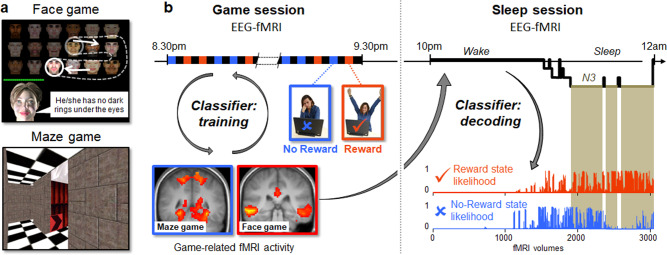
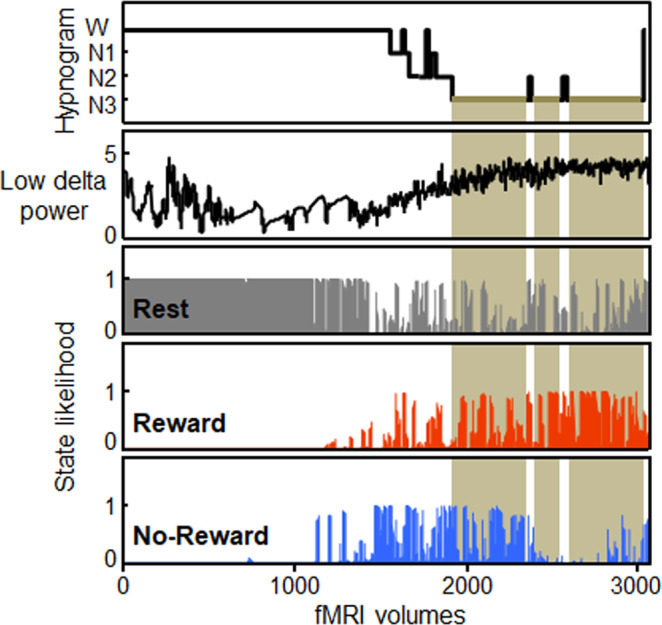
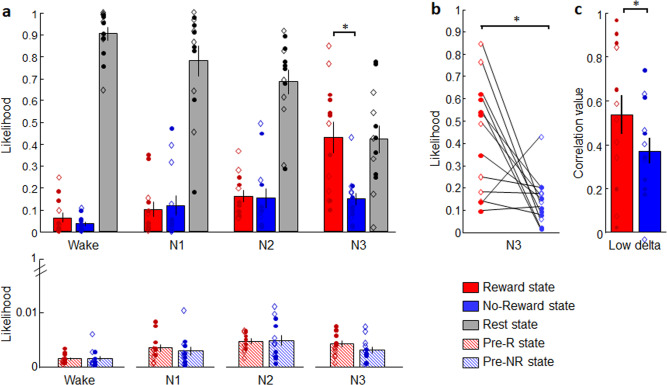
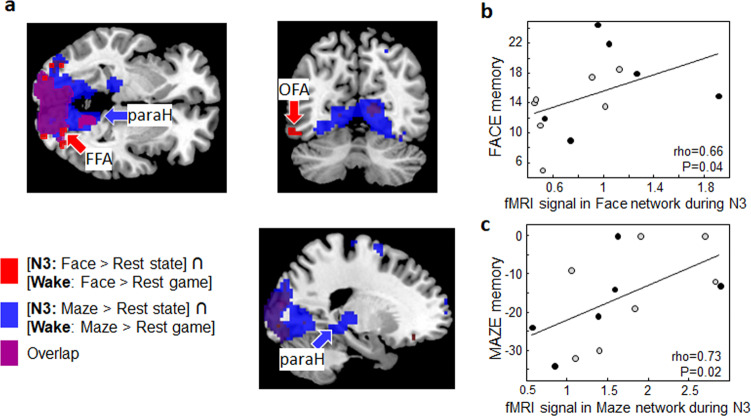
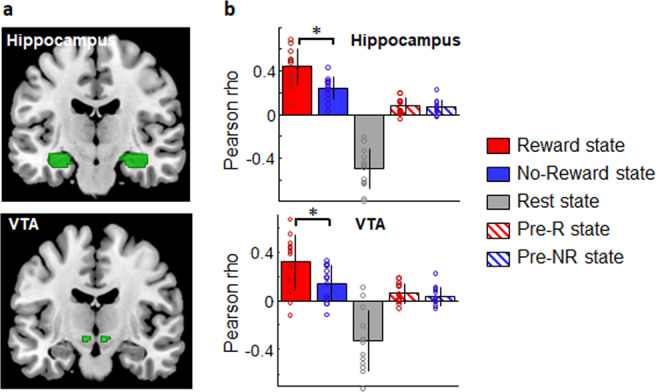
Sleep favors the reactivation and consolidation of newly acquired memories. Yet, how our brain selects the noteworthy information to be reprocessed during sleep remains largely unknown. From an evolutionary perspective, individuals must retain information that promotes survival, such as avoiding dangers, finding food, or obtaining praise or money. Here, we test whether neural representations of rewarded (compared to non-rewarded) events have priority for reactivation during sleep. Using functional MRI and a brain decoding approach, we show that patterns of brain activity observed during waking behavior spontaneously reemerge during slow-wave sleep. Critically, we report a privileged reactivation of neural patterns previously associated with a rewarded task (i.e., winning at a complex game). Moreover, during sleep, activity in task-related brain regions correlates with better subsequent memory performance. Our study uncovers a neural mechanism whereby rewarded life experiences are preferentially replayed and consolidated while we sleep.
Overview
The claims and statistics of this paper haven’t been checked yet.
Free: it reads the open-access text and checks the first 5 claims that cite a source we can check. Create a free account to check every claim.
Integrity signals
Registry
Cites
Statistics
Figures
Verification
Claims the paper makes
The claims and statistics of this paper haven’t been checked yet.
Free: it reads the open-access text and checks the first 5 claims that cite a source we can check. Create a free account to check every claim.
Self-check
Percentages, sums and reported differences re-computed from the paper’s own numbers.
The self-check needs the paper’s full text.
Citations
Cites
The Pittsburgh Sleep Quality Index: a new instrument for psychiatric practice and research
Buysse, D. J., Reynolds, C. F., Monk, T. H., Berman, S. R., & Kupfer, D. J. (1989) · Psychiatry Research · doi:10.1016/0165-1781(89)90047-4 · Cited by 35,234
(1970) · Cited by 24,983
A New Method for Measuring Daytime Sleepiness: The Epworth Sleepiness Scale
Johns, M. W. (1991) · Sleep · doi:10.1093/sleep/14.6.540 · Cited by 17,364
Tzourio-Mazoyer, N., Landeau, B., Papathanassiou, D., Crivello, F., Etard, O., Delcroix, N., Mazoyer, B., & Joliot, M. (2002) · NeuroImage · doi:10.1006/nimg.2001.0978 · Cited by 16,319
Diekelmann, S., & Born, J. (2010) · Nature Reviews Neuroscience · doi:10.1038/nrn2762 · Cited by 3,760
State-Trait Anxiety Inventory for Adults
Spielberger, C. D. (2012) · PsycTESTS Dataset · doi:10.1037/t06496-000 · Cited by 3,479
Subjective and objective sleepiness in the active individual
Åkerstedt, T., & Gillberg, M. (1990) · International Journal of Neuroscience · doi:10.3109/00207459008994241 · Cited by 3,088
Rasch, B., & Born, J. (2013) · Physiological Reviews · doi:10.1152/physrev.00032.2012 · Cited by 2,783
Tononi, G., & Cirelli, C. (2014) · Neuron · doi:10.1016/j.neuron.2013.12.025 · Cited by 2,356
Huber, R., Felice Ghilardi, M., Massimini, M., & Tononi, G. (2004) · Nature · doi:10.1038/nature02663 · Cited by 1,854
Research works printed but not linked: 3
- Lafferty, J., McCallum, A. & Pereira, F. in Proceedings of the 18th International Conference on Machine Learning (2001).
- Bradley, J. & Guestrin, C. in Proceedings of the 27th International Conference on Machine Learning (ed ICML-10) 127-134 (2010).
- Sterpenich, V. et al. Reward biases spontaneous neural reactivation during sleep. OpenNeuro, https://openneuro.org/datasets/ds003574/versions/1.0.2, (2021). PMC8260738 34230462
Cited by
Sleep—A brain-state serving systems memory consolidation
Brodt, S., Inostroza, M., Niethard, N., & Born, J. (2023) · Neuron · doi:10.1016/j.neuron.2023.03.005 · Cited by 343
What about dreams ? State of the art and open questions
Scarpelli, S., Alfonsi, V., Gorgoni, M., & Gennaro, L. D. (2022) · Journal of Sleep Research · doi:10.1111/jsr.13609 · Cited by 80
“brain activity associated with a recent rewarding (compared to a nonrewarding) waking experience during sleep (Sterpenich et al., 2021).”
BackgroundShen, Z., Yang, X., She, T., Zhao, G., Dou, Z., Luo, Y., Lin, W., Dang, W., & Yu, S. (2023) · SLEEP · doi:10.1093/sleep/zsad296 · Cited by 40
Sleep’s contribution to memory formation
Lutz, N. D., Harkotte, M., & Born, J. (2025) · Physiological Reviews · doi:10.1152/physrev.00054.2024 · Cited by 59
Reward timing matters in motor learning
Vassiliadis, P., Lété, A., Duqué, J., & Derosière, G. (2022) · iScience · doi:10.1016/j.isci.2022.104290 · Cited by 25
“If this is true, the reduction in subjective value in GroupLong may have contributed to reducing the beneficial effect of reward on offline memory consolidation (Sterpenich et al., 2021).”
BackgroundLivne, T., Kim, D., Metcalf, N. V., Zhang, L., Pini, L., Shulman, G. L., & Corbetta, M. (2022) · Scientific Reports · doi:10.1038/s41598-022-20866-5 · Cited by 28
Continuously changing memories: a framework for proactive and non-linear consolidation
Roüast, N. M., & Schönauer, M. (2022) · Trends in Neurosciences · doi:10.1016/j.tins.2022.10.013 · Cited by 23
Item-specific neural representations during human sleep support long-term memory
Liu, J., Xia, T., Chen, D., Yao, Z., Zhu, M., Antony, J. W., Lee, T. M. C., & Hu, X. (2023) · PLoS Biology · doi:10.1371/journal.pbio.3002399 · Cited by 25
What are the neural mechanisms and physiological functions of dreams?
Tsunematsu, T. (2023) · Neuroscience Research · doi:10.1016/j.neures.2022.12.017 · Cited by 22
Neural reactivation during human sleep
Denis, D., & Cairney, S. A. (2023) · Emerging Topics in Life Sciences · doi:10.1042/etls20230109 · Cited by 26
Reap while you sleep: Consolidation of memories differs by how they were sown
Antony, J. W., & Schechtman, E. (2023) · Hippocampus · doi:10.1002/hipo.23526 · Cited by 23
“…shown that sleep selectively enhances memories that are prioritized either due to perceived future relevance (i.e., information on future test; van Dongen et al., 2012; Wilhelm et al., 2011) or due to larger expected rewards (Fischer & Born, 2009; Oudiette et al., 2013; Sterpenich et al., 2021).”
BackgroundBrain decoding of the Human Connectome Project tasks in a dense individual fMRI dataset
Rastegarnia, S., St‐Laurent, M., DuPré, E., Pinsard, B., & Bellec, P. (2023) · NeuroImage · doi:10.1016/j.neuroimage.2023.120395 · Cited by 24
“…language stimuli (Tang et al., 2023), and decoding fluid mental processes such as intentions (Haynes et al., 2007; Gilbert and Fung, 2018), mental imagery (Horikawa and Kamitani, 2017; Bergmann et al., 2019) and neural reactivity during sleep (Sterpenich et al., 2021; Ru ´ e-Queralt et al., 2021).”
BackgroundLipinska, G., Austin, H. A., Moonsamy, J. R., Henry, M., Lewis, R., Baldwin, D. S., Thomas, K. G. F., & Stuart, B. L. (2022) · Frontiers in Behavioral Neuroscience · doi:10.3389/fnbeh.2022.976047 · Cited by 19
“Furthermore, a small number of studies show that after exposure to emotional material, brain regions associated with those stimuli (hippocampus and ventral tegmental area) are activated during sleep; notably, the magnitude of their activation is correlated with post-sleep task performance (Sterpenich et al., 2021; Leg…”
BackgroundSleep targets highly connected global and local nodes to aid consolidation of learned graph networks
Feld, G. B., Bernard, M., Rawson, A. B., & Spiers, H. J. (2022) · Scientific Reports · doi:10.1038/s41598-022-17747-2 · Cited by 22
Electrophysiological signatures underlying variability in human memory consolidation
Duan, W., Xu, Z., Chen, D., Wang, J., Liu, J., Tan, Z., Xiao, X., Lv, P., Wang, M., Paller, K. A., et al. (2025) · Nature Communications · doi:10.1038/s41467-025-57766-x · Cited by 16
“Sterpenich et al. showed that compared to non-rewarded events, neural patterns of rewarded events were predominant in N3 stage (slow-wave sleep, SWS), indicating that reward-related tags promote the reactivation of rewarded memories in NREM sleep to enhance their consolidation 7 .”
Consolidation of Sleep-Dependent Appetitive Memory Is Mediated by a Sweet-Sensing Circuit
Chouhan, N. S., & Sehgal, A. (2022) · Journal of Neuroscience · doi:10.1523/jneurosci.0106-22.2022 · Cited by 17
“These experiences are preferentially replayed during sleep for better retention (Dag et al., 2019; Tamaki et al., 2020; Sterpenich et al., 2021).”
Nour, M. M., Liu, Y., Higgins, C., Woolrich, M. W., & Dolan, R. J. (2023) · Brain Communications · doi:10.1093/braincomms/fcad056 · Cited by 11
Electrophysiological Mechanisms of Memory Consolidation in Human Non-rapid Eye Movement Sleep
Denis, D., & Cairney, S. A. (2024) · Current Sleep Medicine Reports · doi:10.1007/s40675-024-00291-y · Cited by 15
Reinstatement of emotional associations during human sleep: an intracranial EEG studyPreprint
Legendre, G., Bayer, L., Seeck, M., Spinelli, L., Schwartz, S., & Sterpenich, V. (2022) · bioRxiv (Cold Spring Harbor Laboratory) · doi:10.1101/2022.06.24.497499 · Cited by 9
“…mesolimbic reward system (Bekinschtein et al., 2011; Chan, Hsu, & Chou, 2018; Mobbs et al., 2003; Watson et al., 2007), which is involved in the spontaneous replay of rewarded events together with the hippocampus during sleep in rodents and humans (Lansink et al., 2009; Sterpenich et al., 2021).”
BackgroundSelf-citationSleep spindles consolidate declarative memory with tags: A meta-analysis of adult data
Chen, P., Hao, C., & Ma, N. (2024) · Journal of Pacific Rim Psychology · doi:10.1177/18344909241226761 · Cited by 10
“In particular, there is a privileged reoccurrence of neural patterns corresponding to memory items with tags during sleep (Sterpenich et al., 2021).”
Post-learning replay of hippocampal-striatal activity is biased by reward-prediction signals
Roscow, E. L., Howe, T., Lepora, N. F., & Jones, M. W. (2025) · Nature Communications · doi:10.1038/s41467-025-65354-2 · Cited by 13
“The manuscript does not address if the RPE based replay policy matches what happens in the brain, which could be done by showing that hippocampal sleep replay in the rats that performed the task is RPE-prioritized.”
Independent effects of emotional arousal and reward anticipation on episodic memory formation
Gieske, A., & Sommer, T. (2022) · Cerebral Cortex · doi:10.1093/cercor/bhac359 · Cited by 8
Pre-sleep affect predicts subsequent REM frontal theta in nonlinear fashion
ten Brink, M., Yan, Y., Zhang, J., Goldstein‐Piekarski, A. N., Krause, A. J., Kreibig, S. D., Manber, R., & Gross, J. J. (2023) · Cognitive Affective & Behavioral Neuroscience · doi:10.3758/s13415-022-01051-7 · Cited by 10
“In other words, the processing of high arousal and high valence experiences may be prioritized during sleep because of their learning implications for rewards or punishments (Sterpenich et al., 2021).”
BackgroundSleep Research in the Era of AI
Göktepe-Kavis, P., Aellen, F. M., Alnes, S. L., & Tzovara, A. (2024) · Clinical and Translational Neuroscience · doi:10.3390/ctn8010013 · Cited by 10
“Multivariate decoding, applied to hemodynamic signals, has also been used to show that patterns of awake activity that relate to reward are spontaneously reactivated during sleep, and their reactivation correlates with subsequent memory [50].”
MethodMemory reactivation generates new, adaptive behaviours that reach beyond direct experience
Rawson, A. B., Nalluru, S., O’Reilly, J. X., & Barron, H. C. (2024) · Scientific Reports · doi:10.1038/s41598-024-78906-1 · Cited by 5
“There is clear evidence to suggest reward can bias the content of memory 55–57 , and interact with the effect of TMR 39 .”
Reinforcement learning increasingly relates to memory specificity from childhood to adulthood
Nussenbaum, K., & Hartley, C. A. (2025) · Nature Communications · doi:10.1038/s41467-025-59379-w · Cited by 7
A unifying account of replay as context-driven memory reactivation
Zhou, Z., Kahana, M. J., & Schapiro, A. C. (2026) · eLife · doi:10.1101/2023.03.22.533833 · Cited by 10
Klaassen, A.-L., & Rasch, B. (2024) · eLife · doi:10.7554/elife.90930.2.sa0 · Cited by 4
A unifying account of replay as context-driven memory reactivationPreprint
Zhou, Z., Kahana, M. J., & Schapiro, A. C. (2024) · eLife · doi:10.7554/elife.99931.1 · Cited by 7
Modulating social learning-induced evaluation updating during human sleep
Chen, D., Xia, T., Yao, Z., Zhang, L., & Hu, X. (2024) · npj Science of Learning · doi:10.1038/s41539-024-00255-5 · Cited by 8
“Given that motivationcould bias memory reactivationduring sleep 69,70 , future research shall consider manipulating motivational processes during social learning, and examine how motivation interacts with sleep and memory reactivation to change behavior.”
Memory consolidation from a reinforcement learning perspective
Lee, J. W., & Jung, M. W. (2025) · Frontiers in Computational Neuroscience · doi:10.3389/fncom.2024.1538741 · Cited by 10
The influence of encoding strategy on associative memory consolidation across wake and sleep
Denis, D., Bottary, R. M., Cunningham, T. J., Tcheukado, M.-C., & Payne, J. D. (2023) · Learning & Memory · doi:10.1101/lm.053765.123 · Cited by 9
Interpreting human sleep activity through neural contrastive learning
Chen, Z., Zheng, H., Zhou, J., Zheng, L., Lin, P., Wang, H., Busche, M. A., Behrens, T. E. J., Dolan, R. J., & Liu, Y. (2026) · Neuron · doi:10.1016/j.neuron.2026.03.028 · Cited by 8
Memory for rewards guides retrieval
Nagel, J., Morgan, D. P., Gürsoy, Ç. N., Sander, S., Kern, S., & Feld, G. B. (2024) · Communications Psychology · doi:10.1038/s44271-024-00074-9 · Cited by 9
“We also preregistered an effect of true reward on memory strength and possibly criterion in the incongruent group,butlaterrealizedthatthispartofthepreregisteredmodelcouldnotbe calculatedasplanned(fordetails,seeSupplementaryNote5).”
BackgroundA unifying account of replay as context-driven memory reactivationPreprint
Zhou, Z., Kahana, M. J., & Schapiro, A. C. (2026) · eLife · doi:10.7554/elife.99931 · Cited by 14
No evidence for a targeted memory reactivation effect on word-meaning priming
Ball, L. V., Kimel, E., Keller, V. G., Ward, E., Cairney, S. A., Mak, M. H., Li, L., Rodd, J. M., & Gaskell, M. G. (2025) · Neuropsychologia · doi:10.1016/j.neuropsychologia.2025.109264 · Cited by 3
Barner, C., Werner, A.-S., Schörk, S., Born, J., & Diekelmann, S. (2023) · Frontiers in Sleep · doi:10.3389/frsle.2023.1187170 · Cited by 4
“Likewise in humans, using an fMRI brain decoding approach, rewarded information was found to be spontaneously reactivated to a stronger degree during post-learning SWS than non-rewarded information (Sterpenich et al., 2021).”
BackgroundIs Sleep-Related Eating Disorder (SRED) a NREM Parasomnia or a Heterogenous Disease?
Zobrist, N. J., Zhang, Z., & Khatami, R. (2023) · Clinical and Translational Neuroscience · doi:10.3390/ctn8010001 · Cited by 2
“Reward-related circuits are not only active during wakefulness, but also during normal sleep, as demonstrated by direct recording from reward-related neurons in animals and by functional imaging in humans [39–42].”
BackgroundA reward effect on memory retention, consolidation, and generalization?
Schultz, H., Stoffregen, H., & Benoit, R. G. (2023) · Learning & Memory · doi:10.1101/lm.053842.123 · Cited by 2
“This may re fl ect the preferred reactivation of rewarded items during slow-wave sleep (Sterpenich et al. 2021).”
BackgroundKlaassen, A.-L., & Rasch, B. (2024) · eLife · doi:10.7554/elife.90930.3 · Cited by 1
Concurrent representations of reinstated and transformed memories and their modulation by reward
Schultz, H., Stoffregen, H., Dabas, A., Alcobendas, M., & Benoit, R. G. (2025) · Imaging Neuroscience · doi:10.1162/imag_a_00476 · Cited by 1
“…not foster memory transformation in the mPFC, but only in the anterior HC. Reward has been shown to increase neural replay ( Gruber et al., 2016; Sterpenich et al., 2021) and promote consolidation ( Murayama & Kitagami, 2014; Murayama & Kuhbandner, 2011; Spaniol et al., 2014; Wittmann et al.,…”
Brain decoding of the Human Connectome Project Tasks in a Dense Individual fMRI Dataset.Preprint
Rastegarnia, S., St‐Laurent, M., DuPré, E., Pinsard, B., & Bellec, P. (2022) · PsyArXiv (OSF Preprints) · doi:10.31234/osf.io/9t5nh · Cited by 1
Reap while you sleep: consolidation of memories differs by how they were sownPreprint
Antony, J. W., & Schechtman, E. (2022) · doi:10.31234/osf.io/u48fp · Cited by 1
Item-specific memory reactivation supports overnight memory consolidationPreprint
Liu, J., Xia, T., Chen, D., Yao, Z., Zhu, M., Antony, J. W., Lee, T. M. C., & Hu, X. (2023) · Research Square · doi:10.21203/rs.3.rs-2544886/v1 · Cited by 1
Emotional association enhances perceptual memory through amygdalo-cortical inputs during NREM sleepPreprint
Saito, Y., Osako, Y., Odagawa, M., Oisi, Y., Matsubara, C., Kato, S., Kobayashi, K., Morita, M., Johansen, J. P., & Murayama, M. (2023) · bioRxiv (Cold Spring Harbor Laboratory) · doi:10.1101/2023.05.23.541852 · Cited by 1
Sleep resolves competition between explicit exemplar memory and implicit memory generalizationPreprint
Kleespies, K., Paulus, P. C., Zhu, H., Pargent, F., Jakob, M., Werle, J., Czisch, M., Boedecker, J., Gais, S., & Schönauer, M. (2025) · bioRxiv (Cold Spring Harbor Laboratory) · doi:10.1101/2025.02.21.639581 · Cited by 2
“The task design was chosen based on a large literature of studies on classification learning (F. G. Ashby & Maddox, 2005).”
La nuit, le cerveau rejoue ses succès
Buloup, S. (2021) · Cerveau & Psycho · doi:10.3917/cerpsy.136.0012
Reactivating Positive Personality Traits During Sleep Impacts Self-Evaluative MemoriesPreprint
Yao, Z., Xia, T., Zhang, Z., Lin, X., Qin, P., Ma, Y., & Hu, X. (2022) · Research Square · doi:10.21203/rs.3.rs-2318943/v1
Item-specific memory reactivation during sleep supports memory consolidation in humansPreprint
Liu, J., Xia, T., Chen, D., Yao, Z., Zhu, M., Antony, J. W., Lee, T. M. C., & Hu, X. (2023) · bioRxiv (Cold Spring Harbor Laboratory) · doi:10.1101/2023.01.25.525599
A reward effect on memory retention, consolidation, and generalization?Preprint
Schultz, H., Stoffregen, H., & Benoit, R. G. (2023) · PsyArXiv (OSF Preprints) · doi:10.31234/osf.io/89s2k
Encoding strategy and sleep interact to facilitate associative memory consolidationPreprint
Denis, D., Bottary, R. M., Cunningham, T. J., Tcheukado, M.-C., & Payne, J. D. (2023) · PsyArXiv (OSF Preprints) · doi:10.31234/osf.io/r79pm
A Study on the Consolidation Characteristics of Sleep on Memory of Different Intensity
Ma, B., & Li, L. (2023) · Advances in Educational Technology and Psychology · doi:10.23977/aetp.2023.071410
“There is also evidence that memories of reward-related experiences are preferentially replayed during sleep because of their ability to modulate their own behavioral performance and thus enhance the individual's survival adaptations [31] .”
BackgroundReinforcement learning increasingly shapes memory specificity from childhood to adulthoodPreprint
Nussenbaum, K., & Hartley, C. A. (2023) · PsyArXiv (OSF Preprints) · doi:10.31234/osf.io/utsxn
Modulating social learning-induced evaluation updating during human sleepPreprint
Chen, D., Xia, T., Yao, Z., Zhang, L., & Hu, X. (2023) · bioRxiv (Cold Spring Harbor Laboratory) · doi:10.1101/2023.12.11.571114
Memory reactivation and transformation
Ye, Z., & Kuhl, B. A. (2024) · Elsevier eBooks · doi:10.1016/b978-0-443-15754-7.00026-2 · Cited by 1
Klaassen, A.-L., & Rasch, B. (2024) · eLife · doi:10.7554/elife.90930.2
Klaassen, A.-L., & Rasch, B. (2024) · eLife · doi:10.7554/elife.90930.2.sa1
Klaassen, A.-L., & Rasch, B. (2024) · eLife · doi:10.7554/elife.90930.2.sa3
Klaassen, A.-L., & Rasch, B. (2024) · eLife · doi:10.7554/elife.90930.2.sa2
Kurdziel, L. B. F., Fiedler, C., Gajewski, A., & Pongratz, C. (2025) · Frontiers in Behavioral Neuroscience · doi:10.3389/fnbeh.2025.1643449
“…sleep appears to favor memories that align with specific motivational or cognitive cues present during encoding—such as rewards value (e.g., Sterpenich et al., 2021; Fischer and Born, 2009; Asfestani et al., 2020), future utility (e.g., Wilhelm et al., 2011; van Dongen et al., 2012), or…”
Neils‐Strunjas, J., & Mahendra, N. (2025) · Oxford University Press eBooks · doi:10.1093/oxfordhb/9780198888482.013.0023
A unifying account of replay as context-driven memory reactivationPreprint
Zhou, Z., Kahana, M. J., & Schapiro, A. C. (2025) · eLife · doi:10.7554/elife.99931.2
Ilhan-Bayrakcı, M., Tüscher, O., & Stroh, A. (2026) · iScience · doi:10.1016/j.isci.2026.115455
“The data were originally acquired and published in previous studies by Bergmann et al. 27 and Sterpenich et al. 28,29 For clarity, we refer to them as datasets 1 and 2 throughout the manuscript.”
Décoder l’émotion des rêves à l’aide des parasomnies et du sommeil paradoxal lucide
Maranci, J. (2022) · theses.fr (ABES) · doi:10.70675/2aa250b1zf8eez480dzae56z635743e1532a · Cited by 2
Automated assessment of nocturnal affect using infrared recordings of facial expressionsPreprint
Ernst, S., Krauss, D., Moß, M., Vossiek, M., Eskofier, B. M., & Berking, M. (2026) · Research Square · doi:10.21203/rs.3.rs-9418466/v1
Reward and punishment differentially shape basketball free-throw learningPreprint
Papaxanthis, C., Crognier, L., Pibarot, E., Gaveau, J., Ruffino, C., & Vassiliadis, P. (2026) · bioRxiv (Cold Spring Harbor Laboratory) · doi:10.64898/2026.04.28.721312 · Cited by 1
“By contrast, reward appears to be beneficial in the long run, consistent with a large body of evidence indicating that reward boosts neural mechanisms involved in consolidation of memories, including neural replay in the hippocampus 29,31,32 .”
Sleep consolidation of social memories and common ground
Qiu, Y., Ball, L. V., Hopkins, C., Denis, D., Gaskell, M. G., & Ferguson, H. J. (2026) · Cognition · doi:10.1016/j.cognition.2026.106670
Rapid offline integration of learned experiences is shaped by valence and biases future decisionsPreprint
Becker, B., Xu, T., Chen, Z., Zhang, L., Gan, X., Zhou, F., Zhang, R., Zhao, W., Fu, K., Wang, L., et al. (2026) · Research Square · doi:10.21203/rs.3.rs-10900455/v1
Metadata
- Authors
- Sterpenich, V., van Schie, M. K. M., Catsiyannis, M., Ramyead, A., Perrig, S., Yang, H.-D., Van De Ville, D., & Schwartz, S.
- Affiliations
- University of Geneva (CH)
- University of California, San Francisco (US)
- University Hospital of Geneva (CH)
- Chosun University (KR)
- Venue
- Nature Communications
- Published
- 2021-07-06
- Volume
- 12
- Issue
- 1
- Pages
- 4162-4162
- ISSN
- 2041-1723 (ISSN-L)
- PMC
- PMC8260738
- OpenAlex
- W3178029257
- Cited by
- 71
- References
- 60
- Citations by year
- 2026: 7 · 2025: 11 · 2024: 17 · 2023: 20 · 2022: 14 · 2021: 2
- FWCI
- 6.97
- Type
- journal article
- Language
- en
- Open access
- gold
- doi.org
- Licence
- cc-by
- creativecommons.org/licenses/by/4.0 (tdm)
- creativecommons.org/licenses/by/4.0 (vor)
- Locations
- Nature Communications (publishedVersion, cc-by)
- PubMed Central (publishedVersion, cc-by)
- PubMed (publishedVersion)
- Archive ouverte UNIGE (University of Geneva) (publishedVersion, other-oa)
- RePEc: Research Papers in Economics (submittedVersion)
- DOAJ (DOAJ: Directory of Open Access Journals) (submittedVersion, cc-by-sa)
- Infoscience (Ecole Polytechnique Fédérale de Lausanne) (submittedVersion, cc-by-nc-nd)
- Archive ouverte UNIGE (University of Geneva) (submittedVersion, cc-by)
- UC San Diego (public-domain)
- Funders
- National Science Foundation (51NF40-104897)
- National Research Foundation
- Schweizerischer Nationalfonds zur Förderung der Wissenschaftlichen Forschung (104897, 159862, 51NF40, 135653, 320030)
- National Research Foundation of Korea (NRF-2017R1A2B4005305)
- Université de Genève (320030-135653, 51NF40-104897, 320030-159862)
- Ministry of Science and ICT, South Korea
- Topics
- Life Sciences › Neuroscience › Cognitive Neuroscience › Sleep and Wakefulness Research
- Life Sciences › Neuroscience › Cognitive Neuroscience › Memory and Neural Mechanisms
- Life Sciences › Neuroscience › Cognitive Neuroscience › Memory Processes and Influences
- Keywords
- sleep-dependent memory consolidation, memory reactivation, slow-wave sleep, reward, neural replay, memory consolidation, brain decoding, memory performance
- MeSH terms
- Sleep, Slow-Wave, Adult, Brain, Brain Mapping, Female, Hippocampus, Humans, Magnetic Resonance Imaging, Male, Memory, Models, Biological, Reward, Sleep, Bias, Young Adult
About these checks
Registry, retraction, Cites and statistics results are computed, not judged, with one exception: a printed reference that no index lists is read once by a model before it counts as a citation error. Claims are extracted by a model and kept only when their quote appears verbatim in the text; each cited source is then checked, with a model’s help, for whether it says what the claim relies on. Those verdicts can be wrong — read the claim’s quote and the cited source before relying on one.
Statistics and arithmetic are recomputed, not judged.
Confidence bands are shown only for fields calibrated on our annotated test set. None is calibrated yet, so no band is shown.
What counts as a claim ›How we measure confidence ›How we check this ›
Are you an author, or do you see a problem with this page? Request a review
Data sources
Bibliographic data: Semantic Scholar, OpenAlex, Crossref.
Contains information from the Semantic Scholar Academic Graph Datasets, made available under the ODC Attribution License (ODC-BY 1.0).
Semantic Scholar’s data is described in: Kinney, R., et al. (2023). The Semantic Scholar Open Data Platform. arXiv:2301.10140.
