

Quantifying the contribution of Neanderthal introgression to the heritability of complex traits
Open accessPublished version of a preprint
The DOI matches its Crossref record; 96 of the 96 references it cites were found in a registry or an index; 70 of the 80 sources its claims cite were checked for support.
Abstract
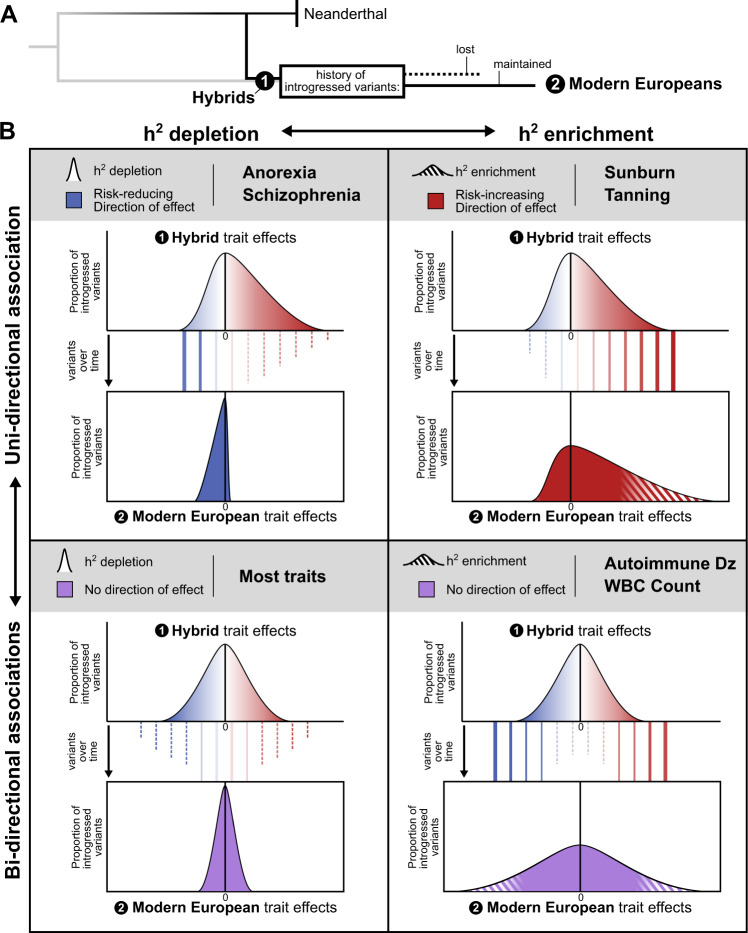
Eurasians have ~2% Neanderthal ancestry, but we lack a comprehensive understanding of the genome-wide influence of Neanderthal introgression on modern human diseases and traits. Here, we quantify the contribution of introgressed alleles to the heritability of more than 400 diverse traits. We show that genomic regions in which detectable Neanderthal ancestry remains are depleted of heritability for all traits considered, except those related to skin and hair. Introgressed variants themselves are also depleted for contributions to the heritability of most traits. However, introgressed variants shared across multiple Neanderthal populations are enriched for heritability and have consistent directions of effect on several traits with potential relevance to human adaptation to non-African environments, including hair and skin traits, autoimmunity, chronotype, bone density, lung capacity, and menopause age. Integrating our results, we propose a model in which selection against introgressed functional variation was the dominant trend (especially for cognitive traits); however, for a few traits, introgressed variants provided beneficial variation via uni-directional (e.g., lightening skin color) or bi-directional (e.g., modulating immune response) effects.
Overview
CoChat Summary
TL;DR
The paper quantifies how Neanderthal introgression contributes to complex-trait heritability across more than 400 traits, finding broad heritability depletion in regions with detectable Neanderthal ancestry except for skin and hair traits. Older Altai-matching introgressed variants are less depleted and sometimes enriched, with directional effects for traits such as balding, menopause age, lung capacity, morningness, and sunburn.
Key findings
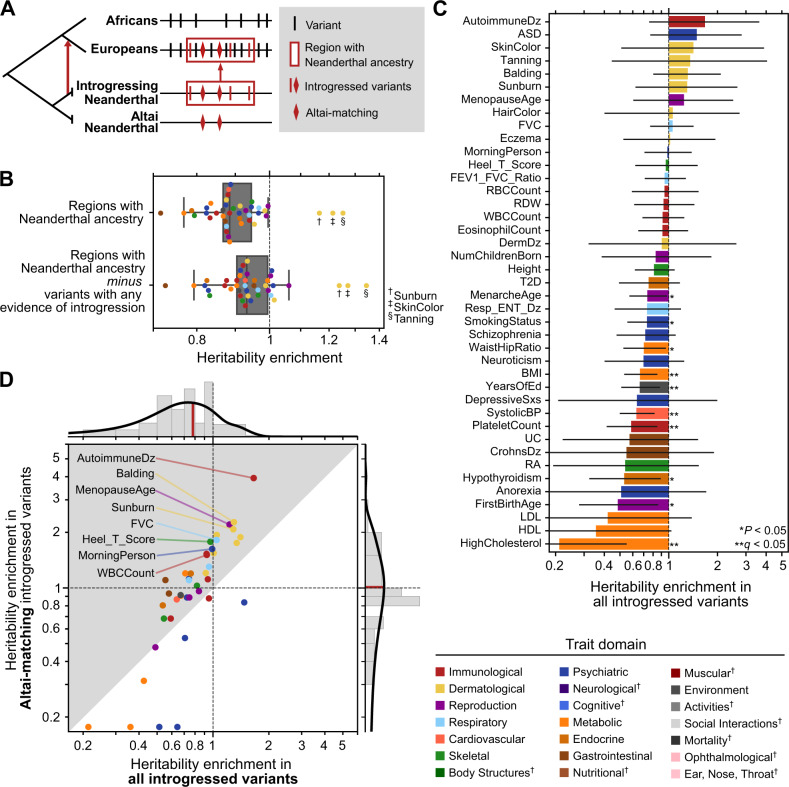
- Regions with detectable Neanderthal ancestry (1,345 segments, median 299 kb, covering 19% of the genome) were 1.10-fold depleted for heritability across 41 traits (P = 8 × 10⁻⁷); after removing introgressed variants they remained 1.06-fold depleted (P = 0.003). Sunburn, skin color, and tanning were exceptions.
- All introgressed variants (N = 900,902) were 1.28-fold depleted for trait heritability (P = 0.0004), with strongest depletion for cholesterol level (4.7-fold, q = 0.02), platelet count (1.7-fold, q = 0.04), systolic blood pressure (1.6-fold, q = 0.01), years of education (1.5-fold, q = 0.04), and BMI (1.5-fold, q = 0.02).
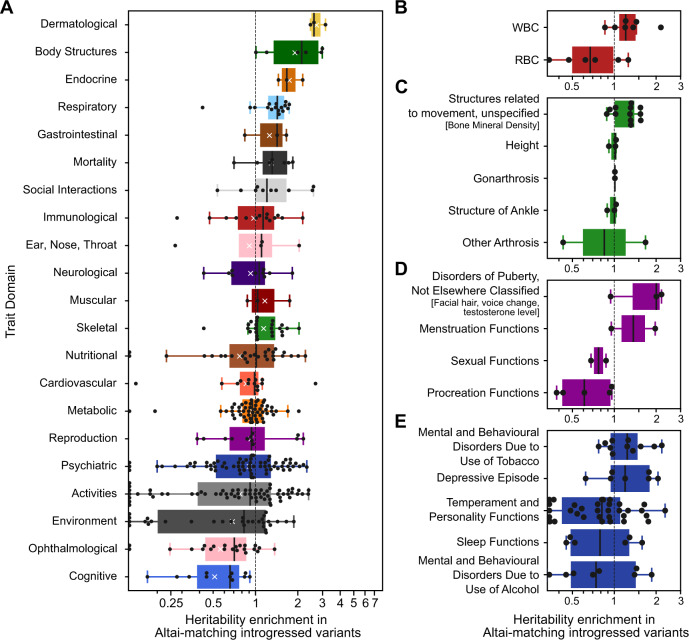
- Altai-matching introgressed variants (N = 138,774) were not depleted overall (1.02-fold, P = 0.9) and were more enriched than all introgressed variants for 78% of traits (P = 0.0002). Across 405 traits, they were most enriched for dermatologic hair-related traits (2.7-fold, q = 0.04) and most depleted for cognitive traits (2.0-fold, q = 0.04).
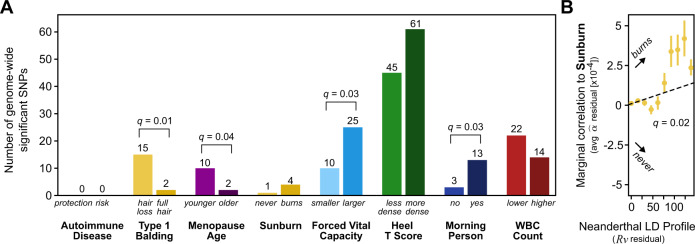
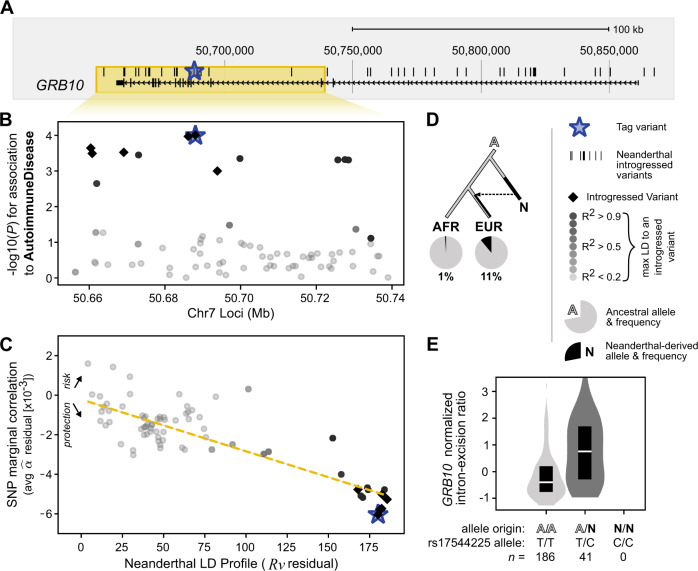
- Directional analyses found significant biases for balding (15 of 17 Neanderthal alleles associated with hair loss), younger menopause age, larger forced vital capacity, and morning person (q < 0.05); sunburn showed genome-wide uni-directional risk increase (rf = 0.18%, q = 0.02), while anorexia (rf = −0.93%, q = 4 × 10⁻⁵) and schizophrenia (rf = −0.27%, q = 0.01) showed protective directional effects.
Methods
- Used Sprime-defined Neanderthal ancestry segments and variant sets from Europeans, including Altai-matching, Vindija-matching, and all introgressed variants, plus S*-identified haplotypes. Analyzed GWAS summary statistics for 41 representative traits (average N = 329,378; M = 1,155,239; h²SNP = 0.19) and 405 UK Biobank/FinnGen traits (average n = 288,130; h²SNP = 0.108).
- Main heritability analysis used stratified LD score regression (S-LDSC) with the baseline v2.1 model, 1000 Genomes European LD reference, and HapMap 3 variants excluding the MHC; significance estimated by block jackknife across 200 blocks.
- Direction-of-effect analyses used intersection with genome-wide significant GWAS variants and signed LD profile (SLDP) regression, plus 30 kb sliding windows to identify candidate trait-associated introgressed regions.
Limitations
- The paper states: analyses use common introgressed variants (MAF > 0.05); some partitions are small and underpowered; pleiotropy and differing modern versus archaic environments complicate selection inference; heritability enrichment estimates are sensitive to assumed heritability models and demographic factors; analyses are limited to Europeans; direction analyses conservatively used Altai-matching alleles and LD expansion, potentially missing true effects; molecular validation is needed for candidate associations.
- Evident from the text: the Neanderthal ancestry maps likely do not include all introgressed regions because some archaic fragments are too short or too similar to nonarchaic fragments to detect; S-LDSC relies on summary statistics and a European LD reference; trait coding differences, such as binary coding of morning person, may affect heritability estimates.
Model-written summary. Check it against the paper before relying on it.
Integrity signals
Registry
Cites
Statistics
Figures
Verification
Claims the paper makes
43 Valid · 3 Not valid · 1 Not checked · 116 Own results and interpretations
The cited sources support only part of this claim — read each source’s verdict below.
In the paper
“First, Neanderthal ancestry is depleted in regions of the genome with strong background selection and evolutionary conservation18,19,27.”
§ Quantifying the contribution of Neanderthal introgression to the heritability of complex traits > Introduction
What the sources say
- Partly supportedcites [18] Vernot B Akey JM Resurrecting surviving Neandertal lineages from modern human genomes Science 2014 343 1017 1021 10.1126/science.1245938 24476670 sourceExperimental — accuracy not yet measured
The Reports (p. 1) describe genomic regions depleted of Neandertal sequence, including chromosome arms 8q and 17q and a region encompassing FOXP2. But the passage does not link that depletion to strong background selection or evolutionary conservation. The Supplementary Materials (p. 5) mention conserved elements only as sites overlapped by some introgressed variants. (LLM, conf=0.84)
- Supportedcites [19] Sankararaman S The genomic landscape of Neanderthal ancestry in present-day humans Nature 2014 507 354 357 10.1038/nature12961 24476815 PMC4072735 source
The paper reports that low B-statistic values, which indicate a high density of functionally important elements, are significantly correlated with low Neanderthal ancestry. It also reports depleted ancestry in conserved pathways such as RNA processing. These passages support the paraphrase; page numbers are not supplied in our copy. (LLM, conf=0.88)
- Partly supportedcites [27] Petr M Pääbo S Kelso J Vernot B Limits of long-term selection against Neandertal introgression Proc. Natl Acad. Sci. USA 2019 116 1639 1644 10.1073/pnas.1814338116 30647110 PMC6358679 sourceExperimental — accuracy not yet measured
The Results section, “Neandertal DNA Is Depleted in Regulatory and Conserved Noncoding Sequence” (page unavailable), reports significantly less Neandertal ancestry in conserved phastCons regions than in intronic and intergenic regions. It mentions earlier studies using B values, but our copy does not establish depletion specifically in regions of strong background selection. (LLM, conf=0.83)
plainstates an association- Asserted: passes — The authors put it forward as true.
- Checkable: passes — It can be checked against evidence.
- Load-bearing: passes — The paper’s conclusions depend on it.
- Based: passes — The paper gives a reason why it holds.
- Partly supported
The sources with a verdict support this claim; the rest weren’t checked yet, have no full text we could read, or their verdicts aren’t rated yet.
In the paper
“After introgression, these variants were subject to more effective selection in larger AMH populations25,26.”
§ Quantifying the contribution of Neanderthal introgression to the heritability of complex traits > Introduction
What the sources say
- Not checked yetcites [25] Harris K Nielsen R The genetic cost of neanderthal introgression Genetics 2016 203 881 891 10.1534/genetics.116.186890 27038113 PMC4896200 source
Checked before — its earlier verdict is held back until a new check runs.
- Supportedcites [26] Juric, I., Aeschbacher, S. & Coop, G. The strength of selection against Neanderthal introgression. PLoS Genet. 12, e1006340. (2016). PMC5100956 27824859 source
The Results (page not available in our copy) describe differences in the efficacy of selection between AMH and Neanderthals. They state that weakly deleterious Neanderthal alleles could drift upward in frequency before being selected against after introgression into modern human populations of larger effective size. (LLM, conf=0.94)
plainstates a cause- Asserted: passes — The authors put it forward as true.
- Checkable: passes — It can be checked against evidence.
- Load-bearing: unclear — It is unclear whether the paper’s conclusions depend on it.
- Based: passes — The paper gives a reason why it holds.
- Not checked yet
The cited sources support only part of this claim — read each source’s verdict below.
In the paper
“The depletion in cognitive traits suggests that the previously observed strong depletion for Neanderthal alleles in regulatory regions active in the brain may be due to effects on brain-related complex traits5,28,29.”
§ Quantifying the contribution of Neanderthal introgression to the heritability of complex traits > Results > Neanderthal introgressed variants are most enriched for the heritability of dermatologic traits and most depleted for cognitive traits
What the sources say
- Partly supportedcites [5] Rinker DC Neanderthal introgression reintroduced functional ancestral alleles lost in Eurasian populations Nat. Ecol. Evol. 2020 4 1332 1341 10.1038/s41559-020-1261-z 32719451 PMC7529911 sourceExperimental — accuracy not yet measured
The Discussion (page not available) reports depletion of Neanderthal-derived alleles among introgressed brain eQTLs and discusses selection affecting regulatory regions. It does not report a depletion in cognitive traits or suggest that effects on brain-related complex traits explain the regulatory-region depletion. (LLM, conf=0.83)
- Partly supportedcites [28] McCoy RC Wakefield J Akey JM Impacts of Neanderthal-Introgressed Sequences on the Landscape of Human Gene Expression Cell 2017 168 916 927 10.1016/j.cell.2017.01.038 28235201 PMC6219754 sourceExperimental — accuracy not yet measured
In Results and Discussion, “Brain sub-regions show downregulation of Neanderthal alleles” (page unavailable), the paper reports lower expression of introgressed alleles in brain regions and notes the cognitive functions of some of those regions. Downregulation of allelic expression is not the claimed depletion of Neanderthal alleles from brain-active regulatory regions; the paper also does not link that depletion to effects on brain-related complex traits. (LLM, conf=0.81)
- Supportedcites [29] Telis N Aguilar R Harris K Selection against archaic hominin genetic variation in regulatory regions Nat. Ecol. Evol. 2020 4 1558 1566 10.1038/s41559-020-01284-0 32839541 PMC8240140 source
The Results section (‘Highly pleiotropic enhancers harbour fewer archaic variants than tissue-specific enhancers’; page unavailable) reports that enhancers active in foetal brain and neurosphere cells are among those most strongly depleted of introgressed variation. This supports the cited prior observation about Neanderthal alleles in brain-active regulatory regions. The proposed link to cognitive traits is the citing authors’ inference, not a finding attributed specifically to this source. (LLM, conf=0.88)
hedgedstates a possible cause- Asserted: passes — The authors put it forward as true.
- Checkable: passes — It can be checked against evidence.
- Load-bearing: passes — The paper’s conclusions depend on it.
- Based: passes — The paper gives a reason why it holds.
- Partly supported
The sources with a verdict support this claim; the rest weren’t checked yet, have no full text we could read, or their verdicts aren’t rated yet.
In the paper
“most medically and evolutionarily relevant traits are complex, with hundreds or thousands of loci across the genome contributing to them34,35.”
§ Quantifying the contribution of Neanderthal introgression to the heritability of complex traits > Introduction
What the sources say
- Not checked — no full text of the sourcecites [34] Visscher PM 10 Years of GWAS Discovery: Biology, Function, and Translation Am. J. Hum. Genet. 2017 101 5 22 10.1016/j.ajhg.2017.06.005 28686856 PMC5501872 source
- Supportedcites [35] Boyle, E. A., Li, Y. I. & Pritchard, J. K. An expanded view of complex traits: from polygenic to omnigenic. Cell169, 1177–1186 (2017). PMC5536862 28622505 source
The ‘Distribution of GWAS signals across the genome’ section (page unavailable) says that most traits have many small-effect causal loci and that heritability of complex traits and diseases is spread broadly across the genome. The ‘Evolutionary change of complex traits’ section (page unavailable) argues that most adaptive changes may involve many causal variants across the genome. Together, these support the citing sentence’s broad paraphrase. (LLM, conf=0.88)
plain- Asserted: passes — The authors put it forward as true.
- Checkable: passes — It can be checked against evidence.
- Load-bearing: passes — The paper’s conclusions depend on it.
- Based: passes — The paper gives a reason why it holds.
Every source the paper cites for this claim was checked and supports it.
In the paper
“Introgressed haplotypes carry alleles of different origins, including ancestral alleles lost in some modern Eurasian populations5.”
§ Quantifying the contribution of Neanderthal introgression to the heritability of complex traits > Discussion
What the sources say
- Supportedcites [5] Rinker DC Neanderthal introgression reintroduced functional ancestral alleles lost in Eurasian populations Nat. Ecol. Evol. 2020 4 1332 1341 10.1038/s41559-020-1261-z 32719451 PMC7529911 source
The Results distinguish Neanderthal-derived alleles from ancestral alleles reintroduced on introgressed haplotypes. They state that some ancestral alleles were lost only in Eurasian populations and that reintroduced alleles would initially be exclusive to introgressed haplotypes. Page numbers are not provided in our copy. (LLM, conf=0.94)
plain- Asserted: passes — The authors put it forward as true.
- Checkable: passes — It can be checked against evidence.
- Load-bearing: passes — The paper’s conclusions depend on it.
- Based: passes — The paper gives a reason why it holds.
- Supported
86 more claims · 17 with their cited sources checked
Create a free account to see all 163 claims and to verify the 4 references still open.
- It may state two separate claims as one. 55
- Probably not a substantial claim. 31
- The quote only partly states this claim. 1
Claims other papers make about this one
Each is checked against this paper’s own text: does it say what the citing paper says it does?
The source backs part of the claim, not all of it — or backs it for a different population, condition or comparison.
In the citing paper
“Additionally, signatures of archaic introgression have been reported in genes associated with hair and skin pigmentation, immunity [16, 17, 19, 20, 22], neoplasms and metabolic traits [19, 23, 24], and male sterility [17, 18].”
From Denisovan and Neanderthal archaic introgression differentially impacted the genetics of complex traits in modern populations (2022) · cites this paper as [22]
Experimental — accuracy not yet measuredThe source backs part of the claim, not all of it — or backs it for a different population, condition or comparison.
In the citing paper
“In our evolution-focused SNP-h2 enrichment analysis, we detected an overabundance of genic and LoF intolerant loci in both EAS and EUR, suggesting that functionally important regions of the genome contribute to SNP-h2 to a different extent compared to the other annotations tested [10, 33, 40, 44].”
From Denisovan and Neanderthal archaic introgression differentially impacted the genetics of complex traits in modern populations (2022) · cites this paper as [40]
Experimental — accuracy not yet measuredThe source backs part of the claim, not all of it — or backs it for a different population, condition or comparison.
In the citing paper
“Another recent study investigating Neanderthal-introgressed alleles showed associations with hair color and hematological biomarkers that are consistent with our results [40].”
From Denisovan and Neanderthal archaic introgression differentially impacted the genetics of complex traits in modern populations (2022) · cites this paper as [40]
Experimental — accuracy not yet measuredThe source backs part of the claim, not all of it — or backs it for a different population, condition or comparison.
In the citing paper
“This discrepancy could be due to the different methods and NIMs used in the two studies.”
From The lingering effects of Neanderthal introgression on human complex traits (2023) · cites this paper as McArthur et al., 2021
Experimental — accuracy not yet measuredThe source backs part of the claim, not all of it — or backs it for a different population, condition or comparison.
In the citing paper
“Because Denisovan DNA is not present in the genomes of modern Europeans, which make up the vast diversity of biomedical genetics cohorts, it has been impossible to link them to phenotype, unlike segregating Neanderthal variants [16, 25].”
From Denisovan introgression has shaped the immune system of present-day Papuans (2022) · cites this paper as [16]
Experimental — accuracy not yet measured
13 more claims about this paper
Create a free account to see every claim other papers make about this one.
Citations
Cites
Matplotlib: a 2D graphics environment
Hunter, J. D. (2007) · Computing in Science & Engineering · doi:10.1109/mcse.2007.55 · Cited by 39,249
PLINK: a tool set for whole-genome association and population-based linkage analyses.
Purcell, S., Neale, B., Todd-Brown, K., Thomas, L., Ferreira, M. A. R., Bender, D., Maller, J., Sklar, P., de Bakker, P. I. W., Daly, M. J., et al. (2007) · The American Journal of Human Genetics · doi:10.1086/519795 · Cited by 34,089
BEDTools: a flexible suite of utilities for comparing genomic features
Quinlan, A. R., & Hall, I. M. (2010) · Bioinformatics · doi:10.1093/bioinformatics/btq033 · Cited by 27,437
A global reference for human genetic variation
The 1000 Genomes Project Consortium, authors, C., Auton, A., Abecasis, G. R., Steering committee, Altshuler, D. M., Durbin, R. M., Abecasis, G. R., Bentley, D. R., Chakravarti, A., et al. (2015) · Nature · doi:10.1038/nature15393 · Cited by 18,247
Sudlow, C., Gallacher, J., Allen, N., Beral, V., Burton, P., Danesh, J., Downey, P., Elliott, P., Green, J., Landray, M., et al. (2015) · PLOS Medicine · doi:10.1371/journal.pmed.1001779 · Cited by 12,728
Biological insights from 108 schizophrenia-associated genetic loci
Schizophrenia Working Group of the Psychiatric Genomics Consortium (2014) · Nature · doi:10.1038/nature13595 · Cited by 7,577
LD Score regression distinguishes confounding from polygenicity in genome-wide association studies
Schizophrenia Working Group of the Psychiatric Genomics Consortium, Bulik-Sullivan, B. K., Loh, P.-R., Finucane, H. K., Ripke, S., Yang, J., Patterson, N., Daly, M. J., Price, A. L., & Neale, B. M. (2015) · Nature Genetics · doi:10.1038/ng.3211 · Cited by 5,559
Host–microbe interactions have shaped the genetic architecture of inflammatory bowel disease
The International IBD Genetics Consortium (IIBDGC), Jostins, L., Ripke, S., Weersma, R. K., Duerr, R. H., McGovern, D. P., Hui, K. Y., Lee, J. C., Philip Schumm, L., Sharma, Y., et al. (2012) · Nature · doi:10.1038/nature11582 · Cited by 4,722
10 Years of GWAS Discovery: Biology, Function, and Translation
Visscher, P. M., Wray, N. R., Zhang, Q., Sklar, P., McCarthy, M. I., Brown, M. A., & Yang, J. (2017) · The American Journal of Human Genetics · doi:10.1016/j.ajhg.2017.06.005 · Cited by 3,719
Biological, clinical and population relevance of 95 loci for blood lipids
Teslovich, T. M., Musunuru, K., Smith, A. V., Edmondson, A. C., Stylianou, I. M., Koseki, M., Pirruccello, J. P., Ripatti, S., Chasman, D. I., Willer, C. J., et al. (2010) · Nature · doi:10.1038/nature09270 · Cited by 3,487
Cited by
The influence of evolutionary history on human health and disease
Benton, M. L., Abraham, A., LaBella, A. L., Abbot, P., Rokas, A., & Capra, J. A. (2021) · Nature Reviews Genetics · doi:10.1038/s41576-020-00305-9 · Cited by 291
Self-citationThe contribution of Neanderthal introgression to modern human traits
Reilly, P. F., Tjahjadi, A., Miller, S. L., Akey, J. M., & Tucci, S. (2022) · Current Biology · doi:10.1016/j.cub.2022.08.027 · Cited by 101
More than a decade of genetic research on the Denisovans
Peyrégne, S., Slon, V., & Kelso, J. F. (2023) · Nature Reviews Genetics · doi:10.1038/s41576-023-00643-4 · Cited by 81
“The Denisovan DNA that ‘lives on’ in the genomes of present-day people offers an opportunity to indirectly investigate the Denisovan phenotype by identifying associations between introgressed Denisovan genetic variants and particular phenotypes in people living today 128–130 .”
The genetic changes that shaped Neandertals, Denisovans, and modern humans
Zeberg, H., Jakobsson, M., & Pääbo, S. (2024) · Cell · doi:10.1016/j.cell.2023.12.029 · Cited by 77
“58 The latter observation is compatible with the observation that the expression of genes in the brain are less often influenced by Neandertal variants than the expression of genes in other organs.”
The lingering effects of Neanderthal introgression on human complex traits
Wei, X., Robles, C. R., Pazokitoroudi, A., Ganna, A., Gusev, A., Durvasula, A., Gazal, S., Loh, P.-R., Reich, D., & Sankararaman, S. (2023) · eLife · doi:10.7554/elife.80757 · Cited by 43
“In contrast to these attempts to associate individual introgressed variants with a trait, studies have attempted to measure the aggregate contribution of introgressed Neanderthal SNPs to trait variation (Simonti et al., 2016; McArthur et al., 2021).”
ResultDenisovan introgression has shaped the immune system of present-day Papuans
Vespasiani, D. M., Jacobs, G. S., Cook, L. E., Brucato, N., Leavesley, M., Kinipi, C., Ricaut, F.-X., Cox, M. P., & Gallego Romero, I. (2022) · PLOS Genetics · doi:10.1371/journal.pgen.1010470 · Cited by 46
“Several lines of evidence highlight associations between archaic DNA and risk for disease traits, including autoimmune diseases [8, 15,16], or with traits of possible evolutionary advantage for early non-Africans [17, 18].”
The shared genetic architecture and evolution of human language and musical rhythm
Alagöz, G., Eising, E., Mekki, Y., Bignardi, G., Fontanillas, P., Aslibekyan, S. W., Auton, A., Babalola, E., Bell, R. K., Bielenberg, J., et al. (2024) · Nature Human Behaviour · doi:10.1038/s41562-024-02051-y · Cited by 47
“In other words, the paper finds significant associations between the biological foundations of specific aspects of music and language.”
Our Tangled Family Tree: New Genomic Methods Offer Insight into the Legacy of Archaic Admixture
Ahlquist, K. D., Bañuelos, M. M., Funk, A., Lai, J., Rong, S., Villanea, F. A., & Witt, K. E. (2021) · Genome Biology and Evolution · doi:10.1093/gbe/evab115 · Cited by 38
“More recently, (McArthur et al. 2020) used an approach based on associating genome-wide trait heritability with Neanderthal ancestry to identify impacts of Neanderthal introgression on hair and skin, autoimmunity, chronotype, bone density, lung capacity, and menopause age.”
BackgroundKoller, D., Wendt, F. R., Pathak, G. A., De Lillo, A., De Angelis, F., Cabrera-Mendoza, B., Tucci, S., & Polimanti, R. (2022) · BMC Biology · doi:10.1186/s12915-022-01449-2 · Cited by 27
“In our evolution-focused SNP-h2 enrichment analysis, we detected an overabundance of genic and LoF intolerant loci in both EAS and EUR, suggesting that functionally important regions of the genome contribute to SNP-h2 to a different extent compared to the other annotations tested [10, 33, 40, 44].”
ResultBalancing selection on genomic deletion polymorphisms in humans
Aqil, A., Speidel, L., Pavlidis, P., & Gökçümen, Ö. (2023) · eLife · doi:10.7554/elife.79111 · Cited by 33
“, 2021; Mathieson and Mathieson, 2018) involving introgression from archaic hominins (McArthur et al., 2020), geography- specific adaptation (Hamid et al.”
BackgroundRong, S., Neil, C. R., Welch, A., Duan, C., Maguire, S., Meremikwu, I. C., Meyerson, M., Evans, B. J., & Fairbrother, W. G. (2023) · Proceedings of the National Academy of Sciences · doi:10.1073/pnas.2218308120 · Cited by 27
“One common approach is to look for trait-associated introgressed variants in modern human populations, such as those associated with complex traits (4, 24, 34–37), gene expression across tissues (38), or in response to infection (39–41).”
Predicting Archaic Hominin Phenotypes from Genomic Data
Brand, C. M., Colbran, L. L., & Capra, J. A. (2022) · Annual Review of Genomics and Human Genetics · doi:10.1146/annurev-genom-111521-121903 · Cited by 24
“As expected, most traits were significantly depleted for contributions from introgressed alleles, but eight traits exhibited significant heritability enrichment in Altai-matching introgressed variants: autoimmune disease, forced vital capacity, heel T score, menopause age, being a morning person, vulnerability to sunb…”
BackgroundMethodSelf-citationDannemann, M., Milaneschi, Y., Yermakovich, D., Stiglbauer, V., Kariis, H. M., Krebs, K., Friese, M. A., Otte, C., Estonian Biobank Research Team, Esko, T., et al. (2022) · Translational Psychiatry · doi:10.1038/s41398-022-02196-2 · Cited by 23
“However, given that previous analyses have demonstrated that Neandertal DNA is showing signals of depletion around functional gene groups [12, 34], makes our current setup rather conservative as it shouldn’t result in an artificial enrichment result due to functional genome context.”
BackgroundMcArthur, E., Rinker, D. C., Cheng, Y., Wang, Q., Wang, J., Gilbertson, E. N., Fudenberg, G., Pittman, M., Keough, K. C., Yue, F., et al. (2022) · bioRxiv (Cold Spring Harbor Laboratory) · doi:10.1101/2022.02.07.479462 · Cited by 25
“Phenotypes associated with Neanderthal ancestry range from immune system 60 response [18, 19, 22–29], hair and skin coloration [18, 19, 30–32], metabolism [33–36], cardiopulmonary 61 function [19, 37], skeletal morphology [19, 38], and behavior [18, 19].”
Self-citationArchaic Introgression Shaped Human Circadian Traits
Velazquez-Arcelay, K., Colbran, L. L., McArthur, E., Brand, C. M., Rinker, D. C., Siemann, J. K., McMahon, D. G., & Capra, J. A. (2023) · Genome Biology and Evolution · doi:10.1093/gbe/evad203 · Cited by 18
“…levels at higher altitude in Tibetans, immune resistance to new pathogens, levels of skin pigmentation, and fat composition (Huerta-Sánchez et al. 2014; Racimo et al. 2015; Racimo, Gokhman, et al. 2017; Dannemann and Kelso 2017; Racimo, Marnetto, and Huerta-Sánchez 2017; McArthur et al. 2021).”
BackgroundInfluentialSelf-citationUsing neuroimaging genomics to investigate the evolution of human brain structure
Alagöz, G., Molz, B., Eising, E., Schijven, D., Francks, C., Stein, J. L., & Fisher, S. E. (2022) · Proceedings of the National Academy of Sciences · doi:10.1073/pnas.2200638119 · Cited by 16
“However, we note that heritability depletion in Neanderthal introgressed fragments has been observed for a number of other complex human traits (53).”
BackgroundEfficient Detection and Characterization of Targets of Natural Selection Using Transfer Learning
Arnab, S. P., dos Santos, A. L. C., Fumagalli, M., & DeGiorgio, M. (2025) · Molecular Biology and Evolution · doi:10.1093/molbev/msaf094 · Cited by 16
Resurrecting the alternative splicing landscape of archaic hominins using machine learning
Brand, C. M., Colbran, L. L., & Capra, J. A. (2023) · Nature Ecology & Evolution · doi:10.1038/s41559-023-02053-5 · Cited by 16
Self-citationDenisovan admixture facilitated environmental adaptation in Papua New Guinean populations
Yermakovich, D., André, M., Brucato, N., Kariwiga, J., Leavesley, M., Pankratov, V., Mondal, M., Ricaut, F.-X., & Dannemann, M. (2024) · Proceedings of the National Academy of Sciences · doi:10.1073/pnas.2405889121 · Cited by 12
Archaic hominin admixture and its consequences for modern humans
Tagore, D., & Akey, J. M. (2024) · Current Opinion in Genetics & Development · doi:10.1016/j.gde.2024.102280 · Cited by 17
Gjoni, K., & Pollard, K. S. (2024) · Bioinformatics · doi:10.1093/bioinformatics/btae340 · Cited by 11
“ISM has been applied to the genomes of modern humans, archaic hominins (McArthur, Rinker and Capra 2021), and other species (Keough et al. 2023) to prioritize putative pathogenic variants for experimental studies (Benegas, Batra and Song 2023), decode the grammar of noncoding DNA sequences (Deng et…”
Long-range regulatory effects of Neandertal DNA in modern humans
Yermakovich, D., Pankratov, V., Võsa, U., Yunusbayev, B., Metspalu, A., Nelis, M., Milani, L. A., Mägi, R., Esko, T., & Dannemann, M. (2022) · Genetics · doi:10.1093/genetics/iyac188 · Cited by 12
“These studies have shown that Neandertal DNA significantly influences skin and hair traits, immunity and behavioral phenotypes (Dannemann and Kelso, 2017; McArthur et al., 2021; Quach et al., 2016; Simonti et al., 2016).”
BackgroundRoberson, J. L., Farzaneh, C. A., Neylan, C. J., BioBank, P. M., Judy, R., Walker, V. M., Damrauer, S. M., Levin, M. G., & Maguire, L. H. (2024) · Diseases of the Colon & Rectum · doi:10.1097/dcr.0000000000003308 · Cited by 12
Xiong, Z., Li, Y., Liu, X., Lu, H., Hysi, P. G., Pardo, L. M., Uitterlinden, A. G., Rivadeneira, F., Ikram, M. A., Ghanbari, M., et al. (2025) · Nature Communications · doi:10.1038/s41467-025-61761-7 · Cited by 16
“…shown that Neanderthal introgression signi fi cantly contributes to the heritability of dermatological traits, such as those related to hair and skin 64 , suggesting that introgression may similarly affect facial shape due to the link between facial variation and skin development, as demonstrated…”
Biogeographic Perspectives on Human Genetic Diversification
Hünemeier, T. (2024) · Molecular Biology and Evolution · doi:10.1093/molbev/msae029 · Cited by 11
“…may have been essential for the success of H. sapiens outside of Africa, as evidenced by several studies published in the last decade (Green et al. 2010; Meyer et al. 2012; Huerta-Sánchez et al. 2014; Racimo et al. 2017a, 2017b; Dannemann et al. 2017; Zeberg and Pääbo 2020; McArthur et al. 2021).”
BackgroundGenetic variations within human gained enhancer elements affect human brain sulcal morphology
Lemaître, H., Guen, Y. L., Tilot, A. K., Stein, J. L., Philippe, C., Mangin, J., Fisher, S. E., & Frouin, V. (2022) · NeuroImage · doi:10.1016/j.neuroimage.2022.119773 · Cited by 10
Inferring human phenotypes using ancient DNA: from molecules to populations
Ferrando-Bernal, M., Brand, C. M., & Capra, J. A. (2024) · Current Opinion in Genetics & Development · doi:10.1016/j.gde.2024.102283 · Cited by 9
Self-citationDenisovan introgression has shaped the immune system of present-day PapuansPreprint
Vespasiani, D. M., Jacobs, G. S., Cook, L. E., Brucato, N., Leavesley, M., Kinipi, C., Ricaut, F., Cox, M. P., & Romero, I. G. (2020) · bioRxiv (Cold Spring Harbor Laboratory) · doi:10.1101/2020.07.09.196444 · Cited by 8
Khouri‐Farah, N., Winchester, E. W., Schilder, B. M., Robinson, K. R., Curtis, S. W., Skene, N., Leslie, E. J., & Cotney, J. L. (2025) · bioRxiv (Cold Spring Harbor Laboratory) · doi:10.1101/2025.01.18.633396 · Cited by 12
Insights into brain evolution through the genotype-phenotype connection
Ganapathee, D. S., & Gunz, P. (2023) · Progress in brain research · doi:10.1016/bs.pbr.2022.12.013 · Cited by 7
Gene expression dynamics of human and mouse craniofacial development at the single-cell level
Khouri‐Farah, N., Manchel, A., Winchester, E. W., Schilder, B. M., Robinson, K. R., Curtis, S. W., Skene, N., Leslie, E. J., & Cotney, J. L. (2026) · Nature Communications · doi:10.1038/s41467-026-70232-6 · Cited by 10
“For Neanderthal intro-gressed regions and HARs coordinates were obtained from respective publications 154,155 and assigned single nearest gene using rGREAT (v. 2.6.0) 156 with “ oneClosest ” association rule.”
InfluentialLeitwein, M., Durif, G., Delpuech, E., Gagnaire, P., Ernande, B., Vandeputte, M., Vergnet, A., Duranton, M., Clota, F., & Allal, F. (2024) · Molecular Biology and Evolution · doi:10.1093/molbev/msae194 · Cited by 9
The trait-specific timing of accelerated genomic change in the human lineage
Kun, E., Sohail, M., & Narasimhan, V. M. (2025) · Cell Genomics · doi:10.1016/j.xgen.2024.100740 · Cited by 7
“23,53 We observed significant gene-overlap enrichment (FDR-adjusted p value 0.05) for several traits and trait domains in both types of annotations.”
InfluentialThe contribution of Neanderthal introgression and natural selection to neurodegenerative diseases
Chen, Z., Reynolds, R. H., Pardiñas, A. F., Taliun, S. A. G., van Rheenen, W., Lin, K., Shatunov, A., Gustavsson, E. K., Fogh, I., Jones, A. R., et al. (2023) · Neurobiology of Disease · doi:10.1016/j.nbd.2023.106082 · Cited by 7
Sandroni, V., & Chaumette, B. (2025) · Genes Brain & Behavior · doi:10.1111/gbb.70013 · Cited by 6
Santo, L. N. D., Quilodrán, C. S., & Currat, M. (2023) · Molecular Biology and Evolution · doi:10.1093/molbev/msad252 · Cited by 7
“…modern humans, where both negative selection and positive selection are hypothesized to have had a significant impact on the level of Neanderthal ancestry (Sankararaman et al. 2014; Vernot and Akey 2014 ; Harris and Nielsen 2016; Juric et al. 2016; Shchur et al. 2020; McArthur et al. 2021).”
BackgroundChen, S., Tang, D., Deng, L., & Xu, S. (2024) · iScience · doi:10.1016/j.isci.2024.109560 · Cited by 8
“…variants on SCZ in the EUR populations (functional correlation = (cid:1) 0.0037, p = 1.1 3 10 (cid:1) 5 ) as was reported in a previous study, 26 whereas the effect in the EAS populations tended to be in the opposite direction but it did not reach the significance level (functional…”
InfluentialEvaluating the effects of archaic protein-altering variants in living human adults
Molz, B., Alberro, M. L., Eising, E., Schijven, D., Alagöz, G., Francks, C., & Fisher, S. E. (2025) · Science Advances · doi:10.1126/sciadv.ads5703 · Cited by 6
Voinescu, C., Mozere, M., Genovese, G., Downie, M. L., Gupta, S., Gale, D. P., Böckenhauer, D., Kleta, R., Arcos‐Burgos, M., & Stanescu, H. C. (2024) · Kidney International · doi:10.1016/j.kint.2024.01.017 · Cited by 4
Koller, D., Wendt, F., Pathak, G., Lillo, A. D., Angelis, F. D., Cabrera-Mendoza, B., Tucci, S., & Polimanti, R. (2021) · bioRxiv · doi:10.1101/2021.08.12.456138 · Cited by 4
Imaging genomics reveals genetic architecture of the globular human braincasePreprint
Molz, B., Eising, E., Alagöz, G., Schijven, D., Francks, C., Gunz, P., & Fisher, S. E. (2024) · bioRxiv (Cold Spring Harbor Laboratory) · doi:10.1101/2024.03.20.585712 · Cited by 11
Temporal variation in introgressed segments’ length statistics sheds light on past admixture pulses
Di Santo, L. N., Quilodran, C. S., & Currat, M. (2023) · doi:10.1101/2023.05.03.539203 · Cited by 4
“…the length distribution of introgressed segments and acknowledging this additional force may be important in some systems, including modern humans, where both negative and positive selection are hypothesized to have had a significant impact on the level of Neanderthal ancestry 4,32,33,52–54 .”
BackgroundArchaic adaptive introgression in modern human reproductive genes
Kendall, C., Nooranikhojasteh, A., Parra, E. J., Schillaci, M. A., & Viola, B. (2025) · Communications Biology · doi:10.1038/s42003-025-08682-9 · Cited by 6
Aneli, S., Berti, C. C., Gilea, A. I., Birolo, G., Mutti, G., Pavesi, A., Baruffini, E., Goffrini, P., & Capelli, C. (2024) · Human Molecular Genetics · doi:10.1093/hmg/ddae057 · Cited by 3
Leitwein, M., Ernande, B., Vandeputte, M., Clota, F., & Allal, F. (2025) · Evolution · doi:10.1093/evolut/qpaf079 · Cited by 5
Profile of Svante Pääbo: 2022 Nobel laureate in Physiology or Medicine
Klein, R. G. (2022) · Proceedings of the National Academy of Sciences · doi:10.1073/pnas.2217025119 · Cited by 3
“Introgressed Neanderthal genes that affected skin and hair color and the immune system seem to have been selectively favored in modern human populations (32), probably because they enhanced the fitness of expanding Africans in Eurasian environments.”
BackgroundGhostParser: A highly scalable phylogenomic approach for the identification of ghost introgressionPreprint
Tolman, E., & Suvorov, A. (2025) · bioRxiv (Cold Spring Harbor Laboratory) · doi:10.1101/2025.08.21.671585 · Cited by 4
“…Life including vascular plants (Stull et al. 2023), mammals (Hallström and Janke 2010; Kumar et al. 2017; Teixeira and Cooper 2019; Gokcumen 2020; McArthur et al. 2021; Koller et al. 2022), birds (Singhal et al. 2021), fishes (Bernal et al. 2017; Qian et al. 2023), and arthropods (Leduc-Robert…”
The role of SLC16A11 variations in diabetes mellitus
Aguilar-Salinas, C. A., & Luna, M. T. T. (2023) · Current Opinion in Nephrology & Hypertension · doi:10.1097/mnh.0000000000000914 · Cited by 5
“participation of SLC16A11 in early-onset type 2 [19]”
BackgroundExploring the Neandertal legacy of pancreatic ductal adenocarcinoma risk in Eurasians
Piccardi, M., Gentiluomo, M., Bertoncini, S., Pezzilli, R., Erőss, B. M., Bunduc, Ș., Uzunoglu, F. G., Talar‐Wojnarowska, R., Vanagas, T., Sperti, C., et al. (2023) · Biological Research · doi:10.1186/s40659-023-00457-y · Cited by 3
Chen, Y., Yu, X., Xu, S., Shi, X., Zhang, X., & Sun, C. (2023) · Annals of Human Genetics · doi:10.1111/ahg.12533 · Cited by 2
“…this DNA fraction has been proposed to be associated with multiple human phenotypes or diseases (Dannemann & Kelso, 2017; Dolgova & Lao, 2018; McArthur et al., 2021; Sankararaman et al., 2014; Simonti et al., 2016), including lipid catabolism (Khrameeva et al., 2014), skin pigmentation…”
BackgroundFerraretti, G., Abondio, P., Alberti, M., Dezi, A., Sherpa, P. T., Cocco, P., Tiriticco, M., Marcello, M. D., Gnecchi‐Ruscone, G. A., Natali, L., et al. (2024) · eLife · doi:10.7554/elife.89815.3 · Cited by 11
“Despite evidence supporting selection against introgressed alleles has been collected (Simonti et al., 2016; Racimo et al., 2017; McArthur et al., 2021), some of the genomic segments showing signatures ascribable to archaic introgression were also proved to have been targeted by natural selection…”
BackgroundLi, Y., Zhu, X., Qi, Y., & Wang, Y. (2022) · bioRxiv (Cold Spring Harbor Laboratory) · doi:10.1101/2022.11.13.515644 · Cited by 2
Crezzini, J., Modi, A., Cannariato, C., Caramelli, D., Ronchitelli, A., Boscato, P., Moroni, A., & Boschin, F. (2025) · Frontiers in Environmental Archaeology · doi:10.3389/fearc.2025.1558698 · Cited by 1
Adaptive introgression in modern human circadian rhythm genes
Kendall, C., Nooranikhojasteh, A., Debortoli, G., Roberto, V. C. F., de Aquino, M. M., Samson, D. R., Parra, E. J., Viola, B., & Schillaci, M. A. (2025) · npj Biological Timing and Sleep · doi:10.1038/s44323-025-00060-2 · Cited by 1
“…genes found on modern human auto-somes ( n = 1236) from the CGDB along with variants and introgressed segments published by Dannemann and Kelso 20 , McArthur et al. 21 , Dan-nemann et al. 23 , and Velazquez-Arcelay et al. 24 , all of which connected with circadian rhythms and chronotype expression…”
Comparing Neanderthal Introgression Maps Reveals Core Agreement But Substantial Heterogeneity
Chen, Y., Velázquez-Arcelay, K., & Capra, J. A. (2026) · Molecular Biology and Evolution · doi:10.1093/molbev/msag064 · Cited by 6
“…reflect many of the previously reported enrichments for phenotypes relevant to known differences between Neanderthals and humans, such as optical (Sankararaman et al. 2014), reproductive (Weaver and Hublin 2009), and skeletal (Colbran et al. 2019; McArthur et al. 2021; Wei et al. 2023) morphology.”
Self-citationAdaptive Archaic Introgression
Dolgova, O., & Lao, Ó. (2024) · Oxford University Press eBooks · doi:10.1093/med/9780197676592.003.0007 · Cited by 1
Ferraretti, G., Abondio, P., Alberti, M., et al. (2023) · bioRxiv (Cold Spring Harbor Laboratory) · doi:10.1101/2023.05.23.540768 · Cited by 1
The Trait Specific Timing of Accelerated Genomic Change in the Human LineagePreprint
Kun, E., Sohail, M., & Narasimhan, V. M. (2024) · SSRN Electronic Journal · doi:10.2139/ssrn.4822915 · Cited by 1
Ferraretti, G., Abondio, P., Alberti, M., Dezi, A., Sherpa, P. T., Cocco, P., Tiriticco, M., Marcello, M. D., Gnecchi‐Ruscone, G. A., Natali, L., et al. (2024) · eLife · doi:10.7554/elife.89815.2 · Cited by 2
Effects of introgressed Neanderthal alleles on present-day brain morphology
Zeloni, R., Amaolo, A., Morez Jacobs, A., Zapparoli, E., Akl, Y., Shafie, M., Huerta-Sanchez, E., Pizzagalli, F., Provero, P., Pagani, L., et al. (2026) · bioRxiv · doi:10.64898/2026.04.14.718380
“Conversely, its protective effect against schizophrenia ( Figure 3C ) indicates this locus as one of the mediators of the previously identified inverse correlation between this condition and Neanderthal alleles 17 .”
InfluentialGjoni, K., & Pollard, K. S. (2023) · bioRxiv (Cold Spring Harbor Laboratory) · doi:10.1101/2023.11.03.565556
Ferraretti, G., Abondio, P., Alberti, M., Dezi, A., Sherpa, P. T., Cocco, P., Tiriticco, M., Marcello, M. D., Gnecchi‐Ruscone, G. A., Natali, L., et al. (2023) · eLife · doi:10.7554/elife.89815.1 · Cited by 1
Roca‐Ayats, N., Maceda, I., Bruque, C. D., et al. (2024) · Research Square · doi:10.21203/rs.3.rs-3921272/v1
Metabolic engineering of yeast for de novo production of kratom monoterpene indole alkaloidsPreprint
Holtz, M., Rago, D., Nedermark, I., et al. (2024) · bioRxiv (Cold Spring Harbor Laboratory) · doi:10.1101/2024.05.22.595370
Design principles for engineering bacteria to maximise chemical production from batch culturesPreprint
Mannan, A. A., Darlington, A. P. S., Tanaka, R. J., et al. (2024) · bioRxiv (Cold Spring Harbor Laboratory) · doi:10.1101/2024.05.23.595552
Exploring adaptive introgression in modern human circadian rhythm genesPreprint
Kendall, C., Nooranikhojasteh, A., Debortoli, G., Roberto, V. C. F., de Aquino, M. M., Samson, D. R., Parra, E. J., Viola, B., & Schillaci, M. A. (2024) · bioRxiv (Cold Spring Harbor Laboratory) · doi:10.1101/2024.08.12.607550
Archaic Adaptive Introgression in Modern Human Reproductive GenesPreprint
Kendall, C., Nooranikhojasteh, A., Parra, E. J., et al. (2024) · bioRxiv (Cold Spring Harbor Laboratory) · doi:10.1101/2024.11.06.622331
Epidemiology and World View of Genetic Eye Disease
Mackey, D. A. (2025) · Oxford University Press eBooks · doi:10.1093/med/9780197659403.003.0001
Cassone, V. M. (2025) · Springer eBooks · doi:10.1007/978-3-031-99860-7_2
Vázquez‐Coto, D., Clemente, M. M. G., Hermida-Valverde, T., Albaiceta, G. M., Amado‐Rodríguez, L., Vega-Prado, L. M., García-Lago, C., Herrero, P., Martínez-Borra, J., Lorca, R., et al. (2025) · Life · doi:10.3390/life15111733
The Effects of Hemiplasy and Maintained Polymorphisms in Fossil Clades
Parins-Fukuchi, T. (2026) · Systematic Biology · doi:10.1093/sysbio/syag039
Treutlein, J., Krämer, B., Keil, M., & Gruber, O. (2026) · The World Journal of Biological Psychiatry · doi:10.1080/15622975.2026.2672703
“However, the relationship between schizophrenia and Neandertal DNA is still disputed (Srinivasan et al. 2016; McArthur et al. 2021; Dannemann et al. 2022; Chen et al. 2024; Sandroni and Chaumette 2025).”
Revisiting neanderthal ancestry: Evolutionary insights and biomedical relevance
Bu, S., & Zhang, Z. (2026) · The Innovation Life · doi:10.59717/j.xinn-life.2026.100228
Metadata
- Authors
- McArthur, E., Rinker, D. C., & Capra, J. A.
- Affiliations
- Vanderbilt University Medical Center (US)
- Vanderbilt University (US)
- University of California, San Francisco (US)
- Corresponding author
- Capra, John A.
- Venue
- Nature Communications
- Published
- 2021-07-22
- Volume
- 12
- Issue
- 1
- Pages
- 4481-4481
- ISSN
- 2041-1723 (ISSN-L)
- PMC
- PMC8298587
- OpenAlex
- W3185231098
- Cited by
- 71
- References
- 91
- Citations by year
- 2026: 6 · 2025: 15 · 2024: 20 · 2023: 15 · 2022: 11 · 2021: 3
- FWCI
- 46.43
- Type
- journal article
- Language
- en
- Open access
- gold
- doi.org
- Licence
- cc-by
- creativecommons.org/licenses/by/4.0 (tdm)
- creativecommons.org/licenses/by/4.0 (vor)
- Locations
- Nature Communications (publishedVersion, cc-by)
- bioRxiv (Cold Spring Harbor Laboratory) (acceptedVersion, cc-by-nd)
- PubMed Central (publishedVersion, cc-by)
- PubMed (publishedVersion)
- RePEc: Research Papers in Economics (submittedVersion)
- DOAJ (DOAJ: Directory of Open Access Journals) (submittedVersion, cc-by-sa)
- Funders
- U.S. Department of Health & Human Services | NIH | National Human Genome Research Institute (F30HG011200)
- U.S. Department of Health & Human Services | NIH | National Institute of General Medical Sciences (R35GM127087)
- Topics
- Social Sciences › Anthropology › Pleistocene-Era Hominins and Archaeology
- Life Sciences › Biochemistry, Genetics and Molecular Biology › Genetics › Genetic Associations and Epidemiology
- Life Sciences › Biochemistry, Genetics and Molecular Biology › Genetics › Forensic and Genetic Research
- Keywords
- Neanderthal introgression, heritability, complex traits, Neanderthal ancestry, autoimmunity, chronotype, bone mineral density, lung capacity, age at menopause, human adaptation, cognitive characteristics, skin color
- MeSH terms
- Genetic Introgression, Adaptation, Physiological, Alleles, Animals, Cognition, Female, Hair, Humans, Male, Models, Genetic, Phenotype, Selection, Genetic, Genetic Variation, Linkage Disequilibrium, Genome, Human, Multifactorial Inheritance, Genome-Wide Association Study, Neanderthals
About these checks
Registry, retraction, Cites and statistics results are computed, not judged, with one exception: a printed reference that no index lists is read once by a model before it counts as a citation error. Claims are extracted by a model and kept only when their quote appears verbatim in the text; each cited source is then checked, with a model’s help, for whether it says what the claim relies on. Those verdicts can be wrong — read the claim’s quote and the cited source before relying on one.
The claim verdicts this report counts are experimental: their accuracy is not yet measured.
A language model drew the claims from the paper on 2026-10-10, under version 3 of the claim definition (model deepseek-v4.1-flash, prompt extract-v3).
A second model labelled each claim on 2026-10-10 (model jev-1.13-20260917, definition revision gold-guideline-v0.2).
Cited sources are checked with a language model’s help (gpt-6-sol).
Statistics and arithmetic are recomputed, not judged.
Confidence bands are shown only for fields calibrated on our annotated test set. None is calibrated yet, so no band is shown.
What counts as a claim ›How we measure confidence ›How we check this ›
Are you an author, or do you see a problem with this page? Request a review
Data sources
Bibliographic data: Semantic Scholar, OpenAlex, Crossref.
Contains information from the Semantic Scholar Academic Graph Datasets, made available under the ODC Attribution License (ODC-BY 1.0).
Semantic Scholar’s data is described in: Kinney, R., et al. (2023). The Semantic Scholar Open Data Platform. arXiv:2301.10140.
