

DMRT1-mediated reprogramming drives development of cancer resembling human germ cell tumors with features of totipotency
Open accessThe DOI matches its Crossref record; 81 of the 81 references it cites were found in a registry or an index.
Abstract
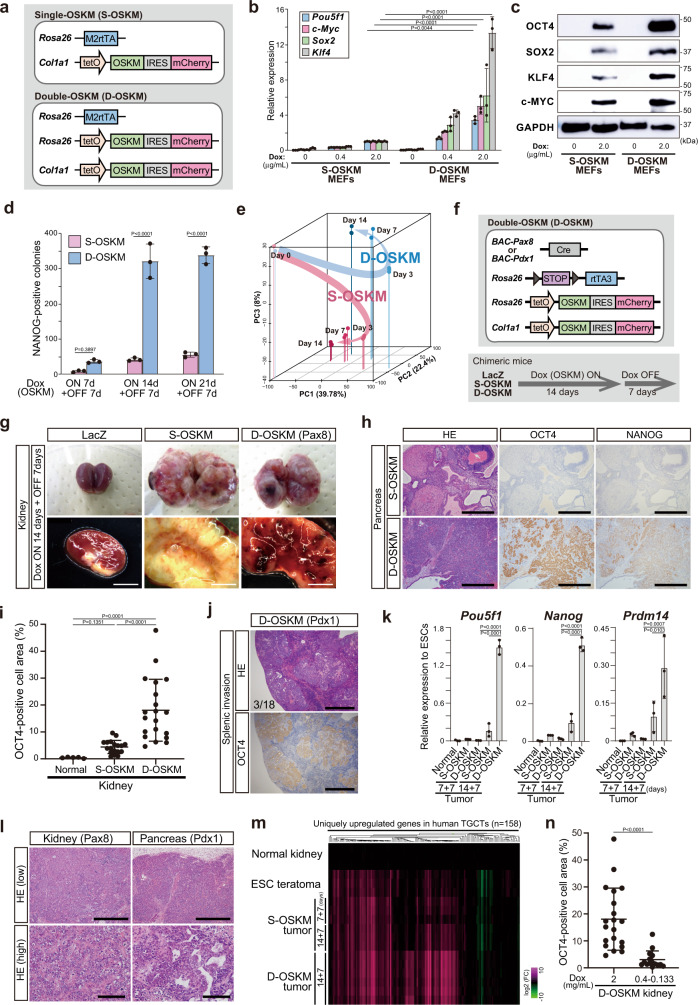
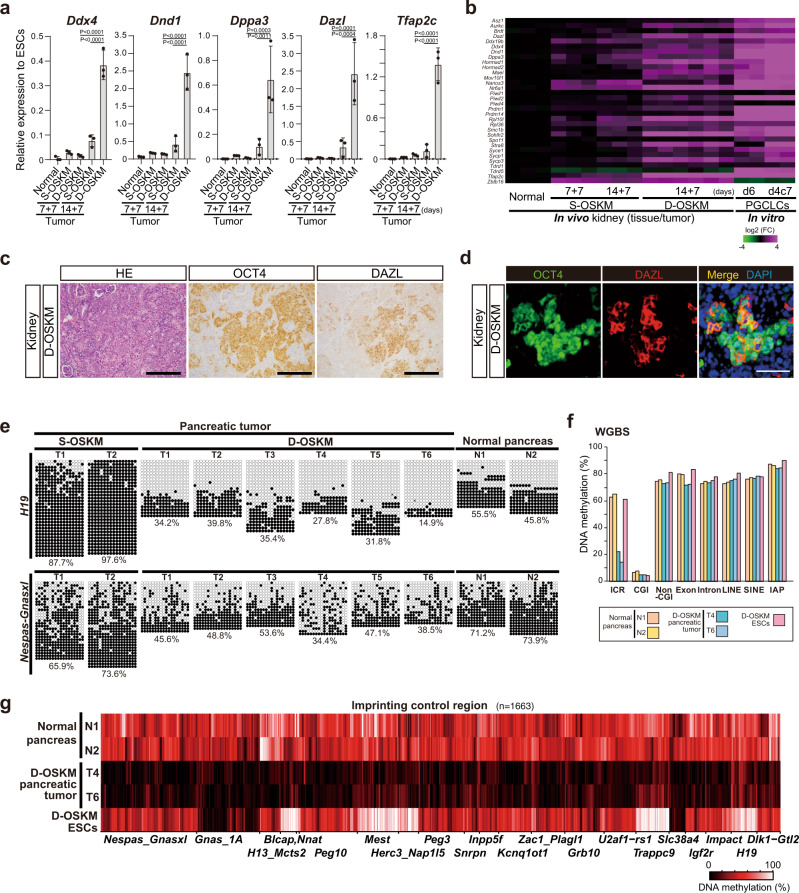
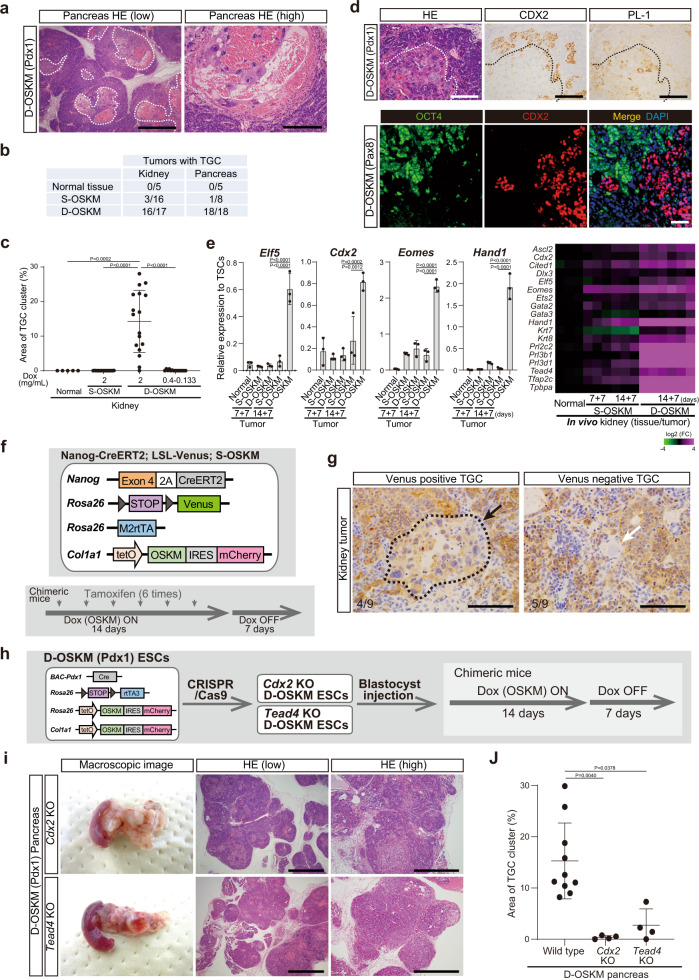
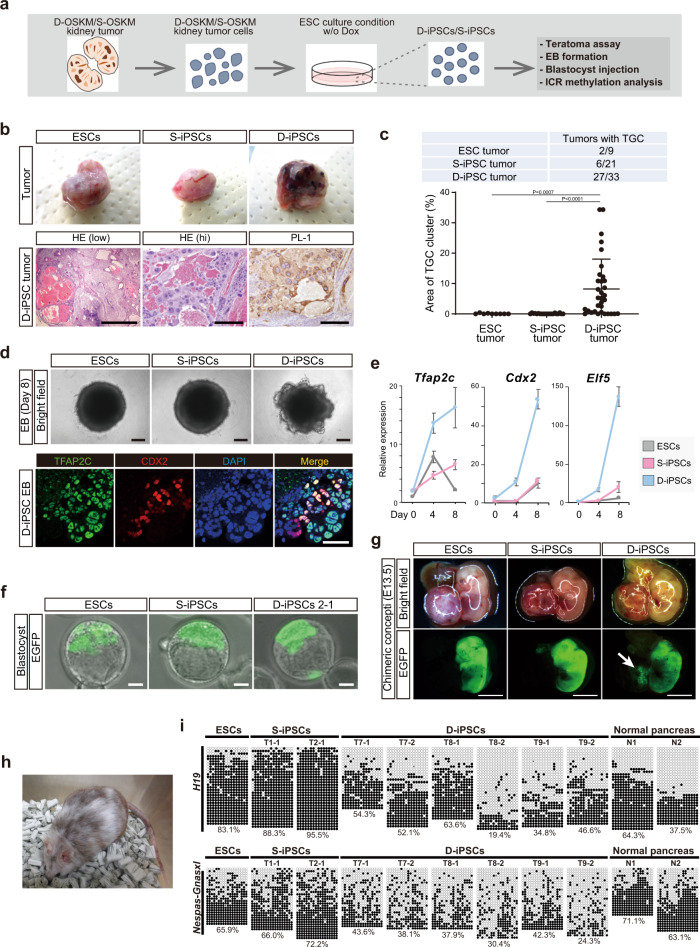
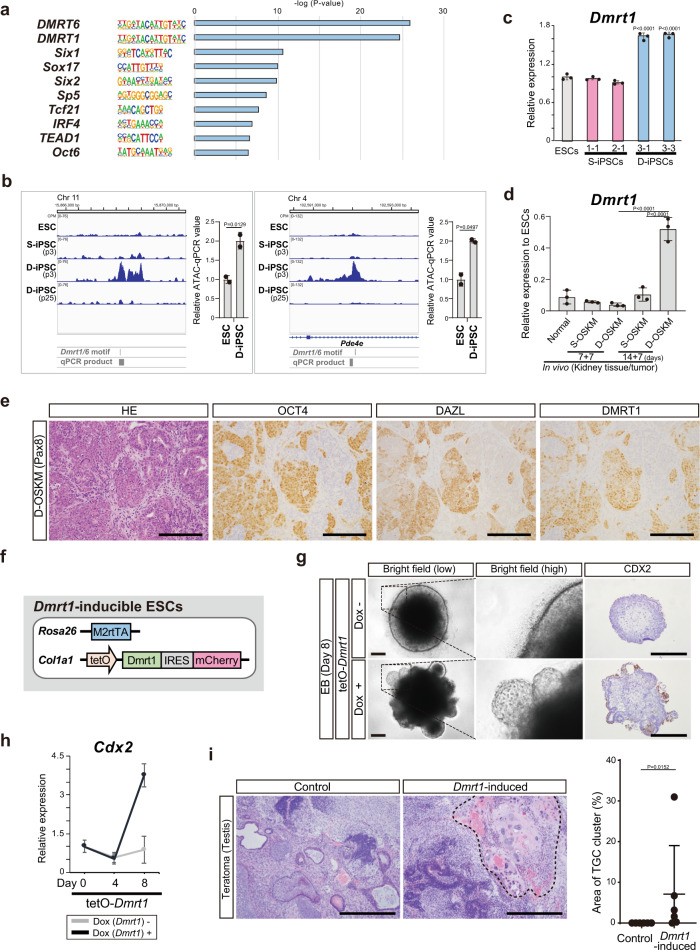
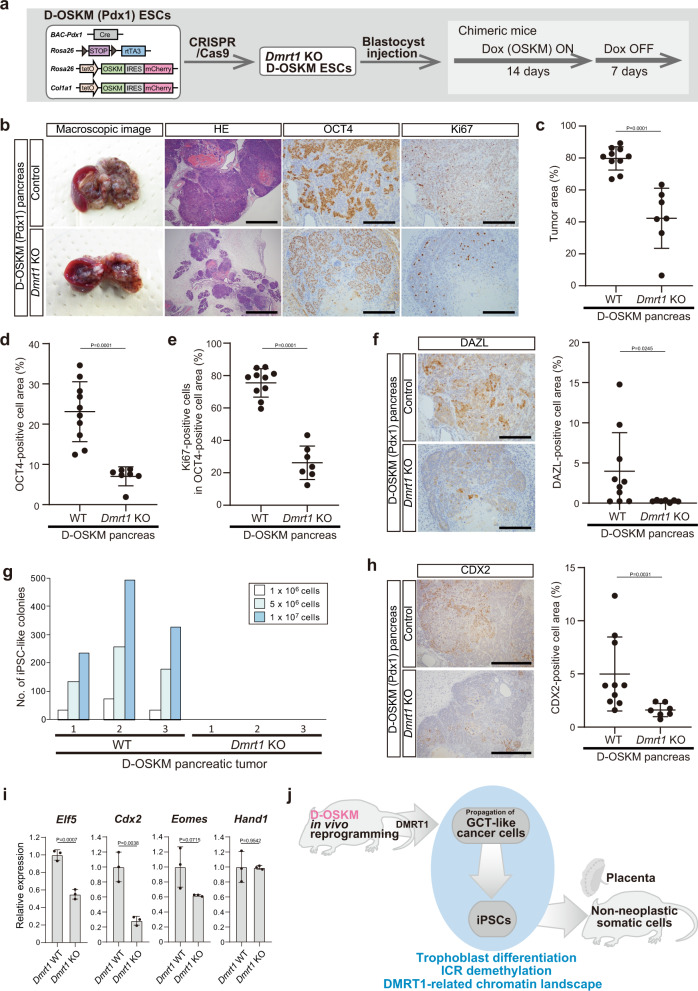
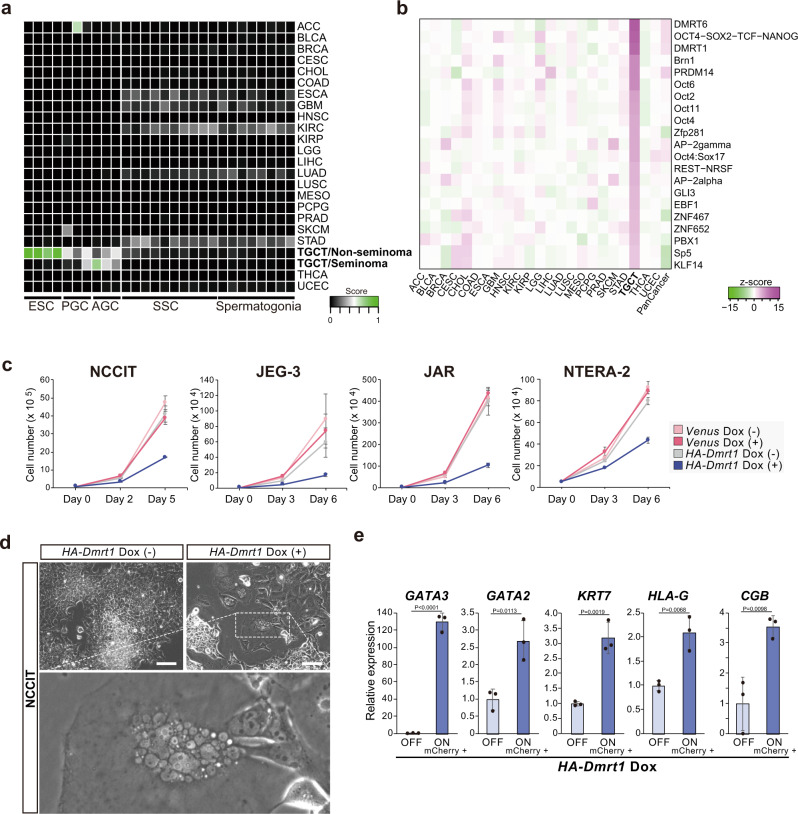
In vivo reprogramming provokes a wide range of cell fate conversion. Here, we discover that in vivo induction of higher levels of OSKM in mouse somatic cells leads to increased expression of primordial germ cell (PGC)-related genes and provokes genome-wide erasure of genomic imprinting, which takes place exclusively in PGCs. Moreover, the in vivo OSKM reprogramming results in development of cancer that resembles human germ cell tumors. Like a subgroup of germ cell tumors, propagated tumor cells can differentiate into trophoblasts. Moreover, these tumor cells give rise to induced pluripotent stem cells (iPSCs) with expanded differentiation potential into trophoblasts. Remarkably, the tumor-derived iPSCs are able to contribute to non-neoplastic somatic cells in adult mice. Mechanistically, DMRT1, which is expressed in PGCs, drives the reprogramming and propagation of the tumor cells in vivo. Furthermore, the DMRT1-related epigenetic landscape is associated with trophoblast competence of the reprogrammed cells and provides a therapeutic target for germ cell tumors. These results reveal an unappreciated route for somatic cell reprogramming and underscore the impact of reprogramming in development of germ cell tumors.
Overview
The claims and statistics of this paper haven’t been checked yet.
Free: it reads the open-access text and checks the first 5 claims that cite a source we can check. Create a free account to check every claim.
Integrity signals
Registry
Cites
Statistics
Figures
Verification
Claims the paper makes
The claims and statistics of this paper haven’t been checked yet.
Free: it reads the open-access text and checks the first 5 claims that cite a source we can check. Create a free account to check every claim.
Claims other papers make about this one
Each is checked against this paper’s own text: does it say what the citing paper says it does?
The source backs part of the claim, not all of it — or backs it for a different population, condition or comparison.
In the citing paper
“Of note, such a desirable outcome is only obtained when OSKM transcription factors are expressed in a controlled and transient fashion; their prolonged and exaggerated activation results in oncogenesis.140”
From Meta-hallmarks of aging and cancer (2023) · cites this paper as [140]
Experimental — accuracy not yet measured
Self-check
Percentages, sums and reported differences re-computed from the paper’s own numbers.
The self-check needs the paper’s full text.
Citations
Cites
Fast gapped-read alignment with Bowtie 2
Langmead, B., & Salzberg, S. L. (2012) · Nature Methods · doi:10.1038/nmeth.1923 · Cited by 56,400
STAR: ultrafast universal RNA-seq aligner
Dobin, A., Davis, C. A., Schlesinger, F., Drenkow, J., Zaleski, C., Jha, S., Batut, P., Chaisson, M., & Gingeras, T. R. (2013) · Bioinformatics · doi:10.1093/bioinformatics/bts635 · Cited by 51,709
Cutadapt removes adapter sequences from high-throughput sequencing reads
Martin, M. (2011) · EMBnet.journal · doi:10.14806/ej.17.1.200 · Cited by 33,889
Takahashi, K., & Yamanaka, S. (2006) · Cell · doi:10.1016/j.cell.2006.07.024 · Cited by 26,673
RSEM: accurate transcript quantification from RNA-Seq data with or without a reference genome
Li, B., & Dewey, C. N. (2011) · BMC Bioinformatics · doi:10.1186/1471-2105-12-323 · Cited by 22,179
Induction of Pluripotent Stem Cells from Adult Human Fibroblasts by Defined Factors
Takahashi, K., Tanabe, K., Ohnuki, M., Narita, M., Ichisaka, T., Tomoda, K., & Yamanaka, S. (2007) · Cell · doi:10.1016/j.cell.2007.11.019 · Cited by 20,221
Model-based Analysis of ChIP-Seq (MACS)
Zhang, Y., Liu, T., Meyer, C. A., Eeckhoute, J., Johnson, D. S., Bernstein, B. E., Nusbaum, C., Myers, R. M., Brown, M., Li, W., et al. (2008) · Genome Biology · doi:10.1186/gb-2008-9-9-r137 · Cited by 18,386
Robinson, J. T., Thorvaldsdóttir, H., Winckler, W., Guttman, M., Lander, E. S., Getz, G., & Mesirov, J. P. (2011) · Nature Biotechnology · doi:10.1038/nbt.1754 · Cited by 15,390
Heinz, S., Benner, C., Spann, N., Bertolino, E., Lin, Y. C., Laslo, P., Cheng, J. X., Murre, C., Singh, H., & Glass, C. K. (2010) · Molecular Cell · doi:10.1016/j.molcel.2010.05.004 · Cited by 13,382
Buenrostro, J. D., Giresi, P. G., Zaba, L. C., Chang, H. Y., & Greenleaf, W. J. (2013) · Nature Methods · doi:10.1038/nmeth.2688 · Cited by 6,422
Cited by
Meta-hallmarks of aging and cancer
López-Otín, C., Pietrocola, F., Roiz-Valle, D., Galluzzi, L., & Kroemer, G. (2023) · Cell Metabolism · doi:10.1016/j.cmet.2022.11.001 · Cited by 529
Exploring the promising potential of induced pluripotent stem cells in cancer research and therapy
Chehelgerdi, M., Behdarvand Dehkordi, F., Chehelgerdi, M., Kabiri, H., Salehian-Dehkordi, H., Abdolvand, M., Salmanizadeh, S., Rashidi, M., Niazmand, A., Ahmadi, S., et al. (2023) · Molecular Cancer · doi:10.1186/s12943-023-01873-0 · Cited by 175
Epigenetic reprogramming as a key to reverse ageing and increase longevity
Pereira, B., Correia, F. P., Alves, I. A., Costa, M., Gameiro, M. D., Martins, A. P., & Saraiva, J. A. (2024) · Ageing Research Reviews · doi:10.1016/j.arr.2024.102204 · Cited by 129
Cheng, H., Shang, D., & Zhou, R. (2022) · Signal Transduction and Targeted Therapy · doi:10.1038/s41392-022-01197-3 · Cited by 80
Cellular plasticity in reprogramming, rejuvenation and tumorigenesis: a pioneer TF perspective
Huyghe, A., Trajkova, A., & Lavial, F. (2024) · Trends in Cell Biology · doi:10.1016/j.tcb.2023.07.013 · Cited by 56
Zhang, M.-F., 西北农林科技大学动物医学院, 陕., Wan, S., Chen, W., Yang, D., Liu, W., Li, B., Aierken, A., Du, X., Li, Y., et al. (2023) · 动物学研究 · doi:10.24272/j.issn.2095-8137.2022.440 · Cited by 50
DMRT1 regulates human germline commitment
Irie, N., Lee, S.-M., Lorenzi, V., Xu, H., Chen, J., Inoue, M., Kobayashi, T., Sancho‐Serra, C., Drousioti, E., Dietmann, S., et al. (2023) · Nature Cell Biology · doi:10.1038/s41556-023-01224-7 · Cited by 46
The current socioeconomic and regulatory landscape of immune effector cell therapies
Sainatham, C., Yadav, D., Babu, A. D., Tallapalli, J. R., Kanagala, S. G., Filippov, E., Murillo-Chavez, F., Ahmed, N., & Lutfi, F. U. (2024) · Frontiers in Medicine · doi:10.3389/fmed.2024.1462307 · Cited by 42
Natural Compounds for Preventing Age-Related Diseases and Cancers
Ki, M., Youn, S., Kim, D. H., & Pack, S. P. (2024) · International Journal of Molecular Sciences · doi:10.3390/ijms25147530 · Cited by 33
Possible Strategies to Reduce the Tumorigenic Risk of Reprogrammed Normal and Cancer Cells
Lin, Y., Ku, C., Wuputra, K., Liu, C., Wu, D., Satou, M., Mitsui, Y., Saito, S., & Yokoyama, K. K. (2024) · International Journal of Molecular Sciences · doi:10.3390/ijms25105177 · Cited by 28
“Using in vivo reprogramming techniques, the transient expression of reprogramming factors in Kras mutant mice was sufficient to generate the robust and persistent activation of ERK signaling in acinar cells and the development of precancerous lesions in Kras-mutated acinar cells [169].”
BackgroundThe evolution of cancer and ageing: a history of constraint
de Magalhães, J. P. (2025) · Nature reviews. Cancer · doi:10.1038/s41568-025-00861-4 · Cited by 23
Genomic Imprinting in the New Omics Era: A Model for Systems-Level Approaches
Hubert, J.-N., & Demars, J. (2022) · Frontiers in Genetics · doi:10.3389/fgene.2022.838534 · Cited by 21
“Studies on experimental models or patient tissues would be helpful to further document the contribution of dysregulated imprinting patterns to cancer evolution (Lozano-Ureña et al., 2021; Taguchi et al., 2021).”
BackgroundCarcinogenesis resistance in the longest‐lived rodent, the naked mole‐rat
Yamamura, Y., Kawamura, Y., Oka, K., & Miura, K. (2022) · Cancer Science · doi:10.1111/cas.15570 · Cited by 20
The occurrence and development of induced pluripotent stem cells
Chen, Y., Li, M., & Wu, Y. (2024) · Frontiers in Genetics · doi:10.3389/fgene.2024.1389558 · Cited by 18
Application of Induced Pluripotent Stem Cells in Malignant Solid Tumors
He, R. L., Weng, Z., Liu, Y., Li, B., Wang, W., Meng, W., Li, B., & Li, L. (2023) · Stem Cell Reviews and Reports · doi:10.1007/s12015-023-10633-y · Cited by 12
Alberti, G., Sánchez‐López, C. M., Marcilla, A., Barone, R., Bavisotto, C. C., Graziano, F., de Macario, E. C., Macario, A. J. L., Bucchieri, F., Cappello, F., et al. (2024) · International Journal of Molecular Sciences · doi:10.3390/ijms25063415 · Cited by 12
“DMRT1 is a transcriptional regulator that plays a key role in male sex determination and differentiation by controlling testicular development and male germ cell proliferation [70].”
BackgroundA versatile in vivo platform for reversible control of transgene expression in adult tissues
Taguchi, J., Yamada, Y., Ohta, S., Nakasuka, F., Yamamoto, T., Ozawa, M., & Yamada, Y. (2024) · Stem Cell Reports · doi:10.1016/j.stemcr.2024.11.003 · Cited by 11
Self-citationLi, Q., Qin, K., Tian, Y., Chen, B., Zhao, G., Xu, S., & Wu, L. (2023) · Cell Death and Disease · doi:10.1038/s41419-023-06346-2 · Cited by 8
“ATAC-qPCR was performed as described previously with minor modi fi cations [22].”
Nakatsukasa, Y., Yamada, Y., & Yamada, Y. (2024) · Regenerative Therapy · doi:10.1016/j.reth.2024.11.008 · Cited by 9
Self-citationAlthafar, Z. M. (2025) · Frontiers in Pharmacology · doi:10.3389/fphar.2025.1614325 · Cited by 8
Ji-liang, F., Zhao, D., Lv, F., & Yuan, Z. (2022) · Cancer Control · doi:10.1177/10732748221078160 · Cited by 8
Reversing Aging and Improving Health Span in Glaucoma Patients: The Next Frontier?
Bhartiya, S., Dada, T., & Mahalingam, K. (2024) · JOURNAL OF CURRENT GLAUCOMA PRACTICE · doi:10.5005/jp-journals-10078-1451 · Cited by 6
Successful Multimodal Treatment of Intracranial Growing Teratoma Syndrome with Malignant Features
Satake, D., Natsumeda, M., Satomi, K., Tada, M., Sato, T., Okubo, N., Kawabe, K., Takahashi, H., Tsukamoto, Y., Okada, M., et al. (2024) · Current Oncology · doi:10.3390/curroncol31040138 · Cited by 5
“DMRT1, expressed in primordial germ cells, is known to drive the reprogramming and propagation of tumor cells, which have the capacity to induce pluripotent stem cells, leading to the development of cancer that resembles human germ cell tumors [13].”
BackgroundBlücher, R. O., Lim, R. S., Jarred, E. G., Ritchie, M. E., & Western, P. S. (2023) · BMC Biology · doi:10.1186/s12915-023-01777-x · Cited by 5
“In addition, 72 h MEKi altered genes associated with germ cell or other tumours [66, 67], or SSC function [68, 69] including higher Dmrt1 and Sox3 and lower Rhox10 expression (Fig.”
BackgroundMulti-Omic Rejuvenation: A New Strategy for Lifespan Extension
Rybina, O. Y., & PASYUKOVA, E. G. (2024) · Molecular Biology · doi:10.1134/s0026893324700377 · Cited by 4
“The ability of genetic factors to induce the development of neoplastic changes in reprogrammed cells may be a serious drawback to their use [44].”
Ohta, S., & Yamada, Y. (2023) · Current Opinion in Genetics & Development · doi:10.1016/j.gde.2023.102067 · Cited by 3
Self-citationIn Vivo Reprogramming Highlights Epigenetic Regulation That Shapes Cancer Hallmarks
Yamada, Y., Sankoda, N., & Yamada, Y. (2025) · Cancer Science · doi:10.1111/cas.70067 · Cited by 2
“…study discovered that in vivo induction of higher levels of OSKM in mouse somatic cells increases expression of primordial germ cell (PGC)- related genes and causes human germ cell tumor (GCT)- like cancers, which often contain placental tro-phoblasts, namely, extraembryonic lineage cells [67].”
Self-citationYang, W., Contente, S., & Rahman, S. (2025) · Cancers · doi:10.3390/cancers17172800 · Cited by 1
“Germ cell cancers originate from human primordial germ cells (hPGCs) [1,7] that are founder cells of the germline specified during weeks 2–3 of development [8]. hPGCs exhibit latent pluripotency and intrinsic cancer stem cell-like properties, predisposing them to malignant transformation with…”
Reprogramming of pancreatic islet cells for regeneration and rejuvenation
Hirano, M., & Yamada, Y. (2023) · Current Opinion in Genetics & Development · doi:10.1016/j.gde.2023.102099 · Cited by 1
Self-citationPearce, J., Durr, C., Qu, X., Liu, J., Randall, L. M., Miller, D., Sayeed, S., Bae-Jump, V. L., & Sullivan, S. (2024) · Gynecologic Oncology Reports · doi:10.1016/j.gore.2024.101360 · Cited by 1
“The DMRT protein-coding gene ultimately leads to enabling of sequence-specific double-stranded DNA binding activity; DMRT1 has been shown to play a role in cell reprogramming in germ cell tumors (Taguchi et al., 2021), though not specifically in EC to our knowledge.”
BackgroundProblems and prospects for studying cancers on models of induced pluripotent stem cells
Kokaev, R. I., Islaev, A. A.-K., Galamatova, K. A., Vakhaeva, K. M., Tabalaeva, S. G., Bubaeva, Z. K.-P., Dudagova, R. M., Tazbaeva, R. S., Shapiyanova, M. T., Kodzaeva, I. A., et al. (2025) · Perm Medical Journal · doi:10.17816/pmj42342-57
Стовбурові клітини: біологічні властивості та терапевтичний потенціал у регенеративній медицині
Пикалюк, В., Antoniuk, О. P., Романюк, А., Sokolyuk, V. M., & Шварц, Л. О. (2025) · Notes in Current Biology · doi:10.29038/10.29038/ncbio.25.1-7
Blücher, R. O., Lim, R. S., Jarred, E. G., Ritchie, M. E., & Western, P. S. (2024) · Figshare · doi:10.6084/m9.figshare.26649882
Blücher, R. O., Lim, R. S., Jarred, E. G., Ritchie, M. E., & Western, P. S. (2023) · Figshare · doi:10.6084/m9.figshare.24751371
Blücher, R. O., Lim, R. S., Jarred, E. G., Ritchie, M. E., & Western, P. S. (2024) · Figshare · doi:10.6084/m9.figshare.26649876
Blücher, R. O., Lim, R. S., Jarred, E. G., Ritchie, M. E., & Western, P. S. (2024) · Figshare · doi:10.6084/m9.figshare.26649867
Blücher, R. O., Lim, R. S., Jarred, E. G., Ritchie, M. E., & Western, P. S. (2024) · Figshare · doi:10.6084/m9.figshare.26649891
Blücher, R. O., Lim, R. S., Jarred, E. G., Ritchie, M. E., & Western, P. S. (2024) · Figshare · doi:10.6084/m9.figshare.26649864
Blücher, R. O., Lim, R. S., Jarred, E. G., Ritchie, M. E., & Western, P. S. (2024) · Figshare · doi:10.6084/m9.figshare.26649888
Blücher, R. O., Lim, R. S., Jarred, E. G., Ritchie, M. E., & Western, P. S. (2024) · Figshare · doi:10.6084/m9.figshare.26649873
Blücher, R. O., Lim, R. S., Jarred, E. G., Ritchie, M. E., & Western, P. S. (2024) · Figshare · doi:10.6084/m9.figshare.26649885
Blücher, R. O., Lim, R. S., Jarred, E. G., Ritchie, M. E., & Western, P. S. (2024) · Figshare · doi:10.6084/m9.figshare.26649870
Blücher, R. O., Lim, R. S., Jarred, E. G., Ritchie, M. E., & Western, P. S. (2024) · Figshare · doi:10.6084/m9.figshare.24751634
Blücher, R. O., Lim, R. S., Jarred, E. G., Ritchie, M. E., & Western, P. S. (2024) · Figshare · doi:10.6084/m9.figshare.26649861
Blücher, R. O., Lim, R. S., Jarred, E. G., Ritchie, M. E., & Western, P. S. (2024) · Figshare · doi:10.6084/m9.figshare.26649879
Contrôle de la distribution de peptides en surface de matériaux pour la différenciation cellulaire
Zhang, Y. (2023) · theses.fr (ABES) · doi:10.70675/145aaccfz539dz4187z8d76z38d4fea5e820
Etude des régulateurs et des voies moléculaires impliqués dans les conversions d'état cellulaire
Trajkova, A. (2024) · theses.fr (ABES) · doi:10.70675/87dd8564zbfd1z4a6ezbc15z8a3402efe338
Reverse aging through cell cycle regulation
Sheoran, P., Tripathi, R. D., Mishra, S. K., Marathe, N. K., Yadav, A., Bhardwaj, A., Singh, P., Singh, K., Tikhonova, M. A., Gopenath, T. S., et al. (2026) · Elsevier eBooks · doi:10.1016/b978-0-443-33159-6.00014-x
A cross-talk between p16High senescence and cellular reprogramming
Emelyanov, A., & Bulavin, D. V. (2026) · Clinical Science · doi:10.1042/cs20260240
“As such, in vivo reprogrammed Nanog-positive iPSC should always be totipotent [57,58].”
Nakatsukasa, Y., Hirano, M., Yamada, Y., Ohta, S., Sankoda, N., Nakasuka, F., Nakayama, Y., Sakurai, S., Yamamoto, T., & Yamada, Y. (2026) · Biochemical and Biophysical Research Communications · doi:10.1016/j.bbrc.2026.154488
Self-citationLiang, S., Zhao, H., Zuo, N., Zhang, B., Chen, M., Zhang, X., Zhang, H., Iqbal, M. O., Wang, Q., & Dong, D. (2026) · Frontiers in Cell and Developmental Biology · doi:10.3389/fcell.2026.1968508
Metadata
- Authors
- Taguchi, J., Shibata, H., Kabata, M., Kato, M., Fukuda, K., Tanaka, A., Ohta, S., Ukai, T., Mitsunaga, K., Yamada, Y., Nagaoka, S. I., Yamazawa, S., Ohnishi, K., Woltjen, K., Ushiku, T., Ozawa, M., Saitou, M., Shinkai, Y., Yamamoto, T., & Yamada, Y.
- Affiliations
- Institute of Medical Science, The University of Tokyo (JP)
- Kyoto University (JP)
- RIKEN (JP)
- The University of Tokyo (JP)
- Corresponding author
- Yamada, Yosuke
- Yamada, Yasuhiro
- ORCID
- Venue
- Nature Communications
- Published
- 2021-08-19
- Volume
- 12
- Issue
- 1
- Pages
- 5041-5041
- ISSN
- 2041-1723 (ISSN-L)
- PMC
- PMC8377058
- OpenAlex
- W3194092796
- Cited by
- 46
- References
- 81
- Citations by year
- 2026: 4 · 2025: 7 · 2024: 19 · 2023: 12 · 2022: 4
- FWCI
- 3.14
- Type
- journal article
- Language
- en
- Open access
- gold
- doi.org
- Licence
- cc-by
- creativecommons.org/licenses/by/4.0 (tdm)
- creativecommons.org/licenses/by/4.0 (vor)
- Locations
- Nature Communications (publishedVersion, cc-by)
- Europe PMC (PubMed Central) (publishedVersion, other-oa)
- PubMed Central (publishedVersion, cc-by)
- PubMed (publishedVersion)
- RePEc: Research Papers in Economics (submittedVersion)
- DOAJ (DOAJ: Directory of Open Access Journals) (submittedVersion, cc-by-sa)
- Kyoto University Research Information Repository (Kyoto University) (submittedVersion)
- Funders
- Naito Foundation
- Takeda Science Foundation
- Japan Agency for Medical Research and Development (CREST, JP19gm1110004h9903, JP18cm0106203h0003, 17jm0210039h0005)
- Research Center Network for Realization of Regenerative Medicine
- Ministry of Education, Culture, Sports, Science and Technology (CREST)
- Princess Takamatsu Cancer Research Fund
- Japan Society for the Promotion of Science (20K15801, 18H03991, 18H05530, 20H03162, 17H06098, CREST, 19H03418, 19K21352, 20H05384, 18H04026)
- Core Research for Evolutional Science and Technology
- Strategic International Collaborative Research Program
- Topics
- Life Sciences › Biochemistry, Genetics and Molecular Biology › Molecular Biology › Pluripotent Stem Cells Research
- Life Sciences › Biochemistry, Genetics and Molecular Biology › Genetics › Genetic Syndromes and Imprinting
- Life Sciences › Biochemistry, Genetics and Molecular Biology › Molecular Biology › Developmental Biology and Gene Regulation
- Keywords
- DMRT1, OSKM, somatic cell reprogramming, germ cell tumors, primordial germ cells, induced pluripotent stem cells, trophoblast differentiation, totipotency, epigenetic reprogramming, tumor propagation, therapeutic target
- MeSH terms
- Animals, Cell Differentiation, Cells, Cultured, Female, Humans, Mice, Inbred ICR, Neoplasms, Neoplasms, Germ Cell and Embryonal, Transcription Factors, Genomic Imprinting, Animals, Genetically Modified, Epigenesis, Genetic, Cell Line, Tumor, Mice, Induced Pluripotent Stem Cells, Cellular Reprogramming
About these checks
Registry, retraction, Cites and statistics results are computed, not judged, with one exception: a printed reference that no index lists is read once by a model before it counts as a citation error. Claims are extracted by a model and kept only when their quote appears verbatim in the text; each cited source is then checked, with a model’s help, for whether it says what the claim relies on. Those verdicts can be wrong — read the claim’s quote and the cited source before relying on one.
Statistics and arithmetic are recomputed, not judged.
Confidence bands are shown only for fields calibrated on our annotated test set. None is calibrated yet, so no band is shown.
What counts as a claim ›How we measure confidence ›How we check this ›
Are you an author, or do you see a problem with this page? Request a review
Data sources
Bibliographic data: Semantic Scholar, OpenAlex, Crossref.
Contains information from the Semantic Scholar Academic Graph Datasets, made available under the ODC Attribution License (ODC-BY 1.0).
Semantic Scholar’s data is described in: Kinney, R., et al. (2023). The Semantic Scholar Open Data Platform. arXiv:2301.10140.
