

DMRT1-mediated reprogramming drives development of cancer resembling human germ cell tumors with features of totipotency
Open accessThe DOI matches its Crossref record; 81 of the 81 references it cites were found in a registry or an index.
Abstract
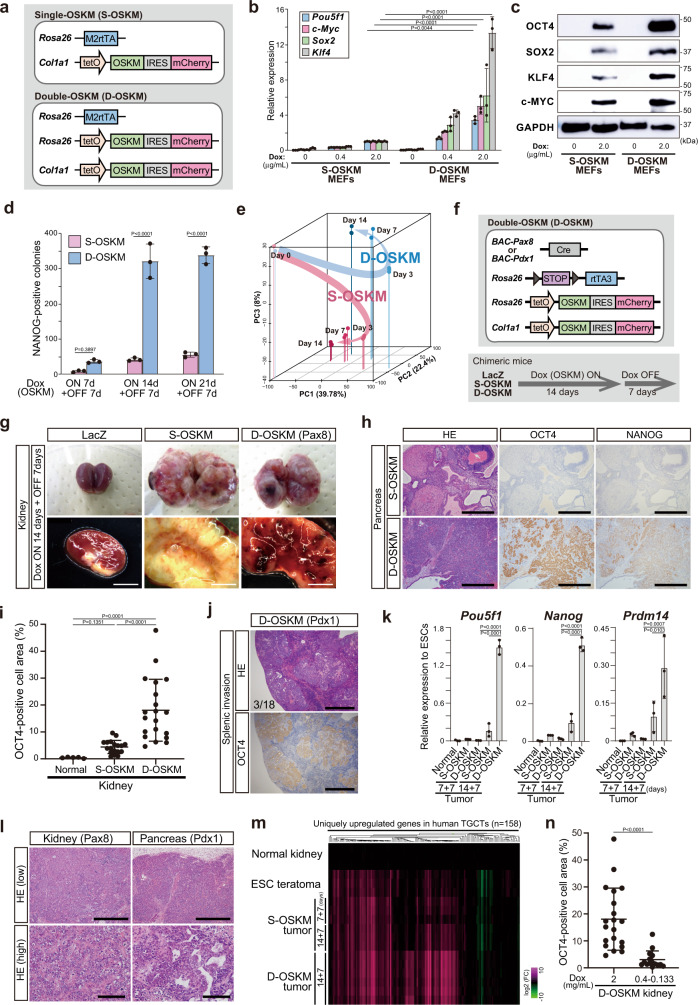
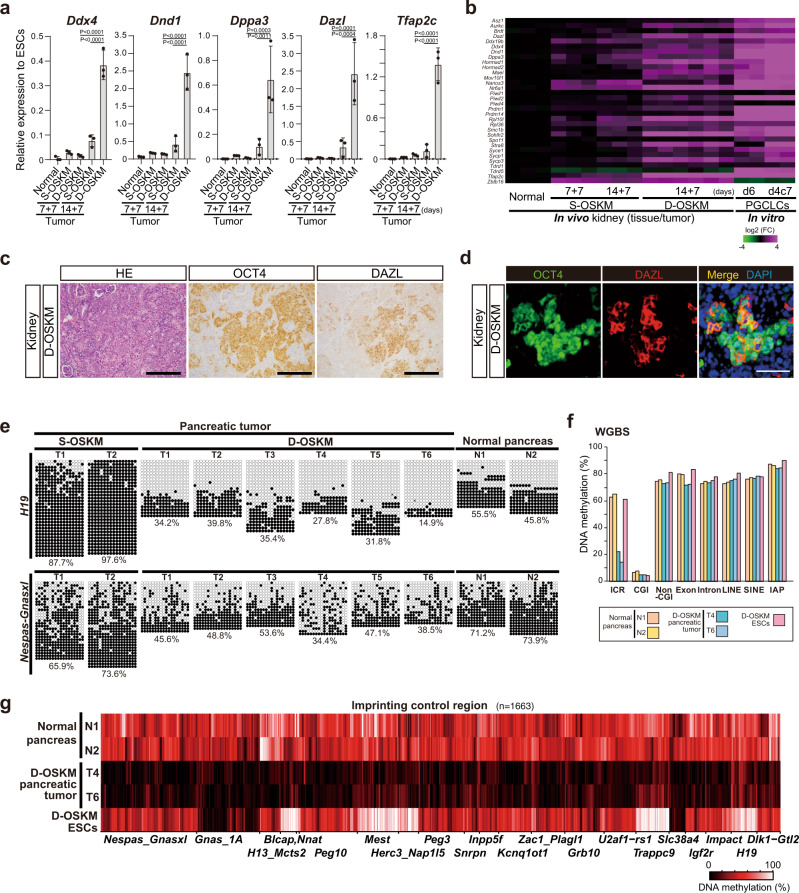
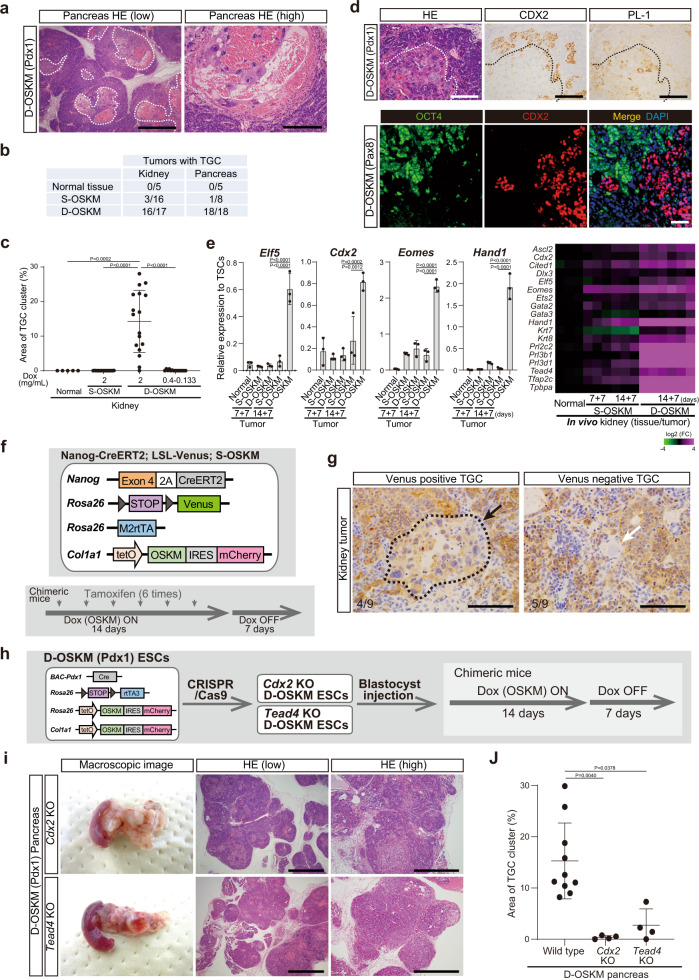
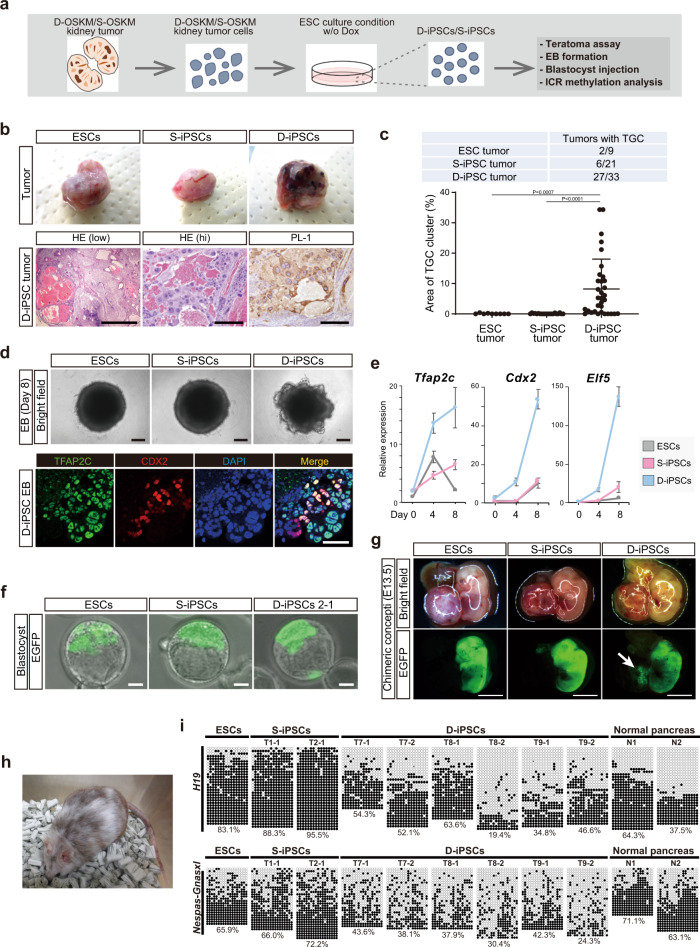
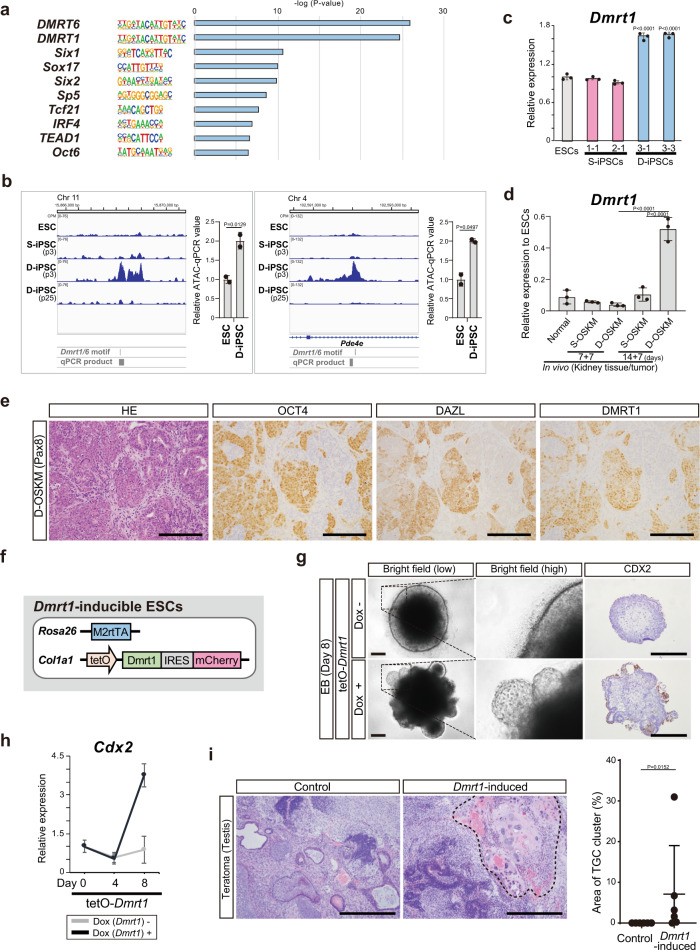
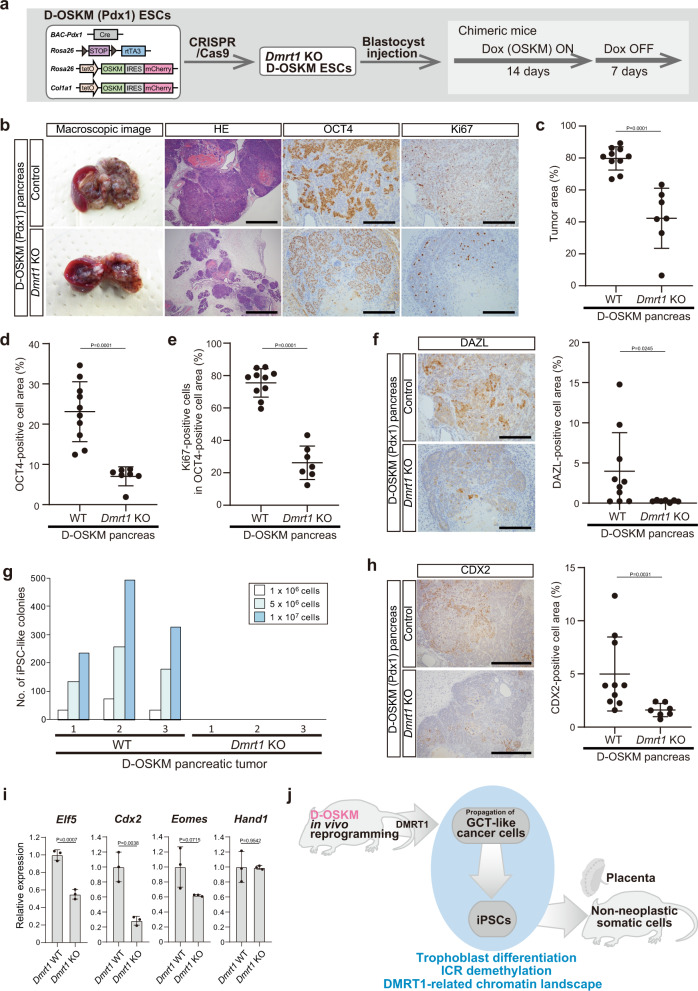
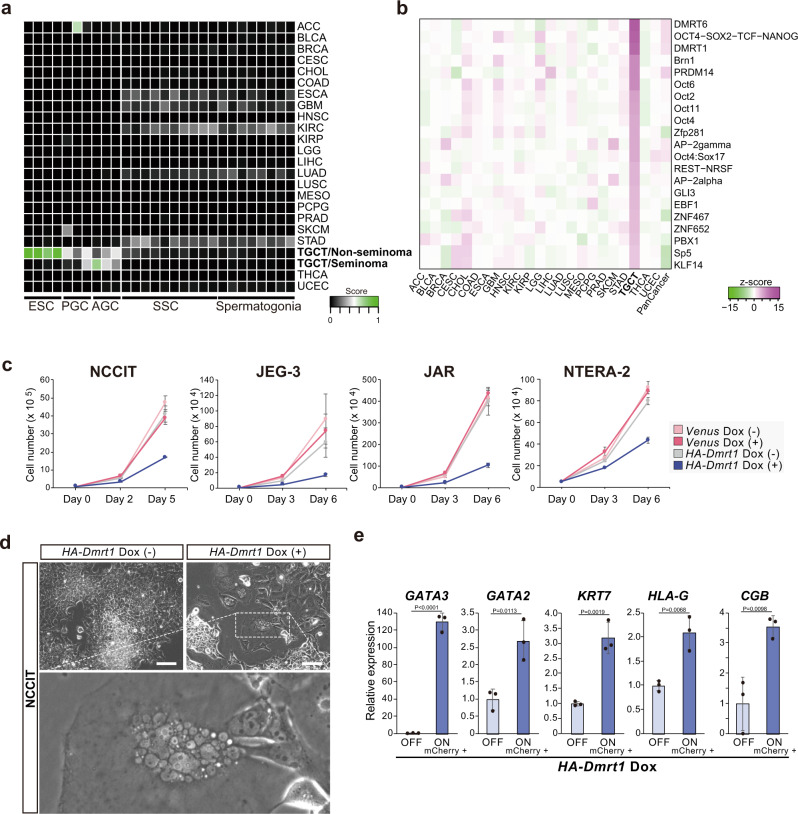
In vivo reprogramming provokes a wide range of cell fate conversion. Here, we discover that in vivo induction of higher levels of OSKM in mouse somatic cells leads to increased expression of primordial germ cell (PGC)-related genes and provokes genome-wide erasure of genomic imprinting, which takes place exclusively in PGCs. Moreover, the in vivo OSKM reprogramming results in development of cancer that resembles human germ cell tumors. Like a subgroup of germ cell tumors, propagated tumor cells can differentiate into trophoblasts. Moreover, these tumor cells give rise to induced pluripotent stem cells (iPSCs) with expanded differentiation potential into trophoblasts. Remarkably, the tumor-derived iPSCs are able to contribute to non-neoplastic somatic cells in adult mice. Mechanistically, DMRT1, which is expressed in PGCs, drives the reprogramming and propagation of the tumor cells in vivo. Furthermore, the DMRT1-related epigenetic landscape is associated with trophoblast competence of the reprogrammed cells and provides a therapeutic target for germ cell tumors. These results reveal an unappreciated route for somatic cell reprogramming and underscore the impact of reprogramming in development of germ cell tumors.
Overview
The claims and statistics of this paper haven’t been checked yet.
Free: it reads the open-access text and checks the first 5 claims that cite a source we can check. Create a free account to check every claim.
Integrity signals
Registry
Cites
Statistics
Figures
Verification
Claims the paper makes
The claims and statistics of this paper haven’t been checked yet.
Free: it reads the open-access text and checks the first 5 claims that cite a source we can check. Create a free account to check every claim.
Claims other papers make about this one
Each is checked against this paper’s own text: does it say what the citing paper says it does?
The source backs part of the claim, not all of it — or backs it for a different population, condition or comparison.
In the citing paper
“Of note, such a desirable outcome is only obtained when OSKM transcription factors are expressed in a controlled and transient fashion; their prolonged and exaggerated activation results in oncogenesis.140”
From Meta-hallmarks of aging and cancer (2023) · cites this paper as [140]
Experimental — accuracy not yet measured
Self-check
Percentages, sums and reported differences re-computed from the paper’s own numbers.
The self-check needs the paper’s full text.
Citations
Cites
Fast gapped-read alignment with Bowtie 2
Langmead, B., & Salzberg, S. L. (2012) · Nature Methods · doi:10.1038/nmeth.1923 · Cited by 56,400
STAR: ultrafast universal RNA-seq aligner
Dobin, A., Davis, C. A., Schlesinger, F., Drenkow, J., Zaleski, C., Jha, S., Batut, P., Chaisson, M., & Gingeras, T. R. (2013) · Bioinformatics · doi:10.1093/bioinformatics/bts635 · Cited by 51,709
Cutadapt removes adapter sequences from high-throughput sequencing reads
Martin, M. (2011) · EMBnet.journal · doi:10.14806/ej.17.1.200 · Cited by 33,889
Takahashi, K., & Yamanaka, S. (2006) · Cell · doi:10.1016/j.cell.2006.07.024 · Cited by 26,673
RSEM: accurate transcript quantification from RNA-Seq data with or without a reference genome
Li, B., & Dewey, C. N. (2011) · BMC Bioinformatics · doi:10.1186/1471-2105-12-323 · Cited by 22,179
Induction of Pluripotent Stem Cells from Adult Human Fibroblasts by Defined Factors
Takahashi, K., Tanabe, K., Ohnuki, M., Narita, M., Ichisaka, T., Tomoda, K., & Yamanaka, S. (2007) · Cell · doi:10.1016/j.cell.2007.11.019 · Cited by 20,221
Model-based Analysis of ChIP-Seq (MACS)
Zhang, Y., Liu, T., Meyer, C. A., Eeckhoute, J., Johnson, D. S., Bernstein, B. E., Nusbaum, C., Myers, R. M., Brown, M., Li, W., et al. (2008) · Genome Biology · doi:10.1186/gb-2008-9-9-r137 · Cited by 18,386
Robinson, J. T., Thorvaldsdóttir, H., Winckler, W., Guttman, M., Lander, E. S., Getz, G., & Mesirov, J. P. (2011) · Nature Biotechnology · doi:10.1038/nbt.1754 · Cited by 15,390
Heinz, S., Benner, C., Spann, N., Bertolino, E., Lin, Y. C., Laslo, P., Cheng, J. X., Murre, C., Singh, H., & Glass, C. K. (2010) · Molecular Cell · doi:10.1016/j.molcel.2010.05.004 · Cited by 13,382
Buenrostro, J. D., Giresi, P. G., Zaba, L. C., Chang, H. Y., & Greenleaf, W. J. (2013) · Nature Methods · doi:10.1038/nmeth.2688 · Cited by 6,422
Bismark: a flexible aligner and methylation caller for Bisulfite-Seq applications
Krueger, F., & Andrews, S. R. (2011) · Bioinformatics · doi:10.1093/bioinformatics/btr167 · Cited by 5,297
Moch, H., Cubilla, A. L., Humphrey, P. A., Reuter, V. E., & Ulbright, T. M. (2016) · European Urology · doi:10.1016/j.eururo.2016.02.029 · Cited by 3,086
GENCODE reference annotation for the human and mouse genomes
Frankish, A., Diekhans, M., Ferreira, A.-M., Johnson, R., Jungreis, I., Loveland, J., Mudge, J. M., Sisu, C., Wright, J., Armstrong, J., et al. (2019) · Nucleic Acids Research · doi:10.1093/nar/gky955 · Cited by 3,040
Burnside, R. D. (2015) · Cytogenetic and Genome Research · doi:10.1159/000438708 · Cited by 1,946
Reconstitution of the Mouse Germ Cell Specification Pathway in Culture by Pluripotent Stem Cells
Hayashi, K., Ohta, H., Kurimoto, K., Aramaki, S., & Saitou, M. (2011) · Cell · doi:10.1016/j.cell.2011.06.052 · Cited by 1,379
Self-citationPromotion of Trophoblast Stem Cell Proliferation by FGF4
Tanaka, S., Kunath, T., Hadjantonakis, A.-K., Nagy, A., & Rossant, J. (1998) · Science · doi:10.1126/science.282.5396.2072 · Cited by 1,369
Aligning Short Sequencing Reads with Bowtie
Langmead, B. (2010) · Current Protocols in Bioinformatics · doi:10.1002/0471250953.bi1107s32 · Cited by 1,292
The chromatin accessibility landscape of primary human cancers
Corces, M. R., Granja, J. M., Shams, S., Louie, B. H., Seoane, J. A., Zhou, W., Silva, T. C., Groeneveld, C., Wong, C. K., Cho, S. W., et al. (2018) · Science · doi:10.1126/science.aav1898 · Cited by 1,230
Polo, J. M., Liu, S., Figueroa, M. E., Kulalert, W., Eminli, S., Tan, K. Y., Apostolou, E., Stadtfeld, M., Li, Y., Shioda, T., et al. (2010) · Nature Biotechnology · doi:10.1038/nbt.1667 · Cited by 1,198
Epigenetic reprogramming in mouse primordial germ cells
Hajkova, P., Erhardt, S., Lane, N., Haaf, T., El-Maarri, O., Reik, W., Walter, J., & Surani, M. A. (2002) · Mechanisms of Development · doi:10.1016/s0925-4773(02)00181-8 · Cited by 1,191
Interaction between Oct3/4 and Cdx2 Determines Trophectoderm Differentiation
Niwa, H., Toyooka, Y., Shimosato, D., Strumpf, D., Takahashi, K., Yagi, R., & Rossant, J. (2005) · Cell · doi:10.1016/j.cell.2005.08.040 · Cited by 1,190
Strumpf, D., Mao, C.-A., Yamanaka, Y., Ralston, A., Chawengsaksophak, K., Beck, F., & Rossant, J. (2005) · Development · doi:10.1242/dev.01801 · Cited by 1,123
Nanog Is the Gateway to the Pluripotent Ground State
Silva, J., Nichols, J., Theunissen, T. W., Guo, G., van Oosten, A. L., Barrandon, O., Wray, J., Yamanaka, S., Chambers, I., & Smith, A. (2009) · Cell · doi:10.1016/j.cell.2009.07.039 · Cited by 1,031
In Vivo Amelioration of Age-Associated Hallmarks by Partial Reprogramming.
Ocampo, A., Reddy, P., Martinez-Redondo, P., Platero-Luengo, A., Hatanaka, F., Hishida, T., Li, M., Lam, D., Kurita, M., Beyret, E., et al. (2016) · Cell · doi:10.1016/j.cell.2016.11.052 · Cited by 988
Embryonic stem cell potency fluctuates with endogenous retrovirus activity
Macfarlan, T. S., Gifford, W. D., Driscoll, S., Lettieri, K., Rowe, H. M., Bonanomi, D., Firth, A., Singer, O., Trono, D., & Pfaff, S. L. (2012) · Nature · doi:10.1038/nature11244 · Cited by 981
Samavarchi-Tehrani, P., Golipour, A., David, L., Sung, H.-K., Beyer, T. A., Datti, A., Woltjen, K., Nagy, A., & Wrana, J. L. (2010) · Cell Stem Cell · doi:10.1016/j.stem.2010.04.015 · Cited by 943
Self-citationDirect cell reprogramming is a stochastic process amenable to acceleration
Hanna, J., Saha, K., Pando, B., van Zon, J., Lengner, C. J., Creyghton, M. P., van Oudenaarden, A., & Jaenisch, R. (2009) · Nature · doi:10.1038/nature08592 · Cited by 938
Testicular germ-cell tumours in a broader perspective
Oosterhuis, J. W., & Looijenga, L. H. J. (2005) · Nature Reviews Cancer · doi:10.1038/nrc1568 · Cited by 916
A Molecular Roadmap of Reprogramming Somatic Cells into iPS Cells
Polo, J. M., Anderssen, E., Walsh, R. M., Schwarz, B. A., Nefzger, C. M., Lim, S. M., Borkent, M., Apostolou, E., Alaei, S., Cloutier, J., et al. (2012) · Cell · doi:10.1016/j.cell.2012.11.039 · Cited by 861
Genome-wide erasure of DNA methylation in mouse primordial germ cells is affected by AID deficiency
Popp, C., Dean, W., Feng, S., Cokus, S. J., Andrews, S., Pellegrini, M., Jacobsen, S. E., & Reik, W. (2010) · Nature · doi:10.1038/nature08829 · Cited by 860
Hendrickson, P. G., Doráis, J. A., Grow, E. J., Whiddon, J. L., Lim, J.-W., Wike, C. L., Weaver, B. D., Pflueger, C., Emery, B. R., Wilcox, A. L., et al. (2017) · Nature Genetics · doi:10.1038/ng.3844 · Cited by 734
Genetic and Epigenetic Regulators of Pluripotency
Surani, M. A., Hayashi, K., & Hajkova, P. (2007) · Cell · doi:10.1016/j.cell.2007.02.010 · Cited by 658
POU5F1 (OCT3/4) identifies cells with pluripotent potential in human germ cell tumors.
Looijenga, L. H. J., Stoop, H., de Leeuw, H. P. J. C., Brazao, C. A. D. G., Gillis, A., van Roozendaal, K. E. P., van Zoelen, E. J. J., Weber, R. F. A., Wolffenbuttel, K. P., van Dekken, H., et al. (2003) · PubMed · Cited by 639
DUX-family transcription factors regulate zygotic genome activation in placental mammals
De Iaco, A., Planet, E., Coluccio, A., Verp, S., Duc, J., & Trono, D. (2017) · Nature Genetics · doi:10.1038/ng.3858 · Cited by 606
Tissue damage and senescence provide critical signals for cellular reprogramming in vivo
Mosteiro, L., Pantoja, C., Alcazar, N., Marión, R. M., Chondronasiou, D., Rovira, M., Fernandez-Marcos, P. J., Muñoz-Martin, M., Blanco-Aparicio, C., Pastor, J., et al. (2016) · Science · doi:10.1126/science.aaf4445 · Cited by 589
Cooperative Binding of Transcription Factors Orchestrates Reprogramming
Chronis, C., Fiziev, P., Papp, B., Butz, S., Bonora, G., Sabri, S., Ernst, J., & Plath, K. (2017) · Cell · doi:10.1016/j.cell.2016.12.016 · Cited by 555
Orphan CpG Islands Identify Numerous Conserved Promoters in the Mammalian Genome
Illingworth, R. S., Gruenewald-Schneider, U., Webb, S., Kerr, A. R. W., James, K. D., Turner, D. J., Smith, C., Harrison, D. J., Andrews, R., & Bird, A. P. (2010) · PLoS Genetics · doi:10.1371/journal.pgen.1001134 · Cited by 550
Reprogramming in vivo produces teratomas and iPS cells with totipotency features
Abad, M., Mosteiro, L., Pantoja, C., Cañamero, M., Rayon, T., Ors, I., Graña, O., Megías, D., Domínguez, O., Martínez, D., et al. (2013) · Nature · doi:10.1038/nature12586 · Cited by 547
Yagi, R., Kohn, M. J., Karavanova, I., Kaneko, K. J., Vullhorst, D., DePamphilis, M. L., & Buonanno, A. (2007) · Development · doi:10.1242/dev.010223 · Cited by 531
Reprogramming of murine and human somatic cells using a single polycistronic vector
Carey, B. W., Markoulaki, S., Hanna, J., Saha, K., Gao, Q., Mitalipova, M., & Jaenisch, R. (2009) · Proceedings of the National Academy of Sciences · doi:10.1073/pnas.0811426106 · Cited by 503
Derivation of Pluripotent Stem Cells with In Vivo Embryonic and Extraembryonic Potency
Yang, Y., Liu, B., Xu, J., Wang, J., Wu, J., Shi, C., Xu, Y., Dong, J., Wang, C., Lai, W., et al. (2017) · Cell · doi:10.1016/j.cell.2017.02.005 · Cited by 502
Beard, C., Hochedlinger, K., Plath, K., Wutz, A., & Jaenisch, R. (2006) · genesis · doi:10.1002/gene.20180 · Cited by 481
Ohnishi, K., Semi, K., Yamamoto, T., Shimizu, M., Tanaka, A., Mitsunaga, K., Okita, K., Osafune, K., Arioka, Y., Maeda, T., et al. (2014) · Cell · doi:10.1016/j.cell.2014.01.005 · Cited by 460
Self-citationOct-3/4 is a dose-dependent oncogenic fate determinant
Gidekel, S., Pizov, G., Bergman, Y., & Pikarsky, E. (2003) · Cancer Cell · doi:10.1016/s1535-6108(03)00270-8 · Cited by 441
Lee, J., Inoue, K., Ono, R., Ogonuki, N., Kohda, T., Kaneko-Ishino, T., Ogura, A., & Ishino, F. (2002) · Development · doi:10.1242/dev.129.8.1807 · Cited by 420
Epigenetic reprogramming in mouse pre-implantation development and primordial germ cells
Saitou, M., Kagiwada, S., & Kurimoto, K. (2012) · Development · doi:10.1242/dev.050849 · Cited by 414
Self-citationDe Los Angeles, A., Ferrari, F., Xi, R., Fujiwara, Y., Benvenisty, N., Deng, H., Hochedlinger, K., Jaenisch, R., Lee, S., Leitch, H. G., et al. (2015) · Nature · doi:10.1038/nature15515 · Cited by 396
Pathway to Totipotency: Lessons from Germ Cells
Seydoux, G., & Braun, R. E. (2006) · Cell · doi:10.1016/j.cell.2006.11.016 · Cited by 395
An essential function of the mitogen‐activated protein kinase Erk2 in mouse trophoblast development
Saba‐El‐Leil, M. K., Vella, F. D. J., Vernay, B., Voisin, L., Chen, L., Labrecque, N., Ang, S., & Meloche, S. (2003) · The EMBO Reports · doi:10.1038/sj.embor.embor939 · Cited by 366
Imprinting and the Initiation of Gene Silencing in the Germ Line
Surani, M. A. (1998) · Cell · doi:10.1016/s0092-8674(00)81156-3 · Cited by 352
DNA Demethylation Dynamics in the Human Prenatal Germline
Gkountela, S., Zhang, K. X., Shafiq, T. A., Liao, W.-W., Hargan-Calvopiña, J., Chen, P.-Y., & Clark, A. T. (2015) · Cell · doi:10.1016/j.cell.2015.05.012 · Cited by 349
Establishing Chromatin Regulatory Landscape during Mouse Preimplantation Development
Lu, F., Liu, Y., Inoue, A., Suzuki, T., Zhao, K., & Zhang, Y. (2016) · Cell · doi:10.1016/j.cell.2016.05.050 · Cited by 340
Human germ cell tumours from a developmental perspective
Oosterhuis, J. W., & Looijenga, L. H. J. (2019) · Nature Reviews Cancer · doi:10.1038/s41568-019-0178-9 · Cited by 328
Carey, B. W., Markoulaki, S., Hanna, J. H., Faddah, D. A., Buganim, Y., Kim, J., Ganz, K., Steine, E. J., Cassady, J. P., Creyghton, M. P., et al. (2011) · Cell Stem Cell · doi:10.1016/j.stem.2011.11.003 · Cited by 325
Establishment of mouse expanded potential stem cells
Yang, J., Ryan, D. J., Wang, W., Tsang, J. C.-H., Lan, G., Masaki, H., Gao, X., Antunes, L., Yu, Y., Zhu, Z., et al. (2017) · Nature · doi:10.1038/nature24052 · Cited by 297
Guo, J., Grow, E. J., Yi, C., Mlcochova, H., Maher, G. J., Lindskog, C., Murphy, P. J., Wike, C. L., Carrell, D. T., Goriely, A., et al. (2017) · Cell Stem Cell · doi:10.1016/j.stem.2017.09.003 · Cited by 295
SPECIFIC CHROMOSOME CHANGE, i(12p), IN TESTICULAR TUMOURS?
Atkin, N. B., & Baker, M. (1982) · The Lancet · doi:10.1016/s0140-6736(82)91557-4 · Cited by 275
Tomizawa, S.-I., Kobayashi, H., Watanabe, T., Andrews, S., Hata, K., Kelsey, G., & Sasaki, H. (2011) · Development · doi:10.1242/dev.061416 · Cited by 241
Boroviak, T., Stirparo, G. G., Dietmann, S., Hernando-Herraez, I., Mohammed, H., Reik, W., Smith, A., Sasaki, E., Nichols, J., & Bertone, P. (2018) · Development · doi:10.1242/dev.167833 · Cited by 214
Krentz, A. D., Murphy, M. W., Kim, S., Cook, M. S., Capel, B., Zhu, R., Matin, A., Sarver, A. L., Parker, K. L., Griswold, M. D., et al. (2009) · Proceedings of the National Academy of Sciences · doi:10.1073/pnas.0905431106 · Cited by 182
Role of gain of 12p in germ cell tumour development
Looijenga, L. H. J., Zafarana, G., Grygalewicz, B., Summersgill, B. M., Dêbiec‐Rychter, M., Veltman, J. A., Schoenmakers, E., Rodriguez, S., Jafer, O., Clark, J., et al. (2003) · Apmis · doi:10.1034/j.1600-0463.2003.11101201.x · Cited by 176
Competition for Mitogens Regulates Spermatogenic Stem Cell Homeostasis in an Open Niche
Kitadate, Y., Jörg, D. J., Tokue, M., Maruyama, A., Ichikawa, R., Tsuchiya, S., Segi-Nishida, E., Nakagawa, T., Uchida, A., Kimura-Yoshida, C., et al. (2019) · Cell Stem Cell · doi:10.1016/j.stem.2018.11.013 · Cited by 161
Divergent reprogramming routes lead to alternative stem-cell states
Tonge, P. D., Corso, A. J., Monetti, C., Hussein, S. M. I., Puri, M. C., Michael, I. P., Li, M., Lee, D.-S., Mar, J. C., Cloonan, N., et al. (2014) · Nature · doi:10.1038/nature14047 · Cited by 151
Bone morphogenetic protein and retinoic acid synergistically specify female germ‐cell fate in mice
Miyauchi, H., Ohta, H., Nagaoka, S. I., Nakaki, F., Sasaki, K., Hayashi, K., Yabuta, Y., Nakamura, T., Yamamoto, T., & Saitou, M. (2017) · The EMBO Journal · doi:10.15252/embj.201796875 · Cited by 147
Self-citationMaza, I., Caspi, I., Zviran, A., Chomsky, E., Rais, Y., Viukov, S., Geula, S., Buenrostro, J. D., Weinberger, L., Krupalnik, V., et al. (2015) · Nature Biotechnology · doi:10.1038/nbt.3270 · Cited by 134
In vitro expansion of mouse primordial germ cell‐like cells recapitulates an epigenetic blank slate
Ohta, H., Kurimoto, K., Okamoto, I., Nakamura, T., Yabuta, Y., Miyauchi, H., Yamamoto, T., Okuno, Y., Hagiwara, M., Shirane, K., et al. (2017) · The EMBO Journal · doi:10.15252/embj.201695862 · Cited by 127
Self-citationKeyGenes, a Tool to Probe Tissue Differentiation Using a Human Fetal Transcriptional Atlas
Roost, M. S., van Iperen, L., Ariyurek, Y., Buermans, H. P., Arindrarto, W., Devalla, H. D., Passier, R., Mummery, C. L., Carlotti, F., de Koning, E. J. P., et al. (2015) · Stem Cell Reports · doi:10.1016/j.stemcr.2015.05.002 · Cited by 126
Inducible Transgene Expression in Human iPS Cells Using Versatile All-in-One piggyBac Transposons
Kim, S., Oceguera-Yañez, F., Sakurai, C., Nakagawa, M., Yamanaka, S., & Woltjen, K. (2015) · Methods in molecular biology · doi:10.1007/7651_2015_251 · Cited by 124
Self-citationAn ancient protein-DNA interaction underlying metazoan sex determination
Murphy, M. W., Lee, J. K., Rojo, S., Gearhart, M. D., Kurahashi, K., Banerjee, S., Loeuille, G.-A., Bashamboo, A., McElreavey, K., Zarkower, D., et al. (2015) · Nature Structural & Molecular Biology · doi:10.1038/nsmb.3032 · Cited by 119
Lineage conversion induced by pluripotency factors involves transient passage through an iPSC stage
Bar-Nur, O., Verheul, C., Sommer, A. G., Brumbaugh, J., Schwarz, B. A., Lipchina, I., Huebner, A. J., Mostoslavsky, G., & Hochedlinger, K. (2015) · Nature Biotechnology · doi:10.1038/nbt.3247 · Cited by 110
Reprogramming the genome to totipotency in mouse embryos
Zhou, L.-Q., & Dean, J. (2015) · Trends in Cell Biology · doi:10.1016/j.tcb.2014.09.006 · Cited by 109
Regulation of pluripotency in male germline stem cells by Dmrt1
Takashima, S., Hirose, M., Ogonuki, N., Ebisuya, M., Inoue, K., Kanatsu‐Shinohara, M., Tanaka, T. S. T., Nishida, E., Ogura, A., & Shinohara, T. (2013) · Genes & Development · doi:10.1101/gad.220194.113 · Cited by 84
Zhang, T., Murphy, M. W., Gearhart, M. D., Bardwell, V. J., & Zarkower, D. (2014) · Development · doi:10.1242/dev.113936 · Cited by 83
Killian, J. K., Dorssers, L. C. J., Trabert, B., Gillis, A. J. M., Cook, M. B., Wang, Y., Waterfall, J. J., Stevenson, H., Smith, W. I., Noyes, N., et al. (2016) · Genome Research · doi:10.1101/gr.201293.115 · Cited by 60
Krentz, A. D., Murphy, M. W., Zhang, T., Sarver, A. L., Jain, S. R., Griswold, M. D., Bardwell, V. J., & Zarkower, D. A. (2013) · Developmental Biology · doi:10.1016/j.ydbio.2013.02.014 · Cited by 56
A Serial shRNA Screen for Roadblocks to Reprogramming Identifies the Protein Modifier SUMO2
Borkent, M., Bennett, B. D., Lackford, B., Bar-Nur, O., Brumbaugh, J., Wang, L., Du, Y., Fargo, D. C., Apostolou, E., Cheloufi, S., et al. (2016) · Stem Cell Reports · doi:10.1016/j.stemcr.2016.02.004 · Cited by 55
In vivo reprogramming for tissue regeneration and organismal rejuvenation
Taguchi, J., & Yamada, Y. (2017) · Current Opinion in Genetics & Development · doi:10.1016/j.gde.2017.07.008 · Cited by 35
Self-citationMintz, B., & Cronmiller, C. (1981) · Somatic Cell and Molecular Genetics · doi:10.1007/bf01542992 · Cited by 34
ATAC Primer Tool for targeted analysis of accessible chromatin
Yost, K. E., Carter, A. C., Xu, J., Litzenburger, U. M., & Chang, H. Y. (2018) · Nature Methods · doi:10.1038/nmeth.4663 · Cited by 23
Unveiling the Role of Senescence-Induced Cellular Plasticity
Taguchi, J., & Yamada, Y. (2017) · Cell stem cell · doi:10.1016/j.stem.2017.02.001 · Cited by 20
Self-citationSwitching stem cell state through programmed germ cell reprogramming
Gillich, A., & Hayashi, K. (2011) · Differentiation · doi:10.1016/j.diff.2011.01.003 · Cited by 10
Cited by
Meta-hallmarks of aging and cancer
López-Otín, C., Pietrocola, F., Roiz-Valle, D., Galluzzi, L., & Kroemer, G. (2023) · Cell Metabolism · doi:10.1016/j.cmet.2022.11.001 · Cited by 529
Exploring the promising potential of induced pluripotent stem cells in cancer research and therapy
Chehelgerdi, M., Behdarvand Dehkordi, F., Chehelgerdi, M., Kabiri, H., Salehian-Dehkordi, H., Abdolvand, M., Salmanizadeh, S., Rashidi, M., Niazmand, A., Ahmadi, S., et al. (2023) · Molecular Cancer · doi:10.1186/s12943-023-01873-0 · Cited by 175
Epigenetic reprogramming as a key to reverse ageing and increase longevity
Pereira, B., Correia, F. P., Alves, I. A., Costa, M., Gameiro, M. D., Martins, A. P., & Saraiva, J. A. (2024) · Ageing Research Reviews · doi:10.1016/j.arr.2024.102204 · Cited by 129
Cheng, H., Shang, D., & Zhou, R. (2022) · Signal Transduction and Targeted Therapy · doi:10.1038/s41392-022-01197-3 · Cited by 79
Cellular plasticity in reprogramming, rejuvenation and tumorigenesis: a pioneer TF perspective
Huyghe, A., Trajkova, A., & Lavial, F. (2024) · Trends in Cell Biology · doi:10.1016/j.tcb.2023.07.013 · Cited by 56
Metadata
- Authors
- Taguchi, J., Shibata, H., Kabata, M., Kato, M., Fukuda, K., Tanaka, A., Ohta, S., Ukai, T., Mitsunaga, K., Yamada, Y., Nagaoka, S. I., Yamazawa, S., Ohnishi, K., Woltjen, K., Ushiku, T., Ozawa, M., Saitou, M., Shinkai, Y., Yamamoto, T., & Yamada, Y.
- Affiliations
- Institute of Medical Science, The University of Tokyo (JP)
- Kyoto University (JP)
- RIKEN (JP)
- The University of Tokyo (JP)
- Corresponding author
- Yamada, Yosuke
- Yamada, Yasuhiro
- ORCID
- Venue
- Nature Communications
- Published
- 2021-08-19
- Volume
- 12
- Issue
- 1
- Pages
- 5041-5041
- ISSN
- 2041-1723 (ISSN-L)
- PMC
- PMC8377058
- OpenAlex
- W3194092796
- Cited by
- 46
- References
- 81
- Citations by year
- 2026: 4 · 2025: 7 · 2024: 19 · 2023: 12 · 2022: 4
- FWCI
- 3.14
- Type
- journal article
- Language
- en
- Open access
- gold
- doi.org
- Licence
- cc-by
- creativecommons.org/licenses/by/4.0 (tdm)
- creativecommons.org/licenses/by/4.0 (vor)
- Locations
- Nature Communications (publishedVersion, cc-by)
- Europe PMC (PubMed Central) (publishedVersion, other-oa)
- PubMed Central (publishedVersion, cc-by)
- PubMed (publishedVersion)
- RePEc: Research Papers in Economics (submittedVersion)
- DOAJ (DOAJ: Directory of Open Access Journals) (submittedVersion, cc-by-sa)
- Kyoto University Research Information Repository (Kyoto University) (submittedVersion)
- Funders
- Naito Foundation
- Takeda Science Foundation
- Japan Agency for Medical Research and Development (CREST, JP19gm1110004h9903, JP18cm0106203h0003, 17jm0210039h0005)
- Research Center Network for Realization of Regenerative Medicine
- Ministry of Education, Culture, Sports, Science and Technology (CREST)
- Princess Takamatsu Cancer Research Fund
- Japan Society for the Promotion of Science (20K15801, 18H03991, 18H05530, 20H03162, 17H06098, CREST, 19H03418, 19K21352, 20H05384, 18H04026)
- Core Research for Evolutional Science and Technology
- Strategic International Collaborative Research Program
- Topics
- Life Sciences › Biochemistry, Genetics and Molecular Biology › Molecular Biology › Pluripotent Stem Cells Research
- Life Sciences › Biochemistry, Genetics and Molecular Biology › Genetics › Genetic Syndromes and Imprinting
- Life Sciences › Biochemistry, Genetics and Molecular Biology › Molecular Biology › Developmental Biology and Gene Regulation
- Keywords
- DMRT1, OSKM, somatic cell reprogramming, germ cell tumors, primordial germ cells, induced pluripotent stem cells, trophoblast differentiation, totipotency, epigenetic reprogramming, tumor propagation, therapeutic target
- MeSH terms
- Animals, Cell Differentiation, Cells, Cultured, Female, Humans, Mice, Inbred ICR, Neoplasms, Neoplasms, Germ Cell and Embryonal, Transcription Factors, Genomic Imprinting, Animals, Genetically Modified, Epigenesis, Genetic, Cell Line, Tumor, Mice, Induced Pluripotent Stem Cells, Cellular Reprogramming
About these checks
Registry, retraction, Cites and statistics results are computed, not judged, with one exception: a printed reference that no index lists is read once by a model before it counts as a citation error. Claims are extracted by a model and kept only when their quote appears verbatim in the text; each cited source is then checked, with a model’s help, for whether it says what the claim relies on. Those verdicts can be wrong — read the claim’s quote and the cited source before relying on one.
Statistics and arithmetic are recomputed, not judged.
Confidence bands are shown only for fields calibrated on our annotated test set. None is calibrated yet, so no band is shown.
What counts as a claim ›How we measure confidence ›How we check this ›
Are you an author, or do you see a problem with this page? Request a review
Data sources
Bibliographic data: Semantic Scholar, OpenAlex, Crossref.
Contains information from the Semantic Scholar Academic Graph Datasets, made available under the ODC Attribution License (ODC-BY 1.0).
Semantic Scholar’s data is described in: Kinney, R., et al. (2023). The Semantic Scholar Open Data Platform. arXiv:2301.10140.
